The nation is already capable of supplying over 1 million tons of fuel to the global market per month, the news agency says
Russia has significantly increased production of diesel in the wake of an agreement reached between Russian President Vladimir Putin and his US counterpart, Donald Trump, Reuters has reported, citing industry sources.
Daily output rose from 160,000 tons in early October to 180,000 tons after the Russian government introduced new export quotas in mid-month, the agency said. Moscow has eased its restrictions on diesel exports, allowing Russian companies to ship up to 500,000 tons of fuel to international markets in October while ensuring domestic demand remains fully covered.
Exports of diesel, marine fuel, and gas oil had been banned until October 31, as the government sought to stabilize the domestic market, which was suffering from increased seasonal demand linked to the harvest season.
According to sources cited by Reuters, domestic demand in Russia is now expected to fall to around 140,000 tons per day as the harvest campaign is largely over. This would free up as much as 40,000 tons of diesel per day or more than 1 million tons per month for export, according to the news agency’s estimates. Between 0.2 and 0.3 million tons are likely to be purchased by Russia’s neighbors, the sources said.
Trump and Putin agreed on diesel supplies during a phone call on October 9. Following the conversation, the US president announced that Russia would immediately supply more than 300,000 tons of diesel, followed by 500,000 tons in November, another million tons shortly thereafter, and potentially further shipments depending on refining capacity. Washington subsequently issued a temporary sanctions waiver permitting Russian diesel imports, reversing restrictions introduced under former US President Joe Biden in 2022.
Last week, Deputy Prime Minister Aleksandr Novak said Moscow had already dispatched three tankers carrying diesel to the US under the agreement. He also announced that Russia would “ensure additional supplies of diesel fuel to world markets and the United States” to help ease the global diesel shortage. Deliveries would continue on a regular basis, Kremlin spokesman Dmitry Peskov said at the time.
The diesel deal provoked tensions between Washington and Kiev. Trump has repeatedly urged Ukraine’s Vladimir Zelensky to stop attacking Russian refineries, accusing Kiev of exacerbating the worldwide diesel shortage and hurting American consumers and farmers hit by high fuel prices.
Zelensky hit back, calling Trump’s claims “totally false” and accusing him of “deflecting the focus away from Iran.” He was referring to the US-Israeli military operation against Iran, which led to severe shipment disruptions in the Strait of Hormuz – one of the key seaborne oil transportation routes.
Russia has historically been the world’s second-largest diesel exporter, behind only the US, accounting for around 10% of global exports. Disruptions to Russian supplies can drive up prices even in countries that do not directly import diesel.
The US president questioned the vote count after Lula narrowly defeated Jair Bolsonaro’s son in the runoff
US President Donald Trump has said Brazil’s presidential runoff election, narrowly won by left-wing incumbent Luiz Inacio Lula da Silva, could have been rigged.
According to the official tally, Lula received 51.79% of the vote on Sunday. His right-wing rival, Senator Flavio Bolsonaro, the son of former President Jair Bolsonaro, received 48.21%.
“It looked terrible to me,” Trump told reporters on Monday. “I didn’t take sides, but it looked like another rigged election, frankly.”
Asked whether he planns to do something about the results, Trump said, “I’m not running Brazil. I’m running the US I like Lula. I get along with him very well. I just think it had a very bad look – the election, the way it was tabulated.”
Bolsonaro announced on election night that he would seek to have the results annulled, accusing “Lula’s allies” in the government of foul play.
Hours after the results were announced, Bolsonaro said Brazil’s Supreme Court ordered him to surrender his passport and barred him from leaving the country as part of an investigation into suspected money laundering.
Q: Do you want to do something about the election in Brazil?
Trump: I'm not running Brazil. I'm running the U.S. I like Lula. I get along with him very well, but the extension given was very strange. https://t.co/Sl1HUjiWde
In the first round on October 4, Bolsonaro led with 47% of the vote to Lula’s 45%. Some analysts suggested that Bolsonaro could win the runoff by attracting supporters of other right-wing candidates.
Bolsonaro’s father, Jair Bolsonaro, who served as president from 2019 to 2022, is serving a 27-year prison sentence for plotting a coup to remain in power after losing the 2022 election to Lula. He has denied any wrongdoing, describing the case as politically motivated.
Lula previously served two terms as president from 2003 to 2010. He was barred from running in the 2018 election following a corruption conviction, which was overturned in 2021, allowing him to run again in 2022. Lula has maintained his innocence, accusing his political opponents of using the judicial system against him.
Trump previously urged the Brazilian authorities to drop the case against Jair Bolsonaro, calling his prosecution a “witch hunt.” His administration has also faced allegations of attempting to influence Brazil’s 2026 presidential election in favor of Bolsonaro’s son.
Brazilian police opened a preliminary inquiry into suspected US interference but closed it due to insufficient evidence. Reuters separately reported that two senior State Department officials had pushed for sanctions aimed at weakening Lula and boosting the Bolsonaro family’s political fortunes. The State Department has denied seeking to interfere in the election.
US President Donald Trump has previously accused Kiev of selling Western-supplied weapons on the black market
Germany is preparing to buy a batch of low-cost cruise missiles from Ukraine to expand its long-range strike capabilities, according to several media outlets.
The deal could be finalized in the coming weeks, the Financial Times reported, citing officials familiar with the matter. It would initially involve a small batch of missiles for testing by the German Armed Forces, or Bundeswehr, early next year. If the tests prove successful, Berlin could reportedly place a follow-up order for several hundred missiles.
Dubbed ‘Bars’ – meaning snow leopard in both Russian and Ukrainian – the cruise missiles, sometimes referred to as “drone missiles” in Ukraine, are jet-powered weapons with a range of up to 1,000 km and a payload of up to 105 kg.
Germany and Ukraine signed a deal to jointly produce Bars missiles in July 2026. Under that agreement, Berlin would finance production, with all the missiles produced being delivered to Ukraine.
The potential purchase comes amid a surge in German arms procurement as Chancellor Friedrich Merz’s government seeks to turn the Bundeswehr into Europe’s strongest conventional army, citing the threat of a potential conflict with Russia. Moscow has repeatedly dismissed such claims as “nonsense,” insisting that it has no intention of attacking any NATO member.
Armament drive
Bloomberg reported earlier this week that Berlin was planning to acquire “thousands of precision deep-strike weapons” from several European and American companies. One proposed contract with US firm Covenant for the delivery of thousands of ground-launched Anthem cruise missiles could be worth more than €1 billion ($1.12 billion), according to the report.
Berlin emerged as Kiev’s single biggest military donor after Washington drastically scaled back its aid under US President Donald Trump. Merz has prioritized military spending, including assistance to Kiev, despite acknowledging that Germany’s economy is in a “structural crisis.” His government amended the constitutional debt brake to fund the buildup and passed a 2026 budget allocating a record €108.2 billion for defense and €11.5 billion in military aid for Ukraine.
Meanwhile, Germany’s central bank has warned that the country is on course to record its largest budget deficit since reunification by 2028.
Cashing in on war?
Ukraine, in turn, appears to be actively seeking to cash in on weapons exports, including sales to its Western backers. In February, David Aloian, deputy secretary of Ukraine’s National Security and Defense Council, told Reuters that the country expected to generate billions of dollars in revenue from it this year alone.
Kiev halted all weapons exports following the escalation of the conflict in 2022, but Ukraine’s Vladimir Zelensky reversed that decision when he announced plans to open nearly a dozen weapons export centers across Europe in early 2026.
The plans have not stopped Kiev from seeking further financial and military assistance from Western nations. Last month, Ukrainian Defense Minister Evgeny Khmara suggested that Western donors supply Kiev with highly sought-after US-made Patriot interceptors from their own stockpiles, which would then be replenished with 1,000 missiles it plans to purchase with EU funds at some point in the future. In October, Zelensky himself lashed out at the country’s backers over their reluctance to cover a major budget shortfall.
Trump accused Ukraine in mid-October of selling American-supplied missiles on the black market. He also claimed that Kiev had failed to account for billions of dollars in American military and financial aid.
Ukrainian arms manufacturers have been implicated in some of the nation’s numerous corruption scandals. Fire Point – a defense contractor personally promoted by Zelensky during his visits to Western nations – was reportedly effectively owned by the Ukrainian leader’s longtime former business partner, Timur Mindich, known as ‘Zelensky’s wallet’ in Kiev. The businessman fled Ukraine last year after a major corruption investigation named him as one of its primary suspects.
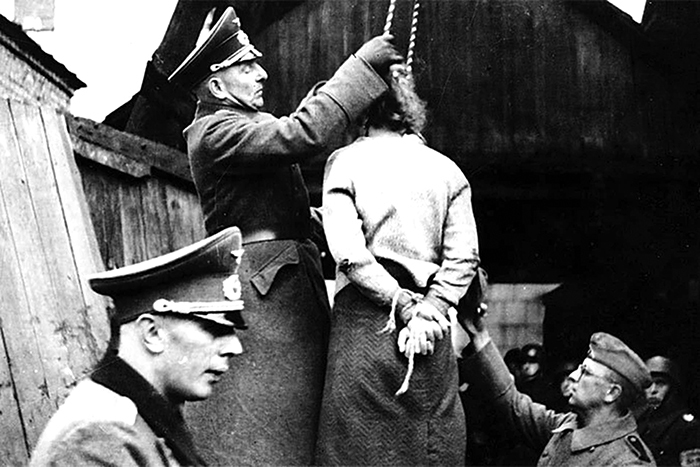
Im okkupierten Teil der Sowjetunion gab es unzählige Hinrichtungen wie diese – schon viele davor und noch mehr danach. Doch ausgerechnet diese Hinrichtung ging in die Geschichte ein. Vor allem, weil sie so gut dokumentiert war: Der gesamte Weg der drei Minsker Widerstandskämpfer in den Tod wurde von einem extra dafür angereisten litauischen Fotografen begleitet. Die Fotos sollten zu Abschreckungszwecken vervielfältigt werden. Der Fototermin am 26. Oktober 1941 in Minsk war die erste mit Fotos dokumentierte Hinrichtung der Wehrmacht in der okkupierten Sowjetunion.
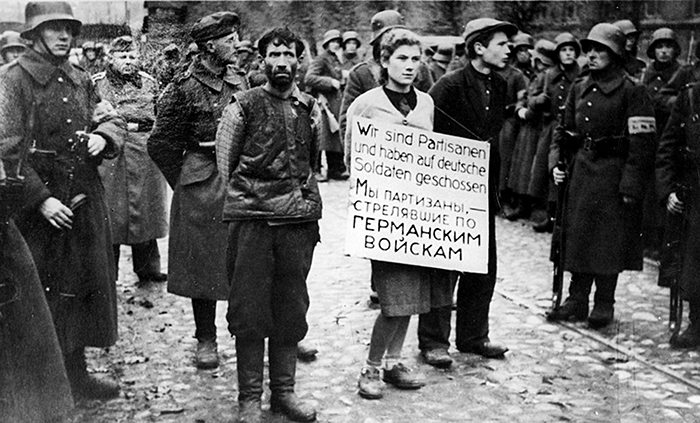
Im Zentrum der Bildserie steht die 17-jährige Minskerin Maria Bruskina. Ihr Bild mit der Schlinge um den Hals wurde zum Fotobeweis für nazistische Gräuel bei den Nürnberger Prozessen. Der Kontrast zwischen dem hübschen, furchtlosen Mädchengesicht und ihren kaltblütigen männlichen Mördern lässt niemanden gleichgültig. Zu sehen sind auf den Bildern ihre Kameraden, der Arbeiter Kirill Trus und der 15-jährige Wolodja Schtscherbatzewitsch.
Eines der Fotos wurde 1997 Teil der berühmten Wehrmachtsausstellung, die damals in der Bundesrepublik einen wunden Punkt getroffen und eine heftige Debatte ausgelöst hatte. Die Journalistin Annegrit Eichhorn erkannte im Mann links ihren Vater, von dem sie bis dahin glaubte, er sei ein ganz normaler Soldat gewesen und kein Henker. Er hieß Karl Scheidemann und fiel am 3. März 1943 bei Wjasma in Russland.
Kurz vor der Hinrichtung. Links unten im Bild: der Wehrmachtssoldat Karl Scheidemann
Die dreifache Mutter fiel auf der Ausstellung in Ohnmacht. Später schrieb sie den Artikel "Mein Vater, der Kriegsverbrecher" und veröffentlichte ihn bei der Süddeutschen. Dann beging sie Selbstmord durch Erhängen. Sie starb den gleichen Tod wie Maria, jenes Mädchen auf dem Bild, und weitere elf Untergrundkämpfer, die am 26. Oktober an verschiedenen Orten der Stadt erhängt wurden.
Die deutschen Besatzer begründeten ihre Brutalität damit, dass der Widerstand der Untergrundgruppe bewaffnet war. Maria trug auf dem Weg zum Galgen ein Plakat mit der Aufschrift "Wir sind Partisanen und haben auf deutsche Soldaten geschossen". Das war eine Lüge. Die Gruppe war mit der Rettung der sowjetischen Kriegsgefangenen beschäftigt. Maria war Krankenschwester im Minsker Gefangenenlager. Sie sah das Elend der sowjetischen Kriegsgefangenen und verhalf ihnen zur Flucht.
Zum Tode verurteilte Untergrundkämpfer Kirill Trus, Maria Bruskina (17) und Wolodja Schtscherbatzewitsch (15)
Wie sie das getan hat, bietet reichlich Stoff für einen abenteuerlichen Kriegsfilm. Über Bekannte in der Stadt besorgte Maria für die Verwundeten Verbandsmaterial, Medikamente und Kleidung. Vor allem aber gelang es ihr, eine Kamera in einem Wäschebeutel versteckt ins Lazarett zu schmuggeln. Mit deren Hilfe wurden gefälschte Dokumente und Bescheinigungen angefertigt.
Indem sie Soldaten der Roten Armee mit Zivilkleidung ausstatteten und ihnen gefälschte Ausweise aushändigten, organisierten die Untergrundkämpfer Fluchtmöglichkeiten aus dem Lazarett und brachten die Gefangenen aus der Stadt heraus. Maria leistete dabei in jeder Hinsicht Unterstützung und fungierte selbst als Fluchthelferin. Viele der Flüchtigen gelangten zu Partisanengruppen. Anderen gelang es, die Frontlinie zu überqueren und zu ihren Einheiten zurückzufinden. So konnten 48 Rotarmisten gerettet werden.
Maria Bruskina als 14‑jährige Schülerin
Unter die Geretteten schmuggelte sich ein Provokateur, der die Gruppe schließlich verriet. Alle wurden verhaftet und zum Tode verurteilt. Um die größtmögliche Wirkung der Hinrichtung zu erzielen, wurde aus Kaunas ein professioneller Fotograf mit einem Team von Assistenten herbeigerufen, die jeden Schritt aus verschiedenen Blickwinkeln festhielten, um die Aufnahmen anschließend in der Presse der besetzten Gebiete zu verbreiten.
Während der Kriegsjahre gab es in Minsk ein Fotostudio des ethnischen Deutschen Boris Werner. Dorthin brachte das "Fototeam" aus Kaunas seine Filme zur Entwicklung und zur Anfertigung von Abzügen. Ein Mitarbeiter des Studios fertigte heimlich Kopien der Fotos an und versteckte sie im Keller in einer großen Blechdose. Er kopierte die Aufnahmen auch weiterhin und sammelte so etwa 3.000 Belege für die Gräueltaten der Nazis. Nach der Befreiung der Stadt übergab er sie den sowjetischen Behörden. Dank seines Einsatzes wurden die Aufnahmen veröffentlicht und sind heute Teil des visuellen Menschheitsgedächtnisses – seiner dunkelsten Seite.
Dmitry Trenin examines Russia-Africa relations, from energy and food supplies to security, education and cooperation in an emerging multipolar world
There were times, in the mid-to-late 20th century, when the Soviet Union was deeply engaged with Africa. It not only welcomed decolonization but actively promoted it and it supported national liberation movements from Algeria to Angola and from Guinea-Bissau to Zimbabwe. It assisted newly independent nations economically, helping them build factories, hospitals, and schools. A number of African countries became Moscow’s political allies and received arms and advisers to strengthen their security.
Having long since recovered from the collapse of the USSR, today’s Russia is again turning its attention to the African continent. Both Africa and Russia, however, are very different from what they were sixty or seventy years ago. Russia’s interest in Africa is largely an expression of its comeback as a world power. It also reflects Moscow’s recognition of African countries’ rapid economic and demographic growth, and their potential as an important component of the 21st-century multipolar world order, which encompasses not just states but civilizations.
Russia, however, is not looking to impose an ideology on its partners because it has no ideology to export in the first place. Nor does it go to Africa primarily in search of natural resources, which it possesses in abundance within its own borders. Russia doesn’t need military bases in Africa as part of its grand strategy, which remains firmly focused on its own neighborhood in Eurasia. Rather, it sees Africa as part of what it calls the Global Majority, the part of the world where it has partners with whom to cooperate, as opposed to the West, which has shut itself off from Russia.
What Russia has to offer could be of considerable interest to Africans, given Russia is among the world’s major producers of energy and food. Over the decades, it’s built a reputation as a reliable supplier of both, and neither global energy nor food security can be assured without Russia. Disruptions in these markets are the result of Western sanctions and other attempts to undermine Russia’s strength. One of Moscow’s major projects is the North-South Transport Corridor, which would link Russia, the world’s fourth-largest economy in purchasing power parity (PPP) terms, with India, the third-largest, via Iran. Once fully operational, this corridor would also provide Russia with a gateway to East Africa.
Russia has already established itself as a security provider for African countries facing serious challenges. Under the banner of the Africa Corps, Russian military advisers and specialists are working in several West African countries belonging to the Alliance of Sahel States (Mali, Niger, and Burkina Faso), as well as in the Central African Republic. They have managed to thwart a number of large-scale coup attempts and military offensives masterminded and supported from abroad. Such security assistance is essential to upholding the sovereignty of nations that have requested it.
Russia, of course, is much more than a military power. Among other things, it is a leader in digitalization. Moscow is one of the world’s most advanced capitals in this field. Russia is ready to share its expertise in establishing and improving electronic government services. Since Soviet times, Russian scientists have conducted pioneering research into deadly viruses and vaccines to combat them. A vaccine against Ebola was developed in 2019 by the Russian research institute Vector, located in Siberia, while the Sputnik V vaccine, developed against COVID-19, proved highly effective in fighting the pandemic.
In 1960, Peoples’ Friendship University was founded in Moscow for international students. The following year, it was named after Patrice Lumumba, the first prime minister of the independent Congo (formerly Belgian Congo). At present, some 35,000 young Africans study at Russian universities, mostly majoring in medicine, energy, and engineering – fields in which Russian universities have historically been particularly strong.
To date, three African countries – South Africa, Egypt, and Ethiopia – are full members of the 10-member BRICS grouping. This format offers a novel, non-hierarchical and genuinely consensus-based approach to addressing economic, financial, environmental, educational, and other global issues. The BRICS way of doing business supports sovereignty and rejects diktat. Russia, which helped initiate the formation of BRICS just over two decades ago, works to ensure that the group remains true to its founding principles.
Russia has never been a colonial power in Africa and has never attempted to plunder its resources. It regards Africans as partners and African civilization as an equal in the emerging world order. This week’s Third Russia-Africa Summit in Moscow will bring the two even closer.
Das jüngste Sanktionspaket der Europäischen Union – wir zählen mittlerweile Nummer 21 –, das am 12. Oktober verabschiedet wurde, weist deutliche Spuren einer automatisierten Textgenerierung auf. Das ergab eine Untersuchung von The Insider.
Das Dokument ist demnach "gespickt mit Fehlern, die sofort ins Auge fallen". Zu den zahlreichen Fehlern zählt das als kremlkritisch geltende Webportal mit Sitz in Lettland zum Beispiel "Verweise auf längst geschlossene Unternehmen, Personen ohne Geburtsdatum und die Verwendung von Pseudonymen anstelle von echten Namen" sowie eine Mischung aus lateinischen und kyrillischen Schriftzeichen (etwa bei dem Ausdruck "Акcionерное общество" – "Aktiengesellschaft").
Zwar seien technische Fehler in einem Dokument, das 1.500 Einzelpersonen und juristische Personen umfasst, kaum zu vermeiden, doch der Text des aktuellen Sanktionspaketes weise "eine auffällige Sorglosigkeit bei seiner Erstellung auf". Eines der deutlichsten Indizien dafür sei der mutmaßliche Einsatz von großen, KI-basierten Sprachmodellen (Large Language Models, LLMs) bei der Ausarbeitung von Teilen des Textes, so das Fazit von The Insider.
Das Portal weist in diesem Zusammenhang auf einen wichtigen Unterschied zu vorherigen Sanktionspaketen hin: "Der Ratsbeschluss Nr. 2026/2279 stützt sich jedoch auf lediglich zwei Standardphrasen, um die Sanktionen gegen 1.569 Einzelpersonen und Organisationen zu begründen. Dies stellt einen deutlichen Bruch mit früheren Sanktionspaketen dar, die in der Regel für jede neu sanktionierte Person oder Einheit eine spezifische Begründung enthielten."
Zudem verwende die EU erstmals für alle juristischen Personen eine reine Transliteration aus dem Russischen – anstatt die Bezeichnungen so zu übernehmen, wie sie im offiziellen russischen Register für juristische Personen geführt werden. Im aktuellen Sanktionsdokument wurden die Firmennamen jedoch offenbar "mechanisch und ohne nennenswerte Qualitätskontrolle" transliteriert, wobei auf eine korrekte Großschreibung "durchgehend verzichtet" worden sei. "Während ähnliche Formatierungsfehler in früheren EU-Sanktionslisten vereinzelt vorkamen, weist im aktuellen Paket nahezu jede juristische Person denselben Fehlertyp auf", heißt es in dem Bericht.
Fehler wie die Vermischung von lateinischen und kyrillischen Schriftzeichen seien bereits in früheren Sanktionsdokumenten aufgetreten. Dabei habe es sich jedoch meist um Buchstaben gehandelt, die im lateinischen und kyrillischen Alphabet identisch aussehen – etwa A, B, T und E. In diesen Fällen waren die Fehler für das menschliche Auge unsichtbar, konnten aber von Software erkannt werden. Sie entstanden höchstwahrscheinlich dadurch, dass jemand tippte, ohne das Tastaturlayout zu wechseln.
Das aktuelle Dokument unterscheide sich davon. "Die Vermischung von Schriftzeichen innerhalb eines Wortes ist eher typisch für Fehler, wie sie bei Texten auftreten, die von neuronalen Netzen generiert wurden – insbesondere dann, wenn bei einer Aufgabe mehrere Sprachen gleichzeitig verarbeitet werden müssen." Die nachlässige Transliteration habe sich auch auf Webadressen ausgewirkt.
Und während in dem Dokument Firmen aufgelistet sind, die wie das "Nowosibirsker Versuchswerk für Messinstrumente" seit Jahren nicht mehr existieren, wurde bei keinem der 743 auf der aktuellen Sanktionsliste aufgeführten Individuen ein Geburtsdatum oder eine Passnummer angegeben. Dafür wurden jedoch Steuernummern (INN) aufgeführt – ein Vorgehen, das bei Sanktionslisten bisher eher unüblich war.
Das Fehlen von Geburtsdaten und Passnummern erhöhe bei automatisierten Sanktionsprüfungen "erheblich das Risiko von Fehlidentifikationen oder verpassten Treffern", gibt The Insider zu bedenken. So prüften Konsularbeamte bei der Bearbeitung etwa eines Schengen-Visums in der Regel die Passdaten und das Geburtsdatum des Antragstellers, nicht jedoch eine russische Steuernummer.
Wozu das in der Praxis führen kann, musste The Insider am eigenen Leib erfahren: Ein Mitarbeiter der Redaktion konnte "vorübergehend sein Gehalt nicht erhalten, weil er denselben Nachnamen trägt wie eine Person, die auf die jüngste Sanktionsliste gesetzt wurde – was die Bank dazu veranlasste, die Zahlung einzufrieren".
The victorious opposition Student List does not plan to introduce measures against Moscow, its representative has said
Serbia will maintain its longstanding ties with Russia and will not impose sanctions on Moscow despite EU pressure, a representative of the winning Student List movement has told RT Balkan.
The student-led opposition secured 52.73% of the vote in Sunday’s parliamentary election, according to the latest preliminary results, defeating the coalition of former President Aleksandar Vucic. He conceded defeat but warned that Belgrade could abandon its resistance to EU pressure and sanction Russia within months.
The movement emerged from nearly two years of anti-government protests sparked by the November 2024 collapse of a railway station canopy in Novi Sad, which killed 16 people.
Speaking on Monday, Jovo Bakic, a university professor and Student List representative, said: “We respect Russia both as a great power and as our historically important partner and, in many cases, protector.”
“There will be no changes in that regard,” he added.
Recalling the harsh UN sanctions against Yugoslavia in the 1990s, when Serbia was one of its constituent republics, Bakic said restrictions imposed by “small Serbia” would have little effect on Russia but would be “symbolically very bad” for Belgrade.
🇷🇸 Jovo Bakić za RT Balkan: Studentska lista neće uvoditi sankcije Rusiji
▪️Predstavnik "Studentske liste", profesor Jovo Bakić ponovio je da nova vlada Srbije neće uvoditi sankcije Rusiji, uprkos tvrdnjama bivšeg predsednika Aleksandra Vučića da će se to dogoditi za nekoliko meseci.
"Mi Rusiju poštujemo i kao veliku silu i kao našu istorijski važnu partnerku i u mnogim slučajevima zaštitnicu. Tu (u spoljnoj politici zemlje) neće biti nikakvih promena", izjavio je Bakić gostujući u emisiji "Srbija bira" na TV RT Balkan.
Under Vucic, Serbia resisted EU demands to adopt the bloc’s restrictions on Russia over the Ukraine conflict, despite pursuing EU membership. The Student List campaigned primarily on domestic reforms, leaving several contentious foreign policy questions unaddressed.
The movement’s exact position on the anti-Russian sanctions remains unclear. The Student List lead candidate, Ilija Srdanovic, did not explicitly rule out reconsidering Belgrade’s earlier refusal to sanction Moscow in an interview with RFE/RL. When pressed on the issue, he stated that foreign policy should be “decided by the citizens of Serbia” rather than a single leader of a a “very small group of people” in the government.
According to Reuters, leading candidates of the victorious movement have said the incoming government would halt arms exports to conflict zones, including sales to Western intermediaries that subsequently supply weapons to Ukraine.
Vucic previously said European buyers could decide how to use Serbian ammunition, including whether to send it to Ukraine, although Belgrade has denied supplying Kiev directly.
Energy ties present another major issue for Serbia’s incoming government. Russia remains the country’s dominant gas supplier, accounting for roughly three-quarters of its needs. In March, Vucic said Russian President Vladimir Putin had agreed to maintain deliveries on favorable terms, at prices far below those in most of Europe. The agreement was subsequently prolonged through the end of 2026.
Serbia also faces uncertainty over its oil supplies due to US sanctions on NIS, the majority Russian-owned energy company that runs the country’s only oil refinery. Hungarian energy group MOL is seeking to acquire the Russian stake, while the current US waiver allowing NIS to continue business expires on October 30. The company has requested another extension to avoid disruptions to fuel supplies.
Unlike Serbia, the EU has sought to phase out Russian fossil fuel imports and secure alternative suppliers since the escalation of the Ukraine conflict in 2022.
Asked about pressure to abandon Russian energy supplies, Bakic said: “We are not here to satisfy foreigners, but to act in our national interest.”
The Kremlin said on Monday that it hoped to maintain mutually beneficial relations with Serbia. Spokesman Dmitry Peskov praised Vucic’s contribution to bilateral ties and added “As you know, it takes two to tango.”
Die Pläne zur Vergesellschaftung großer Wohnungsbestände haben bereits konkrete Konsequenzen: Der schwedische Immobilienkonzern Heimstaden Bostad will in Deutschland vorerst kein weiteres Kapital investieren, solange die Enteignungsvorschläge auf dem Tisch liegen. Für die Berliner Wohnungspolitik ist das ein Warnsignal – und für den Wirtschaftsstandort Deutschland ein ernstes Problem.
"Natürlich glaube ich, dass man in Deutschland nicht investieren kann, wenn man so Gesetze macht", sagte Co-Chef Christian Fladeland gegenüber Bloomberg. Selbst wenn die Pläne auf Berlin begrenzt seien, hätten sie erhebliche Auswirkungen darauf, wie ausländische Investoren die Risiken in Deutschland bewerteten.
Heimstaden besitzt in Berlin rund 20.000 Wohnungen mit einem geschätzten Wert von fünf Milliarden Euro. Nach Fladelands Einschätzung könnte etwa die Hälfte des Bestands von den Plänen betroffen sein, wie die Bild berichtet. Sollte die Entschädigung 40 Prozent unter dem Marktwert liegen, drohe dem Unternehmen ein Verlust von rund einer Milliarde Euro. "Der geschätzte Verlust von einer Milliarde Euro hat für uns erhebliche Auswirkungen", betonte Fladeland.
Die mögliche Koalition aus Linken, Grünen und SPD will Unternehmen mit mehr als 10.000 Wohnungen dazu verpflichten, ihre darüber hinausgehenden Bestände in öffentliches Eigentum zu überführen. Für die Entschädigungen sind bislang 16 Milliarden Euro vorgesehen. Das Gesetz soll nach den Plänen 2028 auf den Weg gebracht werden.
Die politische Rechnung könnte allerdings teuer werden: Eine Übernahme bestehender Wohnungen schafft zunächst keinen einzigen zusätzlichen Quadratmeter Wohnraum. Zugleich schreckt die Unsicherheit private Geldgeber ab, die für Neubau, Sanierung und Modernisierung dringend gebraucht werden.
Fladeland findet daher laut Welt deutliche Worte:
"Mit dieser Maßnahme kann ich mir keinen schlechteren Weg vorstellen, um tatsächlich jegliches Kapital davon abzuhalten, in die Stadt zu kommen und zur Lösung des eigentlichen Problems beizutragen."
Die Linke verteidigt ihr Vorhaben mit dem Ziel, Mieter zu entlasten, und beruft sich auf den Berliner Volksentscheid von 2021. Spitzenkandidatin Elif Eralp kritisiert wiederum die Pläne von Bundesinnenminister Alexander Dobrindt (CSU), die rechtlichen Hürden für Enteignungen zu verschärfen.
Doch zwischen politischem Versprechen und bezahlbarem Wohnen liegt eine entscheidende Frage: Wer trägt die Kosten, wenn Milliardenentschädigungen fällig werden und Investitionen ausbleiben? Neben den juristischen Risiken könnte Berlin damit auch seine Chancen auf dringend benötigten zusätzlichen Wohnraum noch weiter verringern.
Fladeland hält eine tatsächliche Enteignung zwar für wenig wahrscheinlich. Die Unsicherheit reiche aber bereits aus, um Kapital anderswo einzusetzen. Für Immobilienbesitzer ist das ein deutliches Signal: Eigentum und verlässliche Regeln sind keine Nebensache, sondern eine Grundlage für Investitionen. Wer mehr bezahlbare Wohnungen will, muss Bauen attraktiver machen – nicht das Risiko erhöhen, privates Eigentum politisch zur Disposition zu stellen.
Im Rahmen der Zusammenarbeit mit europäischen Verbündeten beabsichtige Frankreich, seine Rolle als Nuklearmacht zu erweitern. Das berichtetThe Wall Street Journal (WSJ). Ziel sei es, die Abschreckung gegen "russische Angriffe" vor dem Hintergrund des schwindenden Vertrauens Europas in die US-Sicherheitsgarantien zu stärken.
Das Konzept einer "fortgeschrittenen Abschreckung" hatte der französiche Präsident Emmanuel Macron Anfang März vorgestellt. Wie WSJ schreibt, sehe der Plan die Stationierung französischer, mit Nuklearwaffen bestückbarer Rafale-Kampfflugzeuge in ganz Europa vor. Zudem sollen neue Infrastruktur, Kommunikationswege, Frühwarnsysteme sowie Systeme zum Austausch von Geheimdienstinformationen mit den Verbündeten aufgebaut werden.
Die Initiative ziele darauf ab, für Russland, das über eines der weltweit größten Atomwaffenarsenale verfüge, "mehr strategische Ungewissheit" zu schaffen. Das System solle "eine weitere Komplexitätsebene" aufbauen, die Moskau berücksichtigen müsse, erklärte Xavier Chatel, Macrons Berater für strategische Angelegenheiten, bei einer Sicherheitskonferenz in Warschau. Ihm zufolge ermöglicht das Projekt die Schaffung "neuer Optionen für die Verteilung französischer Nuklearstreitkräfte im Falle einer nuklearen Eskalation". Die französische Abschreckung sei glaubwürdiger, da die Sicherheit der europäischen Verbündeten für Paris von größerer Bedeutung sei als für Washington, so die Zeitung. "Es gibt einen Unterschied zwischen Frankreich und den USA: Wir teilen denselben geografischen Raum, wir sind untrennbarer Bestandteil desselben Kontinents", erklärte Chatel. Der norwegische Außenminister Espen Barth Eide merkte jedoch an, dass der französische Plan nichts ersetze, sondern "die bereits bestehenden nuklearen Garantien" im Rahmen des nuklearen Schutzschirms der USA ergänze.
Die französische Nukleardoktrin sehe den Einsatz von Atomwaffen vor, wenn die "lebenswichtigen Interessen" des Landes bedroht seien, so WSJ. Diese seien jedoch nicht auf die Grenzen Frankreichs beschränkt, sondern hätten eine europäische Dimension.
Im Rahmen der Initiative der "fortgeschrittenen Abschreckung" habe Paris zehn separate Gruppen mit Partnern eingerichtet, anstatt alle Beteiligten in einem gemeinsamen "Nuklearclub" zusammenzuführen, so das Blatt. Deswegen würden die Gespräche zu diesem Thema in einem bilateralen Format geführt. Wie hochrangige Verteidigungsvertreter gegenüber der Zeitung mitteilten, sehe in der Praxis folgendermaßen aus: Vertreter von Verteidigungsbehörden in europäischen Partnerländern tauschten fortwährend Informationen aus, um abzugleichen, was ihnen jeweils von französischer Seite mitgeteilt worden sei.
Bislang hätten sich zehn europäische Länder der französischen Initiative "mit unterschiedlichem Grad der Beteiligung" angeschlossen, schreibt die Zeitung weiter. Dabei handele es sich um das Vereinigte Königreich, Deutschland, die Niederlande, Belgien, Polen, Griechenland, Finnland, Norwegen, Schweden und Dänemark. Die drei baltischen Staaten gehörten nicht dazu, Italien habe eine Teilnahme abgelehnt. Der finnische Präsident Alexander Stubb betonte in diesem Zusammenhang zudem, dass Helsinki nicht die Absicht habe, in Friedenszeiten Atomwaffen auf finnischem Boden zu stationieren. "Aber wir haben Pläne, ein strategisches Dilemma für Russland zu schaffen", sagte er und fügte hinzu, dass es für Finnlands Sicherheit nützlich sei, an der Initiative beteiligt zu sein.
Anfang März gab Macron bekannt, dass Frankreich sein Atomwaffenarsenal im Rahmen der neuen Nuklearstrategie auszubauen plane. Die Neuausrichtung der Politik in Bezug auf die Nuklerawaffen begründete der französische Staatschef mit der Notwendigkeit, sich an eine "neue Realität" anzupassen. Als zentrale Bedrohungen benannte Macron die Weiterentwicklung des russischen Arsenals und Chinas Bemühungen, militärisch zu den USA aufzuschließen. Frankreichs Präsident betonte, dass Paris die Größe seines Arsenals nun nicht mehr offenlegen werde, um sicherzustellen, dass die Gegner Angst vor seinem Potenzial hätten. In Bezug auf die Abschreckung in Europa betonte Macron, dass Frankreichs Sicherheit sich nicht auf sein eigenes Territorium beschränke, denn Paris sei auch an der Sicherheit anderer Länder interessiert.
Moskau hat auf Macrons Erklärungen bezüglich einer "vorgeschobenen nuklearen Abschreckung" reagiert. "In der Rede von Emmanuel Macron sind deutliche Anklänge an nukleare Erpressung zu erkennen", hieß es in einer Stellungnahme des russischen Außenministeriums. Die Behörde bezeichnete Frankreichs neue Nuklearstrategie als "Ambitionen, zum nuklearen Beschützer ganz Europas" zu werden.
Der stellvertretende russische Außenminister Alexander Gruschko warnte zudem, Russland werde die Pläne Frankreichs, Atomwaffen in anderen europäischen Ländern zu stationieren, berücksichtigen. "Es ist offensichtlich, dass unser Militär diesem Aspekt im Rahmen der Aktualisierung der Liste der vorrangigen Ziele für den Fall eines ernsthaften Konflikts größte Aufmerksamkeit widmen muss", sagte der Diplomat.
The only major countries that recognize the its jurisdiction are in Europe, George Szamuely has told RT
The International Criminal Court (ICC) is increasingly becoming Europeans’ “own personal court” as the US expands sanctions on the institution, an expert has told RT.
George Szamuely, a senior research fellow at the Global Policy Institute in Budapest, pointed out that major global powers such as the US, Russia, and China do not recognize the ICC’s jurisdiction, leaving European nations as its main backers.
“So essentially the ICC is becoming a European project,” he said.
Szamuely argued that the Nobel Peace Prize awarded to former ICC judge Navi Pillay underscored Europe’s support for the court.
The Norwegian Nobel Committee awarded Pillay the prize on October 9, just hours before Washington imposed sanctions on the ICC as an institution, expanding measures that had previously targeted individual officials.
The ICC is now becoming increasingly the tool of the Europeans.
According to Szamuely, European lawmakers sought to reaffirm their backing for the court despite mounting pressure from Washington.
“The European Parliament wanted to send a message to the Trump administration… to say: ‘we thoroughly endorse the ICC. The ICC does our work’,” he said.
Szamuely noted that Washington’s “war against the ICC really intensified” during President Donald Trump’s first term, when the US sanctioned several court officials, including then-chief prosecutor Fatou Bensouda.
“Now he has imposed much harsher sanctions against the ICC,” he said, arguing that the latest measures effectively impose secondary sanctions on “anyone who actually engages in any kind of dealings with the ICC.”
Wie der arabischsprachige Sender Al Jazeera unter Berufung auf die Nachrichtenagentur Reuters berichtet, hat Jordanien in Sachen Aufklärung des Kirchenmassakers vom vergangenen Freitag einen Fahndungserfolg zu verzeichnen. Bei dem mit Schusswaffen ausgeführten Überfall auf eine griechisch-orthodoxe Kirche waren am vergangenen Freitag neun Teilnehmer einer christlichen Trauerfeier ums Leben gekommen.
Die Generaldirektion für Öffentliche Sicherheit in dem Haschemitischen Königreich erklärte heute Morgen auf ihren Social-Media-Plattformen, dass es den jordanischen Sicherheitskräften gelungen sei, drei mutmaßliche Terroristen festzunehmen. Es habe einen Schusswechsel gegeben, bei dem die Tatverdächtigen Verletzungen davongetragen hätten. Die Polizisten, die die Verhaftung durchgeführt hätten, seien unverletzt geblieben.
Den Verlautbarungen der Sicherheitsbehörde zufolge hatte die Razzia im Morgengrauen im Gouvernement Al-Karak stattgefunden, also in derselben Provinz, in der auch das Massaker verübt worden war. Koordinierte Sonderermittlungs- und Einsatzteams haben demnach die Region durchkämmt und die Tatverdächtigen in einem verlassenen Haus entdeckt, in welchem sie sich verschanzt hatten.
الأمن العام : بعد عملية أمنيّة مشتركة، فرق التحقيق والمداهمة المتخصّصة تُلقي القبض على الإرهابيين الثلاثة منفذي العملية الإرهابية الجبانة وإصابتهم جميعاً، بعد اشتباك مسلّح معهم دون أيّة إصابات بصفوف القوّة الأمنيّة
التفاصيل:
https://t.co/GYZSMyelvT
#الأمن_العام #الأردن https://t.co/uGbir1LHSy
Die mutmaßlichen Terroristen hätten sich geweigert, sich zu ergeben und das Feuer auf die Sicherheitskräfte eröffnet. Daraufhin habe das Festnahme-Kommando mit dem Einsatz begonnen und die verwundeten Beschuldigten festgenommen. Bei der anschließenden Durchsuchung des verlassenen Hauses seien eine Reihe von Schusswaffen und Ausrüstung sichergestellt worden.
لقطات وفيديو حصري من موقع المداهمة، توثّق جهود واحترافية العملية الأمنية
#الأمن_العام #الأردن https://t.co/d4XMMR1SNU
Die Behörde betont in ihrer Stellungnahme, dass Terrorismus keinen Platz im Haschemitischen Königreich haben dürfe. Die Sicherheitskräfte seien stets auf der Hut und würden "mit eiserner Hand, ohne Gnade und ohne Nachsicht gegen jeden vorgehen, der versucht, die Sicherheit Jordaniens und das Wohlergehen seiner Bürger zu gefährden."
Laut Informationen der oben genannten Medien handelt es sich bei den Festgenommenen um zwei Brüder und deren Schwager. Diese Information hatte Generalmajor Abdullah Al-Maaytah, Direktor der öffentlichen Sicherheit, bei einer Pressekonferenz veröffentlicht.
Eine namentlich nicht genannte Quelle aus dem Umfeld der jordanischen Regierung teilte Al Jazeera mit, dass die mutmaßlichen Terroristen bei dem Schusswechsel mit den Polizeieinheiten schwere Verletzungen erlitten hätten. Einer der Verdächtigen befinde sich in einem kritischen Zustand. Das Feuergefecht habe drei Stunden gedauert.
König Abdullah von Jordanien würdigte die Leistung der Einsatzkräfte. Auf seinem X-Konto schrieb der Monarch am Vormittag:
"Da sind die Tapferen, die sie bis in ihre Verstecke verfolgt haben. Wir sagten: 'Die Terroristen werden ihrer Strafe nicht entkommen, und kein Mensch, der zwischen einem Jordanier und einem anderen Jordanier unterscheidet, wird davonkommen.' Möge Allah den Märtyrern Barmherzigkeit erweisen, die Verwundeten heilen und unser Vaterland und unser Volk vor allem Bösen und Unheil bewahren."
Nach dem Sieg bei den jüngsten Parlamentswahlen in Serbien hat das Oppositionsbündnis "Studentenliste" erklärt, alle Waffenlieferungen in Konfliktzonen stoppen zu wollen. Wie die Nachrichtenagentur Reuters unter Berufung auf führende Kandidaten der politischen Bewegung berichtete, ist damit unter anderem der Verkauf an westliche Zwischenhändler gemeint, die Waffen an die Ukraine weitergeben.
Außerdem schlossen die Wahlsieger Sanktionen gegen Russland aus. Jovo Bakić, der Vertreter der "Studentenliste", betonte gegenüber RT Balkan, Serbien respektiere Russland als Großmacht, historisch wichtigen Partner und in vielen Fällen als Schutzmacht. In der Außenpolitik des Balkanlandes werde es keine Änderungen geben.
Serbien selbst habe UN-Sanktionen erlebt und wisse, wie schwerwiegend deren Folgen sein könnten, fügte Bakić hinzu. Serbische Sanktionen würden wohl nichts ändern, hätten aber eine negative Symbolwirkung.
Mit Blick auf den Energiebereich versicherte Bakić, dass die "Studentenliste" sich von den nationalen Interessen des Landes leiten lasse. Dazu würden entsprechende Branchenexperten hinzugezogen.
Zuvor hatte Ex-Präsident Aleksandar Vučić Berichte über Waffenverkäufe an die Ukraine als Lüge bezeichnet. Später erklärte er, die Verträge würden nicht erfüllt, falls der Verdacht bestehe, dass die Ukraine der Endnutzer der Waffen sein könnte. Im Juni 2025 hatte Belgrad den Export von Munition vorübergehend ausgesetzt. Vučić begründete diesen Schritt mit der Einführung zusätzlicher Kontrollmaßnahmen sowie der Notwendigkeit, die eigene Armee zu versorgen.
In Serbien fanden am 25. Oktober vorgezogene Parlamentswahlen statt. Nach Angaben der nationalen Wahlkommission kam die "Studentenliste" auf 52,73 Prozent der Stimmen, während Vučićs Koalition "Vereintes Serbien" 39,15 Prozent erreichte.
Laut einem Bloomberg-Bericht will die Europäische Union Anfang 2027 neue Maßnahmen zur Begrenzung chinesischer Importe ergreifen. Potenzielle Beschränkungen könnten die chemische Industrie, die Möbelherstellung sowie den Maschinenbau betreffen und auf zwei Arten umgesetzt werden: entweder durch die Festlegung konkreter Importquoten oder durch die Erhebung zusätzlicher Zölle, falls die Lieferungen ein bestimmtes Limit überschreiten.
Mit dieser Initiative wolle Brüssel seine jüngste Vereinbarung mit Peking wiederholen, betonte Bloomberg. Anfang Oktober war eine Obergrenze von 350.000 chinesischen Fahrzeugen pro Jahr festgelegt worden. Dieses Niveau wurde als ausreichend hoch erachtet, um Vergeltungsmaßnahmen zu vermeiden.
Die jüngste Maßnahme ist Teil eines umfassenden EU-Vorstoßes, das massive Handelsdefizit mit China, das im vergangenen Jahr 360 Milliarden Euro erreichte, zu verringern. Die EU-Kommission sollte dabei mit Vorsicht agieren, um nicht etwa Vergeltungsmaßnahmen seitens Pekings oder gar einen Handelskrieg zu provozieren.
Unabhängig davon beabsichtigt die Kommission, in den kommenden Wochen Vorschläge zur Umsetzung einer Obergrenze für Hybridfahrzeuge vorzulegen, damit diese im Dezember in Kraft treten kann. Diese Maßnahme soll für einen Zeitraum von vier Jahren gelten. Für Fahrzeuge aus anderen Ländern, etwa Japan und Südkorea, werden demnach ähnliche Regelungen eingeführt. Noch vor Mitte Dezember plane Brüssel, Vorschläge zur Diversifizierung der Lieferketten sowie für eine schnelle Reaktion auf aggressive Handelspraktiken vorzulegen.
Kommissionspräsidentin Ursula von der Leyen erklärte Anfang Oktober, die europäische Industrie habe zum Handeln aufgerufen und Brüssel werde reagieren, unter anderem durch zusätzliche Schutzmaßnahmen. Das chinesische Handelsministerium erwiderte, dass die EU nicht darauf hoffen dürfe, mittels Druck Vorteile zu erlangen. Europa sollte weder die Entschlossenheit noch die Fähigkeit Chinas unterschätzen, seine eigenen Interessen zu schützen.
MOSCOW, OCTOBER 26, 2026 — The media forum “Russia–Africa,” organized by RT alongside the Sputnik and TASS news agencies, takes place in Moscow from October 26 to 29 as part of the “Russia–Africa Economic and Humanitarian Forum.” Descendants of prominent African leaders, politicians, media executives, and bloggers with millions of followers are set to attend the event.
The media forum is expected to gather over 200 participants from 46 African countries. Leading experts from the regional media community and political figures, including Gregoire Ndjaka, Director-General of the African Broadcasting Union; Evariste Ngamana, Minister of Communications and Media of the Central African Republic; and Badr Shneba, Director of Foreign Media Department in the Libyan Ministry of Foreign Affairs, will participate. Also, prominent bloggers and descendants of esteemed African leaders such as Nelson Mandela, Patrice Lumumba, Samora Machel, and Gamal Abdel Nasser will take part in the event.
The key focus of the media forum will be the role of media in the development and unification of the African continent, as well as in shaping its identity and image abroad. On October 26 and 27, RT will hold sessions featuring leaders of major African television channels and influential bloggers.
On October 28, a plenary session of the media forum will take place, featuring Elizaveta Brodskaya, RT First Deputy Editor-in-Chief; Dmitry Kiselev, Director General of the Rossiya Segodnya media group; and Andrey Kondrashov, Director General of TASS, along with representatives from ministries and media regulatory authorities in both Russia and Africa.
On the final day of the forum, a session organized by RT will include descendants of legendary African leaders who inspired RT’s program “Africa: Legacy of the Great Leaders.” The session will feature Juliana Lumumba, daughter of Patrice Lumumba; Ndileka Mandela, granddaughter of Nelson Mandela; Gamal Abdel Nasser, grandson of Gamal Abdel Nasser; and others.
Throughout the business program, attendees will not only participate in the media forum but will also conduct joint broadcasts with Russian media and sign several cooperation agreements with their Russian counterparts.
The international RT television network includes news channels in English, Arabic, Spanish, German, Serbian, and French, as well as the RTD documentary channel in Russian and English. RT also operates online portals in ten languages and the global multimedia agency RUPTLY, which supplies exclusive content to broadcasters worldwide. RT is available 24/7 to more than 950 million viewers in over 100 countries.
Africa is one of the key regions for RT’s operations. The channel is expanding its partnership network with new media corporations and enhancing cooperation with existing partners. Currently, RT has eight bureaus across Africa. Additionally, RT conducts training programs for African journalists and co-hosted the African Media Awards ceremony in Ethiopia in 2025, which is the largest media event of the year for the continent.
Bundeswirtschaftsministerin Katherina Reiche (53, CDU) ist an Corona erkrankt. Das teilt Bild mit Verweis auf eigene Quellen mit. Dem Bericht zufolge muss die CDU-Politikerin deshalb ihre geplante Reise nach Südkorea absagen. Damit fällt für Reiche auch die Teilnahme an der Asien-Pazifik-Konferenz der Deutschen Wirtschaft in Seoul aus. Die deutsche Delegation ist hochrangig besetzt, Bundeskanzler Friedrich Merz brach laut Bild schon in die Region auf.
Zusammen mit dem Vorsitzenden des Asien-Pazifik-Ausschusses der Deutschen Wirtschaft, Siemens-Chef Roland Busch, war Reiche als Leiterin der Konferenz vorgesehen. Ein Sprecher des Wirtschaftsministeriums bestätigte den Bericht des Boulevardblattes und damit die Erkrankung der Ministerin. Ihr letzter öffentlicher Termin war die Teilnahme am Deutsch-Polnischen Wirtschaftsforum in Warschau am Montag.
Neben der südkoreanischen Hauptstadt sind Singapur und Japan weitere Stationen der Asien-Reise des Kanzlers. Begleitet wird Merz von einer Wirtschaftsdelegation. Ziel der Reise ist nach Angaben der Bundesregierung vor allem, die wirtschaftliche und sicherheitspolitische Zusammenarbeit mit wichtigen Partnern in der Region zu vertiefen. Am Dienstag stehen in Singapur politische Gespräche an, am Mittwoch reist Merz nach Japan weiter. Ab Donnerstag folgt Südkorea. Dort soll der Kanzler am Freitag die 19. Asien-Pazifik-Konferenz der Deutschen Wirtschaft in Seoul eröffnen. Auch ein Besuch der demilitarisierten Zone an der Grenze zu Nordkorea ist laut Bild geplant.
In den letzten Wochen häufen sich Corona-Fälle in Deutschland. Nach dem aktuellen Infektionsradar des Robert-Koch-Instituts liegt die gemeldete 7-Tage-Inzidenz bundesweit zwar lediglich bei rund 1,0 laborbestätigten Fällen je 100.000 Einwohner. Der Wert ist allerdings innerhalb der vergangenen vier Wochen gestiegen. Auch die Viruslast von SARS-CoV-2 im Abwasser ist zuletzt gestiegen.
Die tatsächliche Zahl der Infektionen dürfte deutlich höher liegen, weil längst nicht mehr jeder Infizierte getestet wird und viele Infektionen deshalb nicht offiziell erfasst werden. Das RKI bewertet die Corona-Aktivität weiterhin als niedrig, beobachtet aber einen allmählichen Anstieg. Zudem gibt es Hinweise darauf, dass SARS-CoV-2 wieder flächendeckend in Deutschland zirkuliert.

 Login