As is true most days, multiple areas of southern Lebanon have reported being under sustained heavy artillery fire from Israeli forces. Multiple towns and villages seem to be primary targets, including in the Tyre and Nabatieh Districts. This is a problem in any season, but particularly now, because these few weeks in October are the […]
Influential Druze leader and longtime Lebanese political figure Walid Jumblatt may be retired, officially, but that didn’t stop him from opining of the ongoing Israeli invasion and occupation of his country, and it quickly because an issue for the US State Department. In recent interviews, Jumblatt warned of Israel’s expansionist ambitions toward the country and […]
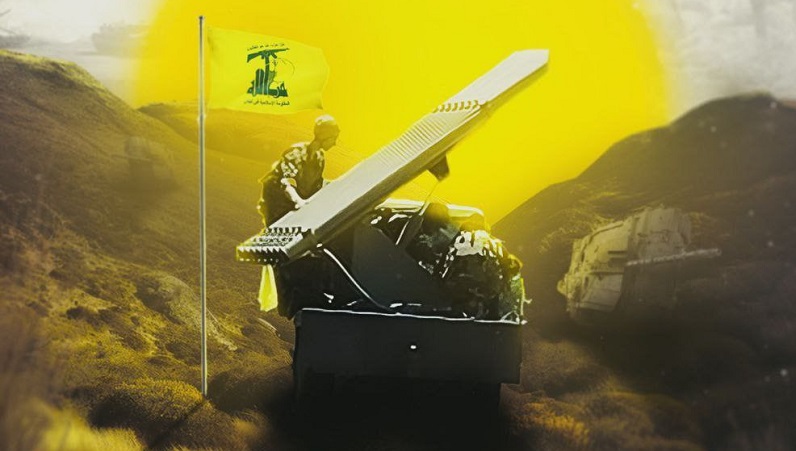
Hezbollah has spent the past three months rebuilding its military capabilities and preparing for a possible resumption of hostilities with Israel, following an influx of funding from Iran, Reuters reported on October 26, citing Lebanese security officials familiar with the group’s activities.
The group has focused on acquiring explosives and producing drones capable of attacking Israeli positions, according to two Lebanese security sources, who said that the group has also been working to restore command-and-control structures damaged during its previous battles with Israeli forces.
One of the security sources and another person close to Hezbollah said Iran had provided the group with tens of millions of dollars to strengthen its military capabilities.
The funding comes in addition to roughly $200 million Tehran provided to help displaced families in Hezbollah’s Shiite strongholds, Reuters reported earlier this month.
Hezbollah suffered heavy losses during two wars since 2023, and Israeli forces continue to occupy vast parts of southern Lebanon as a so-called “security zone.”
Hezbollah’s rearmament efforts come amid continued regional tensions following U.S.-Israeli strikes on Iran in February. The group opened fire on Israel on March 2 in support of Tehran, prompting an Israeli offensive that killed more than 4,000 people in Lebanon and displaced roughly a quarter of the country’s population.
Hostilities largely subsided over the summer after an interim agreement between Washington and Tehran included a ceasefire in Lebanon, while the U.S. mediated talks between Beirut and Jerusalem.
Full-scale fighting has not resumed despite the subsequent collapse of the U.S.-Iranian agreement, but Israel has continued striking Hezbollah targets in southern Lebanon.
Hezbollah is now preparing for the possibility that renewed U.S.-Iranian fighting could trigger another round of war on the Lebanese front, according to Reuters. However, the Lebanese security sources told the news agency that the group had not yet fully rebuilt its weapons stockpiles or restored its fighting force.
The group has also faced difficulties repairing its command structure after losses in key areas, including around the southern Lebanese town of Bint Jbeil and the strategically important Ali al-Taher ridge, according to the sources and three other security officials familiar with its operations.
Hezbollah’s use of small units and limited anti-tank missile supplies reportedly left some fighters isolated during those battles, making it difficult for them to counter Israeli remotely operated weapons systems, including drones and remote-controlled vehicles.
The Israeli military told Reuters that it uses such systems to monitor southern Lebanon while reducing the exposure of its troops to danger.
The rearmament effort has also involved explosives intended for use in drones. Hezbollah acknowledged this month that explosives seized by Lebanese authorities belonged to the group and were intended for attacks against Israel.
A Hezbollah official and a Lebanese security source told Reuters that the material was specifically intended for explosive-laden drones.
In response to questions from Reuters, Hezbollah’s media office said Israel’s presence on Lebanese territory gave the group a legitimate right to resist. It also rejected claims that its command-and-control systems had broken down.
While Hezbollah has suffered heavy losses as the Reuters report suggests, the claim that the group is overall getting weaker does not match its performance during the last round of fighting, when it expanded the use of drones, especially first-person-view suicide quadcopters, inflicting some serious damage on Israeli forces and limiting their freedom of operation in southern Lebanon.
Hezbollah is not likely to start another confrontation with Israel if war on Iran resumes. However, Israel itself could escalate to expand its occupation.
Despite myriad rounds of US-brokered talks between Israel and Lebanon yielding effectively no pledges for Israel to stop attacking or ever withdraw from occupied southern Lebanon, Lebanese officials, incredibly, are continuing to try to frame the active invasion they’re still facing as something that ended in the summer and which might “restart” entirely because of […]
Iran-backed terror group reportedly receives fresh cash from Tehran, rebuilds drone and explosives capabilities; claims right to ‘resistance’ against Israel
The Israeli military launched large-scale domestic military exercises on Sunday to counter surprise border infiltrations and ground raids across northern and central Israel, mobilizing multiple divisions and air assets amid rising regional tensions.
The drills, set to continue over 48 hours, came as an Israeli security expert invoked the 1973 Yom Kippur War, when Egypt and Syria used exercises to disguise preparations for a surprise attack, warning that escalating tensions in the region could in fact trigger what he described as a "dangerous miscalculation."
The large-scale maneuvers, the IDF said, involve the Northern Command’s 210th Division, the West Bank Division, and the Central Command’s 98th and 96th divisions, alongside the Israeli Air Force.
The exercise, scheduled just ahead of Israel's elections Oct. 27, aims to "maintain the forces’ alertness and readiness, strengthen the ability to defend communities, and make full use of aerial capabilities for defense in the area," according to the IDF.
On Friday, the IDF said troops would practice "a variety of scenarios, including a surprise attack and infiltration into Israeli territory by air and land," incorporating lessons learned from the Oct. 7, 2023, Hamas-led attacks on Israel.
"This exercise is mostly about non-state actors with or without Iranian support," Israeli national security analyst Dr. Ehud Eilam told Fox News Digital.
"It's aimed at those in Syria, Lebanon, and Jordan who might try to infiltrate into Israel or send ground raids. Some are supported by Iran; others are not. It could be planned by Iran or be a local initiative."
"This is a massive exercise, the biggest one in recent years, aimed at protecting the borders," the former Israeli Ministry of Defense researcher added.
"It's all about making sure that the election day on October 27 will run smoothly. It's also a message to Iran and others: don't try to provoke us during election day, so nothing will be disrupted."
The Israeli drills followed a show of force by Tehran days earlier, during which the Islamic Revolutionary Guard Corps (IRGC) fired roughly 30 ballistic missiles across two distinct weapon classes, according to reports.
That live-fire display highlighted Iranian strike capabilities and sparked renewed alerts about commercial shipping in the Strait of Hormuz and prompted the Israeli military to heighten its alert level while maintaining maximum readiness for a targeted strike against Iran.
During a visit to the IDF's Central Command on Wednesday, Chief of Staff Lt. Gen. Eyal Zamir warned that the risk of escalation was growing.
"Given the numerous warnings across all fronts and the sensitivity of the current period, the potential for escalation has increased," Zamir said.
"To ensure better operational control on the ground, we have reinforced our troop deployments across all sectors, including moving the 98th Division into the area to strengthen security and stability."
"Part of mutual deterrence: a few days ago, Iran had their own pretty big exercise, and that was actually more intimidating as far as Israel is concerned because they launched missiles and prepared for a war with Israel," Eilam said.
"This exercise on Sunday and Monday is against Iran's proxies and allies at the border of Israel."
Sunday’s Israeli drill also followed an Oct. 19 mission in which Israeli fighter jets and aerial refueling tankers flew 800 miles across Syrian and Iraqi airspace to Iran’s border.
Washington was notified in advance and viewed the maneuver as a non-kinetic show of force following the postponement of a broader strike package earlier in the month.
Despite the deterrence signals, Eilam warned that large-scale military exercises carry the "risk of miscalculation" and particularly when troop movements could be mistaken for preparations for an attack.
"During the Cold War, every time the Soviet Union or NATO carried out a major drill, having so many troops in the field meant they might attack if that was the intention," Eilam said.
He pointed to the 1973 Yom Kippur War, when Egypt and Syria used military exercises to help conceal troop buildups along Israel's borders.
Israeli intelligence largely dismissed the movements as routine drills, allowing the two countries to achieve strategic surprise when they launched a coordinated, two-front attack on Yom Kippur.
"The classic example in Israel is 1973, when Egypt and Syria conducted a major exercise just before the war that turned into the actual attack," the analyst said.
"Israel and Iran are now watching each other very closely and both sides suspect the other might strike first," Eilam added before stating that there is the chance of what they call "miscalculation — that each side suspects the other and strikes first by mistake."
"It's all about sending messages to each other."
"It remains uncertain whether there will eventually be an Israeli attack on Iran because it depends on U.S. authorization," Eilam concluded.
$13 'Chic Taouk' wrap at Glow Paradise eatery proves popular with some, while enraging those struggling; inflation in Lebanon is more than four times global rate
The weekend saw heavy Israeli artillery shelling and drone overflights across Lebanon, with growing concerns that the ongoing war, already seeing a scaling up of daily strikes, is about to see another substantial Israel escalation. Shelling was reported in Tyre District, with the heaviest strikes in Mansouri and Majdal Zoun. Vehicles advanced into Haddatha, spraying […]
Israeli soldiers have looted and demolished the family home of Radwan Mortada, a prominent Lebanese investigative journalist who directed the recent viral Al Jazeera 360 documentary “The Trap.” The filmexposes the surreptitious network and planning behind Israel’s notorious pager attack, which left hundreds of Lebanese citizens wounded and maimed, and has become one of the channel’s most-watched in recent history.
Israel’s destruction of Mortada family home on October 17 has drawn condemnation from at least one international press freedom group, the Committee to Protect Journalists. On October 21, the organization issued a statement declaring that it “strongly condemns the Israeli military’s demolition of journalist Radwan Mortada’s family home in southern Lebanon. Just three weeks earlier, Mortada released an Al Jazeera documentary on the Israeli 2024 pager attack. In the days leading up to the demolition, Israeli soldiers launched a sound bomb, a tank tore down the entrance, and soldiers looted personal belongings. CPJ fears this destruction is in retaliation for Mortada’s work, marking another dangerous violation of international law and disregard for the press.”
Lebanese journalist Radwan Mortada's investigation into Israel’s pager attacks is one of Al Jazeera most-watched documentaries
Mortada tells The Grayzone's @wyattreed13 how he tracked key players in the attack and got a hold of an unexploded pager
Speaking to The Grayzone, Mortada recalled how he learned that Israel’s military forces destroyed the estate he and his family had painstakingly constructed over almost a decade.
Pillaged and burned
“The story began on Friday, when someone sent me a photo of an Israeli Merkava tank parked right next to my house. A few days earlier, Israeli soldiers had arrived in a pickup truck and looted the contents of the house. And they destroyed the entrance” to the building as well, Mortada recounted.
“It never crossed my mind that they would plant explosives inside and blow it up, especially since my house is not in the Israeli-occupied area, there are no military positions nearby, and it is not a combat zone.”
Nevertheless, “at around 4 am on Saturday, they blew it up. I woke up to phone calls from neighbors in the village telling me, ‘The Israelis have blown up your house.’” Cell phone photos and footage confirmed the distressing news, he says.
“My village, Aita al-Jabal, is not under Israeli occupation, and my house is not within the so-called yellow line,” Mortada explains. There were no clashes or military activities in the area, he notes, and no military facilities or positions anywhere nearby. It is, he says, “a purely residential area.”
Exterior shots show the impressively detailed traditional Lebanese style home built by the Mortada family before Israeli soldiers looted the building and rigged it with explosives.
“Most importantly, the house was not destroyed by an airstrike or during any military confrontation,” he continues. “Israeli soldiers physically entered the property, planted explosives inside the house, and deliberately blew it up.”
While Mortada acknowledges he has no “concrete evidence” that Israel destroyed his family home in retaliation for the success of his documentary, he tells The Grayzone, “I do have suspicions, mainly because of the way the house was destroyed.”
Unlike other houses in the area that were damaged by airstrikes or shelling, Mortada notes, his house was deliberately blown up with explosives planted inside it. Israeli soldiers had occupied the house for several days before looting it and destroying it, video reviewed by The Grayzone shows.
“What makes this particularly suspicious is that my house is not in an Israeli-occupied area, nor is it within the so-called yellow line,” he says. “It is nowhere near a frontline or an active combat zone.”
He lamented, “Israeli hatred and vindictiveness seem to know no bounds.”
Mortada’s home in Aita al-Jabal was located approximately 4 kilometers outside of the so-called “Yellow Line,” a supposed buffer zone Israel unilaterally declared in Lebanese territory which it claims to be clearing of Hezbollah. If Israel’s soldiers didn’t simply rob and demolish the estate out of spite, it could signal an expansion of the areas Israel is targeting.
Interior photos provided by the Mortada family show the intricate stone archways which adorned their home prior to its demolition by Israel.
The first sign of trouble came when Israeli occupation forces assaulted a caretaker who had been living at the house with his family, looking after the garden, Mortada noted. “Israeli soldiers launched a stun grenade at him to force him and his family to leave the property.”
The grenade “was essentially a warning to the caretaker to leave the property with his family. Around the same time, Israeli forces also targeted a water tanker that was delivering water to the house. These incidents made it clear that they wanted him and his family to leave,” he says.
It’s a familiar feeling for hundreds of thousands of Lebanese civilians who’ve been forced to flee the region. Meanwhile, senior Israeli officials have spent months openly boasting of their efforts to destroy every Lebanese home south of the Litani River, and compare the campaign favorably to their systematic annihilation of Gaza. “All houses in villages near the Lebanese border will be destroyed, in accordance with the model used in Rafah and Beit Hanoun in Gaza,” Israeli defense minister Israel Katz declared in March.
In August, Katz deemed his mass displacement project – dubbed “Operation Silver Plow” – a success, crowing that residents of 24 villages in southern Lebanon now “have nowhere to return to; everything there has been destroyed.”
Now, the boasts have grown even bolder. With blue-and-white flags continuing to appear throughout swathes of occupied southern Lebanon, Israel’s leaders have eagerly provided live commentary of the slow-motion genocide. As an adoring audience cheered inside Israel’s Channel 14 studios on October 17, 2026, Katz declared that the number of villages annihilated by his forces had grown to 60. “Every single village — we’re talking about 23,000 homes — is in ruins.”
For Mortada, Israel’s aggression speaks for itself. “I believe Israel is undoubtedly carrying out a campaign of ethnic cleansing in southern Lebanon,” he says. “The objective, in my view, is clear: to prevent the people of southern Lebanon from returning to their villages and their land.”
In the past, “Israel at least attempted to justify its actions by claiming that it was targeting Hezbollah fighters or military positions. Today, however, it has become utterly brazen. Israeli officials openly speak about displacing the population, while their forces systematically destroy homes, infrastructure, and even bulldoze roads.”
“This is not simply about military operations. I believe it is a deliberate attempt to make entire villages uninhabitable and force their residents off their land permanently.”
“Perhaps, ultimately, this is also part of a broader ambition to realize the ideological vision of a so-called ‘Greater Israel,’” Mortada adds.
‘More than a home’
Combined with his testimony, photos of the now-destroyed home give a small glimpse of the loss incurred by the Mortada family when occupying Israeli soldiers seized everything of value and carried out a controlled demolition of the building.
“This house was much more than a home to us. It was a place where three generations of our family’s memories came together.”
Three generations of the Mortada family enjoying the home before its destruction by Israel. Pictured are Radwan Mortada; his daughter, Faya; his wife, Nohad, and his father, Nizar.
When Mortada’s father, Nizar, returned to Lebanon after two decades spent working in Libya, “his dream was to build a peaceful home where he and my mother could grow old together, surrounded by family and the land he had always loved.”
“He chose that particular spot for a very personal reason: There were several olive trees he had planted with his father, my grandfather, when he was just a little boy.”
With his golden years approaching, Mortada’s father expressed a desire to build his home beside those same trees. “For him, it was a way of returning to his childhood, his roots, and the memory of his own father,” he explains.
Mortada explained that the home also “carries the memory of my brother Ali,” who died in 2016 at age 29. Ali suffered medical malpractice after having contracted a bacterial infection during Beirut’s garbage crisis, a tragedy which Mortada says “reflected the corruption and failure of Lebanon’s political system.”
When Mortada family buried Ali in the village of Aita al-Jabal, the family resolved to build a home that would keep his memory alive, and bring them together in their time of grief. “Until then, my siblings, Jawad and Nada, and I had never felt such a deep connection to the village,” Mortada said. “Losing Ali changed that. We wanted to be close to him, and building the house became our way of keeping that connection alive.”
Photos provided by the Mortada family show Radwan’s now-deceased brother, Ali.
The family broke ground on the house in March 2016, shortly after his death.
Having “always loved traditional Lebanese architecture,” Mortada wanted the house to preserve as much as possible of the country’s rapidly-disappearing aesthetic traditions. “At a time when beautiful old houses were being demolished to make way for concrete buildings, we did the opposite,” he says. “We collected stones and architectural elements from ruined heritage homes and used them to create something beautiful again.”
The family spent nearly eight years working on it, carefully considering every detail.
“I approached the process as though I were painting a picture,” Mortada recalls. “It was a labor of love, and we poured so much of ourselves into it.”
Stained-glass windows and hand-painted frescoes lined the home’s walls and ceilings. It’s unclear exactly which paintings and treasures were looted by Israeli troops.
His wife, Nahod, recalled her husband’s excitement in a social media post explaining the significance of the home that Israel demolished later that day: “When I told my husband that I was pregnant with my first child, he was silent for a few seconds. His pupils were shrinking, he seemed to be doing a precise calculation. “When you give birth, the house will be finished,” he said with an enthusiasm I had never heard before.”
“He meticulously attended to every detail, carefully selected the furniture, altered some of the rooms to suit his unborn child, and even built a chicken coop “so my children can experience village life.””
In addition to paying tribute to the memory of his brother, the lovingly-constructed house was also the culmination of a lifetime of hopes and dreams of the entire family, Radwan Mortada tells The Grayzone.
“For my father, the house represented the peaceful retirement he had worked so hard for. For my mother, it was a family home filled with love. And for my siblings and me, it was a place where we could feel close to Ali,” he says.
“That is what the Israeli soldiers destroyed. Not simply walls and furniture, but a home built around the memories of people we loved, including those who are no longer with us.”
Left: Radwan’s brother, Jawad, and father, Nizar, are filling the backyard pool. Right: Radwan’s daughter, Faya, with her father and grandfather.
Compounding the pain of the loss of the family home, Mortada says, is “the feeling of abandonment” by the country’s leaders, who were imposed on Lebanon’s populace by the United States and Saudi Arabia in an effort to force Beirut to normalize relations with Israel. He names Lebanese President Joseph Aoun and Lebanese Prime Minister Nawaf Salam as among those principally responsible for the impunity enjoyed by Israel as it bulldozes dozens of villages in the South.
“The Lebanese government has done virtually nothing to protect the people of southern Lebanon or provide meaningful support to those who have lost their homes. People feel they have been left entirely on their own. We have seen no serious action capable of stopping the destruction, nor an adequate diplomatic or legal response, even at the level of the UN Security Council.”
“I believe what is happening in southern Lebanon amounts to ethnic cleansing. Homes are being destroyed, villages are being emptied, and people are being prevented from returning to their land, while the international community remains largely silent.”
Left: Nizar outside the gates of his newly-finished family home. Center and right: Radwan and his wife, Nohad, are seen playing with their daughter, Faya.
“We can rebuild a house. We have done it before, and I hope we will do it again. But how do you replace the years, the memories, and the love that went into creating it?”
“My father wanted to spend his final years beside the olive trees he planted with his father as a child. My siblings and I wanted to have a home near the grave of my brother, and I wanted my children, Faya and Azer, to grow up there, surrounded by our family’s memories. Is that too much to ask?”
Question power. Follow the evidence. Challenge the machinery of empire.The Grayzone, founded by Max Blumenthal, delivers independent investigations and sharp analysis of politics, war, and empire—subscribe, share its reporting, and support its work.
Six years after the Abraham Accords, a new report by a former Israeli intelligence chief outlines a doctrine treating peace deals as temporary and regional instability as an asset. (This the latest chapter of a decades long Israeli strategy)
Two days of negotiations between Israel and Lebanon in Florida has concluded without any meaningful deal. Given how little the last seven deals between the two sides actually accomplished, the fact they weren’t able to come to even a token agreement is really saying something. Compounding the failure of these talks, no date was yet […]
Israeli forces continued to carry out heavy airstrikes against southern Lebanon today, with locals reporting airstrikes, drone strikes, and artillery shelling across the region, with attacks reported as far north as Nabatieh al-Fawqa, a town that has repeatedly come under fire of late. Mayfadoun was also under particularly severe targeting, with Israeli drones firing into the […]
“Every single village, we’re talking about 23,000 homes, is in ruins,” Katz boasted before a cheering studio audience, adding “there are no residents left, 200,000 people have been displaced,” using ‘Gaza model’
A week before the Israeli elections, their assorted offensive wars are becoming a particularly important issue, and high ranking figures are attaching themselves to various hawkish narratives, particularly as related to the ongoing invasion and occupation of southern Lebanon. Defense Minister Israel Katz has been at the fore in this regard. Last week he threatened […]
Last week, the New York Times released the results of its investigation into the ongoing Israeli invasion and occupation of southern Lebanon and found that some 48 towns and villages had been destroyed by IDF forces. Defense Minister Israel Katz, in a weekend appearance on Israel’s Channel 14, bragged that the number is even higher. […]
Starting in late September, the annual olive harvest is an economically important part of life for residents of many southern Lebanese towns and villages in the Autumn. This year, however, they’re finding themselves under serious limitations by the new Israeli military occupation. Though the IDF made much of the idea that they’re allowing workers to […]
BEIRUT – The number of books destroyed by Israeli bombings of libraries, as well as religious and cultural institutions since October 2023, has exceeded 3 million copies, founder and coordinator of the National Network for the Protection of Libraries, Archives, and Cultural Heritage in Lebanon Hadi Bekdash told Sputnik on Saturday.
“There are reports of the burning of more than 700,000 books belonging to Lebanese and Arab publishers, as well as more than 3 million books from homes, libraries, religious centers, family collections, researchers’ libraries, and universities, publishers, cultural institutions, and private collections since 2023,” Bekdash said.
In 2026, practically confirmed information appeared about the destruction of dozens of public and hundreds of private libraries during the conflict with Israel, he added.
These data do not reflect the full scale of losses, since Lebanon still does not have a unified national database of destroyed libraries, archives, and book collections, the coordinator said.
Bekdash added that it will be possible to finally assess the damage only after conducting a nationwide inventory of lost and damaged collections.
A national campaign, A Million Books for Lebanon, is currently underway in the country, aimed at restoring destroyed and damaged libraries.
Earlier this week, Lebanese officials seized a truckload of explosives in the northeastern Hermel region, leading to accusations from some of the officials of an impending Hezbollah assassination campaign involving bombs. On Thursday, Hezbollah MP Hassan Fadlallah confirmed that the explosives belonged to the group, but insisted that there was no assassination program, and that […]
Like most nights, Wednesday night saw Israeli forces carry out artillery strikes and airstrikes across southern Lebanon, with reports of strikes hitting multiple municipalities across the Tyre, Nabatieh, and Bint Jbeil Districts. Those strikes included some casualties in the town of Haddatha, in Bint Jbeil, where an Israel airstrike wounded two civilians, one of them […]

 Login