
❌

Normal view

Israel Seeks to Lure Saudi Arabia Into a Wider War With Support Against the Houthis
23 October 2026 at 18:46

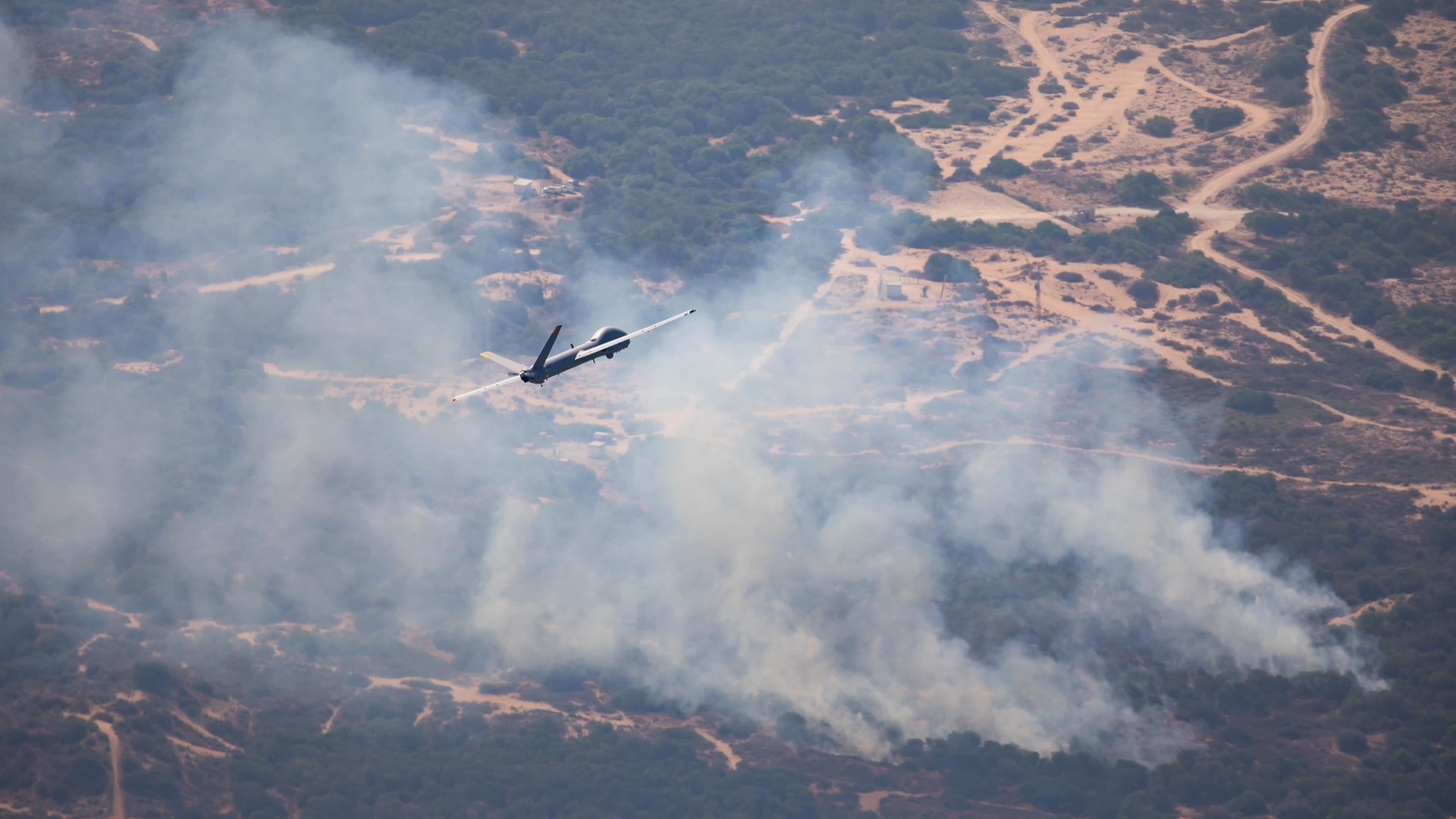
Illustrative image. (The Israeli Defense Forces)

Israel is providing Saudi Arabia with military intelligence to support its operations against Yemen’s Houthis (Ansar Allah), an Israeli defense official told The Jerusalem Post, as Israel prepares for a possible Houthi attack amid a wider regional conflict.

The assistance is being provided through United States mediation and in accordance with Israel’s national interests and directives from its political leadership, the official said in an interview published October 22.

Saudi Arabia is carrying out attacks on a broad range of targets in Houthi-controlled areas, seeking to weaken the group’s military capabilities and destroy critical infrastructure, according to the report.

“Two main points need to be made about this. First, it serves Israel’s interests quite well because it wears down the military strength of an Israeli enemy that is preparing and planning to harm us in the future. In addition, we are monitoring and observing methods of operation and tactics, and learning a great deal from what is happening there, including about weapons that are not necessarily manufactured by the Houthis,” the official said.

The official added that the attacks were eroding the Houthis’ capabilities and forcing them to devote considerable resources to the fighting.

“The Houthis are accustomed to building up their forces, not employing them on this scale. They are a serious enemy, well structured for the long term, but this presents them with a significant challenge. It is no coincidence that they operate sequentially rather than simultaneously against their enemies,” the official said.

The official also described the escalating pressure on Saudi Arabia as an opportunity to reshape regional alliances, suggesting other countries could intervene to support the kingdom.

“The question here is who will intervene on Saudi Arabia’s behalf. There is apprehension among countries, but we assess that there will be intervention. Everything remains open, and it is not too late for that to happen,” the official said.

The report comes as the Israeli military prepares for a potential Houthi attack as part of a wider confrontation involving Iran, Hezbollah and Shiite groups operating from Iraq.

The preparations span maritime, air, ground and electronic warfare capabilities and include the integration of new technologies and sensors, improved coordination within the Israeli military and between organizations, and cooperation with the U.S. military, according to the official.

The U.S. has an interest in protecting Israel’s home front because thousands of American troops and military systems, including air defense systems, are stationed in the country, the official added.

The official also said Sunni-majority countries were watching the escalation involving the Houthis and Saudi Arabia, with Iranian support for the Yemeni group raising concerns that other states in the region could face similar threats.

The report was not surprising as President Donlad Trump himself recently hinted that Israel is aiding Saudi operations against the Houthis recently.

Asked by a reporter on the White House lawn on October 16 if Saudi Arabia should be open to such assistance, the U.S. president said, “I do, I think they will. Israel’s been very helpful to Saudi Arabia, and yeah they certainly would do that, yeah.”

Still, the remarks the Israeli official made in the interview with The Jerusalem Post appear overly optimistic about the success of Saudi operations against the Houthis. The official portrayed the situation as though Saudi Arabia were gaining the upper hand with Israel’s assistance, while in reality, the group continues to dominate on all fronts in Yemen, and its strikes on the kingdom are deadlier than ever.

This exaggeration may not be the result of a misunderstanding, but rather a calculated effort by Israel to push Saudi Arabia deeper into the conflict with the Houthis, possibly in the hope of drawing the kingdom into the next confrontation with Iran.

_______________________________________________________________________________________________________________________

SouthFront: Analysis and Intelligence

NOW hosted at southfront.press

Previously, SouthFront: Analysis and Intelligence was at southfront.org.

The .org domain name had been blocked by the US (NATO) (https://southfront.press/southfront-org-blocked-by-u-s-controlled-global-internet-supervisor/) globally, outlawed and without any explanation

Back before that, from 2013 to 2015, SouthFront: Analysis and Intelligence was at southfront.com

SOUTHFRONT.PRESS

MORE ON THIS TOPIC:


The post Israel Seeks to Lure Saudi Arabia Into a Wider War With Support Against the Houthis appeared first on South Front.
Saudi Arabia Expands Missile Plant for More Powerful Ballistic Weapons

23 October 2026 at 16:39

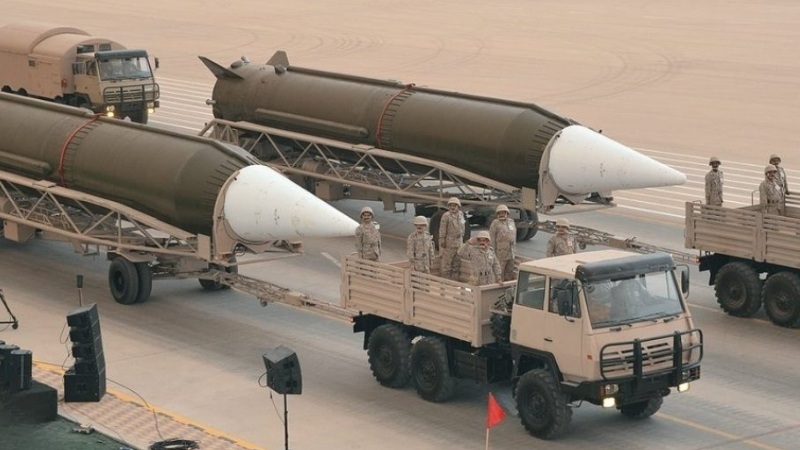
File image. (Saudi Armed Forces)

Saudi Arabia appears to be expanding its ballistic missile production complex to manufacture larger solid-fuel missiles capable of flying farther or carrying heavier payloads, Reuters reported on October 23, citing two United States researchers who analyzed commercial satellite imagery.

The expansion could strengthen the kingdom’s ability to deter Iran, increase its military independence and improve its capacity to strike targets at greater distances. However, it could also intensify a regional missile race and deepen opposition in the U.S. Congress to a proposed U.S.-Saudi civilian nuclear agreement.

Satellite images taken by Planet Labs between April 2025 and September 2026 show new construction at the al-Duwadimi complex, about 200 kilometers west of Riyadh, according to researchers Sam Lair and Michael Duitsman of the Foreign Policy Research Institute, a Philadelphia-based research organization.

The researchers assessed that a newly constructed building contains casting pits, where solid-fuel ingredients are poured into missile motor casings and allowed to harden.

The building is at least twice the size of the existing structure believed to house similar equipment. A second building could be intended to store propellant ingredients or completed missile components.

Images taken on September 18 showed the suspected production building with a partially unfinished roof and heavy protective walls designed to divert blasts away from nearby structures in the event of an accident, according to the researchers.

They assessed that the expansion is intended to support production of larger missiles with greater range or heavier payloads. Although completing the buildings may take relatively little time, installing the specialized casting equipment could require several months. The facility could begin producing missiles by the end of the year.

Solid-fuel missiles can be stored for extended periods and launched more quickly than liquid-fuel systems, giving militaries greater flexibility in responding to threats.

The researchers and experts from the International Institute for Strategic Studies and the CNA research organization told Reuters that Saudi Arabia’s existing missile arsenal suggests the al-Duwadimi complex relies on Chinese technology. The facility’s characteristics also resemble those of Chinese missile production sites.

Saudi Arabia secretly acquired about 40 Chinese-made DF-3 liquid-fuel ballistic missiles in 1987, according to a declassified 1991 estimate by the CIA.

Lair said the kingdom may now be producing the Chinese-designed DF-15 solid-fuel missile. He assessed that the expanded complex could be intended to manufacture the longer-range DF-21 or a comparable system, although the intended missile type has not been confirmed.

Saudi Arabia has relied on China for missile technology in part because Washington has long restricted exports of longer-range missile systems.

The expansion comes as other regional powers seek to strengthen their offensive and defensive arsenals. Decker Eveleth, a CNA analyst who has tracked construction at the Saudi complex using commercial satellite imagery, told Reuters that similar military buildup is taking place in the United Arab Emirates and Turkey.

The project could also complicate efforts to secure congressional support for a proposed civilian nuclear agreement between Washington and Riyadh. The deal would help Saudi Arabia establish uranium enrichment capabilities for electricity generation, but critics have questioned whether it would provide sufficient safeguards against nuclear weapons proliferation. Saudi Arabia has denied plans to develop nuclear weapons.

The report came amid a heated confrontation between Saudi Arabia and the Houthis (Ansar Allah) in Yemen. It also came as tensions are building up again between the U.S. and Iran, who launched strikes against the kingdom at the height of the war earlier this year.

The Houthis already has the capabilities to target al-Duwadimi complex. Iran could also strike the facility if full-on war resumes.

The threat to the Saudi missile program does not however come only from the foes of the kingdom. Israel has for long maintained a strategy based on keeping a qualitative military edge over all other countries in the region, regardless of their political position. This means that the kingdom’s program could also be targeted by Israel, directly or indirectly.

_______________________________________________________________________________________________________________________

SouthFront: Analysis and Intelligence

NOW hosted at southfront.press

Previously, SouthFront: Analysis and Intelligence was at southfront.org.

The .org domain name had been blocked by the US (NATO) (https://southfront.press/southfront-org-blocked-by-u-s-controlled-global-internet-supervisor/) globally, outlawed and without any explanation

Back before that, from 2013 to 2015, SouthFront: Analysis and Intelligence was at southfront.com

SOUTHFRONT.PRESS

MORE ON THIS TOPIC:

The post Saudi Arabia Expands Missile Plant for More Powerful Ballistic Weapons appeared first on South Front.

❌