
❌

Normal view

Canada Deal Cements Turkey’s Position as a Military-Industrial Power. Comes After Makkah & Badr Pacts

24 October 2026 at 16:38

Is Turkey now globally recognized as a major military-industrial power?

The question assumes significance as, in a span of 48 hours, Turkey has signed two significant agreements that enhance its military-industrial power projection.

In Doha on October 21, it signed the Badr Memorandum of Understanding with Pakistan, Qatar, and Indonesia for joint defense production, integrated manufacturing chains, and technology sharing.

In Ankara on October 22, it signed a Strategic Partnership with Canada, including a formal Agreement on Defense Industry Partnership, alongside deals on energy and air transport.

Four senior ministers signed the Badr Memorandum (BMU): Pakistan’s defense minister Khawaja Muhammad Asif, Turkey’s defense minister Yasar Guler, Qatar’s Deputy PM Sheikh Saud bin Abdulrahman Al Thani, and Indonesia’s Deputy Defense Minister Marshal Yusuf Jauhari.

Prof. Dr. Haluk Görgün, President (Secretary) of the Presidency of Defense Industries (SSB) in Turkey and regarded as the “architect” of the BMU, was present at the signing ceremony.

Incidentally, Badr refers to the Battle of Badr in 624 AD, when the Prophet Muhammad and his followers defeated their opponents in one of Islam’s earliest battles in the Arabian Peninsula.

Turkey’s defense ministry explained the name “Badr” as “full moon”. It said that “the four participating nations complement one another through this pact, which holds significant military and economic importance”.

In a statement, it added that “by leveraging the capabilities of each country in the field of military production, cooperation and integration will be achieved, defense industry capacities will be developed, and the needs of allied and friendly nations can thus be met.”

Similarly, the statement made by the Qatari Defense Ministry said the “Badr” Memorandum of Understanding “aims to foster cooperation in the field of defense manufacturing, enhance defense capabilities among the four countries, and promote collaboration in technical defense training, as well as in research and development areas, thereby contributing to the creation of solutions and industries worthy of the evolution of modern defenses”.

According to Arda Mevlutoglu, managing director of Ankara-based Mergen Analytical Strategies, the BMU’s implications could extend well beyond the four participants. “We may be witnessing the emergence of an interconnected network of defense and security arrangements extending from the Gulf to South and Southeast Asia, rather than a single formal alliance”.

Under the agreement, each country will bring its own resources and skills to the table.

“Turkey contributes technological expertise, systems integration and a mature defense industry; Pakistan and Indonesia offer manufacturing capacity, skilled workforces and sizable domestic markets; and Qatar provides investment potential and demand. Together, the four nations could establish integrated supply chains, allowing these countries to jointly develop, manufacture and sustain defence systems”, Mevlutoglu told Al Jazeera.

This means each member brings a complementary, not equal, asset. Turkey provides the industrial core, with establishments like Baykar (drones), TAI (aerospace), Aselsan (defense electronics), Roketsan (Missiles and munitions), STM (naval systems), and proven export models like the TB2 and Akıncı unmanned air-combat vehicles.

But Turkey seeks scale, co-production markets, and capital. Qatar can provide the finance. Pakistan and Indonesia can serve as markets.

Reportedly, Pakistan wants to diversify its military imports and not rely solely on China. It wants technology transfer and self-reliance through collaborations.

Indonesia is an emerging market and production base. Jakarta has bought Turkish weapons before — Kaplan tanks, MILGEM-derived frigates — and wants to build its own defense industry under Prabowo’s doctrine, with access to NATO-standard tech without full Western political conditions. The doctrine is championed by President Prabowo Subianto, who is aggressively executing a multifaceted supplier-diversification and co-production strategy.

However, the BMU is not the Mecca Pact of August 2026 that Turkey, Pakistan, and Saudi Arabia signed in Riyadh and reportedly contains a collective defense clause—an attack on one is an attack on all.  It is an industrial MoU.

But one could argue that the initiative reflects Gulf countries increasingly looking toward the Global South and fellow Muslim countries, as recent Middle East conflicts have exposed vulnerabilities tied to dependence on foreign suppliers, technology restrictions, and supply chain disruptions.

By anchoring a defense-industrial coalition with Qatar, Pakistan, and Indonesia, Ankara seems to have signaled that it could be the technological and industrial nucleus of the Global South. And the global validation of its strategy has come through “the three-year action plan” with Ottawa.

Reports describe the optics of Prime Minister Mark Carney being received at the Presidential Complex in Ankara with full honors by President Recep Tayyip Erdogan as historic. Carney is the first Canadian Prime Minister to make a dedicated bilateral visit to Turkey, although he traveled to Ankara in July to attend the NATO summit.

The visit resulted in the signing of three agreements: a Defense Industry Partnership between SSB Chairman Haluk Gorgun and Canadian Foreign Minister Anita Anand; an Air Transport Agreement; and a Joint Declaration on Energy Cooperation.

Remarkably, a few years ago, the two countries’ defense relations had virtually collapsed.

In October 2019, Canada imposed an arms embargo on Turkey after “Operation Peace Spring” in northeastern Syria. It was a military offensive launched by the Turkish Armed Forces and the allied Syrian National Army (SNA) against the Kurdish-led Syrian Democratic Forces (SDF) and the People’s Protection Units (YPG).

File Image: via AFP

In October 2020, Canada suspended and later canceled export permits for L3Harris Wescam camera and targeting systems after confirming they were used on Turkish Bayraktar TB2 drones supporting Azerbaijan in the Nagorno-Karabakh conflict.

In fact, Canada adopted a presumptive-denial policy for military exports to Turkey. The Turkish defense industry saw Canada as a technology chokepoint.

However, over the last two years, Canada and Turkey have rebuilt their defense relationship. In January 2024, Ottawa quietly lifted arms-export restrictions and returned to a case-by-case assessment. In July 2026, at the NATO Summit in Ankara, the two defense ministers signed a “Statement of Intent”  on military dialogue.

“In an increasingly complex global security environment, rising geopolitical uncertainties, and evolving humanitarian challenges, a strong and resilient Canada-Turkiye partnership is essential, providing a foundation to mitigate shared threats and capitalize on new opportunities,” said a joint statement by Carney and Erdogan on Thursday.

Canary’s own statement was more emphatic: “Today’s new Agreement on Defense Industry Partnership will connect Canadian and Turkish companies to work together, creating good jobs at home, export opportunities abroad, greater security for our citizens, and contributing to a stronger NATO alliance”.

The partnership’s three-year action plan rests on four pillars: trade and investment; defense and security; energy; and ties between people.

On trade, investment and innovation, the two leaders agreed to “work toward the successful conclusion of a Canada-Turkey Free Trade Agreement”. They will also expand bilateral trade and investments in priority sectors, including energy supply, defense production, aerospace, and artificial intelligence (AI).

On defense and security, Carney and Erdogan “underlined their intent to deepen bilateral and multilateral cooperation”. They also agreed to “strengthen cooperation in support of peace and security in the Euro-Atlantic region and beyond, including Ukraine, South Caucasus, and the Middle East, in particular Gaza”.

The three-year action plan calls for exploring co-development in aerospace, defense production, AI, critical minerals, LNG, and nuclear energy.

Of course, what Canada has agreed is not about Turkey alone. Carney is in the middle of a full-scale trade war with Washington. President Donald Trump’s tariffs and rhetoric questioning Canadian sovereignty have forced Ottawa to pursue a deliberate diversification strategy.

Carney has already reset ties with Saudi Arabia, India and China — all strained under his predecessor Justin Trudeau. Turkey, with 87 million people, NATO’s second-largest army, and a growing industrial base, fits perfectly into his “reliable partners” and “collective resilience” narrative.

For Turkey, the gain is more strategic than commercial. A G7 member and a Five Eyes country, which once embargoed it, Canada now legitimizes its defense industry as a partner. No wonder Erdogan was quick to link Thursday’s agreement to his pet project — “the Defense, Security and Resilience Bank” , announced by nine countries at the NATO summit in July 2026 to finance defense production.

Few will contest that Turkey’s defense industry has grown steadily. From an import-dependent country with 20% local production in 2002 to over 80% today, with $7.1 billion in exports in 2024, it is now a top-15 arms exporter. The fact that both Canada, which embargoed it, and Indonesia, which has options from South Korea and France, want co-production with Turkey is the recognition of Turkey’s defense ecosystem.

Apparently, the narrative has shifted from “Turkey buys” to “Turkey builds with.” Both the Badr agreement and the deal with Canada use the language of “joint production and technology sharing”, not a “buyer-seller” arrangement.

Secondly, Turkey is building a parallel architecture. A formal NATO ally, it is also becoming the leader of a non-Western defense network.

Thirdly, it is showing “Sanctions Resilience”. Western restrictions for its intervention in Syria and the controversy over its buying the S-400  from Russia seem to have taught Turkey to indigenize. Now that indigenization is proving to be its selling point.

However, some reality checks are needed. Turkey’s achievements need not be projected as triumphalism.

After all, both the Agreements made at Doha and Ankara are  MoUs and framework agreements. No specific defense program has been identified that would allow assessment of impact on regional military balance. “Badr” has no factory, no joint venture company yet. In defense deals, MOUs are one thing, but their eventual shape is a different matter.

Second, there is the technology ceiling. Turkey still depends on Western subsystems — engines for Kaan and Altay, critical minerals processing, and high-end semiconductors. Canada can help with the latter, but Ottawa’s case-by-case export control means strategic tech will still be gated.

Engaging pragmatically with strategically vital G20 and NATO allies without requiring complete alignment on all domestic values, Canada is meeting this moment with what it calls “values-based realism”.

It is “pragmatically” dealing with other countries, but it will not cross a line when its commitment to the fundamental values of freedom, human rights, sustainability, and solidarity is challenged.

So, it remains to be seen how long Canada will remain silent on the widely reported sweeping and unprecedented nationwide crackdown by the Turkish government on dissent and civil society, heavily focusing on the systematic dismantling of LGBTQ+ and HIV-advocacy organizations.

However, all this does not detract from the fact that Turkey is emerging as a second-tier military-industrial power like South Korea and Israel. Its products are innovative and export-driven. But it has miles to go before reaching the status of the US, France, and Russia, which set global standards.

  • Author and veteran journalist Prakash Nanda is Chairman of the Editorial Board of the EurAsian Times and has been commenting on politics, foreign policy, and strategic affairs for nearly three decades. He is a former National Fellow of the Indian Council for Historical Research and a recipient of the Seoul Peace Prize Scholarship.
  • The author can be reached at prakash.nanda (at) hotmail.com

The post Canada Deal Cements Turkey’s Position as a Military-Industrial Power. Comes After Makkah & Badr Pacts appeared first on EURASIAN TIMES.
Netanyahu Draws Argentina Into Falklands Showdown to Turn Up Pressure on Britain

24 October 2026 at 12:34

File image.

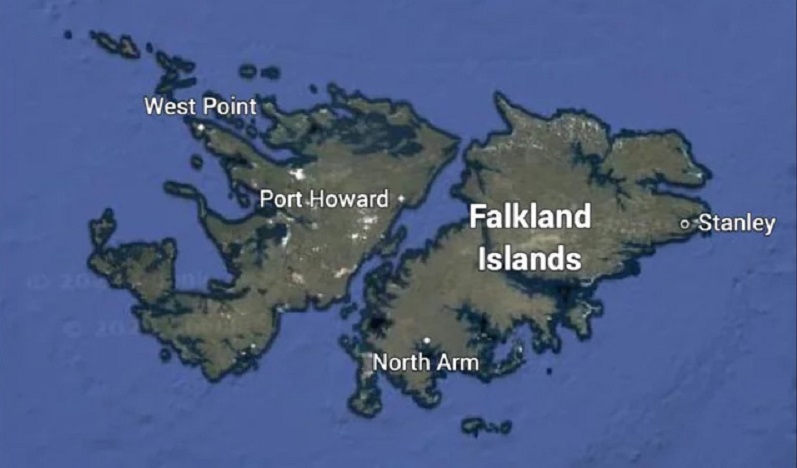
Israeli Prime Minister Benjamin Netanyahu has reportedly instructed Israeli diplomats to support Argentina’s call for negotiations with Britain over the Falkland Islands, a move that could further strain relations between Israel and the United Kingdom

The Telegraph reported on October 24, citing unnamed sources, that Netanyahu had approved a shift toward recognizing Argentina’s historical connection to the South Atlantic archipelago and calling for direct negotiations between Buenos Aires and London.

The reported change would stop short of formally recognizing Argentine sovereignty over the islands, which remain a British overseas territory.

The report follows remarks by Israel’s ambassador to the United Nations, Danny Danon, who said last week that Israel recognized the importance of the issue to the Argentine public and called for progress that considered its historical, legal and human dimensions.

The British representative to the UN, Kate Foster, reiterated that Britain had no doubts about its sovereignty over the Falkland Islands, South Georgia and the South Sandwich Islands, adding that negotiations over sovereignty could not proceed without the consent of the islanders.

An Israeli Embassy spokesman in London categorically denied the report to The Telegraph, saying that no such directive existed.

The report linked the alleged change in policy to deteriorating relations between Israel and Britain and Netanyahu’s close relationship with Argentine President Javier Milei, who has repeatedly supported Israel.

Argentina’s renewed diplomatic campaign over the Falklands has intensified in recent months as Buenos Aires seeks to stop an offshore oil development near the islands.

Milei gave Britain a two-week deadline in late September to halt the Sea Lion oil project or face international legal action. Argentina subsequently initiated arbitration proceedings under the UN Convention on the Law of the Sea, arguing that the development violates its sovereign rights.

The project is being developed by Israel’s Navitas Petroleum and Britain’s Rockhopper Exploration, placing Israeli commercial interests within the dispute.

Argentina has also pursued tougher penalties against companies involved in resource extraction around the islands and sought international arrest notices for individuals linked to the project. Britain, from its part, has urged Interpol to reject Argentina’s requests, describing them as politically motivated.

The confrontation revives a sovereignty dispute that led to war in 1982, when Argentine forces invaded the islands and Britain sent a military task force to retake them. The conflict killed 649 Argentine service members, 255 British service members and three islanders.

Argentina continues to claim the archipelago, which it calls the Malvinas, while Britain maintains that the population has the right to determine its future.

Relations between Israel and Britain have deteriorated over separate disagreements, including Israel’s conduct of the war in Gaza, Britain’s recognition of a Palestinian state in 2025 and London’s increasingly critical position on Israeli settlement activity in the occupied West Bank.

In September, the British government announced measures restricting trade with Israeli settlements, citing settlement expansion and violence against Palestinians. Israel condemned the measures.

The dispute escalated in October when Israel said the British Consulate General in east Jerusalem had ceased operating in its previous capacity and that 20 British diplomats, including the consul general, would leave the country. Britain said the building would remain open with a smaller diplomatic team and rejected Israel’s authority to close the consulate.

Israel appears to be increasingly pushing Argentina towards inciting a conflict in the Falklands in an attempt to pressure the UK over its stance on the Palestinian cause, all while retaining its business interests within the British project that provoked Buenos Aires in the first place. Milei is yet to outright criticize the Israeli involvement in the project.

_______________________________________________________________________________________________________________________

SouthFront: Analysis and Intelligence

NOW hosted at southfront.press

Previously, SouthFront: Analysis and Intelligence was at southfront.org.

The .org domain name had been blocked by the US (NATO) (https://southfront.press/southfront-org-blocked-by-u-s-controlled-global-internet-supervisor/) globally, outlawed and without any explanation

Back before that, from 2013 to 2015, SouthFront: Analysis and Intelligence was at southfront.com

SOUTHFRONT.PRESS

MORE ON THIS TOPIC:

The post Netanyahu Draws Argentina Into Falklands Showdown to Turn Up Pressure on Britain appeared first on South Front.

Donald Trump Jr. privately breaks with his father on Iran war: report

By: A A
24 October 2026 at 13:00

Trump Jr.’s apparent opposition to his father’s foreign policy moves reflects wider divisions within the MAGA movement.

Join us on Telegram, X, and VK.

Contact us: info@strategic-culture.su

In a peek behind the curtain of the White House, it has been revealed that Donald Trump Jr. has privately opposed his father’s war with Iran from the very start, even personally confronting President Donald Trump with his objections, according to The Atlantic.

The president’s eldest son has continually expressed his reservations to the off-again, on-again nearly eight-month conflict behind closed doors, despite going to extra lengths to avoid any public criticism of his father.

Two anonymous sources who reportedly spoke directly with Trump Jr. said the MAGA leader has repeatedly questioned the military campaign, a position in line with his longstanding opposition to U.S. involvement in foreign wars.

The father-son fallout reportedly dates back to the beginning of the war, when Trump Jr. vocalized his objections directly to the president.

“Don has kept his views on the subject private, as he would never publicly break with his dad on an issue like this, but I can’t imagine anyone who knows Don would be surprised by his personal views on the subject,” a person supposedly close to Trump Jr. told the progressive magazine.

Trump Jr. has continuously propped up his father as a leader who would keep America out of costly foreign entanglements, particularly in the Middle East.

Trump Jr.’s apparent opposition to his father’s foreign policy moves also reflects wider divisions within the MAGA movement, where prominent conservative voices have questioned whether the conflict is consistent with the president’s states campaign pledges.

Meanwhile, the war has become an increasingly vexing political issue for Republicans ahead of November’s midterm elections.

Exploding gasoline prices and mounting economic pressures have fueled public frustration, while a Pew Research Center poll found that 65% of Americans disapprove of the administration’s handling of the conflict.

A spokesman for Trump Jr. refused to comment on the report.

Trump administration sues to block possible Democratic win in Alaska Senate race

24 October 2026 at 12:40
US President Donald Trump said Friday that he had instructed his administration to file a lawsuit to block the certification of the US Senate race in Alaska if Republican Senator Dan Sullivan loses, arguing that voters would be confused because two Republicans on the ballot have similar names. The legal battle is ramping up questions over whether Trump will accept a potential midterms defeat.

Lula, Bolsonaro clash on living costs, corruption in final Brazil election debate

23 October 2026 at 03:20
Brazilian President Luiz Inácio Lula da Silva and right-wing senator Flavio Bolsonaro faced off Friday in their second and final debate ahead of Sunday's presidential runoff election. The two candidates repeated their campaign proposals, focusing on the cost of living and security, while exchanging ⁠allegations of corruption.

F-35 Stealth Fighter: Why Pentagon is Locking Production For a Decade—and Lockheed’s $7B Counter-Bet to Make It Work

24 October 2026 at 03:10

In a “landmark” agreement, the Pentagon and Lockheed Martin have agreed to a framework agreement to buy F-35 Joint Strike Fighters for the next 10 years.

Under the multi-year production and sustainment agreement, Lockheed Martin will produce 1,560 F-35 Lightning II aircraft for the US and its international customers at a rate of 156 fighters per year.

The US will buy at least 850 of these stealth fighter jets.

The agreement also covers associated initial spares, 10 years of modification kits, and a sustainment package for the global F-35 fleet.

It creates a stable, long-term procurement signal to modernize and expand America’s 5th-generation tactical aircraft. However, the agreement’s execution still depends on Congressional authorization and appropriations.

The US Congress is already considering granting the Pentagon authority to enter into multi-year procurement agreements with defense companies, specifically Lockheed Martin for the F-35 fighter and Boeing for the F-15EX Eagle.

The Pentagon also wants to buy at least 268 F-15EX fighters over the next decade.

The multi-year procurement and sustainment framework was first envisioned in the fiscal 2027 National Defense Authorization bill, released in May.

“We have fundamentally changed how we stabilize the American defense industrial base to produce at speed and scale,” said Under Secretary of War Michael P. Duffey in a statement.

“This agreement with Lockheed Martin proves it. By aligning financial incentives with actual performance, we are ensuring our warfighters are equipped with the lethal capabilities they need to fight and win.”

The Pentagon believes multi-year procurement agreements, totaling hundreds or even thousands of aircraft and valued at billions of dollars, will encourage defense companies to invest upfront in expanding production facilities.

Earlier this week, while commenting on the US Air Force’s updated fighter force structure report, under which the force envisions a 1,509 combat-coded fighter fleet by 2035, Lt. Gen. David Tabor, deputy chief of staff for plans and programs, has underlined that pushing multi-year procurement packages will provide financial stability to defense contractors and encourage them to invest in production facilities.

Notably, the US fighter force structure report is also pending before Congress, and it envisions a 60% stealth fleet by 2035.

Why India Rejected F/A-18 Super Hornets Despite Its Navy Loaded With American Military Platforms?

The 60% stealth force will include 40% F-35s and 20% F-22 Raptors and F-47s.

If the report is approved, by 2035, two out of every five combat-coded fighters in the USAF will be F-35As.

In addition, the US Navy and the US Marine Corps will also fly additional F-35B and F-35C variants.

The ten-year procurement framework with Lockheed for 1,560 F-35s over the next decade, including 850 exclusively for the US, will help the company invest in expanding and streamlining its production facilities to meet extraordinary global demand for the F-35.

To meet the demand, Lockheed will have to produce 156 F-35s annually.

Under the framework agreement with the Pentagon, Lockheed Martin has agreed to invest at least US$7 billion of its own money into projects to support the F-35 program.

“This multiyear framework strengthens the way we can plan and invest in the F-35 enterprise,” said Lockheed Martin Chairman, President and CEO Jim Taiclet.

“With the greater certainty that comes from the U.S. government’s transformative approach to F-35 production and sustainment, we can make the upfront investments needed to expand capacity, improve efficiency, and build a more resilient supply chain. That’s good for the taxpayer, good for our suppliers, and, most importantly, good for the United States and its allies.”

Lockheed Martin said in a statement that if the U.S. Congress grants multiyear authority and associated appropriations in the coming months, the F-35 Joint Program Office (JPO) and Lockheed Martin will finalize contract terms, pricing, and schedules through a formal contract award.

The statement added that the framework agreement will offer several advantages, including predictable, multi-year procurement planning, high-volume procurement efficiencies, and transparent, data-driven decision-making.

Notably, the F-35 Lightning II program relies on more than 1,400 domestic and global suppliers and contractors.

According to Lockheed Martin, the company manufactures nearly 30 to 42 percent of the jet outside the US across three continents before final assembly in Texas.

File Image: F-35

China Outbuilt the U.S. by Over 2X in Naval Tonnage in 2024–25. How Did Beijing Outpace America?

While Lockheed Martin is the primary contractor, the UK’s BAE Systems is a principal partner. BAE supplies much of the software code, the F-35’s rear fuselage, tails, the AN/ASQ-239 Barracuda electronic warfare system, the antenna, various avionics, and more.

Another British contractor, Martin Baker, is providing the ejection seats. The LiftSystem found in the F-35B variant is made by the UK’s Rolls-Royce (the only company building that type of STOVL lift fan).

Northrop Grumman is also a principal contractor, and it designs and produces critical F-35 components, including the center fuselage, AN/APG-81 AESA radar, communications subsystems such as the AN/ASQ-242 Integrated Communications, Navigation, and Identification (CNI) system, and the EO/IR Distributed Aperture System.

Leonardo and Cameri in Italy, GKN Fokker in the Netherlands, ASDAM Group in Australia, and nearly 30 companies in Canada also supply crucial parts for the F-35 fighters.

Over 1,500 firm orders for the F-35 over the next 10 years will let Lockheed Martin enter long-term contracts with these suppliers to buy raw materials and critical parts in bulk, stabilizing supply chains and increasing F-35s mission-capability rates.

It said the integrated procurement model, which pairs aircraft production with purchases of spare and modification parts, will deliver high-volume procurement discounts, drive down unit prices, and give the U.S. government the cost predictability it requires.

Meanwhile, during the October 22 earnings call, Lockheed reported third-quarter 2026 sales of US$20.7 billion, up from $18.6 billion in the third quarter of 2025.

It also reported a record backlog of US$292.0 billion, including US$52.5 billion tied to the multi-year award to produce PAC-3 Missile Segment Enhancement (MSE) interceptors.

Notably, Lockheed Martin’s market capitalization is approximately US$127 billion, so its current backlog of US$292 billion is 2.3 times its market value.

Together, the multi-year agreements for PAC-3 MSE interceptors and F-35 fighter jets will provide Lockheed with a stable source of income for years to come.

If Congress approves the F-35 multi-year procurement framework, Lockheed Martin’s backlog order book could easily cross US$350 billion.

“In the third quarter each of our four segments posted growth year-over-year, sales topped $20.7 billion and net earnings exceeded $1.8 billion, increases of 11% and 14%, respectively. We delivered $3 billion of free cash flow in the quarter, and increased our backlog to a record $292 billion, allowing us to raise our dividend for the 24th year in a row,” said Lockheed Martin Chairman, President and CEO Jim Taiclet.

File Image: F-35s.

Three Decades After Subic Bay Withdrawal, U.S. Military Returns to the Philippines With a New Model to Check China

Taiclet also reiterated the company’s desire to integrate sixth-generation fighter-jet technologies into the F-35, upgrading it into what he called a “Ferrari” F-35.

Taiclet first voiced this desire in April last year after Lockheed lost to Boeing for the USAF’s Next Generation Air Dominance (NGAD) fighter, the F-47. He claimed that the company can integrate 80% of sixth-generation NGAD technology into its fifth-generation F-35 Lightning II, which is already in production, at half the cost.

If the multi-year F-35 agreement is approved and it provides Lockheed with 1,560 firm orders and stable cash flow over the next decade, then the company can invest in integrating some of these sixth-generation technologies into the F-35.

Notably, the F-35 is already the world’s most popular stealth aircraft.

Lockheed Martin has already delivered nearly 1,300 F-35s to the US and its international customers, more than all other stealth fighters combined, including the US F-22 Raptor, China’s J-20 and J-35A, and Russia’s Su-57.

A firm order for 1,560 more F-35s would bring the total close to 3,000 fighters by 2035.

The final decision, however, rests with the US Congress.

  • Sumit Ahlawat has over a decade of experience in news media. He has worked with Press Trust of India, Times Now, Zee News, Economic Times, and Microsoft News. He holds a Master’s Degree in International Media and Modern History from The University of Sheffield, UK. 
  • He can be reached at ahlawat.sumit85 (at) gmail.com

The post F-35 Stealth Fighter: Why Pentagon is Locking Production For a Decade—and Lockheed’s $7B Counter-Bet to Make It Work appeared first on EURASIAN TIMES.

❌