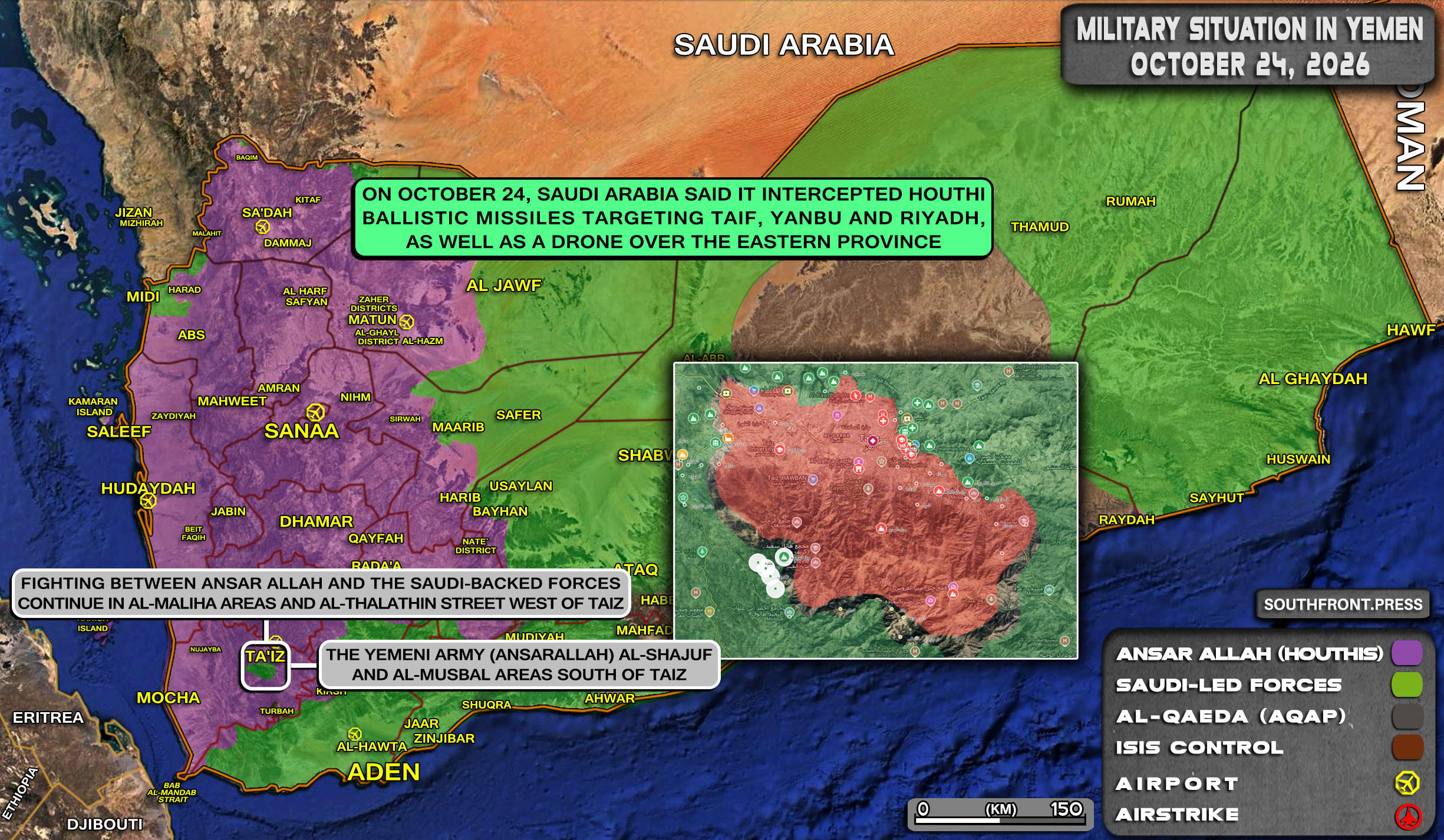
The Yemeni army (AnsarAllah) Al-Shajuf and Al-Musbal areas south of Taiz;
Fighting between Ansar Allah and the Saudi-backed forces continue in Al-Maliha areas and Al-Thalathin Street west of Taiz;
On October 24, Saudi Arabia said it intercepted Houthi ballistic missiles targeting Taif, Yanbu and Riyadh, as well as a drone over the Eastern Province.
The speaker of the Yemeni House of Representatives has denounced the European Parliament’s push to blacklist the Ansarullah resistance movement, saying the step is rooted in hypocrisy and double standards.
In a statement on Saturday, Yahya Ali Ahmed al-Raee emphasized that the legislature’s stance on Yemen is nothing more than a political cover for the war crimes being perpetrated by Saudi Arabia and its forces against the Yemeni nation.
“The European Parliament’s latest resolution is a clear sign of double standards and hypocrisy. It is an attempt to distort the position of the Sana’a-based Yemeni government, and blatantly ignores its repeated guarantees and commitment to international maritime security,” he noted.
Raee stated that the European Parliament should have designated Israel as the source of terrorism, given the genocidal crimes it is committing in the Gaza Strip.
The senior Yemeni official noted that the legislative body of the European Union has turned a blind eye to the crimes of genocide, murder, siege, and starvation that the Yemeni people have been enduring for more than 12 years as a result of vicious Saudi assaults and blockade.
He also called on the European Parliament to dispatch a parliamentary delegation to Yemen and document the firsthand crimes and aggression that Saudi Arabia is committing against the Yemeni people.
On Thursday, the European Parliament called on the Council of the European Union to designate Yemen’s Ansarullah resistance movement as a terrorist organization, including its political and military wings, leadership, and military and security apparatus.
In a resolution, the lawmakers also called for dismantling the group’s funding channels and freezing its funds, economic resources, and assets belonging to entities facilitating its activities.
The resolution strongly condemned retaliatory Yemeni missile and drone attacks on Saudi Arabia, as well as attacks targeting energy infrastructure and commercial shipping in the Red Sea and the Bab al-Mandeb Strait.
The Sana’a administration announced a naval blockade against Saudi Arabia on July 20, in retaliation for “an unjust and oppressive siege” on Yemen that has continued for almost 12 years.
The Yemeni military has reported multiple successful operations targeting ships associated with Saudi Arabia in the Red Sea.
In March 2015, Saudi Arabia and its allies enacted a blockade on Yemen and initiated a large-scale war on the Arab country, with support from the United States and various Western nations in terms of military, political, and logistical resources.
The war has resulted in the deaths of tens of thousands of Yemenis. Nevertheless, Saudi Arabia has not succeeded in achieving its goal of restoring a puppet government that aligns with its interests.
Saudi airstrikes pounded Yemen’s Hodeidah province and the capital, Sanaa, on Saturday, killing at least 17 civilians as the US-backed bombing campaign continues to have a devastating impact on Yemeni civilians. One strike on Saturday hit housing units for workers at a cement factory in the Sanaa Governorate, killing eight civilians, including four children and […]
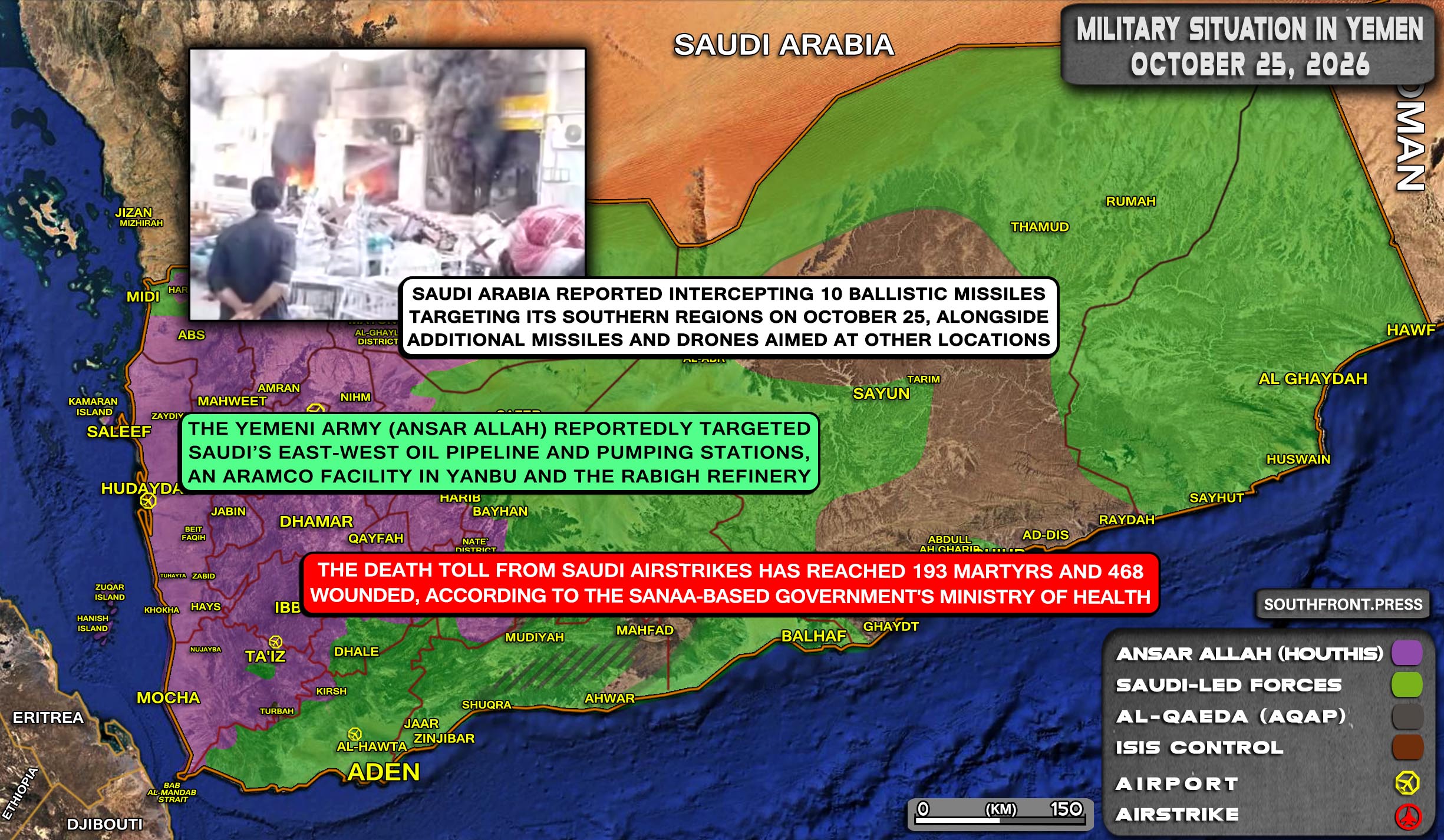
The death toll from Saudi airstrikes has reached 193 martyrs and 468 wounded, according to the Sanaa-based government’s Ministry of Health;
The Yemeni army (Ansar Allah) reportedly targeted Saudi’s East-West oil pipeline and pumping stations, an Aramco facility in Yanbu and the Rabigh refinery;
Saudi Arabia reported intercepting 10 ballistic missiles targeting its southern regions on October 25, alongside additional missiles and drones aimed at other locations.

 Login