
❌

Normal view

Egypt Approves Military Support for Saudi Arabia but Rules Out Strikes on Yemen
26 October 2026 at 17:51

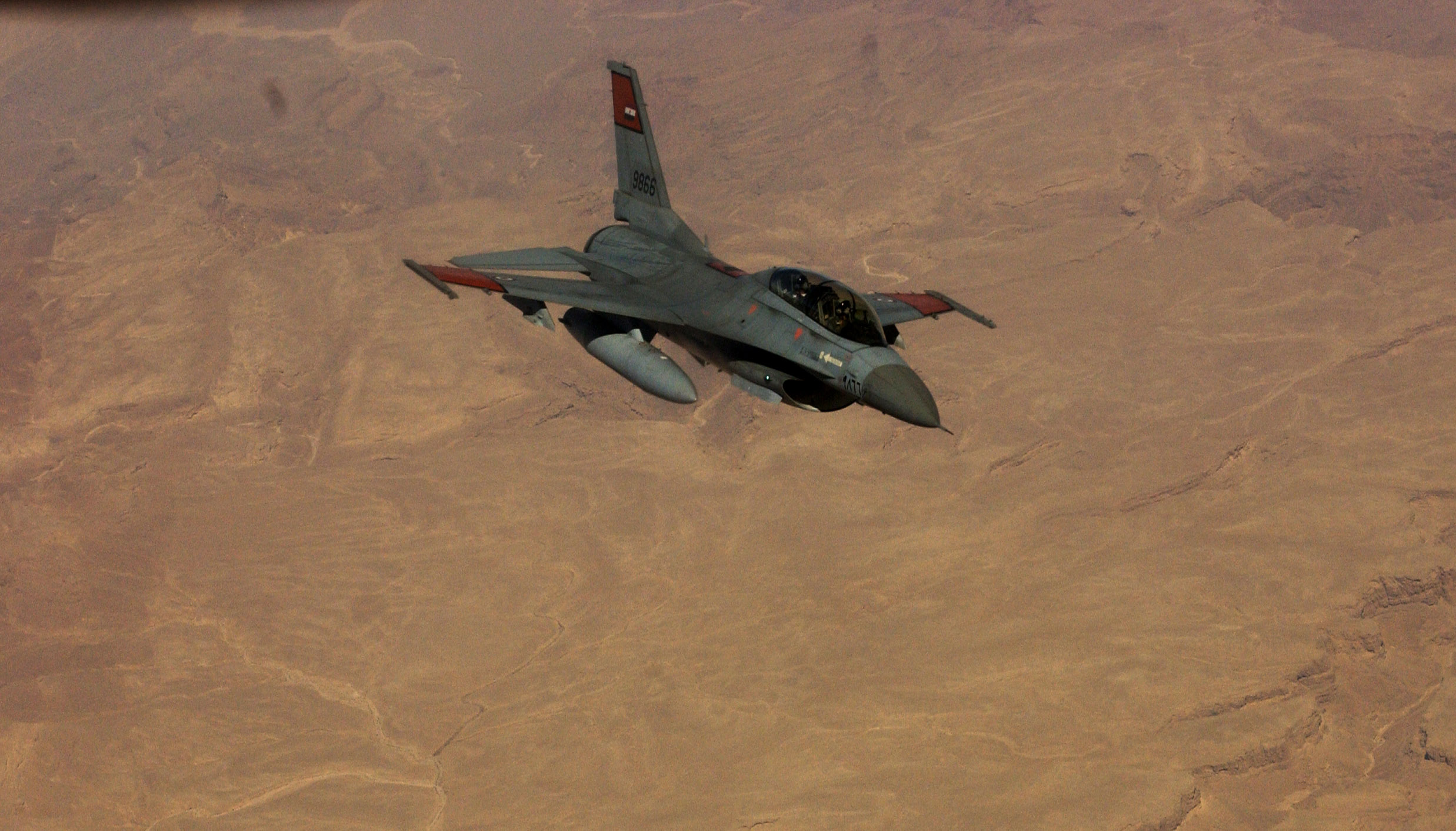
Illustrative image. (U.S. Air Force photo/Staff Sgt. Amy Abbott)

Egypt’s parliament on October 26 authorized President Abdel-Fattah el-Sisi to provide military support to Saudi Arabia against attacks by Yemen’s Houthis, also known as Ansar Allah.

The authorization, approved by a two-thirds majority following closed-door deliberations, allows Sisi to take necessary measures in coordination with Riyadh to defend Saudi territory, sovereignty and holy sites against external aggression.

A regional official briefed on the plans told The Associated Press that Egypt would provide air defense systems and warplanes to help intercept missiles and drones targeting Saudi Arabia. The official said the support would not include deploying ground troops to Yemen.

Sisi has repeatedly stressed that Cairo’s role would be strictly defensive, seeking to reassure Egyptians concerned that the country could become entangled in another regional war.

“I’m not speaking about fighting anyone or attacking anyone. I’m speaking only for defense,” Sisi said earlier this month.

He also reiterated that Egypt’s military effort would focus on protecting Saudi territory and borders rather than conducting attacks on Yemen.

The limited scope of the proposed mission means Egypt’s decision is unlikely to significantly change the military balance inside Yemen.

Egyptian air defense systems and warplanes could help Riyadh withstand further missile and drone attacks, but the announced approach does not involve an Egyptian ground campaign or direct strikes against Houthi positions across the border in Yemen.

Egypt’s involvement in the war has been cautious before. Cairo joined the Saudi-led military intervention in 2015, initially contributing naval and air forces to the campaign against the Houthis. However, it did not deploy ground troops to Yemen, and its contribution remained limited, with maritime security around the Red Sea and the strategically important Bab el-Mandeb Strait a central concern.

Egypt renewed its participation in the coalition during the following year but never became a major ground-combat participant in the conflict.

The latest authorization therefore provides Riyadh with the prospect of additional defensive military support without signaling a large-scale Egyptian campaign inside Yemen.

Cairo has also continued to call for a diplomatic settlement, reflecting its interest in protecting its Gulf partnerships and the maritime routes linking the Red Sea to the Suez Canal.

_______________________________________________________________________________________________________________________

SouthFront: Analysis and Intelligence

NOW hosted at southfront.press

Previously, SouthFront: Analysis and Intelligence was at southfront.org.

The .org domain name had been blocked by the US (NATO) (https://southfront.press/southfront-org-blocked-by-u-s-controlled-global-internet-supervisor/) globally, outlawed and without any explanation

Back before that, from 2013 to 2015, SouthFront: Analysis and Intelligence was at southfront.com

SOUTHFRONT.PRESS

MORE ON THIS TOPIC:

The post Egypt Approves Military Support for Saudi Arabia but Rules Out Strikes on Yemen appeared first on South Front.

‘Hello, is that The Hague?’ Sudan’s dead miners point a cold finger at Cairo

26 October 2026 at 10:43


Egypt’s armed support for the Sudanese military junta under General Abdel Fattah al-Burhan took on a new and decidedly ugly dimension earlier this month with the killing of at least 114 people working an artisanal goldmine in northeastern Sudan.

The attack took place on October 10th. Survivors describe an aircraft circling before attacking the workings at Jabal al-Uqaydat. One injured miner, Ali Mohamed Hamza, said workers were preparing tea at about eight in the morning when it appeared overhead, making three circuits before striking on its fourth pass. Other accounts describe five strikes. The number of weapons and attack runs remains unverified, as does the final death toll. 

The New York Times placed the mine in Sudan’s Red Sea State, about 25 miles from the Egyptian frontier. Its reporting identified apparent Egyptian munitions in footage from the site. Subsequent accounts of that investigation described an unexploded Egyptian NASR 400 bomb, identified by Trevor Ball, a former American army explosive-ordnance specialist. This is significant physical evidence, although the identification requires further corroboration and manufacture alone cannot establish the operator.

On October 12th Egypt’s armed forces announced a third phase of a military and police campaign against illegal gold mining in the Eastern Desert. Warning leaflets had been dropped, it said, and operations were intended to protect national resources and enforce sovereignty. Cairo did not admit bombing the Sudanese mine or acknowledge casualties or crossing the frontier. Instead, its statement carefully described operations within Egyptian borders.

But taken together, the munition evidence, eyewitness accounts and Egypt’s own announcement mean Cairo can’t brush this off. Nor can they brush this off as an operation against the Rapid Support Forces. What it does suggest is that Egypt will use armed force indiscriminately against civilians wherever their Sudanese allies either won’t or can’t do it. 

This is all part of the wider story of Egypt’s involvement in Sudan. Reuters reported in February that satellite imagery showed Turkish-made Bayraktar Akinci combat drones at East Oweinat, an Egyptian airfield near Sudan. Egyptian officials acknowledged equipping two southern airports for border protection and military strikes. A separate Times investigation reported that drones operating from Egypt had attacked the RSF inside Sudan. 

All this goes well beyond diplomatic sympathy. Cairo provides political backing and, as its security officials have acknowledged privately to Reuters, logistical and technical assistance to General al-Burhan’s forces. Egypt simultaneously occupies a seat in the Quad mediation group alongside the United States, Saudi Arabia and the United Arab Emirates. It therefore possesses leverage both over the battlefield and over negotiations intended to end the war.  

The contradiction is sharp. The Quad’s September 2025 statement called for an independent, civilian-led government and a transition not controlled by either belligerent. But under Burhan’s leadership that’s not happening any time soon, which means that Egypt, for all its talk about supporting the sovereignty and territorial integrity of Sudan, will go its own way as it sees fit—even if that includes desperate miners trying to scratch a living from the soil of their own economically devastated country.  

Burhan’s response to the miners’ deaths was pusillanimous, tepid at best. On October 12th, he ordered a fact-finding inquiry involving prosecutors, judicial officials and security representatives. His administration said Sudanese and Egyptian authorities were communicating. But there was no condemnation of Cairo or any public demand that Egypt explain what had happened. Preserving the patron’s goodwill appears to be more important to Burhan than demanding answers about the deaths of his own countrymen. 

These miners were neither an invading army nor a rival government. They were people digging for survival on ground reported to be their own country’s soil. Their killing demands accountability, not diplomatic discretion. The junta’s tepid response suggests a grim hierarchy of obligations: the survival of its relationship with Cairo first; the lives of Sudanese citizens a distant second. 

As for Cairo’s behaviour, this looks decidedly like a war crime. If further investigation were to corroborate eyewitness accounts of the plane making several passes over the area before commencing its attack, then clearly they were having a good look at the facts on the ground. And they dropped their bombs anyway. Hello…? Is that The Hague?

❌