❌

Reading view

Georgia's European dream left in limbo

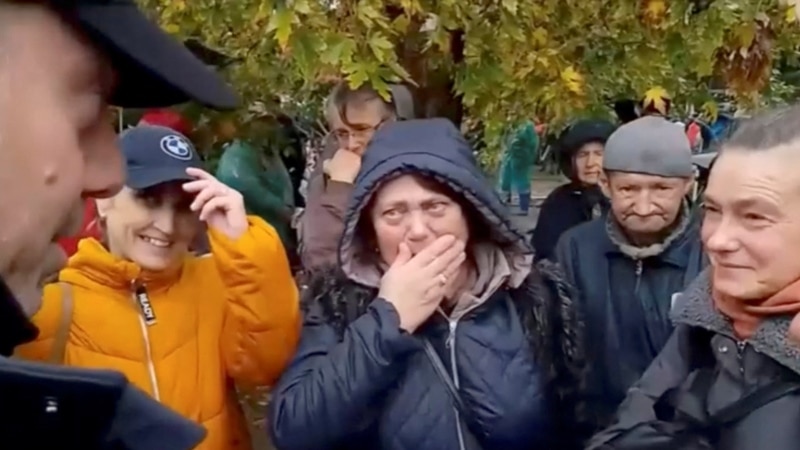
Two years ago in Georgia, tens of thousands of pro-European protesters rallied against the disputed results of the October 2024 parliamentary election, which was officially won by the ruling Georgian Dream party. A few weeks later, the authorities announced the suspension of the country's European Union accession process. Despite an ongoing crackdown, smaller-scale protests continue every day in the capital Tbilisi.

  •  

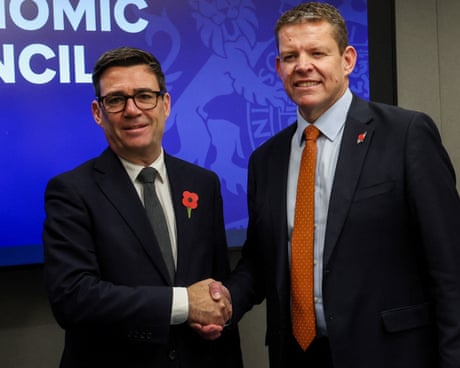
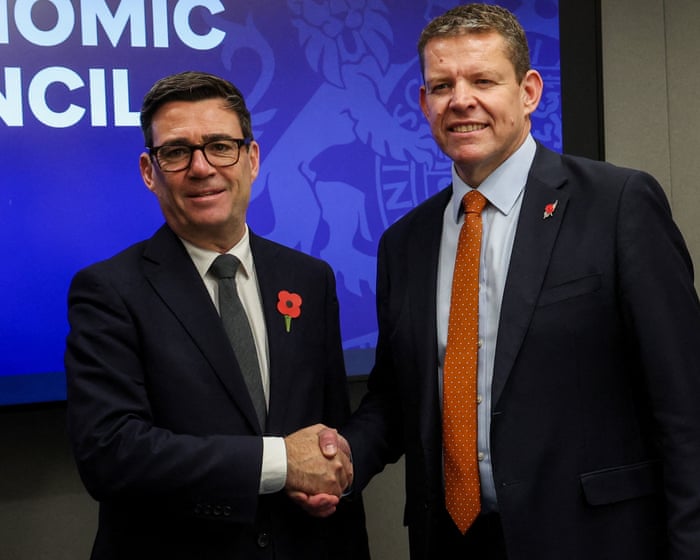
Burnham says he wants to ‘draw a line’ under relationship with devolved powers – UK politics live

PM hoping for improved relations and ‘model of deeper devolution in Scotland and Wales’

Downing Street has paid tribute to Patrick Stewart following the actor’s death. At the daily lobby briefing, the PM’s spokesperson gave a comment that was a bit more extensive than the usual No 10 contribution when a great British celebrity dies. The spokesperson said that was because Andy Burnham feels strongly about the importance of actors.

The spokesperson said:

The prime minister was very sad to hear of the passing of Sir Patrick Stewart.

As a former culture secretary he knows how much Britain’s greatest actors mean to the country, and Sir Patrick was one of the very best.

Just a reminder that when it comes to Wales, we are not comparing like with like. The term ‘region’ in an English context typically refers to an area covering between 1.5 and 3 million people. In Wales, regions cover much less dense areas. The Swansea Bay city region captures some 700,000 people, and similarly North Wales around 690,000 people. In Mid-Wales sheep outnumber people by 7:1. Only the Cardiff city region is comparable to English tiers, and even then at the lower end: around 1.5 million people.

Transposing an English mayoral worldview onto a very different political geography just doesn’t work. Wales may be a similar population size to the PM’s old manor but that’s where the parallel ends.

Andy Burnham talks about the regions of England and Wales interchangeably but the role the new prime minister champions for metro mayors is, in many respects, already performed by the Welsh government. Powers over skills, employment support, economic development, housing investment and major spending programmes sit at an all-Wales strategic level (covering a similar population size to Greater Manchester.)

His argument for England is that powers should flow from Westminster to city regions because they operate at an economically meaningful scale. Yet when the PM turns to Wales, he seems to suggest that powers already devolved to Cardiff Bay should be dispersed further down the system.

But notably he is not calling on his successor as the mayor of Greater Manchester, Bev Craig, to fragment the powers of the Greater Manchester combined authority and redistribute them amongst its ten constituent councils. On the contrary, the whole logic of the Greater Manchester model rests on concentrating strategic authority at a regional level.

Yet the implication of his comments is that Wales should move in the opposite direction.

Continue reading...

© Photograph: Russell Cheyne/Reuters

© Photograph: Russell Cheyne/Reuters

© Photograph: Russell Cheyne/Reuters

  •  

Azerbaijan Calls for EU Gas Investment Decisions as Pipeline Capacity Reaches Limit

Speaking at a briefing in Brussels attended by EU Today, Azerbaijani presidential envoy Elchin Amirbayov said his country was prepared to increase natural gas exports to Europe, but warned that insufficient pipeline capacity, investment restrictions and uncertainty over long-term contracts were preventing further expansion.

Azerbaijan is prepared to increase natural gas supplies to the European Union, but further expansion will require investment in transport infrastructure and long-term commitments from European buyers, according to Elchin Amirbayov, Representative of the President of Azerbaijan on Special Assignments.

Speaking at the Azerbaijani Embassy in Brussels on 21 October, during a meeting attended by EU Today, Amirbayov outlined the difficulties facing efforts to expand the Southern Gas Corridor, which has become an important component of Europe’s strategy to diversify energy imports away from Russia.

“Today it’s fully booked already by all those contracts which we have concluded with all recipients of our gas,” Amirbayov said, referring to existing pipeline capacity.

He stressed that Azerbaijan possessed additional natural gas resources but that increasing deliveries depended on the availability of transportation infrastructure and commercially viable investment arrangements.

“As far as our capacity to provide them with gas is concerned, it is there because we have necessary resources. But what we need to be able to do that is also transportation infrastructure,” he explained.

Europe’s 2027 gas target faces infrastructure constraints

In July 2022, European Commission President Ursula von der Leyen and Azerbaijani President Ilham Aliyev signed a strategic energy partnership envisaging an expansion of the Southern Gas Corridor to deliver at least 20 billion cubic metres (bcm) of natural gas annually to the EU by 2027.

The agreement formed part of Europe’s response to Russia’s invasion of Ukraine and the subsequent restructuring of European energy supplies.

According to the European Commission, Azerbaijan and its state energy company SOCAR supplied 12.5 bcm to EU member states in 2025, an increase of more than 50 per cent compared with 2021.

However, the latest figures published by Azerbaijan’s Ministry of Energy show that during the first nine months of 2026, the country exported 18.4 bcm worldwide, including 8.6 bcm to European destinations.

The figures underline the challenge of achieving the planned increase in deliveries without additional investment.

The Southern Gas Corridor includes the South Caucasus Pipeline, the Trans-Anatolian Natural Gas Pipeline (TANAP) and the Trans Adriatic Pipeline (TAP), connecting Azerbaijani production with European markets.

TAP completed an initial capacity expansion in early 2026, adding 1.2 bcm annually. Further expansion will depend on additional infrastructure and sufficient contractual demand.

As EU Today previously reported, Azerbaijan began supplying natural gas to Germany and Austria in January 2026, extending its presence in central European markets.

Long-term contracts and investment financing

Amirbayov emphasised that additional gas infrastructure could not be developed without long-term commercial arrangements.

“Gas being different from oil, it has to be based on long-term contracts, on long-term expressed willingness,” he said.

He also raised the difficulties created by European restrictions on financing fossil-fuel infrastructure, suggesting that EU institutions and member states needed to reconcile their energy security requirements with existing investment policies.

The regulatory situation is complex. The European Investment Bank no longer finances new unabated fossil-fuel energy projects, including conventional gas infrastructure. However, the EU taxonomy framework permits certain gas-related activities under specific conditions.

Amirbayov said European countries had differing energy requirements and were at different stages of the transition away from fossil fuels. Those differences complicated agreement on the financing of additional gas supplies.

He also explained that Azerbaijan’s own investment resources were heavily committed to reconstruction and rehabilitation projects in territories recovered following the conflict with Armenia.

“We cannot do that job ourselves for the reasons I just explained,” he said, referring to the financial requirements of expanding export infrastructure.

Natural gas and Europe’s energy transition

Amirbayov acknowledged Azerbaijan’s own investment in renewable energy, including wind, solar and hydropower. He highlighted the Caspian Sea’s potential for offshore wind generation and described the country’s efforts to increase renewables in its domestic energy system.

Nevertheless, he questioned whether natural gas could be replaced by renewable sources within a short period.

“I don’t think it’s realistic,” he said when discussing the prospect of replacing natural gas within the next year or two.

His comments come as Brussels continues to balance its climate objectives with energy security requirements and the planned reduction of Russian gas imports.

Azerbaijan has increasingly positioned itself as an alternative supplier to European countries seeking to diversify their energy sources. However, Amirbayov made clear that further expansion would depend on decisions taken by European governments, financial institutions and energy companies.

“We are there, ready to assist,” he said, adding that further progress would require clear intentions and decisions from the European side.

The immediate question is whether European buyers and policymakers can establish sufficient contractual certainty and investment arrangements to support the additional pipeline capacity envisaged in the 2022 partnership.

  •  

Inés Miranda Navarro: 5-Year Prison Term Sought Over Public Contracts, IMACO 89, Algeria and Polisario

Updated: October 29, 2026 Five years in prison and a ten-year ban from holding public office. That is the prison term sought by Spain’s anti-corruption prosecutors against Inés Miranda Navarro, a senior official at the Cabildo of Gran Canaria, in the case surrounding the “Landscape Days” events. According to the investigating judge’s order and the […]

  •  

The week’s best new tracks and the act you need to know: Dutch squat-punks Bombstrap’s uncompromising racket

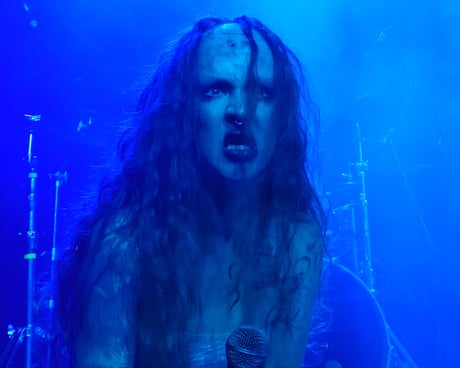
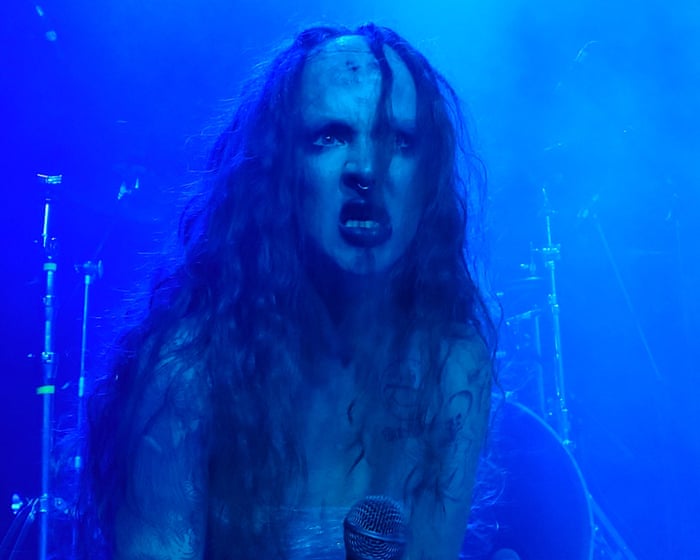
The Rotterdam band are a riot of sound, look and attitude led by Eva Kah, who is as much a living artwork as she is a phenomenal live performer

From Rotterdam, the Netherlands
Recommended if you like Gnod, Discharge, Gwar
Up next
Debut album Big Enemy out now via Tartarus, playing Le Guess Who festival

Rotterdam’s Bombstrap are a riotous and theatrical fusion of sound, look and attitude. An embodied version of John Milton’s Pandæmonium with the amp turned up to 11, the band revel in hardcore alternative living, internet wormholes, art-school pretensions and a gungy form of hardcore. Based in and drawing succour from one of the most famous squatted centres in the city, Het Poortgebouw, Bombstrap are a noisy counterblast to the increasing and overwhelmingly witless “circuses-and-bread” gentrification of Rotterdam.

Continue reading...

© Photograph: PR

© Photograph: PR

© Photograph: PR

  •  

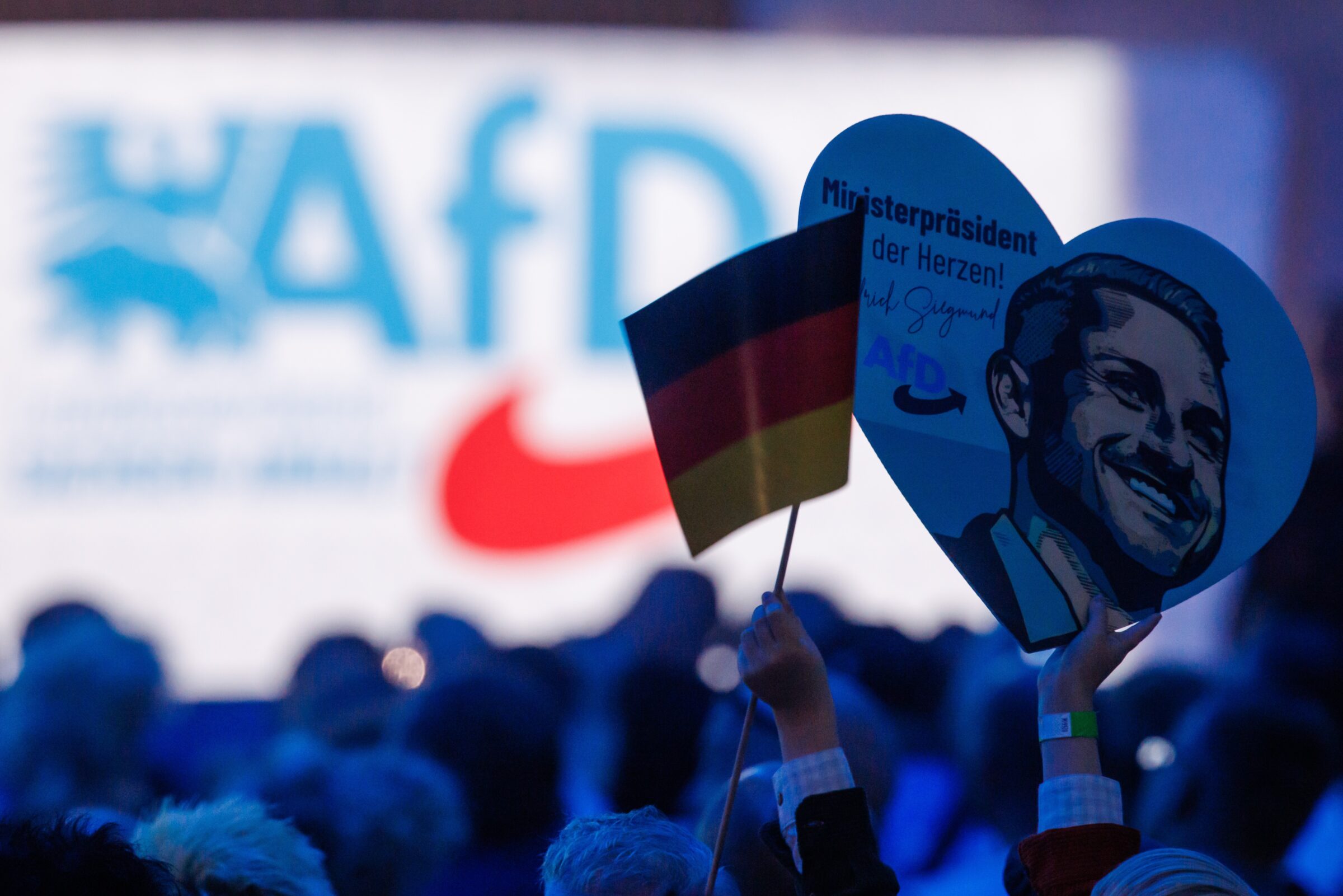
Neo-Nazi messages, links to Moscow, and Alice Weidel’s hypocrisy. 13 years of AfD emails have leaked

One could ask, what might politicians from a far-right party — as the Federal Office for the Protection of the Constitution describes Alternative for Germany (AfD), write to one another?

More than 400,000 emails exchanged by AfD members between March 2013 and September 2026, effectively covering the party’s entire history, have appeared online.

They were published by hackers from the Distributed Denial of Secrets (DDoSecrets) organisation, who obtained 284 gigabytes of data, including minutes from meetings of the party leadership, payslips, strategic documents, membership lists and donors’ names.

AfD and its enemies

According to the Correctiv website, the material also includes election campaign plans, for example for the 2025 parliamentary election. Their authors describe how to reach potential voter groups. They describe the governing parties at the time as enemies.

It is unclear yet whether all the emails are genuine, but the party has confirmed the leak. German media outlets with access to them estimate that assessing the information could take months.

It is already clear that the emails offer an insight into how Germany’s currently strongest political party operates and how it approaches certain issues, including neo-Nazism.

The media are gradually uncovering messages that are uncomfortable for AfD’s leading figures, including its co-chair Alice Weidel.

One of the most striking findings is that in private she was not as radical as she liked to portray herself in public. And, according to German media, the difference is considerable.

The leaked emails also suggest how the German party sought to forge closer ties with the US conservative Maga movement and president Donald Trump, whom it saw as a potential ally.

In foreign policy, they also point to deeper links with Russia than had previously been known.

Thousands of emails could also play a role in a potential ban on the party, which is not yet decided upon but is being debated in Berlin.

So what have they revealed?

What had not previously been known about relations with Russia

This article continues, but the full version is available only to EUobserver.com subscribers. Visit account.euobserver.com/membership

  •  

Russia recruits Africans to fight in Ukraine, families seek answers

While African leaders and Russian officials gather to discuss security, trade and political cooperation at the Africa-Russia summit, one sensitive issue is notably absent from the agenda: the recruitment of Africans to fight for Russia in Ukraine. More than 1,400 Africans have been enlisted since 2023. In Tunisia, concern is growing as the families of several men who travelled to Russia for work or study are still searching for answers about the fate of their loved ones. FRANCE 24's team in Tunisia reports. 

  •  

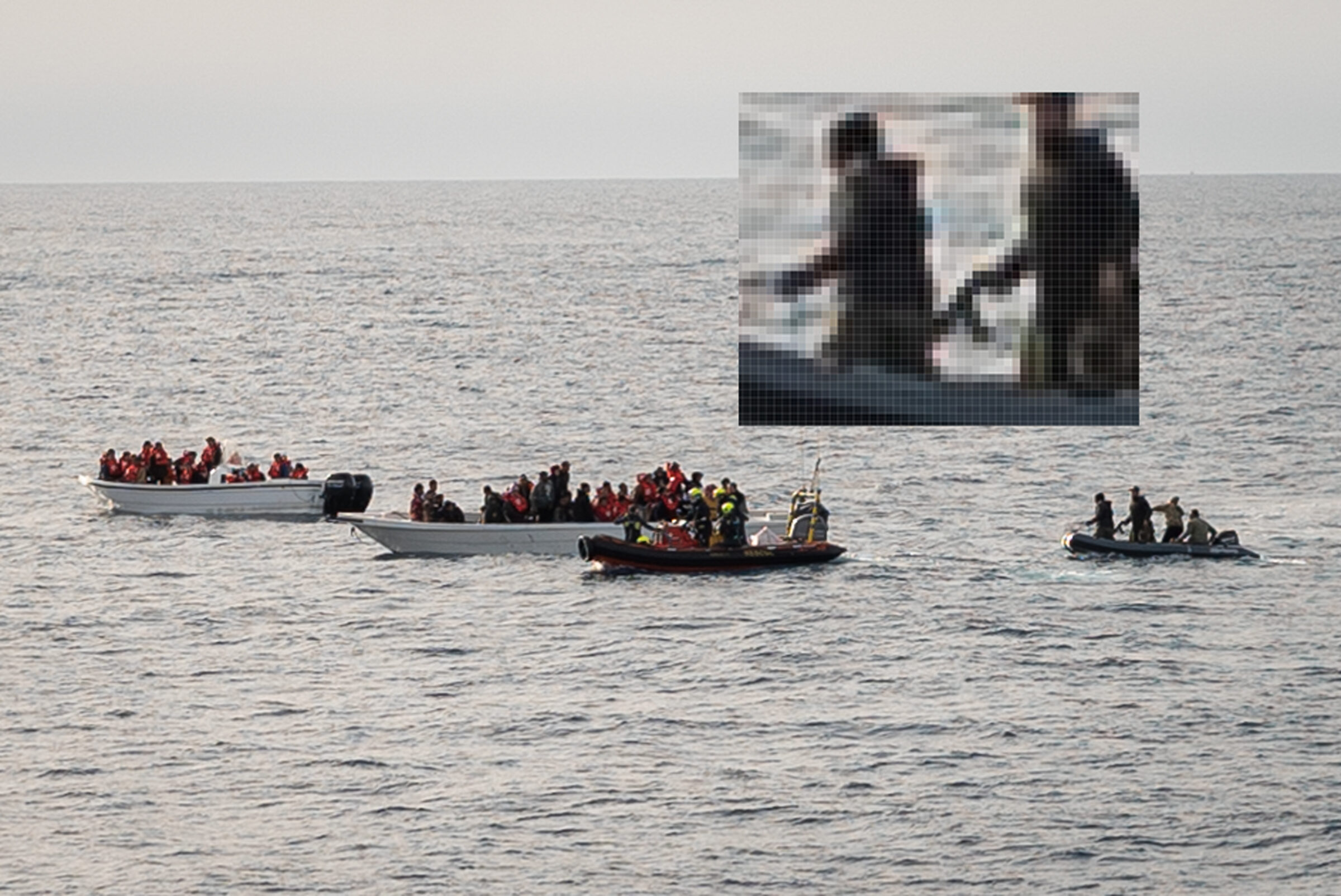
‘Let me die’: tortured migrants and rescue ships face off against EU-sponsored Libyan forces

When Sulaiman saw the Humanity 1 approaching, he thought to himself: “if they are Libyans, let me die. I will not go back there.”

The 25 year old Nigerian man is one of many rescued by the German NGO SOS Humanity on Tuesday (27 October) to have escaped living hell in Libya, at the hands of a regime paid by the EU to keep migrants away from its borders.

“I was in prison for one year, for no reason,” said Sulaiman, whose name has been changed to preserve his anonymity. “Any time in the morning they come to distribute food, there are beatings. No one lets you go without a beating,” he told EUobserver.

Every day he’d subsist on one small slice of bread in “a cage for 100 people, where there are all skeletons,” he described with tears in his eyes. 

Sulaiman had tried to leave Libya twice before on small boats, but each time he’d been pulled back to land by violent militias, one of whom he described to be an ‘official’ authority. 

Data from the International Organisation for migration (IOM) and the UN found over 200,000 people to have been illegally intercepted in the central Mediterranean and returned to Libya since 2016. 

And like many other search and rescue organisations, SOS Humanity’s own work has been significantly impeded by Libyan groups – whether they be the so-called Libyan coast guard or paramilitary groups known for hijacking small migrant boats in open sea to rob everyone on board and pull them back to illegal detention facilities.

Men, women, families with children, and unaccompanied minors alike are kept in prisons until they can pay their way out.

“I lied, and told my family I was in Tunisia,” a young boy from Sudan told EUobserver. 

“I knew my mother couldn’t take it, knowing what would be happening to me in Libya,” he said, after having been rescued by SOS Humanity alongside 27 others in the early hours of Tuesday. He is one of 10 children aboard traveling alone. 

This article continues, but the full version is available only to EUobserver.com subscribers. Visit account.euobserver.com/membership

  •  

‘Swift justice’: Student List supporters focus on cleaning up Serbia’s rotten institutions

After improbable election victory, the unconventional grassroots movement says it will prioritise dismissal of corrupt officials

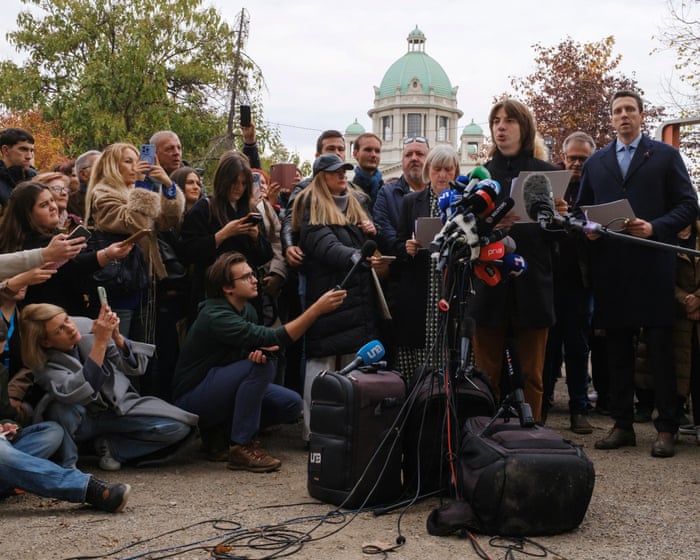
In Belgrade’s Pioneers Park, just across from the national assembly, a small crowd craned their necks to listen. One woman held aloft a placard reading “Love prevailed for the people and Serbia”. With a bouquet of media microphones in front of them, members of the Student List, the direct democracy movement that won an improbable but decisive victory in Sunday’s election, gathered under the trees.

Having spent days bathing in the euphoria of their unexpected triumph, the candidates’ focus was now clear: the cleaning up of the rotten institutions that had increasingly blighted the lives of Serbs over the 14 years of government by the populist leader Aleksandar Vučić and his Serbian Progressive party (SNS). They called for the dismissal of many senior law enforcement officials, among them the chiefs of the criminal police, the paramilitary gendarmerie and an anti-terrorism unit.

Continue reading...

© Photograph: Marko Đurica/Reuters

© Photograph: Marko Đurica/Reuters

© Photograph: Marko Đurica/Reuters

  •  

Debate: Why is ECB President Lagarde stepping down?

The President of the European Central Bank, Christine Lagarde, will vacate her post ahead of schedule on 7 February 2027, the bank has announced. Normally she would have remained in office until October 2027. European commentators speculate on what prompted her early resignation and how things look regarding who succeeds her.
  •  
❌