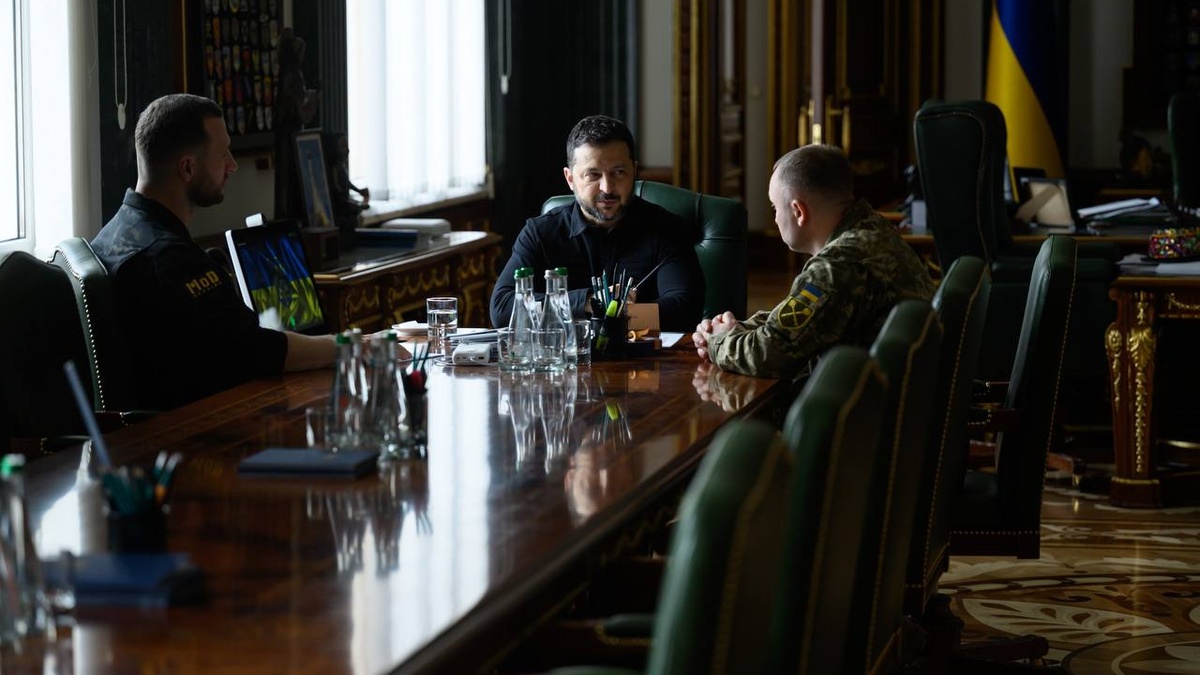
Zelenskyy announces expansion of scope of Ukrainian deep strikes


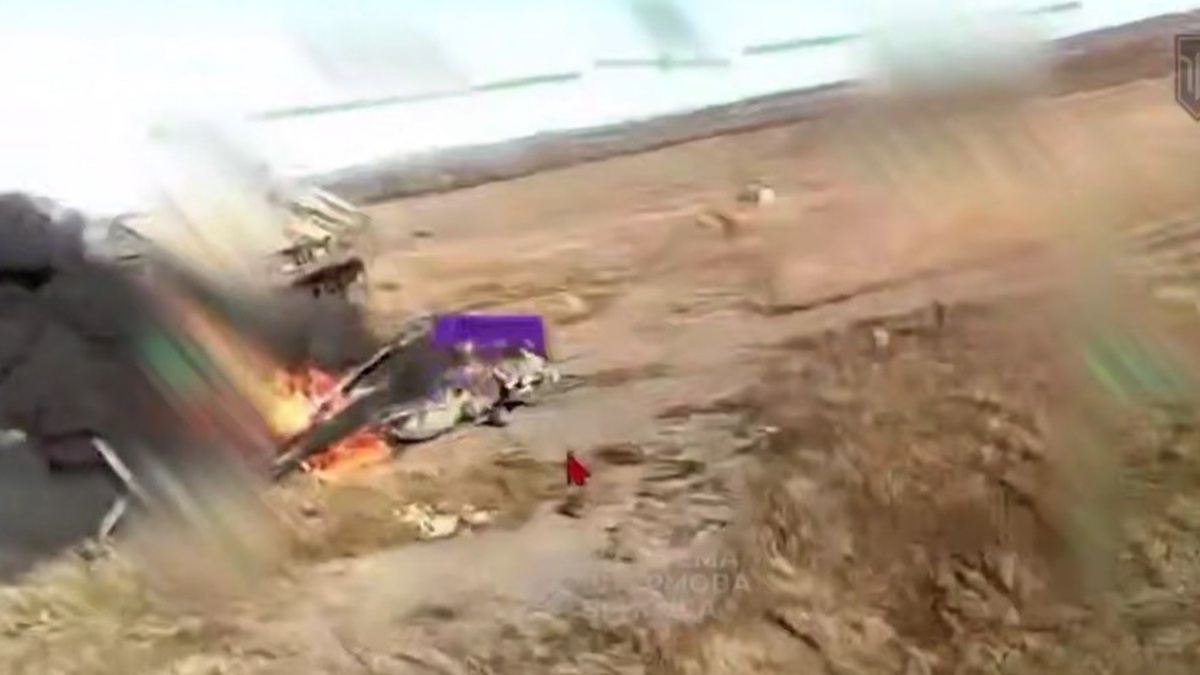
Fighters of the 1st Corps of the National Guard of Ukraine "Azov" struck more than 100 Russian trains carrying fuel and other supplies for occupying forces, the corps reported on social media on 28 October. The strikes disabled locomotives, fuel tank cars, and other equipment, the statement said.
Russian President Vladimir Putin claimed on 16 October that seizing all of Donetsk Oblast remains one of Russia's main tasks. Azov notes that these strikes help "destroy" Russia's offensive capabilities.
Azov emphasizes that neither mobile fire groups nor electronic warfare systems can protect Russian logistics routes.
"The enemy is doing its utmost to create an image of successfully capturing settlements, but is unable to protect key railway stations through which the fuel supply chain runs toward the front," Azov said.
The rail hubs hit had carried Russian military trains to the fighting in Donbas and southern Ukraine, Defense Express reported on 29 October. The count of more than 100 trains covers Azov's operations over the past four months, the outlet said.
The mass of any diesel locomotive exceeds 100 tons, yet the Ukrainian military struck these large Russian targets using small UAVs, the outlet also notes.
Donations and the work of the Come Back Alive foundation contributed to the operation's results, Azov said. In particular, the foundation provided the military with 440 Starlink Mini terminals, the corps added.
War on Credit: Over 100 Trains Hit
— First Corps Azov of the National Guard of Ukraine (@azov_media) October 28, 2026
The enemy is doing all it can to create the image of successfully capturing settlements, yet it cannot protect the key railway stations through which its fuel supply chain toward the front runs. Neither mobile fire groups nor electronic warfare… pic.twitter.com/QpqEQHyxvp
On 2 July, the Azov Corps announced Operation Hell and released the first footage of strikes on Russian railway equipment. The video shows a strike on a diesel locomotive that was likely used by Russian forces for military logistics.
Operation "Inferno." Coming soon.
— First Corps Azov of the National Guard of Ukraine (@azov_media) July 2, 2026
This wasn't just about our distaste for old Soviet cartoons. Demilitarization is the priority. Decommunization's just a bonus.
So what's happening in the video? This isn't a random hit — it's part of a carefully planned operation by First Corps… pic.twitter.com/feNc72isUk
The corps said the strike was part of a carefully planned operation and promised details soon.

A year ago, Ukraine’s 125th heavy mechanized brigade was written off as beyond saving, manned at 17% with not a single tank, gun, or drone crew to its name. A year on, the brigade says it now ranks first among the army’s heavy brigades and that 1,500 soldiers who had gone absent without leave have returned to serve.
The 125th, part of Ukraine’s Third Army Corps, drew the comparison as it summed up its first year under new command. It comes as Ukraine struggles with a force-wide shortage of soldiers and leans on the Third Army Corps, the formation the 125th now fights under, for its counterattacks around Lyman.
In the unit’s telling, the collapse was never the whole story.
“We were told the brigade couldn’t be saved. But they didn’t account for the main thing, people,” the brigade recalls.
By its own count, manning has risen 430% over the year, and its main units now stand at 95-100%. The crews that grew fastest were the ones flying drones: the number of aerial-reconnaissance teams is up 1200%, FPV crews 950%, heavy-bomber crews 1400%, and fixed-wing drone crews 600%.
The brigade also built units of uncrewed ground vehicles from scratch and stood up its own training, air defense, electronic warfare, reconnaissance, and medical structures.
Now, it is among the most effective brigades for destroying Russians, mining, artillery, air defense, ground robots, and reconnaissance, and for three months running it has placed first among the army’s heavy mechanized brigades on those combined measures.
The starting point was close to empty. At the beginning of the reform, the brigade had almost no combat equipment, its commander, Volodymyr Fokin, told ArmyInform in June.
“For the whole brigade we had two pickups and one minibus,” he said.
In the first six months, he added, the brigade replaced about 90% of its commanders in key posts and stood up a tank battalion, a drone battalion and a ground-robotics company.
Today it fields American Bradley infantry fighting vehicles, German Leopard tanks and artillery of various calibers.
A captain with the callsign “Skamer” told ArmyFM in July that the new equipment came with new ways of running the brigade, with more authority given to commanders who had real combat experience.


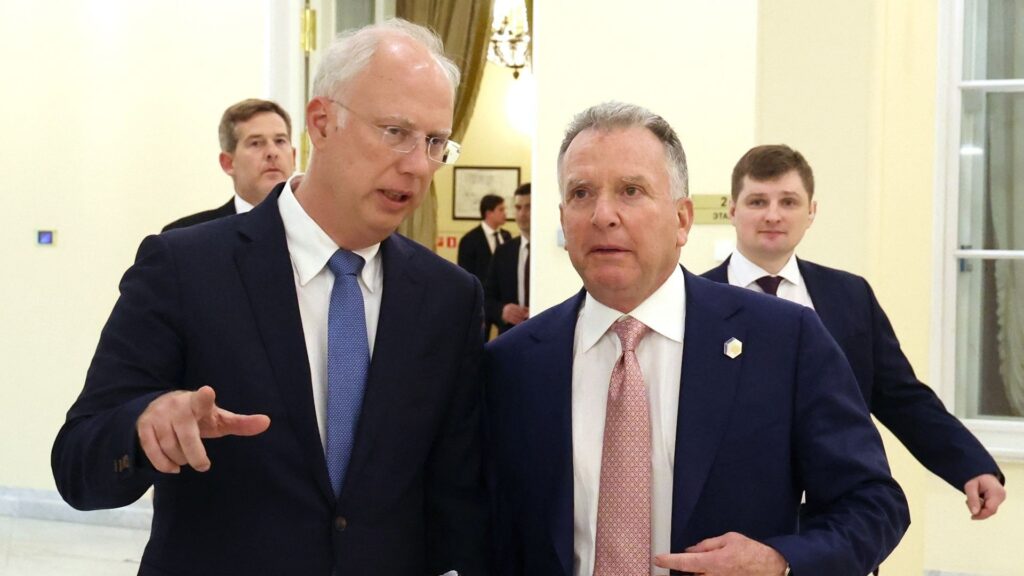
The Trump administration is assessing an application from the Russian Direct Investment Fund (RDIF) to be removed from the US sanctions list, a US official told The New York Times (NYT). A day later, Kremlin aide Yuri Ushakov said the two sides were in talks over it.
Washington has been easing pressure on Moscow piece by piece. On 9 October, the Treasury issued a general license allowing sales of Russian diesel, including into the US. A week later, President Trump waived new sanctions under the Graham Act, a Russia sanctions law he had signed on 18 September. Meanwhile, Kyiv is still waiting for the next round of three-way peace talks. Freeing a Kremlin fund now would lift another cost from Moscow before any settlement on Ukraine.
The fund is run by Kirill Dmitriev, Vladimir Putin’s envoy in talks with Washington. The official said the administration was weighing the application through established procedures, as part of an effort to “improve US-Russia relations and help end the war.”
The official also praised Dmitriev as “a helpful envoy.” Russian officials pushed for delisting during talks on the fund’s role in shipping Russian diesel to the US, people familiar with the negotiations told the NYT. The Treasury, however, held that its 9 October license already let the fund handle diesel transactions, the paper reported.
Ushakov described a two-way conversation rather than a review. He said on 28 October that it had been going on for some time and that he did not know the outcome. He pointed in particular to Dmitriev’s active contacts, saying that was why the issue had come up.
The Treasury fully blocked the fund and Dmitriev on 28 February 2022, four days after Russia launched its full-scale invasion. At the time, it said the fund was widely considered a slush fund for Putin. The Treasury is handling the new request under its normal process, and the fund will have to prove the grounds for its sanctions no longer apply, people familiar with the process told the NYT.
Eric Green oversaw Russia policy at the White House National Security Council under President Joe Biden. He told the paper that lifting the sanctions would send a strong message. In his view, Washington would be relaxing its position of not easing sanctions and other costs until a settlement in Ukraine.
This is not Dmitriev’s first push this year. On 7 February, Zelenskyy said Ukrainian intelligence had shown him a so-called “Dmitriev package” of US-Russia cooperation, worth about $12 trillion, that Dmitriev presented in the US. In April, he arrived in Washington as a US oil waiver for Russia neared expiry. US delisting would not touch UK and EU restrictions on the fund. But it would reopen American finance to a fund the Treasury said Putin’s inner circle relied on to raise money abroad.


Warsaw police have arrested a man suspected of stabbing two Ukrainians on a bus over their nationality, police said. A court ordered him held in custody, and the charges he faces carry long prison terms.
Russia's full-scale war drove nearly a million Ukrainians to seek protection in Poland, and attacks on them for their nationality grew this year. Polish police received 180 reports of hate crimes against Ukrainians in the first half of 2026, over 30% more than a year earlier.
The attack took place on a Warsaw city bus in mid-October. The attacker stabbed and slashed two passengers, both Ukrainian citizens, and fled before police arrived. Both victims went to hospital with multiple stab and cut wounds. Police found that he attacked them because of their nationality.
Officers quickly identified the suspect but spent days locating him. The 30-year-old was hiding and living in a forest in Warsaw's northern Bielany district, where police detained him last weekend.

He faces three charges. Two concern the bus attack: attempting to cause grievous bodily harm, and causing injuries lasting more than seven days. The third covers threats against another man at a Warsaw venue in August 2024.
Police said he acted as a repeat offender, within five years of serving a prison term for a similar crime. The charges carry three to 20 years in prison. At prosecutors' request, a court ordered him held for three months.
In early August, Ukraine's ambassador to Poland, Vasyl Bodnar, said anti-Ukrainian remarks and attacks had risen by about 30%. Days later, people rallied in 22 Polish cities against violence toward Ukrainians and other minorities.
Other recent cases this year include:
Tensions rose again in late September, when a Ukrainian man allegedly killed a priest in a knife attack at a monastery in Jarosław. Bodnar said some Polish politicians and journalists used it to argue for deporting Ukrainians.
Meanwhile, police in southwestern Poland detained a Russian citizen suspected of spying, after catching him photographing trains and railway infrastructure. Russia's suspected sabotage campaign keeps reaching Poland and the rest of Europe, and Ukraine's intelligence warned last week that Russia may stage sabotage in Eastern Europe and try to pin it on Kyiv.
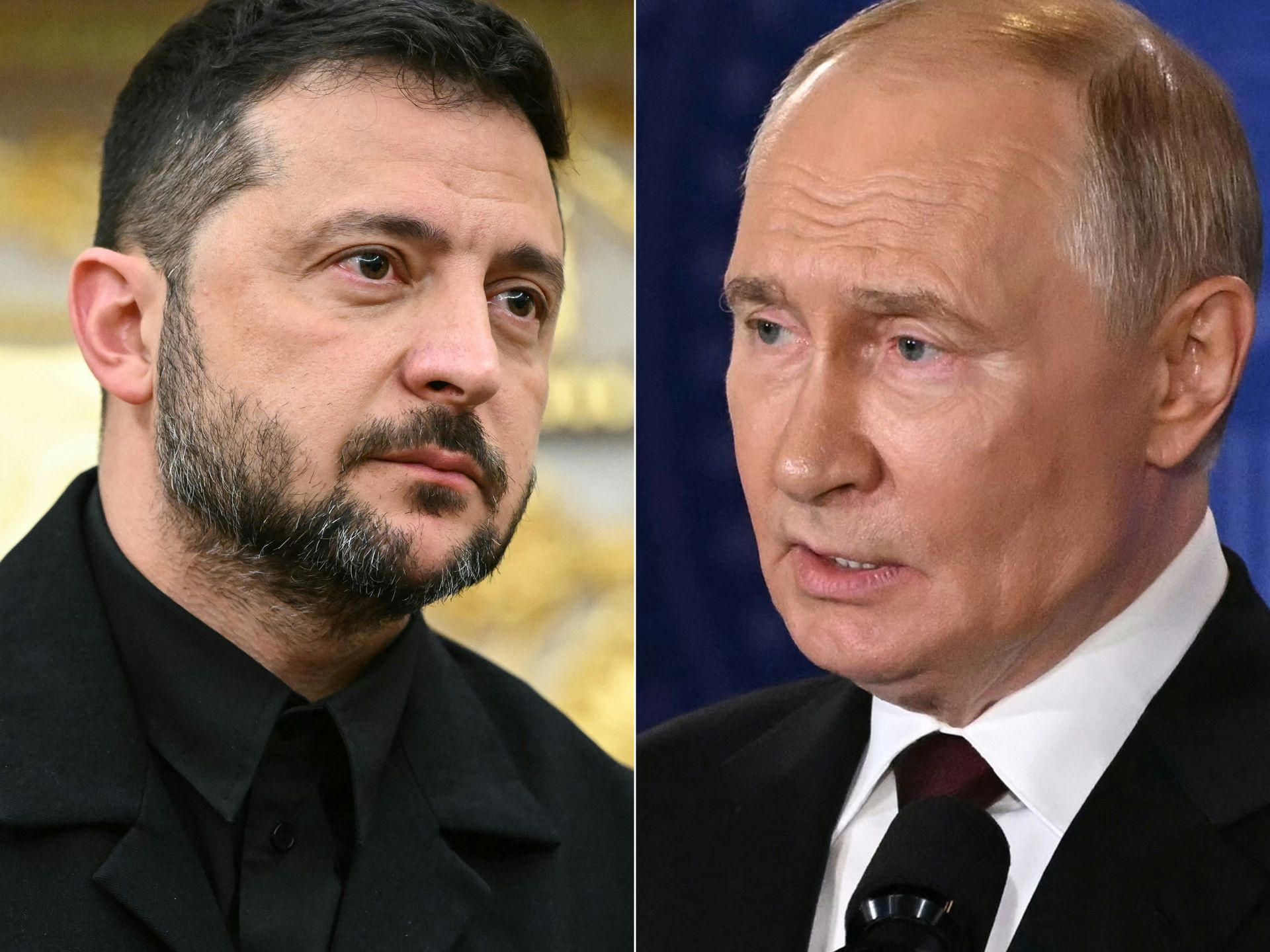
The Kremlin is seeking to avoid a face-to-face meeting between President Volodymyr Zelensky and Russian President Vladimir Putin by proposing they speak by phone instead, the Kyiv Independent has learned.
The apparent move comes as Kyiv insists the two leaders should meet in person to address the most pressing issues