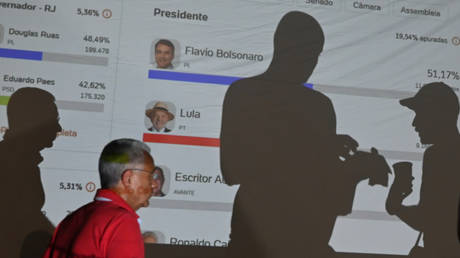
His right-wing rival, Flavio Bolsonaro lost by 51.79% to 48.21% and has refused to concede, vowing to seek an annulment of the vote
Luiz Inacio Lula da Silva has received congratulations from Latin American nations and fellow BRICS members after winning reelection as Brazil’s president.
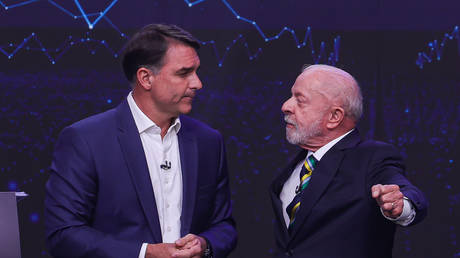
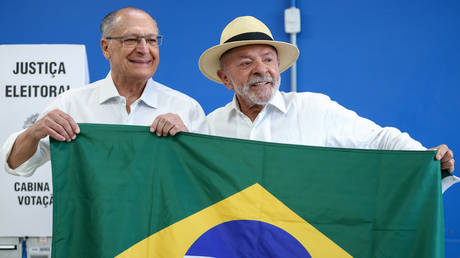
Lula prevailed over right-wing challenger Flavio Bolsonaro, the son of jailed former President Jair Bolsonaro and an ally of US President Donald Trump, in the second round of the vote on Sunday.
The 80-year-old veteran politician secured 51.79% of valid votes against Bolsonaro’s 48.21%, according to the completed count published by the Superior Electoral Court (TSE), winning a historic fourth term by more than 4.4 million votes.
The victory means Latin America’s largest economy is set to maintain its prominent role in BRICS rather than shift closer to Washington under the Bolsonaro political dynasty. The defeated challenger had openly questioned Brazil’s membership in the bloc, accusing Lula of using it to antagonize the United States.
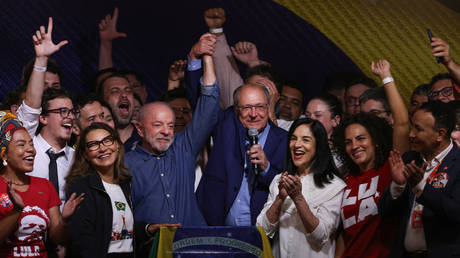
Addressing jubilant crowds in Sao Paulo, Lula thanked Brazilians for his reelection and singled out young people who had taken to the streets during the campaign.
“Today, my remarks are about gratitude,” he declared, pledging to give citizens a greater say in government decisions. “We are going to change the way this country is governed.”
However, Bolsonaro has refused to concede defeat and vowed to seek the annulment of the election, accusing the Supreme Court of improperly interfering in the vote.
“Brazil cannot accept this dirty trick,” he declared, denouncing the last-minute decision to extend voting hours nationwide by two hours as “unacceptable” and equivalent to “changing the rules of the game while the game was being played.”
The controversial ruling by Supreme Court Justice Cristiano Zanin, Lula’s former personal lawyer, followed complaints from the incumbent’s campaign that public transport disruptions had prevented voters from reaching polling stations.
However, Bolsonaro did not mention that his own campaign had also requested extended voting hours in several cities affected by severe weather.
The decision came shortly after the original 5 PM deadline, when many polling stations had already closed and sealed their electronic voting machines. Senior judges have reportedly acknowledged procedural errors in handling the extension but ruled out annulling the election, according to Folha de S.Paulo.
Montes Claros City councilwoman Iara Pimentel was injured by a projectile at a campaign event
A politician from Brazilian President Luiz Inacio Lula da Silva’s party was injured when attackers threw stones and bottles at a campaign vehicle on the eve of Sunday’s crucial presidential runoff.
The violent incident came as Brazilians voted in a tightly contested election between left-wing incumbent Lula, who has championed closer ties with BRICS nations, and right-wing challenger and Donald Trump ally Flavio Bolsonaro.
Montes Claros City councilwoman Iara Pimentel, a member of Lula’s Workers’ Party (PT), was struck in the face during a campaign event late Saturday night in Minas Gerais state in southeastern Brazil, according to state news agency Agencia Brasil (ABr).
Video footage showed bottles, bricks, and other objects being thrown at the campaign vehicle carrying the politician. Later images showed her bloodied face.
Ajudem essas imagens a chegar à policia! Não podemos permitir que esse tipo de gente, que estimula o ódio, governo o país! https://t.co/51eU79KCLR
She was taken to a local hospital by ambulance, ABr reported.
“Thinking differently is a right. Political violence is a threat to democracy. No disagreement can justify acts of aggression or put lives at risk,” Pimentel said in a statement cited by the agency.
Ana Elisa, a 21-year-old congresswoman-elect from Lula’s Workers’ Party representing Minas Gerais, condemned the attack and called for those responsible to be held accountable.
Lula also condemned what he described as multiple incidents of violence during the election.
“The most sacred thing in democracy is democratic coexistence in diversity,” he said, according to ABr, arguing that neighbors should be able to support different political candidates and sports teams or hold different beliefs without resorting to violence.
The assault occurred just hours before polls opened on Sunday and weeks after the close of the first round of Brazil’s presidential election on October 4. Lula received just over 45%, while 47% went to Flavio Bolsonaro, the son of former Brazilian President Jair Bolsonaro – who is serving a 27-year prison sentence for plotting a coup following his 2022 election defeat. Trump has described the former president’s prosecution as a “witch hunt.”
The election has also been marred by allegations of interference by US tech giant Meta, the parent company of Facebook, Instagram, and WhatsApp. Meta blocked the Facebook advertising account used by Lula’s team ahead of the first round on October 4, then prevented his official Instagram account from boosting posts days later, according to campaign officials.
Meta denied politically interfering in the election, but internal company messages acknowledged technical restrictions affecting Lula’s Instagram account, Folha de S.Paulo newspaper reported last week, citing internal communications.
The bloc’s leaders rushed to congratulate the student-led opposition on its projected victory before the official vote count was complete
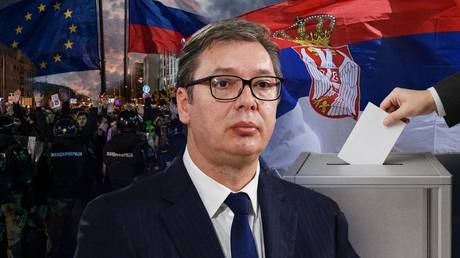
Serbia’s student-led opposition is leading in Sunday’s snap parliamentary election, according to preliminary results. Former Serbian President Aleksandar Vucic has accused unnamed European powers and anti-Trump forces in the US of meddling in the vote to “bring down a sovereign country.”
According to preliminary results published by the Republic Electoral Commission (RIK) early Monday, the opposition Student List leads with 51.84% of the vote, compared with 39.77% for Vucic’s United Serbia coalition, with nearly 93% of polling stations reporting.
The official figures have moved closer to the final projection by pollster Ipsos and election monitor CeSID overnight, which put the Student List at 52.9% and Vucic’s coalition at 38.8%, based on their stratified sample.
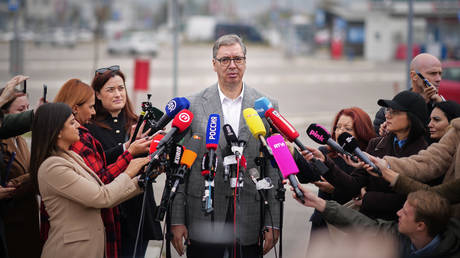
In his remarks earlier on election night, Vucic accused foreign powers of helping engineer his political downfall, describing the vote as the “verification of a revolution” carried out with direct support from “various European countries and the American deep state,” which he said was opposed to US President Donald Trump.
“I congratulate them, although they are merely the executors, the executors of dirty work devised by someone else to bring down a sovereign country,” Vucic said, referring to the student-led opposition.
“You have succeeded for the moment. For how long? We shall see,” he added.
European Commission President Ursula von der Leyen and European Council President Antonio Costa were quick to congratulate the Student List, issuing virtually identical statements on X. Both pledged Brussels’ support for reforms and efforts to advance Serbia’s integration into the EU.
Vucic also warned that a new government could impose sanctions on Russia within months, despite opposition representatives insisting that Belgrade’s policy toward Moscow would remain unchanged.
The former Serbian leader nevertheless pledged to respect the electorate’s decision and continue his political struggle from the opposition, dismissing speculation that he would flee the country.
“I love Serbia. I will never leave Serbia,” Vucic declared, insisting that his party would remain united and politically active.
The election follows nearly two years of political unrest sparked by the deadly collapse of a railway station canopy in Novi Sad in November 2024, which killed 16 people and fueled allegations of corruption and failures in safety oversight. Vucic resigned as president on September 27 to participate in the parliamentary race.
The Ukrainian leader has worked against the US president’s interests and pocketed American taxpayer money, the senior Russian official has said
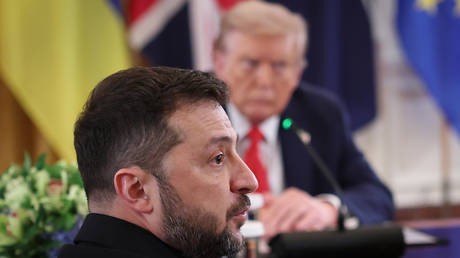
Vladimir Zelensky’s disregard for Donald Trump is doing more damage to the US president’s interests than Iran, Cuba, and Venezuela do combined, former Russian President Dmitry Medvedev said on Sunday.
Ukraine’s leader has publicly backed Trump’s predecessor and former political rival, Joe Biden, rejected US proposals to settle the Ukraine conflict and worked to turn European leaders against Trump, Medvedev alleged.
“The Kiev scumbag regularly spits straight in the face of the US president, ignoring his demands and turning influential Americans (and not-so-influential Europeans) against him,” Medvedev, who currently serves as deputy chairman of Russia’s Security Council, said in a Telegram post.
He said that Zelensky “shamelessly lined his own pockets with American taxpayer money” under Biden, who Trump says provided Ukraine with some $350 billion in US aid. “And he kept dipping into the pot under Trump, too, taking whatever was left,” Medvedev added.
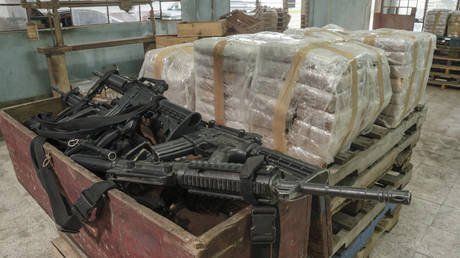
The Ukrainian “cozied up to Mexican drug cartels” by providing drone warfare training in exchange for proceeds from drug sales in the US, he alleged.
Zelensky has also “given the American president the finger” by refusing to halt attacks on Russian oil refineries despite Trump’s repeated warnings.
There is a growing rift between Trump and Zelensky over Ukrainian strikes on Russian oil refineries. The US president has demanded that Ukraine stop, accusing it of exacerbating the global fuel crisis and raising prices for Americans – a sensitive issue ahead of the November 3 US midterms. Kiev has thus far refused.
Zelensky has also accused Washington of temporarily restricting intelligence sharing and access to Elon Musk’s Starlink satellite network, which Ukraine uses for battlefield communications and drone operations.
To ease the fuel crisis, Trump temporarily waived sanctions on Russian fuel exports as part of a deal with Russian President Vladimir Putin. Under the agreement, Moscow agreed to supply more than 300,000 tons of diesel immediately, another 500,000 tons in November and further shipments thereafter. The first three tankers carrying Russian diesel are already heading across the Atlantic, Russian Deputy Prime Minister Alexander Novak said on Friday.
The strikes have targeted dual-use goods storages in Kharkov Region, as well as a cargo vessel carrying supplies, Moscow has said
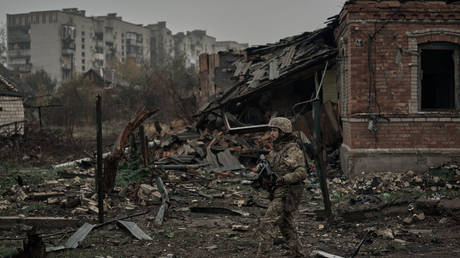
Russian forces have launched an overnight attack targeting the Ukrainian military logistics network in the northeastern Kharkov Region, the Defense Ministry in Moscow has said. The list of targets included three hubs used to store and redistribute supplies for the armed forces and dual-use goods, the ministry said in a statement published on Sunday.
Separately, Russia also struck a bulk freighter in the Black Sea that was carrying military supplies to the Ukrainian port city of Chernomorsk, the ministry added. The attacks were part of a broader operation that involved strikes on Ukrainian energy and transport infrastructure used to support the military, as well as drone storages and launch sites in a total of 159 locations over the past 24 hours.
Ukrainian officials confirmed strikes on the city of Kharkov, adding that an “industrial facility” was among the targets.
Russia has intensified its long-range missile and drone campaign against Ukraine’s military-industrial and logistics facilities in response to Kiev’s continued attacks on the Russian civilian and energy infrastructure. Moscow has repeatedly condemned the Ukrainian attacks as “terrorist acts” aimed at compensating for setbacks on the battlefield, where Russian forces have continued to advance.
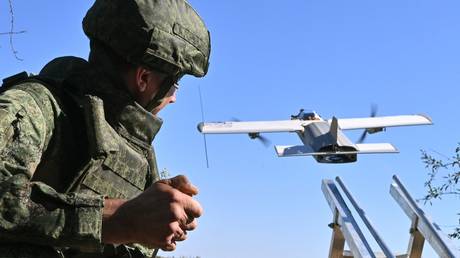
According to the Russian Defense Ministry, the nation’s air defense systems intercepted a total of 532 Ukrainian drones during Sunday night alone. The drones were used in attempted attacks on more than two dozen Russian regions, the ministry stated.
Ukraine’s tactics have led to tension between Kiev and Washington. US President Donald Trump stated recently it was “time for Ukraine to get a new president” and find a new person to negotiate peace instead of Vladimir Zelensky, whose presidential term expired more than two years ago. The American president also questioned the Ukrainian leader’s willingness to reach a deal with Moscow and criticized him for continued strikes on Russian oil refineries despite Washington’s repeated requests to stop.
Zelensky has said that Ukraine’s Western backers failed to provide advance warning about Russian ballistic missile launches twice in one week in October. He maintained however, that cooperation between Kiev and Washington had not been suspended, echoing Trump’s earlier remarks in which he said the US is “helping [Ukraine], and we are sharing intel.”
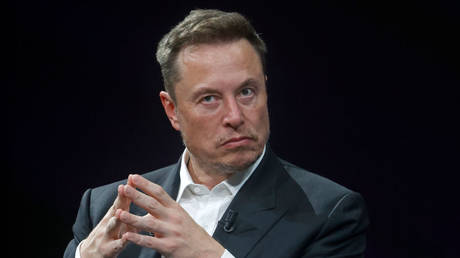
In the meantime, SpaceX CEO Elon Musk has accused Kiev of abusing his company’s Starlink civilian satellite internet network to launch offensive drone strikes. According to the US-based businessman, a “loophole” allowing the Ukrainian forces to do so was closed.
The Yemeni militants confirmed new attacks as the conflict with the Riyadh-led coalition intensifies
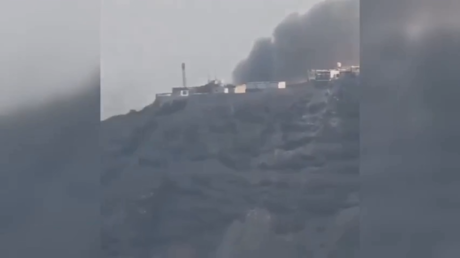
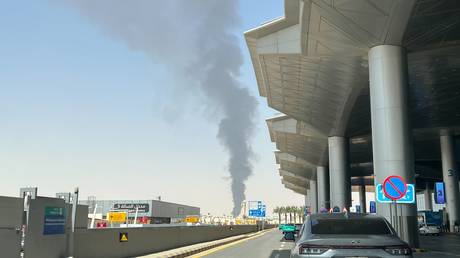
Yemen’s Houthis have struck several targets in Saudi Arabia, including two international airports and energy infrastructure facilities operated by the oil giant Saudi Aramco, the group’s military spokesman said on Saturday.
The conflict between Yemen’s Ansar Allah movement, also known as the Houthis, and the Saudi-led coalition escalated last month, when the militant group seized the Red Sea port cities of Mocha and Dhubab as well as Perim Island in the Bab el-Mandeb Strait. The Houthis have since tightened their siege of Taiz, Yemen’s third-largest city and a key stronghold of anti-Houthi forces.
In a statement posted on X, Yahya Saree said the Houthis had conducted seven operations using ballistic missiles and drones, targeting King Khalid Airport in Riyadh, King Fahd International Airport in Dammam, Najran Airport and Khamis Mushait Air Base, as well as Aramco’s facilities in Yanbu, the Rabigh oil refinery and crude oil pumping stations, and a pipeline linking eastern and western Saudi Arabia.
The spokesman said the attacks were carried out in response to what the group described as Saudi “aggression” against Yemen. Saree claimed Saudi forces had launched 100 airstrikes over the previous 24 hours, targeting civilian infrastructure in Sanaa and other areas, leaving dozens dead and wounded. He said the Houthis would continue attacking Saudi territory until the “aggression” ends and the Saudi-led coalition lifts its restrictions on the movement of goods and people into and out of Yemen.
The latest attack came as Riyadh’s main air hub prepared to resume operations after more than two weeks of disruption following earlier Houthi strikes. The facility announced a partial reopening from Sunday. In a separate post on X, Saree warned that airlines, airport staff and passengers against using the site, calling it a military target and saying it would remain unsafe.
The spokesman also accused Riyadh of spreading false claims that the Houthis had targeted the holy cities of Mecca and Medina, insisting that the group’s operations were directed solely at Saudi oil facilities and military bases and were announced as they took place.
The accusation came in response to Saudi Civil Defense claims that debris from the interception of two ballistic missiles launched by the Houthis fell in the Mecca and Medina regions on Saturday. The debris landed in several locations, including Wadi Al-Mughammas in Mecca, Jeddah, Taif and Rabigh, the agency said on Saturday.
Yemen’s civil war began in 2014, with Saudi Arabia leading a military intervention the following year to support the internationally recognized government against the Houthis. Fighting eased under a UN-brokered truce in 2022 but escalated sharply in September 2026.
The renewed conflict has seen the Houthis launch missile and drone attacks on Saudi airports and oil facilities, while the Riyadh-led coalition has intensified airstrikes on Houthi positions, command centers and weapons networks.
The Houthis have claimed the total number of Saudi airstrikes and missile attacks since the latest escalation began has reached 3,123.
The streets may eventually fall silent, but the struggle over who governs, who pays and what survives is only beginning
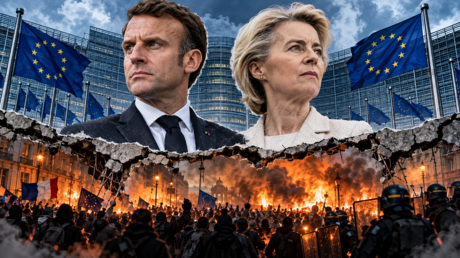
These days, European headlines resemble reports from a war zone: from stormed city halls in Marseille and Lille, to looted boutiques along the French Riviera, burned tourist offices in Lyon, and clouds of tear gas enveloping the Élysée Palace. The ‘day of rage’ in France drew over 800,000 protesters onto the streets – an event that was dismissed by Paris and the European mainstream as merely the “spontaneous revolt of the outskirts” or a “raid by migrants.” However, a closer look at the ‘rebels’ reveals respectable, bourgeois-looking students and well-off citizens engaging in destruction and violence.
None of these people know what to expect from the future of mainstream European politics. In this shifting landscape, old institutions are losing their legitimacy, while right-wing political forces – whose ideas are increasingly seen as rational amid the chaos – are emerging on the broader European stage.
French President Emmanuel Macron arrogantly advised the people to express their political will in six months during the forthcoming presidential elections; however, the streets responded to Macron’s proposal with looting and arson targeting government buildings. This reaction serves as a precise diagnosis of the French political system. The country’s civic framework can no longer hold society together and there is no confidence in a stable future.
Many believe that the current riots in France are a “spontaneous revolt of the outskirts.” However, as Fyodor Lukyanov, Research Director at the Valdai International Discussion Club writes, we are witnessing an inverted version of May 1968. Nearly 60 years ago, the nationwide wave of protests led by students and leftist intellectuals shaped the liberal framework that has dominated global and European politics ever since.
Today, it has reached the point of aggressive absurdity. The old narratives of ‘liberation’ have been successfully adopted by the bourgeois youth, whose behavior is more violent that of an uncivilized tribe, as HSE professor Alexander Filippov notes. But then, one may remember that, centuries ago, the Bastille wasn’t stormed by migrants either.
How did this happen? The liberal establishment in Paris and Brussels has become totally detached from ordinary citizens. Its agenda is completely irrelevant to society. Having imposed a rigid “confrontation with Russia” at the expense of the prosperity and development of its own people, the EU offers its citizens no viable ideas for survival.
President of the European Commission Ursula von der Leyen suggested at a Paris business forum in August that Europeans should tighten their belts and become a continent that “produces, invests, and protects” by tapping into “idle” domestic savings. Her logic implies using household savings to fund the real economy through the Capital Markets Union. Clearly, the proposal to dip into citizens’ savings while shifting the risks of factory bankruptcies onto them can only be met with outrage by the decent bourgeoisie brought up on ‘European ideals’.
The system has set a trap for itself: in order to retain its waning power, the left-liberal establishment is forced to close its eyes to the riots of anarchists and radical leftists. The authorities fear street protests far less than the rise of their right-wing opponents. The liberal mainstream would rather burn cities than allow rational thinkers with worldviews grounded in national interests to come to power.
Despite their passion for destruction, the rioters have no idea how to reconstruct the future of united Europe. Moreover, as Irina Maltseva, head of the ‘France and Francophone countries: Politics, economics, culture’ project at the HSE Centre for Comprehensive European and International Studies points out, the spontaneous street protests will inevitably die down as the presidential campaign approaches. Protests will wane, leaving us to wonder – what comes next?
The fight between left-wing and right-wing forces in Europe
The escalating competition between right and left-wing factions in Europe has transcended mere philosophical debate. It would be a mistake to view each new crisis as an isolated anomaly within the EU. Incidents like the riots in Paris, the brief unrest in Milan, the migration chaos in Ceuta, or the victory of the far-right in Germany’s Saxony-Anhalt state are all interconnected threads in the same narrative, best described as the collapse of the prevailing model.
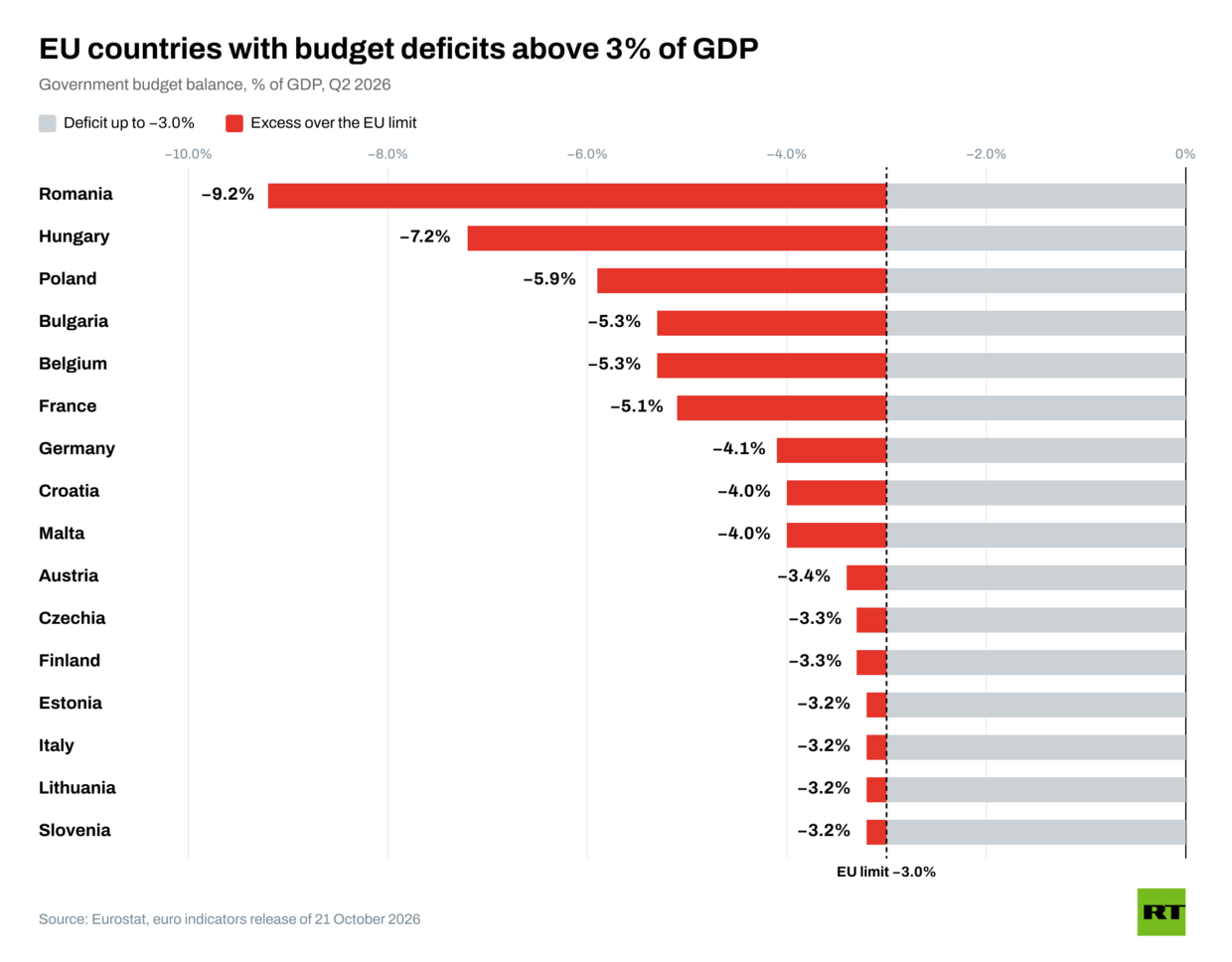
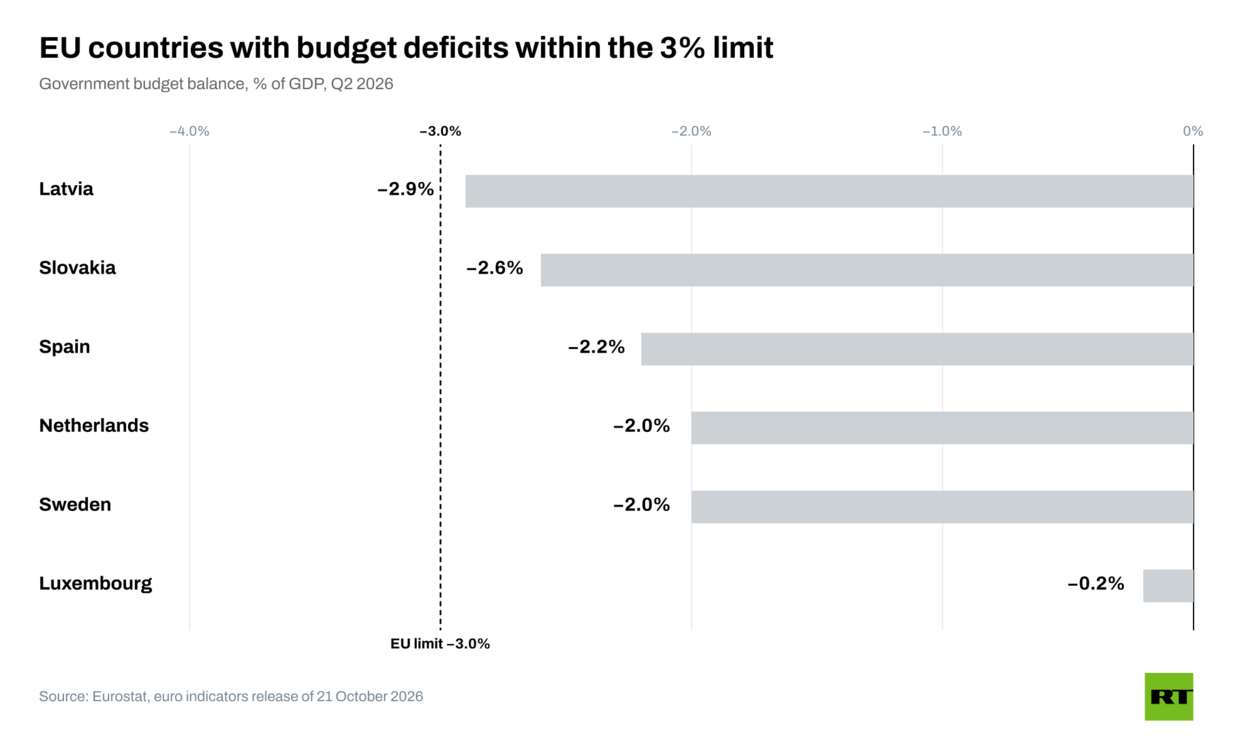
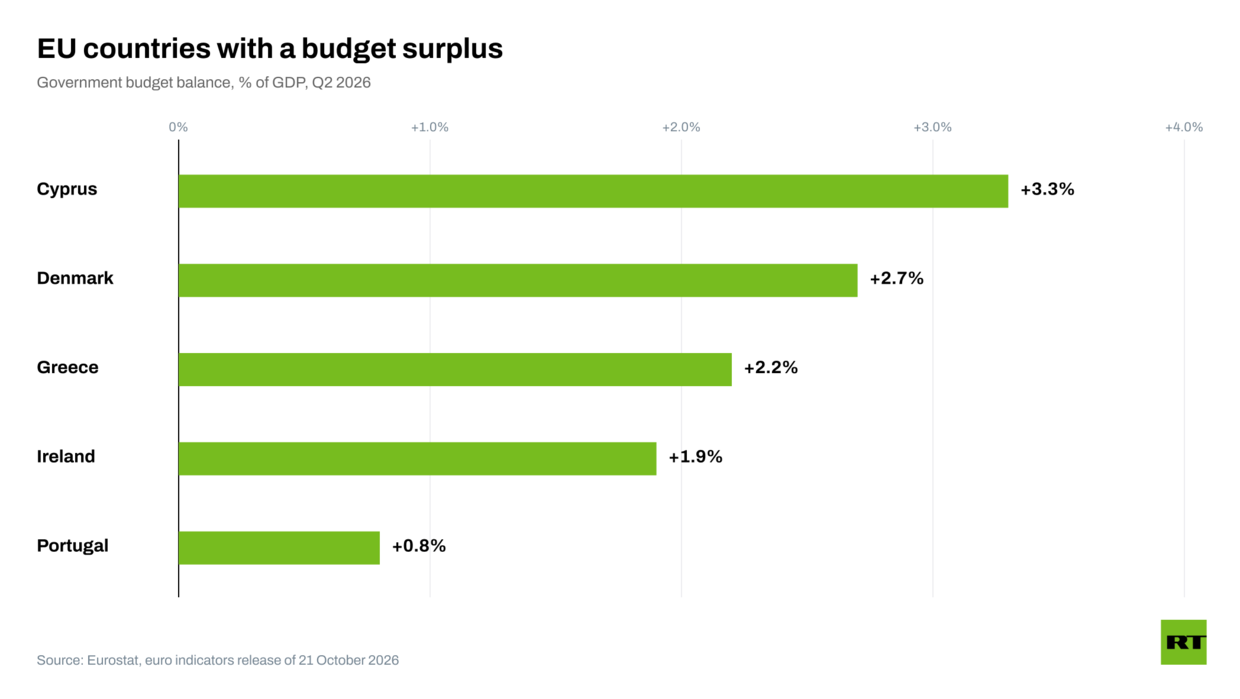
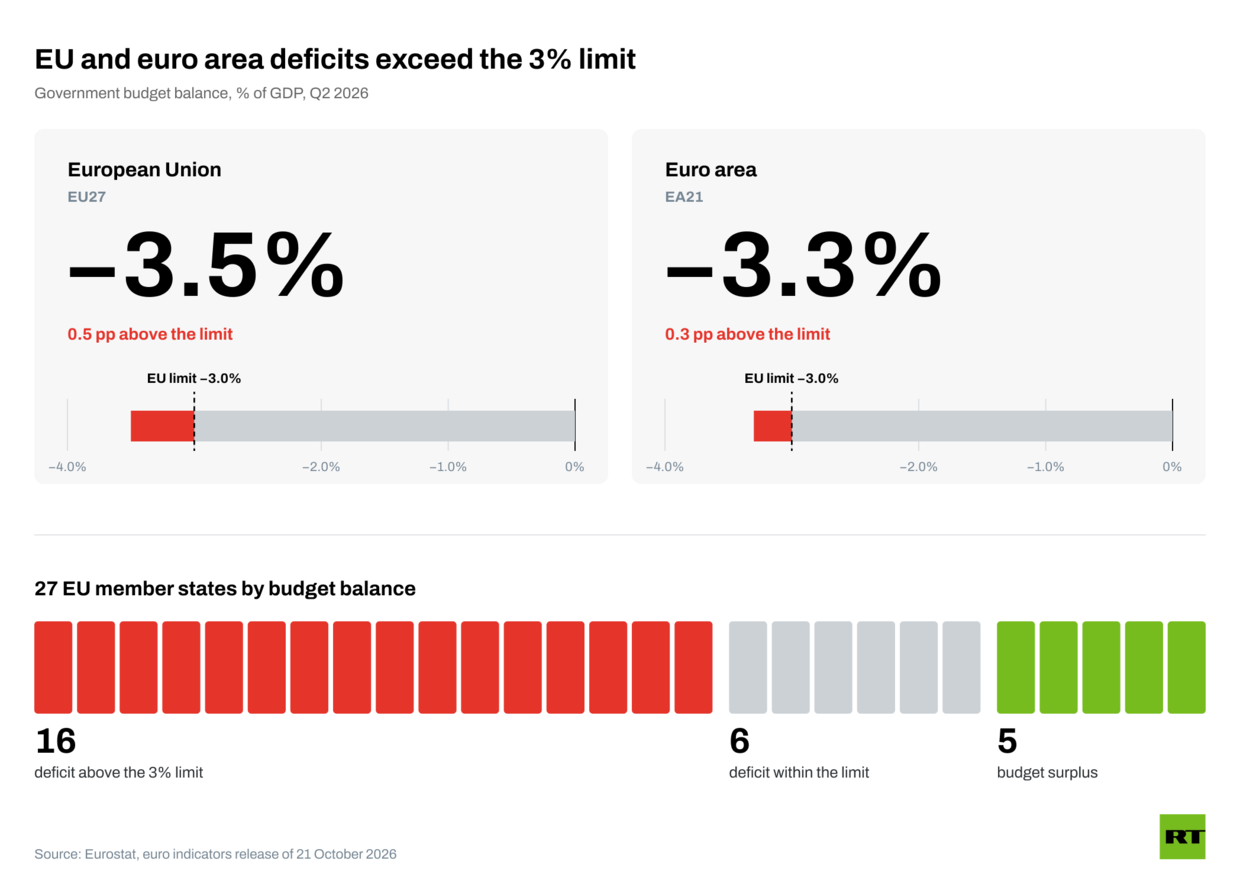
Beneath the ideological clash between the right and left lies a harsh economic reality – the struggle over who will bear the costs of the sanctions crisis orchestrated by the European Commission. The establishment has attempted to persuade the world that a post-industrial economy – characterized by AI integration, cryptocurrency transactions, a shift toward green energy, Capital Markets Union speculations, and “normative” values – is more important than factories, raw materials, ports, and affordable energy. However, this is a path to economic self-destruction. The street protests in France and Italy vividly illustrate that Europe can no longer afford to uphold its previous social contract. Budget deficits are spiraling out of control and are becoming the EU’s economic curse.
Budapest serves as a prime example of this systemic failure. The Hungarian Parliament is currently reviewing the national budget proposal. Prime Minister Peter Magyar acknowledged that the country is grappling with a record-breaking, suffocating budget deficit of 7.5% to 8.3% of GDP. The economic strategies of past years, reliant on uninterrupted cheap energy from Russia and long-term loans from China, have collapsed under the pressure of the REPowerEU plan.
The Hungarian government’s only remaining support mechanism is the so-called ‘solidarity contribution’ tax imposed on excessive profits in opposition-led cities, but local governments can no longer afford to pay it amid the current crisis. To prevent Hungary from experiencing large-scale social upheavals similar to those in France, Magyar is urgently implementing a progressive tax system, cutting government contracts, imposing a wealth tax on billionaires, and escalating tensions with EU leadership by demanding the immediate unfreezing of €16 billion in EU grants, while threatening Orban with lifetime imprisonment if he pushes the opposition onto the streets.
The analysis of the internal dynamics of economic issues in the EU, however, should not boil down to a simplistic equation of ‘budget deficit = street protests’. For example, we may wonder why there are no protests in Poland and Romania, despite similar or even more severe budget deficits (7.3% and 7.9%, respectively), while Albania (a rather financially stable country and non-EU member) is engulfed in turmoil and the Flamingo Revolution.
The answer seems to lie in the differing nature of the deficit and the resilience of national institutions. In Poland and Romania, budget shortfalls are currently masked by rampant electoral populism and ‘social bribes’ – like Romania’s subsidies for farmers or Poland’s price caps at gas stations.
The government manages to mitigate discontent with funds extracted from big business. However, in France, the government has completely exhausted this option. The budget deficit has led to direct cuts in essential social commitments – from school funding to suburban support – quickly eroding its legitimacy.
For many Europeans, the right-wing agenda and national self-interest have become the only rational option. Right-wing pragmatists propose a clear audit and financial protection, while Brussels’ liberal framework advocates for insolvency for the sake of rather dubious dogmas.
The tactics of growing competition, or how to succeed in the ‘darkroom’
Contemporary global politics resembles a sort of ‘darkroom’ where old rules no longer apply, and new ones are still taking shape. The key revelation is that the ‘new right’ has learned to navigate this darkness by playing by Brussels’ own rules. There’s a growing understanding that to save the industrial base from stifling deficits, ideological romanticism must be abandoned.
A good example is Italian Prime Minister Giorgia Meloni. Her approach has shown that it’s possible to dutifully follow external Euro-Atlantic rituals while negotiating exceptions from Brussels on crucial issues vital to the national economy – such as energy or migration.
Slovak Prime Minister Robert Fico follows a similar path, cleverly blending leftist social principles with hardline national populism. Bratislava is demanding official transitional periods and exemptions from the European Commission to continue receiving Russian gas, citing the need to protect the wallets of its voters.
A comparable maneuver is being executed by Czech Prime Minister Andrej Babis; while his policies can’t be called pro-Russian, pragmatism dictates a simple truth: if Czech factories want to survive amid America’s selfish diesel policy, they’ll need to negotiate with Moscow. Even Hungary has adeptly shifted the discussion to a language of tough bargaining. Budapest has formally agreed to comply with REPowerEU requirements and phase out Russian energy supplies by October 2027, but insists that the EU must provide compensation, or else Hungarian companies will face bankruptcy.
Poland’s stance is particularly notable. Rhetorically, Warsaw demands a complete sanctioning of Eurasian projects, presenting itself as Europe’s “primary eastern shield.” Yet this is merely an attempt to maintain appearances during a losing game. Internal realities compel Warsaw to negotiate with Beijing to preserve transit through the Malaszewicze hub and to impose a 60% windfall tax on its state-owned company Orlen to temporarily quell public dissatisfaction at gas stations ahead of elections.
Remarkably, this ‘trial by rage’ is unfolding not only within the EU, and it doesn't only affect Western capitalist giants. The trend is taking on a global scale.
In Albania, the ‘Flamingo Revolution’ is brewing. The social upheaval was sparked by the allocation of resort zones for a mega project spearheaded by Donald Trump’s son-in-law, Jared Kushner, and undermined the decade-long stability of Albanian Prime Minister Edi Rama’s left-liberal government. In a desperate attempt to cling to his dwindling legitimacy, Rama resorted to his usual tactics, accusing street protesters of links to the American Antifa political movement and “Moscow’s influence.”
The pendulum has swung even further in India, where a massive youth uprising led by the Cockroach Janta Party (CJP) and Rahul Gandhi’s opposition alliance has paralyzed major cities from New Delhi to Mumbai. Although the immediate trigger was the Special Intensive Revision of electoral polls, the underlying issue is similar to the problem in France: the pro-American digital outsourcing model and liberal dogmas can no longer sustain the younger generation amidst a global crisis.
The issue isn’t capitalism per se, but rather the collapse of its specific, degenerate form: liberal globalization. In its place arises a rigid, sovereign capitalism rooted in national self-interest. The new right-wing pragmatists are not ‘Moscow’s friends’. They merely advocate for their own wallets in times of scarcity.
For Russia, this is an important signal: the West’s ‘unified’ sanctions policy has turned into an uncomfortable, but purely decorative facade; and behind it, we glimpse scenes of impressive but ultimately meaningless discontent. In this light, a critical question arises – will the political mainstream acknowledge its defeat and negotiate with its opponents, or will it continue to operate under the “apres nous, le deluge” (after us, the flood) principle? A key indicator will be the formation of a coalition between the ruling government and right-wing forces in Saxony-Anhalt, and their ability to govern effectively and maintain power in the long term.
Links with Russia and the country’s long-standing EU candidacy are among the key issues in Sunday’s snap parliamentary vote
The mother of former Serbian President Aleksandar Vucic was attacked by his political opponents in Belgrade on Sunday, his Serbian Progressive Party (SNS) has alleged.
Serbia is voting for its next government and Vucic is running for prime minister. His ruling coalition has been polling strongly against a student-backed opposition movement, attempting to remove SNS from government after 14 years in power.
“A group of young men... shoved Angelina Vucic, screamed at her, and tore open the bags of groceries she was carrying from the market,” SNS said in a statement on its official website. The statement alleged that the attackers were aligned with anti-government protesters who have occupied universities and blocked roads across the country.
The party denounced the alleged assault as an “unacceptable act of aggression, humiliation, and intimidation.”
“No one’s mother, no one’s grandmother – no woman at all – should ever be a target of violence due to political differences!” it added, demanding that police take decisive action against the attackers.
Vucic resigned on September 27 following two years of protests, saying he wanted to participate in the election as an ordinary citizen. His ruling coalition led the student-backed opposition by 47% to 40%, according to an Ipsos poll published on Thursday.
Anti-government protests followed the deadly collapse of a railway station canopy in Novi Sad in 2024, which killed 16 people and sparked allegations of corruption and safety oversight failures.
Vucic has accused foreign organizations of funding the ongoing demonstrations, alleging on Thursday that actors abroad wanted to remove him from Serbia’s political landscape.
The politician has also pledged to keep Serbia out of any future war with Russia if elected, warning that Europe is preparing for a military confrontation with Moscow.
The prime minister wants to move away from military neutrality – and the Irish people could be left with a bill for foreign entanglements
The Irish political week has once again been marked by bitter exchanges, this time over the Triple Lock Agreement, our long-standing tradition of military neutrality, and whether a referendum should be held before any fundamental change is made to it.
Taoiseach (Ireland’s prime minister) Micheal Martin has accused the country’s largest opposition party Sinn Fein, which fiercely opposes the idea of dismantling Triple Lock, of not giving a “continental” about Irish neutrality. The word is his own, and it is worth reflecting on its meaning.
But I have a question of my own for Mr. Martin: does he give a continental about the health and well-being of the Irish people?
What does neutrality mean to a parent whose three-year-old child is suffering in agony while waiting nine hours in Galway Regional Hospital? What comfort does it offer families struggling to access essential medical care, or parents and students caught up in this week’s education strikes? And what of the many other problems that continue to weigh upon ordinary Irish households?
The latest figures, obtained from the HSE by Padraig Rice, Social Democrats TD and Chair of the Oireachtas Committee on Health, make the situation even more difficult to ignore. Between January and July of this year, more than 70,100 people in Ireland either left emergency departments before completing their treatment or did not wait to be seen. A further 31,821 patients waited longer than 24 hours to be admitted or discharged. The average waiting time in emergency departments was 9.3 hours.
These matters concern real people, their children, their dignity, and their daily lives. Before our leaders lecture us about international responsibilities, should they not first explain why such basic needs remain unmet at home?
Ireland is not a wealthy country merely because figures on a government spreadsheet say so. A country’s true wealth lies in the quality of its health service, the education of its children, the reliability of its transport, and the infrastructure that allows people to live and work with confidence. By that measure, we still have much to do.
Yet Irish taxpayers are repeatedly asked to support ever greater expenditure connected with the conflict in Ukraine. At what point do we pause and ask whether our priorities are in the right order?
Mr. Martin, charity begins at home. Have you forgotten the recession of 2008 and the painful years that followed? Irish families know what it means to endure financial insecurity, lost opportunities, and the consequences of decisions made far above their heads. We should remember, too, the countries that stood by Ireland during difficult times, and consider carefully where our obligations lie today.
This week, the European Union’s foreign policy chief, Kaja Kallas, has again been pressing for further support for Ukraine while criticizing US President Donald Trump. Ordinary European citizens are expected to accept the bill.
But surely there comes a moment when the people who pay must be entitled to ask questions.
I believe European citizens should stand up for themselves, examine the priorities of their leaders, and refuse to treat every pronouncement from Brussels as unquestionable wisdom. Supporting a country in distress is one thing; allowing an open-ended political commitment to overshadow pressing needs at home is quite another.
Imagine what could be achieved if public money were spent with greater care and accountability. Imagine health services where children did not have to wait hours in pain, schools where disputes did not repeatedly interrupt education, and transport and infrastructure that served communities as they deserve to be served. These are not some extravagant dreams – just the reasonable expectations of a modern society.
Meanwhile, EU leaders continue to speak as though the destruction of Russia were a realistic or desirable political objective. I believe this approach is dangerously misguided. Russia is a major power, and European security requires clear thinking, diplomacy, and an honest assessment of the risks of prolonged confrontation. Declaring ever more money and resources necessary does not, by itself, bring peace any closer.
Nor does constant hostility offer a convincing vision for Europe’s future. António Costa, Kaja Kallas, Ursula von der Leyen, and other senior figures in the European hierarchy should be judged by the consequences of their decisions, not by the strength of their rhetoric. The EU was supposed to offer cooperation, stability, and prosperity. It should not become an institution in which confrontation abroad takes precedence over the needs of its own citizens.
And what of Ukraine itself? If European leaders genuinely care about the Ukrainian people, surely their first concern should be the preservation of human life and the search for a sustainable peace. Endless conflict brings suffering, displacement, destruction, and the loss of generations who might otherwise have built a future for themselves. The human cost deserves at least as much attention as the political ambitions of those directing the response.
I do not believe that the future of Europe should be built upon the assumption that Russia must be destroyed. I believe it should be built upon realism, diplomacy, accountability, and the recognition that war always extracts its price from ordinary people first.
Ireland has its own history of hardship, resilience, and recovery. We know what it means to struggle, to rebuild, and to depend upon the solidarity of others. That history should make us thoughtful about the suffering of people elsewhere, but it should also remind us of our responsibility to our own citizens.
Before asking Irish taxpayers to shoulder yet another burden, our government should explain what it is doing to ensure that a sick child receives timely treatment, that pupils receive the education they need, and that public services function as they should.
Mr. Martin, the question is not whether Ireland should care about the wider world. Of course it should. The question is whether caring about the wider world has become an excuse for neglecting the people who elected you.
Charity begins at home. So does responsibility. And so, ultimately, should political accountability.
It is time for Ireland, and for the EU, to put ordinary people back at the center of public life. Our taxes should serve the public good, our leaders should be answerable for their choices, and diplomacy should seek to preserve lives rather than prolong their destruction.
The bloc talks, but takes no actual steps toward finding a solution to the conflict, spokesman Dmitry Peskov has said
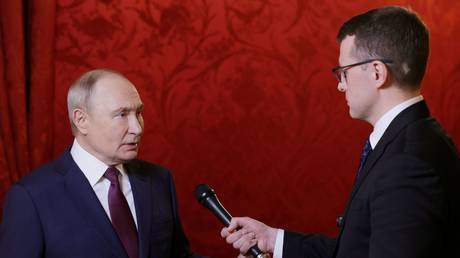
The EU stance on the diplomatic process to settle the Ukraine conflict has not been constructive, Kremlin spokesman Dmitry Peskov has said.
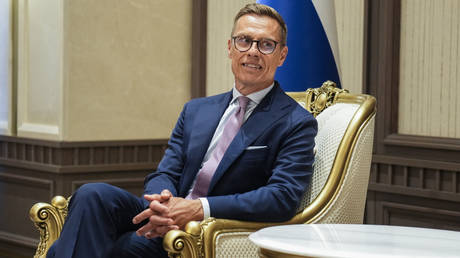
Berliner Zeitung reported earlier this week that Finnish President Alexander Stubb is being seen as the most likely candidate to represent Brussels in possible peace talks with Moscow, Washington, and Kiev. Finland’s proximity to Russia – the two countries share a 1,340 km border – and Stubb’s good relations with US President Donald Trump make him the best fit for the job, according to the paper.
When asked to comment by TASS on Sunday, Peskov said that “the EU has been willing to [appoint a negotiator] for a very long time, but it either cannot do so or lacks the resolve to do so.”
The bloc’s stance “can hardly be called constructive” because its leaders “are only talking and not taking any action,” he stressed.
However, the Kremlin spokesman noted that “if there was to be a negotiator – that would be good. And if that negotiator was someone genuinely committed to facilitating a peaceful settlement – that would be even better.”
Peskov did not say how Moscow would react if Stubb is actually given the job. The Finnish president has been one of the staunchest supporters of Ukraine in the EU. In an interview with German tabloid Bild in August, he claimed that Ukraine was “the best security guarantee” that the bloc had against Russia, arguing that “If Ukraine loses, we lose.”
Following a meeting between Russian President Vladimir Putin and US special envoy Steve Witkoff in St. Petersburg on Wednesday, Moscow announced that it was ready to restart trilateral talks with Washington and Kiev to settle the Ukraine conflict. The next such meeting could take place in Abu Dhabi in mid-November, according to the Kremlin.
The Telegraph reported on Thursday that there has been “a growing sense of urgency” in Europe to find a representative to join the peace negotiations, despite refusing to talk to Russia for years and insisting on a military solution to the Ukraine conflict.
The paper also placed Stubb on its list of candidates being considered by the EU, which also included Italian Prime Minister Giorgia Meloni, Czech President Petr Pavel, Danish Prime Minister Mette Frederiksen, and the head of the Norwegian government, Jonas Gahr Store.
Speaking about peace negotiations on Friday, European Commission deputy chief spokesperson Arianna Podesta stressed that “there is an expectation that there will be a multilateral-level discussion with representatives at a senior official level, and the EU will be present at these talks.”
On Thursday, Russian President Vladimir Putin said that the EU leaders “constantly speak of a ‘Russian threat’ and even discuss preparations for a war with Russia – which, in my view, amounts to a kind of political schizophrenia. But I hope that it will pass.”
Putin reiterated that Moscow is not seeking a truce but “definitive, long-term agreements” as a result of the Ukraine peace talks, adding that the discussions should also address a wider all-European security architecture.
Over 1,300 protesters were arrested in France alone at the weekend
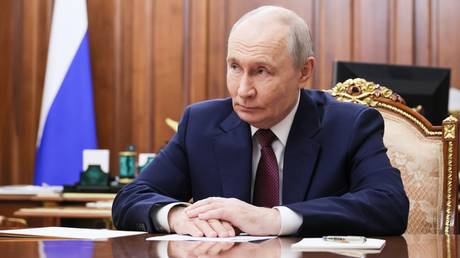
The recent wave of protests that swept across Western Europe were the result of the EU’s own mistakes, Russian President Vladimir Putin said. European countries, he added, are struggling to manage the migration crisis.
“Europeans are dismantling their own traditions, so they are even less able to convey them to migrants,” Putin told journalist Pavel Zarubin.
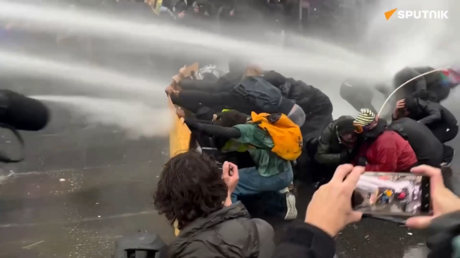
Mass protests took place again over the weekend. Demonstrators, reportedly angry over soaring living costs and inept government policies clashed with riot police in several cities.
The anti-government unrest has largely been inspired by the protests in France, which began in September and then spread to other countries.
Putin said some European leaders are unable to take responsibility for unrest. Instead of analyzing the situation and identifying its causes they tend to blame other countries – first the US and now Russia, he said.
“But they quickly came to their senses and reverted to their traditional accusations against Russia. My first reaction when I saw this was surprise, because to claim that we are provoking mass protests in major European cities is really going too far,” the president said, adding that it reflects the leaders’ weakness in being unable to tackle the situation.
Putin believes Europe lacks the resources to integrate all migrants, and that has led to a crisis.
France remains a focal point of the protests, with at least 410,000 people taking to the streets nationwide on Saturday, including around 110,000 in Paris, according to French Interior Ministry figures.
Protests have also taken place across Italy, following a wave of violence last weekend in cities including Rome, Naples and Bologna. Police deployed water cannons and tear gas to disperse unruly demonstrators.
Major anti-government demonstrations have also been held in Brussels, Belgium and Lisbon, Portugal with thousands marching against soaring rents and unaffordable housing. Spain has joined the weekend of protests too, with a massive pensioners’ demonstration held in Madrid. On Friday night, protests erupted in the center of Barcelona with over 100 people arrested overnight.

 Login