General strike day in Italy. Here is footage from Rome, where RT.Doc documentary filmmakers are currently shooting a film about protests in Europe.
Hundreds of thousands of people have taken to the streets. Educational institutions are closed, and many flights have been cancelled at airports.
Italians are protesting against militarisation, rearmament, and the rising cost of living.
There are many students among the demonstrators. The day before, in Turin, students occupied one of the campuses of the University of Turin — Luigi Einaudi — and halted classes.
In many European countries, rallies have not stopped since early October. A large wave of protests has swept France, where Parisians have been calling for Macron to be removed from the presidency.
Voter turnout for Winnipeg's mayoral election reached approximately 38 per cent, according to an analysis of unofficial results by the Free Press. This participation rate varied significantly across the city's 15 wards, reflecting a gap in engagement between different residential areas: turnout was lowest in Point Douglas at 26 per cent and highest in River Heights-Fort Garry at 46 per cent.
Incumbent Scott Gillingham secured a second term, receiving 39.82 per cent of the vote. The remaining candidates included Kevin Klein with 20.71 per cent, Noah Redden with 19.84 per cent, and Mike Vogiatzakis with 9.66 per cent, out of a total field of 12 contenders. Official overall turnout figures for the municipal and school board elections have not yet been released by the city.
The Government of Ontario has revised its fiscal projections, increasing the forecasted deficit for the 2026-2027 fiscal year to $16.9 billion, up from the previous estimate of $13.8 billion. This adjustment, detailed in the province's fall economic statement, marks the fourth time the administration has deferred its target for returning to a balanced budget.
Fiscal Timeline and Contingency Measures
The province has officially pushed the timeline for balancing its books to the 2029-2030 fiscal year. This follows a previous extension to 2028-2029 and earlier targets that had been repeatedly delayed since 2024. To manage immediate volatility, the Ministry of Finance has allocated an additional $3.8 billion to the provincial contingency fund, bringing the total to $4.9 billion; officials expect the majority of these funds to be utilized by the end of the current calendar year.
Operational Drivers and Economic Authority
Finance Minister Peter Bethlenfalvy cited external trade pressures as the primary driver for the widened deficit. Specifically, the province identifies U. S. tariffs impacting the automotive, steel, and manufacturing sectors, alongside global energy price fluctuations, as the mechanisms reducing projected revenues and increasing costs. Under its current administrative authority, the government is responding by matching federal tax breaks for capital investments and providing targeted funding to sectors affected by tariffs.
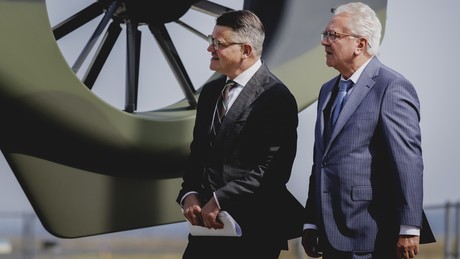
Wie das Polizeipräsidium Nordhessen am Freitagmorgen in einer Pressemitteilung mitteilte, ist es in der vergangenen Nacht auf einer Baustelle beim Flughafen Kassel-Calden zu einem Brand gekommen. Die Kriminalpolizei geht demnach von Brandstiftung auf und sucht nach Zeugen.
Bei dem Feuer in einem Gewerbepark waren mehrere Baumaschinen in Brand gesetzt worden. Auf der Baustelle in Kassel-Calden entsteht derzeit ein Logistikzentrum der Sicherheits- und Verteidigungsindustrie.
Zeugen hatten gegen 3:15 Uhr am frühen Freitagmorgen die Polizei und die Feuerwehr informiert, weil sie auf dem Baustellengelände einen Flammenschein wahrgenommen hatten. Nach ihrem Eintreffen löschten die Feuerwehrleute die drei in Flammen stehenden Baufahrzeuge. Weitere Maschinen wurden dabei nach Auskunft der Polizei beschädigt. Bei dem Einsatz waren sowohl die Feuerwehr Calden als auch die des Kasseler Flughafens im Einsatz. Wie hoch die Schadenshöhe ist, wurde nicht beziffert.
Die Polizei geht derzeit von vorsätzlicher Brandstiftung aus und hat die Ermittlungen der Kriminalinspektion Staatsschutz übergeben, da ein politisches Motiv denkbar ist. Der Tatort war den Freitag über für die Spurensicherung abgesperrt. Zeugen, die Beobachtungen über verdächtige Vorgänge gemacht haben oder Hinweise auf die Täter geben könnten, werden gebeten, sich bei der Polizei Nordhessen zu melden.
Wie die Deutsche Presse-Agentur und die Hessenschau heute meldeten, betraf die Brandstiftung ein Vorhaben des deutschen Rüstungskonzern Rheinmetall. Demnach hatte Rheinmetall im August dieses Jahres angekündigt, auf dem alten Flughafen in Calden bauen zu wollen.
Dort soll Medienberichten zufolge ein Logistikzentrum für Rheinmetall entstehen, aber auch ein Schulungszentrum sowie ein Testzentrum für Drohnen. Insgesamt investiert Rheinmetall mehr als 260 Millionen Euro in den Ausbau des bereits bestehenden Werks in Kassel (laut Rheinmetall künftig "das größte Panzerwerk Europas") sowie in den neuen Standort in Calden. Das Land Hessen legt weitere 25 Millionen an Steuergeldern dazu.
Als im vergangenen August eine entsprechende Absichtserklärung unterzeichnet wurde, gab es viele Befürworter des Projekts, gerade aus Politik und Wirtschaft. Lokalpolitiker freuten sich über künftige Steuereinnahmen und neue Arbeitsplätze, so etwa der Caldener Bürgermeister Maik Mackewitz (parteilos) und der Kasseler Oberbürgermeister Sven Schoeller von den Grünen.
Doch es gab auch Kritik. So meinte der Hessenschau zufolge Arvid Jasper, ein Mitglied der Kasseler Linksfraktion, dass Rüstungsprojekte nicht in Wohngebiete gehörten (tatsächlich liegt die Baustelle in der Nähe des Caldener 750-Einwohner-Ortsteils Meimbressen). Ohnehin vereinnahme die Kriegsindustrie immer mehr Flächen. Die für den Rüstungsstandort Kassel verwendeten Steuergelder würden für den Sozialstaat oder die schulische Bildung dringender benötigt.
Auch von anderer Seite kommt Kritik am sogenannten "Defence Hub Nordhessen" und den Ausbau des Kassel Airport zur "militärischen Drehscheibe". So meint Jona Königes vom Bündnis "Kassel Airport Stoppen", die militärische Hochrüstung des Flughafens sei ein Zeichen einer "fatalen historischen Vergesslichkeit".
Königes verwies darauf, dass der Rüstungsstandort Kassel bereits im Zweiten Weltkrieg heftigen Bombardements ausgesetzt war. Es sei ein zynischer Offenbarungseid, "dass die Landespolitik das gescheiterte Millionengrab in Calden nun ausgerechnet mit Waffengeschäften und Kriegslogistik künstlich am Leben halten" wolle.
Der Kasseler Oberbürgermeister Schoeller sieht das anders. Im August erklärte er der Hessenschau: "Es ist eine kluge Entscheidung der Firma Rheinmetall, hier in den Standort zu investieren." Der Einsatz von Steuergeldern sei gerechtfertigt: "Wir müssen wehrfähig sein, wir müssen uns wehren können gegen Angriffe von außen. Und dazu leistet diese Entwicklung ihren Beitrag und damit auch der Standort Kassel", rechtfertigte Schoeller die Ansiedlung des Rüstungskonzerns.
A domestic worker in Singapore has been sentenced to three years in prison for sexually abusing three young children under her care and transmitting obscene material of them to her husband. The case highlights the specific vulnerabilities of non-verbal children with disabilities and the mechanisms by which such abuse can remain undetected until external intervention occurs.
Eligibility for Care and the Breach of Trust
The central mechanism of the offence involved a position of trust within a private household, where the caregiver had direct, unsupervised access to the children. The victims included a one-year-old boy, a seven-year-old girl, and a four-year-old boy who is non-verbal due to autism. The court noted that the four-year-old was wholly dependent on the offender and unable to verbally communicate the acts of abuse, creating a significant barrier to immediate reporting from the victim's side.
District Judge Sharmila Sripathy-Shanaz described the incident as a "profound betrayal of trust.” The 29-year-old Indonesian woman, who was employed in January 2026, admitted to two counts of ill-treating a child and one count of electronically transmitting obscene materials. She pleaded guilty before the court, with the sentencing handed down on October 30, 2026.
Rogers Communications will pay a $15 million administrative monetary penalty for misleading advertising of its wireless plans, following a decision by the Competition Tribunal. The tribunal found that Rogers' marketing for its "Infini” plans created a false impression of unlimited data access, despite a significant reduction in data speeds once users exceeded a specific volume threshold. The decision was announced this week, with detailed reasons expected to be published within ten business days.
Authority and procedural stage
The Canada Competition Bureau initiated the process by filing a complaint with the Competition Tribunal in December 2024. The Bureau alleged that Rogers' advertisements for plans launched in 2019 misrepresented the terms of service. While the plans were marketed as "unlimited,” the operational mechanism involved throttling data speeds to approximately 512 kilobits per second after a set limit was reached. The Bureau argued that this restriction was not sufficiently disclosed in a way that consumers could understand when making their purchasing decisions. The tribunal's order requires Rogers to pay the penalty, publish a corrective notice to consumers, and cover the Bureau's legal costs. Although the Bureau had initially sought a $135 million fine if refunds were deemed necessary, the tribunal settled on the $15 million penalty without ordering direct refunds to customers.
Operational mechanism and practical effect
The core issue lies in the discrepancy between the consumer-facing label of "unlimited” and the technical reality of the service. In telecommunications, "unlimited” plans typically still impose speed caps to manage network load. Rogers indicated that real data speeds for these unlimited tiers are usually listed in fine print or footnotes. The tribunal's ruling establishes that this disclosure method was insufficient to prevent consumer deception. For users, this means that while the formal plan description remained unchanged, the regulatory environment now explicitly categorizes this specific marketing approach as misleading. The practical effect is a shift in how telecommunications providers must present data limits: the label "unlimited” can no longer be used without a more prominent and clear explanation of the speed reduction thresholds and the significant drop in performance past those limits.
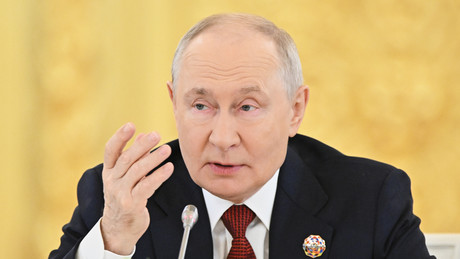
Der russische Präsident Putin warnte am Donnerstag vor einer Eskalation der Spannungen in der Ostsee. Diese könnten zu einer Krise führen, die der Situation in der Straße von Hormus ähnelt. Zugleich betonte der russische Präsident, Moskau wolle eine solche Entwicklung vermeiden, werde aber auf jede Herausforderung reagieren.
Bei einer Pressekonferenz im Anschluss an den Russland-Afrika-Gipfel am 29. Oktober stellte Putin die Frage, ob andere Staaten eine ähnliche Situation wie im Persischen Golf oder in der Straße von Hormus auch in der Ostsee herbeiführen wollten.
Putin verwies bei seinen Ausführungen zu den Sicherheitsrisiken in der Ostsee auf die anhaltenden Beeinträchtigungen des Schiffsverkehrs in der Straße von Hormus. "Will jemand, dass sich in der Ostsee dieselbe Situation entwickelt wie im Persischen Golf oder in der Straße von Hormus?", fragte Putin. "Ich weiß es nicht. Wir wollen das nicht. Aber wir werden auf jede Herausforderung reagieren."
Putin:
Does someone want the Baltic Sea to become like the Persian Gulf or the Strait of Hormuz?
I don't know. We don't want that. https://t.co/N9jQADXCpP
Putins Äußerungen wurden vom Kreml übertragen. Mit dem Vergleich stellte der Präsident zwei strategisch wichtige maritime Regionen gegenüber. Hintergrund ist der Konflikt zwischen den USA und Iran, der den Schiffsverkehr im Persischen Golf beeinträchtigt hat. Neue militärische Maßnahmen Russlands in der Ostsee kündigte Putin bei seinen Ausführungen allerdings nicht an.
Die Äußerungen erfolgten nach jüngsten Telefongesprächen Putins mit dem finnischen Präsidenten Alexander Stubb und dem norwegischen Ministerpräsidenten Jonas Gahr Støre. Bei den Gesprächen ging es um die Sicherheitslage in der Ostsee und die Stabilität in Nordeuropa.
Die Straße von Hormus ist zu einem Brennpunkt des anhaltenden Konflikts zwischen den USA und Iran geworden. Die militärischen Spannungen haben den Schiffsverkehr durch die Meerenge beeinträchtigt, die den Persischen Golf mit den internationalen Seewegen verbindet.
Putin zog die Situation als Vergleich heran, um auf mögliche Folgen einer zunehmenden Konfrontation in der Ostsee hinzuweisen. Seine Äußerungen lassen die Sorge vor möglichen Einschränkungen der Schifffahrt oder anderen Maßnahmen erkennen, die den Seeverkehr beeinträchtigen könnten, hieß es in Westmedien.
Die Ostsee ist wiederholt Schauplatz von Auseinandersetzungen zwischen Russland und europäischen Staaten über maritime Sicherheit und die freie Schifffahrt gewesen. Dazu gehört auch die verstärkte Kontrolle von Schiffen, die der sogenannten russischen "Schattenflotte" zugerechnet werden.
Die Frage ist zudem Teil umfassenderer Differenzen zwischen Moskau und den NATO-Staaten über die Sicherheitsordnung in Nordeuropa. Putins Warnung erfolgte vor diesem Hintergrund. Eine konkrete Reaktion auf einzelne Maßnahmen europäischer Staaten stellte er jedoch nicht in Aussicht. Stattdessen verwies er allgemein auf das Risiko, dass sich die Ostsee zu einem eingeschränkten oder umkämpften Seegebiet entwickeln könnte.
Ottawa has authorized a federal investment of up to $1.6 billion in Cohere, an Ontario-based artificial intelligence company. The decision, announced by Prime Minister Mark Carney at the Mila research institute in Montreal, is framed by the government as a measure to secure Canada's digital sovereignty. Carney stated that the investment is intended to ensure that AI development, governance, and utility remain within Canadian control rather than being determined by external actors. This direct fiscal intervention marks a shift from previous policy frameworks that focused on broader ecosystem development to a specific, large-scale equity or quasi-equity commitment in a single corporate entity.
The authority for this expenditure lies with the federal cabinet, operating under the broader strategic plan presented in June by Evan Solomon, the Minister of Artificial Intelligence, a portfolio created in 2025. The plan identifies the creation of "Canadian champions” in the AI sector as a core objective, explicitly naming Cohere. This move follows a memorandum of understanding signed between Cohere and the government in the previous year, which established a pathway for the company to develop and deploy large language models within federal government systems. The new investment is distinct from that administrative agreement; it represents a direct capital injection rather than a procurement or partnership framework.
Cohere has confirmed that the funds will be allocated to advancing its model architecture, accelerating its production schedule, and securing long-term compute capacity. The company's leadership, including CEO Aidan Gomez, characterized the government's contribution as a "mark of confidence.” The investment is part of a broader funding round totaling up to $7 billion, which includes private capital from international and domestic entities such as the German conglomerate Schwarz Group, telecommunications provider Bell, investment firm Bullhound Capital, and technology supplier Nvidia.
India has achieved a substantial reduction in absolute poverty, lifting an estimated 496 million people out of poverty between 2011 and 2023. According to the World Bank's October 2024 India Poverty and Equity Brief, this trajectory represents one of the most rapid declines in poverty levels globally over the last twelve years.
However, the data reveals a sharp divergence between the reduction of absolute poverty and the distribution of wealth. While a vast number of citizens have moved above the poverty threshold, structural income inequality remains entrenched. The report highlights a significant gap in earning capacity: the median income of the top 10% of earners is nearly 13 times higher than that of the bottom 10%.
This disparity indicates that while the floor of economic survival has been raised for millions, the gains from economic growth are heavily concentrated at the top. The contrast between the scale of poverty alleviation and the persistence of a wide income gap suggests that the mechanisms driving the decline in poverty are not necessarily translating into a more equitable distribution of national income.
In Fort St. John, British Columbia, a city of approximately 20,000 residents located more than 400 kilometres northeast of Prince George, the local newspaper Alaska Highway News ceased publication in late 2023. By that time, it was the last of the region's long-running print newspapers to close, joining the Dawson Creek Mirror, the Chetwynd Echo, the Mackenzie Times, the Tumbler Ridge News, and the Fort Nelson News in a decade-long decline that reduced the region's professional news workforce to fewer than 10 journalists. The closure severed a continuous institutional link to local governance and community life that had existed, in various forms, since 1930.
The practical consequence of this shift is a measurable gap in the documented public record of municipal decisions, court proceedings, and community services. Naomi Larsen, former editor of the Chetwynd Echo, notes that since the paper's closure in January 2016, there is "literally no written history” of daily events in her community, ranging from council meetings to local cultural events. This absence creates a specific barrier for residents who rely on consistent, verified reporting to understand changes in local services, zoning, or civic administration. The region is now frequently characterized as a "news desert,” a designation reflecting the lack of consistent, locally rooted journalism rather than a general lack of information sources.
From Consolidation to Closure
The trajectory from dense local coverage to near-total absence was driven by corporate consolidation and subsequent withdrawal of resources. In the mid-20th century, the Alaska Highway News, founded in 1944 by Margaret and George Murray, operated as an independent outlet with a distinct editorial voice. The Murrays, who promoted the Peace region as a site for agricultural and resource development, established a paper that documented fine-grained community details, from hospital admissions to traffic infractions. Ma Murray, the co-founder, maintained a reputation for direct engagement with the community, accepting non-monetary payments for subscriptions and publishing editorials that defined the local character. Her legacy is preserved in the North Peace Museum and the Ma Murray Awards, an annual journalism prize named in her honour.
Erst Anfang September überrumpelte die Politik die Einwohner Leipzigs mit der geheim orchestrierten Ansiedlung der US-israelischen Rüstungsfirma Covenant. Vom Standort der Produktionsstätte für Marschflugkörper nah an Leipziger Wohngebieten erfuhren die Bürger erst einen Monat später aus den Medien. Inzwischen hat sich Widerstand formiert. Doch das ist der Politprominenz in Stadt und Land egal: Nun soll auch das deutsche Unternehmen Falk Defence in Leipzig neue Raketensysteme entwickeln.
Zweite Raketenfirma in Leipzig
Als die Bundesregierung damit begann, Hunderte Milliarden in die neue deutsche "Kriegstüchtigkeit" zu pumpen, rückten umgehend US-amerikanische Großinvestoren an. Unzählige Rüstungs-Start-ups sprossen wie Pilze bei Regen aus dem Boden. Klar, die Rüstungsbranche wächst und gedeiht von Staatsgeldern. Zu diesen Start-ups gehört Falk Defence. Erst im vergangenen Jahr gegründet, eröffnete das Unternehmen bereits im Frühjahr ein Büro in Leipzig.
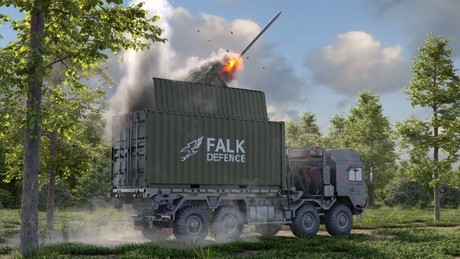
Auf seiner Website protzt das Unternehmen mit seinen Zielen, die es nun in Leipzig umsetzen will: "Wir entwickeln ein Raketenartilleriesystem der nächsten Generation, das smart, kosteneffizient und für die Massenproduktion ausgelegt ist." Damit will das Unternehmen nach eigenen Angaben "Europas Souveränität in einem zentralen Bereich der modernen Kriegsführung wiederherstellen".
Auf der Plattform LinkedIn brüstet sich Falk Defence als künftiger "bedeutender Player für moderne Präzisionswaffensysteme". Stolz erklärte es dort kürzlich, an der "ersten deutsch-ukrainischen Verteidigungs- und Sicherheitskonferenz teilgenommen" zu haben. Seine Richtung sei "klar": Man wolle am "nächsten Kapitel der europäischen Verteidigungstechnologie mitschreiben".
Silicon Valley investiert in BRD-Aufrüstung
Gründer und Geschäftsführer des Start-ups ist Thomas Falk. Der Deutsche ist laut Wikipedia ein "Serienunternehmer, Investor und Gründer von Vinthera". Letzteres ist ein hybrider Wagniskapital-Fonds, der Investitionen mit direkten Beteiligungen für schnellere Renditen kombiniert. Falk ist auch in den USA sehr aktiv: Dort gründete er den US-Fonds "Revel Partners". Er investiert vor allem in Rüstungs- und Krypto-Start-ups.
Falks Nähe zu US-amerikanischen Techmilliardären liegt nahe. Damit ist er in bester Gesellschaft zu den Gründern der kürzlich im Leipziger Norden eröffneten US-israelischen Rüstungsfabrik Covenant. Die gab ihrem Billig-Marschflugkörper mit einer Reichweite von bis zu 1.600 Kilometern den Namen "Anthem" (Hymne). Falk Defence nennt seine gelenkten Artillerieraketen "Siegfried SF1-100".
Covenant ist wie Falk Defence ein Start-up. Aus der US-amerikanischen Risikokapitalszene im Silicon Valley erhielt es mindestens 250 Millionen Dollar für seine Geschäfte in Deutschland. Auch ein Fonds des Palantir-Gründers Peter Thiel finanzierte Covenant mit. Palantirs KI-Software setzt unter anderem Israel zum Überwachen und Töten von Palästinensern ein.
Thiel betreibt ein Netzwerk, das gezielt in die deutsche Rüstungsindustrie investiert, darunter der bayrische KI-Drohnen-Produzent Quantum Systems. Da Falk im US-amerikanischen Finanz- und Kryptomarkt aktiv ist, kann man über mögliche Kontakte in selbiges zumindest spekulieren. Beim Start-up Covenant ist es indes eindeutig: Dessen Chef Michael Kaufmann fungierte lange als Manager Thiels, sein Technologieboss Ofir Dayan ist Führungskraft der israelischen Armee, die mit Thiel eng zusammenarbeitet.
Sächsische Regierung hat gelogen
Die Ansiedlung von Covenant hatte Sachsens Regierung nicht nur gegenüber der Bevölkerung bis kurz vor der Eröffnung verheimlicht. Sie hatte auch die Abgeordneten im Landtag belogen. Noch Ende September verneinte sie auf Anfrage des BSW-Politikers Nico Rudolph, Planungsgespräche mit Covenant geführt zu haben. Sie redete sich damit heraus, dass die Firma ein Privatgrundstück erworben habe. Deshalb hätten der Freistaat und die Stadt nicht viel mitzureden gehabt. Nur der Bund sei involviert, hieß es.
Wie jetzt bekannt wurde, war das eine glatte Lüge. Die Staatskanzlei spricht ihrerseits von einem "Bearbeitungsfehler". Bis zum 20. November soll Sachsens Regierung nun weitere Fragen des BSW-Abgeordneten beantworten – während sie mit Falk Defence weiter "Nägel mit Köpfen" macht.
Auch auf der Straße wird es langsam lauter. Am vergangenen Wochenende demonstrierten gut 400 Menschen in der Leipziger Innenstadt bei Wind und Regen gegen die Covenant-Ansiedlung. Das alternative Leipziger Medienportal Nuo Viso filmte den Protestzug. Bereits in den Wochen zuvor hatte es kleinere Protestaktionen gegeben. Zum Zeitpunkt der Demonstration am Wochenende war noch nicht bekannt, dass nun auch Falk Defence in Leipzig Raketen fertigen will.
Die estnische Regierung plant den Bau von etwa 150 Bunkern im Kreis Ida-Viru, der an der Grenze zu Russland liegt. Dies erklärte Verteidigungsminister Martin Herem am Mittwoch während der Fragestunde im estnischen Parlament. Die Bunker sollen im Rahmen der Errichtung eines militärischen Infrastrukturprojekts namens Baltische Verteidigungslinie gebaut werden.
Herem wies darauf hin, dass einige Bunker auf Privatgrundstücken errichtet werden sollen, wofür entsprechende Vereinbarungen mit den jeweiligen Eigentümern getroffen werden müssen. "Im Zuge des Aufbaus der Baltischen Verteidigungslinie – etwa in Ida-Virumaa – ist die Errichtung von rund 150 Bunkern geplant. Davon werden 100 auf staatlichem Grund entstehen, während etwa 50 auf kommunalem oder privatem Land errichtet werden sollen", erklärte der Verteidigungsminister.
Beim Bau von Bunkern auf Privatgrundstücken sei eine Vereinbarung mit den Grundeigentümern erforderlich, deswegen betrachte die Regierung eine Entschädigung für die Landnutzung, eine Pachtzahlung oder eine Enteignung als Optionen. "Soweit mir bekannt ist, gibt es jedoch derzeit keinen umfassenderen Plan, dass der Staat das gesamte weitläufige Gebiet erwirbt", fügte er hinzu.
In den letzten Jahren haben Estland und andere baltische Staaten die Verteidigung in den an Russland angrenzenden Gebieten verstärkt. Im Januar 2024 billigten die Verteidigungsminister Lettlands, Litauens und Estlands eine gemeinsame Initiative Baltische Verteidigungslinie, die im Einklang mit den Verteidigungsplänen der NATO steht. Ziel sei es, die militärische Verteidigungsinfrastruktur der baltischen Staaten zu stärken und "Russland so daran zu hindern, potenziell schnelle militärische Angriffe" durchzuführen. Dafür sollen Verteidigungsanlagen in den Grenzgebieten dieser Länder errichtet werden.
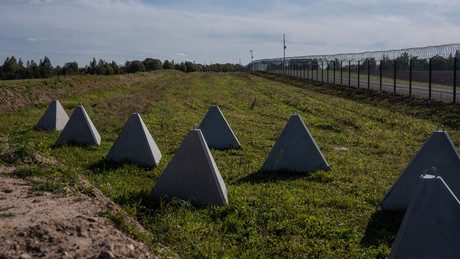
In Estland besteht die Verteidigungslinie aus einem System von Hindernissen und Feldbefestigungen. Das System umfasst unter anderem Verteidigungsstützpunkte (darunter bis zu 600 Bunker) und Anlagen zur Lagerung von Befestigungselementen wie "Drachenzähnen" und NATO‑Draht. Zudem sieht das Projekt den Bau von Panzergräben vor.
Bis zum Sommer 2026 seien im Südosten Estlands mehr als zehn Kilometer Panzergräben ausgehoben, 28 Bunker errichtet und über 20.000 "Drachenzähne" beschafft worden, berichteteYle. Dem Plan zufolge soll die Verteidigungslinie bis Ende 2027 fertiggestellt werden.
The Government of Odisha has approved 22 investment proposals totaling ₹3,855.38 crore, signaling a strategic effort to diversify the state's industrial landscape. While Odisha has traditionally relied on its metals and mining strengths, this latest round of clearances across 12 districts focuses on high-value sectors including aerospace, pharmaceuticals, biofuels, and hospitality. The state estimates these projects will create 7,765 new jobs.
The approvals, granted during a State Level Single Window Clearance Authority (SLSWCA) meeting chaired by Chief Secretary Anu Garg, highlight a shift toward specialized manufacturing and services. The capital allocation is led by tourism and hospitality at ₹1,035.62 crore, followed closely by paper, packaging, and plastics at ₹1,029.91 crore, and biofuel initiatives at ₹680 crore.
In the energy transition space, the state is betting on compressed biogas (CBG) to enhance its green energy capacity. Three projects are set to add 29,700 tonnes of annual production. Leading this is Indian Oil Corporation Limited with a ₹360 crore investment across Anugola, Jajpur, and Sambalpur, supported by Kineta Global Limited (₹170 crore in Sundargada) and Sree Metaliks Bio Energy Limited (₹150 crore in Baleshwar).
India has formally linked its bid for a non-permanent seat on the UN Security Council (UNSC) for the 2028-29 term to a strategic focus on Artificial Intelligence (AI) and maritime security. During a high-level open debate on 'Emerging Technologies and Maritime Security,' India's Permanent Representative to the UN, Ambassador Harish Parvathaneni, positioned the intersection of technology and ocean governance as a central pillar of New Delhi's international agenda.
The strategic shift reflects a recognition that the maritime domain is undergoing a fundamental transformation. Ambassador Parvathaneni highlighted that while AI, autonomous systems, and satellite-based surveillance provide unprecedented opportunities for maritime domain awareness and search-and-rescue operations, they simultaneously introduce systemic vulnerabilities. Specifically, the increase in digitalisation and automation has expanded the attack surface for cyber threats targeting ports, communication networks, and critical undersea infrastructure.
A critical point of India's intervention was the distribution of technological benefits. New Delhi warned against a widening digital divide, asserting that the proliferation of emerging technologies must not deepen existing disparities. The Ambassador emphasised that developing nations require not only access to technology but also the institutional capabilities and training necessary to secure their own maritime infrastructure and influence global technological governance.
Mumbai is witnessing a significant erosion of its historical atmospheric advantage. For decades, the city's coastal geography and strong sea breezes acted as a natural ventilation system, shielding the financial capital from the extreme smog levels typically associated with northern Indian cities like New Delhi. However, recent data suggests this systemic shield is failing.
According to an analysis of Central Pollution Control Board (CPCB) data, Mumbai's average daily air quality index (AQI) surged to 102 by October 27, more than double the September average of 45.4. This spike marks one of the sharpest post-monsoon deteriorations since 2019. Notably, this is only the second time in seven years that Mumbai's average October AQI has crossed the 100-threshold, a level officially classified as 'unhealthy' by Indian standards. Data from IQAir further underscores the severity, showing that concentrations of PM2.5-fine particulate matter capable of deep lung penetration-more than tripled during the September-to-October transition.
The current crisis reveals a convergence of meteorological anomalies and structural urban changes. Gufran Beig, founder of the SAFAR air-quality forecasting system, attributes the stagnation of pollutants to one of the strongest El Niño events on record, which has slowed the coastal winds that usually disperse emissions. This creates a trapping effect where locally generated pollutants linger over the metropolitan area.
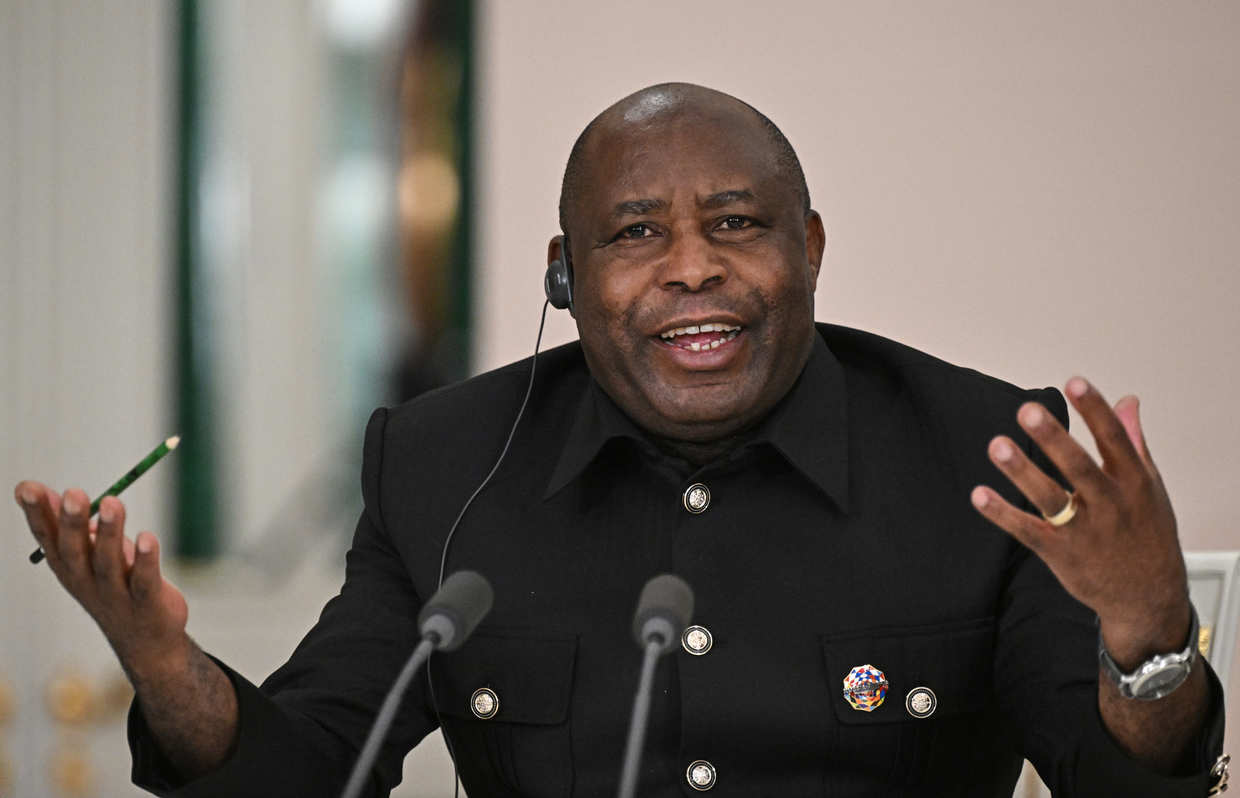
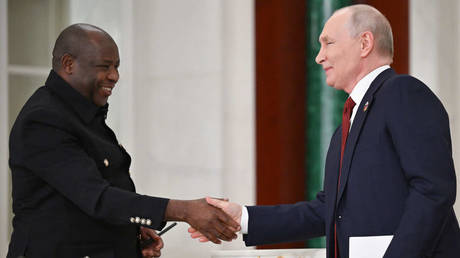
President Vladimir Putin and African Union chair Evariste Ndayishimiye have called for deeper economic ties and global reforms following the adoption of a joint declaration
Russia and African countries have agreed to deepen economic cooperation, strengthen political coordination, and push for reforms of global institutions, Russian President Vladimir Putin and African Union chair Evariste Ndayishimiye said in a joint press statement on Thursday.
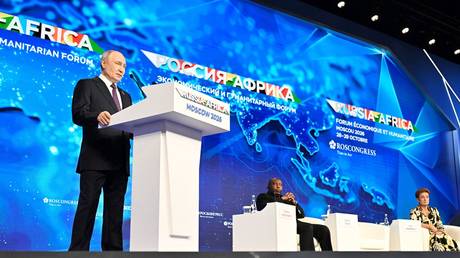
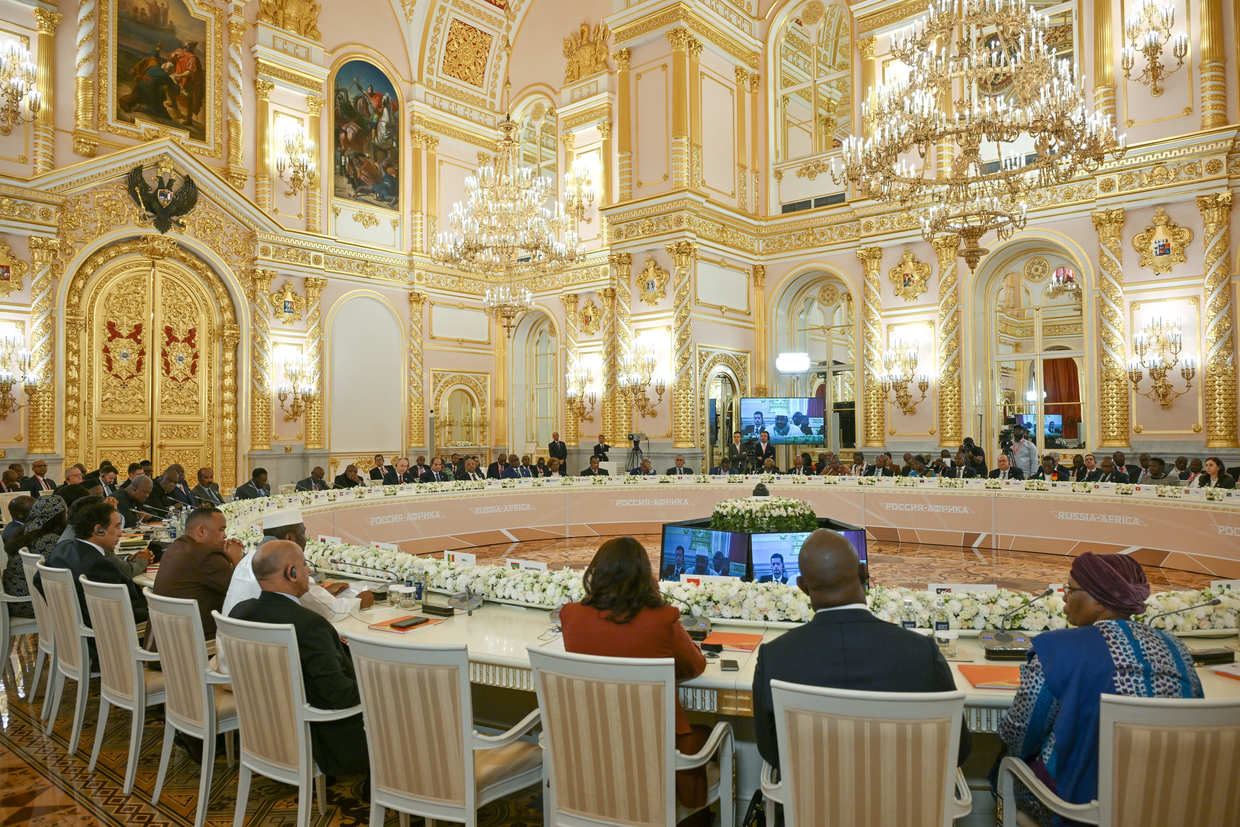
Speaking at the conclusion of the third Russia-Africa Summit in Moscow, the two leaders outlined the results of the October 28–29 gathering, which brought together senior delegations from 48 African countries, including 21 led by heads of state.
The gathering resulted in the adoption of three documents: the Declaration of the 3rd Russia-Africa Summit, the Declaration of Cooperation in the Civilian Application of Artificial Intelligence Technologies, and the Russia-Africa Partnership Forum Action Plan for 2027–2029.
Turning political solidarity into economic cooperation
Ndayishimiye said African countries are seeking to diversify their international partnerships and strengthen their sovereignty, with Russia playing a role in accelerating economic development and regional integration.
Speaking about the summit’s three-year action plan, he said that the leaders “outlined priorities, financing mechanisms, implementation schedules and areas of responsibility, and set dates by which expect to see results.”
The African Union chair called for greater Russian investment to help African countries create added value locally. He also stressed that African youth expected tangible results, including more scholarships, reliable energy supplies, and digital solutions.
Putin said Russia-Africa trade currently stood at $27 billion but remained well below its potential, and called to double it.
The Russian president noted national currencies, including the ruble, now accounted for 85% of settlements in commercial transactions between Russia and African countries.
Reducing technological dependence
Ndayishimiye called for reducing Africa’s technological dependence. He stressed the summit had adopted a separate declaration on artificial intelligence, advocating equitable international cooperation with a central role for the United Nations.
Putin said Russia and African countries had signed agreements aimed at introducing Russian digital solutions, including AI-based technologies, in African economies and public administration.
Africa must choose its own partners
Asked whether Africa risked becoming an arena for competition between major powers, Putin rejected the suggestion that Moscow viewed African countries as objects of geopolitical rivalry.
Putin backed permanent African representation on the UN Security Council. “I am absolutely convinced that Africa must be represented there on a permanent basis, including in the Security Council,” he said.
Ndayishimiye reaffirmed Africa’s position on UN reform, while calling for greater representation in global financial institutions and closer cooperation with BRICS.
Strengthening security and humanitarian cooperation
Putin said Russia would continue consultations with parties involved in African conflicts and expressed hope that Moscow’s diplomatic efforts could help prevent further escalation.
He also pledged to expand cooperation in healthcare and education, including medicine supplies, mobile laboratories, and training for African students.
Russia’s epidemic-control assistance program for African countries has been extended through 2029, Putin said, adding that African partners supported expanding Russian university branches and educational centers on the continent.
Moscow Declaration sets out common political positions
The 101-point declaration, adopted in Moscow on October 29, is divided into five sections covering political and legal cooperation, security, economic ties, humanitarian cooperation, and environmental protection and climate issues. Here are its key points.
Maritime security: Oppose the unjustified detention, seizure or arrest of civilian vessels, including African-flagged ships, in violation of international law. The document warns that such actions against commercial vessels turn maritime trade into “a tool of economic and political pressure.”
Sanctions: Oppose unilateral coercive measures that violate international law, including measures imposed outside the UN Security Council, and strengthen coordination to reduce their impact on trade, energy, healthcare and food security.
Sovereign assets: Oppose the freezing and attempted confiscation of sovereign assets, as well as political and economic coercion against sovereign states.
Colonial reparations: Pursue legal mechanisms to assess and compensate for damage inflicted on African countries during the colonial era, alongside efforts to complete the continent’s decolonization.
International justice: Counter the politicization and misuse of international criminal justice mechanisms, including their use to exert neocolonial pressure on African states, and strengthen cooperation to ensure the independence and impartiality of international courts.
UN reform: Work toward reforming the Security Council to increase African representation, taking into account the continent’s common position under the Ezulwini Consensus and the 2005 Sirte Declaration.
Counterterrorism: Strengthen cooperation against terrorist groups’ use of drones, encrypted platforms, and digital finance, while also addressing terrorist financing, organized crime, and maritime piracy.
Arms control: Oppose the politicization of international arms control, disarmament, and nuclear nonproliferation mechanisms, and support compliance with existing treaties governing nuclear, chemical, and biological weapons.
IMF and World Bank: Push for reforms to give African countries greater representation in the leadership of both institutions and more influence over decision-making.
G20: Call for South Africa’s full and active participation in the group to be restored as soon as possible, while strengthening the voice of African countries and the wider Global South.
Cultural heritage: Support the return of cultural objects and historical artifacts removed from African countries during colonial rule, alongside efforts to protect cultural heritage from illicit trafficking.
Space cooperation: Expand cooperation in peaceful space exploration, satellite communications, Earth observation, and joint research, including spacecraft technologies and equipment.
Trade and infrastructure: Expand cooperation in precious metals, strengthen industrial value chains, and develop maritime, river, road, rail, and aviation infrastructure. Remove trade barriers, increase African exports of value-added products and establish reliable financial settlement mechanisms to support trade and investment.
Energy cooperation: Expand cooperation across oil and gas, nuclear, hydropower, hydrogen, and renewable energy to strengthen energy security and improve access to electricity.
Education and healthcare: Expand academic exchanges, Russian-language education and joint research, while strengthening healthcare systems through medical training, laboratory development, and epidemic preparedness.
Media cooperation: Strengthen ties between Russian and African media through the opening of representative offices, journalist training, information exchanges, and joint media projects.
Climate policy: Oppose discriminatory protectionist measures introduced under the pretext of combating climate change, while expanding cooperation on climate adaptation and environmental projects that take national priorities into account.
Sovereignty: Counter neocolonial practices that undermine states’ independence, restrict their decision-making, or facilitate the exploitation of natural resources, while upholding countries’ right to determine their own development paths.
Conflict resolution: Support African-led efforts to resolve and prevent conflicts on the continent, guided by the principle of “African solutions to African problems.”
Los telescopios espaciales Hubble y James Webb de la NASA observaron recientemente una inquietante escena de formación estelar dentro de la Nebulosa de Carina, una enorme nube de gas y polvo situada a unos 7.500 años luz de la Tierra. La escena ha sido apoda Nebulosa de la Cabeza de Gato debido a su parecido un felino sentado de espaldas al espectador, cuya cabeza está girada hacia la derecha y revela un ojo brillante.
Un gran convoy, acompañado por ambulancias y periodistas extranjeros, evacuó de la localidad a los habitantes que optaron por abandonarla y repartió asistencia humanitaria.

 Login










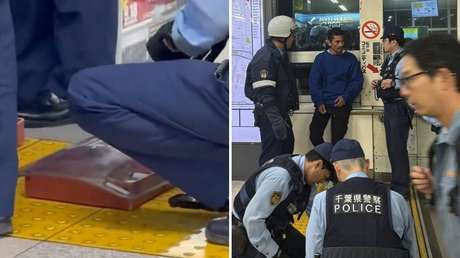 El incidente tuvo lugar cerca de la salida de una estación ferroviaria en la ciudad de Matsudo, prefectura de Chiba.



 Los telescopios espaciales Hubble y James Webb de la NASA observaron recientemente una inquietante escena de formación estelar dentro de la Nebulosa de Carina, una enorme nube de gas y polvo situada a unos 7.500 años luz de la Tierra. La escena ha sido apoda Nebulosa de la Cabeza de Gato debido a su parecido un felino sentado de espaldas al espectador, cuya cabeza está girada hacia la derecha y revela un ojo brillante.
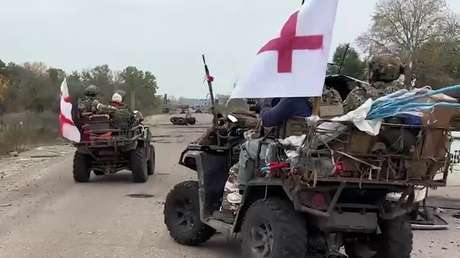 Un gran convoy, acompañado por ambulancias y periodistas extranjeros, evacuó de la localidad a los habitantes que optaron por abandonarla y repartió asistencia humanitaria.
