❌

Reading view

An armored capsule instead of an open platform: Ukraine develops an evacuation module for the Murakha UGV

The Murakha UGV with the CASEEVAK module.Photo: Robotic Complexes company

Ukrainian company Robotic Complexes is developing CASEEVAK, an armored module that lets the Murakha unmanned ground vehicle carry wounded soldiers off the battlefield, the company told Militarnyi on 28 October. The casualty rides in a closed capsule with ventilation, heating, lighting, and a first-aid kit, and side and rear doors let medics load and reach the soldier from any side.

Drones that can fly long distances pose a threat to both wounded soldiers and the crews evacuating them, making transportation the main challenge, said Ukrainian military medic Daryna Boiko, The Independent reported. Developers are looking for new ways to counter this threat. The current Murakha model is being equipped with passive anti-drone protection elements, the developers say.

An armored capsule that keeps the wounded connected

After a wounded soldier is loaded onto an evacuation platform, it is important not only to transport them to a safe location but also to protect them and monitor their condition during transit.

The module is built around a closed armored capsule made of 3.5 mm-thick Armox 500T steel with an inner lining of HDPE 1000, the media outlet reports. Side and rear doors allow the wounded to be loaded from different directions and accessed during evacuation.

A military personnel member inside the CASEEVAK module of the Murakha UGV. Photo: Robotic Complexes company

To enable the operator to monitor the person inside and maintain contact with them, the capsule is equipped with a camera with day and night channels and two-way audio communication. The system can be controlled via ELRS, LTE, Starlink, or fiber-optic communications. Militarnyi reports that even if the capsule is detached from the main platform, it retains two independent communication channels.

The developers are also working to integrate vital-signs monitoring systems intended to provide medical personnel with information about the wounded person’s condition during transport.

An electric platform and protection against FPV drones

The evacuation module requires a platform capable of carrying it as it moves through dangerous areas. The Murakha is equipped with two electric motors, delivering a combined torque of 1,600 N·m, and a 35 kWh battery. The system’s stated range is up to 80 km, according to the media outlet.

Another area of development is protection against drones. Measures intended to protect the system include net launchers and electronic warfare (EW) equipment. However, work on a protective cage against FPV drones is still ongoing, according to the report.

The company has already conducted ballistic tests of the armor steel at a distance of 50 meters, using ammunition of various calibers, Militarnyi reports.

The Murakha-Mini logistics platform


The same company previously developed the Murakha-Mini logistics platform. Ukrainian military personnel began using it on the front line to deliver equipment, provisions and other supplies, Militarnyi reported on 24 October 2025.

Ukraine’s Murakha-Mini unmanned ground vehicle. 2025. Photo: Robotic Complexes company

The UGV can carry up to 250 kg and travel up to 40 km on a single charge, the media outlet reported. During one combat mission, it transported 150 kg of cargo and towed a six-metre platform carrying another drone and provisions, covering 16 km in one direction, Militarnyi reported.

  •  

Russo-Ukrainian war, day 1709: Russian jet drone kills 14 on Dnipro railway platform beside a Zaporizhzhia-bound train

Exclusives

Meet Zakon: Ukraine creates its own national font to replace Russian type in state documents. The antiqua typeface draws upon the works of Ukraine's 20th century artists amid a decolonization push
Ukraine and the Netherlands team up on missile defense as Europe plans its own missile killer, free of US approval. The best time to intercept an incoming ballistic missile is when it's just halfway to its target. Can Ukraine afford this capability?
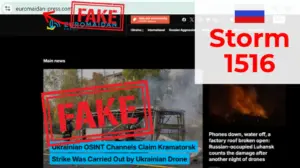
A Russian disinformation campaign cloned Euromaidan Press to blame Ukraine for Russia’s own strike on Kramatorsk (we took the fake down). Researchers tie the fake to Storm-1516, a Russian influence operation that has overtaken RT and Sputnik by cloning trusted news brands to publish fabricated stories under their names.

Military

“The enemy has changed tactics”: Zaporizhzhia faces record number of Russian FPV drone attacks, hitting public transport 3 times in one day. The attacks injured 14 people, including a 14-year-old boy, and damaged residential buildings, warehouses, and vehicles.

Ukrainian Neptune strike destroys two Russian Su-34 bombers used to attack frontline cities, Ukraine’s Navy says. The aircraft are a key part of Russia’s tactical aviation fleet, used to launch guided aerial bombs against Ukrainian military positions and settlements near the front line.

Russia’s October losses hit record high of 49,040 with three days left, Ukraine says. Russia’s estimated personnel losses reached a new monthly high by 29 October, surpassing the previous record set in December 2024.

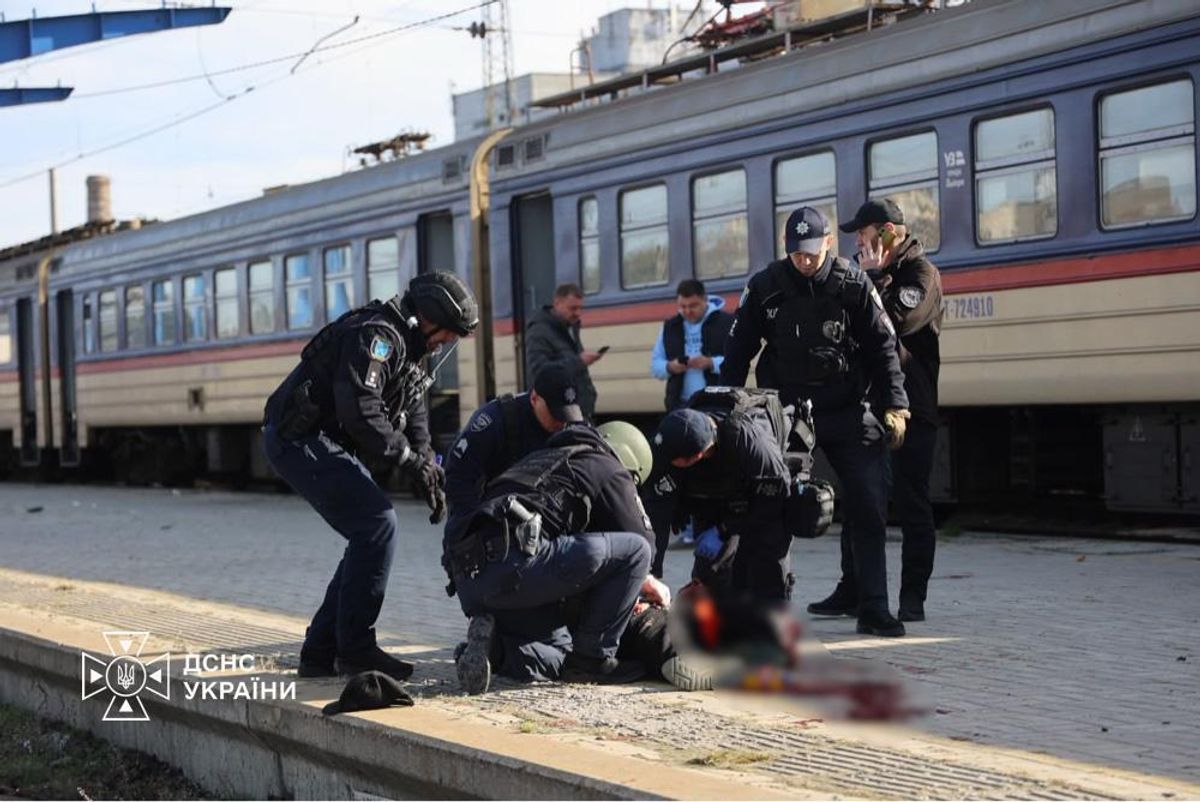
Russian jet drone hits Dnipro railway platform, killing 14 people next to a Zaporizhzhia-bound train. An air alert was on and the railway had ordered an evacuation, but many passengers were still beside the train when the drone struck.

Baking soda by day, armor chemistry on contract: drones reportedly strike Russia’s Bashkir Soda Company. The plant, which Russian Telegram channel Astra says sits on a closed register of defense suppliers, is the country’s only producer of a chemical used in bulletproof fibers.

Russia may use the Oleshky truce to rebuild its forces, ISW warns, as evacuees face a route through Russia and Belarus. The agreement spells out every leg of the evacuees’ trip except the last one home.

Promised discharge, but no trust: Why Ukraine’s new military contracts are struggling. Only 8,600 Ukrainians have signed the army’s new fixed-term contracts in four months.

Ukraine may already be pushing Operation Vivaldi across the Zherebets River. It’s a risky gamble. Two mappers put Ukrainian troops on the river’s eastern bank this week, including at Terny, where Russia crossed in 2024 and kept pushing until Vivaldi drove it back.

Nearly 5,000 tons of nitric acid for Russia’s military-industrial complex. Why did Azot plant become strategic target?. A military observer explains why Ukraine keeps striking Russia’s Azot plant.

Intelligence and technology

Ukraine finds Russia’s Geran drones fitted with a compass that works through GPS jamming, but Western electronics still at their core. Ukraine is also studying a new jamming device, and the findings go into its sanctions work.

Russian “Susanin” drone component may push Ukraine into nighttime blackouts. Roads and highways would go dark first, presidential adviser says. Ukraine may have to rethink its wartime blackouts if Russia begins mass use of drones and missiles carrying the “Susanin” optical-navigation module.

Russia is building Starlink no foreign company can switch off. Ukraine names 49 firms behind it, and 23 face no sanctions from Kyiv’s allies at all. One of them is Roscosmos, which puts the satellites in orbit.

Licensed, not banned: what China’s new rules mean for the parts inside Russia’s Shahed-type drones. Ukraine’s sanctions commissioner says Geran engines are on Beijing’s updated list and sees an opening for Kyiv.

International

Some European diplomats doubt Seoul over what they see as a tilt toward Russia during Moscow’s war on Ukraine, but Seoul says it backs ending the war, FT reports. Kyiv has already clashed with Seoul over fuel reaching Russia and two North Korean prisoners of war.

Russia’s sanctioned top diplomat heads to the US to campaign against the sanctions on its war. Moscow says Lavrov will use the G20 meeting in Atlanta to denounce sanctions, the economic pressure built to make Russia pay for invading Ukraine.

Germany holds two 19-year-olds over Bulgaria’s Starlink arson, and Sofia says they also attacked the network Ukraine fights with elsewhere in the EU. Bulgaria wants them extradited, and their lawyers say they will fight the warrant.

“I really don’t want this to be Yalta 2, 3, 4”: Zelenskyy fears Trump-Xi-Putin meeting could redivide world, with Ukraine on agenda. Great powers may sit down to redraw the world’s spheres of influence again.

Russia abducts Ukrainian children, and the Netherlands now funds UN search for them as part of new €1.2 billion aid package. Dutch companies get a way into rebuilding Ukraine: €136 million for partnerships and more export insurance in a new aid package.

Humanitarian and social impact

Classrooms in Sumy Oblast are moving underground due to Russian shelling: 13 such schools are already operating, nine are under construction, and another 14 are at the design stage. Russian attacks have damaged 165 schools in Sumy Oblast since the start of the full-scale invasion.

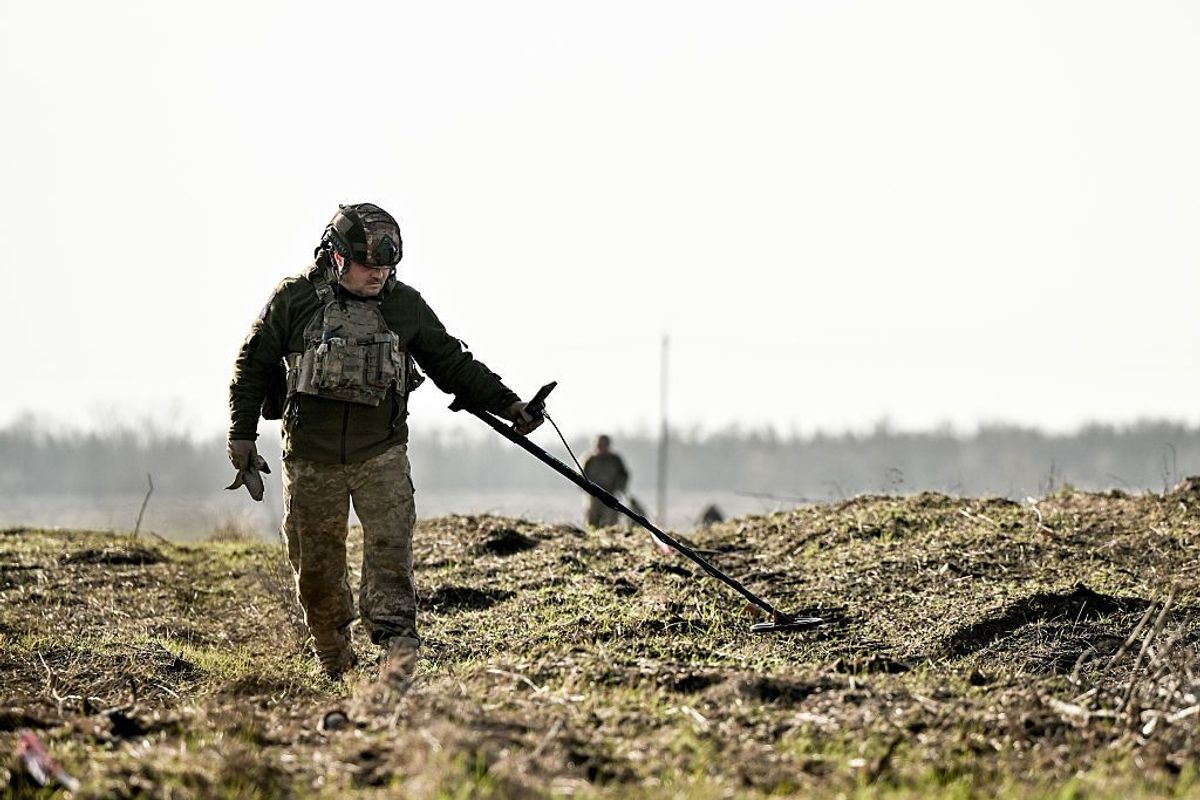
Demining complete, humanitarian convoy ready: Oleshky mission advances as ceasefire holds and Lubinets heads to occupied city. Ukrainian, Russian, and US delegations are coordinating a humanitarian operation in occupied Oleshky after mine clearance along designated routes. The mission aims to bring aid to civilians and facilitate their safe departure.

Six lanes and metro line under fire: Kyiv prepares about $22 million for backup river crossings after Russian strike on Southern Bridge. The bridges are of critical importance. About 600,000 vehicles cross the Dnipro River in Kyiv every day.

Russia may not give Oleshky evacuees a free choice to return to Ukraine, ISW warns, after Putin called the town a “Russian settlement”. Those who choose Ukraine will likely have to travel through Russia first, with no public guarantees that they will be let go.

Political and legal developments

Ankara tells Washington it’s ready to help revive Ukraine-Russia talks—but names no date or venue. Moscow claims a contact is near but that talk of Abu Dhabi is premature while it is still preparing. Kyiv wants that round before a summit without Ukraine.

€100 million at stake: what Ukrainians could save by joining Europe’s euro-payment zone, if parliament votes before November. Ukrainian small businesses pay for every euro transfer in paperwork and days of waiting.

Ukraine wants its Abu Dhabi talks with Russia before a proposed Trump-Putin-Xi summit. Tusk pointed to a first Abu Dhabi round after 4 November. Kyiv says the meeting now depends on Washington.

Read our previous daily review here.

  •  

Classrooms in Sumy Oblast are moving underground due to Russian shelling: 13 such schools are already operating, nine are under construction, and another 14 are at the design stage

Children study in a radiation-protective shelter in Sumy, December 2025. Photo: Suspilne Sumy

Since the start of Russia’s full-scale invasion, Russian forces have damaged 165 schools in Sumy Oblast and destroyed 21 beyond repair, according to the head of the regional administration. The administration’s answer is to move classrooms underground. Design documentation for 14 new underground schools has already been prepared, Oleh Hryhorov, head of the Sumy Oblast Military Administration, said in an interview with Ukrinform published on 28 October 2026. In addition, 13 such schools are already operating in Sumy region, while nine more are under construction, the media outlet reported.

Sumy region is one of the areas regularly shelled by the Russian military, making it dangerous to hold classes in above-ground school buildings. Of the region’s 280 schools, 225 have shelters, mostly basic ones, while more than 70 have radiation-protective shelters, Hryhorov noted.

“The process is ongoing and is being scaled up as much as possible,” he said, adding that the region is bringing in partners.

Underground classrooms provide a safer learning environment in Sumy Oblast

The construction of new underground schools is primarily focused on the larger cities of Sumy Oblast, where most schoolchildren are concentrated, Hryhorov explained.

The learning process at such a school differs from the usual format. This was explained by Oleksandr Vaniushenko, the principal of one of the first underground schools in Sumy, Suspilne reported on 23 December 2025.

“We have the first shift—entirely younger children, and fifth- and sixth-graders also go out to the open locations. The second shift brings in just as many more children. The total number studying per day is 360–370,” Vaniushenko noted.

The shelter has backup power supplies, allowing children to continue their lessons during air raid alerts and power outages, according to the project, media reported.

Children study in a radiation-protective shelter in Sumy, December 2025. Photo: Suspilne Sumy

Currently, 22 schools operate entirely in person, while 193 use a hybrid learning format, the head of the regional administration said. A total of 75,000 children are currently attending school in Sumy Oblast, he noted.

A Russian bomb hit a Sumy school during lessons in September

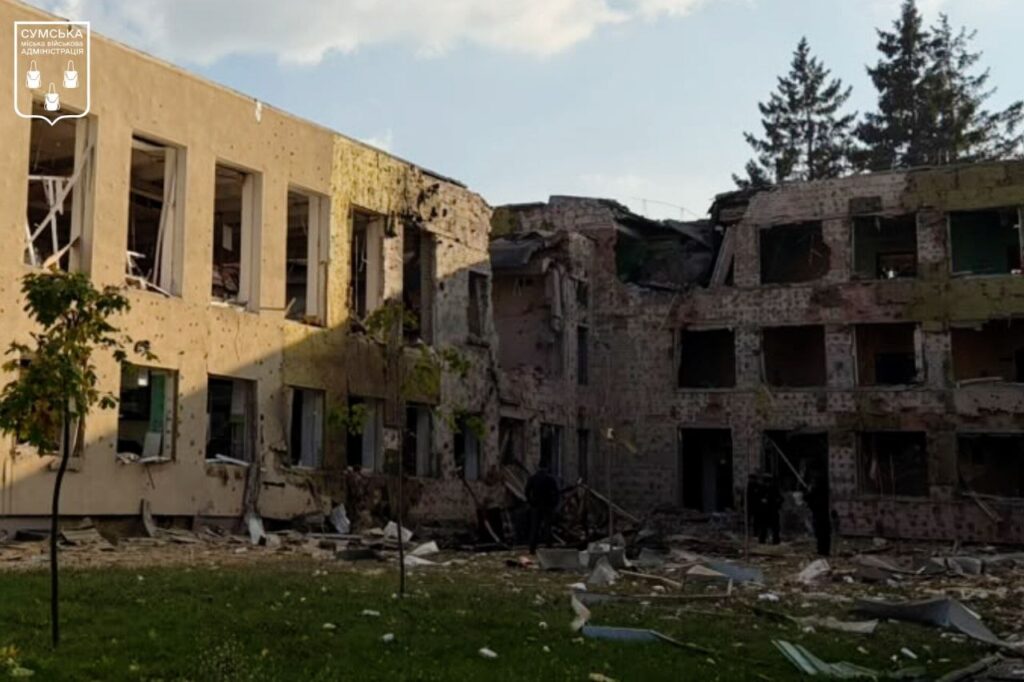
On 29 September, Russia struck a school in Sumy with a 250-kilogram aerial bomb while children in grades 1 to 4 were there, Serhii Kryvosheienko, head of the Sumy City Military Administration, reported. He said the Russians aimed the bomb at the school on purpose. About 40 students were in the school’s shelter when the bomb hit, a school employee told Suspilne.

A school in Sumy where Russian forces carried out a strike while elementary school children were studying, 29 September 2026. Photo: Sumy City Military Administration

"With no pity or compassion whatsoever, they strike at children? There is nothing human in the enemy! He is not fighting on the battlefield—he is destroying a nation," Kryvosheienko said.

  •  

“The enemy has changed tactics”: Zaporizhzhia faces record number of Russian FPV drone attacks, hitting public transport 3 times in one day

Municipal bus in Zaporizhzhia hit by a Russian FPV drone, 29 October 2026. Photo: Zaporizhzhia Regional Prosecutor’s Office

Zaporizhzhia experienced a record number of Russian FPV drone attacks on 29 October, injuring 14 people, including a 14-year-old boy, regional authorities said.

Russian forces used FPV drones and multiple-launch rocket systems to attack civilian infrastructure, targeting municipal transport and damaging residential buildings, warehouses, and cars, prosecutors said.

Zaporizhzhia reports record FPV drone attacks

Zaporizhzhia Regional Military Administration head Mykhailo Semikin said Zaporizhzhia had experienced a record number of FPV drone attacks on Thursday. After meeting with military officials, he said the authorities were aware of the situation and relevant services and Ukrainian defenders were responding.

He said Russian forces had “changed their tactics and modified their drones,” adding that Ukrainian military personnel were working on countermeasures to address the new threats.

Semikin urged residents to remain calm, heed air raid alerts, and exercise particular caution.

Russian forces launched a record number of FPV drone attacks on Zaporizhzhia on 29 October, repeatedly targeting civilian public transport.

Drones struck a municipal bus, a minibus, and a trolleybus. Four people were injured in the bus attack alone. Across the city, at least 14… pic.twitter.com/WfemZSh7yr

— Euromaidan Press (@EuromaidanPress) October 29, 2026

Russian drones target municipal transport

The attacks included strikes on a municipal bus, a minibus, and a trolleybus, according to Semikin.

In the morning, a Russian FPV drone struck a municipal bus, injuring four people.

In a separate attack, Russian forces struck 15 vehicles, a warehouse building, and a power line, sparking a fire and damaging a nearby apartment building. Two men, aged 41 and 66, were injured.

At around midday, another FPV drone hit a minibus in central Zaporizhzhia, injuring one person. 

Later, a Russian drone struck a municipal trolleybus, critically injuring a 56-year-old woman and lightly injuring two other women, aged 71 and 66.

Russian attacks on Zaporizhzhia injured two men, aged 41 and 66.

The strikes set four cars and an open area on fire, damaged a warehouse, and damaged four cars and four buses.

📷Ukraine’s State Emergency Service pic.twitter.com/oqRfYvMa7T

— Euromaidan Press (@EuromaidanPress) October 29, 2026

Zaporizhzhia’s proximity to the front line

Zaporizhzhia lies relatively close to the front line in southern Ukraine, leaving the city exposed to Russian attacks with weapons that can be used at shorter ranges, including FPV drones and multiple-launch rocket systems. 

The proximity allows Russian forces to threaten civilian infrastructure more easily without relying solely on long-range missiles or drones.

Prosecutors investigate suspected war crime

The Zaporizhzhia Regional Prosecutor’s Office said it had opened a war crimes investigation. Investigators from the Security Service of Ukraine’s regional directorate are conducting the pretrial investigation.

The casualty count and damage reports were preliminary, and authorities said information was still being updated as the attacks continued.

Russian attacks kill civilians in several Ukrainian cities

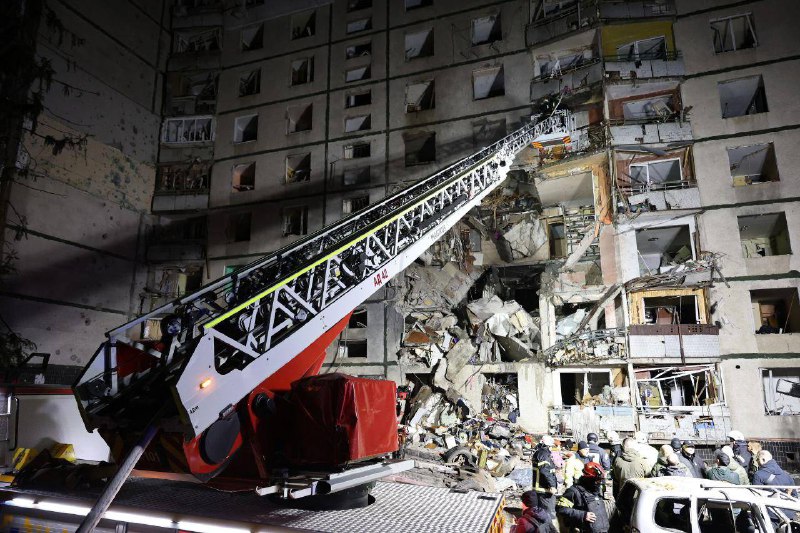
Zaporizhzhia was not the only major city hit by Russian attacks on 29 October. In Dnipro, a Russian strike on the railway station killed at least 14 people. 

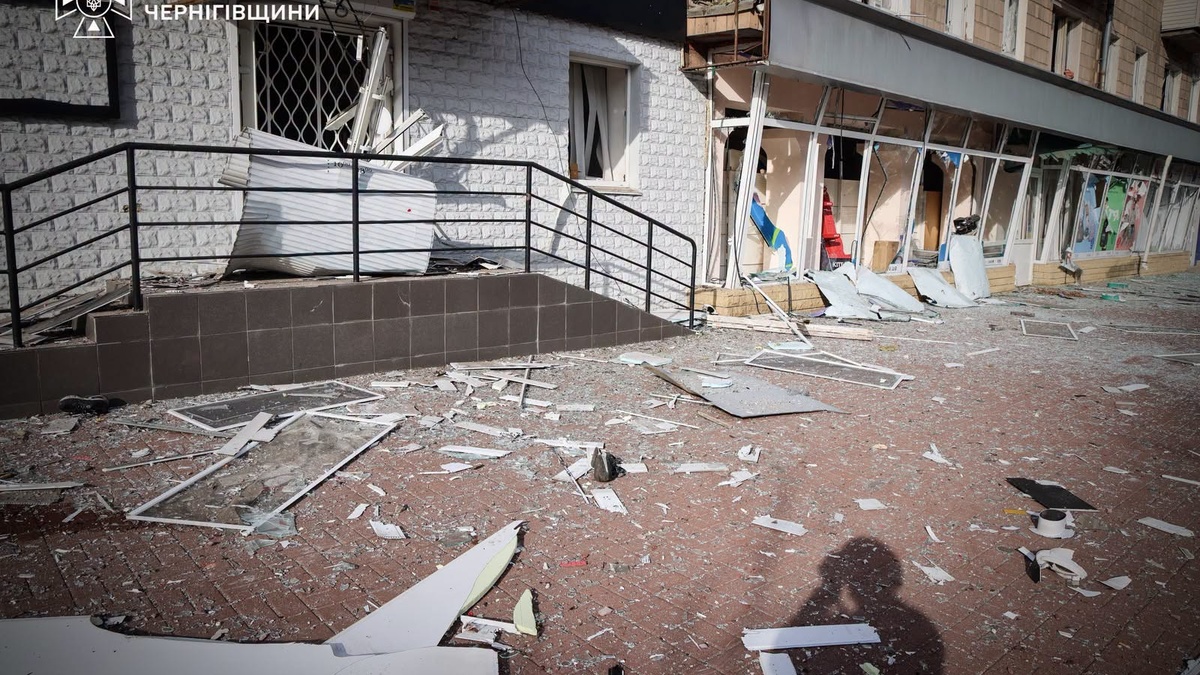
In Chernihiv, two teenage girls were killed and 23 people injured, including four children. In Kremenchuk, Poltava Oblast, three people were killed and 15 injured, including three children. 

The attacks damaged residential buildings and civilian infrastructure in all three cities.

  •  

Ukrainian Neptune strike destroys two Russian Su-34 bombers used to attack frontline cities, Ukraine’s Navy says

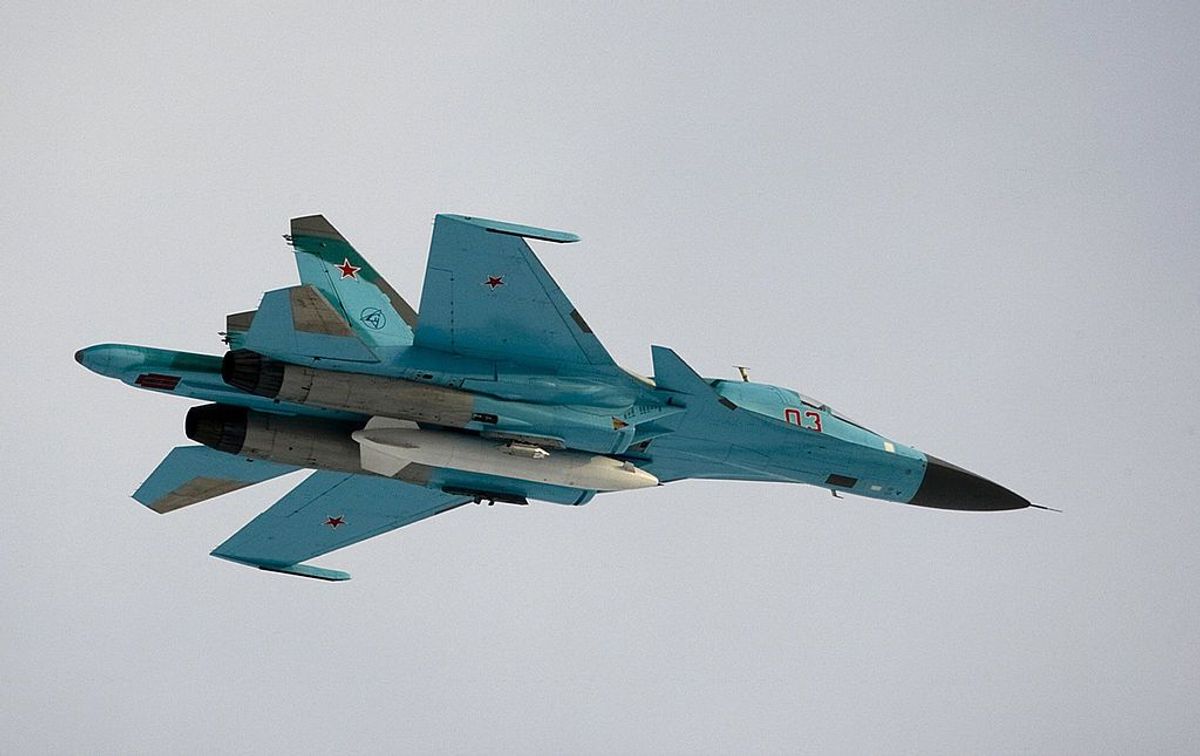
Russian Su-34 fighter-bomber. Photo: Russian Defense Ministry

Ukraine’s Navy said on 29 October that it destroyed two Russian Su-34 fighter-bombers in a Neptune missile strike on Marinovka airfield in Russia’s Volgograd Oblast.

The reported strike targets aircraft Russia uses to launch guided aerial bombs against Ukrainian cities, military positions, and frontline communities. Destroying the two jets would reduce Russia’s capacity to carry out these attacks.

Neptune strike hits Russian military airfield

strike on Marinovka airfield Neptune
Map: Euromaidan Press

According to the Ukrainian Navy, its units struck the site where Russian aircraft were stationed at Marinovka airfield using a Neptune coastal missile system.

The Navy said the strike destroyed two Su-34 fighter-bombers belonging to Russia’s 11th Mixed Aviation Regiment, based near the settlement of Oktyabrsky in Volgograd Oblast. The regiment is part of the 4th Mixed Aviation Division of Russia’s 4th Air and Air Defense Forces Army.

The Ukrainian Navy did not provide further details about the strike.

Su-34s are key to Russia’s guided bomb attacks

Russia uses Su-34 fighter-bombers to launch guided aerial bombs, known as KABs, against Ukrainian military positions and settlements, particularly in frontline areas. These attacks threaten both Ukrainian troops and civilians in communities near the front.

aftermath russia's kab bomb strike residential house kharkiv late 30 october 2024
Aftermath of Russia's KAB bomb strike on a residential house in Kharkiv late on 30 October 2024. Photo: Telegram/Oleh Syniehubov

According to Ukrinform, Russia’s Aerospace Forces had approximately 140 Su-34 aircraft of various modifications in service as of 22 October.

The Ukrainian Navy said it would continue striking Russian military targets to weaken Moscow’s ability to wage war against Ukraine.

  •  

Ukraine war latest: 'Russia's mass murder' — Deadly Russian strikes on Dnipro, Chernihiv, Kremenchuk

Key developments on Oct. 28:

  • 'Russia's mass murder:' Drone strike on Dnipro station kills 14 amid deadly daytime attacks on Chernihiv, Kremenchuk
  • Ukraine destroys 2 Russian Su-34 bomber jets in Neptune missile strike on airfield, Navy says
  • Route demining completed in Russian-occupied Oleshky as humanitarian convoy

  •  

Meet Zakon, the Ukrainian font designed to write Russian type out of state documents

zakon typeface

For more than 300 years, since Peter I's 1708 script reform, Ukrainian lettering has been shaped by imperial Russian norms. Zakon, presented on 29 October 2026, aims to break that pattern and decolonize the letters of Ukraine's state acts and awards.

The national font for official state communication draws on the work of Ukrainian artists, including Heorhii Narbut, who designed a 1918 banknote for the Ukrainian People's Republic, the short-lived independent state that fell to the Bolsheviks. It is meant to replace Izhitsa, Petersburg, and other Russian-origin fonts still often used on honor certificates, letters of thanks, diplomas, battle flags, and signs, adding a visual touch to the country's push to boost its national culture amid the fifth year of Russia's full-blown invasion.

Verkhovna Rada Speaker Ruslan Stefanchuk presented Zakon on 29 October, nine months after parliament adopted a resolution that called for a national font and said Russian-origin fonts had no place in official acts or on state awards. The Ministry of Culture developed it with money from the job site Work.ua and its co-owner Artur Mikhno, and the font is still in beta testing, the ministry says.

“The letters in which the word ‘Ukraine’ is written are also part of our state identity,” Stefanchuk wrote. “Decolonization should also concern how Ukraine presents itself.”

"Ukraine" written in Zakon font. Screenshot from mincult.gov.ua

“The creation of a national typeface is an important step toward ensuring that state institutions represent Ukraine through our artistic tradition and contemporary Ukrainian design. [...] We want Ukrainian design to shape the image of our country, and for our cultural heritage to become a source of new solutions,” said Tetiana Berezhna, Deputy Prime Minister for Humanitarian Policy and Minister of Culture.

Three typefaces, one of them free for anyone

Zakon comes in three versions. Zakon Text is designed for everyday official paperwork and is free for anyone to use; it's available for download here. Zakon Decor, for ceremonial inscriptions, and Zakon Letterpress, for printing the originals of legal acts, have closed licenses.

Zakon Text has four styles: regular, italic, bold, and bold italic. The ministry asks users to test it and send feedback before a wider rollout, which Stefanchuk said will be gradual.

The designers are Oleksii Chekal, Hennadii Zarechniuk, Dmytro Rastvortsev, and Andrii Shevchenko, with Taras Ishchyk leading the project.

Example of an Antiqua font

The ministry calls Zakon a “classic Ukrainian antiqua.” Antiqua, or roman, is the family of upright serif letters that grew out of a script Renaissance Italian humanists modeled on Carolingian handwriting, which they took for ancient Roman.

The name set it apart from blackletter, the Gothic script, and its forms became the basis of the roman typefaces Nicolas Jenson and Aldus Manutius cut in 15th-century Venice.

Built on the lettering of six Ukrainian artists

Zakon brings Ukrainian letter forms back to Cyrillic. The Ministry of Culture says that its developers “generalized most of the characteristic features” of six Ukrainian graphic artists’ lettering.

Heorhii Narbut (1886–1920) is credited with 13 of the 24 banknotes issued in 1917–1920, the first Ukrainian postage stamps, and an illustrated Ukrainian alphabet he never finished. His letters drew on Cossack baroque motifs and floral ornament.

Design of the 100 hryvnia note of the Ukrainian People's Republic. Typography, illustration, ornamentation. Heorhii Narbut, 1918.

Vasyl Krychevskyi (1873–1952) drew the trident that became the coat of arms of the Ukrainian People’s Republic in 1918, along with its seals and banknotes.

Vasyl Krychevskyi. Coat of Arms of the Ukrainian People's Republic. Poster, 1918.

Robert Lisovskyi (1893–1982), a follower of Narbut, made prints, book covers, and emblems, and later led the Association of Ukrainians in Great Britain.

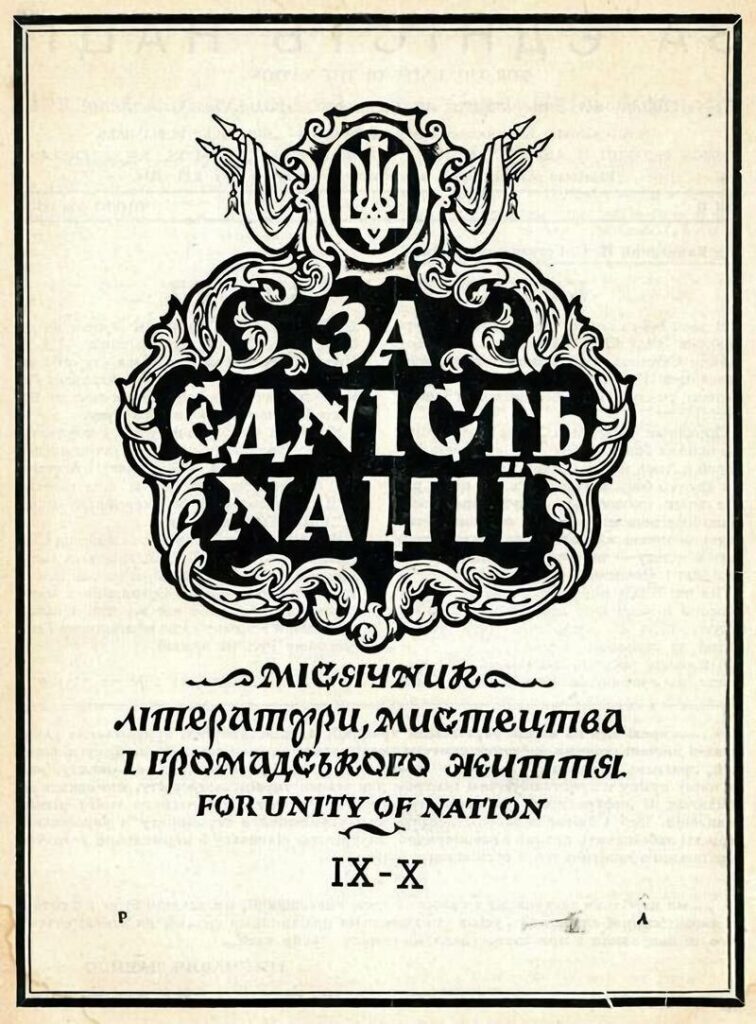
Cover of the magazine *For the Unity of the Nation*. Lettering and coat of arms by Robert Lisovskyi, 1955.

Vasyl Khomenko (1912–1984) created New Ukrainian, a typeface he worked on from 1963 to 1970. Zakon co-designer Zarechniuk is one of the authors of Homenko, a typeface based on his work.

Homenko Font Family
Homenko Font Family developed by Zarechniuk

Yakiv Hnizdovskyi (1915–1985) emigrated to the United States in 1949, later settling in New York, and made close to 250 woodcuts, along with book covers and bookplates.

Book cover. Calligraphy, ornamentation. Yakiv Hnizdovskyi, 1949, Regensburg.

Vasyl Chebanyk (1933–2025) began studying the Ukrainian alphabet in 1971 and in 2001 launched the Rutenia project to restore older Ukrainian forms in a modern shape. Rutenia later grew to more than 60 fonts and won him the Shevchenko National Prize. One of them is on the cover of the ceremonial copy of Ukraine’s Constitution.

The "Rutenia" decorative typeface, designed by Vasyl Chebanyk. Illustrative image
The Rutenia decorative typeface designed by Vasyl Chebanyk. Illustrative image

How Ukraine's state started dropping Russian fonts

Russia's full-scale invasion turned fonts into a state matter. On 29 September 2022, days after Russia's sham "referendums" in four occupied Ukrainian oblasts, Anna Yakupova, CEO of ParaType, the Russian studio whose Cyrillic versions of Petersburg and other fonts Ukraine's state institutions still use, congratulated colleagues in a chat that "our country got bigger," prompting a campaign to shun the fonts.

In August 2023, MPs from three factions registered bill 9606 to ban the Russian font Izhitsa from Verkhovna Rada documents and move parliament's honor certificates to Volja, a Ukrainian font made in 2022 by Marchela Mozhyna from the lettering of artist Nil Khasevych. A month later, the culture ministry announced plans for a bank of Ukrainian fonts to replace Russian ones.

In July 2026, the fight reached Ukraine's money. The National Bank of Ukraine said it would redraw the lettering on its new 2,000-hryvnia note featuring poet Vasyl Stus, after type designer Bohdan Hdal said the denomination lettering resembled an unofficial Cyrillic adaptation of Bickham Script made by a Russian designer. “No Russian shadows on a banknote with a poet whom Russia killed,” NBU Governor Andrii Pyshnyi said.

The "Two thousand hryvnias" inscription on Ukraine's new banknote will be redrawn after critics said it resembled a Russian designer's unofficial adaptation of a font

Some readers balk at the Z

Not everyone liked the name. Among the top comments under Stefanchuk’s post, readers objected that the Latin spelling starts with Z, the letter Russia painted on its vehicles for the full-scale invasion. Others welcomed the font itself.

  •  

Demining complete, humanitarian convoy ready: Oleshky mission advances as ceasefire holds and Lubinets heads to occupied city

Ukraine’s Human Rights Commissioner Dmytro Lubinets. Photo: Dmytro Lubinets

Ukraine’s humanitarian mission to Russian-occupied Oleshky in Kherson Oblast has reached a key stage, with mine clearance along designated routes completed and a humanitarian convoy ready to depart, Ukraine’s Human Rights Commissioner Dmytro Lubinets said on 29 October.

The mission aims to deliver humanitarian aid to civilians trapped in the occupied city facing humanitarian crisis, and provide a safe way out for those who want to leave. The operation is taking place under a localized ceasefire coordinated with the help of US First Lady Melania Trump.

Lubinets said the ceasefire has held for 54 hours without reported violations.

Aid convoy prepared, civilian evacuations planned

Lubinets said the humanitarian convoy was ready to leave and was expected to reach Oleshky’s central hospital. Residents would receive the assistance they need, he said.

Civilians wishing to leave the city would have an opportunity to do so until 2 p.m. local time, with security measures organized for their departure. Distribution of humanitarian aid was scheduled to begin after 2:30 p.m.

Delegations from Ukraine, Russia, and the United States had gathered to coordinate the next steps in the mission. Journalists from all three countries were also present, Lubinets said.

Lubinets travels to occupied Oleshky

Earlier on 29 October, Lubinets said he was still traveling toward Oleshky.

He said he wanted to be on the ground to see the situation firsthand and report on the mission’s progress. Lubinets also asked the public to rely on official sources and wait until he returned before raising further questions about the negotiations.

The Ukrainian ombudsman said the negotiations had been difficult and lengthy, adding that the mission had reached only the halfway point toward its goals.

“If I had to go for the sake of one person, I would go again,” Lubinets said, describing the mission as his duty to help Ukrainians in need.

US-mediated ceasefire enables humanitarian operation

The mission is being conducted jointly by Lubinets and Russian human rights commissioner Yana Lantratova, with mediation and coordination by Melania Trump.

The localized ceasefire took effect on 27 October to allow mine clearance, humanitarian deliveries, and civilian evacuations. 

Oleshky, on the east bank of the Dnipro River in Kherson Oblast, has been under Russian occupation since 2022. Russian occupation and restrictions on access to the city have left civilians facing severe shortages of food, medicine, and other essential supplies, while access to medical care has become increasingly difficult. The humanitarian mission aims to deliver urgently needed aid and help residents who want to leave reach safety.

Oleshky, Kherson Oblast, has been under Russian occupation since 2022, following Russia’s capture of the city during the initial phase of its full-scale invasion of Ukraine.
Explore further

Thousands are starving in occupied Oleshky. People have no food, no way out, and Russian forces bomb incoming aid

Lubinets thanked Melania Trump and the Ukrainians and US citizens who helped bring attention to the situation in Oleshky and support the negotiations. He said the mission’s priority remained delivering assistance and helping civilians leave safely.

  •  

Why did Russia agree to the Oleshky ceasefire?

Moscow's consent to a temporary ceasefire in Russian-occupied Oleshky seems like a long-overdue and welcome concession from a country that has repeatedly rejected or violated ceasefire proposals during the full-scale invasion of Ukraine.

So why is the Kremlin so on board with Oleshky? Experts, as well as information

  •  

Six lanes and metro line under fire: Kyiv prepares about $22 million for backup river crossings after Russian strike on Southern Bridge

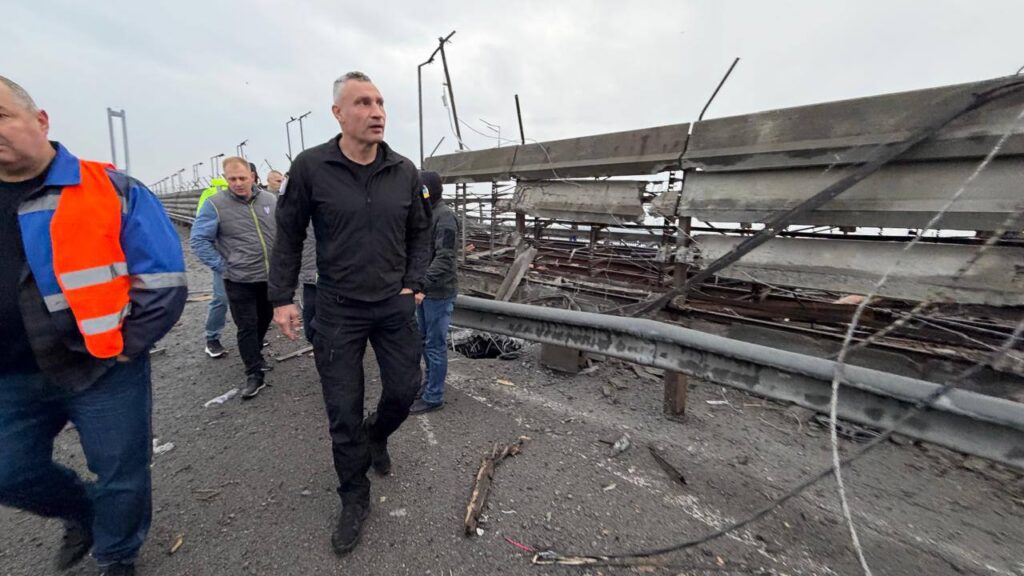
Kyiv Mayor Vitali Klitschko inspects damage on the Southern Bridge after a Russian ballistic missile strike, 27 October 2026

The Ukrainian government has instructed Kyiv to establish alternative routes after Russian attacks stopped traffic on one of the capital’s main bridges. The city authorities will bear the cost of the new crossings, with Kyiv Mayor Vitali Klitschko saying the city needs an additional $22 million.

This year, Russia has launched tactics to spread panic among civilians and trigger more people to leave the country. In the latest attack, several Russia's ballistic missiles struck the Southern Bridge, used for vehicle and metro traffic, breaking a huge hole and paralyzing all the pathes. The bridge was closed. Now, there is a fear that more bridges can be targeted this way, dividing Kyiv in two parts.

The situation is urgent, as Ukrainian Transport Minister Mykola Kalashnyk says about 600,000 vehicles cross the Dnipro in Kyiv every day.

What is Kyiv’s response to the winter terror? 

According to Klitschko, Kyiv convened the capital’s Defense Council on 28 October to find an answer to this difficult question.

The agenda included implementing a project to build combined water crossings over the Dnipro River and access roads to them.

“The military command will determine the locations, with approval to be granted, among others, by the Kyiv City Military Administration,” Klitschko said.

Under the government’s recommendations, the Kyiv city authorities must find $22 million for the project.

Klitschko had previously faced heavy criticism after it emerged that the city lacked sufficient shelters and last winter exposed serious shortcomings in preparing infrastructure for Russian attacks. These included a lack of alternative energy supply routes, poorly distributed energy, burst heating pipes that flooded apartments, and the inability of people with disabilities to reach shelters without elevators.

The mayor himself said the problems stemmed from the central government withholding funding, which had stalled numerous energy resilience projects and delayed their implementation.

The latest announcement also indicates that Kyiv has once again taken on the financial burden itself.

Meanwhile, Ukraine has been working with Japan on backup crossings. Tokyo has already delivered 720 meters of prefabricated bridge structures to Ukraine. The two sides are currently exploring how this equipment could be used to establish alternative crossings.

Step two: strengthening existing infrastructure

Another option is to reinforce existing bridges. City specialists are developing additional technical solutions to protect bridges across the Dnipro River, Klitschko said in his statement on 27 October, adding that proposals from the military had also been heard.

The issue of installing mobile shelters was also raised on the same day, the mayor of Kyiv said in a separate statement on his Telegram channel on 27 October. Despite intensifying Russian attacks and about, as Radio Svoboda reported in its article on 30 September, $11 million set aside in 2025, Kyiv still has only a handful of mobile shelters: LB reported in December 2025 that district tenders failed. Donors paid for the first one at a bus stop, the Kyiv City State Administration said on 15 October.

Klitschko raised the issue of shelters again after a court on 12 October ruled that local authorities must urgently install mobile shelters in public areas, including near public transport stops, parks, and squares, according to Kyiv’s Prosecutor’s Office.

Russia hits the Southern Bridge again

On 2 October, Ukrainian President Volodymyr Zelenskyy said in an interview with the Financial Times that Russian ruler Vladimir Putin had ordered the lifting of previous restrictions on airstrikes. Among new targets, according to him, were bridges, data centers, internet, mobile networks, hospitals, kindergartens, schools, and universities.

The night of 26–27 October showed what that looks like. Russia launched ballistic missile attacks in a few waves, and the second of them hit the Southern Bridge and the metro infrastructure on it, Klitschko said. The structure carries six lanes of road traffic and two metro tracks.

Rescuers work beside a fence pocked by shrapnel in Kyiv after the Russian attacks of 26–27 October 2026
Rescuers work beside a fence pocked by shrapnel in Kyiv after the Russian attacks of 26–27 October 2026. Photo: DSNS Kyiv

Zelenskyy put the night’s total at 16 ballistic missiles and blamed delays in deliveries of Patriot and NASAMS interceptors: “Every such delay is a new Russian hit on one target or another.”

  •  

Ukraine destroys 2 Russian Su-34 bomber jets in Neptune missile strike on airfield, Navy says

The aircraft were destroyed at the base of Russia's 11th Mixed Aviation Regiment near the settlement of Oktyabrsky, according to the Navy. The regiment belongs to the 4th Mixed Aviation Division of Russia's 4th Air and Air Defense Forces Army.

  •  

AFU strike Iskander launcher – Zelenskyy

The Armed Forces of Ukraine (AFU) carried out two missile strikes, resulting in the destruction of two Russian Su-34 fighter-bombers, as well as an Iskander launcher, Ukrainian President Volodymyr Zelenskyy has said.

  •  
❌