❌

Reading view

Russia used everything but nuclear weapons against civilians in Ukraine’s Kherson Oblast, its governor says. Drones strike up to 6,500 times weekly

The former chess and checkers school in central Kherson, housed in a historic building that once served as the Italian consulate, was destroyed by a Russian attack in July 2026. Photo: Embassy of Italy in Ukraine/Facebook

Russia has fired more than 925,000 shells at Ukraine’s Kherson Oblast since late 2022 and now sends up to 6,500 drone attacks against it every week. Oleksandr Prokudin, head of the Kherson regional military administration, set out the toll at the Council of Europe’s Congress of Local and Regional Authorities in Strasbourg.

Approximately 70% of Kherson Oblast remains under Russian military occupation, primarily across the left (east) bank of the Dnipro River, while Ukrainian forces control and have liberated the right bank, including the regional center of Kherson city.

“Everything except nuclear weapons”: the toll Kherson carried to Strasbourg

Prokudin told European partners that his region has spent nearly five years at the epicenter of the war, a few kilometers from Russian positions.

“It used everything except nuclear weapons. A separate danger is the ‘drone safari,’ today up to 6,500 drone attacks a week. This is deliberate, targeted terror against civilians, children, medics and rescuers. But we stayed, adapted and learned to counter this terror,” Prokudin said.

What nine European countries are now coming to learn

The region has answers that are already keeping 140,000 residents alive, he said: coordination among local authorities, the military, emergency services and volunteers; underground schools and hospitals; the pace of demining in deoccupied areas; and anti-drone defenses that let Ukraine’s forces bring down most of the incoming UAVs.

“We paid an extremely high price for this knowledge. That is why our unique experience of civil-military administration is already being studied by nine European countries, from the Baltics and Scandinavia to Germany and Poland,” he stressed.

His central message, he added, was that a large-scale crisis leaves no time to prepare, and that Europe must ready its communities, energy, medicine and local government, not only its armies, while it still holds the one thing Ukrainians lacked in February 2022, which is time.

“Our pain must gain meaning, and our lessons must save thousands of lives,” Prokudin added.

He thanked the Council of Europe and international partners for their solidarity with the region.

  •  

Drones have not killed tank: Ukrainian analyst says Operation Vivaldi shows NATO how to make armor work again

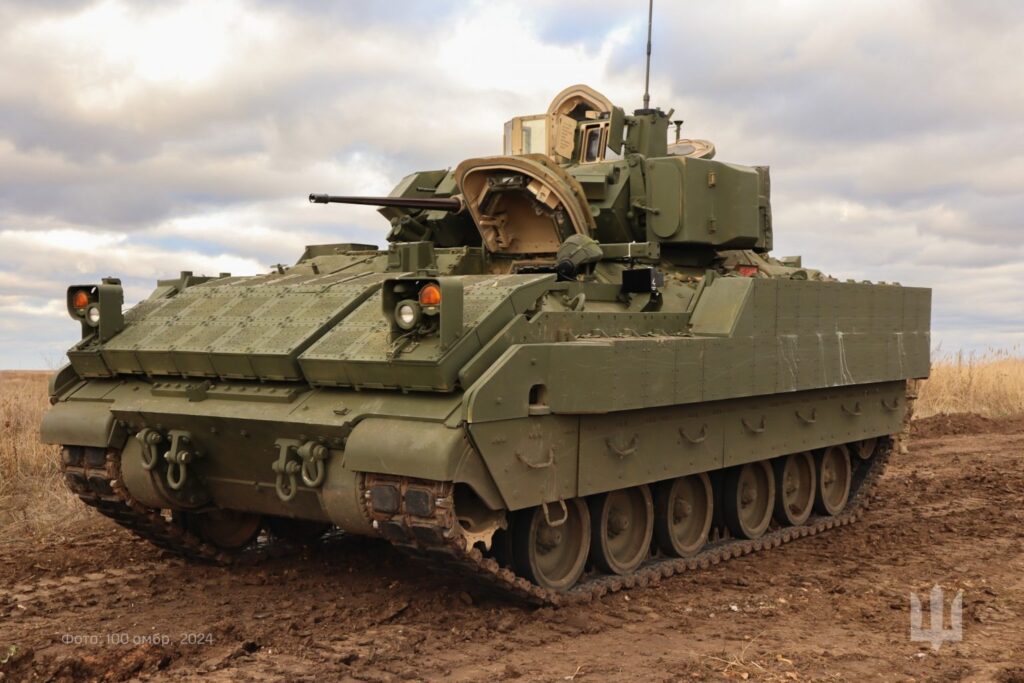
spain finland enter purl nato’s joint program buy weapons ukraine · post m2a2 bradley ods‑sa infantry fighting vehicle ukraine’s 100th brigade ods-sa od ukraine's 100-ї бригади фото з facebook-сторінки initiative

The lesson for NATO is not to abandon armored warfare, but to rethink how it is conducted. That is the argument Ukrainian military observer Oleksandr Kovalenko draws from Operation Vivaldi, the Third Army Corps’ counteroffensive near Lyman, which he says proves tanks still have a place on a battlefield many had already written them off.

Vivaldi is Ukraine's counteroffensive aimed at disrupting Russian forces' plans to encircle the fortress-belt cities in Donetsk Oblast from the north and south that protect the region from the entire occupation. Among them are Sloviansk, Kramatorsk, Druzhkivka, and Kostiantynivka. These cities have helped hold back Russian forces since 2014.

Kovalenko's claim runs against a view that hardened as drones came to dominate the front: that massed armor is finished, kept alive only by habit.

It matters because NATO’s own recent exercises have fed that view, with small Ukrainian drone teams beating Alliance armor again and again. Kovalenko says the Alliance now risks taking the wrong lesson from its own defeats.

What NATO’s war games got wrong about the tank

Kovalenko points to two drills. At Estonia’s Hedgehog exercises in May 2025, Ukrainian FPV-drone units ran rings around NATO troops, who he says lost vehicles by the dozen and failed one task after another.

In one episode, Ukrainian pilots notionally knocked out a large combat group built around a British brigade.

A year later, during the Aurora 26 exercises on the Swedish island of Gotland, the pattern repeated, and the NATO units, in his telling, in a sense lost control of the island.

The skeptics’ case leaned on exactly these results, Kovalenko says, with many concluding that the Alliance faltered in part because it still fielded large amounts of armor, a tool they believe has lost its relevance in modern warfare.

How the Third Army Corps made armor move again

Vivaldi is the counterexample, Kovalenko argues. During it, the Third Army Corps carried out two mechanized assaults that pushed into the Russian rear, not armor used the old way.

A similar idea appeared in the 2024 Kursk operation, he notes, paired there with intense electronic warfare; Vivaldi widened the package, with deeper reconnaissance and dedicated work against the enemy’s own strike systems.

The vehicles carried extra passive and active protection, and crews trained for the task, and Ukrainian forces moved to suppress Russian surveillance and communications.

None of these ingredients is new on its own, he says. What mattered was adapting the working formulas to attack a heavily outnumbered enemy.

“Ukrainian forces are showing that even what seems at first glance to be a battlefield anachronism can be adapted and given a new function,” Kovalenko says.

The corps’ commander made the same point about armor specifically.

“These operations prove that maneuver by armor remains possible on a battlefield increasingly dominated by reconnaissance drones, loitering munitions and precision weapons,” Brigadier General Andrii Biletskyi, who leads the Third Army Corps, said in a comment Kovalenko cites.

His own conclusion is a warning: NATO armies are stuck near Cold War templates for attack and defense, and unless they study and absorb what Vivaldi did, the Alliance could one day find itself routed not in an exercise but on a real battlefield.

  •  

“We need asymmetric effect,” Defense Minister Khmara says, as Ukraine funds its own missiles and radars to stop burning costly interceptors on cheap Russia’s drones

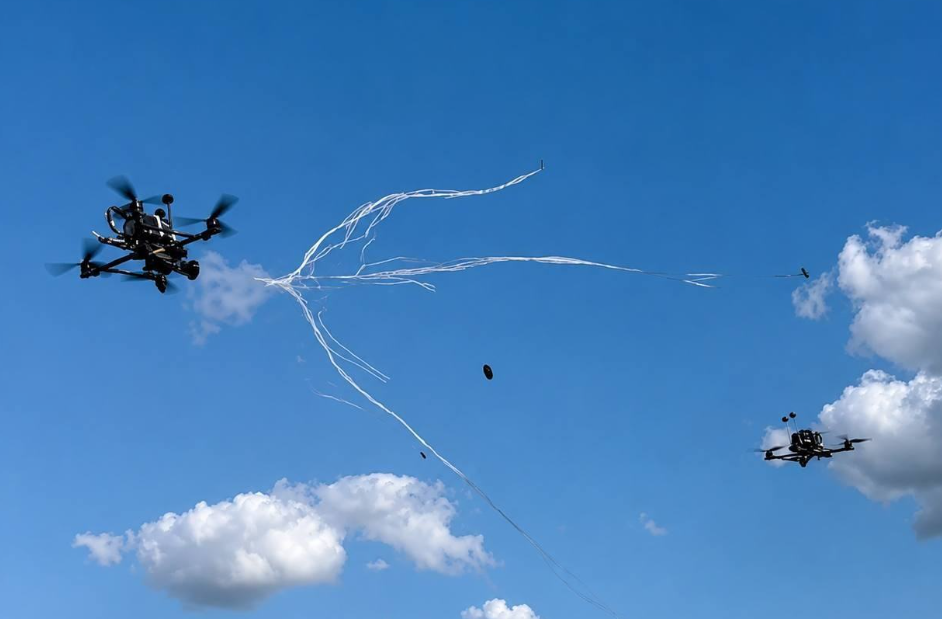
full speed returned ukraine’s satellite links last morning “we simply enforced terms” musk claims after blaming washington 10 days · post ukrainian company winfly unveiled spider interceptor equipped net-launcher снимок

Ukraine is opening grant money for home-built air-to-air missiles and radars, aiming to shoot down Russia’s fastest drones without paying a huge price. The Defense Ministry, the Ministry of Digital Transformation, and the Brave1 defense-tech cluster are launching the competitions, Defense Minister Yevhenii Khmara announced in an address to manufacturers, adding that a grant contest for turbojet engines will follow.

Ukraine is being forced to use expensive air defense missiles against relatively inexpensive Russian drones and cruise missiles. Developing cheaper interceptors, domestically produced radars and engines could change the economics of warfare.

The move comes as Russia leans harder on faster, jet-powered drones that strain the cheapest layer of Ukraine’s defenses. It also follows an earlier round of Brave1 grants that had already flagged anti-bomb systems and Ukrainian radars as priorities.

What Kyiv wants built, from navigation to radars that see the faint targets

Khmara laid out the threats the money is meant to answer: ballistic missiles, cheap cruise missiles, high-speed drones and guided bombs.

From Ukrainian producers, the ministry wants domestic navigation systems, stronger electronic warfare, radars able to pick out low-signature targets, and affordable designs that can be developed in quantity.

“Our requirements are clear: effectiveness, affordable cost, interoperability between systems, and sufficient volume of supply,” Khmara says.

The grants are one tool among others, meant to carry developments that can later scale for the Security and Defense Forces. Earlier, the ministry and Brave1 ran a large-scale test of drones with AI-assisted targeting.

The next contest targets the guided bombs Ukraine still cannot reliably stop

The minister singled out a separate job for manufacturers: new ways to counter Russia’s guided aerial bombs, known in Ukraine as KABs, and to blunt their use.

These are the glide bombs Russian aircraft release from a distance, and Ukraine has struggled to answer them without reaching the launch aircraft themselves.

“It is important to create innovative solutions that let us act ahead and prevail. We need asymmetric effect. We need technologies that change the rules of the game in our favor,” he argues.

Grants for turbojet engines, the ministry says, are the next step after the missiles and radars.

  •  

“We were told brigade couldn’t be saved”: Ukraine’s 125th grew its manning 430% and won back 1,500 absent soldiers in one year

The defenders from Ukrainian 125th Brigade. Source: Ukraine’s 125th Brigade

A year ago, Ukraine’s 125th heavy mechanized brigade was written off as beyond saving, manned at 17% with not a single tank, gun, or drone crew to its name. A year on, the brigade says it now ranks first among the army’s heavy brigades and that 1,500 soldiers who had gone absent without leave have returned to serve.

The 125th, part of Ukraine’s Third Army Corps, drew the comparison as it summed up its first year under new command. It comes as Ukraine struggles with a force-wide shortage of soldiers and leans on the Third Army Corps, the formation the 125th now fights under, for its counterattacks around Lyman.

The figures behind a brigade rebuilt from 17% strength

In the unit’s telling, the collapse was never the whole story.

“We were told the brigade couldn’t be saved. But they didn’t account for the main thing, people,” the brigade recalls.

By its own count, manning has risen 430% over the year, and its main units now stand at 95-100%. The crews that grew fastest were the ones flying drones: the number of aerial-reconnaissance teams is up 1200%, FPV crews 950%, heavy-bomber crews 1400%, and fixed-wing drone crews 600%.

The brigade also built units of uncrewed ground vehicles from scratch and stood up its own training, air defense, electronic warfare, reconnaissance, and medical structures.

Now, it is among the most effective brigades for destroying Russians, mining, artillery, air defense, ground robots, and reconnaissance, and for three months running it has placed first among the army’s heavy mechanized brigades on those combined measures.

From two pickups and a minibus to Bradleys and Leopards

The starting point was close to empty. At the beginning of the reform, the brigade had almost no combat equipment, its commander, Volodymyr Fokin, told ArmyInform in June.

“For the whole brigade we had two pickups and one minibus,” he said.

In the first six months, he added, the brigade replaced about 90% of its commanders in key posts and stood up a tank battalion, a drone battalion and a ground-robotics company.

Today it fields American Bradley infantry fighting vehicles, German Leopard tanks and artillery of various calibers.

A captain with the callsign “Skamer” told ArmyFM in July that the new equipment came with new ways of running the brigade, with more authority given to commanders who had real combat experience.

  •  
❌