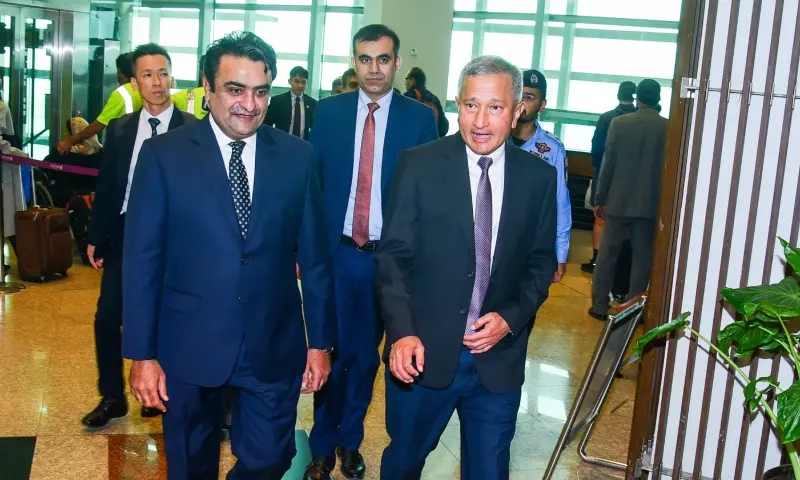
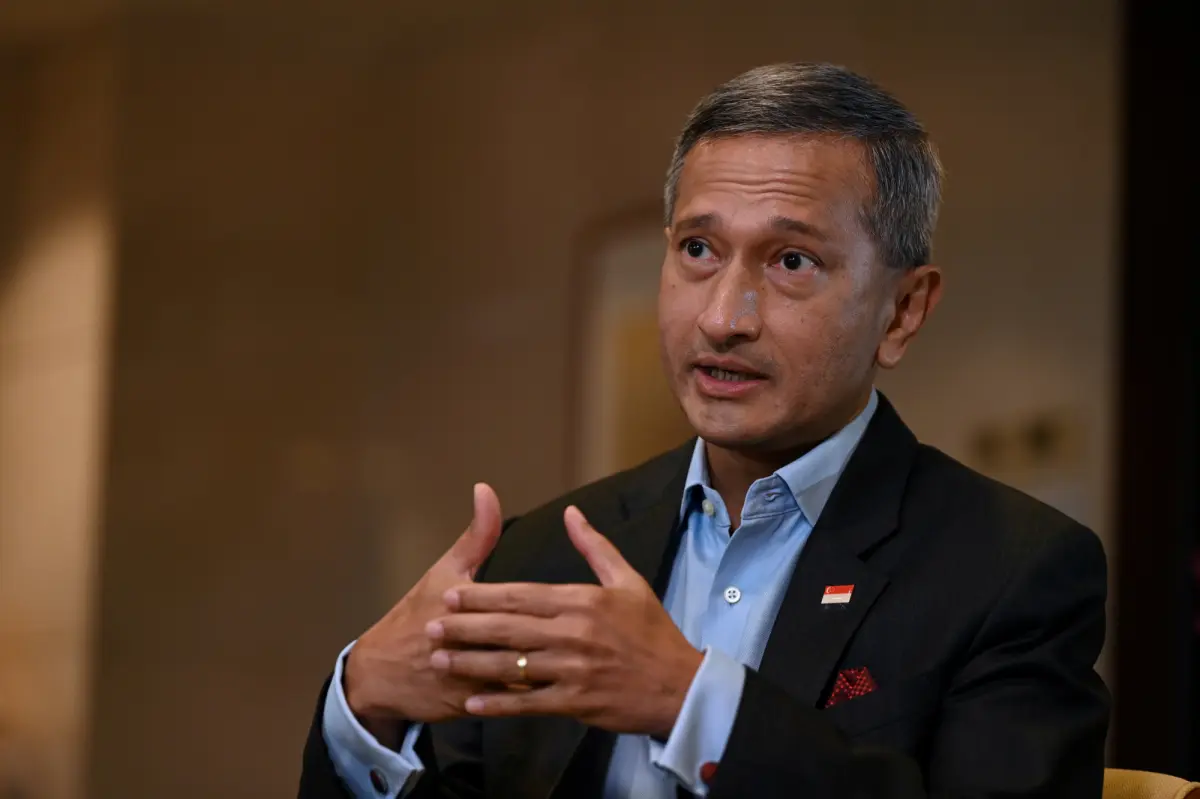
Singaporean Foreign Minister Vivian Balakrishnan arrived in Islamabad on Friday on an official visit, the Foreign Office (FO) said.
The visiting dignitary is undertaking the trip at the invitation of Deputy Prime Minister and Foreign Minister Ishaq Dar, who is scheduled to hold “comprehensive talks” with Balakrishnan on cooperation in bilateral and multilateral domains, according to the FO statement.
Prior to his visit, the FO said the trip “assumes significance as it coincides with the 60th anniversary of the establishment of diplomatic relations between Pakistan and Singapore and comes ahead of Singapore’s assumption of the Asean chairmanship in 2027”.
The initial statement added that apart from bilateral matters, Dar and Balakrishnan would also exchange views on regional and global developments of mutual interest.
A memorandum of understanding (MoU) on cooperation in disaster management between Pakistan’s National Disaster Management Authority (NDMA) and Singapore’s Civil Defence Force (SCDF) is also expected to be exchanged.
“Pakistan and Singapore maintain cordial bilateral relations based on mutual respect and longstanding friendship. The visit underscores the shared commitment of the two countries to deepening and diversifying their bilateral partnership,” the statement said.
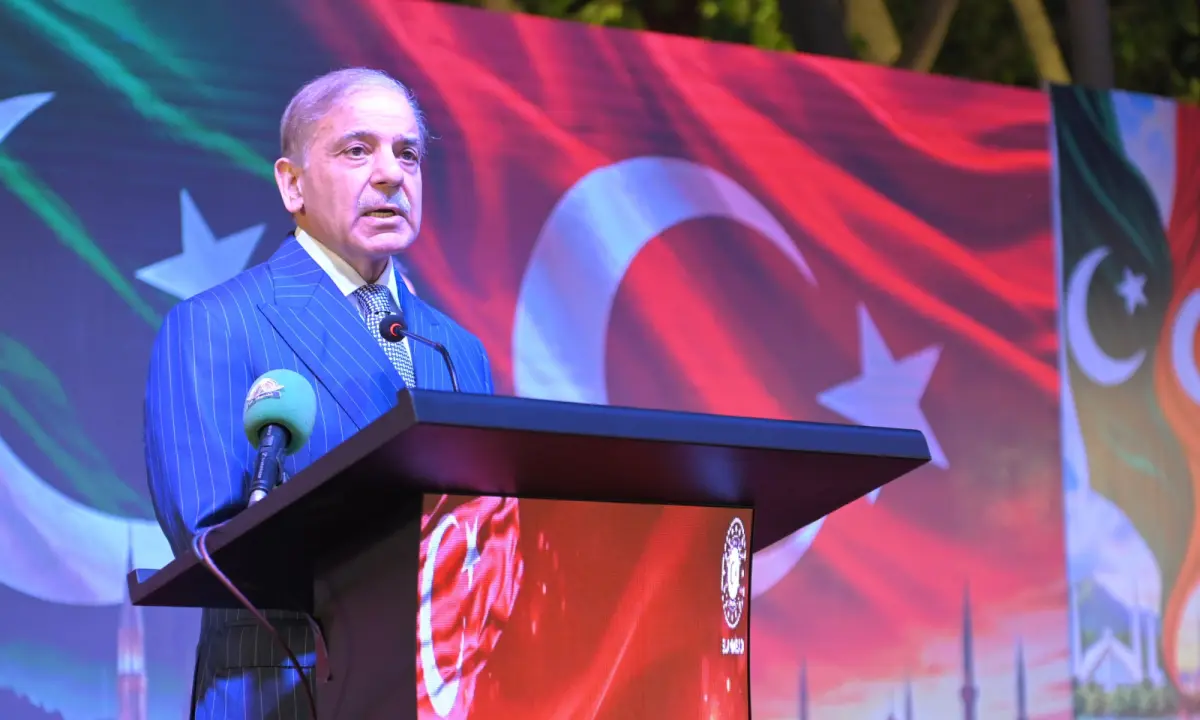
Prime Minister Shehbaz Sharif on Thursday affirmed that Pakistan and Turkiye would continue to push for dialogue and diplomacy while strengthening their defences under the Makkah Defence Agreement.
He made the remarks while addressing an event in Islamabad marking the 103rd national day of Turkiye, with which Pakistan enjoys strong bilateral ties and maintains multi-sectoral cooperation.
The premier said the pact, signed on Aug 7 between Pakistan, Turkiye and Saudi Arabia, marked an “important milestone” in cooperation between Islamabad and Ankara.
“It strengthens our collective deterrence and reinforces our shared commitment to regional peace and stability,” PM Shehbaz noted.
“While we strengthen our defences, we shall continue to champion dialogue, diplomacy, respect for international law and the peaceful settlement of disputes.”
The prime minister hailed Turkiye’s diplomatic support during Marka-i-Haq last May, when India initiated unilateral aggression against Pakistan, triggering a four-day conflict between the nuclear-armed neighbours.
“Turkiye stood firmly by our side with unwavering commitment and dedication. This sincere act of solidarity was a profound source of comfort and strength for the people of Pakistan, a gesture that will forever remain etched in our hearts and our memories,” he emphasised.
Additionally, the premier observed that Islamabad and Ankara’s relationship had evolved into a “multifaceted strategic partnership”, spanning political dialogue, defence, trade, culture and people-to-people ties, among other areas.
He stressed that the economic partnership between Pakistan and Turkiye needs to match the heights of the political and strategic bond between both nations.
“In July this year, at the Pakistan-Turkiye business conference in Istanbul, I announced the establishment of the President Tayyip Erdogan Special Economic Zone in Karachi,” PM Shehbaz said.
“Now I invite Turkish businessmen to look at Pakistan with its young population, strategic location and growing economic opportunities. Let us translate the goodwill between our two peoples into joint ventures, shared prosperity and meaningful jobs for our young people.”
During his speech, the prime minister highlighted the longstanding, historic ties that the two countries shared, recalling that during the Khilafat Movement — a campaign to protect the Ottoman Empire after World War I — people donated whatever they could from the subcontinent, including money and jewellery, to support their “Turkish brethren”.
“A century ago, our forefathers sent their love across the seas. Generations later, that love returned to our doorsteps during our darkest times,” he added, referring to humanitarian aid from Turkiye during the 2005 earthquake and the devastating floods of 2010.
PM Shehbaz also highlighted that under Turkish President Recep Tayyip Erdogan’s instructions, Turkiye established a modern hospital, a school and modern villages for the people of Muzaffargarh after the floods.
“The 100 years between the Khilafat Movement and that moment seemed to close into a single circle,” the premier said, noting that when a massive earthquake rocked Turkiye in February 2023, “the people of Pakistan grieved as if the rubble lay upon our own homes”.
“We stood with our Turkish brothers and sisters, in their hour of sorrow, just as they had stood with us.”
Earlier this week, Pakistan, Turkiye, Saudi Arabia and Iran participated in a quadrilateral meeting where Iranian President Masoud Pezeshkian called for “regional unity” and hoped that the presence of other Islamic powers would “further consolidate regional unity and cohesion”.
Earlier this month, both nations signed an agreement to enhance cooperation in combating terrorism, narcotics trafficking and organised crime and agreed to establish a joint working group to strengthen collaboration between their interior ministries.
The decisions were taken during a meeting between Interior Minister Mohsin Naqvi and his Turkish counterpart Mustafa Çiftçi in Istanbul.
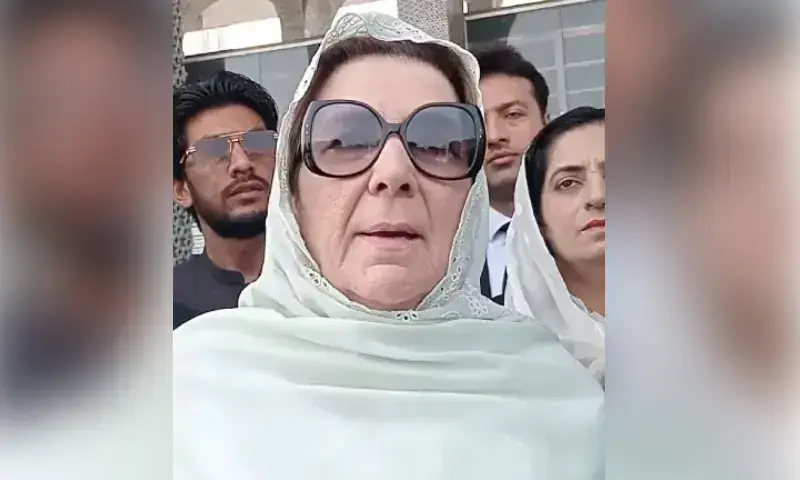
Adviser to the prime minister on political affairs, Rana Sanaullah, on Thursday informed the Senate that Noreen Niazi, the sister of jailed PTI founder Imran Khan, was fine after being provided medical treatment in Lahore.
Imran’s three sisters — Noreen, Aleema Khan, and Uzma Khan — have been in detention since Sept 21 under the Punjab Maintenance of Public Order Ordinance, 1960 (MPO) on the Lahore deputy commissioner’s (DC) orders.
On Wednesday, Noreen’s lawyer said that she was moved from Lahore’s Kot Lakhpat jail to the Punjab Institute of Cardiology (PIC) due to high blood pressure. Her lawyer claimed that no family member had been informed about her deteriorating health condition.
Speaking on the floor of the Senate on Thursday, Sanaullah responded to the query by PTI parliamentary leader Barrister Ali Zafar, who sought information regarding Noreen’s health and her being taken to the hospital.
The PML-N senator said Noreen was “immediately provided with medical facilities”.
“As per the information available, she is fine and all her medical tests are normal,” he said.
On concerns about Noreen’s family allegedly not being allowed to meet her, the prime minister’s adviser said details would also be sought on the matter. He assured the PTI that if this was true, it would be addressed depending on the circumstances at the hospital.
During his address, PTI Senator Mashal Yousafzai continued to interrupt Sanaullah, questioning the need for Noreen’s detention.
The PML-N senator replied: “She is in jail because she wanted to spread turmoil in the country. She wanted to attack Islamabad by launching a long march and inciting the people.”
Addressing Zafar, Sanaullah said that as the PTI founder was in jail under judicial custody, any relief regarding his health and meeting should be sought from the courts.
Imran’s sisters are currently serving the second term of a 30-day detention under the MPO, which was extended on Oct 7. The detention came amid reports of a crackdown on the PTI ahead of its countrywide protest and march to Islamabad, which the party had called to demand Imran’s release from jail and mobilise people for the supremacy of the Constitution.
‘Must never allow our humanity to fail’
In his remarks on the Senate floor, Zafar contended that Noreen had been detained despite not having committed any crime.
While Noreen’s lawyer had said she had faced high blood pressure, Zafar said she suffered a heart attack and claimed that her family was not being allowed to meet her.
Quoting Shakespeare’s phrase “milk of human kindness”, Senator Zafar said if even a little human kindness remained, the government must immediately stop grave human rights violations.
“If there is even a minimum of human kindness left in you, release her. At least allow her family to meet her and ensure proper medical care,” he said while speaking on a point of order.
He also condemned the detention of Imran’s nephews, asking why family members should suffer for their relationship with a political leader.
He alleged Imran had been kept in solitary confinement for a year and was being subjected to torture, claiming that the PTI founder’s wife Bushra Bibi was also facing inhumane treatment.
He demanded an immediate end to their mistreatment, which the government denies, saying both are being provided with the facilities they are entitled to.
Zafar claimed that the government believes the Constitution can be broken and suspended, as witnessed in the imposition of governor’s rule and emergency in Khyber Pakhtunkhwa, which has rendered the elected provincial government non-functional.
“There is one thing that cannot be broken, suspended or compromised: the fundamental human rights of the people of Pakistan,” he asserted.
Senator Zafar stressed that even if governor’s rule was claimed to be justified, it could never be a licence to violate fundamental rights, detain the chief minister, speaker and elected representatives, or keep their whereabouts undisclosed.
He warned that violating the sanctity of home and family honour, which hold deepest importance in Pashtun society, would provoke strong resentment among people of KP.
He also referred to reports of attacks on homes of MNAs and alleged violence against their wives and sisters, calling for impartial investigation.
“These are not merely political issues. These are matters of human rights, human dignity, family honour and rule of law. Human rights stand above politics,” he said.
Concluding, he said: “The Constitution may be violated by those who wield power, democratic mandates may be undermined, and institutions may fail in their duty. But we must never allow our humanity to fail.”
PTI condemns Noreen’s hospital transfer ‘sans informing family’
Meanwhile, in a statement, the PTI condemned the transfer of 70-year-old Noreen to the PIC without informing her family, expressing grave concern over her health and the treatment of “political prisoners”.
PTI Central Information Secretary Sheikh Waqas Akram criticised the authorities for not informing Noreen’s family after she felt unwell while in custody at the Kot Lakhpat jail.
He described the handling of her medical emergency as “callous and inhumane”, arguing that denying family members timely information about the condition of an elderly heart patient raised serious questions about prisoners’ rights, legal safeguards and basic human dignity.
“Noreen Niazi’s transfer to the PIC without prior notification to her family is alarming,” Akram said, demanding an immediate explanation from the Punjab government and the relevant authorities.
He demanded that Noreen receive the best possible medical treatment under the supervision of senior cardiologists without any delay, that her necessary diagnostic tests be conducted, and that her family be allowed access in accordance with applicable law.
“The authorities must provide her family with complete, credible and timely information about her condition,” the PTI leader further stressed.
Warning the government against disregarding fundamental rights in the alleged pursuit of political objectives, he said the PTI would not compromise on the protection of human life, health or constitutional freedoms under any circumstances.
Prime Minister Shehbaz Sharif on Thursday approved the expansion of Allama Iqbal International Airport and Jinnah International Airport as outlined in their respective masterplans while seeking to turn Karachi into an “air cargo hub”.
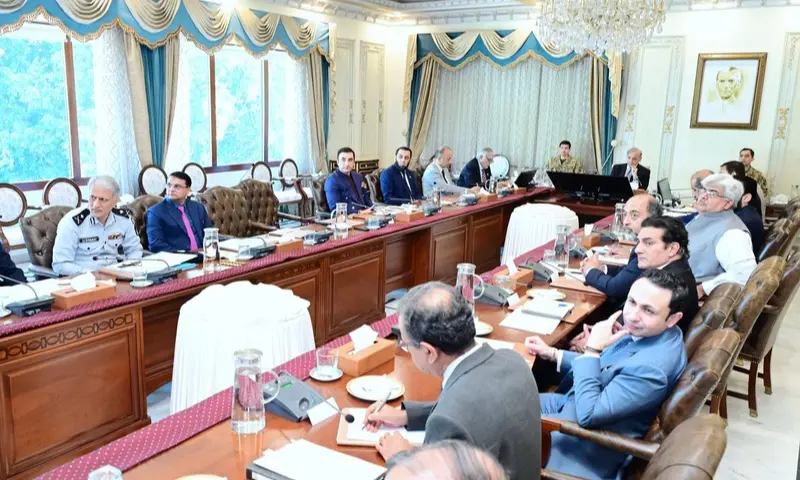
According to a statement by the Prime Minister’s Office (PMO), the directives came during a meeting held in Islamabad under the premier’s chairmanship. It was attended by Deputy Prime Minister and Foreign Minister Ishaq Dar, federal ministers Khawaja Asif, Musadik Malik, Ahad Khan Cheema, Attaullah Tarar and other senior officials.
The statement said the meeting was briefed on a survey recently completed by an international firm assessing the quality of travel facilities at major airports.
During the meeting, the premier directed that no compromise be made on quality in the expansion projects, that they be aligned with international requirements and that third-party validation be ensured for reforms aimed at improving the expansion projects.
The meeting was informed that work on the installation of automated border management systems (e-gates) at major airports was underway. Furthermore, “work is also ongoing on the air cargo village to make Karachi an air cargo hub,” the statement said.
Per the statement, it was discussed that facilitating passengers at Pakistani airports should be made the “top priority”. PM Shehbaz directed that facilities be improved in line with international standards. To that effect, he directed to obtain the services of internationally renowned institutions.
He also emphasised the provision of regular training in high-quality service delivery to officers and staff facilitating passengers at airports, along with an improvement in the coordination among various entities present at airports.
“The services of the best caterers [should] be obtained for passengers at airports, and there will be no compromise on the quality of food and beverages,” the statement said.
The meeting was further briefed on the upgradation of various airports across the country and ongoing development work by the Civil Aviation Authority (CAA).
Furthermore, the meeting was informed that the expansion of the runway at Jinnah International Airport had been completed. According to the PMO, the Federal Investigation Agency (FIA) had also increased the number of staff and counters, keeping in view passenger convenience.
A meet-and-greet service had been launched at Islamabad airport, the statement added. Similarly, the FIA had established pre-departure desks at major airports in the country for timely guidance to passengers.
“The meeting was informed that the existing aviation institution in Hyderabad is being further improved to establish an international standard aviation university, with work to commence by February 2028,” PMO’s statement said.
Earlier this month, PM Shehbaz had also ordered the installation of “smart scanners” at all international airports to facilitate travellers.
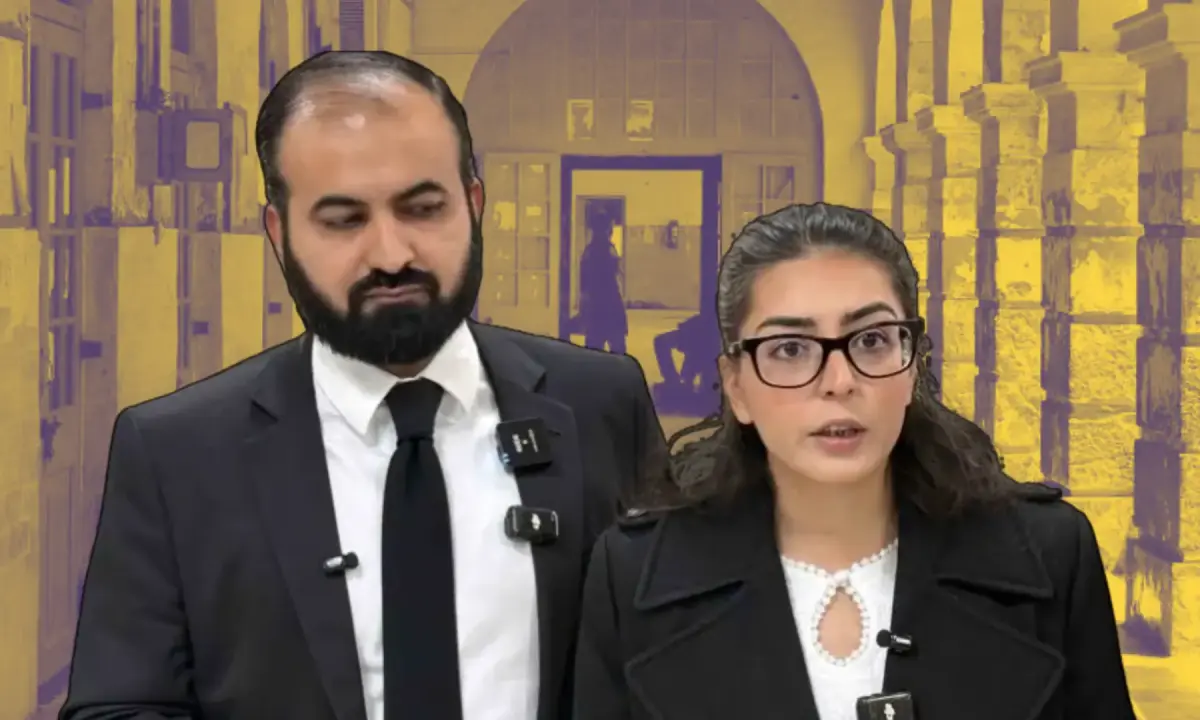
Human rights lawyer Imaan Zainab Mazari-Hazir and her husband, Hadi Ali Chattha, were convicted for the second time in less than a year on Thursday. This time, the couple was sentenced to 10 years in a security breach case following a jail trial.
The 2024 case pertained to the alleged disruption of an international cricket team’s security route and incitement to public unrest. The couple, accused of removing barriers from the route, was indicted on Oct 7.
After an anti-terrorism court pronounced them guilty, journalists and lawyers raised questions and expressed reservations.
Legal adviser for the International Commission of Jurists Reema Omer termed the convictions “cruel, vindictive and textbook examples of using law and the judicial process as weapons of persecution”.
“Imaan and Hadi are prisoners of conscience,” she posted on X.
Lawyer Rida Hosain said the convictions were “a stain on our judicial system”.
“Those entrusted with upholding the rule of law are weaponising it to persecute courageous human rights lawyers.
“This only further exposes a system that is functioning as an instrument of repression,” she said.
Op-ed editor at The News, Zebunnisa Burki, reacted to the development with “beyond ridiculous”.
Journalist Zarrar Khuhro also pointed out that the couple was sentenced to 10 years for “removing a barrier”.
“A decade in jail is what rapists usually get,” he said.
Journalist Asma Shirazi reacted to the news by calling it “reprehensible and regrettable”.
Journalist Maryam Nawaz Khan criticised the judgement saying: “A sham/ secret trial delivers a sham sentence. Imaan Mazari and Hadi Ali Chattha, two human rights lawyers, sentenced to 10 years in prison over road barriers they maintain they never removed. First, their tweets; now, this. Criminalising dissent and persecuting lawyers is an assault on fundamental rights and constitutional freedoms. This sentence is outrageous and unlawful.”
Academic Nida Kirmani said the couple was “paying the price for standing up to a cruel and vindictive state run by petty men with fragile egos”.
“Absolutely absurd verdict,” she said.
Journalist Saqib Bashir said the couple was sentenced without a “transparent” trial.
“This is a mockery of the judiciary and the justice system; it is a judicial murder of dissenting voices,” former Jamaat-i-Islami senator Mushtaq Ahmed said.
“Imaan and Hadi are strong voices against enforced disappearances and extrajudicial killings and that is their only crime,” he said.
“Those who speak up for justice face jail. Those who justify the state’s dictatorial actions ascend to higher positions,” journalist Veengas said.
The National Commission for Human Rights also expressed serious concern, saying the right to a fair trial, due process and effective judicial remedies must be fully protected.
“The severity of the sentences raises concerns about proportionality and the protection of fundamental rights,” the commission said.
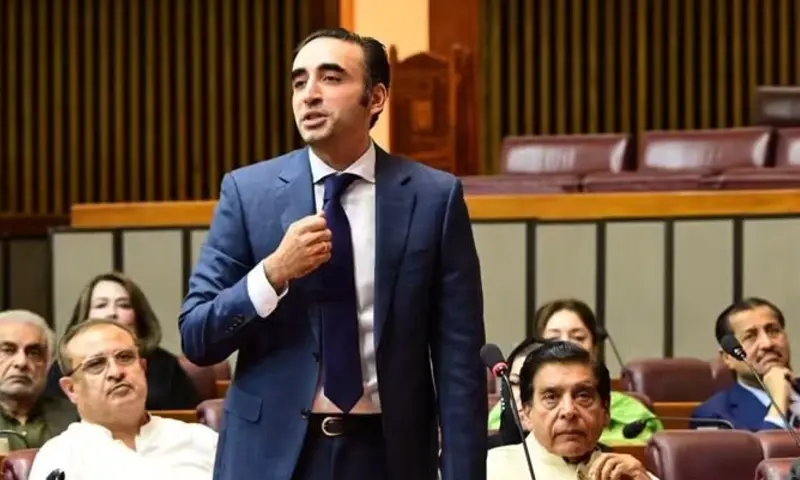
PPP Chairman Bilawal Bhutto-Zardari on Thursday urged National Assembly Opposition Leader Mehmood Khan Achakzai to use the “authority and power” delegated to him by jailed PTI founder Imran Khan to direct opposition members to participate in House committees and discuss pressing national issues.
He made the remarks while addressing the National Assembly during a session chaired by Deputy Speaker Syed Ghulam Mustafa.
Addressing the House, Bilawal called for strengthening Parliament by taking decisions on matters of national interest collectively on a single platform.
“If Parliament is powerful, we are all powerful; this is the power bestowed on us by the people of Pakistan,” he said.
Urging the speaker and the government to fulfil their responsibilities, the PPP chairman also called on the opposition to play its role in the House.
“Those who want this House to remain dysfunctional and do not want the people of Pakistan to benefit from it have succeeded,” he said, pointing towards the opposition benches. “Congratulations to you,” he added sarcastically.
“You have played a part in helping these people achieve their objective,” he said, criticising the opposition.
Bilawal also criticised the opposition’s decision to boycott committee proceedings, saying it had contributed to the “weakening” of Parliament.
“It is your responsibility to represent your party, the people and your constituencies in these committees. However, you are not raising their concerns on the relevant platforms,” he said.
Turning to Achakzai, Bilawal urged the opposition leader to use the “authority and power” delegated to him and the Senate opposition leader by Imran Khan to direct opposition members to participate in committee proceedings and discuss pressing national issues.
Bilawal said that since Parliament had decided, on a motion moved by the PPP, to constitute a committee on electoral reforms, the opposition leader should nominate a representative to the committee and submit the name to the speaker’s office.
He recalled that the opposition had described electoral rigging as its “fundamental issue”.
Urging the opposition leader to participate in the committee’s proceedings, Bilawal said the move was necessary if the opposition wanted the issue of alleged rigging to be addressed before the next general election, local government polls or by-elections.
The PPP chairman also described participation in the committee as a fundamental step towards restoring Parliament’s respect and authority.
“I request the opposition to at least exercise the power it has,” he said, questioning the purpose of an electoral reforms committee if the opposition did not participate in its proceedings.
“If we make efforts to bring all stakeholders together in a committee or arrange a briefing on terrorism, economic and security issues, and other concerns without the opposition’s participation, it will be pointless,” he said.
Against the backdrop of the evolving geopolitical situation, Bilawal called for the foreign, interior and defence ministers to brief the House on the challenges facing Pakistan.
“Tell this House about the potential threats facing Pakistan and the region, particularly as three key maritime routes are closed,” he said.
He also called for a briefing on developments related to the war in Iran and its implications for Pakistan. In addition, he sought a briefing from the government on the recent defence pacts signed by Pakistan.
“Every member of this House has the right to be informed about the challenges facing Pakistan, whether terrorism or other domestic issues, the steps being taken to address them and their potential consequences in the days ahead,” he said.
Addressing a rally in Karachi earlier this month, Bilawal had also extended an olive branch to the opposition parties, saying their positive engagement with the federal government could result in the reversal of governor’s rule in Khyber Pakhtunkhwa.
The PPP chairman had invited the opposition to join the Parliamentary electoral reforms process and “engage with the federal government”.
The Centre imposed governor’s rule and emergency in KP on Oct 11, citing the provincial government’s “deliberate disengagement” from the fight against terrorism. The move had drawn criticism from the opposition.
PPP delegation meets Achakzai
Separately, a PPP delegation met Achakzai and invited the PTI to join the parliamentary committee on electoral reforms, according to a statement the party issued on X.
The PPP delegation comprised of Raja Pervez Ashraf and Syed Naveed Qamar. Senate Opposition Leader Raja Nasir Abbas was also present.
The delegation invited Achakzai to participate in the parliamentary committee to promote consultation and discussion among parliamentary representatives on electoral reforms, the statement said.
Later, in a press conference, Ashraf said the PPP delegation had a meeting with Achakzai on Bilawal’s instructions to invite him to join the committee.
“The PPP wants the PTI to participate in parliamentary standing committees as well as the electoral reforms committee,” he added.
Achakzai had sought time to consult before responding to the invitation, he said.
The PPP has consistently sought to improve the electoral process, Ashraf said, adding that PTI also wanted electoral reforms.
“The PTI will respond to the PPP after consultations,” he said.
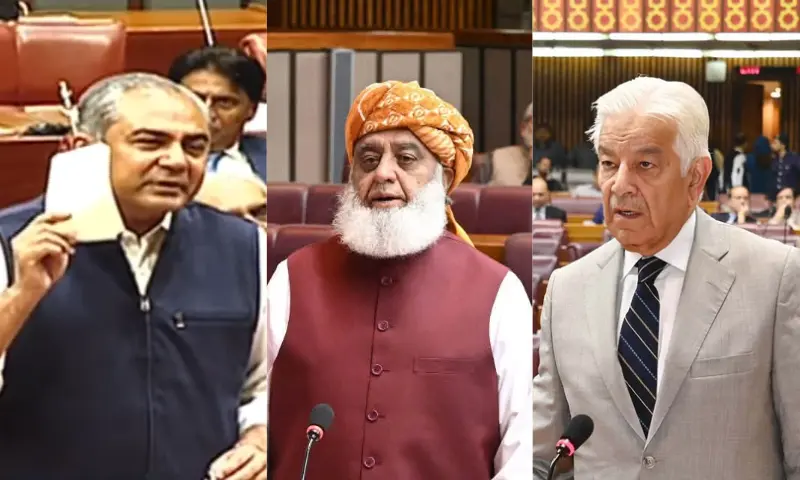
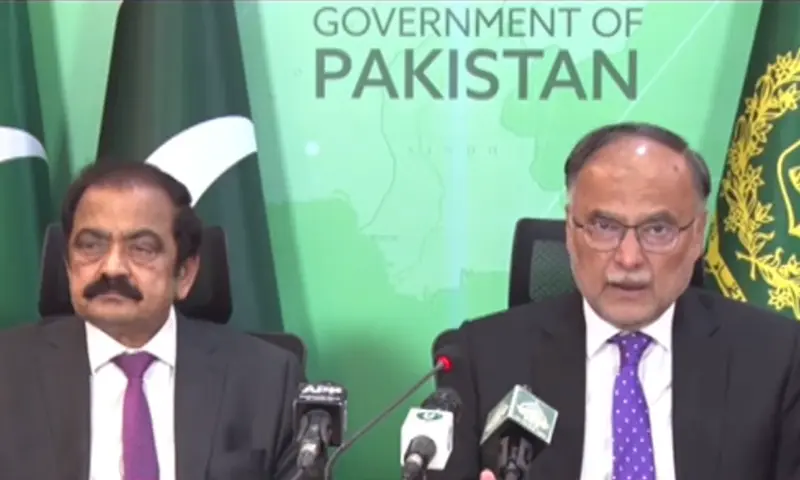
Federal ministers on Thursday responded to Jamiat Ulema-i-Islam-Fazl (JUI-F) chief Maulana Fazlur Rehman’s remarks regarding a recent huddle in Tehran comprising the Makkah defence pact countries and Iran.
Defence Minister Khawaja Asif and Interior Minister Mohsin Naqvi said the meeting was not related to defence. Hence, Asif said his presence was not required, while Naqvi explained the reasons for his participation.
The remarks came after the JUI-F chief questioned Asif’s absence and Naqvi’s presence at the meeting.
The meeting brought together top officials from Iran and member countries of the Makkah Defence Alliance — including Pakistan’s Chief of Defence Forces and Chief of the Army Staff Field Marshal Asim Munir, Saudi Defence Minister Prince Khalid bin Salman, and Turkish intelligence chief Ibrahim Kalin.
On Iran’s side, President Masoud Pezeshkian, Supreme National Security Council Secretary Mohsen Rezaei and Foreign Minister Abbas Araghchi were present. The huddle agreed to “continue their dialogue to bolster cooperation among the four regional nations, including in the areas of regional peace and security”.
On Wednesday, Fazl referred to the development during his address in the National Assembly (NA) and commented: “A defence pact is taking shape in Iran, a meeting is under way (there), and the defence minister is sitting here.”
Amid laughter and desk thumping in the Lower House, he referred to Naqvi’s presence at the Tehran huddle and questioned: “The interior minister is required there as well?”
Then, taking a jibe at Asif, he repeated the defence minister’s phrase that he had used against the PTI.
“There is your respect and stature — koi sharam hoti hai, koi haya hoti hai (have some shame, show some modesty),” he said, breaking into laughter.
Responding to him in the NA on Thursday, Asif said no defence pact was taking shape in Tehran, nor was the discussion focused on Pakistan’s defence or any related matter.
He said CDF Munir had “assumed a role for Pakistan” following last year’s military conflict with India. That role, he said, was of “peace and dialogue so that peace is established in our region”.
Since then, he noted, Pakistan has signed two defence pacts — the Makkah defence pact and the Badr Memorandum of Understanding.
“I was involved in those pacts as I am the defence minister,” he explained, adding that the meeting in Tehran was “not the defence ministry’s mandate”.
The CDF had gone there “as a messenger of peace and paved the ground” for the huddle, he said, ostensibly referring to Tehran last week.
During that visit, the CDF had proposed the Tehran meeting, according to Iranian Foreign Ministry spokesman Esmaeil Baqaei.
Asif said this was the situation and he was “not needed in Tehran”.
He added that the CDF had played a role in averting a confrontation. “The situation could have deteriorated as far as the Yemen issue is concerned […] There has been some talk and peace may emerge in the coming days or week as far as Saudi Arabia versus Yemen [sic] is concerned.”
Asif advised Fazl to be the bigger person and said his criticism was “misplaced”.
The defence minister further said Pakistan’s and the CDF’s role at the international level should be acknowledged, keeping political differences aside. He said one should at least show some dignity.
‘Not related to defence’
Meanwhile, in the Senate, Naqvi also responded to Fazl’s remarks on his participation in the Tehran meeting. The proceedings were marred by loud exchanges between the interior minister and JUI-F Senator Kamran Murtaza.
Naqvi clarified that he and CDF Munir undertook the visit to “handle the ongoing crisis in Iran”.
On Fazl’s query of why Asif had not gone there, he said, “He (Fazl) did not know that this [trip] was not related to defence.”
Defending his inclusion, the minister said: “I do not go out of my own volition. I have been especially tasked by the prime minister sahib; he has entrusted me with some matters regarding the current crisis of the [Iran] war, because of which I go.”
The independent senator noted that the JUI-F had been commenting on him for many days.
“I personally had heartfelt respect for Maulana Fazlur Rehman, but yesterday when he said I spit on the state, that respect ended,” Naqvi said.
Naqvi said he wanted to ask Fazl and his party’s senators present there just one question and then noted that JUI-F leaders had made very “disgusting statements about institutions” three to four months ago.
This prompted Senator Murtaza to object, saying he could not speak on a personal agenda in the House. Presiding Officer Shahadat Awan also immediately said he was expunging the word “disgusting” from Naqvi’s remarks.
As Murtaza continued shouting, Naqvi said, “You should listen here … You will have to listen.”
The presiding officer noted that Naqvi was a member of the Senate and urged the JUI-F leader to take his seat.
Resuming his remarks, Naqvi said, “Giving people the perception that this was a defence pact; this was not a defence agreement at all.
He added: “For them, the state is like a mother until the day they can squeeze it dry. The state is very good as long as they can extract wealth from the state, and when you do not get a share in the state and the government, then you spit on the state. This is not appropriate anywhere.”
Murtaza again interrupted, objecting to Naqvi’s language, at which the latter replied that the other side had also used similar language a day ago.
As the JUI-F senator continued speaking amid the presiding officer’s calls to halt cross-talk, Naqvi said, “If they criticise, they should garner and keep the courage to take the answer as well. This is no way [to behave] that you go and say whatever you want.”
The interior minister then went on to criticise the JUI-F, alleging that it “used Islam for business and for politics”.
Amid the ruckus, PML-N’s Abid Sher Ali also stood up and responded loudly, prompting State Minister of Interior Tallal Chaudhry and the presiding officer to urge him to take his seat.
Naqvi then addressed PTI’s Ali Zafar and said, “These very people (JUI-F) used to come to us before governor’s rule [was imposed] and say, ‘Impose governor’s rule, rid us of them!’ […] Those who come and sit with you and engage in opposition wanted governor’s rule imposed from their hearts. I will prove this to you.”
Addressing JUI-F, the interior minister said, “Now, you will not get jobs in the state. Now you will not get money from the state, nor will you get tickets from the state.”
He asserted that it was the JUI-F that was “continuously crossing the line” and that they would get a response if they kept doing so.
‘Full of contradictions’
In his remarks in the NA, Asif alleged that Fazl’s past “is full of contradictions”.
“You taunt me with ‘have some shame, show some modesty’, but you should also have some shame and show some modesty. How many perks have you enjoyed over the past 40 years? You have been violating the very principles that you have been highlighting,” the PML-N leader said.
He recalled that Fazl had also offered to mediate with Kabul. “Were you the foreign minister?” he questioned, alleging that the move was aimed at “value addition to his politics and leverage that to extract maximum advantage from the government”.
Asif said Fazl had been in the government with every political party, making an incomplete remark: “When you don’t get a share in the power —”
“When you delete the past from your memory and attack your rivals — at least I don’t have that courage. When I speak, my past is fresh in my mind; that if I say this, whether I would be taunted that we supported General Ziaul Haq’s government,” he went on to say.
The defence minister recalled that Fazl was part of the Musharraf government, had also been an opposition leader in the House and also served as the Kashmir Committee chairperson. He said a person serving as the head of such a committee that raises issues at an international forum should have “impeccable credentials”.
When some lawmakers opposed him in favour of Fazl, he remarked, “The Maulana now needs women’s support. He is unable to find a man.”
He also accused Fazl of “targeting our diplomatic efforts”, saying that the government’s achievement at the global stage had not received the commendation they deserved.
Asif said his advice to the JUI-F would be a line often seen on buses and trucks: “Mehnat kar, hasad na kar (work hard and don’t envy).”
He ended his address, alleging that had Fazl been given some share in the governance in Khyber Pakhtunkhwa following the imposition of emergency and governor’s rule in the province, the JUI-F chief’s address the previous day would not have been delivered.
“This sideshow that they (JUI-F) are running, I feel that it is unfortunate that our sisters have been forced to defend the men [of JUI-F] while the men are nowhere to be seen,” Asif remarked.
Describing Fazl’s address as “blackmail”, Asif warned against coming into power based on “compromises”.
“Sitting in the opposition would be a more respectable approach, rather than sitting with people who will blackmail you,” he said.
“We as senior parliamentarians should convey to the nation that we will not do group-based politics but politics rooted in the constitution and [..] for the security of the country,” Asif urged, adding that lawmakers should chart a way forward together, rather than “grabbing each other by the collar”.
JUI-F’s Murtaza alleges ‘programme to sling mud’ at Fazl
In remarks after the Senate ruckus, JUI-F’s Murtaza accused the government of staging a “requested programme”.
“I think nizam sahib (Mr System) sent messages and made calls to many people today, and told them to sling mud at Maulana sahib like this,” he said on Geo News’ programme ‘Aaj Shahzeb Khanzada Kay Sath’, apparently referring to Naqvi.
Murtaza questioned why Asif “suddenly remembered” to respond to Fazl the next day, rather than using his right of reply “even though he was present” in the NA yesterday.
He went on to object to the interior minister making “personal accusations”, even though he could have simply explained that the prime minister had tasked him with peace efforts.
The JUI-F senator insisted that Fazl’s remarks were not particularly about Pakistan but “if a state starts making its children fight each other”, asking if the ministers were considering that the state was doing so.
Asked what Fazl implied, Murtaza maintained that the JUI-F’s stance was “about every such state” that engaged in such acts.
The senator also claimed that Chaudhry had approached him with an “offer for a certain thing” when he was in the Senate hall.
“Did I reject you or not? 26th Amendment,” Murtaza said, with Chaudhry acknowledging that a “lot of things were being discussed at the time of 26th Amendment” but “not everything should be disclosed”.
Meanwhile, appearing on the same show, the state minister for interior regretted that Fazl, despite being a senior politician and a religious leader, “made martyrs a point of his and discuss it to advance his politics”.
Chaudhry said he had noted immense anger and frustration visible in the JUI-F chief’s demeanour in recent days.
Asked if the government wanted a “clash” with the JUI-F chief, the PML-N leader said, “I think Maulana sahib is deliberately clashing and bringing up such issues, after which no option is left for us other than to respond to it. Today, I have never seen Kamran Murtaza sahib in such a state of anger in my entire life.”
He highlighted that Fazl had questioned “what has this state given us”. “Do you think the state has given you nothing?” he asked.
Electoral reforms committee
In his remarks, Senate Opposition Leader Allama Raja Nasir Abbas claimed KP had been “snatched from the people” and reiterated the opposition’s allegations of rigging in the 2024 general elections.
“If even one person’s vote is snatched, it is a crime. It is the responsibility of those conducting elections to protect the vote. Earlier also you laid a crooked brick, and Pakistan broke. On Feb 8, elections were stolen. While stealing elections, where have you reached — you have even stolen Khyber Pakhtunkhwa,” he claimed.
The opposition leader said no society could progress without law, or function if law existed but without its implementation.
The House also took up a motion moved by Minister of State for Law Barrister Aqeel Malik for the constitution of a parliamentary electoral reforms committee.
PTI’s Zafar said he could write down entire electoral reforms on paper in an hour. “The issue is implementation. Make such a committee and procedure that the electoral process is actually implemented. Whatever they want to do, only that is approved,” he said.
Barrister Aqeel said the issue could be resolved by sitting together and asked members to bring their proposals.
Singapore’s Minister for Foreign Affairs Dr Vivian Balakrishnan will undertake an official visit to Islamabad on Friday (Oct 30) at the invitation of Deputy Prime Minister and Foreign Minister Ishaq Dar, the Foreign Office (FO) said on Thursday.
“The visit assumes significance as it coincides with the 60th anniversary of the establishment of diplomatic relations between Pakistan and Singapore and comes ahead of Singapore’s assumption of the Asean chairmanship in 2027,” the FO said in a statement.
During the visit, Dar and Dr Balakrishnan will hold bilateral talks covering the entire spectrum of Pakistan-Singapore relations and exchange views on regional and global developments of mutual interest, it added.
A memorandum of understanding (MoU) on cooperation in disaster management between Pakistan’s National Disaster Management Authority (NDMA) and Singapore’s Civil Defence Force (SCDF) will also be exchanged.
Balakrishnan will also call on Pakistan’s leadership, the FO said.
Pakistan and Singapore maintain cordial bilateral relations based on mutual respect and longstanding friendship. The visit underscores the shared commitment of the two countries to deepening and diversifying their bilateral partnership, it added.
DPM Dar last spoke to Balakrishnan in May, requesting Singapore’s support in facilitating the “welfare and repatriation” of 11 Pakistanis and 20 Iranians aboard vessels seized by the United States.
The Ministry of Information and Broadcasting on Wednesday dismissed a statement by Afghanistan’s defence ministry regarding the firing at Angoor Adda border area, terming it a “fabrication of lies”.
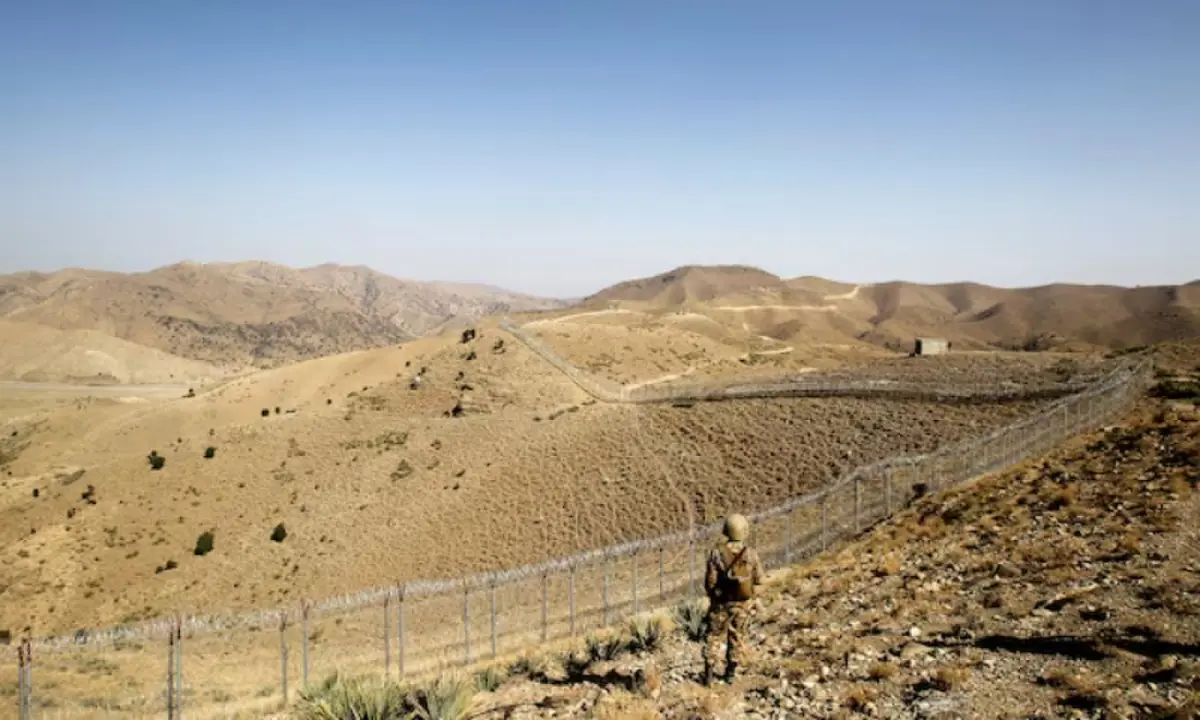
Afghan security forces opened unprovoked fire on Pakistan Army border posts and residential areas in the border area in Lower South Waziristan on Tuesday. The attack, which violated border protocols, claimed the life of one local and injured five, while provoking a swift response from security forces.
Subsequently, the Afghan defence ministry claimed that Pakistani military personnel “without any provocation or justification” launched drones targeting the Angoor Adda bazaar and the commissioner’s office in Paktika province. It claimed that Afghan forces “launched retaliatory strikes against a nearby Pakistani military base and outposts”, alleging that Pakistan was the aggressor.
In response, the ministry’s fact-checking account on X said: “[The] Afghan Taliban regime’s latest fabrication of lies on Angoor Adda border incident again confirms their deceitful character.
“Fact of the matter is that their cowardly forces initiated unprovoked fire and mortar shelling on unarmed civilians on [the] Pakistani side,” the ministry said, adding that the actions were following the “pattern and instructions of their proxy masters India”.
Pakistan’s security forces gave an immediate and effective response, the ministry said, adding that they inflicted heavy casualties as well as material losses on the Afghan side, including the destruction of seven posts.
“Such lies of [the] Taliban regime’s so-called official spokespersons carry no value and are part of a litany of fabricated stories that they keep on telling, mostly to their own people suffering under their imposed and non-representative regime,” the ministry said.
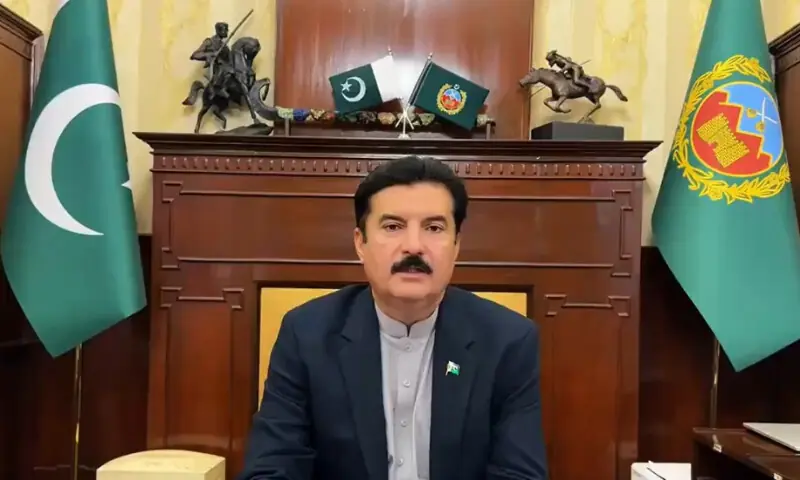
Earlier in the day, Khyber Pakhtunkhwa Governor Faisal Karim Kundi condemned the firing from the Afghan side, asserting that Pakistan would “never tolerate” attacks on its people or violations of its sovereignty.
The governor added that KP had “sacrificed thousands of lives in the fight against terrorism, and we will not allow anyone to threaten our people or undermine our security”.
“Any aggression against Pakistan will be confronted with unwavering resolve. Our armed forces have the full backing of the nation to defend every inch of our soil, and no threat or hostile act will weaken our determination to protect Pakistan,” he warned.
According to officials, the firing originated from posts located inside Afghan territory and targeted Pakistani border posts with small and heavy weapons.
Sources said that Pakistani forces launched an immediate and effective retaliatory action, engaging multiple Afghan Taliban border posts, mortar positions and defensive bunkers with small and heavy arms, including artillery. The “intense and accurate response” forced the Afghan Taliban to abandon their posts and flee.
The border at Angoor Adda is one of the most important and sensitive crossings along the Pak-Afghan border, serving as a key trade route and one of the main points of public movement between the two countries.
Border violations from the Afghan side have become a routine matter as ties between the two neighbours have remained strained in the past few years over counterterrorism measures.
Pak-Afghan tensions
Islamabad has repeatedly urged the Taliban administration in Kabul to dismantle terrorist sanctuaries on Afghan soil, particularly those linked to the banned Tehreek-i-Taliban Pakistan, that are used for attacks in Pakistan. Officials say those appeals have gone unheeded.
September witnessed another bout of conflict between Pakistan and Afghanistan.
On Sept 21, in response to recent major terrorist attacks in Khyber Pakhtunkhwa, Pakistan conducted “calibrated” airstrikes in the border region with Afghanistan against terrorist hideouts, with the government saying more than 28 terrorists were killed.
Information Minister Attaullah Tarar described the action as part of Operation Ghazab lil Haq, which was launched on the night of Feb 26 in response to unprovoked cross-border firing by the Afghan Taliban.
Days later, Pakistan shot down eight drones launched from across the border that had entered Pakistani airspace near the Torkham border and Kohat. It was also reported that the Afghan Taliban engaged in unprovoked firing the night before near Kurram as security forces foiled an attempt by terrorists to cross into Pakistan.
In retaliation for the drone incursion, Pakistan conducted “precision aerial and drone strikes” in 10 locations across Afghanistan.
A demarche was also delivered to the Afghan side on Sept 26 on account of the Sept 23 airspace violation by drones, the Foreign Office said.
On Oct 1, Pakistan again carried out “well-planned and calibrated” airstrikes against terrorist hideouts in Afghanistan, the information ministry said, adding that the strikes resulted in the deaths of “multiple terrorists”.
Around mid-October, the state media reported that security forces had again responded to unprovoked firing by Afghan Taliban forces along the Pakistan-Afghanistan border in KP’s Upper Kurram.
It quoted security sources as saying that several personnel of the Afghan Taliban were “reportedly killed during the Pakistan Army’s retaliatory action along the Ghuzgarhi border”. The sources further said that in the Upper Kurram sector, the army targeted the Afghan Taliban’s Topsar post and Shipola base camp with artillery fire, reportedly completely destroying the latter.
The border skirmishes came a day after the Foreign Office said that talks with Afghanistan could not be unconditional, but also rejected suggestions that Islamabad was unwilling to engage with its neighbour and said it would welcome sincere efforts by friendly countries to help resolve the dispute.
KARACHI: Around 51,000 metric tonnes of imported wheat arrived at Karachi Port on Wednesday, according to the Karachi Port Trust (KPT).
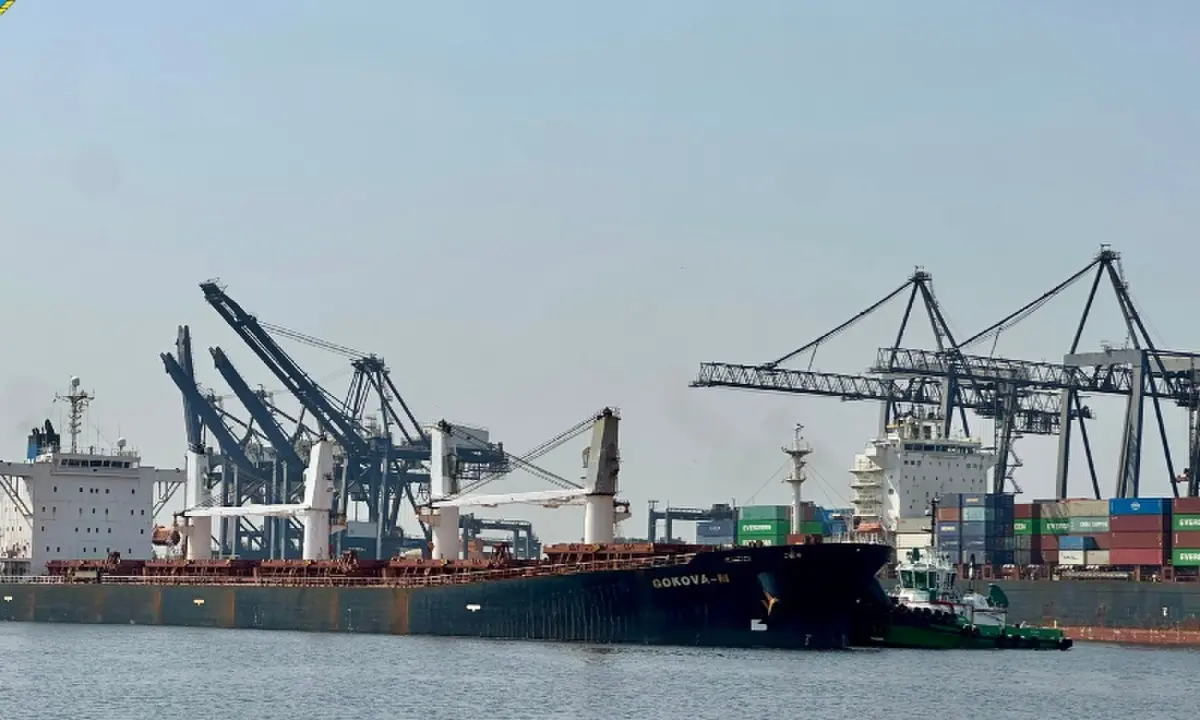
“The geared vessel MV GOKOVA M, carrying a declared manifest of 51,000 metric tonnes of wheat, was allocated Berths 16 and 17 and arrived at Karachi Port at 1225 hours on Oct 28,” the press release said.
It added that another geared vessel, MV GREAT RAINBOW, carrying 59,132 metric tonnes of wheat, was expected to arrive on Nov 3.
“Together, the two vessels represent a declared wheat cargo volume of over 110,000 metric tonnes,” the KPT said, highlighting the port’s capacity to facilitate bulk commodity handling through Karachi Gateway Terminal Multipurpose Limited (KGTML) and support the smooth flow of essential imports.
“The KPT is facilitating the handling of bulk wheat cargo at KGTML, reinforcing Karachi Port’s role in supporting the country’s essential commodity imports and ensuring efficient cargo operations,” the press release said.
On Monday, Food Security Minister Rana Tanveer Hussain announced that the government would maintain strategic wheat reserves of up to six million tonnes.
He asserted that there would be no shortage of wheat in Pakistan this year as adequate arrangements were in place to meet the national requirements. He further stated that arrangements could be made to import up to 550,000 metric tonnes of wheat in accordance with provincial requirements and demand.
Expressing concern over recent fluctuations in wheat prices, Hussain described the prevailing price hike as artificial and manipulated by certain market elements.
He maintained that sufficient wheat stocks were available in the country and expressed confidence that prices would return to normal within the next few days.
The food security minister emphasised that the government was closely monitoring market developments and would take necessary measures to discourage artificial shortages, speculative practices and unjustified price increases.
Last week, Prime Minister Shehbaz Sharif had announced the indicative price of Rs4,500 per maund of wheat for 2027, raising the price by Rs1,000 from last year.
DPM Dar chairs meeting on wheat
Separately, Deputy Prime Minister and Foreign Minister Senator Ishaq Dar chaired a meeting of the Steering Committee on Wheat on Wednesday.
“The committee evaluated overall grain availability across the country and examined import plans aimed at keeping local supplies steady,” according to the Foreign Office.
It said Dar stressed that “maintaining sufficient stocks and preventing any disruption in grain supply remain a top priority for the government”.
He noted that smooth coordination between federal and provincial bodies is vital to keep prices affordable for the public, the statement said.
The deputy prime minister “directed the concerned authorities to monitor market trends closely and ensure that the supply of wheat is adequate and atta prices are on a downward trajectory,” it added.
In a recent meeting, DPM Dar had directed federal and provincial governments to take all necessary measures, including increasing market supply, to bring wheat prices under control.
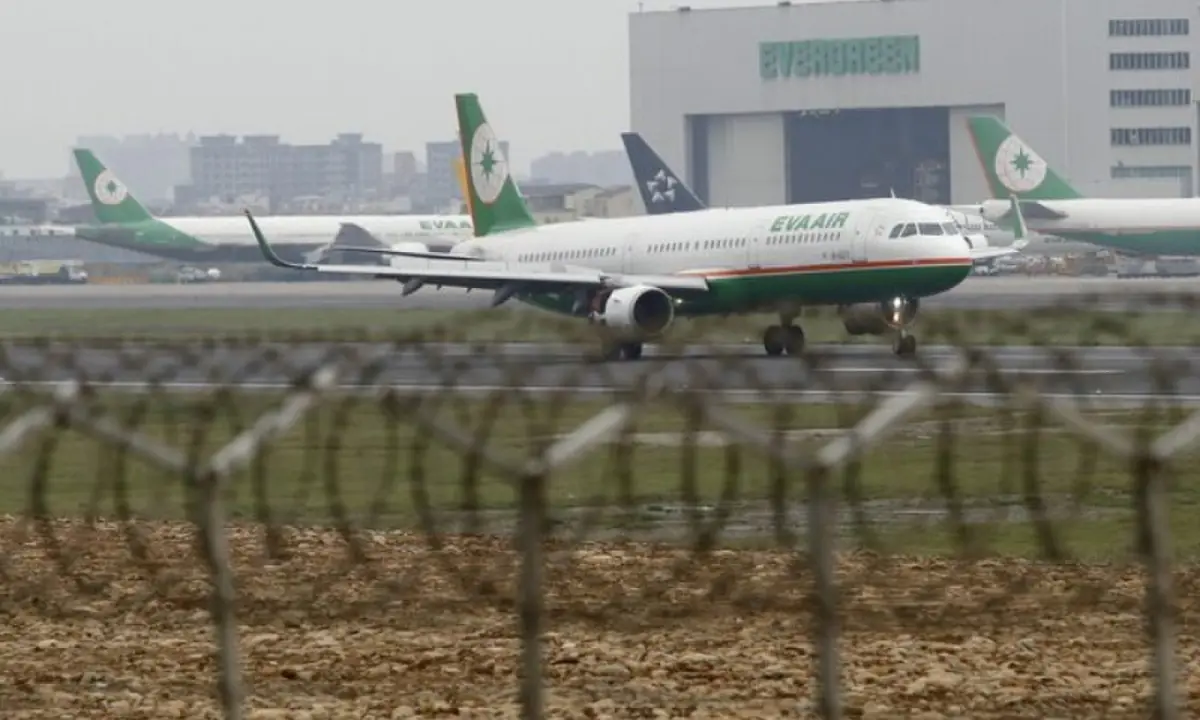
Pakistan has barred Taiwanese airlines from using its airspace in support of Beijing’s One-China policy, becoming the first country to take such a step, Bloombergreported on Wednesday.
“The aviation division follows the One China policy — only mainland China is allowed,” Defence Minister Khawaja Asif told Bloomberg News.
“We have permitted only Chinese airlines to fly over Pakistan,” he said.
Taiwanese carriers began rerouting flights over the weekend, with China Airlines Ltd and Eva Airways Corp no longer flying over Pakistan since the morning of Oct 25, according to flight-tracking data cited by the report.
At least a dozen flights operated by the two airlines between Asia and Europe have flown over Russia since Sunday, according to Flightradar24 data.
China Airlines and Eva Air declined to comment, while Taiwan’s Civil Aviation Administration did not comment on the rerouting. It said, however, that it had never banned carriers from flying over Russia.
Pakistan’s restrictions are stricter than those imposed by mainland China, which allows Taiwanese airlines to fly over its territory, the publication added.
Beijing considers Taiwan part of its territory. Pakistan severed official relations with Taiwan in 1951 in favour of closer ties with China.
It remains unclear what prompted Pakistan’s decision. Airspace restrictions, however, can intensify during periods of heightened geopolitical tensions, the report said.
Pakistan and China have strengthened ties under President Xi Jinping’s Belt and Road Initiative, which has channelled billions of dollars into Pakistan. The two countries also maintain close military cooperation, with China being Pakistan’s largest supplier of weapons.
Their defence ties drew international attention during the May 2025 conflict between Pakistan and India, when Pakistan used Chinese-made J-10C fighter jets.
Taiwanese airlines had avoided Russian airspace since February 2022, in line with many Asian, European and North American carriers, although they were never formally barred from using it, the report said.
The rerouting has added hours to flights between Asia and Europe and increased fuel costs. China Airlines and Eva Air are also routing aircraft over other parts of South Asia and the Middle East, adding to journey times.
Pakistan has repeatedly reaffirmed its support for China on the Taiwan issue. On Jan 3, Foreign Office spokesperson Tahir Andrabi said Islamabad would continue to adhere to the One-China principle and regard Taiwan as an “inalienable part of China”. He described Pakistan and China as “iron-clad friends and all-weather strategic cooperative partners”.
The statement came after China completed military drills around Taiwan in early January, including live-fire exercises aimed at simulating a blockade of key ports and assaults on maritime targets. Beijing claims Taiwan as its territory, while Taipei rejects the claim.
Nine India-sponsored terrorists were killed in two separate intelligence-based operations (IBOs) in Balochistan’s Kachhi and Wadh districts, the military’s media wing said on Wednesday.
In a statement, the Inter-Services Public Relations (ISPR) said that on October 26, security forces conducted IBOs in the districts on the reported presence of terrorists belonging to Fitna al-Hindustan.
The state has designated Balochistan-based terrorist groups as Fitna al-Hindustan to highlight India’s alleged role in terrorism and destabilisation across Pakistan.
In the first operation in Kachhi, a terrorist hideout was destroyed and seven terrorists were eliminated in an exchange of fire.
Weapons and ammunition were recovered from the slain terrorists, the statement added.
In Wadh, security forces “tracked and intercepted terrorist movement” and killed two terrorists in an exchange of fire.
Weapons and ammunition were recovered from the slain terrorists, the statement added.
“Sanitisation operations are being conducted to eliminate any other India-sponsored terrorist found in the area,” the statement read, adding that a relentless counterterrorism campaign under the vision “Azm e Istehkam” will continue at full pace to “wipe out [the] menace of foreign-sponsored and supported terrorism from the country”.
In a statement on X, President Asif Ali Zardari paid tribute to security forces and commended their “professional” capabilities.
“Conspiracies of terrorists’ foreign patrons and their local facilitators will be thwarted,” he said. “The nation stands shoulder to shoulder with its security forces and law enforcement agencies.”
Prime Minister Shehbaz Sharif also paid tribute to the security forces, saying that terrorists seeking to undermine Pakistan’s security and peace would “never succeed in their nefarious designs”, according to the Associated Press of Pakistan (APP).
“The efforts of the security forces and law enforcement agencies to completely eliminate terrorism and establish lasting peace in the country were commendable,” APP quoted the premier as saying.
“He said that he, along with the entire nation, stood shoulder to shoulder with the security forces in their unwavering resolve to eliminate terrorism from the country,” APP reported.
Intensified operations
Balochistan has witnessed an increase in terrorist activities in recent years, prompting security forces to intensify counter-terrorism operations.
On Oct 18, an army major was martyred, and four terrorists were killed during multiple IBOs in Balochistan. A day before that, security forces killed eight “India-sponsored” terrorists during IBOs conducted in the Quetta, Nushki and Khuzdar districts of Balochistan.
On the night of Oct 12/13, security forces busted a terrorist hideout and killed five terrorists during an IBO in Washuk, ISPR said.
Days later, Balochistan government officials said that six terrorists affiliated with the banned Tehreek-i-Taliban Pakistan (TTP), two would-be female suicide bombers, and two commanders of a banned organisation had been arrested during IBOs across the province.
They said around 90 arrested terrorists were being held at a centre where investigations and legal proceedings were under way.
Earlier this month, five terrorists were eliminated in Balochistan’s Mastung district, state media reported.
According to Pakistan Institute for Conflict and Security Studies (PICSS), terrorist violence increased substantially in Sept with 225 attacks recorded nationwide, compared with 199 in August, representing a 13.1 per cent increase and the highest monthly total recorded in 12 years, with Balochistan remaining the “principal theatre” with 131 attacks, accounting for 58.2pc of the national total.
On counterterrorism, the report noted that security forces conducted 74 operations, killing 280 terrorists. Out of this, Balochistan accounted for 35 operations and 171 terrorist deaths.
Khyber Pakhtunkhwa Governor Faisal Karim Kundi condemned on Wednesday the latest instance of firing from across the Afghan border in Lower South Waziristan, asserting that Pakistan would “never tolerate” attacks on its people or violations of its sovereignty.
The incident took place on Tuesday night when Afghan security forces opened unprovoked fire on Pakistan Army border posts and residential areas in the Angoor Adda border area. The firing resulted in the death of a local resident and left five of a family injured as a mortar landed on their house.
The Lower South Waziristan deputy commissioner confirmed the casualties in a post on X, saying that several shops were also damaged in the firing.
“Pakistan’s forces on the border have and are responding effectively and heavily,” his post at around midnight said.
The morning after the firing incident, Governor Kundi strongly condemned the “unprovoked and blatant aggression by the Afghan Taliban regime against civilian homes and Angoor Adda Bazaar in Lower South Waziristan”.
“I salute Pakistan’s armed forces for their swift, forceful and decisive response. Let the Afghan Taliban regime have no illusions: Pakistan will never tolerate attacks on its people or violations of its sovereignty,” he said in his post on X.
The governor added that KP had “sacrificed thousands of lives in the fight against terrorism, and we will not allow anyone to threaten our people or undermine our security”.
“Any aggression against Pakistan will be confronted with unwavering resolve. Our armed forces have the full backing of the nation to defend every inch of our soil, and no threat or hostile act will weaken our determination to protect Pakistan,” he warned.
Adviser to KP Governor on Information and Public Relations Samar Haroon Bilour also posted on X that the “cowards” had once again struck at night.
“They will have to face consequences,” she added.
The firing from the Afghan side on Tuesday prompted a swift response from security forces.
According to officials, the firing originated from posts located inside Afghan territory, and targeted Pakistani border posts with sniper, small and heavy weapons.
Sources said that Pakistani forces launched an immediate and effective retaliatory action, engaging multiple Afghan Taliban border posts, mortar positions and defensive bunkers with small and heavy arms, including artillery. The “intense and accurate response” forced the Afghan Taliban to abandon their posts and flee.
The border at Angoor Adda is one of the most important and sensitive crossings along the Pak-Afghan border, serving as a key trade route and one of the main points of public movement between the two countries.
Violations from the Afghan side have become a routine matter.
Pak-Afghan tensions
Ties between Pakistan and Afghanistan have been strained in the past few years as Islamabad continues to voice its concern over cross-border terrorism.
September witnessed another bout of conflict between Pakistan and Afghanistan.
On Sept 21, in response to recent major terrorist attacks in Khyber Pakhtunkhwa, Pakistan conducted “calibrated” airstrikes in the border region with Afghanistan against terrorist hideouts, with the government saying more than 28 terrorists were killed.
Information Minister Attaullah Tarar described the action as part of Operation Ghazab lil Haq, which was launched on the night of Feb 26 in response to unprovoked cross-border firing by the Afghan Taliban.
Days later, Pakistan shot down eight drones launched from across the border that had entered Pakistani airspace near the Torkham border and Kohat. It was also reported that the Afghan Taliban engaged in unprovoked firing the night before near Kurram as security forces foiled an attempt by terrorists to cross into Pakistan.
In retaliation for the drone incursion, Pakistan conducted “precision aerial and drone strikes” in 10 locations across Afghanistan.
A demarche was also delivered to the Afghan side on Sept 26 on account of the Sept 23 airspace violation by drones, the Foreign Office said.
On Oct 1, Pakistan again carried out “well-planned and calibrated” airstrikes against terrorist hideouts in Afghanistan, the information ministry said, which resulted in the deaths of “multiple terrorists”.
Around mid-October, the state media reported that security forces had again responded to unprovoked firing by Afghan Taliban forces along the Pakistan-Afghanistan border in KP’s Upper Kurram.
It quoted security sources as saying that several personnel of the Afghan Taliban were “reportedly killed during the Pakistan Army’s retaliatory action along the Ghuzgarhi border”. The sources further said that in the Upper Kurram sector, the army targeted the Afghan Taliban’s Topsar post and Shipola base camp with artillery fire, reportedly completely destroying the latter.
The border skirmishes came a day after the Foreign Office said that talks with Afghanistan could not be unconditional, but also rejected suggestions that Islamabad was unwilling to engage with its neighbour and said it would welcome sincere efforts by friendly countries to help resolve the dispute.
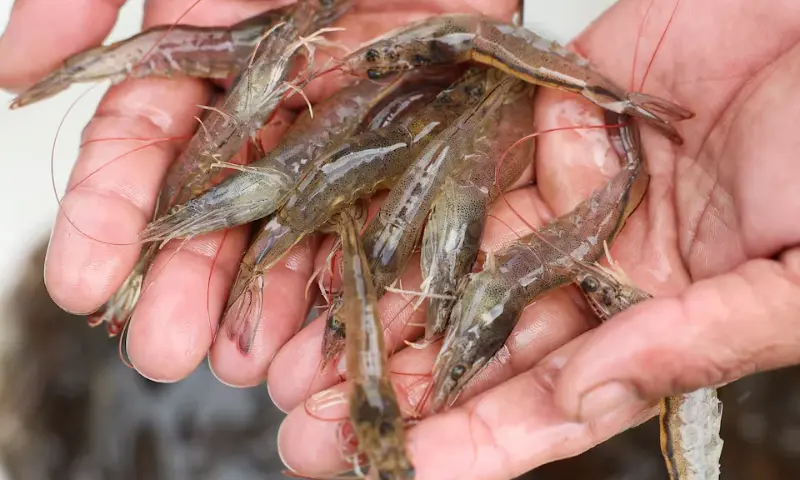
ISLAMABAD: A sub-committee constituted by the prime minister has set a 120-day deadline to prepare a roadmap to expand shrimp farming, improve value addition and boost exports.
Maritime Affairs Minister Junaid Anwar Chaudhry on Tuesday chaired a meeting of the sub-committee on aquaculture and the shrimp value chain, according to a press release.
The 120-day deadline was set as part of a broader 24-month implementation and review process.
The meeting brought together provincial fisheries officials and relevant federal institutions to develop a “coordinated strategy” for transforming aquaculture into a competitive, export-oriented industry.
PM Shehbaz has termed achieving export-led economic growth as the government’s top priority, with the federal budget for the current fiscal year (FY27) formulated with the same objective.
The sub-committee will prepare a comprehensive report based on verified data and stakeholder recommendations, Tuesday’s statement said.
“The exercise will establish a baseline for the sector, identify bottlenecks across the value chain and propose measures to improve production, processing and export competitiveness,” it added.
Furthermore, the sub-committee approved seven technical working groups and a projection and costing cell to prepare 14 reports and export projections, assigning responsibilities to the relevant institutions.
It also adopted a common framework for data collection and validation, prioritising challenges, developing reform proposals and monitoring progress.
An initial 14-day action plan was approved, with participating institutions directed to complete their assigned tasks within the stipulated deadlines.
The meeting was attended by representatives of the fisheries departments of Punjab, Sindh, Khyber Pakhtunkhwa, Balochistan, Azad Jammu and Kashmir, and Gilgit-Baltistan. Officials from the Trade Development Authority of Pakistan and the ministries of food security and maritime affairs were also present.
According to the statement, Chaudhry said the exercise would identify constraints and develop practical solutions to expand shrimp farming, strengthen value addition and increase exports.
He added that the federal government would work with provincial governments and other stakeholders to pool expertise and develop a coordinated approach to harness the country’s potential in shrimp farming.
Sindh’s secretary for livestock and fisheries was quoted as saying that a feasibility study was being prepared for a 3,500-acre shrimp farm in the province. He also highlighted the need to address challenges in value addition and traceability.
Meanwhile, Punjab’s Aquaculture and Fisheries Secretary Rana Saleem Afzal said that relevant departments of the provincial government were working to introduce shrimp farming in Punjab.
“Many areas in Punjab were non-cultivable due to high salinity in the underground water, and efforts were under way to establish hatcheries in such areas,” he was quoted as saying.
However, he acknowledged that establishing an effective value chain remained a major challenge.
Other participants presented proposals to improve shrimp processing and value addition for exports as well as local consumption, as shrimps and prawns remain in high demand in Punjab and KP.
It was agreed that the next meeting would review identified bottlenecks as well as available baseline data essential for promoting shrimp farming.
In April, Punjab Chief Minister Maryam Nawaz noted that progress had been achieved in developing infrastructure for shrimp farming projects in Sargodha Estate, Aliwala and Shahgarh.
Punjab had launched the Blue Economy Programme to develop unused lands and introduce a modern scientific system for shrimp farming.
Earlier this year, the federal government said Pakistan’s exports of fish and fish preparations had reached a record $568 million in the previous fiscal year (FY26). Seafood exports are mainly shipped to China, Thailand, Malaysia, the United Arab Emirates, Japan, Vietnam, Saudi Arabia, South Korea, Indonesia and the United States.
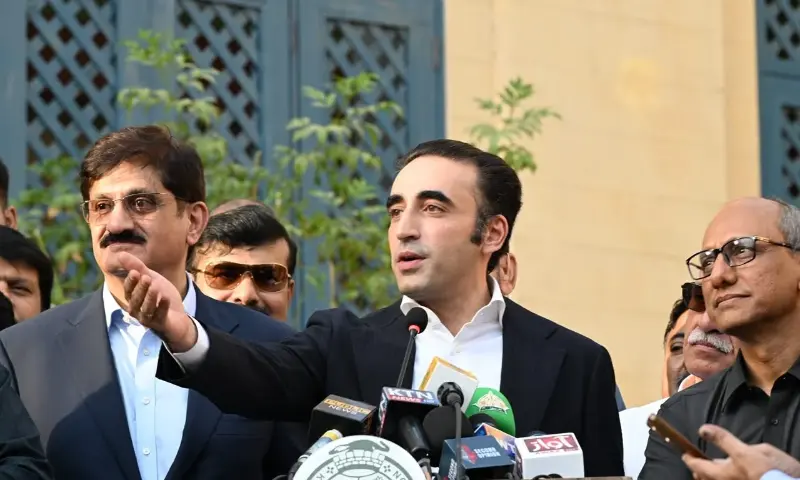
PPP Chairman Bilawal Bhutto-Zardari on Tuesday called for a “full stop” to conversations regarding the creation of new provinces.
He made the remarks while speaking to the media at Spencer Eye Hospital in Karachi’s Lyari alongside Sindh Chief Minister Syed Murad Ali Shah.
Reiterating his party’s stance in response to a question over “pressure” the PPP was facing regarding the creation of new administrative units and the possibility of rolling back the 18th Amendment, Bilawal said the people of Sindh and their elected representatives had presented their decision and “now we should put a full stop to this conversation”.
He said the Sindh Assembly had also made its stance in the matter evident for “at least seven to eight times now”.
“The people here can determine the fate of this province and the city,” Bilawal asserted.
“I think we should close this topic because the people themselves have closed it,” he said.
When asked about ongoing conversations regarding a 28th constitutional amendment and whether the government had spoken to him in this regard, Bilawal simply replied: “No.”
The PPP chairman was also questioned about the recent dispute between the Karachi Metropolitan Corporation (KMC) and Pakistan Railways and the federal government’s lack of interest in the city.
“The federal government should definitely pay attention to this city. Karachi is the country’s economic hub. Everyone else should pay attention to it,” he said.
Bilawal’s remarks come amid an ongoing debate across the country about the creation of new administrative units, sparked by Interior Minister Mohsin Naqvi’s proposal for a dialogue among all political parties to bring about reforms to the current governance system and call for new provinces and urgent administrative reforms in July.
At the time, the PPP had referred the question to its top decision-making forum, while the Sindh chief minister flatly rejected it; Lahore’s lawyers also called it unconstitutional and Sindhi nationalist groups have been demanding the minister’s resignation.
However, since Naqvi’s remarks, various political parties have also spoken in favour of it and called for the creation of more provinces or administrative units for better governance.
The Muttahida Qaumi Movement-Pakistan (MQM-P) — an ally of the PML-N-led ruling coalition — has been demanding that Karachi be designated a province separate from Sindh.
However, the PPP, which rules Sindh and is also an ally of the PML-N government at the Centre along with MQM-P, has strongly opposed the suggested move.
In September, the Sindh Assembly adopted a resolution rejecting all attempts to divide the province or create new administrative units, with the CM Murad declaring that “there will be no compromise on Sindh’s geographical unity”.
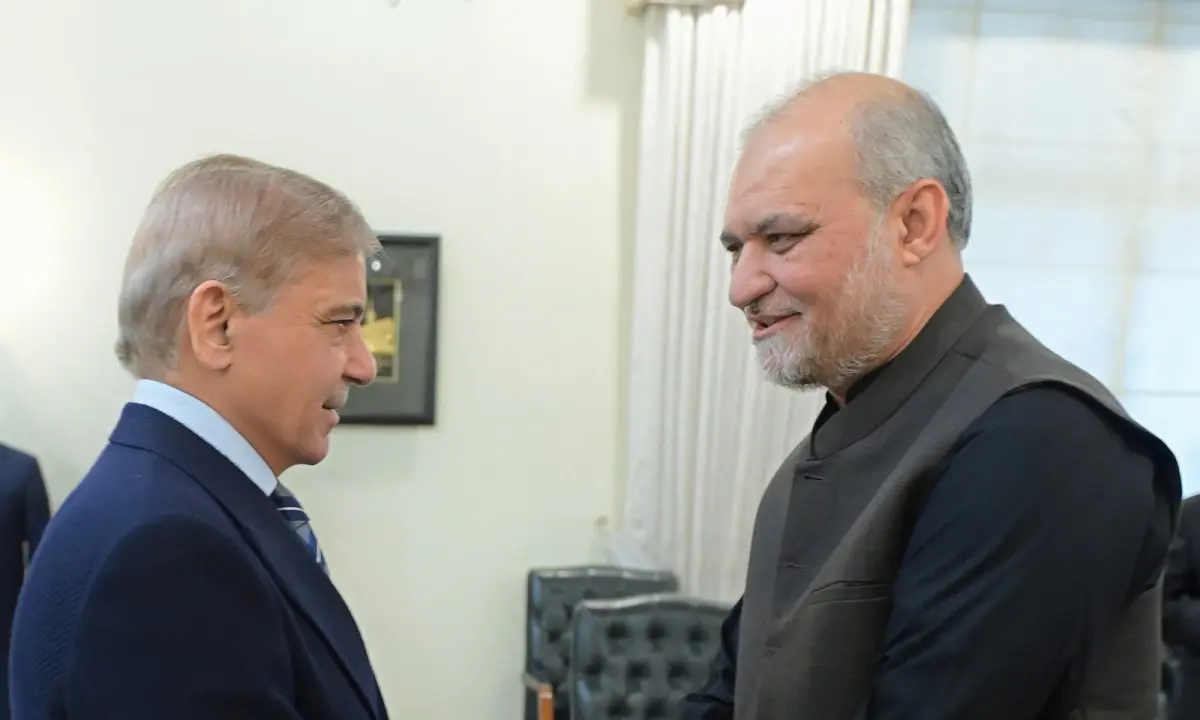
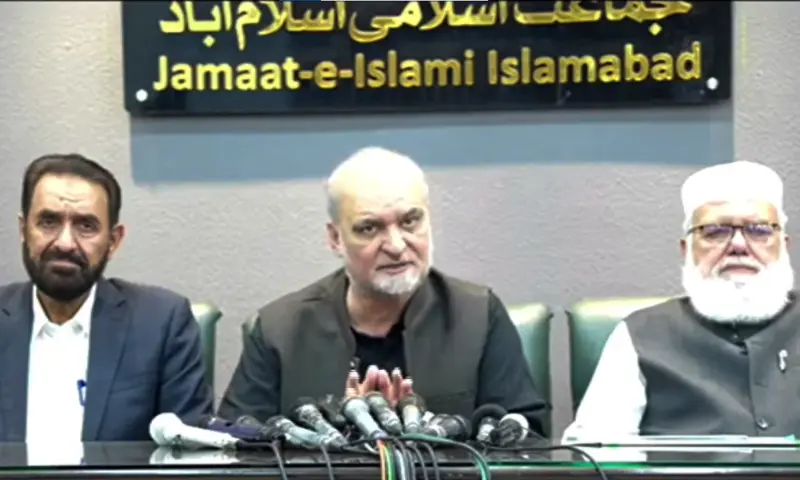
The government and Jamaat-i-Islami (JI) on Tuesday decided to form a joint committee to recommend proposals for expanding the ongoing fuel relief scheme, while JI warned of marching to Islamabad next month if no relief “package” was announced by then.
The decision was made during a high-level meeting between Prime Minister Shehbaz Sharif and JI chief Hafiz Naeemur Rehman at the PM House, according to a press release issued by the PM Office (PMO).
The meeting was offered by PM Shehbaz last month when urging JI to postpone its Islamabad march, which it had accepted. JI has been demanding the abolition of the petroleum levy to reduce the burden of heightened fuel prices on the public.
Tuesday’s meeting decided that a committee, comprising three members each from the government and JI, will present final recommendations on the following two measures:
Expansion of the scope of the ongoing relief scheme on petrol for the public so that the maximum number of deserving people can benefit from it
Preparation of feasible proposals for the budget for a phased reduction in the petroleum levy
Deputy Prime Minister and Foreign Minister Ishaq Dar, Planning Minister Ahsan Iqbal and the PM’s political adviser Rana Sanaullah will represent the government in the joint committee, PMO stated.
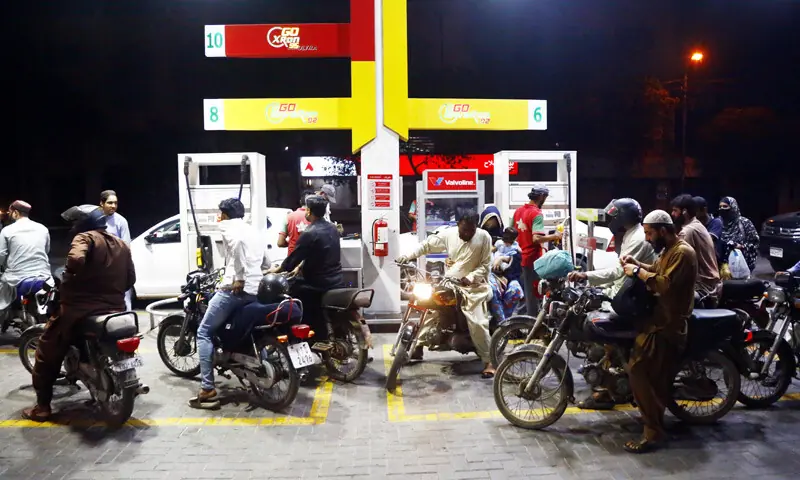
The premier informed the JI delegation in detail about the relief provided so far by the government in the petroleum products quota for the low-income segment, noting that 12.7 million people have registered in the subsidy scheme so far.
The relief scheme for owners of motorcycles, rickshaws and vehicles of up to 800cc was rolled out across the country on Sept 17. PM Shehbaz had announced the subsidies to ease the public’s burden amid rising fuel prices due to the Middle East situation.
During the meeting, the prime minister conveyed to JI that he “fully understands the burden on the public due to the increase in prices of petroleum products”, PMO said.
He highlighted the government’s effort to provide relief through the subsidy scheme and asserted that Islamabad was “making all-out diplomatic efforts to resolve the regional crisis so that the situation can return to normal”.
“The current crisis is not related to government policies but to the increase in oil prices in view of regional and international situations. However, according to financial capacity, the government is providing relief to the public and will continue to do so,” he was quoted as saying.
The prime minister thanked JI for adopting the path of negotiations regarding the prices of petroleum products. PMO noted that the JI delegation “expressed its stance on the abolition of the petroleum levy and relief for the public”.
JI Deputy Emir Liaquat Baloch, Deputy Secretary General Syed Farasat Shah, Islamabad Emir Nasrullah Randhawa and Inayatullah were also part of the party delegation.
From the government, Dar, Iqbal, Sanaullah, Economic Affairs Minister Ahad Khan Cheema, Finance Minister Muhammad Aurangzeb, Petroleum Minister Ali Pervaiz Malik, and Minister of State for Finance and Railways Bilal Azhar Kiani were also present.
‘Cannot simply accept peanuts’
In his press conference in Islamabad, the JI chief affirmed that his party will not postpone its march any further.
He stated: “It will now take place in mid-November, and it certainly will take place. Let them announce this package, provide this relief, and devise a mechanism to abolish this extortionate levy before that, [but] if they do not do so, we might have to sit on the road to talk.
“We are prepared for anything,” Rehman declared.
Asked about the outcome of his meeting with PM Shehbaz, the JI emir refrained from terming it “inconclusive”.
He noted that two sides had consensus on expanding the scope of relief, but there were disagreements over the “modalities” and “procedure”.
“We say eliminate the levy; they say we can move towards it phase by phase,” Rehman elaborated.
Rehman, apparently referring to the new joint committee, said Baloch, Shah and Randhawa would be part of it.
“We cannot simply accept peanuts,” the JI chief said when asked about a reported government offer to reduce the levies by Rs20-30. He stressed that his party stood firm on its stance.
He maintained that JI would continue its preparations and would begin nationwide mobilisation for its planned march to the federal capital, while negotiations would also continue at the same time.
“Our preparations are already complete; we will prepare further [and] we will talk to them (the government) further. However, we will also hold the Islamabad march in mid-November,” Rehman said.
Asked whether JI had presented any alternative to abolishing the levy, he responded in the affirmative, asserting that his party had comprehensive preparations.
Rehman highlighted that all past governments vowed not to take loans from the International Monetary Fund (IMF) but then entered into programmes with it after coming into power.
He said his party pointed this out, adding, “Give relief to the people; do not take retribution for your incompetence from the nation.”
Providing details of his party’s demands, the JI chief said it had also raised the issue of refineries’ margins increasing as well when oil prices rose in the international market.
“That should have decreased, people should have gotten relief,” he said.
Rehman acknowledged that JI was aware of the fluctuations in international oil prices due to the ongoing conflicts in the Middle East, but “we want relief to be provided to the people in this regard as well, and this levy should also be abolished alongside”.
He went on to claim credit for the relief schemelaunched by the government in mid-September. “If Jamaat-i-Islami was not protesting, do you think this relief package would have come?”
Rehman further said, “We have restrained them a little by continuing to push, by taking a stand, stepping onto the field and protesting; otherwise, it is easy money that you just take advantage of this opportunity.”
The JI emir recalled that in April, the government had hiked the levy on petrol to Rs160 per litre from Rs105, but widespread criticism prompted it to reduce the levy by Rs80.
“It is JI that has raised awareness, protested, and built pressure,” he claimed.
Iqbal calls for ‘durable, sustainable path’
After attending the meeting, Iqbal and Sanaullah addressed a press conference and assured the public that the government wanted to ease the burden of the fuel prices.
“The prime minister and JI emir agreed that they share one purpose and intent: they want to reduce the difficulties of the public,” Iqbal said.
“However, for this, we will have to adopt a path that is durable, sustainable, and the cost of which we can afford.”
The planning minister expressed hope that the committee would be able to work together on the topics to find a solution to these issues.
Simultaneously, while acknowledging that every political party had a right to protest, he stressed that the regional conditions warranted that everyone maintain peace and internal stability in the country.
Iqbal assured the public that the government was aware that the increase in international oil prices, and the consequent fuel price hikes, affected ordinary citizens.
He emphasised that PM Shehbaz was “continuously concerned about how to reduce the difficulties of the most affected and vulnerable classes” and said the soaring costs were a result of a global crisis that was not in the government’s control.
The minister stressed that Pakistan was playing its diplomatic role in resolving the Middle East crisis, including facilitating negotiations between the US and Iran, so that reduced regional tensions could lower global oil prices and the relief could be passed on to the public.
The PML-N leader went on to take a jibe at the previous PTI government, saying it reduced fuel prices for “cheap popularity” even as international oil prices rose, bringing the country to the brink of fiscal default.
He contended that if a government made decisions merely to hype its popularity among the masses, that irresponsibility could come back to it as a “nightmare”.
Therefore, he added, the government, including the prime minister, wanted to help people as much as possible “while staying within our resources”.
Addressing the media alongside Iqbal, Sanaullah said, “The government, to whatever extent possible, is providing relief to the common man, the poor man, and is trying to advance it further.”
He said the number of people benefitting from the fuel subsidy scheme was likely to reach 20m in the coming days.
He appreciated the JI’s efforts and its belief that the common man should be provided relief, stressing that this relief should be taken forward “in such a manner that it is targeted, and that maximum relief be given to those people who deserve it more”.
At the same time, Sanaullah urged all political parties to strengthen the position of Pakistan’s military and political leadership, and to create an environment that lent strength to the efforts made by PM Shehbaz and Chief of Defence Forces and Chief of the Army Staff Field Marshal Asim Munir to end the US-Iran conflict, as well as to maintain good relations within the Muslim world.
He called for “complete solidarity and complete unity” in the country “so that Pakistan can succeed in playing an effective role in the world”.
“It is our hope, and indeed our belief, that the Jamaat-i-Islami leadership, keeping in view these delicate and sensitive matters, will certainly play their role,” he said.
The PML-N leader emphasised that the government had listened to the JI’s suggestions “very carefully” and held the talks with “complete sincerity of intention and good faith” so that the current relief could be made more effective.
JI protests so far
The JI has been demanding for over two months that the Centre abolish petroleum levies, as fuel prices have skyrocketed due to conflicts in the Middle East since March.
The Centre and JI had agreed to form committees in early September — when the latter had planned a nationwide strike — to recommend measures to reduce the levy.
Rehman on Monday warned that the party would march to Islamabad in mid-November if the premier did not abolish the petroleum levy.
On Aug 16, the JI announced sit-ins in all the provincial capitals of Pakistan against the petroleum levy and had called for a nationwide strike on Sept 3.
On Sept 20, the party launched a protest march towards Islamabad, warning that if the government failed to abolish the petroleum levy, the protest could turn into one to oust the government.
On Sept 22, the JI emir said his party, whose convoy had reached Multan, was postponing its long march at the request of PM Shehbaz, who had assured the other side of a meeting to discuss the matters.
However, in a press release issued last week, the party alleged that the government had made no further contact regarding the planned meeting.
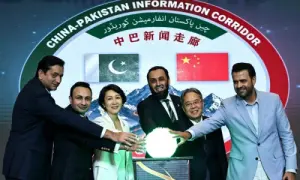
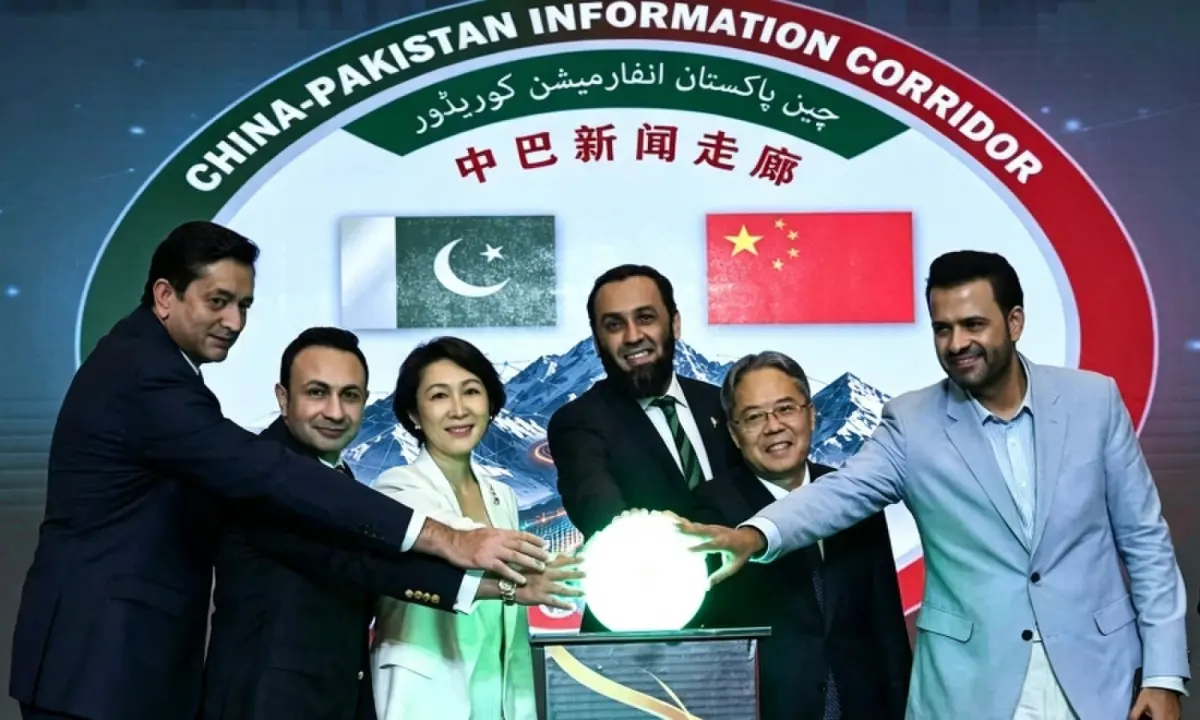
Pakistan and China have launched the China-Pakistan Information Corridor (CPIC), with Information Minister Ataullah Tarar saying that the initiative will focus on countering misleading narratives, cultural exchanges and cooperation between think tanks.
The corridor was launched at a ceremony in Islamabad, which was televised on Tuesday. Chinese Foreign Ministry Spokesperson Mao Ning and Chinese Ambassador Jiang Zaidong attended the launch.
In his televised remarks, Tarar expressed his “long-standing“ desire to collaborate with China in the fields of media, information sharing and digital platforms.
Hailing Pakistan and China’s bilateral relations, Tarar recalled the China-Pakistan Economic Corridor (CPEC), noting that it had “turned decades of goodwill into steel, concrete and current”.
“It lit homes, laid motorways across our provinces and gave Pakistan at Gwadar a gateway to the world.”
Tarar said that while the first phase of CPEC connected lands, the next phase will “connect our minds and this information corridor will act as a bridge for connecting the minds of the people of the two countries”.
The information minister said the collaboration under the newly launched corridor will stand on four pillars — media, business and enterprises, think tanks, and culture/tourism.
“First, media. A news exchange working group of 18 Pakistani and Chinese media organisations. From our state broadcasters and private channels to Xinhua,CMG, and People’s Daily now share verified news on our cooperation.”
He added that it will also include a dedicated fact-check mechanism to track misleading narratives and counter them with “concrete facts”.
The second pillar, which includes businesses and enterprise, Tarar said, will draw on leading Pakistani and Chinese commercial groups.
“This pillar has opened its first regional office in Karachi,” Tarar said, adding that under the initiative, a trade portal to track trade, investment, and Foreign Direct Investment (FDI) was being built, along with a podcast series about the stories of Chinese entrepreneurs in Pakistan and vice versa.
He said the third pillar will involve collaboration between think tanks from the two countries.
“Led by the Pakistan-China Institute and joined by our foremost research institutions, this pillar will bring evidence and depth to the bilateral conversation through joint dialogue, research, and publications with Chinese counterparts,” Tarar said.
The fourth pillar, which Tarar described as the “heart of the corridor”, will focus on tourism, with work already underway on the Xinjiang-Gilgit-Baltistan tourism corridor, “extending the journeys of Chinese travellers into the valleys of our north”.
Tarar also shared that the first cohort of CPEC Youth Ambassadors had been nominated from 13 universities across Pakistan.
“Before a community of shared future can be built in steel and stone, it must find its place in the minds of the people,” Tarar said, stressing that the principle was at the core of CPIC.
“If CPEC is its body and the shared future, CPIC will be its voice. If CPEC connects our economies, CPIC will connect our understanding. Through it, a student in Lahore will know the China of today, and not the caricatures of yesterday. A family in Chengdu will see Pakistan as it truly is: warm, resilient, and full of potential.”
He added that the corridor will counter “falsehoods with fact, isolation with exchange, and suspicion with trust,” lauding Chinese President Xi Jinping’s vision.
“President Xi gave us the vision of a shared future, and Prime Minister Shehbaz Sharif has given Pakistan the means to reach it,” Tarar said.
For PM Shehbaz, Tarar said the digital revolution was about people and “above all Pakistan’s young people”.
“More than 68 per cent of our nation is under 30 in their hands. A laptop is a passport and a smartphone is a marketplace. Through their talent, Pakistan is taking its place in the global digital economy.”
Tarar further stated that CPIC was at its core a “digital corridor”.
“Its news exchanges, fact-check mechanisms, trade portals, podcasts, social media channels, and youth ambassadors are tools of a digital age put to work for an old and trusted friendship. And here too, Pakistan walks with China,” Tarar said.
The information minister, in his address, also invited Chinese media houses, think tanks, universities, enterprises, and youth ambassadors to join each pillar of CPIC.
Concluding his address, Tarar said that while the Karakoram Highway was carved through the mountains, today Pakistan and China were building a “different highway [..] it is not made of rocks, but it is made of truth, and it will be carried not on trucks, but on voices.
Meanwhile, China’s Ning also addressed the ceremony, noting that China and Pakistan continue to face misinformation and fake news, according to state broadcaster Pakistan TV.
Ning stressed the need for the CPIC, saying that its four pillars can play a key role in highlighting bilateral cooperation.
Pakistan and China share a longstanding strategic partnership rooted in mutual trust, economic cooperation and regional connectivity. Over the decades, ties have expanded across different sectors — including trade, energy, defence and infrastructure — with the CPEC symbolising a shared vision for development.
A day earlier, Deputy Prime Minister and Foreign Minister Ishaq Dar met Ambassador Zaidong to review progress on CPEC.
During the meeting in Islamabad, Dar praised the ongoing expansion of the “all-weather strategic cooperative partnership” between the two nations. Discussions focused on advancing trade, investment, regional connectivity, agricultural modernisation and people-to-people exchanges.

 Login