❌

Reading view

What's at stake for Trump in Israel's deadlocked election?

With Israel’s election yielding no clear winner, US President Donald Trump could face prolonged uncertainty over who will lead Washington’s closest Middle East ally as he confronts challenges from Iran and Gaza across the region.

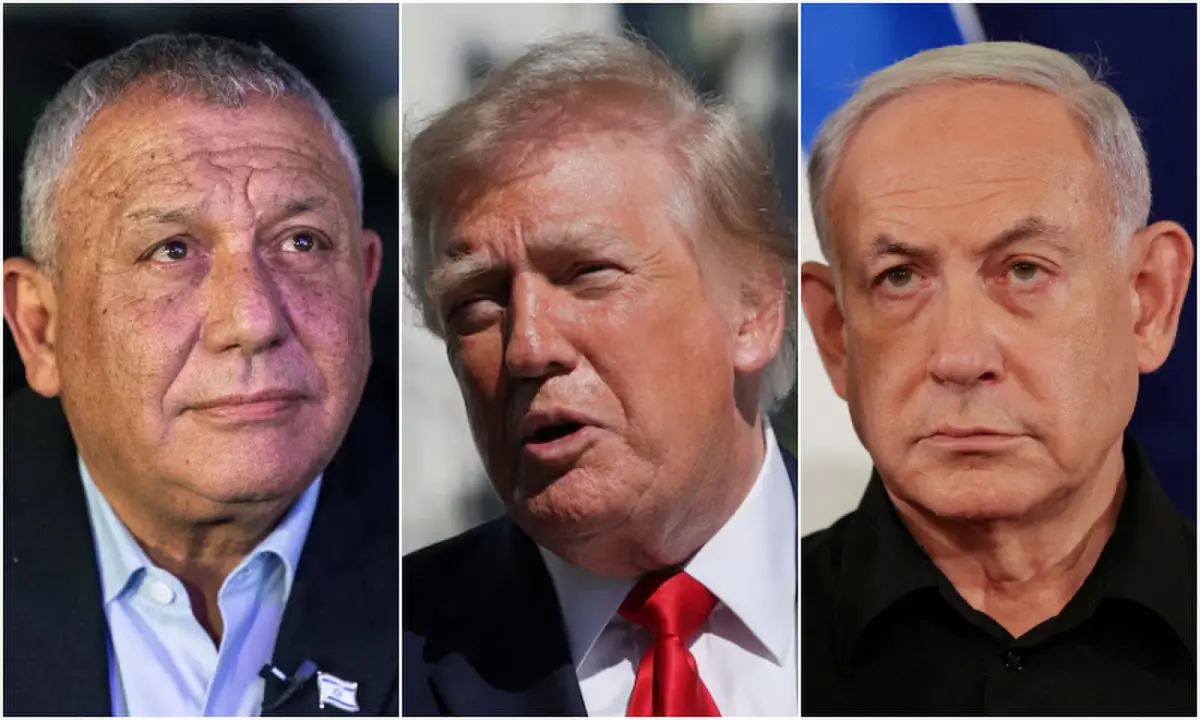
Prime Minister Benjamin Netanyahu’s right-wing bloc secured the most seats in Israel’s parliament but still lost its parliamentary majority on Tuesday, despite Trump having endorsed him against a rival alliance of parties led by hawkish former military chief Gadi Eisenkot.

While Netanyahu seemed in a stronger position, neither side was projected to have an outright path to form a new government after Israel’s first election since the Hamas-led attacks of Oct 7, 2023, and the ensuing wars in Gaza, Lebanon and Iran.

The stage appeared to be set for a period of painstaking coalition bargaining or possibly another election while Netanyahu remains in power in a caretaker capacity.

The outcome will have implications for US-Israeli relations, which have been dominated by the joint fight against Iran, stalled Gaza peace efforts and signs of eroding US public support for Israel.

The uncertainty comes at a sensitive moment for Trump, when he and Netanyahu have threatened to join in another round of attacks against Iran.

“Israeli politics can be messy,” said Aaron David Miller, a former Middle East adviser in Democratic and Republican administrations.

From the US perspective, he said, “It would be good to get some clarity, but that’s easier said than done.”

Which outcome would Trump prefer?

Netanyahu a consummate political survivor who has had a close but sometimes turbulent relationship with Trump dating back decades may have survived again.

He is the longest-serving Israeli prime minister and the only one the US president has ever worked with.

Eisenkot, who projected an image as a political outsider and security-minded former general during the campaign, has seen his governing chances dimmed but not extinguished. He is not known to have ever met Trump.
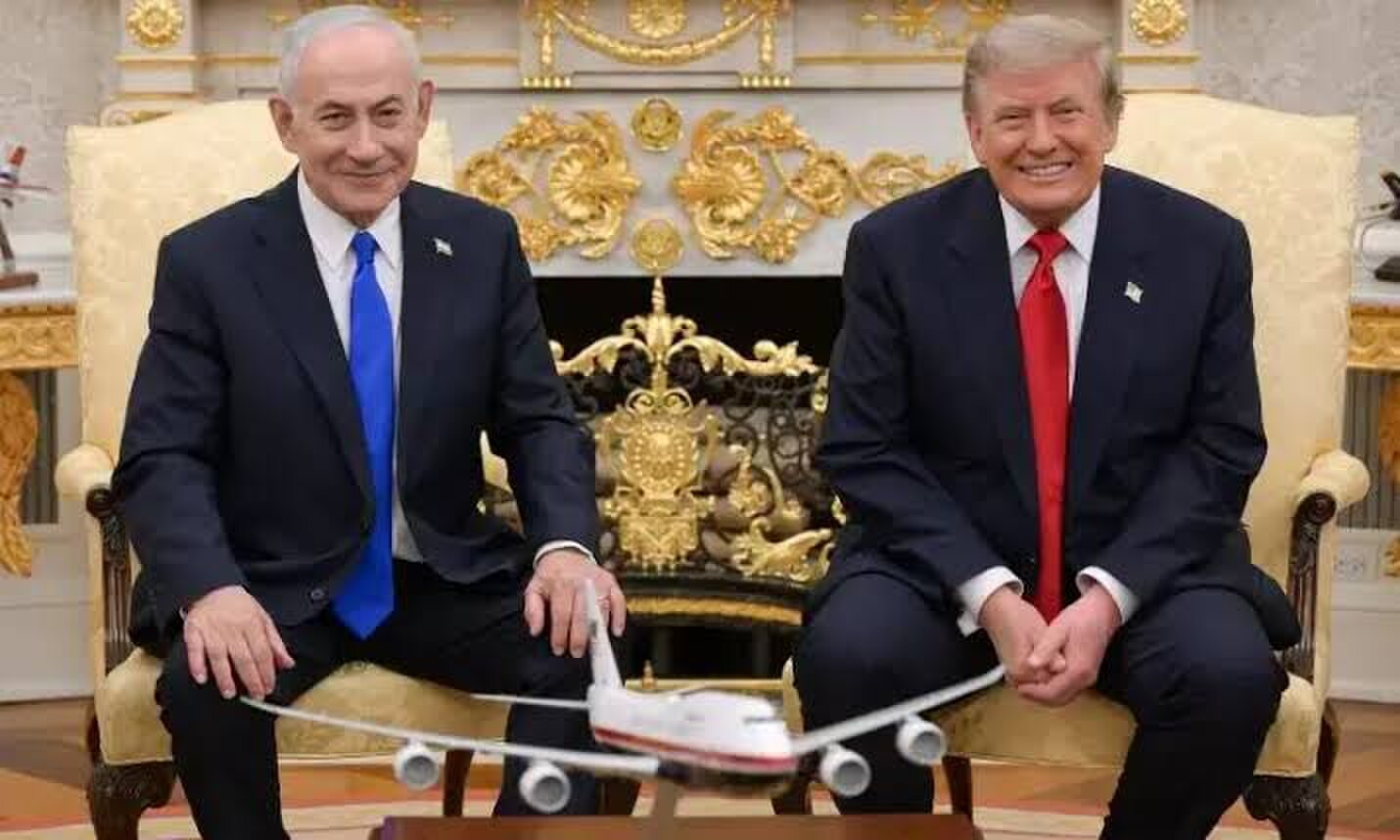
Israeli Prime Minister Benjamin Netanyahu meets US President Donald Trump at the White House on July 28, 2026. — X/@FoxNews/File

Some analysts say creation of a broad unity government keeping Netanyahu in power might serve Trump’s interest in a politically stable Israeli partner. But neither side has shown a willingness to take that path.

Asked whether he was going to get involved in an effort to form a Netanyahu-led unity government, Trump told Axios on Wednesday he hadn’t thought about it, adding: “I will take a look.”

What does the election mean for the war in Iran?

Topping the list is how Trump might engage with Israel in the war against Iran, which has rocked the Middle East.

The eight-month-old conflict has disrupted global energy supplies, pushed up US gasoline prices and driven down his approval ratings, imperiling his Republicans’ control of Congress in the Nov 3 midterm elections.

Trump, in his Oct 18 endorsement, insisted he wanted Netanyahu to remain in power to help him soon “finish the job” against Iran. The president said overnight that Netanyahu, who outperformed pre-election polls, had done “very well” and that his backing had boosted the Israeli leader.

Trump has repeatedly signalled that the US and Israel could restart attacks on Iran after the midterms, with some critics, including in Israel, suggesting Netanyahu might see it as a way to bolster his political standing as caretaker prime minister.

Jonathan Panikoff, a former deputy US national intelligence officer on the Middle East, said any future Israeli leadership would likely be on the same page as Trump if he decides to escalate from the current stalemate with Israel’s regional arch-foe.
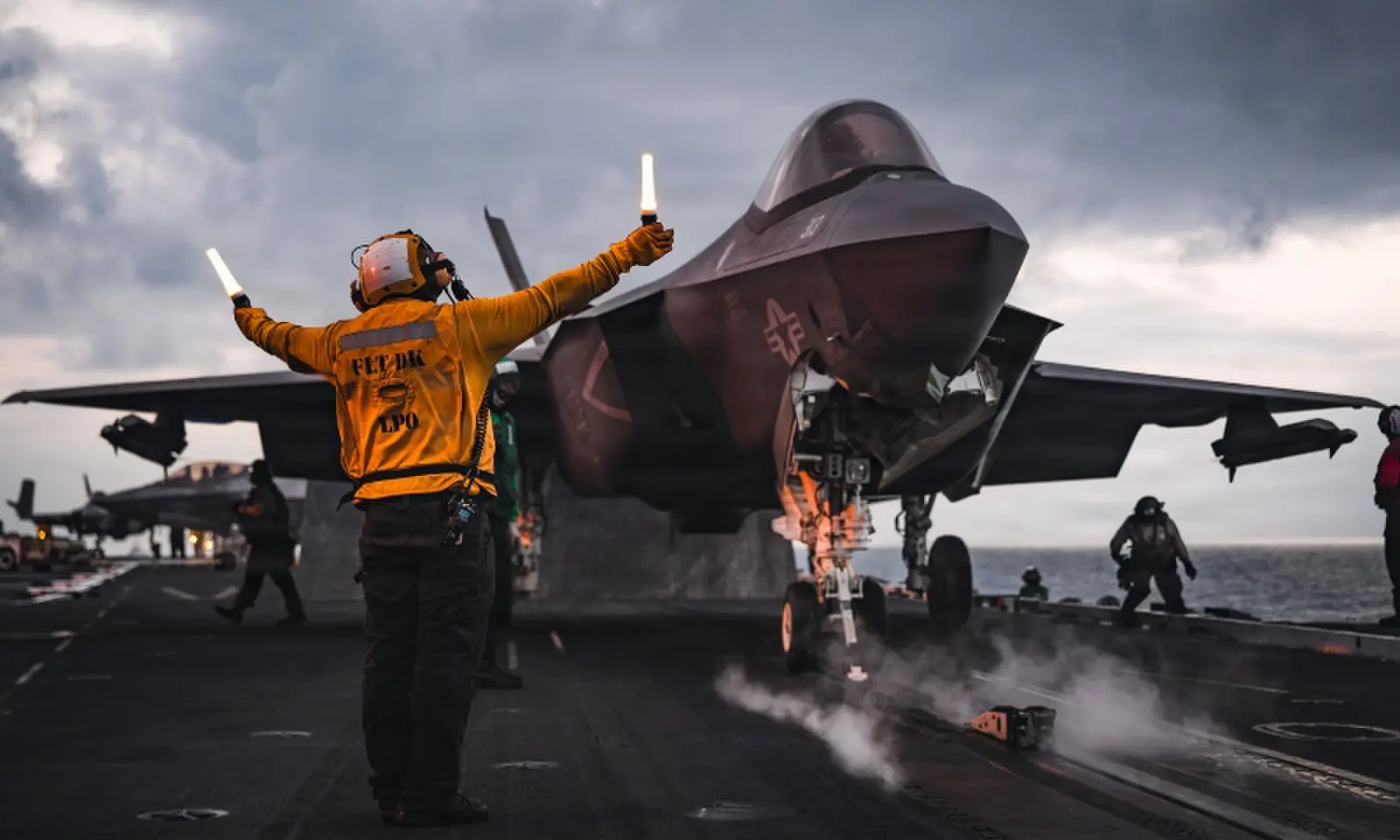
A US F-35 fighter jet prepares for takeoff from an aircraft carrier in the Middle East, in this photo released by US Central Command on October 19, 2026. — X/@CENTCOM

“It’s hard to imagine any real daylight between them on that point,” said Panikoff, now at the Atlantic Council think tank in Washington.

Where Netanyahu and many Israelis have sometimes differed with Trump is when he has offered concessions in now-stalled negotiations with Tehran.

What are the implications for Gaza peace efforts?

No matter how Israel’s next government shapes up, there is little reason to believe there will be any sweeping shift in tough policies toward the Palestinians.

This does not bode well for breaking the diplomatic deadlock between Israel and Hamas and fully implementing Trumps Gaza peace plan following the war there.

Israel, in response to the group’s deadly cross-border attack, levelled much of the enclave and killed tens of thousands of Palestinians.

Administration officials have privately expressed frustration over what they see as intransigence by Netanyahu, who has insisted that Hamas must first disarm.
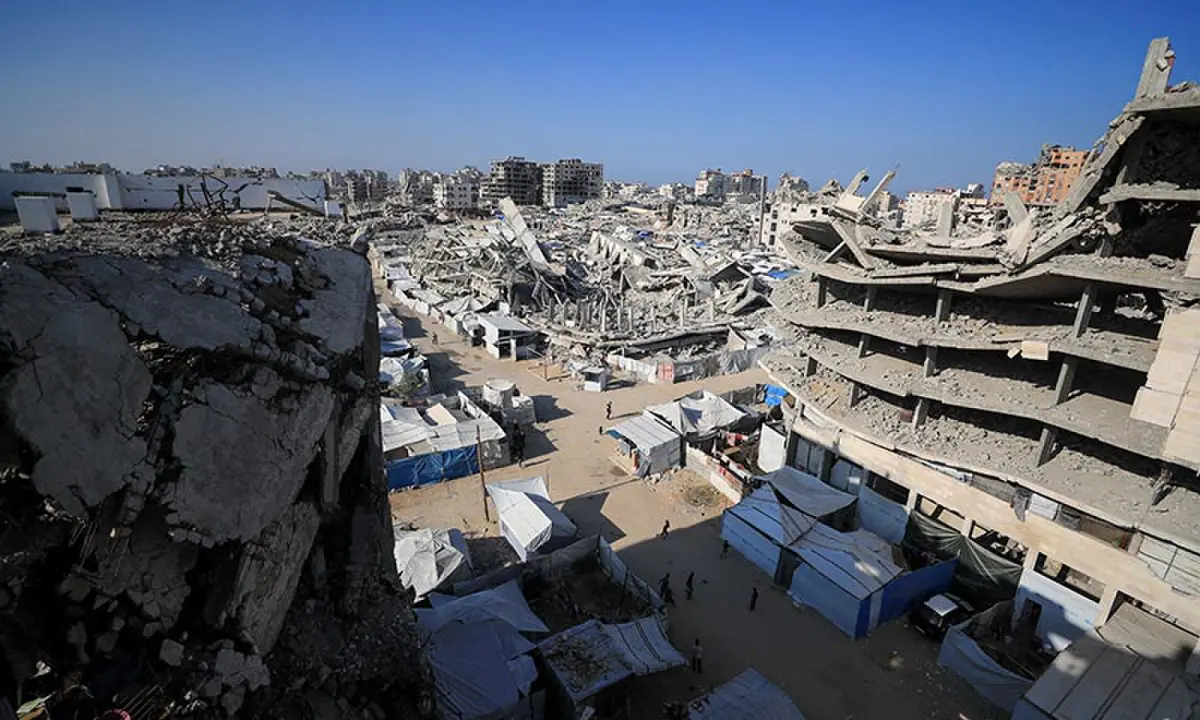
Palestinians walk near the rubble of buildings destroyed during the war in Gaza City on October 28, 2026. — Reuters

Eisenkot, who lost a son and two nephews in the Gaza war, stressed his military credentials while positioning himself as a centrist domestically during the election campaign.

He has vowed to break with Netanyahus far-right coalition allies, but not with the hawkish approach to security that has become more entrenched since the 2023 Hamas attack.

Like Netanyahu, Eisenkot opposes Palestinian statehood and says Hamas’s military wing must be destroyed.

But he has pledged to prevent violence by Israeli settlers against Palestinians in the occupied West Bank, which Netanyahus government has been accused of tolerating. Settler attacks have drawn criticism in recent weeks from US officials worried the territory could become another Middle East flashpoint.

What about Israel’s growing isolation?

Even as Israel’s political climate is expected to remain unsettled for some time, Trump may have to contend with what opinion polls project could be the Democrats’ takeover of one or both chambers of Congress in the midterms.

That could mean increased pressure from Democrats, whose support for Israel plunged over its conduct in the Gaza war, to curb billions of dollars in US aid and weapons supplies.

Some members of Trumps MAGA base have also become increasingly critical of Israel, accusing it of having misled Trump who campaigned for a second term on a promise to avoid foreign military interventions into believing Iran could easily be defeated.

Trump, in an interview with Axios in June, cautioned Netanyahu about Israel’s deepening international isolation, and most analysts say the trend may be irreversible, even with a new government.
  •  

Israel's unassuming President Herzog holds keys to next government

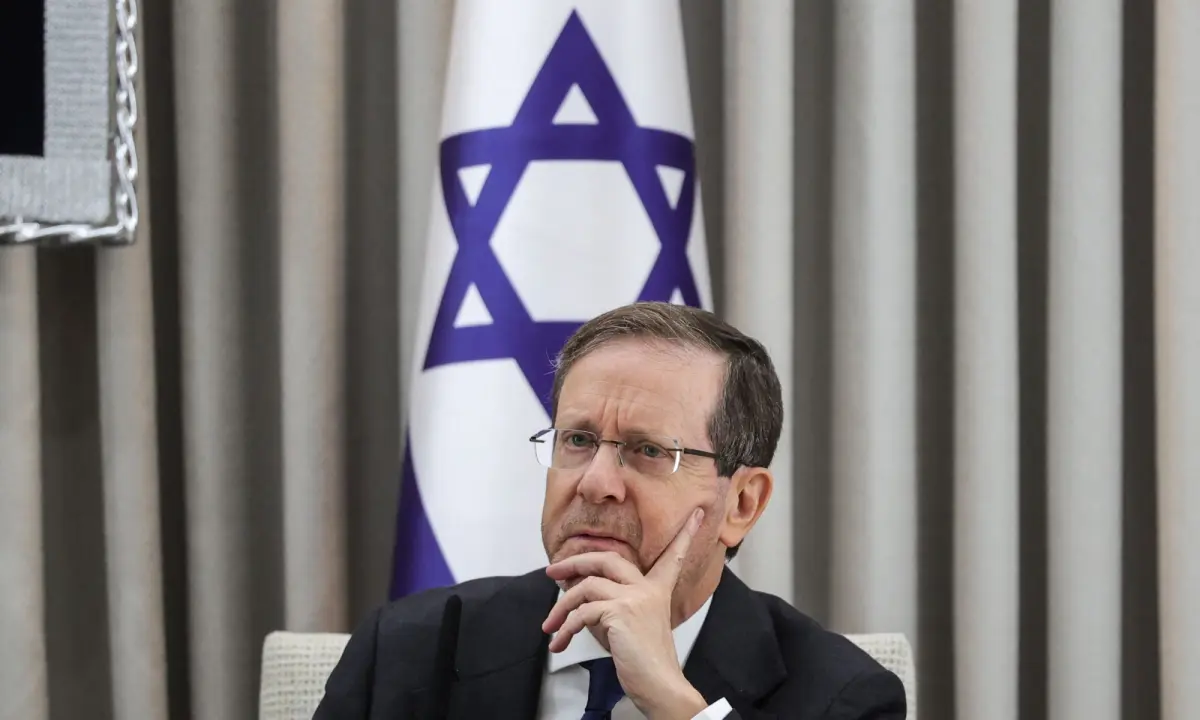
Israel’s President Isaac Herzog is known for his unassuming and mild manner, but all eyes will soon be on him as he decides who to task with forming the next coalition government.

The decision is a weighty one given that partial results from Tuesday’s elections show neither the camp of Prime Minister Benjamin Netanyahu nor that of his rival Gadi Eisenkot securing a majority in parliament.

After the official announcement of the results, Herzog will consult with party representatives and name a candidate who has the best chance of forming a government — not necessarily the one whose party holds the most seats.

Under the law, the president, whose position is otherwise largely ceremonial, is afforded broad discretion, with no guidelines on how to make the choice.

As votes were being tallied on Wednesday, Herzog said he would receive the official results the following week, after which consultations would begin.

“One thing must be clear, and I said this before the elections too: we must do everything we can, certainly after yesterday, to avoid another round of elections,” he said.

“So I expect everyone who comes here to come with an open mind.”

Ahead of Tuesday’s pivotal vote, Herzog acknowledged there would be tremendous pressure, but vowed not to let outside influence, notably from US President Donald Trump, sway his decision.

“I don’t think the president of the United States or anybody else can intervene in my discretion,” he told US outlet MS Now.

“It’s Israel’s democracy and Israel’s constitution, and that’s what counts for me.”

Herzog told MS Now he would do everything he could to avoid a fresh election — a possibility if neither camp can cobble together a coalition — including backing a unity government between Netanyahu and Eisenkot.

‘Worthy and wonderful man’

Modest, diplomatic and with a strong political pedigree, 66-year-old Herzog was sworn in as Israel’s president in 2021 after being elected by lawmakers in a landslide.

Yair Lapid, now a member of Eisenkot’s broad opposition bloc, praised Herzog at the time as “a worthy and wonderful man who is always focused on the good of the country and the Jewish people”.

As president, Herzog has faced pressure from Trump to grant Netanyahu a pardon in his long-running corruption trials, which could land him in prison if he loses power.

In April, Herzog invited Netanyahu’s lawyers and prosecutors to his residence for talks on the issue.

Before he served as head of state, Herzog was elected to Israel’s parliament in 2003 and held portfolios including housing, tourism and welfare.

In 2015, as leader of Israel’s centre-left Labour party, Herzog vied to oust Netanyahu as prime minister, presenting himself as a subdued, even-keeled alternative to the bombastic “Bibi”.

Netanyahu, now 77, is Israel’s longest-serving premier, having governed on-and-off for nearly two decades.

Tuesday’s election was seen as a referendum on the veteran leader’s tenure after he pushed the country sharply to the right and unleashed a wave of military campaigns in response to Hamas’s Oct 7, 2023 attack.

‘Bring a real change’

In an interview with AFP in March 2026, Herzog said the ongoing US-Israeli war with Iran marked a “historical juncture”.

“There comes a moment that after well over a generation of endless wars, bloodshed and terror, the root cause of it, which comes from Tehran, will be blocked and stopped, and the whole direction of the region will change,” he said.

“Let’s help us bring a real change so that there will be a different future in the region.”

He also stressed the importance of talks with Lebanon, with the two sides sitting down the following month for direct negotiations that are still ongoing.

Herzog’s Irish-born father, Chaim Herzog, served as head of Israel’s military intelligence, then went on to become its ambassador to the United Nations and finally its sixth president, from 1983 to 1993.

Herzog’s grandfather and namesake — Rabbi Yitzhak (Isaac) HaLevi Herzog — was the first chief rabbi for Israel’s Ashkenazis, the branch of Judaism whose roots are in eastern Europe.

At the helm of the Labour party, Herzog worked to steer its focus back to peace with the Palestinians.

He answers to the nickname “Bougie” — reportedly given to him by his Egyptian-born mother, who mixed the French word for doll “poupee” with its Hebrew equivalent “buba”.

  •  

Noreen Niazi moved from Lahore jail to hospital due to high blood pressure: lawyer

LAHORE: Incarcerated PTI founder Imran Khan’s sister Noreen Niazi was moved from Lahore’s Kot Lakhpat jail to the Punjab Institute of Cardiology on Wednesday due to high blood pressure, her lawyer said.

Three sisters of the ex-premier — Noreen, Aleema Khan, and Uzma Khan — have been detained since Sept 21 under the Punjab Maintenance of Public Order Ordinance, 1960 (MPO) on the Lahore deputy commissioner’s (DC) orders. They are currently serving the second term of a 30-day detention under the MPO, which was extended on Oct 7.

Noreen’s counsel Rana Mudassar Umer told Dawn that she had been taken to the Punjab Institute of Cardiology on the recommendation of the jail doctors.

She was brought to the hospital at around 7:30pm and hospital sources said doctors were performing her tests, he added.

No family member has been informed about her deteriorating health condition, the lawyer claimed.

Umer further alleged that the jail authorities were consistently denying medicines to Imran’s sisters. He said Uzma, who was a heart patient, had also been denied medicines, adding that they were eventually delivered to her upon the Lahore High Court (LHC)’s order after her husband approached the court.

When contacted, a senior jail officer refuted the accusations, telling Dawn that medicines and daily-use items were allowed to be provided to the inmates and that the three sisters were getting all such items.

Noreen’s lawyer further said that no family members or counsel had been allowed to meet the sisters. Umer said he had filed multiple petitions before the Punjab home secretary and the Lahore DC seeking meetings of the detained sisters with their family and lawyers, but the DC had not responded.

Regarding the meetings, the jail officer said this was the jurisdiction of the Lahore DC, and jail authorities could allow such meetings on a by-name written order issued by the DC.

Imran’s sisters were detained by authorities in September, under Section 3 of the MPO, as the PTI geared up for a planned protest march towards Islamabad.

Their detention was ordered for 30 days and would have expired on Oct 19 for Aleema and Oct 20 for Uzma and Noreen, according to Umer. However, they remained in jail, and the government later informed the LHC that their detentions had been extended on Oct 7.

On Sept 24, the LHC had turned down a request to immediately suspend the preventive detention notifications issued against Noreen and Dr Uzma.

Earlier this month, Imran’s cousin, Qasim Zaman, was also taken into custody when he went to Adiala jail to meet the ex-prime minister.

The detention had come amid reports of a crackdown on the PTI ahead of its countrywide protest and march to Islamabad, which the party had called to demand Imran’s release from jail and mobilise people for the supremacy of the Constitution.

  •  

Pakistan slams Afghan Taliban for targeting Civilians in Deadly Border Attack

MIRAN SHAH – A mortar strike on house in South Waziristan’s Angoor Adda killed one civilian and wounded five members of the same family, security sources said, prompting a Pakistani military response that the information ministry said destroyed seven Afghan Taliban posts.

The fresh confrontation garnered strongly rebuttal from Pakistan’s Ministry of Information and Broadcasting, which rejected the Afghan Taliban’s version of events as “false and fabricated”. It said mortar shell fired from the Afghan side landed on a house in a residential neighbourhood, causing the casualties and spreading fear among communities living along the volatile frontier.

The ministry accused Afghan Taliban forces of starting the clash with unprovoked gunfire and mortar shelling directed at unarmed civilians inside Pakistani territory.

𝐅𝐚𝐜𝐭 𝐂𝐡𝐞𝐜𝐤 | 𝐌𝐢𝐧𝐢𝐬𝐭𝐫𝐲 𝐨𝐟 𝐈𝐧𝐟𝐨𝐫𝐦𝐚𝐭𝐢𝐨𝐧 & 𝐁𝐫𝐨𝐚𝐝𝐜𝐚𝐬𝐭𝐢𝐧𝐠

◼ Afghan Taliban regime’s latest fabrication of lies on Angoor Adda border incident again confirms their deceitful character. Fact of the matter is that their cowardly forces initiated unprovoked fire and mortar shelling on unarmed civilians on Pakistani side, following pattern and instructions of their proxy masters India.

◼ Immediate, effective and disproportionate response by our brave and proud security forces not only silenced their guns but inflicted heavy casualties to their men in addition to material losses including destruction of seven posts.

◼ Such lies of Taliban regime so called official spokespersons carry no value and are part of a litany of fabricated stories that they keep on telling, mostly to their own people suffering under their imposed and non representative regime.

𝐓𝐫𝐮𝐭𝐡 𝐏𝐫𝐞𝐯𝐚𝐢𝐥𝐬 𝐎𝐯𝐞𝐫 𝐅𝐚𝐥𝐬𝐞𝐡𝐨𝐨𝐝

— Fact Checker MoIB (@FactCheckerMoIB) October 28, 2026

Pakistani security forces responded immediately, the ministry said, silencing the firing positions and inflicting heavy losses in personnel and equipment. It claimed seven Taliban posts were destroyed. Security sources separately said several checkpoints were targeted during the retaliation.

The ministry also accused Taliban spokespersons of presenting a misleading account of the confrontation, describing their statements as part of a recurring campaign of fabricated claims aimed largely at audiences within Afghanistan.

The statement further alleged that the firing had been carried out on India’s instructions and reflected a pattern associated with Indian-backed proxies. The supplied information contained no independent evidence substantiating that allegation.


The post Pakistan slams Afghan Taliban for targeting Civilians in Deadly Border Attack appeared first on Daily Pakistan English News.

  •  

Petrol Price in Pakistan jumps to Rs377.91; Diesel also gets Costlier

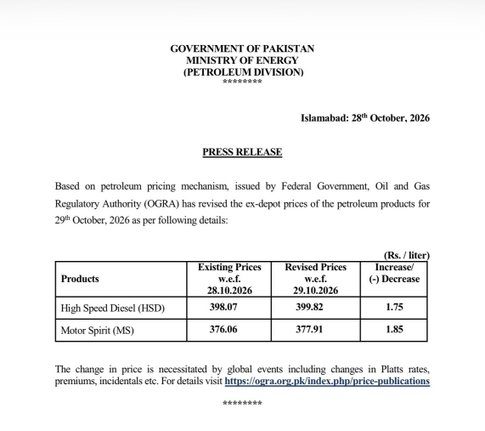
ISLAMABAD – Pakistanis face another increase in fuel costs for October 29, 2026, with petrol rising by Rs1.85 per litre and high-speed diesel becoming Rs1.75 per litre more expensive, according to the Petroleum Division press release.

The revision takes petrol to Rs377.91 per litre from Rs376.06, while high-speed diesel climbs to Rs399.82 from Rs398.07. Both calculations match the revised prices listed in the notification dated October 28.

Petrol Price In Pakistan Jumps To Rs377 91 Diesel Also Gets Costlier

Despite the latest increase, petrol remains cheaper than at the beginning of October. Historical price records show it stood at Rs387.40 per litre on October 1 before reaching Rs398.96 on October 9. It subsequently declined to Rs390.23 on October 16 and Rs381.14 on October 20.

Recent revisions underline the uneven trend. Petrol rose to Rs379.25 on October 27, dropped to Rs376.06 on October 28 and will now recover to Rs377.91. Diesel, meanwhile, has climbed from Rs389.27 on October 20 to the newly announced Rs399.82.

Internationally, Brent crude futures traded at $115.47 a barrel, while US West Texas Intermediate stood at $101.33 at 0435 GMT, or 9:35am Pakistan time, on October 28. Both benchmarks were approximately 1.4% higher amid renewed concerns about Saudi Arabian supply risks.

Petrol Price in Pakistan drops to Rs376, Diesel nears Rs400 mark

The post Petrol Price in Pakistan jumps to Rs377.91; Diesel also gets Costlier appeared first on Daily Pakistan English News.

  •  

She asked to see our “Dil”, We owe her a Sitara

Written by: Fatima Kamran

For almost three decades, a Spanish nun governed a Lahore convent as though Pakistan’s constitution had been written for its girls. The country has not yet said thank you.

A seat the size of a school

Every leader has a seat. Hers was a principal’s chair on 4 Durand Road, Lahore, and from it, for almost three decades, she governed a republic the size of a school.

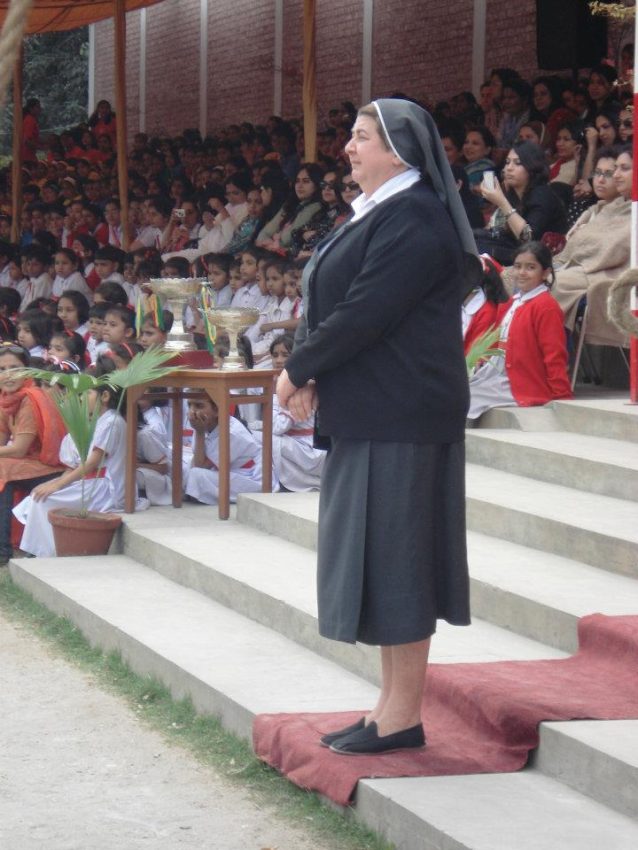
On Friday, 23 October 2026, that chair fell empty. Sister Pilar Vila-San Juan Sagnier, RJM, principal of the Convent of Jesus and Mary from 1997 until her death, was laid to rest by the women she had raised, in a ceremony she had shaped so each could mourn her in her own faith. I was among them. I went to bury my principal. I  left understanding, after years spent studying how education systems sort and separate the young, that we had just lost an education leader, and that Pakistan had not yet noticed.

The distinction is not sentimental. A principal administers a school. An education leader decides who is allowed to walk into it, what they will become there, and what they will owe the world when they leave. Sister Pilar made all three decisions, quietly, from a chair that gave her no mandate beyond a boundary wall. The nation has a name for work like hers. The Decorations Act 1975 reserves the Order of Imtiaz for those “rendering dedicated services with selfless devotion in human rights and public service”. Hold that sentence. We will return to it.

The woman who chose Lahore

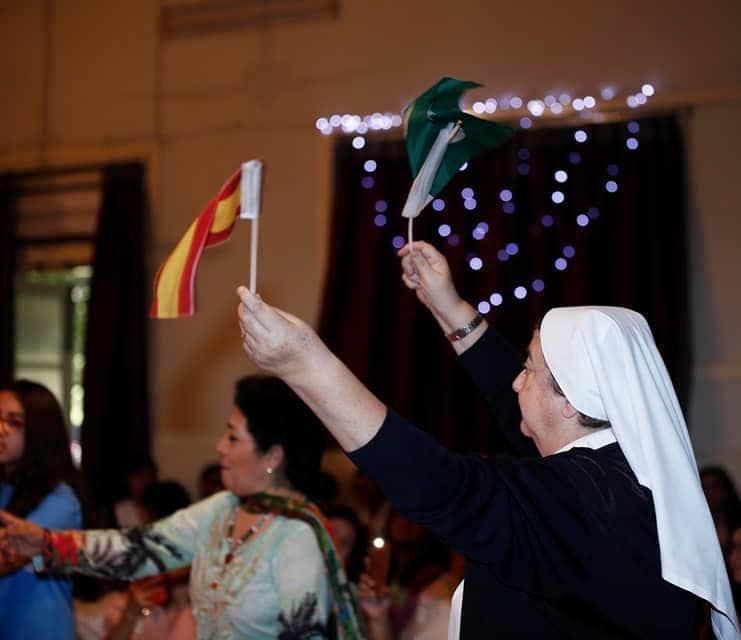
She came from Barcelona and from comfort. I had the privilege of meeting her family in 2015, when she accompanied a group of us to Spain for an exchange summer semester, and I understood then what she had set aside to serve our women. Asked by El País in 2009 what she was doing in Lahore, she said she had fallen in love with Pakistan, and that she had come not to convert anyone but to teach Muslim and Christian children to live alongside one another. She asked the reporter one favour: “do not forget my mother’s surname”. In a country that names its daughters after their fathers, she carried her mother in her own.

She Asked To See Our Dil We Owe Her A Sitara

According to the paper, she was no friend of flattery. When a father tried to bribe her into changing his daughter’s failing grade, she showed him the door. When he raised his hand to her, she told him not to dare treat women in such a manner. That was the temperament she brought to the chair in 1997, and it never softened.

Four strands, one boundary wall

Education policy speaks of equity, inclusive education, interfaith cohesion, and schooling for children from lower socio-economic backgrounds as four separate files, handled by four separate committees. Sister Pilar ran them as one school. The intersection of those four strands is the hardest place in any education system to stand, because each one costs money, status, or comfort, and she stood there for almost 30 years.

Inclusion. In 1999, two years into her tenure, she opened the Thevenet Centre for children with disabilities, named after the French founder of her order. She didn’t build it across town, where the rest of us would never have to look. She built it inside our boundary wall. Children who learn differently shared our grounds, our playing fields, our assemblies and our ordinary days. Long before Article 25-A promised every child between five and sixteen a free and compulsory education, and long before mainstreaming entered Pakistan’s policy vocabulary, she had made it the architecture of the place.

Equity. Sociologists call what elite schools usually do social reproduction. Children arrive with their parents’ economic capital, the school converts it into cultural capital, and hands it back as merit. She interrupted the machine at its most sensitive point. For girls from lower socio-economic backgrounds, she ran a separate section at nominal fees, and waived even those when a household could not pay. Then she did something no fee-waiver policy I have read provides for. She employed their mothers.

Consider what that single decision does. A fee waiver keeps one girl in school for one year. A mother’s wage turns a single-income household into a dual-income one, lowers the opportunity cost that pulls daughters out of classrooms, and changes what a family believes its girls are for. In a country where barely a fifth of women participate in the labour force, every mother she hired was a small, deliberate correction to a national failure. That is not charity. It is a household-level intervention, where educational exclusion begins, and intergenerational mobility is actually made.

Conscience. In the English section where the Cambridge curriculum ran, the privileged weren’t lectured about the poor. We were taught to feel the weight of our own choices. From age six, we learnt that the snack we bought without thinking every week had an opportunity cost, and that it might have been another girl’s textbook, a mother’s medicine, or a term’s fees that had quietly fallen behind. The money we gave up went exactly there. In 2009, when the people of Swat fled into camps, every class was set to carry one displaced family. Curriculum theorists speak of a hidden curriculum, the lessons a school teaches without announcing them. Hers was that privilege arrives with an invoice, and that the invoice is addressed to you.

She Asked To See Our Dil We Owe Her A Sitara

Equality. She also stripped the school of class markers. No air conditioners. One uniform. No status flasks, no private tiffin hierarchies, none of the small conspicuous consumptions by which children learn to rank one another. The girl who arrived in a political family’s convoy and the girl who came by school bus sweated through the same June on the same bench. Inside those red brick walls, you could not tell whose father was who. We were human first and equal second, and the order mattered.

The law has words for each of these. Inclusion of the disabled is a human right. Schooling the poor is public service. Doing both for thirty years without salary or applause is dedicated service with selfless devotion. She did not set out to meet the criteria of a national honour. She simply met them.

Formation, not information

Above the door of her office hung the school’s creed: education is not information but formation. Every week for twelve years, from the age of six to eighteen, we sat through character-building workshops. Today the education sector sells emotional intelligence as a product, and I say that with affection, having built one for a private school last year. At Convent, self-awareness and empathy were not a module. They were the socialisation itself. In an age when AI can produce information on demand, formation is the one thing a school is still uniquely for, and she had been doing it since 1997.

Missionary schools are caricatured as strict, and she was. But her discipline never served obedience. “I do not want to raise hangee hangee girls,” she would tell us, girls, who say yes to everything. “You are not a flock of sheep.” Have a spine. Hold an opinion. Stand alone if the cause is right. Freire called it critical consciousness. She called it an ordinary  Tuesday at Covent.

When she hired teachers for the Thevenet Centre, she read the CV and then asked for the one thing a CV cannot hold. “Show me your dil.” She believed patience with a child who learns differently is a matter of the heart, not the transcript. Remember that line. The state has a scoring sheet for its highest honours, and I have read it. There is no column for dil.

A community of faiths

People called it the Christian school. In truth, it was a community where faiths lived side by side under a leader who treated each one as sacred. Most of us were Muslim. When Bible studies began, the Christian girls moved to another classroom, so Islamiyat kept its room and never felt secondary. In a country where minorities are usually the ones asked to make space, here the minority made space, and the head of that minority insisted on it.

We were taught to honour the differences between our religions and never to dishonour the religion of humanity. That was the spirit in which her own farewell was arranged. By a tradition she had introduced, her Muslim pupils were invited to grieve her in their own way; a milad was held before the sisters proceeded with the rites of their faith. It was a small part of a larger life, and entirely a piece of it: a community that had learnt to pray in different ways yet mourn in one room.

Pakistan has recognised this kind of leadership before. Sister Berchmans Conway, an Irish sister of Sister Pilar’s own order, received the Sitara-i-Quaid-i-Azam in 2012 for her services to education and interfaith harmony. Dr Ruth Pfau, the German nun who fought leprosy, received the Hilal-i-Imtiaz in 1979 and a state funeral in 2017. Our state knows the road to a convent door. It has simply stopped walking towards it.

The women those rooms produced

Look at what such classrooms have given this country. An Irish sister of the same order taught Benazir Bhutto. Asma Jahangir, the first woman to lead the Supreme Court Bar Association, and Maryam Nawaz, Punjab’s first woman Chief Minister, both studied at the Convent of Jesus and Mary, Lahore. They did not always agree, which is precisely the point. A flock of sheep does not produce a Benazir and an Asma in the same generation.

And yet, when the woman who held that chair for twenty-nine years died, sadly, one newspaper and one news channel noticed. She taught selflessness so thoroughly that her country learnt it too, and practised it on her. A nation that lets its most selfless servants pass unrecorded is not honouring their humility. It is simply exploiting it.

The star she never asked for

Under the Decorations Act 1975, the Sitara-i-Imtiaz, the Star of Excellence, may be conferred posthumously. Its criterion, once more: dedicated service with selfless devotion in human rights and public service. Read her life against that sentence, and it stops being a criterion and becomes a citation.

Yet the selection process is not based on any transparent, meritorious criteria. It hangs, rather, on the fancy of a few individuals holding the reins of power. A teacher who served all her life with devotion and dedication could not qualify, but a banquet manager at an eatery outlet may be decorated with a national award for his performance at the wedding ceremonies of senior despot rulers. These decorations are meant to reflect the aspirations of a nation, not of an individual preference.

Sister Pilar, scrutinised from every angle, deserves the highest national award of this country: for having served three decades of her life raising three generations of our women, for setting an example in the care of disabled individuals, for honouring the indigenous culture, and thereby cultivating interfaith and religious harmony, and for choosing that her burial take place, on a Friday, after a milad held by her Muslim pupils.

An invitation

This is not an article that ends in anger. It ends in an invitation. A petition for her nomination is open, and it asks nothing of you that she didn’t ask of us at six years old: to notice what something costs, and who pays the price. If you were raised in a Pakistani classroom, or hope one day to raise a daughter in one, your name belongs on it.

Sitara means star. She spent almost thirty years making them, three generations at a time, and never once asked for one. She asked every teacher she hired to show her their dil.

Pakistan, it is your turn. Show us yours.


The post She asked to see our “Dil”, We owe her a Sitara appeared first on Daily Pakistan English News.

  •  

Fazl accuses govt of 'misusing' Constitution when imposing emergency, governor's rule in KP

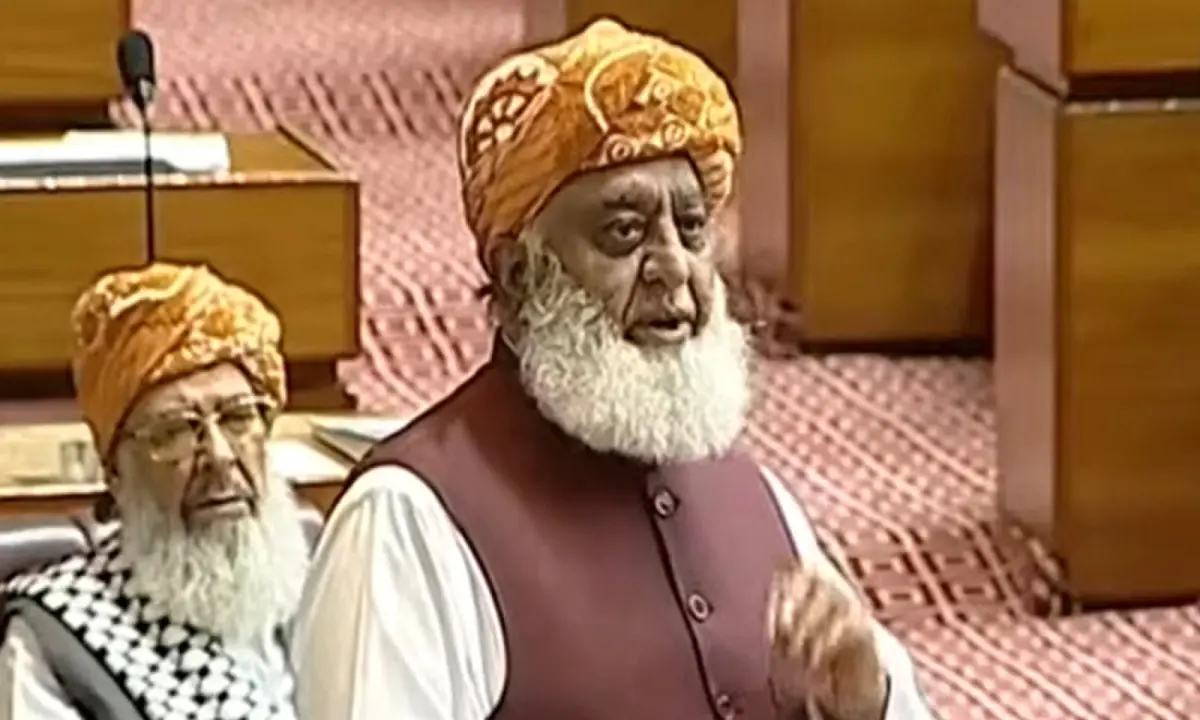
ISLAMABAD: Jamiat Ulema-i-Islam—Fazl (JUI-F) chief Maulana Fazlur Rehman on Wednesday accused the government of misusing the Constitution and resorting to unconstitutional measures in imposing governor’s rule and an emergency in Khyber Pakhtunkhwa.

The Centre imposed governor’s rule and emergency in KP on Oct 11, citing the provincial government’s “deliberate disengagement” from the fight against terrorism. The move had drawn criticism from the opposition, as well as Fazl, who had made efforts to reduce tensions between the federal and the KP governments.

Speaking on the floor of the National Assembly on Wednesday, Fazl noted the Centre’s stance was that it took the measures according to the Constitution.

He alleged, “The government has misused the Constitution […] Here, just as the law is misused, the Constitution was misused.”

The senior politician asserted that by imposing governor’s rule in KP, transfer of power took place “by force”, rather than by public opinion.

“I may have my reservations about the [KP] government, but this is not the way to enact change, by bringing about a revolution and upending everything. You must go to the people for that.”

He also blamed Defence Minister Khawaja Asif for failing to protect the sanctity of the Constitution and the Parliament.

Responding to the JUI-F chief’s accusations, Parliamentary Affairs Minister Dr Tariq Fazal Chaudhary said that governor’s rule in KP was only in place for six months, and the emergency was imposed in only a few districts affected by terrorism.

“You have to be on one side, either remain with the state of Pakistan or be supportive of the Tehreek-i-Taliban Pakistan and Afghanistan,” the minister said.

He noted that the situation in Balochistan was different to that of KP, where he said the chief minister, PTI’s Sohail Afridi, was using provincial resources to march on Islamabad. Chaudhry alleged that Afridi “even defended the terrorists”.

Fazl calls for ‘Charter of Democracy’

While criticising the government in his speech, Fazl called for establishing a new Charter of Democracy to save the country from “unconstitutional” actions and potential violence.

“This Parliament is a representative institution of the people, but the capacity for tolerance has ended and matters are deteriorating,” the veteran politician contended.

Fazl said the simultaneous imposition of governor’s rule and an emergency in KP might be the first instance in history that such provisions were applied but only in certain areas of the province.

“Governor’s rule [is in force] in half of the province, emergency in the other half,” he said, apparently referring to the special emergency measures in 12 districts that are overseen by a council.

Fazl also recalled his efforts to defuse political tensions during the PTI’s long march towards Islamabad and said that the party’s leaders had asked him to play a role in resolving the matter.

He said that after subsequent discussions with senior PML-N and PTI leadership, he held a meeting with Prime Minister Shehbaz Sharif, who asked for the PTI’s long march to be called off.

“The following day, [Deputy Prime Minister and Foreign Minister] Ishaq Dar called me and said that the cabinet was not agreeing to the proposal and that governor’s rule must be imposed in KP,” Fazl recalled.

Narrating the events of Oct 11, Fazl said he received a phone call at around 9:30am wherein he was told that his efforts were being discussed in the cabinet meeting, which later decided to impose emergency and governor’s rule in KP.

“At 10:30am, I received a phone call from Ishaq Dar saying that the cabinet is not agreeing to this. And they are saying that governor’s rule must be imposed there at all costs,” the JUI-F leader said.

“So I said that all the effort made since yesterday was being negated. I was hoping that you brought about a consensus, but the government negated it.”

Maintaining that all of his efforts had been aimed at “preventing bloodshed”, Fazl questioned the government’s ability to maintain law and order, particularly in Balochistan, asking whether the situation there was worse than in KP with the reported kidnapping of commissioners.

“How can the federal government claim that it has succeeded in maintaining law and order?” he asked.

Fazl responds to those ‘doubting his patriotism’

Fazl also said those who doubted his patriotism should know that his party had made significant sacrifices in the fight against terrorism and regretted that its martyrs and contributions were being ridiculed.

Days after the Centre imposed emergency in KP, the JUI-F chief accused it of depriving the provinces of their rights and raised doubts over its reasoning that there was a lack of cooperation by the KP government on counterterrorism.

The next day, following rebuke from several federal ministers, Fazl stressed that his party’s criticism of the government was directed at policies, not institutions, and was intended to bring about corrective action rather than undermine the sacrifices made in the fight against terrorism.

“My party is a party of martyrs. You do not see our martyrs, and our sacrifices are being mocked,” Fazl told the House.

The JUI-F chief said Pakistan belonged to all its citizens and not to any one person, while questioning the government over the debate on mineral resources.

He added that his party was mobilising its political strength to resist what he described as “government encroachments”, insisting that the JUI-F had not violated any limits.

“If the government is prepared for a confrontation, we are also ready to confront it,” he said, reminding the government of times when he stood at the forefront to support efforts to protect the country from political turmoil.

Urging the government to refrain from pursuing a policy of force, he warned, “We are prepared to die. We are prepared to die at your hands, but we are not prepared to die at the hands of history. If you are prepared for a confrontation, we are sitting here ready for it.”

He went on to say that the state was like a mother, “but this mother is not treating all her children fairly”.

The federal government on Oct 11 imposed an emergency and governor’s rule in KP under Articles 232 and 234 of the Constitution following the president’s approval of the recommendations by the federal cabinet.

The move drew criticism from the opposition, including Fazl, as well as Mehmood Khan Achakzai and Raja Nasir Abbas of the Tehreek-i-Tahafuz Ayin-i-Pakistan.

In the days preceding the imposition of governor’s rule in KP, political tensions between the Centre and the opposition — including the PTI which was in power in KP — had remained high since jailed former prime minister Imran Khan’s party announced a protest march to Islamabad to demand his release.

On Oct 16, Interior Minister Mohsin Naqvi said that the “head of a party” was “extremely upset over being denied a role in the new setup in KP and not getting the governorship”, seemingly referring to Fazl.

This politician, Naqvi told journalists in Lahore, had remained “dependent on the establishment for decades to advance his political career”.

The next day, Fazl termed the allegations levelled against him by federal ministers as character assassination.

  •  

Imran Khan’s sister Noreen Niazi hospitalised after Chest Pain as doctors probe ‘Heart Attack’

LAHORE (Javed Iqbal) – Imran Khan’s sister Noreen Niazi has been moved from Lahore jail to Punjab Institute of Cardiology on Wednesday evening, where doctors start investigating possible heart attack after she developed chest pain and difficulty breathing.

Noreen, the wife of Hafeezullah Niazi, was brought to the hospital’s emergency department at 6:51pm under strict police supervision, according to sources. Noreen arrived with rapid heartbeat, elevated blood pressure, chest pain and shortness of breath. Some changes in her ECG prompted doctors to order blood tests to determine whether she had suffered a heart attack.

A heart attack has not yet been confirmed. Doctors said the ECG findings could indicate a cardiac event, but a definitive diagnosis would depend on blood test results, particularly those checking for damage to the heart muscle.

After immediate examination and initial medical care, Noreen was moved to the relevant surgical ward, where she remains under continuous observation and treatment. Sources said she had been experiencing heart discomfort while incarcerated in a Lahore jail. Her worsening condition prompted the transfer to the specialist cardiac hospital.

The hospital also saw heightened security presence following her arrival, with a heavy police contingent and senior officials reaching the premises. Strict security arrangements were put in place around the section where she was being treated, restricting access to her.

Noreen is the sister of Pakistan Tehreek-e-Insaf founding chairman Imran Khan. Doctors are continuing to assess her condition, with the blood test results expected to clarify whether her symptoms and ECG changes were caused by a heart attack.

Imran Khan undergoes Medical Check-Up by PIMS, Shifa Doctors at Adiala

The post Imran Khan’s sister Noreen Niazi hospitalised after Chest Pain as doctors probe ‘Heart Attack’ appeared first on Daily Pakistan English News.

  •  

Pakistan terms Afghan claims regarding Angoor Adda incident 'fabrication of lies'

The Ministry of Information and Broadcasting on Wednesday dismissed a statement by Afghanistan’s defence ministry regarding the firing at Angoor Adda border area, terming it a “fabrication of lies”.

Afghan security forces opened unprovoked fire on Pakistan Army border posts and residential areas in the border area in Lower South Waziristan on Tuesday. The attack, which violated border protocols, claimed the life of one local and injured five, while provoking a swift response from security forces.

Subsequently, the Afghan defence ministry claimed that Pakistani military personnel “without any provocation or justification” launched drones targeting the Angoor Adda bazaar and the commissioner’s office in Paktika province. It claimed that Afghan forces “launched retaliatory strikes against a nearby Pakistani military base and outposts”, alleging that Pakistan was the aggressor.

In response, the ministry’s fact-checking account on X said: “[The] Afghan Taliban regime’s latest fabrication of lies on Angoor Adda border incident again confirms their deceitful character.

“Fact of the matter is that their cowardly forces initiated unprovoked fire and mortar shelling on unarmed civilians on [the] Pakistani side,” the ministry said, adding that the actions were following the “pattern and instructions of their proxy masters India”.

Pakistan’s security forces gave an immediate and effective response, the ministry said, adding that they inflicted heavy casualties as well as material losses on the Afghan side, including the destruction of seven posts.

“Such lies of [the] Taliban regime’s so-called official spokespersons carry no value and are part of a litany of fabricated stories that they keep on telling, mostly to their own people suffering under their imposed and non-representative regime,” the ministry said.

Earlier in the day, Khyber Pakhtunkhwa Governor Faisal Karim Kundi condemned the firing from the Afghan side, asserting that Pakistan would “never tolerate” attacks on its people or violations of its sovereignty.

The governor added that KP had “sacrificed thousands of lives in the fight against terrorism, and we will not allow anyone to threaten our people or undermine our security”.

“Any aggression against Pakistan will be confronted with unwavering resolve. Our armed forces have the full backing of the nation to defend every inch of our soil, and no threat or hostile act will weaken our determination to protect Pakistan,” he warned.

According to officials, the firing originated from posts located inside Afghan territory and targeted Pakistani border posts with small and heavy weapons.

Sources said that Pakistani forces launched an immediate and effective retaliatory action, engaging multiple Afghan Taliban border posts, mortar positions and defensive bunkers with small and heavy arms, including artillery. The “intense and accurate response” forced the Afghan Taliban to abandon their posts and flee.

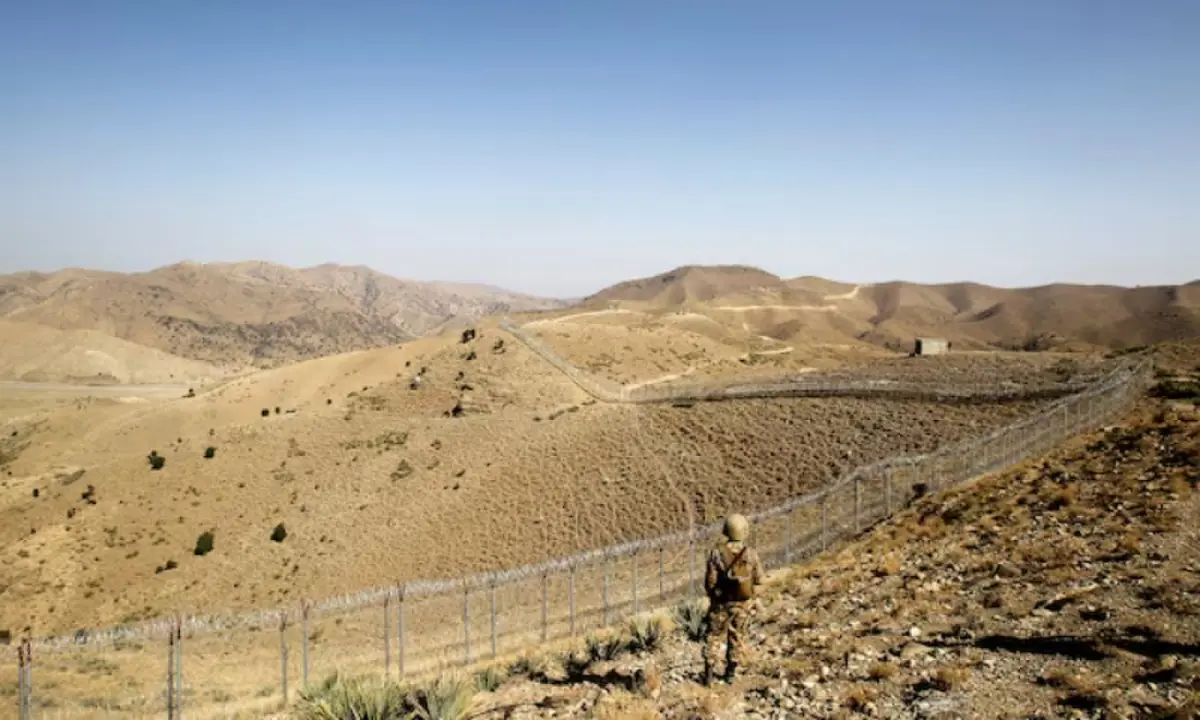
The border at Angoor Adda is one of the most important and sensitive crossings along the Pak-Afghan border, serving as a key trade route and one of the main points of public movement between the two countries.

Border violations from the Afghan side have become a routine matter as ties between the two neighbours have remained strained in the past few years over counterterrorism measures.

Pak-Afghan tensions

Islamabad has repeatedly urged the Taliban administration in Kabul to dismantle terrorist sanctuaries on Afghan soil, particularly those linked to the banned Tehreek-i-Taliban Pakistan, that are used for attacks in Pakistan. Officials say those appeals have gone unheeded.

September witnessed another bout of conflict between Pakistan and Afghanistan.

On Sept 21, in response to recent major terrorist attacks in Khyber Pakhtunkhwa, Pakistan conducted “calibrated” airstrikes in the border region with Afghanistan against terrorist hideouts, with the government saying more than 28 terrorists were killed.

Information Minister Attaullah Tarar described the action as part of Operation Ghazab lil Haq, which was launched on the night of Feb 26 in response to unprovoked cross-border firing by the Afghan Taliban.

Days later, Pakistan shot down eight drones launched from across the border that had entered Pakistani airspace near the Torkham border and Kohat. It was also reported that the Afghan Taliban engaged in unprovoked firing the night before near Kurram as security forces foiled an attempt by terrorists to cross into Pakistan.

In retaliation for the drone incursion, Pakistan conducted “precision aerial and drone strikes” in 10 locations across Afghanistan.

A demarche was also delivered to the Afghan side on Sept 26 on account of the Sept 23 airspace violation by drones, the Foreign Office said.

On Oct 1, Pakistan again carried out “well-planned and calibrated” airstrikes against terrorist hideouts in Afghanistan, the information ministry said, adding that the strikes resulted in the deaths of “multiple terrorists”.

Around mid-October, the state media reported that security forces had again responded to unprovoked firing by Afghan Taliban forces along the Pakistan-Afghanistan border in KP’s Upper Kurram.

It quoted security sources as saying that several personnel of the Afghan Taliban were “reportedly killed during the Pakistan Army’s retaliatory action along the Ghuzgarhi border”. The sources further said that in the Upper Kurram sector, the army targeted the Afghan Taliban’s Topsar post and Shipola base camp with artillery fire, reportedly completely destroying the latter.

The border skirmishes came a day after the Foreign Office said that talks with Afghanistan could not be unconditional, but also rejected suggestions that Islamabad was unwilling to engage with its neighbour and said it would welcome sincere efforts by friendly countries to help resolve the dispute.

  •  

JIT formed on judicial commission’s orders in Mir Raza Ali Khan murder case

KARACHI – The Sindh government has formed a joint investigation team (JIT) on the directions of the judicial commission to probe the murder of young Karachi businessman Mir Raza Ali Khan, and has issued a notification in this regard.

According to the notification, DIG West Irfan Baloch has been appointed convener of the JIT, which will include representatives of the ISI, the Intelligence Bureau (IB), Rangers and the National Cyber Crime Investigation Agency (NCCIA).

The JIT will investigate case No 795/2026 registered at the Ferozabad police station in Karachi. The team has been directed to identify those responsible, prepare its report and submit the charge sheet in the relevant court. The Sindh government has also ordered all relevant institutions to cooperate fully with the JIT.

The team has been directed to collect physical, forensic and digital evidence in the case. During the investigation, records of the deceased’s mobile phone, smartwatch, social media accounts and other accounts will also be examined.

Mir Raza Ali Khan went missing from the Pakistan Employees Cooperative Housing Society (PECHS) on July 28, and his body was found two days later in Gulistan-i-Jauhar. According to available information, he left home in an online taxi at 4:09am.

According to police, the body was found in a severely decomposed condition and he had been shot in the chest. All his social media accounts had also been deactivated a day before the body was found.

Police had approached the telecom company to obtain the deceased’s phone records and had also sought details of people who were in contact with him. The taxi driver who took Mir Raza was also included in the investigation; in his statement, he said he had dropped the deceased at his “kitchen” in Gulistan-i-Jauhar.

According to the deceased’s father, Mir Raza Ali Khan’s nikah was scheduled for August 30 at the Bait-ul-Mukarram mosque in Gulshan-i-Iqbal, and he was very happy about the start of his new life.

The post JIT formed on judicial commission’s orders in Mir Raza Ali Khan murder case appeared first on Daily Pakistan English News.

  •  

Pakistan steps up Fight against Money Laundering in Crypto Market with AMLA

ISLAMABAD – Pakistan’s crypto market is entering new chapter of accountability as Pakistan Virtual Assets Regulatory Authority (PVARA) joins country’s anti-money laundering framework, strengthening oversight of digital asset businesses and efforts to curb illicit money flows.

National Executive Committee on Anti-Money Laundering and Counter-Financing of Terrorism approved adding PVARA to Schedule IV of the Anti-Money Laundering Act (AMLA), strengthening the authority’s role in overseeing cryptocurrency exchanges and other virtual asset service providers.

The decision brings regulatory accountability to a market used by millions of Pakistanis, and it reinforces efforts to establish clearer operating requirements for crypto businesses as the country develops a formal framework for digital finance.

Under the strengthened oversight arrangements, licensed platforms must maintain anti-money laundering programmes, report suspicious transactions and meet applicable Financial Monitoring Unit requirements. Firms that fail to comply can face regulatory action.

For businesses seeking to enter Pakistan’s digital asset market, the development adds another layer of clarity to a sector undergoing rapid regulatory change. Stronger supervision could also help build confidence in licensed platforms and support their integration with the wider financial system.

PVARA’s mandate rests on the Virtual Assets Act, passed by parliament in March 2026, following a presidential ordinance introduced in 2025. The legislation established a dedicated legal framework for licensing and supervising virtual asset businesses, alongside market surveillance provisions.

Chairman Bilal bin Saqib has described the Act as Pakistan’s first dedicated cryptocurrency law. He has also said the regulator has issued No Objection Certificates to several firms as it advances the authorisation process. The authority works alongside the State Bank of Pakistan and the Securities and Exchange Commission of Pakistan. While PVARA leads licensing and supervision within its mandate, the central bank is working on banking arrangements for virtual asset businesses.

Pakistan’s large crypto user base makes the transition particularly significant. Bringing more activity into a supervised environment could improve transparency and give businesses a clearer route into the formal economy.

PVARA operates regulatory sandbox where companies can test services under supervision before pursuing full licences. The initiative provides space for innovation while allowing the regulator to assess emerging products and potential risks.

PVARA Chief calls for UN-Led Push on Global Digital Finance Regulation

Pakistan’s boom in crypto market faces critical test to keep dirty money out of digital finance. Criminals are exploiting weak ID checks and poorly supervised platforms to disguise illicit funds as routine trading. Pakistan’s Financial Monitoring Unit has flagged virtual assets as vulnerable to money laundering and terrorist financing, citing analysis that included domestic suspicious transaction reports.

The scale makes effective oversight essential. Around 40 million Pakistanis hold crypto-linked accounts, PVARA Chairman Bilal bin Saqib told a Senate committee, according to reporting in September 2026. The figure represents an official estimate rather than a verified count of active traders

Stronger safeguards can prevent criminal proceeds from slipping into legitimate trading activity. Verifying customers, monitoring unusual transfers and reporting suspicious transactions give authorities a better chance of detecting abuse while supporting a more accountable crypto market.


The post Pakistan steps up Fight against Money Laundering in Crypto Market with AMLA appeared first on Daily Pakistan English News.

  •  

Four shot dead as gunmen attack vehicles returning from court in Pashin

PASHIN – Four people were killed and four others injured when armed men opened fire on a vehicle near Bostan Link Road, Pashin.

According to police, the deceased were travelling home in two vehicles after appearing in court when armed men opened fire near Bostan Link Road.

Police said the injured include a young child. The bodies and the wounded have been moved to Quetta for the necessary legal formalities.

The post Four shot dead as gunmen attack vehicles returning from court in Pashin appeared first on Daily Pakistan English News.

  •  

World Bank rates progress on KP hydropower, renewable energy project 'moderately unsatisfactory'

ISLAMABAD: The World Bank on Wednesday dubbed the progress on the Khyber Pakhtunkhwa Hydropower and Renewable Energy Development project “moderately unsatisfactory”, with “substantial risk” to its $727 million loan meant for strengthening provincial institutions and increasing renewable energy generation.

In its public disclosure, the Washington-based lending agency rated the progress towards the achievement of project development objectives as “moderately unsatisfactory”. Various segments of the loan were approved in 2020 with a targeted completion date of Nov 30, 2027.

However, the World Bank rated the overall implementation progress as “moderately satisfactory” and described the overall risk rating as “substantial”.

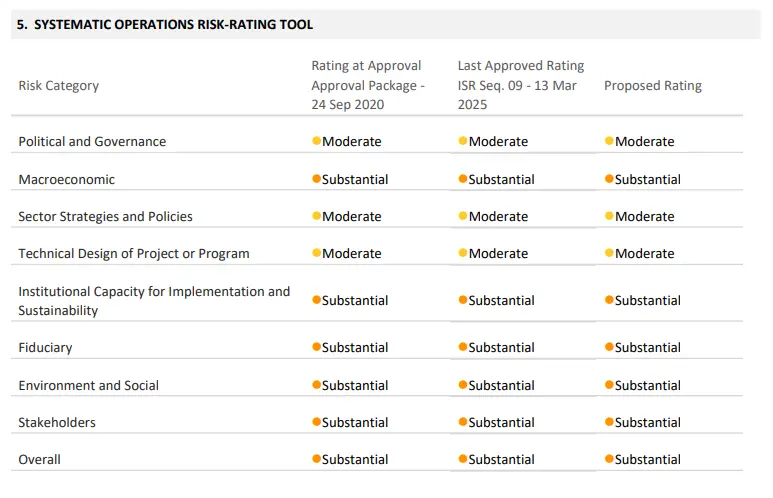
The rating was based on “moderate” risk in the political and governance and technical design categories, but “substantial” risks emanated from macroeconomic, institutional capacity, fiduciary issues and environmental and social parameters.

According to a World Bank document, each dimension is rated on a four-point scale — high, substantial, moderate, or low— depending on the likelihood that the risk will materialise and the expected severity of its impact if it does materialise.

 A screengrab from the World Bank report.
A screengrab from the World Bank report.

The bank said it processed restructuring of the project to align its scope and financing with implementation priorities at the request of the government.

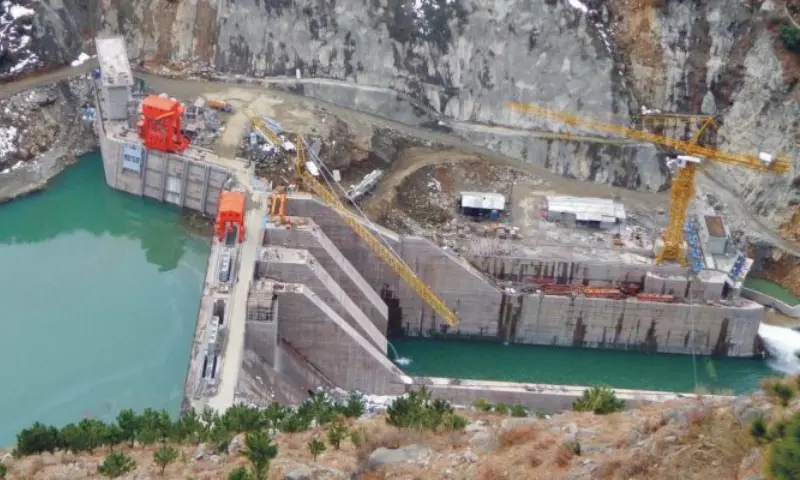
The report stated: “Overall, implementation has gained momentum, with key milestones achieved under the Gabral-Kalam Hydropower Project, including commencement of civil works, progress on land acquisition and advancement of the electro-mechanical works procurement.

“The project will continue to focus on timely implementation, effective contract management, and compliance with applicable environmental and social requirements.”

The original loan package, approved on Sept 24, 2020, involved a $594m investment in hydropower development and renewable energy, $59m in environmental and social management, $55m for institutional strengthening and project implementation support, besides about $15m in financial charges on the bank loan itself.

The market-based bank loan worth $200m became effective in Sept 2020, but only $3.95m has been disbursed so far, accounting for less than two per cent.

The concessional development loan of $240m became effective around the same time and its disbursements amounted to $34m to date, about 14pc of the size.

The KP Hydropower and Renewable Energy Development project was conceived as a transformational programme to help build capacity and institutions for harvesting the vast renewable energy potential in the province.

To achieve the objectives, the project was designed to be implemented through four components: one of them being the development of public sector investments in hydropower and renewable energy projects, including the Gabral-Kalam Hydropower Plant (GKH), an 88-megawatt (MW) run-of-river hydropower project capable of generating 339 gigawatt hours (GWh) annually.

Another component covered cascade development of river basins and financing the construction of 157MW Madyan and other hydropower facilities on the Swat and other river basins.

The total hydropower potential of the Swat River Basin was estimated to be more than 2,000MW for which several projects had been identified and new potential sites were required to be examined.

Additionally, floating or land-based solar photovoltaic systems (a type of solar panel) on hydropower assets were envisioned.

  •  

Pakistan steps up Peace Diplomacy as Middle East faces Fresh Escalation

ISLAMABAD – As attacks on Saudi Arabia and fears of renewed Israeli strikes on Iran deepen Middle East crisis, Pakistan reaffirmed its backing for the Makkah defence alliance, calling it a critical force for lasting regional peace.

Deputy Prime Minister and Foreign Minister Ishaq Dar delivered the message during a meeting with retired Lieutenant General Nauman Mahmood, the alliance’s first secretary-general, as Islamabad continued diplomatic efforts to ease tensions.

Dar highlighted efforts to promote regional and international stability and stressed the alliance’s importance in securing lasting peace. He also congratulated Mahmood on his appointment and wished him success.

Pakistan, Saudi Arabia and Türkiye in August, the Makkah Joint Defence Agreement binds the three countries to a collective security commitment under which an attack on one member is considered an attack on all. The pact took shape amid a widening regional confrontation following US and Israeli attacks on Iran in February. Tehran responded by targeting American military bases and civilian infrastructure across the Gulf.

The crisis has since spread to Saudi Arabia, where attacks by Iran-backed Houthi rebels have heightened concerns over the security of civilian facilities and the risk of further escalation.

Pakistan warned the Houthis against attacking the kingdom and reaffirmed its commitment to protecting Saudi Arabia’s sovereignty and territorial integrity. Islamabad has repeatedly stressed that the agreement is defensive and is not directed against any country.

The meeting comes as Pakistan works with Saudi Arabia, Türkiye, Qatar and other regional partners to advance peace efforts at a time of mounting military and diplomatic uncertainty. On Monday, senior officials from Pakistan, Saudi Arabia and Türkiye met Iranian officials in Tehran to discuss ways to ease the confrontation.

Saudi Defence Minister Prince Khalid bin Salman, Pakistan’s Chief of Defence Forces Field Marshal Asim Munir, Turkish intelligence chief Ibrahim Kalin and Iran’s Supreme National Security Council Secretary Mohsen Rezaei participated in the talks. Meanwhile, negotiations between Washington and Tehran remain stalled, placing renewed attention on Qatar’s mediation efforts.

An earlier report suggested Iran was considering a draft agreement presented by Qatari mediators on Sunday, with a response expected by the end of the week. The proposal was aimed at ending the war involving Iran, the United States and Israel.

However, a subsequent statement attributed to a senior Iranian official challenged that account, describing the suggestions as unacceptable ideas rather than a new peace proposal.

Middle East braces for Military Escalation as US mulls Massive Iran Strikes after November 3


The post Pakistan steps up Peace Diplomacy as Middle East faces Fresh Escalation appeared first on Daily Pakistan English News.

  •  

Karachi board announces Class 9 science group results; pass percentage 69.56pc

KARACHI – The Board of Secondary Education Karachi (BSEK) has announced the results of the annual examinations 2026 for Class 9 (science group, regular).

Board Chairman Prof Mushrraf Ali Rajput said the results can be viewed on the board’s official website, www.bsek.edu.pk, from 5:30pm. He said transparency in results is among the board’s top priorities. The pass percentage this year was 69.56pc, and he congratulated all students who passed.

Controller of Examinations Ahmed Khan Chhutto said 180,054 students had registered in the science group, of whom 177,923 appeared in the examinations. The number of absentees was 2,131.

A total of 123,757 students passed in all papers. In addition, 21,999 students passed in six papers, 11,006 in five papers, 7,431 in four papers, 4,409 in three papers, 3,101 in two papers and 2,439 in one paper. The pass percentage was 69.56pc.

The number of failed candidates was 53,849.

The post Karachi board announces Class 9 science group results; pass percentage 69.56pc appeared first on Daily Pakistan English News.

  •  

Flavio Bolsonaro lands in Miami with his family after Trump offers Brazil exit

Brazilian Senator Flavio Bolsonaro and his family arrived in Miami on Wednesday, where the United States government would grant them entry visas after he refused to comply with a Brazilian Supreme Court order to surrender his passports.

Bolsonaro, who lost last Sunday’s presidential election to leftist incumbent Luiz Inacio Lula da Silva, left Brazil under a shroud of secrecy after the court order, which relates to a money-laundering investigation in which he denies wrongdoing.

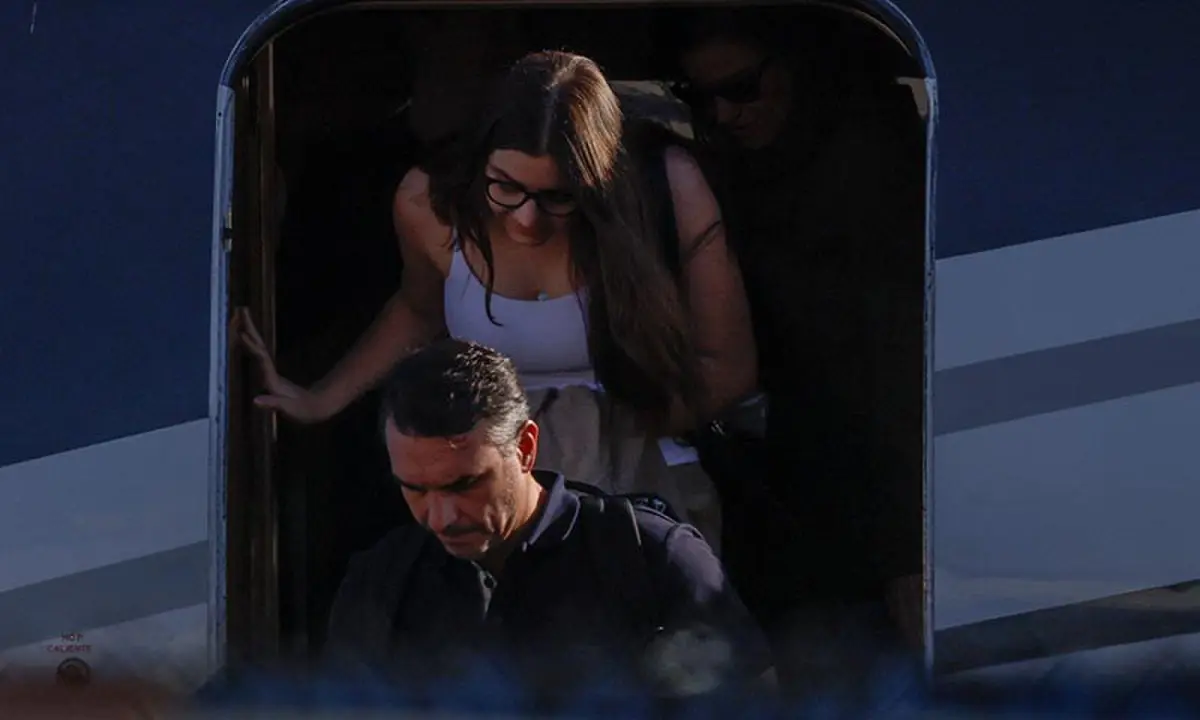
Images showed Bolsonaro, his wife and two daughters disembarking from a Gulfstream G400 and heading into Miami’s Opa-Locka Executive Airport.

Their journey to the United States captured attention across the region. They entered northern Argentina late on Tuesday evening, according to the country’s migration department, and then took a private jet to the Ecuadorean city of Guayaquil. From there, they flew to Miami.

Neither Argentina’s presidency, Ecuadorean ministries nor Baires Fly, the operator of the private jet, responded to requests for comment.

Fresh Brazil-US rift

Bolsonaro’s departure threatens to deepen a rift between the two most populous nations in the Americas.

Lula has accused Washington of colluding with the Bolsonaro family to help return them to power. Ahead of Sunday’s election, Reuters reported on a US State Department campaign to restore the Bolsonaros to office.

Trump told reporters on Wednesday that he would approve of Bolsonaro coming to the United States, after his State Department said it would give them entry visas.

Trump has previously alleged that Flavio’s father, former president Jair Bolsonaro, was a victim of judicial persecution in Brazil.

Jair Bolsonaro also travelled to the United States after refusing to concede defeat to Lula in 2022, during Joe Biden’s presidency. He eventually returned to Brazil but was later sentenced to 27 years in prison for plotting a coup after supporters stormed government buildings in Brasilia.

Flavio Bolsonaro had been widely expected to win Sunday’s election but suffered a shock defeat.

Bolsonaro, who loses his immunity from prosecution when his Senate term ends in February, said on Monday after the order to hand in his passports that he had no plans to flee.

“I have never thought about leaving the country,” he said. “I will hand over my passports and defend myself against this travesty, which is a clear attempt to intimidate me.”

  •  

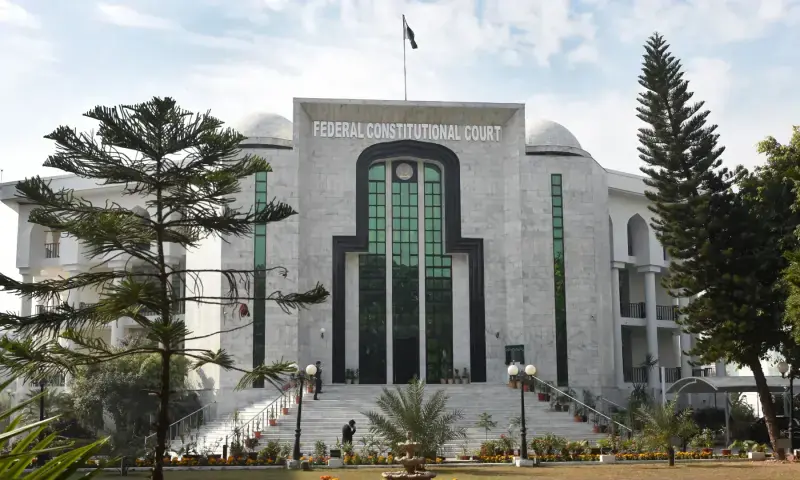
FCC expresses 'serious concern' over course adopted by SC bench over already-decided matter

ISLAMABAD: The Federal Constitutional Court (FCC) on Wednesday regretted the course adopted by a bench of the Supreme Court on an already determined matter by describing the approach as “something that raises serious concerns regarding judicial discipline, legal norms and institutional propriety”.

“The course adopted in the subsequent order, authored by Justice Munib Akhtar, raises serious concerns regarding judicial discipline, legal norms and institutional propriety, particularly when the earlier determination remained operative and was already the subject of review proceedings,” observed FCC Chief Justice Aminuddin Khan in his order.

A two-judge FCC bench, comprising Justice Aminuddin and Justice Ali Baqar Najafi, had taken up dozens of review petitions against a Dec 28, 2021 SC judgment, whereby leave to appeal was refused in a batch of petitions arising out of Sindh High Court’s 2020 order concerning the constitutional validity of the Income Support Levy Act 2013.

The two-judge SC bench had upheld that the Income Support Levy Act, having been enacted through the Finance Act 2013 without observance of the legislative procedure prescribed by the Constitution, did not acquire the status of a valid law.

The bench comprised Justice Aminuddin — who now heads the FCC formed under the 26th Amendment — and Justice Qazi Faez Isa, who went on to become the SC chief justice in 2023. Justice Isa penned the judgment.

Despite the 2021 decision and the pendency of the present review petitions, a subsequent three-judge SC bench, including Justice Akhtar, through its June 21, 2022 order, granted leave on substantially identical constitutional questions and expressly contemplated reconsideration of the earlier determination.

In his judgment, the FCC chief justice also criticised the SC’s subsequent conduct by describing the development as an aspect of institutional significance concerning judicial discipline and consistency of judicial pronouncements.

Justice Aminuddin recalled that the constitutional validity of the Income Support Levy Act had already been examined by the two-judge SC bench in the ‘Commissioner Inland Revenue versus Muhammad Mustafa Gigi’ case in which the appeal was refused.

The FCC top judge went on to express “serious concerns” over the 2022 SC ruling by Justice Akhtar.

“It is a settled principle that coordinate or subsequent benches must accord due regard to earlier judicial determinations and any departure therefrom must conform to the established principles governing judicial precedent and the prescribed institutional procedure,” he stated.

Although refusal of leave does not invariably preclude consideration of a distinct petition, a subsequent grant of leave cannot, by itself, operate to review, modify or displace an earlier determination, ruled the FCC.

Judicial independence must be exercised consistently with judicial discipline, restraint and institutional decorum, the FCC chief justice stressed.

He added that the course adopted in the subsequent proceedings, insofar as it contemplated reconsideration of the 2021 judgment, “without recourse to the appropriate judicial mechanism, was inconsistent with these requirements”.

“We reiterate that adherence to judicial discipline is indispensable to maintaining certainty, consistency and the institutional integrity of judicial adjudication,” Justice Aminuddin observed.

Referring to the present review petitions, he noted that the 2021 SC judgment under review does not suffer from any error apparent on the face of the record or other fundamental defect warranting interference in review jurisdiction.

The constitutional questions raised therein were duly examined and determined, and no sufficient legal ground was established for their reconsideration, Justice Aminuddin observed.

Consequently, the instant review petitions were dismissed, and the Dec 28, 2021 judgment “shall remain undisturbed”.

The FCC order recalled that the principal controversy determined by the 2021 SC ruling concerned the constitutional character of the Income Support Levy introduced through the Finance Act 2013, and whether the legislation imposing such levy could validly be enacted as a Money Bill within the contemplation of Article 73(2) of the Constitution.

Upon consideration of these provisions, it concluded that the levy, notwithstanding its financial implications, did not fall within the constitutional classification of a Money Bill and that its enactment was consequently required to undergo the ordinary legislative procedure involving both Houses of Parliament.

“The distinction between a Money Bill and ordinary legislation is substantive and reflects the constitutional allocation of legislative authority between the two Houses of Parliament,” the FCC noted.

It said that Article 73 (procedure with respect to Money Bill) constituted a “limited exception to the ordinary legislative procedure” prescribed under Article 70 (introduction and passing of bills) and cannot be expanded “merely by characterising a legislative measure as a levy or incorporating it into a Finance Act”.

  •  

Pakistan reverses airspace ban, allows Taiwanese airlines to use its skies

ISLAMABAD – Pakistan has reversed its decision and allowed Taiwanese flights to use its airspace, after fully closing it to Taiwan’s airlines in line with China’s “One China” policy.

According to Bloomberg, Pakistan’s Civil Aviation Authority has permitted Taiwanese carriers EVA Air Corporation and China Airlines Limited to use Pakistani airspace from October 28 to March 27.

Earlier, Defence Minister Khawaja Asif told Bloomberg News: “Our aviation division is following the ‘One China’ policy, under which only mainland China is permitted. We have only allowed Chinese airlines to fly over Pakistan.”

According to Flightradar24 tracking data, Taiwan’s leading carriers China Airlines Limited and EVA Air Corporation began changing their routes last weekend, and both stopped using Pakistani airspace entirely from the morning of October 25.

Since Sunday, at least a dozen of their flights between Asia and Europe have flown over Russia.

Taiwan’s civil aviation authority did not comment on the rerouting, but said it has never barred its airlines from flying over Russia.

Although Russia never formally banned Taiwanese airlines, they had, like most Asian, European and North American carriers, generally avoided Russian airspace since the Ukraine war.

Bloomberg said Pakistan’s latest restrictions were stricter than mainland China’s own policy, as China allows Taiwanese airlines to use its airspace.

Taiwanese airlines had relied heavily on Pakistani airspace for their flights between Asia and Europe. Data shows 14 flights by the two airlines crossed Pakistan on October 24.

Rerouting via South Asia, the Middle East or Russia has added several hours to flight times. The longer routes and extra distance will significantly raise jet fuel costs, dealing a heavy financial blow to Taiwanese airlines.

The post Pakistan reverses airspace ban, allows Taiwanese airlines to use its skies appeared first on Daily Pakistan English News.

  •  

At least 64 killed as two high-speed trains collide in Spain

At least 64 people have been killed in a collision between two high-speed trains in the Spanish region of Úrda (as written in the source), while the rescue operation continues and more deaths are feared. It is the second deadly rail accident in Spain this year.

After the crash, passengers were pulled from the trains and moved to safety. Some passengers, bloodied and injured, made their way to the roadside, while volunteers provided water to the victims.

Hundreds of ambulances, helicopters and vehicles for transporting bodies are present at the site. Several train carriages derailed and fell down a slope, with debris and twisted metal scattered all around.

Miguel, a passenger on one of the trains involved, told a radio station that he suddenly felt a loud noise and a violent jolt lasting about 10 seconds. He said a wrecked train was visible from the right-side window of his train.

According to one account, a train of the private consortium Iryo had stopped near Toledo on the instructions of infrastructure manager Adif because of a signalling fault. A Renfe train then crashed at high speed into the stationary train, derailing several carriages of both trains.

Renfe said in a statement that its train hit Iryo’s stationary train after it had been given permission to proceed. The company said the reasons for the Iryo train’s stopping were not known.

Renfe said the actual causes of the crash, the state of train movements and the circumstances of the collision would be determined after an investigation. Iryo and Adif did not immediately respond.

The post At least 64 killed as two high-speed trains collide in Spain appeared first on Daily Pakistan English News.

  •  
❌