
❌

Reading view

Russian police shoot 17-year-old suspected of setting two patrol cars on fire in Yekaterinburg

A police officer in Yekaterinburg shot a 17-year-old while detaining him on suspicion of setting fire to police vehicles, the Interior Ministry’s Sverdlovsk regional directorate told Vecherniye Vedomosti.

Two police vehicles caught fire on the grounds of Police Station No. 3 overnight on October 15. The teenager was found at the scene. An officer used his service weapon while detaining him, acting “in accordance with the law,” the Interior Ministry said. The teenager was grazed and was not taken to a hospital.

The Investigative Committee said it had opened a criminal investigation into the teenager on suspicion of sabotage. Investigators allege that he set the vehicles on fire “on instructions from handlers” with whom he had been exchanging messages online.

The teenager’s first name is Anatoly. He is a first-year student at a vocational college, training to become a computer operator, and had recently been working part-time as a courier for a cafe. Police had previously placed him under the supervision of juvenile officers for smoking at school.

Police are also looking into whether the teenager was manipulated by scammers.

At least 240 teenagers in Russia have been detained on terrorism or sabotage charges since the start of the war, according to Mediazona’s May 2026 tally. In most cases — 205 — the suspects said they had been looking for an easy way to earn some extra money. Six teenagers committed arson after being manipulated by scammers, while five said they opposed the war. In the remaining cases, the motive was unclear.

More from Meduza

At Meduza, we are committed to transparency about our use of artificial intelligence in the newsroom. The story you’re reading was written by one of our living, breathing journalists and translated from Russian using an AI model configured to follow our strict editorial standards. This translation process is the result of extensive testing and refinements to ensure our English-language coverage is timely and accurate. A Meduza editor reviews every draft before publication.

If you find any errors in this translation, please contact us at reports@meduza.io.

To read Meduza’s exclusive content in English, please subscribe to our newsletter.
  •  

St. Petersburg bars migrant workers with ‘labor patents’ from jobs in stores, salons, and gyms. Citizens of Belarus, Kazakhstan, Armenia and Kyrgyzstan are exempt.

St. Petersburg authorities have barred foreign nationals with labor patents, a type of work authorization, from jobs in health care, hairstyling, beauty services, retail, and sports and fitness services. The ban will remain in effect through the end of 2026.

City authorities said the restrictions are needed to “combat off-the-books employment.” The ban does not apply to citizens of Eurasian Economic Union member states (Belarus, Kazakhstan, Armenia, and Kyrgyzstan) or to foreign nationals holding work permits rather than labor patents.

City authorities introduced a similar ban for taxi drivers and couriers last year. Those restrictions were extended through 2026.

Russian authorities began tightening migration policy after the March 2024 terrorist attack at Crocus City Hall outside Moscow. Among other measures, they made it harder to obtain Russian residence permits through a fast-track process based on marriage, approved new rules for expelling migrants, and banned schools from admitting migrant children who lack Russian-language proficiency.

From Meduza’s archives

At Meduza, we are committed to transparency about our use of artificial intelligence in the newsroom. The story you’re reading was written by one of our living, breathing journalists and translated from Russian using an AI model configured to follow our strict editorial standards. This translation process is the result of extensive testing and refinements to ensure our English-language coverage is timely and accurate. A Meduza editor reviews every draft before publication.

If you find any errors in this translation, please contact us at reports@meduza.io.

To read Meduza’s exclusive content in English, please subscribe to our newsletter.
  •  

Low wages are driving firefighters away from Russia’s Emergencies Ministry. Lawmakers have backed a bill to fill the vacancies with conscripts.

Russia’s State Duma has passed a bill in its first reading that would allow conscripts to serve in military units of the Emergencies Ministry’s Federal Fire Service.

An explanatory note accompanying the bill says it would help reduce the service’s “existing staffing shortage.”

The service’s military units are currently deployed only in closed and federal territories and at high-priority and high-security facilities. The bill would expand their area of responsibility in light of the “global geopolitical situation” and “potential threats from unfriendly countries,” as well as to “protect citizens and economic assets,” including “in armed conflict zones.”

Parlamentskaya Gazeta reported that the bill would authorize these units to fight fires and conduct rescue operations in ordinary towns and villages and at civilian facilities.

However, the newspaper said the bill would bar conscripts serving in firefighting units from being sent to the “special military operation” zone or to regions where a counterterrorism operation regime is in effect.

Emergencies Minister Alexander Kurenkov first spoke in February about plans to assign conscripts to serve as firefighters. The ministry hopes this will address problems caused by an “exodus of personnel” due to low pay.

The Interior Ministry and the Federal Penitentiary Service have also reported staffing shortages. iStories reported that these shortages have worsened during the Russia–Ukraine war. People who previously would have joined these agencies are now signing contracts with the Defense Ministry because fighting in the war pays more.

Ukraine strikes targets not only on the front lines and in nearby regions but across Russia. Drones attack oil facilities, warehouses, and data centers across Russia. The strikes often cause major fires.

More from Meduza

At Meduza, we are committed to transparency about our use of artificial intelligence in the newsroom. The story you’re reading was written by one of our living, breathing journalists and translated from Russian using an AI model configured to follow our strict editorial standards. This translation process is the result of extensive testing and refinements to ensure our English-language coverage is timely and accurate. A Meduza editor reviews every draft before publication.

If you find any errors in this translation, please contact us at reports@meduza.io.

To read Meduza’s exclusive content in English, please subscribe to our newsletter.
  •  

Kazakh court orders two months of pretrial detention for Russian rapper Navai in drug smuggling case

A court in Kazakhstan has ordered rapper Navai held in pretrial detention for two months in a drug smuggling case, Baza reported. The Korday District Court issued the order against Navai Bakirov on October 15.

Bakirov was detained at a checkpoint on October 14 after drugs were found in his car as he entered Kazakhstan from Kyrgyzstan. Baza reported that officers found 10 grams (about 0.35 ounces) of marijuana, while other sources put the amount at 2.5 grams (about 0.09 ounces) of drugs.

According to Baza, the rapper admitted during questioning that he had bought the drugs in Bishkek.

He was traveling to Kazakhstan to perform at a concert in Astana on October 14.

Kyrgyzstan’s State Border Service has launched an internal inquiry after Navai was detained with drugs following his border crossing, TASS reported. The inquiry aims “to establish all the circumstances surrounding his border screening.” The border service said that if it finds any violations, it will take “appropriate action in accordance with the law” against those responsible.

Navai Bakirov is best known as a member of HammAli & Navai, a hookah rap duo active from 2016 to 2025. After the duo split up, Bakirov launched a solo career.

More from Meduza

At Meduza, we are committed to transparency about our use of artificial intelligence in the newsroom. The story you’re reading was written by one of our living, breathing journalists and translated from Russian using an AI model configured to follow our strict editorial standards. This translation process is the result of extensive testing and refinements to ensure our English-language coverage is timely and accurate. A Meduza editor reviews every draft before publication.

If you find any errors in this translation, please contact us at reports@meduza.io.

To read Meduza’s exclusive content in English, please subscribe to our newsletter.
  •  

‘They started it. We’re responding.’ Putin warns Ukraine over strikes on energy facilities, warehouses, and data centers

Russian authorities did not anticipate Ukrainian strikes on warehouses belonging to the online marketplaces Wildberries and Ozon, Vladimir Putin said at a congress of the business association Business Russia.

“I’m aware of the problems you mentioned — unfortunately, our platforms, Wildberries and Ozon, have come under enemy attack. By the way, they keep taking steps that, frankly, we probably should have anticipated, but we thought those things wouldn’t occur to them. They did,” Putin said in response to Wildberries founder Tatyana Kim, who mentioned Ukrainian strikes on the company’s warehouses.

Putin said that once Russia “starts responding” to such strikes, Ukraine turns “to its sponsors to ask them to put pressure on us and stop us.” He said the same thing happened with energy facilities and called Ukraine’s latest strikes on Russian oil refineries “insignificant.”

Russia has already begun responding to these attacks, Putin said: “They made the first move. We started responding. Now they’re squealing in the same way about energy facilities, too, and about other sites, including data centers and so on. They started it. They shouldn’t have started it.”

This was Putin’s first comment on strikes on data centers, the news outlet Agentstvo reported. The context, however, leaves it unclear whether he meant Ukrainian strikes on Yandex and Sber data centers or similar Russian attacks.

In September, Russia attacked several Ukrainian data centers, and the Russian Defense Ministry threatened Kyiv with a “digital detox.” On October 10, after Ukrainian forces had begun attacking Yandex, Russia struck a data center belonging to the Ukrainian provider Tenet in Odesa and UkrSibbank’s “ATM” facility in Kyiv.

On October 13, presidential spokesman Dmitry Peskov said the government was discussing the attacks on Russian data centers. The following day, Putin held a meeting on cybersecurity.

During the public portion of the meeting, Putin said he expected participants to put forward proposals “that will improve digital security.” He said cyberthreats were reaching a new level “against a backdrop of direct and hybrid aggression from abroad.” He did not mention the strikes on data centers.

Read more

At Meduza, we are committed to transparency about our use of artificial intelligence in the newsroom. The story you’re reading was written by one of our living, breathing journalists and translated from Russian using an AI model configured to follow our strict editorial standards. This translation process is the result of extensive testing and refinements to ensure our English-language coverage is timely and accurate. A Meduza editor reviews every draft before publication.

If you find any errors in this translation, please contact us at reports@meduza.io.

To read Meduza’s exclusive content in English, please subscribe to our newsletter.
  •  

Getting into a Russian university could soon come with a new financial hurdle for some students: paying a full semester’s tuition upfront

Russia’s Ministry of Science and Higher Education has proposed requiring tuition-paying university students to pay for their first semester before enrolling, according to a draft ministry order.

Under the draft, applicants would have to sign an enrollment contract and pay for at least one semester to enroll as tuition-paying students.

The ministry’s press office previously said the initiative was “aimed at addressing the problem of ‘phantom’ competition for places.” Applicants can currently sign contracts with several universities at once, “reserving several places for tuition-paying students during admissions and making them unavailable to other applicants.”

“Advance payment will commit applicants to their choice and make the admissions process for tuition-paying students clearer and fairer for everyone involved,” the ministry said.

The proposed rules would take effect on March 1, 2027.

The ministry has also proposed barring expelled students from reenrolling at the same university for five years. The restriction would apply to students expelled “as a disciplinary penalty.”

Related reading

At Meduza, we are committed to transparency about our use of artificial intelligence in the newsroom. The story you’re reading was written by one of our living, breathing journalists and translated from Russian using an AI model configured to follow our strict editorial standards. This translation process is the result of extensive testing and refinements to ensure our English-language coverage is timely and accurate. A Meduza editor reviews every draft before publication.

If you find any errors in this translation, please contact us at reports@meduza.io.

To read Meduza’s exclusive content in English, please subscribe to our newsletter.

  •  

Two tankers catch fire off Romania’s coast amid a wave of deadly drone attacks on Black Sea shipping. More than half a dozen sailors are missing.

Rescuers are searching for seven sailors missing after a fire aboard a tanker in Romania’s territorial waters in the Black Sea, Reuters reported.

The San Marino-flagged Wine Trader sent a distress signal at about 7 a.m. on October 15. Of the 12 people aboard, four were rescued and seven remain missing.

That same night, another vessel, the Comoros-flagged chemical tanker Yara J, caught fire in the Black Sea. No one was injured, and the crew managed to put out the fire on its own.

Both ships were anchored off Romania’s coast when the fires broke out, Reuters reported. Local authorities, however, have not yet linked the fires to a Russian drone attack.

At least five other cargo ships have come under drone attack off the coasts of Romania and Bulgaria over the past 10 days, according to Reuters. All those attacks took place outside NATO territorial waters and killed 23 sailors.

At Meduza, we are committed to transparency about our use of artificial intelligence in the newsroom. The story you’re reading was written by one of our living, breathing journalists and translated from Russian using an AI model configured to follow our strict editorial standards. This translation process is the result of extensive testing and refinements to ensure our English-language coverage is timely and accurate. A Meduza editor reviews every draft before publication.

If you find any errors in this translation, please contact us at reports@meduza.io.

To read Meduza’s exclusive content in English, please subscribe to our newsletter.

  •  

How far will Ukraine go to disrupt Russian air travel? Zelensky has yet to approve a more aggressive plan involving AI-guided drones, The Atlantic reports.

Ukraine’s campaign to paralyze airport operations in Russia is “only just getting started,” sources told The Atlantic’s Simon Shuster.

Shuster first reported on plans for the operation, code-named M&M’s, in late August. On September 1, Ukrainian President Volodymyr Zelensky said Russia’s skies were “becoming extremely dangerous” because “there will simply be drones in Russia’s skies on a scale that has to be taken into account.”

Shuster’s sources now say Ukraine has been trying in recent weeks to disrupt air traffic around Russian airports with long-range drones. But Zelensky has yet to approve the original plan, which called for much more aggressive tactics.

A larger-scale version of the campaign would use AI-guided drones capable of evading Russian air defenses. Mass production of these drones is expected to begin soon, one source told The Atlantic.

The Atlantic reported in August that Mykhailo Fedorov, who was defense minister when the original plan was drawn up, actively pushed for it. Work on the plan was reportedly suspended after his dismissal in July.

Moscow’s airports began suspending operations more frequently in October. During the first 14 days of the month, the four airports were closed for a combined 101 hours, according to calculations by Agentstvo, compared with just 46 hours in all of September. Overnight into October 14, all of Moscow’s airports were closed for a record seven consecutive hours.

At Meduza, we are committed to transparency about our use of artificial intelligence in the newsroom. The story you’re reading was written by one of our living, breathing journalists and translated from Russian using an AI model configured to follow our strict editorial standards. This translation process is the result of extensive testing and refinements to ensure our English-language coverage is timely and accurate. A Meduza editor reviews every draft before publication.

If you find any errors in this translation, please contact us at reports@meduza.io.

To read Meduza’s exclusive content in English, please subscribe to our newsletter.

  •  

Kyiv has run out of missiles for its Patriot air defense systems, CNN reports

Ukraine has run out of missiles for its U.S.-made Patriot air defense systems, CNN reported, citing a source familiar with the situation.

The source said Ukrainian forces intercepted almost none of the missiles in the latest ballistic missile attack overnight into October 14 “due to lack of the (interceptor) missiles.”

Russian ballistic missiles hit three power plants in Kyiv and energy infrastructure in Kharkiv during the attack.

Ukrainian President Volodymyr Zelensky has been warning for months that a shortage of Patriot missiles undermines the country’s ability to defend itself, especially ahead of an expected increase in attacks on energy infrastructure this winter. In August, Zelensky said he was making “millions” of phone calls to secure supplies and that Ukraine had only a tenth of the interceptor stockpile it needed.

On October 15, Zelensky said Ukraine would resume strikes on Russian oil refineries because Moscow had continued its attacks during the three days Kyiv refrained from attacks at the request of the United States. He suggested he could soften his position in exchange for additional Patriot missiles.

Read more

At Meduza, we are committed to transparency about our use of artificial intelligence in the newsroom. The story you’re reading was written by one of our living, breathing journalists and translated from Russian using an AI model configured to follow our strict editorial standards. This translation process is the result of extensive testing and refinements to ensure our English-language coverage is timely and accurate. A Meduza editor reviews every draft before publication.

If you find any errors in this translation, please contact us at reports@meduza.io.

To read Meduza’s exclusive content in English, please subscribe to our newsletter.

  •  

Japan denies spying in Russia, says it can’t contact detained journalist

Japanese Prime Minister Sanae Takaichi said Japanese authorities do not engage in espionage in Russia, responding to the detention of Hokkaido Shimbun correspondent Yuki Imai in Yuzhno-Sakhalinsk.

“Nothing of the sort happened. Right now, protecting Japanese citizens is extremely important, and that is where we intend to focus our efforts,” Takaichi said, as quoted by The Japan Times.

She said Japanese authorities do not yet know exactly what Russia’s Federal Security Service (FSB) is accusing the journalist of.

“Every country has different laws, so we don’t yet know the details of what they are calling the charges. Nevertheless, Japan will firmly state its position,” the prime minister said.

Chief Cabinet Secretary Minoru Kihara said the Japanese government had not yet been able to contact Imai but was working to arrange a meeting with him “as soon as possible.”

On October 13, the FSB said it had detained Japanese journalist Yuki Imai in Yuzhno-Sakhalinsk. The agency alleged that, at the direction of Japanese intelligence, he had gathered data on the number of Kuril Islands residents who had been mobilized or had volunteered to fight in the war in Ukraine. After his detention, the Japanese Foreign Ministry summoned Russia’s ambassador to Japan, Nikolai Nozdrev.

Imai had recently published reports on State Duma elections and the unveiling of a monument in Khabarovsk commemorating the Soviet Union’s victory over Japan. He had also written about strengthening ties between Russia and North Korea. On his most recent trip, he visited Primorsky Krai, with stops in Vladivostok and Nakhodka and a visit to a children’s arts center there. He interviewed Russian-speaking residents of Japan and reported on life in the Russian Far East, the Soviet-Japanese War, and friendship between Russia and Japan.

Read more

At Meduza, we are committed to transparency about our use of artificial intelligence in the newsroom. The story you’re reading was written by one of our living, breathing journalists and translated from Russian using an AI model configured to follow our strict editorial standards. This translation process is the result of extensive testing and refinements to ensure our English-language coverage is timely and accurate. A Meduza editor reviews every draft before publication.

If you find any errors in this translation, please contact us at reports@meduza.io.

To read Meduza’s exclusive content in English, please subscribe to our newsletter.

  •  

Russian court fines former parliamentary candidate over T-shirt bearing Alexey Navalny’s ‘party of crooks and thieves’ slogan against ruling United Russia

The Sverdlovsky District Court in Kostroma fined Andrey Tarasov, a former State Duma candidate for the Yabloko Party, 1,000 rubles for “displaying extremist symbols” under Article 20.3, Part 1, of Russia’s Code of Administrative Offenses.

Tarasov said on his VKontakte page that he was cited for an administrative offense over a photo of him wearing a T-shirt with the slogan “I’m against the party of crooks and thieves” and a drawing of a person kicking a bear.

An expert assessment commissioned for the proceedings says that “Alexey Navalny is considered the creator of the ‘party of crooks and thieves’ meme” and that the slogan was later used “in the context of the Anti-Corruption Foundation’s (FBK) activities.” Tarasov published excerpts of the assessment.

By calling United Russia the party of crooks, “the FBK was not simply criticizing it — it was delegitimizing the ruling party in voters’ eyes,” said the expert enlisted by the Interior Ministry. She said the slogan on the T-shirt “identifies the person wearing it as an opposition supporter.”

Tarasov plans to appeal the court’s ruling.

Ahead of the September elections, Sergey Shpotin, secretary of the Communist Party’s Kostroma regional committee, complained on his Telegram channel about Tarasov’s T-shirt with the slogan “I’m against the party of crooks and thieves.” He said: “Rank-and-file Communist Party members get dragged into court, fined, have their doors broken down, and face persecution for telling the truth about the ‘party of crooks and thieves.’ But this ‘new liberal’ gets away with absolutely everything!”

Tarasov previously headed the regional Communist Party branch’s public liaison office and ran several times as its candidate for a single-member district seat in the regional legislature. But in 2026, he had a public falling-out with his Communist Party colleagues. He went on to run for Yabloko in that year’s parliamentary elections, finishing third in his single-member district.

In the summer of 2021, the Moscow City Court declared the FBK an “extremist organization.” Authorities regularly open criminal investigations over donations to the FBK, and defendants in these cases receive lengthy prison sentences.

Further reading

At Meduza, we are committed to transparency about our use of artificial intelligence in the newsroom. The story you’re reading was written by one of our living, breathing journalists and translated from Russian using an AI model configured to follow our strict editorial standards. This translation process is the result of extensive testing and refinements to ensure our English-language coverage is timely and accurate. A Meduza editor reviews every draft before publication.

If you find any errors in this translation, please contact us at reports@meduza.io.

To read Meduza’s exclusive content in English, please subscribe to our newsletter.

  •  

Russia adds journalist Alexander Nevzorov to federal register of ‘terrorists and extremists’

Rosfinmonitoring, Russia’s financial monitoring agency, has added journalist and commentator Alexander Nevzorov to its list of “terrorists and extremists.”

Nevzorov left Russia shortly after Russia’s full-scale invasion of Ukraine began. In 2022, Russian authorities designated him a “foreign agent.” In 2023, a Moscow court sentenced him in absentia to eight years in prison on charges of spreading “fake news” about the military.

A Russian court also declared Nevzorov and his wife, Lydia, an “extremist association.” They were added to the terrorist and extremist registry as an association. In spring 2025, authorities opened a criminal investigation into the couple for allegedly financing extremism by collecting donations for themselves.

Read more

At Meduza, we are committed to transparency about our use of artificial intelligence in the newsroom. The story you’re reading was written by one of our living, breathing journalists and translated from Russian using an AI model configured to follow our strict editorial standards. This translation process is the result of extensive testing and refinements to ensure our English-language coverage is timely and accurate. A Meduza editor reviews every draft before publication.

If you find any errors in this translation, please contact us at reports@meduza.io.

To read Meduza’s exclusive content in English, please subscribe to our newsletter.

  •  

Russian prosecutors withdraw asset-seizure lawsuit against Timur Turlov, the new president of the International Chess Federation

Russia’s Prosecutor General’s Office has dropped its lawsuit seeking to seize the assets of International Chess Federation (FIDE) President Timur Turlov for the Russian state.

Deputy Prosecutor General Igor Tkachev filed a motion to withdraw the lawsuit with Moscow’s Tverskoy District Court, which was hearing the case.

The Prosecutor General’s Office filed the lawsuit in early October against Turlov, a Kazakhstani businessman, and Freedom Finance, the holding company he founded. Sources cited by Kommersant linked the lawsuit to Turlov’s donations to humanitarian projects in Ukraine.

The lawsuit was filed shortly after Turlov was elected president of FIDE. He succeeded former Russian Deputy Prime Minister Arkady Dvorkovich, who had been placed under EU sanctions.

From Meduza’s archives

At Meduza, we are committed to transparency about our use of artificial intelligence in the newsroom. The story you’re reading was written by one of our living, breathing journalists and translated from Russian using an AI model configured to follow our strict editorial standards. This translation process is the result of extensive testing and refinements to ensure our English-language coverage is timely and accurate. A Meduza editor reviews every draft before publication.

If you find any errors in this translation, please contact us at reports@meduza.io.

To read Meduza’s exclusive content in English, please subscribe to our newsletter.

  •  

Germany expels 21-year-old Russian citizen of Yazidi descent who narrowly avoided deportation to Russia, where activists say he risked conscription

German authorities have expelled a 21-year-old Russian citizen of Yazidi origin, the local outlet ND reported, citing human rights advocates. He had faced deportation to Russia but was ultimately allowed to leave voluntarily for Armenia.

ND identified the young man as Artur. He had lived with his family in Bielefeld, in the state of North Rhine-Westphalia, since he was 10. Artur planned to begin vocational training in the summer of 2026 and applied for a residence permit on that basis. Before he could sign a training contract, immigration authorities unexpectedly ordered him to leave for Russia.

On October 8, Artur was detained pending deportation to Russia. But human rights advocates who tried to stop his deportation said he does not speak Russian and would face military conscription there.

Authorities ultimately allowed Artur to leave Germany voluntarily for Armenia on condition that he depart that same day.

Artem Klyga, head of the legal department at the Conscientious Objectors’ Movement, told the outlet Ekho that people at risk of being sent to war by Russia currently have very little chance of obtaining protection in European countries.

Related reading

At Meduza, we are committed to transparency about our use of artificial intelligence in the newsroom. The story you’re reading was written by one of our living, breathing journalists and translated from Russian using an AI model configured to follow our strict editorial standards. This translation process is the result of extensive testing and refinements to ensure our English-language coverage is timely and accurate. A Meduza editor reviews every draft before publication.

If you find any errors in this translation, please contact us at reports@meduza.io.

To read Meduza’s exclusive content in English, please subscribe to our newsletter.

  •  

‘We’re done,’ Zelensky says, as Ukraine resumes strikes on Russian oil refineries. The Kremlin claims the attacks never stopped.

Aftermath of a Russian strike on Kyiv. October 14, 2026

Ukraine is resuming strikes on Russian oil refineries, Ukrainian President Volodymyr Zelensky announced.

Zelensky said Ukraine had held off on striking Russian oil refineries for three days at the request of U.S. President Donald Trump.

Russia, meanwhile, had not honored the so-called energy ceasefire, Zelensky said, continuing to strike Ukraine’s energy infrastructure and killing about 100 civilians over the past week.

“The block [on attacking refineries] is out. We’re done,” the Ukrainian president said in an interview with the Financial Times published Thursday morning, October 15.

The first strike by Ukraine’s military after the pause appears to have hit the Ryazan oil refinery. The plant, owned by Rosneft, is one of the key fuel suppliers for Moscow and the Moscow region.

Ryazan Governor Pavel Malkov announced the morning of October 15 that classes had been canceled in 14 schools and 25 kindergartens in Ryazan because of “a mass drone attack on the region.” The Ukrainian monitoring channel Exilenova+ published a photo early that morning showing a flare over the Ryazan oil refinery, suggesting it was linked to the drone attack.

Authorities in the Ryazan region confirmed the strikes, saying a fire had broken out at the refinery. Malkov also said that “a warehouse and vehicles on the grounds of another enterprise in Ryazan” had been damaged. He declined to give further details, adding that the damage was being assessed.

Russia’s Defense Ministry said Ukraine’s military attacked the Ryazan oil refinery with 69 drones and four Flamingo cruise missiles. The Russian military said it had shot down the drones and missiles, but added that “a fire broke out at the refinery as a result of falling drone debris.”

Russian Deputy Prime Minister Alexander Novak said Wednesday afternoon, October 14, that Ukrainian forces had struck two oil refineries, one in the Saratov region and one in the Ryazan region. “We see that the Ukrainian side is not showing any movement toward an energy ceasefire,” he said. At the time, authorities in the Ryazan region and eyewitnesses had not reported any strike on the refinery there, and Novak’s claim about a strike on an oil refinery in the Saratov region remains unconfirmed.

Russian presidential press secretary Dmitry Peskov, commenting on Zelensky’s remarks about resuming strikes, referred to Novak’s statement. According to Peskov, there had been no moratorium on Ukraine’s part, and strikes on Russian oil refineries and energy facilities had continued throughout this period. “There is nothing new here,” Peskov said, once again accusing Ukrainian authorities and Zelensky personally of “not wanting to make peace.”

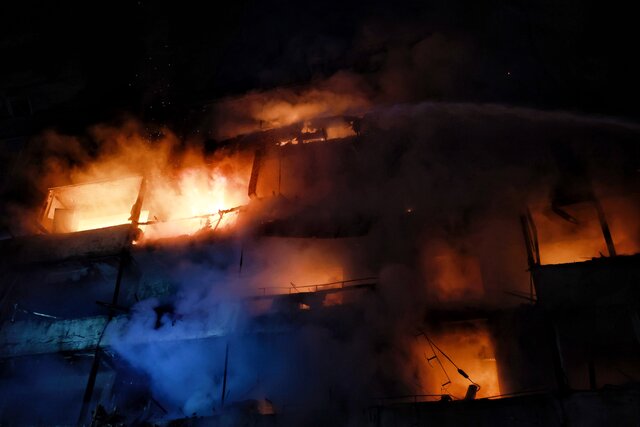
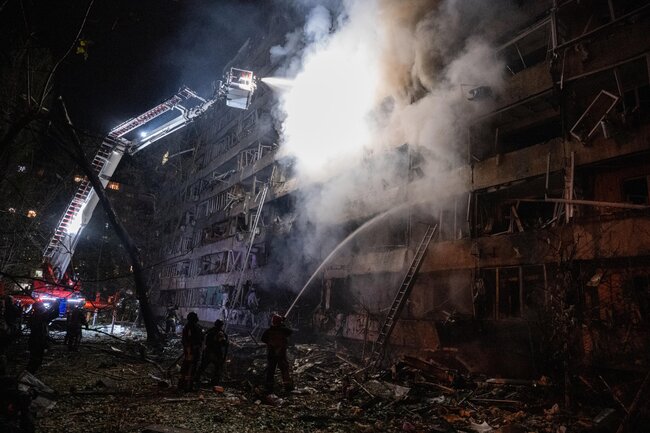
War in photos. Aftermath of a Russian strike on Kyiv.

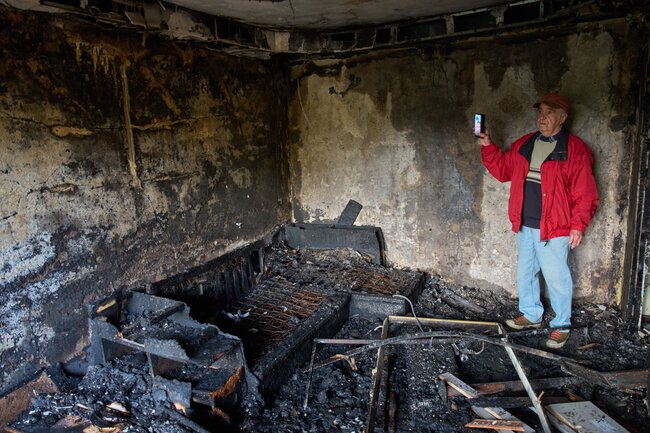
Russian forces struck Kyiv with drones and missiles overnight on October 14, killing three people and injuring about 20. A nine-story apartment building caught fire in the Desnianskyi District as a result of the strike.

Fire at an apartment building in the Desnianskyi District after a Russian strike. October 14, 2026

Читайте на Медузе

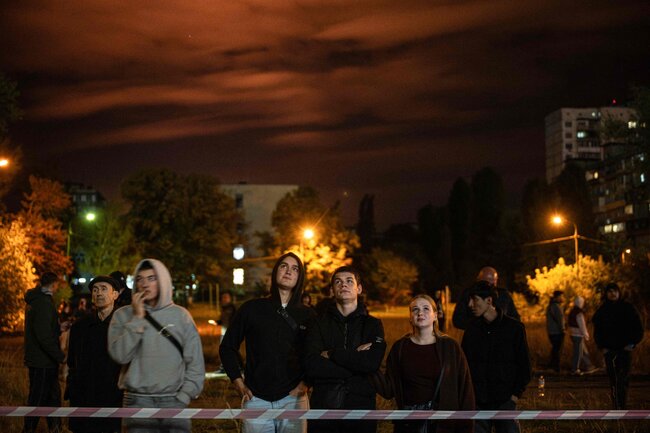
Kyiv residents near their home, damaged in the Russian attack. October 14, 2026
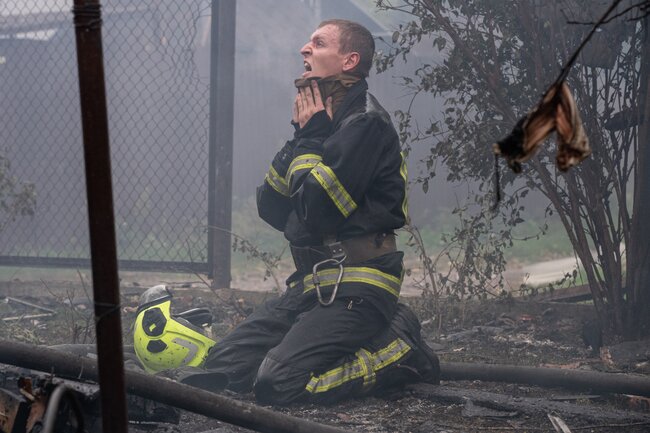
A worker with Ukraine’s State Emergency Service at the site of one of the Russian strikes on Kyiv. October 12, 2026. Ukrainian President Zelensky said that allies had not shared information about the impending attack.
77-year-old Stanislav in his apartment, which burned after a Russian strike on Kyiv. October 14, 2026

At Meduza, we are committed to transparency about our use of artificial intelligence in the newsroom. The story you’re reading was written by one of our living, breathing journalists and translated from Russian using an AI model configured to follow our strict editorial standards. This translation process is the result of extensive testing and refinements to ensure our English-language coverage is timely and accurate. A Meduza editor reviews every draft before publication.

If you find any errors in this translation, please contact us at reports@meduza.io.

To read Meduza’s exclusive content in English, please subscribe to our newsletter.

  •  
❌