A math and physical education teacher in St. Petersburg is suspected of two murders and an attempted murder. Local news outlets Fontanka and Rotonda reported that the victims were a 2-year-old boy and his 58-year-old grandmother.
The child’s mother survived. Passersby found her badly beaten near a building in the Solnechny Gorod residential complex in the city’s Krasnoselsky district. Fontanka reported that Anastasia, 32, escaped through a ground-floor apartment window. She is now in the hospital.
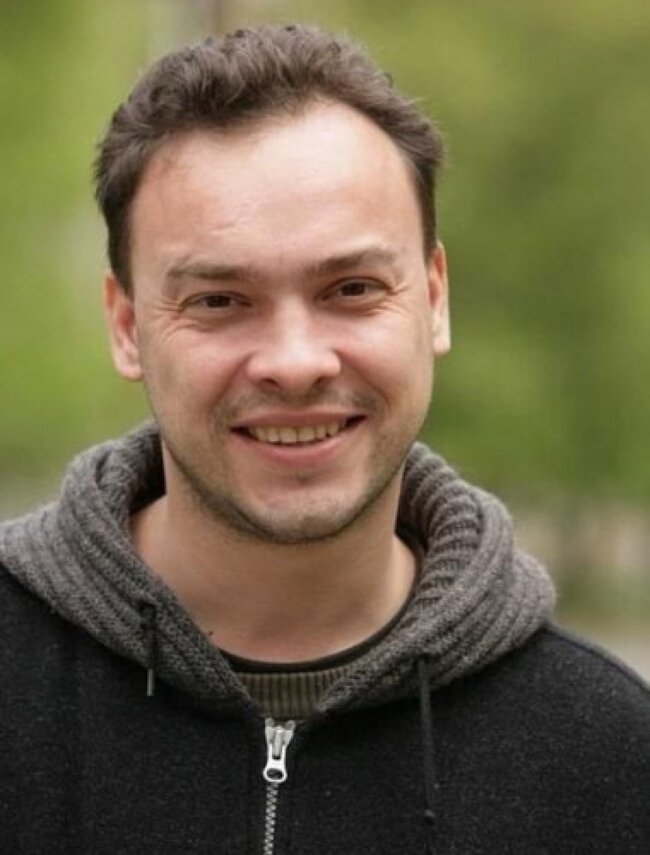
The suspect is a 40-year-old teacher named Dmitry. According to media reports, he worked at a school in the Krasnoselsky district where Anastasia taught history and social studies. Her mother taught English at another school.
Dmitry and Anastasia were not married. The child who was killed was their son.
The television channel 78 reported that Dmitry recently returned from the war in Ukraine. According to the channel, he “didn’t want to stand by during the special military operation” and went to the Kursk region after Ukrainian forces were driven out, serving there in a mobile fire unit. In August, after returning from the war, he suggested that he and Anastasia break up.
A friend of Anastasia’s told the channel that the couple’s relationship had soured even before Dmitry left for the war. She said he was intensely jealous of Anastasia and had “aggression issues.” After their son was born, Anastasia moved into her own apartment with the child and was afraid to be alone with Dmitry. He nevertheless came by almost every day to take their son for walks.
Dmitry is believed to have come over again on Sunday, killed Anastasia’s mother and the child, hidden the boy’s body in the refrigerator, and beaten Anastasia.
Fontanka reported that a note from the suspect was found at the scene of the killings. He wrote that “being a ‘weekend dad’ infuriated him” and that “it irritated him that while he was looking after the child,” Anastasia was “off somewhere enjoying herself.” Dmitry suspected his partner of cheating and doubted that he was the boy’s father.
The suspect fled, and a search is underway. According to Fontanka, police believe Dmitry may have died by suicide.
At Meduza, we are committed to transparency about our use of artificial intelligence in the newsroom. The story you’re reading was written by one of our living, breathing journalists and translated from Russian using an AI model configured to follow our strict editorial standards. This translation process is the result of extensive testing and refinements to ensure our English-language coverage is timely and accurate. A Meduza editor reviews every draft before publication.
If you find any errors in this translation, please contact us at reports@meduza.io.
The Second Western District Military Court has sentenced Yuri Belenky, a 49-year-old IT specialist, to 13 years in prison for financing terrorism, the human rights group Department One reported.
Belenky will serve the first three years in prison before being transferred to a high-security penal colony. The court also fined him 500,000 rubles and ordered the confiscation of another 126,000 rubles.
News of Belenky’s detention emerged in late 2025. He had lived in Bulgaria since 2015 and regularly visited Russia. He was detained at Sheremetyevo Airport in September 2025, initially jailed for the administrative offense of petty hooliganism, and then charged with financing terrorism.
The case stemmed from donations to an account whose details blogger Arkady Babchenko had published. Russian investigators were able to prove that the transfers took place “thanks to a detailed report that the cryptocurrency exchange Binance sent in response to a request from the Investigative Committee,” Department One said.
At Meduza, we are committed to transparency about our use of artificial intelligence in the newsroom. The story you’re reading was written by one of our living, breathing journalists and translated from Russian using an AI model configured to follow our strict editorial standards. This translation process is the result of extensive testing and refinements to ensure our English-language coverage is timely and accurate. A Meduza editor reviews every draft before publication.
If you find any errors in this translation, please contact us at reports@meduza.io.
Mobile internet access in central Moscow could be restricted from October 27 to 29, Russia’s Digital Development Ministry said.
The restrictions are planned inside the Third Ring Road during the day, starting at 11:30 a.m. on October 27 and 28 and at 9:30 a.m. on October 29.
The ministry said the restrictions were needed to ensure security during the Russia-Africa summit and the Gas Exporting Countries Forum summit.
Websites exempt from the restrictions, voice calls, and Wi-Fi will remain available in Moscow on those days, the ministry said.
The Gas Exporting Countries Forum will take place in Moscow on October 27, followed by the Russia-Africa summit on October 28 and 29.
Russian presidential aide Yuri Ushakov previously said that 22 African leaders would attend the Russia-Africa summit. The presidents of Iran and Equatorial Guinea and the emir of Qatar will attend the Gas Exporting Countries Forum.
At Meduza, we are committed to transparency about our use of artificial intelligence in the newsroom. The story you’re reading was written by one of our living, breathing journalists and translated from Russian using an AI model configured to follow our strict editorial standards. This translation process is the result of extensive testing and refinements to ensure our English-language coverage is timely and accurate. A Meduza editor reviews every draft before publication.
If you find any errors in this translation, please contact us at reports@meduza.io.
After Russia’s full-scale invasion of Ukraine, Russian oil came under sanctions, and little-known intermediaries using shell companies and a shadow fleet of tankers took over a large share of its exports. A network of companies linked to Azerbaijani businessmen Tahir Garayev and Etibar Eyyub became one of Rosneft’s main oil traders. They are now in a legal battle with former Rosneft executive Igor Soglayev, who sought to make money reselling Russian diesel in Brazil. Documents from the litigation reviewed by The Wall Street Journal offer a glimpse into how Russian oil and petroleum products have been exported since the war began.
Soglayev is a former Deutsche Bank executive in Russia and former head of SamaraNefteOrgSintez, a petrochemical company that Rosneft bought in 2015. After the acquisition, he headed Rosneft’s petrochemicals department and, according to the Journal, also served as an adviser to its chief, Igor Sechin. In 2017, he left to pursue private ventures in the petrochemical industry.
After the war began, Soglayev decided to make money selling Russian diesel in Brazil. He wanted to act as an intermediary for buyers worried that, because of sanctions, dealing directly with Russia could cause problems with their banks. He planned to buy diesel in Russia and resell it at a markup to Brazilian distributors. In preparation, he leased fuel storage capacity at Brazilian ports.
According to Soglayev, his suppliers were oil traders known as the Coral network. The network took its name from Coral Energy, a company established in Singapore in 2010 to trade Azerbaijani oil. Its former executives, Garayev and Eyyub, became two of the leading sellers of Rosneft’s crude in 2022. Companies controlled by the two businessmen assembled most of the shadow fleet used to export Russian oil.
Soglayev founded a firm called Dia33 in Dubai and bought Russian diesel from another Dubai firm in late 2023. He alleges that the firm’s head, Andrey Romanovskiy, was linked to the Coral network and that the two men even discussed the possibility of Dia33 becoming Coral’s Brazilian division. But the relationship soured when a Brazilian port turned away an aging tanker carrying tens of millions of dollars’ worth of diesel. The ship waited for several weeks to be unloaded before another port accepted it.
The Journal does not specify whether the diesel reached the final buyer. Either way, the fuel sellers, allegedly linked to the Coral network, accused Soglayev of misappropriating the cargo. They filed a lawsuit in Dubai, resulting in an order requiring him to pay $42 million. He responded with lawsuits of his own in Dubai and Brazil, alleging that Coral had used the prospect of a partnership as a pretext to gain access to Dia33’s internal information and poach its clients. He estimated his lost profits at more than $500 million.
Soglayev said he also received threats. In particular, he took it as a death threat when Eyyub called and told him he had discussed their dispute with a “Chechen warlord,” the Journal reported.
The litigation is ongoing. In the summer of 2026, a Dubai court barred Eyyub, Garayev, and 13 other individuals and companies from disposing of assets worth up to $700 million as an interim measure in Soglayev’s lawsuit. The judge later questioned whether he had jurisdiction to hear the case. Soglayev appealed the judge’s decision, and the asset freeze remains in effect.
At Meduza, we are committed to transparency about our use of artificial intelligence in the newsroom. The story you’re reading was written by one of our living, breathing journalists and translated from Russian using an AI model configured to follow our strict editorial standards. This translation process is the result of extensive testing and refinements to ensure our English-language coverage is timely and accurate. A Meduza editor reviews every draft before publication.
If you find any errors in this translation, please contact us at reports@meduza.io.
Political scientist Alexander Kynev, who is in pretrial detention on charges of attempting to sell drugs, has gone on a hunger strike, the legal advocacy project Slovo Zashchite reported.
His lawyer, Mikhail Biryukov, said Kynev began the hunger strike because he cannot use the toilet in his overcrowded cell, which he shares with 34 other people.
“There’s a hole in the floor [of the cell] instead of a toilet, and he can’t use it because his leg is in a cast after being broken in two places,” Biryukov said. “That’s why he’s not eating. We’ve done everything we can to get him moved today to a place that meets his medical needs.”
Kynev has been in custody since September 25. Slovo Zashchite previously reported that he was severely beaten during his arrest, leaving him with a leg broken in two places. According to political scientist Ekaterina Schulmann, Kynev was beaten to force him to confess to treason.
Kynev denies the charges of attempting to sell drugs.
At Meduza, we are committed to transparency about our use of artificial intelligence in the newsroom. The story you’re reading was written by one of our living, breathing journalists and translated from Russian using an AI model configured to follow our strict editorial standards. This translation process is the result of extensive testing and refinements to ensure our English-language coverage is timely and accurate. A Meduza editor reviews every draft before publication.
If you find any errors in this translation, please contact us at reports@meduza.io.
The opposition “Student List”won a decisive victory in Serbia’s parliamentary elections last Sunday. Former President Aleksandar Vučić, who heads the Serbian Progressive Party, conceded defeat and said the new government would soon impose sanctions on Russia. Meduza examines how well-founded that prediction is and what else may lie ahead for the tens of thousands of Russians who have moved to Serbia in recent years.
Vučić congratulated the students on their victory but said they were acting in the interests of and “with direct support from various European countries and the American ‘deep state’ — the one that opposes President Trump.” In his view, the students are “just contractors who will do the dirty work planned by someone else.” Since the EU started imposing sanctions on Russia right after the war began, he said, it would force the students to do the same. He predicted this would happen by March or April.
Brussels is indeed sympathetic to the Student List. In the spring of 2025, European Commissioner for Enlargement Marta Kos said the Serbian protesters’ demands were very close to “what we (the EU) are looking for,” while European Commission President Ursula von der Leyen said Serbia needed to pursue reforms to join the EU.
Von der Leyen and European Council President António Costa also congratulated the students on their election victory and pledged to “support reforms to uphold the rule of law, ensure media freedom, fight corruption, and strengthen democratic institutions, and work together to build Serbia’s future in the European Union.”
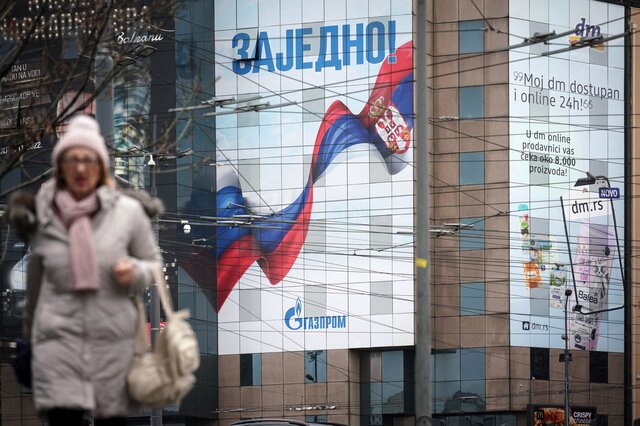
But Brussels has already expressed displeasure with Serbia’s lenient policies toward Russian citizens. Russians can currently enter the country without a visa for up to 30 days, obtain residence permits, and apply for Serbian citizenship.
About 2,000 Russians have become Serbian citizens since the start of 2022. Radio Free Europe reported that more than 300 of them had received Serbian passports through an expedited process by May of this year. The European Commission believes this poses security risks for EU countries, since those granted citizenship include people under EU, U.S., or Ukrainian sanctions.
Brussels is also unhappy with Belgrade’s refusal to join EU sanctions against Russia. In its November 2025 communication on enlargement policy, the European Commission stated explicitly that “Serbia must clearly demonstrate its geopolitical orientation toward the EU.” It can do so by aligning its policies “with the EU’s restrictive measures adopted in the context of Russia’s war of aggression against Ukraine.”
So what will the students do?
In the foreign policy section of their platform, the students emphasize their desire to deepen partnerships with EU countries and carry out the reforms needed for future integration. At the same time, they intend to preserve the “traditional partnership with the Russian Federation” and “not impose restrictive measures” against it.
The students have not spoken out against Russians who have moved to Serbia, either. Any resentment they may have felt toward the Russians was more likely rooted in economic and social concerns: The arrival of tens of thousands of people drove up rents in Belgrade and Novi Sad, directly hurting many students who rent apartments. But they plan to address this problem through tighter regulation of the real estate market rather than restrictions on newcomers.
Given both the students’ statements and pressure from Brussels, which demands that Serbia bring its visa policy into line with EU rules, it is reasonable to assume that the Serbian authorities will eventually impose visa requirements on Russian citizens after all and abolish or restrict the expedited citizenship process.
But it is difficult to predict when these changes might happen, or even how likely they are. Serbia still has to form a government, and a presidential election is due in December. The new cabinet’s priorities will be fighting corruption, reforming the justice system, and ensuring media freedom.
The government is unlikely to address visa and citizenship rules for Russians anytime soon. It will also resist imposing sanctions on Russia, just as Vučić did — if only because doing so would damage relations with Moscow and automatically jeopardize continued supplies of discounted Russian gas. Those supplies meet up to 90% of the country’s gas needs.
The students are unlikely to want to expose the economy to such a risk during the transition, so it seems reasonable to expect that Serbia will not join sanctions against Russia in the next few months, as the Student List itself has already said.
At Meduza, we are committed to transparency about our use of artificial intelligence in the newsroom. The story you’re reading was written by one of our living, breathing journalists and translated from Russian using an AI model configured to follow our strict editorial standards. This translation process is the result of extensive testing and refinements to ensure our English-language coverage is timely and accurate. A Meduza editor reviews every draft before publication.
If you find any errors in this translation, please contact us at reports@meduza.io.
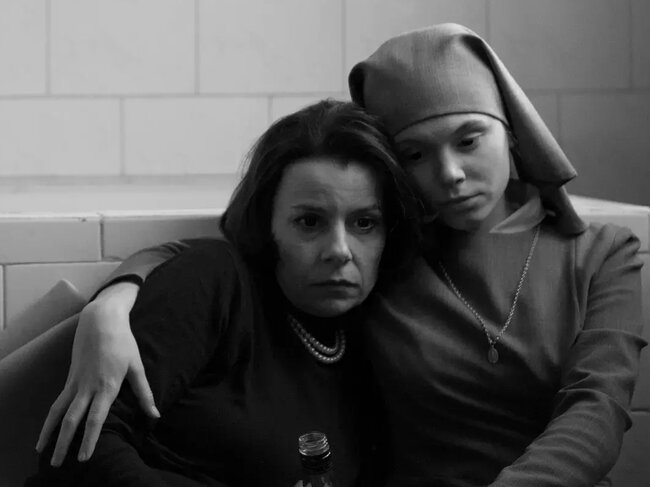
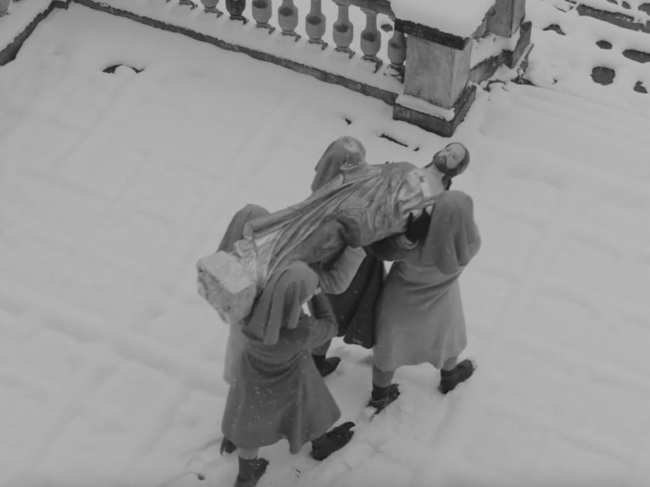
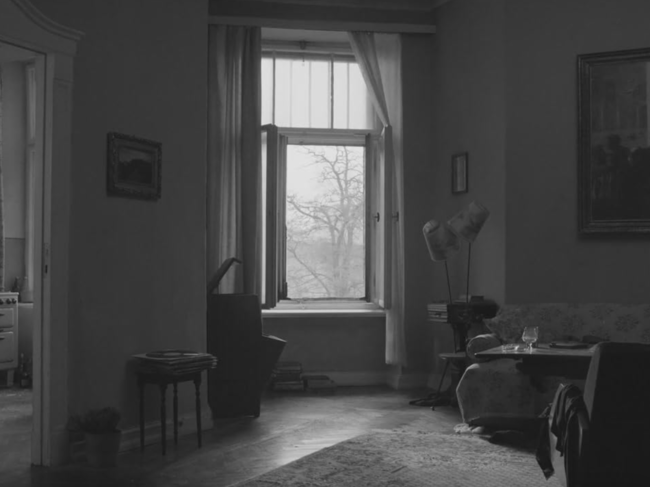
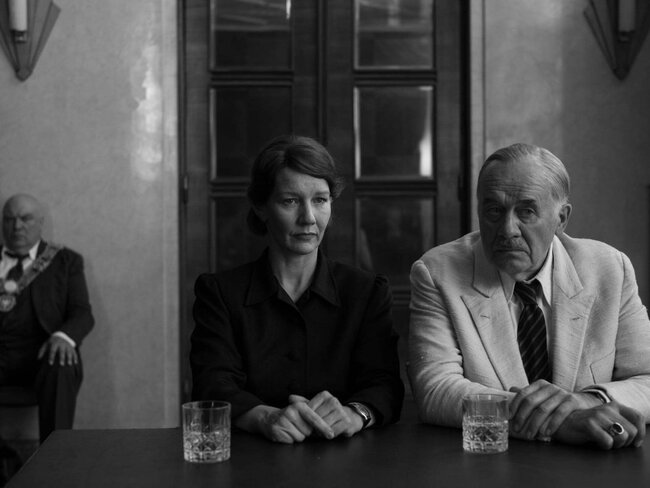
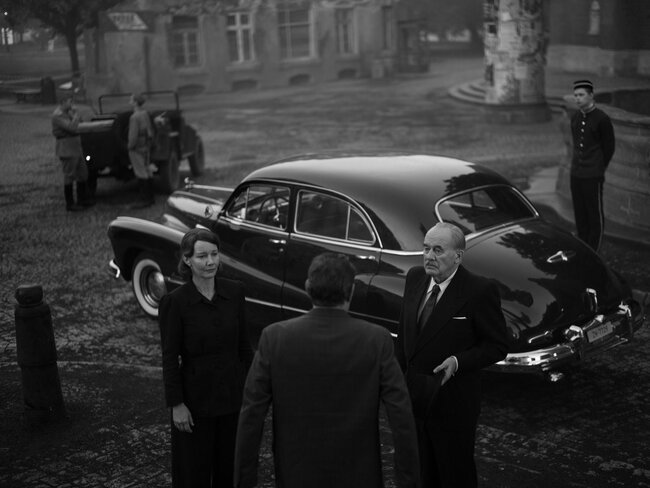
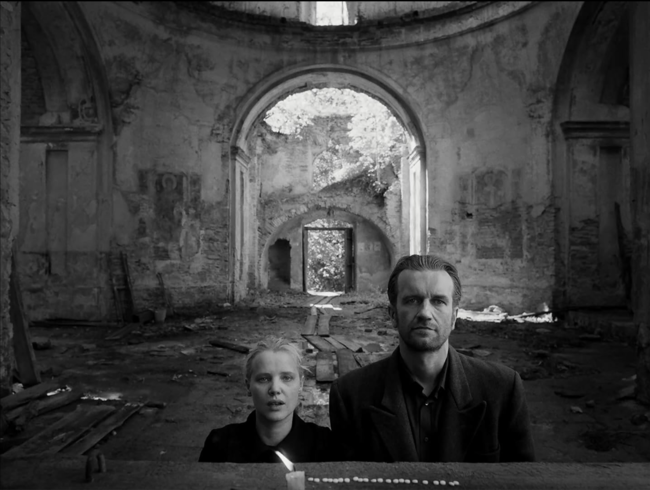
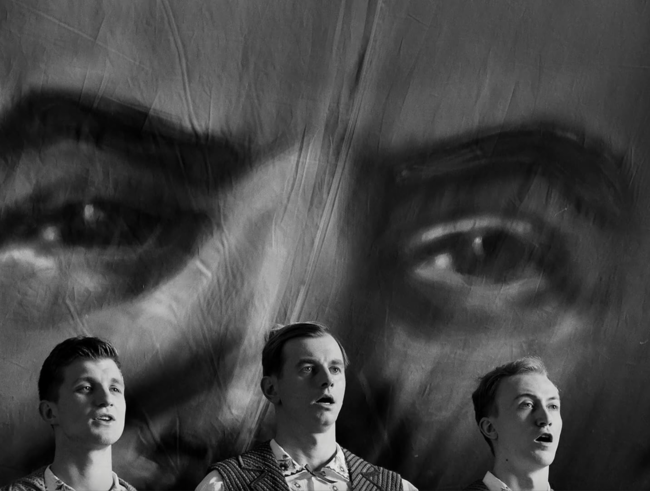
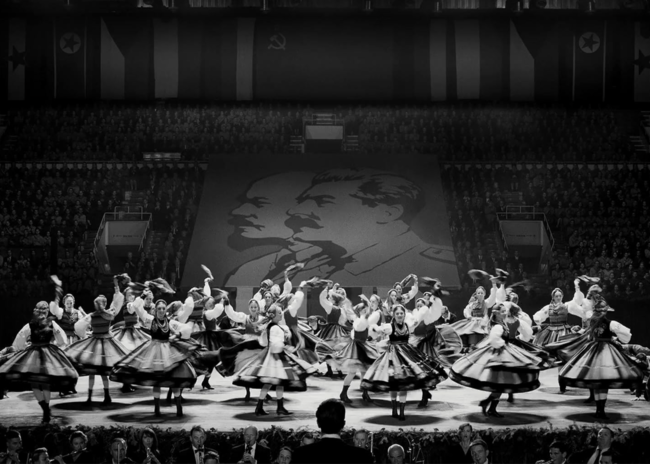
After festival premieres in Cannes, Telluride, Toronto, New York, and London and its selection as Poland’s Oscar entry, Paweł Pawlikowski’s “Fatherland” is opening in theaters worldwide. The film follows German writer Thomas Mann’s journey through postwar Germany. One of the season’s standout films and a deserving winner of the best director prize at Cannes, it has prompted critics to draw comparisons between Europe in the 1940s and Europe today. Anton Dolin spoke with Pawlikowski about the similarities and differences.
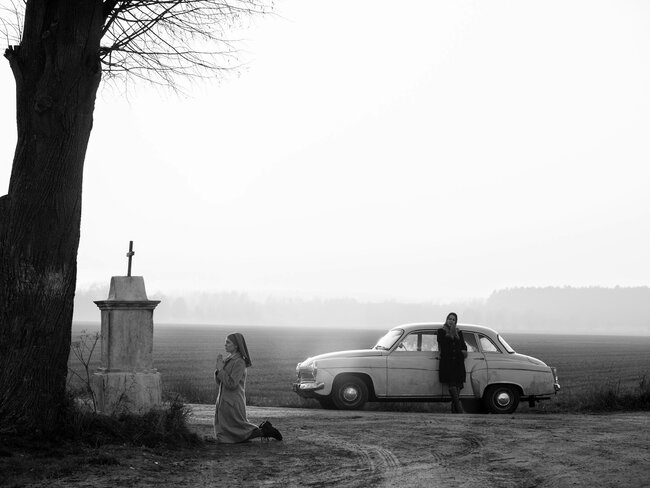
— Would you say “Fatherland” completes a trilogy that began with “Ida” (2013) and “Cold War” (2018)?
— I wish my ideas came together as neatly and logically as film critics imagine! “I think I’ll make a trilogy about postwar Europe, and I’ll shoot it in black and white.”
Back then, “Ida” grew out of a period of confusion and searching, out of my exhaustion with trying to make “normal movies.” Everything irritated me; I wanted to change something. With “Ida,” I felt as though I’d gone back to cinema’s starting point: black-and-white images, static shots, a small budget, minimalism. Those constraints worked beautifully. I found the work easier and more interesting.
That was also when I met Łukasz Żal, who’s now my cinematographer. We immediately knew we were a good fit. That’s how I’ve shot films ever since: I compose every shot like a photograph, don’t show too much, and don’t move the camera unless it’s absolutely necessary. The story and the relationships between the main characters are all that drives the action. It’s a challenge! So is the somewhat contradictory task of making a meticulously composed film in a documentary style. Documentary footage is inherently spontaneous and doesn’t offer the control over framing that I’m after.
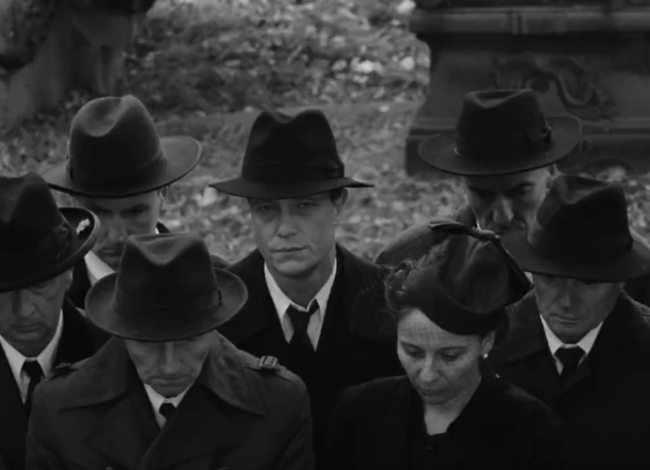
“Ida,” 2013“Ida,” 2013“Ida,” 2013“Ida,” 2013
— Your new film resembles the previous two in its visual style and period setting, but it’s also different. For the first time, it centers on real people — Thomas Mann and his family — and events that actually happened.
— That came about through a series of coincidences. It started when my German producers sent me a biography of Mann. It was an incredibly absorbing read, but there was no way to turn it into a film — it covered far too much, too many stages of his life and too many events.
Biopics don’t interest me, and I don’t dare take on a TV series. One episode caught my attention: the writer’s trip to Germany in 1949. I started looking for other sources and reading everything I could about it. Thomas’s own diaries and letters, his driver’s memoirs — because on that trip he was actually accompanied by his driver, rather than his daughter Erika. But Erika’s writings proved useful too: there was another trip a year later, this time with her. They went to Weimar for an anniversary celebration in Schiller’s honor.
The research took quite a while. I was drawn to the lives of the Mann family — Erika’s dilemmas, Klaus’s personal drama. And suddenly I decided to try to distill it all into a single road movie, fitting the events that interested me into five days and adding a few important supporting characters from the Manns’ lives.
“Fatherland,” 2026
— Why Thomas Mann in particular?
— During the war, he became a kind of respected institution in his own right. He managed to maintain an impeccable reputation throughout those years. You can’t say that about the early years of Nazism — Mann certainly had things to reproach himself for then.
The situation felt far too familiar to ignore. A system collapses, and aggressive narratives rush to fill the void — each doing everything it can to draw you into its orbit.
Analogies are never exact! Back then, there weren’t any “digital bubbles” with their simplistic agendas, but there were other, rather similar bubbles. Thomas Mann tried to overcome them, to burst them open with universal human values: culture, literature, and the humanist tradition. He was the “good German,” the ideal embodiment of a view from the other side, someone who could offer common ground… Of course, it didn’t work.
“Fatherland,” 2026
But Mann’s story also shows what happens when you have a public mission and something in your personal life that doesn’t quite fit with it (the suicide of his son Klaus — Meduza).
The reasons were, let’s say, historical: Klaus wasn’t just a drug addict but a lost soul — a German without a Germany, a writer without a language he could write and publish in. None of his attempts to write in English succeeded, and he didn’t know whom he was writing his books for. Unlike his father, Klaus was neither an institution nor a Nobel laureate.
Still, you can’t explain it all through external circumstances: there was a tangled web of relationships within the family. Almost a love triangle, with Erika at its center: she loves both her brother and her father, both are very fragile and weak, and she wants to help them both but doesn’t know how.
It turned into something like a Greek tragedy against the tragic backdrop of postwar Europe, divided between two visions of the future, neither of which seemed entirely satisfactory.
— The Cold War seems to be the period that interests you most. Is that only because of the parallels with the present?
— It resonates, of course. There’s no denying that. But what exactly resonates? The world today is too complicated; we can’t fully understand what’s happening around us. I certainly can’t. If only I could read an intelligent book about what’s going on in the world now, written, say, 20 years from now… We’ve ended up in what feels like a science-fiction story.
But I grew up during the Cold War, and it shaped my parents in Soviet-controlled Poland. It’s easier for me to identify with that generation and the political world of my childhood, with “analog people,” with an era of relative clarity. Back then, the West symbolized freedom and liberal values for us, and the Soviet Union meant subjugation. That was clear! I certainly feel some nostalgia for that world, where things were simpler.
“Cold War,” 2018“Cold War,” 2018“Cold War,” 2018
— Which particular similarities between that era and today might have influenced the making of “Fatherland”?
— None of it influenced me consciously. It was more a vague feeling that there were already far too many similarities.
Klaus’s opening monologue is very close to how I feel: What can you believe in, what can you hold on to, when you feel as though you’re sinking into quicksand? It’s very personal. So is Thomas’s situation.
For instance, I wasn’t thinking about Putin’s Russia, although Russians keep telling me how interesting and relatable they find the film. Emigrants in particular. But I’m an emigrant myself. I left Poland at 14, lived in Britain, Germany, and France, and spent years not knowing what language to write and make films in, or what audience to address! I went through a Russian phase, too — I was deeply fascinated by the country. That’s passed now, though, for obvious reasons…
— Aren’t you worried that historians and experts will criticize you for inaccuracies and altered facts?
— I don’t pretend that “Fatherland” follows what actually happened step by step. Quite the opposite: the facts are just a framework for my screenplay, and I allow myself as much invention as the plot requires. This film isn’t a reconstruction or a biopic. My conscience is clear.
I still felt uneasy at times, and I consoled myself with the thought that I was trying to capture the emotional truth. For instance, when Klaus killed himself, his father, Thomas, was in Stockholm, not Germany. But he’d gone there to give a lecture on Goethe, and he didn’t change his plans to attend his son’s funeral on the French Riviera. He shut out his emotions, he was angry with Klaus… Erika didn’t go either; she felt paralyzed. I think I portrayed all her dilemmas and inner torment truthfully.
I certainly imagined and invented a lot, but I always started from the truth — except, perhaps, for one thing: No German ever saw Thomas Mann cry.
“Fatherland,” 2026
— What about Mann’s speeches on Goethe? At times they sound almost like parodies in your film, although the texts are authentic.
— There’s a simple reason for that effect: Context matters too. I don’t think Mann’s speeches were ill-timed or foolish at all. He just had no chance of being heard and understood. He was certainly right to invoke “Faust” and utopian ideas about building a new society when addressing East Germany’s pro-Soviet authorities. In Mann’s view, utopia is unattainable because the flaws and risks are already built into the ideal, before anyone even tries to put it into practice.
Still, I think Mann felt more warmly toward his East German readers and listeners. At least they were trying, in their own way, to rid themselves of Nazism and start building a new, fairer society. The West was mired in confusion and chaos; people there weren’t even setting themselves those goals. Don’t forget, Stalinist repression wasn’t common knowledge in Europe at the time.
And here’s another historical fact, though the circumstances were a little different. Mann really was asked to mention the persecution of dissenters in East Germany in his speech, and he decided not to because he thought his mission was something else, something “more significant.”
— How did you end up shooting a film about Germany in Poland?
— We spent a long time choosing locations very carefully and traveled all over Germany. The screenplay was complicated, the budget wasn’t huge, but we needed a certain level of accuracy. We concluded that it would be easier to find the ruins we needed in Poland. Many of them are sets we built ourselves. I’d say the landscape isn’t all that different. We didn’t want to cut archival footage into what we were shooting, and it took work to recreate an authentic setting in front of the camera.
And then… casting, finding extras in the towns and villages where we filmed. That took an especially long time. I didn’t want anyone on screen who looked like someone from today. We needed people from a very, very wide range of social backgrounds, so we put a huge amount of time and money into it. But I believe it worked and really shaped the film’s look and feel. Łukasz Żal is a true painter; he’s extremely exacting, and I’m happy with the result.
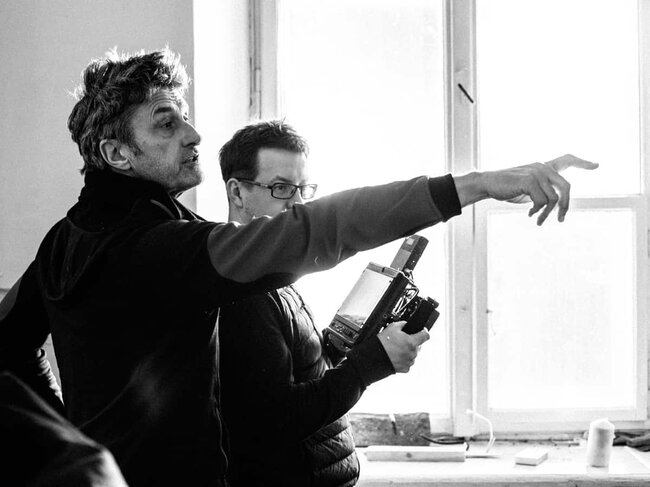
Paweł Pawlikowski and cinematographer Łukasz Żal
— Thomas Mann is an immensely interesting character for a drama — or a comedy. What about as a writer?
— He’s become increasingly important to me over the years. I can’t say I love his work all that much. I have a complicated relationship with the novels.
Five years ago, I finally slogged through “The Magic Mountain.” It all depends on what you value in literature, whether you can enjoy meticulous, elegant, detailed descriptions of human feelings. When I was young, that irritated me; it seemed mannered. But this time I was able to finish it and enjoy it. Still, I rate the novellas more highly — “Tonio Kröger,” “Death in Venice.”
At any rate, I respect Mann as a writer. That just wasn’t what prompted me to make this film. It’s as a central character that he interests me. The language he created for himself in his books became his identity. He hid in a castle of words, and he didn’t deny it. Hiding the truth about himself, including his sexuality, he sublimated it in literature.
— And what’s your relationship with Goethe and Bach — the film’s other points of reference?
— Like Thomas Mann, Goethe lived a very long life and went through many different phases, from the Romantic Sturm und Drang movement and the wave of suicides he inspired to classicism. What Mann revered in him, and tried in his own way to emulate, was that ability to synthesize, to bring different elements together — rather than revel narcissistically in his own development as an artist. To try to understand humanity rather than one particular person, to bring people together rather than divide them: That was his overarching ambition. Thomas Mann thought he could try applying that approach to postwar Germany, drawing on the poet’s wisdom to overcome the weaknesses of different ideologies.
Bach, of course, is also a cornerstone of art, with all his work rooted in his faith and his devotion to the Luther Bible.
Art often confronts us with unbearable questions: Whose side are you on — Stalin’s or Mickey Mouse’s? I understand that those questions are legitimate, but I feel I’d betray myself as an artist if I made that choice and gave up a fuller picture of how the world works. But sometimes that very loyalty to broad truths is a betrayal of yourself, because it can make you lose sight of individual people and their pain.
At Meduza, we are committed to transparency about our use of artificial intelligence in the newsroom. The story you’re reading was written by one of our living, breathing journalists and translated from Russian using an AI model configured to follow our strict editorial standards. This translation process is the result of extensive testing and refinements to ensure our English-language coverage is timely and accurate. A Meduza editor reviews every draft before publication.
If you find any errors in this translation, please contact us at reports@meduza.io.
The Industry and Trade Ministry has recommended that Russian food service businesses add a separate “Russian breakfast” item to their menus, the Russian state news agency TASS reported.
The recommendation covers any cafe or restaurant that serves breakfast, as well as hotels, resorts, and boarding houses. The ministry itself said it will design a special emblem for the “Russian breakfast.”
According to the Industry and Trade Ministry’s recommendations, a “Russian breakfast” may include
dairy products and dishes made from them (cottage cheese, baked milk, local cheeses, cheese pancakes), as well as cold cuts of meat and poultry (ham, roast pork);
cold fish appetizers and hot dishes made from meat, poultry, and fish (beefsteak, cutlets, boiled and fried fish, sausages);
broths served with pirozhki and rasstegai pastries (chicken broth, fish soup, borschok);
pastry items (pirozhki, kulebyaka, kurnik pies);
other flour-based items (vareniki, vatrushki, sochni, gingerbread);
pancakes and fritters, porridges, and casseroles;
Russian kissel and other traditional drinks (kvass, fruit drinks, herbal teas);
bread and bakery products, and eggs prepared in various ways.
The Industry and Trade Ministry has instructed regional and municipal authorities to carry out “the relevant work,” stressing that the effort should not involve “ethnic cafes and restaurants with a clearly defined specialization.”
The ministry maintains that this is “not a matter of forcibly replacing the range of dishes offered”: authorities merely need to “explain the benefits and financial advantages” of the new breakfast category to business owners.
At Meduza, we are committed to transparency about our use of artificial intelligence in the newsroom. The story you’re reading was written by one of our living, breathing journalists and translated from Russian using an AI model configured to follow our strict editorial standards. This translation process is the result of extensive testing and refinements to ensure our English-language coverage is timely and accurate. A Meduza editor reviews every draft before publication.
If you find any errors in this translation, please contact us at reports@meduza.io.
Moscow’s Lefortovsky Interdistrict Prosecutor’s Office has gathered materials to open a criminal case against human rights activist Anna Karetnikova.
Prosecutors said she is suspected of “evading the obligations of a foreign agent” and “participating in the activities of an extremist organization.”
According to prosecutors, Karetnikova, whom Russian authorities designated a foreign agent, distributed materials outside Russia without the required “foreign agent” disclaimer and had previously received administrative fines for it:
Karetnikova, as a member of an organization that a court has ruled extremist and banned from operating in Russia, also systematically distributes materials on the organization’s behalf and takes deliberate steps to help ensure it continues operating.
The prosecutor’s statement does not specify which “extremist organization” is meant, though Karetnikova has worked with the human rights group Memorial for more than 20 years. Russian authorities designated Memorial an “extremist organization” in April 2026.
There have been no previous reports of criminal cases over cooperation with Memorial.
Anna Karetnikova is one of Russia’s best-known human rights activists. In addition to her work with Memorial, with which she has collaborated since 2002, Karetnikova spent eight years working on Moscow’s Public Monitoring Commission (ONK). Starting in 2016, she also served as the lead analyst in the Moscow department of Russia’s Federal Penitentiary Service. Karetnikova was removed from that position in January 2023, after which she left Russia.
At Meduza, we are committed to transparency about our use of artificial intelligence in the newsroom. The story you’re reading was written by one of our living, breathing journalists and translated from Russian using an AI model configured to follow our strict editorial standards. This translation process is the result of extensive testing and refinements to ensure our English-language coverage is timely and accurate. A Meduza editor reviews every draft before publication.
If you find any errors in this translation, please contact us at reports@meduza.io.
Senior Democrats are preparing to investigate Donald Trump’s diesel deal with Moscow and have demanded that American companies preserve all documents related to imports of Russian fuel, Axios reported.
If Democrats win the November 3 elections, they could regain control of one or both chambers of Congress and take over key committees on foreign relations, banking, finance, and the judiciary. Investigating Trump’s agreements with Russia would then become a top priority, the outlet reported.
A group of senators and representatives sent letters to the leadership of major U.S. banks and several ports, demanding they preserve all documents related to possible deliveries of Russian fuel.
They sent the letters to JPMorgan, Bank of America, Citi, Wells Fargo, Goldman Sachs, and Morgan Stanley, as well as to port authorities in Houston, Beaumont, and Corpus Christi, Texas, and the ports of New York and New Jersey.
In the letter, the lawmakers call on the recipients not to assist in the “purchase, transportation, importation, unloading, storage, financing, or distribution,” of Russian diesel fuel within the United States, and not to participate in its delivery to other markets.
Donald Trump announced on October 9 that he had agreed with Vladimir Putin on deliveries of Russian diesel fuel to world markets. To enable the deal, the U.S. Treasury Department temporarily eased sanctions on Russian diesel until April 7, 2027. Trump said Russia is to deliver more than 300,000 tons of diesel immediately, another 500,000 tons in November, and an additional one million tons after that.
Reuters reported that the first tanker carrying Russian diesel fuel already left the port of Primorsk on October 22. It is expected to deliver 40,000 tons of fuel to New York by November 7.
At Meduza, we are committed to transparency about our use of artificial intelligence in the newsroom. The story you’re reading was written by one of our living, breathing journalists and translated from Russian using an AI model configured to follow our strict editorial standards. This translation process is the result of extensive testing and refinements to ensure our English-language coverage is timely and accurate. A Meduza editor reviews every draft before publication.
If you find any errors in this translation, please contact us at reports@meduza.io.
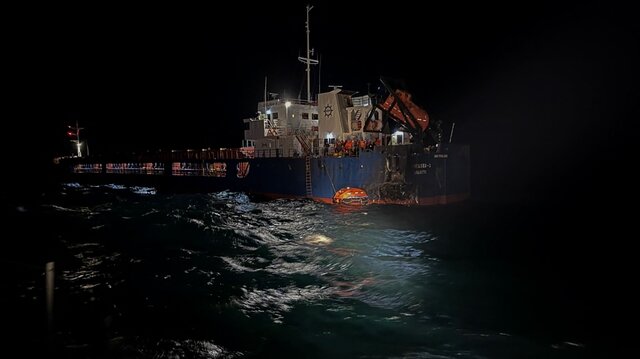
The Ukrainian cargo ship Chelsea 3, attacked by drones off the coast of Bulgaria in the Black Sea. October 13, 2026
Russia’s full-scale war against Ukraine has turned the Black Sea into the world’s most dangerous waters for commercial shipping, the Financial Times reported. At least 40 sailors have died there since the start of 2026, compared with 24 who died in the Strait of Hormuz, where the war the United States and Israel are waging against Iran has complicated shipping.
More than 570 ships have come under attack in the Black Sea since the start of the year, according to the maritime security firm Ambrey and the International Maritime Organization. Some ships were hit by accident, while others were deliberately targeted. Both Russia and Ukraine try to disrupt each other’s maritime shipping to reduce export revenues.
War-risk insurance for the Black Sea now costs as much as 15% of a ship’s hull value, almost twice the rate for ships in the Persian Gulf. Nearly the entire Black Sea is now classified in the highest war-risk category, except for the territorial waters of Romania, Bulgaria, and Turkey.
Shipping oil from the Middle East through the Strait of Hormuz is now cheaper and safer by comparison. As a result, shipping companies increasingly refuse to operate in the Black Sea or use older vessels that are cheaper to insure.
Crews are recruited from Syria, Egypt, and Azerbaijan. The FT found that Syrian sailors earn about $800 a month working in the Black Sea. They are promised double pay for each day spent in the combat zone, and their families are to receive $25,000 to $50,000 in compensation if a sailor is killed.
Ukrainian forces struck more than 300 Russian vessels over an 11-week period, Robert Brovdi, commander of Ukraine’s Unmanned Systems Forces, said in September. The targets included sanctioned tankers as well as cargo ships carrying grain.
Russia has responded by stepping up strikes on ships entering Ukrainian ports. Russian attacks accounted for about 90% of strikes on commercial vessels over the past 45 days, according to Ambrey’s estimates.
The strikes are affecting global fuel and food supplies. Russian wheat exports fell 52% in September compared with a year earlier, while Ukraine is exporting only half its projected volume of agricultural products. Russian diesel exports fell by 467,000 barrels a day in September compared with a year earlier, according to Kpler.
The global effects of the war in the Black Sea are difficult to separate from those of the conflict in the Persian Gulf, Bloomberg reported. High global wheat stocks have kept disruptions in grain supplies from significantly affecting prices, while diesel fuel grew more expensive even before Russian–Ukrainian attacks escalated, because of the war the United States is waging against Iran.
The war in photographs
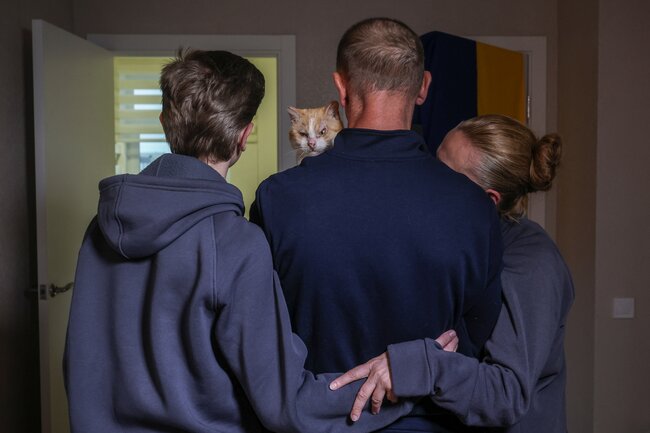
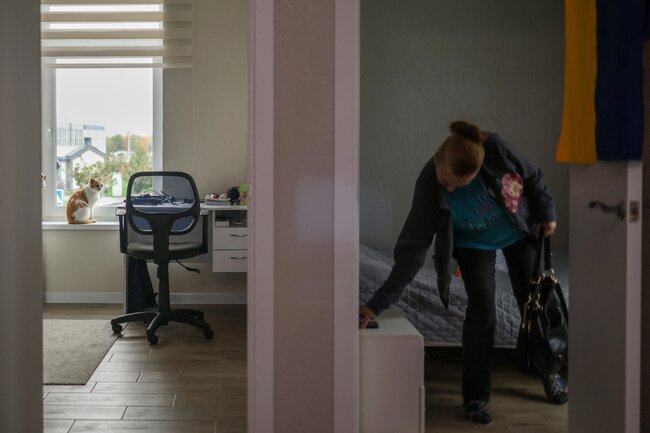
A family from Oleshky starts a new life in the Kyiv region
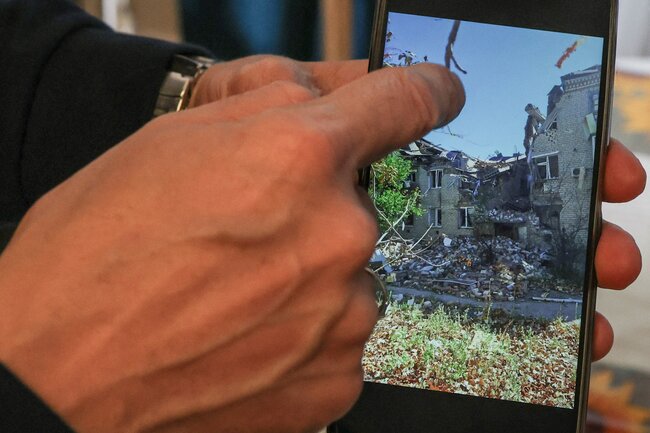
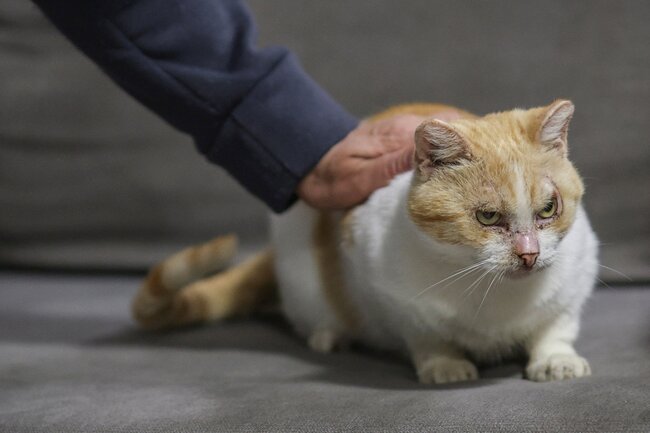
Vitaliy and Iryna fled the Russian-occupied city of Oleshky in September with their 13-year-old son, Vlad, and their cat, Marsik. By then, residents had been left in complete isolation, without food, water, electricity, or medical care.
A drone damaged Vitaliy and Iryna’s home, prompting them to leave Oleshky and walk more than 20 kilometers (12 miles) along a mined road. The family traveled through Russia and Belarus to reach Ukrainian-controlled territory and is now rebuilding its life in the Kyiv region.
Vitaliy shows a photo of his destroyed home in Oleshky
Russia and Ukraine agreed last week to a ceasefire in Oleshky for the evacuation of residents. It is set to take effect at 4 a.m. on October 27.
At Meduza, we are committed to transparency about our use of artificial intelligence in the newsroom. The story you’re reading was written by one of our living, breathing journalists and translated from Russian using an AI model configured to follow our strict editorial standards. This translation process is the result of extensive testing and refinements to ensure our English-language coverage is timely and accurate. A Meduza editor reviews every draft before publication.
If you find any errors in this translation, please contact us at reports@meduza.io.
Ukraine is pushing to move up the three-way talks, which sources had previously said would take place in Abu Dhabi “in mid-November,” by at least a week.
Ukraine persuaded U.S. officials to move up the date, though they did not initially understand why Kyiv was insisting on it, sources who spoke to the Ukrainian news outlet Ukrainska Pravda said.
”They ask, ‘What’s the big deal about moving it by one week?’ And our side explains to them that this week isn’t worth anything right now. But by December, every week will matter. When you have no electricity, water, or heating, every day matters,” a source on Ukrainian President Volodymyr Zelensky’s team told Ukrainska Pravda.
As of the evening of October 25, Russia had not confirmed the rescheduled start date for the talks, Ukrainska Pravda reported.
Russian presidential aide Yuri Ushakov had previously said the three-way talks would begin “in mid-November” — a week after the U.S. midterm elections. Neither the date nor the location of the talks has been officially announced yet.
Ukraine views it as “the minimum necessary success” that U.S. presidential special envoy Steve Witkoff secured Russia’s agreement to resume negotiations before spring, according to Ukrainska Pravda.
Ukrainian negotiators do not expect a breakthrough at the first three-way meeting and are proceeding on the assumption that it will take at least several rounds “for concrete agreements to emerge.”
A source who spoke to Ukrainska Pravda said a peace agreement “could be put together before the New Year,” though he doubted Russia would agree. “They believe they’ll be able to wear us down this winter,” he said.
At Meduza, we are committed to transparency about our use of artificial intelligence in the newsroom. The story you’re reading was written by one of our living, breathing journalists and translated from Russian using an AI model configured to follow our strict editorial standards. This translation process is the result of extensive testing and refinements to ensure our English-language coverage is timely and accurate. A Meduza editor reviews every draft before publication.
If you find any errors in this translation, please contact us at reports@meduza.io.
Yandex has moved all three of its supercomputers — Lyapunov, Galushkin, and Chervonenkis — to new locations, its press service said.
The supercomputers were not damaged during the Ukrainian drone attacks, Yandex said.
“They have been moved out of the locations where they previously were and are now being deployed at new computing sites. The supercomputers will continue to serve as infrastructure for Yandex’s services and for training foundational language models,” the company said.
According to data from a source close to the company, cited by Forbes Russia, the supercomputers do not depend on one another: they can be located in different places, because they form three independent nodes rather than a single supercluster.
Ukraine has been striking Yandex’s data centers since early October. Within one week, Ukrainian drones hit three of the company’s six data centers: one in Sasovo, in the Ryazan region, and others in Kaluga and Vladimir.
The data center in Sasovo housed two of Yandex’s three supercomputers, which are used to train neural networks. The most powerful of the two, Chervonenkis, ranked 19th among the world’s top 500 supercomputers in 2021, according to the independent science-focused outlet T-invariant.
At Meduza, we are committed to transparency about our use of artificial intelligence in the newsroom. The story you’re reading was written by one of our living, breathing journalists and translated from Russian using an AI model configured to follow our strict editorial standards. This translation process is the result of extensive testing and refinements to ensure our English-language coverage is timely and accurate. A Meduza editor reviews every draft before publication.
If you find any errors in this translation, please contact us at reports@meduza.io.
Lokomotiv soccer players were riding in a train car hit during a Ukrainian strike in the Voronezh region, Russian media outlets including Mash and MSK1 reported, citing sports journalist Ivan Karpov. Zvezda, for its part, said Lokomotiv’s press service had confirmed the information.
None of the players were injured, and they will travel to Moscow by bus.
Lokomotiv’s players were returning from Rostov-on-Don, where they had played against Rostov on Sunday, October 25.
Russian Railways, the Russian state rail operator, said earlier that Ukrainian drones struck the Somovo station in the Voronezh region, damaging a car on the Anapa–Moscow train. Preliminary reports said five people were injured, and the attack delayed 18 trains.
Ukrainian strikes overnight on October 26 killed two people and injured 17 in Voronezh, regional authorities said. Astra, an independent Telegram channel, analyzed eyewitness photos and videos and concluded that Ukrainian drones struck the Voronezhsintezkauchuk plant. Ukrainian strikes had targeted Tolyattikauchuk and Omsky Kauchuk in the preceding several days.
At Meduza, we are committed to transparency about our use of artificial intelligence in the newsroom. The story you’re reading was written by one of our living, breathing journalists and translated from Russian using an AI model configured to follow our strict editorial standards. This translation process is the result of extensive testing and refinements to ensure our English-language coverage is timely and accurate. A Meduza editor reviews every draft before publication.
If you find any errors in this translation, please contact us at reports@meduza.io.
Alexander Kondratov, the production designer for the Russian TV series Likvidatsiya (Liquidation”), has died at Botkin Hospital in Moscow after being arrested on treason charges, the Russian human rights group Department One said.
Kondratov, 52, was taken to the hospital from a pretrial detention center on October 23, human rights activists said. Department One did not specify the cause of death or the source of that information.
Kondratov was born and raised in Moscow but had lived in Kyiv since 2012. He had traveled to Russia to renew his foreign passport and was detained at Vnukovo Airport. After a series of so-called “carousel arrests,” authorities opened a criminal case against him on treason charges. The case was based on “at least six publications” posted online. Their contents remain unknown.
The detective series Likvidatsiya premiered in 2007 and follows criminal investigators fighting crime in postwar Odesa in 1946. The cast includes Vladimir Mashkov, Mikhail Porechenkov, Sergei Makovetsky, and Konstantin Lavronenko. Kondratov received the Golden Eagle Award and a TEFI Award for his work on the show.
At Meduza, we are committed to transparency about our use of artificial intelligence in the newsroom. The story you’re reading was written by one of our living, breathing journalists and translated from Russian using an AI model configured to follow our strict editorial standards. This translation process is the result of extensive testing and refinements to ensure our English-language coverage is timely and accurate. A Meduza editor reviews every draft before publication.
If you find any errors in this translation, please contact us at reports@meduza.io.
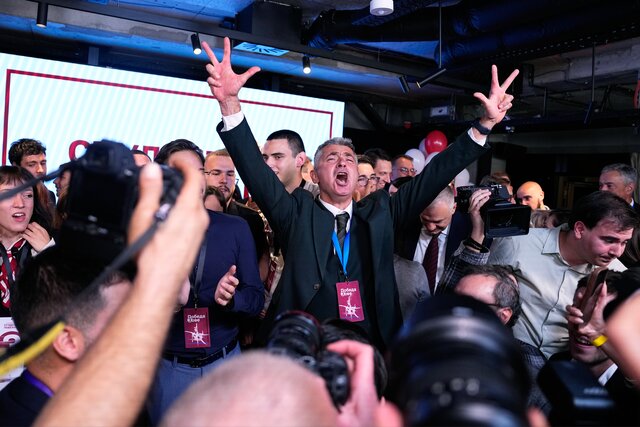
Ilija Srdanović, a professor at the University of Novi Sad who leads the Student List, after the election victory, Belgrade, October 25, 2026
Serbia held snap parliamentary elections on October 25. Among the candidates was former president Aleksandar Vučić, who had resigned just a month earlier but was hoping to return to power as prime minister.
Aleksandar Vučić served as president of Serbia for six years, becoming the country’s head of state in May 2017 and winning reelection to a second term in 2022.
Serbia has seen continuous protests demanding Vučić’s resignation for the past two years. They began after a concrete canopy collapsed at a railway station in the Serbian city of Novi Sad on November 1, 2024, killing 16 people.
Vučić called early elections to the National Assembly, Serbia’s parliament, in early September 2026 and resigned on September 27, saying he would take part in the upcoming vote “as an ordinary citizen.”
Vučić ran at the head of the ruling Serbian Progressive Party. His main challenger was the Student List, a leaderless movement formally established just a month earlier but rooted in the mass protests that began in 2024.
The movement’s candidate list, registered with the election commission, included 250 people. None of them were students. Instead, the list included scientists, university professors, experts, and athletes. Cardiologist Ilija Srdanović, a professor at the University of Novi Sad, topped the list.
Movement representatives described how they built the list:
We weren’t looking for people who would look best on billboards, and we weren’t looking for those who have known for years how to negotiate a spot on an electoral list. We were looking for people who, in our view, are capable of entering government institutions, doing their jobs responsibly, and not forgetting why they’re there.
The Student List’s 11-point platform was organized into three main sections. The first, titled “Serbia or the Mafia,” focused on stepping up the fight against corruption; the second addressed adapting the education system to modern needs; and the third covered socioeconomic issues.
Polling stations across Serbia closed at 8 p.m. local time. Less than two hours later, Vučić spoke at Serbian Progressive Party headquarters and conceded defeat.
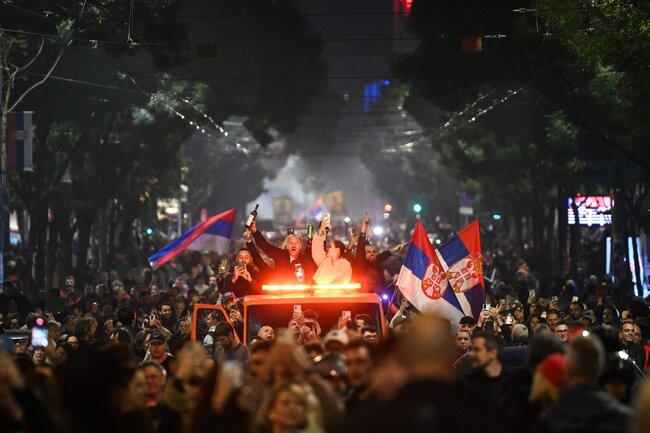
“We don’t have final results yet. Based on a stratified sample, it’s clear that we lost this election. Student List has won: they will have between 135 and 140 seats, and we will have 105,” Vučić said. After Vučić conceded, people poured into the streets across Serbia to celebrate the Student List’s victory.
According to the latest election commission data, the Student List received 52.54% of the vote, while Vučić’s list got 39.29%. Turnout was a preliminary 68.78% — higher than in any parliamentary election over the past decade, when turnout never exceeded 60%. The highest turnout on record came in Serbia’s first multiparty elections in 1990, when 71.49% of voters cast ballots.
Ilija Srdanović, who leads the Student List, said Serbia had won, adding that he was proud of the people who had managed to say “no” to a tyrant. “We are moving toward a civilized and better Serbia,” he said.
Supporters of the Student List celebrate the movement’s victory in Serbia’s parliamentary elections, Belgrade, October 25, 2026
Who will seek the post of prime minister remains unclear. Dejan Šoškić, a Student List candidate for parliament and former governor of the National Bank of Serbia, said before the vote that the makeup of the future government would be discussed after a possible election victory.
Whether Serbia will change its foreign policy toward Russia remains a separate question. Less than a week before the election, Vučić gave an interview to Ksenia Sobchak, saying that if his party lost the election, “within 10 days of the new government’s formation, we would see sanctions being imposed against Russia.”
“But I don’t want to talk this way in front of Russian media, because it comes across as if I’m speaking badly about someone from my own country,” he added. Vučić repeated his warning about possible sanctions even after his election defeat, saying he expected them to take effect by March or April 2027.
In their foreign policy platform, released in late September, representatives of the student movement said Serbia would maintain its principled position against imposing restrictive measures on Russia.
Student List representative Aleksandar Baucal confirmed this position during preelection debates in mid-October. “We have taken the position that sanctions against Russia will not be imposed; on the other hand, there is a need to coordinate foreign policy [with the European Union], but, I repeat, all of this is a matter of negotiation,” he said.
At Meduza, we are committed to transparency about our use of artificial intelligence in the newsroom. The story you’re reading was written by one of our living, breathing journalists and translated from Russian using an AI model configured to follow our strict editorial standards. This translation process is the result of extensive testing and refinements to ensure our English-language coverage is timely and accurate. A Meduza editor reviews every draft before publication.
If you find any errors in this translation, please contact us at reports@meduza.io.
Germany is preparing to buy Ukrainian-made Bars cruise missiles for its armed forces, the Financial Times reported. An agreement for the first batch is expected to be signed in the coming weeks, and Germany could order several hundred missiles if technical tests succeed.
According to the FT, the missile Germany has chosen is the Bars, which has a range of up to 1,000 kilometers (621 miles) and a payload of up to 105 kilograms (231 pounds). Ukraine uses the missiles to strike military facilities and energy infrastructure in Russia.
Experts say the Bars is the most widely produced of Ukraine’s low-cost missiles. It accounts for the largest number of launches, and its use has been the most thoroughly refined.
Germany already produces the Bars at a joint Ukrainian-German enterprise created under the Build with Ukraine program. Ukraine received the first batch of missiles made there in October.
Politico reported in late August, citing German Defense Ministry documents, that Berlin plans to spend almost 12 billion euros building an arsenal of long-range weapons to deter Russia.
Under the plan, Germany would spend 1.8 billion euros on low-cost cruise missiles, with three options under consideration: Ukraine’s Bars and Flamingo missiles, and missiles from the American-Israeli startup Covenant Industries.
The agreement would mark the first known instance of the Bundeswehr buying offensive weapons of Ukrainian design for its own use. NATO countries are increasingly considering Ukrainian military technology, the FT said. Denmark, Estonia, and Latvia have also said they are ready to buy Ukrainian weapons.
At Meduza, we are committed to transparency about our use of artificial intelligence in the newsroom. The story you’re reading was written by one of our living, breathing journalists and translated from Russian using an AI model configured to follow our strict editorial standards. This translation process is the result of extensive testing and refinements to ensure our English-language coverage is timely and accurate. A Meduza editor reviews every draft before publication.
If you find any errors in this translation, please contact us at reports@meduza.io.
Russia’s Digital Development Ministry has approved recommendations for protecting data centers from drone attacks and other aerial threats, the Russian business daily Kommersant reported, citing a document it had reviewed.
The ministry wants to divide critical data centers into three categories based on the consequences a potential attack could cause. The first category, K1, covers strategic facilities whose damage could disrupt key government functions for an hour or more.
Security requirements will vary by category. For strategic facilities, the recommendations call for underground or bunker placement, Kommersant reported.
The recommendations also call for reducing data centers’ visibility from the air, combining “physical reinforcement” with electronic warfare equipment and systems to counter aerial threats.
The recommendations, which Kommersant reviewed, apply to data centers in Russia that are being designed, built, or already operating, regardless of ownership or operator.
In October, Ukraine began striking similar facilities in Russia in response to Russian military strikes on data centers in Kyiv. Within a week, Ukrainian strikes hit three of the six data centers belonging to Yandex, in Sasovo in the Ryazan region, in Kaluga, and in Vladimir. Ukraine then struck a data center belonging to Sberbank in the Saratov region.
IT market sources cited by Kommersant estimated that replacing equipment knocked out by the Ukrainian strikes on Yandex’s data centers will take up to six months.
At Meduza, we are committed to transparency about our use of artificial intelligence in the newsroom. The story you’re reading was written by one of our living, breathing journalists and translated from Russian using an AI model configured to follow our strict editorial standards. This translation process is the result of extensive testing and refinements to ensure our English-language coverage is timely and accurate. A Meduza editor reviews every draft before publication.
If you find any errors in this translation, please contact us at reports@meduza.io.
The Belgorod branch of Russia’s Federal Security Service (FSB) has opened a criminal case against Nikita Parmenov, editor-in-chief of the outlet Pepel, on charges of justifying terrorism, Fonar reported, citing a statement from the security service.
According to the FSB, Parmenov voiced support for the Russian Volunteer Corps and the “Freedom of Russia” Legion, both designated terrorist organizations in Russia.
The FSB’s press release does not include the actual statements, when they were made, or links to them, Fonar said. The security service did not name Parmenov but said the person named in the case has been designated a “foreign agent” and “is located in one of the South Caucasus countries.”
Pepel itself suggested the case was likely triggered by a livestream on the YouTube channel Vremya Nakazhet “Time Will Punish.” Asked by the host during the stream about his attitude toward volunteer units fighting on Ukraine’s side, Parmenov said he could not condemn Russians who join them. In the same stream, he also said he “unequivocally condemns” the actions of units that have shelled civilians in the Belgorod region.
The outlet said the pro-war Telegram channel Zapiski Veterana “A Veteran’s Notes” had previously written that Parmenov allegedly supports the Russian Volunteer Corps and the “Freedom of Russia” Legion. According to Pepel, the channel’s authors had edited the stream, cutting out the part where Parmenov condemns the units for shelling Shebekino.
Pepel launched in the fall of 2022. Its Telegram channel now has 170,000 subscribers, and the outlet covers the war and its aftermath in the Belgorod border region without censorship.
At Meduza, we are committed to transparency about our use of artificial intelligence in the newsroom. The story you’re reading was written by one of our living, breathing journalists and translated from Russian using an AI model configured to follow our strict editorial standards. This translation process is the result of extensive testing and refinements to ensure our English-language coverage is timely and accurate. A Meduza editor reviews every draft before publication.
If you find any errors in this translation, please contact us at reports@meduza.io.
Update: Voronezh Governor Alexander Gusev said two people were killed and 17 others, including a child, were injured in the attack on Voronezh, according to preliminary data.
Ukrainian forces struck Voronezh with missiles and drones overnight on October 26.
According to the independent Telegram channel Astra, drones hit several apartment buildings and the 25-story Galereya Chizhova business center. Eyewitness video shows damaged buildings and cars burning in parking lots nearby.
Residents of Voronezh told the outlet that air raid sirens did not go off in the city.
Gusev said 117 drones were shot down over the region, including more than 70 over Voronezh itself.
The press service of Russian Railways, Russia’s state rail operator, said a railcar on the Anapa–Moscow train was damaged in a Ukrainian drone attack at the Somovo station in the Voronezh region. Five people were injured, according to preliminary data.
The Ukrainian military last struck Voronezh on October 23, when drones hit the Baltimor military airfield.
At Meduza, we are committed to transparency about our use of artificial intelligence in the newsroom. The story you’re reading was written by one of our living, breathing journalists and translated from Russian using an AI model configured to follow our strict editorial standards. This translation process is the result of extensive testing and refinements to ensure our English-language coverage is timely and accurate. A Meduza editor reviews every draft before publication.
If you find any errors in this translation, please contact us at reports@meduza.io.

 Login