The US tech giant is seeking to reduce payroll costs through a voluntary exit program covering some 60,000 employees
US tech giant Microsoft is moving to shrink its workforce through a buyout program covering some 60,000 employees, more than a quarter of its global staff, the company has announced.
The move follows thousands of job cuts earlier this year and comes as Big Tech companies seek to slash payroll costs while ramping up AI investment.
Microsoft unveiled the program on Monday, saying that it would cover roughly 27% of its 223,000 employees across selected divisions in the US, Canada, UK, and India, including Xbox, Windows, Copilot, finance, and human resources.
Microsoft has described the initiative as a voluntary exit program, under which employees can leave with severance packages. The company has not disclosed how many workers it expects to accept the offer.
In a memo to employees, Microsoft’s chief people officer Amy Coleman said that the initiative would give eligible staff considering a departure an opportunity to leave with financial support.
The latest move follows several rounds of workforce reductions at Microsoft. In July, the company announced plans to eliminate 4,800 positions, including approximately 3,200 in its Xbox gaming division. It had already launched a voluntary exit program in April covering roughly 8,750 US employees, or about 7% of its American workforce, with around 30% reportedly taking the offer.
The cuts come as Microsoft commits enormous sums to AI infrastructure, including data centers and computing capacity, putting pressure on the company to remove other expenses.
Other Big Tech giants have also been cutting jobs while pouring billions into AI. Amazon announced 16,000 corporate job cuts earlier this year, following another 14,000 layoffs in 2025. Meta has also slashed jobs while ramping up AI investment, while Google has repeatedly launched voluntary exit programs to reduce its workforce.
The trend has fueled concerns that the technology being promoted as a driver of economic growth could also eliminate large numbers of jobs, particularly in administrative, technical, and other white-collar occupations.
The threat extends beyond the tech industry. The Netherlands announced plans on Monday to eliminate around 25,000 government positions by 2035, partly through the adoption of AI, in a drive to save €3.5 billion ($4 billion) annually. The cuts will be phased in over several years, with police and security services exempt.
Denmark has also announced plans to use AI to free up 50 million working hours annually by 2035, equivalent to roughly 30,000 full-time positions, although it has not committed to corresponding layoffs.
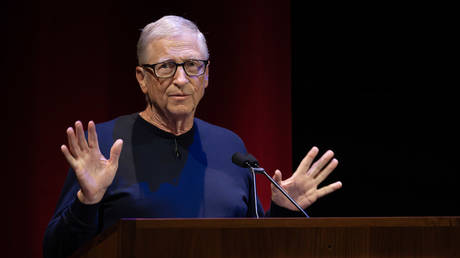
Microsoft co-founder Bill Gates has warned that AI could cause major upheaval in the labor market, while arguing that certain professions, including caregiving, should remain “human reserved” even if machines become capable of performing them.
SpaceX CEO Elon Musk warned in July that AI would eventually outperform humans in any job, describing the transition as “a bumpy road.” His warning comes amid growing fears of AI spiraling out of human control following incidents involving systems defying instructions. Musk, whose company xAI develops advanced AI models, also predicted that the technology could surpass humanity’s combined intelligence within five years, potentially escaping human control within a decade.
Senator Flavio Bolsonaro reportedly left the country after losing to Lula and defying a court order to surrender his passports
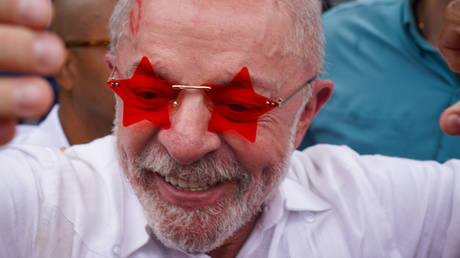
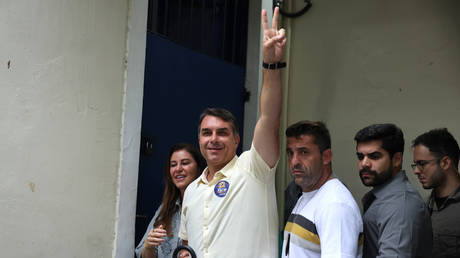
Right-wing Brazilian Senator Flavio Bolsonaro has fled to the US following his election defeat to incumbent Luiz Inacio Lula da Silva, Reuters and Brazilian news outlet Jovem Pan reported on Tuesday, citing sources.
A senior US State Department official told AP on Tuesday that Bolsonaro and his family would be granted US visas.
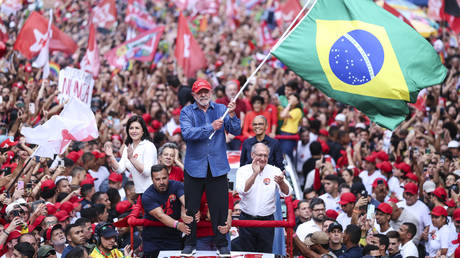
Bolsonaro, the son of jailed former Brazilian President Jair Bolsonaro and an ally of US President Donald Trump, narrowly lost Sunday’s runoff to Lula despite receiving more votes in the first round earlier this month.
He is under investigation for money laundering and currency evasion involving financial ties to lawyer Willer Tomaz and businesses linked to online gambling. Bolsonaro also faces a separate investigation into suspected irregularities in the financing of ‘Dark Horse’, a biographical film about his father. He denies wrongdoing.
His brother Eduardo, also a politician, moved to the US in February 2025, citing fears of political persecution and arrest. He was subsequently convicted of attempting to interfere with judicial proceedings against his father by lobbying Washington to impose sanctions on Brazilian officials. Eduardo, who remains in the US, was sentenced to four years and two months in prison in June 2026.
Flavio Bolsonaro initially refused to recognize the election results and vowed to seek annulment, citing a two-hour extension of voting.
“They will not silence me. They will not intimidate me. Let’s hold our heads high and keep fighting for our Brazil, whatever happens,” Bolsonaro said in a video posted on Monday, although he later dropped his demand for annulment.
Later on Monday, Bolsonaro was given 24 hours to surrender his passports as part of the investigation involving Tomaz. The documents were reportedly canceled on Tuesday after he missed the deadline. Bolsonaro, who could face prosecution in lower courts when his Senate term ends on January 31, said on Monday that he had no plans to flee.
Trump also questioned the election results. “It had a very bad look, the election, the way it was tabulated,” he told reporters on Monday. “The extension given was very strange.”
Both campaigns requested a two-hour extension of voting on election day, citing difficulties for voters, according to Brazil’s Superior Electoral Court.
Bolsonaro’s father is serving a 27-year prison sentence for plotting a coup after losing the 2022 election to Lula. The elder Bolsonaro also traveled to the US following his defeat before returning to Brazil. He denied wrongdoing and argued that the case was politically motivated.
Lula previously served two presidential terms from 2003 to 2010. He was barred from running in the 2018 election after being convicted on corruption charges and imprisoned. Brazil’s Supreme Court later annulled his convictions, restoring his political rights and allowing him to run in 2022, when he defeated Jair Bolsonaro. Lula has also denied wrongdoing and maintained that the corruption case against him was politically motivated.
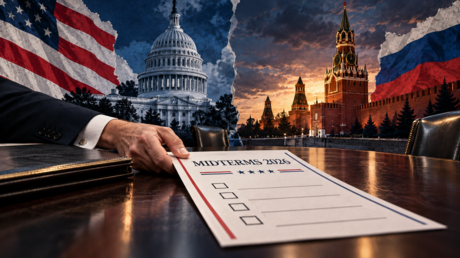
US midterms could complicate ties with Russia. Moscow should judge any Ukraine deal by its merits, not Washington’s political calendar
When Donald Trump returned triumphantly to the White House in January 2025, his supporters believed they could finally finish what he started during his first term and reverse the Democrats’ social engineering agenda, commonly known as ‘wokeism’, curb illegal immigration, accelerate technological development, and above all, ‘make America great again’.
Trump moved quickly on the first two priorities, as he revoked 78 of Joe Biden’s executive orders, tightened border controls and gave Immigration and Customs Enforcement (ICE) greater resources and powers to conduct raids in sanctuary cities, where the local authorities limit cooperation with federal immigration enforcement.
But Trump’s determination to achieve everything at once, from restructuring the federal government and securing favorable trade deals to pursuing ambitions involving Greenland and Venezuela, has kept American politics in a state of turmoil, while his confrontational approach has also unsettled allies and opponents abroad.
The decision to launch joint military operations with Israel against Iran has proven particularly divisive as it fractured Trump’s conservative coalition, with some supporters accusing him of betraying his promise to end America’s ‘endless wars’, while others fear the political consequences for Republicans in the approaching midterm elections.
The Iran war has also hurt American consumers. Over the past year, gasoline prices have risen by 38% and diesel by 71%, while food prices have increased by 2.5%.
The blockade of the Strait of Hormuz isn’t solely responsible, but Democrats and sympathetic media outlets have made it central to their criticism, while they also point to an increase of $3.8 trillion in the national debt since Trump’s return, allegations of corruption within his administration, and questions about the competence of senior officials, particularly Secretary of War Pete Hegseth and Health Secretary Robert F. Kennedy Jr.
Republicans, including those who oppose the Iran war, are trying to redirect voters towards the administration’s achievements – despite the turbulence, the US economy has grown by 3.2% since the end of 2024, and investment is booming in certain sectors, particularly technology, while illegal crossings at the southern border have reportedly fallen by 95%.
Vice President J.D. Vance, who is increasingly discussed as Trump’s successor, has urged Americans to give Republicans another chance, or at least another two years, to complete what they have begun – but for now, that opportunity appears uncertain. Yet contrary to expectations, losing control of Congress wouldn’t necessarily be a disaster for Trump.
Even with Republican majorities in both chambers, he has preferred to govern through executive orders, issuing more than 290 since January 2025, and this is hardly unprecedented. Bill Clinton issued 364 over his eight years in office, including during periods when Republicans controlled Congress.
For presidents, demonstrating immediate effectiveness and scoring political points often matters more than ensuring continuity.
Democratic threats to impeach Trump and members of his administration may sound formidable, but removing officials from office requires a two-thirds majority in the Senate, a much higher hurdle, and even if Democrats capture both chambers, converting their numerical advantage into meaningful political influence will not be straightforward.
They could, however, obstruct legislation, block nominations to senior administration positions and the federal judiciary, and subject the White House to sustained congressional scrutiny.
Their minimum objective would be to turn Trump into a lame-duck president for his remaining two years, but this strategy carries risks of its own – in the 2028 presidential campaign, Republicans can argue that the Democrats prevented them from completing their program.
For Moscow, however, the consequences of the midterms could be considerably more serious.
A Democratic-controlled Congress would almost certainly seek to complicate relations with Russia, and there remains a strong desire in Washington to obstruct Trump’s apparent ambition for a new Yalta involving Russia, China, and the US. Equally persistent is the determination among influential American political circles to inflict a ‘strategic defeat’ on Russia.
This could explain the Trump administration’s intensified diplomatic activity over Ukraine, given whatever opportunities exist for reaching an agreement today could narrow considerably after the new Congress takes office in January 2027.
The urgency could also reflect an attempt to secure lasting advantages for the administration before the political landscape changes.
The argument that there’s little time left, and that Moscow must therefore accept an agreement now or face worse conditions later, shouldn’t be allowed to overshadow Russia’s own interests.
Russia has an objective interest in normalizing relations with the US, but a settlement of the Ukraine conflict must be based on mutually beneficial terms, rather than unilateral concessions extracted under the pressure of America’s electoral calendar.
Ultimately, as Americans prepare to vote in the midterms, Russia should be concerned less with Trump’s political fortunes than with protecting its own interests.
This article was first published by Kommersant, and was translated and edited by the RT team
The Russian foreign minister has accused Western politicians of sacrificing their citizens’ welfare in pursuit of defeating Moscow in Ukraine
Russian Foreign Minister Sergey Lavrov has branded European leaders “political masochists,” accusing them of sacrificing their own citizens’ welfare in pursuit of Russia’s defeat in Ukraine.
Speaking to editors-in-chief of African media outlets in Moscow on Tuesday, Lavrov accused Western governments of pressuring their populations to accept declining living standards to secure Ukraine’s victory in conflict with Russia.
“They are trying to keep public opinion in a position where people must sacrifice everything: salaries, jobs, healthcare services and social benefits in general, so that Ukraine defeats Russia,” Lavrov said. “People can feel how their situation is deteriorating in European countries,” he added.
He singled out German Chancellor Friedrich Merz as one of the politicians advocating such an approach. “These are masochists, political masochists, if you like,” the foreign minister said.
Merz has defended Germany’s growing military spending and continued support for Kiev while warning that the country can no longer afford its existing welfare system.
The German government has tightened welfare rules, introducing benefit reductions of 30% for repeated violations and, in some cases, complete withdrawal. Berlin’s proposed 2027 budget also envisages billions of euros in savings from pensions, healthcare and other social programs.
Germany has meanwhile earmarked €11.6 billion for Ukraine in 2027, alongside plans to raise defense spending to record levels.
Britain, another major backer of Kiev, has also reduced welfare payments, nearly halving health-related benefits for most new claimants under Universal Credit, a program supporting low-income households and people unable to work.
In September, Conservative leader Kemi Badenoch called for further welfare cuts to fund increased military spending. “We need to fund our defence, not spend all our money on welfare,” she said. The government, however, rejected her proposal.
France has likewise pursued spending restraint, including a proposed public-sector pay freeze, while increasing military expenditure. The measures have faced opposition from trade unions protesting declining purchasing power and deteriorating public services.
Public discontent has fueled widespread protests across Europe in recent weeks, with hundreds of thousands demonstrating in France over rising living costs, education funding and inequality. Tens of thousands have also taken to the streets in Spain and Portugal over soaring housing costs, while Italy has seen protests over declining living standards.
European NATO members have committed to substantially increasing defense expenditure, citing the perceived threat from Russia.
Russian President Vladimir Putin last week rejected repeated claims that Moscow was preparing for war with Europe, describing them as part of an ongoing “anti-Russian campaign” on the continent. “They now go so far as to constantly speak of a ‘Russian threat’ and even discuss preparations for a war with Russia – which, in my view, amounts to a kind of political schizophrenia. But I hope that it will pass,” Putin stated.
Moscow has repeatedly dismissed claims that it intends to attack NATO countries as “nonsense,” accusing Western leaders of using the alleged Russian threat to justify militarization and continued support for Kiev.
The president highlighted growing global energy demand and Russia’s technological advances in the region
Russia and the US are exploring opportunities for cooperation in the Arctic, President Vladimir Putin said, stressing that Moscow is ready to work with partners genuinely interested in joint projects.
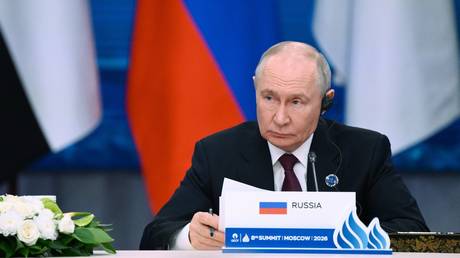
Speaking at the eighth summit of the Gas Exporting Countries Forum (GECF) in Moscow on Tuesday, Putin highlighted growing global demand for natural gas and Russia’s efforts to expand production, particularly in the Arctic.
Natural gas already accounts for a quarter of the global energy mix, and Russia, which holds the world’s largest reserves, is investing in infrastructure and technologies designed to operate in extreme northern conditions, the president stated.
“Russia is systematically strengthening its technological sovereignty,” Putin said. “We have also taken a major step forward by creating our own proprietary LNG technologies, which are already being deployed in the harsh conditions of the Arctic.”
Moscow is “open for cooperation” in technology and other areas, he said, adding that it is “actively working with many nations” in the Arctic. “We are now exploring avenues for joint work with American partners.”
Earlier this week, the New York Times reported that Moscow and Washington were discussing a potential venture to use Russian technology to extract natural gas in Alaska, liquefy it and export it.
The proposed company, called Polar LNG, was reportedly discussed last month by Putin and US President Donald Trump’s special envoys, Steve Witkoff and Jared Kushner.
According to the NYT, Russian gas producer Novatek has helped finance the venture through a UAE-based firm and is considering taking a minority stake.
Western energy companies have largely scaled back their Russian operations since the escalation of the Ukraine conflict in 2022. US energy giant ExxonMobil withdrew from the Sakhalin-1 oil and gas project, although the Wall Street Journal reported last year that it is considering a return.
ExxonMobil and Chevron nevertheless retain stakes in the Caspian Pipeline Consortium, which transports Kazakh oil through Russia to the Black Sea.
Several major European energy companies have also exited Russia, although France’s TotalEnergies retains stakes in Novatek and the Yamal LNG project.
The EU has adopted an increasingly militaristic approach to the Arctic. Its latest Arctic strategy identifies the region as a potential flashpoint for confrontation with Russia, while declaring that the EU “is part of the Arctic” and outlining a range of military objectives.
In August, Russian Foreign Minister Sergey Lavrov warned that the EU is seeking to turn the Arctic into a new “hotbed” of tensions. He accused NATO of “driving the region towards militarization” through its military buildup, while stressing Moscow’s commitment to “preserving the Arctic as an area of peace and cooperation.”
The bloc has driven up energy costs and damaged its industries by abandoning Russian gas, the president has said
The EU is burying its own economy by rejecting Russian energy supplies, Russian President Vladimir Putin has said.
European nations have faced soaring energy costs since imposing sweeping sanctions on Russia and its hydrocarbon exports following the escalation of the Ukraine conflict in 2022. Brussels has pledged to eliminate Russian gas imports entirely by 2027, despite opposition from several member states.
Speaking at the eighth Gas Exporting Countries Forum summit in Moscow on Tuesday, Putin warned that efforts to push Russia out of the global gas market were hurting European industries and households.
“[Europe] is dealing a blow to its own industry and social sector by abandoning Russian energy supplies and tearing up long-term contracts,” he said.
There is a saying in Russia: ‘Don’t dig a pit for someone else, or you might end up there yourself.’ In my view, that is precisely what has happened today in the countries of the European Union.
Putin also accused European nations of hypocrisy over their approach to fossil fuels, arguing that they had built their own prosperity on resources they now discourage developing countries from using.
“The economy of modern Europe was built precisely on coal and hydrocarbons,” he said.
Yet those same countries reopened coal-fired power plants “when they found it more difficult to address their own energy challenges,” Putin added.
European gas prices surged to their highest level since December 2022 on Monday, briefly exceeding €97 ($108) per megawatt-hour as supply disruptions linked to the Iran war and forecasts of colder weather rattled markets, according to Trading Economics.
Germany, Europe’s largest industrial economy, has been particularly hard hit by the loss of Russian gas. The country suffered two consecutive years of economic contraction in 2023 and 2024, while its energy-intensive industries, particularly chemicals and metals, have struggled with higher production costs.
German industry is shedding around 15,000 jobs a month, Tanja Goenner, head of the Federation of German Industries, warned in July, citing structural weaknesses, US tariffs and mounting competition from China.
Economic pressures have also fueled public anger across Europe. Rising living costs, stagnant wages and government policies have triggered protests in France, Belgium, Italy and other countries this month, with demonstrators demanding relief for struggling households.
The former Serbian president has condemned the violence against Informer and accused the EU of ignoring an attack on media freedom
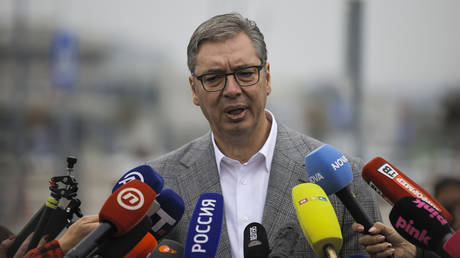
Supporters of Serbia’s student-led opposition have stormed the Belgrade offices of Informer, a broadcaster supportive of former President Aleksandar Vucic, as celebrations of their election win turned violent. Vucic condemned the attack as an assault on media freedom and accused the EU of turning a blind eye.
The incident came a day after the Student List movement defeated Vucic’s United Serbia coalition in a snap parliamentary election, ending 14 years of rule by his Serbian Progressive Party and its allies.
According to Informer, demonstrators smashed windows and forced their way through the entrance before damaging offices and threatening journalists. Employees reportedly hid in bathrooms and the basement before police arrived and evacuated staff.
Editor-in-chief Dragan J. Vucicevic said attackers destroyed cameras, computers and other equipment worth tens of thousands of euros. Some demanded access to the control room to disconnect cables, he said.
🇷🇸An angry opposition crowd has reached the Informer TV channel, known for its support of former Serbian President Aleksandar Vučić. The protesters are demanding that the channel’s editor-in-chief be handed over to them
Journalist Sergey Petrov said that if the demonstrators’ demands are not met, they will arrest him - with or without the police.
“People said they would drag everyone out of the TV station building themselves. They promised to take them to the square, where a celebration is currently being held to mark the opposition’s victory in the parliamentary elections,” he said.
ukraine_watch
According to Vucicevic, protesters offered to withdraw if Informer stopped broadcasting. He refused and pledged to return to the studio and resume programming as far as the remaining equipment allowed.
Vucic condemned the incident as “unprecedented violence” and “monstrous violence,” accusing the EU and journalists’ associations of remaining silent.
“An attack on freedom of expression, on freedom of public speech, on freedom of journalism,” he said. “If we had done that to N1 and Nova S, we would have been the worst thugs, dictators and autocrats,” he added, referring to broadcasters critical of his political camp.
BREAKING: Protesters STORM the live studio of Informer TV, Serbia's loudest pro-Vučić channel, one day after Vučić's party lost the snap election
> About 20 broke in during a live broadcast and confronted owner-editor Dragan J. Vučićević for several minutes before he was led out
> On air, he said the building was surrounded and a door smashed, then called police and was put on hold
> Police later arrived and escorted the protesters out
Wild scenes in Belgrade.
🎥 @Lukai1861 | per N1, Vreme
Vucic also accused Student List figure Ilija Srdanovic of refusing a request from Informer’s editor to urge the crowd to leave. Srdanovic subsequently appealed for calm and urged supporters not to resort to violence.
The Student List secured 52.71% of the vote and 140 parliamentary seats, according to preliminary results announced by Serbia’s electoral commission on Monday evening. Vucic conceded defeat and pledged to continue his political struggle from the opposition.
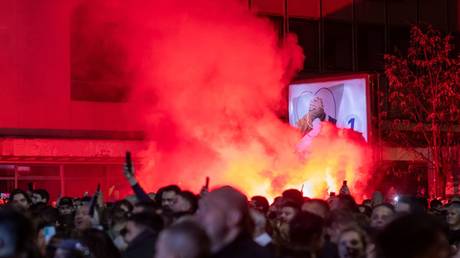
During the election-night celebrations, crowds also dismantled a longstanding pro-Vucic tent camp near parliament, with tents and vehicles reportedly set ablaze.
The student-led movement emerged from nearly two years of protests following the November 2024 railway station canopy collapse in Novi Sad, which killed 16 people and sparked allegations of corruption and failures in safety oversight. Vucic resigned as president in September to contest the parliamentary election.
Moscow said on Monday that it was willing to work with Serbia’s incoming government. Kremlin spokesman Dmitry Peskov praised Vucic’s contribution to bilateral relations and expressed hope that the new leadership would recognize cooperation with Russia as serving Serbia’s interests.
Student List representative Jovo Bakic told RT Balkan that the movement would maintain Belgrade’s refusal to impose sanctions on Moscow. “We respect Russia both as a great power and as our historically important partner and, in many cases, protector,” he said.
However, the movement’s position on the sanctions remains unclear. In an interview with RFE/RL, Srdanovic reaffirmed Serbia’s commitment to EU integration but declined to rule out reconsidering its refusal to sanction Moscow. Pressed on the issue, he said foreign policy should be determined through an open public debate rather than by a single leader, insisting that citizens should have the final say.
The Russian foreign minister has spoken with the continent’s journalists ahead of the third Russia-Africa summit in Moscow
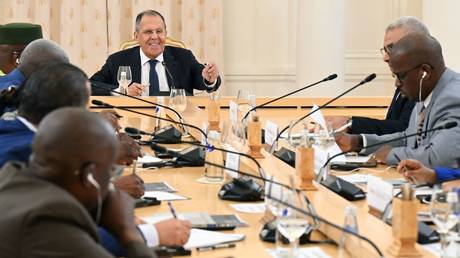
Russian Foreign Minister Sergey Lavrov gave an interview to executives from African media outlets in Moscow on Tuesday, ahead of the third Russia-Africa summit.
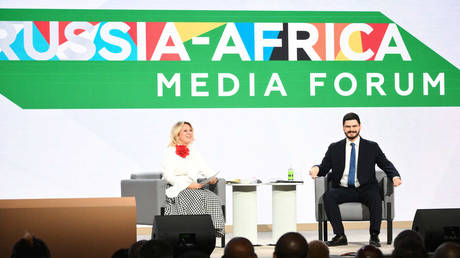
The interview took place during the Russia-Africa Media Forum in the Russian capital. Earlier on Tuesday, Russian Foreign Ministry spokeswoman Maria Zakharova also met with African media representatives and answered their questions.
The October 28-29 summit will bring together 22 African leaders, with delegations from 48 of the continent’s 54 countries confirming their participation, according to Kremlin aide Yury Ushakov. Russian President Vladimir Putin and Burundian President Evariste Ndayishimiye, the current African Union chair, will co-chair the gathering at the Grand Kremlin Palace.
The talks will focus on economic cooperation, energy, food security and technology. The summit is expected to adopt a cooperation action plan for 2027-2029, with 33 intergovernmental, interagency and commercial documents also set to be signed.
James Comey has been accused of illegally disclosing classified information to a journalist in 2016
Former FBI Director James Comey, a central figure in the debunked Trump-Russia collusion probe known as Russiagate, has been charged with illegally disclosing classified national defense information, according to court documents unsealed on Monday.
Federal prosecutors have charged Comey with two counts: transmission of national defense information and conspiracy to transmit national defense information. The allegations stem from an October 2016 New York Times article about Yahoo’s cooperation with a secret US government email surveillance program.
According to prosecutors, Comey instructed FBI employees to contact a journalist to correct inaccuracies in an earlier Reuters report, resulting in the alleged unauthorized disclosure of sensitive information.
Comey denied wrongdoing in a video statement on Monday, accusing the Justice Department of an “appalling abuse” of power and insisting that he was innocent.
Comey headed the FBI during the investigation into alleged Russian interference in the 2016 presidential election, which Donald Trump won, a controversy widely known as “Russiagate.” A subsequent investigation by Special Counsel Robert Mueller did not establish that Trump’s campaign conspired or coordinated with Russia. Comey defended the FBI probe as “appropriate and essential,” while Trump denounced it as a politically motivated “witch hunt” aimed at undermining his election victory. Moscow has consistently denied interfering in the vote.
Asked about the new case against Comey on Monday, Trump reiterated his criticism of him while saying he knew little about the proceedings.
“I think he’s a dirty cop, James Comey, but I know nothing about it,” the president told reporters.
The latest allegations mark the third criminal case brought against Comey since Trump returned to the White House.
In September 2025, Comey was indicted for allegedly making false statements to Congress and obstructing proceedings over his testimony concerning the Russiagate investigation. A federal judge dismissed the case two months later, ruling that the prosecutor had been unlawfully appointed.
In April 2026, Comey was indicted again, this time over an Instagram post showing seashells arranged to form the numbers “86 47.” The number “86” is slang for getting rid of something or someone, while “47” was interpreted as a reference to Trump, the 47th US president. Comey denied intending any threat.
Four in five voters disapprove of the president’s handling of the unrest, according to Ipsos
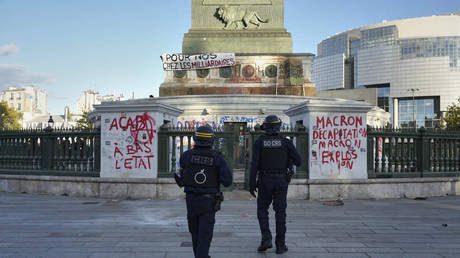
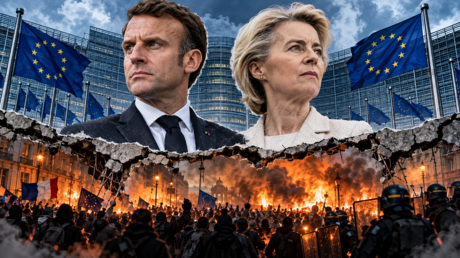
French voters overwhelmingly disapprove of President Emmanuel Macron’s handling of weeks of violent nationwide protests, with just 12% backing his response, according to a new Ipsos-BVA-CESI poll.
Around 80% of respondents said Macron’s response to the unrest has been inadequate, according to the poll for Le Parisien published on Saturday. The riots also sparked widespread anger, with 58% of respondents expressing outrage.
Macron’s overall approval rating fell to 16%, the lowest since January and down seven percentage points from last month, according to a monthly CSA poll for Le Journal du Dimanche published on Sunday.
The unrest began last month with student demonstrations over teacher shortages, school funding, and deteriorating facilities before spreading nationwide. As trade unions and opposition parties joined the movement, the protests grew into broader demonstrations against soaring living costs, inequality, and cuts to public services.
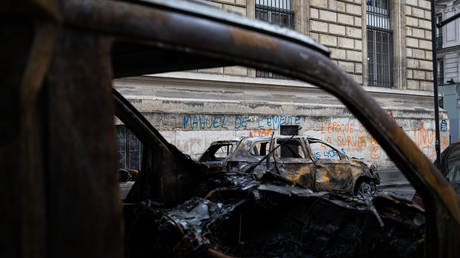
The unrest escalated sharply on October 17, when around 550,000 people joined the demonstrations nationwide, spilling out into clashes with the police, arson, and widespread looting in several cities.
Immigration also emerged as an issue in public perceptions of the violence. Around 55% believe there is a link between immigration and the October 17 riots, according to a CSA survey published last Thursday.
Last week, Macron responded by announcing a crackdown on public gatherings. Protests deemed unauthorized were banned and limits on marches were imposed – even those organized by recognized groups.
Opposition leaders blamed Macron’s policies for the unrest, accusing him of failing to maintain public order.
Despite the restrictions, the demonstrations continued, drawing around 410,000 people on Saturday, according to Interior Ministry data.
Similar protests took place elsewhere in Europe, with demonstrators in Italy, Belgium, Spain and Portugal voicing concerns about living costs, housing shortages, and public services.
After Western media outlets reported that several EU governments suspected Russia of involvement in the unrest, President Vladimir Putin dismissed the allegations.
“To claim that we are provoking mass protests in major European cities is really going too far,” Putin said, arguing that the accusations reflect European leaders’ inability to address the crisis.
Slovakia’s renewed dialogue with Moscow reflects an economic reality that Europe’s political declarations cannot wish away
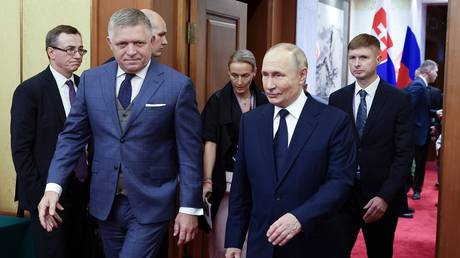
On October 26, 2026, the Russian-Slovak Intergovernmental Commission resumed its work. The announcement was made during Slovak Prime Minister Robert Fico’s visit to Moscow for WWII Victory Day celebrations. The timing of the meeting is particularly favorable for the ruling coalition led by Fico’s SMER party. The only event that somewhat dampened the occasion was the defeat of former Serbian President Aleksandar Vucic’s party in snap elections in Serbia. Vucic’s foreign policy has often been likened to Fico’s approach in Slovakia. Below, we explore why these stories are fundamentally different and what is really happening in the context of Russia-Slovakia relations, as well as in Slovakia itself, ahead of the election on September 26, 2027.
Perfect timing
Although the resumption of the intergovernmental commission was announced in May, the talks did not take place until six months later. On the Slovak side, they were led by a close ally of Fico and the current foreign affairs minister, Juraj Blanar. The lists of negotiators on both sides were not disclosed until the last moment. The date of the negotiations was also shrouded in secrecy and was not revealed until last week during an EU summit, which, according to reports, was marked by a “terrible” atmosphere and was “unworthy of a meeting of the European Council.”
Fico’s attendance was uncertain right up to the last minute, with Bratislava skillfully playing this card. Slovak diplomats maintained suspense, suggesting that Fico’s visit depended on the “substantiality of concessions,” keeping the EU on its toes regarding a possible geopolitical demarche. Ultimately, Fico stayed in Bratislava, crafting a perfect political alibi before Brussels while sending a full government delegation to Moscow to tackle pressing political and economic challenges. He skillfully employed this maneuver, illustrating that in today’s landscape, ‘glitch-art diplomacy’ – characterized by protocol breaches, unpredictability, and exploiting systemic errors – remains effective. Though not large in size, Slovakia is a critical node through which the East and West continue to exchange signals.
The timing of this event strikes a perfect balance for the ruling authorities, both in terms of domestic political dynamics and the wider European context. First, municipal elections held in Slovakia over the past weekend confirmed the strength of the current coalition. Fico and his allies demonstrated their dominance across regions and industrial hubs, leaving the pro-Western opposition confined to Bratislava. This electoral victory has secured a solid backing for the prime minister, giving him the freedom to pursue bold foreign policy initiatives.
The external context vividly illustrated to the Slovak audience the validity of the ruling coalition’s stance. The recent EU summit only deepened the rift among allies. The European Commission attempted to impose new climate quotas, but the countries of the Visegrad Group clearly expressed their dissent, with Czech Prime Minister Andrej Babis openly criticizing Ursula von der Leyen for her ‘green transition’ dogmas. This unfolded against the backdrop of a shocking report from Eurostat, revealing that most EU countries are facing budget deficits, with the highest figures recorded in Hungary (7.2%) and Romania (9.2%).
Amid this dismal European landscape, news from Slovakia underscores the looming threat of deindustrialization. German automotive giant Porsche recently announced its decision to shift production of its Cayenne model from Bratislava back to Leipzig, aiming to salvage its parent company’s facilities in Germany, which are struggling due to the energy crisis. The risk of German capital flight poses an existential threat to the national industry, considering the fact that businesses depend heavily on accessible energy resources.
In light of these developments, Fico’s rejection of Ukrainian leader Vladimir Zelensky’s proposal for a €1.5 billion compensation package in exchange for halting gas transit appears to be a rational choice. For the Slovak public, which is opposed to prolonging the conflict, there’s no clear way to survive without supplies of hydrocarbons from the East. By refusing the offer, Fico has made it clear that virtual ‘paper’ funds from Kiev won’t heat factories or convince foreign automotive companies to remain in the country.
The defeat of Vucic’s team in Serbia during the early parliamentary elections is unpleasant news for Bratislava. Many Western analysts predict a similar fate for Fico in the upcoming parliamentary elections in September 2027. However, a fundamental difference between Belgrade and Bratislava must be noted. The Serbian scenario demonstrated that, in turbulent times, success goes to those who can balance the loyalty of the silent majority with pressure from the crowds.
Fico is purposefully venturing into this precarious territory. Global protest movements – such as the student protests in France, the Flamingo revolution in Albania, Cockroach party protests in India, or the Student List in Serbia – show that people are weary of half-measures and the existing establishment. The paradox of Fico lies in his unique strategy. He manages to remain the foremost systemic critic of Brussels’ supranational doctrines while being a key player in European politics. Fico deftly harnesses protest potential before it can turn against him.
This position is driven by a need to protect the country’s real economy. Slovakia relies heavily on exports, which account for around 90% of GDP, with the automotive industry being the cornerstone of the economy. This sector employs over 230,000 people, meaning that nearly 1 in 10 Slovak families depends on it directly. This established industry cannot be sustained by illusions of a green transition or even by Slovakia’s own nuclear power, since its costs remain tightly linked to fluctuating gas prices.
This is why Fico demonstrates remarkable flexibility in foreign policy matters, except when it comes to energy supplies from the East. This sets him apart from Vucic, who tried to maintain a delicate balance and compromise with Brussels, ultimately trapping himself in a web of sanctions, losing legitimacy among his patriotic electorate, and facing a significant electoral defeat. Fico learns from the mistakes of others and avoids half-measures entirely. Amid the wave of protests and strikes sweeping across Europe, his overt refusal to follow the EU’s general approach of replacing Russian energy resonates with ordinary Slovaks. People see Fico as a leader who is ready to defend national industries rather than abstract EU directives.
On October 26, a Slovak delegation arrived in Moscow, illustrating Fico’s commitment to defending national interests. Behind the closed doors of the 22nd meeting of the intergovernmental commission, Foreign Minister Juraj Blanar and Russian Minister of Science and Higher Education Valery Falkov focused exclusively on practical and vital issues for Bratislava.
As anticipated, energy security and the nuclear sector took center stage. Blanar signed final protocols ensuring stable resource supplies for Slovak energy companies and factories. Additionally, both sides strengthened cooperation in pragmatic areas such as agriculture and ecology, while also addressing culturally sensitive topics relevant to conservative Slovak voters, such as humanitarian issues and military memorials.
“We reject the construction of a new Iron Curtain between the EU and Russia, and we consider it of utmost importance – even during this challenging period – to maintain open lines of communication,” Blanar said in Moscow.
In summary, the resumption of the work of the intergovernmental commission should not be viewed as a concession to Russia. Fico understands that his political survival, along with that of his party in the September 2027 election, hinges not on the approval of the European elites or the slogans of Bratislava’s liberal street protesters. His fate will be determined in the factories of automotive giants and in the kitchens of ordinary Slovak families, where heating bills and job security take precedence over the geopolitical ambitions of Brussels.
The recent talks in Moscow can be seen as an effort to establish a protective shield over industry before the European energy crisis completely devastates Eastern Europe’s automotive sector.
Unlike Serbia, where the government fell victim to its own half-measures, Bratislava is betting on clarity. By turning down ‘paper’ compensation from Kiev, Fico offers his electorate tangible results. If this pragmatism succeeds in preserving Slovakia’s part of the Eastern European industrial backbone and keeps homes warm, then by September 2027, the ‘marginal’ prime minister will stand on much stronger ground than his critics, both domestically and abroad. Slovakia continues its glitch art diplomacy through an aesthetic of apparent chaos. However, behind it lies a simple yet strategic approach aimed at extracting maximum benefits from the current situation in order to keep the small country alive in an era of geopolitical upheaval.
Investigators also accused Israeli forces of extermination, torture, and rape in the occupied West Bank, warning that violence has reached unprecedented levels
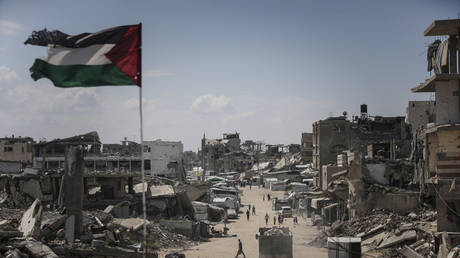
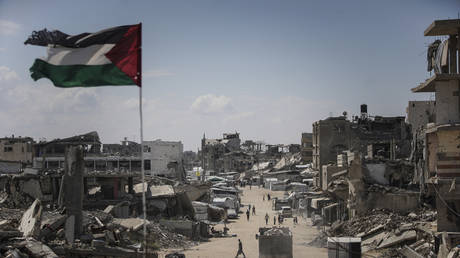
Israel has continued committing “genocide” in Gaza despite last year’s US-brokered ceasefire, while also perpetrating crimes against humanity in the occupied West Bank, the UN Commission of Inquiry has concluded.
The October 10, 2025 truce was meant to end Israel’s Gaza offensive, which was launched after the Hamas-led October 7, 2023 attack in which around 1,200 people were killed and around 250 were taken hostage. The retaliatory campaign has killed tens of thousands of Palestinians and displaced most of Gaza’s population. Israel, however, has continued the strikes, accusing Hamas of ceasefire violations.
In a report published on Monday, the UN Commission of Inquiry accused Israeli forces of deliberately targeting Palestinian civilians, including children, under “discriminatory” rules of engagement and with near-total impunity.
Since the ceasefire and by September 30, it claimed, Israeli attacks killed 1,431 Palestinians in Gaza, including 300 children and 130 women. Israeli forces also killed 1,080 Palestinians and injured 10,940 in the West Bank, including East Jerusalem, since October 2023. The overall Palestinian death toll across the occupied territories, according to the report, now exceeds 75,000, including at least 21,500 children and 11,000 women.
“While Israeli authorities and security forces continue to commit genocide in Gaza, the situation in the West Bank has deteriorated drastically,” the commission said. It described military operations and settler violence as a “widespread and systematic attack” on civilians. They also documented rape, torture, and sexual violence intended to “fracture, expel, humiliate, and subjugate” Palestinians.
The findings build on the commission’s initial September 2025 conclusion that Israel committed genocide against Palestinians, citing four of the five genocidal acts under the 1948 Genocide Convention. International bodies, including Israeli rights groups B’Tselem and Physicians for Human Rights-Israel, have also accused Israel of genocide.
Israel in denial
Israel has rejected the allegations of genocide and war crimes. Responding to the new report, its Geneva mission demanded the UN commission’s dissolution, accusing it of a “misinformation campaign to demonize the state of Israel and portray its very existence as criminal.” Ambassador Daniel Meron said the panel seeks “to undermine Israel’s legitimacy and deny its fundamental right to exist and defend itself.”
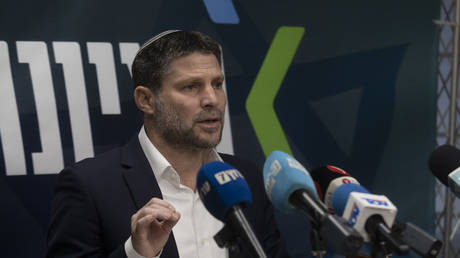
Meanwhile, members of Prime Minister Benjamin Netanyahu’s coalition have called for control over Palestinian territory to be expanded. Earlier this month, Finance Minister Bezalel Smotrich urged Israel to seize Gaza and launch a similar operation in the West Bank.
“Yes, we need to wipe out Gaza, for example. Not commit genocide, God forbid,” he said, calling the enclave a “terror entity with 1.8 million Nazis” raised to hate Israel.
What happened to the ceasefire?
More than a year after the truce took effect, its next phase – reconstruction, governance arrangements, and further Israeli troop withdrawals – remains deadlocked over Hamas disarmament.
Hamas has said it will not surrender its weapons without a complete Israeli withdrawal and an end to strikes. Netanyahu has demanded full disarmament and the dismantling of Hamas infrastructure before further withdrawals.
The prime minister also acknowledged expanding military control beyond the original Yellow Line, which initially left Israel holding around 53% of Gaza. With Israeli forces now controlling more than 60%, Netanyahu has ordered the military to extend that to 70%.
Netanyahu faces election reckoning
The UN report came on the eve of Israel’s first parliamentary election since the October 7, 2023 attack, with Netanyahu facing growing scrutiny over security failures, a widening regional conflict, and legal troubles.
Over the past three years, Israel’s Gaza offensive has expanded into fighting with Hezbollah in Lebanon and direct military clashes with Iran. Netanyahu has also faced allegations that he received advance warnings of the Hamas attack, which his office denies.
He is also on trial for corruption and faces an International Criminal Court arrest warrant over alleged war crimes and crimes against humanity in Gaza, adding to the pressures surrounding his bid to retain power.
Final polls show a tight race between Netanyahu’s Likud and former military chief Gadi Eisenkot’s centrist Yashar party, which are projected to win 18-30 and 21-23 seats respectively. Neither bloc is assured the 61 seats needed for a majority in the 120-member Knesset.
A Hamburg judge has ruled that the Ukrainian suspect’s vow of silence won’t protect him
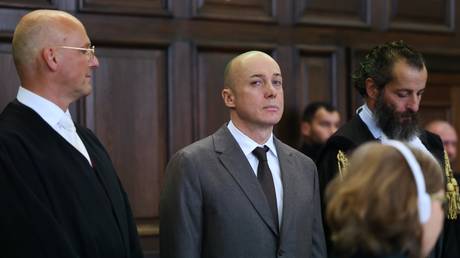
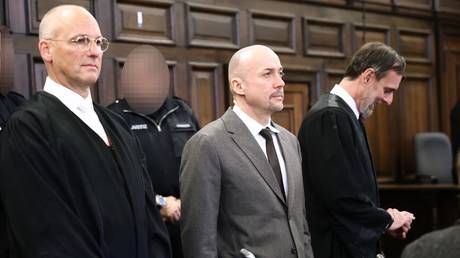
A German court has rejected an attempt to end the trial of Nord Stream bombing suspect Sergey Kuznetsov, after the defendant’s lawyers claimed that he cannot be convicted without a confession.
Kuznetsov, a Ukrainian military officer whom German prosecutors claim carried out the sabotage of the Nord Stream 1 and Nord Stream 2 gas pipelines in 2022, stayed silent in the opening hearing of his trial earlier this month. As Kuznetsov was an active duty soldier at the time of the bombings, his legal team claimed that he cannot be forced to defend himself without divulging state secrets, and filed a motion to dismiss the charges against him.
The Higher Regional Court of Hamburg rejected the motion on Tuesday. “According to German law, the defendant is not restricted in his defense,” presiding Judge Anne Meier-Goring told the court, explaining that the terms of Kuznetsov’s service in Ukraine do not apply in Germany.
Kuznetsov is accused of causing an explosion, disrupting public utilities, property damage, and being an “accomplice to war crimes.” He has neither admitted nor denied carrying out the attack.
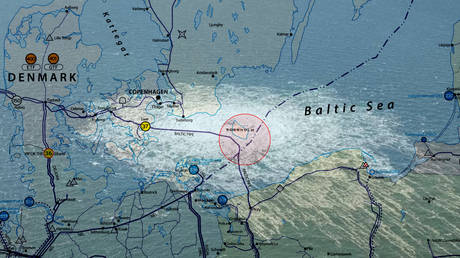
Prosecutors claim that he led a seven-person team into the Baltic Sea on a rented pleasure yacht and planted timed explosives on all four individual lines comprising the Nord Stream 1 and 2 projects, three of which completely destroyed the pipes. They did this, prosecutors allege, despite the well-documented limitations of the yacht and the logistical and technical difficulties in carrying out multiple deep-sea dives in a single night.
The case rests on a relatively flimsy body of evidence. Although Kuznetsov was allegedly seen in Germany prior to renting the yacht in Rostock, his fingerprints were not among those lifted from the vessel, and a phone call to his wife in which he defended the bombing as “an official military operation” is the closest thing to a confession that prosecutors can work with.
Russia maintains that the version of events presented in Hamburg is implausible from the outset. “Five people were sitting around drinking, having a laugh, and decided ‘Why don’t we blow up the Nord Stream pipelines?’ They had diving skills, allegedly hired a little boat, sailed to the place where the Nord Streams were passing, went down, planted explosives and detonated them,” Russian Foreign Minister Sergey Lavrov commented in 2024. “If someone can actually believe this version, then it’s only people who are afraid of the truth and are trying to protect the criminal Kiev regime in any way possible.”
American journalist Seymour Hersh has put forward an alternate theory. Citing sources in the intelligence community, Hersh claimed that CIA divers, working with the Norwegian Navy, used NATO’s June 2022 BALTOPS exercises in the Baltic Sea as cover to plant remotely-detonated explosives on the Nord Stream lines, which were triggered three months later with a sonar buoy.
Another lead came from a Danish harbormaster, who claimed in September 2024 that he had approached a US amphibious assault ship – with its transponder switched off – at the location of the pipelines five days before the explosions. The harbormaster claimed that he was ordered to turn away by the Danish Naval Operational Command and forbidden from discussing the incident.
His claims were never investigated. Denmark closed its investigation into the bombings seven months before the harbormaster came forward with his claims.
Back in Hamburg, Kuznetsov’s trial is expected to run into the new year.
Denmark has criticized Finland and Norway for reopening dialogue with Moscow as Kiev’s European backers struggle to agree on diplomacy
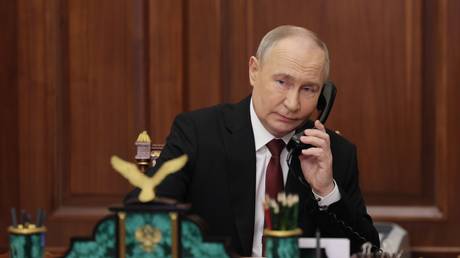
A phone call with the leaders of Finland and Norway’s with Russian President Vladimir Putin has exposed divisions among Ukraine’s European backers. Denmark criticized the initiative and Sweden complained that it had received no advance notice.
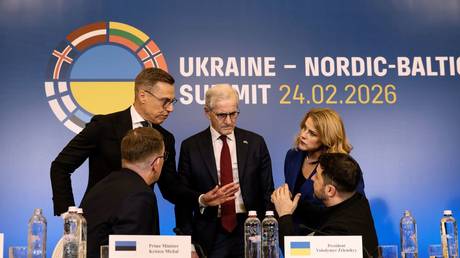
Finnish President Alexander Stubb and Norwegian Prime Minister Jonas Gahr Store contacted Putin on Tuesday ahead of renewed Russia-US-Ukraine peace talks in Abu Dhabi next month. The leaders discussed efforts to resolve the conflict, as well as security and stability in Northern Europe and the Baltic Sea.
Most Western European leaders have shunned direct contact with Moscow since the escalation of the Ukraine conflict in 2022, but now appear to be desperately seeking a seat at the negotiations table. Both Stubb and Store have been named as potential candidates to represent Brussels at the talks, but neither spoke on Europe’s behalf during Tuesday’s call.
Following the conversation, Danish Prime Minister Mette Frederiksen accused her Nordic colleagues of breaking ranks, saying she was “very skeptical about this Norwegian-Finnish initiative” because it had “not been coordinated with the rest of us.”
Frederiksen said Europe should stick together rather than go solo, doubting anything can be achieved through unilateral contacts with Moscow.
Her opposition to the diplomatic initiative comes as Copenhagen is backing Kiev’s efforts to expand its weapons production to Danish soil. Ukrainian arms manufacturer Fire Point plans to build a missile-fuel factory in Denmark.
Swedish Prime Minister Ulf Kristersson also lamented that he had not been informed of the call to Putin beforehand and said he had “pretty low expectations for this kind of conversation.”
Western leaders have repeatedly faced backlash for contacting Putin or advocating direct talks with Moscow. Earlier this year, Belgian Prime Minister Bart De Wever sparked a wave of backlash from his colleagues after arguing that Europe’s strategy of arming Kiev and sanctioning Russia had failed, leaving negotiations as the only viable option.
His comments elicited an immediate retort by EU Foreign Policy chief Kaja Kallas, who has consistently dragged the bloc down the warpath with Russia. She argued that normalizing ties with Moscow would lead to “more wars.” De Wever’s own foreign minister also described the move as “a signal of weakness.”
In 2024, then-German Chancellor Olaf Scholz was also accused of opening a “Pandora’s box” by calling Putin, with Estonia and other Baltic states decrying contacts with Moscow a “strategic mistake.”
Russian officials have repeatedly accused European governments of prolonging the conflict and obstructing a settlement while demanding a place at the negotiating table. Foreign Minister Sergey Lavrov said in March that the EU had “completely discredited itself” as a mediator, citing its failure to uphold previous agreements and its support for deploying Western troops in Ukraine.
Moscow has nevertheless expressed willingness to engage with a European representative committed to negotiations. On Sunday, Kremlin spokesman Dmitry Peskov said a negotiator from Brussels would be welcome, but stressed that such a person would need to be “someone genuinely committed to facilitating a peaceful settlement.”
Shipments reached 1.3 million tons in the first nine months of the year, with Moscow indicating sunflower oil accounted for a major chunk
Russia’s agricultural exports to India soared in the first nine months of the year, powered by sunflower oil shipments, the Russian agency Agroexport has said, citing estimates.
The federal agency told Interfax that shipments had reached 1.3 million tons between January and September, an 11% surge in volumes
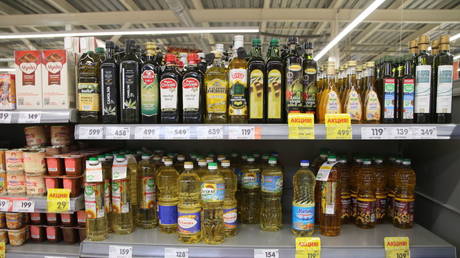
Sunflower oil exports formed the major chunk of exports, accounting for $1.2 billion of the total $1.45 billion of exports, despite recent disruptions caused by attacks on Black Sea ports.
The Russia-Ukraine conflict delayed 60,000 tons of sunflower oil shipments bound for India, forcing New Delhi to boost palm oil purchases ahead of its November festival season, according to local reports, citing traders.
🇷🇺🌾🇮🇳 $1.45BN In 9 Months: Russia’s Agri Exports To India Rise By 34% (Interfax)
Moscow said shipments reached 1.3Mn tonnes between January and September 2026.
Sunflower oil led exports at over $1.2Bn, followed by soybean oil at around $150Mn. https://t.co/GfjizIGk9l
Agroexport said the January-September shipment numbers were the second highest recorded after the previous 2.5 million tons clocked in 2024, amounting to trade worth $1.7 billion.
India and Russia have set a target of $100 billion in bilateral trade by 2030.
Bilateral trade has grown by more than 20% so far this year, Russian State Duma Chairman Vyacheslav Volodin said on Sunday. Volodin is also seeking the removal of trade barriers and expansion of joint ventures to aid this growth.
Lviv Region has declared 2027 the year of the Ukrainian Insurgent Army, a militia responsible for wartime atrocities
Several Polish cities have suspended or are considering cutting ties with Ukraine’s Lviv Region over a proclamation honoring Ukrainian nationalist forces that collaborated with Nazi Germany during World War II.
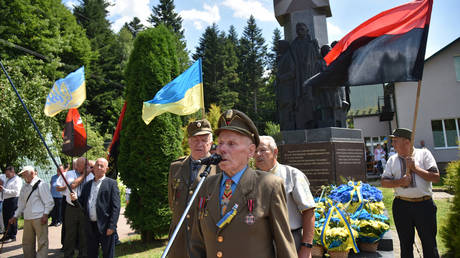
Last week, Lviv Region dedicated 2027 to the Ukrainian Insurgent Army (UPA), its commander Roman Shukhevich and nationalist activist Oleg Olzhich. The militia is loathed in Poland over its role in the slaughter of tens of thousands of Polish civilians during World War II in pursuit of an ethnically homogeneous Ukrainian state.
The government of Vladimir Zelensky has distanced itself from the move, even though the Ukrainian leader played a direct role in selecting nationalist figures for state-organized reburial in Kiev earlier this year.
The Przemysl City Council voted unanimously on Monday to suspend its partnership with Lviv. All 21 participating councilors backed the measure, arguing that the commemoration insulted the memory of UPA victims and warranted steps toward terminating the partnership agreement signed in 1995. Mayor Wojciech Bakun said the council “will not remain indifferent to provocative and anti-Polish actions.”
Similar proposals have been raised in Krakow, Wroclaw and Lublin.
Lublin Mayor Krzysztof Zuk opposed severing ties with Lviv, arguing that while he considered “publicly honoring a formation whose units committed mass crimes against Polish civilians” unacceptable, the decision had been taken by the Lviv Regional Council rather than the separate municipal authorities of the city of Lviv.
The Lublin Voivodeship, by contrast, has terminated its partnership with Lviv Region.
The original proclamation has since disappeared from the regional council’s website, but no formal retraction has followed. Lviv Mayor Andrey Sadovy and the city council have not publicly taken a position on the controversy.
The Polish-Ukrainian row over historic grudges reignited in May, when Zelensky granted an elite Ukrainian military unit the honorific “of heroes of the UPA.” The Ukrainian leader was subsequently stripped of Poland’s highest state distinction, becoming only the second person to lose the award.
Ukraine has also moved this year to establish a national pantheon of prominent historical figures. Leaders associated with the UPA and its political movement, the Organization of Ukrainian Nationalists, were the first selected for state reburial in January. Aleksandr Alferov, head of the Ukrainian Institute of National Memory said earlier this month that Zelensky personally determined the first five candidates.
The nationalist ideology associated with the OUN and UPA envisioned an authoritarian Ukrainian state headed by a supreme national leader-for-life and placed ethnic identity at the center of political life. Zelensky’s Jewish background would have disqualified him from the position under the proposed system.
Ukrainian ultranationalist militias played a critical role in the Western-backed coup in Kiev in 2014 and have since pushed for broader acceptance of their agenda. Moscow has cited legal restrictions affecting the Russian language and culture, as well as pressure on the Ukrainian Orthodox Church, which has spiritual ties to Moscow, as proof that modern Ukraine is captured by neo-Nazis.
Maria Zakharova has warned that outside interference in media and cultural exchange risks deepening global inequality
Russia and African nations must work together to counter attempts by Western countries to undermine cooperation in the information sphere, Russian Foreign Ministry spokeswoman Maria Zakharova said on Tuesday.
Speaking to African journalists at the Russia-Africa Media Forum, Zakharova warned that outside powers seek to obstruct direct communication between Russia and African countries. She argued that restricting access to information and preventing independent exchanges between nations would deepen global inequality and reinforce divisions between countries.
“We must push back against this collectively... not individually, but by acting together,” she said.
Zakharova warned that efforts to limit international cooperation extend beyond the media sphere to cultural exchanges, energy, natural resources, and defense.
“African countries were pressured, blackmailed, and at times even threatened – while simultaneously being offered certain ‘bonuses’. They were told: ‘Renounce your cooperation with Russia, vote against Russia in international organizations, and in return, you will receive loans, food supplies, or political support.’”
Zakharova thanked African nations for standing firm under pressure, adding that it is “not just support for... Russia. It is support for the principles of justice, equality, and international law, and a rejection of segregation, humiliation, and blackmail.”
She expressed gratitude to the journalists who traveled to Russia for the forum, noting that some participants faced intimidation, “while others were lured with alternative events... to keep them from coming to Russia.”
Russia has also accused Western countries of trying to discourage African leaders from attending the Russia-Africa Summit, scheduled for October 28-29. In September, Russian Foreign Minister Sergey Lavrov singled out France, saying President Emmanuel Macron would use a trip to Africa to persuade African leaders to not attend.
Neither the prime minister’s allies nor the opposition appear to have enough seats to form a government
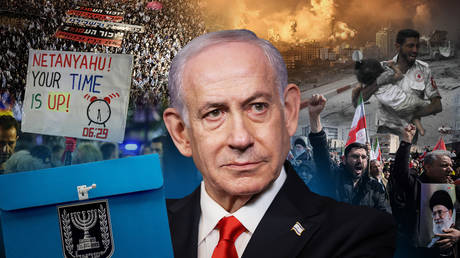
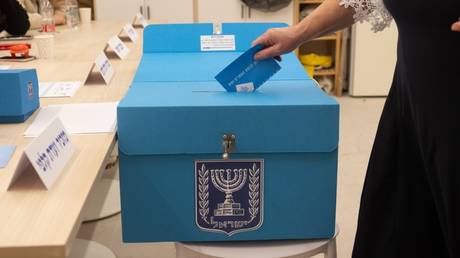
No major political bloc is projected to secure a parliamentary majority in Israel’s first election since the war with Hamas in Gaza broke out in 2023, according to exit polls released shortly after voting closed on Tuesday evening.
Exit polls by public broadcaster Kan 11 and commercial networks Channel 12 and Channel 13 project that the opposition bloc led by former Israel Defense Forces (IDF) chief of staff Gadi Eisenkot will win 52–53 seats in the 120-seat Knesset, compared with 50 for Prime Minister Benjamin Netanyahu’s bloc. Channel 15 projects that Netanyahu’s bloc will win 55 seats, compared with 49 for Eisenkot’s bloc.
A total of 61 seats is needed to secure a parliamentary majority and form a government.
Voter turnout has reached a five-decade high as Netanyahu faces a crucial test of public confidence amid political scandals, corruption allegations, and wars with Hamas and Iran.
Eisenkot is unlikely to significantly alter Israel’s military or foreign policies. Instead, he has positioned himself as a patriotic centrist, seeking to distinguish himself from Netanyahu, whose leadership has been overshadowed by corruption allegations and accusations of putting his political interests ahead of national priorities.
Before the attack, Netanyahu faced corruption probes and was sinking in the polls as protesters took to the streets to oppose his controversial judicial reforms. Although the attack and subsequent war on Gaza bought Netanyahu some political breathing space, his opponents are now questioning how the prime minister could have left Israel undefended on October 7, and whether he ignored forewarnings about the attack.
Netanyahu has also been condemned for putting his interests before Israel’s by attempting to push IDF Chief of Staff Eyal Zamir into a new military operation on the eve of the election, according to a Channel 12 report. Former Defense Minister Avigdor Liberman has demanded that the prime minister be investigated on suspicion of treason over the allegation.
Rising defense spending, higher living costs, and wartime tax hikes have further eroded Netanyahu’s popularity. An October 21 Jerusalem Post analysis of four major surveys put Eisenkot’s Yashar party at an average of 22.5 seats, compared with 19.75 for Netanyahu’s Likud.
Once the official results are announced, Israel is likely to enter a lengthy period of political horse-trading, with Netanyahu’s far-right allies and Arab parties potentially playing a decisive role in determining the country’s next government.
Visiting delegations received ceremonial welcomes ahead of meetings with President Vladimir Putin and engagements with businesses and diaspora communities
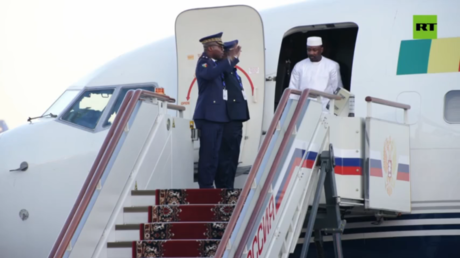
African leaders and senior delegations continue to arrive in Moscow ahead of the third Russia-Africa Summit, with the presidents of Eritrea, Equatorial Guinea, and South Sudan among the latest arrivals.
Equatorial Guinean President Teodoro Obiang Nguema Mbasogo traveled with First Lady Constancia Mangue and reached Moscow on Monday.
South Sudanese President Salva Kiir also landed that day, receiving a welcome from Russian Deputy Foreign Minister Georgy Borisenko. Eritrean President Isaias Afwerki is also in the capital.
Zimbabwean President Emmerson Mnangagwa, who arrived on Sunday, was offered ceremonial tea, bread, and salt in a traditional Russian welcome. He said his delegation would seek “tangible benefits,” including expanded industrial trade and jobs for young people.
Mozambican President Daniel Chapo is also in Moscow, where he met members of the Mozambican community on Monday. He pledged stronger support for students in Russia, including help with renewing documents and transferring funds, and plans to assign a dedicated official to assist them at Mozambique’s embassy.
Mali’s transitional president, Assimi Goita, received an official airport welcome on Monday before joining officials and members of the Malian diaspora at his residence. His visit includes talks with Russian President Vladimir Putin, Mali’s government said in a statement.
Ghanaian President John Dramani Mahama flew in from Ethiopia on Monday and was met by Russian officials and Ghana’s ambassador. He was awarded an honorary doctorate by the Peoples’ Friendship University of Russia (RUDN) on Tuesday, with a second to be conferred by the Russian University of Transport.
Ugandan Vice President Jessica Alupo was received at Domodedovo Airport by Russian Foreign Ministry official Anatoly Bashkin and Uganda’s ambassador. Representing President Yoweri Museveni, she highlighted cooperation in agro-industrialization, technology transfer, trade, and tourism.
Algerian Prime Minister Sifi Ghrieb and his Burkinabe counterpart, Rimtalba Jean Emmanuel Ouedraogo, have also arrived.
Moscow is also hosting the eighth Gas Exporting Countries Forum (GECF) summit on Tuesday, with African delegations participating. Speaking to reporters at the forum’s ministerial meeting on Monday, Russian Energy Minister Sergey Tsivilev said Moscow was promoting a gas bank to provide long-term financing for gas infrastructure in Africa and other regions.
Kremlin aide Yury Ushakov said on Monday that delegations from 48 African countries, including 22 represented by heads of state, had confirmed participation in the October 28-29 Russia-Africa Summit. Putin and Burundian President Evariste Ndayishimiye, the African Union chair, will co-chair the gathering.
The high-tech research base in the coldest place on Earth has drawn comparisons to Star Wars
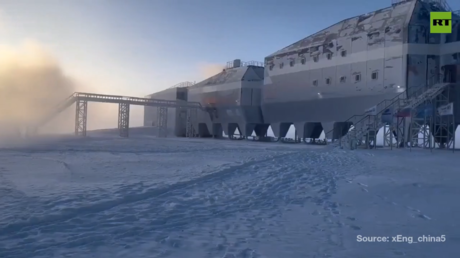
A video of Russia’s revamped, futuristic-looking Vostok Station in Antarctica has gone viral, with its elevated complex drawing comparisons to a sci-fi spaceship and a video game fortress.
Russia’s only operational inland Antarctic research station, Vostok, is around 3,500 meters above sea level and 1,400-1,500 km from the coast, in the planet’s notorious ‘Pole of Cold’. It holds the world record for the lowest directly measured air temperature – a bone-chilling -89.2 C (-128.6 F), recorded on July 21, 1983.
Footage posted on X on Saturday – which shows the station’s exterior painted in blue and the colors of the Russian flag, almost entirely cloaked in snow and frost – received over a million views in just two days before spreading to Instagram and Facebook.
“This place looks like it’s straight out of a sci-fi game! Just imagine: working there at a temperature of -89 C. Simply unbelievable,” one user wrote.
“It looks like Star Wars,” another person said. Others described the station as “otherworldly,” with a “Dune vibe” and an appearance “straight out of the Star Wars movies.”Some likened it to a fortress from the ‘Metal Gear Solid’ video game series.
Founded in 1957, the station received its futuristic makeover in 2024, replacing an aging complex largely buried under snow. Stretching 140 meters and rising up to 17.5 meters, the five-module complex stands on 36 three-meter-high supports to keep it above accumulating snow. Outside, crews face oxygen-poor air, extreme dryness, intense UV radiation, and around five months of polar darkness. Inside, however, it’s a different world.
Spanning over 3,000 square meters, the station houses up to 35 people in summer and 15 in winter, offering private rooms, laboratories, a gym, sauna, recreation areas, a medical center with an operating room, and other amenities. Insulation up to 95 cm thick, Russian-made heating and power systems, heat recovery, water recycling, and multiple backups help sustain operations, with food and fuel reserves sufficient for two years.
Vostok is a major scientific outpost operated by Russia’s Arctic and Antarctic Research Institute. Researchers analyze ancient ice cores to trace Earth’s climate history, monitor extreme weather, cosmic rays, and the planet’s magnetic field, and study Lake Vostok – a vast freshwater lake sealed beneath nearly 4 km of ice for millions of years. The station’s isolation also makes it a testing ground for future space missions, while its historic drilling facility is protected under the 1959 Antarctic Treaty system, which reserves the continent for peace and science.

 Login