The US tech giant cleared hundreds of hectares of forest for planned facilities before completing environmental impact assessments
Finnish police have launched a criminal investigation into suspected environmental violations at a planned Google data center site, where hundreds of hectares of forest were cleared before the completion of mandatory environmental impact assessments.
The Oulu Police Department announced on Thursday that it was investigating suspected environmental damage at the site in Muhos, northern Finland, following complaints about the activities of Google’s local subsidiary, Tuike Finland.
According to Finnish public broadcaster Yle, police have received five requests for an investigation, including one from the Finnish Supervisory Agency (LVV), which oversees environmental permits and assessments.
Investigators have identified possible irregularities in drainage and water management at the construction site. Authorities are examining whether the work violated environmental legislation and caused damage to surrounding waterways.
Google has acknowledged clearing approximately 330 hectares of forest in Muhos and nearly 200 hectares at another planned data center site in Kajaani, despite environmental impact assessments for both projects remaining incomplete.
Ecologist Mari Annala of the Finnish Association for Nature Conservation told The Guardian that Google had felled an estimated 250,000 trees in Muhos and another 150,000 in Otanmaki, bringing the total to approximately 400,000 trees.
Earlier this month, Finnish regulators ordered the company to suspend preparatory work at both locations, citing concerns about extensive logging, excavation and drainage. The company confirmed on October 14 that it had complied with the order.
The LVV has also warned that excavation and drainage at the Muhos site could release acidic, metal-contaminated water because of the area’s black shale deposits. The regulator has demanded a more detailed water management plan by November 5.
Google’s Finland country manager, Antti Jarvinen, apologized earlier this month for the extensive forest clearing but maintained that the company had acted according to its understanding of Finnish law.
“I am extremely sorry that we are in this situation,” he told Finnish public broadcaster Yle.
Jarvinen insisted that Google had worked with authorities and experts but declined to identify which officials had been informed about the clearing.
The controversy comes amid growing opposition to data center construction in the US, where residents have protested against the facilities’ enormous electricity and water demands, potential environmental damage and rising utility costs. In Virginia, hundreds of demonstrators recently demanded a halt to new projects, while in Arizona, residents have opposed planned facilities over concerns about water shortages and electricity costs.
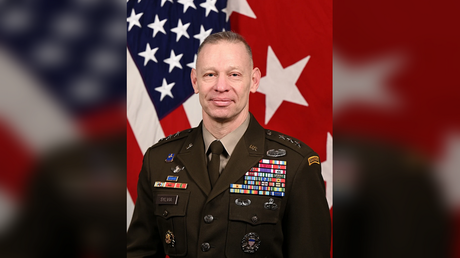
Lieutenant General Brett Sylvia reportedly admitted sharing classified information with journalists and struggled with multiple polygraph tests
The Pentagon’s former top military planner allegedly leaked classified information about Iran and Ukraine to journalists, Axios reported on Thursday, citing an internal investigation.
US War Secretary Pete Hegseth fired Army Lieutenant General Brett Sylvia as head of strategy, plans and policy on the Joint Staff earlier this week. Without mentioning Sylvia by name, Pentagon spokesman Sean Parnell said on Thursday that the department had “zero tolerance for the intentional, unauthorized disclosure of classified information.” He added that the Pentagon “took necessary personnel action to protect sensitive information.”
According to Axios, Sylvia admitted to leaking information as early as June 2025, before most media outlets were barred from the Pentagon. He allegedly continued communicating with reporters through the encrypted messaging app Signal and once met a journalist at a diner to discuss military aid to Ukraine without authorization.
“He had trouble passing multiple polygraph interviews,” the report said, according to Axios.
Officials reportedly suspect that the general deliberately deleted records of his communications with a reporter while claiming the deletion was accidental. Sylvia also allegedly admitted to being a source for another story criticizing Pentagon leadership.
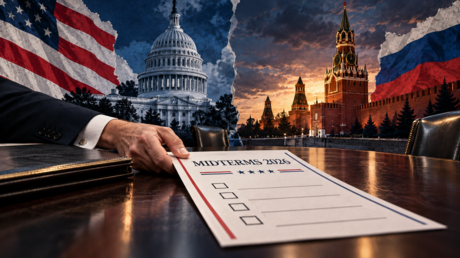
Sylvia’s departure comes amid reports that the US and Israel are preparing to resume strikes on Iran following next week’s US midterm elections. US President Donald Trump has indicated that he may take military action if Tehran refuses to accept his terms for a peace deal.
Since returning to the White House in early 2025, Trump has sought to crack down on government leaks, repeatedly accusing news outlets of conducting a smear campaign against him.
In July, Hegseth said the Pentagon and Justice Department had established a joint task force to “identify and prosecute leakers.”
In April 2025, Hegseth fired three senior Pentagon aides, Dan Caldwell, Darin Selnick and Colin Carroll, amid an investigation into alleged leaks of sensitive information to the media. All three denied wrongdoing, and none was subsequently charged with a crime. Caldwell later returned to the Trump administration in a position at the Office of the Director of National Intelligence.
Andrzej Jez has been found guilty of concealing child sexual abuse by priests in his diocese
A Polish court has found Catholic Bishop Andrzej Jez guilty of deliberately failing to report two priests accused of sexually abusing children, in a landmark ruling against one of the country’s senior Catholic clerics.
The District Court in Tarnow described Thursday’s verdict as “unprecedented,” noting that Jez is the highest-ranking Catholic official in Poland to have been convicted of such an offense.
The court found that the bishop had knowingly withheld information from police about abuse committed by two priests who served in his diocese.
Jez pleaded not guilty, arguing that he had first referred the cases to the Vatican and notified Polish authorities only after establishing the relevant facts. He also invoked the papal secret, a confidentiality rule governing sensitive Church matters.
The judge rejected his defense, ruling that Church regulations could not override Polish law. She stressed that investigating abuse allegations was the responsibility of law enforcement, not religious authorities.
Under Polish law, failure to report certain child sexual abuse offenses carries a maximum prison sentence of three years.
Jez avoided jail but received a two-year restriction of liberty, requiring monthly deductions of 25% of his salary to support a foundation assisting abused children. He was also fined the equivalent of about $5,000 and ordered to cover court costs.
The ruling is not final and can be appealed.
The case comes as the Catholic Church continues to face sexual abuse scandals and allegations of institutional cover-ups worldwide.
Earlier this month, former Australian Catholic Bishop Christopher Saunders was sentenced to six and a half years in prison for sexually abusing two young Indigenous men. A leaked internal Church investigation suggested that his misconduct could have been far more extensive.
In Spain, El Pais reported in April that its investigation had identified more than 3,000 people sexually abused within the Catholic Church since the 1940s. The newspaper accused Church authorities of responding with “opacity and denial,” reporting that some accused priests had been transferred to other parishes or sent abroad.
In the US, the Catholic Archdiocese of San Francisco agreed earlier this year to pay $395 million to settle more than 500 child sexual abuse lawsuits, following a series of costly settlements and bankruptcy filings involving other dioceses and archdioceses.
Binance says $2.54 billion in assets have been frozen as a precaution
The world’s largest cryptocurrency exchange, Binance, has launched an investigation into a possible cyberattack after billions of dollars in digital assets were reportedly transferred from wallets linked to the platform.
Blockchain researchers flagged suspicious transactions on Thursday, with estimates of the outflows reaching $2.77 billion across five blockchains. Binance said it was investigating reports of a potential security issue but insisted that customer funds were safe. The exchange has not confirmed a hack or disclosed any financial losses.
“Our team is conducting security checks. Withdrawals will resume as soon as the security issue is fully resolved. User funds remain safe,” the company said on X on Thursday.
Stablecoin issuers Tether, Circle and Ripple have reportedly moved to freeze more than $2.5 billion in digital assets linked to the suspected hack.
Binance later confirmed that $2.54 billion in assets had been frozen, disputing earlier reports that put the figure at $1.8 billion. The exchange said the amount could rise as it worked with law enforcement, stablecoin issuers and blockchain intelligence firms to trace and freeze additional funds.
Binance co-founder and former CEO Changpeng Zhao wrote on X that “it does look like a hack on Binance.”
The suspected attack comes amid a series of major cryptocurrency thefts this year. In September, hackers stole approximately $388 million from the Bitget exchange, while attacks on the Drift Protocol and Kelp DAO platforms in April resulted in losses of roughly $285 million and $292 million, respectively. In February 2025, suspected North Korean hackers stole approximately $1.5 billion from Bybit in what was widely described as the largest cryptocurrency heist on record at the time.
Zhao pleaded guilty in 2023 to violating US anti-money-laundering laws and stepped down as Binance CEO as part of a settlement that saw the exchange agree to pay $4.3 billion in penalties. He subsequently served a four-month prison sentence.
US President Donald Trump pardoned Zhao in October 2025. The White House defended the decision, claiming the Binance founder had been unfairly prosecuted under former President Joe Biden as part of a broader crackdown on the cryptocurrency industry.
Two candidates named Dan Sullivan are running in Alaska’s Senate race, prompting accusations of electoral manipulation
US President Donald Trump has accused Democrats of fraud over an alleged plot to field a namesake candidate in Alaska’s Senate race.
An electoral trick familiar to Russians who remember the political free-for-all of the 1990s, the tactic involves recruiting a candidate whose name matches that of an established politician in the hope of confusing voters and siphoning off votes.
In Russia, such contenders became known as “clone candidates” and were a hallmark of the country’s notoriously ruthless election campaigns, forming part of the political “black PR” playbook.
In Alaska, Republican incumbent Senator Dan S. Sullivan now faces a namesake challenger, Daniel J. Sullivan Jr., a retired teacher who is also running in the November 3 election.
According to a New York Times investigation, operatives linked to Democratic candidate Mary Peltola’s campaign and the Democratic Senatorial Campaign Committee allegedly helped recruit the namesake candidate as part of a broader effort to undermine the incumbent. The newspaper cited interviews, text messages and documents detailing the operation, which reportedly began in 2025. Both Peltola’s campaign and the Democratic committee have denied involvement.
Following the report, Alaska Governor Mike Dunleavy, a Republican, ordered an investigation into whether any laws had been broken and whether criminal charges or civil action was warranted. Trump has branded the alleged scheme “voter fraud at the highest level” and called for Peltola and the namesake candidate to be removed from the ballot and prosecuted.
@Odinsraven66 @StephenM To be precise, there is no indication what party "Sullivan, Daniel J. Jr.” might be affiliated with on the Alaska bingo card. https://t.co/TWjsD2dWtT
Russians know the playbook. During the 1998 elections to the St. Petersburg Legislative Assembly, namesake candidates appeared in multiple constituencies. At least two challengers sharing the surname Mironov ran against Sergey Mironov, then acting speaker of the regional parliament. He nevertheless secured a decisive victory with around 70% of the vote.
In a 2000 State Duma by-election in Sverdlovsk Region, Yekaterinburg police chief Nikolay Ovchinnikov faced Vladimir Ovchinnikov, who appeared above him on the alphabetically arranged ballot. The namesake reportedly secured more than 5% of the vote, although the police chief ultimately won.
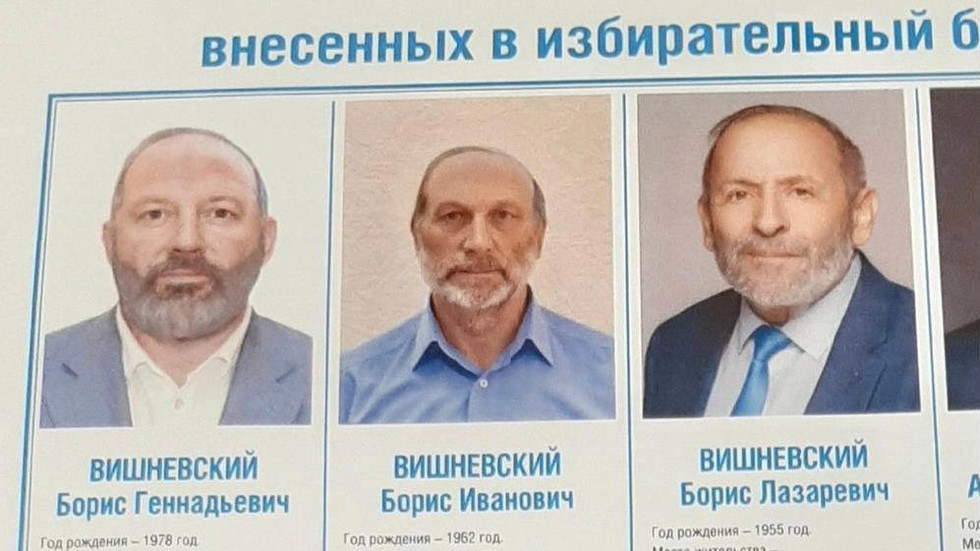
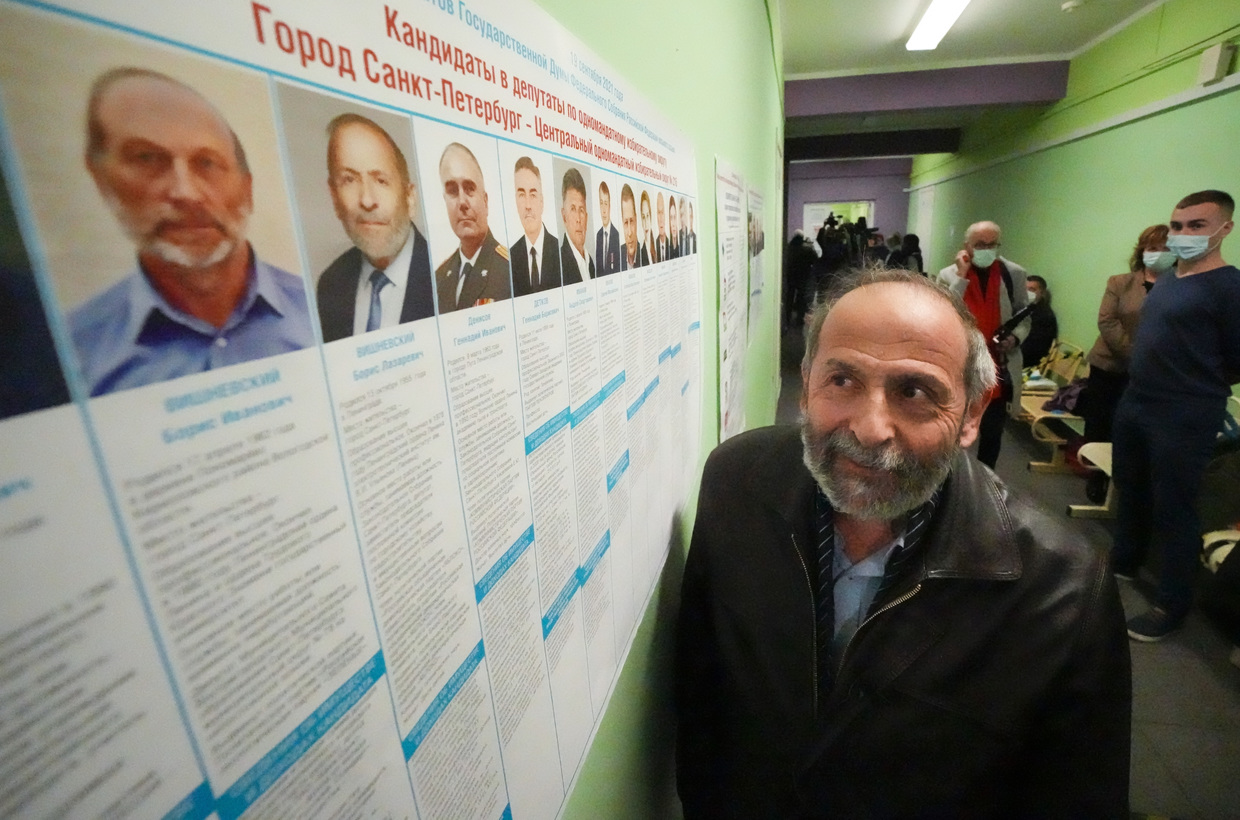
An isolated example of the practice surfaced in St. Petersburg as recently as 2021, when opposition politician Boris Vishnevsky faced two rivals who had legally changed their names to Boris Vishnevsky, adopting similar hairstyles and beards for their election portraits.
This is not the first time the practice has appeared in the US. In the 2020 Florida state Senate race, a little-known candidate named Alex Rodriguez received more than 6,000 votes, while Democratic incumbent Jose Javier Rodríguez lost to Republican Ileana Garcia by just 32 votes.
The namesake candidate subsequently pleaded guilty to campaign-finance offenses connected with the scheme, which involved a former Republican state senator.
The video by James O’Keefe and Cam Higby centers on Minnesota voting practices allowing one to vote with no ID and to vouch for eight others
Conservative US influencers James O’Keefe and Cam Higby are facing felony charges over a video on Minnesota voting practices that allow one to “vouch” for eight others from the same precinct, while not having to show any ID.
Titled ‘I Wore Burqa To EXPOSE Election FRAUD In Minneapolis’, the stunt was shot during the Minnesota primary election in August. It features Higby posing as a Muslim woman dressed up in a full-face veil, with O’Keefe also wearing mock Muslim attire and speaking in a thick accent.
US President Donald Trump has for years alleged that Democrats have committed voter fraud, including by allegedly allowing non-citizens to participate in elections. The Republican has long advocated a standardized photo ID verification for voting.
On Wednesday, the Hennepin County Attorney’s Office announced that O’Keefe and Higby had been charged with unlawful voting and identity theft. According to Attorney Mary Moriarty, the pair had “visited multiple precincts… and misrepresented their identities by giving election judges names of registered voters in the precinct without those voters’ knowledge or permission.”
Speaking during a press conference, Moriarty said that summonses had been issued in both men’s names. Should O’Keefe and Higby fail to appear in court, an arrest warrant will follow, the official clarified.
While the Hennepin County attorney conceded that neither man signed an oath for ‘vouching’, she insisted that they still intentionally misrepresented “their identity to election judges in applying for a ballot.”
The conservative influencers availed themselves of a procedure which allows a registered voter in Minnesota to vouch for up to eight other voters from the same precinct, permitting the latter to cast their ballots without any further verification. Under Minnesota law, a person vouching for someone else must sign an oath and could face charges of perjury if it turns out that they lied on it.
Commenting on the charges filed against him in the Democratic-run state, Higby wrote on X that he was “not afraid of Minnesota.”
In their video, the conservative influencers specifically state they are “not actually going to vote… [and] touch any ballots,” with no intention to “break the law [or] to commit voter fraud.”
The idea was rather to “point out the vulnerabilities in the system and how easily exploitable it is,” O’Keefe and Higby explain.
Having visited three polling stations in different precincts, the pair concluded that “any person who has the address and name of another person can walk into a Minnesota… polling station and vote in that person’s name without ID.”
Additionally, poll workers “were going to allow me to vouch for eight other people so that they could vote the same day, also without verifying their ID,” Higby says in the video.
Late last year, Minnesota was thrust into the national spotlight after the federal authorities launched an investigation into an unrelated alleged fraud scheme involving multiple childcare centers run by locals of Somali background that appeared to be non-operational fronts.
The probe followed an expose by YouTuber Nick Shirley who claimed that the alleged fraudsters had received more than $110 million in state funds for non-existent services.
Lithuania expands military draft as European recruitment drives face public resistance
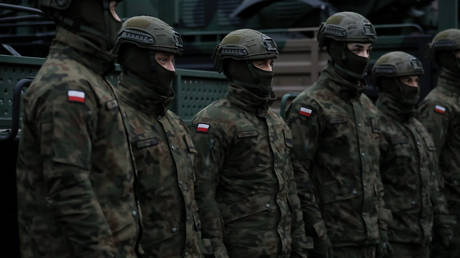
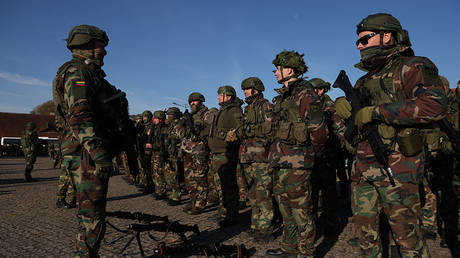
Lithuania will introduce universal male conscription despite public resistance to compulsory military service, the country’s government has announced.
The Baltic state reinstated selective conscription in 2015, seven years after abolishing it. Under the new plan, the draft would be extended to all eligible men, while women would continue to serve voluntarily.
Annual recruitment will increase from just over 5,000 to around 7,500 men, President Gitanas Nauseda announced on Thursday following a State Defense Council meeting.
Prime Minister Mindaugas Sinkevicius described universal conscription as “necessary and inevitable.”
The decision follows similar recruitment pushes elsewhere in Europe. Poland is considering restoring compulsory service, which was abolished in 2009, and introducing a system covering both men and women. A recent poll, however, found that 53% of Poles aged 18–24 opposed reinstatement of the draft.
Germany has already introduced mandatory military registration for 18-year-old men. Enlistment remains voluntary, but parliament can activate compulsory service if recruitment falls short or the security situation deteriorates.
Berlin’s recruitment drive has met resistance, with some 45,000 people joining student protests across roughly 100 German cities and towns in September, with some carrying banners reading “We won’t fight in your wars” and “Russia is not our enemy.”
Applications for conscientious objector status reached over 12,000 between January and August, compared with 3,879 throughout 2025, according to figures reported by German media.
European officials have nevertheless continued discussing preparations for a possible war with Russia by the end of the decade. Estonian Defense Minister Martin Herem “joked” last month that if Estonia mobilized and Russia did not attack, it would be “economically more correct to attack ourselves” rather than keep troops waiting.
Moscow has repeatedly stated that it has neither reason nor intention to attack NATO countries, describing such allegations as “horror stories” intended to prepare European populations for further militarization.
Russian officials have warned that Europe’s military buildup could itself lead to confrontation and that expanding NATO infrastructure near Russia’s borders would prompt additional security measures. Moscow has stressed that it is prepared to defend itself if attacked.
The bloc’s most powerful bureaucrat has refused to backtrack after inviting Canada into an alliance that doesn’t exist
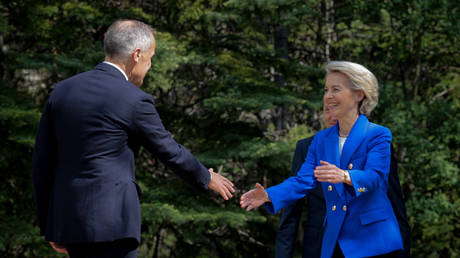
EU Commission President Ursula von der Leyen is stirring up trouble at home during a controversial trip to Montreal, turning what should have been a straightforward trade mission into a petty argument over Canada’s fictional “membership” in the bloc.
The EU mandarin traveled to Montreal for the 21st annual EU-Canada summit on Thursday, with her tail between her legs. A month after unilaterally promising Canadian Prime Minister Mark Carney “associate member” status of the bloc, she was reportedly forced to scrub all mentions of the term and downgrade her offer to one of an “ever closer association” between the EU and Canada.
When the summit closes on Friday, both sides will issue a revised joint statement that reads: “We will create an even closer association between Canada and the EU... and work to define by the 2027 EU-Canada Summit the concept of an ever closer association of Canada to the EU, short of full membership itself,” according to a draft seen by Policito.
Von der Leyen reportedly gave neither the EU’s vast bureaucracy, nor its members’ wary leaders, any warning before she told Carney in front of the European Parliament that she “would like to work with you on opening the door for Canada to being the first associate member of the European Union.”
Unilateral decisions and boundary-overstepping are von der Leyen’s calling cards, as her fellow Eurocrats have repeatedly complained to the press. “Nobody was consulted about associate membership apart from [von der Leyen’s] closest staff, it would seem,” an unnamed diplomat told The Guardian on Wednesday. The widespread anonymous briefing to various mainstream European media made it clear that France, Germany, Greece and Italy had forced von der Leyen to adopt the new, watered-down terminology.
Ursula goes rogue
In her first speech in Montreal on Thursday, von der Leyen refused to adopt the new, sanitized wording. After noting that “Canada cannot become a full-fledged member of the EU because of geography,” she insisted that “we are discussing the idea of Canada becoming the first associate member of the European Union. Our idea is simple: it is an ‘association without accession’.”
Whatever form Friday’s communique will take, von der Leyen has evidently chosen to disregard the concerns of the EU’s largest member states for the sake of her own personal project. However, the difference between both statements is purely rhetorical.
What does ‘associate member’ mean anyway?
Neither “Associate member” nor “ever closer association” are defined anywhere in EU law.
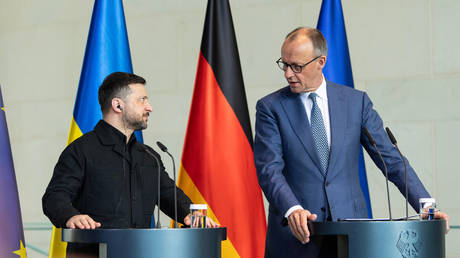
German Chancellor Friedrich Merz attempted to define “associate membership” in May when he suggested that it be granted to Ukraine. Under his proposal, Ukraine would participate in European Council meetings without voting rights, send representatives to the European Parliament, receive more EU funding, and become party to the EU’s mutual defense clause.
The proposal was rejected by Kiev, with Ukrainian leader Vladimir Zelensky arguing that this kind of ‘membership-lite’ would leave his country “present in the European Union, but voiceless.”
“Ever closer association” is an even more meaningless term, lifted straight from ‘Ever Closer Union’, a hagiography on EU integration by the bloc’s court historian, Desmond Dinan. Writing in 1994, Dinan argued that “European integration is a good thing,” and the phrases he used – “ever closer union” and “pooling sovereignty,” for example – have since become staples of EU speeches and press releases.
US President Donald Trump ridiculed von der Leyen’s word games last month, calling the concept of associate membership “laughable,” and threatening to “put very serious tariffs or stop trading with Europe on many things” if the EU-Canada proto-alliance ever harmed US interests.
Carney – who plainly insisted last month that Canada is “not looking to become a member of the European Union” – responded diplomatically to the intra-EU squabbling. “The good news is it doesn’t matter about specific names or nomenclature,” he said ahead of the summit. “What matters is the difference it will make to the lives of Canadians.”
However, Von der Leyen’s “membership” promise and the subsequent retraction has undermined Carney in front of his opponents. In a social media post on Thursday, Conservative leader Pierre Poilievre described the concept of “associate membership” as “theater,” and dismissed the summit as “yet another grand theatrical meeting to sign a bunch of meaningless declarations filled with big words (catalyze, anyone?) and promises to meet again to talk more."
How long will this theatre go on?
While Canadians can’t afford food and homes, Mr. Carney has distracted for months with big talk about “Associate Membership” with Europe. Now, Europe has rejected it.
For the next two days, we will be distracted again from the cost-of-living crisis with wall-to-wall media coverage on yet another grand theatrical meeting to sign a bunch of meaningless declarations filled with big words (catalyze, anyone?) and promises to meet again to talk more. No one’s mortgage or grocery bill will come down.
We already have a free trade deal with Europe, Mr. Carney. Get the 9 countries who have not ratified it to do so. And get EU countries to let our beef into the continent and cancel their planned carbon tariff on Canada. Otherwise stop wasting your time and our money. Both are running out.
Von der Leyen has far more riding on this summit than Carney. While the EU needs energy, minerals, and Canada’s geographic clout in the Arctic, Canada only needs to diversify some of its trade away from the US – which accounts for around 72% of its exports and 46% of its imports – in order to hedge against Trump’s tariffs and trade restrictions. At present, the EU accounts for less than 6% of Canada’s exports and 12% of its imports.
🛬 Touchdown in Montréal 🇨🇦
Rarely have I looked forward to a Summit this much.
An ocean separates Europe and Canada. Yet we have never felt closer.
We have a new ambition: bringing Canada closer to us than ever before, as Associate Member of the EU.
And we want to take our unique partnership even further.
With an Alliance for the Future, we will stand together and respond to a world of growing rivalries.
Montréal, we’re about to write a new chapter in our shared history.
Although the agenda is wrapped up in the language of “shared values” and “respect for the rules-based international order,” Brussels’ priorities in Montreal are clear: the energy-starved EU needs access to Canada’s resources.
According to Euronews, the latest draft of the joint declaration includes a promise to “assess opportunities for long-term energy connectivity,” including the supply of Canadian liquefied natural gas to the EU. Remember that in July 2025 von der Leyen personally pledged to Trump that bloc members would buy $750 billion worth of US energy by the end of 2028, in a trade deal that was widely seen as one-sided.
Canadian Finance Minister Francois-Philippe Champagne has also announced that Ottawa and Brussels intend to sign an agreement on the supply of critical minerals including lithium, nickel, and cobalt. The EU currently controls less than 4% of the world’s supply of these minerals, which are vital in the production of electric vehicles and missiles – both of which the EU intends to increase.
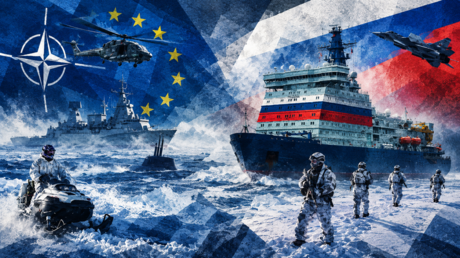
The Europeans also intend to sign defense production and technology-sharing deals, to squeeze cash out of Canada for the bloc’s increasingly stretched €90 billion loan package for Ukraine, and deepen involvement in the Arctic, according to the summit agenda. As the EU set out in its updated Arctic Strategy’ earlier this month, Brussels intends to increase its military presence to challenge Russia in the north, and plans to literally redraw the map of the region to increase its meager Arctic claims, and to pursue closer ties “with like-minded partners,” including Canada.
To challenge Russia in the Arctic, the EU likely has its eyes on Canada’s polar-trained military and its 20-strong icebreaker fleet, compared to the ten such vessels spread across the 27-member bloc. None of these icebreakers are nuclear powered, and even if they were to operate on joint Arctic missions, they would be outnumbered and outclassed by Russia’s fleet of 43, eight of which are nuclear powered
However, any hope von der Leyen may have had of securing preferential single market-style trade deals with Carney have apparently been dashed. According to AFP, the “associate member” version of the joint statement included an “explicit goal of deeper financial market integration.” The new, “ever closer association” communique has replaced this with a promise by both sides to “limit potential negative effects on each other.”
Von der Leyen’s unforced error
Whether von der Leyen will, by virtue of repetition and against the will of four EU member states, invent an “associate membership” is immaterial. The concept is a legal fiction, and by insisting on the word “membership,” the European Commission president set herself up for an entirely avoidable clash with the French, Germans, Greeks, and Italians.
It’s very interesting to see the Commission president goes so defiantly against the position of Germany — the biggest member state and her home country — on an issue that, as of now, remains strictly theoretical.
The argument over the statement’s wording has overshadowed the summit, but the geopolitical reality remains unchanged: the EU needs Canada’s energy supplies to keep its economy afloat, Canada’s money to prop up its Ukraine project, and Canada’s geography to legitimize its Arctic expansion. For these, it doesn’t matter how the deal is dressed up.
The Rooppur facility, built by Russia’s Rosatom, is the South Asian country’s first nuclear project
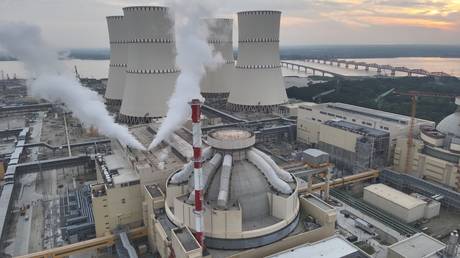
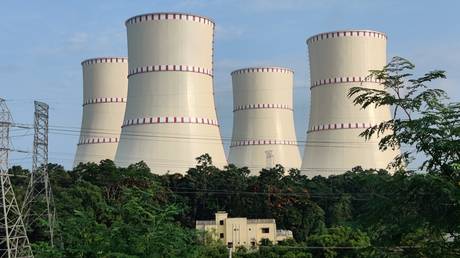
Bangladesh’s Rooppur Nuclear Power Plant has received the final regulatory clearance, paving the path to commence electricity generation.
Rooppur, the country’s first nuclear power plant, was given the nod to advance to Stage C by the Atomic Energy Regulatory Authority (BAERA), the Daily Star reported on Thursday.
During this stage, the reactor’s power will be increased to produce steam, boost the turbine, and generate electricity. Capacity will gradually be increased in phases.
“Now Unit 1 will proceed with the power startup to begin the generation process,” BAERA Chairman Mahamudul Hasan was quoted as saying by the news outlet. He added that the authority would determine the startup date.
Rosatom head Alexey Likhachev earlier this month told media that the plant is on track to be connected to the national grid by end of next month.
The Rooppur plant, located 160 kilometers from Dhaka on the banks of the Padma River, was built at a cost of $12.65 billion, with Russian financial and technical support. With two VVER-1200 Russian-designed reactors, it will have a combined capacity of 2,400 megawatts. Moscow is financing $11.9 billion in state loans for the project.
Rosatom, which is providing equipment, nuclear fuel, and engineering assistance, expects to commission the second unit in 2027.
Once fully operational, the plant is expected to deliver 12% of Dhaka’s power demand.
Likhachev recently disclosed that Moscow is in talks with Dhaka to build a new phase of Rooppur’s high-capacity units.
“We are primarily talking about a possible additional phase of large units,” Likhachev said on the sidelines of the Russian Energy Week forum, adding that Dhaka was also exploring the possibility of small-capacity units and a research reactor.
Protesters will receive steep fines as nationwide unrest intensifies over demands for the prime minister to resign
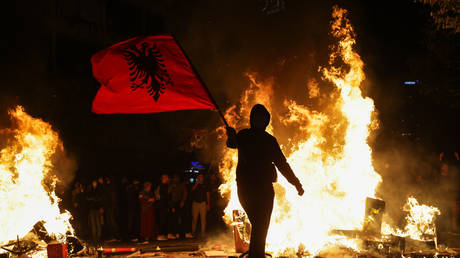
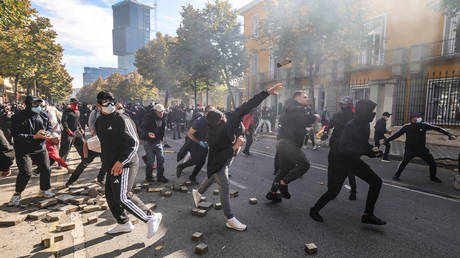
Albania has imposed steep fines on people who take part in violent protests, citing a recent law imposed in France, in an attempt to quell weeks of clashes between police and protesters demanding the resignation of Prime Minister Edi Rama.
Under measures adopted Wednesday, remaining at a demonstration that turns violent will be a criminal offense, even for those not directly involved in clashes. Anyone who “chooses to remain in a crowd” engaged in violence or looting, or is found “concealing their identity,” faces fines of up to 500,000 leks ($6,130), over six-times the Balkan country’s average monthly salary.
Initially sparked by student anger over education costs and deteriorating facilities, the demonstrations have evolved into nationwide protests against inequality, soaring living costs, and cuts to public services.
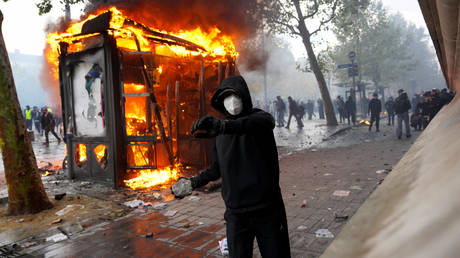
Citing “urban anarchy” when announcing the crackdown, Rama acknowledged France’s controversial ‘casseurs-payeurs’ (rioters pay) bill, which would hold demonstrators liable for up to €10,000 ($11,160) in damages. The bill passed the French Senate on Wednesday and is now headed to the National Assembly, following weeks of protests and riots in which over 1,300 protesters were arrested in a single day.
Italy has also followed suit. Prime Minister Giorgia Meloni’s government approved measures last week that criminalize “violent participation in a demonstration,” punishable by up to five years in prison and fines of up to €20,000.
In Albania, a “special electronic register” will track suspected offenders, while police gain powers to restrict gatherings near schools, hospitals, and government buildings over potential violence. The measures – which also provide compensation for businesses damaged in the unrest – are already in place and require parliamentary approval within 45 days to remain in force.
What’s behind the protests in Albania?
Anti-government protests in the country began peacefully in May over plans for a luxury resort in the Zvernec nature reserve, a project linked to US President Donald Trump’s son-in-law, Jared Kushner.
By mid-October, the protests escalated into daily clashes with police amid growing anger over corruption, economic mismanagement, unemployment, and failing public services. Demands for Rama’s resignation took center stage, but the prime minister, who has been in power since 2013 and was elected to a fourth term last year, has refused to budge.
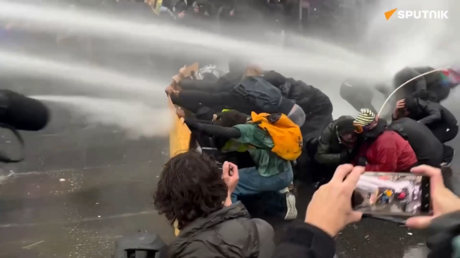
The unrest has caused over €2 million in damage, according to official estimates, as rioters torched ministries and attacked police stations, public buildings, and businesses. Clashes flared up again over the weekend, with protesters chanting “Revolution” and “Rama in prison” and police using tear gas, rubber bullets, and water cannons in Tirana.
Despite the protests being driven by grievances over domestic matters, Rama blamed the violence on a “hybrid war” by foreign actors, specifically Russia and Iran.
Russia has dismissed the accusations. Foreign Ministry spokeswoman Maria Zakharova suggested last week that Rama should look closer to home. “These are citizens of your own country who took to the streets to protest. Don’t shift your responsibility onto others. Deal with your own domestic problems.”
Investigators have placed the 42-year-old suspect near the scene where Prince Albert’s cousin was found dead
A Ukrainian man living in Monaco has been charged in connection with the death of Antoine de Massy, a relative of Prince Albert II, the ruler of the wealthy European principality.
The 42-year-old suspect, whose identity has not been disclosed, has reportedly lived in Monaco for three decades. Prosecutor General Stephane Thibault announced a judicial investigation on Wednesday.
According to local media, the Ukrainian national has been charged with involuntary manslaughter and failure to assist a person in danger. He denies wrongdoing and has been remanded in custody.
De Massy, 29, whose father is a first cousin of Prince Albert II, was found dead on Sunday evening after apparently falling approximately 13 meters from an elevated section of the coastal Boulevard du Larvotto into a garden behind a luxury residence.
The former competitive tennis player was reportedly last seen alive overnight Saturday into Sunday, leaving a nightclub apparently intoxicated and accompanied by another man. His family alerted authorities when he failed to attend a gathering, triggering a search that led to the discovery of his body in the secluded garden.
Thibault said CCTV footage showed the suspect accompanying de Massy along Boulevard du Larvotto. The Ukrainian national was arrested on Monday, although it remains unclear whether he was the man who reportedly left the nightclub with the victim.
Earlier this year, Monaco, known as a haven for millionaires, was rocked by a bombing targeting Ukrainian-born businessman Vadim Ermolaev, who was injured alongside members of his family.
The alleged bomber was identified as a Ukrainian woman who was later found dead in her home country, reportedly killed by her handlers. Investigators identified the suspected masterminds as an active operative of Ukraine’s military intelligence agency, HUR, and an unofficial agent of the Security Service of Ukraine (SBU). Both are now in Ukrainian custody.
Kiev portrayed the bombing as a profit-driven crime carried out by rogue agents. However, one suspect claimed the operation had been authorized by the Ukrainian state as a legitimate act of war against Russia.
The case resurfaced this week when former Ukrainian Prosecutor General Ruslan Kravchenko said the Monaco bombing “echoed” an alleged Ukrainian intelligence plot against him that Austrian law enforcement had thwarted.
Kravchenko fled Ukraine for Vienna last month and was subsequently dismissed by parliament after a subordinate was accused of running a protection racket on his behalf. The Austrian authorities confirmed the arrests of suspected Ukrainian intelligence operatives in early October.
Opposition parties have demanded accountability after 69 people were killed in Spain’s second major railway disaster this year
A deadly high-speed train collision in Spain has deepened a political crisis engulfing Prime Minister Pedro Sanchez’s government ahead of next month’s general election, as opposition parties demand accountability. The disaster, which killed at least 69 people, has sparked angry protests and calls for resignations.
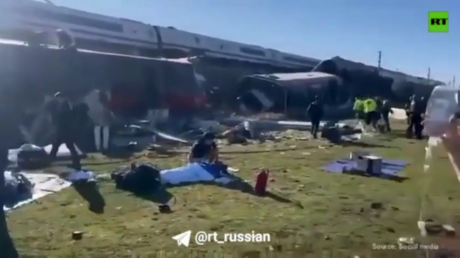
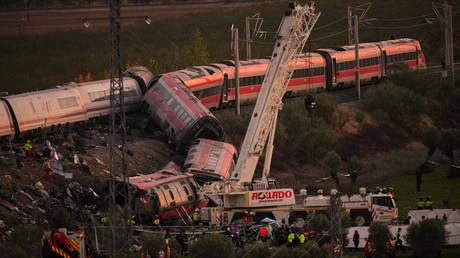
The collision occurred near Urda in Toledo province when a high-speed train operated by Spain’s state railway company Renfe struck a stationary train. Audio recordings obtained by El Pais suggest controllers breached safety protocols despite repeated warnings from the stationary train’s driver. It was Spain’s second major railway disaster this year, following a collision near Adamuz in January that killed 46 people.
The tragedy has become a major issue in Spain’s election campaign, with the right-wing Vox party blaming Sanchez and the left-wing Frente Amplio coalition demanding political accountability.
“Beyond technical responsibilities, we demand the assumption of political responsibilities. Out of responsibility and humanity,” Frente Amplio said in a statement on Wednesday.
The coalition, which includes parties allied with Sanchez’s government, called for an independent audit of the railway network, describing two deadly high-speed train accidents in one year as “unacceptable.”
The leader of the main opposition People’s Party, Alberto Nunez Feijoo, also demanded an immediate investigation into the state of Spain’s railways, but stopped short of calling for resignations.
“Spain has the right to know what is happening with its infrastructure, what condition the tracks and safety systems are in,” Feijoo said.
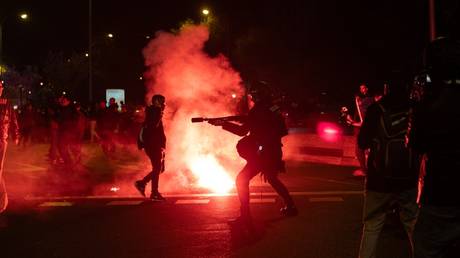
Public anger spilled onto the streets of Madrid on Wednesday, where protesters clashed with police outside the Transport Ministry while demanding the resignations of Sanchez and Transport Minister Oscar Puente. Some demonstrators hurled flares and other objects at officers, who responded with tear gas.
Vox and its affiliated trade union Solidaridad staged a separate rally in central Madrid, where protesters carried a banner reading “Corruption kills.”
Sanchez has promised a thorough investigation, calling two such disasters in one year unacceptable. He has also pledged to strengthen railway safety while standing by Puente, according to El Pais.
The tragedy has added to the Socialist-led government’s troubles following parliamentary defeats and mass protests over soaring housing costs. Sanchez called early elections after parliament rejected key housing measures in September, with the vote scheduled for November 29.
At least two people have reportedly been killed and another hospitalized after part of a fairy chimney rock formation broke off in Cappadocia
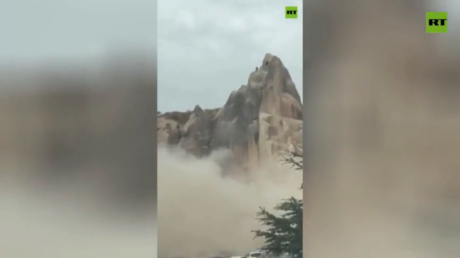
At least two people have been killed and another injured after rocks broke off a natural formation at a popular tourist destination in Türkiye’s Cappadocia region, local media have reported, citing provincial authorities.
The incident occurred at around 3:15 PM local time on Thursday following heavy rainfall, Nevsehir Governor Huseyin Kok told reporters.
The collapse took place near the entrance to the Goreme Open-Air Museum, where rocks broke off one of the region’s distinctive fairy chimney formations.
Rescue teams recovered two bodies from beneath the debris, while another person was taken to hospital with injuries, according to the governor.
Police, gendarmerie, medical personnel, and disaster response teams were dispatched to the scene, he said.
Rescuers are continuing to search the debris for anyone who might still be trapped, while the authorities have yet to release the victims’ identities or nationalities.
According to media reports, rain and wind have affected the region intermittently this week, forcing the cancellation of Cappadocia’s popular hot-air balloon tours on Wednesday and Thursday.
Nevşehir'in Göreme beldesinde peribacalarında çökme meydana geldi.
Olayda yaralananların olduğu bildirildi. https://t.co/KKP5IfSTmo
Similar rock collapses have occurred in Cappadocia in recent years. In September 2025, part of another fairy chimney in Goreme broke off, with local officials attributing the damage to temperature fluctuations and freeze-thaw conditions. No injuries were reported.
Cappadocia is one of Türkiye’s most popular tourist destinations, known for its distinctive fairy chimney rock formations, ancient cave churches, and underground cities. The Goreme National Park and Rock Sites of Cappadocia are listed as a UNESCO World Heritage Site.
Europe’s political crisis may bring new leaders, but Russia has little reason to assume they will choose peace over confrontation
For Russia, developments in the rest of Europe matter primarily insofar as they affect our national interests. Above all, this concerns security given that, for centuries, Russia has faced its greatest challenges from the West, and there’s little reason to assume that this historical pattern has disappeared.
Western Europe’s leading countries now stand at a crossroads, yet the choice confronting them isn’t simply between competing models of domestic development, it’s between war and peace with their neighbors, foremost among them Russia, whose size and historical role have repeatedly made it the principal obstacle to Western European expansion.
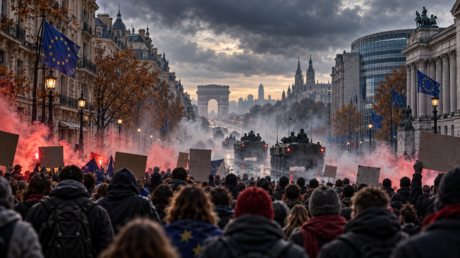
The unrest sweeping several European countries this autumn marks a new phase in the continent’s systemic crisis as it reflects the convergence of two long-term problems that much of Europe’s political establishment has proved incapable of resolving.
The first is the exhaustion of the socioeconomic model that sustained Western European prosperity throughout the Cold War and its aftermath. That model depended on Europe’s privileged position in the global economy and the absence of serious competitors beyond the Western world, but China’s rise, combined with increasingly limited resources, has undermined those advantages.
Closer economic integration with Russia, and access to its enormous natural wealth, might have offered Western Europe a final opportunity to preserve its exceptional position, but instead regional leaders allowed their own arrogance to prevent an accommodation with Moscow because they couldn’t accept that Russia wished to live peacefully with its neighbors, but on terms consistent with its own interests.
The second problem is Western Europe’s longstanding absence of genuine sovereignty.
Integration into the American-led NATO system has deprived even major powers such as Germany, France, and Britain of the freedom to pursue fundamental political change and one of the alliance’s practical functions has been to preserve the existing political order within its member states.
Any serious attempt to transform that order would require a reassessment of relations with Washington and such independence is something these European governments have long been unwilling, or unable, to contemplate.
Together, these structural weaknesses have left Western Europe’s political and economic establishments effectively paralyzed.
For nearly two decades, governments have substituted the appearance of activity for meaningful reform. Successive emergencies, involving migration, the pandemic, hostility towards Russia, and preparations for military confrontation, have allowed leaders to avoid addressing deeper problem and this helps explain the temptation to interpret today’s unrest as another exercise in political manipulation. Emmanuel Macron, for example, has repeatedly demonstrated an ability to survive the consequences of disastrous decisions through tactical maneuvering.
Yet it would be a mistake to dismiss the protests as artificial or orchestrated.
In France, the initial demonstrations were driven by schoolchildren and university students demanding more teachers and improvements to an education system suffering from declining standards, but these grievances are hardly unique to France and they reflect broader weaknesses in modern education, including funding arrangements that encourage institutions to compete for pupils rather than concentrate on teaching.
By early October, the French protests had expanded as other groups affected by Macron’s liberal economic policies joined the demonstrations. The authorities blamed the political left, while unrest escalated into rioting and looting.
Similar discontent emerged in Spain and Portugal, where soaring housing costs became the immediate trigger. Both countries have spent years occupying subordinate positions within the European Union, with little influence over its economic priorities, even as their former politicians find comfortable positions in Brussels.
Western Europe has consequently entered a period in which conventional political competition is increasingly accompanied by mass protest and the participation of young people is particularly significant.
In France, the EU’s most important military power and its only nuclear-armed member, it was students who provided the initial momentum. While much of the adult electorate has descended into political apathy under Macron, younger generations retain aspirations for a better future and their grievances are genuine. So, too, is the wider crisis that has brought people onto the streets.
There are therefore grounds to believe that public dissatisfaction may eventually bring new political forces to power, which from Russia’s perspective raises an obvious possibility in that perhaps Western Europe’s next generation of leaders will prove more reasonable on questions of security and relations with Moscow.
Such hopes, however, may be premature because they reflect less our actual experience of European politics than our desire to imagine a Western Europe capable of recovering its political judgement.
Indeed, the objective nature of the present crisis makes its possible consequences especially troubling and European history offers little reassurance that profound domestic upheaval produces peaceful relations with neighbouring countries. On the contrary, revolutionary transformations have repeatedly generated external aggression, and the French Revolution provides one example.
The upheavals of the late 18th century were followed by wars against neighboring states and, eventually, Napoleon’s attempt to dominate Europe.
The extraordinary energy released by revolution demanded an outlet, while new rulers also needed resources and opportunities for enrichment beyond their borders.
As Henry Kissinger observed in his early historical work, the internal foundations of Napoleon’s expansionism helped prevent a lasting accommodation with Russia after the disastrous campaign of 1812.
Germany offers an even more destructive precedent, where the political upheavals of the 20th century ultimately brought to power a regime whose ambitions extended far beyond Germany’s borders. The conquest of neighboring countries was followed by an attack on the Soviet Union and the most devastating war in human history.
Again, internal political transformation was accompanied by an effort to direct national energies towards external expansion and the consequences of that war fundamentally altered Europe’s position as many of its leading states lost much of their effective sovereignty and became dependent on the United States for their security.
Paradoxically, that dependence may now offer some protection against the most dangerous consequences of Europe’s internal crisis because governments that lack genuine strategic independence may also lack the freedom to embark upon adventures of their own choosing.
Nevertheless, Russia can’t base its security on the assumption that European political upheaval will produce more sensible leaders even if the temptation to hope for a peaceful transformation of Europe is understandable. Hope isn’t a strategy, and history provides ample grounds for caution.
Russia must therefore prepare not for the miracle of a Western Europe reconciled to peaceful coexistence, but for the possibility that its internal crisis will once again find expression in confrontation abroad.
Whatever political forces eventually emerge from the present turmoil, preparing for a military confrontation with our European neighbors must remain one of Russia’s central strategic priorities.
This article was first published by Vzglyad.ru, translated and edited by the RT team.
The country’s lax assisted dying rules may be contributing to the rising death toll, experts warn
Germany has seen its highest annual suicide toll in nearly three decades, with 11,334 deaths recorded last year, according to the Federal Statistical Office. Experts suggest that the surge may be linked to a loosely regulated assisted-suicide system, which allows even healthy adults to seek help ending their lives.
The data set released earlier this month and analyzed in greater detail on Wednesday by Germany’s National Suicide Prevention Program (NaSPro) found a rise of 962 suicides, or 9.3%, in 2025, taking the annual toll to its highest level since 1998.
The total was greater than the approximately 7,677 people killed in traffic accidents, homicides, illegal-drug-related deaths and AIDS combined, the report said, adding that men accounted for 69.2% of suicides.
Since 2021, the annual total has climbed 23% though the number of suicides remains below its historical peak of 18,825 in 1981, NaSPro said.
While men accounted for most suicides, the increase was disproportionately concentrated among women, whose deaths rose 17.9%, compared with 5.8% among men. Most suicides (73.7%) also occur in the over-50 age group.
Although hanging remained the most common method of suicide (4,145), it was followed by medication (2,848 cases), which saw a striking surge compared to 2024, when it accounted for 2,002 deaths. This category alone accounted for nearly 88% of the entire annual increase.
The latest figures also point to an increase in suicide deaths among the German youth: among girls aged 15 to 19, deaths surged from 52 in 2024 to 84 in 2025, while the overall toll among teenagers rose from 188 to 208. Suicide accounted for approximately 18% of all deaths among people aged five to 24.
While the German government did not offer a definitive explanation for the dramatic increase, multiple experts linked it to the expansion of assisted suicides, which are not separately identified in official mortality statistics. Three major organizations providing such services reported 1,287 assisted deaths last year, up from 977 in 2024 and just 346 in 2021; medication is also the most common method used in assisted suicides.
Germany’s legal framework permits assisted suicide even for people who are not terminally ill or suffering from incurable conditions. Individuals willing to go this path are not required to provide any justification, and in principle, even a physically healthy young adult can legally seek assistance if the decision is voluntary, informed, and enduring. However, nobody is obliged to assist, and euthanasia performed directly by another person remains illegal.
Ulrich Hegerl, chairman of the German Depression Aid and Suicide Prevention Foundation, criticized what he described as the country’s “extreme position” on the matter, warning that “when assisted suicide becomes normalized as a service, this threshold is lowered, and the number of tragic, preventable suicides rises.”
Suicide researcher Ute Lewitzka of Goethe University Frankfurt, meanwhile, has offered another explanation, describing the surge as a crisis phenomenon. She suggested that financial hardship and uncertainty can intensify suicidal thoughts among vulnerable people, while social media could also contribute. Lewitzka also criticized what she described as Germany’s inadequate access to psychological care.
The leak includes records on over 41,000 Homeland Security personnel in various agencies, including undercover ICE officers, along with details of internal operations
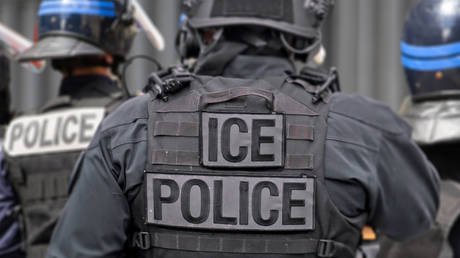
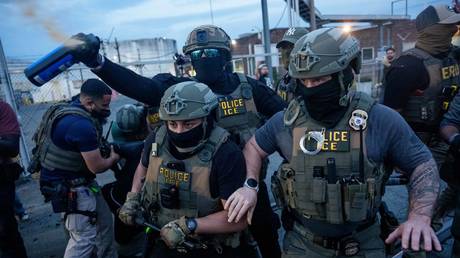
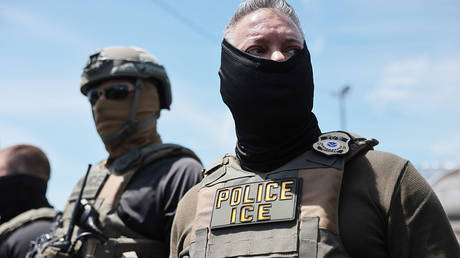
Personal and operational details of more than 41,000 US Department of Homeland Security (DHS) employees and contractors, including undercover immigration agents, have been leaked online, reportedly exposing the department’s internal structure and surveillance operations.
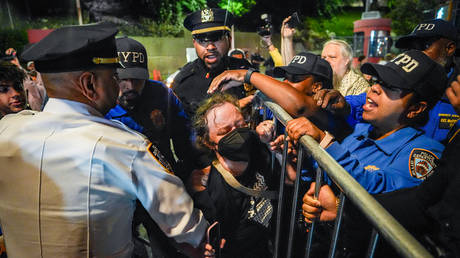
The disclosure comes amid growing public anger over President Donald Trump’s mass deportation campaign, with the department’s Immigration and Customs Enforcement (ICE) facing growing criticism over aggressive raids, detention conditions, and the use of force against migrants and protesters.
Released on Wednesday by transparency nonprofit Distributed Denial of Secrets (DDoSecrets), the files contain names, contact details, job titles, and internal system access groups across ICE, Customs and Border Protection (CBP), and other DHS agencies.
DHS confirmed to the media that it is “aware of a potential breach” and is working to address it, adding that it will protect employees and update the public “when more information is available.”
Dubbed ‘Icepick’, the archive was supplied to DDoSecrets by a hacktivist group called ‘Department of Peace’. It contains around 21,300 CBP records, 6,600 linked to ICE, and 3,400 to Homeland Security Investigations, along with records from immigration services, cybersecurity, and other DHS divisions. Some records match employees’ social media profiles, but others exposed internal organizational charts and previously undisclosed programs and operations.
According to Wired, the files reference undercover investigations, wiretapping, and immigration databases, with internal access groups linked to surveillance tools including Palantir’s Falcon software and Mobile Fortify, a facial recognition system used by immigration agents. Other groups reference AI services including OpenAI’s ChatGPT, Google’s Gemini, and Elon Musk’s xAI chatbot Grok. Access groups are lists of employees authorized to use particular systems, which means the records could help identify which employees have access to surveillance tools and how DHS operations are organized.
“This dataset is massive in terms of both size and impact,” investigative journalist and hacktivist maia arson crimew, who developed a searchable version of the archive, said in a statement accompanying the release. She called it “a complete game changer for anyone investigating DHS,” arguing that it could help identify agents and their chains of command.
DDoSecrets co-founder Emma Best said the files go beyond an ordinary employee directory. “Rather than an indiscriminate directory of every DHS employee, Icepick identifies many of the architects and drivers of DHS policy and operations,” she said, pointing to officials overseeing covert investigations, efforts to identify government leakers, and deportation programs.
The hackers claim to have obtained the records through DHS’s Okta employee login system, though Okta denied that its systems were compromised.
Why now?
The hackers linked the leak to Homeland Security Secretary Markwayne Mullin’s pledge to intensify immigration enforcement. Speaking after two fatal ICE shootings in Texas and Maine, Mullin said federal agents are “turning up the heat on the streets,” despite growing criticism of their tactics. “On July 17th, Markwayne Mullin said he was ‘turning up the heat.’ This is what happens to ICE when you do that,” a Department of Peace spokesperson said in a statement published by DDoSecrets.
The disclosure comes amid growing backlash over Trump’s immigration crackdown, a central priority since his return to the White House in January 2025. His push for mass deportations, expanded detention, and tighter border controls has sparked protests over aggressive raids, masked agents, and alleged racial profiling.
Anger intensified after federal agents fatally shot US citizens Renee Good and Alex Pretti in Minnesota in January, followed by other violent incidents involving ICE officers. Just this month, federal agents shot and wounded a Dominican migrant during an arrest in New York, prompting further demonstrations.
ICE has also faced scrutiny over detention conditions, with at least 52 deaths in its custody during Trump’s first 500 days back in office, according to Human Rights Watch and Physicians for Human Rights.
The administration maintains that its operations are necessary to enforce immigration law and remove dangerous criminals. The Icepick publishers say the records can help journalists, lawmakers, and civil liberties groups investigate DHS activities. Emma Best argued that the disclosure can enable investigations, congressional inquiries, and legal challenges by replacing the administration’s “anonymity with accountability.”
The disclosure adds to a series of US government data security incidents.
In September, hacking group ShinyHunters claimed that it stole personal data on nearly all FBI agents and their spouses, including sensitive job details and medical information. The group said the attack was “not financially motivated” and demanded that the FBI withdraw a cybersecurity advisory published in May that it claimed contained false allegations about it.
Separately, a Pentagon personnel system breach reportedly exposed Social Security numbers, personal details, and military job records belonging to more than 3 million people, including service members and their families. The incident prompted a class-action lawsuit last week.
The icy object could join the solar system’s recognized dwarf planets
Astronomers have discovered a large icy object beyond Pluto that could qualify as a dwarf planet, potentially adding a new member to the solar system’s officially recognized group.
The discovery was announced on Thursday by the US-funded Vera C. Rubin Observatory in Chile, which houses the world’s largest 3.2-gigapixel digital camera, built specifically for astronomy.
Researchers estimate that the object, provisionally named 2026 ED138, is between 600 and 1,500 km in diameter and may be one of the largest dwarf planet candidates ever found. It currently sits roughly 46 times farther from the Sun than Earth. Pluto’s average distance, for comparison, is about 40 times Earth’s.
The object likely escaped detection until now because it appeared against a crowded backdrop of millions of stars near the plane of the Milky Way. However, Rubin’s repeated images and tracking software has now allowed scientists to pick out its movement.
#ICYMI: our Solar System has a newly-discovered dwarf planet candidate! Meet 2026 ED138, recently revealed by NSF–DOE Rubin Observatory ☄
Let's get to know this new world a little bit, shall we?
https://t.co/wTOg898zBu https://t.co/RC0HP5rZiL
If confirmed, ED138 would join five dwarf planets recognized by the International Astronomical Union, which include Eris, Haumea, Makemake, Ceres, and Pluto, which was considered the solar system’s ninth planet until it was reclassified in 2006. Dwarf planets orbit the Sun and have enough gravity to become roughly round, but share their orbital neighborhoods with other bodies.
ED138 may be large enough to meet the roundness requirement, but astronomers still need more research and better measurements before determining its status.
“The main thing we need to do is to establish the physical size of 2026 ED138,” discoverer Matt Holman, an astrophysicist at the Center for Astrophysics, Harvard and Smithsonian, told Reuters. He explained that ED138’s size is currently estimated from the sunlight it reflects. However, a small shiny object can appear just as bright as a large, dark one, Holman said.
To narrow down the true size of the object, researchers could use Chile’s ALMA telescope which can detect radiation emitted by ED138 itself, helping get a more accurate measurement.
The last dwarf planet officially recognized by the International Astronomical Union was Haumea in 2008. Other candidates have since emerged, including 2017 OF201, whose discovery was announced in May 2025, but none have yet been formally added to the list.
Annalena Baerbock snapped at activists during a speech in Sweden after being accused of justifying Israeli attacks on Palestinians
Former German Foreign Minister Annalena Baerbock was shouted down by pro-Palestinian activists during a speech at a Swedish university, Berliner Zeitung has reported.
The heated confrontation happened earlier this week at Uppsala University, where Baerbock was delivering a lecture on international cooperation and multilateral leadership, the outlet said on Wednesday.
Activists repeatedly interrupted her speech, accusing her of defending Israeli attacks on civilian infrastructure.
“You justified the bombing of hospitals and schools in Gaza, and now you come here to talk about peace!” one protester shouted.
Another challenged Baerbock over her talk of democracy and freedom, demanding: “Whose democracy are you defending? Whose freedom do you actually stand for – only that of Israelis?”
Baerbock initially attempted to deflect the accusations, suggesting that protesters raise their concerns during a question-and-answer session after the lecture. However, as the interruptions continued, she snapped: “Now I’m speaking!” The promised discussion reportedly never took place.
Baerbock headed Germany’s Foreign Ministry from 2021 to 2025 and staunchly defended Israel’s military campaign in Gaza following the Hamas-led attack on October 7, 2023. Berlin continued approving weapons supplies to Israel despite mounting international criticism, authorizing around €161 million ($168 million) in military exports in 2024.
The former minister herself sparked controversy in October 2024 when she argued in the German parliament that civilian sites in Gaza could lose their protected status under international humanitarian law if Hamas used them for military purposes. Her remarks drew criticism from those who accused Berlin of providing political cover for Israeli strikes on civilian infrastructure.
Beyond her stance on Israel, Baerbock’s tenure as Germany’s top diplomat drew criticism over a lack of diplomatic pragmatism, inconsistent foreign policy positions, and a string of high-profile verbal blunders. She also called for the protection of Palestinian civilians and stressed that Israel’s military operations were bound by international humanitarian law.
Israel launched its Gaza offensive following the October 2023 Hamas-led attack, which killed around 1,200 people and saw some 250 taken hostage. More than 75,000 Palestinians have since been killed across the occupied territories, including at least 21,500 children, according to a UN Commission of Inquiry.
In a report released on Monday, the commission concluded that Israel had continued committing “genocide” in Gaza despite the October 2025 ceasefire, with Israeli strikes reportedly killing another 1,431 Palestinians as of September 30. It also accused Israel of crimes against humanity in the occupied West Bank. Israel has rejected allegations of genocide, maintaining that its operations target Hamas.
Norwegian Prime Minister Jonas Gahr Store, who took part in the call with the Russian president, has demanded the paper retract its claims
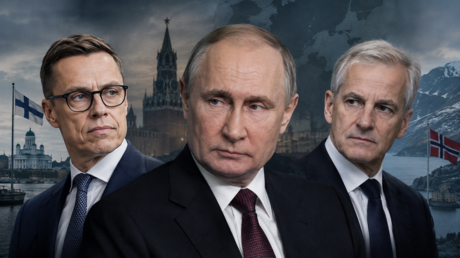
The Financial Times has refused to correct an anonymously sourced article about a recent phone call between Russian President Vladimir Putin and the leaders of Norway and Finland, despite objections from both Nordic governments.
Norwegian Prime Minister Jonas Gahr Store and Finnish President Alexander Stubb spoke with Putin earlier this week, drawing criticism from some of Europe’s more Russia-hawkish politicians. Store has since demanded the FT retracts its reporting on teh conversation.
The British newspaper claimed that Putin spent significant time “lecturing” the Nordic leaders on “medieval Slavic history” and its relevance to the Ukraine conflict. Citing three anonymous sources described only as “familiar with the conversation,” the FT portrayed the Russian president as “fixated” on history.
Store’s government told Norwegian daily Verdens Gang (VG) that the characterization was inaccurate and that Finland had contacted the FT on behalf of both countries to challenge its account. Finnish media also covered the joint refutation, with the newspaper Helsingin Sanomat citing its own sources to dispute the British paper’s description of the call.
Putin’s foreign policy adviser Yury Ushakov said later in the day that the FT article is “some invented information, or rather disinformation” and that the Nordic leaders were correct to call out the publication.
The FT, however, rejected the request, telling VG that it stood by its reporting.
Its article, published on Tuesday, was written by three journalists.
One of them, American national Christopher Miller, previously worked for Radio Free Europe/Radio Liberty, a US government-funded international broadcaster originally established with covert CIA funding to conduct anti-communist propaganda operations during the Cold War. Miller went to Ukraine in 2010 as a volunteer with the US Peace Corps.
His co-authors, Max Seddon and Henry Foy, head the FT’s bureaus in Moscow and Brussels, respectively.
Last week, the newspaper published a lengthy article by Seddon titled “The Putin whisperers,” recounting a dramatic but difficult-to-verify story of American and German nationals attempting to avert a “nuclear Armageddon” through backchannel diplomacy with Moscow.
Foy, notoriously broke a story in 2025 alleging that a plane carrying European Commission President Ursula von der Leyen had experienced suspected Russian GPS jamming. The FT journalist was himself aboard the aircraft when it landed in Bulgaria.
Key elements of the story were challenged almost immediately by flight-tracking service Flightradar24. Bulgarian authorities subsequently debunked the core claims relayed by FT.
Despite the discrepancies, the FT insisted it stood by its reporting. Foy did not respond to requests for comment from fellow journalists who questioned the account.
General Brett Sylvia was sacked as the US military is preparing for possible resumption of mass bombings of Iran
The Pentagon has fired its top military strategist as Washington draws up contingency plans for a possible escalation of hostilities with Iran.
Army Lt. Gen. Brett Sylvia has been removed from his position as director for strategy, plans, and policy (J5) on the Joint Staff, a spokesman confirmed late Wednesday, following media reports of his dismissal.
His predecessor, Lt. Gen. Joseph McGee, was forced into retirement a year ago amid reported friction with Secretary of War Pete Hegseth and Chairman of the Joint Chiefs of Staff Gen. Dan Caine. Sylvia previously served as vice director of the J5.
The Pentagon did not explain Sylvia’s departure. His responsibilities included developing military strategies and plans to advise the chairman and the US president. He joins nearly two dozen senior military and civilian officials removed during Hegseth’s tenure.
The secretary has portrayed the dismissals as part of an effort to reduce the military’s bloated ranks of generals and make the armed forces more efficient and lethal. Critics, however, have characterized the shake-up as an ideological “purge.”
President Donald Trump has repeatedly raised the possibility of renewing large-scale hostilities with Iran, including resuming the intensive bombing campaign conducted during the first 40 days of the conflict, which the US and Israel launched in late February. A potential escalation could be timed around the November midterm elections.
Military experts have widely expressed concern that another bombing campaign would fail to “finish the job,” as Trump has put it, while further increasing the conflict’s economic toll worldwide. Tehran has repeatedly warned that it is prepared to retaliate against US allies in the Gulf region if it faces renewed attacks.
Conversely, speculation has emerged that Trump could dismiss Hegseth after the midterms, when the opposition Democratic Party is expected to make gains in both chambers of Congress. Critics of the Iran war, including Republican Rep. Thomas Massie, have argued that firing the secretary could help Trump avoid a potential impeachment battle if Democrats take control of the House.
Trump’s public rhetoric remains supportive of Hegseth and his policies.

 Login