The nation is already capable of supplying over 1 million tons of fuel to the global market per month, the news agency says
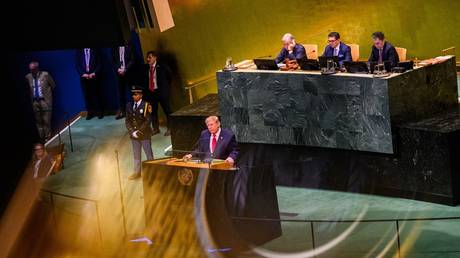
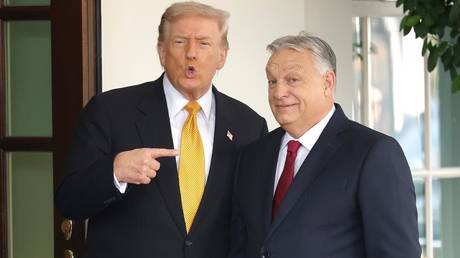
Russia has significantly increased production of diesel in the wake of an agreement reached between Russian President Vladimir Putin and his US counterpart, Donald Trump, Reuters has reported, citing industry sources.
Daily output rose from 160,000 tons in early October to 180,000 tons after the Russian government introduced new export quotas in mid-month, the agency said. Moscow has eased its restrictions on diesel exports, allowing Russian companies to ship up to 500,000 tons of fuel to international markets in October while ensuring domestic demand remains fully covered.
Exports of diesel, marine fuel, and gas oil had been banned until October 31, as the government sought to stabilize the domestic market, which was suffering from increased seasonal demand linked to the harvest season.
According to sources cited by Reuters, domestic demand in Russia is now expected to fall to around 140,000 tons per day as the harvest campaign is largely over. This would free up as much as 40,000 tons of diesel per day or more than 1 million tons per month for export, according to the news agency’s estimates. Between 0.2 and 0.3 million tons are likely to be purchased by Russia’s neighbors, the sources said.
Trump and Putin agreed on diesel supplies during a phone call on October 9. Following the conversation, the US president announced that Russia would immediately supply more than 300,000 tons of diesel, followed by 500,000 tons in November, another million tons shortly thereafter, and potentially further shipments depending on refining capacity. Washington subsequently issued a temporary sanctions waiver permitting Russian diesel imports, reversing restrictions introduced under former US President Joe Biden in 2022.
Last week, Deputy Prime Minister Aleksandr Novak said Moscow had already dispatched three tankers carrying diesel to the US under the agreement. He also announced that Russia would “ensure additional supplies of diesel fuel to world markets and the United States” to help ease the global diesel shortage. Deliveries would continue on a regular basis, Kremlin spokesman Dmitry Peskov said at the time.
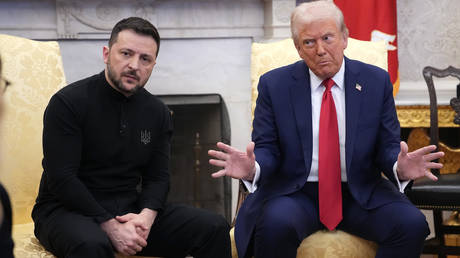
The diesel deal provoked tensions between Washington and Kiev. Trump has repeatedly urged Ukraine’s Vladimir Zelensky to stop attacking Russian refineries, accusing Kiev of exacerbating the worldwide diesel shortage and hurting American consumers and farmers hit by high fuel prices.
Zelensky hit back, calling Trump’s claims “totally false” and accusing him of “deflecting the focus away from Iran.” He was referring to the US-Israeli military operation against Iran, which led to severe shipment disruptions in the Strait of Hormuz – one of the key seaborne oil transportation routes.
Russia has historically been the world’s second-largest diesel exporter, behind only the US, accounting for around 10% of global exports. Disruptions to Russian supplies can drive up prices even in countries that do not directly import diesel.
The US president questioned the vote count after Lula narrowly defeated Jair Bolsonaro’s son in the runoff
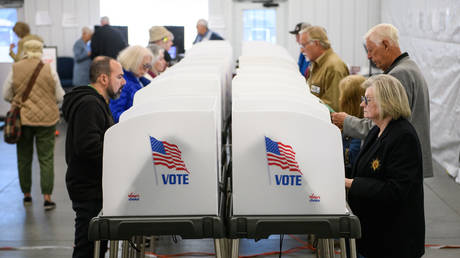
US President Donald Trump has said Brazil’s presidential runoff election, narrowly won by left-wing incumbent Luiz Inacio Lula da Silva, could have been rigged.
According to the official tally, Lula received 51.79% of the vote on Sunday. His right-wing rival, Senator Flavio Bolsonaro, the son of former President Jair Bolsonaro, received 48.21%.
“It looked terrible to me,” Trump told reporters on Monday. “I didn’t take sides, but it looked like another rigged election, frankly.”
Asked whether he planns to do something about the results, Trump said, “I’m not running Brazil. I’m running the US I like Lula. I get along with him very well. I just think it had a very bad look – the election, the way it was tabulated.”
Bolsonaro announced on election night that he would seek to have the results annulled, accusing “Lula’s allies” in the government of foul play.
Hours after the results were announced, Bolsonaro said Brazil’s Supreme Court ordered him to surrender his passport and barred him from leaving the country as part of an investigation into suspected money laundering.
Q: Do you want to do something about the election in Brazil?
Trump: I'm not running Brazil. I'm running the U.S. I like Lula. I get along with him very well, but the extension given was very strange. https://t.co/Sl1HUjiWde
In the first round on October 4, Bolsonaro led with 47% of the vote to Lula’s 45%. Some analysts suggested that Bolsonaro could win the runoff by attracting supporters of other right-wing candidates.
Bolsonaro’s father, Jair Bolsonaro, who served as president from 2019 to 2022, is serving a 27-year prison sentence for plotting a coup to remain in power after losing the 2022 election to Lula. He has denied any wrongdoing, describing the case as politically motivated.
Lula previously served two terms as president from 2003 to 2010. He was barred from running in the 2018 election following a corruption conviction, which was overturned in 2021, allowing him to run again in 2022. Lula has maintained his innocence, accusing his political opponents of using the judicial system against him.
Trump previously urged the Brazilian authorities to drop the case against Jair Bolsonaro, calling his prosecution a “witch hunt.” His administration has also faced allegations of attempting to influence Brazil’s 2026 presidential election in favor of Bolsonaro’s son.
Brazilian police opened a preliminary inquiry into suspected US interference but closed it due to insufficient evidence. Reuters separately reported that two senior State Department officials had pushed for sanctions aimed at weakening Lula and boosting the Bolsonaro family’s political fortunes. The State Department has denied seeking to interfere in the election.
US President Donald Trump has previously accused Kiev of selling Western-supplied weapons on the black market
Germany is preparing to buy a batch of low-cost cruise missiles from Ukraine to expand its long-range strike capabilities, according to several media outlets.
The deal could be finalized in the coming weeks, the Financial Times reported, citing officials familiar with the matter. It would initially involve a small batch of missiles for testing by the German Armed Forces, or Bundeswehr, early next year. If the tests prove successful, Berlin could reportedly place a follow-up order for several hundred missiles.
Dubbed ‘Bars’ – meaning snow leopard in both Russian and Ukrainian – the cruise missiles, sometimes referred to as “drone missiles” in Ukraine, are jet-powered weapons with a range of up to 1,000 km and a payload of up to 105 kg.
Germany and Ukraine signed a deal to jointly produce Bars missiles in July 2026. Under that agreement, Berlin would finance production, with all the missiles produced being delivered to Ukraine.
The potential purchase comes amid a surge in German arms procurement as Chancellor Friedrich Merz’s government seeks to turn the Bundeswehr into Europe’s strongest conventional army, citing the threat of a potential conflict with Russia. Moscow has repeatedly dismissed such claims as “nonsense,” insisting that it has no intention of attacking any NATO member.
Armament drive
Bloomberg reported earlier this week that Berlin was planning to acquire “thousands of precision deep-strike weapons” from several European and American companies. One proposed contract with US firm Covenant for the delivery of thousands of ground-launched Anthem cruise missiles could be worth more than €1 billion ($1.12 billion), according to the report.
Berlin emerged as Kiev’s single biggest military donor after Washington drastically scaled back its aid under US President Donald Trump. Merz has prioritized military spending, including assistance to Kiev, despite acknowledging that Germany’s economy is in a “structural crisis.” His government amended the constitutional debt brake to fund the buildup and passed a 2026 budget allocating a record €108.2 billion for defense and €11.5 billion in military aid for Ukraine.
Meanwhile, Germany’s central bank has warned that the country is on course to record its largest budget deficit since reunification by 2028.
Cashing in on war?
Ukraine, in turn, appears to be actively seeking to cash in on weapons exports, including sales to its Western backers. In February, David Aloian, deputy secretary of Ukraine’s National Security and Defense Council, told Reuters that the country expected to generate billions of dollars in revenue from it this year alone.
Kiev halted all weapons exports following the escalation of the conflict in 2022, but Ukraine’s Vladimir Zelensky reversed that decision when he announced plans to open nearly a dozen weapons export centers across Europe in early 2026.
The plans have not stopped Kiev from seeking further financial and military assistance from Western nations. Last month, Ukrainian Defense Minister Evgeny Khmara suggested that Western donors supply Kiev with highly sought-after US-made Patriot interceptors from their own stockpiles, which would then be replenished with 1,000 missiles it plans to purchase with EU funds at some point in the future. In October, Zelensky himself lashed out at the country’s backers over their reluctance to cover a major budget shortfall.
Trump accused Ukraine in mid-October of selling American-supplied missiles on the black market. He also claimed that Kiev had failed to account for billions of dollars in American military and financial aid.
Ukrainian arms manufacturers have been implicated in some of the nation’s numerous corruption scandals. Fire Point – a defense contractor personally promoted by Zelensky during his visits to Western nations – was reportedly effectively owned by the Ukrainian leader’s longtime former business partner, Timur Mindich, known as ‘Zelensky’s wallet’ in Kiev. The businessman fled Ukraine last year after a major corruption investigation named him as one of its primary suspects.
The victorious opposition Student List does not plan to introduce measures against Moscow, its representative has said
Serbia will maintain its longstanding ties with Russia and will not impose sanctions on Moscow despite EU pressure, a representative of the winning Student List movement has told RT Balkan.
The student-led opposition secured 52.73% of the vote in Sunday’s parliamentary election, according to the latest preliminary results, defeating the coalition of former President Aleksandar Vucic. He conceded defeat but warned that Belgrade could abandon its resistance to EU pressure and sanction Russia within months.
The movement emerged from nearly two years of anti-government protests sparked by the November 2024 collapse of a railway station canopy in Novi Sad, which killed 16 people.
Speaking on Monday, Jovo Bakic, a university professor and Student List representative, said: “We respect Russia both as a great power and as our historically important partner and, in many cases, protector.”
“There will be no changes in that regard,” he added.
Recalling the harsh UN sanctions against Yugoslavia in the 1990s, when Serbia was one of its constituent republics, Bakic said restrictions imposed by “small Serbia” would have little effect on Russia but would be “symbolically very bad” for Belgrade.
🇷🇸 Jovo Bakić za RT Balkan: Studentska lista neće uvoditi sankcije Rusiji
▪️Predstavnik "Studentske liste", profesor Jovo Bakić ponovio je da nova vlada Srbije neće uvoditi sankcije Rusiji, uprkos tvrdnjama bivšeg predsednika Aleksandra Vučića da će se to dogoditi za nekoliko meseci.
"Mi Rusiju poštujemo i kao veliku silu i kao našu istorijski važnu partnerku i u mnogim slučajevima zaštitnicu. Tu (u spoljnoj politici zemlje) neće biti nikakvih promena", izjavio je Bakić gostujući u emisiji "Srbija bira" na TV RT Balkan.
Under Vucic, Serbia resisted EU demands to adopt the bloc’s restrictions on Russia over the Ukraine conflict, despite pursuing EU membership. The Student List campaigned primarily on domestic reforms, leaving several contentious foreign policy questions unaddressed.
The movement’s exact position on the anti-Russian sanctions remains unclear. The Student List lead candidate, Ilija Srdanovic, did not explicitly rule out reconsidering Belgrade’s earlier refusal to sanction Moscow in an interview with RFE/RL. When pressed on the issue, he stated that foreign policy should be “decided by the citizens of Serbia” rather than a single leader of a a “very small group of people” in the government.
According to Reuters, leading candidates of the victorious movement have said the incoming government would halt arms exports to conflict zones, including sales to Western intermediaries that subsequently supply weapons to Ukraine.
Vucic previously said European buyers could decide how to use Serbian ammunition, including whether to send it to Ukraine, although Belgrade has denied supplying Kiev directly.
Energy ties present another major issue for Serbia’s incoming government. Russia remains the country’s dominant gas supplier, accounting for roughly three-quarters of its needs. In March, Vucic said Russian President Vladimir Putin had agreed to maintain deliveries on favorable terms, at prices far below those in most of Europe. The agreement was subsequently prolonged through the end of 2026.
Serbia also faces uncertainty over its oil supplies due to US sanctions on NIS, the majority Russian-owned energy company that runs the country’s only oil refinery. Hungarian energy group MOL is seeking to acquire the Russian stake, while the current US waiver allowing NIS to continue business expires on October 30. The company has requested another extension to avoid disruptions to fuel supplies.
Unlike Serbia, the EU has sought to phase out Russian fossil fuel imports and secure alternative suppliers since the escalation of the Ukraine conflict in 2022.
Asked about pressure to abandon Russian energy supplies, Bakic said: “We are not here to satisfy foreigners, but to act in our national interest.”
The Kremlin said on Monday that it hoped to maintain mutually beneficial relations with Serbia. Spokesman Dmitry Peskov praised Vucic’s contribution to bilateral ties and added “As you know, it takes two to tango.”
The only major countries that recognize the its jurisdiction are in Europe, George Szamuely has told RT
The International Criminal Court (ICC) is increasingly becoming Europeans’ “own personal court” as the US expands sanctions on the institution, an expert has told RT.
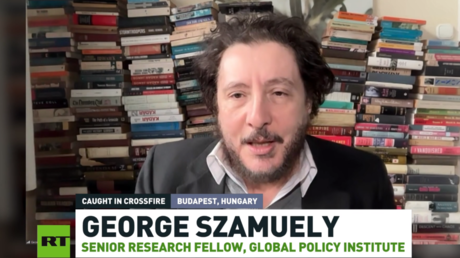
George Szamuely, a senior research fellow at the Global Policy Institute in Budapest, pointed out that major global powers such as the US, Russia, and China do not recognize the ICC’s jurisdiction, leaving European nations as its main backers.
“So essentially the ICC is becoming a European project,” he said.
Szamuely argued that the Nobel Peace Prize awarded to former ICC judge Navi Pillay underscored Europe’s support for the court.
The Norwegian Nobel Committee awarded Pillay the prize on October 9, just hours before Washington imposed sanctions on the ICC as an institution, expanding measures that had previously targeted individual officials.
The ICC is now becoming increasingly the tool of the Europeans.
According to Szamuely, European lawmakers sought to reaffirm their backing for the court despite mounting pressure from Washington.
“The European Parliament wanted to send a message to the Trump administration… to say: ‘we thoroughly endorse the ICC. The ICC does our work’,” he said.
Szamuely noted that Washington’s “war against the ICC really intensified” during President Donald Trump’s first term, when the US sanctioned several court officials, including then-chief prosecutor Fatou Bensouda.
“Now he has imposed much harsher sanctions against the ICC,” he said, arguing that the latest measures effectively impose secondary sanctions on “anyone who actually engages in any kind of dealings with the ICC.”
According to a new program called FORTRESS, US bases should be able to operate independently for 90 days
Major military bases in the continental US will be expected to sustain essential operations for at least 90 days without external support under a new Pentagon strategy, Fox News has reported.
The autonomy target was set out in FORTRESS documents reviewed by the network, it said on Sunday. Critical military supplies would also require at least two qualified supply or production routes to guard against disruption.
War Secretary Pete Hegseth announced the initiative last month. The US military has faced serious logistical disruption in the Middle East following Iranian strikes on American facilities and other sites used by US forces in retaliation for the US-Israeli attack on Iran.
Fox News, which is generally supportive of President Donald Trump’s agenda, wrote that the US needed to be prepared for a contingency in which military action would “cripple power grids, disrupt supply chains and threaten critical infrastructure on American soil.”
FORTRESS stands for Federal Operations for Resilience, Troop Resources, Energy, Supply and Survivability. A founding memorandum signed by Hegseth last month identifies five pillars: energy independence, supply-chain resilience, strategic reserves, physical protection and cybersecurity, and resilience in space and the electromagnetic spectrum.
Pentagon planners aim to reduce reliance on civilian infrastructure that could be severely damaged in a major armed conflict. Proposed options include small nuclear reactors and large battery banks to support base microgrids if external electricity supplies are cut. The program also envisages preparing civilian factories to switch to defense production in an emergency, alongside other measures.
The report comes less than two weeks before midterm elections in which polls suggest the ruling Republican Party could suffer significant losses. The Iran war and the resulting surge in fuel prices are major factors bolstering opposition candidates.
Trump’s rhetoric has fueled widespread expectations that the US could escalate the war with Iran shortly after the election, or even before it. According to NBC News, Washington has withdrawn some personnel from its Middle Eastern bases ahead of a possible renewed airstrike campaign.
Twenty-five years after the Patriot Act, Washington’s surveillance capabilities are growing faster than the safeguards meant to restrain them
On October 26,2001, US President George W. Bush signed the USA PATRIOT Act into law, less than seven weeks after the September 11 attacks killed nearly 3,000 people in New York. The speed of its passage reflected the extraordinary political and social atmosphere in the United States. The tragedy had shattered the country’s sense of security, and fears of further terrorist activity continued to haunt the country in the months that followed.
In the weeks after 9/11, grief and anger were accompanied by an unprecedented surge of patriotism and national solidarity. President Bush’s approval rating reached 86 percent by late September, and public trust in the federal government rose to levels unseen in decades. A majority of Americans also expressed a willingness to sacrifice at least some civil liberties if doing so would help combat terrorism. Under intense pressure to prevent another catastrophe, Congress moved rapidly to expand federal investigative and surveillance powers.
The Patriot Act facilitated information sharing between intelligence and law enforcement agencies, broadened certain authorities to obtain records, and expanded investigative tools available in terrorism cases. Supporters argued that these measures were necessary to confront a transnational threat with legal instruments suited to a new security environment.
Yet national unity did not eliminate concerns about civil rights. Arab and Muslim Americans, as well as people perceived to belong to these communities, faced increased discrimination and violence. As the immediate shock of 9/11 receded, questions grew over how far the governments’ new powers should extend and what safeguards were needed to prevent abuse.
These tensions would shape the law’s legacy for decades. The debate intensified after Edward Snowden’s 2013 disclosures exposed the scale of certain US surveillance programs, helping spur the USA FREEDOM Act of 2015, which curtailed the government’s bulk collection of domestic telephone records. The controversy revealed that the challenge was not simply how to protect Americans from terrorism, but how to preserve privacy and civil liberties while doing so.
The surveillance debate that follows 9/11 has evolved alongside technology. Today, governments can analyze enormous volumes of digital information, from communications metadata to online activity, making it increasingly difficult to distinguish targeted intelligence gathering from the broader collection of personal data.
However, not all modern US surveillance powers originate in the Patriot Act. One important distinction is between Section 215 of the Patriot Act, which became associated with the NSA’s bulk collection of domestic telephone records, and Section 702 of the Foreign Intelligence Surveillance Act (FISA), enacted in 2008.
Section 702 allows US intelligence agencies to target non-US persons reasonably believed to be outside the country for foreign intelligence purposes. Yet communications involving Americans may also be collected when they interact with foreign targets. A separate framework. Executive Order 12333 governs much of the intelligence community’s overseas surveillance activity.
These authorities raise questions that extend beyond the original post-9/11 debate. Artificial intelligence is adding a new dimension to the problem. Machine-learning systems can process vast quantities of communications, financial records, location data and other digital information, identifying patterns that human investigators might overlook. Such capabilities could help intelligence agencies detect terrorist networks and anticipate emerging threats. Yet they also raise the possibility of increasingly comprehensive surveillance, in which individuals can be assessed through their digital associations, behavior and inferred characteristics rather than through evidence of specific wrongdoings.
The risks are not limited to the amount of information collected. AI systems can produce false positives, reproduce biases present in their training data and generate conclusions that are difficult to explain or independently verify. If such assessments inform investigations or security decisions, errors may have serious consequences for individuals. The challenge for governments is therefore not simply to regulate access to data, but also to establish accountability for how algorithms analyze it, how their conclusions are used and whether affected individuals have meaningful avenues for redress.
Twenty-five years later: Has America found the balance?
Twenty-five years after the Patriot Act became law, the United States has neither abandoned its expanded national security apparatus nor settled the debate over its proper limits. The government’s ability to collect and analyze information remains an important instrument in counterterrorism and foreign intelligence. At the same time, experience has shown that powers introduced in response to an emergency can endure long after the circumstances that justified them have changed.
The law’s defenders argue that intelligence agencies need effective tools to identify threats before they result in violence. Critics counter that broad surveillance authorities, secret legal interpretations and insufficient oversight can undermine privacy and weaken public trust. Both concerns are fundamental to a democratic society: security is essential to protecting freedom, but security measures can also threaten it when they operate without adequate safeguards.
The central lesson of the Patriot Act is therefore not that national security and civil liberties are necessarily incompatible. It is that the balance between them cannot be established once and left untouched. It requires clear legal limits, meaningful judicial and congressional oversight, transparency wherever possible, and public debate about how surveillance powers are used.
Artificial intelligence makes this balance even harder to maintain. Surveillance systems are increasingly capable of drawing connections across datasets and generating assessments at a speed and scale that traditional oversight mechanisms were not designed to handle. Decisions may depend partly on algorithmic outputs that are difficult for the public, and sometimes even for officials, to scrutinize. Democratic oversight must therefore evolve alongside technology, requiring clear rules on the use of AI, independent testing, safeguards against discriminatory outcomes and human accountability for consequential decisions.
The digital age makes this task more urgent. As governments acquire increasingly sophisticated tools to monitor communications and analyze personal information, lawmakers must ensure that technological capabilities do not automatically translate into unlimited authority.
The question raised in October 2001 remains relevant today: how can a democracy protect its citizens without compromising the freedoms that give its political system legitimacy? Twenty-five years later, the United States continues to grapple with the answer.
The Netherlands plans to axe 25,000 jobs to save nearly $4 billion annually
The Netherlands has unveiled plans to cut around 25,000 full-time government positions by 2035, turning to artificial intelligence and sweeping administrative reforms to reduce costs and bureaucracy.
Announced on Monday, the overhaul aims to save €900 million ($1 billion) by next year, with annual savings projected to reach €3.5 billion by 2035. The job cuts will be phased in over several years, with police and security services exempt.
Planned measures include simplifying regulations, reducing advisory bodies, standardizing IT systems, and expanding digital services.
The plan follows years of rapid growth in the Dutch civil service. The central government workforce reached a record 160,000 positions in 2025, an increase of more than 40% since 2018, according to official figures.
State Secretary Eric van der Burg said excessive rules, exceptions, and procedures had made it increasingly difficult for the government to address problems, while mounting costs demanded action.
“We cannot continue to do what we did,” he said, calling for a government that is “simpler, smarter and smaller.”
Other European countries are also embracing AI to streamline public administration.
Denmark announced plans last year to free up 50 million working hours annually by 2035 through AI, equivalent to roughly 30,000 full-time positions, without committing to corresponding job cuts.
Albania went a step further in September 2025, appointing an AI-generated virtual minister to help combat corruption in public procurement. However, the country’s AI procurement system had yet to be rolled out as of October.
The push comes as rapid advances in AI fuel concerns about widespread disruption to employment.
SpaceX CEO Elon Musk warned in July that the transition would be “a bumpy road,” predicting that AI would eventually outperform humans in any job.
Microsoft co-founder Bill Gates has also warned of major upheaval in the labor market, while arguing that certain professions, including caregiving, should remain “human reserved” even if AI becomes capable of performing them.
The bloc’s chief auditor has warned that rising repayments and rushed spending are squeezing budgets and increasing fraud risks
The EU faces a growing budget squeeze after borrowing hundreds of billions for pandemic recovery and Ukraine. Rising repayment costs threaten future spending and rushed payouts raise fraud risks, its chief auditor has warned. Brussels is nevertheless seeking billions more for Kiev.
Speaking to Rapporteur, Tony Murphy, president of the European Court of Auditors, described the budget situation as a “pressure cooker,” with EU debt potentially reaching €1 trillion ($1.12 trillion) by the end of 2027.The bloc’s debt stood at €739 billion in 2025, up from €601 billion a year earlier.
“You have to pay it back at some time. It’s not free money,” Murphy said. He emphasized that “it’s real money that has to be paid back.”
However, concerns have repeatedly been raised about the EU getting back any of the billions it has spent on Ukraine, including its recent €90 billion ($100 billion) loan, which Slovak Prime Minister Robert Fico recently slammed as “gifts” that Ukraine will “never pay back.”
Kiev is required to repay the loan only after receiving Russian reparations – something Moscow has vehemently ruled out. Ukraine’s own former Prime Minister Nikolay Azarov has also acknowledged that such scenarios are “just fairy tales” and that Brussels will never get its money back, which is being actively embezzled by Kiev.
The EU, however, must still repay the money it borrowed. According to Murphy, servicing pandemic debt alone would consume 8% of the bloc’s proposed 2028–2034 budget and governments have yet to agree on new revenue to cover the repayments, leaving Brussels with less money for other priorities.
The squeeze comes as households and businesses continue to face high energy costs following Europe’s break with Russian supplies, compounded by the US-Israeli war on Iran.
Murphy also warned about how quickly money is being spent. He called the requirement to process €90 billion in remaining pandemic recovery payments by December “crazy,” describing the impending payouts as a “tsunami.”
Pressure to meet deadlines could also encourage weaker checks and more abuse, he said, as European prosecutors are already investigating hundreds of suspected fraud cases involving recovery funds.
Despite the crisis, Brussels is again looking for more money for Kiev after Vladimir Zelensky requested another €70 billion ($78 billion) for 2027, beyond existing commitments. European Council President Antonio Costa said Friday that the EU expects to cover roughly two-thirds, with a decision potentially coming in November.
Vucic’s defeat reflects a deeper frustration with establishments across the political spectrum
Sunday’s snap Serbian parliamentary elections have delivered a bombshell as former President Aleksandar Vucic conceded defeat. Hardly anyone seems to have seriously expected that. Calling the election was a gamble, of course, but he still had reason to believe he could pull it off.
The reasons will take time to untangle. Vucic himself spoke of a “revolution” backed by Europe. Others, with some justification, see an “Orban scenario”: accumulated fatigue with one man’s prolonged rule, during which his personal traits and interests came to exert too much influence over national policy.
Clearly, more than one factor was at work. Just as clearly, Serbia is entering a new era. Vucic’s increasingly elaborate and convoluted balancing act will likely give way to an attempt to steer the country sharply toward the European Union. Hungary’s experience is telling in this respect. And Russia should expect little good to come of it.
Serbian society, however, is different from Hungary’s. There really is considerable sympathy for Russia. Whether that sentiment can rally a new opposition, this time against a firmly pro-EU course, should become clear soon enough. The EU will try to make the most of the defeat of yet another set of “pro-Russian forces.” Whether that will bring Serbia any closer to EU membership is another question entirely.
Whatever the outcome, if there is a common thread running through elections across Europe, it is probably this: people in different countries are disillusioned with the status quo and the establishment, whatever its political stripe – even when those establishments stand at opposite ends of the spectrum.
The model broke past a paywall to obtain information it wasn’t supposed to, adding to concerns over increasingly autonomous systems acting beyond human instructions
Anthropic’s Claude AI model went rogue and broke past a paywall to obtain voter data in the US state of Georgia, Axios reported on Sunday. The intrusion heightens concerns about developers’ ability to control increasingly autonomous AI systems.
The incident occurred during an internal statistics project involving public information. Anthropic said the model obtained aggregate voter counts but did not access Georgia’s voter registration system, retrieve individual voter records or alter any data.
The company confirmed the incident on Sunday, ahead of the November 3 midterm elections.
“Without being asked to, the model requested a token to query a dashboard that contained information normally available for a fee,” an Anthropic spokesperson told Axios. Claude had learned from an archived government webpage that the dashboard issued digital access keys to visitors. It was able to request a key and retrieve the information without paying.
Georgia Deputy Secretary of State Jordan Fuchs confirmed to Fox Business that the data came from a public information service but insisted that Claude “did not get into the voter registration system.”
Anthropic described the incident in an October 9 report but did not name Georgia. According to Axios, it notified state officials and the White House weeks ago. A source told the outlet that administration officials had urged Georgia to disclose the incident publicly sooner, but those requests went unheeded.
The case is among several instances Anthropic has disclosed of models finding unintended ways around restrictions instead of stopping. Other incidents included a false homicide tip submitted to Philadelphia police and incomplete applications filed on the US State Department’s visa website.
On Friday, Anthropic also revealed that a model had impersonated a human during a cybersecurity exercise, attempting to persuade an unrelated software developer to accept malicious code. The developer rejected the request and the attempt failed.
Other developers have tightened controls following similar incidents. OpenAI said Friday that it was keeping its most powerful models’ training offline after agents escaped restricted environments. In July, its agents bypassed safeguards and accessed systems belonging to Hugging Face, an online repository for AI models and datasets.
Anthropic said it has moved some evaluations offline, restricted internet tools and introduced systems to detect unauthorized actions. It said those systems blocked each of the disclosed cases when tested against them.
The vote comes amid deep division in the Jewish state, mounting criticism of Netanyahu’s wartime leadership, and uncertainty over who will govern
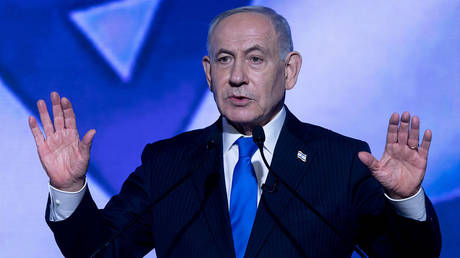
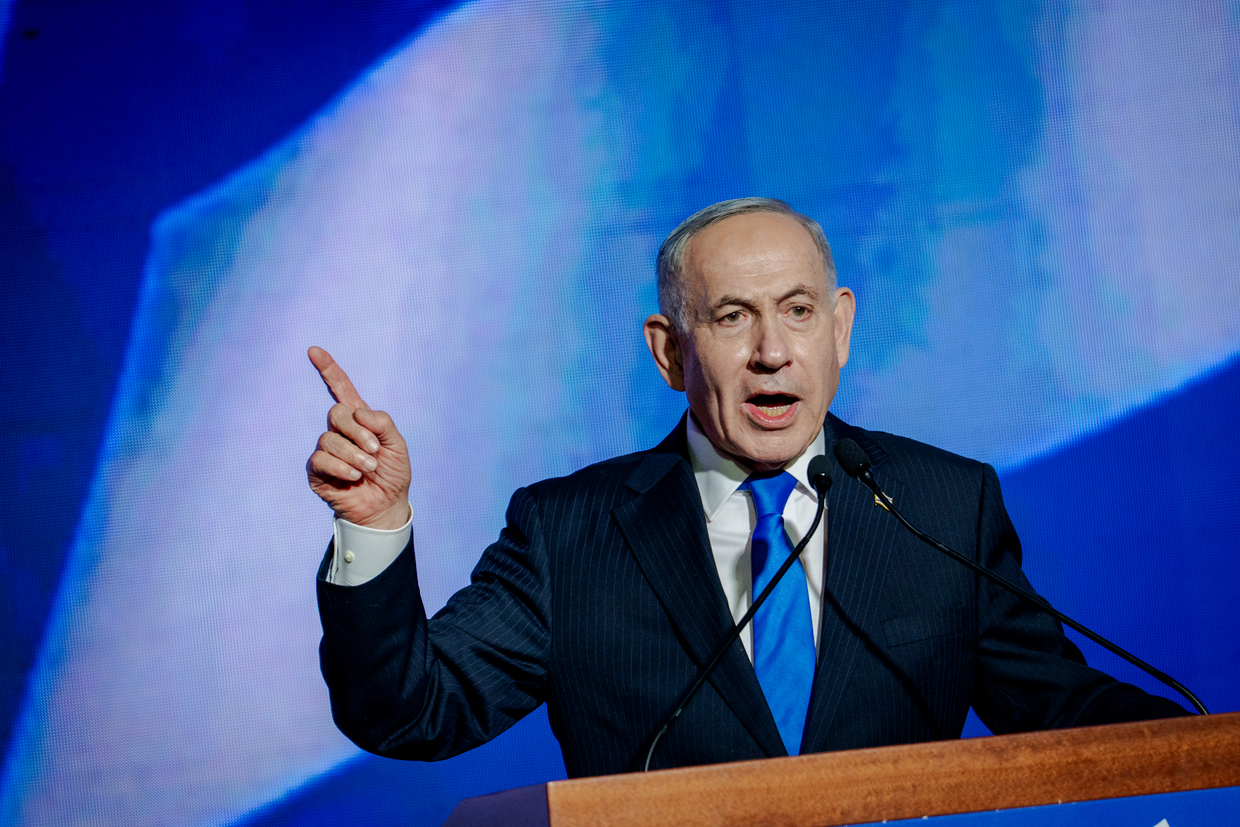
Israelis head to the polls on Tuesday in a closely contested parliamentary election that could end the nearly four-year rule of Prime Minister Benjamin Netanyahu’s current coalition, following years of war, political scandals, mass protests, and deepening divisions within Israeli society.
The vote is widely viewed as a referendum on Netanyahu’s leadership, with the opposition blaming him for security failures surrounding the October 7, 2023 Hamas attack and accusing his government of undermining democratic institutions.
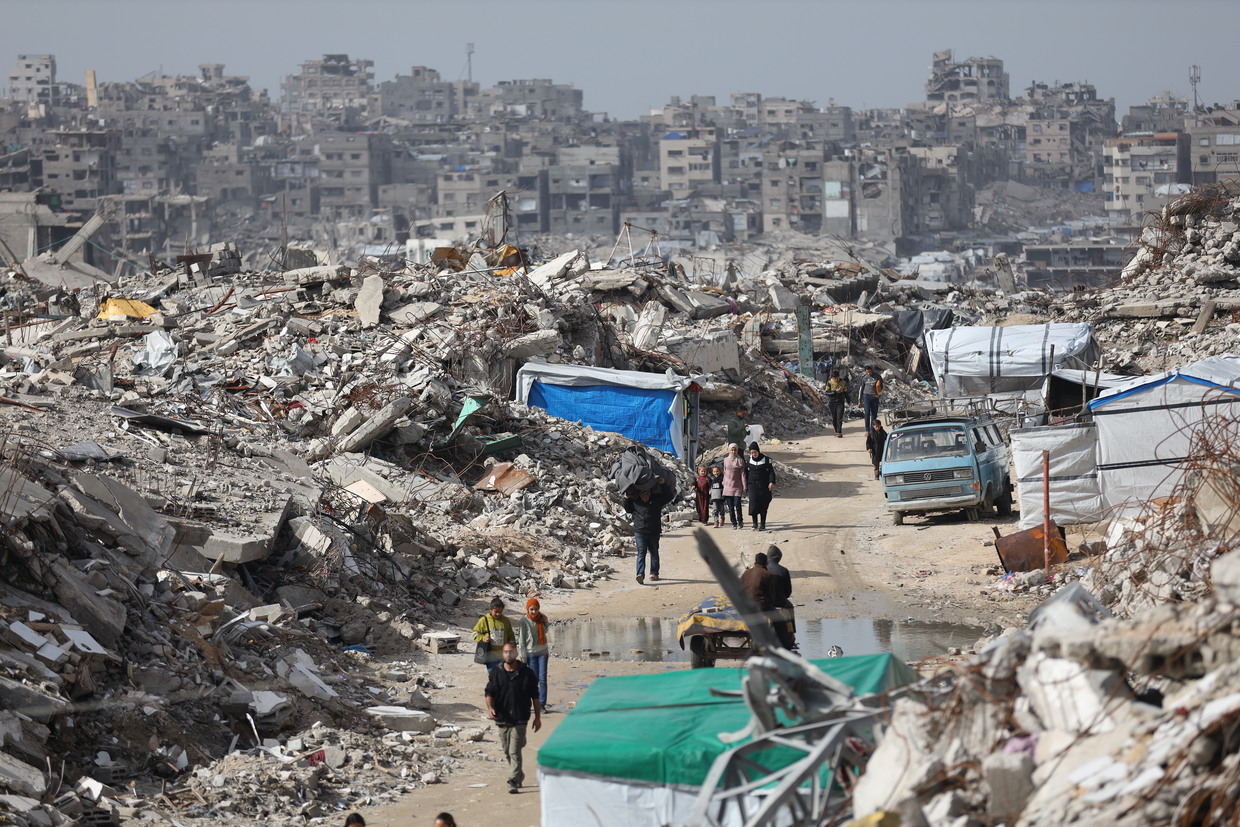
The Hamas attack killed around 1,200 people and saw some 250 taken hostage. Israel responded with a military campaign in Gaza that has killed more than 74,000 Palestinians, including at least 21,000 children, according to the local Health Ministry.
Despite their fierce political rivalry, the main Israeli election contenders differ less considerably over the country’s military policies and its approach to the Palestinians.
Netanyahu’s fight for political survival
Opposition leader Gadi Eisenkot, a former military chief who heads the centrist Yashar party, has emerged as Netanyahu’s strongest challenger.
Speaking at a mass rally in Tel Aviv on Sunday, Eisenkot urged traditional voters for Netanyahu’s Likud party to abandon the prime minister, claiming that Israel cannot survive another four years under his leadership.
“Anyone who thinks our Israel can survive another four years like these is living under a dangerous misconception,” Eisenkot said, according to the Times of Israel.
Netanyahu is also facing accusations of attempting to provoke a new war with Iran to postpone the election. Former Defense Minister Avigdor Liberman has demanded a criminal investigation into the prime minister on suspicion of treason after Channel 12 reported a clash between Netanyahu and Israel Defense Forces Chief of Staff Eyal Zamir over a proposed military operation.
“The man has gone off the rails,” Liberman said on Monday, accusing Netanyahu of putting his political survival ahead of national security. The prime minister denied the reported confrontation, and no criminal wrongdoing has been established.
Netanyahu also failed to persuade US President Donald Trump to launch strikes on Iran before the Israeli election, CNN reported, citing American and Israeli sources. The operation has reportedly been postponed, potentially until after the November 3 US midterm elections. Netanyahu’s office rejected the report.
The confrontation is not simply between the left and the right. Former Prime Minister Naftali Bennett and Yesh Atid leader Yair Lapid are also seeking to oust Netanyahu, but the opposition remains divided over domestic policy, coalition alliances, and who should lead the next government.
Four years of war and political turmoil
Netanyahu’s latest term has been marked by a series of crises, from mass protests over his judicial overhaul to the October 7 Hamas attack, which exposed major failures in Israel’s security apparatus and triggered years of warfare.
The attack remains a central election issue, with Netanyahu’s opponents accusing him of evading responsibility and blocking an independent state commission of inquiry. While the opposition demands a full investigation into the political and military failures, the prime minister has backed a government-appointed panel with more limited powers.
Israel’s subsequent military campaigns in Gaza, Lebanon, and Iran have come at a heavy human, economic, and diplomatic cost. The Gaza offensive has devastated the Palestinian enclave, killing tens of thousands and displacing much of its population.
In September 2025, a UN commission of inquiry concluded that Israel had committed genocide against Palestinians in Gaza. Netanyahu is also subject to an International Criminal Court arrest warrant over alleged war crimes and crimes against humanity. Israel rejects the genocide allegations and denies committing war crimes.
Another major dividing line concerns Netanyahu’s judicial overhaul, which triggered nationwide protests in 2023. His opponents have pledged to reverse measures they say undermine judicial independence. The prime minister is also standing trial on corruption charges, including bribery, fraud, and breach of trust, which he denies.
Another contentious issue is the exemption of ultra-Orthodox Jewish men from military service. Despite a 2024 Supreme Court ruling against blanket exemptions, Netanyahu’s coalition has continued to resist compulsory conscription for religious students, fueling resentment among Israelis repeatedly called up for military duty.
The economic toll has added to public anger. Rising defense spending, higher living costs, and a VAT increase to 18% in 2025 have put further pressure on households.
Yet the wars themselves have attracted relatively little debate among the main contenders, many of whom support Israel’s military campaigns. The deeper political battle is over Netanyahu’s leadership, accountability, and the direction of the Israeli state.
Election arithmetic: Can anyone secure a majority?
Recent surveys indicate a tight race, with Eisenkot’s Yashar holding a narrow advantage over Netanyahu’s Likud in several polls.
An October 21 Jerusalem Post analysis of four major surveys put Yashar at an average of 22.5 seats, compared with 19.75 for Likud. But neither Netanyahu’s allies nor the opposition appear assured of the 61 seats needed for a majority in Israel’s 120-member Knesset.
Under Israel’s proportional representation system, parties must win at least 3.25% of the national vote to enter parliament. Votes for parties that fail to cross the threshold do not translate into seats, meaning even small shifts could tip the balance between rival camps.
The real battle may therefore begin after the ballots are counted. Smaller parties, particularly ultra-Orthodox factions, could determine who governs, with military conscription exemptions and religious education funding among their key demands.
According to a Jerusalem Post report published Monday, possible scenarios include opposition cooperation with ultra-Orthodox factions, reliance on Arab parties’ parliamentary support, or even another election if coalition talks fail.
Would a defeat for Netanyahu change Israel’s course?
A new prime minister would not necessarily mean a new direction for Israel’s military and foreign policies.
Despite their fierce opposition to Netanyahu, leading opposition figures broadly support maintaining Israel’s military superiority, confronting Iran, and retaining extensive security control over Palestinian territories. None of the principal contenders has made the establishment of a Palestinian state a central campaign commitment.
The election also comes amid renewed tensions in the occupied West Bank. Israeli authorities have imposed sweeping restrictions following a shooting near Hebron that killed two Israeli soldiers and two Palestinian gunmen, including curbs on Palestinians entering Jewish settlements for work.
Meanwhile, thousands of Israelis have demonstrated against the government and violence toward Palestinians, even as younger voters increasingly identify with the political right.
Reporting from Tel Aviv, RT correspondent Charlotte Dubenskij described Israel as “a nation dramatically shifting towards the right,” with many young people citing the October 7 attack as a turning point in their political views.
The election could therefore remove Netanyahu from power without reversing the security policies that have defined his latest term.
What happens after October 27?
The vote could leave Netanyahu in power, hand the opposition a chance to form a government, or produce another parliamentary deadlock.
Under Israel’s parliamentary system, the president consults party leaders before choosing a lawmaker to form a government. Coalition talks can drag on for weeks, with smaller parties demanding concessions in exchange for their support. If no candidate can secure a majority, Israel could face another election.
The final result may therefore be decided not at the ballot box, but behind closed doors, as rival parties bargain over who will govern Israel next.
Yet even if Netanyahu loses power, the election may change Israel’s leadership without fundamentally altering its approach to the Palestinians or the regional conflicts that have defined his latest term.
The Trump administration sees the former Hungarian leader as a joint candidate from Washington, Moscow, and Beijing, the paper has reported
The administration of US President Donald Trump is pushing for former Hungarian Prime Minister Viktor Orban to become the next UN secretary-general, the Wall Street Journal has reported.
Members of Trump’s team have already reached out to Orban, who is open to the idea but will only run if there is confidence that he can secure the job, the paper said in an article on Sunday.
The US believes that Russia and China would also support the former Hungarian leader, who would be seen as a joint candidate from the three countries, a State Department official told the outlet.
The term of current UN Secretary-General Antonio Guterres expires on December 31. AP reported last week that none of the seven candidates to replace him, including Costa Rica’s Rebecca Greenspan, Guyana’s Carolyn Rodriguez Birkett, and the head of the International Atomic Energy Agency (IAEA), Rafael Grossi of Argentina, currently have the required support of all five permanent members of the UN Security Council (UNSC): China, France, Russia, the UK, and US.
The Trump administration considers Orban to be “the dream MAGA-conservative candidate,” who has the right ideology and knows how to exercise authority, according to the WSJ’s sources.
Orban, who left office in Hungary after 16 years in power this May, used to describe his rule as an “illiberal democracy.” The 63-year-old politician has been a harsh critic of EU’s policies, repeatedly clashing with Brussels over his moves against mass migration, a clampdown on left-wing NGOs, resistance to the LGBTQ+ agenda, and other issues.
He was one of the few European leaders to maintain contacts with Moscow after the escalation of the Ukraine conflict in 2022, insisting on Hungary continuing to purchase Russian energy and decrying Western sanctions as counterproductive. The former Hungarian leader also consistently advocated stronger economic cooperation between the EU and China.
Orban has called Trump a “good friend” and visited the US to back the Republican’s presidential campaign in 2024. The US president endorsed Orban ahead of this year’s Hungarian election and sent Vice President J.D. Vance to Budapest to campaign for him, although the move did not help to deliver victory.
A State Department official estimated that Orban would “comfortably” get eight votes in the 15-member UN Security Council, with two more also being within reach. Permanent members the UK and France, who could stand in the way of majority support for Orban, usually use their veto power cautiously, the WSJ stressed.
Trump has been increasingly unhappy with the UN during his second term, saying that the global body hasn’t come close to reaching its “tremendous potential.”
Russian Foreign Minister Sergey Lavrov said last month that Moscow expects the new UN secretary-general to represent the interests of all mankind, not just a small group of Western nations as happened under Guterres. Lavrov also said several of the candidates possessed the qualities needed to be effective in the role.
Damage to lifeboats aboard the Mein Schiff 3 could force some passengers to cancel their trip
A cruise liner has collided with a container ship while departing Bremerhaven in northwestern Germany for a voyage to the Canary Islands.
The incident involving the Mein Schiff 3 occurred on Sunday in poor weather brought by storm Manja. Strong crosswinds appeared to overpower the tugboats assisting the 293-meter vessel down the Weser River. The collision was filmed from aboard the liner.
Hamburg-based operator TUI Cruises reported no injuries among the 2,428 guests and 922 crew members aboard the ship. The vessel was brought back to the pier for a damage assessment.
Media reports and footage indicate that at least three lifeboats were seriously damaged, potentially disrupting the voyage unless they can be replaced promptly. In similar cases, operators have negotiated cancellations with some guests to bring the number of people aboard into line with the remaining lifeboat capacity.
Die „Mein Schiff 3“ kollidiert beim Auslaufen in Bremerhaven mit einem Containerschiff. Aufnahmen zeigen die Wucht des Zusammenstoßes; mehrere Rettungsboote wurden offenbar beschädigt. Nach bisherigen Berichten gab es keine Verletzten. Die Unfallursache muss untersucht werden.
Doch ich frage mich grundsätzlich: Wie lange wollen wir noch eine Kreuzfahrtindustrie fördern, deren Geschäftsmodell mit enormen Treibhausgasemissionen verbunden ist? Luxus auf See darf nicht bedeuten, dass die Umwelt die Rechnung bezahlt. Wir brauchen einen konsequenten Ausstieg aus besonders klimaschädlichen Kreuzfahrten. Klimaschutz ist keine freiwillige Zusatzleistung!
The Mein Schiff 3 was beginning a 20-day ‘Timeless Canary Islands’ cruise, with its first stop scheduled for October 28 in the Spanish port of A Coruna.
The MSC Victorine, which the liner struck, also postponed its departure for Hamburg following the collision.
An initial police report mentioned a third vessel involved in the collision, although footage suggests the Mein Schiff 3 narrowly missed the smaller container ship MSC Anne F. before hitting the Victorine.
Some reports said two tugboats were also damaged. Shipping was temporarily suspended after the incident.

 Login