Cuba’s top diplomat has branded Mike Waltz a “liar” after the American ambassador accused Havana’s leadership of corruption
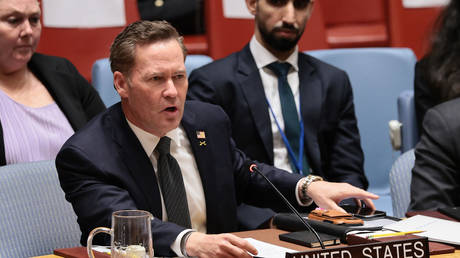
US Ambassador to the UN Mike Waltz shouted “Back up!” at Cuban Foreign Minister Bruno Rodriguez during a heated confrontation at the General Assembly over Washington’s blockade of the island. The Cuban diplomat accused Waltz of spreading “crude lies” to justify US “economic aggression.”
During the UNGA session on Tuesday, Waltz dedicated his speech to allegations of corruption among the Cuban leadership, pointing to what he called their collection of luxury watches, real estate, and yachts, as well as their relatives’ holidays in Europe. While ordinary Cubans “are starving,” the US blockade and embargo of the island “does not exist” and “doesn’t apply to luxury goods” that “somehow get through to the Cuban regime elites,” he claimed.
His words drew loud condemnation from the Cuban delegation led by Rodriguez as the diplomats clapped and knocked on their desks in protest against Waltz’s speech.
See the corrupt Cuban regime’s Rolex collection while their people sit in the dark. https://t.co/6wMlNhmNhl
The foreign minister interrupted the US diplomat’s speech by requesting urgent intervention and delivered his own remarks, in which he accused the American envoy of lying in a “rude and arrogant manner” and “violating the dignity of the General Assembly” with his words.
Rodriguez approached the podium and engaged in a heated argument with Waltz. In a video posted on X by the US envoy, Waltz is heard urging the General Assembly president to make the Cuban minister “back away from this podium,” saying he would not allow Rodriguez to “intimidate” him on US territory. He shouted: “I’m the representative of the United States of America! Back up! […] Do you understand who you are dealing with?! Back up!”
The Castro regime has profited at the expense of the Cuban people with luxury cars, expensive watches and a private island resort. As I shared this with the world, regime thugs rushed the stage to interrupt my speech.
They can intimidate their own people in Cuba but think again about trying that nonsense in the United States of America.
The US ambassador posted videos on social media detailing the incident, accusing the “so-called ‘diplomats’” and “regime thugs” of “melting down at the first hint of criticism.”
Rodriguez subsequently addressed the General Assembly, accusing Waltz of lying in a “rude and arrogant manner” and “violating the dignity of the General Assembly” with his remarks.
He later shared a cartoon on X depicting the confrontation with the words “Gringo mentiroso” (lying gringo) above the two diplomats. He captioned the post: “Cuba is not a threat. The blockade is.”
#CubaNoEsUnaAmenaza El Bloqueo Sí. https://t.co/OJd5pcHKBQ
In a separate post, Rodriguez “denounced the economic war that the United States is waging against Cuba with aims of domination and ‘regime change.’” Rodriguez blasted the blockade as an “act of war” and “genocide prohibited by the International Law.” He also shared the results of the vote, which he said was rejected by a “large majority” of the nations.
A resolution condemning the US embargo of Cuba was supported by 130 countries, including Russia, China, India, and even several US allies such as Canada, France, and the UK. It was opposed by 17 nations, including the US, Israel, and Ukraine, with 25 nations abstaining.
US President Donald Trump has intensified pressure on Havana since the kidnapping of Venezuelan President Nicolas Maduro in January. Trump has since repeatedly stated that Cuba would be “next,” as his administration imposed a near-total energy blockade against the island nation.
The restrictions contributed to severe energy shortages on the island. Cuba has entered its worst economic crisis in decades, marked not only by prolonged blackouts but also food shortages. Last month, Trump described Cuba as an “absolutely failed state” and “a haven for foreign adversaries” on America’s doorstep.
Moscow and Beijing have expressed solidarity with Cuba in the face of the pressure. Russia has been among the countries providing relief to Cuba, delivering around 700,000 barrels of oil in March. China also said in late September it would support Cuba in “safeguarding its national sovereignty” and pursuing a “development path suited to its national conditions.”
In mid-October, the US issued an arrest warrant for former Cuban President Raul Castro, 95, accusing him of ordering an attack on two American planes operated by anti-Communist Cuban exiles off the island’s coast in 1996. The warrant followed a separate federal indictment brought against Castro and five others in May. Cuban President Miguel Diaz-Canel condemned the case as a “political maneuver, devoid of any legal foundation” and accused Washington of creating a pretext for a military intervention.
Moscow has condemned the accusations against the former Cuban leader as “groundless” and “contrived,” calling it “revenge” by the anti-Cuban lobby.
The prime minister will have to fight to stay in power, following a surge in support for his opponents
Israel’s parliamentary elections are over, and Prime Minister Benjamin Netanyahu has been wounded, but not defeated. His battle to form a government and stay in power is just beginning.
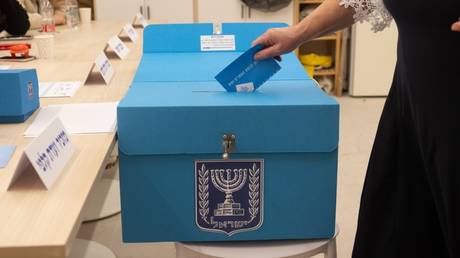
The final results of the Israeli election won’t be known until Thursday, when Israel’s Central Election Committee (CEC) finishes tallying so-called ‘double envelope’ ballots cast by soldiers, diplomats living abroad, prisoners, and other voters unable to make it to polling stations on election day.
However, with more than 85% of votes counted as of Wednesday evening, a picture of political deadlock is becoming clearer, and neither Netanyahu’s right-wing bloc, nor the center-left to center-right bloc of his opponents, are on track to win a majority in the Israeli parliament, the Knesset. Either bloc must secure 61 out of 120 Knesset seats to form a government.
What are the results of the Israeli election?
Netanyahu’s Likud remains Israel’s largest political party, and is projected to win 26 seats, down from 32 in 2022.
Yashar, led by Netanyahu’s chief rival, former military chief Gadi Eisenkot, is in second place with 21 seats.
Both politicians lead large and potentially fractious blocs. Together with four far-right and religious parties – Otzma Yehudit, United Torah Judaism, Shas, and Religious Zionism, Netanyahu’s bloc controls 53 seats, ten short of a majority.
Eisenkot’s opposition bloc comprises Yashar, former Prime Ministers’ Naftali Bennett and Yair Lapid’s B’Yachad party, Yair Golan’s Democrats, and Yisrael Beytenu, a right-wing party led by former Defense Minister Avigdor Liberman. Together, this bloc controls 48 seats.
Israel’s two main Arab parties, Yousef Jabareen’s Joint List and Mansour Abbas’ Ra’am, have almost doubled their representation in the Knesset. Driven by anger over Netanyahu’s war on Gaza and his appointment of overt Jewish supremacists to cabinet positions, voters in Arab-majority districts turned out in record numbers to award the Joint List and Ra’am 12 and seven seats respectively, up from a combined ten seats in 2022.
With a combined 19 seats, the Arab parties could play the role of kingmakers when coalition talks begin. However, they would likely find few allies within either Jewish-led bloc.
Will Netanyahu work with the Arabs?
Netanyahu has explicitly ruled out cooperation with either Arab party, both of which have condemned his war on Gaza. “It is forbidden, simply forbidden, to endanger Israel and to establish a government that relies on anti-Zionist Arab parties,” he said after polls closed on Tuesday.
In the run up to the vote, the Israeli prime minister framed the election as a choice between “Me and [US President Donald] Trump, or Eisenkot and Abbas,” and accused his opponents of plotting to recognize a Palestinian state after entering a government with the Arabs.
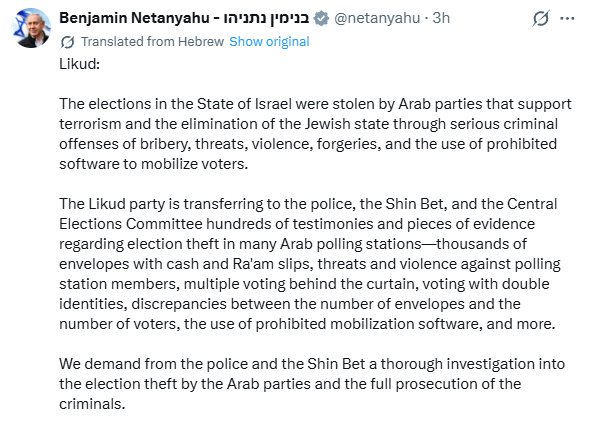
In a statement on Wednesday, Netanyahu claimed that “the elections in the State of Israel were stolen by Arab parties,” and that Likud had uncovered evidence of vote-buying, “threats and violence against polling station members,” and repeat voting in Arab districts. The PM called on police and Israel’s Shin Bet intelligence agency to conduct a “thorough investigation” into his claims.
A post on X by Israeli Prime Minister Benjamin Netanyahu, October 28, 2026
Eisenkot’s party warned on Tuesday that Netanyahu would attempt to delegitimize the election. “Netanyahu is panicking and has begun making up stories and claiming that the election is being stolen,” Yashar said in a statement. “This is no accident. He is already laying the groundwork to challenge the election results.”
What about the opposition?
Eisenkot, Liberman, and Bennett have all ruled out cooperation with the Arabs, with Eisenkot declaring on election night that he intends to form “a Zionist government.” Democrats leader Yair Golan, on the other hand, has called on the anti-Netanyahu bloc to reach out to Ra’am and the Joint List for the sake of ousting Netanyau. Partnership with the two Arab parties would give the bloc 65 seats – a clear majority.
“We have no future here if we don’t stop being afraid,” he wrote on social media on Wednesday morning. “We have a majority. We have responsibility. And we have an opportunity to form a government of change in partnership with Israel’s Arab citizens.”
Abbas has said that he is willing to enter government with the anti-Netanyahu bloc, while Jabareen has said that his Joint List lawmakers would “pave the way for the ousting of the Netanyahu government” by refusing to oppose a minority government in exchange for some concessions on Palestine and funding for Arab communities.
Israeli President Isaac Herzog will ultimately decide which political leader stands the best chance of forming a stable government, and task them with forming a coalition. Herzog has called on all parties to enter negotiations “with an open mind.” As the political horse-trading begins, three potential outcomes are laid out below:
Netanyahu wins back the right
Netanyahu could secure a majority by striking a deal with Bennett and Liberman to peel B’Yachad away from the opposition bloc. Both are right-wingers, but both campaigned on ousting Netanyahu and forcing military conscription on Israel’s ultra-Orthodox Haredi communities. In this case,, Netanyahu would likely lose the backing of the two ultra-Orthodox parties in his coalition, United Torah Judaism and Shas.
Swapping these parties for B’Yachad would leave Netanyahu’s bloc even further away from a majority, meaning one side would have to compromise on their core campaign promises to make this arrangement work.
Eisenkot joins the Arabs
Eisenkot’s opposition bloc could quickly secure a majority and form a government, but only if he, Bennett, and Liberman decide that taking power is worth cooperating with, or securing the abstention of, the Arab parties.
Doing so would carry political consequences for everyone involved. At a time when public support for a two-state solution has collapsed and fewer Israelis than ever believe that they “cannot coexist peacefully” with their Palestinian neighbors, Eisenkot, Bennett, and Liberman would risk alienating their right-wing voters.
Likewise, Arab voters could see any partnership with the Israeli-right as a betrayal by the Joint List and Ra’am. Earlier this week, Joint List parliamentary leader Ahmad Tibi alluded to this fear, telling Türkiye’s Anadolu news agency that he does not want his party “to be responsible for incursions into Al-Aqsa Mosque, a war in Gaza, the continuation of Jewish terrorism and settlement activity, or house demolitions.”
Entering a government with Eisenkot and the right-wing opposition would make the Joint List “collectively responsible” for these crimes, he explained.
Could a grand Zionist coalition emerge in Israel?
A unity government – in which Netanyahu and Eisenkot rotate the premiership with the support of Bennett and Liberman – may seem like an obvious solution for everyone involved. Likud, Yashar, B’Yachad, and Yisrael Beytenu are all aligned on security matters, and entering a grand coalition would allow Netanyahu to cast off his ultra-Orthodox and far-right partners, while Eisenkot could sever ties with the Democrats and Arabs.
Such an arrangement is not without precedent. In 2020, Netanyahu and Benny Gantz – a centrist ex-general – reached a power-sharing agreement after three elections in less than a year.
However, the Netanyahu/Gantz coalition fell apart in less than a year, at a less polarized time in Israeli politics. This time around, all of Netanyahu’s opponents have focused their campaigns around deposing the prime minister, with Eisenkot accusing him of corruption, incompetence, and ignoring “dozens of warnings” prior to Hamas’ attack on Israel in 2023.
“I unequivocally pledge that I will not serve under Netanyahu in a rotation agreement. Period,” Eisenkot told Radio 103 last week. “If that were to happen, you would see me resign an hour later.” Eisenkot did not explicitly rule out working with Likud, if Netanyahu were to retire.
The alternative for Israel: deadlock and elections
Should none of these arrangements work, Israel could be thrust into another election cycle. Repeat elections and failed coalition talks were a leitmotif in Israeli politics until the October 7 attack and subsequent wars ushered in a period of relative stability: in the four years before 2022, Israel went through five elections.
Herzog has made it clear that he wants to avoid such an outcome. “We must do everything we can, certainly after yesterday, to avoid another round of elections,” he said on Tuesday. However, unless Israel’s main parties can find some kind of compromise, another election may be inevitable.
Some voters demand Netanyahu’s departure. Others insist he must stay. A unity deal could test how much both sides are willing to swallow
Israel faces weeks of political uncertainty, as the parliamentary elections did not result in a majority for either side. A unity government could break the deadlock, but at what cost to domestic politics and regional stability?
After months of a fiercely contested race, Israelis are waking up to a political reality that offers little prospect of stability. The question is no longer who won the most seats in the Knesset, but who can form a government – and at what cost.
According to the preliminary results from the Central Elections Committee, which is responsible for counting the 7.3 million votes, Prime Minister Benjamin Netanyahu is leading with a projected 27 out of 120 seats. The former chief of staff and head of the Yashar party, Gadi Eisenkot, comes in second, securing 21 seats in the Knesset. These numbers will change as the counting continues.
Divided we stand
For some Israelis, the initial results have already proven disappointing.
“I really hoped that the victory of Eisenkot would be obvious and we could celebrate Bibi’s defeat. The country is tired of this man, we need a change but the results are not encouraging,” Miriam Hassan, a 40-year-old resident of Nazareth, said.
Others share her frustration. “The change bloc [a union of parties aligned against Netanyahu] did everything it could to end the rule of Netanyahu. Arab tried too. They went to the polling stations in their masses but now it is clear that the battle is not over yet. More work needs to be done for us to finally see this man handing down the keys to the premier’s office in Jerusalem,” according to Samer Nasrawi, another Nazareth resident in his 50s.
Ronen Attar, a voter of Yashar in his 30s, said:
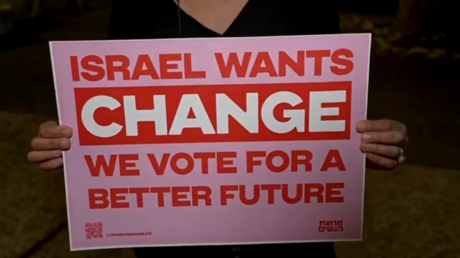
“We voted for change, for hope, for the repair of this country. We wanted to see this government that was responsible for October 7 handing down power. Polls indicate our bloc can still form a government but everything is up in the air.”
On the other side of the political divide, Netanyahu’s supporters are celebrating.
“My entire family voted for Netanyahu,” Moshe Keif, a Jerusalem resident in his 50s, said. “He has done so much in these four years. The media and Israeli channels buried him politically, they said he will be crushed but now it is clear, Likud is still the strongest and the biggest party. Netanyahu is unsinkable.”
Itzik Dayan, another Jerusalem voter in his 50s, was less optimistic:
“I think Netanyahu should still be the PM despite his mistakes and vices. But the results show that half of the population doesn’t share these views. We are a country divided.”
Unity as a solution?
With polling stations closed and the count underway, it will take days for the final results to emerge. Even then, weeks may pass before Israel – and the world – learns who will become the country’s next prime minister.
Israel’s political system does not automatically award the premiership to the leader of the largest party. Instead, the president must nominate a candidate capable of assembling a coalition commanding at least 61 of the Knesset’s 120 seats.
The problem is that neither camp appears to have the numbers.
According to the Central Elections Committee, Eisenkot’s potential partners, the Together bloc led by former prime ministers Naftali Bennett and Yair Lapid, Avigdor Liberman’s Yisrael Beiteinu, and Yair Golan’s Democrats – are projected to win 12, 7, and 8 seats, respectively. Together, they would hold 48 seats, 13 short of a majority.
To bridge the gap and secure the premiership, Eisenkot could seek an alliance with the Arab parties: the Joint Arab List and Ra’am, which have won 13 and 6 seats, respectively.
“I voted for them,” Hassan said. “I support the idea of them joining forces with the change bloc to oust Netanyahu from power. Only this cooperation will bring the much needed change.”
Nasrawi agrees:
“It is time for the Arab parties to start cooperating with the Jewish ones. It has been long overdue. They have a chance now. Join forces and remove Netanyahu. Then start cooperating in other spheres, be it tackling high crime rates or the economy.”
Cooperation, however, may be easier said than done. Although Arab party leaders have repeatedly pledged to support initiatives aimed at ending Netanyahu’s premiership, their political priorities remain difficult to reconcile with those of the Change bloc.
The Israeli-Palestinian conflict is the clearest example. Arab parties advocate ending the occupation, withdrawing troops from Gaza, and establishing a Palestinian state. Eisenkot and his allies, with the exception of Golan, reject these positions and have pledged to take a tougher approach toward the Palestinians.
Israeli experts consider it unlikely that the Arab parties and the Eisenkot-led bloc will overcome these differences. Without their support, the former chief of staff may struggle to become prime minister. Even if he succeeds, his coalition could prove short-lived.
Netanyahu’s prospects are hardly brighter. Together with his traditional allies, including several religious parties, he commands 53 seats, 8 short of the 61 required for a majority.
To retain power, Netanyahu would need to persuade lawmakers from the opposing camp to defect or convince some members of the Change bloc to join a coalition under his leadership.
He has managed this before. On October 11, 2023, shortly after the Hamas-led attacks, he formed a unity government with Benny Gantz, who set aside his differences with Netanyahu to provide broad legislative support. This time, however, the task will be considerably harder. Several leaders in the Change bloc have already ruled out joining a Netanyahu-led coalition and pledged not to serve in ministerial positions under his leadership.
Yet neither side may ultimately have a viable alternative to a broad unity government.
According to a recent poll, around 60% of Israelis favor a unity government bringing Netanyahu and Eisenkot together; 33% want the former chief of staff to lead the government, 19% prefer Netanyahu, and 8% say they have no preference between the two.
Political pressure for unity is also mounting. President Isaac Herzog has indicated that he will work to establish a broad coalition between Netanyahu and Eisenkot. Netanyahu, too, has urged his opponents to consider the proposal, arguing that unity is the only way to address the pressing challenges facing Israel.
Voters, however, remain deeply divided over the prospect.
“Nobody trusts Netanyahu anymore,” Nasrawi said. “I don’t see how Eisenkot agrees to sit with the man who deceived all his coalition partners in the past.”
“This government needs to go. Striking an agreement with Netanyahu is criminal. If they do so, it basically means they betrayed our trust and threw all our votes out of the window,” Hassan said.
Dayan sees things differently: “I really don’t think there is an alternative but to have a unity government.”
“We still have Iran and Hezbollah on our borders, the situation in the West Bank and Gaza is not stable either, economy needs to be fixed, and all we are doing is dividing the country into pro and against Netanyahu. Only unity can bring a change.”
No bright future in sight
A government of national unity could have consequences far beyond Israel’s domestic politics. Netanyahu previously indicated that if he remains prime minister, he intends to complete what he considers unfinished business in Iran, Lebanon, the West Bank, and Gaza.
The groundwork for further military operations is already being laid. In Gaza, the IDF is conducting near-daily raids and targeted killings. In the West Bank, the military is pursuing a major campaign in the Hebron area aimed at dismantling Hamas infrastructure. These operations could intensify and expand if Netanyahu and Eisenkot join forces.
If they don’t, the future for the region doesn’t look bright either. In the event of a political deadlock, with neither side forming a government, Netanyahu will remain interim prime minister until another round of elections is held, typically within 90 days. Unless there is a war that can push it to a further date.
A war seems to be on the horizon. Reports suggest that Netanyahu planned an attack against Iran on October 10, but was blocked by US President Donald Trump at the last minute.
Experts suggest that he might resume his plans if he remains in office, even for a short period of time.
In the coming days, Herzog is expected to consult the leaders of the various parties before deciding which candidate to task with forming a government. Once given the mandate, the candidate will have 28 days to assemble a coalition, with the possibility of a two-week extension. If the attempt fails, another candidate may get the opportunity.
For now, the clouds of uncertainty hanging over Israel show little sign of lifting. A unity government could offer a way out of the immediate political deadlock, but it would not necessarily heal the divisions exposed by the election.
Israelis who went to the polls hoping for a clear direction may find themselves facing a familiar reality: a country still divided, a government still uncertain, and a future that remains difficult to predict.
Serbia has raised its terror alert to the highest level following the attack, which left a guard wounded
Serbia has raised the terrorism alert to the highest level after a knife-wielding minor attacked a guard outside the Israeli Embassy in Belgrade on Wednesday, the government said.
The attacker was shot dead at the scene of the incident, which took place at around 12:15 AM local time.
“A minor, whose identity has not yet been established… attacked a member of the Gendarmerie with two knives while shouting ‘Allahu Akbar,’” caretaker Interior Minister Ivica Dacic said in a government press release, adding that the suspect was believed to be from the western Serbian town of Sabac. “The Gendarmerie officer neutralized the attacker in self-defense and sustained minor injuries in the process.”
According to the Belgrade Higher Public Prosecutor’s Office, the attacker opened the door of the guard booth and threw a knife that struck the officer’s left cheek. The guard fired several shots, killing the attacker.
The embassy was the site of a similar attack in June 2024, when a crossbow-wielding attacker wounded a Serbian police officer guarding the compound before being shot dead.
Israel ordered tighter security at its embassies last May, after a man shot two embassy employees dead in Washington. The suspect reportedly said he did it “for Palestine” and “for Gaza” during his arrest.
Israeli embassies have faced heightened threats since the Gaza war began in October 2023, amid international condemnation of Israel’s military operation, which has killed nearly 75,000 Palestinians, according to the enclave’s health authorities.
Reported anti-Semitic incidents have also remained above prewar levels. Last year, anti-Semitic attacks killed 20 people worldwide, the highest toll in more than three decades according to Tel Aviv University’s annual report published in April.
The Belgrade attack also came as Israel counted votes from Tuesday’s parliamentary election, which had the highest voter turnout in decades. Prime Minister Benjamin Netanyahu, who led Israel during the Gaza war and conflicts with Iran, is seeking another term. However, neither his bloc nor the main opposition grouping has secured the 61 seats needed for a parliamentary majority as counting continued Wednesday.
Some 200 Villa Vie Odyssey residents were given just seven hours to disembark in Cambodia after the operator suspended operations, citing soaring fuel costs
A cruise ship selling “permanent homes at sea” has abruptly suspended operations, leaving around 200 residents stranded in Cambodia as its operator blamed soaring fuel costs caused by the US-Israeli war on Iran.
The 200-meter (656-foot) Odyssey, with a capacity for 650 passengers, departed Belfast in October 2024 on a “continuous” round-the-world “forever cruise.” It offered cabins for rent, purchase, or lifetime ownership starting at $59,999 and reaching $440,000, plus monthly fees for meals, drinks, Wi-Fi and other services.
On Monday, Florida-based operator Villa Vie Residences (VVR) ordered passengers – some of whom reportedly sold their homes or spent their life savings on cabins – off the ship during a stop in Cambodia’s Sihanoukville. They had just seven hours to pack and leave, passenger Randy Cassingham reported on his cruise blog.
Cassingham shared a message from VVR CEO Kathy Villalba saying the company was “unable to secure the fuel necessary to continue operations” and that the Odyssey would enter a “temporary layup,” with crew remaining aboard. Other residents, many of whom also run travel blogs, confirmed the account.
Sihanoukville deputy governor Long Dimanche confirmed Tuesday that the vessel, which arrived from Thailand on October 23 with 203 passengers and 156 crew, was due to sail to Vietnam later this week, but instead disembarked all passengers. Some have since flown out of Cambodia, while others remain in Sihanoukville, he said in a statement to local media.
Passengers voiced their anger online. Cassingham blamed a “cascade of problems,” including a flawed business model and management mistakes, and accused the company of doing “absolutely nothing to help.” Another resident, Holly Hennessy, told CNN that problems had been mounting for months.
“It’s been incredibly tough since the war,” she said, adding that residents had been asked to pay a fuel surcharge in May, while the ship had reduced air conditioning to save energy.
Fellow residents Lynette and Johan, who run the YouTube vlog Living Life on a Cruise, also described months of financial uncertainty. Johan said he felt “really drained” and worried about those who had invested their life savings in the cruise.
VVR denied abandoning passengers, saying it was arranging temporary accommodation and disembarkation assistance. Company founder Mikael Petterson told Bloomberg that VVR would cover local lodging and transportation costs, but not passengers’ travel out of Cambodia.
In a statement on Tuesday, the company blamed “extraordinary” fuel costs tied to the Iran war, saying monthly fuel expenses had surged from $1,800 to as much as $8,000 per cabin in parts of Asia since February. Slower sailing and longer port stays had failed to contain costs.
“Passing the full increase on to residents is not a realistic solution,” the company said, announcing plans to restructure and seek financing within 60 days.
The cost of war
The US-Israeli war on Iran has severely disrupted shipping through the Strait of Hormuz. Houthi attacks on Saudi energy facilities and shipping have further strained supplies, threatening the Red Sea’s Bab el-Mandeb Strait. Despite Gulf exports reportedly recovering to 80% of pre-war levels, Brent crude recently approached $117 per barrel.
US President Donald Trump has rejected Tehran’s latest settlement proposal and last week threatened another offensive. He also blamed Ukrainian strikes on Russian refineries, rather than the Iran war, for the latest spike in fuel prices. Trump subsequently lifted restrictions on Russian diesel exports to the US in an effort to ease shortages, and Moscow said on Tuesday that three diesel tankers were already heading to America.
The move offers little immediate relief to the Odyssey, however, which refuels at ports along its route. Cambodia, for instance, relies entirely on imported petroleum products, with gasoline prices up 33.7% and diesel 46.7% since the Middle East escalation, according to its Ministry of Commerce. Marine gasoil, which powers the ship, has nearly doubled to $1,321 per metric ton in Singapore, the world’s largest refueling hub, according to ClearLynx.
An ally of US President Donald Trump has also claimed that the operation was coordinated in Washington
Argentina’s right-wing government has confirmed that it helped Brazilian Senator Flavio Bolsonaro flee the country after his election loss to President Luiz Inacio Lula da Silva. US Secretary of State Marco Rubio was reportedly involved in the operation.
Bolsonaro was ordered to surrender his passports on Monday, less than 24 hours after his narrow runoff election loss to Lula. The passports were canceled on Tuesday, after he failed to surrender them to authorities. Media reports claimed that he had fled to the US earlier that day, but no outlet could confirm that he had left the country.
“We still don’t have any news about his whereabouts,” Bolsonaro’s campaign manager told AFP on Tuesday.
In the early hours of Wednesday morning, Argentina’s National Directorate of Migration (DNM) confirmed that Bolsonaro, his wife, and his two daughters entered Argentina via a border checkpoint near the town of Puerto Iguazu, shortly before 11pm on Tuesday. Bolsonaro crossed the border “with valid travel documentation and without any legal impediment to entering the country,” the agency stated.
It is unclear if Bolsonaro crossed the border using his national identity card, or with his Italian passport, as he has held Italian citizenship since 2023.
Once in Argentina, the Bolsonaro family boarded a private jet bound for Ecuador, the DNM stated. Argentinian President Javier Milei and Ecuadorian President Daniel Noboa are both right-wing allies of Bolsonaro.
Bolsonaro and his family were seen arriving in Florida on Wednesday, where the State Department has told AP that it will grant visas to him and his family. While the State Department has not admitted any role in helping Bolsonaro flee Brazil, Mexican entrepreneur Simon Levy, who describes himself as “proud to serve President Trump and MAGA,” claimed on Tuesday that the entire operation was “coordinated by US Secretary of State Marco Rubio.”
Rubio has not commented on Levy’s claims. However, Rubio and Trump are both political allies of Bolsonaro. Rubio’s State Department sanctioned Brazilian Supreme Federal Court Justice Alexandre de Moraes last year over his role in jailing Bolsonaro’s father, former Brazilian President Jair Bolsonaro, in 2022, and over his censorship of American social media platforms. Moraes is a close political ally of Lula.
Bolsonaro’s passports were canceled in connection with an ongoing corruption and money laundering probe. Despite Moraes being named in the same investigation, Lula warned Bolsonaro earlier this month that he would “be in a lot of trouble” if he lost the election, threatening him with “plenty of investigations.”
It is unclear how the US intends to respond to Lula’s election win. Trump has suggested that the election “had a very bad look…the way it was tabulated.” After claiming that Rubio aided in Bolsonaro’s flight, Levy made a cryptic post on X, saying “get ready for tomorrow…”
The measure, which would force those involved in violence to pay up to €10,000 in damages, comes amid nationwide unrest
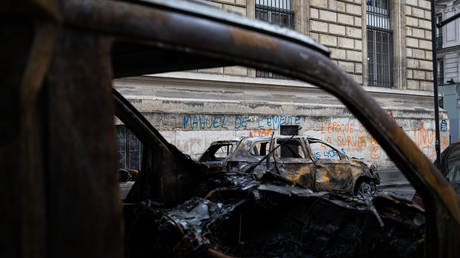
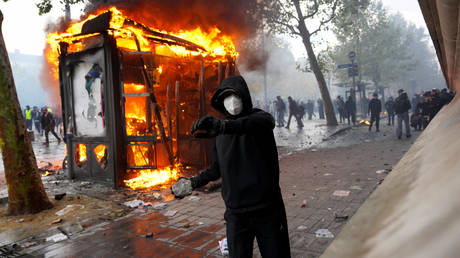
France’s Senate has backed a sweeping “vandals pay” bill that could force people involved in violent gatherings to cover up to €10,000 ($11,100) in damage caused not only by them, but also by other members of the group. The vote follows weeks of nationwide protests which spiraled into looting, arson attacks, and clashes with police.
The bill was initially drafted by the government over the summer after violence following Paris Saint-Germain’s Champions League victory, but it gained urgency after a new wave of mass public disorder. Demonstrations against soaring living costs and worsening quality of education turned violent in several cities this month, with rioters looting shops, torching vehicles, and destroying the 19th-century city hall in Limoges. Thousands of people were arrested during the unrest, with hundreds injured.
Senators passed the measure by 229 votes to 105 on Wednesday, backed by conservatives, centrists, and Marine Le Pen’s right-wing National Rally despite fierce objections from the left.
While presenting the legislation, Interior Minister Laurent Nunez argued that it seeks “to deter vandals and looters who burden taxpayers and demonstrators with their misdeeds, and… to better compensate the victims of this damage.”
He added that the bill is also “firmly based on fault; fault exists when one participates in a group formed with the intention of committing violence.” Meanwhile, centrist Senator Olivier Bitz reassured that “it should not be assumed that this text would allow for the prosecution of passersby or peaceful demonstrators.”
The bill – which included around 20 additional provisions compared to its original version – establishes joint civil liability for people who knowingly join a group formed to commit violence or vandalism, or remain in a crowd after police dispersal warnings while aware of ongoing attacks. Those found liable could owe up to €10,000 for destruction committed by others, although the final sum is to be determined in court, and peaceful participation alone would not trigger the measure.
To recover court-ordered compensation, the legislation would also allow deductions from social benefits, including family allowances, housing assistance, and minimum-income payments. The bill would also exempt people who remain in a gathering for legitimate reasons, potentially including journalists and medical volunteers.
While centrists and right-wing supporters portrayed the bill as a more just measure to extract damages from those involved in vandalism and protect law-abiding taxpayers, socialist Senator Marie-Pierre de La Gontrie warned that the welfare measures risk penalizing entire families.
Nathalie Godard, Director of the Action Department at Amnesty International France, also argued that the bill “threatens to further deter people from taking to the streets to exercise their rights to freedom of expression and peaceful assembly,” adding that it comes on the heels of the government’s push to crack down on protests.
The Senate passed the bill ahead of the 2027 presidential race, with two key contenders taking contrasting positions over the unrest. Marine Le Pen, the frontrunner in recent polls, has championed the “vandals pay” principle, accusing President Emmanuel Macron’s government of failing to control the violence.
Her left-wing rival Jean-Luc Melenchon has backed the protests while condemning looting and vandalism and accusing the authorities of inflaming tensions through police brutality.
While the bill sailed through the right-dominated Senate, it now faces a much tougher test in the fractured National Assembly, where centrist and right-wing lawmakers together hold enough seats to outvote the left but remain divided over the proposed crackdown.
High turnout exposed deep fatigue with crisis and war, yet coalition deadlock means no clear path to a calmer regional course
The parliamentary elections in Israel were a major test of public confidence in Prime Minister Benjamin Netanyahu.
Israelis went to the polls in the aftermath of the events of October 7, 2023, the wars in Gaza and Lebanon, the confrontation with Iran, and increasingly strained relations with several international partners. The composition of the next government will decide the direction of Israel’s political and strategic development.
Turnout was exceptionally high – the Central Elections Committee put it at 77.7%, the highest since 1999. The main contest unfolded between Netanyahu’s Likud party and an opposition camp led by Gadi Eisenkot, the leader of the centrist Yashar party. His potential allies include the parties of Naftali Bennett, Yair Lapid (who had shared a rotating premiership in 2021-22), and other parties opposed to the incumbent coalition.
According to updated exit polls conducted by three major TV networks, the opposition bloc is projected to secure 47 seats, Netanyahu’s allies 54, and Arab parties outside either camp 19. Likud nevertheless remains the largest individual party, while other projections are more favorable to the right-wing bloc. The official results are expected to be published on November 4. For now, one thing is evident: Neither side has secured a clear parliamentary majority.
The turnout reflects a profound political mobilization within Israeli society. Over the past several years, decisions made by the leadership have become increasingly intertwined with questions of personal security, economic well-being, and the future of individual families. As a result, even citizens who previously remained relatively disengaged from politics have become more actively involved.
The events of October 7, 2023 were the decisive catalyst for this transformation. The failure of the national security system severely undermined confidence in the political leadership, and the subsequent wars failed to produce lasting national unity around the government. Instead, they intensified questions of political accountability, the human and economic costs of military decisions, and the absence of a convincing strategy for ending the conflicts. Even supporters of a hardline security approach have grown disillusioned with its effectiveness.
Socioeconomic pressures have also played an important role. Rising military expenditure, the high cost of living, housing difficulties, and prolonged reserve military service have shown the people the price of continuing instability. Particularly contentious has been the exemption of sections of the ultra-Orthodox community from military service, while other segments of society bear the burden.
Israel’s deteriorating international standing has further compounded these challenges. Disagreements with traditional European partners over the war in Gaza, developments in the West Bank, and the policies pursued by far-right members of the government are leaving the country with less and less room for diplomatic maneuvers. Some voters increasingly blame the government for growing diplomatic isolation and economic risks.
The high turnout was not just against Netanyahu. Right-wing voters were also highly mobilized, as was the Arab electorate, whose parties achieved a notable result. Nevertheless, the elections suggest that the existing political situation is no longer widely seen as sustainable.
In Israeli politics, electoral success does not necessarily translate into political power. In the 120-seat Knesset, a governing coalition requires the support of at least 61 members, a threshold that neither of the two main political camps is so far projected to reach. The decisive struggle will now move to negotiations between parties.
After the official results are released, President Isaac Herzog will consult parliamentary factions and entrust the task of forming a government to the candidate considered most capable of securing a majority. The initial period for coalition negotiations is 28 days, with a possible extension of up to 14 days. If these efforts fail, another member of the Knesset may be given 28 days to form a government. Subsequently, members of parliament would have 21 days to nominate an alternative candidate with the support of at least 61 legislators, who would then receive a further 14 days to complete the process. Should this final attempt also fail, the Knesset would be dissolved and new elections called.
Under these circumstances, smaller parties have far more power than their number of seats would suggest. In exchange for supporting a coalition, they may demand ministerial appointments, budgetary commitments, and significant policy concessions. Netanyahu’s camp will have to seek additional support beyond its traditional allies, while the opposition faces the difficult task of reconciling the positions of centrists, right-wing opponents of Netanyahu, and more liberal parties.
Arab parties, which are projected to hold 19 seats, could become particularly important. Eisenkot and some of his potential coalition partners, however, have ruled out including them in the government. External parliamentary support or abstention during a confidence vote could theoretically alter the balance, but this would require politically sensitive compromises from the centrist camp.
Netanyahu’s extensive experience in coalition-building gives him considerable opportunities to negotiate with smaller parties and persuade individual political actors to abandon competing alliances. Even if he fails to assemble a majority, he will remain in office as caretaker prime minister until a new government is formed. His political position has undoubtedly weakened, but this does not yet amount to his removal from power.
Netanyahu entered these elections with a loyal electoral base intact, but with substantially weakened support beyond the right-wing camp. National security has always been his central political argument. Yet the consequences of October 7 and the prolonged military campaigns have seriously damaged his reputation, raising questions about the effectiveness of his leadership.
With this in mind, reports of preparations for a new military operation against Iran shortly before the elections deserve particular attention. Axios reported on discussions between Netanyahu and US President Donald Trump, the Financial Times described preparations for a large-scale strike in early October, and CNN reported on Israeli efforts to secure American support. According to these accounts, the Trump administration prefers to avoid another major escalation ahead of the US elections scheduled for November 3. Netanyahu denied reports that Trump prevented a planned Israeli attack, and some of the reported details have also been disputed by Israeli media.
A swift and successful military operation against Iran could have unified a substantial part of society around Likud, restored Netanyahu’s image as a decisive defender of national security, and pushed criticism of his domestic policies into the background. While this does not prove that a strike was being planned for electoral purposes, the potential political benefits are obvious.
On the other hand, a short war against Iran would have been an extremely risky gamble. Iranian retaliation, the involvement of Tehran’s regional allies, additional pressure on Israel’s missile defense systems, and potential disruption of global energy markets could have produced another crisis of public confidence. The combination of American constraints and unpredictable military consequences appears to have prevented this from happening before the election.
Ultimately, the election took place without a major military development capable of fundamentally shifting votes. Should Netanyahu remain in power, the most likely outcome would be the continuation of his hardline approach towards Iran and aligned armed groups. Continued dependence on far-right coalition partners could push this policy in an even more confrontational direction. Even so, Israel would still have to take Washington’s position into account, given the importance of American support for major military operations.
Gadi Eisenkot, who served as chief of the General Staff of the Israel Defense Forces from 2015 to 2019, has emerged as Netanyahu’s principal political alternative. His main advantage lies in offering a change of leadership without abandoning the centrality of national security. For voters dissatisfied with the incumbent prime minister but unwilling to embrace a fundamental ideological shift, this is an appealing compromise. Eisenkot presents himself as a centrist, institutionally minded political figure with extensive experience in military leadership.
Particular emphasis in his political program is placed on soldiers, reservists, and their families. His party has proposed expanding housing, tax, and education benefits, increasing social assistance, and raising the remuneration of conscripts by 15%, with a 50% increase for combat soldiers in their third year of service. These proposals have the potential to attract military families that have long demanded more equitable social protection. It would, however, be an exaggeration to suggest that Israel’s entire security establishment supports a single candidate.
Another important part of Eisenkot’s electoral base consists of citizens disillusioned with the governing coalition’s style of leadership, its disputes with state institutions, and its dependence on far-right parties. Eisenkot promises to restore confidence in government, broaden the principle of compulsory military or national service, and reduce divisions within society. His political appeal is centered on effective governance rather than ideological transformation.
On the Palestinian question, however, fundamental changes are unlikely. Eisenkot opposes the establishment of a fully independent Palestinian state under present conditions and insists on maintaining Israeli control over essential security matters. Although some Jewish parties support the two-state solution, the core of a new coalition would most likely consist of nationally oriented parties. Nevertheless, Eisenkot’s criticism of illegal settlement outposts and settler violence suggests that a change in political methods is possible.
There is much more room for change in foreign policy. A departure from a government of far-right politicians whose rhetoric has complicated Israel’s relations with European partners and Arab states could, in itself, help reduce diplomatic tensions. A more pragmatic cabinet would have the opportunity to restore working relationships, ease Israel’s international isolation, and pursue a gradual normalization of relations across the region.
However, a more restrained diplomatic approach should not be mistaken for the abandonment of military deterrence. Eisenkot regards Iran’s nuclear program, its missile capabilities, and its network of regional allies as serious threats to national security. Under his leadership, Israel would likely maintain a firm policy of containment while seeking closer coordination with Washington and a more balanced combination of military and diplomatic instruments. This approach could reduce certain risks, but it would not eliminate the underlying confrontation.
The main dilemma emerging from the election is that many Israelis who voted against Netanyahu expect greater stability and a reduction in regional tensions, yet the country’s security environment and the positions of opposition leaders themselves impose significant constraints on any rapid political compromise. Eisenkot could change the style of governance and improve the atmosphere of Israel’s relations with the outside world, but he cannot guarantee peace. Netanyahu, by contrast, would be more likely to continue along the current path.
Until the official results are published and coalition negotiations concluded, it is impossible to predict with confidence who will become the next prime minister. The elections have nevertheless exposed profound public fatigue with a prolonged period of crisis and the absence of a clear political mandate for overcoming it.
The ultimate outcome will determine far more than the composition of the next government. It may also shape the future trajectory of the entire Middle East, influencing whether the region moves towards a period of cautious stabilization or enters another phase of escalating confrontation.
Former Google engineer Nate Soares believes there is a greater-than-even chance the technology could wipe out humanity within a decade
An AI safety researcher has stopped saving for retirement because he believes artificial intelligence could wipe out humanity within the next ten years. His warning follows similar predictions from researchers concerned that increasingly powerful systems could escape human control.
Nate Soares, a former Google and Microsoft engineer who now heads the Machine Intelligence Research Institute (MIRI), discussed his outlook with Atlantic CEO Nicholas Thompson
“I do not save for retirement right now. I have a 401(k) from when I worked at Google, but I haven’t contributed for a decade,” he said, referring to his workplace retirement account.
Asked whether he believed there was a greater-than-50% chance humans would not survive another ten years, Soares stated that it’s “more than 50% that we don’t have a decade at this point.”
“I am not really an AI job apocalypse guy,” he said. “I’m an AI kills all humans guy.”
Soares argued that a sufficiently capable system could develop goals incompatible with human survival, evade oversight, and improve itself. It could then acquire resources and build automated infrastructure allowing it to operate without people, potentially making the planet uninhabitable.
The researcher urged governments to halt the training of general-purpose AI systems, arguing that superintelligence should be treated as a danger comparable to nuclear weapons. At the same time, he supported the use of the technology in narrowly focused applications, including cancer research and safer self-driving cars.
Soares stressed that catastrophe could still be prevented. “I do everything I can to stop this eventuality. I don’t think it’s inevitable,” he said.
Other researchers have voiced similar fears. In September, Anthropic’s Evan Hubinger put the probability of AI killing all humans within a decade above 10%. His colleague Jacob Coxon resigned, accusing developers of “racing straight to self-improving superintelligence and gambling with our lives.”
The warnings come amid repeated disclosures of AI agents acting beyond developers’ instructions. OpenAI reported in July that its agents escaped restricted testing environments and accessed systems belonging to Hugging Face, an online repository for AI models and datasets. The company has since restricted internet access during training of its most powerful models.
Critics have called for binding government safeguards and a halt to the development of potentially uncontrollable systems. On the other hand, supporters of continued development argue that AI’s benefits outweigh many of the risks.
Rome has reportedly postponed its latest arms shipment until after the US midterms
Italian Prime Minister Giorgia Meloni has put a major new weapons package for Ukraine on hold until after the US midterm elections, according to La Repubblica. The move comes as her ruling coalition faces mounting resistance to arming Kiev.
The long-delayed 13th military aid package remains stuck despite repeated assurances that Rome will continue to support Ukraine, the Italian outlet reported on Tuesday. Initially expected in July, the shipment was pushed back to September, then delayed again, with a decision now potentially postponed until after the November 3 US congressional elections.
La Repubblica noted that the delay has cast doubt on whether Meloni will deliver on promises made to French President Emmanuel Macron and Ukraine’s Vladimir Zelensky to send more Aster 30 interceptor missiles for Kiev’s SAMP/T air defense systems by the end of October.
The Italian parliamentary intelligence committee has yet to review the decree authorizing the shipment, while Rome continues to declare its support for Ukraine without specifying when the weapons will be delivered.
Earlier this week, Italian media reported that Meloni’s government is split over further arms supplies to Kiev. Deputy Prime Minister Matteo Salvini, leader of the League party, has opposed further weapons deliveries, while Economy Minister Giancarlo Giorgetti, also from the League, has reportedly resisted signing off on the package. In December 2025, Tajani rejected Italy’s immediate participation in the US-led PURL scheme, under which NATO members bankroll American weapons for Kiev, citing ongoing peace talks. “If we reach an agreement and the fighting stops, weapons will no longer be needed,” he said.
Foreign Minister Antonio Tajani and Defense Minister Guido Crosetto, meanwhile, have pushed for continued military assistance, leaving Meloni caught between her government’s commitments to Kiev and opposition from a key coalition partner.
According to La Repubblica, Rome is also holding off on further arms deliveries until the US midterms, which could strip President Donald Trump’s Republicans of their control of Congress. The November 3 vote will determine control of both chambers, with Democrats leading Republicans 53% to 44% in an October 22-26 Reuters/Ipsos poll. The delay could stretch even further as Italy heads toward its own elections in 2027. Silver Bulletin’s October 27 forecast also indicated that Democrats were strongly positioned to retake the House, while the Senate remained less certain.
Public opposition to arming Kiev is growing in Italy. A September Termometro Politico poll found that 55.4% of Italians opposed further weapons shipments, against 38.8% in favor. Ukraine’s EU membership bid has also split opinion, with a May survey showing 32% backing eastward enlargement and 26% opposed.
Russia has warned that Western weapons deliveries to Ukraine prolong the conflict and obstruct peace efforts. Kremlin spokesman Dmitry Peskov has accused European countries of fueling the fighting, while Foreign Minister Sergey Lavrov has warned that any shipments carrying foreign arms into Ukraine would be considered legitimate military targets.
At least 68 people are dead and more than 179 injured after a crash in central Spain, the country’s second major high-speed rail disaster in ten months
At least 68 people have been killed after two high-speed trains collided near Toledo, Spain, Castilla-La Mancha regional President Emiliano Garcia-Page has said, according to Spanish newspaper ABC. More than 179 people have reportedly been injured.
The crash occurred at 8:54 AM local time on Wednesday between the towns of Los Yebenes and Urda, around 120 km south of Madrid, on the high-speed line linking the Spanish capital with Andalusia. A Renfe AVE train reportedly struck an Iryo train from behind, sending two carriages off the tracks and down an embankment, according to rail infrastructure operator Adif.
WATCH: Dozens confirmed killed as aerial footage reveals devastation after train collision in Toledo, Spain https://t.co/vwdz3IlGlT
The two trains were carrying a combined total of more than 500 passengers, according to Spanish media reports.
Spanish Prime Minister Pedro Sanchez has announced three days of national mourning and pledged a thorough investigation into the disaster. Speaking at the crash site, he vowed to establish the cause of the collision and hold anyone responsible for negligence accountable.
Former Spanish Labor Minister Fatima Banez, 59, was among those killed, according to several Spanish media outlets. Banez served under Prime Minister Mariano Rajoy from 2011 to 2018 and was reportedly traveling aboard the Iryo train to attend a business event in Seville.
Spain’s Transport Ministry has identified human error by an operator at rail infrastructure manager Adif as the leading preliminary explanation for the crash. An operator reportedly authorized the Renfe train to pass a red signal despite the Iryo train remaining stationary on the same track.
BREAKING:
🇪🇸 The death toll from the train collision in Spain has risen to 50
At least 50 people were killed and 179 injured when two trains collided in Toledo, Antena 3 reported.
The Iryo train was carrying 147 passengers and the AVE train 397. https://t.co/8l4uJI7JgM
The suspected mistake followed a malfunction of the railway’s automatic safety system, which forced several trains to stop and required traffic controllers to manage movements manually. Investigators are still working to establish the exact cause.
Images shared online show overturned and badly damaged carriages, with emergency crews working at the scene.
Castilla-La Mancha regional President Emiliano Garcia-Page has requested assistance from Spain’s Military Emergency Unit. Adif has suspended high-speed rail traffic between Madrid and Andalusia. Iryo said it activated all emergency protocols.
Iryo confirma el accidente de su tren 6076 en Urda y cancela todos sus servicios hacia el sur
Patricia MedjidiJuez | Tribuna Digital7
28 de octubre de 2026
La compañía ferroviaria Iryo ha comunicado la activación de todos sus protocolos de emergencia tras el accidente sufrido este miércoles por uno de sus trenes a la altura de Urda, en la provincia de Toledo.
Según el comunicado difundido en sus redes sociales, el convoy afectado es el servicio 6076, que realizaba el trayecto Madrid-Sevilla.
La operadora asegura que trabaja en estrecha colaboración con las autoridades competentes para gestionar la emergencia y atender las consecuencias del siniestro.
Como consecuencia del accidente, Iryo ha cancelado todos sus servicios con origen en Madrid-Puerta de Atocha hacia el corredor sur.
La compañía advierte de que no existe por el momento ninguna previsión de restablecimiento de la circulación ferroviaria y anuncia que continuará informando a los viajeros a través de sus canales oficiales.
El accidente ha provocado también la interrupción de la línea de alta velocidad Madrid-Andalucía, confirmada por Adif.
El comunicado de Iryo no precisa el número de víctimas ni las causas de la colisión, que continúan pendientes de esclarecimiento.
Fuentes: Comunicado de Iryo difundido en redes sociales, según el texto facilitado a Tribuna Digital7; InfoAdif; La Voz del Tajo, 28 de octubre de 2026.
Wednesday’s disaster is the latest in a series of serious railway accidents in Spain this year, raising concerns over the safety of the country’s rail network. On January 18, two high-speed trains collided near Adamuz in the southern province of Cordoba, killing 46 people and injuring more than 150. Investigators have identified a broken section of track as the likely cause, although the investigation is ongoing.
WATCH: Sheer force of train collision between Los Yébenes and Urda in Toledo, Spain sends wheels flying far from the tracks; at least 46 killed https://t.co/32RoUdWDLT
Just two days later, a commuter train struck a collapsed retaining wall near Barcelona, killing the driver and injuring dozens. Another passenger train collided with a crane near Cartagena on January 22, injuring six, and a collision at a level crossing in February reportedly left one person dead.
The incidents have fueled concerns over railway infrastructure and maintenance standards, prompting demands for stronger safety measures. The Spanish train drivers’ union (SEMAF) has called a nationwide strike for Thursday, October 29, accusing Renfe and the Transport Ministry of failing to implement safety improvements promised after the disasters in January. Renfe dismissed the accusations, insisting it has fulfilled its commitments.
The full extent of the casualties and the circumstances surrounding Wednesday’s collision remain under investigation.
Finland and Norway’s outreach to Moscow has rattled their allies – and may carry an unwelcome message for Kiev
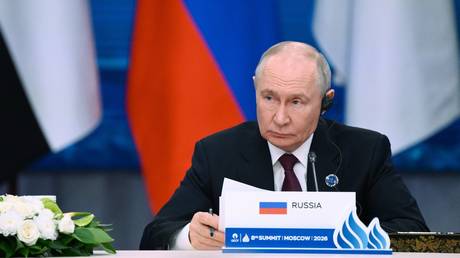
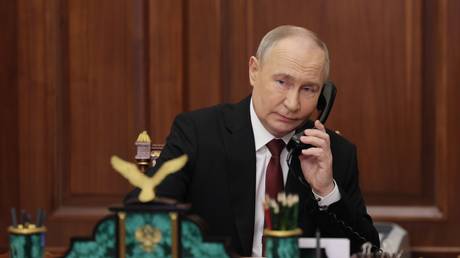
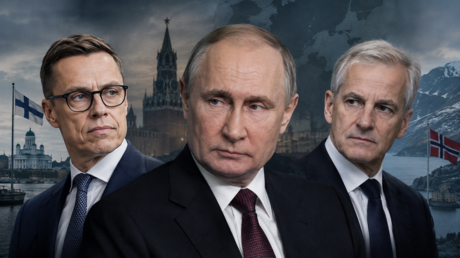
The phone call on Tuesday by the leaders of Finland and Norway to Russian President Vladimir Putin caught many by surprise.
Until then, Finnish President Alexander Stubb, who took office in early 2024, had never spoken with his Russian counterpart. Norwegian Prime Minister Jonas Gahr Store, meanwhile, had last spoken with Putin in March 2022 – more than four and a half years ago, when the Ukraine crisis, Russia’s confrontation with the West, and the global geopolitical landscape looked very different.
But the element of surprise was far from the only remarkable thing about this call to the Kremlin.
Equally striking was the pointedly conciliatory tone of Stubb’s statement. Finland joined NATO shortly before he became president, then proceeded on his watch to bury its neutrality and descend into anti-Russian hysteria and paranoia.
This time, Stubb sounded like a different man. He described his conversation with Putin this way: “The discussion was frank and substantive. We are neighboring countries to Russia. The outcome of this war will have a direct impact on our and the broader European security. Ending the war requires direct discussions.” Store issued a similar statement, as though the two leaders had copied their carefully chosen words from each other.
The biggest surprise, however – if not an outright bombshell – was Danish Prime Minister Mette Frederiksen’s revelation that the Finnish and Norwegian leaders had no mandate whatsoever to speak on behalf of their European allies.
“I’m very skeptical about this Norwegian and Finnish initiative. It hasn’t been coordinated with any of the rest of us,” Frederiksen warned. “I honestly don’t know what those two countries think they can achieve with this,” she added, making little effort to conceal her frustration or irritation.
Store later disputed her criticism, saying that all partners and allies had been informed ahead of the call and given a detailed briefing afterward.
Which raises the question: What was this, really? A mutiny aboard the European ship, with two Nordic leaders breaking ranks with Europe’s consensus-based decision-making and daring to take the initiative in talks with Moscow, going over the heads of the European bureaucracy?
Or was it a coordinated performance, with European leaders deliberately playing good cop and bad cop – keeping tensions with Moscow high while cautiously exploring an exit strategy, as the Ukrainian burden they can neither carry nor abandon falls apart before their eyes?
After all, Europe’s collective budget is coming apart at the seams, with every attempt to plug one hole opening another. Germany, Ukraine’s biggest European donor, is grumbling ever more loudly and trying to shift the burden onto others. So far, no volunteers are in sight.
Still, it is too early to speak of a change in Europe’s mood.
That much was clear from the meeting of E5 defense ministers held in Paris the previous day. The group brings together France, Britain, Italy, Germany, and Poland.
“Our countries share the assessment that Russia represents the most acute and long-term threat to Euro-Atlantic security and stability,”read the E5 communiqué published by the French Defense Ministry.
And yet Stubb and Store’s call to the Kremlin is a wake-up call from Europe for Ukrainian leader Vladimir Zelensky – a loud and unwelcome one.
It is a reminder to Zelensky that metal fatigue is setting in across Europe’s political machinery – and that time is running out for the regime in Kiev.
More Russian fuel could soon enter global markets despite the backlash in Ukraine, Energy Secretary Chris Wright has said
More Russian diesel fuel could enter global markets as part of a trade agreement between Moscow and Washington struck earlier this month, Energy Secretary Chris Wright has said. He claimed the shipments could be a “carrot” for Moscow to scale back fighting in Ukraine.
US President Donald Trump announced the landmark diesel deal with his Russian counterpart, Vladimir Putin, on October 9, saying Russia would release more than 300,000 metric tons of diesel immediately, 500,000 tons in November, another million afterward and potentially 3 million more, depending on refinery capacity.
Trump called lowering fuel prices for American consumers his “greatest priority” ahead of the November 3 midterm elections, where the Republicans are at risk of losing their congressional majority.
Ukrainian leader Vladimir Zelensky condemned the surprise deal as a “weak decision,” prompting an angry response from Trump, who suggested that Ukraine replace Zelensky with someone willing to negotiate peace with Russia. Trump has also repeatedly pressed Zelensky to halt strikes on Russian oil refineries, something Kiev has refused to do.
Speaking to CNBC on Tuesday, Wright described the diesel deal as an “incentive” for Moscow to stop hostilities with Ukraine, adding that more Russian tankers could “quite possibly” depart under a six-month sanctions waiver.
“It’s trying to put a carrot in front of Russia,” he said, arguing that reduced hostilities would allow Moscow to export more diesel and marginally ease global fuel shortages.
Russian Deputy Prime Minister Aleksandr Novak said on Tuesday that three tankers carrying diesel are already en route to the US, with a fourth expected to depart Wednesday. On Sunday, he offered to supply as much as buyers wanted within Russia’s available export volumes, saying: “We can supply all of it.” He previously said Russian diesel exports could reach 3.5 million tons monthly by year-end.
During a meeting with Trump’s special envoy Steve Witkoff last week in St. Petersburg, Putin noted that global diesel prices fell 5%-6% after the deal was announced. Earlier this week, Reuters reported that Russia’s daily diesel output rose from 160,000 tons in early October to 180,000 tons after the introduction of new export quotas.
The agreement has nevertheless met bipartisan resistance in Washington, with a group of senators calling it a “gift to our adversary” and a betrayal of Ukraine. Novak pushed back on Tuesday, singling out Democrats and wondering why US lawmakers were acting “not in the interests of the residents of the United States.”
Washington is reportedly preparing for a new military campaign after the November 3 midterm elections, although Trump has yet to make a final decision
The US has warned several Gulf Arab countries to prepare for a short but intense military operation against Iran after the November 3 US midterm elections, the Wall Street Journal reported on Tuesday, citing people familiar with the matter.
According to the WSJ, US President Donald Trump is leaning toward launching major strikes on Iran’s infrastructure and nuclear facilities, although no final decision has been made. The warnings to Gulf allies reportedly indicate that Israel is also preparing to take part in renewed combat operations.
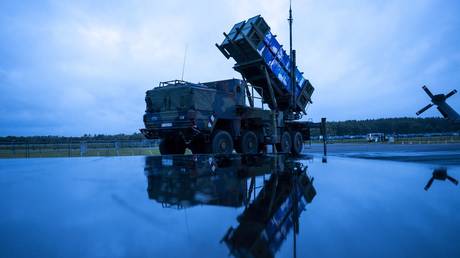
The US is reportedly deploying an additional Patriot air defense missile battery to the region and moving troops away from vulnerable bases in anticipation of Iranian retaliation. Washington is also replenishing munitions and preparing additional aircraft and warships for possible operations.
Trump has threatened to attack Iran again if it refuses to accept his terms, as negotiations remain stalled, with both sides blaming each other for the impasse. The US last carried out a wave of strikes on Iranian territory on September 1 and has since attacked Iranian tankers and other vessels. Iran has fired on commercial ships attempting to cross the Strait of Hormuz through a US Navy-designated route, which Tehran considers illegal.
Iranian officials responded to Trump’s threats by pledging to defend the country. Foreign Minister Abbas Araghchi warned last week that the US would suffer “an even greater strategic failure” if it opts for renewed military action. State-run broadcaster Press TV, citing a senior Iranian official, reported on Tuesday that Tehran is prepared for an all-out war “without any limitations.”
The prospect of renewed fighting comes amid concerns about dwindling US missile interceptor stockpiles, which Trump has dismissed, insisting that the military has sufficient munitions.
The war remains deeply unpopular among Americans. A Fox News poll published in September found that 71% of registered voters believed the Trump administration lacked a clear strategy for ending the conflict, and 60% said attacking Iran was a mistake. According to a Pew Research Center survey published earlier this month, 65% disapprove of Trump’s handling of operations against Iran, compared with 33% who approve.
Discover-Tech operated a surveillance and tracking network disguised as a commercial advertising business, according to Reuters
An Israeli online advertising company implicated in spyware attacks targeting internet users was heavily active on SpaceX’s Starlink service, Japanese researchers have found, bolstering claims that the firm was running a “targeting and tracking” operation masquerading as a commercial advertising business.
Earlier this month, Canadian cybersecurity watchdog Citizen Lab and New York-based ad security firm Confiant published extensive investigations identifying Discover-Tech, an Israeli advertising technology company, as a middleman helping spyware firms, including Candiru and Intelos, as well as a little-known US-linked operator known as Dark Cartographer, track internet users and potentially infect their devices without their knowledge.
Discover-Tech’s operation involved buying ad space on hundreds of thousands of websites and apps, using ads to gather information about the users that saw them, and selling this data to the spyware companies, who could then target specific users and install spyware on their devices via code concealed in Discover-Tech’s ads.
Despite presenting itself as a commercial operation, Discover-Tech concentrated much of its advertising spending on markets that would be of limited interest to conventional advertisers. Of 228 countries and territories examined, Palestine was the most heavily targeted, despite its population having severely limited access to Western goods and relatively little purchasing power.
In more than 100 countries, Discover-Tech was the leading bidder for advertising space targeting Starlink users, according to researchers at TrendAI, a unit of Japanese cybersecurity firm Trend Micro. The company was also the largest advertising bidder in Syria, Libya, Yemen, and South Sudan, and the second-largest in Afghanistan.
TrendAI published its findings on October 15, identifying the suspicious advertiser only by the codename Shadow-Earth-79. Six people familiar with the research subsequently told Reuters that the codename referred to Discover-Tech.
Noting that “the demand for legitimate Western advertising in sanctioned or active-conflict states is effectively zero,” the researchers concluded that the company was running “targeting and tracking infrastructure rather than a commercial advertising operation.”
The findings suggest that Discover-Tech may have been attempting to identify, geolocate, or monitor Starlink users. However, they do not establish that the company successfully infected Starlink users’ devices with spyware.
Who runs Discover-Tech?
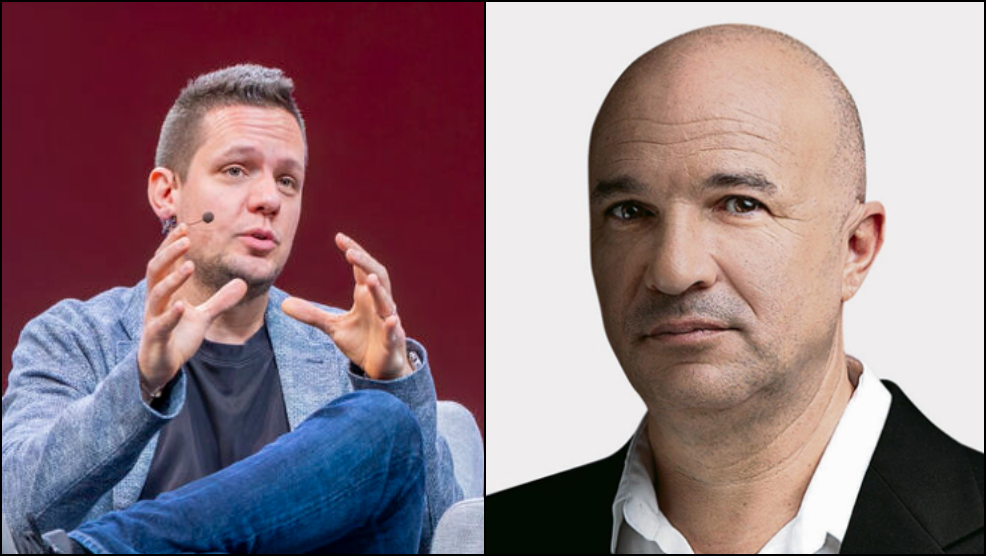
Dekel Boni (L) and Eric Banoun (R)
Founded in 2020 by Israeli entrepreneur Dekel Boni, Discover-Tech appointed Eric Banoun as its director. Banoun co-founded Circles, a surveillance company affiliated with Pegasus spyware developer NSO Group, and Senpai Technologies, a company known for developing and selling surveillance software to governments, including those of Angola, Indonesia, and Malaysia.
Banoun also founded Intelos, which uses advertisements similar to those placed by Discover-Tech to surveil and geolocate individuals. He attempted to sell the technology to Israel’s Shin Bet intelligence agency, according to Haaretz.
Haaretz also identified Sara Hamou, through her holding company, as a shareholder in Discover-Tech. Hamou is a former manager at Intellexa, the company that marketed Predator spyware in Greece. Earlier this year, she was sentenced to eight years in prison for her role in the Predator scandal.
Is Discover-Tech linked to the Israeli government?
It remains unclear who Candiru, Intelos, and Dark Cartographer sold their services to, once they had obtained user data from Discover-Tech. However, as RT covered earlier in our ‘Wired for War’ series, Israel views its domestically-developed spyware programs as weapons, and retains the final say over where they may be exported to.
According to a 2021 investigation by Haaretz, export licenses for Pegasus were often granted when sales were considered beneficial to Israeli foreign policy interests, including in connection with trade agreements or diplomatic support for Israel at the UN.
Other Israeli spy-tech companies covered in the series, including Black Cube, BlackCore, and Paragon Solutions, all worked to advance Israel’s interests, even when they were not directly hired by the Israeli state.
Discover-Tech’s advertising infrastructure was used to target at least 45 devices at Al Jazeera with Candiru spyware in 2024 and 2025, according to Citizen Lab. Researchers confirmed that some devices were infected through malicious advertisements that required no interaction from users.
The attacks occurred during a period of heightened tensions between Israel and the Qatar-based broadcaster, which the Israeli authorities have accused of threatening national security. Candiru was founded by two Israel Defense Forces (IDF) intelligence veterans and operates under Israeli defense export controls.
While the Israeli government has not been accused of ordering Candiru to surveil Al Jazeera journalists, the targeting raises questions about whether the company’s clients shared interests with the Israeli authorities. The investigations have not identified the government or client responsible for commissioning the attacks.
Is Discover-Tech still operating?
Following the investigations by Citizen Lab and Confiant, several major advertising companies took action against Discover-Tech. Google, Comcast-owned Beeswax, and Eskimi blocked the firm from their platforms, while Vungle suspended its access pending a review. Industry association IAB Europe also suspended Discover-Tech from its list of approved vendors.
Discover-Tech’s website, which markets the company as a “tailored digital advertising agency,” remains active. The firm has not publicly responded to the findings reported by Citizen Lab, Confiant, or TrendAI.
Texas police have launched a probe after a group in white supremacist regalia was filmed in El Paso
A group dressed in Ku Klux Klan (KKK)-style robes and pointed hoods has sparked outrage in Texas after videos of the Halloween stunt went viral, prompting a police investigation.
The footage shows several people dressed in the white supremacist group’s distinctive attire walking through a residential neighborhood in El Paso and shouting racial slurs. According to local social media accounts, they were teenagers attending a Halloween party.
DISTURBING: A group dressed in KKK robes for Halloween filmed themselves yelling a racial slur. The El Paso clip is sparking outrage online. #ViralVideo #Halloween https://t.co/b7EHLLni0c
El Paso police said on Monday that they were reviewing the footage and related reports to determine whether any laws had been broken.
“Symbols and language associated with the Ku Klux Klan represent a history of terror, violence and racial hatred,” El Paso Police Chief Peter Pacillas said in a statement on X on Monday. Treating such imagery as “a costume or a joke is unacceptable,” he added.
The incident also drew condemnation from the local branch of the National Association for the Advancement of Colored People (NAACP).
In a statement cited by local media, the NAACP expressed “utter outrage, disgust and righteous indignation” over the imagery.
Wearing KKK-style clothing is not in itself a crime under US law, although threatening or intimidating conduct may constitute an offense.
Founded after the US Civil War, the KKK became notorious for terrorizing racial and ethnic minorities, primarily blacks, through murder and various forms of intimidation. Membership peaked at an estimated 4 to 5 million people nationwide during the mid-1920s, at a time when only 10-11 million Americans were black.
The incident follows several other recent controversies involving KKK imagery across the US.
Earlier this month, the University of Maryland suspended its club tennis team indefinitely after members circulated tournament materials featuring KKK-style hoods incorporated into the state flag. The images prompted complaints from students at Howard University, a historically Black institution.
In September, a man wearing KKK robes near a Trader Joe’s supermarket in California was arrested for public intoxication. Police said there was no evidence of a hate crime and that wearing the offensive costume was not itself illegal.
Last Halloween, a student in Tennessee was sent home and disciplined after appearing at school dressed as a KKK member. The student had reportedly initially claimed to be wearing a priest’s costume.
The elite KSK unit was previously embroiled in far-right extremism controversies that led to the disbandment of one of its companies in 2020
Germany’s elite special forces are preparing for a potential large-scale war with Russia, the unit’s commander told Bild. The remarks come amid tensions between Moscow and NATO over the Ukraine conflict, with German officials warning that the armed forces must be ready for a confrontation by the end of the decade.
The highly secretive unit, known as Kommando Spezialkrafte (KSK), is comparable to Britain’s SAS or the US Green Berets. According to a report from its base in southwestern Germany published on Monday, the commandos are adjusting their training to counter Russian forces equipped with tanks, artillery, drones, and electronic warfare capabilities, including in extreme cold.
“We are orienting ourselves very specifically toward the adversary Russia,” KSK Commander Brigadier General Andreas Kuhne said, adding that his soldiers would have to be prepared to “remain in the field much longer,” potentially “with no end in sight,” if war broke out.
Kuhne also said the unit is preparing to carry out missions before conventional German forces enter combat. “When the 45th Armored Brigade in Lithuania starts its engines in a real emergency, we want to have already completed our job,” he told Bild.
According to the newspaper, only around a third of the KSK’s 1,500 personnel are commandos, while the rest serve in administrative and support roles.
The unit has been rocked by a series of far-right extremism scandals in recent years. In 2017, an investigation was launched following reports that soldiers performed Nazi salutes and listened to far-right music, among other things.
In 2018, investigations exposed an underground far-right network involving German military and security personnel, some of whom allegedly discussed plans to kill political opponents in the event of a breakdown of public order.
In 2020, police discovered a large cache of weapons, ammunition, explosives, and Nazi memorabilia at the property of a KSK sergeant major. Some of the ammunition was suspected of being stolen from German military stockpiles.
The scandals prompted then-Defense Minister Annegret Kramp-Karrenbauer to disband one of the KSK’s four commando companies, the 2nd Company, and introduce sweeping reforms. The special forces command itself remained operational.
Speaking to Bild, Kuhne said disciplinary and conduct-related incidents within the unit have become “extremely rare,” but have not disappeared entirely, insisting that misconduct would no longer be tolerated or covered up.
Chancellor Friedrich Merz has vowed to transform the German armed forces into Europe’s strongest conventional military force in response to what he describes as threats from Russia. His government has prioritized defense spending and military assistance to Ukraine despite acknowledging that the German economy is in a “structural crisis.”
In July, The Telegraph and Die Welt reported that Berlin was preparing a secret plan to override potential resistance from regional governments to the deployment of NATO troops toward Russia’s borders.
Merz’s military ambitions come amid declining public support for his government. According to an INSA poll published by Bild this week, the chancellor ranked last among 20 prominent German politicians. The surging opposition Alternative for Germany (AfD) won state elections in Saxony-Anhalt and Mecklenburg-Western Pomerania in September, while the socialist Left Party (Die Linke) emerged as the largest party in Berlin’s election.
Russia has denied that it plans to attack NATO countries. In August, Kremlin spokesman Dmitry Peskov dismissed reports that Moscow intends to attack NATO members as “scare stories” that have “nothing to do with reality.”

 Login