Login

General Atomics Developing Strike-Recon Flying Wing Called NextGen That Uses Hybrid-Electric Propulsion
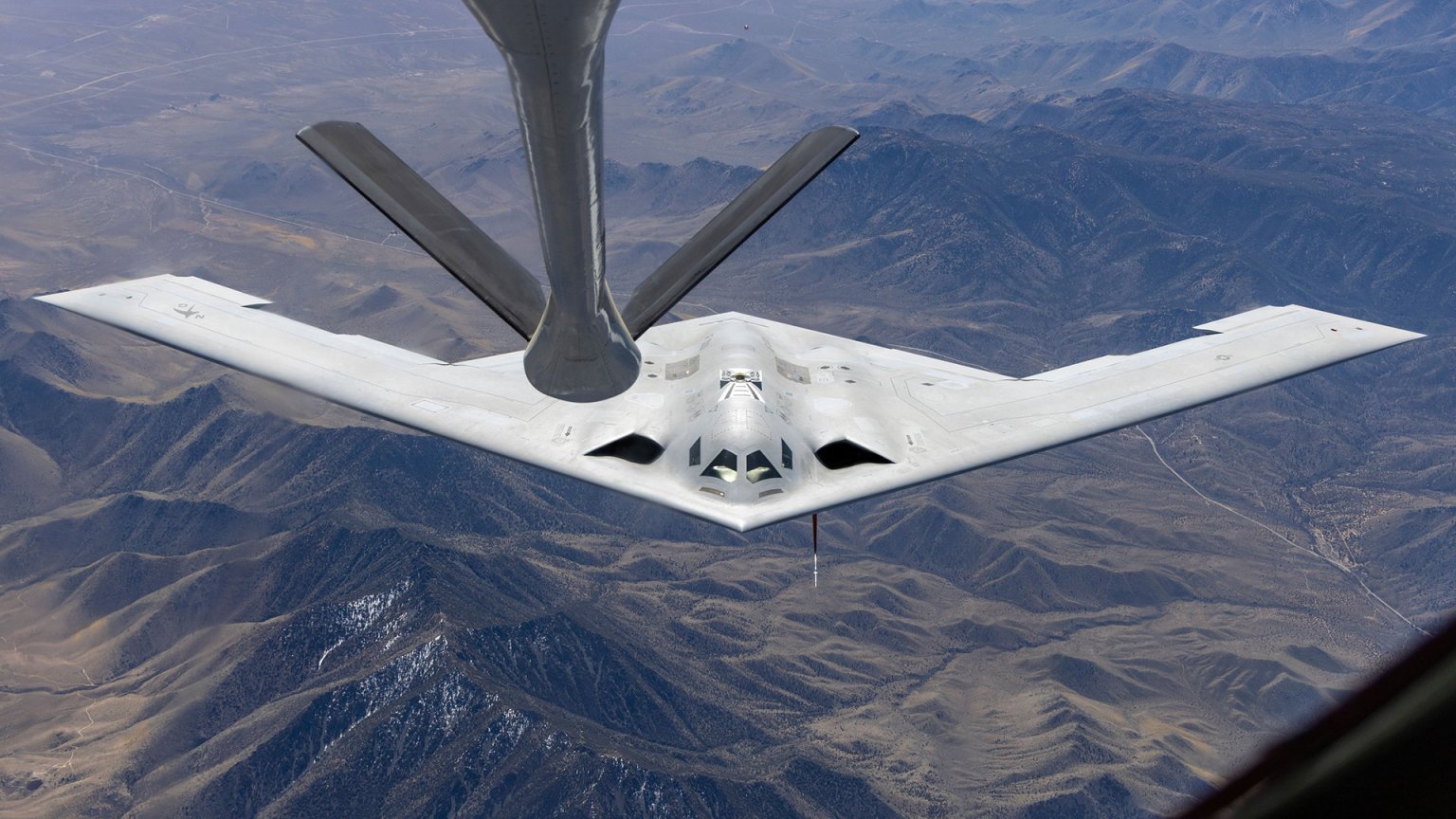
General Atomics says it is working on a new hybrid-electric-powered flying-wing-type strike/reconnaissance drone called NextGen that could be able to stay aloft for more than 60 hours. Work on NextGen will also feed into one of the designs within the company’s Gambit family of drones, which are also based around a common modular core ‘chassis’ concept. Separate progress is being made on the newest member of that family, the air-to-surface optimized Gambit 6, with plans now for a live-fire air-to-ground ordnance demonstration early next year.
C. Mark Brinkley, a spokesperson for General Atomics, shared these and other details with TWZ as part of an update on the status of the entire Gambit effort.
“When we announced the Gambit Series in 2022, we knew that it was an ambitious, multi-stage concept that would require many years before its full power would be realized across all variants,” Brinkley said. “It’s not complicated to understand, but it is revolutionary, and revolutions take time.”
When the Gambit family was first rolled out four years ago, General Atomics presented four distinct design concepts. These were the intelligence, surveillance, and reconnaissance (ISR) focused Gambit 1, the air-to-air combat-optimized Gambit 2, an uncrewed ‘red air’ aggressor called Gambit 3, and the stealthy flying wing Gambit 4. Since then, the company has also added the Gambit 5, intended for carrier-based operations, and the aforementioned Gambit 6.
All of the Gambit concepts are designed to leverage a common ‘chassis’ that includes landing gear, baseline avionics, and other core hardware. General Atomics touts this as helping to reduce costs and accelerate the development of very different drone designs.
General Atomics’ Brinkley provided brief updates on all six existing Gambit design concepts, as well as the common core.
- “Gambit Core: First, I think you saw the recent update on our partnership with Spirit Defense. They have been partnered with us for a long time, and they’re bought in on the Gambit concept. As a teaming arrangement, it really buys down manufacturing risk and also allows General Atomics to pursue many other projects simultaneously, whether that’s MQ-9B or Wildfire or other things.”
- “Gambit 1 is out there flying today. The first example is the XQ-67 Off-Board Sensing Station [OBSS], built in collaboration with Air Force Research Laboratory [AFRL]. They’re a great partner and really have a vision for this as a new warfighting concept for the future.”
Developed under the secretive OBSS program, the XQ-67A was unveiled to the public in 2024, as TWZ was the first to report. Experimentation using this one-off drone fed into General Atomics’ development of what is now called the FQ-42A Vengeance, which we will come back to in a moment, as well as the U.S. Air Force’s Collaborative Combat Aircraft (CCA) program. Last year, AFRL announced that the XQ-67A would receive modifications and upgrades to support further advanced autonomy and related developments under a new program called Demonstration of Autonomous Collaborative Platform Performance and Effectiveness (abbreviated as Demon Ape).
On Tuesday, AFRL announced in a press release that it “demonstrated integration of several advanced mission systems including state-of-the-art sensors, mission computers and power and thermal management hardware, all designed to work collaboratively in demanding combat environments,” on the XQ-67A during a recent test flight over the Nevada Test and Training Range (NTTR) as part of Demon Ape.
“Additionally, the integration of Beyond Line-of-Sight datalinks and live, virtual and constructive simulations during the flight demonstrated management of uncrewed platforms across distributed theaters, bolstering deterrence through resilient, layered command and control,” AFRL’s release added.
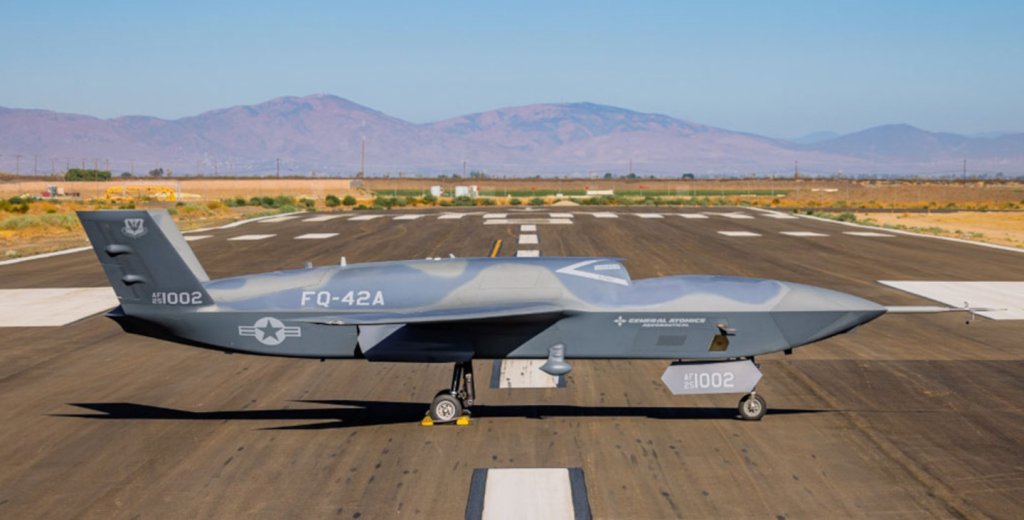
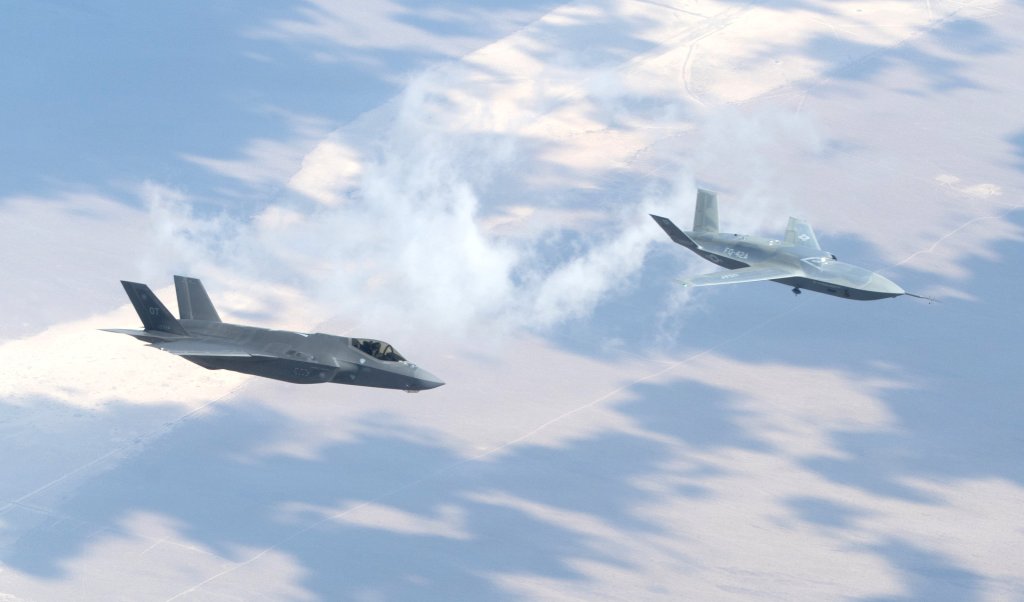
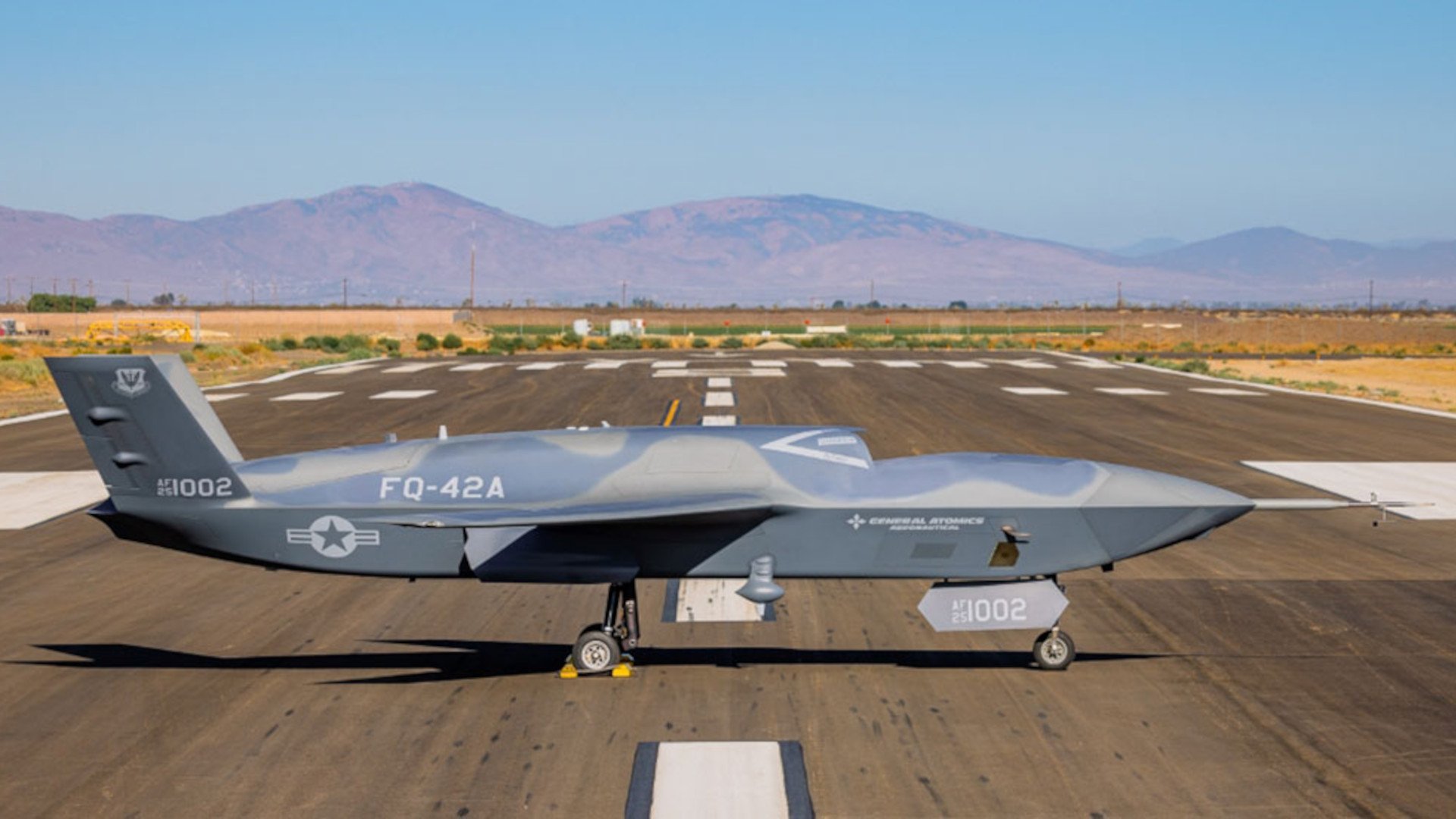
- “Gambit 2 is also flying today. Our first example is the FQ-42A Vengeance with the U.S. Air Force. Upcoming milestones include our first missile live-fire later this year, and participation in [Exercise] Emerald Flag. We’ll be at [the] International Fighter Conference next week with the full-scale model.”
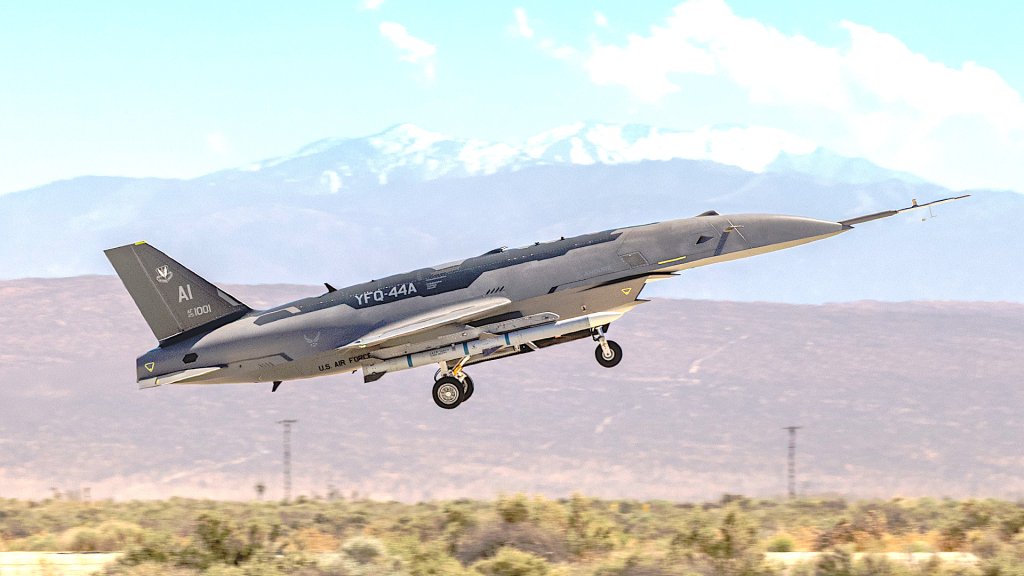
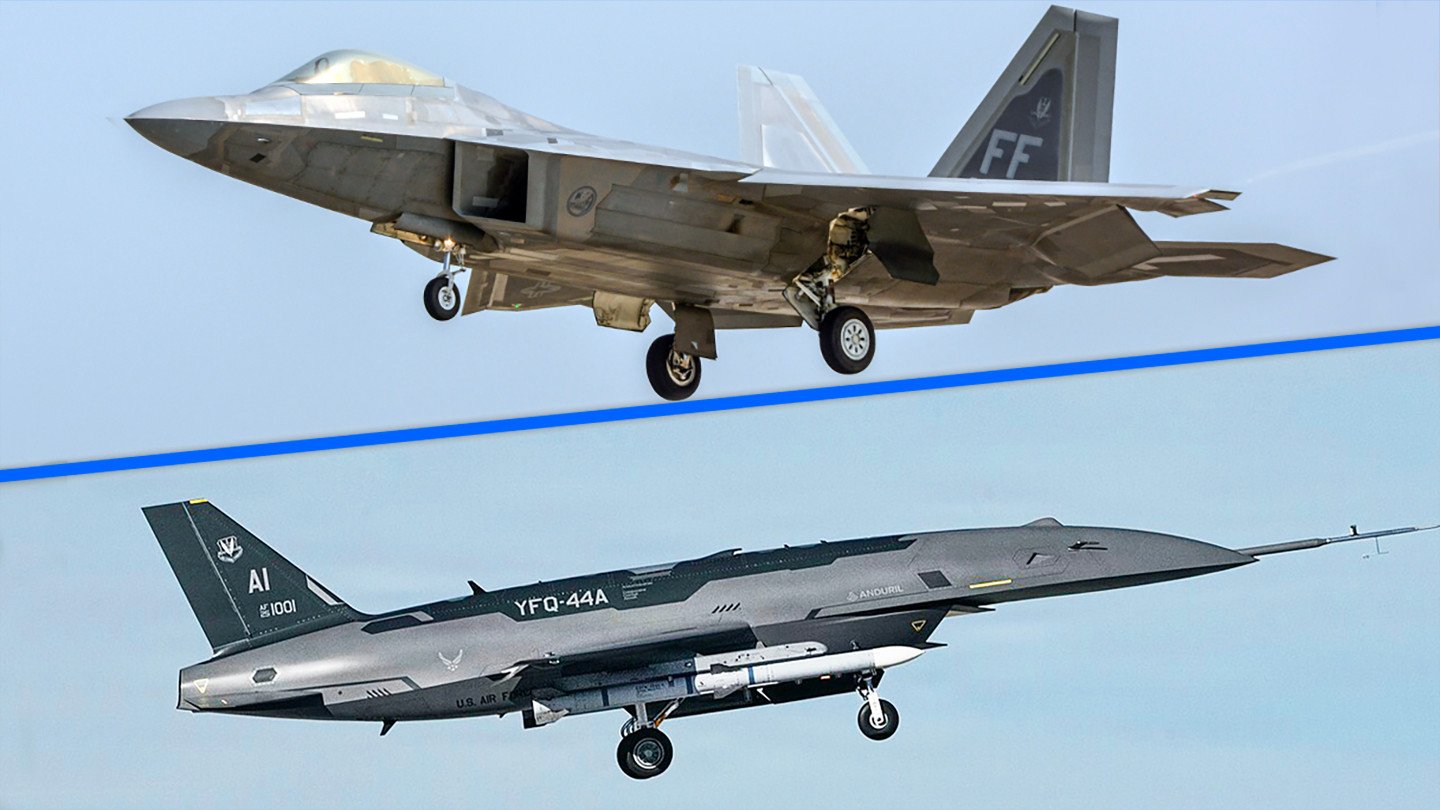
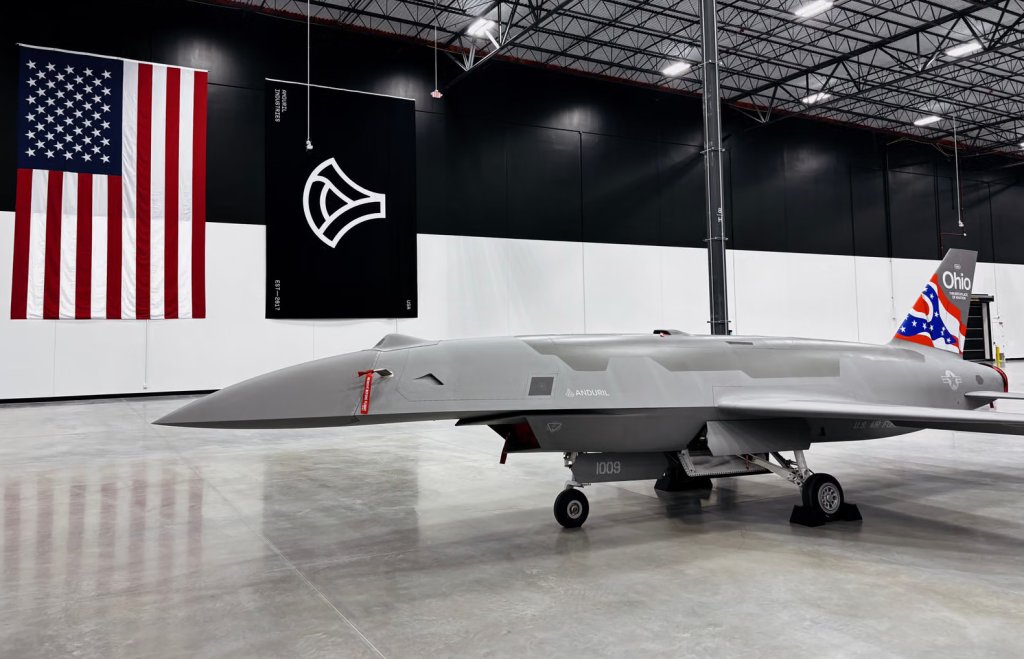
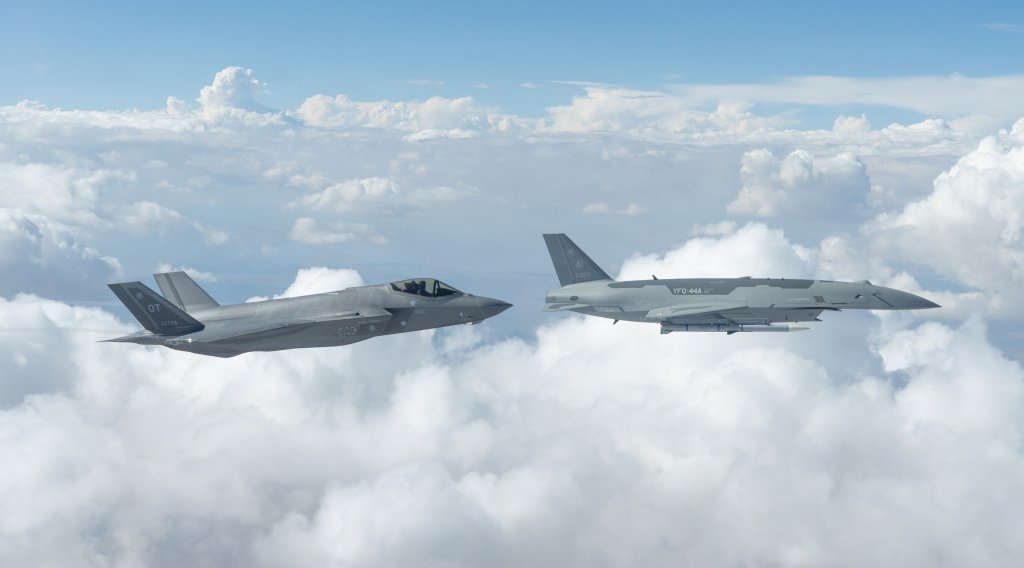
The FQ-42A is one of two designs the Air Force has now ordered into production under the first phase, or Increment 1, of its CCA program. The other is Anduril’s FQ-44A Fury. In September, the Air Force announced a goal of having at least 500 Increment 1 CCAs in inventory by 2032.

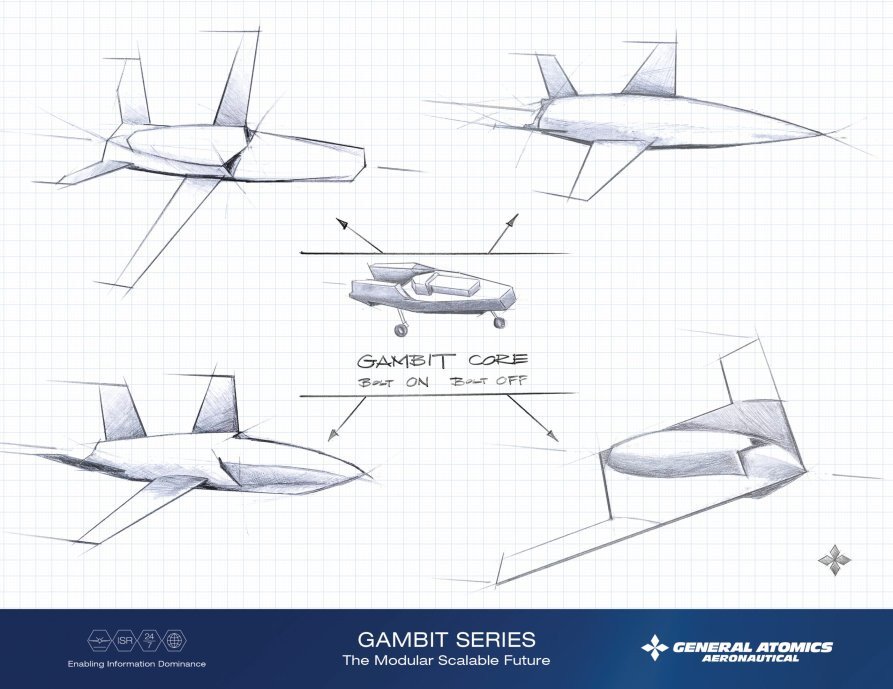
- “Gambit 3 is a red-air trainer concept. We all know this is coming. It’s a critical must-have for the future. But right now, we live in a world filled with critical needs, so where does this fit in? Because of the way we have designed the Gambit Series, everything feeds everything else. You can pursue a tactical variant first, then walk back to this later. Eventually, manned aircraft will need to fight against these autonomous jets and train like they fight, but you don’t need them actually loaded with weapons. You’ll be simulating all of that anyway. So with Gambit 3, you can alter the design without starting from scratch and probably remove some fighter components from the trainers to add overall value. Considering that we have Gambits 1 and 2 flying now, we probably don’t need a pure trainer prototype unless the buyer wanted different engines and other changes.”
Gambit 3 is by far the concept within this larger family that has been discussed the least to date, so it is particularly interesting to get an update on General Atomics’ current thinking here. There continues to be a degree of interest in this kind of capability within the U.S. military, especially to help provide greater volumes of platforms capable of representing more advanced aerial threats during large-scale exercises. However, despite several past efforts, there has been no significant acquisition of next-generation unmanned aggressors that we are aware of. As an aside, Anduril’s Fury was originally developed by a company called Blue Force Technologies for the ‘red air’ role.
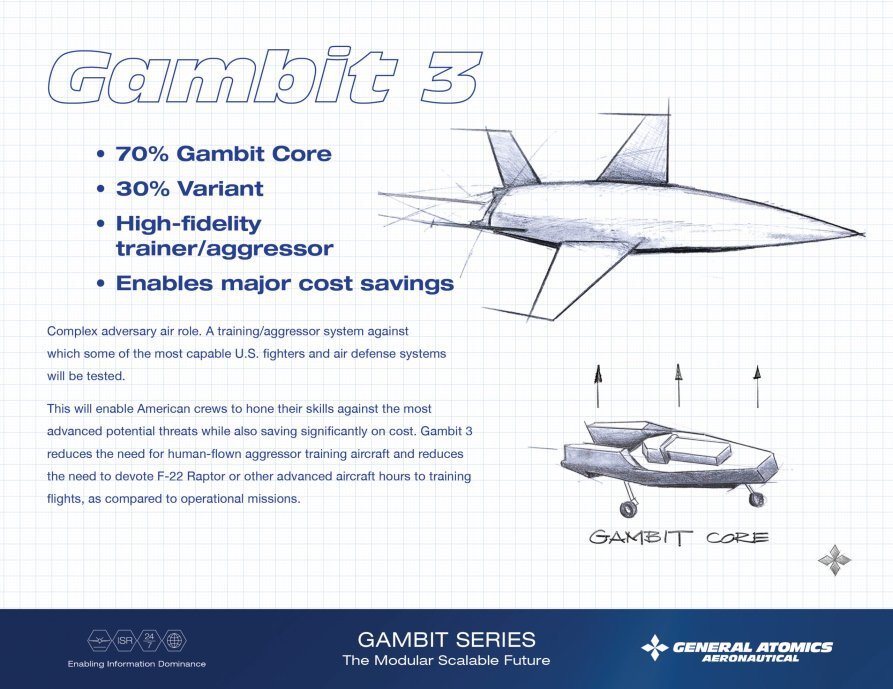
- “Gambit 4 is a flying wing. This is where things get interesting. General Atomics is currently working on a much larger flying wing we call NextGen. It’s not a CCA. We’re talking novel hybrid-electric propulsion on a fully armed, fully outfitted, ISR/Strike wing. Our engine team has promised 60+ hours unrefueled. That work is happening in parallel with everything else we’re working on. I don’t think people realize how deep GA-ASI’s bandwidth is, or how much we dedicate to R&D. We have things I’m talking about here, and things I’m not talking about here, and five million square feet of manufacturing plus multiple flight test facilities. We’ve built and delivered more than 1,600 aircraft in 34 years. We’ve invented a lot of things, and we’re inventing other things. NextGen is coming, and the work we’re doing on that flying wing program will funnel into Gambit 4 so that when customers are ready for this, we’re not starting from scratch here either.”
From the beginning, Gambit 4 has been something of an outlier that is completely different from the other concepts in the family. This is only reinforced by the new details Brinkley has shared here about the NextGen design. The mention of “novel hybrid-electric propulsion” is particularly eye-catching. In general, this kind of propulsion arrangement offers improved fuel economy, and the potential for other benefits, like reduced infrared and acoustic signatures, through the combination of fuel-powered engines and electric motors.
General Atomics has talked in the past about hybrid electric propulsion technology helping to achieve a 60-hour-endurance target in the context of an earlier stealthy flying wing drone concept called MQ-Next. Last year, AFRL also awarded the company a contract for what it described as a “hybrid-electric propulsion ducted fan next-generation intelligence, surveillance, reconnaissance/strike unmanned aerial system,” or GHOST.

“We’ve been promising something impressive related to hybrid-electric propulsion, and now I can’t talk about it anymore,” Brinkley told TWZ at the time when asked for more information about GHOST. It remains unclear how that program may be intertwined with the previous MQ-Next concept, as well as work now on NextGen and future plans for Gambit 4.
- “Gambit 5 is basically a Gambit 2 or Gambit 6, or a hybrid of those, optimized for shipboard use with global navies. So again we’re showing how the novelty of the Gambit design pairs with our other projects and programs to buy down risk to success. You need to address landing gear, catapults, arresting cables, salt air that eats everything, all kinds of things. But Gambit 5 is an easy reach. General Atomics has a lot of carrier expertise, and we have been experimenting with shipboard operations for more than a decade.”
The Gambit 5 concept made its public debut in 2024 at the Farnborough International Airshow in the United Kingdom with a rendering depicting the drones embarked on a Queen Elizabeth class carrier refitted with an electromagnetic catapult. General Atomics has since shown additional renderings of Gambit 5s on the decks of the U.S. Navy’s supercarrier USS Gerald R. Ford and a Japanese Izumo class ‘multifunctional destroyer.’ General Atomics also makes electromagnetic catapults for carriers, including the ones on the Ford class, and has put ideas for installing them on a variety of other naval vessels, as well as deploying them on land.

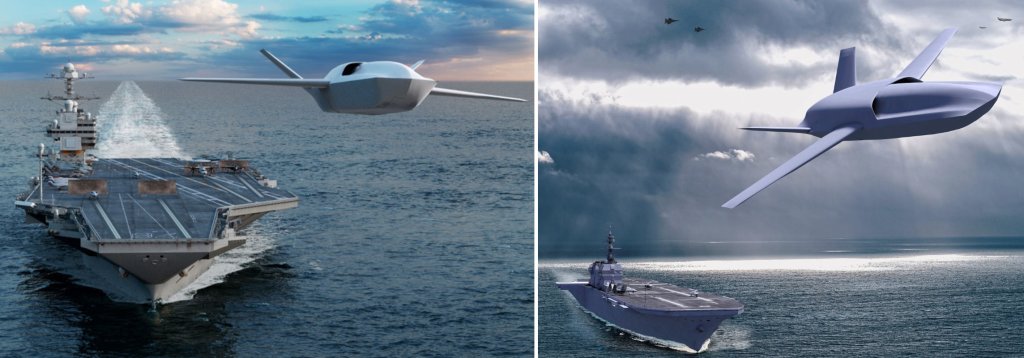
Last year, the Navy announced that it had awarded contracts to General Atomics, as well as Anduril, Boeing, and Northrop Grumman, to develop conceptual designs for carrier-based drones under its CCA program. General Atomics used a rendering of Gambit 5 to illustrate a subsequent press release regarding this selection.
- “Gambit 6 takes the Gambit 2 fighter and optimizes it for ground attack. We started talking about Gambit 6 last year, and the conversations around the world have really taken off. People really understand the Gambit concept and are beginning to see how different it is from the mostly concept jets being discussed. The next step is to demonstrate the capability, so we are planning a company live-fire event for early 2027 using a ground-attack munition from a company-owned Gambit 6. I’ve said this a few times, but every Gambit variant feeds expertise into the other variants by default. So the work ongoing now for live-fire on FQ-42 Vengeance, coupled with years of internal air-to-ground launches from MQ-20 Avenger, allows us to rapidly reconfigure for Gambit 6. The air-to-ground mission is pivotal for many global militaries evaluating CCAs as a concept, and we’re already seeing others hanging bombs from their wings and talking about future concepts with internal bays. We’ll probably see other companies doing air-to-ground demos like ours. But the next question is survivability. Internal carry and release is such a different beast than firing from the wings, but what comes out for the Gambit Series is a 5th-generation combat jet optimized for survivability, scalability and flexibility.”
As mentioned, Gambit 6 is the newest entry to the family and was rolled out around last year’s International Fighter Conference. At that time, General Atomics said it was already courting international customers for this particular design, especially in Europe, underscoring a surge in interest globally in CCA-type drones in recent years. The company also subsequently announced plans to develop a derivative of the FQ-42A for the European market through an affiliate in Germany.

Brinkley’s remarks here regarding internal bays versus external carriage of stores notably follow Anduril’s release of pictures showing fit checks of air-to-ground ordnance on the wings of a Fury drone last month. The FQ-42A, as well as General Atomics’ earlier Avenger drone design, both have internal weapons bays. An internal bay is expected to be a key feature on the Gambit 6 design, too.
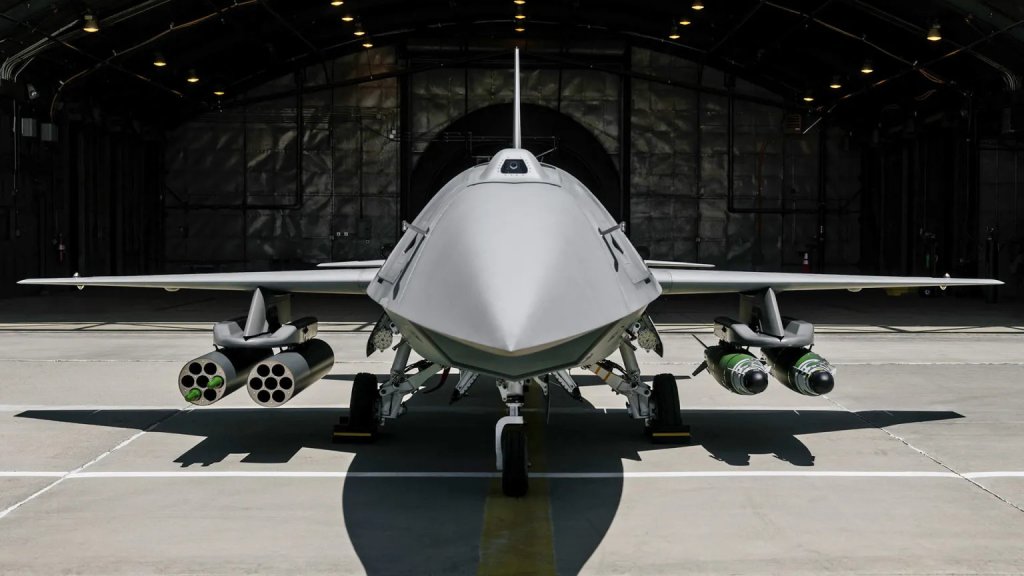
“General Atomics knew that low-observable with internal weapons was the only way to go for the future. It’s not specifically the fastest way, or the easiest way, but it does yield the very best jet on the back end,” Brinkley also told TWZ today. “You can get a small jet in the air, connect it to the satellite controls we pioneered here, hang weapons from the wings like we pioneered here, use the AI concepts we pioneered here, and call that a CCA. But if it isn’t low-observable, with a functioning internal carry, built for affordable high-rate production from the beginning, then it’s just a little jet.”
“When we rolled out our first four Gambit concepts, we knew that we were onto something novel, but I don’t think any of us recognized how fast it would all move. Now we’re up to six concepts, with two flying and two on track to become flying prototypes,” he added. “That leaves Gambit 3 and Gambit 4, and it would be easy to think those are the least important or least impressive, but I don’t think that’s the case at all.”
It does remain to be seen how many members of the Gambit family beyond the FQ-42A will ultimately be produced in significant numbers. For now, a Gambit 4 design, in particular, is still an ambitious future concept that will rely heavily on success with NextGen and related work.
Contact the author: joe@twz.com
The post General Atomics Developing Strike-Recon Flying Wing Called NextGen That Uses Hybrid-Electric Propulsion appeared first on TWZ.


 : Islamic Revolutionary Guard Corps (
















 They seem not only got a model but also a full-scale prototype.
































 Russian satellites approaching ICEYE: a closer look at the timeline.