❌

Reading view

Ukraine wants its Abu Dhabi talks with Russia before a proposed Trump-Putin-Xi summit

talks in abu-Dhabi

Ukraine wants its Abu Dhabi talks with Russia and the US to come before a proposed summit of the US, Russian, and Chinese leaders, President Volodymyr Zelenskyy said on 27 October. Polish Prime Minister Donald Tusk indicated the first round in Abu Dhabi could come after 4 November.

Abu Dhabi is meant to host the first round of trilateral talks between Ukraine, Russia, and the US on ending Russia’s war since delegations last met in winter. Meanwhile, Trump has waived new sanctions on Russia and struck a diesel deal with Moscow while pressing Kyiv to spare Russian refineries. In Abu Dhabi, Ukraine would at least sit at the table. A rival idea, a summit of the US, Russian, and Chinese leaders, would leave it out of the room.

Abu Dhabi first

The rival idea came from Moscow. Putin proposed meeting Trump and China’s Xi Jinping at the APEC forum in Shenzhen on 18–19 November to negotiate an end to the war on terms that would favor Moscow, The Wall Street Journal reported on 18 October. A senior US official told the paper Trump had not agreed but could be receptive. Kremlin spokesman Dmitry Peskov told the paper that a meeting was under discussion.

If that summit comes first, a deal shaped around Moscow’s terms could reach Trump before Ukraine’s own talks begin. Zelenskyy wants Abu Dhabi first. “We would very much like our meeting in Abu Dhabi to happen before that,” he said. Both Kyiv and Moscow have confirmed the meeting and view its format positively, he said. That leaves the American side, whose main focus is the Middle East.

Trump’s own remarks early on 28 October pointed to a meeting of leaders instead. One would be set up soon, he told reporters, “with President Putin and President Zelenskyy.”

Ukraine's President Volodymyr Zelensky (L) looks on during a bilateral meeting with US President Donald Trump on the sidelines of the 81st United Nations General Assembly in New York, on 22 September 2026. (Photo: Brendan SMIALOWSKI / AFP/Eastnews)
Explore further

Ukraine now fights two enemies. One is America

For Abu Dhabi, Zelenskyy listed Kyiv’s agenda: de-escalation on energy and at sea, a prisoner exchange, and the format of a trilateral leaders’ meeting. A date is another matter. On the evening of 27 October, presidential communications adviser Dmytro Lytvyn told journalists it was too early for announcements.

Warsaw looks past 4 November

Tusk spoke before a cabinet meeting, after Finnish President Alexander Stubb and Norwegian Prime Minister Jonas Gahr Støre held a 90-minute call with Putin. The two said they spoke for their own countries, not for Europe. Stubb briefed Tusk afterwards. Tusk said the European side came away very moderately optimistic about constructive talks in Abu Dhabi, and pointed to a first round there after 4 November. Yet he urged absolute caution and warned against expecting an easy deal.

  •  

Licensed, not banned: what China’s new rules mean for the parts inside Russia’s Shahed-type drones

licensed banned what china’s new rules mean parts inside russia’s shahed-type drones · post russian president vladimir putin chinese xi jinping beijing 2024 china russia ukraine news ukrainian reports

China’s updated drone export rules will cover the engines in Russia’s Geran attack drones, Russia’s version of Iran’s Shahed, Ukraine’s sanctions commissioner Vladyslav Vlasiuk said on 27 October. He cited a clarification from China’s Commerce Ministry, Ukrainska Pravda’s defense desk Oboronka reported. The license requirement takes effect on 18 November.

Licensing itself isn’t new. China has required permits for some drone engines since September 2023. Even so, Chinese engines kept reaching Russian drone plants, some shipped as refrigeration units, Reuters reported. Russia’s jet-powered Gerans rely fully on Chinese turbojets, HUR deputy chief Vadym Skibitskyi has said. So the update’s value lies in enforcement, not in the list.

Three agencies, one list

Beijing issued the update in a joint announcement by the Commerce Ministry, the General Administration of Customs, and the Central Military Commission’s Equipment Development Department. Announcement No. 49 bars exports of listed drone items without a license, including specially designed autopilots and certain drone engines. China will approve applications that comply with the rules, a Commerce Ministry spokesperson added.

Flags of Russia and China.
Explore further

China calls itself neutral—but its fiber ends up in the drones that hit Ukraine

Vlasiuk said the core of Russia’s long-range strike drones has formally come under control. He named engines for Gerans, turbojets for their jet versions, autopilots, and jam-resistant navigation. The announcement lists anti-jam navigation as a technology, not as hardware. He called the step an opening for Ukraine because Beijing now formally takes responsibility for these categories. Kyiv will press for the rules to be applied to known suppliers of Russia’s arms industry and, with partners, track licenses, transit routes, and re-exports, he said.

Permits, refusals, and FPV parts

Licensing does not mean a ban, Vlasiuk stressed. Exporters China deems reliable can get general permits for up to three years, while the rules leave broad grounds for refusal. The new thresholds do not cover motors and speed controllers for FPV drones, batteries, cameras, or optical fiber, he added.

The rules do cover brushless motors that meet all of these: at least 48 volts, at least 3 kW, a power density of at least 3 kW per kilogram, and no more than 3,000 rpm. Their speed controllers are covered too, Militarnyi reported. Russia could still obtain parts with Beijing’s approval, the outlet noted. Ukraine, without such close ties, could face delays, inspections, and higher costs.

  •  

A Russian cruise missile that doesn’t match its name fell almost intact in Odesa Oblast

russian cruise missile doesn’t match its name fell almost intact odesa oblast · post unidentified small 27 2026 geran-5-2 ukraine news ukrainian reports

A small Russian cruise missile of an unconfirmed type came down almost intact in Odesa Oblast, Militarnyi reported on 27 October. Its box-shaped airframe looks unlike the Geran-5 variant whose name a presidential adviser gave it.

Militarnyi describes Russia’s work on the Geran-5 line as iterative: features tested on one version reappear in the next. A variant reported in late September can correct its route by images of the ground instead of satellite signals, which Ukraine jams, according to the monitoring channel Polkovnyk GSh. Official Ukrainian sources have not confirmed that system. The airframe found in Odesa Oblast looks shaped for a different problem: radar. Russia now builds 4,000 jet-powered Geran-4 and Geran-5 drones a month, Militarnyi says, most of them Geran-4. It is also building new launch sites for the Geran-5.

What the wreck shows

Local Telegram channel Odesa Info Live posted photos of the missile lying in open ground with little visible damage. Militarnyi described a compact cruise missile with a box-shaped fuselage, rounded edges, and a swept wing. The flat-sided body is probably meant to simplify production, the outlet said, and it may also cut radar visibility. A small turbojet engine exhausts through a V-shaped tail and draws air through intakes on both sides. Militarnyi read the dark composite skin as another measure against radar.

Serhii “Flash” Beskrestnov, the president’s adviser on defense technology, published the first photos of the new missile on 22 October. He wrote that it navigates optically and has greater range, speed, and flight altitude, and he labeled it the Geran-5 K5-K. However, Militarnyi noted that it looks substantially different from the K5-K variant already known by that name. In its 23 October overview, the outlet said Russia had started using two new small cruise missiles, probably developments of the Geran-5.

How Russia got here

Russia first used the original Geran-5 against Ukraine in early January 2026, Ukraine’s military intelligence (HUR) said, describing it as a jet-powered strike drone. Militarnyi now classes the whole line as small cruise missiles.

Until specialists open the airframe, its navigation, range, and speed rest on Beskrestnov’s word. What they find inside will show how much of the design is aimed at Ukraine’s radar.

  •  

A warehouse by day, homes by night: Russian jet drones keep hitting Kharkiv

Aftermath of the strike on Kharkiv.

A Russian jet-powered drone set homes on fire in Kharkiv’s Osnovianskyi district during the night, Ukraine’s State Emergency Service (SES) reported. A small child was among the people hurt. Around 13:00 on 28 October, another Russian drone hit the same district, starting a fire, killing one person and injuring two, Kharkiv Mayor Ihor Terekhov said.

Of the 88 Shahed-type drones Russia launched from 18:00 on 27 October, 38 were jet-powered, the Air Force reported. By its preliminary count at 08:00, defenses had downed or jammed 31 of those 38. Several drones were still in the air. Russia also fired an Iskander-M or S-400 ballistic missile from Taganrog. Even so, Russian weapons hit eight locations, and debris fell on two more.

One strike, a casualty count that shifted

Kharkiv Oblast head Oleh Syniehubov reported a drone strike on the district at 22:42 on 27 October. At 23:12, he clarified that a child hurt in the strike had acute stress reaction. At 23:39, he listed four people hurt: women aged 32 and 65, a 56-year-old man, and a 4-year-old boy. Three went to hospital. Eight minutes later, he added that a 65-year-old woman had acute stress reaction. His morning summary of the day’s strikes lists two 65-year-old women in Kharkiv, one wounded and one with acute stress.

Aftermath of the strike on Kharkiv
Aftermath of the strike on Kharkiv. Photo: State Emergency Service of Ukraine in Kharkiv Oblast

The SES put the number of people hurt at five, including the child. Rescuers said a jet-powered drone struck the area, starting a 2,500 m² fire.

Kharkiv’s last two days

The Osnovianskyi fire was part of a run of Russian strikes on Kharkiv and the area around it. On the evening of 26 October, Russian multiple rocket launchers hit the city’s Novobavarskyi district, killing two people and hurting four. That night, jet drones struck three places in Kharkiv district, which surrounds the city. One hit, in the settlement of Vilshany, left people hurt. The SES counted three injured that night.

Kyiv Arsenal Book Fair 2024
Explore further

Russia strikes publishing house warehouse in Kharkiv on Ukrainian Language Day, adding to a campaign against Ukrainian literature and culture

During the day on 27 October, another Russian jet drone hit a warehouse in the city’s Slobidskyi district. Preliminary reports showed no casualties. Drones also hit the Shevchenkivskyi district that afternoon, wounding one person, Terekhov said. Another hit damaged an administrative building in the Kholodnohirskyi district, he added. Hours later came the strike on Osnovianskyi. Across Kharkiv Oblast, 14 people were hurt over the past day, including a child, Syniehubov’s morning summary shows. In Osnovianskyi, rescuers were again working under the threat of repeat strikes.

  •  

Ukrainian monitors report fire near Russian plant that sold steel to an S-400 missile builder

NLMK (Novolipetsk Metallurgical Combine) during the attack.

A fire broke out in the area of a major Russian steel plant in Lipetsk late on 27 October, Kyiv time, as air defenses fired at incoming targets, the Ukrainian monitoring Telegram channel Exilenova+ reported. Ukrainian partisans said the strike may have hit the plant. The region’s governor denied any large industrial fire.

Whether or not it was hit, the plant matters to Ukraine. The Novolipetsk Metallurgical Plant (NLMK) is Russia’s only producer of electrical steel, Ukrainska Pravda reported in April 2025. NLMK’s tax records, obtained by the outlet, showed sales of that steel to Moscow’s Avangard plant, which builds missiles for S-400 air defense systems. Russia also fires those missiles at ground targets in Ukraine.

Pantsir fires, no visible hit

The targets over Lipetsk were jet-powered, Exilenova+ wrote, citing preliminary reports of impacts and a fire toward the city’s airfield. Footage it posted showed a Pantsir air defense system firing, and the channel suggested the system may have failed to cope. It then reported the fire near NLMK, blaming air defense fire or a falling object.

We also observe a fire in the vicinity of NLMK (Novolipetsk Metallurgical Combine) resulting from air defense activity or the impact of an object. pic.twitter.com/7bBqyqCP2j

— Exilenova+ (@Exilenova_plus) October 27, 2026

The Crimean Tatar-Ukrainian partisan movement Atesh said its agents in Lipetsk reported an impact, and in a follow-up said they believe it may have hit NLMK.

Contracts and denials

A 2022 investigation by Disclose and its partners tied 18 NLMK contracts, all signed after 2014, to eight Russian defense firms, including an S-300 maker. NLMK confirmed the contracts but said only a “negligible” amount of civilian steel grades went to those firms.

Map of Russia’s Lipetsk Oblast, where a fire was reported near the NLMK steel plant on 27 October 2026
Map of Russia’s Lipetsk Oblast, where a fire was reported near the NLMK steel plant on 27 October 2026. Map: EP/Datawrapper

On 28 October, Lipetsk Oblast Governor Igor Artamonov claimed air defenses downed 45 drones over the oblast overnight. He insisted reports of a large industrial fire were untrue, saying drone debris fell in a tree belt and sparked a fire, since contained. Debris also blew out windows in a Lipetsk apartment block, and one person sought medical help but needed no hospitalization, he added. Whether NLMK took any damage remains unconfirmed.

Earlier strikes on weapons suppliers

Earlier, UK-supplied Storm Shadow missiles reportedly struck a battery plant in Yelets, in the same oblast, on 25 October. Two days before that, they reportedly hit an electronics plant in Oryol. OSINT channels described both as suppliers of parts for Russian missiles.

  •  

Two weeks before Starlink’s speed cap hit Ukraine’s drones, a Ukrainian test satellite went up on a SpaceX rocket

OBRIA NANO

A test satellite for a future communications network under Ukrainian control is working in orbit, Ukraine’s Himera and Denmark’s GomSpace said on 27 October. The companies say it will work for Ukraine’s strategic security, and that the long-term aim is to rely less on foreign communications providers. Public launch records for the mission do not list a satellite by that name, though some of its objects are still unidentified.

Ukraine fights Russia on satellite links it doesn’t control, and the announcement comes two weeks after it saw what depending on an outside provider can cost. The satellite, the companies say, went up on 1 October, before that trouble began. Overnight on 14 October, Starlink and its military version, Starshield, began dropping links on fast-moving terminals, and Ukrainian officials said the cap disrupted drone missions. On 24 October, 10 days after the cap began, Ukraine’s Defense Ministry reported speeds restored. Who ordered the cap remains contested. That same day, Elon Musk wrote that Ukraine’s military had violated Starlink’s terms of service and that “that loophole was closed last week,” a claim a Ukrainian presidential adviser disputed.

What the companies say, and what launch records show

Obria Nano flew on SpaceX’s Transporter-18 rideshare mission, the release said. Aalborg-based GomSpace built it on Himera’s order, Himera co-founder and CEO Misha Rudominski wrote on Facebook. He added that the team received the first signals the next day and that the satellite is now working. Its tests are meant to inform the design of the full Obria system, the release said.

US President Donald Trump and Elon Musk in the Oval Office on 11 February 2025
Explore further

The Starlink hot potato: Musk points to Trump, Trump points to nobody, then credits Musk with the fix. The speed limit stays

No satellite called Obria Nano appears on SpaceX’s published list for the mission, The Insider found. Public tracking catalogs show one Ukrainian satellite from that launch, named UASAT-Nano. Another 26 objects from the mission are still listed with placeholder names and no confirmed owner. The outlet said it is unclear whether the two names refer to one satellite.

UASAT-Nano is the satellite network Stetman, another Ukrainian company, is building, and its founder said the network’s first test satellite would launch in October. In April, Stetman and GomSpace agreed to set up a joint venture called UASAT and planned a first launch for fall 2026. The Obria release does not mention Stetman or UASAT.

Production in Ukraine is the stated next step

Rudominski wrote that Himera’s next stage is to produce satellites and ground terminals in Ukraine. He called it important not only to use the technology but also to gradually build domestic expertise and manufacturing.

“For us, this project is about more than launching a satellite. It is an opportunity to lay the foundation for an independent communications network for Ukraine,” Rudominski said in the release.

In the long run, the network would cover all of Ukraine and complement European satellite networks, the release said. The network does not exist yet, and Himera has given no timeline.

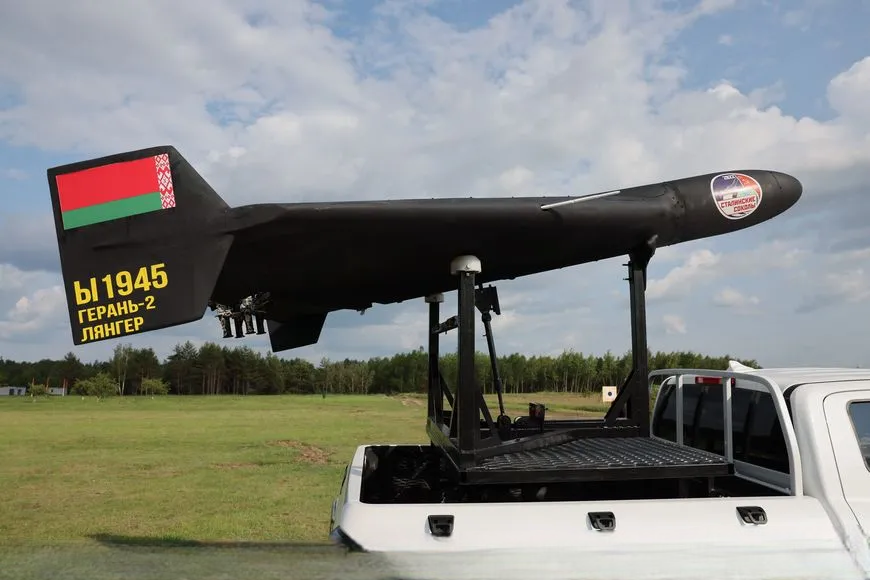
geran-2 (shahed-136) drone belarusian markings service military belta militarnyi російський безпілотник герань 2
Explore further

“Trump and Musk must be held accountable”: US senator warns Starlink network failing over Ukraine could cripple its shield against Russian missiles and drones

Replacing Starlink will not be quick. Lance Hunter, a political scientist at Augusta University, told Time that Ukraine cannot quickly swap out such technology, since diversifying it “takes a lot of time. It takes a lot of resources.” Meanwhile, one Ukrainian interceptor-drone maker has begun rethinking its air-launched designs after the slowdown.

  •  

“Above all, we do not have enough missiles for Patriots”—Zelenskyy after 100+ ballistic missiles

Ukrainian President Volodymyr Zelensky visits a Patriot battery in Germany in 2024.

Russia has fired more than 100 ballistic missiles at Kyiv and Kyiv Oblast since 14 October, President Volodymyr Zelenskyy said in his evening address on 27 October. He said partners’ air defense packages are being delayed.

Ukraine’s front-line positions are stronger than they have been in a long time, Zelenskyy said. If partners’ support for Patriots and other air defense remained just as strong, he argued, Ukraine would be in a much better position diplomatically as well. He expects trilateral talks with US and Russian representatives in November. The US, on which, he said, “almost everything concerning Patriots depends,” will be one of the three sides.

Delays and the war on logistics

Overnight on 27 October, Russia launched 16 ballistic missiles and more than 280 drones, in what Zelenskyy called a serious escalation of Russia’s campaign against Ukraine’s logistics. The strikes hit the State University of Trade and Economics campus and the Southern Bridge in Kyiv.

Residents stand outside a high-rise building in Kyiv after a Russian ballistic missile attack, 26 October 2026
Explore further

Russian ballistic missiles hit a Kyiv university campus, then return before dawn for the Southern Bridge again

A 46-year-old woman was killed and 15 people were injured, among them dormitory residents and two medics, the Kyiv prosecutor’s office said on the morning of 27 October.

Zelenskyy wrote that artificial and lengthy delays in interceptor packages for Patriots and NASAMS directly help Russia achieve the goals of its terror campaign. In his evening address, he added:

“And everyone hears, everyone sees that right now, it is difficult for us to defend against Russian ballistic missiles. And above all, we do not have enough missiles for Patriots.”

A month waiting on Hegseth

Earlier, on 26 October, Zelenskyy wrote that Ukraine had waited almost a month for US Defense Secretary Pete Hegseth’s signature on missiles for Patriots and NASAMS. Kyiv is also working with Europe and other partners, he added.

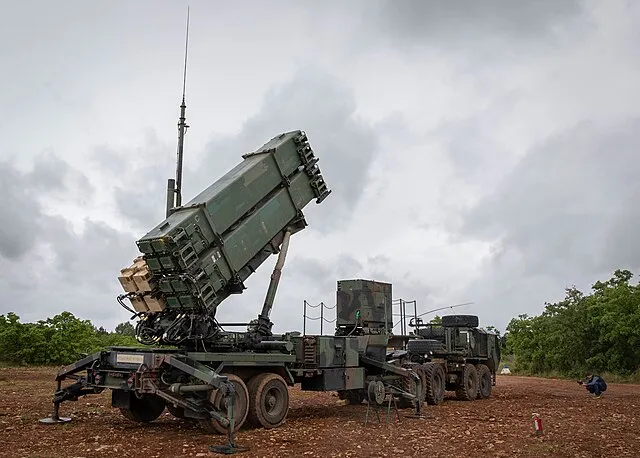
ukraine raises its stalled patriot request washington again after almost month without hegseth’s signature · post air defense system’s launcher 21051 9-a-so154-750_-_patriot_missile_system_operates_in_croatiajpg news ukrainian reports
Explore further

Ukraine raises its stalled Patriot request with Washington again after almost a month without Hegseth’s signature

Separately, The Washington Post reported on 19 October that some transfers come from allies and need Hegseth’s approval, because the US must sign off on re-transfers. Zelenskyy’s post does not say whether his wait concerns those transfers.

Before Zelenskyy’s latest statements, US officials rejected claims of a deliberate hold. A US government official called Ukraine’s claims “not true,” the Kyiv Independent reported. On 20 October, Secretary of State Marco Rubio said there was “nothing being deliberately denied to Ukraine.” Hegseth said the US had not changed its posture toward Ukraine but wants “our guys” to have as many interceptors as possible.

  •  
❌