
❌

Reading view

When ICE Comes for a MAGA Supporter

Last year, the conservative evangelical blogger Samuel Sey published an article on his blog, Slow to Write, defending the Trump administration’s plan for mass deportations from a Christian perspective. “Christian ethics do not denounce deportations,” he wrote. “They demand it.” Born in Ghana and a resident of Canada before he moved to the United States, Sey went on to write that “America doesn’t owe anything to people born outside of the country—including me.”

Last week, on October 21, ICE arrested Sey, who now faces deportation from the United States––a devastating blow to his American-born wife and three American children. A DHS spokesperson called Sey “an illegal alien” in a statement to news outlets. A statement attributed to Sey’s wife asserts that he entered the U.S. legally “and has been working ever since in good faith with a lawyer to obtain permanent legal status.” Some of his supporters have blamed his arrest on a clerical error. (The DHS spokesperson claimed in the statement that the 39-year-old Sey overstayed his legal entry by four years.)

This article was featured in the One Story to Read Today newsletter. Sign up for it here.

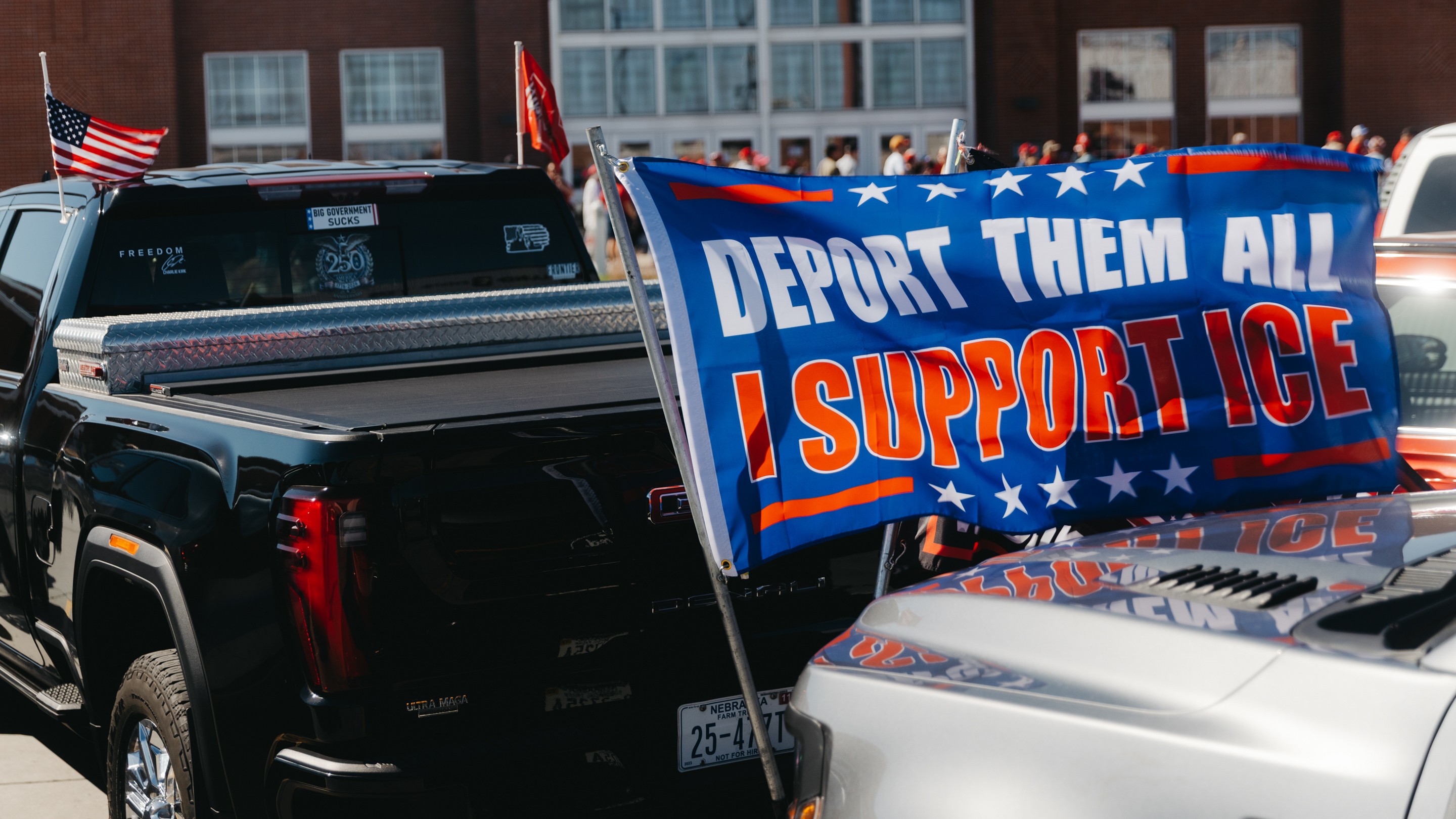
Arrests of this sort are nothing new in most respects. Federal-enforcement efforts in the United States’ interior have recently averaged 19,000 deportations a month. Although some deportees are doubtless unsympathetic criminals, many thousands are good people with families or friends who suffer their absence acutely. Sey is unusual, however, in being known personally to many prominent MAGA-aligned Christians, some of whom have backed a fundraiser for his family and affirmed his good character. That support has angered some within the MAGA coalition. A prevailing MAGA narrative is Illegal immigrants are members of a lawless, untrustworthy out-group that is justly hated for the significant harm that it does to America. That narrative is threatened when a member of the MAGA in-group, whose personal and professional life many MAGA allies affirmed as good for America, is accused of being an “illegal alien.”

Perhaps that’s why the debate about Sey’s arrest has been so polarizing, and why MAGA participants are finding it harder than usual to ignore the complexities of the issue and the fissures in their coalition.

Joel Berry, who has described himself as “a right-wing protestant conservative evangelical Christian Trump supporter,” is the person who created a crowdfunding effort for Sey and his family. In past commentary, Berry has called for a moratorium on U.S. immigration; stated that “if we’re going to save America, it won’t be enough to deport all the migrants”; and argued that “there’s no such thing as an ‘illegal immigrant with no criminal record’ because illegal immigration is a crime.” He once asserted that “the only due process owed to an illegal alien is deportation.” The crowdfunding appeal he launched states of Sey: “His wife is working to get him released on bail so he can fix any clerical issues that need to be addressed for his legal residence. We are raising money to help his wife and children with expenses while he’s out of work, as well as any legal fees they incur.” It concludes, “Samuel is a good man and a brother in Christ, and his ministry at SlowToWrite has been a blessing to many. Please consider helping. Thank you for standing with them!”

Many in the MAGA coalition criticized Berry for standing with someone they believe to be a lawbreaker. In response, Berry stated both that “Samuel Sey is in my tribe, and he is my brother. And he would make an excellent American,” and that “I of course believe the law should be enforced no matter who it involves.” The due process that Berry has previously dismissed is exactly what could determine whether his friend was arrested because of a clerical error or because he was in fact here unlawfully.

The debate has altered Berry’s perception of his coalition’s moral character. “This has been probably the darkest 24 hours I’ve ever experienced on social media,” he wrote. “The things being said about Samuel, his wife, and his small children are unthinkably evil. There is a segment of the so-called ‘Christian’ nationalist crowd that has given itself completely over to Satan. I’ve never had more resolve to defeat these subversive demons invading the Right and invading Christianity.”

Allie Beth Stuckey, a Christian conservative podcaster for Blaze Media and the author of Toxic Empathy: How Progressives Exploit Christian Compassion, has criticized what she sees as “toxic empathy” in the immigration debate. People are “so focused on the hard journey of the migrant that it belittles the effect of the chaos of illegal immigration on children, innocent citizens, and victims of illegal immigrant crime,” she wrote. In her telling, “Being so empathetic toward one set of people that you’re blinded to everyone and everything else isn’t just misguided, it’s evil.”

But in Sey’s case, she urged her followers to understand and connect with his family’s feelings and perspective. “As you can imagine, his wife, who’s at home with their 3 babies, is devastated and also trusting the Lord to help them find a resolution quickly,” she wrote. “Please pray for all of the Seys.”

Megan Basham of The Daily Wire, who is also a conservative Christian, posted this after learning that Sey had been detained: “I have spoken to people close to my friend Sam Sey, and this is not a question of any deliberate law breaking. Anyone saying otherwise is not telling you the truth. And anyone rejoicing over his and his precious wife Annie’s difficulties in this situation is disgusting.”

I was struck by the contrast with a social-media exchange I had with Basham earlier this month, when I was critiquing the Trump administration for deporting dozens of Venezuelan men to a brutally abusive prison in El Salvador. She was defending it. “Should overstaying your visa in the United States carry the risk of being beaten and sexually assaulted by sadistic prison guards in a foreign dictatorship where you’ve never set foot, paid for by the US government?” I asked her, adding, “I don’t think it should carry that risk. I don’t think Jesus would think it should carry that risk either.”

She replied, “Yes, because you should go home when your visa expires. That’s how Visa’s work. If you don’t, you’re breaking the law and you run the risk of whatever penalties come along with that.”

Some commentators in the MAGA coalition seem to adopt rhetoric and positions on illegal immigration that they can maintain only when they think of illegal immigrants as an abstract “them.” When they confront one who is a concrete “us,” their rhetoric shifts significantly. They raise rather than ignore the possibility of procedural errors, extoll the value of due process, note personal circumstances, draw attention to the suffering of family members, and urge empathy rather than vilification.

Others in the MAGA coalition object to this shift. Some are bigots who use racial slurs in their posts or attack interracial couples such as Sey and his wife. Others are restrictionists who believe that mass deportations are necessary and will cease if illegal immigrants are humanized and shown empathy. I wonder how many of those attacking Sey and his humanizers are those who are triggered by the simple cognitive dissonance of hearing good things about a person who may belong to categories such as “illegal alien” or “lawbreaker”—categories that they are accustomed to coding as evil.

Many in the MAGA movement hope that uncompromising harshness toward all undocumented immigrants will result in maximizing the number of people whom the country is able to deport. But the longer that the mass deportation of otherwise law-abiding people persists, the harder it will be to maintain support for that approach: Rather than assume that deportees are mostly villains, more and more people will have personal connections to productive members of society who got deported.

Certain questions follow. Why does immigration law require someone who marries an American to spend years filling out onerous paperwork with catastrophic penalties for errors? Wouldn’t Americans benefit if the law drew more distinctions between, for example, a visa overstay by a gainfully employed, noncriminal father of American children and a serial perpetrator of violence who twice snuck into the country? A movement that genuinely prioritizes the interests of U.S. citizens would have better answers to such questions than Trump, whose approach is deportations first, not “America first.”
© Christopher Lee for The Atlantic
  •  

The DEI Language That’s Doing More Harm Than Good

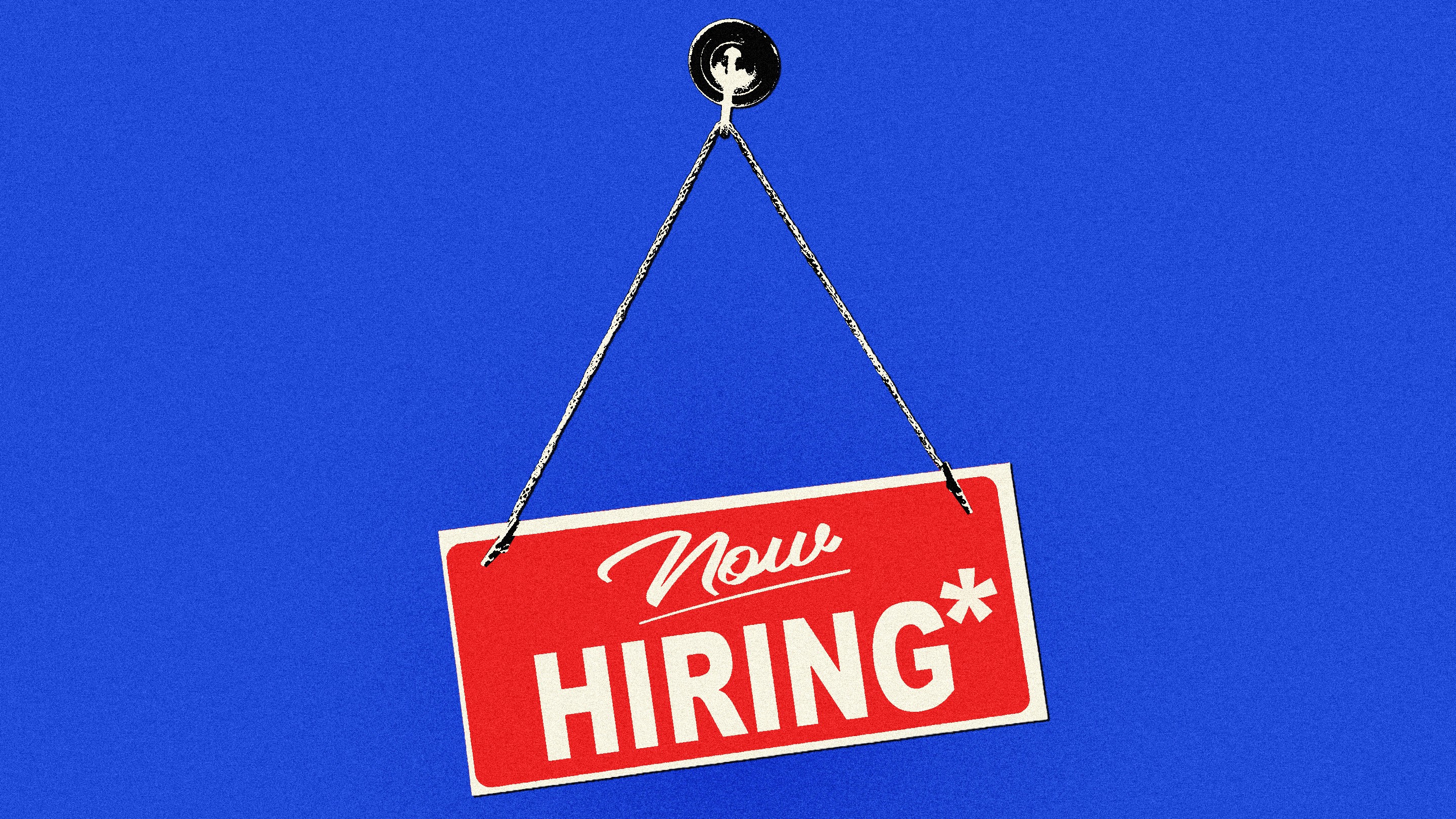
Last week, Senator Edward Markey published a social-media post seeking interns for his Boston office. He wrote that “BIPOC, LGBTQ+, working class, veterans, and other underrepresented candidates with Massachusetts ties are encouraged to apply.” Outrage quickly followed: Critics treated the post not as a straightforward attempt to encourage diversity in job applications, but rather as a discriminatory signal that white men would be disadvantaged in hiring.

The Manhattan Institute’s Christopher Rufo called the help-wanted ad an open violation of civil-rights law and urged a federal probe. The former Trump Justice Department appointee Theo Wold wrote that a goal of Democrats is to ensure that young white men “have no opportunities to find gainful employment.” One response to Markey stated, “If you are a young White man struggling financially, I understand your frustration with the Iran conflict and gas prices, but you must understand that this is the official hiring policy of the entire corporate world if democrats return to power.”

Because X rewards inflammatory retorts more than intellectual rigor, these particular claims of racial grievance are easy for skeptics to dismiss as sensationalism. Urging certain groups to apply for a job is not proof of hiring discrimination against others. Some groups that Markey’s post mentioned, such as gay people, veterans, and the working class, include lots of white men. There is overwhelming evidence that the Democratic Party’s goal is not “no opportunities” for white men, and that corporations are not a left-identitarian monolith.

Still, setting all falsehoods and exaggerations aside, Democratic elected officials have long been more likely than Republicans to favor policies that consider race and sex in employment decisions. These policies sometimes result in credible claims of discrimination against white and/or male candidates: Large nonprofits, major cities, multinational corporations, and prestigious law firms have all lost court cases involving employment discrimination against white people or men, or altered their employment practices under pressure from federal or state agencies that enforce civil-rights laws. Republicans generally treat such discrimination as a bigger problem than Democrats, even as most Americans—including a majority of Democrats and Democratic-leaning independents—reject preferential treatment in hiring and promotions for favored groups. Populist-right partisans are probably correct that they have a political opportunity in going after any left-leaning political, academic, or business elites who push such policies.

[Read: Democrats can’t let go of racial preferences.]

The issue may prove especially potent for men in Generation Z. As recently as 2019, just a third of young men perceived some discrimination against men in America. In 2025, 51 percent of young men perceived it. Those feeling aggrieved by Markey’s words should bear in mind that, at 80, his views about race were formed before the civil-rights era. For most of his life, identity politics in Congress favored straight white men. Perhaps he still perceives that all groups other than white men need reassurance, and would be surprised that young white men today have any such need. (His office did not respond to my request for comment.)

But older legislators need to grasp that efforts to diversify organizations, many of which focus on new hires, mean that Gen Z has a unique experience of the job market. Exposing white men in this cohort to language that seems to treat them differently from other groups is particularly unwise––they are especially primed to infer discriminatory intent whether or not it is being implied. Cheryl Kaiser, a psychology professor at the University of Washington, researches how “well-intentioned organizational diversity initiatives create unintended consequences.” She told me in an email that, although outreach to particular identity groups is distinct from restricting hiring to those groups, “the mere presence of a diversity signal, not the signal’s actual impact in hiring decisions, can increase White Americans’ concerns that they’ll face racism.” (In fact, several federal and state laws prohibit discrimination based on race, sex, or other protected characteristics—and these are laws that are intended to protect everyone, not just women or people of color.)

In scholarship published in 2021, Kaiser and her co-authors found that “simply exposing White Americans to organizational diversity signals” increased their perception of a bias in hiring against white men. That perception occurred “even with clear evidence of White advantage within the organization, a less-qualified White candidate, or abundant promotion opportunities for all employees. Nor was it limited to people predisposed toward biased beliefs: the effect did not depend on participants’ endorsement of group-based hierarchy or their level of racial ingroup identification.” In another research paper, from 2015, Kaiser and her co-authors found that the mere presence of pro-diversity signals “cause White male mock job applicants to experience cardiovascular stress as well as anticipate experiencing discrimination when applying for jobs at these companies.”

Of course, the fact that people perceive discrimination does not mean they are actually being discriminated against. And if diversity language were effective in contributing to more equitable hiring outcomes, even while upsetting a few overly sensitive sorts, there would be a strong case for retaining it. But Kaiser believes that “the types of diversity signals that cause backlash often do very little to effectively diversify the workplace.” Research she published in 2020 found that “racial minority employees sometimes see organizational diversity signals as overstating real commitment, which is linked to feeling less able to fit in or thrive.” Often, then, diversity signals confound all assumptions: “They don’t produce the hiring outcomes critics fear, they don’t produce the trust or inclusion benefits supporters are aiming for, and yet they still trigger the perceptual backlash described above,” Kaiser told me.

To meaningfully reduce resentment, grievance, and reactionary identitarianism among young white men, Democrats should adopt rhetoric that unambiguously clarifies a commitment to equal opportunity. Some may find this advice frustrating. For decades, the political right insisted that racial preferences were immoral and illegal, and that diversity efforts should be restricted to outreach. Now they’re treating mere outreach as proof of illegal discrimination. But as Kaiser’s research shows, diversity rhetoric can have unforeseen effects. White identitarians would exist even in a world without bias of any sort in recruitment or hiring––but using language that fuels white identity politics, as Markey’s language did, is political malpractice that’s bad for Americans of all races, no matter how well intentioned it might be.

Even if one argues that diversity advocates shouldn’t have to change how they communicate in order to avoid backlash, the reality seems to be that they do. As is often the case in politics, social progress requires forging broad coalitions of people who often disagree. That requires an understanding of psychology, attentiveness to possible sensitivities, and, yes, even compromise.

Outreach that values diversity and inclusion is still possible. In 2015, the social psychologist Wiebren Jansen and co-authors found that “including the cultural majority group in an organization’s diversity approach” can help white men with a high need to belong feel included, and can increase support within organizations for diversity efforts. Senator Elizabeth Warren’s approach to recruiting interns is a good example of inclusive language. Her call for applications uses familiar and simple language, describing her office as “an equal-opportunity employer” that does not discriminate based on “race, color, religion, sex, sexual orientation, gender identity, gender expression, national origin, age, genetic information, disability, or uniformed service.” Warren “encourages all individuals from all backgrounds to apply.” Whether you’re Black or white or trans or gay or working-class or a veteran, if you are wondering whether people like you belong, that approach leaves no ambiguity: You’re encouraged to apply. “All individuals” are.

© Illustration by The Atlantic. Source: Gwengoat / Getty.

  •  

Make Big Brother Bad for Big Business

Garrett Langley, the founder and CEO of Flock Safety, is an unlikely spokesperson for the dangers of the surveillance industry: His company says it has deployed more than 120,000 roadside cameras across 49 states. But in August, while defending his products and policies, he perhaps inadvertently showed why Americans should be alarmed by this technology.

Flock caught “a ton” of “bad cops” when it rolled out a tool to identify abuse of its data, Langley acknowledged on the All-In podcast. (While Flock will soon require the tool for all of its law-enforcement clients, just a fraction of clients were using it as of mid-August. Many bad cops likely went uncaught.) He argued that Flock will force safeguards on clients, though that may lose the company business, because he wants to “sleep at night.” His competitors, meanwhile, “run more reckless”—offering video and facial recognition with their license-plate readers, for example. If you take him at his word—and I’d argue that he overstates the strength of Flock’s safeguards––it’s clear that the way the industry works is worrying even one of its biggest boosters.

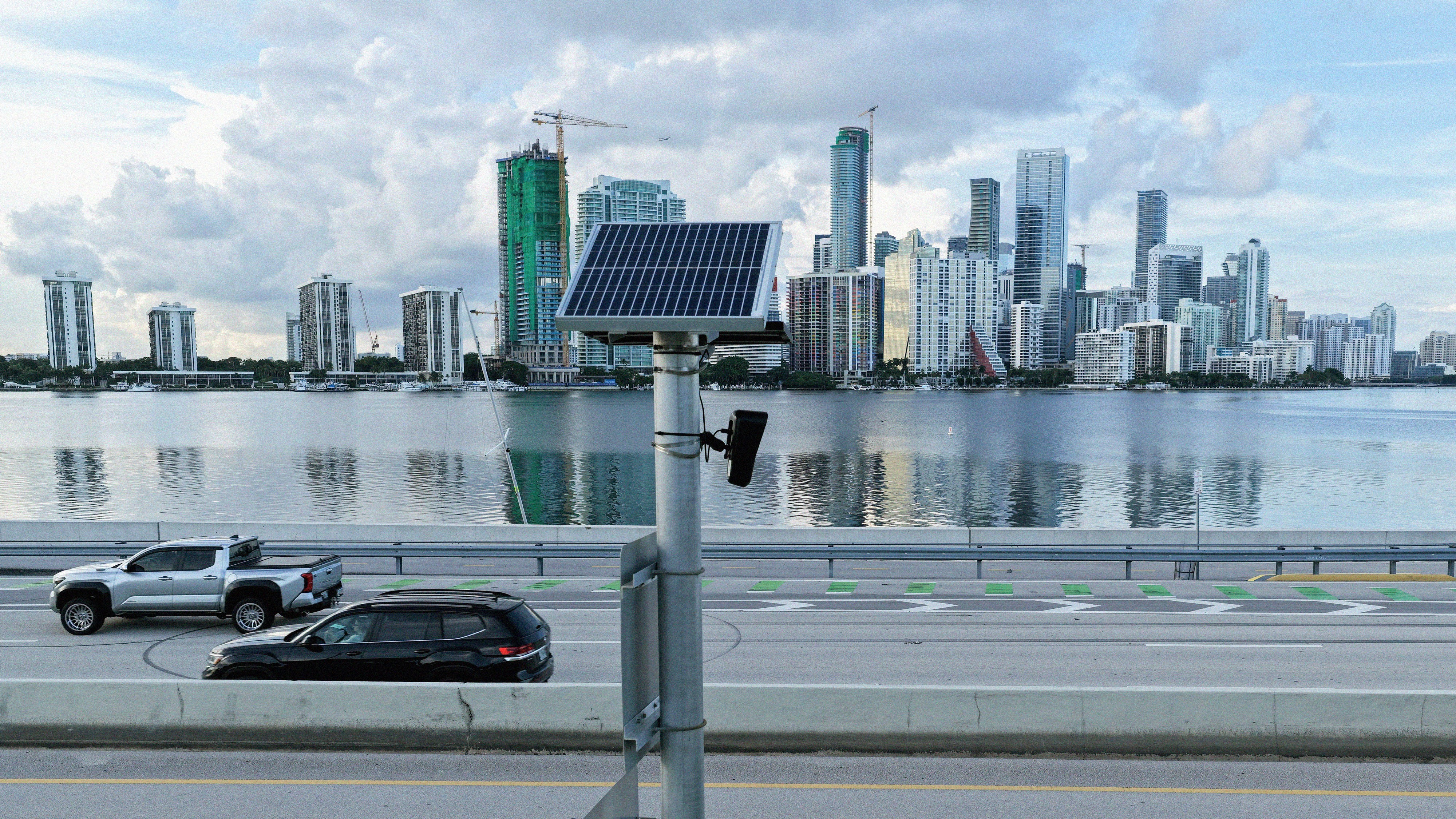
My own sleep has been troubled by the private surveillance industry for more than a decade. In 2014, three years before Flock was founded, I warned in The Atlantic that mass surveillance of all car trips was nearly upon us. I noted that private companies were deploying automatic license-plate readers, or ALPRs, at scale on America’s public roads, threatening a privacy we’ve always enjoyed, and that Congress should regulate the fast-growing surveillance industry. Today, if you drive in much of the continental United States, Flock may profit by selling others the means to reconstruct your movements.

Opposition to this form of surveillance is now a plurality position, according to an August YouGov survey, which found that more Americans oppose the technology’s use in their neighborhood than support it. Politicians in both major parties are criticizing ALPRs, whose name has become something of a misnomer: The cameras can capture detailed images of passing vehicles, not just of the license plate. And anti-Flock activists who track clients of the company list scores of past and potential clients that have canceled their contracts or deactivated cameras in recent months. “I’ve never really seen such a grassroots uprising against surveillance technology,” Jay Stanley, an ACLU senior policy analyst, told The Guardian. “On the left, there’s a historical memory of law enforcement spying on and interfering with advocates for social change … On the right, there’s a long tradition of ‘don’t tread on me’—keep the government out of my life, keep it from looking over my shoulder.”

Still, most of Flock’s network and its competitors’ cameras remain in place. And fans of the technology want to keep it that way; they argue that there is no reasonable expectation of privacy on roads, and that a network of cameras that logs every passing vehicle is a vital tool for catching criminals. Most surveillance boosters don’t deny that serious abuses have happened or wholly dismiss privacy concerns. Instead, they urge the use of safeguards and the passage of regulations to address them.

But this technology is already ubiquitous. States and localities should not permit its dangers to persist in the hope that one day, our often passive legislators will act. Instead, Americans should work to ban mass surveillance of public roads in every jurisdiction where they can secure support from elected officials until strong protections are in place. The pro-surveillance coalition has significant political influence, and some of its members employ accomplished lobbyists. The only way that it will hasten privacy safeguards is if doing so is the only way to sustain the surveillance business.

Before sketching out what specific legislative protections could look like, it’s helpful to notice that popular debates about ALPRs overstate their likely benefits and understate their dangers. The primary benefit––they help catch some criminals––will grow less effective over time as knowledge of the technology and how to evade it spreads. For example, license plates are already being cloned. And as the benefits decline, the cost that law-abiding citizens pay in lost privacy will persist. It may even increase. After all, the business model––pay us and we’ll help you catch criminals––creates a powerful incentive for surveillance companies to address falling effectiveness with new privacy intrusions. Flock may eschew facial recognition today, but no federal law prevents it from changing its mind tomorrow, or requires that it alert the public before introducing a new tool.

While evidence remains limited that ALPRs reduce crime in general or violent crime in particular, there is solid evidence that they reduce car theft: A working paper, published in August by the criminologists Scott M. Mourtgos and Ian T. Adams, found that ALPR networks are associated with an 11 percent decline in such thefts and an increase in arrest clearance (though they cautioned that clearances were already rising in the weeks before camera deployment). But if vehicle owners installed their own trackers, benefits could be had for all who opt in without imposing costs on everyone’s privacy.

Some dangers of roadside cameras are well understood. The Institute for Justice maintains a database of known and alleged police abuses of the technology, including stalking and wrongful stops. And although Flock’s rollout of Audit Assistance, the tool that helps catch abuse by cops, redounds to the company’s credit, it is no cure-all: It “detects abnormal activity and flags it for Administrator review,” a Flock spokesperson clarified to me by email, which “refers to review by an authorized administrator at the customer agency—not a Flock administrator.” This leaves open the possibility that abuse will remain undisciplined by some police departments.

A less widely understood danger is what might be called the foreign-adversary problem. China, Russia, and others have real incentives for gaining access to data collected by license-plate readers. Doing so could assist hostile actors in recruiting assets, blackmail, intimidation, and more. Breaching Flock would be the biggest prize––and the public is in no position to evaluate how competently the company or its competitors secure their data. If Edward Snowden could make off with the NSA’s most sensitive secrets, a systems administrator at Flock or a competitor could theoretically attempt a large-scale theft. The company (let alone the public) may not even know about it.

That worst-case scenario aside, a hostile foreign actor could do damage to U.S. interests merely via the access that normal Flock clients enjoy. Thousands of law-enforcement agencies use Flock. That means thousands of targets for incidents such as a phishing attack, well-placed bribe, or blackmailing a corrupt county sheriff.

What specific legal safeguards would justify the use of this technology? Figuring that out requires distinguishing between two different ways road cameras might operate. Say that a 1961 Ferrari 250 GT California Spyder is reported stolen by its owner when he arrives home from work to find the car missing from his garage, and the Highland Park, Illinois, police department puts its license plate, NRVOUS, on a “hot list” of missing vehicles. In one approach, Chicago-area license-plate readers could (if the local regulatory scheme allowed it) scan all passing cars for “hot” plates, and instantly delete data on all vehicles that are not a match.

Alternatively––and this is the status quo––license-plate readers could store data from all scans, enabling people with access to the data to retrospectively reconstruct the movements of many thousands of innocents who have no connection whatsoever to any crime. (In this case, neither approach would result in the return of the vehicle in usable condition.)

Defenders of the way that Flock and other mass-surveillance technologies currently function favor constantly collecting and storing data on the movements of millions of people to ensure that a tiny cohort of criminals is surveilled. But that “collect and store it all” approach is not necessary for us to benefit from ALPRs. In Germany, multiple states deploy roadside cameras. Some German states use protocols that flag “hot” license plates while deleting all scans of plates that aren’t hits. That approach offers benefits without creating a spy apparatus that captures and stores data on nearly everyone.

If a collect-and-store-it-all approach endures, equally comprehensive safeguards are justified. First, companies should be permitted to retain data for no longer than a week, on encrypted, local servers; retaining data longer than permitted should be a crime. Authorization by a city council or county board of supervisors should precede installing cameras in any jurisdiction and constrain how that data are shared. And periodic reauthorization votes should be required.

Second, the federal government and all of its agencies should be banned from deploying ALPR technology on public roads or from accessing data collected there.

Third, state and local police should be required by statute to get a warrant to query ALPR data, whether or not federal courts consider these queries Fourth Amendment searches.

Fourth, permissible reasons to query the data should be limited––for example, to investigating felonies or missing or endangered persons, or responding to imminent threats of serious injury or death. And all queries should be made by a named person whose actions can be audited.

Fifth, every camera should be registered with the DMV in the state where it is located, display a physical license number on the device itself, and appear on a publicly accessible map that shows the location of all devices that capture data on public roads.

Sixth, individuals should have a right to know that their license plate was queried, by whom, and for what reason; to obtain records stored on their plate; and to compel deletion and payment of damages if the record was collected unlawfully or retained beyond statutory limits.

Seventh, as Mike Fox of the libertarian Cato Institute suggests, Congress should pass a law that authorizes victims of automated-surveillance errors to sue technology vendors for damages.

Until Congress acts, states and localities should impose restrictions or bans, as Knox County, Tennessee, and Oconee County, South Carolina, have done. (Scores of cities have already canceled or declined to renew contracts with Flock.)

In a City Journal article that argues against banning automated license-plate readers, the Manhattan Institute scholar Rafael Mangual writes, “Banning technologies in anticipation of harms that have yet to materialize is the wrong approach to policymaking. Where a technology presents genuine risks, policymakers can act to mitigate them.” But surely some potential harms, such as foreign adversaries accessing information that harms national security, or authoritarian officials exploiting networked ALPRs to threaten democracy, should be anticipated and averted rather than addressed after the fact.

What’s more, significant harms related to ALPRs have already materialized. Mass tracking by the federal government is reality rather than speculation: Last year, the Associated Press reported that “the U.S. Border Patrol is monitoring millions of American drivers nationwide in a secretive program to identify and detain people whose travel patterns it deems suspicious,” and that “suddenly, drivers find themselves pulled over” and are “aggressively questioned and searched, with no inkling that the roads they drove put them on law enforcement’s radar.” And a 2015 investigation by the Electronic Frontier Foundation found that “100 ALPR cameras in Louisiana, California and Florida were connected unsecured to the internet, many with publicly accessible websites that anyone could use to manipulate the controls of the cameras or siphon off data.”

Details from a few entries in the Institute for Justice database of alleged police abuses help to convey their gravity: A Georgia police chief allegedly tracked an ex-girlfriend and her teenage daughter about 600 times. In Texas, a deputy reportedly used data from tens of thousands of Flock cameras to find a woman accused by her partner of having an abortion (the deputy later claimed that he made the search out of concern for the woman’s welfare). In Lenexa, Kansas, police reportedly tracked “a writer who wrote a column critical of them,” whom they also suspected of hanging anti-police posters on city property (which the writer has denied). In Toledo, Ohio, an innocent driver was attacked by a police dog, held at gunpoint, and jailed for hours after a Flock camera misread a digit on his license plate (the Toledo police said that they took “appropriate administrative action” after the incident, which included a “verbal reprimand” for the officer involved).

Getting a new privacy law through Congress is hard. Preventing its passage or watering down its provisions is easy. As a result, the intrusions on privacy just keep growing. But if people who favor and even profit from mass surveillance confronted state and local bans until adequate federal protections were in place, they would suddenly have a powerful reason to push for the speedy passage of new privacy rules. That change in incentives may be the best hope for Americans who see how quickly technology is changing and want to stand athwart the surveillance state, yelling Stop.

© Joe Raedle / Getty

  •  
❌