❌

Reading view

Corruption Catches Up to MAGA

This is an edition of The Atlantic Daily, a newsletter that guides you through the biggest stories of the day, helps you discover new ideas, and recommends the best in culture. Sign up for it here.

One fundamental truth of politics is that ultimately all voter decisions come down to money. That’s why Dwight Eisenhower blew out Adlai Stevenson in 1956; it’s what James Carville meant when he declared, “It’s the economy, stupid,” in 1992; and it’s the reason that Joe Biden tried in vain to convince Americans that they were doing better than they believed during his presidency.

This was also why some Democratic politicians and strategists counseled candidates not to place Donald Trump and his scandals at the center of their campaign. Better to focus on “kitchen table” issues, such as inflation and housing costs, they argued. To a great extent, this seems to have worked. Economic worries have been a consistent theme throughout the midterms, and Democrats appear poised to fare well. They’ve been helped by Trump, who has not only dismissed worries about affordability as a “hoax,” but has also gone out of his way to worsen inflation by launching a war in Iran. I wrote just last week that the economy explained GOP struggles.

Yet an interesting thing has popped up in opinion surveys over the past couple weeks. A Fox News poll finds that corruption is the top issue for voters, edging inflation, gas prices, and health care. CNBC gets the same result: “Voters are now more concerned about government corruption than any other issue, including high grocery and gas prices, according to the final CNBC All-America Economic Survey.” The Financial Times has similar findings: “About 69 per cent of registered voters, and almost 50 per cent of those who voted for the president in 2024, said they were ‘very’ or ‘somewhat’ concerned about ‘corruption, self-dealing or conflicts of interest’ in the Trump administration.”

The idea that the economy alone explained Trump’s unpopularity was never entirely convincing. He has almost always had poor approval ratings, even when presiding over a strong economy. He didn’t win the popular vote in 2016; House Republicans were shellacked in 2018, when he made the election about him; he lost in 2020; and the GOP underperformed in 2022, under his influence. He was able to win only in 2024, when the elections centered on voters’ views of the Biden presidency. One big reason for these repeated voter rejections is the miasma of scandal that follows Trump wherever he goes. “When elections are clearly about Trump and MAGA, MAGA will lose,” Michael Podhorzer, a progressive strategist, told me in 2022.

Still, this finding is reassuring about voters’ discernment. My colleague Anne Applebaum has been foremost among many observers who have deemed this the most corrupt presidency in U.S. history. Even as the president and his family have made billions from his office, no single story seems to have broken through: no Teapot Dome, no Watergate, not even a Whitewater. The new polls on corruption, combined with Trump’s steadily declining favorability, suggest that rather than any single news story producing an inflection point—like the swift turn on Joe Biden after the chaotic withdrawal from Afghanistan—voters have just been steadily souring on the president, with corruption as one main reason.

(It’s worth noting that, although the FT poll specified that Trump voters are concerned about corruption within the administration, corruption also tops lists because it means different things to different voters. Trump supporters who say they are concerned about “corruption” could be referring, for example, to “deep state” conspiracy theories.)

The polling around corruption is also an indication of the success (believe it or not) of much-maligned Democratic messaging. In February, Senator Jon Ossoff began speaking about “the Epstein class,” referring to the then-recent release of materials related to the late sex offender, which sketched a clique of wealthy, powerful people emailing and socializing around the globe. “They are the elites they pretend to hate,” Ossoff said. “Trump was supposed to fight for the working class; instead, he’s literally closing rural clinics and hospitals to cut taxes for George Soros and Elon Musk.” Democrats have been using similar lines ever since.

In making “corruption” a rallying cry, Democrats have found a way to yoke together a range of different stories, effectively sidestepping any division between economic issues and Trump scandals. It’s a big enough trend to fit any number of developments: Trump’s promotion of AI and data centers, despite wide public skepticism; his focus on projects such as the White House ballroom, which is funded by donors, many of whose identities the administration hasn’t disclosed, and an arch in Washington, D.C.; his work to undermine elections. His policy toward Ukraine appears influenced by possible business ventures in Russia. His Iran war was encouraged in part by Middle Eastern allies with whom Trump family members have business relationships. Trump seems determined to help the Democrats out by boasting about oil-company profits at a time when Americans are upset about the cost of filling up their vehicles. Republicans have also bolstered the case with nominees such as Ken Paxton, a one-man alleged-graft spree.

If an anti-corruption message does carry Democrats to victory in the House, and perhaps in the Senate, it will also point to how they might use Congress over the next two years. Even if they win both chambers, they will have little ability to enact policy—including actions that might help bring prices down. But a House majority alone would have investigatory power, and could use its reach to delve into Trump-administration actions that threaten both rule of law and voters’ pocketbooks.

Related:


Here are three new stories from The Atlantic:


Today’s News

  1. At least 68 people were killed and dozens more injured when a high-speed passenger train rear-ended another train this morning in the province of Toledo, Spain, causing a derailment. Spain’s transportation minister said traffic controllers had inexplicably instructed the train to continue despite another train being stopped farther along the tracks.
  2. Israel appears to be headed for a deadlock after its parliamentary election; neither Prime Minister Benjamin Netanyahu nor his main rival, the former military chief Gadi Eisenkot, secured a clear path to a governing majority. With most votes counted, Netanyahu’s bloc is projected to win 53 seats, the opposition 48, and Arab parties a record 19, complicating efforts to form a coalition.
  3. The Federal Reserve voted to leave interest rates unchanged despite inflation rising to 3.7 percent last month, driven in part by higher energy prices. Two officials dissented in favor of raising rates, while Fed Chair Kevin Warsh said the central bank needed more economic data before deciding whether to increase rates.

Evening Read

photo of original Kirsten doll next to Modern Era Kirsten
Elizabeth Renstrom for The Atlantic

How American Girl Doll Lost Its Way

By Hillary Kelly

In the early 1990s, when I was in elementary school, a fancy catalog would arrive in the mailbox of our 1950s split-level in Philadelphia four times a year, and I’d hurry to my room to pore over its elaborate spreads. Tea caddies, Windsor chairs, writing quills, ice-cream churns. We didn’t have any antiques in our home, but the lure of the past was so strong that sometimes my sisters, five and seven years older than me, crammed onto my bed to dog-ear the pages too. Most of all, we looked forward to checking in with the girls arrayed there, whose stories we knew so well: Samantha, Molly, Kirsten, Felicity, Addy, and, later in the decade, Josefina.

They were the American Girl dolls, preadolescents just slightly older than me, and I was enthralled by the pictures of their period dresses, tiny school supplies, and exotic waxed lunch foods. My own doll was the farm girl Kirsten Larson, a Swedish immigrant to 1850s Minnesota. She had come in a burgundy box, with a slim book titled Meet Kirsten tucked in beside her. I promptly begged for the five other Kirsten books; the historical-fiction series followed the same pattern for each doll, ushering her through a year’s worth of life events, tailored to her personality and time and place. I remember playing with Kirsten in the backyard and having her trace out symbols in the dirt, just as she did with her new friend, a Dakota girl called Singing Bird, in the second book, Kirsten Learns a Lesson. To have such a doll was to own a whole world and the narratives within it …

Yet as American Girl’s 40th anniversary arrives, the brand finds itself in something of a midlife crisis.

Read the full article.


More From The Atlantic


Culture Break

illustration of a woman in pants
Illustration by Jonelle Afurong / The Atlantic. Source: Edward Berthelot / Getty.

Explore. After becoming a mother, Lily Meyer went on a hunt for comfortable, stylish pants—and stumbled, she writes, on a uniform for today’s cool mom.

Read. A new opera based on George Saunders’s novel Lincoln in the Bardo makes some fantastically shocking choices, and suggests that the medium might do book adaptation best, Talya Zax writes.

Play our daily crossword.


Rafaela Jinich contributed to this newsletter.

When you buy a book using a link in this newsletter, we receive a commission. Thank you for supporting The Atlantic.
© Bill Pugliano / Getty


  •  

Islamophobia Is Trump’s Closing Midterm Gambit

This is an edition of The Atlantic Daily, a newsletter that guides you through the biggest stories of the day, helps you discover new ideas, and recommends the best in culture. Sign up for it here.

They say that patriotism is the last refuge of a scoundrel, but President Trump and his allies have found a new low: open bigotry against Muslims.

The bar for what can shock has been raised steadily over the past decade, but even by Trump-era standards, remarks that the president made yesterday at a rally in Port Huron, Michigan, are astonishing: a straightforward assertion that a Muslim candidate for office is a terrorist by virtue of his faith.

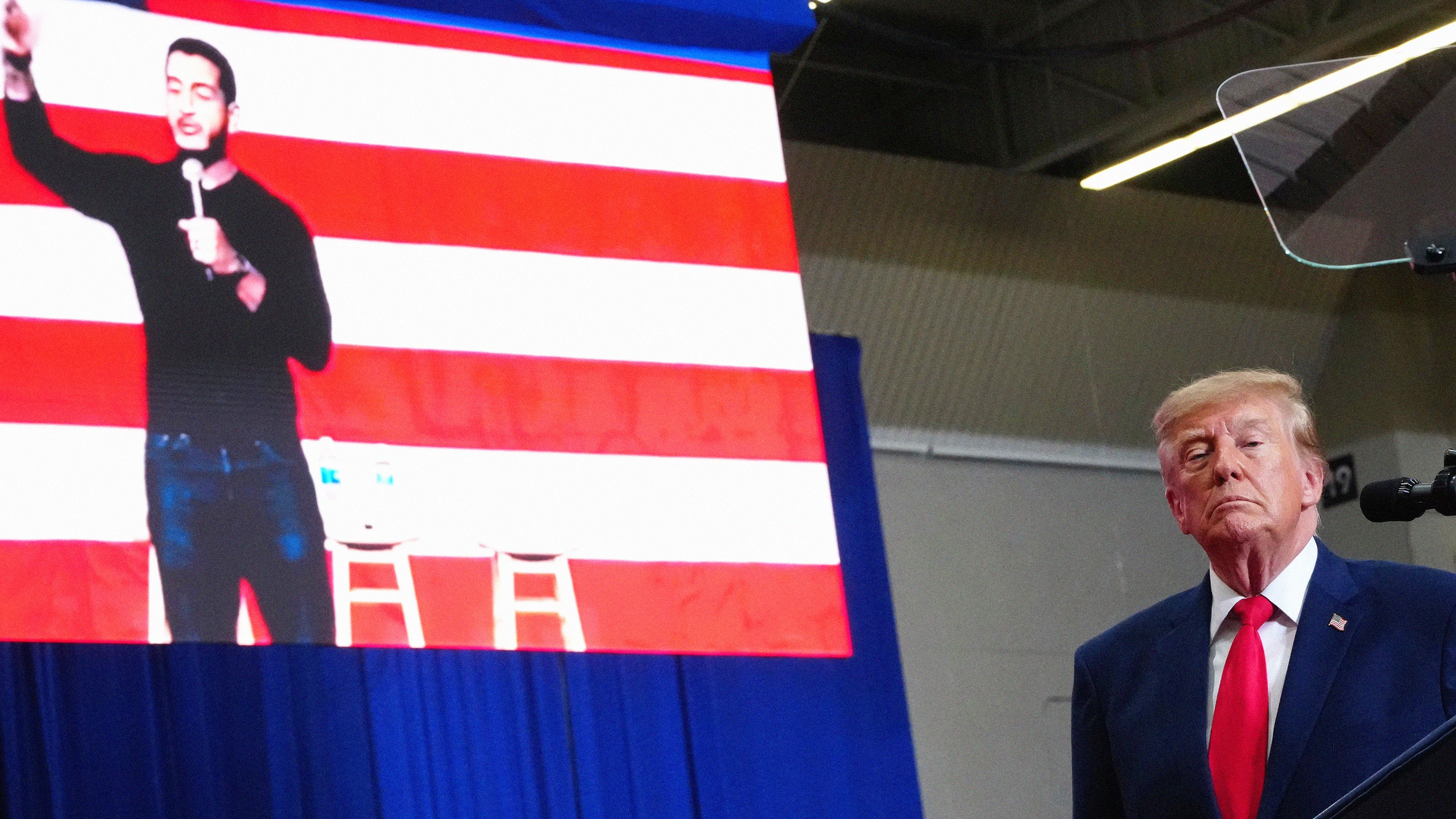
Trump was campaigning for Mike Rogers, the Republican candidate for U.S. Senate in Michigan, when he attacked Rogers’s opponent, the Democrat Abdul El-Sayed. “I’m here to keep a jihadist Muslim Brotherhood member from becoming a United States senator,” Trump said. “If Abdul and the Democrats win, they will open the floodgates and invite hordes of jihadists to our shores, creating a nightmare of violence and terror until you cannot even have a Christmas.” Trump also said that “anyone with that record of support for jihadists would be screened and unable to get a seat on an airplane.” He added that if elected, El-Sayed “would be the only senator that will have to go through a metal detector before he’s allowed to go into the Senate.” (In fact, the only time that members of Congress have had to pass through metal detectors in the Capitol was on the House side, as a security precaution after Trump supporters sacked it on January 6, 2021.)

To be clear: El-Sayed has disavowed the Muslim Brotherhood, and no one has produced any evidence that he has ties to the group. Neither has anyone produced any evidence that El-Sayed has ties to any jihadists or is one himself. If he did, the Justice Department would presumably be prosecuting him—it certainly hasn’t shied away from politicized cases under Trump.

The president and anyone else are free to critique El-Sayed’s views on the Israeli-Palestinian conflict, or any other policy matter, but that’s not what this is. Asking a candidate to disavow a foreign political group that has no American arm is a nonsensical and prejudiced thing to do, but Republicans have been trying hard in the past couple of weeks to draw some connection between El-Sayed and the group, despite a lack of evidence. (They have been assisted by allies in the press, including Bari Weiss, the editor in chief of CBS News, whose staffers complained to Semafor that she is disproportionately focused on candidates such as El-Sayed because of her own views on Israel. CBS News called the report “baseless.”) Perhaps this is because they believe “Muslim Brotherhood” sounds shadowy and scary to voters. The new tack is also silly because the GOP previously spent months trying to connect El-Sayed to the Democratic Socialists of America, another group that he says he is not a member of. Historically, the Brotherhood, an Islamist organization, has typically clashed with socialists in the Muslim world.

Trump’s idea of what a senator should be is an older white man. That’s not a guess—it’s what he said about Rogers, the Republican candidate. “I call him apple pie,” Trump said. “He’s like, perfect, this guy. He’s like central casting. He’s what your state is all about.” As I’ve written in the past, it’s not a dog whistle if everyone can hear it. Trump has also made light of El-Sayed’s full name, Abdulrahman Mohamed El-Sayed, mocking the prevalence of Muhammad in Muslim names. (The president’s own middle name is John.)

“Donald Trump and J. D. Vance, their whole campaign, Mike Rogers’s whole campaign, is to point at me and my name and my faith,” El-Sayed said in response at a rally yesterday evening. “But my name and my faith are not the reason you can’t afford your gas. My name and my faith are not the reason you can’t afford your groceries. My name and my faith are not the reason you can’t see a doctor.”

Trump’s latest remarks about El-Sayed are of a piece with a series of racist and Islamophobic remarks. Two frequent targets of late are Representative Ilhan Omar, the Minnesota Democrat, and the Somali community in Minnesota. He has called Omar “garbage” and said that Somalia is “filthy, dirty, disgusting, dirty.” He has labeled Somalis “low-IQ” but also complained that they are highly effective grifters.

Politicians allied with Trump are also getting in on the hate. Earlier this year, I wrote about a spree of bigoted remarks by GOP members of Congress. More recently, Representative Tom Emmer, a Minnesota Republican, said that Somali Americans should assimilate or “go the hell back.” (He added that he wasn’t afraid of being called an Islamophobe.) And Texas Governor Greg Abbott, who is in a tough reelection race, falsely claimed that his Democratic opponent, Gina Hinojosa, “supports Sharia law” because she received an endorsement from the Council on American-Islamic Relations. You don’t have to think too hard to guess why CAIR opted to back someone running against Abbott.

With this kind of talk, it’s no wonder that Muslim voters who backed Trump in 2024, largely out of frustration with the Biden administration’s policies toward Israel, are now angry and disillusioned, as The New York Times reports. (Anyone is entitled to cast a protest vote, but given Trump’s long record of anti-Muslim bigotry, those who lined up behind Trump shouldn’t be surprised.)

Islamophobic rhetoric deserves condemnation on its own terms, but the attacks don’t just affect El-Sayed, Omar, or even Muslim communities in the United States. During the same speech, Trump—who has previously said that Jewish Democrats are “disloyal to Jewish people”—called for ostracizing any Jewish Michiganders who vote for El-Sayed. “Any Jewish person that supports this guy should be ashamed of themselves,” he said. “You should never speak to them again.” Once bigotry against one community enters the mainstream, it tends to spread quickly to other groups.

Related:


Here are four new stories from The Atlantic:


Today’s News

  1. Brazilian President Luiz Inácio Lula da Silva won a fourth term in yesterday’s runoff election, defeating Flávio Bolsonaro with 51.8 percent of the vote. Bolsonaro said he would challenge the results, citing a supreme-court justice’s same-day decision to extend voting hours at polling stations.
  2. Anthropic, the maker of Claude, filed for an initial public offering that could value it at $2 trillion, potentially making it the largest IPO in history.
  3. The U.S. military is prepared to launch major strikes against Iran within 96 hours of an order from President Trump, according to two U.S. officials. Trump has not made a final decision, the officials say, but military planners have identified potential targets including Iranian military sites, nuclear facilities, and energy infrastructure.

Dispatches

Explore all of our newsletters here.


More From The Atlantic


Evening Read

Image of the Cheesecake Factory.
Illustration by The Atlantic. Source: LPETTET / Getty.

Leave the Cheesecake Factory Out of This

By Elaine Godfrey

At 2 o’clock on Sunday afternoon, I found myself in a corner booth at the Cheesecake Factory, emerging from the fog of war.

Before me were a dozen half-empty plates, a cluster of dirty napkins, and several depleted beverages. The food had come in waves, unrelenting, like Normandy. There had been egg rolls, four ways; Roadside Sliders; a sheet tray of Factory Nachos; and something called Chicken Parmesan “Pizza Style.” Coke Zeros, I’d told the waitress at the beginning, and keep ’em coming. There had also been cake. Much cake.

I checked in with myself. I was nauseated, for sure. But another feeling, too, was detectable within the churning volcano of my digestive tract: It was something like joy.

Read the full article.


Culture Break

A gif of two paper-cut silhouettes of childrens' heads being fed endless candy as their smiles grow bigger.
Illustration by Adam Maida / The Atlantic

Explore. A Halloween myth that can finally die: Sugar doesn’t make kids hyper, Olga Khazan writes.

Listen. Fifty years ago, Stevie Wonder released Songs in the Key of Life. Its message still feels urgent, Anna Holmes writes.

Play our daily crossword.

Rafaela Jinich contributed to this newsletter.

When you buy a book using a link in this newsletter, we receive a commission. Thank you for supporting The Atlantic.

© Julia Demaree Nikhinson / AP

  •  

The GOP’s Midterms-Money Advantage Has Its Limits

This is an edition of The Atlantic Daily, a newsletter that guides you through the biggest stories of the day, helps you discover new ideas, and recommends the best in culture. Sign up for it here.

American politics is saturated with cash, and each election cycle seems to set new spending records—and yet, with the midterms in the home stretch, neither party thinks it has enough money. The irony is nearly as rich as the biggest donors.

Filings released this week show that $1 billion was spent on the campaign in the first two weeks of October alone. This year’s elections are expected to be the most expensive midterms in U.S. history, beating 2022—which beat 2018, which beat 2014, and so on. This will not surprise anyone who lives in a state or district with a competitive race this fall. (I’m sure I can still recite the Senate Leadership Fund’s ad attacking the North Carolina Democrat Roy Cooper, weeks after it stopped running.) Democratic and Republican voters don’t agree on a ton these days, but they’re united on one position: There’s too much money in politics.

Ask officials and candidates in both parties, though, and you’ll hear that they don’t have nearly enough. Democrats are feeling fairly confident about capturing the House and are getting more hopeful about their chances at winning the Senate, yet officials worry they don’t have enough cash. The party got a big boost on Monday, when Michael Bloomberg, the billionaire former New York mayor and presidential candidate, announced that he would pour $80 million into helping Democrats before Election Day.

Republicans came into this election with a huge money advantage, and they continue to have millions available to spend. Even so, major GOP organizations are finding themselves having to make unpleasant choices to stop spending in races that seem to be slipping away from them. Senate Leadership Fund, which is the top Republican PAC supporting Senate races, didn’t spend any money on TV ads last week to support the Georgia candidate Mike Collins, who is expected to lose to Senator Jon Ossoff. SLF had already pulled back from helping the Republican Senate candidate Michael Whatley in North Carolina. (To make matters worse, President Trump hosted a rally with Whatley on Tuesday in Greenville, where he said that Cooper is “going to become your senator, and it’s crazy.”)

One reason both parties are scrambling for money is that the map has shifted. As Trump’s political position deteriorates and he drags GOP candidates along with him, races that once seemed like foregone conclusions are now real battles. Democrats worry that they don’t have enough funding to match their potential. Republicans, by contrast, are having to play defense in what they thought were safe seats. SLF has moved money from North Carolina to Kansas, a state where a Democrat hasn’t won a Senate race since 1932 but where Adam Hamilton is posing a real threat to Senator Roger Marshall. Republicans are also finding that their decision to squeeze new gerrymanders out of some states before this election has been costly: Districts that they expected to be easy Republican pickups are now close combat. Punchbowl News recently reported that although the GOP has a lock on five of 14 new districts, “Republican candidates and super PACs have spent nearly $100 million on ads trying to flip the other nine districts” since September 1.

Another reason is that not all money is created equal. Some Democratic candidates are very well funded. The Texas Senate candidate James Talarico, for example, raised $64 million in the third quarter of the year alone—the highest total for any candidate in that period ever. (Because Texas has so many voters and so many media markets, it’s an expensive place to campaign.) But Democratic committees, including top PACs, are much more strapped. This is partly because the sitting president’s party always has a leg up in fundraising, but it’s also because many donors have grown disillusioned with the Democratic Party, upset with strategic decisions in the 2024 presidential loss, chaotic management of the Democratic National Committee since, and uninspiring leadership by elected officials.

Republican candidates (such as Talarico’s opponent, Ken Paxton) have relatively little money on hand, but committees and PACs are still flush. Much of that money comes from independent-expenditure groups, such as super PACs. An analysis by the Brennan Center for Justice finds that these groups spent $2 billion through the end of September, leaning heavily toward Republicans. The single largest donor is Elon Musk, who has spent $366 million this cycle alone. But one disadvantage of independent-expenditure groups is that they have to pay higher rates for advertisements than candidates.

That’s perhaps the dominant theme of the late campaign: Republicans have lots of money, but they’re not necessarily getting much bang for their buck. At this stage in the campaign, the time to build serious infrastructure, such as canvassing operations, is past. Money can buy a lot of advertising, but TV time is either booked up or more expensive. Besides, Republicans have already spent lavishly to fill airwaves, websites, and mailboxes with ads. So far, they don’t seem to be seeing much impact: Races either remain close or appear to be shifting even further toward Democrats.

Understanding why the GOP candidates are stalled is not difficult. Voters are upset about high prices, especially for fuel, and they are turned off by a president who is dismissive of their affordability concerns, distracted by vanity projects, and bogged down in an unpopular and inflationary war in Iran. Trump’s super PAC has $164 million left to spend, but as any orthodox Lennonist knows, money can’t buy you love.

Related:


Here are three new stories from The Atlantic:


Today’s News

  1. Russia and Ukraine agreed to a temporary cease-fire beginning October 29 in the Russian-occupied Ukrainian city of Oleshky, the White House announced today. The agreement, brokered with help from First Lady Melania Trump and Pope Leo XIV, will allow humanitarian aid to enter the city and civilians to evacuate amid a worsening food crisis.
  2. Israel ordered a full lockdown of the occupied West Bank after, according to the Israel Defense Forces, a shooting attack killed two Israeli soldiers and left three soldiers injured; the two Palestinian attackers were also killed, the IDF says. Prime Minister Benjamin Netanyahu said that troops would conduct house-to-house operations and destroy suspected militant infrastructure in the men’s neighborhood, just days before Israel’s national election.
  3. The Justice Department filed a lawsuit seeking to block certification of Alaska’s Senate election results if the Republican incumbent, Dan Sullivan, loses to Democrat Mary Peltola. The administration argues that a different candidate on the ballot named Daniel J. Sullivan could confuse voters, but legal experts question its case.

Evening Read

A man ripping open his shirt to reveal the PHP logo
Illustration by The Atlantic. Sources: CSA-Archive / Getty; PHP.

‘If Anything Happens to This Guy … Everyone Is Screwed’

By Charlie Warzel

On Tuesday, the world found out about two massive security vulnerabilities in PHP, a programming language that is used by roughly 70 percent of websites. The flaw was discovered by cybersecurity researchers using a frontier model from OpenAI. If they exploited it, attackers could gain full control of servers, stealing or copying anything inside or simply taking sites offline.

The PHP Foundation, the organization that maintains the programming language, had recently learned about the security flaws, but the disclosure was leaked on a forum before a patch could be released. What happened next was a frantic race with numerous participants: the foundation, which needed to create and release a patch; developers around the world, who would need to deploy it; and attackers looking to exploit these vulnerabilities in the interim. Matthew Prince, the CEO of the hosting company Cloudflare, wrote that in the 10 hours before the flaws were publicly announced, “we saw thousands of attempts to exploit it. That jumped to tens of thousands in the 45 minutes post announcement, hundreds of thousands within 2 hours, and millions now.”

Read the full article.


More From The Atlantic


Culture Break

A man made out of wicker embraces a woman
Black Bear / Everett

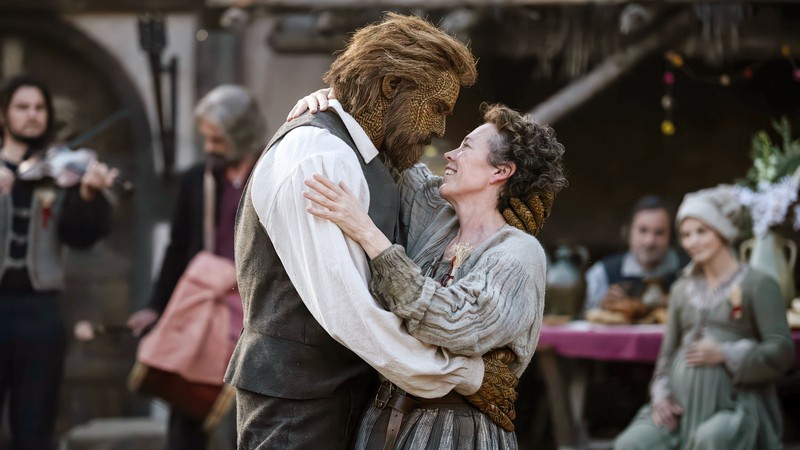
Watch. Wicker (out now in select theaters) is a charming anti-marriage marriage movie, Faith Hill writes.

Read. Tope Folarin, a past winner of the Caine Prize for African Writing, addresses the suspicion that this year’s recipient used AI—and wonders whether AI’s arrival has imposed yet another set of expectations on writers of color.

Play our daily crossword.


Rafaela Jinich contributed to this newsletter.

When you buy a book using a link in this newsletter, we receive a commission. Thank you for supporting The Atlantic.

© Megan Varner / Getty

  •  

Vivek Ramaswamy’s Appalling Campaign Ad

This is an edition of The Atlantic Daily, a newsletter that guides you through the biggest stories of the day, helps you discover new ideas, and recommends the best in culture. Sign up for it here.

If you don’t live in Ohio, you’ve probably been blissfully free from thinking about Vivek Ramaswamy since the 2024 Republican presidential primary, which he left after arousing the visceral dislike of pretty much all of his rivals, as well as many voters.

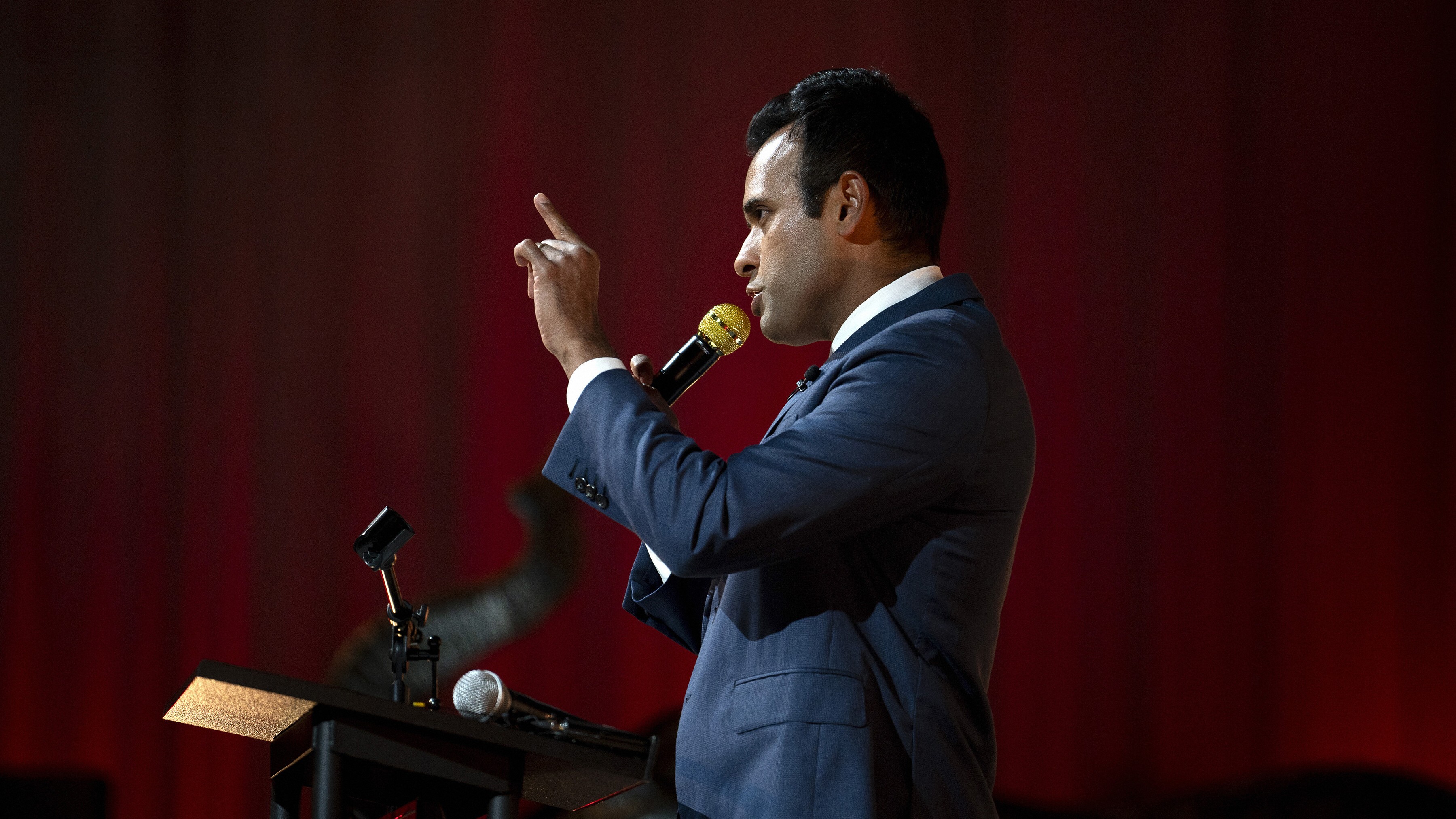
Ramaswamy, who’s now running for Ohio governor, is back in the national spotlight this week, once again in extremely unflattering fashion, because of a campaign ad targeting the Democratic candidate Amy Acton. Acton, a first-time candidate, has leaned heavily on her inspiring biography: She has spoken about experiencing homelessness as well as being raped by her stepfather as a child; she later waited tables and delivered newspapers to put herself through medical school, eventually becoming the director of the Ohio Department of Health.

Most recent polls have shown Acton with a small advantage over Ramaswamy, which may be why his campaign resorted to the appalling commercial. The spot features Acton’s estranged mother, Donna Arthur, accusing her of being an inveterate liar. “She’s lied her entire life,” Arthur says. “My daughter needs help, and she can’t help you if she needs help herself.”

The ad immediately drew both outrage and debunkings. “It’s not surprising that Vivek Ramaswamy has stooped to such a despicable low as to attempt to turn the sexual abuse Amy endured at 12 years old from our birth mother’s husband into a political talking point,” Acton’s brother said in a statement. National Review, the conservative magazine, pointed out that court documents provide extensive backup for Acton’s claims, as does contemporary press coverage. She was removed from her mother’s custody at the time; her mother’s husband, Cledith Arthur, whom she accused, left the state after being indicted for sexual assault. He pleaded not guilty and died in 2004.

For a campaign to cast doubt on a rival’s account of childhood sexual abuse is shocking; to do so despite such evidence is despicable. For years, influential MAGA figures insisted that a conspiracy of pedophiles was running the government and other influential institutions. Now some of them treat pedophilia as no big deal. The Trump administration has tried to downplay the case of Jeffrey Epstein, the late sexual predator who was at one time a close friend of the president’s and maintained ties to other administration officials as well. Ramaswamy is opting to dismiss allegations of pedophilia and use them to smear an opponent. At an event earlier this year, he said that Acton has no vision “other than to complain about what someone else did to her.”

Despite his previous willingness to mock Acton’s abuse, Ramaswamy’s campaign didn’t initially claim the ad. It first became public on Monday via the colorful Buckeye State political blogger D. J. Byrnes, known as the Rooster. The version he posted, received from a tipster, didn’t feature any explanation of who had paid for it. But Ramaswamy has since gone all-in. “It is an ad from our campaign,” Ramaswamy said at an event last night. “I would love for this race and this election to be about the substantive issues that impact Ohioans. And unfortunately, Amy Acton has been hiding from those issues.” Axios reports that Ramaswamy (who recently loaned his own campaign $5 million) will spend $4 million airing it. “This is a campaign-ending moment for Amy Acton,” his campaign manager, Jonathan Ewing, said. “The people who know her best keep warning Ohioans about her.”

This is bold, if not wise: The ad has generated widespread condemnation. Even some right-wing influencers who initially spread it, such as Jackie Chea, have had second thoughts: “I have no idea if Amy’s abuse allegations are true, but if they are, then her mother is the monster … I regret framing the post as if Amy was lying about her mother when I can’t be sure about that.” Another, Dan Bostic, wrote, “I’ve never in my life seen someone do something so stupid. It’s hard to even wrap my brain around how someone could possess such horrible political instinct.” (Laura Loomer continues to endorse it, which is telling in its own way. Vice President Vance, meanwhile, was “disgusted”—but by Republican doubters, not by the commercial. He suggested that anything is justified in the name of winning elections. “Whether the ad was appropriate or not is not really my concern,” he said in Cincinnati today, telling his “fellow elected Republicans” to “stop whining about an advertisement.”)

On the other side of the aisle, liberals see the ad as suicidal. “I am very confident that this ad will backfire and blow up in Ramaswamy’s face,” Dan Pfeiffer, a former aide to Barack Obama, wrote. Any predictions now are premature: Knowing how convincing the ad will be, compared with the backlash, is impossible.

But the ad is another example of how Ramaswamy’s obnoxious personality has turned a race that should have been a safe GOP win into a toss-up. The candidate’s favorability rating is deeply negative. His fellow Republicans continue to dislike him. The outgoing governor, Mike DeWine, whose occasional pangs of conscience make him a profile in near-courage, clearly dreaded endorsing his fellow Republican. And although the national environment is friendly to Democratic candidates this year, no Democrat has won a governor’s race in Ohio since 2006; Donald Trump won the state three times. Acton is a first-time candidate most famous for her association with COVID public-health measures, neither of which is an obvious asset. If Ramaswamy loses, there will be no question about who was responsible.

Related:


Here are four new stories from The Atlantic:


Today’s News

  1. Russia released Stephen Hubbard, a 74-year-old American who had been imprisoned for more than four years on charges of fighting as a mercenary in Ukraine. The State Department said that the charges were fabricated, and President Trump said today that Russia had agreed to release Hubbard without receiving anything in return.
  2. The Supreme Court rejected the Trump administration’s request to enforce a policy restricting gender-affirming care for transgender federal inmates. The decision leaves in place a lower-court order blocking restrictions on hormone treatments, gender-transition surgeries, and other accommodations.
  3. A New Mexico judge ordered Meta to pay $25 billion to the state, one of the largest penalties ever imposed on a tech company, after a jury found that it had committed 43 million violations of the state’s consumer-protection law by misleading users about data privacy in the Cambridge Analytica scandal.

Evening Read

Illustration of a server tangled up in cables
Illustration by Alisa Gao / The Atlantic

The Data-Center Rebellion Is Just Beginning

By Paris Marx

Restrictions on data-center development have been part of the conversation in certain parts of the world since the late 2010s. Singapore and the Dutch municipalities of Amsterdam and Haarlemmermeer both issued moratoriums on new projects in 2019, and by 2021, Ireland had introduced bans in certain areas because energy demands were outstripping supply. Some of these moratoriums were later lifted after stricter rules came into place, and over fear of missing out on the investment pouring into AI. Even still, these efforts have only grown since the data-center boom that was spurred by the dash to win the generative-AI race.

In recent weeks, Denmark downgraded data centers to the lowest priority for grid connections, and Thailand placed a pause on further data-center construction—suspending 49 projects where shovels had already broken ground. These moves demonstrate the tension that many governments are facing: trying to balance a desire to push the adoption of generative AI with the reality that the public is not on board with the massive data centers needed to power them.

Read the full article.


More From The Atlantic


Culture Break

Two rose flowers dancing a waltz
Illustration by Marine Buffard

Read. The Atlantic’s writers and editors recommended 50 unforgettable love stories.

Explore. In an era of self-help overload, a new book argues that being sort of confident is enough, Faith Hill writes.

Play our daily crossword.


Rafaela Jinich contributed to this newsletter.

When you buy a book using a link in this newsletter, we receive a commission. Thank you for supporting The Atlantic.

© Jessica Phelps / The New York Times / Redux

  •  

What Trump’s Comments About France Say About Him

This is an edition of The Atlantic Daily, a newsletter that guides you through the biggest stories of the day, helps you discover new ideas, and recommends the best in culture. Sign up for it here.

You might imagine that, given the imminent midterm elections, a spluttering war in Iran, and his sinking personal approval, Donald Trump has enough to worry about. Not so. The president has been posting prolifically on Truth Social over the past two days about protests in France. “The migrants have taken over France. They must CLOSE THE BORDERS, FAST!” he wrote this morning. Trump’s reactions don’t tell us a great deal about the protests or about French society, but they do reveal three things about Trump.

First, Trump’s favorite mode is punditry. Even as the world’s most powerful man, he frequently seems to prefer watching TV and shooting opinions from the hip to engaging in governance. This explains why he continued to give freewheeling briefings, full of his own speculation and medical advice, while the coronavirus swept the United States in 2020, and it might be one reason he’s fixated on France at a time of political peril for his own party.

Second, and related, Trump can’t resist meddling in other countries’ affairs, engaging in behavior that previous presidents would have concluded was inappropriate. The U.S. government has long worked to covertly influence foreign elections, and in some cases encouraged or fomented coups. But presidents have mostly avoided issuing public endorsements or other interventions in partisan politics overseas, two things Trump loves to do. He endorsed the prime minister of Japan for reelection, backed a right-wing candidate for president of Poland, placed tariffs on Brazil for prosecuting his ally Jair Bolsonaro, and lent his administration’s credibility to the reelection campaign of Hungary’s then-President Viktor Orbán. (Orbán lost.) This weekend, he endorsed embattled Israeli Prime Minister Benjamin Netanyahu. Trump’s blaming of immigrants in France amplifies the platform of National Rally, a far-right party with fascist roots that is ideologically aligned with MAGA and has its best shot yet at capturing the French presidency for the first time next spring.

But U.S. interference abroad tends to produce some pushback. Leaders and voters in sovereign countries may not like a superpower telling them how to live—especially in a nation such as France, which still sees itself as a global player. Apologists might contend that Trump’s meddling in foreign politics is a sign of strength, projecting American power worldwide, but the brush-off Trump received when begging for international assistance in the Persian Gulf showed the cost of treating allies dismissively. Trump’s approach to the protests is notable because for years, he seemed to get along with French President Emmanuel Macron better than with almost any other foreign leader, a bromance sealed with history’s most awkward handshake. Their friendship seems to have cooled more recently, in part because of tariffs and Trump’s antagonism toward Ukraine. (Notably, the Kremlin is also using France’s protests to score political points.)

Third, Trump views all forms of protest—at least those with which he disagrees—as inherently illegitimate. The violence in France warrants concern: This past weekend, the country saw some of its worst riots in decades; shops were looted and landmarks were destroyed as rioters seemed to take advantage of the mass marches. But in his posts on Truth Social, the president does not simply condemn the violence—he suggests that the riots must be the work of foreign seditionists. The protest movement was in fact sparked by domestic concerns, particularly demands for better funding for the nation’s school system. Macron, in contrast to Trump, has said that many protestors have legitimate demands, even as he has fiercely condemned violence, which he blames on “troublemakers from far-left fringe groups.”

Authoritarians see any popular resistance as a danger to their power, which is why the autocratic Russian regime and the aspiring strongman Trump are united in condemning French demonstrations. And as nationalists, they must also blame the danger on outsiders, even though French authorities have not made any link between immigrants and unrest. “Western liberals imported the third world into France and other countries in the name of diversity and compassion,” Vice President Vance posted on X this weekend, along with a clip of the city hall in Limoges, in the old province of Limousin, burning. “They ignored fundamental questions of assimilation and compatibility. They were told it would lead to this and they didn’t listen.” This was not only a missed opportunity for Vance to blame literal limousine liberals for the riots; it was patently absurd. The French don’t need outsiders to teach them how to rage in the streets. They’ve been doing it for centuries. (Trump, an aficionado of Les Misérables, might not have made this mistake.) To the extent that migrants are involved in these protests, it is proof that they have assimilated fully to the French way of life.

Suggesting that Trump and Vance might be wiser to focus on getting their own house in order than to look overseas would be easy, but it misses the point. This weekend, while Trump was posting about French protests, Americans were participating in thousands of “No Kings” demonstrations around the country and Trump’s “border czar” was insinuating that Ilhan Omar, a Democratic lawmaker who is a naturalized citizen, committed immigration fraud. Trump’s attempts to delegitimize protest and whip up xenophobia aren’t ultimately about France. They’re about the United States.

Related:


Here are four new stories from The Atlantic:


Today’s News

  1. The Supreme Court rejected an appeal by Khalid Sheikh Mohammed and two other accused September 11 plotters who are seeking to reinstate a 2024 plea deal that would have given them life sentences. The three men are scheduled to stand trial before a military commission in 2028 and could face the death penalty.
  2. Yesterday, President Trump defended his decision to ease sanctions and tariffs on Russia, saying the move was intended to keep Moscow at the negotiating table for a peace agreement with Ukraine. He also suggested that the talks included negotiations over the release of a hostage, but he did not identify anyone involved.
  3. Houthi forces launched three ballistic missiles at a military camp in Yemen’s Shabwa province, killing at least 47 people and injuring at least 53 others, according to Yemeni military officials. The attack comes amid renewed fighting between the Iran-backed group and Yemeni government forces supported by Saudi Arabia.

Dispatches

Explore all of our newsletters here.


Evening Read

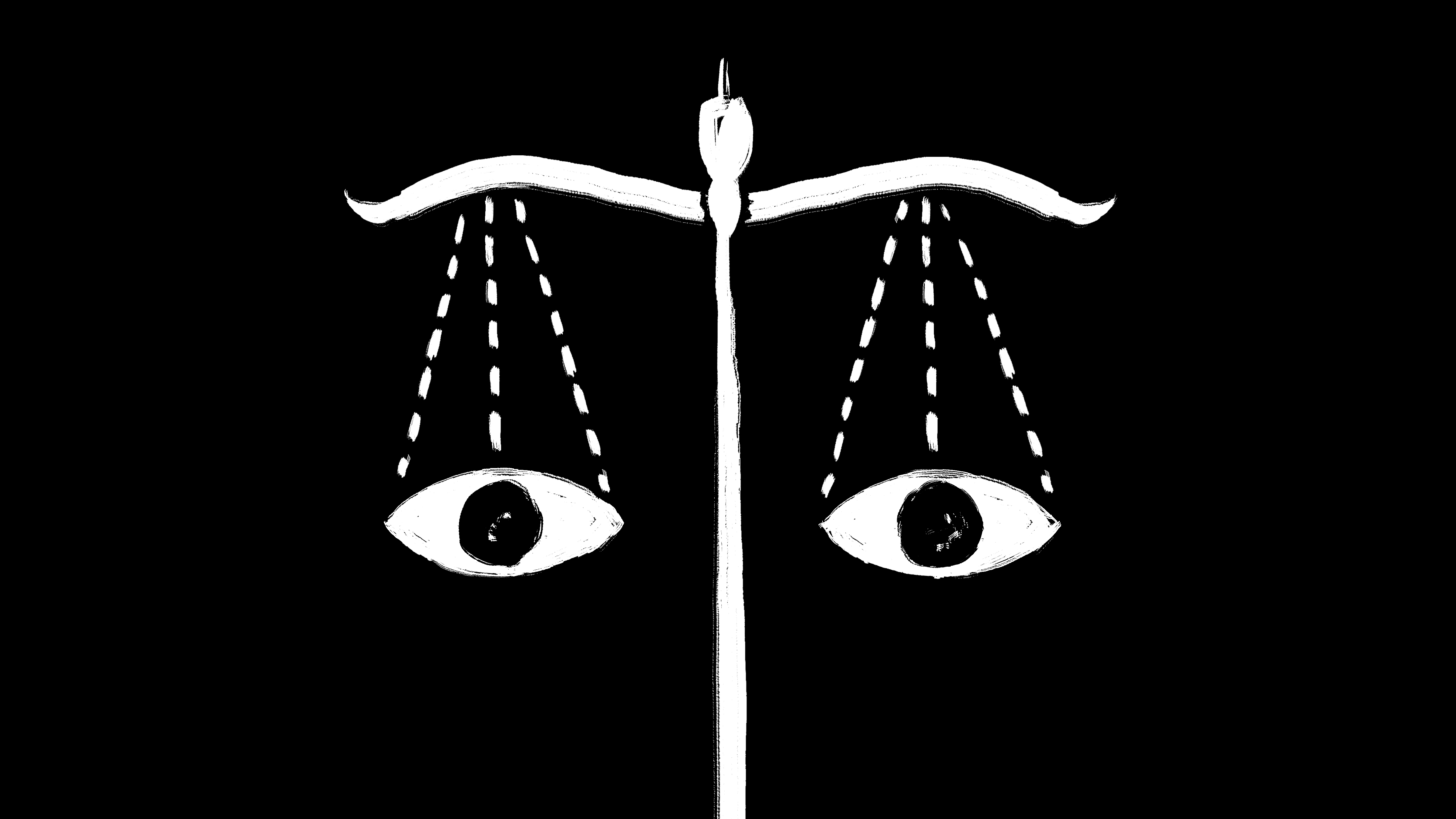
An illustration of white scales of justice with the two weighing pans replaced with a set of eyes.
Illustration by Adam Maida / The Atlantic

The Minimal Requirements for a Society Free From Fear

By Adam Kirsch

In 1989, the year the West won the Cold War, Francis Fukuyama published an essay announcing “the end of history.” He wasn’t claiming that historic events would stop taking place; what was over, rather, was the debate about the meaning of those events. Since the Enlightenment, Western thinkers had believed that history was progressing toward a final destination. According to communism, the engine of progress was class conflict, and history would end in the creation of a classless society. With the failure of the Soviet empire, Fukuyama argued, this idea had been discredited. Only one alternative remained: It was now clear that the “end point of mankind’s ideological evolution” was “the universalization of Western liberal democracy as the final form of human government.” There would still be disagreements within liberalism—Fukuyama named religion and nationalism as likely fault lines—but there could no longer be any disagreement about liberalism.

Read the full article.


More From The Atlantic


Culture Break

Closeup of a watercolor image of a pregnant woman wearing white
Tomar Levine / Bridgeman Images

Read. Sarah Anderson’s latest novel accomplishes what Yesteryear couldn’t, Stephanie Hayes writes. In the corporate satire Fallow, a woman is hired to bear children for executives, and her experience skewers the ideal of “having it all.”

Explore. This may be the golden age of sex toys, Sarah Hepola writes. But relying on the convenience of self-pleasure may also be keeping us “cocooned in a little pod of self-gratification.”

Play our daily crossword.


Rafaela Jinich contributed to this newsletter.

When you buy a book using a link in this newsletter, we receive a commission. Thank you for supporting The Atlantic.

© Tobias Canales / Hans Lucas / AFP / Getty

  •  

How Botched Executions Were Handled in Centuries Past

This is an edition of The Atlantic Daily, a newsletter that guides you through the biggest stories of the day, helps you discover new ideas, and recommends the best in culture. Sign up for it here.

The botched execution of Christa Pike, who survived two injections of what was intended to be a lethal dose of pentobarbital on September 30, is—horrifically—not unique: As my colleague Elizabeth Bruenig wrote, it wasn’t even the first botched execution in Tennessee this year. The fact that officials tried twice to kill her is somewhat more unusual, but not without precedent.

Consider the case of Margaret Dickson, a Scottish woman of the early 1700s. Estranged from her husband, Dickson took up work as a domestic in the town of Kelso, where she conceived a child out of wedlock but hid the pregnancy for fear of being shunned. She testified that she’d disposed of the baby after it was stillborn, but the body was found, and she was arrested. Under Scottish law at the time, concealment of a pregnancy was considered evidence of intent to commit infanticide. Dickson was convicted and sentenced to hang in Edinburgh in 1724.

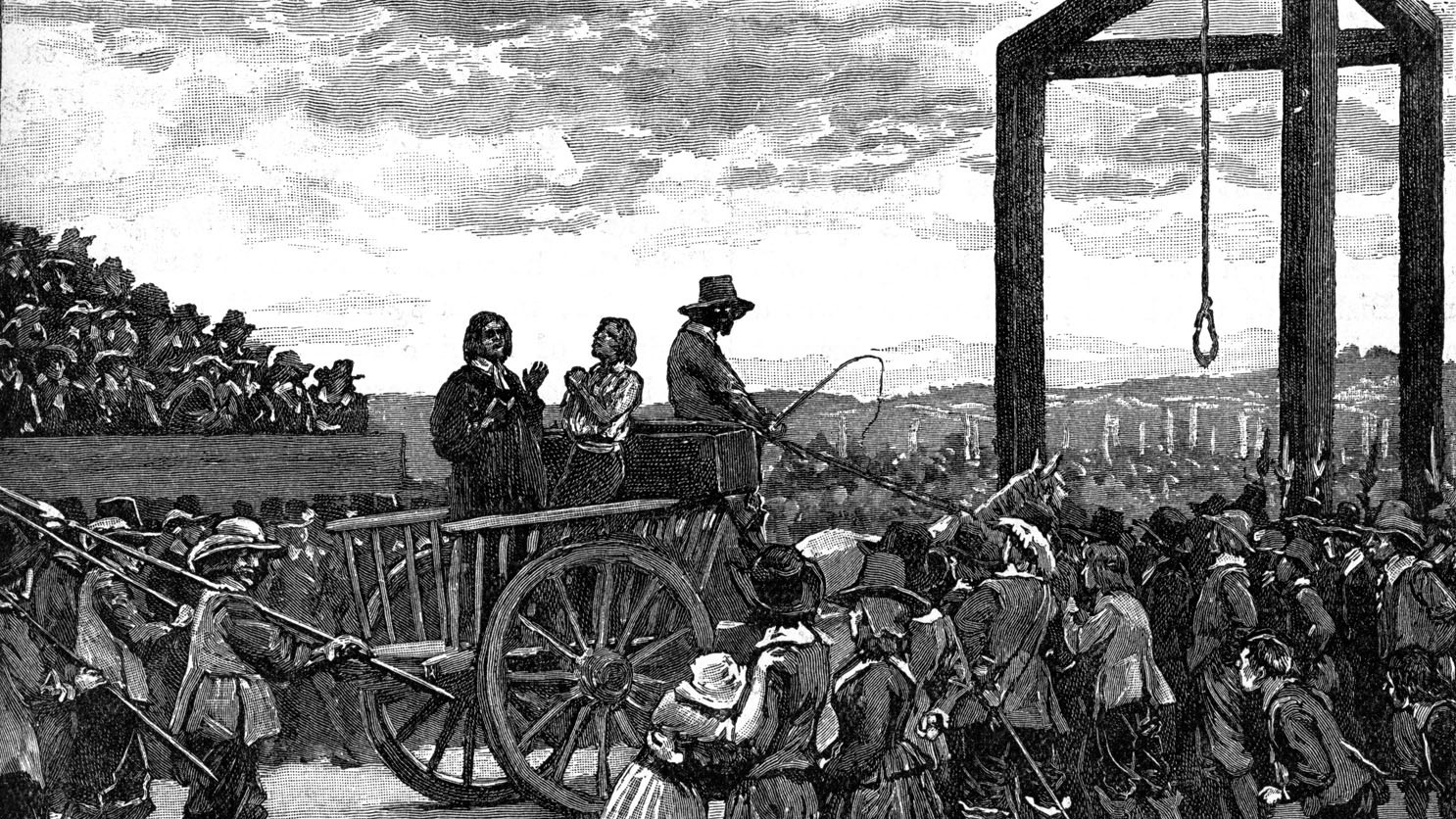
Following what was then the practice, Dickson’s execution was public. She was hanged; her body was placed in a coffin and carted away for burial (by some accounts following a tussle with body snatchers who hoped to procure the corpse for dissection by medical students). Along the way, the burial party stopped for a beer, at which point noise was heard from inside the coffin. The lid was pried off, and Dickson was found alive, though confused. Dickson’s survival became an object of fascination and Dickson herself a sort of folk hero, the historian Mikki Brock, the author of a forthcoming book about Dickson, told me. Authorities in Edinburgh initially sought to rehang her, but they were never able to marshal enough support to do so. Dickson, who came to be nicknamed “Half-Hangit Maggie” (that is, half-hanged), lived into the 1750s.

Or take Joseph Samuel, a criminal who was sent from England to a penal colony in Australia. Once there, he was implicated in the murder of a police officer investigating a robbery. Samuel was convicted and sentenced to hang in September 1803, also publicly. It didn’t go well. On the first try, the rope around Samuel’s neck snapped. On the second, the noose unraveled. By then, the crowd was growing restive; a hasty third attempt also ended with a broken rope. Observers at the scene concluded that the mishaps were a sign from God that Samuel should not be killed, and the governor apparently concurred, commuting Samuel’s sentence to life imprisonment. (Three years later, Samuel disappeared at sea during an escape attempt with other convicts and was presumed drowned; perhaps God’s view was not as clear as it seemed at the gallows.)

A third celebrated case was that of John “Babbacombe” Lee, who was convicted of the 1884 murder of his employer and sentenced to die. (By that point, executions in Britain had moved out of the public and into prison yards.) Just like Samuel, Lee was spared by malfunctioning equipment: A trapdoor under the gallows, meant to release the condemned and snap his neck, had been tested, yet it failed three times to open. Lee’s sentence was commuted to life by the British home secretary, Sir William Harcourt, who said, “It would shock the feelings of anyone if a man had twice to pay the pangs of imminent death.” Lee was eventually paroled in 1907. Now infamous as “the man they couldn’t hang,” he wrote an autobiography and was the subject of a 1912 silent film, but he then faded from the historical record. He appears to have died in the 1940s, perhaps in Milwaukee.

When I first heard the stories of Half-Hangit Maggie and Babbacombe Lee as a child, I knew they were historical, but they seemed to belong more to the realm of myth or fairy tale. Hangings, mysterious mechanical failures, assertions of divine intervention—all of these seemed like things out of fiction. It was easy to chuckle at quaint details, such as the apocryphal tale that Dickson was required to remarry her husband because she’d been declared dead. And though I’d read about the beheadings of Charles I and Louis XVI, the specter of public execution felt distant enough from modern civilization to be faintly unreal.

Now all of these things seem much less remote. Until President Trump reversed course yesterday, the Defense Department planned to livestream the execution of Nidal Hasan, who massacred comrades at Fort Hood in 2009. Pike’s fate is up in the air after her twice-failed execution. Pike, who was convicted of a brutal murder in 1995, has returned from a hospital to prison. The state official who oversaw capital punishment has resigned, and the governor has temporarily paused all executions in Tennessee. Her lawyers have requested that her sentence be commuted to life in prison.

The doctor and ethicist Lydia Dugdale writes in The Dispatch that U.S. history offers a grim precedent. In 1946, a 16-year-old boy confessed to killing his employer and was sentenced to die via electrocution. A first attempt failed, and his lawyers sought to block a second. The Supreme Court ruled against them, and he was killed that year. But Dugdale argues that this precedent should not apply here. “From Pike’s markedly swollen and chemically burned arms, to her profound cognitive impairment (the severity of which remains unknown), the state has already inflicted a cruel and unusual punishment on Christa,” she writes. Setting aside the law, “as a matter of sheer ethics, if the state has vowed not to punish prisoners cruelly but has inadvertently done so, the state ought not attempt the same method of execution again.” (In this year’s other botched Tennessee case, Tony Carruthers’s failed execution left him partially paralyzed. He received a one-year reprieve, and advocates have called for his sentence to be commuted.)

The historical cases of the men and women they couldn’t hang feel much closer to the present day than they once did. And although some of the visceral details still sound like the stuff of myth, the pragmatic and humane outcomes of these situations stand out more against the backdrop of the recent news. Support for the death penalty has dropped since the 1990s, barely topping 50 percent today. Views are closely correlated with religion—white Protestants are far more likely to back it than any other group, according to polling from the Public Religion Research Institute. For religious supporters of capital punishment, the idea that a failed execution is a sign from above might not be so far-fetched. Among the nonreligious, many people may flatter themselves to believe that contemporary society possesses greater reason and logic than our forebears. Just as we try to understand our ancestors by how they handled cases such as those of Dickson, Samuel, and Lee, future generations will judge our society by its actions.

Related:


Here are four new stories from The Atlantic:


Today’s News

  1. President Trump’s new White House press secretary, Katie Zacharia, was fired after less than a week in the role, according to three people familiar with the matter. Her dismissal followed criticism of her first press briefing on Tuesday and questions about her legal credentials.
  2. Three children and a teacher were killed in a shooting at an elementary school in Bend, Oregon, yesterday. Police said that a bystander pursued the 16-year-old shooter into the school and fatally shot him; another child and a teacher were critically injured.
  3. Representative Alexandria Ocasio-Cortez donated $1 million to support Democrat Abdul El-Sayed’s Senate campaign in Michigan. El-Sayed is running against Republican Mike Rogers in a race that could determine control of the Senate in November.

Dispatches

Explore all of our newsletters here.


Evening Read

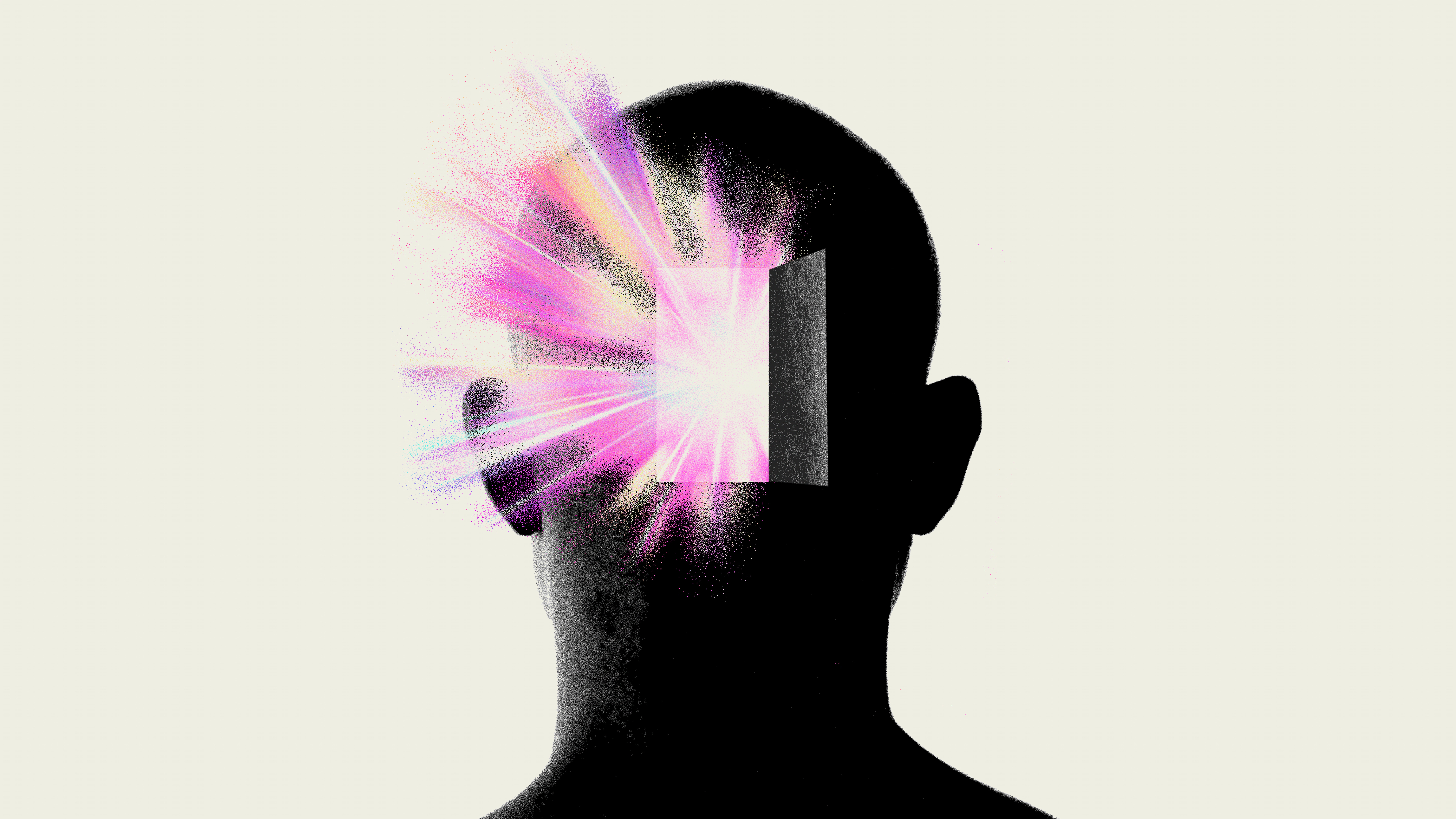
An illustration of a human silhouette with a door opening to their mind, with colored light scattering out.
Illustration by Adam Maida / The Atlantic

Big Tech Oligarchs Have a Terrible Plan for Humanity

By Bernie Sanders

Should human beings remain in control of planet Earth? Or should we be replaced as the dominant species? As absurd as these questions may sound, and as obvious as the answers may seem, the Big Tech oligarchs funding the artificial-intelligence revolution have responded in ways that should alarm all of us.

In Silicon Valley, some of the wealthiest people on Earth believe that they have the power to create a superior species. Sam Altman, the head of OpenAI, wrote in 2017 that AI would allow humans to become “the first species ever to design our own descendants.” What this means for humans, however, remains unclear. According to Altman, we will either jump-start digital intelligence “and then fade into an evolutionary tree branch, or we can figure out what a successful merge looks like.” In other words, humans have a choice: face extinction or merge with machines. “I believe the merge has already started,” Altman added, and is “probably our best-case scenario.”

Read the full article.


More From The Atlantic


Culture Break

Nathan Fielder and Elizabeth Holmes in wood-paneled room
A24 / Everett Collection

Watch. Nathan Fielder’s documentary about Elizabeth Holmes (out now in theaters) is a captivating study of self-perception, David Sims writes.

Read. Stephanie Bai asked The Atlantic’s writers and editors to share some of the best first lines in modern literature.

Play our daily crossword.


PS

A great folk hero needs a good nickname, which is why Billy the Kid and “Pretty Boy” Floyd endure. Babbacombe Lee—the name comes from the site of the murder—belongs to that tier. I first encountered it on the strange, entrancing cover of an album, a 1971 “folk-rock opera” by the English band Fairport Convention. I wouldn’t rank “Babbacombe” Lee as prime Fairport, but it’s an entertaining listen. As for Half-Hangit Maggie, anyone visiting the Grassmarket in Edinburgh, the site of her execution, can have a pint at her namesake pub, Maggie Dickson’s. Just don’t expect it to produce any miraculous resuscitations.

— David


Rafaela Jinich contributed to this newsletter.

When you buy a book using a link in this newsletter, we receive a commission. Thank you for supporting The Atlantic.

© Photo by Culture Club / Getty Images

  •  

Trump’s Dubious Claim About the Ilhan Omar Search

This is an edition of The Atlantic Daily, a newsletter that guides you through the biggest stories of the day, helps you discover new ideas, and recommends the best in culture. Sign up for it here.

Donald Trump is the quantum president: simultaneously all-powerful and also a wee, innocent figurehead, blithely unaware of what his aides are doing.

The first Trump, the one who declares that he “alone can fix it,” was in the Oval Office last week, asserting his unfettered power to persecute his political opponents. “I could have done very bad things to Hillary Clinton. I could have done very, very bad things to Joe Biden. I could have done very bad things to Barack Hussein Obama,” he said. “I can do whatever I want, if I want.” But after federal law enforcement conducted a search at the Washington, D.C., home of Representative Ilhan Omar, the Minnesota Democrat, yesterday morning, Trump insisted he was completely uninvolved.

Without more information, the search—conducted by agents from Homeland Security Investigations, a division of ICE that handles complicated probes—is deeply troubling. The Trump administration has deployed a series of probes, searches, and indictments, many of which are plainly pretextual or political, against outspoken critics. (This is a crucial distinction from an August 2022 search at Mar-a-Lago, which yielded many boxes of highly sensitive material, haphazardly stored.) Black women, including Representative LaMonica McIver of New Jersey, New York Attorney General Letitia James, and Federal Reserve Governor Lisa Cook, have been particular but not exclusive targets. The search also breaks a norm against public action in highly political cases in the 60 days before an election. Attempts to intimidate or criminalize an opposition party are hallmarks of authoritarianism.

There is much about the search that we do not know, including what evidence was used to obtain the warrant (though The New York Times reports it “was the subject of significant back and forth between prosecutors and the federal judge who eventually approved it”); what agents might have found; and what charges, if any, the government might be contemplating. Some reporting states that prosecutors are exploring whether Omar’s late father lied or made omissions on immigration applications. (The administration has focused on trying to strip citizenship from people who gave false responses on applications.) The congresswoman came to the United States as a child and became a naturalized citizen at 17.

To hear Trump tell it, he also knows little about the probe. “I think she’s a terrible person, but that’s really up to the DOJ,” Trump said yesterday. “I have nothing to do with it.” (The Department of Justice told the Times that the search was part of an ongoing investigation but declined to comment further.) This is a pattern I previously identified: When faced with difficult questions or strong pushback, the president tends to insist that the lawyers are in charge and he’s not apprised of what’s going on.

But his claim is hard to believe. Trump has repeatedly said that he has a “right” to direct federal prosecutors to investigate whomever he wishes, and although he generally insists that he has not done so, evidence suggests otherwise. Last September, Trump posted on Truth Social instructing then–Attorney General Pam Bondi to take action against critics, including James, former FBI Director James Comey, and Senator Adam Schiff. “We can’t delay any longer, it’s killing our reputation and credibility. They impeached me twice, and indicted me (5 times!), OVER NOTHING. JUSTICE MUST BE SERVED, NOW!!!” he wrote. Several news outlets later reported that the missive was intended as a private message. Bondi was removed this spring, reportedly because of Trump’s frustration that his attempts at retribution were moving too slowly.

In February, FBI agents searched an election center in Fulton County, Georgia, in pursuit of evidence for Trump’s assertion that the 2020 presidential election was stolen. (Their warrant was largely based on debunked claims.) The following day, Trump spoke directly to some of the agents involved, an extraordinary intervention.

Comey was ultimately charged with threatening the president, after he posted a photograph of shells he found on a beach that read 86 47, a set of numbers that supporters have said connotes wanting to remove Trump from office. DOJ has insisted the post was a threat of violence (which Comey has denied). Documents released by Comey’s lawyers this summer show that Trump was closely involved in the case, demanding briefings and notes from interviews with Comey prior to his indictment.

Adding to the impression that the Omar case is a White House effort, Katie Miller, the former Trump aide and the wife of Stephen Miller, posted about the story on X yesterday, saying, “Promise made, promise kept.” She later deleted the post.

But even if Trump is not personally engaged, he has made clear through his statements that he wants Omar investigated and punished. In 2019, he suggested that members of the progressive “Squad,” which included Omar, should “go back and help fix the totally broken and crime infested places from which they came.” A few days later, after he criticized Omar at a rally, he watched as a crowd chanted, “Send her back!” In December, he called Omar “garbage” and said that Somalis should leave the U.S.: “Their country stinks, and we don’t want them in our country.” The next month, when Omar was attacked at an event, Trump accused her of setting it up. This March, Vice President Vance told an interviewer, “We actually think that Ilhan Omar definitely committed immigration fraud.” The message from the White House is clear enough to make King Henry II blush.

If Trump is as engaged in prosecutions of his political opponents as public evidence indicates, then his behavior is inappropriate and damaging to the rule of law. If, however, he truly knows nothing about what’s going on, then he’s not the heroic, powerful leader he claims to be. Which would he prefer the public conclude?

Related:

© Andrew Leyden / Getty

  •  
❌