❌

Reading view

Israeli Election Results Hazy, Try Again

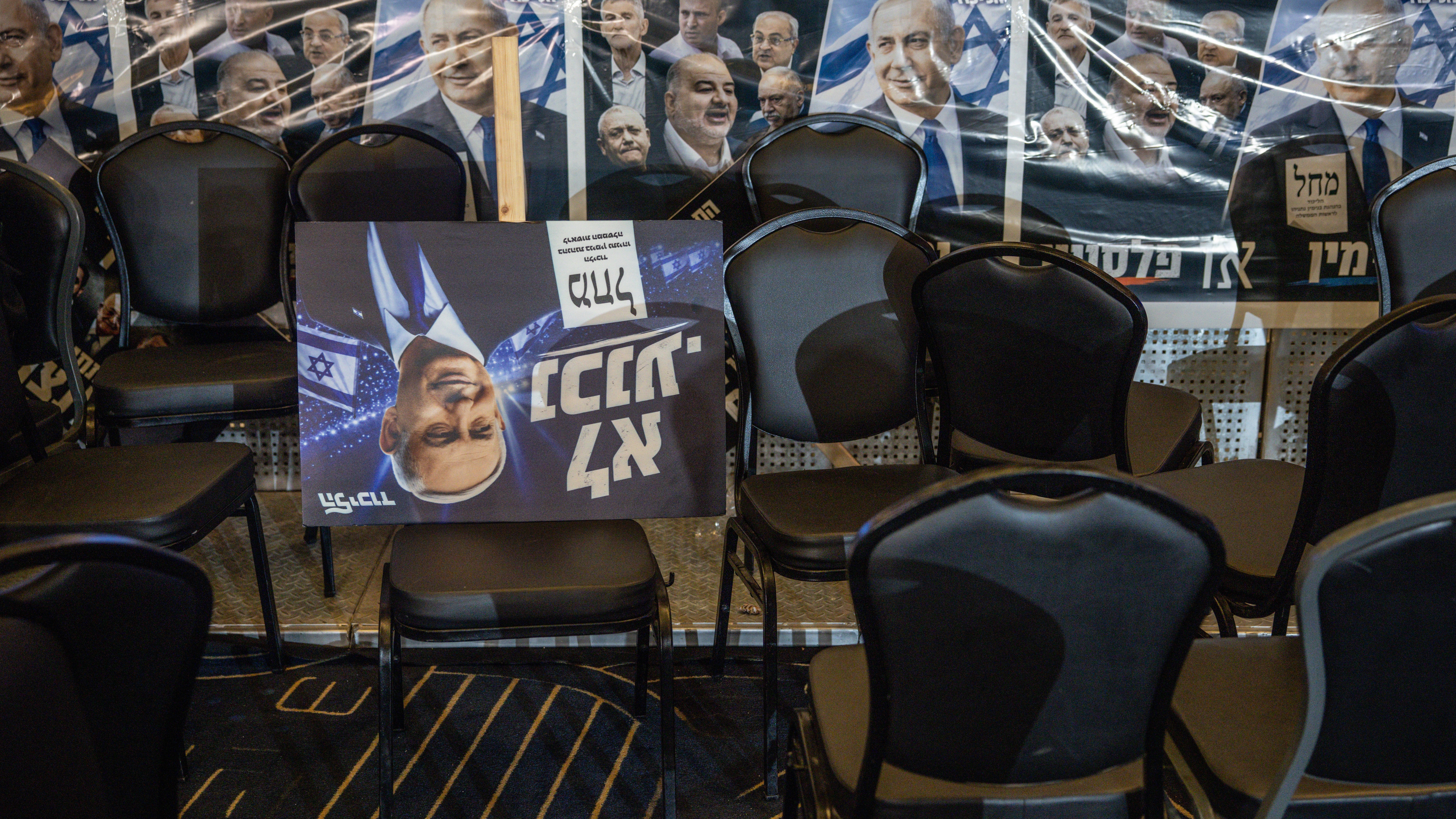
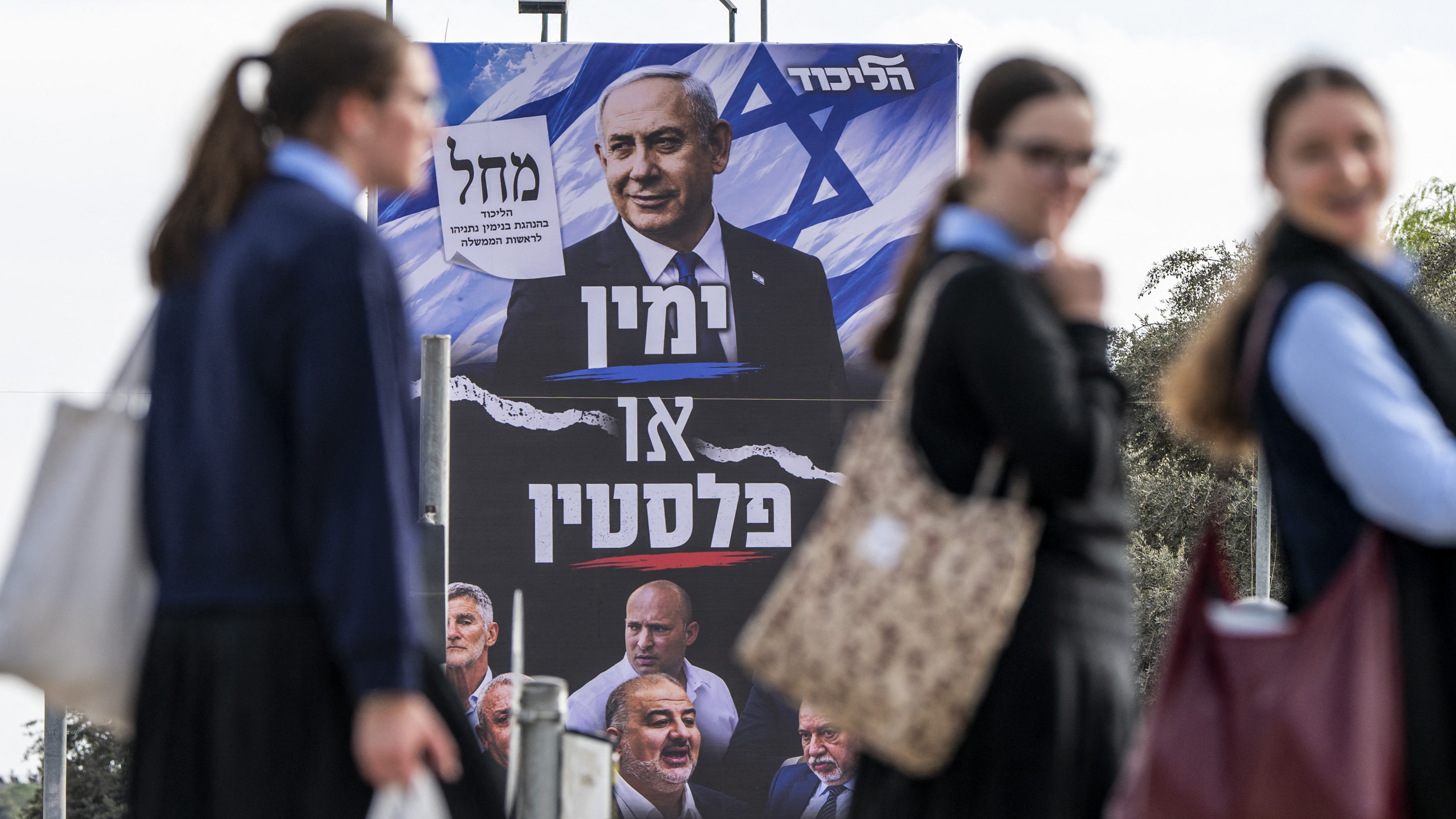
Before yesterday’s Israeli election, the only universal desire was for a conclusive result. The two possible conclusions: continued government by Prime Minister Benjamin Netanyahu, or a government headed by one of his opponents. In central Tel Aviv, supporters of opposition candidates drove around the main streets and hectored pedestrians and café dwellers to go vote for anyone at all who was not Netanyahu. In Jerusalem, the opposite messaging dominated. On Jaffa Street, a large, dystopian sign showed Netanyahu’s notorious overseer of prisons, Itamar Ben Gvir, grinning and looking like a self-satisfied tardigrade next to three bound, kneeling men. At the Jerusalem train station, a flyer with the face of Finance Minister Bezalel Smotrich had blown onto a commuter footpath. In lieu of conducting an exit poll, I loitered and watched as most people respectfully sidestepped it, a few stepped on it, and finally one woman paused to grind the toe of her Mary Jane into Smotrich’s face. I later saw her board my train to Tel Aviv.

The voting results are mostly in, and they are less conclusive than everyone hoped or than either side is willing to admit. (Both sides have said the results show that the public favors them.) Netanyahu’s current coalition can no longer form a government on its own. Neither can the opposition. Arab-majority parties are likely to hold 19 seats out of 120. Parties can form a government by: (1) negotiating a unity government, with elements of the opposition and of Netanyahu’s current coalition; (2) combining Arabs and the opposition; or (3) combining Arabs and the current Netanyahu coalition. If this election were a Magic 8 Ball, the result would be Reply hazy, try again. (In the exasperating event that no government forms, Israel will hold another election in a few months, and Netanyahu will remain in power in the interim.)

[Graeme Wood: Netanyahu goes into full panic mode]

The next days or weeks will be consumed with backroom deals, to see if the parties can negotiate any of the three scenarios above. Each possibility would demand that a party give up something it previously described as nonnegotiable. In Scenario (1), the opposition might have to compromise on the main motivation for their campaign: anyone but Netanyahu. After an unusually personal election, the person the opposition existed to repudiate would likely remain in power in some form, as the leader of the largest single party in the Knesset. Under one conceivable bargain, Netanyahu would remain in office for two more years, then rotate out, perhaps in favor of Naftali Bennett, just as Donald Trump finishes his term.

Scenario (2) would require the opposition to cooperate with Arab parties. Willingness to cooperate with those parties ranges from enthusiastic (in the case of the leftmost party, the Democrats) to hell-no (in the case of Yisrael Beiteinu, on the opposition’s secular-nationalist right). The scenario would deliver a fragile majority, but only if the hell-nos, as well as many other opposition leaders who have publicly ruled out cooperation with Arab parties, are somehow persuaded to change their minds.

In Scenario (3), Netanyahu, whose coalition is widely associated with the persecution of Arabs, joins forces with Arab parties to remain in power. This is the weirdest of all, and so improbable that if it takes place, Israel will need immediate public-health announcements to assure the population that the water supply has not been spiked with hallucinogens. Mansour Abbas, the canny leader of the Islamist Ra’am party, told Israel’s Channel 12 that “the right wing” has already approached him to discuss the prospect of working together. Netanyahu made overtures to Arab parties in 2021 as well, though not on the scale that would be necessary here. The details of the right’s discussion with Abbas remain mysterious, and even if both Arab parties cooperated with Netanyahu’s party, Likud, other far-right parties that are far more hostile to Arabs would have to consent to the arrangement, or be replaced in the coalition by an opposition party. But Netanyahu’s position on the right gives him paradoxical latitude in making concessions to Arab political interests, because fewer politicians on the right will feel that they can roast him for doing so. If Netanyahu makes a deal with Arab Israelis, the deal might stick. Skepticism about this possibility is warranted. But ask yourself: Why did the Israeli right call Abbas? Out of politeness? Boredom? As a bluff, to pressure other parties?

[View: Flying across the world to vote]

All three scenarios would demand difficult or unlikely compromise, and some other possibilities (such as defections within the anti-Netanyahu camp) could spawn more options. Cutting out the Arab parties seems most likely. To Netanyahu’s opponents, partnering with their sworn enemy, albeit a fellow Zionist, is distasteful. But partnering with Arab parties—whose commitment to Israel’s identity as a Jewish state is half-hearted at best, and with whom most opposition parties have serious disagreements about security and other policy areas—would force introspection that is more comfortably postponed. Arab Israelis, who make up about a fifth of the population, have representatives in the Knesset. But their colleagues isolate them like some kind of contagion (and some Arabs have preferred that isolation to complicity in a Jewish-led national project).

Before the election, I spoke with Jacob Abolafia, an American University political scientist, who predicted that the Arab parties would be necessary partners if the opposition wanted Netanyahu out. “It’s the only mathematically stable way to get an anti-Netanyahu coalition,” he told me. But the opposition leaders know, he says, that if they openly court Arabs, the opposition coalition will crumble, because the electorate is permeated with anti-Arab sentiment. “Are Arabs full citizens of Israel, or are they not?” he asked. “There are internal contradictions in Israeli society that are too great to solve right now.” That may be so. But it appears that every path forward involves resolving at least one contradiction or incompatibility. It’s just a matter of deciding which.
© Chris McGrath / Getty
  •  

Netanyahu Goes Into Full Panic Mode

When the going gets tough, the tough don’t get subtle. Yesterday, with polls casting doubt on his continuing as Israel’s prime minister after Tuesday’s election, Benjamin Netanyahu posted a closing argument on Instagram: an AI-generated image of Tel Aviv destroyed by a nuclear blast, with accompanying text that asked, roughly, Would you prefer to reelect Netanyahu, or be incinerated along with your family? The text—written by the commentator Yuval Bloomberg and reproduced approvingly by Netanyahu—called all of the other campaign issues a “smokescreen,” and accused Netanyahu’s opponents of being so blinded by hatred that they would rather increase their chances of being burned alive than see their country’s political maestro win another election. If you support another candidate, the Instagram post cautioned, “your hand should tremble” as you vote.

For years, Israelis both pro- and anti-Netanyahu have advised against counting him out. That advice remains sound. He has a Nixon-like ability to reemerge improbably stronger every time his political career has been declared over. It seemed over on October 7, 2023, when his government presided over an actual mass burning of Israelis. This time, the group of politicians cooperating to drive him from office is diverse and formidable. A former observer in Netanyahu’s war cabinet, retired General Gadi Eisenkot, is his chief antagonist. But two allied former prime ministers, the centrist Yair Lapid and Naftali Bennett on the center-right, are enthusiastic members of the anti-Netanyahu coalition, and another ex-general, Yair Golan, is attacking him from what remains of the Israeli left. These combined efforts have reduced Netanyahu’s chances of remaining in power to one in four, as of this morning.

These relatively long odds account, perhaps, for the wild messaging from Netanyahu during the past three days. Netanyahu’s statements have been, as George W. Bush said after Donald Trump’s “American carnage” speech, “some weird shit.” In addition to warning that his opponents will be too beholden to Islamists to stop the flattening of Tel Aviv, Netanyahu’s pronouncements include the following assertions: that it is “only a matter of time” before American military assistance for Israel is “over,” that Israel will be beset by international sanctions and compelled to cope without the friends who have in the past guaranteed its survival, and that blockchain-based technologies, such as cryptocurrencies, might provide ways around sanctions.

[Read: Defeating Netanyahu means solving a math problem]

The other candidates have positioned themselves as normal people who can govern Israel competently in difficult times. Bennett replied to the atom-bomb post by calling for the “revival of our international standing,” and declaring his intention to improve the tech sector and force thousands of Israel’s 1.5 million ultra-Orthodox citizens to trade full-time religious study for military service and employment. (Netanyahu and his further-right coalition partners have refused these measures and tried to preserve draft exemptions.) Netanyahu, Yair Lapid wrote, “has gone off the rails. We must send him home.”

Netanyahu’s case is that he is an unusual man for unusual times. If the times are not unusual already, he will make them unusual, by shifting Israel’s politics and alliances preemptively—away from America and toward the United Arab Emirates, away from Western financial systems and toward crypto, in a manner reminiscent of sanctions-hobbled regimes like Russia, Iran, and North Korea. There is a logic to this frightening perspective. If you think Israel can be a liberal democracy in a familiar international order, and that competent institutions and international alliances are the way to stave off catastrophe, then vote from the menu of Netanyahu’s opponents. If you think Israel is doomed to being a pariah state, then vote for the guy posting images of his country torched in a nuclear holocaust. Today Avigdor Lieberman, the leader of the secular-nationalist Yisrael Beiteinu party and a member of the anti-Netanyahu club, requested a treason investigation into Netanyahu for intentionally “dragging Israel into war” to improve his electoral chances.

This threat of annihilation is not, of course, wholly concocted. But Iran’s open desire to annihilate Israel can be real and still be used as a political pretext to avoid the issues that have led so many Israelis to hate Netanyahu. The same Instagram post that warns of nuclear annihilation helpfully lists these issues: alleged links between Netanyahu and the government of Qatar, reports that Netanyahu received warnings before the October 7 attacks and did nothing, and his support for welfare and draft exemptions for ultra-Orthodox full-time Torah students. About 100,000 such ultra-Orthodox are liable for military service, and most instead study Talmud and are therefore too busy to cram themselves into tanks and fight in Gaza like other Jewish Israelis. Netanyahu’s response to all of these accusations is to crank up the end-of-days volume, to make even the most reasonable criticisms of his politics inaudible.

Among secular Israelis, the last of these gripes produces such bitterness that some seem willing to die rather than vote for a politician who would preserve the exemptions. The bitterness stems from the perception that Netanyahu (himself a religious novice) is eager to make unconscionable concessions to the most extreme elements of the ultra-Orthodox political machine in exchange for a few more seats in his coalition. The main ultra-Orthodox parties are Shas and United Torah Judaism (UTJ), both pro-Netanyahu and monomaniacal about preserving exemptions for as many Torah students as possible.

[Graeme Wood: Israel can’t postpone its reckoning forever]

The cynicism of this move is easiest to appreciate not by assaying the venom of secular Israelis but by hearing the dismay of ultra-Orthodox Israelis, also known as Haredim (those who “tremble” before God) unaligned with Shas and UTJ. Ziva Glanz, a candidate for the upstart Haredi Public party, told me with exasperation that the “legacy” parties were immune to change, and that most Haredim were ready to move on, if only the ossified political system would let them.

Her party is broadly in the Netanyahu camp, and her party is happy to support Netanyahu’s view of Israel’s security. “Existential problems are existential problems,” she said. But they nonetheless want reform, and see his government and its partners as stopping it. Her party supports reducing the number of draft-exempt Torah students. Glanz, the wife of a rabbi, says she thinks the low civilian-casualty rate in Israel’s war with Hezbollah was a miracle granted by God because of Israel’s commitment to religious study. But she says there are 12,000 Haredim who purport to be studying, and whose institutions claim government funds, when in reality they are “hanging out in pizza shops.” They should be put to work. “Our community is a success,” she said, and “with success comes responsibility.” Netanyahu’s response to this modest attempt to disrupt Haredi politics and integrate Haredim into the Israeli national project has been to tell her party to back down.

When Netanyahu first won the premiership in 1996, he successfully campaigned on “making a safe peace”—peace guaranteed through Israeli military supremacy, rather than primarily through the negotiation or diplomacy preferred by his rivals. Three decades later, a “safe peace” guaranteed through military might has become so strategically desirable that it unites his rivals—security hawks, one and all—while Netanyahu himself has moved on. He once promised to bring peace. Now he promises that his opponents will bring annihilation.

In this account, Israel’s violent devastation is so imminent that corruption, pandering, and venality become mere foibles. But what if ignoring these political vices devastates Israel in slower, less lurid ways? What if limitless draft exemptions, unwillingness to scrutinize past failures, and international isolation are themselves devastating? Tomorrow Israelis will vote, many trembling for the future of their country, no matter which candidate they prefer.

© Jewel Samad / AFP / Getty

  •  

The Only Thing the Houthis Have Done Successfully

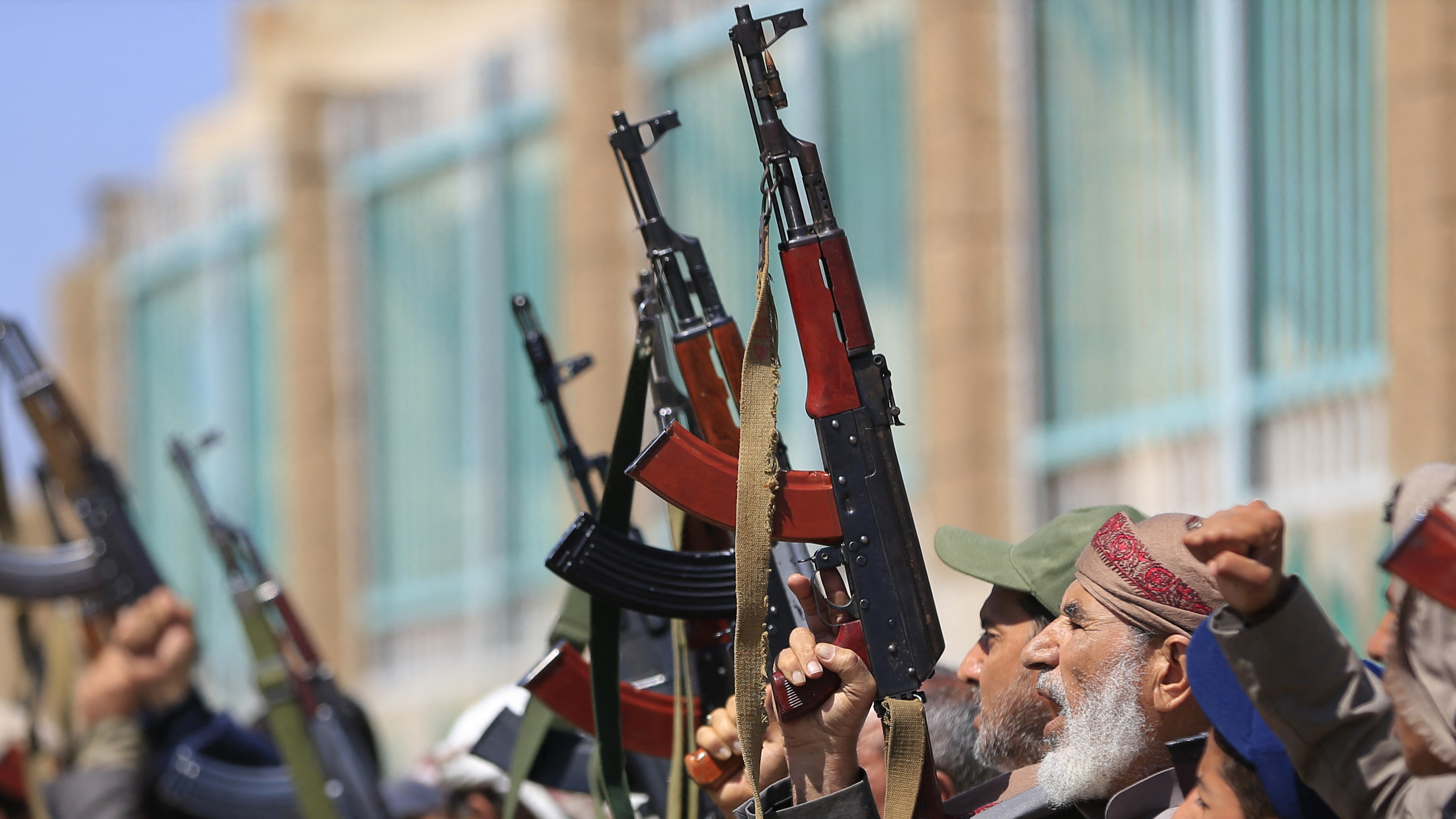
Yesterday in Riyadh, a missile fired by Yemen’s Houthis struck King Khalid International Airport, killed 13 people, and wounded hundreds more. Attacks in the previous week had killed four others. Because Saudi Arabia has been trying for years to shed its reputation for austerity and discomfort, a sterile, boring airport with overpriced pastries and harsh lighting is a national accomplishment. The strike turned that airport into chaos, its floors streaked with blood and lounges billowing with smoke. The Houthi military spokesman announced that the attacks would continue on a reciprocal basis—“airport for airport, siege for siege, and escalation for escalation”—until the Houthis achieve their stated goals: the “death” of America, Israel, and their allies, and an apocalyptic victory for Islam. Escalation, in other words, is assured. The Houthis hit the Riyadh airport again today.

Saudi Arabia’s ongoing self-transformation during the past decade has involved trading cosmic goals—the spread of Sunni Islam over the world—for more modest local ones, such as opening specialty coffee shops in Jeddah and hosting pro-wrestling contests in Riyadh. (The two most prominent international events in the coming weeks in Saudi Arabia are an investment conference and World Wrestling Entertainment’s “Crown Jewel.”) One can imagine the frustration that Saudis feel, just as they try to exit the game of global religious domination, to be pulled back in by a neighbor far more zealous than they ever were. The Houthis “are on a divine mission,” Nadwa Al-Dawsari, an independent Yemeni researcher, told me last year. That mission, she said, is to “keep the war going, at least until Jerusalem.” Negotiation, for them, consists of tactical delay, so they can resume the fight and fight harder. “Why would they want a deal when they can get everything?”

Earlier this week the Houthis’ leader, Abd al-Malik al-Houthi, delivered a typically long-winded denunciation of the Saudis. He devoted the bulk of it to condemning the Saudis for doing exactly what the Houthis have just done openly: targeting civilians. This decade-long conflict has indeed been characterized by a lengthy series of atrocities. Abd al-Malik listed alleged Saudi attacks against weddings, funerals, and homes—the total death toll far exceeding the missiles in Riyadh—and concluded that the Saudis were not Muslims at all but “Zionists” who follow “Satan.” He mentioned an attack on a market in Taiz, and said “there is absolutely no justification for targeting such a place,” because “it was a market, not a military camp.”

Riyadh’s airport is also a civilian target, but I suppose because the Houthis think they are fighting Satan, they are willing to excuse their own hypocrisy. (Here you can watch a group of travelers, dressed for pilgrimage to Mecca, blown off their feet.) What’s clear from the entire arc of the Houthis’ rise is that they are, as Al-Dawsari suggested, unwilling to negotiate, let alone go away or enter into what the Houthi leader describes as “an honourable peace with the Yemeni people,” “founded on good neighborly relations and mutual respect.” Sensible Saudi leaders would appease or join the Houthis, he said, but instead “they follow the Satanic approach.”

Iran must be happy. Recently, Donald Trump has taken to gloating about the reopening of the Strait of Hormuz, which now flows with oil traffic at near prewar rates. But the entire Iranian “Axis of Resistance”—the coordinate group including the Houthis, Iraqi Shiite militias, Hamas, and Hezbollah—was meant, as one American official put it to me, to be a keyboard on which many notes could be played, with rhythms able to keep the United States and its allies off the beat. Israel’s initial attacks against Iran in 2025 were an attempt to shoot the piano player. Iran has not only survived but also bragged that it has a surfeit of targets to select from. It is not a coincidence that just as Trump was congratulating himself for opening the strait last week, U.S. bombers had to scramble off the tarmac because of reported threats of an Iranian attack at RAF Fairford in England.

Saudi Crown Prince Mohammed bin Salman has a reputation for erratic decisions—sudden, apparently whim-driven plans to invest heavily in particular sectors, to pick fights with neighbors, or to oppress or kill this or that critic of his rule. This reputation is not entirely fair. He has been consistent, and indeed reasonable, in seeking, above all else, a path toward economic development uninterrupted by war or tumult. The main effect of this campaign by the Houthis is to disrupt that path. The Houthis are holding Saudi Arabia’s transition hostage by doing the only thing they have ever done successfully: fighting. It is not obvious that anyone has enough of a corresponding appetite for war to stop them.

© Mohammed Huwais / AFP / Getty

  •  

The Real Harm of a Public Execution

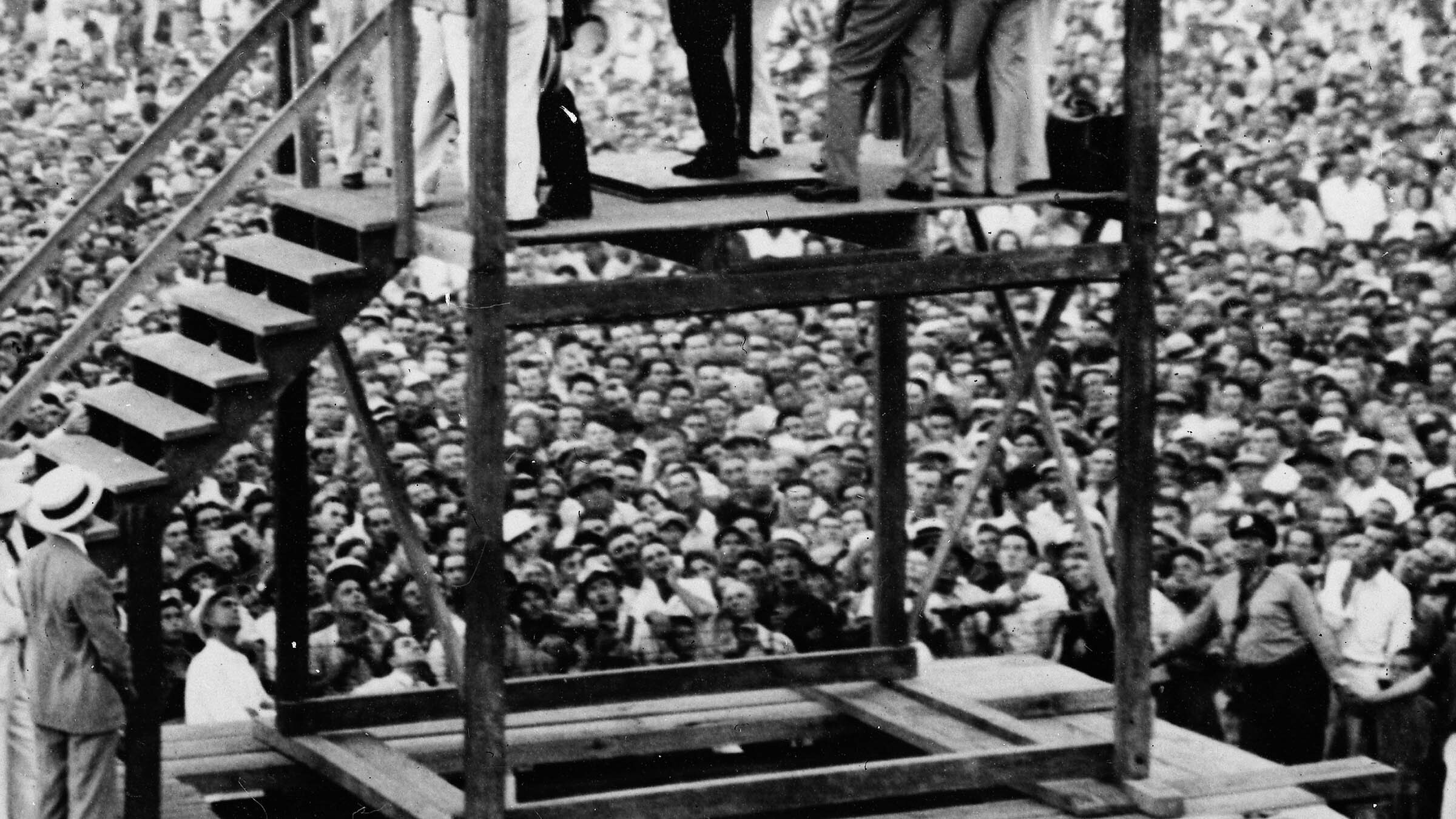
Yesterday, in an interview aboard the USS Abraham Lincoln, Defense Secretary Pete Hegseth said the United States would soon carry out its first public execution since the 1930s. “We’ll make sure that people are able to watch it,” he said. Pentagon officials later confirmed that the execution will be livestreamed. The condemned man is former Major Nidal Hasan, who shouted “God is great” in Arabic before murdering 13 people at Fort Hood in 2009. Hegseth’s rationale for following this ancient practice is the same one offered by the ancients themselves: publicizing the agony of death and its unhygienic aftermath will remind onlookers that, in Hegseth’s words, there are “serious consequences” for treason. “No-brainer,” Hegseth said.

This pitiful creep—Hasan, I mean—deserves what he is probably going to get in December. The rest of us, however, will be ill-served by the spectacle of his execution. Many past criminals have had their head publicly cut off, or body nailed to a cross and left to rot there, as exemplary punishment. Such executions were once considered entertainment. Now the idea of recreationally watching a man be killed is so strange that few people understand what the experience will be like. Watching people die by violence, even if those people have it coming, damages the spectator irreversibly. I don’t mean physical or emotional damage, though many who see unnatural deaths up close do vomit and suffer from uneasy dreams afterward. Rather, I mean something more like the loss of their humanity and dignity, through partaking in the process of treating a person—in many ways so similar to themselves—like a machine to be turned off or ripped apart, a malfunctioning printer or an old car. To see this process is to be diminished, and the decision to make the execution visible to all is an invitation to self-harm, sent out to everyone with an internet connection. It is hard to appreciate how awful this viewing experience will be, until you have it. And then of course it will be too late. I have seen videotaped executions and have been diminished by every single one.

In August 2014, Hasan wrote a letter from prison to Abu Bakr al-Baghdadi, then the leader of the Islamic State, and asked to be granted citizenship as a “soldier of Allah.” No response was recorded. Ironically, it seems likely that Hasan would sympathize with Hegseth’s penchant for public execution, because the Islamic State interpreted the Quran to require that execution be carried out in public. Fornicators, according to Quran 24:2, should be flogged, and their punishment should be “witnessed” by a “group of believers.” By extension, the Islamic State determined, such a group should witness the punishment of all scripturally ordained crimes. Certain crimes, such as brigandage, are to be punished with crucifixion, an inherently public method of killing that the Islamic State carried out on video. Regrettably, I have seen footage of such a death.

[From the July 2025 issue: Inside America’s death chambers]

In the years before Hasan’s 2013 court-martial, he stopped shaving, in Islamic defiance of Army regulations that prohibit soldiers from growing beards. Mike Simpson, an Army officer and emergency-room doctor near the facility where Hasan was incarcerated, told me a few years later that he put the word out to colleagues that if Hasan ever had a medical emergency (not unlikely, given that he suffered paralysis and other conditions after being gunned down in the course of his terror attack), Simpson would like to be called to shave Hasan personally. The shaving would arise out of medical necessity—the patient might need a mask, with a reliable seal around the face—but Simpson, for his own pleasure, wanted to shear the bastard himself.

But the pleasure that might come from shaving Hasan would be quite different from what one might experience by shooting him in the heart. The Army won’t struggle to find a dozen willing soldiers to act as an execution party for Hasan. Hasan has said he wants death. Hegseth said he “doesn’t care” what Hasan’s final wishes might be. But I suspect that the volunteers’ enjoyment of their duty will be dampened if they notice signs of ecstasy from Hasan, as he is tied to a post 15 paces away from them and prays his way to the end. Hamlet could not bring himself to kill Claudius in prayer, because killing him in the midst of a holy act—“to take him in the purging of his soul, when he is fit and season’d for his passage”—would be too merciful.

In this world, denying Hasan the pleasure of death on his own terms, and letting him instead spend a few more earthly decades in tedious incarceration, would seem a much more onerous punishment. Therefore I would propose an alternative to public execution: public incarceration. Hasan should be placed in a small space, with a Pentagon-funded livestream of his remaining years. If the purpose of the spectacle of his death is to demonstrate to others the “serious consequences” of murdering 13 people, I doubt any execution would be more frightening than the slow, public aging of this repulsive murderer, as biology and time carry out his sentence. I would tune in to the livestream myself now and then, until I grew bored and found better things to do, and better ways to spend my own remaining time. This would take Hasan’s life and make from it a small gift to the rest of us, rather than taking something irrecoverable from us as we give martyrdom to him.

© Joseph Costa / NY Daily News / Getty

  •  
❌