❌

Reading view

How to Lose Texas

Sign up for Inside the Trump Presidency, a newsletter featuring coverage of the second Trump term.

Subscribe here: Apple Podcasts | Spotify | YouTube | Overcast | Pocket Casts

For years, Latino voters reliably voted for Democratic presidential candidates, in many cases by double-digit margins. Then in 2024, they roughly split their vote, becoming a key swing group for Donald Trump’s return to power—perhaps because they liked his style, or they perceived him as an outsider, or they agreed that the border had gotten out of control. In 2026, though, polls are indicating that they may be over him.

One of the best test cases for the shift is the Rio Grande Valley in Texas, right along the southern U.S. border. The area was a Democratic stronghold for decades before it went for Trump in 2024. It’s dominated by working-class Latinos, mostly Mexican American. In the immediate post-pandemic years, the area saw an unprecedented number of illegal border crossings, and voters seemingly punished Joe Biden for the chaos. But their desire for order wasn’t a desire for what the administration delivered: ICE raids that have seemed random, law-abiding friends and family who have been deported, and treatment that has felt dehumanizing.

The Atlantic staff writer Nick Miroff traveled to the Rio Grande Valley and talked with people whose family members or employees had been targeted by ICE. He talked with politicians and candidates about how they’ve shifted their strategies, and he talked with people who had the same concerns as any middle-class American, about how much everything costs now. On Radio Atlantic, Miroff discusses the wild political swings in the Rio Grande Valley and what they might reveal about the statewide Texas races and the Latino vote in the rest of the country.


The following is a transcript of the episode:

Hanna Rosin: One of the big surprises of the 2024 presidential election was how much Latino voters had shifted right. A bloc that has voted Democratic consistently, for decades, had helped reelect Donald Trump, which led to lots of gloating from Republicans about their new diverse coalition and angst from Democrats about what they’d gotten wrong.

Well, the punditry came too soon. In the upcoming midterms, it seems like Latinos are shifting back again, which you can see very clearly in Texas and especially in the Rio Grande Valley.

Nick Miroff:  So the RGV, the Rio Grande Valley, is to me one of the most fascinating parts of the United States. And this is an area that is more than 90 percent Hispanic.

Rosin: Staff writer Nick Miroff, who covers immigration, recently did some reporting in South Texas.

Miroff: Got the sound of a guy welding, welding a cattle trailer.

[Music]

Miroff:  This is an area that has been a Democratic Party stronghold for decades—or was up until this past election.  And that was a real seismic shift in politics, and it was fundamental to the kind of coalition that Trump was able to put together in 2024.

And I wanted to go back and talk to voters there now to see how they’re feeling about the way the country is going, about their lives, and how they plan to vote in the midterms.

Miroff: Are you gonna vote for Talarico?

Benny Melendez: Yeah, definitely.

Miroff: All Democrats?

Melendez: All Democrat, yeah.

Rosin: This is Radio Atlantic. I’m Hanna Rosin.

Today on the show, we are taking a closer look at the Rio Grande Valley, because it could reveal what’s about to happen in Texas more broadly, but also possibly the whole country.

For next week’s midterms, Latinos might end up being the critical voting bloc. But here’s the thing: What Nick learned from visiting the Rio Grande Valley—what maybe everybody should have learned from the last presidential election—is that the mistake is to think of them as any kind of unified ethnic voting bloc at all.

In the story he wrote, Nick, for example, rechristened them the “Big-Ass Truck Vote” because love for big trucks and the high cost of filling up their tanks seemed higher on the list of motivators than undying party loyalty. Anyway, back to the valley.

[Music]

Rosin: Now, I’ve never been there. What does it look like? Like, can you just describe it? Is it rural? Is it farmland? What are people doing? How close is it to Mexico? How big is it? I’m just curious to get a picture in my head.

Miroff: Yeah. Well, the first thing I think is that calling it a valley is a bit of a misnomer. It’s more like this is the part, you know, where the Rio Grande meets the Gulf of Mexico, and it’s really like a floodplain, so it’s flat. It’s very hot and muggy. And this was an area that was a big agricultural region for generations, but over the past several decades has been changing rapidly, predominantly after the North American Free Trade Agreement went into effect in 1994.

These towns—Brownsville, McAllen—became kind of operational-logistics hubs for trade with Mexico. And so for many years, this has been an area that immigrants, as well as, you know, Hispanic Americans living in South Texas viewed, I think, as a place of opportunity, where the jobs were plentiful and where people could live a kind of—you know, aspire to a middle-class life.

This is an area where you have big, wide streets and brand-new subdivisions, but also many pockets of poverty, communities known as colonias that are kind of on unincorporated land.

Miroff: We’re in a colonia—lots of fences; lots of yard ornaments, beware of the dog signs, trampolines, junked cars.

Miroff: It’s really an area that’s been transformed, in particular, over the past, I would say, about 15 years by migration from Mexico and drug violence in northern Mexico, because the cartel wars sent so many middle-class and even upper-middle-class, you know, Mexicans fleeing for somewhere safe.

And a lot of them went to the Rio Grande Valley, and they brought this kind of new dynamism to that area. But as one of the candidates that I spent time with talked about, you know, it also brought a kind of integration with a lot more mixed-status families.

Rosin: Right. Okay, I think I’m getting the picture, and it’s an interesting picture, and now I see why you went there. It used to be agricultural. Now it’s maybe suburban or emerging suburban and—

Miroff: Yeah.

Rosin: —and still fast evolving, and so there’s a lot of different kinds of people. It’s not just, like, one flat demographic. There’s people of different socioeconomic levels, probably different relationships to Mexico, different relationships to immigration policy, kind of all in this one space.

Miroff: Yeah. This is a very kind of aspirational place with a lot of working-class, upwardly mobile families and people who have found jobs in oil and gas, driving to the oil and gas fields. A lot of people have found work in federal law enforcement, working for the Border Patrol, and of course now working for ICE, and also for, you know, cross-border trade.

And so this is a place that has for many years really thrived off of its relationship with northern Mexico, with the big assembly plants just south of the border and around the Monterrey, Mexico, region. And so these have been the drivers of the growth for so many years, and these are some of the industries that are also being squeezed by Trump’s presidency.

Rosin: Okay. So you get there. You have these thoughts in your head. There’s this very interesting, you know, in the polls, showing this demographic shift, where you’ve got, like, 2016 heavily, heavily Democratic; 2024 goes for Trump. Now the polls are saying: shifting Democratic again. What’s the first thing you see that’s surprising or that catches your eye?

Miroff: Well, given how pivotal the Rio Grande Valley is to this election cycle, it’s no surprise that political-advertising money and super-PAC money is just inundating the whole area. And so there are campaign signs lining the highways at all the intersections. And one of the first that caught my eye, actually, was a campaign sign showing this guy Eric Flores.

Now, he’s the Republican candidate for the Thirty-Fourth Congressional District, which stretches from Brownsville, kind of hugging the Gulf Coast, all the way up toward Corpus Christi. And most of the campaign signs for Eric Flores just show him with a thumbs-up and his bio. It says he’s an infantry officer, a prosecutor, a father. And they’re very striking ’cause they’re bright red.

And then there’s a second set of signs for Flores, and they look just like the first set—they’re also red—but they show him with President Trump. And Trump and Flores are giving the thumbs-up, and it says, across the top of the sign, Trump Endorsed, and below that it says Support ICE.

And I saw that sign and I was like, Why would a Republican candidate in the Rio Grande Valley want “Support ICE” on their sign? Well, if you look at the fine print at the bottom of the sign, it says Paid for by Northern Cameron County Democrats.

Rosin: Right.

Miroff: The Northern Cameron County Democrats are making these signs that show Flores with Trump and that said Support for ICE.

[Music]

Miroff: And so this is a negative sign that the Democrats have put up that just shows the Republican candidate with President Trump on it. And so, you know, that says, I think, everything in this area that voted for Trump two years ago. Running attack ads by just showing the candidate next to the president is, for these Democrats, the most important and effective messaging.

Rosin: So what do you read into that strategy? One, you have to distance yourself from Trump, even though he won the election. What else? Like, what else are we learning about ICE or about Trump from a sign like that?

Miroff: Well, ICE is overwhelmingly unpopular. It’s no big surprise in an area with a 90 percent Hispanic population. But I think you have to dig a little deeper, and one of the reasons that Trump won in 2024 was his promise to secure the border. This was an area where an overwhelming quantity of migrants arrived under Biden’s presidency. These are some of the communities that were strained the worst by the arrival of hundreds of thousands of people in the first years of Biden’s term. And the perception that he couldn’t really get the situation under control, that the White House wasn’t interested in doing anything about it—these communities were intensely frustrated with that and with the government’s inability to respond, and that was one of the things that helped Trump a lot. But that doesn’t mean that people want ICE officers arresting their friends and family and the ordinary people in their community that don’t have criminal records.

And so what I heard over and over again is that, We thought Trump was gonna come for the worst of the worst. We thought he was gonna come in and arrest the criminals. We’re glad that he’s got the border under control, but this is going too far. And so ICE overreach has been a big one there, and then the other thing, which I think is probably the biggest issue for the voters I talked to, is the cost of living and affordability.

Rosin: I wanna listen to some of the people that you talked to. One of them was Benny Melendez.

Miroff: Do you mind if we switch over to English, Benny?

Melendez: No, that’s fine. Let me know.

Miroff: For the interview? Cool.

Melendez: Yeah, that’s fine.

Rosin: Can you talk about that conversation? What did he tell you?

Miroff: Yeah, so Benny Melendez is a contractor who asked me to meet him at his job site. And I drove out to this kind of half-built subdivision in the outskirts of McAllen.

Miroff: So what are we doing right here, Benny? What is this? Is this a house you’re building?

Melendez: Yeah, this is one of my custom homes.

Miroff: Okay.

Miroff: Benny was there, and he was in this house where his crews had not shown up that day, he said, because word had gone out earlier in the morning that there were ICE officers on patrol in the area, making arrests.

Miroff: But there’s nothing happening to this home today? No, you don’t have a crew here?

Melendez: No. No, there’s no one here. There’s no—and I called them. I did call them. They told me they were scared, that they were not gonna come today.

Miroff: How many guys?

Melendez: Mm, let me see. One, two, three, four, five, six, seven.

Miroff: And they saw some ICE vehicles? Or did that, was that on social media, where they—

Melendez: Social media, yeah. And the news. They saw it in the morning, so they decided to take the day off. So the ICE agents, they start—if you have a ladder on your truck, they’ll start following you, and they’ll stop you. And if you’re illegal, they’ll arrest you.

Miroff: Benny is 32 years old. He grew up in the Rio Grande Valley, and he started his home-building business about seven years ago. And he voted for Trump, and he said he’s just been galvanized by the past two years by ICE arresting—and he said ICE has arrested and deported 15 of the guys that he used to work with. And he said that not only has it made home-building in the Rio Grande Valley much more difficult; it’s really kind of destroying the housing market, he said.

It’s the combination of high interest rates, the rise in costs, but also just the inability for homes to get built. He said that he used to be able to get a house built in about four months. Now it takes eight months to a year.

[Music]

Miroff: And so, you know, he said that this has become the issue for him, and he’s gonna do everything he can to get Democrats elected and to send a strong message about the Trump administration going too far in the Rio Grande Valley and arresting people who, you know, in his view, shouldn’t be the target for ICE.

Melendez: Yeah, it is difficult for me to hear a 40-, 50-year-old guy cry in private with me, telling me he’s afraid that ICE is gonna take him, ’cause he has to attend this meeting two weeks from now and potentially be deported. Así está pone. That’s how they write it. Potentially be deported. Oh, man, are you gonna be able to sleep in the next two weeks?

Rosin: I see why you chose him, ’cause there’s so much in there. Like, he does represent some of the central shifts. I’m curious, you know, when you were talking with him, did you ask him or get the impression that he identifies with either party? Like, does—he thought of himself as a Republican; now he thinks of himself as a Democrat? Or it doesn’t work like that? Like, it’s not about attaching yourself to a party in some way?

Miroff: It doesn’t work like that at all, and I think for guys like Benny, there was a certain degree of rebellion in voting for Trump and in bucking, you know, the older generation in the valley that just kind of voted Democrat out of habit.

Rosin: Mm-hmm.

Miroff: Like many other young men in the valley, I think, and I’m talking about the Rio Grande Valley, there was something a little bit transgressive about voting Republican that signaled that you were an independent thinker. And so he said he’s voting very much against Trump and against the Trump administration and the Republicans this cycle, but he says, you know, very clearly that Democrats are gonna have to earn his support in the future, and that, you know, he’s not taking anything for granted, and he’s gonna vote for whoever he thinks is gonna deliver for the community and is gonna be best for him and his family.

Rosin: Yeah. I guess that’s why they’re known as swing voters. That’s literally what they are. Like, they care about a wide range of things, and sometimes those things can be vibes, like, I wanna be transgressive in this election, but sometimes they can be extremely concrete, like, You fired all my workers, and I can’t build homes anymore, you know?

Miroff: Yeah. I think one of the takeaways I had from this trip is that even if the Democrats end up doing well in this cycle because there’s so much anger at Trump, it isn’t as if all of these voters are just gonna go back to voting Democrat out of habit, the way they used to.

Melendez: Because before voting for Trump, and before voting for the Republicans, I voted for Biden, and I voted for other Democrats, and they have done nothing for my people. Nothing.

[Music]

Miroff: These voters are gonna be up for grabs every single time. Yeah. And they’re gonna go for whichever candidate is really gonna be able to deliver better lives for them and their families.

Melendez: What are you gonna do different this time? Are you gonna do the same thing you did when Biden was president? Nothing for my people? I mean, yes, the Republicans, it’s bad with them, but is it better with the Democrats? We’re in a lose-lose situation here.

Rosin: After the break, Nick takes us inside a key congressional race in Texas where one Democrat might have a fighting chance against a Republican incumbent in a district that was redrawn by state Republicans.

More in a minute.

[Break]

Rosin: Another person you talked to was Bobby Pulido. Who is Bobby Pulido?

Miroff: So Bobby Pulido is the Democratic candidate in McAllen area. This is the Fifteenth Congressional District. And Bobby is one of the most fascinating stories of, I think, the entire midterm cycle. And Bobby is a Tejano-music star, and that is a kind of a particular style of South Texas music that is a blend of, kind of, country and pop and, you know, in Spanish.

And Bobby had a hit song in the 1990s. He’s a two-time Latin Grammy winner.

Rosin: What was the hit song? Just curious.

Miroff: It’s called “Desvelado.”

[“Desvelado,” by Bobby Pulido]

Miroff: Which kind of means, like, “sleepless.” It’s about, and the video is really striking. It shows—it was filmed on the streets of San Francisco, and he’s, like, in his early 20s. And he’s kind of going around San Francisco, and he’s thinking about the woman he loves, and he’s just restless.

[“Desvelado,” by Bobby Pulido]

Miroff: That song was a huge hit. You know, he was already a star in the Rio Grande Valley before he announced his candidacy, and it’s no wonder that the Democrats recruited him. He comes from a prominent political family down there. And I spent some time driving around the suburbs where he grew up in Edinburg, right outside McAllen.

Miroff: So you guys are delivering signs?

Campaign staffer: Yep, yep, yep. We try to do this. Obviously we don’t have as much time as we used to.

Miroff: And he and his team were delivering yard signs to supporters that had called and, you know, wanted a yard sign. So he was chatting with everybody. He was, you know, knocking on doors and, you know, people were coming out, and they said, Hey, you know, we went to high school together, and, Oh, I remember you, and, Oh, I saw your concert, you know, at so and so.

Pulido: Hello. How are y’all doing?

Woman: Good. How are you?

Miroff: He’s just run this, like, very intensive kind of ground-game strategy to go out and meet as many people as possible. And his opponent, Monica De La Cruz, the incumbent, she got in in 2022, and she made, I think, probably a tactical mistake early on when she kinda tried to dismiss Bobby Pulido as almost like a washed-up quinceañera singer—

Rosin: Yeah, yeah.

Miroff: —like the guy who plays at the parties for 15-year-old girls.

Monica De La Cruz: This election isn’t about who you want performing at your niece’s quinceañera. It’s about who you trust with your family’s future.

Miroff: And he took that and he said, Okay, well, I’ll start—if you want me to, just give me a call, and I’ll come and play at your quinceañera. And so he started going around playing for free at all these quinceañera parties.

Bobby Pulido: Buenas noches, Alinah.

Miroff: He pointed out, you know, he says people are already—they’ve had something to drink, they’re already in a good mood, they’re feeling great, and he gets to, you know, perform and meet hundreds of people. And they see him, and they know he’s running.

Pulido: Thank you so much. My name is Bobby Pulido, and I’m running for Congress in District Fifteen. Thank you. Gracias.

Rosin: And then what are each of their lines politically? Besides just being fun, like, what is Bobby Pulido’s political line that he’s taking, and then what is Monica De La Cruz’s line in terms of distancing or aligning herself more with Trump?

Miroff: Yeah, it’s been very interesting. Pulido has been laser-focused on the affordability issue and ICE overreach. And so he has been the one who, probably more than anyone in the Rio Grande Valley, has highlighted these cases in which, you know, ICE officers have detained U.S. citizens, you know, or outrageous arrests.

Pulido: This immigration thing is not just for immigrants. It’s anti-American, because down here, we’ve integrated with them. There’s so many mixed-status families in the Rio Grande Valley—you have no idea. And that’s gonna be the hurricane that’s coming down here, because they’re freaking pissed.

Miroff: Pulido’s opponent—the incumbent, Monica De La Cruz—she has, I think, tried to distance herself from Trump’s immigration-enforcement policies. I sat down with her for an interview.

Miroff: I wanna start by just asking you, and how much time do you have to answer? Okay. I’ll be pretty succinct.

De La Cruz: Sure.

Miroff: She said that she believes in a common-sense approach and wants to be kind of a moderate voice.

De La Cruz: I have been direct with leadership in saying that enforcement should focus on the criminals and the cartels, not hardworking families that are trying to navigate the complex immigration system. That being said, when I call Washington, D.C., for one of these families, guess what? They pick up the phone, and they answer my calls, and we look for real solutions, not only in immigration.

Miroff: But she, as did all the other Republicans, voted for two funding packages that have given the Department of Homeland Security nearly a quarter of a trillion dollars for immigration enforcement. And that includes more than $100 billion for ICE, more than 10 times its annual budget. And so she’s tried to kind of distance herself from Trump’s immigration-enforcement policies and highlight some kind of the affordability messaging that she thinks is gonna be a winner, like around her support for the no tax on tips.

De La Cruz: No tax on tips, no tax on Social Security, no tax on overtime.

Miroff: But, you know, in her campaign literature, she doesn’t, like, you know, appear alongside the president. And so she’s one of the Republicans that’s also, I think, trying to put some distance between her and the White House.

Miroff: I’m down with what—I mean, there’s a dog on the porch.

Roel Garza: Oh, yeah. Okay.

Miroff: But he’s not barking at us.

Rosin: You also went door-knocking with a canvasser for Democrats. Did you learn anything from talking to voters that way?

Miroff: I did. You know, it was really fascinating. This was a young man, a 20-year-old student named Roel Garza.

Miroff: Are you a college student, or are you older?

Garza: I just graduated. I’m 20. I just graduated from college, but I’m doing my master’s now, my M.B.A.

Miroff: You know, he had the addresses of people who had voted in the last election and, you know, he had an interesting strategy. He would go and knock on their door and ask them, What are the issues that you care about? What are the problems in your community that you wanna see fixed?

He would take their answers, and then he would try to describe the solutions that Democratic candidates were proposing for some of the things that mattered to them, as a way to kinda steer them to the candidates, you know, before he would hand them some campaign literature endorsing very much the Democratic ticket.

Garza: And you could go vote at any polling location in Hidalgo County.

Woman: Okay.

Garza: So these are the candidates that we’re endorsing—James Talarico, Bobby Pulido—and in the back you have some more.

Miroff: It was really eye-opening. It was a good reminder that a lot of people who are busy, who have busy lives, are not paying that much attention, not as much attention to politics as, you know, reporters and candidates. And it was also interesting to hear from working-class folks who voted for Trump last time, you know? I think one of the things that struck me the most was that there’s still a degree of kind of sympathy for Trump himself, that people think they sort of see him as this kind of outside figure who has shaken things up.

And I was also struck by the degree to which they were kind of confused about the candidates, and they had seen so much negative advertising that they really didn’t know what to believe.

[Music]

Miroff: And so I think there’s a lot of confusion. I think there’s a high probability that a lot of these people are just gonna end up splitting their tickets and are gonna vote for candidates with whom they think they can be comfortable with regardless of their party affiliation.

Rosin: So what we know about the pattern is: In 2024, as we discussed, Trump won a more diverse coalition than anyone expected. Then Democrats had their reckoning. It sounds like that’s all playing out in the places where you visited. If there was a swing back to Democrats now, what do you think would be the correct thing to understand about it, and what would be a misunderstanding about it?

Miroff: Well, I do think the two most salient issues are the cost of living. You know, think about how many Hispanic families in the United States are blue-collar, who aspire to, you know, joining the middle class. And so if they’re getting squeezed, I think that that is really gonna hurt, you know, whichever candidate is gonna take the blame for that or gonna be associated with that. But then the big one also is overreach on immigration enforcement.

And again, you know, people voted for border security. Border security is broadly popular in the United States. People do not like images of chaos and disorder along the border, but that doesn’t mean that they want intense ICE enforcement on the streets. And, you know, what they see on the streets of, you know, U.S. cities with ICE arrests also looks chaotic and ugly.

And whenever people see what immigration enforcement looks like, they often kind of recoil from it. And so for Hispanic families who feel like they’re being targeted, and that the people who are backing the president who are his core supporters are speaking in just openly racist terms, it once more, I think, questions for them whether the Republican Party wants them in the United States.

Rosin: Yeah.

Miroff: I mean, if you’re a minority in this country and one of the parties is speaking in a way that makes you feel like they consider you less American and even less human, then why would you vote for them? You know, to the extent that these are kind of unresolved tensions within the Republican Party—I’m wondering if this midterm result, especially if there’s a blue wave and it’s driven partly by Hispanic voters—if this forces some kind of reckoning within the Republican Party about whether or not you really want racists openly part of your coalition if it’s gonna drive away so many other voters.

Rosin: Well, Nick, thank you again for joining us.

Miroff: Oh, my pleasure. Anytime.

[Music]

Rosin: This episode of Radio Atlantic was produced by Jinae West with help from Rosie Hughes. It was edited by Kevin Townsend. Fact-checking by Gisela Salim-Peyer and Sam Fentress. Rob Smierciak engineered and provided original music. We also had music from Breakmaster Cylinder. Claudine Ebeid is the executive producer of Atlantic audio, and Andrea Valdez is our managing editor.

And in case you haven’t heard, this Tuesday night, November 3, we’re going to host a special Election Night livestream. I’ll be joined by my Radio Atlantic co-host, Adam Harris. We’ll talk with Atlantic staffers about midterm results as they come in and what new directions the country could be headed in. We’ll have familiar guests like Tom Nichols, David Frum, and Anne Applebaum, among others. We’ll be live for two hours starting at 9 p.m. eastern.

And, as always, listeners, if you enjoy the show, you can support our work and the work of all Atlantic journalists when you subscribe to The Atlantic at TheAtlantic.com/Listener.

I’m Hanna Rosin. Thank you for listening.
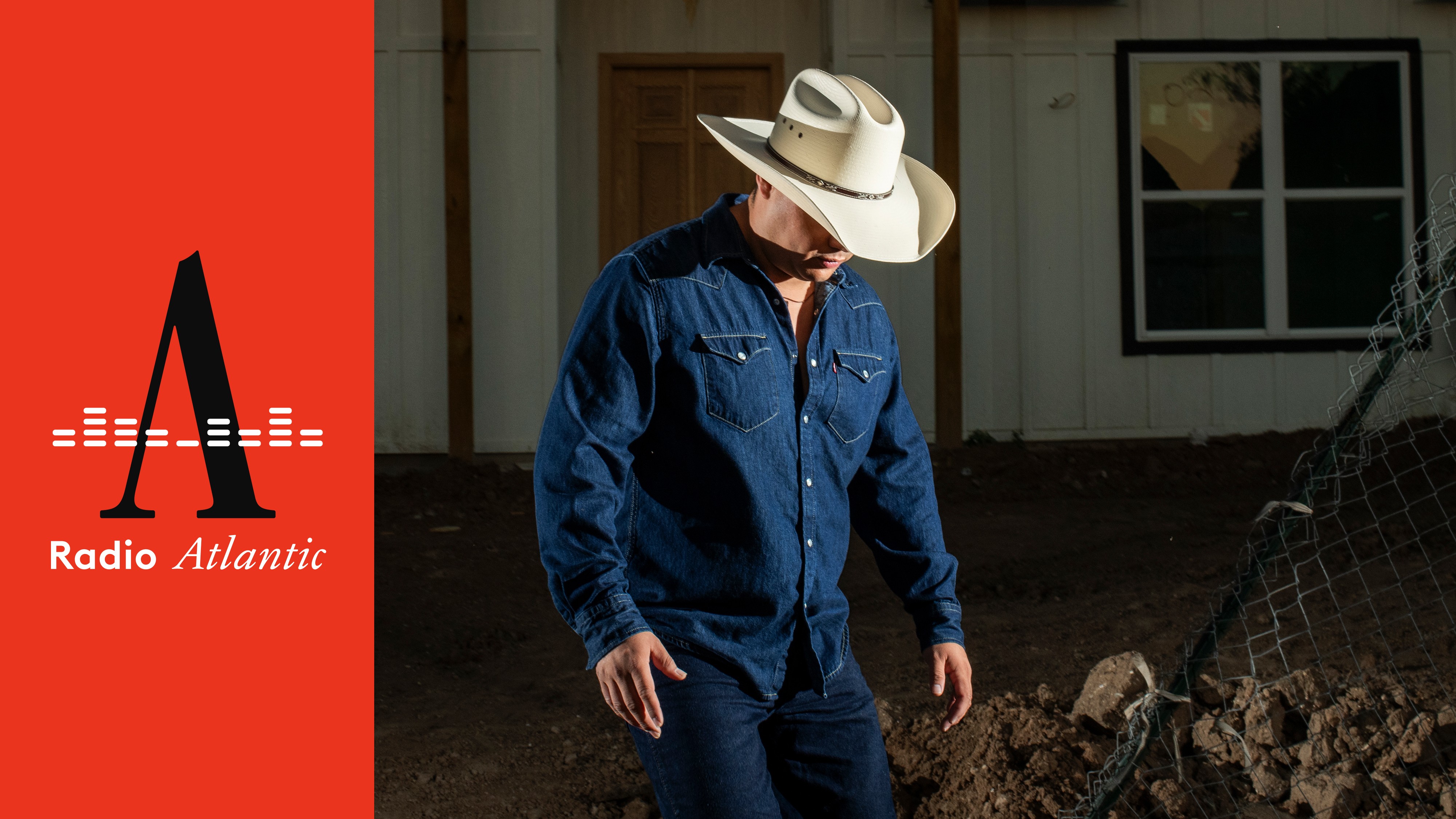
© Brian Finke for The Atlantic

  •  

Maria Bamford on OCD, Pugs, and Getting Paid

Subscribe here: Apple Podcasts | Spotify | YouTube | Overcast | Pocket Casts

The comedian Maria Bamford has always been alarmingly frank about her obsessive, intrusive thoughts—imagined scenarios where she murders someone or commits wholesale genocide, for instance. In Paralyzed by Hope, the new documentary about her life from Judd Apatow, Bamford talks about faking her own suicide as a kid, using ketchup as a prop.

In all of her work—which includes stand-up, a Netflix sitcom, a YouTube series, and a memoir—Bamford generously samples people and incidents from her own life. The documentary, co-directed by Apatow and Neil Berkeley, connects the dots in a way that reveals a deeper layer of meaning. For example, despite talking about her struggles, Bamford doesn’t like the narrative that she’s up there on stage actually struggling.

“I think it reminds me of when people say, you know, ‘inspiration porn,’ like, saying, Oh, it’s just amazing that you’re doing this,” Bamford says on this episode of Radio Atlantic. “Like, the person is so delicate, and I’m like, You don’t know me.”

Bamford explains the actual relationship between OCD and her comedy. She talks about why she doesn’t do political comedy, and why she no longer does imitations of her sister. She discusses her divorce and getting on the apps. She does all of that from a car, buzzed on nitro cold brew.

The following is a transcript of the episode:

Hanna Rosin: Veteran comedy writer Judd Apatow has taken on a kind of second job as comedy historian.

[Music]

Rosin: He’s been making documentaries about comedians who are legends or brilliant in some particular way or just not like anyone else: Mel Brooks, George Carlin, and now, coming out on Netflix Friday, Maria Bamford.

Maria Bamford: My name is Maria Bamford, and this is a gift. My gift to you.

Rosin: I’m Hanna Rosin. This is Radio Atlantic. If you know Maria Bamford’s comedy, then you already know a lot about Maria Bamford. Her OCD and bipolar diagnoses come up a lot in her comedy routines. Also, her childhood in Duluth, Minnesota, with her mother, who she does impressions of a lot.

Bamford as her mother, Marilyn Bamford: Maria, remember what we talked about. Gonorrhea; syphilis; herpes 1, 2. Watch the cold sores. Date rape is a lot more common than people think. You look so gorgeous.

Rosin: And her dad.

Bamford: My dad is really just a series of sound effects. (Coughs, hacks, wheezes.)

Rosin: And of her older sister, Sarah.

Bamford as her sister, Sarah: Maria, want something to drink? Want a Diet Coke? Or a string cheese? We could do, like, two Skinny Cows from Weight Watchers, those ice-cream sandwiches. Put two of those together, put Bailey’s ice cream on top. Make a fat cow. Come on, Maria. Seize the day, Robin Williams! What do you want?

Rosin: She recently retired that impression of her sister. We’ll talk about why later. And her parents both died in the last several years, which comes up in the documentary. Apatow interviews her mostly at her house in Altadena, California, which, at the time, she shared with her husband, Scott, and a couple of pugs.

Later in the film, we learn she almost lost that house in the wildfires in 2025. And she’s no longer married.

When I talked to her last week, she was parked somewhere in her neighborhood outside a church.

Bamford: I’ve just had a nitro cold brew, so my brain is skipping ahead light-years.

Rosin: Did they say you were sitting inside a car?

Bamford: I am inside a car.

Rosin: Hmm.

Bamford: Is that okay?

Rosin: Well, I’m just wondering what it’s like to be inside a small space having just had a nitro cold brew.

Bamford: Oh, it’s wonderful. It’s so delightful. I’m compact. I’m not out of control. I’m not driving. I’m just sort of filled with a delightful hope. And I believe that’s caffeine.

Rosin: I’ve been watching Bamford for years. I’ve seen her live, seen her TV show, her YouTube series. I’ve read her book. Bits and pieces of her life come up in all these places. And the documentary connects all the pieces in a more linear way. It’s called Paralyzed by Hope: The Maria Bamford Story and it’s co-directed by Apatow and Neil Berkeley.

[Music]

Rosin: All right. I’m gonna start in a way that one is supposed to start.

Bamford: Okay. Of course.

Rosin: Press the “Reset” button. Maria, welcome to the show.

Bamford: Thank you so much for having me on.

Rosin: When Judd Apatow approached you, was there anything you said was off-limits? Like, You can film this dog, but not that dog? Like, anything where you said—

Bamford: (Laughs.) Not the pug chihuahua! Only with her harness on. No, as far as I know, I didn’t. I think I have pride about that, where I go: Ask me anything and that I am messy. My brand is messy. It’s all right. It’s okay. You know, no one’s gonna be surprised that there’s a layer of dust on something or my face is smudged with a little bit of cake and frosting.

Rosin: Was there any scene when you watched the documentary that you didn’t really recognize yourself? You were like, Who is that person?

Bamford: I think just being described by some of the people that I don’t know super well, like Conan O’Brien when he said I was like a lobster without a shell.

Conan O’Brien: Sometimes it feels like you’re talking to a lobster whose shell has been removed, but it’s still alive, and it’s just feeling every single molecule in the room.

Bamford: He’s an extremely wonderful person. Everything he does is hilarious, wonderful. But I think people mistake that. I really don’t agree with that. I feel like I’m tough as nails. You know what I’m saying? Like, I’ll cry and have all the feels and all that stuff, but yeah, that to me is not true at all.

Rosin: You think of yourself as tough as nails? Because you’re in control of the vulnerability? That actually surprises me. Not that I don’t think you’re tough as nails, but because you are the most vulnerable, maybe that extreme vulnerability is tough as nails. What do you mean by that?

Bamford: I guess I just feel like I have the personal sense that I’m good. There’s plenty—my God—there’s just so many things. If you go online, if you’re any sort of entertainer or anything public, there’s gonna be people telling you to kill yourself, you know?

Rosin: You’re ugly. Whatever, yeah.

Bamford: Or whatever. Or people coming up to you after whatever it is that you’re passionate about and say, Yeah, I don’t really like that at all, and I think you should be ashamed of yourself, or whatever it is. So yeah, things feel bad, of course, but I know within myself I’m good.

The parts of me that have experienced mood issues, that kind of stuff, or the fact that I have a bit of a tremor, that’s only embarrassing—where people are like, Let me take that for you before you spill it all over everything.

[Music]

Bamford: I think it reminds me of when people say, you know, “inspiration porn,” like, saying, Oh, it’s just amazing that you’re doing this. Like, the person is so delicate, and I’m like, You don’t know me.

There’s some part of me—it also, I think it brings up stuff from childhood, where it’s like I have a high voice. Always kind of underestimated, like, You’re dumb; you’re fragile. I think that was triggering me to go like, What?

Rosin: So much of your work is about intrusive thoughts. And for the blessed people out there who do not deal with those or know someone who does, can you just explain what is an intrusive thought? How does it work?

Bamford: Well, everybody has them. So if you’ve ever had something flash in my mind like, Oh, I wanna jump off this building. I’m on the Empire State Building, and I just—what if I jumped off? Like, just that’s all it is. What happens with somebody with OCD or more obsessive is that somebody says, Oh, that means something. I am gonna do it.

Rosin: Like, you take it too seriously. You talk to it. You take it seriously.

Bamford: Yeah. So for me, it was intrusive thoughts about when I was a kid, around about 9 or 10, I got a fear that I was gonna be a serial killer.

Bamford (from the Unwanted Thoughts Syndrome album): When I was a kid—I was about 10 years old—I stopped being able to sleep at night, because I was worried. I was really anxious that I was a raper or a murderer or a genocider.

Bamford: I don’t know where I got this. I think I was watching a ton of TV, and I think there were a couple things where I was like, Oh, that’s the worst thing you can possibly be.

So I’d have a weird thought like, Oh, what if I reached out and touched someone’s genitals? And instead of just going, Yeah, I’m never gonna do that. That’s not gonna happen. Interesting, but not that interesting, I took it in as Oh, it means I should isolate myself from people. I had physical tics, like gripping my fists, sitting on my hands.

Bamford (from the Unwanted Thoughts Syndrome album): I thought I was trying to control myself so I wouldn’t genocide anybody. And I would clench my fists at odd intervals and try not to make any eye contact, and then later, no human contact at all.

Bamford: Most of it was isolation, like not making eye contact with people. But oddly, the one place where I didn’t have those was onstage, was when I could perform or be in front of people where you have so much, you know, different chemicals running through your body. I wasn’t able to have those intrusive thoughts. I just was enjoying myself too much onstage.

So, yeah, but it can really devastate people. It attacks whatever you love. So let’s say you’re having postpartum depression. Many new mothers will fear that they’re gonna kill their child or somehow harm them or molest them or whatever, even though that’s the last thing, of course, they would ever do. But it’s really scary to tell somebody you have these weird thoughts.

I remember I did tell a therapist, I wanna say, like, 30 years ago, and she didn’t know what it was. And she’s like, You know what? I’m a mandated reporter, so I need to tell somebody that you’re—

Rosin: Stop.

Bamford: Yeah. Because it was just not a known thing at that time. And especially if you go to Christian or religious counseling, they might say, Oh, you know, that’s a sin, and, you know, It’s clearly just the devil, or whatever it is.

But then I think I was 35, and I finally had money. You know when you have money and you can pay for good therapy? And I googled my symptoms, unwanted thoughts about sexual assault or violence, and up came OCD therapists all over the world, tons of literature about it.

I went and made an appointment immediately. He did exposure therapy. And it was terrifying to have that kind of thing. For me, it was like, Spend time with family and friends with a sharp object in your pocket, and see if you do kill them. And, I mean, it was just hilarious enough too.

Like, the great thing about having any kind of therapeutic support is that the therapist will laugh at some point and go, Uh-huh. Yeah. Yeah, I know.

Rosin: So in the beginning of the documentary, in one of the very first scenes, Judd Apatow comes into your house and hands you a pile of cash.

Bamford: Yes.

[Knocking sound]

Bamford: Oh, hello.

Judd Apatow: Hi, Maria.

Bamford: (Laughs.)

Apatow: We don’t know if you want to take part in making a documentary, but regardless, you wanted money for today.

Bamford: Yes.

Apatow: I don’t know if that’s how it works, but maybe we have no ethics here.

Rosin: And that’s, I suppose, because you need to get paid. Like, he’s taking up a huge amount of your time, and you need to get paid. Did you keep the pile of cash?

Bamford: Oh, of course. Here is my—I’m older. I’m in the back nine of life. I don’t wanna feel mad about any time that I’ve spent. I’ve done a lot of work in show business, for which I’m extremely grateful for. And at the same time, show business is drunk and will come to your house at midnight and go, We gotta do it now, or, you know, This is vitally important.

So I wanna accept the industry as it is, which is unpredictable and sometimes punishing, and say, Well, I’m gonna get paid for whatever this is and not have any expectations of it, because I think that’s where, for me, bitterness comes in—where I go, Oh, they said it was gonna become something, and it isn’t, and I spent, you know, seven years on it. So yeah, it’s sort of more of a personal emotional responsibility for myself. I want to really appreciate my own time.

And you never know when things are gonna fall apart. Los Angeles is—people say it’s flaky. I think it’s geographics. It’s that you see someone, you go, “God, wow, you’re a brilliant star of Jehovah, and you’re gonna be everything and everything and anything. But then you gotta drive home 50 minutes, and you kinda forget about it, about what you said and what you promised at a meeting at Netflix with water bottles.

So yeah, if he was gonna do it for one day, and it’s my day, Sunday, I usually have to hang out, hang out with friends, then I’d like to be paid. I’d like to be paid.

Rosin: The important lesson in there, and I and probably many people will always remember your University of Minnesota commencement speech:

Bamford (in commencement speech): Let me begin by talking about the elephant in the room at a liberal-arts graduation ceremony, and that is money. As a Minnesotan, I am ashamed to admit that I love money. I love a fair exchange of goods and services. I love to buy things.

Rosin: If you’re working, you should get paid. That’s, like, a good lesson for the youth and everybody.

Bamford: Yeah, and I think there’s especially—this could just be for women or artists or where people will say, Oh, it’s an honor, or, You’re so lucky. And it’s like, No, no, no, no, no, no, no. If somebody asks you to perform somewhere or to be somewhere, it’s because they desperately want you.

Rosin: Right.

Bamford: It’s not because they feel sorry for you or whatever. I think it’s definitely a good time to question, you know, just to go, Hey, ask for money. Because they’re not gonna miss it.

Rosin: Yeah.

Bamford: Or, if they are, if there is an issue, because people are very emotional about money, myself included, you know, people have asked me for raises or have asked me for money, and it’s like I go (Whimpers.). You know, it’s some weird survival instinct.

Might as well give it a shot. And it’s also interesting information to see what will happen when you ask for money. Just as an experiment. Like, it’s just hilarious.

Rosin: Yeah.

Bamford: Ooh, ooh, ooh. (Squeals.)

Rosin: It’s a very good way to open the documentary. You’ve talked about this way you have of workshopping new material. You do one-on-one with strangers. You pay them for an hour of their time. Why? Like, why is an audience of one? Because that feels good? That’s safe?

Bamford: It feels great, feels very safe. Because my stuff is theatrical, I memorize everything. I’ll practice saying things to myself, like new material. I’m starting to write new material, and it’s like I practice hitting the beats over and over again so that when I perform, it’s like muscle memory.

And the people who agree to do it are either being paid or I’m giving them a T-shirt, and they’ve agreed publicly to do this. So if they don’t enjoy it, it’s kind of on them.

I’ve definitely had people not laugh at all.

Rosin: Oof.

Bamford: I’ve definitely had people not smile or whatever, but it doesn’t worry me, because I genuinely think I’m very funny. And I’ve definitely worked very hard at it, and it’s okay. I mean, if you read The Atlantic, then you know that almost every major artist has a biography of alcoholism and nobody knowing who they are or liking their stuff for decades at a time.

So it’s like that whole thing of, like, if I was never hired again as a comedian, I wanna say that I would enjoy what I do for the few people who would enjoy it. The arts aren’t fair. It’s not fair.

And I’ve definitely gotten breaks that definitely were not worked for. You know, like at the time when I was a hot, young blonde—I think that’s a category of species—I think things were handed to me. I mean, I was good, good, but racism, sexism, ableism, all the things are in play all the time.

[Music]

Rosin: After the break: Bamford does not do politics, and she’s kind of ashamed of it. Also, the end of her marriage, the beginning of dating again. That’s in a moment.

[Break]

Rosin: What is the relationship between this flood of intrusive thoughts that you had since you were a kid and comedy? Like, is comedy a way to educate people about OCD? I just don’t understand how it rolls in with the sort of therapy or feeling better or just how they’re related to each other.

Bamford: I think the imagination. Like, the fact that as a 9-year-old, I could think of, like, Oh, I am a serial killer in a tiny little body, and they just don’t know yet as I was playing my violin for hours at a time—just the ridiculousness of that, that’s where people laugh. Going to the nth degree, where you go to something at the ridiculous level.

I have a new joke saying my husband and I, we love each other—we just had to break up because each of us thought that the other one was going to change profoundly, and instead we both just doubled down.

And I don’t know—that gets a laugh because people do do that. You fall in love with people and go, Oh, but that one huge thing about their personality, they’re gonna really tamp that down once they get to know me over time. And you take something to the nth degree. Yeah. I don’t know if I’m making any sense.

Rosin: Oh yeah. That’s the opposite of what I thought. I just realized as you were explaining that I was in the Conan O’Brien frame of mind, which is like, Comedy is healing the tragedy. But you’re actually saying the opposite, that the OCD and comedy, they run down the same track. They’re both insane acts of imagination, and it’s just sort of one tone or another tone, but they’re kind of friends with each other. They’re not that one is trying to heal the other or kill the other.

Bamford: Oh, yeah. No, no, no, no. I think it’s really [that] they’re all trying to work together, I would hope. And it’s also what you find funny.

Like, some people hate any jokes about suicide, you know, death, sad topics. But then those things are happening in the world. Like right now, what seems like the death of democracy, it’s not really a laughing matter at this point. It’s like, Oh, hey, when are we supposed to storm the Bastille? Is anyone gonna lead us? It feels like there shouldn’t be a lot of laughs.

Rosin: I think I maybe understand the title Paralyzed by Hope, which is the title of the documentary, a little better. That comes from a comedy routine you did 20 years ago.

Bamford: I never really thought of myself as depressed as much as paralyzed by hope.

Rosin: Can you explain what “paralyzed by hope” means, just so I am sure I get it?

Bamford: The thing was, being diagnosed as depressed, I never thought of myself as depressed as much as paralyzed by hope, is like—I make vision boards. You know those vision boards where you cut out things from magazines? I make those.

Like, that’s ridiculous. It’s ridiculous that I make those. (Laughs.) And I think those are things only to make myself feel good on some level, because there are unhoused people in my neighborhood. There are people fighting for their lives, living on the street right outside my door, and yet I’m cutting out a picture of a baby bear and saying, “Connected.” Like, what?

And, yeah, so that those things can both be true, the possibility of change—like that maybe we’ll have a resurrection of our democracy, of a New Deal where bridges are somehow being built and everyone has health care—and at the same time acknowledge what is also happening, which is: My friends who travel on the road who are of color often have to bring guns when they’re doing the road as comedians, ’cause they’re terrified for good reason.

Rosin: But I don’t think of you as a political comedian.

Bamford: No, no, which I feel ashamed about, too. Like, part of the reason I’m theatrical is that I don’t speak very well off-the-cuff. I don’t know the facts.

I wasn’t raised in a debating household.

Rosin: Hmm.

Bamford: I remember I tried to do parliamentary debate in college, and I was like, What if I just agree with everyone at Brown University? It seems like at Brown, everyone seems like they know what they’re talking about. So it’s not my best skill.

I’m definitely very good at being passive-aggressive.

Rosin: Hmm.

Bamford: But having well-thought-out arguments that include facts, not so much.

Rosin: You mentioned this, so I feel like I can ask about it: A big chunk of the documentary focuses on your marriage. Was it weird to see it in the documentary, since you’re—

Bamford: Oh. Yeah. I mean, it’s always that sense of, like—I don’t know if you’ve felt this, but that shame of, like, Oh, you know, could’ve worked it out. You know, the love for the person but then also the truth of, like, it not being tenable.

And I think we really found that out after the fires. Yeah, that was really, really, really tough.

Rosin: Because you dealt with it differently, or just because?

Bamford: Yes. Yeah. Yes, we dealt with it very differently. And I don’t talk too much about it. It just, I think that one thing I told you, that we both hoped the other one would change profoundly.

And so, ’cause he’s delightful. He, Scott Marvel Cassidy—he’s so many cool things, does beautiful painting, is a fine artist, very funny, and is an excellent co-parent of our two doggies. But it doesn’t mean that it’s good to stay together. So yeah, it was good.

I think the most meaningful part for me was, I think, seeing my sister and my mom and dad, and that was just wonderful.

Rosin: That was my next question. It was interesting to see your sister talk for herself. I mean, you tell the story that she actually wanted you to stop doing impressions, but you didn’t take her seriously.

Bamford (from the Ask Me About My New God! album): My sister has become a life coach, and so I’m trying to challenge her with negative thoughts.

Bamford doing an impression of her sister: Hey, Maria, you got one for me?

Bamford as herself: Sure. I’m worried I’m too old to be in show business.

Bamford doing an impression of her sister: Mm. Betty White. Dame Judy Dench. Joan Rivers. You’re not old enough. Hit me.

[Crowd laughter]

Bamford: Oh, God, no, I didn’t. Well, I took her seriously, but I was like, Yeah, but you’re my older sister, and you’re great, and you get to have everything awesome. So why can’t I, why can’t I still? And Scott, that’s actually part of our divorce agreement, is to not talk about our marriage, and which I totally understand now.

Like, I go, like, my sister finally told—she was like, Hey, I don’t tell you a lot of things, because I’m worried it’s gonna become something. And I was like, Oh, I’m missing out. Oh, I’m such a jackass. And, you know, that’s sad that it took me around 25 years to realize that. But oh well, I finally did.

And now we talk to each other every day. We have a really wonderful close relationship I’m really grateful for.

Rosin: And she tells you all the things?

Bamford: Yeah, she tells me, I think, everything.

Rosin: Like what? No, I’m kidding.

[Music]

Bamford: No, you can’t! I can’t. I can’t possibly tell you.

Rosin: One last question: I heard in another interview that you’re now exploring online dating.

Bamford: Yeah, so I’m on three sites: I’m on Facebook Dating, I’m on Match.com, and I’m on Hinge, and I only date within the 90042 zip code. But if you do live within 90042 or -41 and you wanna ask me out, I’m available. I’m 56. I do not date anyone below the age of 50, over the age of 65. I love you, I love you, I love you.

Rosin: And how should this man get in touch with you?

Bamford: Just through those sites, or DM me on Insta. No problem.

Rosin: Okay.

Bamford: I’m avails.

Rosin: We can end on an ad. That’s perfect. Thank you, Maria, so much for joining us from your car.

Bamford: Thank you so much for having me. Have a great day. Bye.

[Music]

Rosin: This episode of Radio Atlantic was produced by Rosie Hughes. It was edited by Kevin Townsend. Rob Smierciak engineered and provided original music. We also had music from Breakmaster Cylinder. Fact-checking by Sam Fentress. Claudine Ebeid is the executive producer of Atlantic audio, and Andrea Valdez is our managing editor.

Listeners, if you enjoy the show, you can support our work and the work of all Atlantic journalists when you subscribe to The Atlantic at TheAtlantic.com/Listener.

I’m Hanna Rosin. Thank you for listening.

© Netflix

  •  

Have We Reached Peak Testosterone?

Subscribe here: Apple Podcasts | Spotify | YouTube | Overcast | Pocket Casts

When some clever cultural historian writes the story of the Donald Trump years, this summer’s Ultimate Fighting Championship cage match on the White House lawn to celebrate the United States’ 250th anniversary will be a marker of … something: The 90-foot open-air “Claw,” near-naked gladiators, bloody faces, fireworks, and flyovers, with the most enduring remark coming from the heavyweight Josh Hokit, who told the podcaster Joe Rogan in his post-fight interview: “Michelle Obama is a man. Am I right, America?” The spectacle, the staff writer Helen Lewis says on Radio Atlantic, represented “a level of masculinity that was … so far across the dial that it tipped into camp.”

The second Trump administration rode in on a wave of masculinity-obsessed media. But the White House is unpopular, the podcast bros have withdrawn, and the midterms are only weeks away. Is it possible that the cultural-political force of extreme masculinity is losing its power?

Lewis and her fellow staff writer Sophie Gilbert joined me in a live Radio Atlantic taped at this year’s The Atlantic Festival to discuss the intriguing hypothesis that the culture has reached “peak testosterone” and may soon perhaps enter a more balanced phase.

We discuss evidence on both sides. Yes, the Tate brothers are facing extradition and prosecution abroad, but no, the U.S. does not feel all that much closer to electing a female president. Yes, James Talarico, mocked as “Low-T Talarico” by Texas Republicans, is ahead in the U.S. Senate race. But the requirement that all candidates prove their high-T quotient by filming themselves working out at the gym has been so widely accepted that Democrats are doing it too. The live debate went on, until it reached an absurd conclusion of encouraging women in the audience to buy more meat.


The following is a transcript of the episode:

Hanna Rosin: I had a thought. Maybe it was when I was watching race car after race car zoom loudly down Pennsylvania Avenue this summer—and a very buff man standing next to me, dressed in very tight red-white-and-blue overall-shorts getup, cheering. I had the thought that maybe we have reached peak testosterone. That is, this long era we’ve been living in, fueled by Donald Trump but also other cultural forces, such as the manosphere, has reached its organic comical extreme. And thus, the era might be on its way out.

It’s just a theory, but one I recently got to test.

[Music]

I’m Hanna Rosin. This is Radio Atlantic.

At The Atlantic Festival last month, I talked to two of my favorite writers on all things masculine and feminine, staff writers Sophie Gilbert and Helen Lewis, for a live taping of Radio Atlantic. Here is our conversation:

[Audience applause]

Rosin: We’ve all been living through an extended period of, let’s call it, masculinism. And by the way, I don’t even know if that’s a real word, but, you know, as in the opposite of feminism, like the general promotion of manly things. So there’s Pete Hegseth’s push-ups, J. D. Vance’s cat ladies, and a-lot-less-funny stuff, like the broad influence of the Tate brothers on teenage boys or the rollback of Roe v. Wade. And this has been building for maybe five, 10 years, depending on where you locate its origins. But there are signs that we may be shifting out of peak testosterone.

So that’s what we’re gonna talk about today. Is that true or not? I’m joined here today with Sophie Gilbert, who’s author of the book Girl on Girl and a Pulitzer finalist. Clap for Sophie.

[Audience applause]

Rosin: And Helen Lewis, whose first book is Difficult Women: A History of Feminism in 11 Fights, and more recent book is The Genius Myth: A Curious History of a Dangerous Idea, and more recently, the June Atlantic cover story, “The Men Who Fear Women.”

[Audience applause]

Rosin: Helen, I’m gonna start with you. What in your mind represents peak testosterone? What event or thing?

Helen Lewis: Well, if we’re gonna talk culturally and politically, then it has to be the [Ultimate Fighting Championship] cage fight on the White House lawn, which is one of the most American things I’ve ever seen in my life.

Rosin: Thank you.

Lewis: But it was also one of the most testosterone-fueled. It was like a movie you could’ve shown inside the film Top Gun.

Rosin: Right.

Lewis: That’s how I felt about it. But for those of you who don’t know: So Donald Trump has for a long time been friends with Dana White, who is the head of the UFC. That’s been a mutually very beneficial relationship to the two of them. And one of the things that he wanted to do was create this spectacle on the White House lawn, so he builds an octagon. And you have this, you know—the fighters walk in. One of the fighters starts in the Oval Office, right? Which to me, feeling slightly pious about it, is kind of, like—slight desecration to have some guy in leopard-print shorts strolling out, you know, to get seven bells punched out of him.

And it was just this very, like, hoo-rah masculine event. There was blood on the kind of tiles. And that’s when you get, immediately afterwards, one of the fighters says on the camera, you know, Michelle Obama’s a man. So you get this immense, like, disrespect for a kind of a beloved first lady with the other half of America. So, to me, it was this peak moment of, I guess, a level of masculinity that was, as it always happens, so far across the dial that it tipped into camp.

Rosin: Yeah.

Lewis: Which is what always happens with these things. It became absolutely, incredibly camp.

Rosin: No. 1, I feel slightly embarrassed having two people from the U.K. talk about this. (Laughs.)

[Audience laughter]

Rosin: It’s like, I do feel somehow responsible and like I have to apologize for it. And No. 2, it’s interesting what you said, because maybe peak and decline, they’re like—once you reach camp, maybe that’s not the sign that things are on the up, but the other direction. Do you have anything to add to the cage fight, watching it from over there?

Sophie Gilbert: No. (Laughs.)

[Audience laughter]

Gilbert: I mean, yeah, exactly everything that Helen said was exactly true. I mean, it’s astonishing. It’s astonishing. It’s so primal and so bloodthirsty and so absurd. But, as Helen said, we’ve hopefully peaked at this point.

Lewis: But the Tate brothers, who you’ve written about, they also sit on that line, where they’re at the same time very scary alleged sex traffickers, but also inherent to that is the campness, the incredibly tight trousers—

Gilbert: The tight trousers.

Lewis: —and the sockless [indecipherable].

Gilbert: Yeah.

Lewis: They coast that same line of peak masculinity, don’t they?

Gilbert: Well, in terms of thinking about peaks, yes. I think the moment when it became clear to me that things might be changing or going at least in a slightly different direction was the moment that the Tates were arrested, because they had seemed Teflon for so long. They obviously have political connections. They have connections inside the White House. They had felt protected. There have been so many cases against them in Romania, in the U.K., in the U.S., so many charges. I did not know that I would ever see Andrew Tate be arrested or have any kind of measure of justice for the things that he’s been alleged to have done. And so the fact that he has been arrested, he and his brother, and they are still in jail months later, I think is perhaps a sign that things are beginning to change.

Rosin: I wonder if they ordered their prison pants—

Gilbert: Tailored.

Rosin: —extra tight. Yeah. Is that a privilege that you can have in prison?

Okay, I wanna talk more about the trajectory of masculinism, but first I wanna spend just a little bit of time defining our terms, because as I’ve been preparing for it, one line that’s really stood out to me is that there’s two almost opposite brands of what masculinism is. There’s the very civilizing brand, like the religious sort of patriarch, J. D. Vance brand. And then this other sort of pagan, Man must be free to roam without the chokehold of the female HR executive, you know?

So in your cover story, you wrote a lot about the American religious-evangelical side of it. Can you talk about what that was like and what they believe?

Lewis: Yeah, I mean, it’s something that I’ve been thinking about since at least 2018, when I interviewed Jordan Peterson, who was very early to some of these ideas. And he kind of synthesized the two of them, this idea of man’s raw essential nature, which was essentially like yearning towards violence, and then you had to have the correct kind of mastery of it.

What masculine education meant was tempering your essential violent, uncontrollable nature. And it’s not surprising to me that he ended up moving more towards Christianity, because there is a kind of operating set of ideas that you will find in the work of, for example, people like C. S. Lewis, which is about the sort of civilization force of Christianity on men.

So in the piece that I wrote, I looked at both sides of them. One’s you’ve got kind of—there’s the strain that follows through Nietzsche, which is anti-Christian, which is about the idea of like the über-mensch. So Nietzsche thought that people were what he called learned cattle, what I guess we call now called sheeple or NPCs. But he thought that some people had the ability to attain, like, this will to power; they could kind of dominate everybody else. And so that is a very appealing message, I think, to young men who don’t feel a great sense of agency, who don’t feel like mini patriarchs. If you’re a 16-, 17-year-old boy, you don’t feel like the master of all you survey. So I think that is a very powerful message.

But then because it’s America, you also have this very straightforwardly Christian aspect. I talked to Douglas Wilson, who runs about—he’s the co-founder of a congregation of about 170 churches. And they are some of the—you know, he wants to roll back the Nineteenth Amendment eventually, which gave women the vote. And they draw on, for example, Saint Paul’s idea of headship. This is the idea that godly women should be quiet.

So they have a very old-fashioned Christian patriarchy, which then, as I write in the piece, blends very well with this other range of very traditional beliefs about, for example, race, about the kind of necessary, like, the Judeo-Christian heritage and the civil enforce and the European Enlightenments. So all of it kind of bleeds together. But one of the odd things is that you often find, kind of, the pagan and the Christian combined in the same person. So one of the people I interviewed—not Bronze Age Pervert, sadly—was Raw Egg Nationalist.

Rosin: Do you guys know who Raw Egg Nationalist or Bronze Age Pervert are? No. Okay.

Gilbert: They’re too online.

Rosin: We won’t go on. I really wanna talk about them, but everyone was like, No one cares, so leave it alone. But yeah. Just ’cause they are the voice of—they are like the id of the manosphere, in my mind. If you go back, they’re like the original sources of all the stuff you read in the manosphere. I went back and read them, and I was like, Aha, that’s why they all hate women. It finally made sense to me. And I’ll read you one quote from them, and then I promise I’ll move on. But go ahead. Yeah.

Lewis: Yeah. Oh, no, go on. Give us a little bit of Bronze Age Pervert.

Rosin: Can I do one or two? Yeah. Okay. I’ll do the stupid one and then the profound one. Here’s the stupid one: “There are women who are great scientists, but, like women who were great chess players, or poets, they are probably spiritual lesbians.” Good one, Bronze Age Pervert. Okay.

Lewis: Why not actual lesbians?

[Audience laughter]

Rosin: I don’t know. Okay. I don’t know what a spiritual lesbian is. (Laughs.) I have no idea. I don’t know. Okay. Here’s the one that does sort of explain the manosphere hatred of women, though. “Anyone born with a will to conquest and expansion, any specimen born to courage and the expansion of boundaries, will feel thwarted now, will awaken at a young age to find themselves in a world pervaded by an evil and smothering shadow”—that’s us—“that seeks to blot out their spirit and break them.”

Gilbert: This is what I say to myself in the mirror when I wake up in the morning.

Rosin: Yes!

[Audience laughter]

Rosin: You say it to your husband, like, How can I blot you?

Gilbert: How can I smother today?

Rosin: Yes. Who can I smother?

Lewis: It’s a really useful closed loop of reasoning, though. So when I interviewed Jordan Peterson, he went on Joe Rogan’s podcast afterwards, and they were kind of grudgingly nice about me. They said I was a varsity-level player, right?

Rosin: (Laughs.)

Lewis: But then he said that I was animus possessed, which is a concept that comes from Jung. And it’s essentially the idea that your masculine side—if you’re a woman, your masculine side is too dominant. So you have this situation in which, even if you’re a woman and you do have a will to power or a will to blather on, as I very clearly do, that’s actually because, again, you’re either spiritually lesbian or spiritually male. So you can always loop it back to the fact that actually these gender roles are actually incredibly rigid. And yes, there are some exceptions, but that’s because they’re secretly not really women in some profound way.

Rosin: Okay. All right. You’ve got the two strains down: the Rousseauian civilizing and the Hobbesian (Makes sound.) raw id, whatever. So, Sophie, after Trump was elected the second time, you wrote the article, “Misogyny Comes Roaring Back.” And is it fair to say, you seem almost in a state of shock at that moment? And I’m wondering if it’s shifted in the last two years. If you wrote that story today, would the tone and feeling of it be different for you?

Gilbert: There was something about that moment, I think—there has been so much about the second Trump term that has been the first but, like, unhinged. Like, off the chain. There are no adults in the room. There’s no one holding him back. Everything is just sort of unfettered Trump, and I think the misogyny comes hand in hand with that. So the quote that I was thinking of was—who’s the internet personality? Sorry, I’m forgetting.

Lewis: Are you gonna say Nick Fuentes?

Gilbert: Exactly, Nick Fuentes. When he had that tweet that was, “Your body, my choice,” and I think that was the state of shock that you are referring to, where it just felt like, Okay, this is different. This is—

Rosin: Different. (Laughs.)

Gilbert: This is honest, real. Total degradation of women is the goal. And this is what will—like, it felt so endorsed, I think, by—and it felt so powerful. And then two years later, I do think, as you said, Helen, we possibly have reached a peak, and I think to a lot of people, the really grotesque masculinism, the performances of just unfettered cruelty and hatred of women, it seems to be turning more people off at this point, which I think is slightly cheering if we’re looking for signs of hope on the horizon.

And you can see sort of the new popularity of candidates like [the U.S. Senate candidate] James Talarico, who are not like that at all, who are men who are able to appear in public and present a more gracious persona and a less obvious hatred of women and all that we smother.

Rosin: So let’s talk about James Talarico, who’s a really great test case of where we are as a nation on these issues. I know that you wrote about this race. The Republicans have tried every way to call him gay.

Lewis: Gay.

Rosin: Yeah. Right. It’s like low T.

Lewis: They’re like, He doesn’t even like barbecue.

Gilbert: Yeah.

[Audience laughter]

Rosin: Exactly. Yeah.

Lewis: Okay.

Rosin: Like vegan.

Lewis: Yeah, He’s vegan.

Rosin: He’s vegan. But last I checked, the polls show that he’s ahead. So—why are you making that face?

Lewis: No, ’cause I’m thinking the schadenfreude of it will be incredible. Because essentially, they had John Cornyn, who was a conservative Republican, and Donald Trump imposed instead Ken Paxton, who once stole a pen out of a security tray because he liked the look of it. This is the level of just, Oh, I’ll have that.

Rosin: Yeah.

Lewis: And so because they haven’t got a single positive thing to say about Paxton, his record, lots of people in the state Republican Party hate him, it has all just been hard negative on Talarico. And it’s like they’re just turning a dial that just says homophobia and sexism up and up and up, and waiting for it to bite. And I think Sophie’s right. If you look at the poll, and Talarico has been consistently ahead in a state that the Democrats have targeted for a long time, that ought to be a Republican slam-dunk race. Even in a wave year, they should be able to hold that, and it’s genuinely in contention, because Talarico is normal—

[Audience laughter]

Lewis: —it’s, like, the low bar. He has apologized for some of the wilder things that he said in the 2020 time, when everybody got a bit overexcited. And because he hasn’t—I mean, he’s done some pretty punchy ads about Ken Paxton, for example. Like, he’s not soft in that sense. He’s willing to punch quite hard, but he hasn’t, to your point, Sophie, gone in for the kind of cruelty.

Gilbert: Yeah.

Lewis: And I think that’s the point. I think whenever it moves into just being mean to individual people, I think lots of Americans still recoil at that. There’s obviously a small chunk of people who love the idea that they can crush their enemies and like, Yeah, show it to the libs in the HR department. But most people, I think, still are genuinely decent, and they don’t—they might be interested in this thesis about the great feminization, but being rude to individual people is still a line that they feel quite queasy about.

Rosin: I can’t tell if what you’re saying is this turning up of the dial of sexism only works in individual cases and in individual races; if you’re making a broader point that maybe it’s just not working anymore; or a whole third point, which is that it’s been absorbed. Like, James Talarico did try and eat a big turkey leg, so that he has kind of—I know. It’s sad to think about.

Lewis: What’s sad about eating a big turkey leg? That’s awesome.

Gilbert: I know, lucky him.

Rosin: It’s just sad about, like, responding to these accusations that you’re gay by eating—

Lewis: Yeah.

Rosin: —a turkey leg. It’s just the sequence of events is a little depressing. (Laughs.)

Lewis: Yeah, okay.

Rosin: So is the idea that we’ve absorbed—like, that is the language that we speak now, so you just kind of have to submit? Can you imagine, Sophie—who are the feminist, the women leaders? It’s sort of weirdly hard to imagine now, even though things have gotten better.

Gilbert: I know. I mean, this is the thing in terms of thinking about the state of feminism. We don’t have the figureheads that feminism has always had. And I was thinking about this with the loss of Gloria Steinem and Robin Morgan, women who were really at the forefront of this movement that was actually very successful and got a lot done. And they were berated, and they were hated in their lifetime, and they certainly have been trashed by all different kinds of people. But they managed to win substantial gains for women over the course of their activist lives.

And I don’t know who the figureheads are now. I mean, there are sort of individual people who have enormous cultural sway, like Olivia Rodrigo’s Daisy Chain festival, obviously, was significant for its kind of cultural power, I think. Just to see a celebrity of that ilk stand up for reproductive rights felt very powerful to me and surprisingly unusual, I think. But in terms of people who are helping define feminism as a protest as a sort of intellectual movement, I don’t know who we have right now, and that feels strange.

Rosin: Yeah. When you were reading about Gloria Steinem, ’cause you recently wrote about her, it was kind of an interesting experience because some of the things she said felt sort of old-fashioned from the ’70s and ’80s, and some of the experience of reading about her was like, Wow, nothing has moved. I’m curious what stood out to you of what she said or what that period was like compared to now.

Gilbert: There was an article that Ms. magazine, which Gloria Steinem founded, ran in the ’70s, and it was titled, Trashing: The Dark Side of Sisterhood, and it was about—I think it was kind of inspired by Steinem and how much she enraged other feminists. Specifically radical feminists, I think, felt that she was so mainstream in lots of ways.

To sort of see that tradition of tearing feminism apart by other feminists and to see sort of how little we’ve been able to move away from that and to work productively together. But also to remember that for all of the divisiveness, there were also moments in her career where she really was able to bring women together, and those were the moments when we had our most tangible gains, I would say. So as you said, a lot felt familiar, and it makes you think that nothing has really changed that much.

Lewis: I think it still feels very radical that she begins her memoir, the dedication is to the doctor who gave her an abortion when she was in her 20s.

Gilbert: Yeah.

Lewis: And you said, Promise me, you will never say what my name was, but also promise me you’ll live your life. And I think that even now, that still feels like a very edged thing. Lots of people would—that would still put their backs up, which, you know, 50 years later is, that still has that power—

Gilbert: Yeah.

Lewis: —I think is quite extraordinary. I mean, my analysis of the problem of feminism in America is that regardless of traditional ideas of left and right, this is a culture which is both very individualist in a very libertarian way—it’s very much about individual freedom to do things—and it is intensely capitalist. And those things are both really difficult for feminism. So I’ve just written—

Rosin: Wait, explain that in two more sentences.

Lewis: Well, I’ll give you the example, which is for the latest issue, I’ve written about surrogacy. I mean, in Britain, where Sophie and I live, there is a pretty well-developed feminist critique of that and from a labor-rights perspective, which is that surrogacy is paid for by rich women and mostly pursued by women who are much poorer than them. Some of those might be in other countries, in the developing world. Some of those might be in America. But there is a fundamental mismatch when one side can afford really good lawyers and the other can’t.

And I think that’s not the way that Americans tend to see it. They tend to see it as a matter of individual choice and consent. If the surrogate says yes, that’s, like, Who are we to question a woman’s bodily autonomy and choices? So I think that has been traditionally a really big problem for the feminist movement. It’s why I think the abortion-rights campaign succeeded on that, “My body, my choice,” because that’s a very American way of putting it.

And then the capitalist part of it, again, is about, you know, freedom to buy things, freedom to own things, but it’s very difficult. Women’s lives, because of childbearing, necessarily follow a different path in aggregate to men’s, and that is something that is, Is it your individual choice to have a child, or are you doing something for civilization and society that then the state should have a role in supporting? Because it is still seen as like, But you chose to have a child, so why are you not responsible for that?

Lewis: Whereas the European social-democratic model is much more open to the idea that children are a social good, and it’s all of our responsibility to pay for them.

[Music]

Rosin: After the break: why it feels like one of the worst things you can be in politics today is a woman.

[Break]

Rosin: The other thing that I wanna talk about—we’ve talked a lot about the Republicans. It’s easy to talk about Trump, the manosphere, and testosterone. The Democrats are a new phenomenon, a little kind of different and interesting what’s happening there. And I will bring us back to a gym in Dearborn, Michigan.

Lewis: Yeah.

Rosin: Where Hasan Piker—

Lewis: Yeah.

Rosin: Who’s a sort of lefty streamer, and [Abdul] El-Sayed, who’s running for office in Michigan, were—what were they doing, Helen?

Lewis: Well, they were doing some—oh God, I’m gonna get the names of the exercises wrong.

Rosin: Deadlifts?

Lewis: Yeah, I definitely watched them do, I think some, like, Turkish pull-up, which is a thing you do with a kettlebell. They were also bench-pressing. Abdul El-Sayed, who is the Senate candidate in Michigan, he can bench-press 315 pounds.

Rosin: Which you know. We all know, and it’s actually kind of important that we all know this, ’cause they have Muslim-sounding names, which right now is, like, the Republican Party can sort of put your picture up and just say “Muslim.” And El-Sayed doesn’t say he’s part of the [Democratic Socialists of America], but he’s sort of DSA affiliated. And so it almost feels like the working out makes you extremely socially acceptable or something, and that’s a very weird logic. But I’m wondering how you interpret them very ostentatiously working out.

Lewis: But it’s about redressing this idea that to be a liberal is to be a kind of effete, pencil-necked, you know, like, not a real man’s man.

Rosin: Mm-hmm.

Lewis: There’s a bit—

Gilbert: Soy boy.

Lewis: Yeah, a soy boy, exactly. You know, like a cheesy Millennial. So, you know, they are both—

Gilbert: It all comes back to tofu.

Lewis: They are both out working out. And there’s a line just after they did the bench press, which is an upper-body exercise, where Hasan Piker says, Haley Stevens couldn’t do that—who was the woman, primary opponent of Abdul El-Sayed. And me, getting on my little feminist high horse, was like, Actually, women’s upper body strength is one of the most sexually dimorphic things that there is. So of course she can’t bench-press 350 pounds. She doesn’t have, like, circulating testosterone at your level. But it was a really interesting moment of, like, Ha, women. Ha, they’re weak.

Rosin: Right.

Lewis: And I think that’s the word that I think Democratic men are most frightened of at the moment. When I interviewed [California Governor] Gavin Newsom for the magazine, he said he’d got this line from Clinton, which was like, Voters would rather you were strong and wrong than weak and right.

Rosin: Mm-hmm.

Lewis: And I think that’s something that Donald Trump has internalized.

Gilbert: Mm.

Lewis: Part of the idea of being a man and a leader is just like, I’m the decider, and maybe I decide things wrong, but I get to do that ’cause I’m the decider. And being too consensual is seen as feminine. You know, you’re like, You wanna have a hippie drum circle, and everybody’s just gonna talk about their feelings until you all come to a mushy consensus. No, what men do is men tell you things, and then other people do them.

So I can see that they—you know, and I think El-Sayed is an incredibly talented political candidate, but he has definitely got and embraced a kind of masculine aggression. Like, he’s very much a debate bro, right? He will argue with you in the ways that I don’t see other candidates doing. But you’re seeing it with, you know, [former Transportation Secretary] Pete Buttigieg, who, I think if he runs for president, will lean very heavily on having served in the military, for example. These very traditional ideas of masculinity are still things that voters like and that Democrats feel that they need to embrace.

Gilbert: What you were just saying about being strong and wrong, it made me think it’s not actually just an American phenomenon, ’cause it was [former Prime Minister] Keir Starmer’s downfall in the U.K., the idea that he was seen as sort of mushy, couldn’t make decisions, couldn’t stand by his principles, would have, like, a 10-person meeting for every tiny thing he had to do.

Lewis: Yeah, there was a description of him that I think famously did, from one of the biographies of Keir Starmer where it described him being like a driverless train, like the DLR, which is the automated trains in London. Like, It’s going somewhere, but one’s doing the pedals.

And I think that is something that we associate with masculinity. And you’re right; it makes it hard for female candidates, because if you’re a female candidate, how do you access that level of, like, I just tell people what to do without becoming the Karen, the school mom, the nag? You know, all of these negative stereotypes we have about female authority.

Rosin: Okay, but just let’s surface what we just said here. It’s profound actually. So the Republicans or MAGA has reached this sort of peak cartoonish, practically camp masculinity, and then as it rolls down the hill on the train, obviously driven by a woman, it’s careening off. But what’s happened is: It, like, seeps back up and becomes so mainstream that the Democrats pick it up as a kind of necessity. Like, even take what Democrats define, like, their almost embarrassingly desperate search for a working-class candidate. What is it that they define as working class?

Lewis: Jobs that men do.

Gilbert: Yes.

Lewis: It’s being an oysterman; it’s being a logger. It’s not being a nail technician.

Rosin: Right.

Gilbert: Yeah.

Rosin: Exactly. Which is a working-class job. Which is a working-class job.

Lewis: Exactly, done by many immigrants in America, yeah.

Rosin: Yeah. So Pete Buttigieg is an interesting example. It feels like, Democrats or the left—one choice would just be to sort of speak this idiom and go to the gym and bench-press and have everybody know how much you can bench-press. Another option would be to slightly expand the definition of masculinity such that it could possibly include a gay dad who served in the military. Does that just seem ridiculous? Like, if I say that out loud, you’re like, That will never happen, or, That won’t happen now. That’s going too far.

Gilbert: No, I think that makes sense. I’m thinking about Jon Ossoff, who was a documentary filmmaker before he was the senator in Georgia. Expanding masculinity feels fruitful at this point.

Lewis: Yeah. I feel less optimistic than you. I think there’ll be such tension in the Democrats about, This is the most important election of our lifetimes. We have to find the kind of candidate that we feel, like, least tense about. I mean, I hope it’s not true. The Democrats took a chance on Barack Hussein Obama, with his middle name and all this kind of stuff, and it worked out for them. And I hope that they can find it in themselves to look at candidates who don’t look central-casting masculinity next time. But I worry they’ll think, Oh, no, other voters are sexist. Other voters are homophobic.

Gilbert: Do you think there’s any chance that there’s a female candidate? I don’t either.

Rosin: Let’s take an audience poll. Any chance there’s a female candidate? No. No. No. No.

Lewis: Unless AOC goes for it, but I think, it doesn’t—

Rosin: Too soon.

Lewis: Yeah, and I think the announcement about her freezing her eggs, that’s not the kind of thing you do when you’re about to embark on a presidential cycle. So it’s a shame. And Gretchen Whitmer, the governor of Michigan, essentially ruled herself out. So I think we could be looking at another, like, total sausage-fest debate stage, basically. Yeah, like it’s ’92 again.

Rosin: You heard it here, guys. Sausage-fest debate. Okay, so we’ve talked a lot about politics and where we are. Sophie, I wanna ask you about realms other than politics. What about in culture? You and I have talked about this. In your book Girl on Girl, I mean, the message is that Millennials grew up with a sort of ’90s, early-aughts culture that put bad ideas about women in their heads. How have you seen that evolve? Like, if you wrote the book about, you know, 2020s pop culture and women. It does feel different. It does feel like women have a lot more agency. You mentioned Olivia Rodrigo, but what do you think?

Gilbert: I mean, this is the one thing that I keep coming back to, because it’s a sign of a positive. Like, there aren’t many; we cling to the ones we have. But in terms of mainstream culture, it’s so much better than it was in the 2000s. In the 2000s, there were no women in movies at all. If women were present in movies, they were bitchy girlfriends who were annoyed that their husbands are going to Vegas, or they were, you know, bombshells in bikinis, or they were sort of crones who were figures of sexual disgust. I mean, that was what women did in movies in the 2000s, and I should know, I’ve seen them all. No.

Rosin: (Laughs.)

Gilbert: But basically, movies—I mean, there’s a great quote in a Tad Friend New Yorker piece, I think of a profile of the actor Anna Faris, and it comes straight from a studio executive, and he’s like, You know, men make movies, and if they don’t wanna put women in movies, they won’t. And it was that simple. So the culture that we had in the 2000s was incredibly misogynistic, degrading to women.

But now we are in this moment where we have, in film, in television, all these stories being told about women’s lives that are about things like the transition into motherhood, the tyranny of beauty culture, what it’s like to age as a woman. We have all these actors in their 50s, 60s, 70s, people who are doing the most interesting work of their lives, like Demi Moore, Nicole Kidman. I mean, there is a slight counterargument that to be present, to be visible in public life, those women have to do an enormous amount of cosmetic work to themselves, so that’s a side note. But at the same time, just the fact that more women are being given the opportunity to make film and television, to tell stories about women for women, or just even cultural products that are interested in women feels like huge progress.

At the same time, if you look at music, I think there is no argument right now against the fact that women are culturally dominant. Music is the one form of culture where women are all-powerful. I mean, Taylor Swift, Beyoncé, Olivia Rodrigo. These are the ones who the fans are obsessed with, who the tickets go crazy for. I mean, women have a power in music that men do not have right now. I have no idea why, so if you guys know, please tell me later. But it’s interesting to see. At the same time—sorry, I keep telling—

Rosin: No, no, no. This is the only, like, unquestionably positive part of this conversation so far, so continue.

Gilbert: Well, I was gonna go negative now, which is to say that, as I do, I’m gonna smother you all. No, to come back, unfortunately, for a lot of people now, especially young people, mainstream culture is not film and television and music. It’s what they see on their phones whilst scrolling.

Rosin: Ah, that’s the problem.

Gilbert: And that is the realm, I think, where I would argue misogyny is worse, more cartoonish, more depraved, more hateful than it’s been in a very long time.

Rosin: More hateful?

Gilbert: It feels like it.

Lewis: I mean, my worry about the female dominance in pop music is it reflects the lack of importance of pop music in our culture. And I think you have to look at—if you look at AI, how many women are there in those tech companies? How many women are in crypto? Things that are hot and cool, men fence off for themselves. And I worry slightly about those cultural products, that actually, the female dominance of them might reflect their lack of importance. Like, You can let—the women can have those, right? You can’t have crypto. That’s ours, ’cause we all think we’re gonna get very rich off it. I don’t know. Maybe I’ve brought it down again.

Rosin: That is a very depressing argument. But it’s very interesting, because it is what happens in the labor market. Men used to be secretaries, like in the Dickensian era, you think, like, All the men are secretaries.

Lewis: Yeah.

Rosin: And then women became secretaries, so they got paid a lot less, and the same is true for teachers.

Rosin: But I don’t think that’s true in pop music.

Gilbert: I don’t.

Rosin: What do you think?

Gilbert: I don’t. I mean, Taylor Swift is a billionaire. I mean, obviously there can only be one Taylor Swift. But in terms of cultural power, but also earning power, I wouldn’t write it off as insignificant, I don’t think.

Rosin: Yeah. Okay, I wanna spend our last few minutes talking about relationships, which is harder to talk about. Because it’s sort of less concrete, and there does seem to be—you know, our colleague Faith Hill has written about this—a kind of freeze of suspicion between men and women. As you’re talking about the internet, I know you’ve written about porn. What are you seeing in the kind of male-female relationship realm—you have children—that worries you?

Gilbert: I mean, I have recently been reading an advance copy of a book by a Financial Times journalist called Patricia Nilsson. And her book is called Guilty Pleasure. It’s about how the entire architecture of the internet is basically built on porn, because porn was the first major force on the internet. And so many of the elements that we take for granted—like algorithmic engagement, endless scrolling, the sort of endless shift towards extreme content—so much of that comes from porn. Even things like payment processing, like, that was initially, like—it was made for porn sites first before it was used anywhere else on the internet.

But her point was—this was also something that I’ve felt and not quite seen anyone state so clearly, which is: Basically the majority of modern porn on tube sites now is degrading and humiliating to women.

Rosin: In different ways than it ever has been? Or what’s notable about that right now?

Gilbert: There’s just sort of a lot of violence towards women, slapping, choking, but also just name-calling. And her point, and I think it’s true, is that a lot of this impulse has sort of, it’s filtered out into different aspects of the internet as well and certainly into male culture. So you have a generation of younger men now who have grown up watching this kind of content and are entirely habituated to the idea that you will call women these vile names. And there’s something about the idea that if you’re a young man and you have been taught that women are not your equal, that they’re not fully human, that they’re figures of degradation and sexual humiliation, how are you ever gonna have a meaningful relationship with a woman in your life?

And so, my colleague Faith Hill has written a lot about the loneliness crisis and the fact that Gen Z men and women aren’t having relationships in the same way. But I mean, as women, what are the options? If the option is being alone or being with someone who absolutely hates you, I think it’s quite a simple choice.

Lewis: There’s a sociologist I really like called Alice Evans, and she has this theory about essentially that young men and young women, if they hang out together in offline spaces, they essentially de-radicalize each other.

Rosin: Mm-hmm. Mm-hmm.

Lewis: And I think that’s really part of what we’re talking about here. When I look at the algorithmic internet, it feels very sex segregated. There are things you get shown on your Instagram algorithm, your YouTube algorithm, and one of the first things that those algorithms want to know is whether or not you’re male or female. So if you’re a guy, you get advertised—and it’s done for advertisers, basically, because there’s one set of products you’re gonna get advertised, like, meat.

[Audience laughter]

Lewis: No, seriously, like, okay, well, meat is not a product. A lot of these men, a lot of the manosphere things have, like, boxes of meat that you can buy. Yeah. Like, Order some meat from men.

Rosin: I’d like a box of meat, please.

Lewis: And then if you’re a woman, then they’ll, obviously, like—they’ll try and sell you stuff about the fact that, you know, you’re ugly and repulsive—

Gilbert: Beauty products, yeah.

Lewis: —and you need to pay money to offset that.

Rosin: It will be, like, extract of meat to put on your face every night. Yeah.

Lewis: Yeah. Face meat. But I think that’s really worrying. So part of that is I think you’re having young boys and girls, and young men and women, spending time in very sex-segregated spaces because it’s them and their phone. And actually, if they were spending more time just with, you know—one of the things that predicts better equality is when men and women report having cross-sex friendships. In cultures where that isn’t the case, they tend to be much more unequal.

That’s one of the ways I worry about America is that going backwards, and actually, getting young people off their phones and just hanging out at a bar or wherever it might be, like a pool hall, bowling, or whatever all these things are. That I think would be powerfully de-radicalizing. But that’s one of the things that worries me about where tech has taken all this.

Rosin: I can end in two ways. One way I can end is to create a manifesto for all the people in this room to pervert the algorithm. So basically, I’m saying all the women in this room, just order meat.

[Audience laughter]

Rosin: So that it flips the algorithm. We can all agree to do that together, ladies. Another way—

Lewis: I would say manly meats, as well.

Rosin: Yes.

Lewis: Preferably, like, venison. No chicken. Chicken’s for ladies.

[Audience laughter]

Rosin: Yeah, not chicken. The gamier, the better. That’s what the T-shirt will say, The gamier, the better. No. Here’s, in all seriousness, I was thinking about your first book, and the women that you wrote about, it’s 11 Fights.

Lewis: Yeah.

Rosin: They were operating in very bad conditions, and I was wondering if in researching that book, there’s anything you learned about the modern era, or you see, even if it’s AOC, sort of somebody kind of operating in these unfavorable conditions but in a successful way.

Lewis: I mean, all I felt when I was writing this, and I don’t know if you felt this when you were writing Girl on Girl, was, like, these fights never go away.

Gilbert: Oh, yeah.

Lewis: Like, there’s just echoes constantly.

Gilbert: There’s just new iterations of them—

Lewis: Yeah, and it comes back.

Gilbert: —new technology. Yeah.

Lewis: But the other thing I felt was, you know, I saw some young journalist had got kind of bullied off Twitter because she’d written a piece about Sydney Sweeney, and everyone had called her fat, essentially. And I thought about posting, Do you know what really has previously worked against feminism, is just being rude about the physical appearance of feminism. That stopped women getting the vote. Well done. Yes, you did that one. That stopped women, like, you know, getting equal pay in the ’70s. No, it doesn’t.

Rosin: Yeah.

Lewis: Actually, it’s what people do when they’re losing.

Gilbert: Yeah.

Rosin: Love it.

Gilbert: But it’s also what happens when you write about anything related to men, as a woman. If it enrages a man, he will sic all his followers on you, and they will all make fun of your appearance, and it’s because they can’t counter the ideas. They don’t have an intellectual standpoint with which to argue with what you’re saying, so they say, You look old, and I’m like, Thank you. I’m 43.

[Audience laughter]

Rosin: All right, we’ll end on that. Thank you all for being such a great audience. Thank you.

[Audience applause]

[Music]

Rosin: This episode of Radio Atlantic was produced by Jinae West. It was edited by Kevin Townsend. Genevieve Finn fact-checked. Miguel Carrascal engineered. Rob Smierciak provided original music. We also had music from Breakmaster Cylinder. Claudine Ebeid is the executive producer of Atlantic audio, and Andrea Valdez is our managing editor.

Listeners, if you enjoy the show, you can support our work and the work of all Atlantic journalists when you subscribe to The Atlantic at TheAtlantic.com/Listener.

I’m Hanna Rosin. Thank you for listening.

© Rommel Demano / BFA

  •  
❌