❌

Reading view

Trump Is Closing From Behind

Sign up for Inside the Trump Presidency, a newsletter featuring coverage of the second Trump term.

Modern political history offers few examples of closing arguments that appear more out of touch, self-defeating, or downright bizarre than what Donald Trump has offered his fellow Republicans ahead of next week’s midterm elections. In 1980, when Ronald Reagan told voters to consider Jimmy Carter’s presidency and ask themselves, “Are you better off than you were four years ago?,” it helped turn a tight race into a Reagan landslide. But many stretch-run messages prove deeply ineffective and are quickly forgotten. Ahead of the 1998 midterms, Republicans went all in on investigations that led to the impeachment of President Bill Clinton only to be rebuked by voters. President Obama’s insistence in 2010 that the country was coming out of the financial crisis led to his party enduring a “shellacking.” And during the 2018 midterms, Trump and his fellow Republicans tried to stoke fears about an alleged caravan of migrants headed toward the United States, only to have skeptical voters hand the House of Representatives to Democrats.

This time around, Trump’s primary rationale for why voters should support the GOP, as best I can tell, is that the affordability crisis is a “hoax,” Bill Maher is a “loser,” and Senator Jon Husted of Ohio has a nice physique. That easy-to-mock message has been accompanied by a staggering number of missteps. Just for starters, he’s belittled the impact of his stalled war with Iran, sided with Russia as it continues to pummel Ukrainian cities, defended an attack ad from the GOP candidate for Ohio governor that repulsed other top Republicans, downplayed high energy prices while boasting that U.S. oil and gas companies are “making a freaking fortune,” embraced AI as the nation turns against it, obsessed over White House construction projects, and spent a lot of time talking about handsome men, Husted being just one.

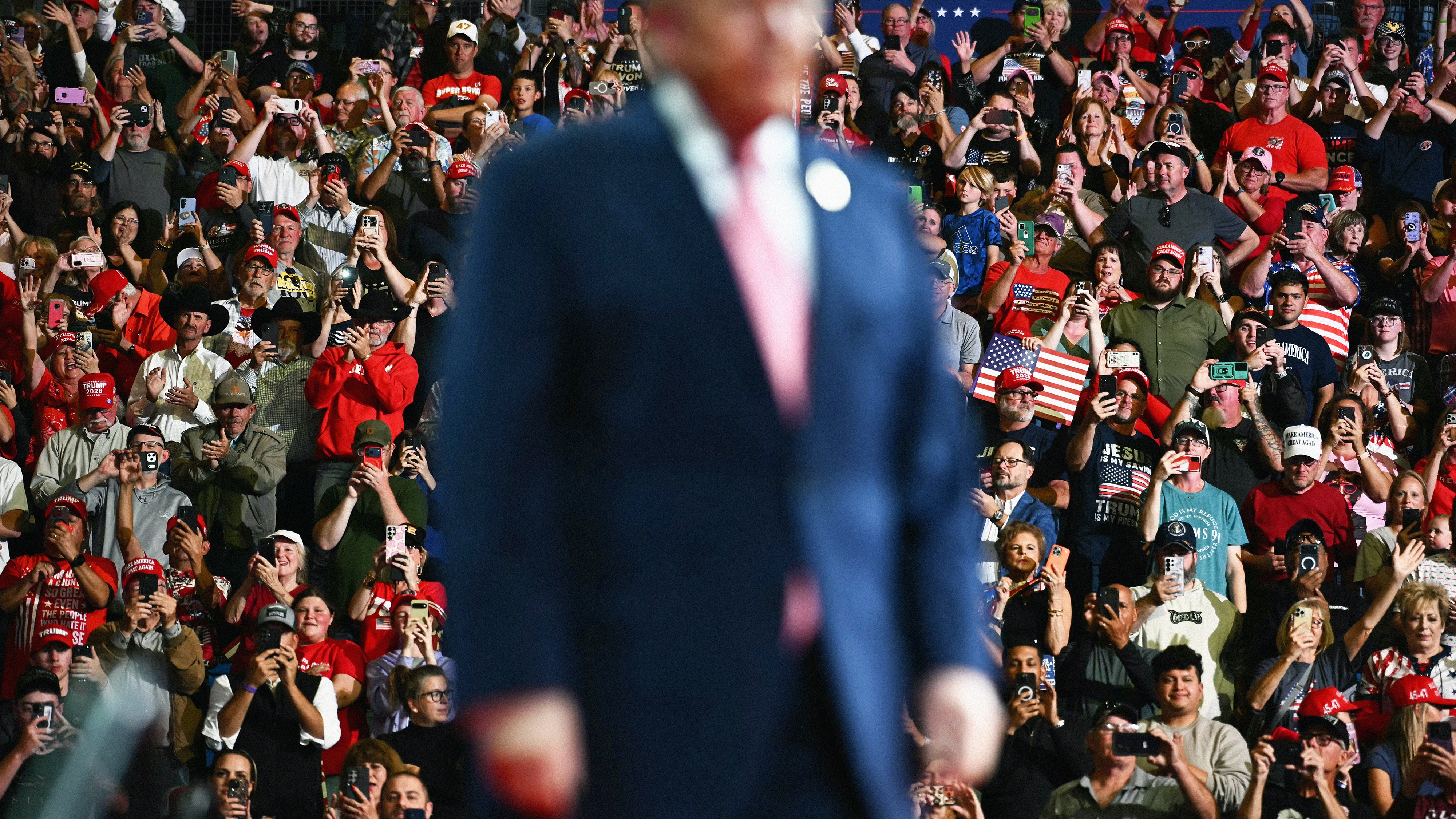
Many Republicans, and even some in Trump’s orbit, don’t quite get it. What has happened, they ask, to the instincts of the man who authored two of the most improbable victories in American political history? Trump’s superpower was his intuitive understanding of what motivated his supporters. Many Republicans privately tell me that he’s lost that feel. Trump now lives, they think, in a gilded bubble, palling around with billionaires, oblivious to—and, even worse, uncaring about—the problems facing so many voters. His approval rating has slipped to the low 30s. He’s become so toxic that some Republicans in tight races don’t want him anywhere near their state or congressional district, believing his rallies will harm more than help.

Strategists in both parties expect Democrats to take control of the House, while the Senate is a true toss-up—a stunning reversal from the beginning of the year, when the upper chamber’s map looked so favorable for Republicans, and Trump cut a dominant figure. Suddenly, Republicans find themselves fighting to keep Senate seats in deep-red states: Kansas. Alaska. South Carolina. Ohio. Iowa. Mississippi. Texas.

Trump is campaigning across the country, imploring his supporters to turn out for him one last time. But he’s given Republicans next to nothing to run on, and polls show that voters believe his economic policies are failing, his deportation program has gone too far, and his war is misguided. He instead has leaned hard on the political battles of the past, reheating fears about transgender surgeries (from his 2024 campaign), Muslim terrorists (all the way back to 2016), and even communism. (The guy does have a fondness for the ’80s.) For good measure, Trump’s Department of Justice charged the former FBI Director James Comey for a third time—the first two didn’t stick—because nothing screams being in tune with the everyday concerns of voters than trying to revive a faltering retribution campaign against a political foe your administration once targeted over a photograph of seashells.

One Republican up for reelection who would speak with me only on the condition of anonymity, so as not to alienate the president, put it succinctly: “We may have lost the plot here.”

Not that long ago, the president was tossing Trump 2028 hats around, and Democrats were freaking out that he might be powerful enough to defy the Constitution. But that headgear now seems dated, as does the apparel line trumpeting that Trump Was Right About Everything! Many Republicans tell me that their party’s biggest problem just days from the election is that voters feel like Trump hasn’t kept his core promises.

End foreign wars? Nope, there’s a new one in Iran that’s sent gas prices up and depleted the U.S. munitions supply. Plus, Trump has appeared to side with Russia over Ukraine in a conflict he once promised to end in 24 hours. Bring prices down? Well, the war in the Middle East has made that impossible, as have Trump’s haphazard trade wars, including tariffs on once-friendly trading partners such as Canada and the European Union. And while many Americans are struggling, Trump and his family are growing exponentially wealthier. Deport the worst of the worst? Trump’s massive roundups are targeting not just violent criminals or gang members, but also longtime community members, neighbors, parishioners, teammates, and friends with no criminal records. Many Americans have been horrified by the violence unleashed by masked federal agents, especially the killing of two U.S. citizens in the streets of Minneapolis.

[Read: Trump’s gamble to end the Iran war ]

That Trump wants to focus on anything other than these broken promises while out on the campaign trail is perhaps unsurprising. At his Monday rally in Corinth, Mississippi, he spent seven minutes—nearly 10 percent of his entire speech—discussing his efforts to redecorate the White House.

The day before—when Trump traveled to a rally in Port Huron, Michigan—the president’s talking points included faulting President Biden for the war in Ukraine; falsely claiming that more oil passes through the Strait of Hormuz than before the war; deeming Norway a “shithouse country”; calling Abdul El-Sayed, the state’s Democratic nominee for Senate, a jihadist (five times); saying that, should he win, El-Sayed will be the only senator who must go through a metal detector to get to work; comparing a vote against El-Sayed to stopping a deadly terror attack; asking the Trinidadian rapper Nicki Minaj to stand before thousands of his supporters so that they could appreciate her butt; and lauding the boulder-like shoulders, thick fingers, massive feet, and firm backside of (who else?) Husted, his preferred candidate for Senate in a different state. Over the course of that day, he spent three and a half minutes talking about Husted’s football career, which is three and a half minutes more than he talked about the lawmaker’s policies.

Rather than dispel the notion that he has lost sight of what actually matters to voters, Trump on Sunday night released a social-media screed of more than 1,300 words (his longest Truth Social post ever) that assailed Maher for being ungrateful after the president hosted the comedian and talk-show host at the White House for dinner. The president has also fumed that Obama said over the weekend that Trump’s new White House decor is “looking like Saddam Hussein opened a Cheesecake Factory.” Trump angrily complained about the dig multiple times just yesterday.

[Read: Leave the Cheesecake Factory out of this]

Trump has also found himself on the wrong side of the day’s top issues. He misses few chances to mock the affordability crisis. Republicans and Democrats alike have swiftly turned on artificial intelligence, blasting the industry’s data centers as loud and expensive, and warning voters that the rapidly developing technology could take away their jobs or even their lives. Yet Trump has refused to regulate AI, knowing that the industry is propping up the stock market. His only nod toward change is trying to rename it “Super Intelligence.”

Last week, Trump loudly supported a controversial ad from the campaign of Vivek Ramaswamy, the Republican candidate for Ohio governor. The video features the estranged mother of the Democratic nominee Amy Acton, Donna Arthur, who accuses her daughter of lying about her past. It doesn’t mention that the two women have not spoken for decades, after the candidate’s stepfather was indicted for molesting her. The backlash was fierce and bipartisan; the state’s current Republican governor, Mike DeWine, denounced the ad and demanded that it be pulled. Trump not only supported it but also urged Ramaswamy to “say thank you, God, very much” for such political good fortune. Divine intervention or not, several GOP strategists believe the ad could doom Ramaswamy.

Some GOP candidates in tight races—Susan Collins in Maine, John Sununu in New Hampshire—have sent word to the White House that Trump isn’t welcome to campaign alongside them. The president has instead been dispatched to deep-red states with the hopes of turning out enough of his die-hard supporters to avoid losing once-safe Senate seats.

Olivia Wales, a White House spokesperson, insisted to me in a statement that Trump is remaining focused while “crisscrossing the country with unmatched energy and enthusiasm to deliver a simple message: with Republicans in control of Congress, Americans can expect safer streets, lower taxes, a secure border, and energy dominance.”

The most eyebrow-raising October surprise has been Trump’s unfiltered and rather randy assessments of the male form. His motivations remain a mystery, but some in the president’s circle have theories. One outside adviser who is close to the president told me that it began when Trump, while rallying for Husted two weeks ago, was first told that the senator had played college football in the late ’80s. Trump was impressed and began publicly ruminating over the next few days about Husted’s physique, including declaring that the senator’s “ass is like a pile of muscle.”

That admiration quickly became a subject of interest on social media and cable shows, some of which resurfaced clips of Trump praising the good looks of Secret Service agents, generals, and a quarterback for the New York Giants. All of that prompted amused chatter about the 80-year-old president. But Trump has always been keenly interested in appearances, female or male, and has long made hiring decisions based on wanting looks out of “central casting.” As that adviser noted to me, Trump has spent decades in the public eye, obsessing about how his tan or hair looked on television; he’s given a lot of thought to his own appearance, so it’s not surprising that he’d think about how others look, too.

[Read: A different kind of fading president ]

What is more surprising to many around Trump is just how freely he is expressing those thoughts. Any filter appears to be long gone. Then again, there may be simpler explanations: Once the Husted comments went viral, Trump’s rally crowds have come to expect the lines and have begun to laugh along, reinforcing the president’s sense that the material is working. And Trump would rather discuss almost anything besides the price of gas—even Husted’s posterior.

Jack Rodriquez-Vars contributed research to this report.
© Kent Nishimura / AFP / Getty
  •  

Trump’s Gamble to End the Iran War

President Trump has been hearing lately from two trusted confidants, each promising a quick path to ending the war in Iran. Treasury Secretary Scott Bessent has argued that Iran is on the brink of economic collapse and that a U.S. blockade of the Strait of Hormuz, combined with sanctions, will force Tehran to capitulate at the negotiation table. Israeli Prime Minister Benjamin Netanyahu, in a series of calls with Trump, has offered a different route: one more round of devastating U.S. and Israeli strikes to topple the regime. Now the Trump administration appears to be considering combining the two approaches, betting that Iran is already on the verge of economic ruin and that a few more major strikes will be enough to trigger regime change.

The president is considering reviving his military campaign against Iran with several days of strikes, likely just after the midterm elections, officials told us. The potential targets include Iran’s missile and drone arsenal as well as its energy infrastructure and nuclear facilities. One outside adviser told us that “the economic pressure is working, and we believe Iran is getting close to the edge.” The new strikes, the person added, “would push them over.”

Experience suggests that this may be wishful thinking. Economic pressure has badly weakened Iran, but the country’s negotiating position has hardly budged. Trump has thought before that Iran was on the verge of ruin—or already past it—only to discover that he’d miscalculated. And launching more strikes could spark a regional escalation without bringing the regime any closer to surrender. Speaking at Tehran’s Holy Defence Museum earlier this week, Brigadier General Hossein Mohebbi, a spokesperson for the Islamic Revolutionary Guard Corps, named seven major fiber-optic cables beneath the surface of the Strait of Hormuz as potential “new targets” and teased that future attacks would feature “new weapons.” If the proposed U.S. strike plan fails to bring Iran to its knees, Tehran could emerge even less willing to make concessions.

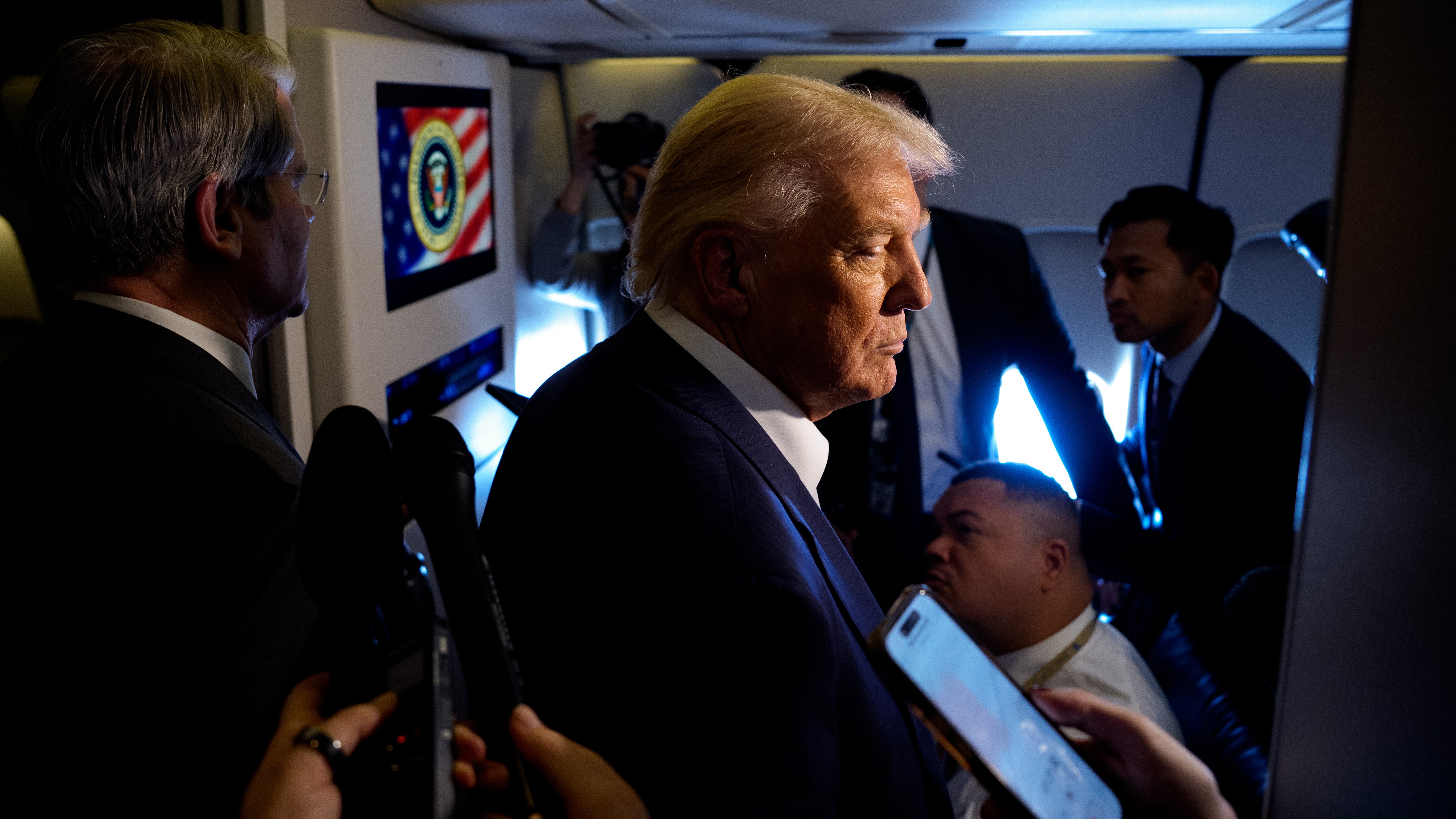
“Trump is desperate to find some options to take him out from this problematic situation,” Danny Citrinowicz, a former Israeli intelligence officer who specializes in Iran, told us. “But you cannot plan for a three-day war, because it is not a unilateral decision. You cannot control how Iran responds.” Nevertheless, the president appears intent on acting. “Something one way or another, it will happen fairly soon,” Trump told a reporter yesterday before boarding Air Force One.

Despite all of the reasons resuming strikes could be a mistake, the president is tempted because he’s grown impatient waiting for the strategy of economic strangulation to work. He had originally hoped that Iran would come crawling back to the negotiations before the midterm elections, an official and another person familiar with the conversations told us under the condition of anonymity to discuss sensitive conversations. That has not happened, and energy prices have stayed high—creating an awful political landscape for Republicans. Trump has toned down some of his apocalyptic rhetoric toward Tehran, but his frustration occasionally seeps through, often in late-night social-media posts.

Trump has toyed with the idea of resuming hostilities before Election Day, a push championed by those in Washington who believe that a show of force could allow the president to claim some sort of October-surprise victory. Netanyahu has advocated for another round of strikes before his own election next week, a White House official confirmed to us. So far, Trump has held off on authorizing a pre-midterms strike; after we reported on the possibility earlier this month, the behind-the-scenes blowback from fellow Republicans was so intense that the president posted on Truth Social that he would not attack again before the election.

[Read: Trump is preparing for a long war]

U.S. officials stress that no decision has been made about whether to resume strikes post-election, although there have been very public signs of preparation. Some officials hope that uncertainty about what the United States will do—and when—will keep Tehran on edge. Earlier this week, Defense Secretary Pete Hegseth traveled to Israel and met with Netanyahu to discuss Iran. The State Department said yesterday that it was evacuating nonessential personnel and their family members from Saudi Arabia because of escalating attacks from Iran-backed Houthi rebels in Yemen.

Real questions remain about whether the Pentagon’s munitions supplies, which were growing dangerously low at the height of the conflict, would be adequate to defend U.S. interests in the Middle East. Meanwhile, even the hint of hostilities has spooked markets; the price of oil surged and the stock market fell today as word circulated about a possible return to war and Iran hit tankers in the strait. (The White House did not immediately respond to requests for comment. U.S. Central Command, which leads the war in Iran, declined to comment.)

The costly U.S. naval blockade, which has effectively stopped Iranian oil exports, coupled with sanctions and damage from U.S. strikes, has put Iran’s economy under severe strain. Inflation is soaring; goods are scarce. The record-low value of the rial has left Iranians struggling to pay for basic needs. Admiral Brad Cooper, the head of U.S. Central Command, said last week that the naval blockade had prevented Iran from exporting at least $25 billion worth of crude oil. The International Monetary Fund has projected that Iran’s economy will contract sharply in 2026. But while Tehran is trying to contain the damage through measures such as price controls and maintaining essential imports, there is little evidence that Iran is on the verge of imminent economic collapse. Over the summer, Bessent promised “financial violence” that would lead to Iran’s capitulation. Yesterday, the Treasury Department added sanctions targeting shipping networks and intermediaries “indirectly aiding Tehran’s ability to generate revenue to fund its military, weapons, and nuclear programs.”

“I think it could be within weeks or months—and the economy doesn’t have to collapse. We just have to have the regime come to their senses,” he told reporters at an August G20 finance ministers’ meeting. But the belief that that point will come soon ignores the patterns of history: The hard-liners in Tehran have become inured to the suffering of their people over decades and have yet to capitulate.

Meanwhile, Netanyahu has repeatedly urged Trump, who has endorsed the prime minister in his reelection bid, to launch strikes before Israel’s Tuesday election and the United States’ vote a week later, an Israeli television station reported last week. Netanyahu’s office has reportedly denied the claim. Regardless, the war is key to the political futures of Netanyahu and Trump. How and when it ends, however, is not entirely up to them.

© Andrew Harnik / Getty

  •  

Why Trump Is Furious at Ukraine

Over the next eight weeks, as winter envelops Ukraine, Russia plans to use the frigid weather as a weapon. Its arms factories have already made enough missiles and drones to take down Ukraine’s electrical grid, as well as the heating systems that millions of people rely on to stay warm. Homes far from the front will become deadly for their inhabitants as temperatures fall.

In that same time frame, three events taking place thousands of miles away could determine Ukraine’s future. The first is America’s Election Day, now two weeks away; leaders in Kyiv fear that if Democrats win one or both chambers of Congress, President Trump may turn even further against them in those final weeks of full Republican control of Washington. The second is a proposed summit in mid-November in southern China, where Russian President Vladimir Putin wants to meet with Trump and Chinese President Xi Jinping to plan how to end the war—without having a seat at the table for Ukraine.

The third is the G20 summit at Trump’s Miami-area golf course, scheduled to take place in mid-December. The president has visions of standing between Putin and Ukrainian President Volodymyr Zelensky as they sign a peace deal, even if he has to strong-arm Ukraine to do it, according to advisers. One Ukrainian official, speaking on the condition of anonymity to candidly discuss internal conversations, told us that it’s hard not to feel left out of decision making that will dictate the country’s future: “It looks like this is all happening without us.”

The U.S. president, who used to brag that he could resolve the war in 24 hours, has tossed aside some sanctions on Russia and struck a deal with Putin to import diesel from Moscow, giving a boost to the Russian war machine. He and his allies have threatened Kyiv, demanding that Zelensky stop attacking Russian oil refineries or risk losing access to American intelligence, weaponry, and satellite communications that it uses to defend itself. The calendar is now Ukraine’s foe—and so, Ukrainians fear, is Donald Trump.

Trump’s war in Iran has appeared to throttle Republicans’ chances in the midterms; the unending conflict, and the resulting surge in oil and gas prices, has eroded the GOP’s poll numbers and fueled Democrats’ hopes of taking both chambers of Congress. Stymied in his efforts to bring that war to a close, Trump recently shifted his focus to resolving the Ukraine conflict, in part to bring fuel prices down. But the way he’s chosen to try to do that has provided his fellow Republicans with a nasty October surprise. In a first for a U.S. president, Trump has sided with a traditional adversary, Russia, over a democracy that is not only fighting for its existence but also acting as a bulwark against a wider war. Trump’s diesel deal with Putin will have a negligible impact on American energy prices, but it’s a financial lifeline for Moscow.

[Read: Ukraine finds a new set of targets]

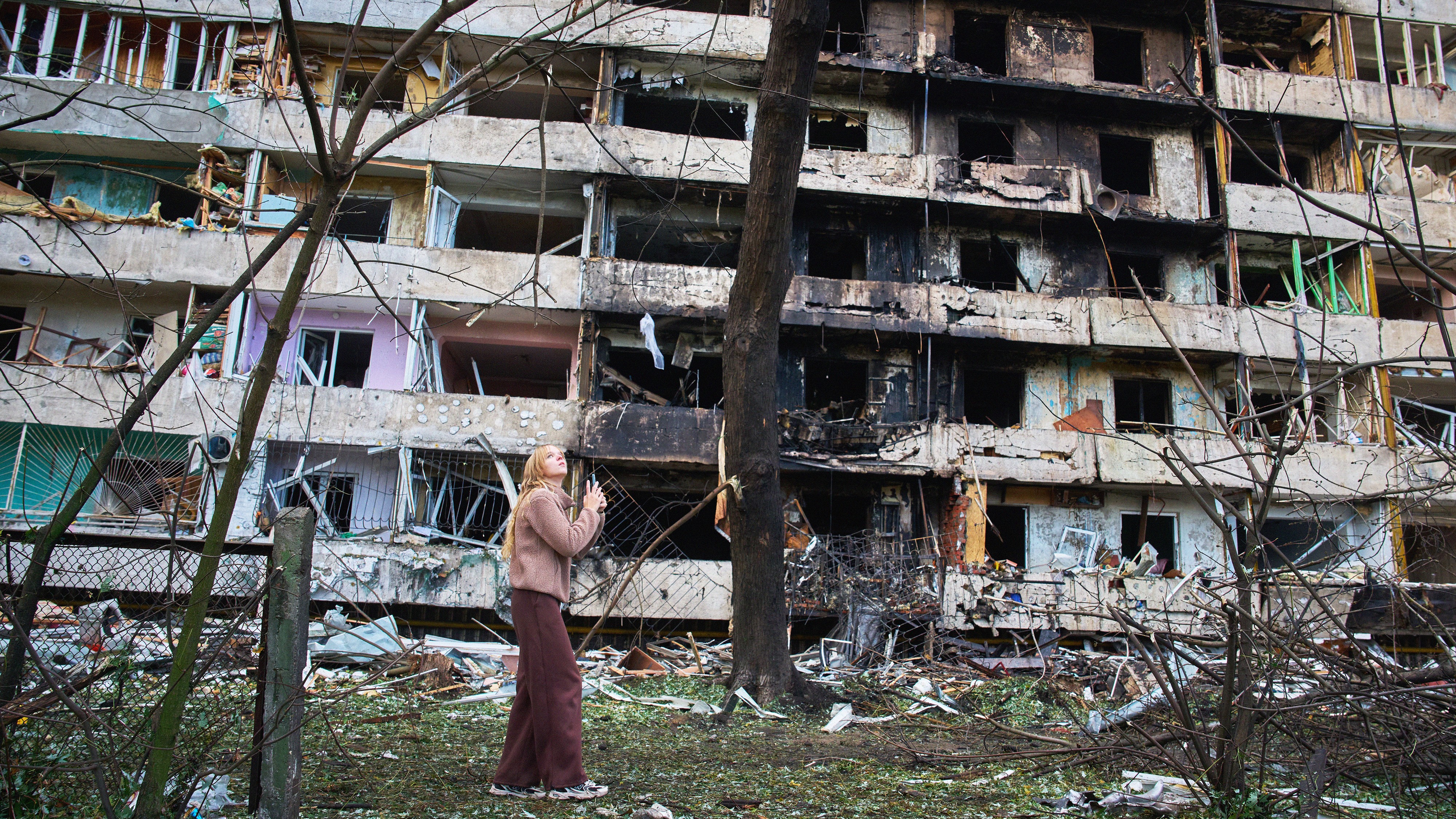
Trump has demanded an energy cease-fire—he even announced one earlier this month that had no basis in reality—yet has focused his ire entirely on Ukraine’s attacks on Russian oil refineries. He blames those strikes for the rise in energy prices while ignoring the real culprit, Iran’s ability to defy the United States and close the Strait of Hormuz. He’s convinced himself, three people close to him have told us, that Ukraine’s attacks on the refineries are, in part, meant to undermine Republicans’ chances next month—and, by extension, Trump. The president has ignored Moscow’s attacks on Ukraine’s electrical grid, and yesterday, hours after a drone strike on a public park killed six people, including two children, he downplayed its strikes on Ukraine’s cities, declaring that Russia had not “been doing much.” An image of one of the dead children, a 1-year-old killed as she sat in her stroller, was broadcast around the globe.

More pressure could be coming. Trump aides have threatened to withhold arms sales unless Kyiv stops targeting Russian diesel plants; this week, the administration delayed approving the transfer of missiles that Ukraine needs for its defense. Ukraine in the past week has said that it has not consistently received early warnings of attacks and no longer has full Starshield satellite access, which is impeding its ability to defend itself against Russia’s new fleet of jet-powered drones. (The Wall Street Journal reported today that Starshield’s creator, Elon Musk, ordered the slowdown. The White House and Musk had previously denied involvement.)

Some in Trump’s orbit have suggested that the United States go further and stop sharing intelligence with Ukraine. Trump’s deference to Putin has been a theme for a decade, yet this new round of kowtowing has handed Republicans another obstacle ahead of the elections. In a rare act of defiance, a handful in the party have denounced the president’s decisions, including his move to undercut a Russia-sanctions bill that he signed only a month ago in honor of its champion, the late Senator Lindsey Graham. The quick betrayal of Graham’s legacy was a blow for some of his Senate colleagues; GOP aides told us that Graham’s sudden July death cost Ukraine its most vocal champion in Trump’s inner circle, and that no one has stepped up to fill that void.

Michael Froman, who worked in the Clinton and Obama administrations and is now president of the Council on Foreign Relations, told us that cutting off Kyiv from American weapons or intelligence might, in fact, prolong the war because it “would undermine Ukraine’s position at the negotiating table and make it less likely Russia would be willing to negotiate on any of the key outstanding issues.”

Officials with both parties predict that the Democrats will capture the House next month; the Senate appears to be a true toss-up. Kyiv will be carefully watching the results. A Democratic win next month will, in the long run, likely help Kyiv, and some of the more hopeful members of Zelensky’s camp believe that Republican defeats could force Trump to focus more on domestic issues, resulting in him leaving Ukraine alone. But other observers on both sides of the Atlantic fear that the opposite could be true. A president without a friendly Congress tends to fall back more on foreign policy, where he needs little help from Capitol Hill. Either way, the new Congress won’t be seated until January 3, leaving Trump unchecked for two more months and perhaps motivated to wield power before his party moves into the minority. Another major national election would not be for two years—plenty of time for Trump to push Ukraine without fear of voters punishing Republicans. “He could get distracted at any time,” one outside Trump ally told us. “But right now, he’s furious at Ukraine, and he wants Zelensky gone.”

Two weeks after Election Day, Trump plans to board Air Force One bound for a series of summits in Asia. Earlier this month, Trump overruled White House aides who had counseled against him calling to wish Putin a happy birthday, warning that little good would come of it. In that conversation, Trump authorized the diesel deal, and Putin suggested something grander: a meeting of the world’s great powers to divide up the world. Or at least Ukraine.

Putin proposed that he, Trump, and Xi hold a trilateral meeting on the sidelines of the Asia-Pacific Economic Cooperation in Shenzhen, China, in mid-November to discuss a variety of issues, including Ukraine. Trump told reporters yesterday that he is open to attending the meeting, which would be his first face-to-face encounter with Putin since their unproductive summit in Alaska last year. It is no surprise that Trump is drawn to the idea; his deference toward Putin is rivaled only by his regard for Xi, whom he hosted in lavish fashion at the White House last month. He has previously been intrigued by the idea of the three powers—China, Russia, the United States—dividing the globe into spheres of influence, although Moscow these days hardly wields the international clout of Washington or Beijing.

[Read: The deferential president]

The idea of two authoritarians and their admirer plotting to slice up sovereign nations alarmed much of the West. And how, Kyiv demanded, could Ukraine’s future be decided with no input from Ukraine? But some in Trump’s orbit have backed the idea, belittling Ukraine as a corrupt backwater with no autonomy. Putin has never viewed Ukraine as a legitimate country, and Trump has held a grudge against it since 2019, when he was impeached (for the first time) after pressuring Zelensky to dig up damaging information about Trump’s political rival Joe Biden. He and his Ukrainian counterpart had a shouting match at the White House early in Trump’s second term, causing the U.S. to briefly withhold intelligence. Since then, Zelensky has tried to flatter Trump to stay on his good side, but those niceties have vanished as the American president has demanded that Ukraine pick a new leader.

Many of those in Trump’s orbit are unsympathetic to Ukraine’s plight and see the war not as a battle for the modern, rules-based world order—with its cardinal tenet prohibiting the seizure of land by force—but as an impediment to future business deals with Russia, some of which could enrich members of the president’s inner circle. Pushing Ukraine into taking a deal, even if that means it has to give up its claim on the Donbas, would open up avenues to dealmaking on Russia’s diesel, rare-earth minerals, and other resources. Zelensky has balked at any territorial concessions. “Our worry is that they are looking at this as a new Yalta Conference, to divide the world into spheres of influence,” another Ukrainian official told us.

Trump’s ideal timeline for some sort of Russia-Ukraine peace agreement, as we reported last week, would be in December at the G20 summit. That bit of history, were it to occur, would take place at one of Trump’s own properties. In Trump’s first term, he pushed to host the 2020 G7 at his golf course in Doral, just outside of Miami. But Trump abandoned the idea amid bipartisan blowback over his plan to personally profit off the event.

This time, there has been nary a Republican whimper of protest about Trump’s venue choice, but some have lodged complaints about the president’s other idea for the summit: to invite Putin. The Russian leader has yet to agree to show up, but if he does, it would be the first time he has attended a multilateral summit in a Western country since his invasion of Ukraine. It would allow him to take another step in shedding his status as an international pariah, though it is hard to imagine that European leaders are eager to talk with Putin.

Zelensky, who has already committed to attending the G20, has made clear that he would be willing to sit down with Putin, no matter the venue, to work out an agreement to end the war. If Trump has his way over the next eight weeks, it might be not a negotiation, but a capitulation.

© Efrem Lukatsky / AP

  •  

Trump’s October Surprise

It rained most of Sunday in Washington, as the remnants of Hurricane Isaias washed over the East Coast. Unable to golf, and stuck inside the White House, President Trump spent part of his morning on social media touting the size of his rallies and defending Christopher Columbus. He also declared that Russia and Ukraine had agreed to halt strikes against each other’s energy infrastructures. Except that he hadn’t first confirmed that with Ukrainian President Volodymyr Zelensky—and Russia spent the hours that followed bombarding Ukraine with missiles and drones, hitting a Kharkiv power plant.

Trump’s inability to bring the Iran war to a close has left him incensed but also oddly paralyzed, two people close to him told us. One of them, an adviser, said that Trump “is used to snapping his fingers and having the whole world—Republicans, world leaders, the media—come to attention, and he is losing his mind that Iran won’t listen.” Iran has resumed menacing oil tankers in the Strait of Hormuz, and the average price of diesel in the United States has crossed the $6-a-gallon mark, raising the cost of goods that travel the nation’s highways on trucks.

Republicans are panicked that those high energy prices could help Democrats take control of the House and Senate in the midterm elections, which are now only three weeks away. Trump has been searching for a scapegoat, and appears to have settled on Ukraine. Although blaming a European country that’s fighting for its existence for the rise in global oil prices might seem implausible, Trump seems to prefer that to accepting responsibility for his decision to attack Iran. His broadsides against Ukraine, moreover, are consistent with his decade-long deference to Vladimir Putin. With rare exceptions, Trump has aligned with Moscow over Kyiv throughout the four-and-a-half-year war. He wants Ukraine to end the fighting—and has pressured the country to agree to terms that Zelensky finds unacceptable.

A U.S. president siding with the Kremlin is quite an October surprise. But in just the past few days, Trump appears to have fully turned against Ukraine. He announced on Friday that he had reached an agreement with Putin to import Russian diesel fuel, undercutting the new sanctions bill against Moscow’s energy industry that Trump signed into law last month. Even if the roughly 2.25 million barrels headed to the U.S. only marginally ease fuel costs, the deal allows Trump to tout efforts to help Americans while also providing Russia with additional revenue. (Another few million barrels are set to ship next month.)

Despite the opposition of European allies and some Republicans on Capitol Hill, Trump has followed up by placing even more pressure on Ukraine. He called for Zelensky to be replaced. His aides have threatened to withhold arms sales unless Kyiv stops targeting Russian diesel plants. Some in Trump’s orbit have suggested that the U.S. go further, and stop sharing intelligence with Kyiv. That was the context in which Trump announced his fictional energy cease-fire. A senior Ukrainian military officer told us that Trump’s statements are “simply beyond comprehension.”

“Things are already incredibly difficult for us here,” the officer said, speaking, like others who talked with us, on the condition of anonymity to discuss sensitive matters. “But apparently, there’s always another level below rock bottom. Things can always get worse.”

Ukraine has expanded its strikes deep into Russian territory in recent months, targeting the larger nation’s oil refineries. Those attacks sparked an energy crisis in Russia and were cheered across Europe—but not in the White House. Russia imposed a ban on diesel exports in response, which added more pressure to global diesel markets already under strain from the war in Iran. Zelensky told Trump and his envoys Steve Witkoff and Jared Kushner that he was willing to stop attacking Russian oil refineries if the Russians halted attacks on Ukrainian power plants, a White House official told us. But Trump doesn’t see the strikes as equivalent—and demanded that Ukraine first stop attacking Russian refineries, the official said. Zelensky refused.

“Zelensky is overplaying his hand and pissing the president off,” the White House official said. “The president is asking for one thing: stop hitting the refineries. Give him that.”

[Read: Trump’s latest appeal to Russia could outrage even his allies]

Trump’s next move against Ukraine came, as it so often does, after a phone call with Putin. Zelensky’s aides have expressed frustration that Putin has swayed Trump at crucial junctures in the conflict (once, even, while Zelensky was flying to Washington to meet with Trump in an effort to secure access to new U.S. weapons). This time, Trump spoke with Putin on Friday to wish him a belated birthday, even though some in the White House counseled against the call, the adviser told us, believing it would yield little. During the 90-minute conversation, Trump told Putin that he would lift the sanctions on Russian diesel exports. (Some in Kyiv believe that the deal was agreed to earlier, because a ship carrying Russian oil and gas is already approaching the U.S.)

That undermined sanctions applied in 2022 and undercut the tougher Russian-sanctions bill that Trump signed last month; the law was named in honor of one of its champions, the late Senator Lindsey Graham. A bipartisan group of lawmakers was infuriated by the move, and some Republicans denounced Trump for siding with Putin. Four GOP senators—Lisa Murkowski of Alaska, Susan Collins of ⁠Maine, Thom Tillis of North Carolina, and John Curtis of Utah—joined some of their Democratic colleagues to release a statement yesterday saying that lifting the sanctions “runs directly counter to that law” and that the U.S. should not provide “Putin with a financial lifeline while Russia continues to kill Ukrainian civilians.”

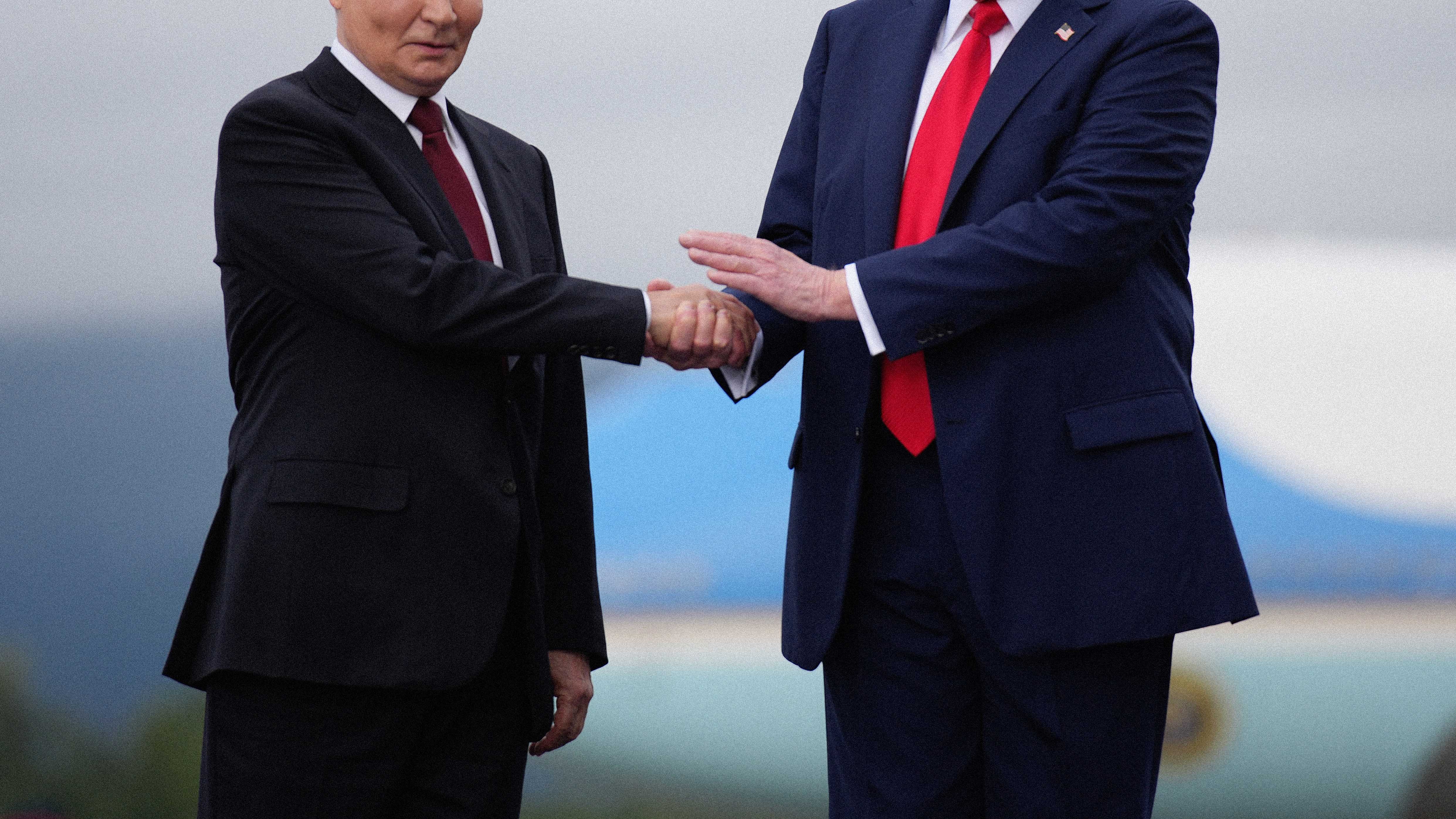
Zelensky, who was blindsided by the diesel deal, deemed it “not fair and not honest.” He had spent more than a year trying to repair his relationship with Trump, which hit its nadir in February 2025 during a shouting match in the Oval Office. Since then, Zelensky has taken to flattering the U.S. president, and he has tried to capitalize on Trump’s occasional annoyance that Putin will not end the war. Trump and Putin’s Alaska summit last year yielded little more than a photo of the two that hangs in the Palm Room at the White House. Even if Trump wouldn’t fully support Ukraine, officials in Kyiv had hoped he would not actively hurt their cause. That hope may be fading.

Recent talks between Kushner, Witkoff, and Putin have included the promise of massive business deals that Russia could strike with U.S. interests once the war concludes, according to reports. Ukrainian officials have long believed that Trump’s foreign policy focuses on opening up business deals—and the potential enrichment of the president’s family and friends—over the defense of democracy, human rights, or territorial sovereignty. Some officials in Kyiv believe that Russia’s economy, which has been remade to fuel Putin’s war machine, will not implode, despite the pressure of increased drone strikes and sanctions. A Ukrainian official close to the negotiating process told us that means “we need to change our strategy, stop fooling ourselves,” and find a way out of the war with Europe’s help. That, the official said, would likely require a new emphasis on negotiations.

During his call with Trump, Putin declined to commit to resuming peace talks, the Kremlin later told reporters. Yet Trump continues to view Zelensky as the primary impediment to peace—and the business deals it might bring—and he called for Ukraine to hold elections to select a new president. (Zelensky has said he will hold an election if Putin agrees to a 60-day cease-fire.) Trump also views Zelensky as an obstacle to his coveted, yet elusive, Nobel Peace Prize, for which he was passed over again last week. A senior European official told us that the U.S. has threatened to stop selling weapons to Ukraine via Europe if the strikes continue, and some close to Trump have suggested that the U.S. stop sharing intelligence with Ukraine, as it briefly did after the 2025 Oval Office argument.

[From the November 2026 issue: The Baltic states prepare for war]

Ukraine was already bracing for a difficult winter. Moscow has escalated its attacks on Ukraine’s cities. It has grown its missile stockpiles and debuted a jet-powered drone that Ukrainian defenses have had difficulty stopping. Europe has tried to fill the gaps left by Trump’s indifference—and the U.S. being bogged down in Iran—but Zelensky’s aides believe that Putin will use the winter to pummel their cities before making another lunge at Kyiv in the spring. If, suddenly, Ukraine were left without U.S. intelligence or American-made weapons, Kyiv might be in its most vulnerable position since the first days of the war.

Trump’s admiration for Putin has been one of the most enduring geopolitical subplots of the past decade. He refused to publicly acknowledge Russia’s efforts to help elect him in 2016, infamously siding with Putin over U.S. intelligence agencies during the leaders’ summit in Helsinki during his first term. More recently, he has refrained from holding Putin to account for helping Iran, even after American intelligence agencies revealed that Moscow gave Tehran targeting information to strike U.S. military assets in the region. Some of Trump’s closest outside advisers have privately wondered what Putin has done to so thoroughly enthrall the president; Trump’s respect for the Russian leader appears undiminished despite the humiliating struggles Putin has faced during the Ukraine invasion.

Instead, Trump has taken steps to help Putin shed his status as an international pariah. Though Putin has been charged with war crimes by the International Criminal Court, Trump welcomed him to Anchorage last summer. Trump’s move to undo the diesel sanctions could provide a boost to Russia’s faltering economy. And he has overruled the objections of some in his own party by inviting Putin to this winter’s G20 summit, which the United States is hosting at a Trump-owned golf course in Doral, just outside Miami.

If Putin accepts the invitation to that December meeting, it would be the first time he has attended a multilateral summit in a Western country since his invasion of Ukraine. Zelensky has said he’ll be there, and is hoping to meet with Putin to negotiate the end of the war. Trump has mentioned to advisers, one of them told us, that he’d like both sides to arrive to Doral ready to make a deal, so he can then preside over a peacemaking summit. Maybe then, Trump has suggested, he can finally win that Nobel.

© Andrew Harnik / Getty

  •  
❌