
❌

Reading view

The Limits of Trump’s Midterm Trickery

For the first time in modern American history, a sitting president is seeking to wield the force of the state to secure an electoral victory for his party. The Trump administration has attempted to undermine the widespread use of mail-in voting; demanded that states hand over voter rolls; threatened to prosecute state and local election officials; refused to rule out the idea of deploying troops or federal agents to polling places; and publicized the dramatic arrests of small numbers of people accused of voting or registering to vote as noncitizens. Many of these efforts have made little headway—either because of the administration’s incompetence, the stubborn lack of factual evidence behind President Trump’s claims of voter fraud, the federal government’s lack of legal authority, or the refusal of courts to go along with Trump’s plans.

But Trump may have a different problem on his hands. Polls show Trump’s approval falling to all-time lows in the weeks before Election Day; the percent of voters happy with his performance has now sunk into the 30s. Democrats, meanwhile, appear likely to retake control of the House of Representatives and maybe even the Senate, which last year seemed well out of reach. The polls could be wrong—and high-profile-polling misses of the Trump era are hard to forget. But if the polling is right, the GOP may be in for what George W. Bush, after a disastrous 2006 midterm, ruefully termed a “thumping.” And a thumping, as opposed to a narrower Democratic victory, could render most efforts to suppress turnout irrelevant, and make it far more difficult to implement any more dramatic effort to rig the results.

To Trump’s endless frustration, elections in America are organized at the state and local level, with little role for the federal government. In a typical midterm year, almost 470 congressional seats are up for grabs across 50 different states. Though a small number of those races are actually competitive, tinkering with the outcome of the votes would still require meddling with a number of different elections, all run differently, in different jurisdictions, under different laws. A strong night for the Democratic Party would make conjuring an ersatz House majority hard for the same reason that a losing sports team is less able to cheat its way to a victory in a blowout. (Even on a very strong night for the Democrats, the Senate may still be quite a close call.)

Tight margins, by contrast, can make an election more vulnerable to efforts to undo the voters’ will. Trump’s attempt to overturn the 2020 presidential election relied in significant part on tight margins in some swing states, sometimes with only 10,000 or 20,000 votes deciding the winner. In Georgia, the president famously pushed Secretary of State Brad Raffensperger to “find 11,780 votes” to make up his deficit against Joe Biden. As described by both the House January 6 committee’s report and Jack Smith’s indictment of Trump, Trump and his allies used close tallies in swing states, together with the slow counting of mail-in ballots, to engineer doubts over election results and provide Republican members of Congress with the tools to delay the formal counting of the electoral vote on January 6. The attack on the Capitol followed.

The memory of January 6, and the entrenchment of the election-denier movement since 2020, has led to speculation—both anxious and enthused—about the possibility of a comparable attack on election results in 2026. If, once most of the results are in, Democrats seem set to eke out a House majority by just a few seats, perhaps committed Trump allies in positions of power could make trouble in a handful of the closest districts. A local election commissioner, say, could refuse to sign off on a Democrat’s narrow victory, or the Justice Department could execute a warrant to seize ballots and thus delay or upend the counting of votes. This could create chaos on January 3, when the new House gathers for the first time: What happens if the contested seats are enough to deny the should-be-majority party the votes it needs to select a new speaker and take control of the chamber? Although this isn’t a foolproof trick for stealing control of the House, such a play could make things very precarious very quickly.

But the bigger the majority secured by Democrats, the more difficult it would be for Trump to shave that majority down—the more clerks to convince, warrants to secure, and court rulings to dodge, all over the country. “If there is a House majority in either direction that is 20, 30 seats, I think the likelihood of an attempt to engage in some kind of shenanigans around January 3 is way less than if the majority is two or three seats,” Jonathan Diaz of the Campaign Legal Center commented recently on a preelection panel convened at UCLA’s law school.

Other tricks are also less effective when the vote swings heavily in one direction. For example, Trump’s unprecedented push for explicitly partisan off-cycle redistricting may net only a few extra GOP seats rather than the double-digit gains Democratic strategists had once feared.

Political constraints matter too. Any scheme to steal the House for the GOP would depend on the willingness of congressional Republicans to vote in lockstep, with no defectors—something that the current fractious House Republican caucus can barely manage. Already, though, Republicans spooked by Trump’s bad poll numbers have begun distancing themselves from him on the campaign trail as they fight to hold on to their seats. Over the summer, Republican politicians and MAGA-friendly media outlets responded coolly to a rambling address by the president casting doubt on election integrity. If the GOP loses the House, how many Republicans concerned about their own political careers would be actually inclined to adopt the fringe message of an ever more unpopular lame-duck president? (Trump has been notably quiet recently about the possibility of running for an unconstitutional third term.)    

Trump will be hard-pressed to fight against “a clear loss, coupled with the expectation of a clear loss,” Bob Bauer told me. Bauer—a longtime Democratic lawyer who played a central role in the Biden campaign’s fight against Trump’s efforts to overturn the 2020 election—now focuses on bipartisan election-integrity work, alongside Ben Ginsberg, an election lawyer known for his past work representing the Republican Party. In 2020, Bauer said, the additional days required for the presidential race to be called after the polls closed helped fuel Trump’s claims of fraud. But now, broad public dissatisfaction has aligned with dismal polling for the GOP and a growing anticipation among both politicians and the press that Republicans will do poorly. “It would be very difficult in these circumstances, if things turn out that the Democrats do well, for him to suddenly announce that he was denied his landslide by vote rigging,” Bauer told me.

Just because such a scheme would be implausible does not, of course, mean that Trump won’t try it. Last week, the Justice Department filed a bizarre lawsuit seeking to preemptively block Alaska from certifying the results of its Senate race—but only if Republican Senator Dan Sullivan loses. (“The legal argument is one of the worst ones I’ve ever seen,” wrote the law professor Derek Muller in an analysis of the case.) DOJ also continues to pursue litigation seeking to force California to set aside mail-in ballots to voters whom the federal government claims to have identified as noncitizens. These cases are sloppy, tardy, and almost certainly doomed. But they do have the advantage of helping Trump and his allies build a narrative about the courts blocking Trump’s efforts to ensure a fair election. Likewise, if a Trump-aligned rogue local election official tried to block a Democratic candidate’s victory, whatever he or she concocted as reasoning could provide fuel for election-fraud rumors on the far right, even if the effort—as it likely would—ultimately failed.

In a wave election, some races will still be close. They may just be in different states or districts—mostly, more Republican ones—than in a year with more typical political geography. House seats in deep-red areas across the country may be newly up for grabs. In the Senate, races in Texas and Alaska stand out as potential flash points. “Any close race in the Senate is going to be hotly, hotly contested,” Bauer told me. He pointed to the bitter fight between the Democrat Al Franken and the Republican Norm Coleman over the 2008 Senate election in Minnesota, which took months to resolve and ended with the courts upholding Franken’s 312-vote victory.

In the final weeks before the midterms, election experts have seemed notably calmer than some of the the anxious rhetoric around Trump’s potential subversion of the vote might suggest. Eight experts interviewed by The New York Times (including Bauer) voiced worries about possible upheaval but overall confidence that officials are prepared to protect the integrity of the elections. The nonprofit publication Votebeat likewise surveyed 31 authorities on election administration and found the group to be wary but “cautiously optimistic” that the midterms will go smoothly. If the elections pass without serious disruption, a hefty margin of victory for the Democratic Party could be partly why. But the fact that such a margin may be needed to avoid chaos is itself sobering. In a healthy democracy, the opposition party should not have to win by enormous numbers to ensure victory, and voters should be able to trust that even a close election will be free and fair.
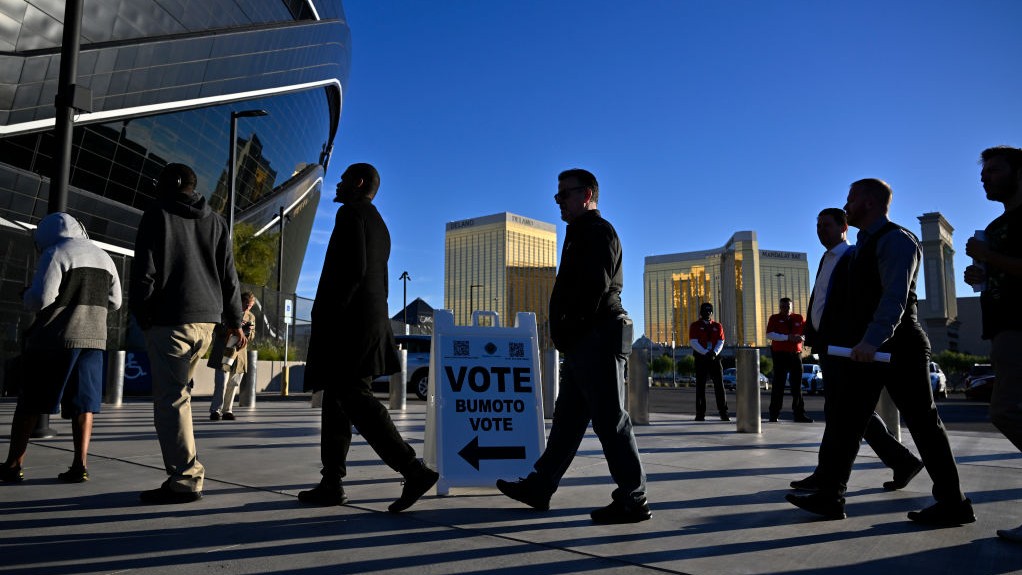
© David Becker / Getty
  •  

A Very Suspicious Prosecution of Two Former FBI Officials

Not too long ago, the Department of Justice could generally be trusted to prosecute cases in which lawyers believed that real wrongdoing had occurred. Now DOJ frequently unveils lawsuits that seem designed mostly for securing likes and reposts on right-wing social media—the actual facts be damned. Any high-profile criminal case brought by the Trump administration arrives with an air of suspicion.

Today, Jeanine Pirro, the top federal prosecutor for Washington, D.C., announced an odd set of charges against two former FBI officials for allegedly lying to Congress during testimony in 2023. “When senior FBI agents lie to Congress believing they are above the law, it’s time to bring the hammer of justice down on them,” Pirro posted on X. For all of the fanfare, DOJ provided little evidence to back up its claims. But the timing of the charges—they’ve arrived just more than a week before the midterm elections—combined with the puzzling substance of the allegations and the administration’s crowing online, does not inspire confidence in the integrity of the prosecutorial work.

The charges concern several statements made by the defendants, Nikki Floris and Bradley Benavides, in the course of a congressional investigation into supposed “weaponization” of the government against President Trump. In brief, the Justice Department is alleging that Floris and Benavides lied to the House Judiciary Committee regarding their level of knowledge about the FBI’s handling of Hunter Biden’s laptop. Lawyers for Floris issued a statement saying that DOJ “has accused her falsely of a crime on the say-so of politicians, not on the facts.” Benavides’s lawyer likewise described the charges as “baseless.”

The saga of the Hunter Biden laptop has now spanned four federal elections, and the specifics of the story may, reasonably, no longer be top of mind. Understanding its relevance here requires a deep plunge into far-right mythology. But the quick version is that MAGA became obsessed with the possibly stolen laptop, and the material it contained documenting Biden’s drug addiction, after the New York Post published an article about the laptop in the lead-up to the 2020 election. Social-media companies, burned by their experience of Russian election interference in 2016, worried that the underlying documents might be Russian misinformation. (This suspicion was never confirmed.) They responded aggressively by suppressing links to the Post’s story—which outraged the right. The laptop would go on to play a starring role in the coming years as the GOP used congressional investigations to tell a story about the victimization of the right, supposedly having been a target of a sprawling network of government-backed online censorship and unfair treatment by the FBI.

This was the context in which Floris and Benavides were testifying in 2023. The two had held leadership positions in the FBI’s Foreign Influence Task Force (FITF) during 2020, a section created to respond to foreign interference after Russia’s 2016 election meddling. There they had crossed paths with the laptop. In recent years, congressional Republicans have pointed to various decontextualized snippets of that testimony and internal FBI documents as part of their efforts to suggest that the FBI was working against Trump in the 2020 election.

By then, for a certain kind of very online Trump supporter, Floris and Benavides had already become familiar if relatively minor villains in the anticanon of deep-state enemies. The criminal charges today make sense in this larger narrative. In his X post announcing the charges, FBI Director Kash Patel referred to the agency’s past “political weaponization targeting their opponents.”

Just because MAGA hates someone does not mean that they are innocent. But Floris and Benavides’s work as described in the affidavit seems unremarkable. And the document is opaque when describing what the two defendants are actually alleged to have lied about. To be prosecutable under the relevant statute, a lie to government authorities must be told “knowingly and willfully,” and it must be “material” in a way that substantively affects the investigation in question. Some of Floris’s and Benavides’s alleged misstatements, as described in the affidavit, don’t initially appear to be misstatements at all. For example, Floris said she was not involved in the criminal investigation into Hunter Biden during which the FBI seized the laptop; in fact, her work at the FITF really was separate from the criminal probe, which was carried out by a different team.

Other supposed lies might well be better understood as forgetfulness. The two defendants were high up in the bureau and wouldn’t necessarily recall the minutiae of an incident that took place three years before they testified. In one instance, the affidavit alleges that Floris lied about her involvement in “an assessment to discredit the Hunter Biden investigations,” but contains no further mention of this supposed assessment nor any quotes from the relevant testimony. Perhaps DOJ will be able to provide more evidence for its allegations as the case goes on, but as things now stand, the charges appear less than airtight.

How the Justice Department chose to bring this case also invites suspicion. The charges were filed via a criminal complaint, a method the government uses in many investigations that must move quickly, because a complaint does not require the immediate involvement of a grand jury. The need to rush here is hard to see, given that the relevant testimony was three years ago. Conversely, it’s easy to imagine why DOJ would want to push out incendiary allegations without having to convince a potentially skeptical grand jury—an all-but-certainty in D.C., where jurors have delivered a number of high-profile rebuttals to federal prosecutors. In the next 30 days, if the department wishes to move forward with the case, it will have to seek a grand jury’s indictment. By then, though, the Trump administration may have already gotten the propaganda boost it was looking for.

At a hearing today, Magistrate Judge Zia Faruqui appeared skeptical of the case, noting the government’s decision to delay seeking an indictment and describing the defendants’ “sparkling backgrounds.” As many judges have commented over the past year, the traditional “presumption of regularity” awarded to the Justice Department’s work has been eroded by the Trump administration’s habitual use of criminal prosecutions as a tool to harass the president’s enemies. With this case, DOJ has provided little material to reassure its critics.

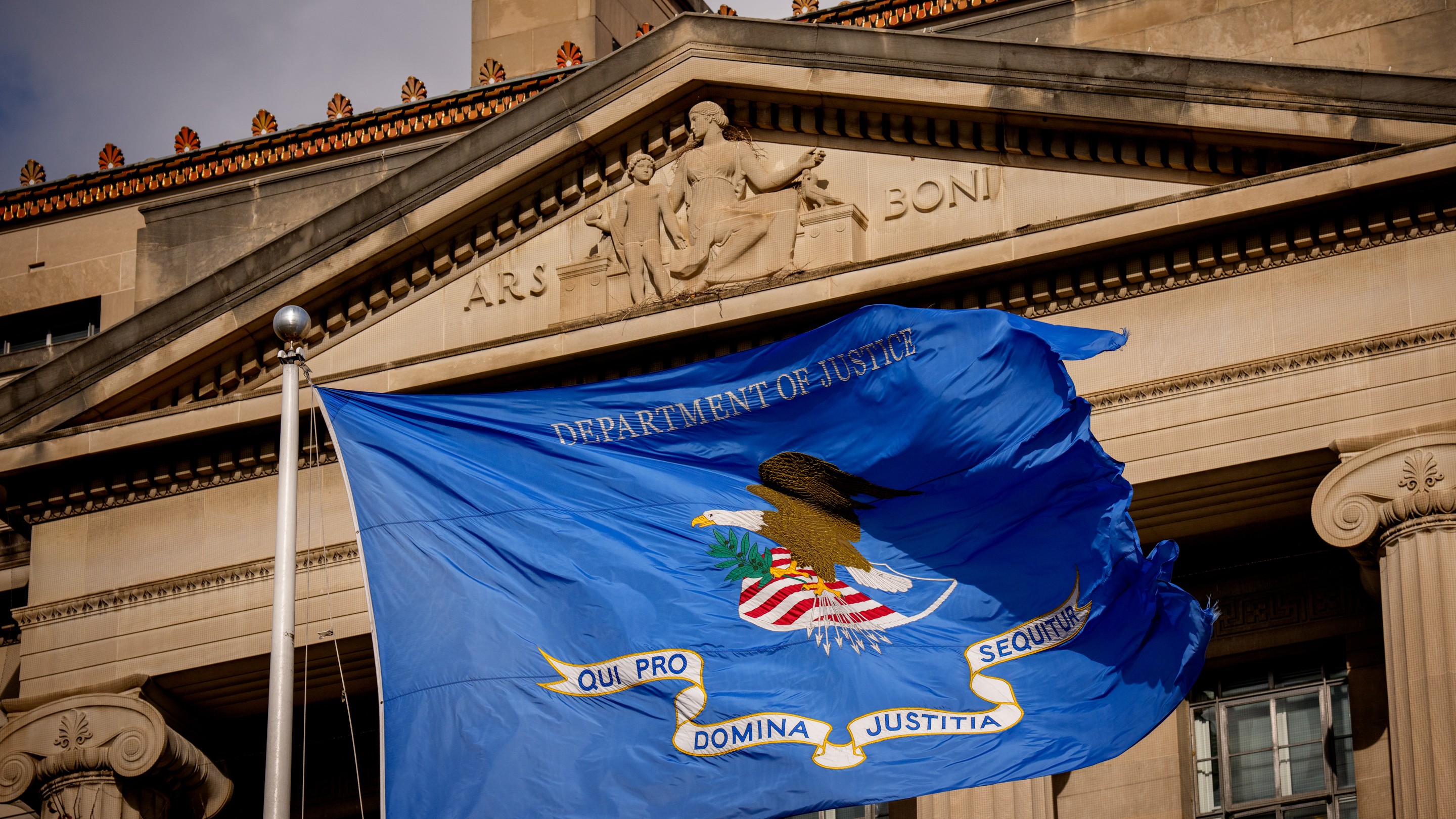
© Andrew Harnik / Getty

  •  

0 for 26: The Trump Administration’s Astonishing Losing Record

This article was featured in the One Story to Read Today newsletter. Sign up for it here.

Typically, the Justice Department’s Civil Rights Division focuses its voting-rights efforts on ensuring that Americans are free to cast a ballot. Under the second Trump administration, the division has trained its focus on a different project: strong-arming states to hand over sensitive voter information to the federal government. Since September 2025, the Department of Justice has filed lawsuits against 30 states and the District of Columbia to this effect.

“This is a top priority,” the division’s head, Assistant Attorney General Harmeet Dhillon, said on a podcast hosted by the right-wing influencer Benny Johnson last December. Examining these records would help DOJ identify supposed voting by noncitizens and stamp out voter fraud, Dhillon explained: “I think eventually we’re going to win these cases, all of them.” DOJ had never before sought to collect these data, and the ominous ambiguity as to what the government plans to do with the information left many experts and election officials alarmed over how this might be used to interfere with the midterm elections. In a letter to the Justice Department, a group of Democratic secretaries of state voiced “immense concern” over DOJ’s apparent plans to share the data with the Department of Homeland Security.

Nearly a year later, however, the number of victories secured by the Justice Department in this litigation stands at zero. DOJ has lost 26 cases in district court and triumphed in none; Judge Sparkle Sooknanan, in Washington, D.C., handed the administration its latest defeat just last Friday. (Several cases remain pending.) The administration’s demands have been rejected by judges appointed by Democrats and Republicans—including several nominated by President Trump himself—a run of losses that represents an embarrassing defeat for Dhillon’s project. More important than humiliation: DOJ’s wipeout demonstrates how America’s decentralized system of elections, aided by the courts, is working to limit Trump’s efforts to corrupt democracy. Anxious narratives about his administration interfering with elections often portray the president as a figure who “can just will his fantasies into existence,” says Justin Levitt, an election-law expert at Loyola Law School and a former deputy assistant attorney general in the Civil Rights Division. But the Justice Department’s prolonged losing streak, Levitt told me, “is a pretty clean rebuttal” of Trump’s supposed invincibility.

Elections in the United States are conducted at the state and local levels, and the federal government has little involvement or control over how officials across the country manage the voting process. State and local jurisdictions maintain their own voter rolls—detailed records of voter information that can include sensitive material such as addresses, driver’s licenses, and partial Social Security numbers. But Trump, seeking to eradicate a supposed plague of voting by noncitizens, has clashed with this system. (In reality, such illegal votes are extraordinarily rare.)

In March 2025, Trump signed an executive order tasking DOJ and the Department of Homeland Security with comparing state voter rolls against DHS systems. The plan had many problems. On the federal government’s end, the DHS program that the White House seemed to have in mind as a basis for comparison—Systematic Alien Verification for Entitlements, or SAVE—was not originally designed to serve as a master list of citizens and can be glitchy and incomplete. Many states were unimpressed by the demand. “Go jump in the Gulf of Maine,” Shenna Bellows, Maine’s secretary of state, said on receiving DOJ’s voter-file request in July 2025. The federal government had no authority to make such a request, Bellows told the Maine Morning Star: “If Congress thought it was appropriate that there be a national voter file, Congress could have authorized the Department of Justice to do that, but they have not.”

A number of red states willingly agreed to hand over their voter files to the Civil Rights Division, but most states—concerned about upholding their obligation to protect residents’ privacy—took Bellows’s approach. Then, in September, DOJ went to court. “American citizens have a right to feel confident in the integrity of our electoral process,” Dhillon said in a statement announcing the first lawsuits, against Oregon and Maine. The initial suits targeted blue states that were familiar adversaries of the Trump administration. As time went on, though, the Civil Rights Division began to file cases against purple states and even those of the deepest ruby red—such as Oklahoma, West Virginia, and Idaho. “We will continue to work closely with our federal partners,” Idaho Secretary of State Phil McGrane, a Republican, wrote in a letter to the Justice Department. But, he said, he could not share the voter rolls “in the absence of a clear legal requirement that Idaho provide a copy of its complete, unredacted voter list.”

[Paul Rosenzweig: Using the power of the government to win elections]

Dhillon regularly posted chirpy announcements on X heralding new lawsuits against states and providing updates. Behind the scenes, though, things were not going smoothly. The DOJ attorneys whose names appeared on court filings, several of whom had worked to cast doubt on the 2020 election results before joining the department, appeared to be struggling under the weight of litigating dozens of cases nationwide. DOJ requested voter data from the wrong officials, spent months emailing an incorrect address in Oklahoma, filed two cases in the wrong court, and uploaded a court document with internal comments still in the PDF. (Oklahoma eventually settled the lawsuit and provided its rolls.) At one point, the department trumpeted a judge’s ruling in Connecticut as a significant victory when the order did little more than set a schedule for the case.

DOJ’s lawsuits against red states also alienated potential GOP allies, especially when the Civil Rights Division sent out an aggressive letter that seemingly hinted at potential criminal prosecution for the election officials resisting DOJ’s demands. “This is truly bizarre behavior by the federal agency that is supposed to be protecting civil rights,” Utah Lieutenant Governor Deidre Henderson, a Republican, posted on social media. Even in red states that had agreed to share their voter records, the process was bumpy. After comparing its voter rolls against the SAVE database, Texas identified more than 2,500 voters as possible noncitizens, and some counties began removing them from the rolls; at least some of those individuals turned out to be Americans who had legally registered to vote.

In court, DOJ’s main issue has been that it simply has no legal basis for its requests. Two of the statutes that it relied on in early cases, the Help America Vote Act and the National Voter Registration Act, don’t authorize the sorts of requests being made. Judges disagreed over whether the main statute wielded by DOJ, Title III of the Civil Rights Act, applied to the voter rolls at all. Even if it did, many judges agreed, DOJ had provided no reason to think that an investigation under Title III was justified. The Justice Department’s arguments would allow it to “embark on a fishing expedition of voter records in any state looking for concerns, without identifying a single issue with the state’s policies beforehand,” wrote Judge David O. Carter of the Central District of California.

Judge Carter and Judge Sooknanan pointed to the Privacy Act of 1974, a federal statute that imposes civil and criminal penalties if the federal government does not go through certain processes before collecting sensitive personal information. Justin Levitt told me that this reasoning could spell trouble for the department when it comes to the voter rolls collected voluntarily from red states. “I think it’s very hard to read this analysis and not think that in other instances, where they did get the data, that somebody committed a federal misdemeanor,” Levitt said. (Along with other alumni of the Civil Rights Division, he filed amicus briefs against the government in many of the voter-roll cases.)

DOJ has continued to rack up losses over the course of 2026. In June, the U.S. Court of Appeals for the Sixth Circuit, the first appeals court to weigh in on the issue, ruled against the government. “Very powerful dissents!” Dhillon wrote on X in August, after the Sixth Circuit declined to reconsider the case. Attorney General Todd Blanche suggested in August that DOJ might ask the Supreme Court to intervene, but the department has yet to do so. And the defeats are still rolling in: Last month, judges tossed out cases in Washington, Vermont, and Georgia. Judge Sooknanan’s ruling last week found the entire, nationwide program of seeking voter rolls to be unlawful—a particularly harsh reprimand.

Many of the judges who dismissed DOJ’s lawsuits expressed concern about the lack of clarity regarding what the federal government plans to do with the data. “It appears that the DOJ is on a nationwide quest to gather the sensitive, private information of millions of Americans for use in a centralized federal database,” Carter wrote in his opinion. Several judges, pointing to press reports, raised questions as to whether the government intended to somehow use information contained in the voter rolls as part of an immigration-enforcement dragnet.

[Quinta Jurecic: Rules designed to create chaos]

Even if DOJ and DHS had been able to cobble together that exhaustive list, there is no obvious mechanism by which the federal government could use such a database to upend an election. “It’s a massive disconnect,” Levitt said, paraphrasing the administration’s reasoning: “Step one, collect voter files. Step three, elections with integrity. What’s step two?”

Had the Trump administration somehow identified supposedly illegitimate registrants on the voter rolls, it would not have been able to force states to remove voters against their will. Recently, for example, DHS informed Nevada that it had uncovered almost 16,000 potential noncitizens on the state’s publicly available voter lists, which lack the sensitive personal information that DOJ has been working to obtain. Under scrutiny, DHS “confirmed” only 185 of those names; according to Nevada, zero were actually noncitizens. Likewise, on Tuesday, DOJ sent similar letters to California demanding that the state withhold ballots from a list of “likely noncitizens” if it could not prove their citizenship. But even if California wanted to comply, the National Voter Registration Act prohibits mass purges of voters in the 90 days before the election. (Last year, in a decision now under review by the Supreme Court, the U.S. Court of Appeals for the Ninth Circuit found that this provision also applies to potential noncitizens.)

DOJ’s quest for voter rolls is only one strand of the Trump administration’s larger effort to meddle with the midterms. Many of those plans have likewise fallen flat or been barred by the courts, such as the administration’s attempt to effectively make mail-in voting impossible. Others, such as DHS’s effort to bulk up the SAVE database, are moving forward but will likely lack broad effect on the vote this time around.

The Justice Department’s misadventures in seeking voter rolls are a reminder that just because the Trump administration tries something, that does not mean the plan is well conceived or destined for success. In this instance, it has been defeated by election officials, both Democrats and Republicans, who were committed to the nonpartisan work of putting democracy into practice.

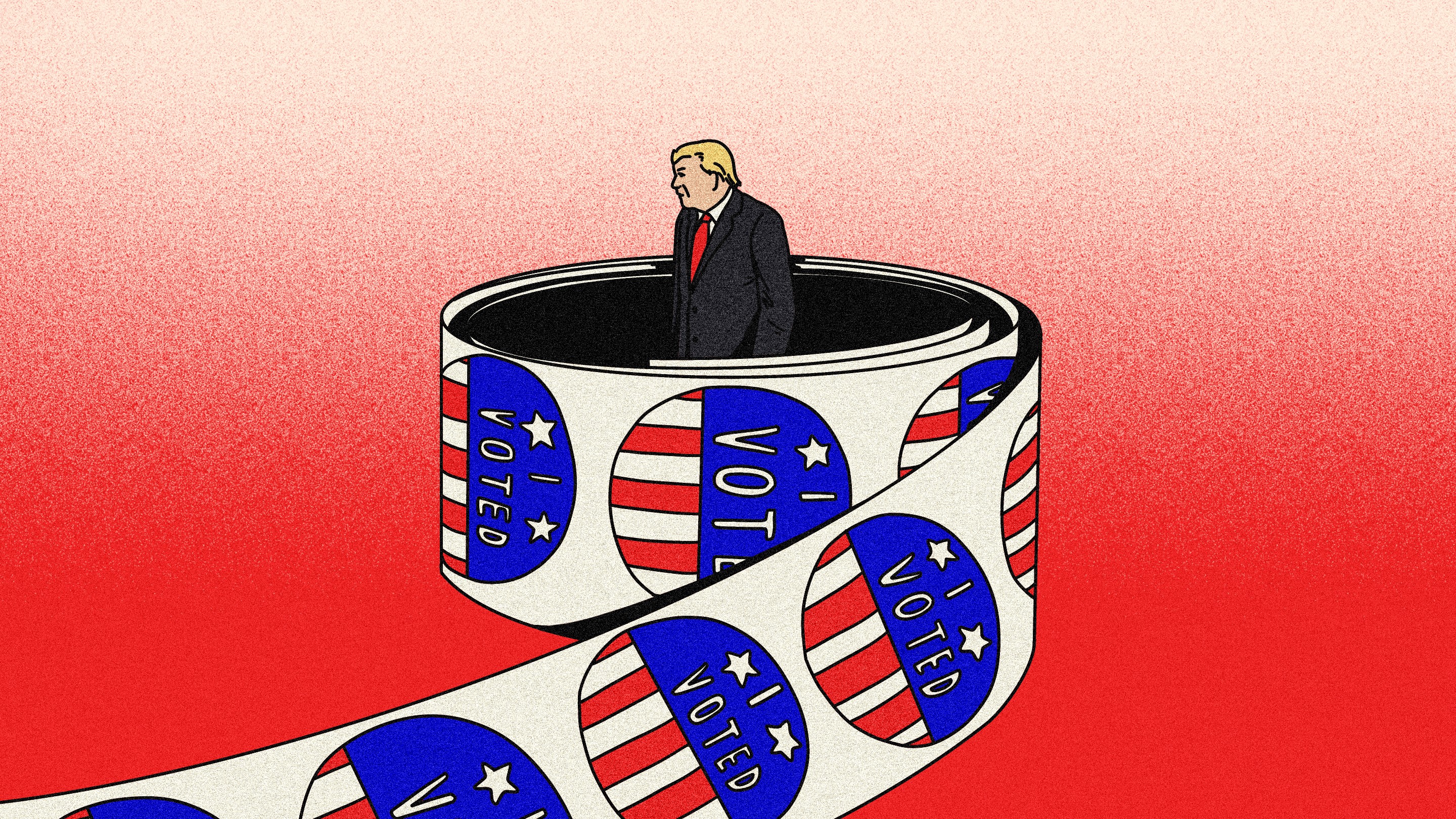
© Illustration by Alisa Gao / The Atlantic

  •  
❌