❌

Reading view

A Stress Test for Prediction Markets

Sign up for Over/Under, a newsletter on the latest in prediction markets, gambling, and the evolution of everyday risk.

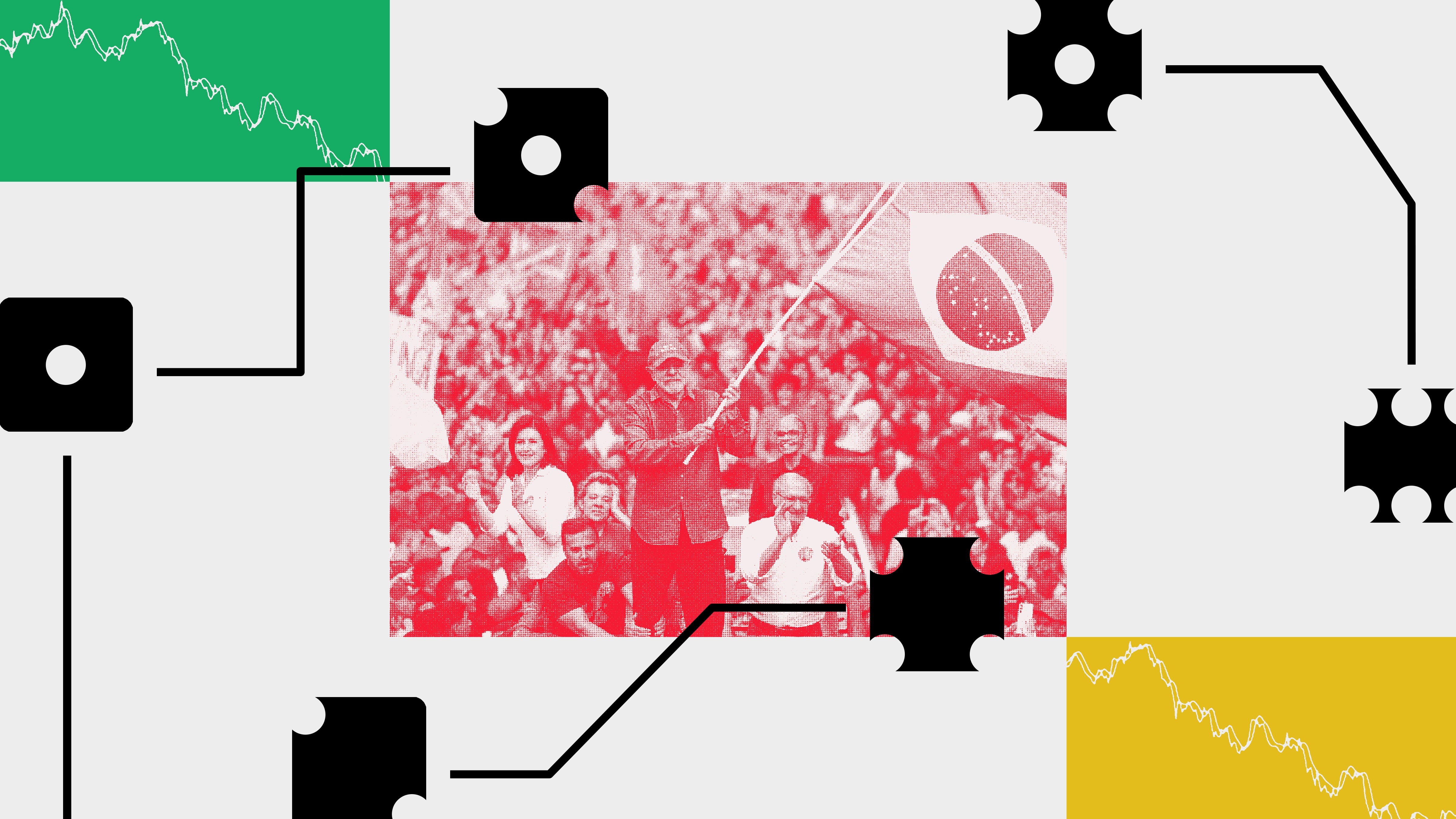
Brazil’s incumbent president, Luiz Inácio Lula da Silva, was reelected on Sunday night. Not everyone saw it coming.

For weeks, many U.S. pundits had been suggesting that he would lose, thanks to the growing power of the South American right and the lingering curse of incumbency. This thesis was also plainly supported by recent Brazilian election data: Lula’s main opponent, Flavio Bolsonaro (son of Jair), had won the first round of the election, in early October, by more than 2 million votes, and subsequent polling consistently showed that the right-wing challenger had a slight edge. On both Kalshi and Polymarket, Bolsonaro’s odds of victory were bouncing within the mid-70- and high-80-percent range since the first round—more than a slight edge. Traders were betting on Bolsonaro across markets, even when, in the final days of the race, polling showed Lula gaining ground.

That divergence between the prediction markets and the polls has led to some discussion about whether the markets can be trusted. It’s a critique that keeps coming up: Polymarket traders gave Francesca Hong, a candidate for the Wisconsin governorship, about a 95 percent chance of winning her August primary—right up until the day she lost. But these platforms deal in probabilities, and economists tend to advise against drawing conclusions from a sample size of one. Maybe Lula really did have a one-in-five chance of winning, as the prediction markets suggested, and maybe this was the one-in-five outcome. In industry parlance, probabilistic forecasts are said to be well “calibrated” if their odds correspond with the frequency of actual outcomes, and prediction markets do tend to be well calibrated. But in the case of Brazil, the markets heavily favored the candidate who didn’t win.

That’s the technical explanation, anyway. The problem is that Kalshi and Polymarket have taken great pains to establish themselves as authoritative election forecasters. Both platforms are now running midterms “hubs,” where traders and observers can find data for the upcoming U.S. elections on a single page. Even outside of politics, these executives have consistently pushed the idea that they are running predictive platforms—prediction is in the name, after all. Polymarket CEO Shayne Coplan has said that these markets are “the most accurate thing we have as mankind right now, until someone else creates some sort of a super crystal ball.” This leaves some rhetorical wiggle room—the markets are not crystal balls—but it also sets an expectation of decisiveness and reliability.

When the odds don’t appear to align with the outcomes, these firms can conveniently retreat to the fact that they’re purely dealing in probabilities. This argument is available to them as long as their forecasts don’t read zero percent or 100 percent. Kalshi CEO Tarek Mansour told me yesterday that the “strong drag” toward Bolsonaro may have had to do with Brazil’s electoral history; traders could have been hung up on the fact that a presidential candidate had never lost after winning the first round. Still, the “market priced 20% chance of whatever happened to happen,” he said.

Partly because of how prediction markets advertise themselves, some observers now ascribe them a predictive power that’s similar to polling, or to hybrid forecasts such as Decision Desk HQ, which gathers data from a variety of sources. But there are fundamental differences. Sophisticated polls are a snapshot of a moment in time—a representative sampling of people indicating how they plan to vote. Prediction markets, meanwhile, derive their probabilities from the trading data of users across the world. The kinds of people who typically use these platforms are mostly young and mostly male. Kalshi and Polymarket are banned in Brazil. Is it possible that traders without much knowledge of Brazilian politics, or who had their own political biases, skewed the results?

In this case, it’s hard to know. Recent academic research suggests that prediction markets are still pretty good at producing reliable forecasts even when the demographics are slanted. That’s because, in theory, the incentives of the most active traders are financial rather than political. The idea is that they bet big when they’re sure of an outcome and bet small when they don’t really know what they’re talking about, regardless of what they’d personally rather happen. For example, one Polymarket user who put $55 on Bolsonaro commented, “I LOST MONEY BUT IM SO HAPPY I DID LETS GO LULAAAA.”

Still, the reliability of these markets can depend on the amount of money sloshing around. Mansour denied that Kalshi’s Brazilian-market volatility problem had to do with a lack of trading volume, but volume really only picked up at the very end; as it did, the odds started to change. Something similar played out on Polymarket. As one Bloomberg columnist pointed out, when prediction markets beat the pollsters during the 2024 U.S. presidential election, trading volume on Polymarket was in the billions. This time, the platform saw about $250 million in all.

Forecasting swings like those in Brazil and Wisconsin will almost certainly keep happening. The coming U.S. midterms will be a moment of increased visibility for an already visible industry—these probabilities are now baked into some live election coverage. And once exit polls are in, real-time markets might end up filling the information gap as everyone awaits the final tally. It may not really matter whether people understand the methodological differences between prediction markets and other forecasts, or whether people understand probabilities at all. Most Americans already oppose betting on elections. If Republicans somehow stage a comeback next week despite prediction markets’ forecasts of a blue wave—if these platforms seem to miss at all—these firms may end up losing the little credibility they’ve managed to build thus far.


Possible Futures

In every edition, I’ll share my thoughts on a few news stories I’m watching.

  • The NBA announced a formal partnership with Kalshi and Polymarket on Monday, naming the firms its “preferred” prediction markets and giving them access to its data. The league also reached a memorandum of understanding with the Commodity Futures Trading Commission, agreeing to share information and cooperate with its regulations. The NHL already has a league-wide partnership with both firms, and UFC, the MLS, and the MLB have deals with Polymarket; after last year’s betting scandals, the NBA has had a somewhat-fraught relationship with gambling. Monday’s news suggests that the league is leaning in anyway.
  • Front Office Sports reports that the NFL told Saquon Barkley, a running back for the Philadelphia Eagles, to divest his equity stake in Polymarket. Different leagues have different rules about whether players can invest in these platforms; the NBA, for example, allows up to 1 percent stakes.
  • Kalshi is planning to launch prediction markets for the admission rates of top U.S. colleges. Among them: MIT, Johns Hopkins, Duke, the University of Chicago, and all of the Ivies. Why not? Kalshi invents random markets all the time. Here’s one about a law having to do with Californian goatherds. Both are part of an industry-wide effort to attach markets to much of modern life.
© Illustration by The Atlantic. Source: Alexandre Schneider / Getty.


  •  

Elon Musk and Dario Amodei Are Offering Gifts—With Strings Attached

This is an edition of The Atlantic Daily, a newsletter that guides you through the biggest stories of the day, helps you discover new ideas, and recommends the best in culture. Sign up for it here.

Many people are understandably focused on the question of how AI will transform our civilization. Will it cure cancer? Will it end world hunger? Will it hack everyone’s bank accounts and incubate the next pandemic? But those who are already profiting from this technological revolution also have a more immediate concern. Their problem is—to paraphrase one of my favorite lines from Scarface—what to do with all the cash.

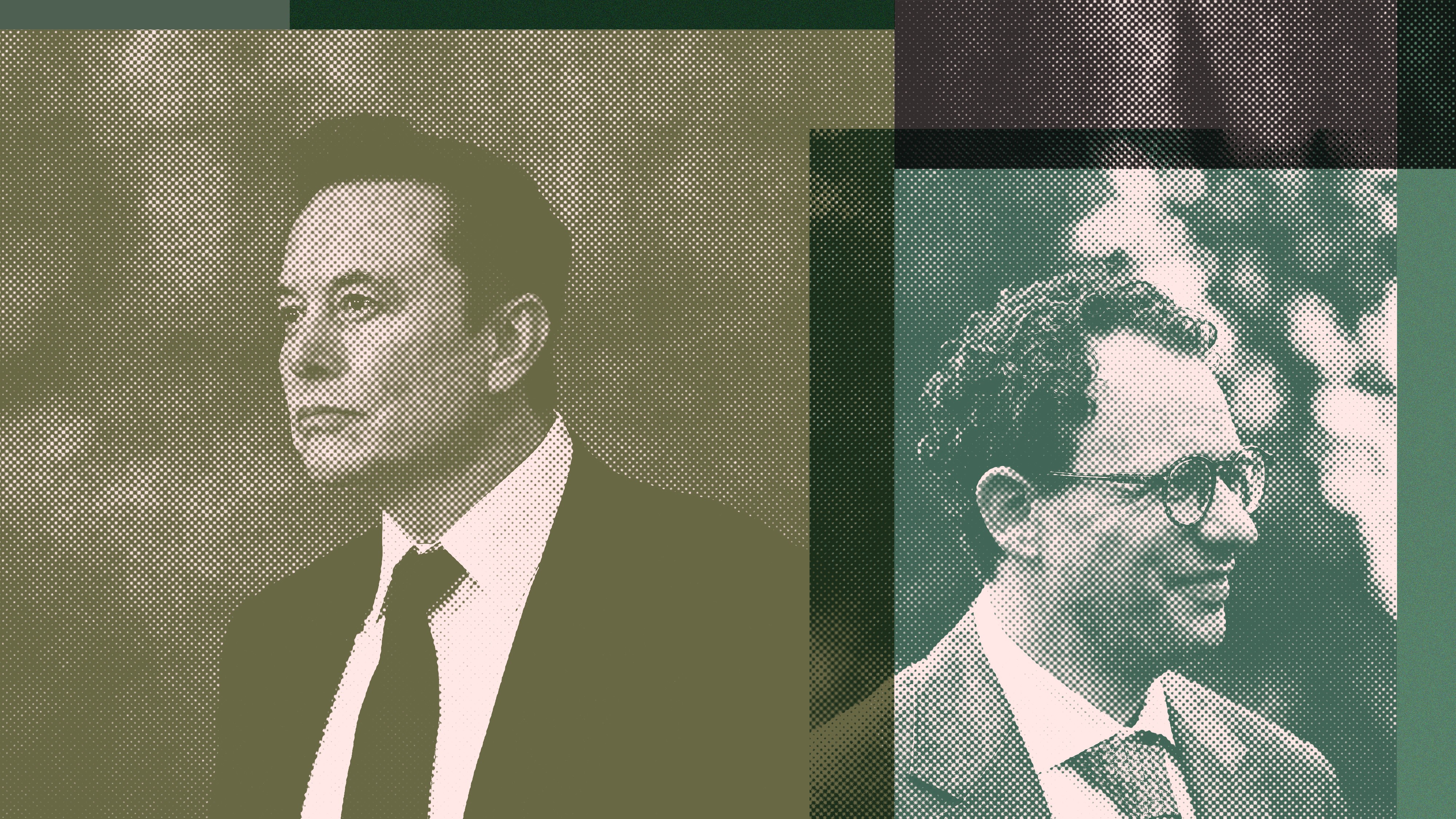
Over the past few days, two of America’s most prominent AI leaders have offered proposals for returning some of the spoils of the AI boom to the public. On Sunday, Anthropic announced that it would set aside 5 percent of the company’s stock in a new LLC—the Anthropic Public Benefit Fund—to be spent on causes it deems to be in the public’s interest. More stock may be added as the company becomes more valuable. If the company goes public at its current projected valuation of $1.5 trillion, the fund could hold $75 billion, making it one of the largest charities on the planet. (For context, the Gates Foundation Trust had about $89 billion in it at the end of last year.) Elon Musk, a centibillionaire and a longtime skeptic of traditional philanthropy, criticized the move and tried to one-up it, writing on X that he’d be giving one share of SpaceX to “every kid in America.” According to The New York Times’ back-of-the-napkin math, this could end up being a donation of more than $10 billion.

What AI’s biggest winners decide to do with their money could have profound consequences for how Americans live their lives. The birth of modern AI may turn out to be the biggest wealth-creation event in human history, yet most Americans are feeling those effects indirectly. AI is making some people’s jobs easier and driving innovation, but it isn’t hitting everyone’s personal finances equally, and almost half of U.S. adults think the technology will widen the gap between the rich and the poor. Musk and Anthropic are now laying out two different visions for AI-driven philanthropy—raising thorny questions about the level of control that the investor class will exert over our shared future.

The first and most obvious question for Anthropic: What if the company’s understanding of the “public good” doesn’t line up with the public’s wants or needs? Anthropic’s leaders, Dario and Daniela Amodei, have already committed to giving away most of their own personal wealth, and Dario has written on his blog about the kinds of philanthropy he admires. The Gates Foundation and PEPFAR, President George W. Bush’s public initiative for global AIDS relief, are both on his list. But how the firm’s leaders will actually decide to apportion these gifts remains somewhat nebulous. A press release for Anthropic’s fund lists “large donations to traditional nonprofits” and “direct distributions to specific populations” as examples of possible projects. Another stated goal is to remediate the effects of a massive, AI-driven labor-market transformation—an ironic instance of a company trying to solve a problem it helped create.

As many politicians and even AI corporations themselves have argued, this tech is powerful enough, and potentially such an important part of the global economy, that the wealth it creates may merit some degree of public control. Last October, as one possible plan for reckoning with the economic consequences of AI, Anthropic floated the idea of using “sovereign wealth funds to give citizens stakes in AI revenues.” (OpenAI’s leaders have also reportedly considered giving 5 percent of the company to the government.) At least for now, though, the Anthropic Public Benefit Fund isn’t giving anyone outside of the company a stake. And the fact that it won’t be a 501(c)(3), like the Gates Foundation, means that it won’t have to deal with the kinds of mandatory financial disclosures that are meant to keep charitable organizations maximally transparent. A democratic way to approach this project would be for the government to aggressively tax the company and decide for itself how to spend the money. Not every American agrees with their government representatives’ approach to resource allocation, but at least in the public sector, the people have a voice.

Although Musk’s path is also billionaire-led, it gives Americans a much more direct stake. Donald Trump clarified yesterday that Musk’s donation, if it happens, would use the country’s new child-savings accounts (known as “Trump Accounts”) as a vehicle. Rather than earmarking shares for a self-sustaining charitable foundation, Musk would be effectively cutting out the middleman, giving American children a piece of the company that houses his biggest AI bets. It would likely be a smaller total donation than Anthropic’s; one share per child may not turn out to be all that much money in the long run. And Trump Accounts aren’t a perfect dispersal mechanism; parents can’t reject donated shares, and they can’t immediately sell them. Once account holders turn 18, though, they can spend Musk’s gift on whatever they want.

Musk, like other tech billionaires, has questioned traditional modes of philanthropy. He knows that the public knows that giving can be an expression of power and control—a way to  rehabilitate a donor’s image or provide political insulation for the donor and his enterprises. Musk may be getting something out of this too. If more people own a little chunk of the AI economy, will they start to become more receptive to data centers and other Big Tech interventions? The donation could also give recipients a reason to be less critical of Musk and his businesses; people with a stake in the company might be more inclined to tolerate unscrupulous behavior. Still, if he can follow through on his approach (and especially if he continues to donate AI stock, as he hinted in his post yesterday), his gift could have a real impact.

When SpaceX was about to go public earlier this year, my colleague Matteo Wong observed that “by weaving itself into the finances of most businesses and households in America, the AI industry is quickly making itself too big to fail.” AI is already deeply embedded in our life: in the businesses we interact with, in the pension funds and 401(k)s around which we plan our future. These massive donations, which represent a deviation from tech-industry norms, could reshape society for the better. But if the public comes to rely on Anthropic’s investments or on direct payouts from SpaceX, it’ll need to start caring even more about how well these companies perform. Public welfare needn’t be contingent on the whims of a few powerful firms; so much else already is.

Related:


Here are four new stories from The Atlantic:


Today’s News

  1. Former New York City Mayor Michael Bloomberg is donating roughly $80 million to support Democrats in the midterm elections, and is focused on helping the party win control of the House. Meanwhile, the Republican National Committee is transferring $50 million to groups supporting Republican House and Senate candidates.
  2. The United Kingdom announced that it will deploy Royal Air Force fighter jets to Saudi Arabia to defend against missile and drone attacks by the Iran-backed Houthis in Yemen. The jets will protect Saudi cities and infrastructure but will not conduct offensive strikes inside Yemen, British officials said.
  3. Elon Musk ordered restrictions on Ukraine’s military-grade Starlink service last week, disrupting drone operations and air defenses, according to The Wall Street Journal. Musk reportedly discussed the decision, and President Trump said he did not know who was responsible for the move.

Dispatches

Explore all of our newsletters here.


More From The Atlantic


Evening Read

An illustration of Elizabeth Holmes's image split into a bunch of slices.
Illustration by Adam Maida / The Atlantic. Source: Michael Kovac / Getty.

Theranos-Style Fraud Has Become the Norm

By Idrees Kahloon

Perhaps Elizabeth Holmes was simply ahead of her time: Today, the Theranos founder’s crimes look less notorious amid a pervasive culture of grift and graft.

Her biotechnology company infamously promised to revolutionize medicine by conducting hundreds of tests on mere pinpricks of blood. A decade after it fell into disgrace, and three years after she began serving her 11-year federal-prison sentence for defrauding investors of hundreds of millions of dollars, Holmes is the subject of a new documentary. You Can See Everything, directed by Lance Oppenheim and Nathan Fielder, came about because Holmes and her partner, the hotel heir Billy Evans, invited Fielder, a surrealist sketch comedian, to live with them just before she went to prison. They allowed him to film whatever he saw. The result is unsettling, because Holmes’s placid indifference toward the truth has become more familiar than it was when Theranos unraveled.

Read the full article.


Culture Break

Animated GIF showing three sets of Legos in blue, red, and yellow stacking up to form humanlike figures with hand-drawn arms and facial features, against a mint-green background.
Illustration by Emilia Miekisz

Reflect. Lego’s overt outreach to an adult market has changed the nature of its products, Sophia Nguyen reports. She explores what the company lost when it grew up.

Read. Twenty years since Michael Pollan’s book The Omnivore’s Dilemma was published, America’s food system is still a mess—but there are reasons for optimism, he writes.

Play our daily crossword.

Rafaela Jinich contributed to this newsletter.

When you buy a book using a link in this newsletter, we receive a commission. Thank you for supporting The Atlantic.

© Illustration by The Atlantic. Sources: Chip Somodevilla / Getty; Alex Brandon / AP.

  •  

A Bet That Young People Are Willing to Make

Sign up for Over/Under, a new newsletter on the latest in prediction markets, gambling, and the evolution of everyday risk.

More than a decade ago, the anthropologist Natasha Schüll set out to describe the mindset of a certain kind of Las Vegas gambler—the type whose penchant for video poker, slots, and other solitary casino games would likely register to most people as extreme. What she found was that their pursuit wasn’t always about the money. For many of them, it was about the experience itself, which would consistently produce a strange sort of trancelike state. Drawing on her subjects’ own descriptions, Schüll called this “the zone”: a psychic frame in which “time, space, and social identity are suspended,” and risk is replaced by a temporary feeling of safety.

Many people experience something similar on today’s internet, even outside the financial realm. You might find yourself swiping on a dating app, seeking the thrill of the next match (and the next, and the next) without necessarily pursuing a real-life relationship. You might flick past a dozen Instagram Reels without really knowing why you did so. There’s a reason the concept of “endless scroll” has become a cliché. This is a tempting rubric for understanding the explosive growth of online betting too. But when I spoke with Schüll last month, she explained that for the mostly young, mostly male users of modern sportsbooks and exchanges, the pleasure of the zone is just one among many.

Online betting happens today in a few major forums. On prediction markets, users can buy contracts tied to real-world outcomes, which can then be sold and resold. Polymarket and Kalshi, recently valued at $21 billion and $22 billion respectively, are leading an industry that could see $10 trillion in annual trading volumes by 2035. Partly for regulatory reasons, these firms are adamant that the services they provide are distinct from “gambling” as it’s been traditionally understood. This is up for debate, and the classification question remains legally ambiguous in some states. (Earlier this week, The Washington Sun reported that the Federal Trade Commission has begun probing the sports-gambling industry, and that the agency’s review isn’t expected to target prediction markets.)

But conventional gambling is alive and well too. In 2018, the Supreme Court overturned a decades-old law preventing most states from authorizing sports betting, paving the way for all kinds of new corporate ventures and partnerships between the world of gambling and the world of professional sports. And it was the legalization of mobile sports betting, which happened on a state-by-state basis in the aftermath of the Court’s ruling, that really popularized the practice.

Although most of the money flowing through prediction markets is being placed on sporting events, these platforms also allow bets on a huge range of other topics. (A market on the number of X posts that Elon Musk will make this month has already seen more than $350,000 in trading volume.) And these markets are constantly introducing new offerings to expand their user base. Bettors can attempt massive, multi-leg parlays, compounding both the risk and the potential rewards. On Kalshi in particular, this feature can lead to setups with absurdly low odds. The people spending time on these apps are more likely to lose money than to make money. (That’s true of both prediction markets and sports-betting platforms.) So why do they keep coming back?

About a quarter of Gen Z investors say that they treat sports betting as a viable investment strategy, rather than a sometime habit, yet the average bet placed on these platforms is typically small. New York State reported that in 2025, the average mobile sports bet was $42. Users don’t necessarily feel compelled to bet, either. Research has shown that people who live near physical casinos are more likely to become problem gamblers, and rates of addiction have climbed in the states that legalized sports betting. But the majority of sports bettors don’t report what the National Council on Problem Gambling describes as “problematic behavior.”

For young people, the rise of mobile betting has been happening against a backdrop of elevated financial risk more broadly. The number of households that invest in stocks and bonds has increased dramatically in recent decades, in part thanks to a legislative and technical evolution. IRAs didn’t exist until 1974; today, low-fee exchange-traded funds and automated brokerage apps make it easy to invest aggressively and often. Scott Baker, a finance professor at the University of Wisconsin at Madison who studies betting, told me that because young people have grown up in an environment of normalized risk, they can sometimes “misperceive” the boundaries between healthy and unhealthy risks. Putting your money in a stock-market index fund carries the expectation of some kind of return; sports betting and prediction markets tend to be much more volatile.

The economist and author Allison Schrager, who recently wrote a book about risk, put it to me another way. It’s only by taking some risks, she explained, that young men learn to distinguish between the good kinds and the bad kinds. Yet each generation seems to become more risk-averse; younger people get married later, are less inclined to change where they live, and drink and socialize at lower rates. Without the training that experience provides, young people can end up making all kinds of uninformed choices, such as turning to sports gambling and prediction markets as a long-term investment strategy.

Some commentators have attempted to marry those two trends—a profound aversion to social risk among young people, and an increased appetite for betting—under the heading of “financial nihilism.” The theory is that, as young people come to grips with the fact that many of them may never own a home, or may never escape the so-called permanent underclass of a stratified society, they figure that online betting could be their only ticket to wealth. In this telling, there’s no misperception of good and bad risk; instead, people are making impractical bets because they’re resigned to an uncertain future.

When I raised this to Schüll, she seemed skeptical of the idea that all young bettors are experiencing that kind of resignation. At least, that may not be why they start making wagers. For prediction-market “sharps”—industry lingo for traders who consider themselves savvy enough to make a consistent profit—it has to do with a literal “sense of being sharp, hoping to win and get that money,” she said. And the connection to sports can make betting a social activity. Some young bettors get involved because they want to be a “big man on campus.”

The race is on to bring more and more users into the fold. Athletes, musicians, and influencers are now being paid huge sums to give this industry a human face. In recent weeks, anyone passing through Times Square could look up to see Sydney Sweeney, nearly nude and eight stories tall, shilling for the sports-betting app Novig on a digital billboard. After the ad went up, the start-up’s valuation quadrupled. These companies know their audience, and they’re hard at work making sure that it’s impossible to look away.


Possible Futures

In every edition, I’ll share my thoughts on a few news stories I’m watching.

  • The Securities and Exchange Commission has approved Cboe’s pitch for prediction-market options tied to companies’ performance metrics. Per Bloomberg, traders will be able to “wager on whether companies will exceed or fall short on specific metrics, such as how many cars Tesla Inc. might deliver or how many new iPhones Apple Inc. might sell during a quarter.” It’s part of an industry-wide effort to expand these markets in ever more granular ways.
  • Most professional sports leagues are all in on prediction markets. In a twist, the NFL filed an amicus brief earlier this month in support of New Jersey regulators’ legal battle against Kalshi, asserting that states, not the federal government, should have the last word on how to regulate these companies. (This is the opposite of what most prediction-market executives seem to want.) My read is that this could be a sign that the league thinks the regulators will prevail. If the case ends up in the Supreme Court, the NFL may want to be on the winning team.
  • A bipartisan majority of Americans oppose making prediction-market bets on elections, per a Reuters/Ipsos poll released this week. And three-quarters of Americans agree that using these platforms to trade on real-world outcomes counts as gambling. It’s not clear whether the courts will ultimately feel the same, but these results are a sign that the industry could be doing a better job of making its case.

© Illustration by The Atlantic. Source: Bettmann / Getty.

  •  

America’s Latest Inflation Check-In Doesn’t Look Good for Trump

This is an edition of The Atlantic Daily, a newsletter that guides you through the biggest stories of the day, helps you discover new ideas, and recommends the best in culture. Sign up for it here.

America just had its last major checkup on inflation ahead of the midterm elections, and the results aren’t looking good. Yesterday, the Bureau of Labor Statistics released September’s update to the Consumer Price Index, one of the most important metrics for understanding how much Americans actually pay for goods and services. (Among them: cupcakes, dental care, sports equipment.) Overall, costs for consumers have been rising faster than economists expected. They’re up 3.7 percent over the past year, and September marked the largest monthly increase since April—much of which had to do with massive Iran-war-driven spikes in energy prices.

That’s just the first half of the problem. At the same time, the BLS revealed yesterday that Americans now have less spending power than they did earlier this year. Real wages—the average amount, adjusted for inflation, that workers earn an hour—have tumbled back down to about where they were when Donald Trump retook the presidency last January. Prices are now rising so fast, across so many different industries, that they’ve overwritten nearly two years of wage gains. As the economist Jared Bernstein put it in his CPI postmortem today, “It’s one thing to cope with high prices when your earnings are at least keeping pace with inflation. But when they’re falling behind … well, that makes for a much tougher equation.”

Kevin Hassett, the Trump-appointed director of the National Economic Council, said yesterday that he sees a “whole bunch of good news” in the CPI report—namely food prices (they’ve held relatively steady) and prescription-drug prices, which have gotten lower (something he credits to Trump’s online drugstore). The sheer scope of the data makes it easy to cherry-pick examples. The prices of both milk and cookies have gone down since August too, so at least Trump’s economy has been good to Santa. But as economists and Democratic politicians have been quick to point out, the overwhelming majority of the data don’t support that optimism. For example, the prices of other everyday goods, such as coffee, clothing, and hardware, have all gone up.

Taken together, the BLS numbers offer a compelling explanation for Americans’ frustrations with the cost of living. Another recent report helps put those frustrations in context: People’s confidence in the economy is approaching a record low, per the preliminary October results of the University of Michigan’s consumer-sentiment survey. And according to today’s BLS data on wholesale prices, businesses are reckoning with higher costs too. The Producer Price Index is now at its highest level in four years.

Not all of this is attributable to Trump. The price spikes are the result of a “perfect storm” of macroeconomic forces, Heather Long, the chief economist at the Navy Federal Credit Union, told me. The AI boom, for example, is clearly behind some of September’s computer-related increases. Bernstein told me over email that the breadth of last month’s price movement is part of what’s so concerning. Even when you strip away the volatile energy and food categories, what’s known as the “core” inflation rate is still up 2.6 percent year-over-year. Widespread hikes across these core categories—including housing, hotels, and recreational goods—suggest that the problem has to do with more than just foreign policy.

Still, these new BLS reports carry dire warnings for the president and his party. When Trump began his second term, he claimed to have inherited the worst inflation in United States history. Today, inflation is rising faster than it was last January, and Trump’s own actions have undercut his claim that we’re living through an economic “Golden Age.” The tariffs that he implemented last year had a dramatic impact on all kinds of consumer goods. Without those duties, economists at the New York Fed estimate that prices would have declined into early 2026. “For every percentage point increase in average tariffs, consumer goods prices increase by about a quarter of a percent,” the report reads.

The president’s decision to bring the country into a costly, protracted war with Iran has also made energy more expensive around the world. In America, gasoline alone is up 9.1 percent since last month and up 34.2 percent since last September, per the BLS. Trying to reclaim the narrative, Trump has recently been putting some of the blame on Ukraine. He said on Saturday that President Volodymyr Zelensky “wants to make problems for the world” by attacking Russian diesel refineries. (Rebuking Trump, Zelensky told the Financial Times today that Ukraine will keep attacking refineries anyway.)

Although it’s true that the war in Eastern Europe has contributed to higher diesel prices, experts agree that the bigger culprit is the war in Iran. As a stopgap measure, Trump temporarily lifted some restrictions on tax-exempt diesel use, and he made a controversial deal with Russia over the weekend to import potentially millions of tons of diesel. The agreement has been widely denounced as a betrayal of a U.S. ally during wartime, and analysts are doubtful that it will be enough to get prices down.

Trump has lately been urging voters to look away from the economic reality, even promising to hand out millions of $5,000 checks if Republicans hold on to their majority in the midterm elections. Judging by the forecasts for his party’s races, Americans aren’t listening. Inflation tends to speak for itself.

Related:


Here are three new stories from The Atlantic:


Today’s News

  1. President Trump canceled Defense Secretary Pete Hegseth’s plan to livestream the December 3 execution of Nidal Malik Hasan, the former Army officer convicted of killing 13 people in the 2009 Fort Hood shooting. The execution will proceed by firing squad, and only immediate family members of the victims will be allowed to witness it in person.
  2. Ukrainian President Volodymyr Zelensky said in an interview with the Financial Times that America had threatened to withhold intelligence and had restricted military-satellite communications, though Trump denied having cut off intelligence-sharing and Ukraine said that Starlink service had been restored.
  3. The new White House press secretary, Katie Zacharia, who has previously called herself a lawyer, confirmed that she has never passed the bar exam.

Dispatches

Explore all of our newsletters here.


Evening Read

Absurdist illustration depicting people doing odd jobs and posing in a modernist room with a pool at the center
Illustration by Tina Zhou / The Atlantic. Sources: Bettmann / Getty; Michael Ochs Archives / Getty; Found Image Holdings / Archive Photos / Getty; Getty.

The Non-AI AI Jobs

By Annie Lowrey

Want to get a job in the Bay Area? The fastest-growing listings are for operations engineers, applied scientists, senior machine-learning engineers, principal cloud architects, forward-deployed engineers, and the like, according to Laura Ullrich, the director of economic research in North America at the Indeed Hiring Lab. “A year ago, people were very concerned about these types of jobs not coming to fruition,” she told me. Today, “it’s all AI. It’s all AI jobs.”

Or not quite all. Demand for estheticians, Pilates instructors, massage therapists, therapist therapists, and interior designers is also surging. And in a way, those are AI jobs too. It makes sense that someone earning seven figures a year at Anthropic would want a skilled person to untie the knots in their back and another to untie the knots in their psyche. Or that someone working a 72-hours-a-week, “996” schedule at Nvidia would not have time to shop for lamps for their Mission-style mansion on their own. Extraordinary wealth wants extraordinary luxuries.

Read the full article.


More From The Atlantic


Culture Break

An illustration of a tub of yogurt inside on a plate.
Illustration by Tina Zhou / The Atlantic

Explore. The best protein source is hiding in plain sight: Just have some yogurt, Matteo Wong writes.

Read. Honor Jones explores how Sarah J. Maas became the queen of romantasy.

Play our daily crossword.


Rafaela Jinich contributed to this newsletter.

When you buy a book using a link in this newsletter, we receive a commission. Thank you for supporting The Atlantic.

© Joe Raedle / Getty

  •  

Welcome to Over/Under

Sign up for Over/Under, a new newsletter on the latest in prediction markets, gambling, and the evolution of everyday risk.

Welcome to Over/Under, a newsletter on prediction markets, gambling, and the culture of risk in America. Platforms such as Kalshi and Polymarket are changing how people interact with modern life—politics, video games, movies, and even the weather. Sports gambling is booming. If you have a hunch, and an internet connection, you can bet on almost anything.

Even for those who don’t partake, this phenomenon is difficult to ignore. Athletes are signing multimillion-dollar sponsorship deals to expand their reach. Livestreamers spend hours playing slots and other online casino games while millions watch. News organizations (not ours!) are entering into corporate partnerships with top prediction markets. Last month, a titanic image of Sydney Sweeney appeared on a billboard in Times Square, coaxing viewers to log on and trade. And the betting itself is just a few taps away on our smartphones.

In some ways, this all feels reminiscent of the crypto boom I covered in the early 2020s, when a once-niche industry was repackaging itself for the mainstream, and opportunistic ecosystems were sprouting up all around it. Today, users are betting on things that would make at least some of the bookies of the past squirm: war, disease, and natural disasters. Politicians are betting on their own odds of being elected. A master sergeant in the Army allegedly deployed insider knowledge on Polymarket to profit from the kidnapping of Venezuelan President Nicolás Maduro. Federal prosecutors are just starting to crack down on the insider-trading problem—and the industry is still figuring out how it wants to respond.

You probably have questions. I know I have questions. In this newsletter, I hope to explore not just how betting works today, but also how the risks we take shape the society we live in.

© lllustration by The Atlantic. Source: Harold M. Lambert / Lambert / Getty.

  •  
❌