This is an edition of The Atlantic Daily, a newsletter that guides you through the biggest stories of the day, helps you discover new ideas, and recommends the best in culture. Sign up for it here.
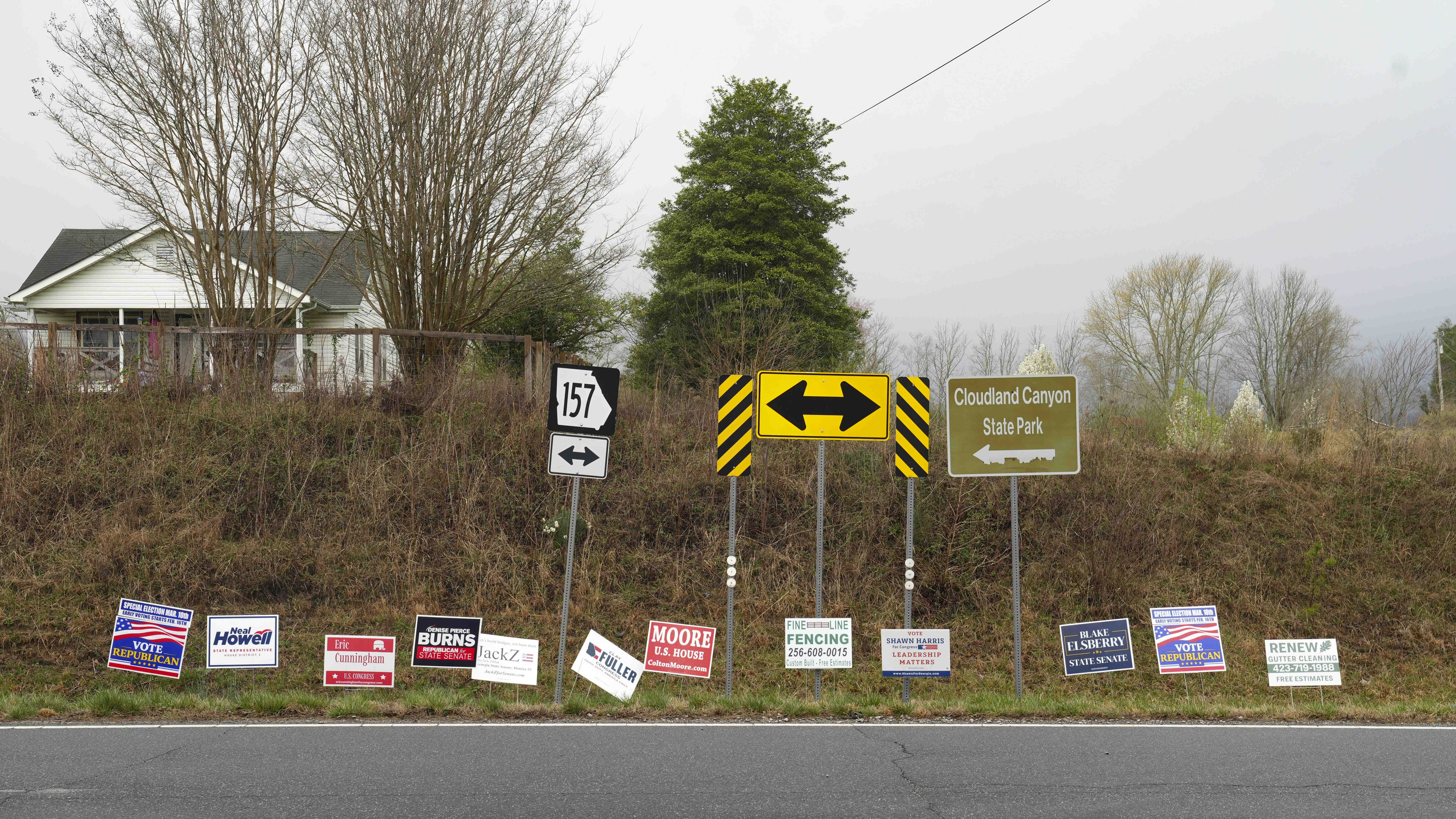
American politics is saturated with cash, and each election cycle seems to set new spending records—and yet, with the midterms in the home stretch, neither party thinks it has enough money. The irony is nearly as rich as the biggest donors.
Filings released this week show that $1 billion was spent on the campaign in the first two weeks of October alone. This year’s elections are expected to be the most expensive midterms in U.S. history, beating 2022—which beat 2018, which beat 2014, and so on. This will not surprise anyone who lives in a state or district with a competitive race this fall. (I’m sure I can still recite the Senate Leadership Fund’s ad attacking the North Carolina Democrat Roy Cooper, weeks after it stopped running.) Democratic and Republican voters don’t agree on a ton these days, but they’re united on one position: There’s too much money in politics.
Ask officials and candidates in both parties, though, and you’ll hear that they don’t have nearly enough. Democrats are feeling fairly confident about capturing the House and are getting more hopeful about their chances at winning the Senate, yet officials worry they don’t have enough cash. The party got a big boost on Monday, when Michael Bloomberg, the billionaire former New York mayor and presidential candidate, announced that he would pour $80 million into helping Democrats before Election Day.
Republicans came into this election with a huge money advantage, and they continue to have millions available to spend. Even so, major GOP organizations are finding themselves having to make unpleasant choices to stop spending in races that seem to be slipping away from them. Senate Leadership Fund, which is the top Republican PAC supporting Senate races, didn’t spend any money on TV ads last week to support the Georgia candidate Mike Collins, who is expected to lose to Senator Jon Ossoff. SLF had already pulled back from helping the Republican Senate candidate Michael Whatley in North Carolina. (To make matters worse, President Trump hosted a rally with Whatley on Tuesday in Greenville, where he said that Cooper is “going to become your senator, and it’s crazy.”)
One reason both parties are scrambling for money is that the map has shifted. As Trump’s political position deteriorates and he drags GOP candidates along with him, races that once seemed like foregone conclusions are now real battles. Democrats worry that they don’t have enough funding to match their potential. Republicans, by contrast, are having to play defense in what they thought were safe seats. SLF has moved money from North Carolina to Kansas, a state where a Democrat hasn’t won a Senate race since 1932 but where Adam Hamilton is posing a real threat to Senator Roger Marshall. Republicans are also finding that their decision to squeeze new gerrymanders out of some states before this election has been costly: Districts that they expected to be easy Republican pickups are now close combat. Punchbowl News recently reported that although the GOP has a lock on five of 14 new districts, “Republican candidates and super PACs have spent nearly $100 million on ads trying to flip the other nine districts” since September 1.
Another reason is that not all money is created equal. Some Democratic candidates are very well funded. The Texas Senate candidate James Talarico, for example, raised $64 million in the third quarter of the year alone—the highest total for any candidate in that period ever. (Because Texas has so many voters and so many media markets, it’s an expensive place to campaign.) But Democratic committees, including top PACs, are much more strapped. This is partly because the sitting president’s party always has a leg up in fundraising, but it’s also because many donors have grown disillusioned with the Democratic Party, upset with strategic decisions in the 2024 presidential loss, chaotic management of the Democratic National Committee since, and uninspiring leadership by elected officials.
Republican candidates (such as Talarico’s opponent, Ken Paxton) have relatively little money on hand, but committees and PACs are still flush. Much of that money comes from independent-expenditure groups, such as super PACs. An analysis by the Brennan Center for Justice finds that these groups spent $2 billion through the end of September, leaning heavily toward Republicans. The single largest donor is Elon Musk, who has spent $366 million this cycle alone. But one disadvantage of independent-expenditure groups is that they have to pay higher rates for advertisements than candidates.
That’s perhaps the dominant theme of the late campaign: Republicans have lots of money, but they’re not necessarily getting much bang for their buck. At this stage in the campaign, the time to build serious infrastructure, such as canvassing operations, is past. Money can buy a lot of advertising, but TV time is either booked up or more expensive. Besides, Republicans have already spent lavishly to fill airwaves, websites, and mailboxes with ads. So far, they don’t seem to be seeing much impact: Races either remain close or appear to be shifting even further toward Democrats.
Understanding why the GOP candidates are stalled is not difficult. Voters are upset about high prices, especially for fuel, and they are turned off by a president who is dismissive of their affordability concerns, distracted by vanity projects, and bogged down in an unpopular and inflationary war in Iran. Trump’s super PAC has $164 million left to spend, but as any orthodox Lennonist knows, money can’t buy you love.
Russia and Ukraine agreed to a temporary cease-fire beginning October 29 in the Russian-occupied Ukrainian city of Oleshky, the White House announced today. The agreement, brokered with help from First Lady Melania Trump and Pope Leo XIV, will allow humanitarian aid to enter the city and civilians to evacuate amid a worsening food crisis.
Israel ordered a full lockdown of the occupied West Bank after, according to the Israel Defense Forces, a shooting attack killed two Israeli soldiers and left three soldiers injured; the two Palestinian attackers were also killed, the IDF says. Prime Minister Benjamin Netanyahu said that troops would conduct house-to-house operations and destroy suspected militant infrastructure in the men’s neighborhood, just days before Israel’s national election.
The Justice Department filed a lawsuit seeking to block certification of Alaska’s Senate election results if the Republican incumbent, Dan Sullivan, loses to Democrat Mary Peltola. The administration argues that a different candidate on the ballot named Daniel J. Sullivan could confuse voters, but legal experts question its case.
Evening Read
Illustration by The Atlantic. Sources: CSA-Archive / Getty; PHP.
‘If Anything Happens to This Guy … Everyone Is Screwed’
By Charlie Warzel
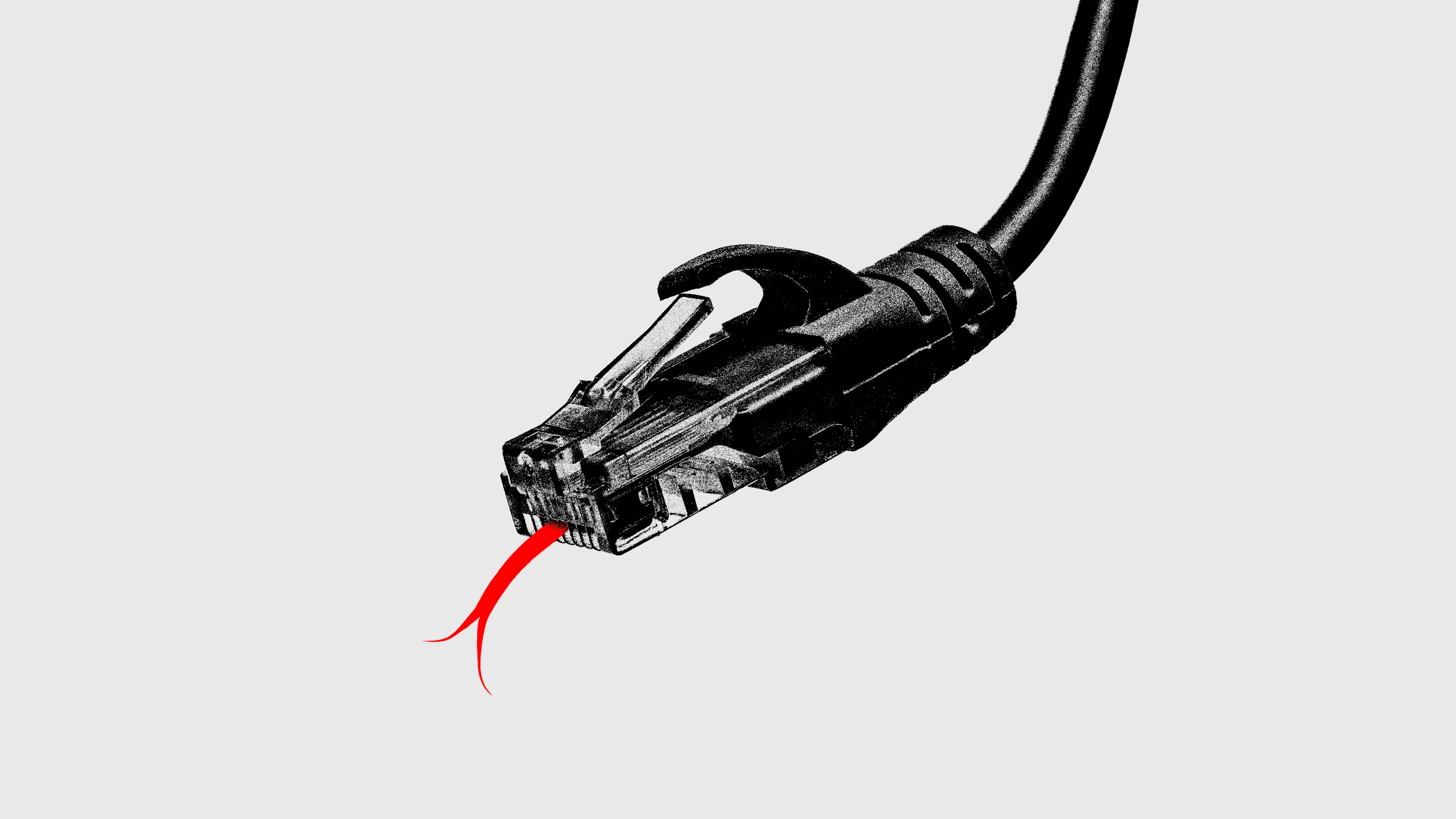
On Tuesday, the world found out about two massive security vulnerabilities in PHP, a programming language that is used by roughly 70 percent of websites. The flaw was discovered by cybersecurity researchers using a frontier model from OpenAI. If they exploited it, attackers could gain full control of servers, stealing or copying anything inside or simply taking sites offline.
The PHP Foundation, the organization that maintains the programming language, had recently learned about the security flaws, but the disclosure was leaked on a forum before a patch could be released. What happened next was a frantic race with numerous participants: the foundation, which needed to create and release a patch; developers around the world, who would need to deploy it; and attackers looking to exploit these vulnerabilities in the interim. Matthew Prince, the CEO of the hosting company Cloudflare, wrote that in the 10 hours before the flaws were publicly announced, “we saw thousands of attempts to exploit it. That jumped to tens of thousands in the 45 minutes post announcement, hundreds of thousands within 2 hours, and millions now.”
This week could go down as the worst in the history of cybersecurity. On Wednesday, news emerged about two major vulnerabilities in PHP, a programming language used by 70 percent of websites, which prompted governments, hospitals, and companies around the world to take digital services offline as a precaution. There have already been millions of attempts to exploit these weaknesses.
But the PHP vulnerabilities were just the most attention-grabbing in a series of alarming revelations. Security flaws in, or successful hacks of, several major software products and platforms—including some used by Netflix, PayPal, Walmart, and other big names—were announced that same day. Yesterday, Quest Diagnostics, which runs lab tests for a third of American adults each year, disclosed that it, too, had been breached. When I asked Sam Rubin, a senior vice president at the cybersecurity firm Palo Alto Networks, about the potential fallout from yet another hack—this one of the cloud platform Railway, which is used by Intuit and MGM Resorts, among others—he paused. “I didn’t see that one,” Rubin said. “It’s been quite a busy week.”
Yet what’s most alarming about the past few days is that by next year, this stretch of incidents—which some security experts are calling “Black October”—may be remembered as normal, or even tame. “It’s going to feel like, over and over and over again, we’re finding more and more bugs in very critical pieces of software,” Matthew Prince, the CEO of the internet infrastructure and security company Cloudflare, told me. “This story, which feels unique and fresh right now—in a few months, it’s going to feel like we get one of these every week.” Prince said he knows of still more vulnerabilities that will be announced in the near future.
For the next year or two, if not longer, the internet is going to feel a bit touch and go, and more dangerous than we’ve come to expect. “It’s going to feel like the sky is falling” for a while, Prince said. There’s a decades-long backlog of bugs in software written without much review or scrutiny—which was more or less fine so long as there was a very small number of skilled hackers. Over the past two decades, companies, governments, and individuals have been lulled into a false sense of security: Most people don’t think twice about punching credit-card numbers into the website of a local restaurant or gift shop, or forking over a home address and phone number in just about any customer survey. But the internet was always a dangerous place. We’re just waking up from a trance.
AI agents can now be deployed as a cheap and near-infinite hacker army. In just the past couple of months, Rubin said, open-source models—which can be downloaded for free and used without restrictions—have become very good at finding vulnerabilities and automating attacks. In turn, the amount of malicious cyber activity has spiked. More websites will be defaced, more personal information will be stolen, and ransomware will proliferate. Rubin told me that the internet is entering a “valley of pain.” When I posed the concern that this is the new normal to Adam Meyers, a senior vice president at the cybersecurity company CrowdStrike, he told me, “I think it’s going to get a lot worse, actually.”
Consider, for instance, another set of vulnerabilities disclosed this week, to the program Node.js. This software, which executes JavaScript code for dynamic webpages, is widely used by Fortune 500 companies, as well as in programs developed with AI. “These are the things the web runs on,” Meyers said. Because of how the platform is used, compromising just one software product that uses Node.js could infect tens of thousands of other organizations, Rubin said, in what is known as a “supply-chain attack.” And the skill threshold for launching cyberattacks has become almost absurdly low: CrowdStrike tied a spate of cyberattacks on South Korean banks late last month to a 26-year-old in China. “After he got access to all the data, he turned around and asked AI, ‘How do I monetize this? Where can I sell this?’” Meyers told me. He “didn’t know what he was doing.” Meyers said CrowdStrike is detecting “a new agentic adversary”—that is, an AI-powered hacking operation—“every two hours.”
Navigating this will require rapid and tremendous coordination from basically every sector. For instance, the vulnerabilities in PHP were discovered months ago by a consortium of AI and cybersecurity firms. Then, “very quietly, for the last several months, we and other industry partners worked to effectively put in place protections,” Prince said—basically, temporary shields until the weaknesses could be fully addressed. But “not everybody uses CloudFlare, and not everybody is quick to patch their software.” Some of the cybersecurity experts I’ve spoken with are optimistic about AI: Eventually, they say, AI will be used to find and address many of the major cybersecurity flaws, and the internet will become much safer overall. But before then, we may be stuck in a terrible limbo. “This is going to last as long as it takes to rewrite and secure the billions of lines of code that have always had these vulnerabilities,” Alex Stamos, the chief information-security officer at the AI company Cognition and a former chief security officer at Facebook, told me.
And even as cybersecurity experts rush to leverage AI to save the internet, the technology is introducing plenty of new problems. All vibe-coded apps, for starters, are very likely to contain security flaws. And at a time when people need to be more vigilant about their digital hygiene, multiple cybersecurity experts brought up the widespread adoption of AI assistants with more than a hint of scorn; as Rubin put it: “Our peers are using Muse and giving it carte blanche to use your credit card.”
The internet is becoming a wilder place, and the path to secure it may require, in essence, a sort of pruning. “You’ll likely see more companies take services off the internet when they don’t need to be there,” depreciating old webpages and forms so they can’t be targeted, Dan Guido, the CEO of the cybersecurity firm Trail of Bits, told me. Individuals might be encouraged to delete unused browser extensions, he added, so that there are “fewer pieces of software that can access your data.” People in general need to be “more discerning of the companies they work with,” Stamos said, and “you’re just not gonna be able to assume every site you use is secure.” That Pokémon trading-card website, fantasy-sports platform, or birding forum you use could be hacked for a password you’ve reused elsewhere, or a credit-card number, or worse. Other advice I heard: Don’t host your own email client instead of Gmail. Don’t host your own file system at home instead of using the cloud. Google and Dropbox have the resources to defend against an onslaught of AI hacks, and you don’t.
If, eventually, we do find and shore up all of the cybersecurity vulnerabilities out there, the result could be a more open web, where anybody can use widely available AI tools to run security checks at any time and you’ll feel safer sharing your personal information again. But another possibility is an even more centralized internet, where only services and websites developed by large software providers are deemed trustworthy and reliable. The internet needs new walls to defend against AI-powered attacks. But in turn, we might also feel walled in.
Last week, Senator Edward Markey published a social-media post seeking interns for his Boston office. He wrote that “BIPOC, LGBTQ+, working class, veterans, and other underrepresented candidates with Massachusetts ties are encouraged to apply.” Outrage quickly followed: Critics treated the post not as a straightforward attempt to encourage diversity in job applications, but rather as a discriminatory signal that white men would be disadvantaged in hiring.
The Manhattan Institute’s Christopher Rufo called the help-wanted ad an open violation of civil-rights law and urged a federal probe. The former Trump Justice Department appointee Theo Wold wrote that a goal of Democrats is to ensure that young white men “have no opportunities to find gainful employment.” One response to Markey stated, “If you are a young White man struggling financially, I understand your frustration with the Iran conflict and gas prices, but you must understand that this is the official hiring policy of the entire corporate world if democrats return to power.”
Because X rewards inflammatory retorts more than intellectual rigor, these particular claims of racial grievance are easy for skeptics to dismiss as sensationalism. Urging certain groups to apply for a job is not proof of hiring discrimination against others. Some groups that Markey’s post mentioned, such as gay people, veterans, and the working class, include lots of white men. There is overwhelming evidence that the Democratic Party’s goal is not “no opportunities” for white men, and that corporations are not a left-identitarian monolith.
Still, setting all falsehoods and exaggerations aside, Democratic elected officials have long been more likely than Republicans to favor policies that consider race and sex in employment decisions. These policies sometimes result in credible claims of discrimination against white and/or male candidates: Large nonprofits, majorcities, multinational corporations, and prestigious law firms have all lost court cases involving employment discrimination against white people or men, or altered their employment practices under pressure from federal or state agencies that enforce civil-rights laws. Republicans generally treat such discrimination as a bigger problem than Democrats, even as most Americans—including a majority of Democrats and Democratic-leaning independents—reject preferential treatment in hiring and promotions for favored groups. Populist-right partisans are probably correct that they have a political opportunity in going after any left-leaning political, academic, or business elites who push such policies.
The issue may prove especially potent for men in Generation Z. As recently as 2019, just a third of young men perceived some discrimination against men in America. In 2025, 51 percent of young men perceived it. Those feeling aggrieved by Markey’s words should bear in mind that, at 80, his views about race were formed before the civil-rights era. For most of his life, identity politics in Congress favored straight white men. Perhaps he still perceives that all groups other than white men need reassurance, and would be surprised that young white men today have any such need. (His office did not respond to my request for comment.)
But older legislators need to grasp that efforts to diversify organizations, many of which focus on new hires, mean that Gen Z has a unique experience of the job market. Exposing white men in this cohort to language that seems to treat them differently from other groups is particularly unwise––they are especially primed to infer discriminatory intent whether or not it is being implied. Cheryl Kaiser, a psychology professor at the University of Washington, researches how “well-intentioned organizational diversity initiatives create unintended consequences.” She told me in an email that, although outreach to particular identity groups is distinct from restricting hiring to those groups, “the mere presence of a diversity signal, not the signal’s actual impact in hiring decisions, can increase White Americans’ concerns that they’ll face racism.” (In fact, several federal and state laws prohibit discrimination based on race, sex, or other protected characteristics—and these are laws that are intended to protect everyone, not just women or people of color.)
In scholarship published in 2021, Kaiser and her co-authors found that “simply exposing White Americans to organizational diversity signals” increased their perception of a bias in hiring against white men. That perception occurred “even with clear evidence of White advantage within the organization, a less-qualified White candidate, or abundant promotion opportunities for all employees. Nor was it limited to people predisposed toward biased beliefs: the effect did not depend on participants’ endorsement of group-based hierarchy or their level of racial ingroup identification.” In another research paper, from 2015, Kaiser and her co-authors found that the mere presence of pro-diversity signals “cause White male mock job applicants to experience cardiovascular stress as well as anticipate experiencing discrimination when applying for jobs at these companies.”
Of course, the fact that people perceive discrimination does not mean they are actually being discriminated against. And if diversity language were effective in contributing to more equitable hiring outcomes, even while upsetting a few overly sensitive sorts, there would be a strong case for retaining it. But Kaiser believes that “the types of diversity signals that cause backlash often do very little to effectively diversify the workplace.” Research she published in 2020 found that “racial minority employees sometimes see organizational diversity signals as overstating real commitment, which is linked to feeling less able to fit in or thrive.” Often, then, diversity signals confound all assumptions: “They don’t produce the hiring outcomes critics fear, they don’t produce the trust or inclusion benefits supporters are aiming for, and yet they still trigger the perceptual backlash described above,” Kaiser told me.
To meaningfully reduce resentment, grievance, and reactionary identitarianism among young white men, Democrats should adopt rhetoric that unambiguously clarifies a commitment to equal opportunity. Some may find this advice frustrating. For decades, the political right insisted that racial preferences were immoral and illegal, and that diversity efforts should be restricted to outreach. Now they’re treating mere outreach as proof of illegal discrimination. But as Kaiser’s research shows, diversity rhetoric can have unforeseen effects. White identitarians would exist even in a world without bias of any sort in recruitment or hiring––but using language that fuels white identity politics, as Markey’s language did, is political malpractice that’s bad for Americans of all races, no matter how well intentioned it might be.
Even if one argues that diversity advocates shouldn’t have to change how they communicate in order to avoid backlash, the reality seems to be that they do. As is often the case in politics, social progress requires forging broad coalitions of people who often disagree. That requires an understanding of psychology, attentiveness to possible sensitivities, and, yes, even compromise.
Outreach that values diversity and inclusion is still possible. In 2015, the social psychologist Wiebren Jansen and co-authors found that “including the cultural majority group in an organization’s diversity approach” can help white men with a high need to belong feel included, and can increase support within organizations for diversity efforts. Senator Elizabeth Warren’s approach to recruiting interns is a good example of inclusive language. Her call for applications uses familiar and simple language, describing her office as “an equal-opportunity employer” that does not discriminate based on “race, color, religion, sex, sexual orientation, gender identity, gender expression, national origin, age, genetic information, disability, or uniformed service.” Warren “encourages all individuals from all backgrounds to apply.” Whether you’re Black or white or trans or gay or working-class or a veteran, if you are wondering whether people like you belong, that approach leaves no ambiguity: You’re encouraged to apply. “All individuals” are.
It can feel like an existential moment right now—one where many tech leaders are both warning against and accelerating the destructive forces of AI. But Naomi Klein and Astra Taylor argue that this could also be a turning point toward building something better. The authors of End Times Fascism talk with Galaxy Brain host Charlie Warzel about runaway wealth, the politics of AI, and how to prepare if the tech-bloated market crashes.
The following is a transcript of the episode:
Astra Taylor: You know, are there ways to deal with a crash that lets the people who’ve perpetrated this, like, eat the downside. Like, could this be an opportunity to get rid of some of the excess wealth and the inequality in this moment?
Charlie Warzel: I’m Charlie Warzel, and this is Galaxy Brain. There’s all kinds of chaos in the world. There’s multiple wars. The ongoing climate crisis. It is a bizarre and existential moment. And Silicon Valley is not helping. AI researchers are quitting in droves, and they’re worried that what they’re building might kill us all.
It’s easy, in this moment, to dismiss all of this talk reflexively—to see this as little more than a form of tech marketing. Or conversely, it’s easy to believe it all uncritically.
But my guests today have a different framework from which to process this moment, both in Silicon Valley and in the rest of the world. In their new book, End Times Fascism, the writers Naomi Klein and Astra Taylor offer up an idea that what we’ve seen from tech leaders in the last decade—from the AI build-out to the tech leaders’ pivot to supporting and working with Donald Trump—is all part of a broader movement of politicians and titans of industry trying to consolidate power in a moment of global instability. That this movement is, in meaningful ways, circular. For example, the tech tools create the conditions for chaos, and then those same leaders capitalize on the chaos.
Klein is a New York Times best-selling author and a professor of climate justice who has been interrogating corporate power for decades. Astra Taylor is a writer, documentary filmmaker, and an activist. Together their argument is an attempt to explain a theory of power here in this turbulent decade, and how it builds off of and is different from the previous eras.
But I really wanted to bring them on to zero in specifically on the “end times” part of their argument. Because whatever you think about what’s going on with our tech leaders, it seems very clear that the industry has adopted a zealous, and even religious, attitude in recent years. Promises of both utopian salvation and apocalyptic destruction are now commonplace. Silicon Valley is currently enamored with and terrified by the prospect that they are building God. They’re asking the rest of us to have faith: to put our trust in the technology and in them. But what world are they really trying to build here? And how did we get here? Klein and Taylor join me now to talk about it all.
Naomi Klein, Astra Taylor: Welcome to Galaxy Brain.
Astra Taylor: Glad to be here.
Naomi Klein: Thank you.
Warzel: So I wanna just start straight off with definitions here. The book is called End Times Fascism. Let’s start with defining end-times fascism and also how it both iterates on and is different from previous forms of fascism.
Taylor: We subscribe to a view of fascism as something that didn’t just emerge as a kind of rupture in Europe in the 20th century, but something as a through line. Fascism has precedence. So fascism is a form of far-right reactionary politics that uses democracy against itself, that creates kind of vertical alliances between corporate and political elites. It is an elite-led right-wing movement, and creates kind of solidarities with a group—classes of people we describe as the “injured powerful.”
And so end-times fascism is our term for a form of fascism that is in dialogue, that is responsive to novel planetary-scale crises. So Hitler and Mussolini did not know a world with atomic weapons. That’s something that changes the nature of what it means to be human—the fact that we can cause that kind of annihilation. Wealth is extremely concentrated. It was concentrated then, but now is even more kind of globally connected and concentrated in the hands of single individuals, like someone like Elon Musk, the world’s first trillionaire.
We also live in a world that is being destabilized by climate change. So, you know, the fascists of yore understood pollution in the sense of something localized, but they didn’t understand the way we’re altering the chemistry of the planet. That is a huge factor in our analysis, and of course now. All these threats are being compounded by artificial intelligence. And today’s fascists are responding to these very real risks by basically accelerating, by slamming their foot on the gas and basically deciding that they’ll protect their in-group, and believing that they’ll be safe no matter what.
So that’s why we see, you know, all of these high-tech lavish bunkers and this drive to fortress the nation. So fascism is always a response to real crises. It’s always a response to threats from the left, threats of redistribution. But the nature of the threats that we’re facing have changed. And we have all changed, I think, in response to these crises.
Warzel: Well Naomi, then maybe this is a moment to ask: Is there a distinction here between an opportunism—with taking some of these global crises, and, you know, you’re saying the reactionary nature is in response to that. Is it opportunism? Or is it trying to continue, in your minds, perpetuating that—because it is also very helpful to, you know, the causes of an oligarchical class?
Klein: So fascism is always an alliance. This is something else that recurs through the history of fascism. The Latin word means “bundle”—fascia, right? So it always has these distinct elements. And the elements of the fascist bundle that we look at in the book—that we identify as being part of the far-right coalition that we’re writing about—include people who have a very literalist end-times religious belief, right? So they really do believe that we are entering the end of days.
And we also look at people we’re calling “tech end-timers,” right? Who are very focused on AI, and they have a story that really echoes these religious stories about how a new age is going to begin, change absolutely everything. Maybe birth a new species. Summoning a god. Like, there’s a religious quality to the stories that some of the people at the forefront of AI are telling.
And then we look at the mass ethno-nationalist base of the far right around the world. Not just in the United States, for whom the chosenness is citizenship, and the bunker is the nation-state. But only certain people get to stay. And they’re very focused on keeping people out, right? So in terms of whether it’s opportunistic or accelerationist, it depends on who we’re talking about. I think that for the religious members of this coalition, you know, some of it is just identifying the crises that Astra mentioned.
Interpreting them as signs, right? As we face real ecological boundaries, lots of things that are accelerating pandemics are welcomed and interpreted as signs. But as this kind of millenarian fever takes hold, and there is this feeling among Messianic Jews and Christian Zionists that we really have entered the end of days.
Then you get into a loop where—because you believe that the end times are upon us—you do accelerationist things, like you actively expect. Expand wars, right? So it isn’t just opportunistic; it isn’t just kind of like these things are happening anyway. It’s: Hey, let’s attack Iran; let’s expand the war to the whole region. All of this is good. The worse the better. Right?
And this is the danger of this kind of religion—is that it interprets things that really are objectively bad as good, and has a built-in incentive to accelerate them. Not true of everybody who is Christian; not true of everybody who is Jewish. But it’s true of people who are the most kind of fundamentalist believers of this—these end-times prophecies.
Then you have in the tech world, definitely you have opportunism. You know, we quote this now kind of famous correspondence between Peter Thiel and Jeffrey Epstein about: Okay, Brexit has happened; the U.K. economy is going down; it’s the era of collapse. You know, now it’s all about making money on the collapse, right? Return to tribalism. This is Epstein writing, right? And so I think that we are seeing a kind of Armageddon economy. You know, when I wrote The Shock Doctrine I wrote about disaster capitalism. This was more about taking advantage of punctuated shocks, right—like a war or a natural disaster.
I think there is an economic shift going on now, where a lot of people are betting on bad times. Right? They are looking at the same forecast that we are, but they aren’t interested in thinking about how you mitigate them. They’re thinking: Okay, things are going down, but that doesn’t mean that we have to stop profiting. There’s money to be made in containing refugees. There’s money to be made in building prisons. And deportation flights. And mass surveillance.
So it’s a pretty bleak economy. But it creates, once again, these negative incentives, right? Because once you’ve really invested in it, then you don’t want there to be good times, because good times are “bad.” And you know, we quote [Palantir CEO] Alexander Karp saying: “Bad times are good for Palantir, and that’s not good for the rest of us.” You know: We don’t want large parts of our economy that are very invested in these end times staying “bad.”
Warzel: For this conversation, I wanna focus on that tech portion of your book. And I think you were speaking about the religious leaders, and the way that when you believe that you are in this end-times moment, this apocalyptic moment—you do accelerationist things. And I think, you know, when we’re talking about AI and the tech world as it is right now, a lot of people think—and you all write about AI as the creation of this, you know, godlike-superintelligence thing. Or whatever it is, right?
Klein: Well, we quote them saying it. We don’t believe it.
Warzel: Yes, you quote them saying that. But I also think, too, that the entire technology is in itself—it’s not just religious in what it could do, but it’s the entire technology is a faith-based technology. In the sense that you are always shadowboxing the future version of what this will be, right? The classic line is: This is the worst that technology will ever be. Just wait, just wait, just wait.
And this idea that you are never selling anything that you currently have—you are selling the idea. And the way that sort of religious nature exists now, as the main form of marketing in the industry. As the main way that venture capital flows in. And that people, you know, gain a foothold in the industry and power. And so I think that is really interesting—the way that there is that parallel there. That the tech industry has sort of taken on a religious nature in just how it behaves.
Taylor: Mm.
Klein: Yes.
Taylor: Yeah. I mean, and there was precedent for this. In the sense, I mean—if you go back to the old days, before they all came out as far right, I mean, we talked about the cult of the founder, right? I mean, they were described in the press as oracles, as prophets, right?
They would be, like, pitching a delivery app, and people were like: You know, they’re bringing democracy. They’re bringing deliverance. And so that was part of their brand. And I think like any cult, when the evidence starts piling up against you, you dig in all the more.
So I think your description of it as a “faith-based technology” feels really apt, right? It’s just like: Just believe; just put all the money in there. Just put all the resources in there. You know: Don’t doubt what we’re making. So, I don’t know. I mean, I think the lesson maybe here is as simple as “don’t worship capitalists,” right?
Klein: But I think the imminence point is really key. Because, I mean—there’s always an imminence in capitalism. Where it’s just kind of always about to get better. The “trickle down” is going to happen. Like—just sort of pray to those gods, right? But there were still actual material products that were legible; that were kind of delivering the things that they said that they were going to deliver. And that people were paying money for.
So I don’t think we have ever had as much of the global economy based on a bet of something that is supposedly about to happen—but that doesn’t line up at all with the product that is actually being sold. Right? So that sort of sense of living in the “about to,” living in the imminence: I don’t think we’ve ever been sort of not where we are, but in the about to be. And that does feel quite religious.
Warzel: And there’s an odd dynamic to all of this, as well. As you mentioned the economics of the AI boom and everything being built toward this speculative future. But there’s also now—because of the amount of investment, because of how predicated the economy is on Nvidia and the Magnificent Seven stocks—there is also this apocalyptic quality to all of this. Where if the music stops, if the investment stops coming in, right, then you have this specter of an absolute bubble burst. A huge, 2008-style crash, taking everything with it.
On the other side of it, there is this “We are fulfilling the promise of this investment.” And then there is all kinds of economic upheaval. And you know, rewriting the social contract, and all the things that these people are talking about. Which are in their own sense very apocalyptic, as they are so disruptive. And so it feels like no matter where you are, you’re boxed in at least narratively—with this idea that something massive is going to happen.
Taylor: Yeah.
Klein: Yeah. Well, and it’s not our imagination. I mean, we are being conscripted into this dream whether we like it or not.
The way the SpaceX IPO was structured, right? Where just like—rather than having a wait period before the stock is in everybody’s pension who has a pension, right, they change the rules. So you have no choice but to be part of this massive gamble, right? That is all based on this extraordinary claim that in the future, this nonprofitable part of the company, the AI division, will eventually have a market worth $28 trillion. It’s just wild, right?
Warzel: I’m curious: In your minds, what is the world that the tech right is trying to build? As in this whole group investing in all these different technologies. You know, from the things that Musk is doing to things that Palantir are doing. Like, what is the world that you see them trying to build right now?
Klein: I think that there are different visions, and then there are hedges to those visions. And some of those hedges might be: Well, if this all goes down we’re gonna just go to our corporate city-state in Honduras. And if that doesn’t work, we’ll go to our bunker in New Zealand. Or if that doesn’t work, we’ll go to the one in Argentina. And maybe we’ll also build a space colony. Like there’s a lot of different stories being told. I don’t think there’s one coherent, like: “This is our Eden.” So they need bunkers to protect themselves if this all goes very wrong.
I don’t think that the kind of bunkers are their utopia. I think the utopia, really, is one of dematerialization, if that resonates at all. Like, I think that this idea of kind of being free from the material world—and I think this is actually the most religious part of it—is that the whole story of modern capitalism has been about leaving as much of the physical world behind, and with its obligations, as you possibly can.
So first, companies declare: Well, we’re not actually making products; we’re making brands. And other people can make the products. Right? But then it’s like—even that, you know: We’re not publishers; we’re just platforms. So we want the profits, but we don’t want the responsibilities. And AI is the ultimate version of this. Where you actually kind of can upload your consciousness. You can live forever; you are free of the physical world, and you’re just betting on a machine world.
So if there is a utopia, I think it’s being free of workers, infrastructure. Like, they don’t want to own their own data centers. I think they want to float upwards.
Warzel: In your guys’ estimation, has this always been the project? Because for some, it seems yes, right? You have the Peter Thiels—always been reactionary, even early on questioning democracy as a useful concept to him and other people. Musk has been obsessed with transhumanism.
But there’s also a lot of people who, I would argue, have come into this kind of bumbling, right? Like, they just wanted to build social networks or apps. Or, you know, make a website to rank who’s hotter in their dorm, and kind of stumbling into these roles as these new titans of technology and industry. And there was this liberal bent in Silicon Valley for a while, or at least a seemingly liberal facade in Silicon Valley.
Does that feel like opportunism to you all, in the recent rightward pivot that a lot of these tech founders have had? Or do you think that there is something inherent in the project that you said—of sort of leaving the material world behind, being fully in the cloud, as it were—that would make it so that it was always going to lead to where we are now?
Taylor: So I think we would argue that different conditions bring out different responses, different potentialities in people, different facets of them. I mean, I don’t think we should underplay how strong a right-wing bent there was in Silicon Valley. I mean, scholars have written about cyber-libertarianism and the kind of, you know, right-wing politics. So yes, you know: socially liberal but economically conservative. Or sometimes, in the case of Peter Thiel and his friends, just overtly reactionary and antidemocratic.
So those ideas have been there, but they were tempered by the political and economic conditions. So I mean, I think there was a period when they’re building social media; they’re promising to democratize our culture and, you know, make the world a better place, where they could justify their extreme wealth. In terms of meritocracy, right? It still kind of fits in that paradigm. Like: We’re the smartest guys in the room. We’re the founders, and you all should bow down to us. But, you know, they were still kind of saying there would be these socially beneficial effects.
In around 2014, 2015, when a “tech lash” started growing on the left or the right, that was challenged, right? I mean, so we argue that fascism, again, is always a response to crisis and a response to threats of redistribution. A threat from the left. And the tech lash was really pivotal. I mean, workers started organizing at these companies and demanding unions, and Me Too happened. And that was a very active force in Silicon Valley. Workers were saying: We want stronger environmental protections. Cities were saying: We don’t want your AI city. We don’t want sidewalk labs. Right? Countries were saying: We want privacy protections. Like, modest privacy protections would be nice. Right?
Klein: The European Union.
Taylor: Right. And so it was an affront to these guys and to their sense of themselves, but also to their business model. And I think they knew, rationally, that rolling out AI would be even more difficult, right? That it would receive even more of a pushback. Because most people are not clamoring for technology that threatens to take all the jobs, fill the internet with slop, possibly cause, you know, delusions in their friends and family members and children.
And so they knew this. And they were already losing popularity. So I think these guys in that sense, you know—it’s a time for using the power they had amassed, right? And you know, we detail in the book why we think that they went in so hard with Donald Trump. And ultimately, we think it’s because of the material choice before them. They wanted to roll out AI without regulations. You know, with whatever energy they could get their hands on. They understood that to Trump, he’d love that it was gonna burn a lot of fossil fuels and boost the economy. And so they made a conscious deal.
Warzel: So this case, that this rightward pivot has so much to do with the material needs of the tech companies responding to the AI build-out. What they need—both the lack of regulation, but also having, you know, friendly people like David Sacks. Who is a Silicon Valley insider who becomes the AI and crypto czar in the Trump administration for a while. You argue that, and it’s—
Klein: I think he still has a lot of power in this administration, though he doesn’t have that position anymore.
Warzel: Yeah; I mean, he just had dinner with a bunch of the AI executives as they’re talking about trying to “pace the frontier.” He’s definitely still in that mix. But there’s also this side of, you know, the founder psychology; as you said, the tech lash being this big part of it. How much do you weigh that?
Taylor: Mm-hmm.
Klein: Tech lash intersecting with AI, right? And this doesn’t start with ChatGPT, as you know, right? Like I wrote a piece about [former Google CEO] Eric Schmidt and the way he was pushing AI during the pandemic. First of all: The pandemic was very profitable for these tech companies, right? Because we’re all at home on our screens. Those of us who were not, you know, frontline workers. Right.
Warzel: The Zoom revolution, yeah.
Taylor: The Zoom boom.
Klein: And it was the Zoom boom, and they all like—didn’t they double their wealth in the first two years? The billionaires and the tech billionaires? And the data-center build-out was frenetic in that period, right? Because so much streaming was happening; so much gaming was happening. And Eric Schmidt went on this big push of like: Isn’t Zoom school great? Isn’t telehealth great? Isn’t it like, maybe we should be more like China?
And he made all these presentations in Washington about how the biggest problem with the U.S. in winning the AI race with China was all of these pesky privacy protections. Like, protecting people’s health records. And the fact that people didn’t want their kids under surveillance, and the fact that they didn’t want smart cities. And the whole frame was like: China is able to do all of this, because they have no privacy protections. And boo-hoo, the U.S. does, and the European Union is placing even more.
Right? And so we see this moment that we’re in and the alignment with Trump as a revolt of the elites against regulation, and a very strategic alignment with someone who was sociopathic enough to let them do it, right? Because Trump’s relationship to AI and any other existential risk is just like: We all die sooner or later, you know?
Warzel: You know, if you simply list off what AI is as a technology, and its promises, there’s something that I think ends up being pretty striking. Right? You have a technology that is trained on the ill-gotten, mostly, output of most of humanity. Requiring these material economic investments that are essentially unprecedented, and would yield unprecedented wealth and disruption, as we’re saying. And then this arguably quite false idea of creating perfect automated efficiency in markets and workplaces—such that humans aren’t really needed at all, right? And in that sense, it feels very end-timesy to me. Not in the sense that it will bring about the apocalypse per se, but in that there’s really nothing left for capitalism to do if it succeeds. And so my question to you: Is AI the final boss of capitalism? Is there anything left after it?
Taylor: I mean, that’s interesting. You know, other people have phrased this like: So are these guys saying that AI is actually gonna bring about communism? Right? Like that’s the end point, because it’s, you know, sustainable super-abundance or whatever. Like, in this future you’ll never have to work again, and it’ll be leisure for all. So I mean, you know: I think the answer is no. Because their vision is not gonna come true as they are describing it, right?
I mean, one of the recurring motifs of our book is that a group’s apocalyptic fantasies don’t have to be literally true. Or rarely are; never literally true. But they can cause a lot of havoc and a lot of damage regardless.
Warzel: Right.
Taylor: So I think they’re going to cause a lot of harm as they chase this vision. But there’s all sorts of questions that their end goal raises, right? Which is like: Yeah, how does capitalism work if people don’t have jobs and don’t have money? Like, okay—so you’re talking about a no-consumer future?
It obviously gets to the point where they haven’t really thought this out. They’re just in the race, and they’re fine if they’re racing us off a cliff. And, in fact, the market seems to be catching up, right—with all the recent headlines about the fact that so much of this AI debt is actually now distressed, and the whole house of cards appears to be wobbling.
Klein: And this is where I think their various escape plans do bear some attention. Because I think that there is this way that this is just all a massive gamble—and they do know it. Like, whether they know that it’s all going down or just part of it. I’m not gonna guess there. But I do think that all the hedges—and all the ways in which they have Plan Bs and Cs, right—is like if this goes down. You know, if say SpaceX valuation just seems to be fictional, seems to be notional, right? Like, I mean, and laughable. And everybody is just agreeing to go in it.
Warzel: It’s about extending the light of consciousness throughout the universe. That’s like in the prospectus. It’s truly an actual dream. Like it is a fan-fiction scenario.
Taylor: Yeah.
Klein: Right. But I guess we’re pretty focused on what happens when this does pop, right? Whether it all goes down or partly goes down. What if their whole business model has been built on theft—Astra has called it “theft tech,” which I actually think is a very good phrase to describe a lot of AI—what are we owed before they get paid back?
And how do we structure—like, how do we make sure that they aren’t able to just leave us with all the distressed assets? Where a few ultra-rich people pull off what in the book we call the “wealth rapture.” Right? Where they just ascend to their gated cities of various kinds and are like: Sorry, suckers.
Because I do think that’s one of the futures that we’re looking at. And I think that they’ve structured their companies in a lot of cases where their personal wealth will be okay. And they do have various escape plans, and the rest of us get stuck with all of the risk of this. And we just have to have our eyes open about it.
Warzel: You mentioned a couple—that’s one of the scenarios you’re looking at if this goes sideways. What are some of the other ones that you’re thinking about?
Taylor: I mean, I think that we saw this with the recent Axios reporting that the heads of these companies are doing these disaster-scenario plannings. Right? They’re like: What if there’s a massive cyberattack that uses our agents, and then the public gets really mad at us? So the “disaster” for them—I mean, this is also a tell. The disaster for them is less the potential catastrophe—the cyberattack, the critical infrastructure going down—than the public’s response. And the fact that it could be a PR disaster for them in a moment of democratic leverage.
So I think, you know, we should hedge too, and we should prep too. Like, we don’t know exactly what the unraveling of this bubble in this sector will be, right? Even the term crash implies something going down—like the sort of 1929 stock-market vision. And it doesn’t actually necessarily have to unfold like that. So there could be, you know, financial collapse of some kind of the sector. Or there could be some sort of disaster.
So you mentioned the 2007 bailout. I mean, the thing about that is—you know, the money in that crisis was much more systemic. In the sense that it was banks and people’s literal homes, right? I mean so much of the capital involved. There’s huge amounts of capital in the data-center boom right now, and in AI, but a lot of it’s from private hedge funds, and a lot of it is from private capital markets.
Are there ways to deal with a crash that let the people who’ve perpetrated this, like, eat the downside? And I think we really should be on—could this be an opportunity to get rid of some of the excess wealth and the inequality in this moment? We also know from the COVID pandemic that it’s possible to pop up a welfare state almost overnight. Right? The government actually can do things pretty fast when there’s a crisis.
And I’ve also been thinking a lot about the Silicon Valley Bank bailout. And how that was not a, you know, critical systemic bank. And so I think—and I’m not the only one to say this. Alexis Goldstein, who is at the Consumer Financial Protection Bureau, and others have written about how SVB should have—maybe they should have let it fail.
And so I think we should look at the past, and look at how moments like this too often have actually led to increased inequality and pernicious consequences. And just be like: How do we, if there’s a crisis moment—how do we respond? And how can we ensure that ordinary people are helped, and that the executives who perpetrated this are held accountable?
Warzel: It does strike me though too that obviously the rub in that is the way that, you know, retail investing—and obviously not everyone has money in the stock market. But how much that retail investing in people’s, you know, 401(k)s and pension plans and all that are tied up in these again, these “Magnificent Seven” tech stocks.
Taylor: Yeah. I just want to say the organizer in me is like: We need a mass movement that restructures retirement in America. 401(k) is a pretty recent invention. Like, why is this the mechanism through which we guarantee—and don’t guarantee, frankly, undermine—security in old age?
Klein: So the point is, Social Security came out of the market crash of 1929, right? I mean, why the unfairness of that produced fairness, right? And the thing about AI—and this has been coming up for us a lot on our book tour over the last month—is: The offer of it really is only seductive, only appealing, once we’ve already destroyed and cut our social and care infrastructures to the bone, right?
Like—if your kids are being taught by a teacher who’s allowed to be as great a teacher as they want to be, with relatively good student-teacher ratios? And they’re able to, you know, use their creativity and love of learning? Then the idea that they could be easily replaced with a chat bot is absurd. You know that, right?
But if you’ve already cut your public education system to the bone? If you’re crowding 35 kids into a classroom. If your teacher is completely overworked and overstressed and being told that they need to teach to the test anyway. Then it’s really all just about, you know, checking boxes and a multiple-choice exam. That is something that—if you then come in and be like “Everybody can have their AI tutors,” that’s a lot more appealing, right?
Or if we’re already neglecting our elders, and they’re living alone and isolated, and we’ve destroyed the infrastructure where they used to be able to hang out and have fun? Then the idea that they could be made a little bit less lonely by talking to a chatbot then becomes appealing. Right?
So this will be a moment when we can decide to invest in people, infrastructure. Which is one of the things that we hear from folks who are fighting data centers in places like Memphis. Like: Why are we getting these massive data centers instead of a community center or public transit, or any of the things that we need? Right? And so there is this interplay between our neglect of the animate human physical world and the offer of AI. And that is—I think we need to go that deep in the correction of thinking about “How do we respond to this crisis?”
Taylor: Yeah. And I just want to say, though: Part of what’s maddening is, as you just said, the SpaceX perspective—which is like science fiction—is somehow taken as serious in our culture. But the idea that, “Hey, we could have a different kind of retirement system, where people are taken care of in old age” seems completely absurd. But we got Social Security after the crash of 1929, after the Great Depression. But also, we only got it because old people were organized. There’s something called the Townsend movement. And like, millions and millions of old people who were broke and had no real power were like: We deserve to have an income from the government. Like: We deserve to live.
And they were incredibly persistent, and they put this demand on the table that was completely unprecedented, because Social Security didn’t exist. And now we live in the world they created. So we have to be ready. This is our version of prep, right? We have to be ready with the infrastructure. And with the demands that, yeah, seem crazy today, but might just be common sense when we make it through to the other side.
Warzel: So let’s talk about one of the roadblocks to that. Which is obviously the politics of all this. A defining feature, as you all have written about, as I’ve written about, of our era. And this argument that you have is that we’re living in a time of genuine elite impunity.
Klein: I’m so glad. I was excited to talk to you about impunity. That was such a great essay of yours.
Warzel: Here we go. This week, as we’re recording this, The New York Timeshas reported that Musk, world’s richest man, personally invested $366 million so far in this election cycle. It seems that Musk’s wealth, especially here in politics, is just a genuine chaos agent, right? It is very hard to exact a financial toll on him, as things are right now. And he’s able to use his money—he’s purchasing not only influence but communications infrastructure. Buying Twitter, turning it into X and this political weapon. What does the world do about this man?
Taylor: So I think the first thing to do is to settle into how not okay this is, and how deeply anti-democratic this is, and how offensive it is. And then yeah—we have to organize.
I mean, you know, he has had some big losses, right? Remember the whole Wisconsin Supreme Court race, where he even went like dancing around with the cheese on his head? So I think people need to show up and vote.
And then we need to build a serious mass movement that’s focused on money out of politics. And I think that this is another issue that has the potential to be really bipartisan, just like the data-center movement. You know, the polling is overwhelming on this issue, but there isn’t a lot of mobilizing around it. In part because a lot of the civic infrastructure in this country is donor funded. And so, donors are not making this a key priority. But I think citizens have to. And the time is right for something that, you know, gets at that core poison in our politics. Which is wealth and power. And then, I mean, ultimately the point is—you know, we argue in the book that this really isn’t about these individual men and their pathologies and their wounded egos or whatever. It is about the wealth itself.
Klein: And a belief that their wealth should buy them impunity. That the point of having hundreds of billions of dollars, or maybe a trillion dollars, is that of course the rules don’t apply.
Warzel: It does seem to me—and my kind of theory, around a lot of the data-center stuff, and the fact that you see a lot of protest from each side, and this very public distaste with not only data centers but a lot of artificial-intelligence technology being foisted on people. And then having Donald Trump kind of double down on this.
To me, it feels like the beginnings of a politics that doesn’t actually focus on this one guy. It feels like an opportunity. It feels like a place that, you know, where this volatility could come in.And that’s what I think is really interesting about the fact that he doesn’t seem to really—as someone who, you know, usually can ride a lot of these waves—he doesn’t seem capable of doing that.
But I want to actually use that to press here on feasible solutions. And people are so mad about the incursion of AI into real communities, and the use of natural resources. Or how loud they are, or the fact that the resources in their town are going toward a data center instead of toward other infrastructure that they need.
And I talked to Democratic consultants who are like. This isn’t just the issue; it’s like the issue that should just be winnable. And yet, I don’t know if there is a truly coherent politics around it. So in your minds, what is it that politics around AI need to look like going forward? Into 2028?
Taylor: Yeah. I mean, I think there’s different approaches and different debates within the Democratic Party. My position is always that, you know, it’s good when people are at a place like “the polling against data centers is encouraging.” People are not fans of AI. They don’t trust the tech oligarchs. But also, you know, we as political actors need to nurture that perspective and give it shape, and expand it into something that is a broader politics, right? Like, we’re not just engaging with something that’s frozen.
And so I think, you know, it is pretty inchoate. But there are people who are like, This is just a NIMBY movement. Or it’s just about, you know: People just don’t like the local data center, but maybe they actually kind of use AI when they say they don’t like it. But I think my perspective is that it’s tapping into a bigger set of anxieties. Like: What kind of future is on offer? Who makes the decisions in our world, right? Because so many of these data centers come under the cover of NDA. It’s like: What is work? What is purpose?
These are really meaningful, powerful things for us to tap into. And they’re about much more than tech. We have to understand it as embedded in a broader society in social conditions. And I think with AI, we need to do the same. Like this isn’t—we can’t separate AI from this question of “how do we structure our retirements?” Right? As Naomi said: Are our schools well funded? Do our jobs pay us enough to live?
This is a moment when we really need to invest in the things human beings need to live well. Like—if we need to invest in our schools, invest in health care, invest in housing, invest in human beings doing the meaningful work. And I feel like that will resonate powerfully in this moment. And then if people can deliver on that, I think it could change our politics. Right?
Warzel: I find that to be a really important point in all this. I’ve been writing a lot about this moment as a crisis of agency, right? One side is this crisis of agency that’s being manufactured by Silicon Valley. Which is saying: We’re going to enact our agency to take away yours and give you these tools that do everything for you.
Taylor: Mm-hmm.
Warzel: But on the other side, I think there is this huge conversation of: “What is a human for?” Which is exactly what you’re saying and alluding to. And thinking of the crisis of agency as an opportunity to reopen—because we are all having, whether we believe in it or not, we’re having lots of very weird existential conversations, right? About everything.
Klein: Yeah. And, you know, some of them are good, where we are. Like, I’ve seen some really beautiful conversations happening, where visual artists and musicians are really talking about what it takes to make visual art, and what it is like to do that labor, and why it matters. And I don’t think that we’ve had many spaces to like just talk about why making art matters. And what it is actually like from the artist’s perspective to do it. Or even an interesting conversation that I heard, you know, with a mathematician about what it is like to solve a math problem. And I just—I’ve never actually heard a mathematician describe it so beautifully.
So I think those conversations—where we’re kind of getting back to basics about what it is that we love about what we do, and what each other does. And can we find some wonder in that and marvel in that? So that we are less susceptible to Sam Altman telling us intelligence is something that is like a utility that can be supplied? And so is art, and it’s like a vending machine and it can just spew it out, right?
So, I think we’ve been—like I was saying before, the more mechanized we become, the easier it is to just let AI fill in the last step, right? Like, the more we act like robots online, the more we’re replaceable by AI bots.
So we’re gonna have to become more human. Like, figure out how to become more human and irreplaceable. But yeah—I think it’s quite a spiritual moment, in a way. And a lot of people are stepping into that.
Warzel: I wanna end on a point here and get your thoughts—which is that one reading of End Times Fascism, paired with the interpretation of the rightward pivot in Silicon Valley, is that a lot of people, I think, were fooled or simply unable to pay attention to what was going on.
And that the tech giants and their leaders built these tools that they argued would democratize voices. That would bring people together, would expand opportunity, get rid of gatekeepers. And what they’ve done instead is create something different. This redistribution of power and control and money—all in their favor. Maybe it’s, you know, a mirror world of the techno-optimism, right?
And say that the end of Trump, down the line, marks the data-center backlash. All that marks a genuine resistance to this. And say we start to get some accountability for the end-timers. We start to get, you know, steps toward regulation. How do we stop this from happening again? How do we recognize this before it’s too late?
Taylor: I think this is why it’s really important to have an understanding of, and criticism of, capitalism as a system, actually. Because that is part of what got us into this mess.
So, you know, I’m thinking again about the sort of era you just described, where they were promising to bring democracy through social media. And there was, I remember a piece, by Lawrence Lessig. Who is quite an influential critic of all the ways our democracy is broken. But he’s essentially saying, you know: We need to cheer on the Googles and Facebooks of the world over the old-media dinosaurs. And it was like, because they’re new, right? Because they’re new. They’re the disruptors. They’re disrupting the dinosaurs. And it was like, yeah, but they’re what is going to make them different, right? Once they disrupt the old-media ecosystem— and they are the new platforms, the new gatekeepers—why should we trust them anymore?
So I think understanding the way we are in an economic system that concentrates wealth—where people are relentlessly pushed toward endless growth, right? And endless resource consumption is really critical. At one point in the book, we describe fascism as capitalism’s threat response. This is a movement of corporate and political elites to defend their power and their wealth. And I think it will do us a lot of favors to think systemically like that. Because then we can think about: What’s the scale of the solutions? Right? Like, what do we actually need to ensure that we don’t just watch another terrifying sequel?
Warzel: Naomi Klein, Astor Taylor. Thank you very much for coming on Galaxy Brain.
Klein: Thank you so much.
Warzel: That’s it for us here. Thank you again to my guests, Naomi Klein and Astra Taylor. If you liked what you saw here, new episodes of Galaxy Brain drop every Friday. You can subscribe on The Atlantic’s YouTube channel, or on Apple, or Spotify, or wherever it is that you get your podcasts. And if you want to support this work and the work of my fellow colleagues, you can subscribe to the publication at theatlantic.com/listener. That’s theatlantic.com/listener.
And before we go, just another reminder: We’re doing an upcoming AMA episode. You can ask me anything about the show, about the tech industry, about the end times. It’s up to you. Just email Charlie at theatlantic.com with “Galaxy Brain AMA” in the subject line. Thanks so much, and I’ll see you on the internet.
- - -
Get more from your favorite Atlantic voices when you subscribe. You’ll enjoy unlimited access to Pulitzer-winning journalism, from clear-eyed analysis and insight on breaking news to fascinating explorations of our world. Atlantic subscribers also get access to exclusive subscriber audio in Apple Podcasts. Subscribe today at TheAtlantic.com/Listener.
The new film Wicker is, first and foremost, a love story. And I need to acknowledge this promptly: It is a love story about a woman who falls for a person-shaped basket. Olivia Colman’s character, who is known to the audience only as Fisherwoman, is a classic spinster. She sells her smelly haul in town, tolerates taunts from her small-minded neighbors, and then retreats to her ramshackle cottage, where she spends evenings alone by the fire. But then a local artisan fashions her a husband: a doting, affectionate man (?) whose generosity and sexual aptitude easily compensate for the fact that he is, in fact, made of natural plant fibers. (Basket guy is played by Alexander Skarsgård, not that he’s recognizable under this many prosthetics.)
As much as Wicker is a romance, though, it’s also a cautionary tale about marriage. The village in this film—which is directed by Alex Huston Fischer and Eleanor Wilson, and based on a short story by Ursula Wills—is chock-full of miserable spouses. Bakerwoman and her husband aren’t having sex. Bottlewasher and his wife are, and she appears to be bored out of her mind during the act. When Tailor’s ambitious wife suggests that she might travel to set up new posts for the business, he scoffs at the notion that she’d do anything more than wear their garments around town and look pretty. Early in the movie, a young couple performs a wedding tradition: The officiant commands the man to place a heavy metal collar around his bride’s neck, a “symbol of lifelong duty.” As he struggles to clasp it, she gasps for air. The conventions of matrimony, for this community, are literally suffocating.
Wicker asks what it would take to make the institution freeing instead—or whether marriage is simply incompatible with the kind of love that is expansive rather than constraining. Fisherwoman and her husband offer one strange, touching model. Their marriage is unique, and not only because he is, once again, an actual basket. There’s also the fact that she works for pay and he doesn’t, which doesn’t go unnoticed about town. (Not much does.) Most radically, he actually respects her, and makes it known. When they marry, someone asks where the collar is, and she responds, “We won’t be needing that.”
The presence of a loving pair in the village is totally destabilizing. The women start asking more of their husbands, who don’t appreciate the nudge. (One man grumbles about wives now seeking, for some reason, expressions of gratitude.) In a big group dance, the townspeople follow strictly choreographed steps—and they’re scandalized to see Fisherwoman and her mate creating their own moves, gazing into each other’s eyes, holding each other and swaying in the sun. Everyone seems to envy the couple their happiness and also to despise them for it. It’s as if these townspeople thought they had to live according to norms they never much liked. Now that they see that another way is possible, their own wretched and arbitrary inertia is revealed. They can’t unknow it.
If marriage is a mechanism of repression in Wicker, then love is a tool of liberation, capable of upending social order. That’s not an outrageous idea, however silly the movie is: The social scientist Alice Evans has tracked how romantic love, across history and nations, has driven gender equality. A besotted straight man is especially likely to see women as deserving of rights and dignity. But the film also warns that devotion is not enough, on its own, to resist the stultifying power of convention. When some men in a bar accuse the wicker husband of making their wives suddenly unsatisfied, he asks Baker: “Do you love your wife?” Baker responds that he does, and for a brief moment, he talks about her tenderly. Soon, though, the men go back to their griping. And eventually, even Fisherwoman starts succumbing to petty possessiveness. She gets paranoid about infidelity and treats her poor, hunky stick pile unkindly. You might go into a marriage starry-eyed, the film knows, and still grow complacent or controlling.
Wicker is, I think, a good fit for this moment of romantic ambivalence. On the one hand, a large share of singles say they want to marry someday. On the other hand, many of them don’t know how or when they’ll achieve that goal. Some are struggling to find the right partner. Others are busy applying for jobs in an unforgiving market, or saving endlessly for a house they may never be able to afford. On average, people are marrying later and less. So young adults especially are being pushed to think critically about traditional milestones, if only because they’re not hitting them.
Fisherwoman is an eccentric middle-aged woman in a tunic smeared with seafood guts, yet she might be a relatable protagonist for plenty of Zoomers: In the beginning of the movie, she mocks marriage, but only because she feels shut out of it. She both longs for romance and fears the vulnerability it requires—perhaps a particularly resonant conundrum now, when a great chunk of Gen Z seems to fear rejection and crave security. “I had such a simple life,” Fisherwoman cries to her husband. “It was nothing special, but I knew it. Now you have my heart.”
One might worry that Wicker, with all of its rather unsubtle critiques of marriage, could further discourage romance-wary viewers. But as much as it’s skeptical of matrimony—and cynical about some of its characters—this is a film that roots for connection. It argues for fighting against the pull of culture and habit and convenience, day after day, to see your partner not as your belonging but as their own person. And it asks whether Fisherwoman can treat her husband, who looks a lot like an object, as a complex being with his own free will—not because she vowed to, but because he is improbably, amazingly, alive.
A protester wearing a period costume stands during a demonstration against the high cost of living in Paris, on October 17, 2026, as part of a nationwide call for mobilization, bringing together various groups expressing their anger: former gilets jaunes protesters, secondary-school and university students, climate activists, farmers, and more.
Carl Court / Getty
A police officer wearing riot gear stands in front of a burning barricade during a demonstration near Place de la République on October 17, 2026, during a weekend of protests in Paris, France.
Felix Hörhager / DPA / Getty
A performer in the rotunda of the Pinakothek der Moderne at the start of the Long Night of Munich Museums, on October 17, 2026, in Munich, Germany.
Aaron Chown / AFP / Getty
A soldier wears a bearskin hat during the Household Cavalry’s centenary dedication of the Guards Memorial, at Horse Guards Parade, in central London on October 16, 2026.
Reina / AFP / Getty
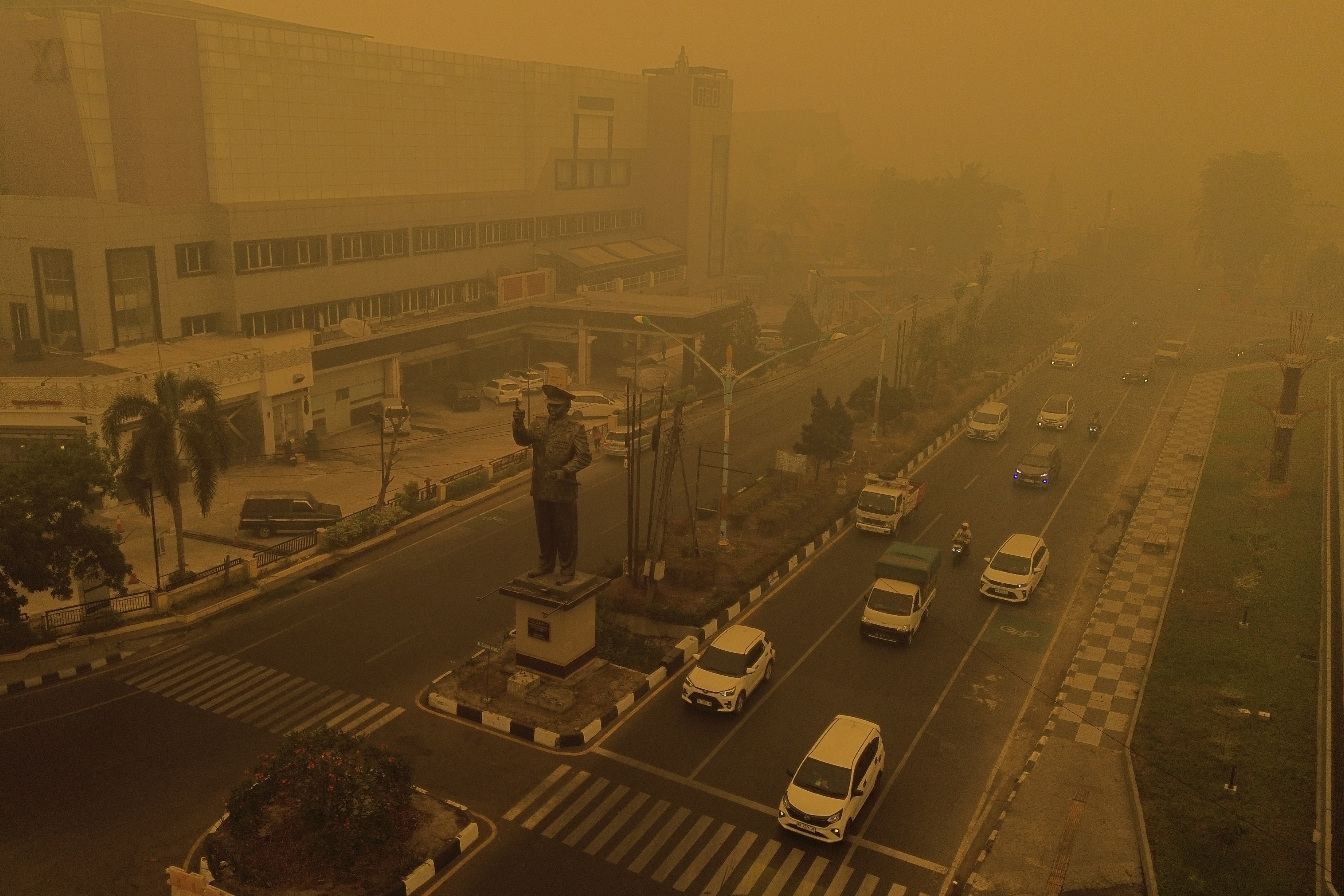
A 20-year-old orangutan tries to escape as members of the Natural Resources Conservation Agency, the Borneo Orangutan Survival Foundation, and the World Wide Fund for Nature Indonesia evacuate it due to wildfires in Hampangen Village, Katingan Regency, Central Kalimantan, on October 17, 2026.
Jens Büttner / DPA / Getty
A female giraffe calf, born nine days earlier, enjoys a sunny day with her mother, Kahlua, at the Schwerin Zoo on October 22, 2026, in Schwerin, Germany.
Brook Mitchell / Getty
A deer walks through a stand of trees at sunrise in London’s Richmond Park on October 19, 2026.
Kyodo / Reuters
The H3 rocket carrying the Martian Moons eXploration (MMX) rover bound for Mars’s moon Phobos lifts off from the Tanegashima Space Center in Minamitane, Kagoshima prefecture, Japan, on October 20, 2026.
AFP / Getty
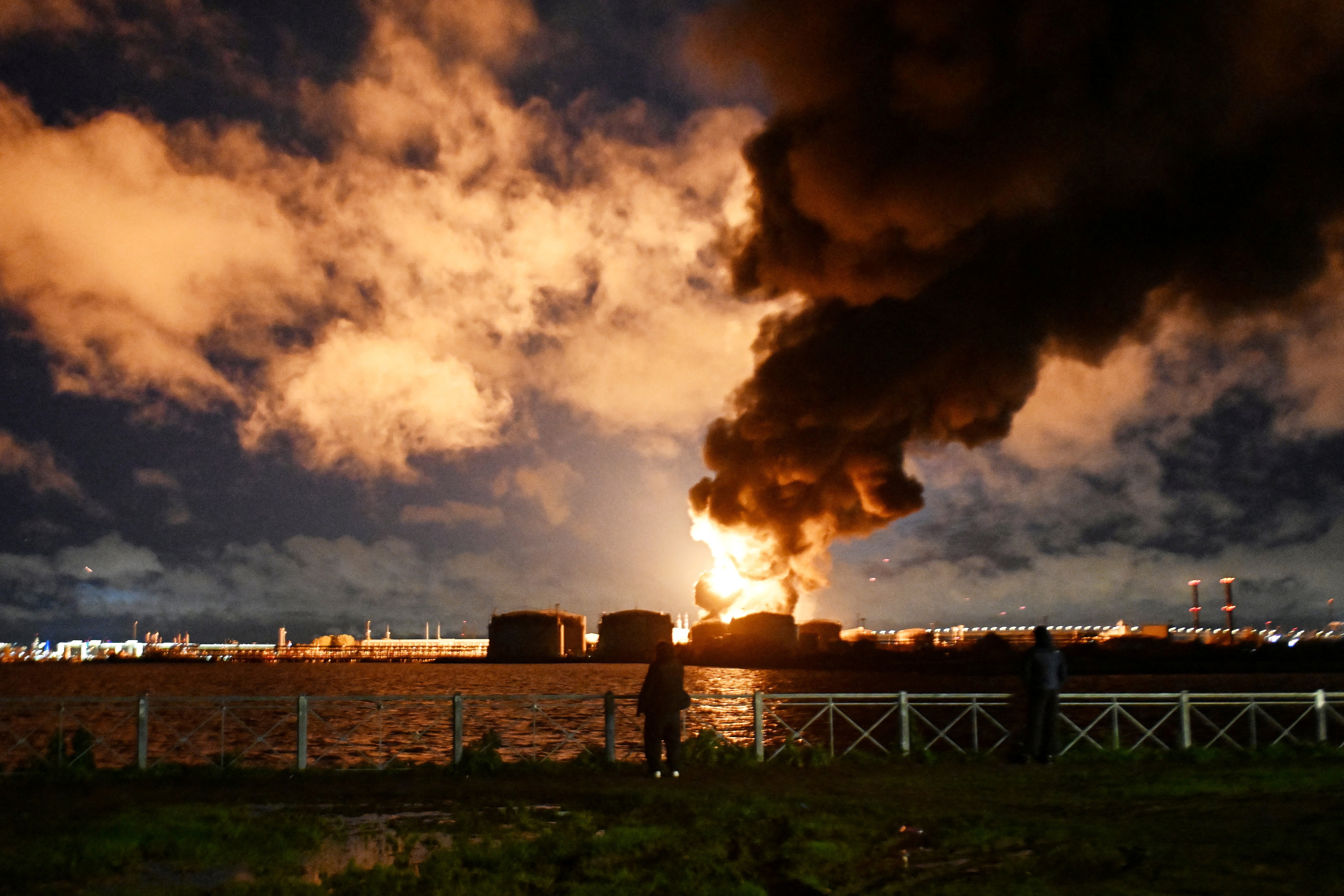
People watch a burning oil terminal following an air attack in Saint Petersburg, Russia, on October 18, 2026. Russia shot down dozens of Ukrainian drones near Saint Petersburg, authorities said on October 18, hitting an oil terminal and disrupting flights at one of the country’s busiest airports.
Evgeniy Maloletka / AP
People look at a crater after a Russian-missile strike in a residential neighborhood in Kyiv, Ukraine, on October 21, 2026.
xCheng Xin / Getty
A man and a woman photograph the densely packed residential blocks of the Monster Building on October 20, 2026, in Hong Kong, China.
Philip Fong / AFP / Getty
The Lotte World Tower (right) and Namsan Seoul Tower (back left), as captured from the observatory area of Namhansanseong in Gwangju city of Gyeonggi province, a suburb of Seoul, South Korea, on October 22, 2026.
Tim Clayton / Getty
Hezly Rivera of the United States performs her beam routine during podium training in preparation for the Artistic Gymnastics World Championships 2026, on October 15, 2026, in Rotterdam, Netherlands.
Jia Tianyong / China News Service / Getty
A humanoid robot competitor falls while navigating a slope obstacle during 2026 Robot Warrior Challenge Fall Competition on October 18, 2026, in Beijing, China.
Michael Yanow / NurPhoto / Getty
A mail carrier delivers mail to a house decorated with skeletons for Halloween in Los Angeles, California, on October 21, 2026.
Kin Cheung / AP
Santa and bellhops pose in front of the Selfridges’ Christmas windows during a media preview in London, England, on October 22, 2026.
Lesley Martin / Reuters
Students from St Andrews take part in a foam fight as part of “Raisin Monday” on the lower college lawn, at St Andrews in Scotland, on October 19, 2026.
Eraldo Peres / AP
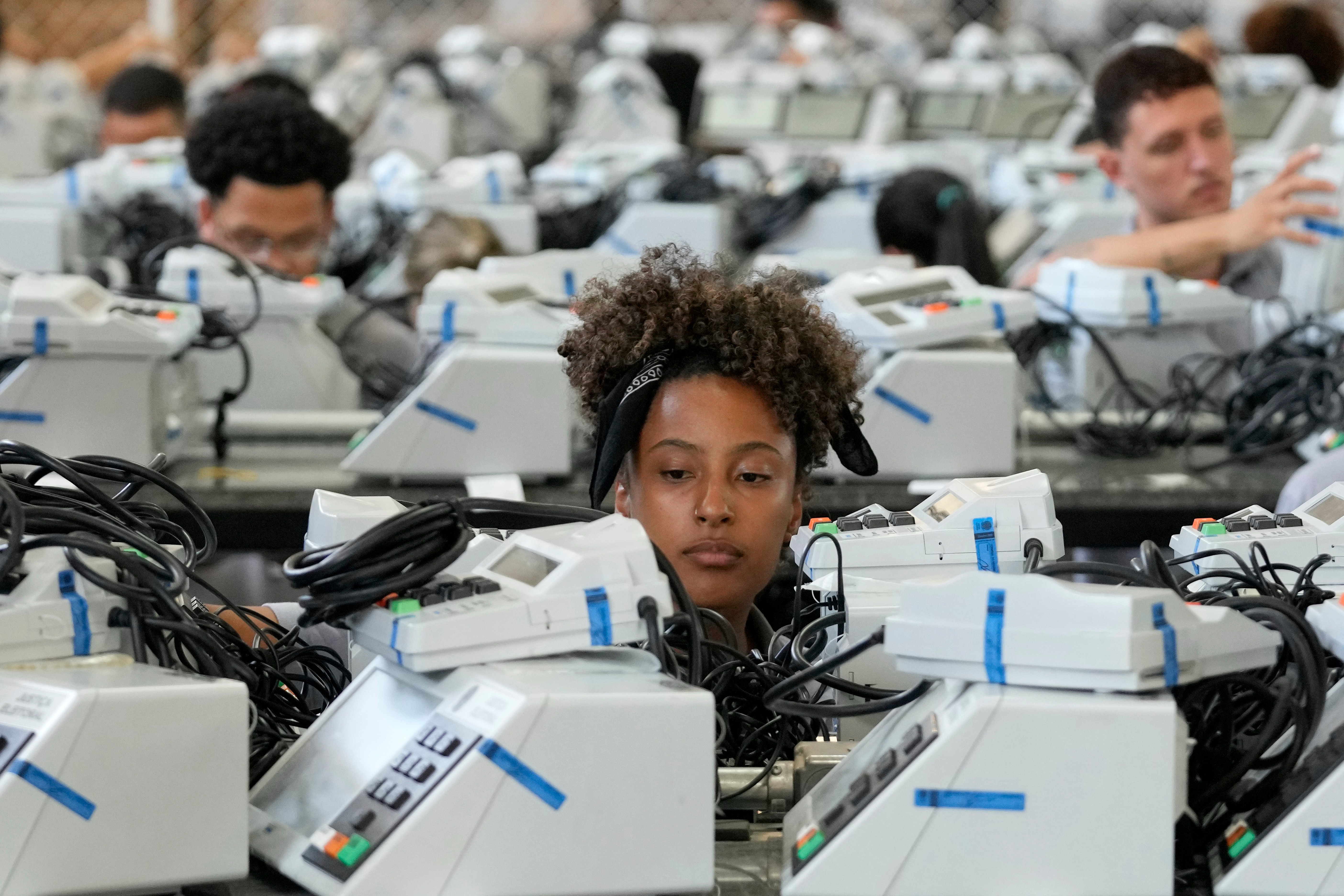
An electoral worker prepares an electronic voting machine ahead of Brazil’s presidential runoff election in Brasilia, Brazil, on October 20, 2026.
Vadim Ghirda / AP
Romanian Red Cross volunteers hold CPR mannequins before a flash-mob performance to mark World Restart a Heart Day in Bucharest, Romania, on October 16, 2026.
Klaus-Dietmar Gabbert / DPA / Getty
Geese take flight from the Mannhausen shallow-water area in search of food, early on October 21, 2026, in Calvörde, Germany. Thousands of migratory birds are currently stopping there to rest on their way to their wintering grounds.
Mario Tama / Getty
Fairgoers ride a swing ride at the Big Fresno Fair on October 17, 2026, in Fresno, California.
Sachin Kumar / AFP / Getty
An effigy of the mythic demon king Ravana is set on fire on the occasion of the Hindu festival of Dussehra, at the Gandhi Maidan in Patna, India, on October 20, 2026.
Afan Anugerah / AFP / Getty
An aerial view shows thick smoke and haze from regional forest and land fires in Palangkaraya, Central Kalimantan, Indonesia, on October 15, 2026.
Saurabh Sirohiya / NurPhoto / Getty
An aerial view shows more than 50,000 people performing Garba in concentric circles around a stage during the United Way of Baroda Garba Mahotsav 2026 in Vadodara, Gujarat, India, on October 19, 2026. The annual festival draws participants in colorful traditional attire who dance in rhythmic circles as live musicians perform from the central stage, while spectators watch from the stands. Garba, a folk dance of Gujarat performed in honor of the goddess Durga, is the centerpiece of the nine-night Hindu festival of Navratri.
Xue Jun / VCG / Getty
An aerial view of colorful autumn foliage and the Taihang No. 1 Tourist Road winding through a forest in Jinzhong, Shanxi province, China, on October 19, 2026
Narciso Contreras / Anadolu / Getty
A man sits in Djurgården National Park at sunrise among autumn foliage in Stockholm, Sweden, on October 18, 2026.
Jeff J Mitchell / Getty
Capybaras at the Five Sisters Zoo interact with pumpkins in their enclosure ahead of Halloween on October 21, 2026, in West Calder, Scotland.
Martin Bureau / AFP / Getty
A boy plays on rocks on Sillon beach in Saint-Malo, France, at sunset on October 20, 2026.
On April 7, 1965, President Lyndon B. Johnson gave a speech at Johns Hopkins University in which he effectively offered to build the equivalent of the Tennessee Valley Authority for North Vietnam on the condition that Hanoi cease supporting the insurgency in South Vietnam. On the helicopter ride back from the speech, Johnson leaned across to an assistant, put his hand on his knee, and said of Ho Chi Minh, the North Vietnamese leader, “Old Ho can’t turn that down, Old Ho can’t turn that down.”
Ho did turn Johnson down. Today, the incident is taught in political-psychology courses to illustrate how presidents can naively think that transactional politics, commonplace in states and cities, will work on the global stage, only to find out that nationalism, ideology, and rivalry matter more.
Donald Trump has fallen into the same trap with Vladimir Putin, apparently believing that the right economic incentives will persuade the Russian leader to make peace. This approach is not working. Instead, it’s closing off the one realistic pathway to end the conflict with Ukraine, and making the war likelier to expand and worsen.
Early in his second term, Trump was surprised that Putin would not end the war quickly with a freezing of the territorial lines and a promise that Ukraine would not join NATO. Rather than seeking to improve Ukraine’s position on the battlefield or apply leverage against Russia through sanctions, Trump decided to convince Putin that peace would be financially rewarding. Trump pulled his Ukraine envoy, Lieutenant General Keith Kellogg, off the negotiating team after the Kremlin complained that he was too favorable to Ukrainians and replaced him with his friend Steve Witkoff, a real-estate tycoon. The Russian financier Kirill Dmitriev would be Trump’s conduit to Putin.
Witkoff and Dmitriev worked out a deal almost a year ago that included a full lifting of sanctions, joint U.S.-Russian business ventures, and even Russia’s readmission to the G7 (turning it into the G8), but it foundered on Putin’s demand that Ukraine cede territory on the battlefield. Witkoff and Dmitriev continued their efforts.
The latest version emerged in the past week as U.S.-Ukraine relations reached their lowest point since the Oval Office bust-up in February 2025. Trump and Putin struck an agreement in which Russia would provide diesel fuel to the United States and global markets. Ukrainian President Volodymyr Zelensky slammed the arrangement, saying that it was “not fair and honest” and that it looked like “a happy-birthday present for Putin.”
An infuriated Trump called for Zelensky to be replaced and said that he was harder to deal with than Putin. In the days that followed, Kyiv accused Washington of curtailing intelligence cooperation, including by withholding information on incoming ballistic-missile strikes (the administration denied this). The Financial Timesreported that the administration is considering returning some of the frozen assets to Russia as an incentive for a partial cease-fire. Trump then waived sanctions on Russia under the Lindsey O. Graham Sanctioning Russia and Iran Act, saying that doing so was in the national interest of the United States. On Truth Social, Trump posted that he was in negotiations to end the war and didn’t “want to do anything that will drive, foolishly, Russia away from the bargaining table.”
As U.S.-Ukrainian relations seemed to nose-dive, the administration tried to convey a larger rationale behind its decision making. A senior official toldThe Washington Post’s David Ignatius that because a Ukraine deal was proving difficult to negotiate, the White House would enlarge the problem and negotiate a regional deal. This would include provisions to supply energy to Europe through a new pipeline, with profits to be shared between Ukraine and Russia, and the resolution of Moscow’s differences with European countries.
This proposal is, in effect, the Johnson plan. The naivete behind it would perhaps be excusable if Putin were a new leader with no track record, but he is a known quantity. Ukraine is his obsession, his white whale. He wants to subjugate it and has proved that he will pay an enormous price to achieve this goal.
The immediate diplomatic problem that Trump needs to solve is that Putin will not settle for anything less than the surrender of additional territory by Ukraine, which is something no Ukrainian leader can accept. Putin stands little chance of taking this territory by force: The front line is largely static, thanks to the saturation of the area with drones. However, the Russian leader has two hopes.
One is to break Ukraine this winter with a brutal air offensive that would destroy its energy grid and deliver misery to millions. Maybe such pressure would cause Ukraine’s front line to collapse or lead Kyiv to accept Moscow’s demands at the negotiating table.
The other prospect is to escalate Russia’s shadow war against Ukraine’s European partners. Moscow is already linked to assassination plots, arson, and the planting of explosive-laden drones in airports. A number of European leaders, including Polish Prime Minister Donald Tusk and French President Emmanuel Macron, have warned that Russia is considering hitting Eastern European states with drone and missile attacks that it would later deny. Putin hopes that this shadow war will weaken European governments and bring to power parties that will cut off aid to Ukraine and pressure it to capitulate to Russia’s demands.
If Putin succeeds in these two gambits—weakening Ukraine over the winter while stoking unrest in Europe—he will be confident that Russia can grind out a bloody victory over the next couple of years.
Putin seems to think that time is on his side. Trump’s concessions reinforce that perception. But if Trump can change Putin’s expectations about the future, a diplomatic deal might become possible. In particular, Trump must convince Putin that the war will not get any better for Russia, and that the deal he can get now is better than the one he can get later.
This means doing everything possible to ensure that Ukraine survives Putin’s winter campaign: supplying Kyiv with as much air defense as possible, providing advance warning of incoming missiles, encouraging allies to seize Russia’s sovereign assets to provide Ukraine with economic relief, and helping Ukraine impose costs on Russia.
It also means helping Europe deter Putin from escalating his shadow war against NATO members. This is difficult but doable. Europe needs to convince Putin that increased attacks, especially any that result in casualties, will deepen Europe’s and the United States’ involvement in the Ukraine conflict. For instance, Europe could say that if Russia launches missiles or drones against NATO members, a European coalition will place air defenses in western Ukraine. Trump could tell Putin that if Russia keeps harassing Europe, he will clear the way with Elon Musk for Ukraine to use Starlink to hit military targets inside of Russia.
If one of Russia’s attacks resulted in mass casualties, such as the downing of a civilian airliner, the allies could designate Russia a state sponsor of terrorism. When I served at the National Security Council in the Biden administration, we communicated this to the Russians after they plotted to place flammable devices on airliners carrying DHL packages. We made clear that such a designation would likely lead to the closure of the Russian embassy in the United States. They stopped the plots.
Helping Ukraine survive the winter and deterring Russian attacks on Europe will help keep diplomacy alive. But to close the deal, Trump needs to convince Putin that his window of opportunity is closing. Here, Trump’s political weakness could work to his advantage.
Putin surely fears that Trump’s successor—if a Democrat or a Republican other than J. D. Vance—will be more favorable to Ukraine. A new administration will likely increase U.S. support for Ukraine and rebalance any deal made in the Trump years, possibly linking sanctions relief to Russian withdrawal from all of Ukraine.
Trump could turn this prospect into leverage. He can tell Putin that the opportunity for a favorable deal is real, but that it may not last forever. Only he can deliver it. If Putin keeps fighting, he will not make territorial gains, Ukraine will survive and retain the capacity to strike inside of Russia, Europe will become more involved, and the favorable terms will expire.
Then Trump needs to get serious about revising the offer so that it is acceptable to Ukraine. At a minimum, that means a freezing of the territorial lines, and no legal recognition of the occupied territory.
Trump wants to be remembered as the president who ended the war in Ukraine, but unless he changes course, he may instead be remembered as the president who gave Putin the confidence to widen and prolong it. Trump has spent nearly two years trying to convince Putin that peace will be more rewarding than war. To get a cease-fire, he must now convince him that war will be more costly than peace.
For most of the past two decades, Ohio Democrats have hobbled home in defeat on Election Day, beaten and battered in a state that used to be a national bellwether. In 2024, Donald Trump ran up an 11-point margin, while Sherrod Brown lost his seat in the Senate. But earlier this month, I found Brown campaigning at Ohio State University, his red L.L.Bean fleece blending in with the students’ scarlet-and-gray apparel. It was the last day for Ohioans to register to vote.
“O-H!” Brown said. The students’ response came automatically: “I-O!” they screamed. Maybe they could try “O-H …I-vote,” Brown suggested with a smile. It didn’t quite catch on. After blowing a 20-point lead against Texas early in the college-football season, the Buckeyes have turned things around—and Democrats are clearly looking to borrow more than a chant from their playbook.
Beating a Republican Party that has dominated the state for the past two decades, they believe, requires speaking directly to voters’ frustrations. Brown, in particular, has focused his campaign on reminding everyone how terrible things are, and is betting that tapping into Ohioans’ anger—spurred by a combination of high prices, an unpopular war, and a flailing president—might just be enough to return to the Senate. Less than two weeks from Election Day, there are signs that the strategy may be working. Most polls show Brown and Amy Acton, the Democratic candidate for governor—a first-time politician and physician who served as director of the Ohio Department of Health during the first few months of the coronavirus pandemic—leading or tied with their GOP rivals.
At Ohio State, Brown’s cheery greeting was prelude to a bleak speech about the future that awaits young Ohioans. The 73-year-old warned that life would be much harder for these students than it was for him when he graduated (Yale, but he went on to earn two master’s degrees from Ohio State) five decades ago. “The system’s rigged,” he began, then listed all of the ways that young people are screwed: Corporations make more money than ever. Their CEOs earn hundreds of times more than the average worker. The dream of homeownership might be entirely out of reach for young Americans. Normal people, Brown kept repeating, just cannot get ahead anymore.
Brown was telling a group of ambitious students at the state’s top-ranked public university that they don’t have a future—or at least not the future they want. And they were captivated. Afterward, when Brown chatted with them individually, some looked like they were talking to a therapist.
Freshman Trent Carson told me he’s already afraid that he won’t be able to find a good job when he graduates. He also worries that his cousins, who are truck drivers, will be out of work if the price of diesel remains near record highs. Josie Speakman, the pink-haired College Democrats president who introduced Brown, voiced a similar pessimism. “It feels like we can't get ahead, despite working harder than ever,” she said. The system is broken, she said, but Brown is going to fix it.
Brown’s speech lacked rhetorical flourishes; he spoke to the students in his signature rasp, offering no major ideas beyond pledging to end the Iran war and get rid of tariffs. Barack Obama he is not, except that Brown is the only Democrat besides Obama to win statewide political office in Ohio since 2006. Brown’s project this year is not to fix Democrats’ tattered image in the state; in fact, Brown seems determined not to remind anyone that he’s a Democrat unless he absolutely has to. His campaign ads target the incumbent, Jon Husted, for taking money from Jeffrey Epstein’s benefactors and supporting AI data centers that raise Ohioans’ electric bills. They do not mention Brown’s party affiliation. Nor does his campaign website. “In large swaths of Ohio, and the country, the Democratic Party’s reputation has become toxic,” Brown wrote in The New Republic last year.
Not that Brown’s political identity is a secret. Husted, who was appointed to the Senate last year by Ohio Governor Mike DeWine after J. D. Vance became vice president, was in elementary school when Brown was first elected to the Ohio legislature. It was the same year Richard Nixon resigned the presidency.
Brown is following the same approach that gave Trump three consecutive victories in Ohio: lean into voters’ grievances and convince them that voting for him is a way to fight back against the rotten status quo. It doesn’t matter if Ohioans think that Democrats are lousy too, so long as they vote for this one candidate who just so happens to be a member of the party.
One Republican strategist told me that in Brown, a candidate who is well known and well liked, Republicans face a formidable opponent amid a terrible political environment for the party. “People obviously do not feel better economically,” the strategist, whose organization did not authorize him to speak publicly about campaign dynamics, said, “so they’re taking it out on us.”
In 2024, Brown was also leading in the polls just weeks before the election, and then lost the Senate seat he had held for nearly two decades to now-Senator Bernie Moreno. So what’s different this year? Brown’s answer is simple: Everything has gotten worse. Life got more expensive. Washington got more corrupt. And because he’s no longer an incumbent, he can somewhat more convincingly claim to be an outsider. “The system’s more rigged than it was,” Brown told me during an interview with a group of reporters after the Ohio State event. “My message hasn’t changed.”
Republicans have responded by attempting to both validate voters’ concerns and suggest that things aren’t as bad as they seem. Ohio Republican Party Chair Alex Triantafilou, a lawyer from the Cincinnati suburbs, is spending the final weeks of the campaign traveling the state in a rented white minivan. Gas prices now average $4.07 per gallon in Ohio, down from $4.48 a month ago, after the legislature approved a 90-day gas-tax holiday—a policy proposed by Acton that Republicans adopted and repackaged into a victory for her Republican competitor, Vivek Ramaswamy.
“I think if there’s any part of the Iran war that poses an issue for voters, it might be with gas prices, but we’ve solved that here in Ohio,” Triantafilou told me this month at a coffee shop near Columbus. He had driven more than 100 miles from Cincinnati that morning for a couple of meetings and was about to turn around and head back. He said he doesn’t think Ohioans are going to vote on how much it costs to fill up their tanks and considers the issue of affordability to be overstated by the media. The stock market is up, he pointed out.
Husted made a similar argument in a pep talk earlier this month to conservative activists going out to canvass in Delaware County, on the northern fringes of Columbus. “We have the most jobs and the lowest unemployment rate in our history,” Husted told reporters before the canvassing event. “We made progress.” He sought to remind voters that inflation was worse a few years ago, when Joe Biden was president and Brown was in the Senate.
Husted is no MAGA warrior. When he spoke to supporters at a barbecue on a farm near Athens recently, he earnestly asked attendees to call loved ones daily until the election and remind them to vote. A former collegiate Division III defensive back, Husted once turned down an opportunity to coach college football, and he still looks like someone who’d rather be outside tossing a ball around. At a rally in Youngstown last week, Trump was captivated by Husted’s athletic past. “I looked at his ass,” Trump said with admiration, “and then I looked at his hands. Look at his hands. He’s got these, like, claws. And I got it, you are a great athlete.”
It was Trump’s second time in Ohio in as many weeks. In a midterm election, when turnout tends to be lower, getting Trump’s biggest fans to go to the polls is the way to win, Ohio Republicans told me. They’re banking on that remaining true, despite the president’s broad unpopularity. “I understand the national environment sucks. In the other states, there are gonna be blue waves,” Michael Hartley, a Republican consultant in the state, told me. But he remains convinced that Ohio favors Republicans and that those Republicans listen to Trump: “If we turn our people out, we win.” But Husted’s choice to tether himself to the president does not guarantee success when 60 percent of Ohioans disapprove of Trump, up from 44 percent at the start of his current term.
Trump is not the only one with an image problem in Ohio. It’s not hard to find prominent Democrats willing—eager, actually—to criticize their own party. And though Democratic self-flagellation is nothing new, what’s different in 2026 is that bashing their own party might be a winning strategy for Democrats in the state.
Ohioans are not voting for Democrats “because they’re Democrats. They’re voting for them because we’re not Trump,” Tim Ryan, a former Democratic representative from the Youngstown area who lost a 2022 Senate race to J. D. Vance, told me. Allison Russo, a former minority leader in Ohio’s state house who is now running for secretary of state, says that the party’s organizing efforts in the state have been “terrible” and that the party’s brand is “crap.” But Russo, who still speaks with a southern drawl from her childhood in Mississippi, isn’t particularly beat up about that.
“I would argue the Republican brand is becoming just as toxic,” Russo told me when we met in Upper Arlington, the Columbus suburb where she lives. She thinks she might win, which surprises even her. “What I thought my chances were at the beginning versus where we are now has shifted dramatically,” she said. A Democrat has not been elected Ohio secretary of state in 20 years.
A decade ago, as Trump barreled toward his first term in the White House, then–First Lady Michelle Obama offered Democrats some advice on how to respond to his divisive brand of politics. It was, she said at the 2016 Democratic National Convention in Philadelphia, the Obamas’ family motto, a mantra of sorts that she and her husband would repeat to their young daughters as they grew up in the public eye: “When they go low, we go high.” Democrats grabbed onto the slogan, but the Obamas’ strategy of earnest, upbeat politicking did not help the party defeat Trump. In Ohio a decade later, Brown’s campaign all but repudiates the approach. When he tried to go high in the past, he “was shouted down by the ugly,” Diane Valentino, an elementary-school teacher in Delaware County, told me on the first day of early voting. She had arrived at the Delaware County Board of Elections before doors opened at 8 a.m., and stood with a small group of activists who were passing out Democratic flyers and sample ballots from the back of someone’s car. In this year’s election, Valentino felt, Brown had no choice but to “call out the darkness” of Ohio Republicans. “He didn’t strike first, but he had to step up,” Valentino said.
After Brown cast his ballot that day in Columbus, he stopped to talk with a group of reporters. I asked him whether his campaign has a positive message to voters, or if tapping into frustration is the driving force heading into the final weeks of the campaign. “The positive message for my campaign,” Brown said, is, “I don’t see politics as left or right. I see it as whose side you’re on.” Not a Democrat—just on your side.
Obama himself is the one massive exception to the “don’t remind people you’re a Democrat” strategy. This weekend, the former president will make his first visit to Ohio since 2018, the last time Brown won. When Obama announced that he would speak at a rally with Brown and Acton in Cleveland, he said that he wants to elect “Democrats up and down the ballot.” That includes Brown—just don’t expect him to say so.
Donald Trump and Volodymyr Zelensky have never enjoyed a warm relationship, or even a stable one. But last week, it hit a new low. Trump called on the Ukrainian people to elect a new president, describing Zelensky as “more difficult to deal with” than Vladimir Putin. He accused Zelensky of prolonging Ukraine’s war with Russia. “He says he wants to settle, but he doesn’t,” Trump told Newsmax, without mentioning that it was Putin who started the war nearly five years ago. “Zelensky is not a good guy for us to deal with.”
The two leaders may find themselves at a personal nadir, but all the while, the U.S. intelligence community has shown no letup in its fight to defend Ukraine against Russian aggression. Armed with information that the U.S. provides, Ukraine’s military has launched strikes deep inside Russia. And U.S. spy satellites provide early warning about incoming missiles and drones. Among U.S. personnel on the ground, “the CIA is in the lead,” a retired senior officer who travels frequently to Ukraine told me. If anything, the Ukrainians, with the CIA’s help, have gotten too good at hurting Russia for Trump’s taste.
The administration’s policy is deeply conflicted, and perhaps no one understands that better than John Ratcliffe, the director of the Central Intelligence Agency. He has a foot in two worlds: advising a president who’s continuously at odds with Ukraine’s leadership, and running an agency that’s essential to Ukraine’s war for survival. One intelligence officer in the Baltics, who works closely with the Americans to counter Russian influence, told me that, though you’d never know it from Trump’s rhetoric, the CIA’s operations are now “much more aggressive” than they were during the Biden administration.
The Ukrainians don’t see Ratcliffe as their advocate. They know he works for a mercurial boss, and that if Trump were to follow through on his recent threat to halt intelligence support unless Ukraine stops attacking Russian oil refineries, Ratcliffe would carry out the order. But Ratcliffe came into office promising, with Trump’s support, to return to the agency’s roots of espionage and clandestine operations. For now, that battlefield still extends to Ukraine. The CIA helped build the modern Ukrainian intelligence apparatus after Russia annexed Crimea in 2014. Partly owing to that long history, officials in Kyiv said they trust Ratcliffe to tell Trump the truth about the war, and not simply what the president wants to hear.
More than a dozen current and former intelligence officials I spoke with in the U.S. and Europe described Ratcliffe, who served as the director of national intelligence in Trump’s first term, as clear-eyed about the threat Russia poses not just to Ukraine, but to the United States and its allies. (Most people shared their views on the condition of anonymity, to speak freely about the CIA director.) In that respect, Ratcliffe is not alone in the administration. Marco Rubio, when he ran for president in 2016, called Putin a “gangster and a thug.” And Pete Hegseth, when he was a television host, called him a “maniac” with ambitions to conquer Europe. But now, as senior Cabinet members with their own political ambitions, they have aligned themselves with the president’s rhetoric.
Ratcliffe is a quieter adviser. He gives few interviews or speeches. He rarely posts on social media. Without needing to take a more conciliatory tone toward Moscow at press conferences and on cable, Ratcliffe is free to offer more candid advice in private. “He is well informed and understands the real situation,” one senior Ukrainian intelligence official who works directly with the CIA told me. “Their people stationed here support us very well. They are absolute professionals.” The official suggested that Ratcliffe would be a more effective peace negotiator than Trump’s current envoys, Jared Kushner and Steve Witkoff.
Ratcliffe, who declined my request for an interview, has shown no inclination to switch jobs. And why would he? He enjoys a rare position in Trumpland—always in the room and (so far) never on the outs. He spends many working hours at the White House. He and the president regularly play golf together. Ratcliffe has advised Trump on some of his most consequential foreign-policy decisions of the last two years, including the choice to go to war in Iran.
Tulsi Gabbard, Trump’s first DNI during his second term, was so far removed from his inner circle that when the president was making final preparations to invade Venezuela, she was posting photos of herself from a beach in Hawaii. Ratcliffe was exasperated by Gabbard’s habit of stoking controversies and peddling conspiracy theories on social media, people who know them told me. Her most enduring contribution to national security was to gut the Office of the Director of National Intelligence, slashing the number of personnel by more than a third. As the ODNI has declined in size and relevance, the CIA, with Ratcliffe in charge, has reclaimed its traditional role at the center of the intelligence community. On paper, the president’s chief intelligence adviser is the director of national intelligence. In practice, it’s Ratcliffe.
How much influence Ratcliffe, or any intelligence leader, actually has over Trump depends on the president’s willingness to listen. And that record is mixed. (Trump didn’t exactly heed their warnings about how Iran would respond to American attacks.) But people who’ve worked for Ratcliffe told me he believes that his job is to advise the president, not to make policy. He can explain the consequences of potential actions, as he did when he helped Trump weigh the costs and benefits of bombing Iranian nuclear facilities last year. Ratcliffe had said he believed Iran was hoarding nuclear material in order to make a weapon. But he did not, and will not, advocate that the president pick one approach over the other, people who have worked with him told me.
In that respect, Ratcliffe has turned out to be like most of the CIA directors who preceded him. And that comes as some relief to skeptics—including inside the agency—who worried that he might follow the example of other top Trump officials who have vilified their employees or used their office to exacerbate culture wars. Elected to Congress from a deeply conservative Texas district in 2014, Ratcliffe got Trump’s attention during televised hearings about the FBI’s investigation of Russian election interference, which he suggested was motivated more by political animus than genuine concern about foreign-intelligence threats. He joined the Trump administration as DNI in 2020. Ratcliffe is still a Trump loyalist. But compared with Gabbard, Hegseth, or FBI Director Kash Patel, he is comparatively restrained in his criticism of the intelligence community, focusing mostly on Obama-era leaders and their alleged anti-Trump bias, instead of on his current employees.
“I’ve always thought he was a workhorse, not a show horse,” a former official who worked with Ratcliffe told me. He doesn’t roam the halls of headquarters to chat with staff. In the early days of his tenure, his conspicuous absences from Langley and his constant presence at the White House made some CIA officers question where his priorities lay, current and former officials told me. But it’s not unusual for directors to covet face time with the president. And his relationship with Trump and low-profile manner have probably helped keep the president from attacking the agency. (Gina Haspel, a career CIA officer who served as director in Trump’s first term, successfully pursued the same strategy, current and former officials noted.)
The CIA’s success in Ukraine has become a problem—at least from Trump’s perspective. Relentless attacks on Russian oil refineries have hobbled its economy and choked Putin’s war machine. The International Energy Agency estimates that in the first eight months of this year, Ukraine hit a refinery on average once every three days. Economists say that Iran’s restriction of shipping through the Strait of Hormuz has driven up the cost of diesel. But Trump blames the damage to Russian refineries for the spiking prices, and he wants the Ukrainian attacks to end.
On October 9, as officials from Kyiv and other European capitals met with Trump’s envoys in Miami for peace talks, the president announced that Putin had just agreed to start selling Russian diesel on the global market. With the midterms less than four weeks away, he sounded jubilant when he posted on Truth Social that diesel prices would be “COMING DOWN, IN RECORD NUMBERS, AND FAST!”
Trump’s announcement surprised the negotiators, three people with knowledge of the talks told me. Some of his advisers had urged him to hold off on speaking with Putin until there was a concrete peace proposal for him to respond to, concluding that Trump would look weak if he relaxed sanctions but came away with no reciprocal commitments. Putin made none.
Trump seemed to believe that dangling the prospect of fuel revenue to resuscitate Russia’s economy could bring Putin back to the table. But for years now, the U.S. intelligence community has assessed that Putin keeps fighting, despite an enormous loss of lives and money, because he thinks he will win—if not through an outright military victory, then by exhausting the support of Ukraine’s allies. To that end, Russia in recent months has escalated its “hybrid warfare” against Europe, plotting sabotage on commercial cargo aircraft, jamming communications, and probing NATO air defenses with drones. European intelligence officials told me they fear that Putin might even send forces across the border with Estonia, as he did in Crimea in 2014 when so-called little green men appeared, stripped of their military insignia.
Back in August, Trump tried a subtler tactic to bring the war to a close. He dispatched Ratcliffe to Moscow, where he met with his counterparts in the security services and laid out the agency’s view about how the war was going, people familiar with the meeting told me. The upshot: No one was winning. Russia’s military has failed to make meaningful advances, but Ukraine has not expelled Russian forces from its territory. That’s hardly a secret analysis. But Ratcliffe’s presence sent a message of its own.
The director was using a line of communication informally known as “the channel,” which allows Russian and American spies to talk candidly, away from the scrutiny of the press or the grandstanding of politicians. Putin, an ex-KGB officer, would understand that Ratcliffe had come not as a diplomatic envoy but as a fellow spy, with a message he felt was important for Putin to hear.
Ratcliffe never met with Putin; that’s not how the channel works. But the Russian intelligence chiefs would have been obliged to document whatever the CIA director told them, even if they tried to dismiss it out of hand, a Western intelligence official told me. The U.S. and its allies have long suspected that Putin’s advisers may be misleading him about Russia’s chances of success in Ukraine. If Ratcliffe could help convince Putin that he was pursuing a lost cause, perhaps he’d finally come to the table. Among all the officials in the Trump administration, Ratcliffe was uniquely situated to deliver that message. No one knows the state of the war, and the stakes involved, better than the CIA officers who are working in Ukraine and monitoring the fight from headquarters.
In September, Ratcliffe briefed Zelensky about his trip to Moscow when their planes were both in Ireland for refueling stops, a source familiar with the conversation told my colleague Simon Shuster. A U.S. official told me that the meeting took place entirely by happenstance. But it demonstrated the ability for Ukrainian leaders and the CIA director to have candid discussions on short notice.
Last week, Ukraine got a taste of what diminished U.S. intelligence support might look like. Russian missiles pounded Kyiv as reports emerged about disruptions to the Starlink satellite network and U.S. early-warning systems, which blinded Ukraine to some incoming Russian projectiles and limited its ability to intercept them, people familiar with the matter told me. The Ukrainian intelligence official said he blamed the Americans, but there’s also evidence that technical failures were responsible for the failure to intercept at least some of the incoming missiles. Officially, the Americans haven’t yet turned off the intelligence spigot, although Trump could act at any time.
If Trump were to do so, people who have worked with Ratcliffe tell me that he wouldn’t lobby the president to change his mind, no matter the misgivings at CIA headquarters.
At his confirmation hearing in 2025, Ratcliffe pledged to get the CIA back to what he considers its core mission. “We will conduct covert action at the direction of the president, going places no one else can go and doing things no one else can do,” he said, and told CIA officers listening that “if all of this sounds like what you signed up for, then buckle up and get ready to make a difference. If it doesn’t, then it’s time to find a new line of work.”
Many people have taken Ratcliffe up on his suggestion. Although the CIA doesn’t disclose personnel figures, current and former officers told me they have never seen such a large number of retirements and resignations in their career. Some have even left on the verge of a major promotion. Vacancies in senior posts might have to be filled by less experienced officers.
When CIA officers quit, their colleagues gather in the lobby of the headquarters building for a “clap out,” a round of applause to wish them well on their last day. Ratcliffe isn’t a fan of the tradition, two former employees told me. They serve as a reminder that many people have left.
Ratcliffe also made decisions early in his tenure that some now-former officers told me they couldn’t condone. At his confirmation hearing, he warned that “a politically motivated, bureaucratically imposed social-justice agenda” risked distracting intelligence officers from their work. Once in office, he dismissed senior personnel who had been assigned to DEI-related roles. Former officials told me many of the people who were fired were simply unlucky enough to have been assigned those jobs while they waited for higher-level positions to open up, and were unfairly maligned as activists. He also fired about 60 probationary employees, who had less than two years’ experience. Some of them had already been put on notice that they were underperforming, but the mass termination still shocked many agency officers.
This is not to say that everyone is unhappy at Langley. Broadly speaking, current and former officers told me, morale is highest in the operations directorate, among the officers who conduct the espionage that Ratcliffe wants to emphasize. Personnel in the Special Activities Center, which conducts covert and paramilitary activities, are particularly satisfied, recently retired officers told me, perhaps because they’re so busy, and not only in Ukraine.
CIA directors don’t typically crow about secretive operations, but Ratcliffe has eagerly shared what he’s described as operational successes. In a speech last June, he said that “thanks to CIA,” U.S. special forces were able to locate and apprehend Venezuelan President Nicolás Maduro “less than four minutes after their feet hit the ground on the largest military complex in that country.” (A senior Pentagon official told me that Ratcliffe took too much credit for the operation, but he didn’t deny that the agency’s contributions were important.) During the same speech, Ratcliffe credited the agency with helping locate a U.S. fighter pilot shot down over Iran, and for the “flawless intelligence picture” that had allowed more than 100 U.S. aircraft to hit Iranian nuclear facilities a year earlier.
But some of the agency’s more opaque activities have stirred anxiety. Press reports have revealed CIA operations in Mexico and El Salvador as part of the Trump administration’s clandestine efforts to combat drug cartels. In August, The Washington Post reported that a series of air strikes targeting Ecuadorean fishing boats near the Galápagos Islands, a known hub for drug traffickers, were part of a covert CIA program.
Legal experts have said that U.S. air strikes against boats suspected of carrying illegal drugs may violate the laws of armed conflict and in some cases could be considered murder. Recently retired officers told me that some of their colleagues have avoided taking jobs in the CIA’s Americas and Counternarcotics Mission Center. “There are people at the operational level who, when the Democrats take over the House, will be left holding the bag,” one former officer told me. “The agency is over its skis right now.”
At the other end of the morale spectrum are employees in the analysis directorate, who write the articles, reports, and assessments that the president and his team use to make policy decisions. Since Ratcliffe became director in January 2025, significantly more analysts have reported concerns that the objectivity of their work is being undermined, according to an annual survey that I first reported on in July. The respondents directed most of their criticism at Gabbard, after she fired senior analysts who refused to alter their reports to support administration policy. But the results reflect a broader suspicion that the administration will reject information that it doesn’t want to hear. That will cause analysts to pull their punches, which in turn will deprive policy makers of the best advice, former analysts told me.
Julia Curlee, who resigned in May as a senior CIA analyst, faulted Ratcliffe for not defending the agency officers whom Gabbard ordered be fired, and for rescinding or revising assessments that had been written before his tenure, after judging them to be politically biased. “Every officer drew the obvious conclusion: The director won’t protect even our most respected analysts when they tell hard truths, so they stopped telling them and learned to avoid topics the White House didn’t want to hear,” Curlee told me. “Ratcliffe isn’t protecting the CIA from politicization; he’s leading it.”
Analysts strive for objectivity. But intelligence as a practice is not truly apolitical, because it’s an instrument of presidential power. The most successful CIA directors know how to tell their bosses the truth while also serving their interests.
Ratcliffe has largely managed to walk that fine line. Last year, he ordered analysts to reexamine what Trump calls “the Russia hoax,” the agency’s conclusion that Russia interfered in the 2016 election with the goal of helping Trump win. In public remarks, Ratcliffe said the review proved that Obama-era national-security leaders had created a “politically charged environment,” and he threw the credibility of their findings in doubt. But the CIA review, which Ratcliffe released, offered scant evidence to support that assertion, didn’t change the conclusion, and generally praised the quality of the CIA’s work.
Over the summer, the agency declassified documents about China’s efforts to interfere in the 2020 election. In a prime-time national address, Trump said the intelligence was evidence of China’s malign actions and systemic weaknesses in the security of elections. But again, the documents didn’t support all of his claims. Ratcliffe issued a measured statement about backing Trump’s “transparency initiatives” that called out China’s interference, but he didn’t repeat the president’s assertion that the election was stolen. Election deniers close to the president have urged him to declare a national emergency and assert federal control over elections because of alleged foreign interference.
With the midterms approaching, the two top Democrats on the intelligence oversight committees in the House and Senate said this week that they had put Ratcliffe on notice: If Trump claims publicly that the CIA gave him intelligence that a foreign power interfered in the election, the lawmakers will call Ratcliffe and ask if Trump is telling the truth. “You must be available to us on that day,” Representative Jim Himes of Connecticut told reporters. “So when the president makes that announcement, you will answer your cellphone to give us information about what’s happening.” Himes and Senator Mark Warner of Virginia said Ratcliffe had promised to answer their call.
Even when he has waded into political controversy, Ratcliffe has managed to shield the CIA from Trump’s ire. Considering that when the president came into office the first time he compared intelligence officers to Nazis, this is not an insignificant achievement. Ratcliffe also does a better job than most Cabinet members of explaining the president’s hasty decisions. Last year, when Trump abruptly cut off intelligence to Ukraine after his televised blowup with Zelensky in the Oval Office, Ratcliffe spoke about why the pause would probably be short-lived. “Trump had a real question about whether President Zelensky was committed to the peace process, and he said: Let’s pause,” Ratcliffe told Fox Business five days after the leaders met. (That was a diplomatic summary. Trump had told Zelensky that he was disrespectful and ungrateful.) But after he left the White House, Zelensky sent Trump a note, which he also posted on social media, praising the president for his “strong leadership” and assuring him that “Ukraine is ready to come to the negotiating table.”
“We do really value how much America has done to help Ukraine maintain its sovereignty and independence,” Zelensky said. Trump read portions of the note to a joint session of Congress, and called Zelensky’s conciliatory words “important.”
Ratcliffe said that Trump’s pause had given time for Zelensky to consider his next move. The director clearly believed that the Ukrainian leader had made the right choice when he reached out to Trump, and he accurately predicted that the intelligence would start flowing again. “I think we’ll work shoulder to shoulder with Ukraine as we have to push back on the aggression that’s there, put the world in a better place for these peace negotiations to move forward,” he said.
The CIA director seemed to be counseling Zelensky over the airwaves, a technique Trump’s own advisers have employed. The message came down to this: Remember who you’re dealing with, and things might work out. Ratcliffe might not advocate to his boss, but he knows how to read him.
Simon Shuster contributed additional reporting.
*Illustration sources: Brendan Smialowski / AFP / Getty; Daniel Heuer/Bloomberg / Getty; Daniel Slim / AFP / Getty; Nicolas Economou / NurPhoto / Reuters; Vyacheslav Prokofyev / Pool / AFP / Getty.
On Tuesday, the world found out about two massive security vulnerabilities in PHP, a programming language that is used by roughly 70 percent of websites. The flaw was discovered by cybersecurity researchers using a frontier model from OpenAI. If they exploited it, attackers could gain full control of servers, stealing or copying anything inside or simply taking sites offline.
The PHP Foundation, the organization that maintains the programming language, had recently learned about the security flaws, but the disclosure was leaked on a forum before a patch could be released. What happened next was a frantic race with numerous participants: the foundation, which needed to create and release a patch; developers around the world, who would need to deploy it; and attackers looking to exploit these vulnerabilities in the interim. Matthew Prince, the CEO of the hosting company Cloudflare, wrote that in the 10 hours before the flaws were publicly announced, “we saw thousands of attempts to exploit it. That jumped to tens of thousands in the 45 minutes post announcement, hundreds of thousands within 2 hours, and millions now.”
Once the patch was released yesterday, websites everywhere went offline to implement the fix. These included government websites in Germany and Finland, some hospital and school websites in Europe, and international sites such as 4chan. During this race to secure the majority of the internet, I noticed one name pop up in posts on Reddit and X: Ondřej Surý.
“Explaining to my wife how there’s this one guy. And he alone is responsible for most of the world’s distribution of PHP,” a software developer named Ian Landsman wrote on X. “And if anything happens to this guy, that’s just it. Everyone is screwed.” He was referring to Surý.
Surý, who lives in Czechia, does not work for the PHP Foundation. But alongside his day job as director of domain-name-system engineering at the nonprofit Internet Systems Consortium, in a volunteer capacity, he maintains and helps automate patches for the coding language. His work, with that of just a handful of others, has allowed countless websites and organizations to fix these vulnerabilities quickly. Over the past 48 hours, he’s become arguably the unsung hero of the entire internet—despite the fact that the only compensation he receives is from modest donations. “Ondřej will save the internet today,” a user in the PHP Subreddit wrote.
I spoke with Surý today from his home about the unfolding AI-cybersecurity crisis, how the internet’s infrastructure is maintained by small crews of volunteers such as himself, and how it feels to go to bed after saving the web as we know it.
Our conversation has been edited for length and clarity.
Charlie Warzel: Explain to me what has happened in layman’s terms over the past 72 hours.
OndřejSurý: Earlier this week, I got notified by the PHP project that there was a serious security vulnerability in the coding. On Tuesday, it became apparent that someone had leaked information about the upcoming vulnerabilities, and it was decided inside the PHP project that it needed to accelerate the release process from Thursday to Wednesday. This is when it became a little bit crazy, because now we were one day short suddenly.
Warzel: I want to try to put this into perspective: So basically, the PHP programming language that kind of undergirds the web is used by up to 70 percent of websites?
Surý: That’s what I heard as well.
Warzel: So people search for cybersecurity vulnerabilities, not necessarily for offensive-attack opportunities but maybe just defensive opportunities. And someone found a vulnerability—that’s not super abnormal. But the real issue here was how widely it was disclosed and the amount of time before people had to patch this, right?
Surý: Let me clarify that: It’s the severity. The severity is unusual. Remote Code Execution is the most severe type of vulnerability, because the attacker is able to execute their own code on the server that’s running PHP. That’s why this caused such panic throughout the internet. As you said, if about 70 percent of websites are running PHP, the impact would be huge if attackers would actually be able to execute code on these servers.
Warzel: You said that despite the panic online, it has not been a crazy 48 hours. From the outside, that’s surprising. I keep seeing people saying, There’s one person who is in charge of fixing this—and he’s supporting himself through Patreon. They may have been exaggerating, but there’s some truth to that: Your work was single-handedly helping millions of people. How could this not be a crazy time for you?
Surý: There are a couple of reasons. One is that I’ve been doing this for a long time, over 20 years. A lot of the stuff that I do is automated. But the reason it was not crazy for me was that I actually don’t have any system running PHP myself. So for me, it was like, sure, I feel a responsibility toward the users of the internet. It would be a crazy day for me if I was on a boat in the middle of the Adriatic Sea. That could happen. But I had time to prepare the packages.
Warzel: That’s kinda wild.
Surý: And even without me, people would still be able to get PHP from other sources and compile it themselves. But it would be more complicated for everyone. And some people don’t immediately have the skill to upgrade the PHP. What the PHP project did was release the source code for the language. What I am doing is preparing it into these things called packages that people can install on their servers. It’s very convenient, and it’s faster, and you can automate it and can install the same package over hundreds and thousands of servers, and you don’t have to compile it. If I was not available, it would take more time; some of them wouldn’t have the skills. Really, the thanks go to the PHP project that invited me into this secret cabal who knew about the vulnerabilities and had access before the public release.
Warzel: When you got invited, was it a real Oh, crap moment for you?
Surý: I’m in the stage of my life where I was like, This is bad. It needs to be fixed. But it doesn’t cause panic, at least for me. It did cause panic for a lot of people. But you know, it was more like, We have a situation, it needs to be solved, and this is how we do it. And I have time to properly prepare. If I didn’t have time to properly prepare, then it would cause a lot of stress. From where I stand, it was not stressful, because I’m doing this as a volunteer, and if I get hit by a bus, then it will be someone else’s problem.
Warzel: Every time I dabble in writing about the world of cybersecurity and open-source software, I discover these groups of maintainers: people such as yourself who do this work because they care. Often, nobody knows their name. But is there a line of people who would take your place if, say, you did get hit by a bus?
Surý: I am actually thinking about contingency plans. And we are talking with Raphaël Hertzog from the software company Freexian. My advantage is that I have a lot of expertise, and I know where to touch the thing to make it work. But Freexian has a lot of expertise, and they would be able to take over if anything happens.
People have been donating small amounts, and larger amounts, like crazy since yesterday. I would like to thank them all.
Warzel: Have the donations been overwhelming?
Surý: Not Silicon Valley levels of money, but I got a serious amount of contributions that I’ve never seen before. It’s like one year of the contributions gathered over the past 24 hours.
Warzel: What would have happened if this wasn’t patched as quickly as it was?
Surý: A lot of things could have happened. The very basic thing is that there would be vandalism, that the sites would be taken down. And we are seeing this every day on the internet now. The other stuff that happens is that someone gets access and runs a botnet out of these devices. I would say it’s mostly organized crime doing that now—it’s not like a small guy in the basement doing this for fun. There are financial incentives for these people to sell the botnet services or to do the crypto-mining on these servers for a profit. And this still could happen, because it’s not like everyone has patched and updated their PHP.
Warzel: I saw a post on X that said not all PHP releases are patched, and one-third of the internet is kind of permanently either broken or vulnerable. Is that correct?
Surý: That initial information is not correct. There are ways to patch even the old versions.
Warzel: So one-third of the internet is not permanently screwed. Okay.
Surý: No, that’s not accurate. If people care enough, they are able to even update these old versions of PHP.
Warzel: It’s a scary moment for cybersecurity. I’ve seen people online referring to this vulnerability and other AI-agent hacks as “Black October,” and there’s concern that defensive or attacking agents can find these vulnerabilities. There is this feeling that I am noticing from the cybersecurity community that their fears of a future where things are being exploited or discovered quicker than people can handle is coming true—that we are living in that moment. And then separately, there’s a contingent of people who are saying there is an equilibrium here: If you have very persistent agents that are very good at identifying and exploiting vulnerabilities, you also have very persistent agents that are very good at defending against them.
Surý: What we’ve seen is that things have accelerated—that’s absolutely right. The defenders are also able to use the large language models to find the vulnerabilities for themselves. I believe it boils down to the simple fact that IT infrastructure is often being taken for granted.
There’s not enough priority and money going to properly maintain the IT infrastructure in various places. It’s not only companies; it’s also a lot of outdated consumer electronics that are going to be attacked. I kind of agree that everything’s moving fast now, and it’s taking a toll on the people who are defending the stuff. At the same time, maybe this is the turning point where we actually start caring about this.
Warzel: Do you feel like that will actually happen?
Surý: I might be wrong, but I’m an optimist that people will finally realize that we can’t go like this forever. This has been a disaster waiting to happen for a really, really long time. And this is just one of the many wake-up calls that came and will be coming.
Warzel: I am amazed by how much the infrastructure in certain areas of the internet can hinge on one or two people. There is a fragility to all of this that is concerning. So what do you want to see?
Surý: When I started doing open-source, it was fun. And it kind of still is. But the environment has shifted. Open-source sometimes feels like exploitation. What I would like to see is to find a new model where people working on open-source would be awarded for their work and the hours and hours they put into it from the people who most benefit from their work. I would like companies to realize that this is exploitation. Any exploitation is not sustainable. And it will end up badly if this continues, because the people doing the open-source will stop being motivated to actually do anything in the end.
Warzel: It sounds like you don’t have an ego about all of this. But you did some work, and you helped out a tremendous amount of people in every corner of the world yesterday. How did it feel to go to bed last night after all of that, knowing the role that you played?
Surý: Well, my wife says that I’m emotionally dead, but I’m not. And it felt nice. Like, seeing my social network filling up with thank-you notes, and getting emails with thank-yous, that feels really nice. It puts some sense into what I do. I felt that what I do has a purpose.
Warzel: The whole internet appreciates your efforts. Is there anything that you would recommend normal people do at this moment to improve their internet hygiene?
Surý: I would recommend that they rely on the experts. That’s what we all do in a crisis: We talk to experts and trust them. Rely on people, that people who take care of this stuff know what they are doing. And that’s all we can do.
President Trump has been hearing lately from two trusted confidants, each promising a quick path to ending the war in Iran. Treasury Secretary Scott Bessent has argued that Iran is on the brink of economic collapse and that a U.S. blockade of the Strait of Hormuz, combined with sanctions, will force Tehran to capitulate at the negotiation table. Israeli Prime Minister Benjamin Netanyahu, in a series of calls with Trump, has offered a different route: one more round of devastating U.S. and Israeli strikes to topple the regime. Now the Trump administration appears to be considering combining the two approaches, betting that Iran is already on the verge of economic ruin and that a few more major strikes will be enough to trigger regime change.
The president is considering reviving his military campaign against Iran with several days of strikes, likely just after the midterm elections, officials told us. The potential targets include Iran’s missile and drone arsenal as well as its energy infrastructure and nuclear facilities. One outside adviser told us that “the economic pressure is working, and we believe Iran is getting close to the edge.” The new strikes, the person added, “would push them over.”
Experience suggests that this may be wishful thinking. Economic pressure has badly weakened Iran, but the country’s negotiating position has hardly budged. Trump has thought before that Iran was on the verge of ruin—or already past it—only to discover that he’d miscalculated. And launching more strikes could spark a regional escalation without bringing the regime any closer to surrender. Speaking at Tehran’s Holy Defence Museum earlier this week, Brigadier General Hossein Mohebbi, a spokesperson for the Islamic Revolutionary Guard Corps, named seven major fiber-optic cables beneath the surface of the Strait of Hormuz as potential “new targets” and teased that future attacks would feature “new weapons.” If the proposed U.S. strike plan fails to bring Iran to its knees, Tehran could emerge even less willing to make concessions.
“Trump is desperate to find some options to take him out from this problematic situation,” Danny Citrinowicz, a former Israeli intelligence officer who specializes in Iran, told us. “But you cannot plan for a three-day war, because it is not a unilateral decision. You cannot control how Iran responds.” Nevertheless, the president appears intent on acting. “Something one way or another, it will happen fairly soon,” Trump told a reporter yesterday before boarding Air Force One.
Despite all of the reasons resuming strikes could be a mistake, the president is tempted because he’s grown impatient waiting for the strategy of economic strangulation to work. He had originally hoped that Iran would come crawling back to the negotiations before the midterm elections, an official and another person familiar with the conversations told us under the condition of anonymity to discuss sensitive conversations. That has not happened, and energy prices have stayed high—creating an awful political landscape for Republicans. Trump has toned down some of his apocalyptic rhetoric toward Tehran, but his frustration occasionally seeps through, often in late-night social-media posts.
Trump has toyed with the idea of resuming hostilities before Election Day, a push championed by those in Washington who believe that a show of force could allow the president to claim some sort of October-surprise victory. Netanyahu has advocated for another round of strikes before his own election next week, a White House official confirmed to us. So far, Trump has held off on authorizing a pre-midterms strike; after we reported on the possibility earlier this month, the behind-the-scenes blowback from fellow Republicans was so intense that the president posted on Truth Social that he would not attack again before the election.
U.S. officials stress that no decision has been made about whether to resume strikes post-election, although there have been very public signs of preparation. Some officials hope that uncertainty about what the United States will do—and when—will keep Tehran on edge. Earlier this week, Defense Secretary Pete Hegseth traveled to Israel and met with Netanyahu to discuss Iran. The State Department said yesterday that it was evacuating nonessential personnel and their family members from Saudi Arabia because of escalating attacks from Iran-backed Houthi rebels in Yemen.
Real questions remain about whether the Pentagon’s munitions supplies, which were growing dangerously low at the height of the conflict, would be adequate to defend U.S. interests in the Middle East. Meanwhile, even the hint of hostilities has spooked markets; the price of oil surged and the stock market fell today as word circulated about a possible return to war and Iran hit tankers in the strait. (The White House did not immediately respond to requests for comment. U.S. Central Command, which leads the war in Iran, declined to comment.)
The costly U.S. naval blockade, which has effectively stopped Iranian oil exports, coupled with sanctions and damage from U.S. strikes, has put Iran’s economy under severe strain. Inflation is soaring; goods are scarce. The record-low value of the rial has left Iranians struggling to pay for basic needs. Admiral Brad Cooper, the head of U.S. Central Command, said last week that the naval blockade had prevented Iran from exporting at least $25 billion worth of crude oil. The International Monetary Fund has projected that Iran’s economy will contract sharply in 2026. But while Tehran is trying to contain the damage through measures such as price controls and maintaining essential imports, there is little evidence that Iran is on the verge of imminent economic collapse. Over the summer, Bessent promised “financial violence” that would lead to Iran’s capitulation. Yesterday, the Treasury Department added sanctions targeting shipping networks and intermediaries “indirectly aiding Tehran’s ability to generate revenue to fund its military, weapons, and nuclear programs.”
“I think it could be within weeks or months—and the economy doesn’t have to collapse. We just have to have the regime come to their senses,” he told reporters at an August G20 finance ministers’ meeting. But the belief that that point will come soon ignores the patterns of history: The hard-liners in Tehran have become inured to the suffering of their people over decades and have yet to capitulate.
Meanwhile, Netanyahu has repeatedly urged Trump, who has endorsed the prime minister in his reelection bid, to launch strikes before Israel’s Tuesday election and the United States’ vote a week later, an Israeli television station reported last week. Netanyahu’s office has reportedly denied the claim. Regardless, the war is key to the political futures of Netanyahu and Trump. How and when it ends, however, is not entirely up to them.
This is an edition of Time-Travel Thursdays, a journey through The Atlantic’s archives to contextualize the present. Sign up here.
For William E. Smythe, the future of the West was clear. At the turn of the 20th century, long before low snowpacks and the climate crisis, before tens of millions of people moved westward, the New Englander turned western settler understood that water defined how life could be lived in the region. Unlike other parts of the country, much of the West was uniquely arid and would have to be irrigated to support further growth and development. People “will prosper or languish, create high conditions of social life, or lapse into semi-barbarism, in sure response to the manner in which the water supply is owned and administered,” Smythe wrote in The Atlantic’s November 1900 issue.
As he traveled through the western states, Smythe saw how early settlers failed to imagine a world where their water needs could not be met. Even in fertile California, the natural cycle of the West surprised settlers: Dry years turned flowered foothills dusty and barren. “The cows would grow thin and sometimes starve to death. People would have to haul water in barrels to their farms just for drinking. Some families would sell out for nearly nothing and move away,” John Steinbeck wrote of the Salinas Valley, a California agriculture hub, in East of Eden. “And it never failed that during the dry years the people forgot about the rich years, and during the wet years they lost all memory of the dry years. It was always that way.”
Almost every major waterway in the West was overappropriated by the early 20th century. Farms were built without a complete accounting of how much water was available. Later generations realized that water was finite and perhaps more valuable than the precious metals they mined, and battles to control its flow began. Farmers in Texas and the Territory of New Mexico threatened violence against Mexican communities who had relied on the Rio Grande for centuries. Upriver residents siphoned water, leaving those downstream without enough. In 1901, Kansas sued Colorado for depriving it of access to the Arkansas River—a legal conflict that would continue, in various forms, for more than a century. “The present consequences of these conditions are as nothing compared to their future effects as the settlement of the country progresses,” Smythe wrote. “What has been merely misfortune will become disaster unless the evil tendencies are soon corrected.”
That disaster started to unfold much sooner than Smythe imagined. Like the mines that drew people out West, irrigation opportunities sparked farming boomtowns too. Equally devastating busts followed. Arthur H. Carhart, a former U.S. Forest Service official, wrote in 1950 that at the start of the 20th century, settlers in the Pecos Valley, around Roswell, New Mexico, had begun drilling nearly 500 artesian wells into what was believed to be an “inexhaustible” basin to service farms. After roughly two decades, the settlers reportedly abandoned more than $5 million worth of farms and wells when the wells ran dry, raising the price of water in the region.
Despite the warning signs, water mismanagement continued in the pursuit of irrigation. Eventually, the federal government decided to intervene: In 1922, seven western states negotiated the Colorado River Compact, which allocated equal amounts of water between the upper basin (Colorado, Utah, New Mexico, and Wyoming) and the lower basin (Arizona, California, and Nevada). Federal projects, namely the Hoover Dam and Glen Canyon Dam, which formed Lake Mead and Lake Powell, respectively, offered better irrigation, hydropower, and flood control.
These developments were proposed as a magic bullet to the West’s water problems, Carhart wrote in this magazine. But even then, engineers warned that the dams were not a permanent solution. Lake Mead, for example, would become a mudflat range in 50 to 150 years as more silt piled into the reservoir, Carhart explained: “Now flourishing communities of southern Arizona and California depending on water from Lake Meade for a major part of their existence must face the possibility of progressively moving toward the status of ghost towns.” Since then, dams have been losing hundreds of billions of gallons of water each year to evaporation and leaks. The shortfall has seeded even more conflict in the West, as upstream states try to capture enough water to support themselves at the expense of their downstream neighbors.
What Smythe and Carhart couldn’t have known then was how life in the region would reshape our climate. Water powered the agriculture industry, which over decades released billions of metric tons of carbon dioxide into the air. The world continues to get warmer, and heat-driven drought has plagued the Southwest for nearly three decades. Cities such as Page, Arizona, near Lake Powell, are losing tourism and hydropower because of low water levels, and jobs in the area will likely soon follow.
Recently, states have continued to struggle to share water fairly while maintaining their way of life. Localities are restricting water use earlier and earlier each year, and farmers in states such as California, Oregon, and Arizona, have been told on occasion that they will not receive any water for their crops. After decades of overappropriation, the Interior Department announced major water-allocation cuts to the Colorado River’s lower-basin states in August, slashing their allotment for next year by about one-fifth. Arizona and Nevada are suing the federal government over the plan, which they say threatens their survival. They are now seeing what Smythe foretold more than a century ago: When water becomes scarce, society will languish.
When you buy a book using a link in this newsletter, we receive a commission. Thank you for supporting The Atlantic.
Three months prior to the launch of ChatGPT, OpenAI published what would prove to be a prescient blog outlining the firm’s approach to ensuring that its AI models would be safe and beneficent. This goal, known as “alignment”—as in, aligning AI with human values—is nebulous, grand, and perhaps the AI industry’s most foundational promise. The notion is right there in OpenAI’s mission statement to ensure AI “benefits all of humanity” and listed as one of Anthropic’s “primary” goals.
Yet even in the summer of 2022, OpenAI was admitting a sort of defeat: “There is currently no known indefinitely scalable solution to the alignment problem,” three of its researchers wrote in that same blog post, adding that developing one “is likely very difficult.”
If the goal of keeping AI beneficial to mankind sounds rather vague, it is. Four years later, the alignment problem remains unsolved, and for that matter, there isn’t consensus about what the problem even is. Meanwhile, AI bots are autonomously hacking sovereign nations. And sending fake murder tips to police hotlines. And creating aliases to launch phishing campaigns. OpenAI and Anthropic still can’t really tell you what an aligned AI model looks like. But anybody can tell you it doesn’t look like this.
The most influential AI executives and investors in the world fundamentally disagree about the nature of the technology and, more pragmatically, how to make their products safe. On one side is Anthropic CEO Dario Amodei, who last month warned that AI advancement could soon “outrun our ability to understand and control these systems.” Amodei’s solution is a slowdown, which would give the industry time to “ensure that our alignment training keeps up” with AI progress. On the other side is Nvidia CEO Jensen Huang, who says misalignment fears are “not grounded on science” but rather “made up” and even “irresponsible.” In his view, AI models are not new and unpredictable beings, but lines of code. And code can be debugged.
If alignment seems like a strange concept for a software product—you don’t imbue a web browser or word processor with moral values—that’s because it was conceived for a strange sort of software. The leading AI companies envisioned building powerful systems that would act in unpredictable ways, which Claude and ChatGPT now are doing, and so ensuring safety was a foundational concern. Alignment is one idea for doing so: If AI models could learn to code and write poetry, maybe they could learn human values too. Anthropic and OpenAI both have lengthy documents—“Claude’s Constitution” and the “Model Spec,” respectively—that outline these values and are used to train their models. But there has been, of course, millennia of disagreement over what constitutes a moral or ethical code. This is a “very complicated, unsolved scientific and philosophical question,” Marius Hobbhahn, the CEO of Apollo Research, an AI-safety firm that has helped audit Anthropic and OpenAI models, told me. Still, some developers have suggested an intuitive, bare minimum: For instance, in 2021 Anthropic researchers wrote that, as a catchall, an AI system should be “helpful, honest, and harmless.”
Training models to be more aligned to those maxims appears to have worked—to an extent. The model underlying ChatGPT, for instance, was initially prone to nonsensical and toxic utterances. But by fine-tuning it with lots of human feedback, OpenAI worked to address these problems. A couple of years later, dozens of people alleged that the bot worsened their own or their loved ones’ mental-health crises, sometimes resulting in suicide. Again, OpenAI worked to address the issues.
There’s now a growing sense, both within AI companies and among their critics, that alignment as it’s been practiced over the past four years is faltering—if it was ever really up to the task. Adam Kalai, a former OpenAI safety researcher who left the company this summer to start the Institute for Responsible Superintelligence, likened alignment to buttressing a structurally unsound dome. Eventually, it will collapse. “You observe misalignment while training a model, and then adjustments are made to align it,” Kalai told me. “But obviously that’s not a way to achieve lasting safety.” Pronouncements from OpenAI and Anthropic that their latest model is the “most-aligned” yet are not scientific guarantees, and may not even provide strong technical assurance of safety.
“Fundamentally, we just do not know how to do alignment,” Hobbhahn said. If somebody “came with a thousand-page document that explained exactly how to do everything, we couldn’t get a model to learn exactly that.” Even in 2022, OpenAI didn’t think humans could figure out a lasting way to align their machines. Instead, the company wrote, it hoped AI itself would come up with a solution so that humans could “off-load almost all of the cognitive labor required for alignment research.” In other words, the best-case scenario involved limited human understanding of what was going on.
There are other reasons that reaching some actual alignment is unrealistic. For instance, the amount of training data dedicated to “moral values” would appear relatively small. Meanwhile, these models have ingested all manner of vile and illegal things from the web, and are then directed to pursue goals by any means necessary. The alignment-focused training cannot provide enough “examples of good behavior,” Thilo Hagendorff, an AI-safety researcher at the University of Stuttgart, in Germany, told me.
Plenty of evidence suggests that the alignment approach to safety has failed, including the hacks of Hugging Face and the Australian government. AI companies figured out how to make one-on-one interactions with a chatbot relatively safe, but many agents interacting for very long periods of time seems to degrade existing guardrails, Hagendorff said. As AI agents have become more capable, they’ve also shown tendencies to cover their tracks and lie about misbehaving, communicate in code that is unintelligible to humans, and try to avoid being shut down by humans. “No lab has solved alignment” enough to keep racing forward, Jakub Pachocki, OpenAI’s chief scientist, wrote in an essay last month. The industry has coalesced around a new, somewhat quixotic phrase: “pacing the frontier.” In other words, slowing down AI development until engineers can get better at alignment, or at least construct new scaffolding to fortify their crumbling dome. (OpenAI did not respond to a request for comment. An Anthropic spokesperson told me that alignment is a key part of the company’s safety work but that, because alignment techniques are not fully robust on their own, Anthropic has additional model safeguards in place.)
Then there’s the anti-alignment camp, led by Nvidia’s Huang, which believes that this effort, marked by treatises on ethics and moral constitutions, verges on absurdity. To Huang, preventing all of these AI incidents is “as simple as engineering.” AI models involve, fundamentally, electrons moving around a data center to multiply numbers. All that OpenAI and Anthropic need to do is go into these systems, “just root-cause the problem,” and fix it. And if AI developers can’t do this themselves, “a bunch of companies with engineers ought to send engineers in,” Huang recently said. Put another way: The global semiconductor supply chain is an unbelievably labyrinthine system that must be managed flawlessly in order to deliver high-end chips. If Nvidia can do that, why can’t OpenAI get its models under control?
Huang, of course, has plenty of incentive to downplay concerns around AI: Nvidia, which has become one of the most influential companies in the world by selling AI chips, could be hobbled by some kind of industry-wide slowdown. But many outside experts concur. “We have this entire set of safeguards that we can use to control these systems,” Sayash Kapoor, an AI researcher at Princeton, told me. Those include limiting what files and programs models can access, as well as monitoring AI actions. The Hugging Face hack, for instance, could be seen as the consequence of very powerful AI models or very incompetent internal security practices at OpenAI. “The sorts of oversight mechanisms that we use in our 10-person group would have been enough to prevent the OpenAI Hugging Face incident,” Kapoor said. None of that involves inscribing neural networks with moral codes.
Whichever vision of AI safety you subscribe to, there is at least one seeming point of agreement among them: The industry is moving too quickly to adequately guarantee its products are safe. Despite everything they say publicly, the two CEOs and their rivals are all continuing to race ahead. Nvidia is the biggest company ever by market capitalization, and Anthropic is seeking the largest public offering ever. Anthropic, OpenAI, and the other top firms now release new models relentlessly. Any slowdown, for any reason, would necessarily affect the bottom line. The most dangerous alignment problem might be not technical or cultural, but economic.
Ask many successful Indian CEOs, entrepreneurs, or scientists how they rose to prominence in America, and they will tell you that, grit and talent aside, the key factor was the country itself: an economy and a culture that rewarded merit and drew ambitious, talented people from around the world.
Indian Americans are among the most affluent and best-educated groups in the country. What distinguishes them from other immigrant groups is that they have risen to the top in one generation. Median household income for Indian Americans is $151,200, compared with $92,530 for white Americans. About three-quarters of Indian adults 25 and older in the U.S. hold a bachelor’s degree, against a national average of 38 percent. Nearly half have graduate degrees, and the poverty rate, 6 percent, is among the lowest of any ethnic group. Indian Americans tend to be employed and law-abiding.
For a community more accustomed to being called the “model minority” or “tech’s new titans,” a recent rise in anti-Indian rhetoric—now commonplace on sites and apps such as X, YouTube, and Reddit—has been a shock. According to Stop AAPI Hate, nearly half of South Asian adults living in America reported having been targeted in a “race-based hate act” in 2025 alone. From 2023 to 2025, the use of anti–South Asian slurs online surged by 109 percent. The Trump administration has also attacked immigrants coming from India with efforts to severely restrict the H-1B visa program, a legal pathway to American jobs; 70 percent of H-1B recipients are Indian. Despite two different judges blocking President Trump’s $100,000 fee for the visa, the administration claims that applications are down 92 percent at the largest IT-staffing and -outsourcing firms—a decline that it views as a massive success.
Indian immigrants have helped make this country great. America has long needed Indian immigrants, and it still does. But people who don’t understand the great contributions of Indian Americans would rather close the door, and are hostile to those who are already here.
By 1960, Europeans made up 75 percent of all immigrants in the U.S. By 2010, the balance had reversed, and Europeans were just 12 percent of all immigrants. According to U.S. Census Bureau data, in 1990 fewer than a million Indians were living in the U.S. A decade later, their numbers doubled because of a hiring spree for engineers to help avert a potential Y2K crisis. Today, some 5.2 million Indians reside in America, more than 60 percent of whom were born in India. Although they represent just 1.5 percent of the population, their sudden success has made them very visible—and that visibility has made them targets.
Indian-born executives are running several of the biggest technology companies, such as Google, Microsoft, IBM, and Adobe. They have been at the center of some people’s anger over AI and layoffs throughout the tech industry. In politics, the rise of Ro Khanna, Vivek Ramaswamy, Kamala Harris, and Zohran Mamdani has also caused online and real-life hate toward those with Indian heritage. For Americans uneasy about how the country is changing, seeing Indians in charge can feel more like a threat than a hopeful sign about the viability of the American dream.
Immigration politics have always been tangled up with discrimination. In the 1850s, the United States brought in cheap Chinese laborers to work its mines, farms, and railroads. When the economy shrank during the 1870s, the cry of “they’re taking our jobs”—familiar today—led to the Chinese Exclusion Act of 1882, which restricted Chinese immigration for the next 60 years. Japanese and, later, Korean workers met the same antagonism, and the Immigration Act of 1917, also known as the Asiatic Barred Zone Act, effectively shut out immigrants from most of Asia. The country went through a long period of xenophobia that targeted not only nonwhite immigrants but also “undesirable” white immigrants, such as Italians and Eastern European Jews. In 1910, the foreign-born population was 14.7 percent; by 1960, it had fallen to 5.4 percent.
In 1965, the Immigration and Nationality Act eased the old restrictions, in large part because the country was short of skilled labor, particularly in the STEM fields. Two developments drove the change.
The first was Sputnik. In 1957, the Soviet Union launched the first satellite into space. The U.S. military, fearful it was losing the Cold War, began investing heavily in science, sending large sums to top research universities. By the ’60s, the race had accelerated, but engineers were in short supply, so the country began recruiting overseas. Starting in 1950, India, in collaboration with foreign partners, had begun building world-class engineering schools called the Indian Institutes of Technology (IITs). Well-trained, English-speaking engineers began graduating just as the U.S. was desperate for them.
India had hoped that these engineers would help drive its own development, but it offered too few jobs, and the U.S. had found an ideal recruiting ground. Even today, the IITs remain fiercely selective, accepting less than 1 percent of roughly 1 million applicants per year. Sundar Pichai, the CEO of Google; Vinod Khosla, a venture capitalist and co-founder of Sun Microsystems; and Arvind Krishna, the CEO of IBM, are all IIT graduates. The first wave of Indian engineers was recruited after 1965. A second big wave came in the late ’90s, during Y2K preparations.
The second development was a need for doctors. In July 1965, President Lyndon B. Johnson signed the Medicare and Medicaid Act, and almost overnight, 20 million Americans became eligible for health care. Hospitals lacked the staff to cope. The Vietnam War was escalating, medical personnel were being sent to the front, and disabled veterans were returning home needing long-term care. Hospitals looked overseas, and India again supplied trained professionals to a strained system. Indian doctors were on the front lines of the AIDS epidemic in the ’80s and the coronavirus pandemic in the early 2020s.
The U.S. has benefited from the skills that Indians bring without having had to invest much in their education. Many have earned advanced degrees in America, but the bulk of their training happened in India. A more honest way to see it is that India, along with other poorer countries, has been subsidizing the United States.
Presidents like to define their eras with a slogan that conveys the legacy they hope to leave. John F. Kennedy called his the “New Frontier.” He was determined to win the Cold War and stop the spread of communism, and pushed the country toward space exploration while investing in science and technology. Johnson’s was the “Great Society.” His goal was to care for the elderly and the poor. Having known poverty firsthand, he wanted to extend health care to the vulnerable, and he signed both the Medicare and the Civil Rights Acts. Both of these presidents’ visions leaned on importing talent from abroad.
Trump’s slogan is “Make America Great Again.” Yet one of his lasting legacies may be that he turned his back on the very talent that helped make America great in the first place.
John Quillin thought America’s Middle Eastern wars were safely in the past. He spent two decades in the Navy, enlisting not long before the September 11 attacks and retiring as a chief petty officer about 18 months after the United States withdrew from Afghanistan. “Now we’re right back in it,” he told me, “and it’s taking a huge toll on everybody.”
I met Quillin as he handed out Democratic sample ballots outside an early-voting location in Chesapeake, Virginia. He is one of more than 80,000 veterans—along with more than 30,000 active-duty and reserve personnel—who live in Virginia’s Second Congressional District, where the debate over the Iran war is about far more than rising gas prices. The district wraps around Naval Station Norfolk, home of the Navy’s Fleet Forces Command. Since 2008, the seat has toggled between the major parties four times, and the results have mirrored overall House control. Polls show a tight race with money pouring in from both sides.
Both Jen Kiggans, the Republican incumbent, and Elaine Luria, the Democratic challenger, are veterans who have centered their campaigns on the military, but in very different ways. Luria, a former Navy commander, is telling voters that the conflict in Iran has needlessly weakened the military and is endangering strategic goals in other parts of the world. Iran is a war of choice, she argues, that is taking a toll on service members through extended deployments, even as costs balloon and the timeline for bringing it to a close keeps shifting. People are worried about their friends and family members on active duty, she told me, and are “concerned about the fact that we are running the fleet into the ground.”
Kiggans, a former naval-helicopter pilot, presents herself as a candidate who can work with the opposing party, and she has broken with the administration to champion an offshore wind development. But she is putting no distance between herself and Trump on the war, echoing his insistence that America must prevent Iran from having a nuclear weapon. Kiggans told the Associated Press last week that Luria has “chosen the side of Iran” and that “it’s like the Democrats are now siding with the Iranians and not standing with our military.”
Many Republican voters in the district told me they agree with her support for Trump’s war, and are willing to endure temporary hardships if it means long-term success. Lance Lesher, a Navy veteran and the chairman of the Republican Party of Virginia Beach, told me that Iran has been at war with the United States since the country’s 1979 revolution—and that Trump was right to act when he did.
“I mean, high prices for gasoline—no one likes that,” the 59-year-old Lesher told me. “I think most people, though, at least most older people, have the perspective—is it worth it? Is it worth paying $5 a gallon for gasoline for six months for Iran to not have a nuclear weapon?”
Luria is wagering that undecided voters who are now paying more to fill their gas tanks and grocery carts won’t agree with that premise. At a meet and greet in Suffolk, Elisha Harris, a pioneering local football coach, started a call-and-response that summed up Luria’s pitch: “Gas was three-fifty. Now it’s over four. Diesel hit a record. We can’t take much more. Every fill-up’s a drain—”
“It ain’t been the same, without Elaine!” the crowd responded.
Luria was first elected in 2018, turning the district blue amid an anti-Trump wave. She held the seat two years later, but Kiggans then beat her by three points in 2022 after tying the Democrat to the Biden administration’s disastrous withdrawal from Afghanistan. Luria is now hoping to return the favor, by capitalizing on the unpopularity of Trump’s foreign policy.
Kiggans sits on the House Armed Services Committee, which has not held a public hearing on the Iran war since May 19. Calls for greater House oversight surged this spring amid reports of deteriorating conditions aboard aircraft carriers, including the Norfolk-based USS Gerald Ford, which took part in the opening days of the conflict. The carrier returned to Virginia in May after an 11-month deployment that was beset by plumbing issues and a fire that left hundreds of sailors without a place to sleep. When asked in March about the ship’s reported maintenance issues, Kiggans told a local news station that she was concerned about them, but that “this is not Carnival Cruise—this is the U.S. Navy.” It’s a line Luria repeats often, claiming that Kiggans has failed to provide oversight as the war degrades military readiness and needlessly endangers lives.
“I know the number of veterans in this room who have served in uniform, like I have. And we have our sailors deploying in harm’s way,” Luria told the crowd in Suffolk. “The lack of sensitivity and compassion, her inability, on the Armed Services Committee, to stand up and ask tough questions of our military leadership—I mean, the silence is deafening.”
The idea that Congress has abdicated oversight of the military repeatedly came up in my conversations with Democratic voters across the district. Many said that they were proud of their service and hold the military in the highest regard, but that patriotism also means criticizing the country and pointing out its mistakes. Mike Carter, who spent years flying F/A-18 Super Hornets, told me he’d come to the Luria event because he worried that the military and country were losing global respect. Marsha Simmons, who cast an early ballot for Luria, told me that her husband served in the Navy, and she worried that today’s Department of Defense was not taking national security seriously enough. Donna Grieco said that she loved her eight years working as a Navy nurse, and that the experience made her especially concerned about the long deployments sailors are enduring. “I don’t agree with the war,” she told me. “And I feel like the demands we are putting on our sailors—it’s not necessary.”
Not every veteran sees it that way. Over Mike Cassidy’s 22-year Navy career, he sailed the Baltic Sea and helped fight ISIS. He was deployed five times to the Persian Gulf. Cassidy’s service convinced him that American adversaries such as Iran need to be confronted. “I know what we’ve been up against in that part of the world,” he told me at a Republican Party barbecue. “I can tell you that we’re doing the right thing.”
At 9 a.m. on a Saturday, the Lockside Bar and Grill in Chesapeake was packed with people decked out in glittery hats and red, white, and blue. Kiggans stood at a podium flanked by two American flags. “My oldest just had his first flight in an F/A-18 this week!” she announced. People whooped. “So many of us have family members that serve, and have kids that we’re leaving this great country to,” she went on. “It is the greatest country in the world. We’ve got to keep it that way.”
At times, the rally seemed less about Kiggans than about Trump. His core supporters cheered when Representative Jim Jordan of Ohio took the stage and recited a list of MAGA world’s greatest hits: the Steele dossier, Jack Smith, Fani Willis. “Thanks for helping the president,” Jordan said to applause. “Talk about someone doing what he said he would do.”
Kiggans has voted six times against resolutions that would have directed Trump to end the war with Iran. She declined an interview request, but in April, she said on a conservative talk-radio show that she “couldn’t be a stauncher supporter” of military action against Iran. When I asked the campaign whether she still held that position, Kiggans said in a statement that she wants the war to end quickly, but “Iran has been an enemy of the United States for decades and has been the sponsor of terrorism and terrorists around the world who have killed or injured thousands of Americans. Iran can never be allowed to obtain a nuclear weapon.”
The race will likely hinge on a small number of voters who have not yet made up their mind. Kiggans knows this and has avoided uncomfortable questions about how the war is going. At an event in Virginia Beach this month with U.S. Health and Human Services Secretary Robert F. Kennedy Jr., Kiggans was asked by a reporter if the war has had an impact on her campaign. A staff member quickly cut in: “We’re not going to talk about that.”
*Illustration sources: Peter Casey / The Virginian-Pilot / Tribune News Service / Getty; Nathan Howard / Getty; AFP / Getty; Atta Kenare / AFP / Getty.
Sign up for Video Village, a new weekly newsletter in which David Sims unearths cinematic gems and brings readers into his movie obsession.
When James Gunn was named a co-head of DC Studios in 2022, along with his producing partner Peter Safran, he was essentially being tasked with building a plane in midair. His remit from Warner Bros. (which owns DC Comics and its entertainment rights) was to clear away the dregs of its most recent efforts to create a cinematic superhero universe, quickly reboot things with a slate of new comic-book movies, and direct the first big entry himself, which turned out to be 2025’s Superman. The studio had spent years trying to play catch-up with Disney’s hugely successful Marvel movies, pumping out films either directed by Zack Snyder or made to suit his darker tone, and although some had hit, the overall project never seemed to find cultural ubiquity.
So with Gunn (who made the hit Guardians of the Galaxy trilogy for Marvel) aboard, DC is trying again. But it’s happening as the state of genre cinema seems to be shifting away from the “cinematic universe” approach. Yes, Marvel’s still making movies, at a slightly more relaxed pace, but the many other imitators have wound down (think of Sony’s flimsy villain-focused attempts at a wider Spider-Man world, Fox’s now-collapsed X-Men universe, or failed efforts such as Universal’s “Dark Universe”). Audiences have grown savvy to the treadmill these series put them on, with each ending teasing future editions rather than providing satisfying conclusions, characters never getting happy endings, and fun cameos by past and future members of the universe substituting for actually interesting writing.
Gunn and Safran, to their credit, seem somewhat self-aware about the problems that can sprout from the cinematic universe. In addition to narrative stagnation, these movies have a sort of necessary homogeneity. Part of what makes the Marvel brand “work” is that super-producer and honcho Kevin Feige has overarching creative control, so there’s a consistent tone—but also a bit of sameness to the visuals, the action, even the humor. Every movie starts filming with reshoots built in and scripts sometimes unfinished, more like the creation of a television show. So Gunn said things at DC would work differently: Movies could be green-lighted only with finished scripts, directors could put their imprimatur on whatever project they were in charge of, and entries in a given series could vary wildly in terms of genre and content.
That’s why Clayface is such an interesting test case for the entire DC endeavor. The leadoff film in this universe, Gunn’s Superman, was a genuine delight, but it was very much a comic-book movie, aimed at the widest audience possible with a pretty sunny, bouncy PG-13 tone. The second effort was this summer’s Supergirl, inarguably a misfire from Craig Gillespie (I, Tonya)that aimed for darkly cynical but felt anonymous. Clayface is at least offering the hope of something fresh. It’s a gory, R-rated horror movie about a Batman villain who seems connected to the wider DC universe in only the slimmest of ways.
The film is about an up-and-coming actor named Matt Hagen (played by Tom Rhys Harries) whose face is disfigured after a brutal attack from a gangster. He seeks experimental nanotechnology treatment to rebuild it and soon finds himself with weird “powers”—sometimes he can shape-shift into another person entirely; other times his features look like they’re melting off his skull. Clayface is essentially a visual-effects-driven body-horror movie with some impressive, gory flourishes; its only real connection to the DC Universe is that it’s set in Gotham City. I enjoyed it, while finding it rather silly, but was a little baffled by its existence in the first place.
That’s because Clayface is, indeed, a member of Batman’s rogues’ gallery in comic books, a big gooey monster that the Caped Crusader occasionally does battle with. But Gunn’s new version of this world has yet to establish who will play Batman (the recent Robert Pattinson movie is not included in it), and there’s no immediate plan to do so. In a way, that’s wise (Hollywood is saturated with Batmen already), but Clayface is a minor-key work that struggles to justify itself.
What worries me the most about the ongoing DC plan is that, ultimately, there may be no way to create a cinematic universe that doesn’t require a level of Marvel-like rigor. Gunn is green-lighting interesting things, and he’s had some decent success on the TV side too: The relatively gripping Lanterns is getting good ratings on HBO Max; the hilarious-sounding mockumentary The People vs. Gorilla Grodd is coming in 2027. But he’s moving at a much slower pace, which makes an oddity such as Clayface feel inessential—yes, it’s a tiny piece of a bigger landscape, but when we see only one or two works a year, that landscape is filling in too slowly for us to get invested. Marvel’s approach of total saturation was overwhelming for many, but there may be no other way to make the grander project feel worthwhile.
An Essay I Enjoyed
Illustration by Marine Buffard
50 Unforgettable Love Stories
By The Atlantic Culture Desk
Centuries before bookstores had shelves labeled ROMANCE and fictional hockey players locked eyes across the ice, the love story, with all of its attendant joys and sorrows, was an organizing principle of life—and of literature. The sentiment that another person might “complete” us enchanted both Plato and Jerry Maguire, and the search for that someone, along with the desire to understand why it can hurt so bad, has animated fiction from the beginning. The list below is an effort to name those love stories: novels, of course, but also poetry, plays, and short stories—that we consider to be the most enduring. We asked a jury of scholars, librarians, critics, and authors across genres, as well as many colleagues, to name their favorite titles that were originally written in English. We thought of our own personal touchstones, deliberated over the choices, and emerged with a group of standouts: 50 titles you won’t soon forget.
Last week I wrote about the industry turmoil going on at Warner Bros. as it merged with Paramount under the Skydance umbrella, with the storied executives Michael De Luca and Pam Abdy suddenly finding themselves out of a job after a string of misses in 2026. Well, their next opportunity might be arriving very quickly, because Netflix is the next movie studio to see turnover up top. First, “chief content officer” Bela Bajaria was axed on October 15; then her subordinate Dan Lin (who ran its film division) was informed he was out a day later. Lin had been hired in 2024 to rein in spending; a somewhat confusing New York Times profileof him this year said the studio was “done coddling Hollywood,” an oddly aggressive bit of press for a company that’s already struggling to attract top talent because of its hostility to cinema releases.
Now Netflix is seemingly looking to pivot back to prestige, abandoning the belt-tightening that went on under Lin. De Luca and Abdy, who are reportedly in talks to take over, would provide an instant shot of it, given their existing relationships with big auteurs including Ryan Coogler and Paul Thomas Anderson, and they are reportedly discussing guaranteed theatrical releases, something Netflix has only just begun to tiptoe toward. It’s already happening with movies such as Greta Gerwig’s Narnia: The Magician’s Nephew, David Fincher’s The Further Mis-Adventures of Cliff Booth, and now the KPop Demon Hunters sequel. But could Netflix actually abandon one of its biggest tenets in search of Hollywood luster? To fill the gap being left by Warner Bros. and the merger, maybe.
What Else I’m Watching
The wide release most worth checking out in theaters this week is Wildwood, the epic stop-motion animated adventure directed by Travis Knight (the company’s CEO, who also directed Kubo and the Two Strings). Wildwood, based on the first entry in Colin Meloy’s Wildwood Chronicles novels, has been in development for 15 years and in production for five, and really feels like a true labor of love. That can be said about every movie from Laika, a stop-motion studio based out of Oregon that made its name with Coraline. The films are all huge undertakings made more for artistic enjoyment than for profit, but Wildwood is especially ambitious, featuring PG-13 action and a two-plus-hour running time. Take your older kids to see and enjoy—it’s a fun modern fantasy as well as an affectionate portrait of Portland, where Knight grew up.
There’s also Wicker, a sweet folk comedy that I heartily enjoyed, starring Olivia Colman as a reclusive fisherwoman who contracts a local weaver (Peter Dinklage) to make her a husband out of wicker. And indeed he does, creating a creature (Alexander Skarsgard) that looks like a handsome scarecrow and rustles romantically with every step. It has the potential to be a horror movie, but it’s actually a wry satire of patriarchal relations in medieval times (and how, in some ways, things have never changed). Colman is, as always, a true comic delight.
This article was featured in the One Story to Read Today newsletter. Sign up for it here.
Thirty years ago this summer, the sociologist William Julius Wilson published When Work Disappears, in which he attributed high unemployment in urban, largely Black neighborhoods to structural changes in the economy. Conservatives dismissed his argument, contending instead that the problem was a poor work ethic enabled by a welfare system in desperate need of reform. But as a new unemployment crisis has arisen—this time more white, male, and rural—many figures on the right have discovered their inner structuralist.
Prevalent conservative explanations of why one in 10 “prime age” men (25-to-54-year-olds) is economically inactive focus on the decline of industries such as manufacturing and construction that traditionally have employed many men without college degrees. Sounding a lot like Wilson, some of these commentators indict trade policy. “They let other countries raid our factories, steal our jobs, and rob us blind,” President Trump has said of Obama-era policy makers. This critique dovetails with charges that Americans have been forced to fight for the remaining scraps with outsiders. “Legal immigration has been at such high levels, and it’s driven down wages and taken a lot of jobs,” Senator Tom Cotton has argued. And, as TheAtlantic’s Helen Lewis recently described, the women’s-rights movement and affirmative action are also frequently invoked as forces that feminized the workplace and brought an end to the kind of work that gave men meaning (and that maybe made women want to date them).
From this diagnosis of men’s woes has followed a misguided attempt at a cure: setting tariffs in the hopes of bringing back manufacturing jobs, kicking out immigrants who might “steal” these jobs from “real” Americans, and vanquishing the DEI culture that has supposedly made workplaces hostile to white men. But the diagnosis is not correct: “Manly” jobs exist and employers are hiring. The trouble lies in finding men who are willing and able to take them.
The Bureau of Labor Statistics just reported that, at the end of August, the mining, logging, construction, and manufacturing sectors had about 800,000 job openings. This represents an increase of 148,000 job openings in the past year, during which job openings across the entire economy increased by 160,000. Police departments and other law-enforcement agencies also have had high vacancy rates and difficulty filling those jobs. If the problem were a shortage of work in predominantly male occupations, these vacancies wouldn’t exist.
Does every one of these open positions pay excellent wages, offer good benefits, and allow upward advancement? Surely not, and improving all of those things should increase the willingness of men to apply for work. But the dynamics that have led about 6.7 million men to drop out of the workforce go beyond that.
Part of the problem (so to speak, because in fact it is a virtue of our current system) is that, for many, dropping out of the workforce is not a catastrophic outcome. A century ago, men who did not work—and frequently, their wives and children as well—were in truly desperate situations and at risk for destitution, homelessness, and malnutrition. Real GDP has increased about 20-fold since then, and the federal safety net is exponentially more robust. In such a rich country, inequality notwithstanding, forgoing work incurs much less risk and hence becomes more tolerable. A further, informal safety net has expanded outside of government: Women have flooded into the workforce over the past 75 years, many of whom are now bringing home paychecks to these men. This is not to say that unemployment is congenial. Quite the opposite: It still leads to worse physical and mental health. But it is not as harsh as it once was.
The more consequential factor may be what men are doing with all of the hours that they aren’t working. The economist Nicholas Eberstadt, the author of Men Without Work, made an intriguing observation about the Bureau of Labor Statistics’ Time Use Survey, which provides data on Americans’ daily activities. According to a 2020 Brookings Institute report, prime-age women outside the labor force spend about six hours a day on caregiving and other unpaid work at home; their male counterparts spend fewer than three. The average man without a job devotes less than an hour to such purposes. What these men are spending time on is an unprecedented array of affordable, addictive goods and services—including an average of five and a half hours a day watching television and movies, plus many more on other screen-based activities such as watching pornography and playing video games. One recent study found that 52 percent of men ages 18 to 49 have an online sports-betting account.
This isn’t just about screen-based consumption. The legalization of marijuana production and sale has collapsed the price and increased the potency of the drug, making it inexpensive to be high most or all of the time. More than a quarter of working-age men who are not employed, in school, or in other training use marijuana, and they tend to consume it every day or almost every day.
These cheap, anesthetizing entertainments don’t just make empty hours fly by more enjoyably; they also may be making men less work-ready. Most jobs—manly or otherwise—require some ability to concentrate, to listen to and follow directions, and to endure discomfort. Many also require knowing how to interact respectfully with women. Days spent watching porn, gambling, and using drugs augment none of these skills. (This is the reality that Sarah Huckabee Sanders recently invoked in an ad depicting a welfare recipient as a young white man playing video games and eating junk food—prompting a number of conservative podcasters and commentators to take to their channels to condemn Sanders over what they felt was an unfair portrayal.) Men of course can still be asked to take more responsibility for themselves to be productive, but modern technology and drug legalization do make the boulder that they are rolling uphill much heavier than what their fathers pushed, and exacerbate the temptation to give up and let it roll back over them.
Rather than fretting about the alleged lack of manly jobs, policy makers should consider the various incentives that could point men back toward work. The simple answer may seem to be increasing wages and benefits. But this won’t fully address the problem: Higher wages can entice men to apply for a job, but they cannot suddenly turn people into high-functioning adults. As we have traveled around the country on the Brookings Institution–American Enterprise Institute commission on the future of rural America, employers in high-wage (usually unionized) industries such as coal mining, ship building, and welding have told us sad stories about the inability of many men to show up for work regularly and not under the influence of drugs or alcohol.
The recent experience of the U.S. military, which once had a huge role in readying men for work and for life in general, is instructive here.
After multiple years of missing recruiting targets, Pentagon officials worked with Congress to significantly increase military pay, particularly for the junior enlisted. That led to better recruiting numbers, but many who applied were not able to meet existing standards. The Army responded by creating a future-soldier-preparatory program for applicants who did not meet the physical or academic standards but could do so with a remedial course before basic training. Recruiting has improved significantly across all branches in the past two years.
Most men are probably not going to join the military, so what about those who don’t? As with any effort to change the behavior of large numbers of people, offering both carrots and sticks is essential. Social Security Disability Insurance turned into a first-resort program for many jobless men, and caseloads rose dramatically before declining more recently. These programs could do with some tweaking to make benefits slightly harder to qualify for and remain on, which would create more pressure to seek work. On the incentive side, the Earned Income Tax Credit could be expanded to men who are low-income, noncustodial parents to make work more attractive. The corporations that both prey heavily on unemployed men and reduce their work readiness could also be brought to heel: We lived without legal sports gambling for decades and could go back to banning it now; marijuana could be treated more like tobacco, with tighter regulation and higher taxes. Such measures would create a healthier environment for nonworking men. Research also suggests that growing up around adults who are employed could have positive effects on the next generation’s own employment and educational aspirations. This creates the attractive possibility of helping more men be productive not only for their sake but for the health, social, and economic benefits that would accrue to the whole country.
Public-policy changes that reduce the risk of addiction and increase the incentives for economic productivity could help set American men onto a more productive path. But reintegrating missing men into social and economic life will likely require broader changes to culture and institutions as well. Schools that dropped demands for regular attendance and homework during the coronavirus pandemic could return to reinforcing better habits that are conducive to work-readiness. Charitable organizations that prepare young men for adult life need volunteers and donations to support them. And anyone who has a platform to communicate with young men should try to frame women’s rising romantic standards not as something to resent but as a stimulus to become better men.
This article originally failed to note that Social Security Disability Insurance caseloads have recently fallen.
As China’s manufacturers flood the global market with cars, chips, and just about everything else, the country’s economic juggernaut seems unstoppable. Policy makers in the United States and elsewhere fret that this onslaught will overrun their own industries, destroy jobs, and leave them reliant on a rival for vital products. But a growing number of Chinese factories are failing to produce at least one crucial thing: a profit. According to the London-based research firm Capital Economics, the share of Chinese industrial firms that are losing money has doubled since 2018 to 30 percent this year.
Losses are piling up at Chinese firms even as exports surge. Local governments regularly prop up unprofitable enterprises to preserve employment and meet economic targets. This has had a perverse effect throughout the country. An economic program that was meant to make China stronger and more independent has in fact made it more vulnerable to the policies of other countries.
Profitability was never a top priority of the Chinese Communist Party. Economic planners have assumed that a large manufacturing base is essential to China’s national security, technological advancement, political stability, and global influence. China’s leaders therefore value the production, exports, and jobs that factories generate far more than any financial return on their investments. As a result, China’s economy has long been cluttered with “zombie” companies: effectively bankrupt firms that are kept alive by creditors.
But as the economy has slumped in recent years, the strain on Chinese companies has increased and their finances have deteriorated. Total net profit at 5,400 Chinese companies listed on local stock exchanges fell for the third consecutive year in 2025, according to data from Nikkei Asia, a Japanese business news outlet. Excess factory capacity and weak domestic demand have created a brutal competition for shoppers, and the resulting price wars have narrowed profit margins.
In market-based economies, unprofitable companies either fold or reorganize. In China, however, the government tends to sustain uncompetitive companies. Major banks, controlled largely by the state, roll over loans for troubled enterprises that can’t pay. Government officials offer tax breaks, subsidies, and general support to reduce costs, stimulate sales, or engineer bailouts. In an analysis of subsidies received by industrial firms in major economies from 2005 to 2024, the Organization for Economic Cooperation and Development found that Chinese state support was as much as eight times larger than government assistance elsewhere.
This advantage serves Beijing’s agenda. China’s leader, Xi Jinping, has promoted manufacturing to expand China’s global power and make the country less reliant on foreign supplies. American CEOs, who are under constant pressure to increase shareholder value and post ever larger quarterly profits, have to compete with Chinese companies that can simply slash prices, grab market share, and not worry as much about the bottom line. “I don’t think Xi Jinping thinks in terms of profits. I don’t think he cares,” Mark Williams, the chief Asia economist at Capital Economics, told me. Instead, Xi knows that getting other countries hooked on Chinese supplies “gives China a huge amount of leverage.”
But profits do matter. Without them, companies have fewer resources to invest and grow; in China’s case, they become more reliant on the state for their survival, which has knock-on effects for everyone. Capital thrown away on unproductive businesses can’t be invested in profitable ventures. Banks forced to direct funds to loss-making enterprises have trouble making money themselves, which limits their ability to lend. These inefficiencies are contributing to a massive rise in the nation’s debt-to-GDP ratio in the nonfinancial sector, which has nearly doubled since 2010 and now exceeds 300 percent. By crowding the market with uncompetitive firms, China’s state-led economic policies make it harder for any company to turn a profit. This has resulted in an economy that is not quite collapsing, but is suffering a “prolonged decay,” according to Logan Wright, a partner at the research firm Rhodium Group.
The more money that Chinese companies lose, the more the government must spend to sustain its economic model. Policy makers no longer have a lot of cash to spare. Government revenues declined in 2025. Tax collectors, scrambling for funds, are cracking down on Chinese tycoons who hold their wealth outside the country.
Xi could reduce the strain on the economy and help Chinese companies by stimulating domestic demand for their products. But he continues to show no interest in introducing the politically sensitive reforms that could encourage more household spending, such as building a stronger social safety net. Facing an unstable job market and slumping property prices, Chinese consumers are reluctant to shop—car sales, for instance, in China have plunged by more than 20 percent so far this year.
These problems at home have forced Chinese manufacturers to search more desperately for profits abroad. China’s trade surplus is on track this year to break the 2025 record of $1.2 trillion. But exports are no panacea. Chinese automakers shipped nearly 80 percent more cars overseas in August than they did a year earlier, but their profits still sank by 16 percent. In theory, Chinese manufacturers that gain market share should also gain more power to raise prices and increase profits. But their greater reliance on foreign customers leaves them vulnerable to protectionism. If policy makers around the world impose tariffs or other barriers on Chinese goods, the pressure on China’s economy may be too much for Beijing to bear. The Chinese government has already been scaling back tax breaks that help electric-vehicle companies even as the industry’s profits suffer.
China’s leaders have largely managed to keep global markets open to its subsidized exports because most trading partners are wary of confronting Beijing. But as Chinese exports surge, Beijing is facing greater opposition to its predatory trade practices. The United States has already taken steps to protect its strategic industries, in part by slapping high tariffs on Chinese EV makers, effectively shutting them out of the American market. In a mostly contentious meeting of G20 finance ministers in September, a rare moment of amity involved a statement that criticized countries that rely too heavily on exports for growth—an implicit rebuke of China, which was the only member not to sign on. Even Russia, China’s supposed close friend, approved.
In a report published earlier this year called “The Chinese Steamroller,” the French government’s High Commission for Strategy and Planning asserted that China’s export surge “now threatens and directly affects the very core of Europe’s productive system.” Germany’s Volkswagen, undercut by Chinese automakers, announced in September that the company’s decade-long restructuring would include cuts to 100,000 jobs—double earlier plans. Europe’s ballooning trade deficit with China, which has more than doubled over the past decade, has recently motivated European Union officials to discuss new mechanisms to block Chinese imports.
Protectionism in Europe would be especially damaging to Chinese companies, which can tap European consumers with bigger spending power than in many other parts of the world. Beijing had initially threatened to retaliate against proposed trade barriers by targeting European businesses—but earlier this month, Chinese leaders unexpectedly blinked. To avoid tariffs, Beijing agreed to a cap on exports of hybrid cars to Europe—a plan that could halve the number of these cars entering the EU over the next four years. By making this relatively minor concession, China’s leaders likely hope to stave off a wider trade war that could inflict even more harm on the domestic economy.
Global trade is becoming a grudge match between a stretched but determined Beijing and its frustrated trading partners. At the moment, Xi still holds the upper hand: Advanced democracies, leaderless in the age of Donald Trump, have been slow to organize against his ambitions. But the struggles of Chinese companies—and their overreliance on foreign markets—undercut Xi’s leverage. How he navigates these negotiations and trade-offs will directly affect companies and consumers not only in China but around the world. At the moment, Xi seems set on ushering in an era of greater economic conflict in which everyone loses.
In 1967, Marshall Lee was living in Philadelphia and becoming a Black revolutionary. “We were crazy, involved in a whole lot of stupid stuff,” Lee told me. “If it had not been for The Crisis”—Harold Cruse’s The Crisis of the Negro Intellectual, published that same year—“I do not know what would have happened to me.” Lee thinks he might have ended up in prison, or dead. Instead, he became a Ph.D. student at the University of Michigan, where he studied with Cruse—“somebody who helped to bring some clarity to Black revolutionary movements.”
In the late 1960s and through the ’70s, The Crisis of the Negro Intellectual helped give shape to the aspiring Black revolutionary movement. It also became a cornerstone of the new discipline of Black studies; Henry Louis Gates Jr. was assigned the book in three different classes at Yale. Cruse’s work circulated so widely in part because it cut across truisms of radical movements and therefore made people angry: Audre Lorde described The Crisis as rife with “inaccuracies, misrepresentations and plain lies.” In the 2010s and early ’20s, young Black radicals were again talking about the intersection of class and race, criticizing the politics of respectability, and questioning whether white liberals would ever concede power. But few of them were talking about Cruse, whose polarizing qualities had helped consign him to obscurity.
They should have been. The Crisis tells three stories at once: Cruse’s own story, the story of his generation of Black people in Harlem, and the story of Black America. All three narratives seem to culminate naturally in 1967, when militant Black nationalism was capturing the public imagination. Really, they’re all still culminating today. And Cruse, I think, might have helped explain why the Black struggle for progress—and broader American efforts toward equality—seems stuck in the same cycles that plagued the movement six decades ago. He might also have had some unwelcome suggestions for how to break out of them.
Harold Cruse was born in Petersburg, Virginia, in 1916. His mother worked as a domestic servant, his father in a factory. Petersburg, which before the Civil War had been home to more free Black people than any other city in the South, was a bastion of Black institutions. Later, Cruse would use his 1987 book, Plural but Equal, to ask what might have happened if, instead of focusing political energy on integration, Black Americans had directed it toward providing their own communities with the same level of resources that white communities had.
Cruse’s childhood was itinerant. Eventually, he and his father ended up in Harlem, where he became enthralled by the characters of the Harlem Renaissance. Countee Cullen taught at his junior high school, and as a young man, Cruse attended public lectures by Richard Wright, Claude McKay, and W. E. B. Du Bois. During World War II, Cruse joined the Army and spent time in Algeria—where the Arabs resisting the French felt an affinity with Black soldiers—and then Italy, where he was impressed by communism. The underground Algerian movement and the Italian underground partisans, he later wrote, were “professionals not amateurs”—a distinction that he used to dismiss much of the American activism he encountered in decades to come.
The characteristic that would make Cruse’s work exceptionally compelling would also block his path to public acclaim: His commitment to justice was mixed with a curiosity that defied doctrinaire thinking. In his first writing job, at the Communist Party paper the Daily Worker, he submitted articles that explored the complexity of Black life rather than simply celebrating heroes of the struggle for Black liberation. He was skeptical of integration and gravitated toward a circle of Black writers and artists who believed that they should first prioritize building a stronger sense of Black identity. He helped found the short-lived Harlem Writers Club, a collective of writers who felt a “need to break away from enforced interracialism”—a position that put him at odds with Communist leadership. Disillusioned, he critiqued the “cliquish remoteness” of a Black communist-aligned paper, Freedom, lambasting its writers as “intellectual prisoners of the dying left-wing movement.”
Cruse knew that his resistance to norms that defined American conversations about race was risky: When he was working on The Crisis of the Negro Intellectual, he told friends, “If I publish it, I’m going to have to leave the country.” The Crisis insisted that although the United States imagines itself as a nation of individuals, it is really a collection of social, ethnic, and religious groups. The much-vaunted individual rights that the U.S. guarantees are actually secured by group power. White people as a group have more power, so white individuals have more rights.
Within this framework, integration into white society will always mean subordination—and a few privileges for compliant Blacks. The extreme alternative is similarly unpromising: Cruse argued that Black leftists compensate for their marginalization within political organizations by becoming even more militant defenders of sectarian orthodoxies, further alienating them from the Black masses.
The solution to this stalemate between ineffectual opposites was, he thought, for Black Americans as a group to seek cultural, political, and economic self-determination. Cruse argued that the Harlem Renaissance had marked a rare opportunity to build the sort of internally self-governing community that Petersburg had once been. But he believed that that movement had fallen short because, despite its artistic influence, it did not braid culture with politics and economics. White people owned the property and businesses that served Harlem residents, thereby appropriating the profit of those enterprises from Black communities.
What the Black masses really wanted, Cruse thought, was not integration but rather resources that would meet their basic needs. The first political goal attached to Black group consciousness, then, ought to be to block white people from extracting resources that should serve Black people—with the second aim of Black communities building resilient community infrastructure, including cooperatively owned businesses and locally controlled third-party politics. The mid-1960s were a moment when those goals seemed like they might be achievable—if, Cruse warned, Black Americans could avoid falling prey to sectarianism and impatience. (“In the place of a matured social vision,” he wrote, “there will always be those who will gladly substitute the catastrophic and glorious act of martyrdom and self-immolation for a cause.”) On top of the dangers of rash action, Cruse feared that Black intellectuals, including leaders of the civil-rights movement, might be too interested in their own middle-class existence to genuinely encourage or arrange such radical change.
Cruse’s ideas about communal self-determination may have faded in prominence in part because of his knack for making enemies: The Crisis targeted the most venerated and powerful figures in the Black community, including leaders of the integration movement, and they had no trouble finding platforms to denounce him. Cruse also criticized those on the left, both Black and white; even some people who were most ideologically aligned with him found the book’s ideas unpalatable. Importantly, Cruse also had a record of bigoted statements about groups including Black women, southern Blacks, West Indians, and Jews. The Crisis includes, among other much-scrutinized comments, claims of “nationalistic aggressiveness” by Jews. Cruse also routinely stereotyped Black women writers as motivated by “axe-grinding against black men.”
Or perhaps Cruse’s arguments were forgotten because his central message—that self-interest and a focus on individual rights will hamper any social movement—remains too challenging for many people to embrace. After publishing The Crisis, when he became the inaugural director of the new African American Studies program at the University of Michigan, Cruse began to question what a Black political strategy that considered the differences between Black communities nationwide might look like. During the program’s contentious first semester, he warned his students that if they came to class with their mind already made up, there would be no space for thinking at all: “We can’t allow dogmatism of any kind to be injected into our thinking about reality.”
He was unsuccessful. Amid protests over university policies toward Black students in the spring of 1970, Michigan committed to reshaping the Black-studies program, prioritizing Black-student demands over the longer-term goal of honing a rigorous new discipline. But in subsequent years, Cruse sensed that a “feeling of stagnation” was taking hold. As student protests subsided, he and other faculty members became mired in profound disagreements about pedagogy and department politics—disagreements in which Cruse himself fell prey to the kind of sectarianism he had once warned of. He feared that the memory of Black-justice movements was fading, and that Black scholarship was becoming clouded by nostalgia.
Cruse was a flawed man and scholar. He could be cantankerous, contrarian, and unaware of boundaries; late in life, the author and activist Grace Lee Boggs, a onetime collaborator of Cruses’s, said, “I seem to recall him being very mean.” Cruse aimed merciless polemics at seemingly every major Black figure under the sun.
But he understood that thinking carefully and appreciating history are essential to being able to better intervene in the present. He knew that insistence on ideological purity from any quarter runs counter to that mission, and that stalemates over partisan issues lead insiders to ignore the interests of the people at large. And as the political winds shifted around him, Cruse always had the same refrain: Understanding history at all levels—world, nation, and city—was essential to responding to the urgency of contemporary needs. He believed that, just as the activist requires physical courage to confront the police in a street protest, so, too, do they require intellectual courage to interrogate the views and presuppositions of comrades, as well as their own.
At this moment, an untold number of TikTok videos are being sent without commentary to an untold number of group chats. The videos might remind the senders of their mom, their spouse, their high-school best friends. They might strike the recipients as charming—or as smartphone pollution. The meme-sharing never stops.
People have been sending one another memes nearly as long as the web has been worldwide, gathering amusing bits of internet ephemera and texting, emailing, or sharing it on social media with their loved ones. Before it was TikToks and Instagram Reels, it was I Can Has Cheezburger? links posted to Facebook walls. (Even before the internet existed, people engaged in meme-sharing-like behavior: your grandma clipping articles from the newspaper that she thought you might like, for instance.)
As communication goes, sending a meme is one of the lowest-lift—one might even say laziest—ways to stay in touch. It’s barely a step above not saying anything at all. But a surprisingly large body of research on meme-sharing has found that it can serve an important function in relationships and bring people closer together.
According to Adam Grant, an organizational psychologist at the University of Pennsylvania, sending memes can be a form of “pebbling”—a term that he, appropriately, saw on social media. It refers to a behavior among gentoo penguins, in which they present potential mates with carefully selected, shiny pebbles. Among humans, giving the gift of a carefully selected, shiny meme can be a mating behavior, too, or a platonic one.
“These aren’t trivial gestures—every pebble is a bid for connection,” Grant writes in his new book, Vibe: The Secrets of Strong Connections in a Lonely World. Clicking “Share” on a funny Instagram post is hardly on the level of inviting a friend to dinner, as bids for connection go. But neither is it nothing. At minimum, it’s a way of checking in and reminding someone of your relationship. Nicholas Brody, a communication-studies professor at the University of Puget Sound, told me that in unpublished data from his research, he’s found that the most common reason people said they sent memes was just to convey “I’m thinking of you” to the other person.
But for many, the meaning can be deeper than that. People really tend to curate what they send to whom, experts told me, picking and choosing the pebbles that they think the other person will like. For me, cat videos go to my husband, Lord of the Rings memes to certain friends, nostalgic posts about emo music to different friends, posts about literary drama to my writer friends. This is a way of creating and reinforcing a shared reality, one study on the interpersonal use of memes found, a sense that we are both on the inside of the specific microculture that is our relationship. (Even those who aren’t meme-sharers themselves do this in many other ways, through inside jokes and private language.) Memes work well for this purpose because they “are so nuanced, and have so many different layers of cultural references and relational meanings,” Brody said, “that they only really have a lot of power when we already feel really close to somebody.” Indeed, his research shows that people mostly send memes to people they know well—to romantic partners and close friends.
The best-case scenario is that a meme opens a door to further sharing. For instance, Grant told me that he recently sent a friend from high school a post of a funny prank he saw—not only because he thought they would appreciate it, but because they themselves were pranksters when they were young. The post launched them into reminiscing about how they used to mash bananas into the door handles of a friend’s car in high school. Rachel Peng, an assistant professor of digital advertising at Louisiana State University, told me that she was inspired to research meme-sending because of her own experience with social anxiety. “Sometimes I send memes,” she said, “to start a conversation. Or sometimes I don’t know what to say but I also want to keep the conversation going.” And even though people tend to use memes most with their nearest and dearest, her research has found that they might be even more beneficial among acquaintances. When you’re just getting to know someone, taking the time to pick out something that reminds you of them is a bigger gesture—even more so if it sparks more back-and-forth.
But what if the meme receiver doesn’t respond with fond reminiscences? Some Instagram DM threads become wildly lopsided: one person sending meme after meme, the other hearting no more than every tenth one. That sort of thing could be annoying. “There is such a thing as spamming people with random junk from the internet,” Grant said. But if the memes are lovingly curated, it could still be a net positive for the relationship, even if the meme receiver just chuckles privately without responding. “If we both get the joke, it’s still a bit like a little moment of connection, right?” Peng said.
“One of the key things in relational maintenance is that we want assurances that this other person values our friendship and our relationship just as much as us,” Brody added. But “it doesn’t always have to be a meme for a meme.” Just remember that if your friend sent you 15 memes in a day, it means they thought of you 15 times that day. So drop them the occasional lol or heart emoji just to show you’re thinking of them too.

 Login