❌

Reading view

Celebrity Has Become a Jobs Program

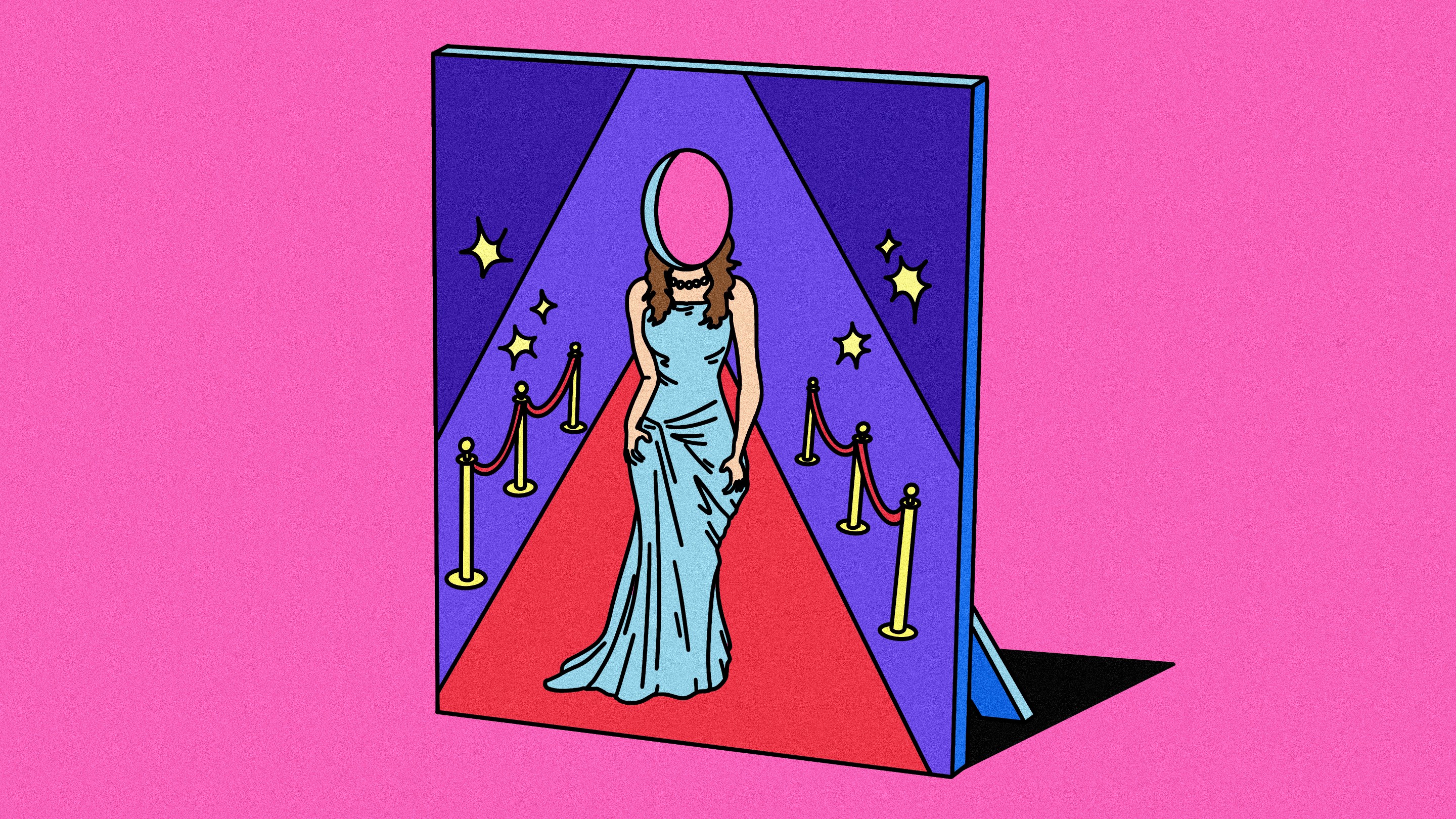
Recently, an Instagram carousel by a long-lost acquaintance who was beach- and boat-hopping with a glittery squad of people I didn’t recognize crossed my feed. I figured they were moneyed Millennials with regular jobs—until I discovered that several of them had followings in the high five figures, and one had more than 3 million. As it turns out, they were neither civilians nor stars. They were “Who”s: a category of low-tier celebrities, including influencers, reality stars, and podcasters—and commonly all three at once—whose names prompt you to ask: “Who?”

The binary between “Who”s and “Them”s—the latter being A-listers your parents might recognize, such as Beyoncé and Tom Cruise—was invented by Bobby Finger and Lindsey Weber. Their podcast, Who? Weekly, bills itself as a show that covers “everything you need to know about celebrities you don’t.” After a decade on the beat, the pair have distilled their insights into a new book, I Want to Be Famous: When Everybody and Nobody Is a Celebrity, which offers a comprehensive theory of how the internet and social media transformed everyone into someone—and therefore, no one.

That theory has surprising implications for the labor market at large. As social-media platforms have made it seem easy to monetize attention, professionals in industries where fame has not historically been a credential have come to face growing pressure to create and optimize their online brand. Personal branding, once almost exclusively the concern of genuine celebrities and more recently a job for social-media influencers, is now something a junior accounting executive is encouraged to think about. Sophie Bishop, a professor in media and communication at the University of Leeds, in England, calls this structural shift “influencer creep”—a phenomenon that has caused more swaths of the economy to function like the attention-hungry world that Who? Weekly dissects. No matter how staunchly we may wish to resist the fusion of work and life, we are what we do, and our job is to be a “Who.”

Who? Weekly was launched in 2016 as a lighthearted but often trenchant analysis of fame at a time when social media was beginning to democratize the concept. Finger and Weber were both young entertainment journalists; as they write in I Want to Be Famous, they wanted a venue in which to grumble about celebrities turning away from traditional media and toward social platforms, where they could exercise more image control. Finger and Weber’s real innovation, however, was the system of Whos and Thems. Whos are thirsty for the attention that Thems already have and will shamelessly do or plug anything to get it. “By the end of the 2010s,” the authors write, “it seemed like every reality star, aspiring actor or musician, and TikTok influencer was supplementing their creative income with a post promoting a vibrator, supplement, gambling service, or alcoholic beverage.”

[Read more: The celebrity clock is getting rewired]

But as I Want to Be Famous reveals, social-media culture has changed so much that even Thems can no longer resist shilling for brands online. When Jennifer Aniston joined Instagram, in 2019, her first post was a selfie with her Friends co-stars. “It was a charming (if brief) glimpse into the personal life of one of our most private celebrities,” Finger and Weber write: “The purity of her feed was short-lived, however. Today, you can see ads for SkinnyPop popcorn among those intimate photos with friends because now everyone is free to sell stuff in this brave new world, without the fear of selling out.”

Last month, another Them joined Instagram: the Oscar-winning actor Jennifer Lawrence, who in a video warned fans to be nice, or she’d quit. A couple of weeks later, Lawrence posted a carousel with grainy photos that were, in part, normal-person coded: There she was, eating a corn dog and riding the Tower of Terror. Except she was also at a Dior fashion show in Paris—right, she’s a movie star. “Thank you @dior and @jonathan.anderson for the most beautiful show ever,” she wrote in the caption. Maybe Lawrence joined the platform for the same reasons we all did: to make internet friends jealous with vacation pics. Or maybe her long-running role as a brand ambassador for Dior now requires her to broker attention online. We can’t know why anyone posts anything: for love or money, connection or commerce. But last week, Lawrence shared low-res, behind-the-scenes snapshots of her hairstyles in various movies, and updated her Instagram bio with a link to her new hair-care brand.

[Read more: The celebrity machine never dies]

Who? Weekly chronicles the rise of online attention and the decline of offline mystique. A 2024 post on the Harvard Business School blog offers an example. Branding yourself as a “financial analyst with high emotional intelligence who loves to ski,” the author argues, can help you find opportunities “that align with your authentic self.” The post also suggests that a job seeker might “promote your value” by using “a mix of paid, owned, and earned media.” What this means is that, to really get your mug in front of hiring managers and corporate recruiters, you should pay to amplify material that communicates your professional viability.

Some Gen Z job seekers are using Instagram and TikTok to pitch themselves to potential employers. A 2025 survey found that 46 percent of Gen Z respondents had landed a job or an internship through TikTok. And LinkedIn, once a straitlaced professional networking site, now also functions something like Instagram for the corporate class. The idea is that becoming a platform personality through personal posts or videos will juice the algorithm and thus woo recruiters. The rise of the LinkedInfluencer is emblematic of the act of self-promotion becoming more front-facing: As Brooke Erin Duffy, a communication professor at Cornell University, asked in a June interview with The New York Times, “What does it mean for the rest of us who are living, working and spending our time in these sites where everything we see has this ethos of self promotion?”

Companies including Starbucks and IBM have launched so-called employee-creator programs, initiatives that offer everyday workers rewards for serving as in-house posters. “We’re giving them a way to become influencers,” a July press release by Gap Inc. boasted about one such initiative. But the imperative to build followers stretches across corporate tiers. Jon Gray, the president and chief operating officer of Blackstone—one of the largest commercial landlords in the world—has gone viral on LinkedIn with relatably goofy videos of himself running; the platform’s editor in chief and vice president of content, Dan Roth, recently bragged that Gray has “become a creator.” How odd to feel sympathy for a billionaire: Somehow, he too is furiously—literally—running on the content hamster wheel.

[Read more: So a C-list celebrity is selling your house?]

Finger and Weber point out that, until recently, a professional working for a major corporation could count on a fairly linear career path. The same wasn’t true for someone like a reality star, who needed to rely on media access to sustain their fame and find new opportunities; they might start a lifestyle brand, for instance, in service of becoming what the authors call a “working Who.” Plenty of jobs don’t appear to be succumbing to this shift, at least not yet; your Instagram algorithm might surface the odd plumbing influencer, but your leaky faucet is unlikely to get fixed under the flattering glare of a ring light. Influencer culture has gone only so far in reshaping the labor market in its image, but as the corporate world adopts its practices, there is a growing incentive for you to become your own kind of “working Who”—and, in turn, to help reinforce the idea that people are products.
© Illustration by Alisa Gao / The Atlantic


  •  

The Temporary Pleasure of Conversation

This is an edition of The Wonder Reader, a newsletter in which our editors recommend a set of stories to spark your curiosity and fill you with delight. Sign up here to get it every Saturday morning.

Conversation, Charlie Tyson wrote in 2023, is by nature fleeting. He quotes Virginia Woolf: “It flies up the chimney,” she once said, “and is gone.” This perspective may be comforting for people who spend hours after a social interaction perseverating over that one joke that didn’t quite land. But Woolf’s remark doesn’t necessarily imply that conversation is meaningless. Understanding that conversations are temporary, that they fly up the chimney to make room for new ones, can help us talk to one another more honestly. “In the twists of talk, we open ourselves to others and allow our interior to be subtly reshaped,” Tyson wrote in his review of a book on the subject.

The benefits of conversation are constantly threatened by modern life—by the pull of a phone notification during lunch with a friend, by the impulse to text instead of call, and perhaps most dramatically, by AI’s promise to obviate the human need for talking. Woolf’s description of language might make it seem replaceable, but this transient quality is precisely what makes talking an essential part of life. Language is something we are creating, demolishing, and creating again, every second of every day—a distinctly human act.


On Conversation

The Secret to a Good Conversation

By Charlie Tyson

A new cultural history embraces talk as an open-ended source of temporary delight. (From 2023)

Read the article.

The Secret Life of 'Um'

By Julie Beck

How filler words and tiny pauses keep conversations from going off the rails (From 2017)

Read the article.

Embrace the Awkward Silence

By Michael Waters

Conversational lulls may be harder to avoid than ever—so we might as well get used to them. (From 2023)

Read the article.


Still Curious?

  • How to cheat at conversation: A new AI tool promises to improve social interactions but instead makes them worse, Julie Beck wrote last year.
  • Overcoming awkwardness: In the first episode of our 2023 podcast How to Talk to People, Julie Beck and Becca Rashid discuss small talk.

Other Diversions


PS

A bare tree
Courtesy of Dorothy B.

“Although we usually appreciate the beauty of trees in full leaf, I was stunned by the bare-branched symmetry of this tree on a quiet winter day in our small town,” Dorothy B. from La Conner, Washington, writes.

I’ll continue to feature your responses in the coming weeks.

© Rosmarie Wirz / Getty

  •  

What Shifting U.S. Support May Mean for Ukraine

Editor’s Note: Washington Week With The Atlantic is a partnership between NewsHour Productions, WETA, and The Atlantic airing every Friday on PBS stations nationwide. Check your local listings, watch full episodes here, or listen to the weekly podcast here.

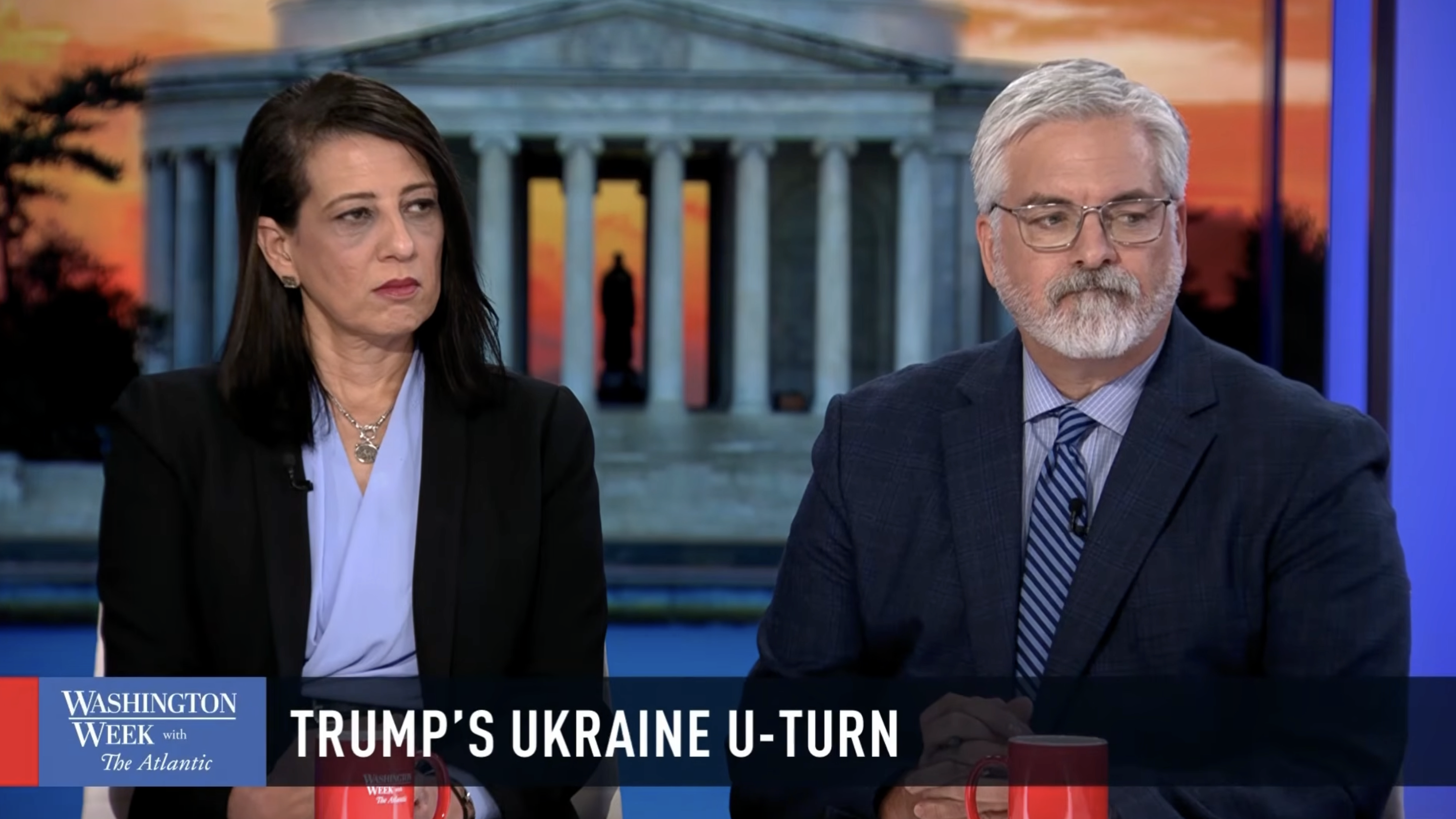
President Trump’s dismissal of Russian aggression against Ukraine has prompted bipartisan backlash. On Washington Week With The Atlantic, panelists joined to discuss what this may mean for the Ukrainians, and more.

“We have to remember that Ukraine has seen the United States pull back its support even before this,” Nancy A. Youssef, a staff writer at The Atlantic, said last night. In the past, the U.S. has limited the number of weapons it sends to Ukraine, and “this week, we saw the United States not delivering promised interceptors,” Youssef added.

“The challenge for Ukraine is twofold: It is the inconsistency in the United States’ support and the inability for Europe to come back and provide that support,” Youssef argued. “And that Russia is as close as it’s ever been to Washington.” These two factors make “the war harder for the Ukrainians,” she noted.

Joining the editor in chief of The Atlantic, Jeffrey Goldberg, to discuss this and more: Leigh Ann Caldwell, a chief Washington correspondent at Puck; Stephen Hayes, the editor and CEO of The Dispatch; Zolan Kanno-Youngs, a White House correspondent at The New York Times; and Youssef.

Watch the full episode here.

© Courtesy of Washington Week With The Atlantic

  •  

AI Terrorism Is Just Terrorism

The War on Terror coincided with the rise of the internet, when freshly concerning digital attacks became known as cyberterrorism. Now a new threat has appeared: AI terrorism.

Over the past few years, reports from governments, intergovernmental organizations, and think tanks have warned that AI is likely to fuel terrorist activity, demanding preparation and response. In 2021, the United Nations Office of Counter-Terrorism co-published a report on the “malicious use of artificial intelligence for terrorist purposes.” Cyberattacks such as malware and intrusion featured heavily, as did physical attacks via autonomous vehicles, facial-recognition spoofing, deepfakes, and—the coronavirus pandemic was still raging—engineered biological weapons. Earlier, in 2019 and 2020, the Middlebury Institute of International Studies published two reports on the risks that language models, still mostly unheard-of at the time, would pose to propaganda and radicalization. And just this week, a group of Harvard Kennedy School researchers published a working paper that assumes that the “first major AI-enabled terrorism event” is a credible threat and speculates how it might come about.

Cyberterrorism was already a confusing term, partly because hacking or disabling computer infrastructure might be carried out by state actors and without violence—properties that aren’t normally associated with terrorism. Among the reasons terrorism is bad, a very minor one is that the term has no fixed definition. In revolutionary France, it referred to violence exercised by the Jacobin state, in many cases by guillotine. By the late 19th century, it had shifted to the nonstate violence of anarchist would-be revolutionaries. Terrorism began to overlap with independence movements in the 20th century, drawing it closer to separatist conflict or guerrilla warfare. By the late 20th century, this ideological motivation for terrorism became mandatory. Terrorism amounted to violence designed to produce a psychological effect.

The hijackings and hostage crises of the 1970s exemplify this revised purpose. So do domestic attacks, such as that of Timothy McVeigh, who bombed an Oklahoma City federal building in 1995. Today, a quarter century after the September 11 attacks, terrorism often carries a political judgment instead of describing an act or a type of actor: Nearly any adversary whatsoever might be called a “terrorist” now.

Given the slippage of the term, AI is, in a way, terroristic by nature: It threatens to take your job, steal your money, ruin your children’s education, eradicate art and culture, take away your health care, colonize your town, destroy the climate, make electronics forever unaffordable. You have also been told that AI is inevitable—and that only immensely wealthy Silicon Valley companies, possibly run by sociopathic leaders, have the resources and talent to advance it (which they must do, even if it means the destruction of humankind).

But the older sense of terrorism still persists. The technology could also facilitate, in addition to the familiar chaos that AI threatens to unleash, terrorism in the sense of state- or nonstate-enacted violence or disruption, such as disabling your electric grid and unleashing a bioweapon at your workplace.

[Ian Bogost: The thrill of wanting AI to destroy the world]

The people who study AI terrorism raise different concerns than those raised by whistleblowers inside the AI industry—or AI leaders themselves. Superintelligent-AI-driven extinction events do not top the list of risks, nor do the rogue AI agents that might, in theory, become autonomous. Instead, researchers, intelligence officials, and scenario planners seem principally interested in the ways that AI might allow bad actors to carry out more sophisticated activities with reduced effort. The Las Vegas Cybertruck bomber, for example, asked ChatGPT for advice about how to detonate an explosive, a use that suggests terrorists might be stupid in addition to being enterprising.

Today’s frontier AI models are powerful, cheap, and widely available. They can accomplish (or help accomplish, or appear to accomplish) many types of tasks without having been explicitly designed to do so. Criminals, terrorists, and even governments have tended to use existing communication, transportation, and industrial infrastructure to do bad things. AI offers another such tool. This conclusion is both reasonable and a bit humdrum.

Consequently, most of the reports on AI terrorism that I have read are conservative in their concerns. They stress that carrying out acts of violence or other physical attacks is difficult and that AI can’t magically solve those problems. They are, perhaps, responding to years of cyberterrorism-threat overstatement, the most famous example of which is the idea of an “electronic Pearl Harbor”—a devastating attack on digital infrastructure that incapacitates the nation. That metaphor, which has been in circulation since at least 1999, was made more concrete in 2012, when then–Defense Secretary Leon Panetta warned Congress about a “cyber Pearl Harbor” that “could be as destructive as the terrorist attack on 9/11.”

Many international-policy experts have argued that cyber Pearl Harbor amounts to a mixed metaphor. The attack on Pearl Harbor was an intricately planned act of state warfare, not a rogue operation. More likely, smaller cybersecurity incidents could cascade into bigger ones, or cause unpredictable secondary effects. Real, damaging cyberattacks on physical infrastructure have been possible for many years. AI’s role in cyberterrorism is likely to be the same as the internet’s: an amplified capacity to produce and disseminate propaganda, confusion, and political manipulation.

Panetta justified the warning about a cyber Pearl Harbor on the grounds that the risk was possible even if it wasn’t plausible. A similar justification appears to motivate the Harvard Kennedy School researchers in their paper. The co-authors describe their methodology as a “pre-mortem,” which involves assuming that such an event has taken place and working backwards to understand how it came about.

I asked Stephen Casper, one of the paper’s co-authors, whether artificial intelligence creates new catastrophic capabilities or simply makes existing malice easier, faster, or cheaper. “It’s more the latter,” he told me. Specifically, AI models that possess information about dangerous capabilities, such as how to disrupt infrastructure and construct a chemical weapon, could allow malicious actors to use them to nefarious ends. Max Kamachee, another co-author, told me that new models “can meaningfully assist a novice in creating a known severe biological threat absent safeguards.” Put more simply, bad people with ill intent could use AI to carry out bad acts. The paper goes into much greater detail, including making reasonable suggestions about how different types of models might be controlled or regulated to prevent harm.

The Harvard paper presents two candidates for the first major AI-terrorism event: One is a cyberattack that would cause several billion dollars’ worth of economic damage; the other, a biological-weapon attack that would kill more than 100 people. I asked Casper and Kamachee whether terrorism was the right name for the two scenarios. The paper derives these litmus tests from definitions in recent U.S. laws governing the development and management of models in the AI industry. But Casper acknowledged that those bad outcomes might not be ideologically motivated. “We call it terrorism,” he told me, but he also said that an equivalent name would be “the human-led misuse of AI for malicious ends.” Kamachee called the risk “catastrophic malicious use.”

[Adam Becker: The useful idiots of AI doomsaying]

Predicting the future is foolish, and guessing about whether truly terrible events might or might not come to pass is even worse. On the one hand, Casper and his co-authors seem justified in warning about the worst scenarios that AI could facilitate, even indirectly. On the other hand, AI terrorism risks devolving into the fearmongering rhetoric that cyber Pearl Harbor did.

I pressed Casper to connect the dots between what AI makes possible and which outcomes are likely. He cited the shockingly rapid evolution of capability in the models, along with the fact that some AI companies are directly building AI-driven-biological-research facilities. Anthropic, for example, has built wet labs for Claude-enabled DNA and protein research. Those labs could be breached, or the model weights discovered inside them could make their way out and into the wrong hands. “It’s a big world—lots of people, lots of groups, lots of states, lots of motivations,” Casper said. “The precedented misuse of current AI systems for terrorist-type activities is, you know, a pretty decent sign.” A sign of what? That the AI industry is going to experience what Caspar called “a Challenger or Chernobyl or 9/11 or Enron moment.”

And yet, those historical catastrophes are all quite different. Challenger was doomed by a structural failure that had been overlooked because of organizational mismanagement; the Chernobyl disaster was caused by a design flaw magnified by operator error and stifling bureaucracy; September 11 was an ideologically motivated nonstate attack facilitated by ease of access to expertise and realized thanks to national-intelligence blunders; the Enron scandal was accounting fraud allowed by regulatory failure and auditor complicity. Two of the examples were industrial accidents, one was an unintentional outcome of deliberate misconduct, and only one counts as a terrorist attack.

The actual risks created by AI don’t require terrorism to inspire worry, and thinking about terrorism may confuse or distance us from taking the right preventive actions. Because they act at the fringes of society, terrorists have a tendency to adopt whatever technology and infrastructure that contemporary life makes available. They choose their tools, their weapons, and their targets based on not merely what will cause harm or attract attention but also what they can get hold of. This was true of explosives such as dynamite at the turn of the 20th century and car bombs by mid-century; the newspapers, radio, and television media that would produce notoriety for attackers; commercial aviation once it became mature but not sufficiently secure; and banking exploits and off-books financial networks, among them cryptocurrency. Nobody called McVeigh a rental-truck terrorist or an agricultural-fertilizer terrorist, but those two resources proved convenient and effective for his desired purpose—which was indeed terrorism.

Throughout its history, terrorism has repeatedly appropriated civilian technologies, especially unproven or insufficiently managed ones. Conveniently, such infrastructure also tends to make the public feel danger, which accelerates our fear of vulnerability. Like terrorism that uses railways, cars, airplanes, dense urbanism, and the internet, terrorism that makes use of artificial intelligence is possible and even likely. Preparing for its contingencies is wise, if speculative. In that sense, AI terrorism is not new, even if it is still frightening.

© Illustration by Adam Maida / The Atlantic

  •  

A Very Suspicious Prosecution of Two Former FBI Officials

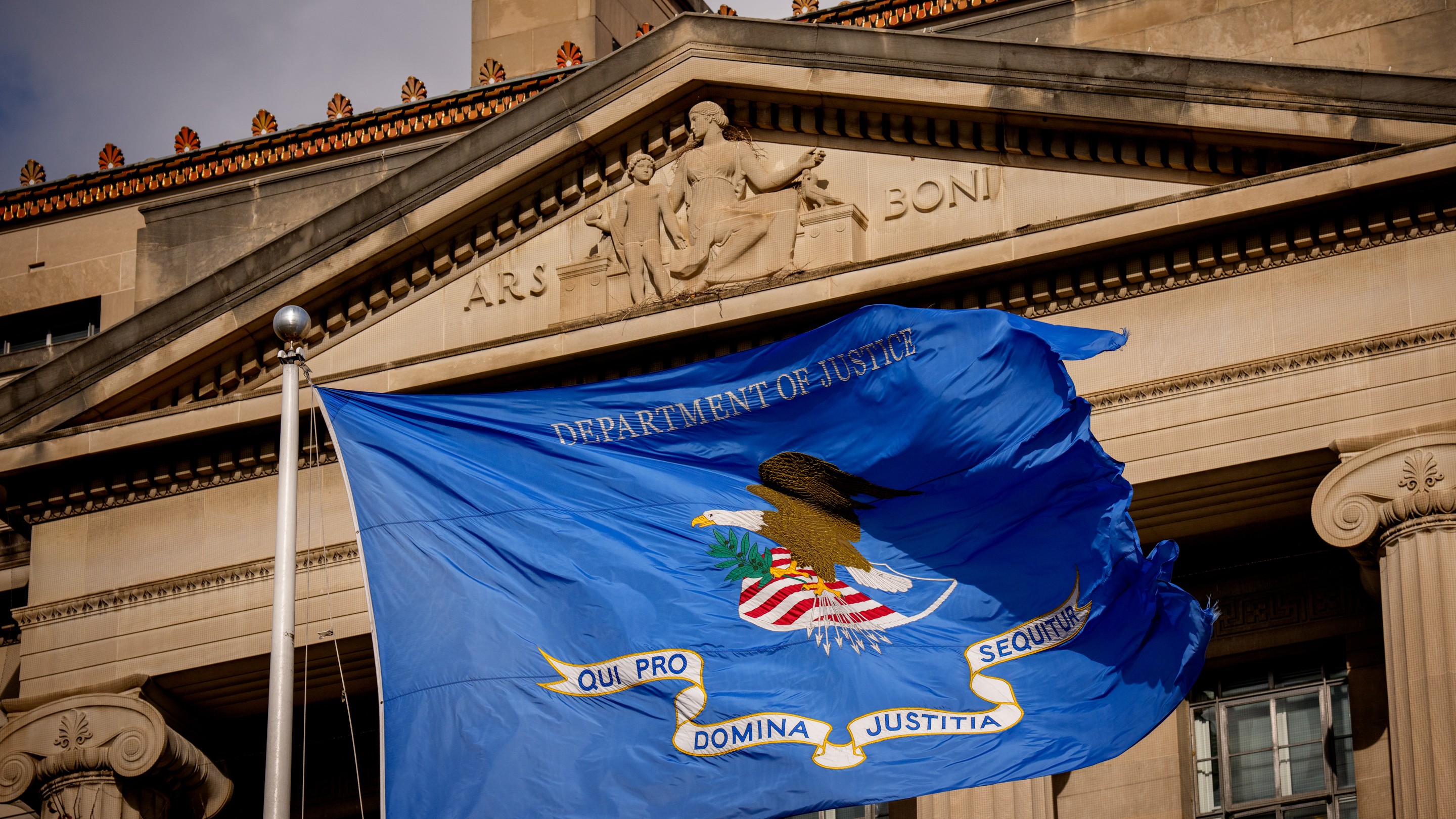
Not too long ago, the Department of Justice could generally be trusted to prosecute cases in which lawyers believed that real wrongdoing had occurred. Now DOJ frequently unveils lawsuits that seem designed mostly for securing likes and reposts on right-wing social media—the actual facts be damned. Any high-profile criminal case brought by the Trump administration arrives with an air of suspicion.

Today, Jeanine Pirro, the top federal prosecutor for Washington, D.C., announced an odd set of charges against two former FBI officials for allegedly lying to Congress during testimony in 2023. “When senior FBI agents lie to Congress believing they are above the law, it’s time to bring the hammer of justice down on them,” Pirro posted on X. For all of the fanfare, DOJ provided little evidence to back up its claims. But the timing of the charges—they’ve arrived just more than a week before the midterm elections—combined with the puzzling substance of the allegations and the administration’s crowing online, does not inspire confidence in the integrity of the prosecutorial work.

The charges concern several statements made by the defendants, Nikki Floris and Bradley Benavides, in the course of a congressional investigation into supposed “weaponization” of the government against President Trump. In brief, the Justice Department is alleging that Floris and Benavides lied to the House Judiciary Committee regarding their level of knowledge about the FBI’s handling of Hunter Biden’s laptop. Lawyers for Floris issued a statement saying that DOJ “has accused her falsely of a crime on the say-so of politicians, not on the facts.” Benavides’s lawyer likewise described the charges as “baseless.”

The saga of the Hunter Biden laptop has now spanned four federal elections, and the specifics of the story may, reasonably, no longer be top of mind. Understanding its relevance here requires a deep plunge into far-right mythology. But the quick version is that MAGA became obsessed with the possibly stolen laptop, and the material it contained documenting Biden’s drug addiction, after the New York Post published an article about the laptop in the lead-up to the 2020 election. Social-media companies, burned by their experience of Russian election interference in 2016, worried that the underlying documents might be Russian misinformation. (This suspicion was never confirmed.) They responded aggressively by suppressing links to the Post’s story—which outraged the right. The laptop would go on to play a starring role in the coming years as the GOP used congressional investigations to tell a story about the victimization of the right, supposedly having been a target of a sprawling network of government-backed online censorship and unfair treatment by the FBI.

This was the context in which Floris and Benavides were testifying in 2023. The two had held leadership positions in the FBI’s Foreign Influence Task Force (FITF) during 2020, a section created to respond to foreign interference after Russia’s 2016 election meddling. There they had crossed paths with the laptop. In recent years, congressional Republicans have pointed to various decontextualized snippets of that testimony and internal FBI documents as part of their efforts to suggest that the FBI was working against Trump in the 2020 election.

By then, for a certain kind of very online Trump supporter, Floris and Benavides had already become familiar if relatively minor villains in the anticanon of deep-state enemies. The criminal charges today make sense in this larger narrative. In his X post announcing the charges, FBI Director Kash Patel referred to the agency’s past “political weaponization targeting their opponents.”

Just because MAGA hates someone does not mean that they are innocent. But Floris and Benavides’s work as described in the affidavit seems unremarkable. And the document is opaque when describing what the two defendants are actually alleged to have lied about. To be prosecutable under the relevant statute, a lie to government authorities must be told “knowingly and willfully,” and it must be “material” in a way that substantively affects the investigation in question. Some of Floris’s and Benavides’s alleged misstatements, as described in the affidavit, don’t initially appear to be misstatements at all. For example, Floris said she was not involved in the criminal investigation into Hunter Biden during which the FBI seized the laptop; in fact, her work at the FITF really was separate from the criminal probe, which was carried out by a different team.

Other supposed lies might well be better understood as forgetfulness. The two defendants were high up in the bureau and wouldn’t necessarily recall the minutiae of an incident that took place three years before they testified. In one instance, the affidavit alleges that Floris lied about her involvement in “an assessment to discredit the Hunter Biden investigations,” but contains no further mention of this supposed assessment nor any quotes from the relevant testimony. Perhaps DOJ will be able to provide more evidence for its allegations as the case goes on, but as things now stand, the charges appear less than airtight.

How the Justice Department chose to bring this case also invites suspicion. The charges were filed via a criminal complaint, a method the government uses in many investigations that must move quickly, because a complaint does not require the immediate involvement of a grand jury. The need to rush here is hard to see, given that the relevant testimony was three years ago. Conversely, it’s easy to imagine why DOJ would want to push out incendiary allegations without having to convince a potentially skeptical grand jury—an all-but-certainty in D.C., where jurors have delivered a number of high-profile rebuttals to federal prosecutors. In the next 30 days, if the department wishes to move forward with the case, it will have to seek a grand jury’s indictment. By then, though, the Trump administration may have already gotten the propaganda boost it was looking for.

At a hearing today, Magistrate Judge Zia Faruqui appeared skeptical of the case, noting the government’s decision to delay seeking an indictment and describing the defendants’ “sparkling backgrounds.” As many judges have commented over the past year, the traditional “presumption of regularity” awarded to the Justice Department’s work has been eroded by the Trump administration’s habitual use of criminal prosecutions as a tool to harass the president’s enemies. With this case, DOJ has provided little material to reassure its critics.

© Andrew Harnik / Getty

  •  
❌