This is an edition of Time-Travel Thursdays, a journey through The Atlantic’s archives to contextualize the present. Sign up here.
Last Halloween, I answered a knock on the door to find a young trick-or-treater dressed as a toilet. Not just any toilet—Skibidi Toilet, a disembodied head that pops out of a toilet and is a villain of the eponymous YouTube miniseries about an army of such creatures conquering Earth. I was visibly puzzled and asked him a series of questions. Was Skibidi his first name and Toilet his surname? Was he a man stuck in a toilet, or a new, hybrid organism? He looked at his friends and laughed; I smiled awkwardly as I distributed Airheads.
When I was a kid, Halloween featured a reliably recognizable cast: Darth Vaders, Little Mermaids, and plenty of Spidermen. But the internet’s memes have inevitably bled into costumes. For every zombie, there is now also a John Pork (an anthropomorphic pig in a red flannel that keeps calling your phone), a Ballerina Cappuccina (a cappuccino that performs ballet in a pink tutu), and a Tung Tung Tung Sahur. (Sahur is an AI-generated bipedal kentongan drum with a human face that wields a baseball bat. He’s also Italian.)
Wearing a costume that successfully confounds grown-ups could be considered a harmless act of Halloween rebellion on a day known for mischief. This holiday has long marked an occasion for kids to assert an us-versus-them mentality toward adults. In 2012, Emily Chertoff compiled a history of the Halloween pranks for The Atlantic, recounting how the antics once got so out of control that in 1923, Omaha’s “police commissioner came up with a solution: he would recruit 500 of the city’s ‘worst boys’ to serve as ‘special policemen’ on Halloween, turning over to each a badge and a beat.” Soon enough, “every boy in the city” wanted to qualify, according to an anonymous author in The New York Times.
For decades, cities introduced creative solutions to quell the discord on All Hallows’ Eve. In 1938, “Boston’s police commissioner gave ‘engraved awards’ to ‘the three schools in districts which showed the “least vandalism” on Halloween,’” Chertoff noted. She explained that after World War II, trick-or-treating took off as one of the most successful interventions to actually stem Halloween’s mayhem. It also led many people to lament the death of the holiday. “The children who come to my door will remember All Hallows’ Eve as a night when they sold their right to rebellion for some sugar in expensive wrappings,” Lois Phillips Hudson wrote in this magazine in 1962.
The rebellious spirit of Halloween wasn’t gone, though. Costumes were another battleground between kids and grown-ups, and the freedom to express oneself was at the center of this clash. “On Halloween a boy can’t wear anything feminine. The idea of lipstick horrifies a father,” Evelyn Goodenough Pitcher quoted one mother saying in The Atlantic’s March 1963 issue. The generational divide has taken on a new form in today’s algorithm-inflected celebration. In 2024, Kate Lindsay argued against such niche costumes. “The meme invasion threatens the spirit of Halloween,” she wrote in The Atlantic. “The costumes aren’t intended for my—or any other partygoer’s—consumption. They’re for our phones.”
Indeed, at a Halloween party I attended in Bushwick, I bumped into someone dressed as the grandfather who ate paint thinking it was yogurt (a real person whose image became a meme). Last year, photos went viral of adults donning “six-seven” outfits at Halloween, sounding the death knell for the meme. Children, though, aren’t always performing for the algorithm. Maybe their real Halloween joy comes from laughing at a perplexed adult holding a candy bowl on their porch.
Although pranks have faded from Halloween’s traditions—the “trick” has surrendered to the “treat”—little rebellions remain. The mischief-makers of the early 20th century might have been pleased to see legions of giggling Tung Tung Tung Sahurs roaming the streets, while mystified parents ask one another: What’s your kid dressed as?
Children with their faces painted pose in a field of cempasuchil (marigold) flowers during preparations for the Day of the Dead celebration at Rancho San Juan Diego, in Tlajomulco de Zuniga, Jalisco, Mexico, on October 24, 2026. On November 2, Mexico will celebrate the Day of the Dead to pay tribute to deceased family members and friends.
Gerardo Vieyra / NurPhoto / Getty
A skeleton sculpture, decorated for Día de Muertos, rides on a three-wheeled motorcycle in the southern part of Mexico City, Mexico, on October 25, 2026.
Gilbert Flores / Variety via Getty
An attendee poses at the 2026 Día de Muertos Gala held at the Universal Studios Backlot Old Pueblo Village in Los Angeles, California, on October 27, 2026.
Francisco Canedo / Xinhua / Getty
Revelers take part in the Catrinas Parade in Mexico City on October 25, 2026.
Carl de Souza / AFP / Getty
A woman dressed as a Catrina takes part in the Catrinas Parade, ahead of the Day of the Dead, in Mexico City, on October 25, 2026.
Francisco Canedo / Xinhua / Getty
A child holds a Catrina-shaped ice cream in Mexico City on October 17, 2026.
Alfredo Martinez / Getty
A view of a cempasuchil field on the slopes of the Popocatépetl volcano, seen on October 26, 2026, in Atlixco, Mexico
Ulises Ruiz / AFP / Getty
A couple poses in a field of cempasuchil flowers ahead of Día de Muertos celebrations at Rancho San Juan Diego, in Tlajomulco de Zuniga, Mexico, on October 24, 2026.
Daniel Cardenas / Anadolu / Getty
People in costume participate in the annual Catrina parade in Mexico City on October 25, 2026. Thousands of costumed participants paraded from the Angel of Independence to Zócalo Square during the 2026 Mega Procession of Catrinas.
Daniel Cardenas / Anadolu / Getty
Spectators watch the annual Catrina parade pass by in Mexico City on October 25, 2026.
Francisco Canedo / Xinhua / Getty
A reveler takes part in Mexico City’s Catrinas Parade on October 25, 2026.
Claudia Rosel / AP
A giant Catrina stands on an altar in Zócalo Square, in Mexico City, on October 31, 2025.
Jorge Luis Plata / Reuters
A man lights candles during the annual Day of the Dead celebrations, in Mazatlan Villa de Flores, Mexico, on November 2, 2024.
Dolores Ochoa / AP
People take part in a Day of the Dead procession in Quito, Ecuador, on November 1, 2025.
Eduardo Verdugo / AP
Families gather to keep company with their departed loved ones, celebrating the Day of the Dead at the cemetery in Arócutin, Mexico, on November 1, 2025.
Eduardo Verdugo / AP
A woman sits next to the grave of a loved one, celebrating the Day of the Dead at the cemetery of Tzintzuntzan, Mexico, on October 31, 2025.
Children with their faces painted pose for pictures at a field of cempasuchil (marigold) flowers during preparations for the Day of the Dead celebration at Rancho San Juan Diego, in Tlajomulco de Zuniga, Jalisco, Mexico, on October 24, 2026.
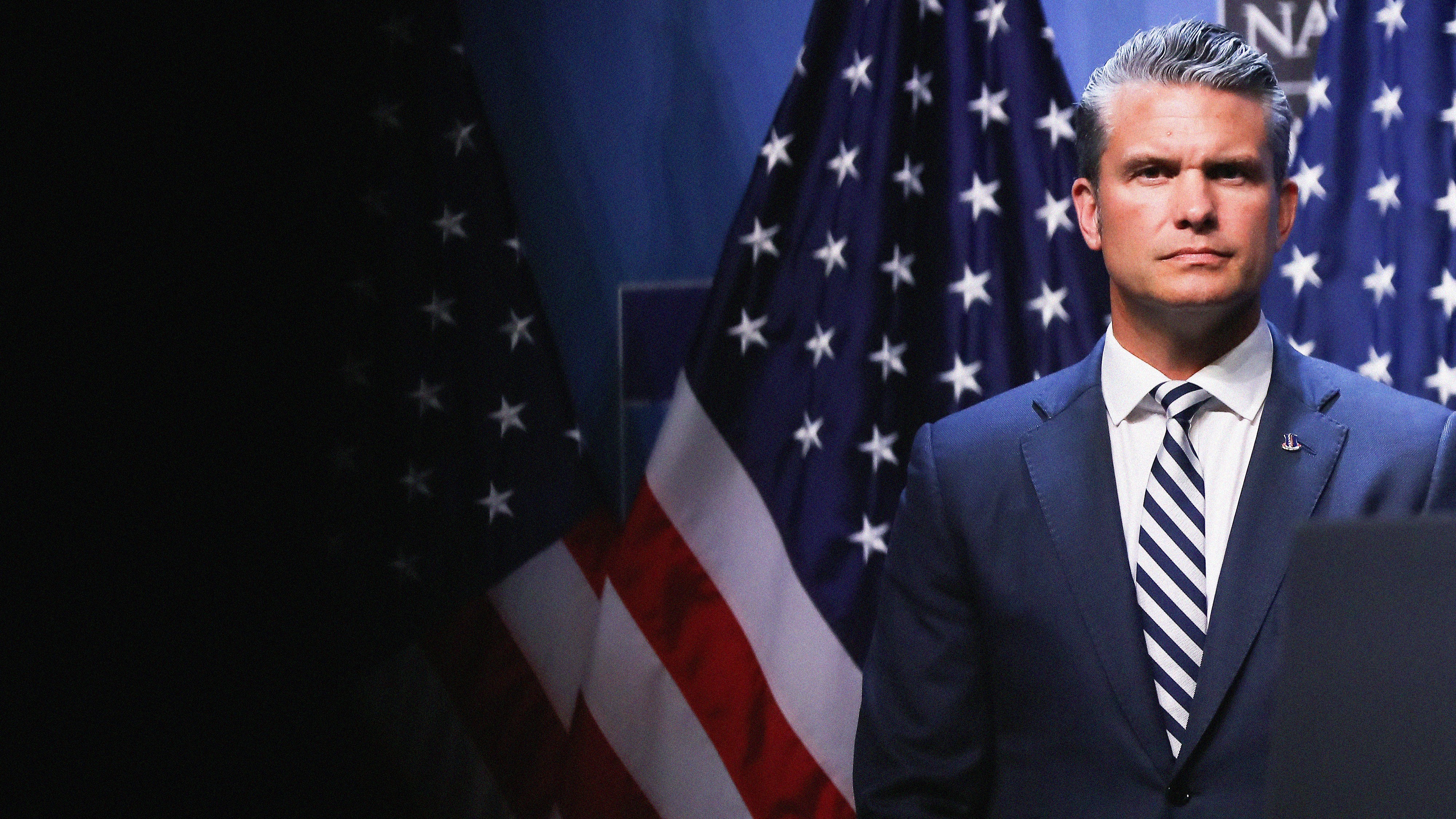
Many Democrats have a post-midterm dream that goes something like this: Pete Hegseth, the push-up-loving, beardo-mocking former Fox News host who has led the Pentagon for almost two years with bombast and theatrics, is either fired or hauled before their new majority in the House to face impeachment—which would make him just the third Cabinet secretary in history to face such a sanction. “One of the first things we’re going to do in the majority, we’re going to run Pete Hegseth out of town,” Representative Hakeem Jeffries of New York, who is in line to be speaker of the House should the Democrats win that chamber, declared at a rally this month, the closest he’s come to saying the I-word.
Many of his colleagues feel the same. Hegseth helped steer the U.S. into war with Iran, and then failed to deliver victory. He initiated strikes against speedboats allegedly carrying narco-traffickers off the coasts of South and Central America that many Democrats view as extrajudicial killings. He pushed out scores of seasoned generals, many of whom were held in high esteem on Capitol Hill. All the while, he has flouted any notion of congressional oversight. His acidly partisan approach to Hill relations dates back to his contentious 2025 confirmation process, when he broke tradition by declining courtesy calls with most Democratic senators. And he has, in his political opponents’ view, brought a macho crassness to the job, railing against “fatties,” “weirdos,” and “beardos” and introducing hormone supplements to ensure “high T” troops. Former President Obama last weekend mocked the well-coiffed Hegseth for focusing on “the jawlines and testosterone levels of our troops” and for being consumed by vanity. “How much time,” Obama asked, “do you think this defense secretary spends looking at himself in the mirror in the morning?”
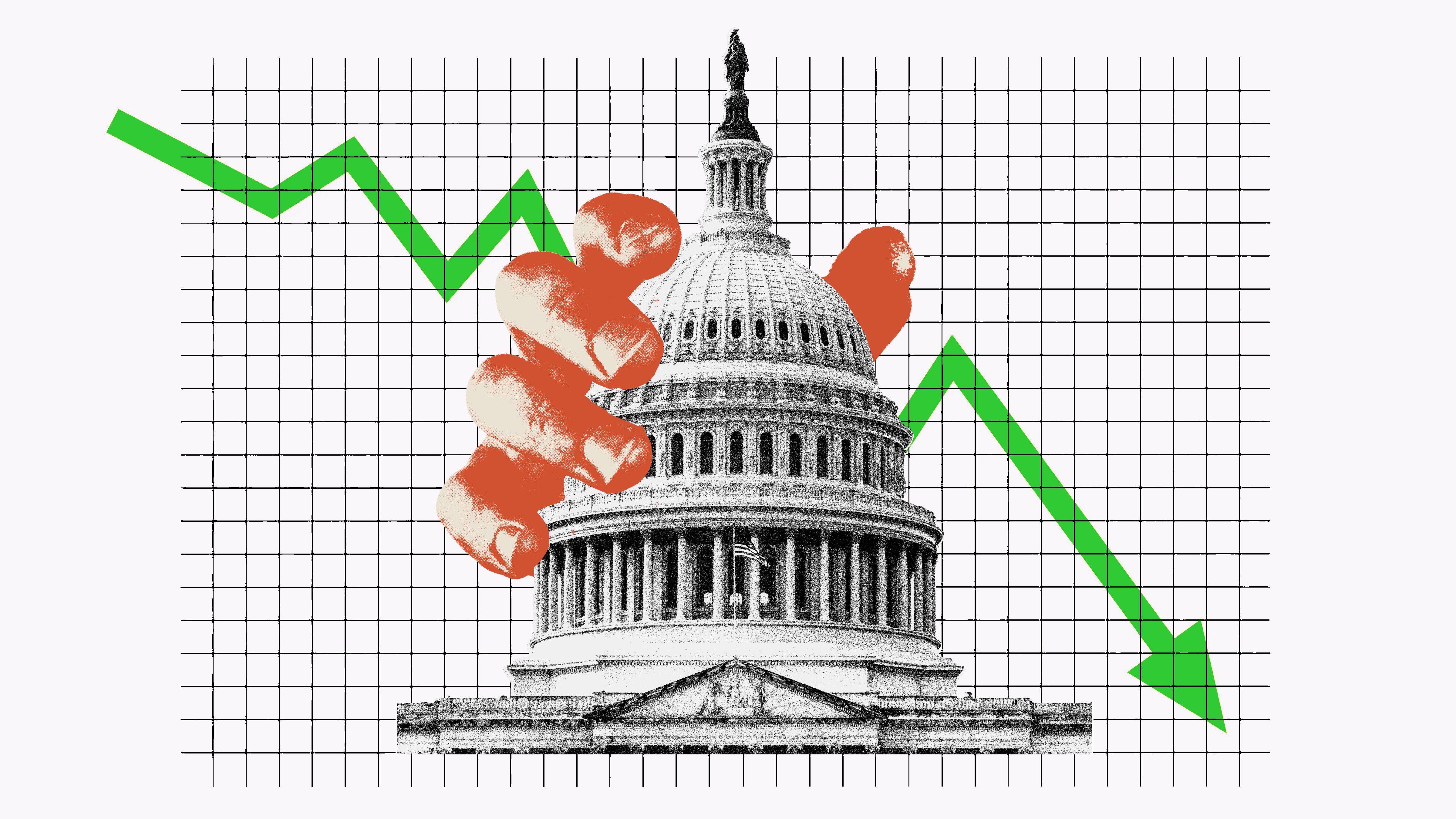
From a Democratic standpoint, what’s not to impeach? Yet precisely because Hegseth and his behavior present such a ripe target for House Democrats, they might ultimately decide against pursuing that measure. After all, even if a Democratic-controlled House voted to impeach Hegseth, and even if the Democrats win a majority in the Senate and convene a trial, Hegseth almost certainly would retain enough support in the upper chamber to fall short of the required 67 votes for conviction. The alternative is for Democrats to try to rein in Hegseth without the spectacle of impeachment, relying instead on the aggressive pursuit of their more traditional oversight mechanisms—hearings, investigations, and conditions attached to the annual defense budget. If Democrats are going to go to war, as it were, with the self-styled secretary of war, they may prefer to fight a battle they think they can actually win.
If Thomas Massie has his way, Hegseth’s impeachment wouldn’t wait until the new Congress convenes in January. The outgoing Republican representative from Kentucky has said he plans to bring the articles of impeachment he filed this fall against Hegseth up for a vote during the House’s lame-duck postelection session. His eight draft articles include accusations that Hegseth plotted to conduct an illegal war in Iran (a conflict for which President Trump never sought congressional authorization) and that he approved the “kidnapping of a sovereign foreign leader,” a reference to the January seizure of the Venezuelan dictator Nicolás Maduro. Massie told Puck he thinks other Republicans who are poised to leave Congress may rally behind him. The vote to proceed with impeachment and the impeachment itself require a simple majority in the House.
Democrats would likely welcome Massie’s move, even if it did no more than force Speaker Mike Johnson and Trump to come to Hegseth’s defense. A recent Politicopoll showed that 63 percent of Democratic midterm voters would support impeaching the defense secretary. (Only Health and Human Services Secretary Robert F. Kennedy Jr. was a more popular target for impeachment, with 65 percent support.) And, should Massie’s effort fail, the Democrats have their own draft articles at hand. Representative Yassamin Ansari of Arizona filed impeachment articles against Hegseth in April. Her draft articles are similar to Massie’s but also include accusations of obstructing congressional oversight and mishandling classified information (in March 2025, Hegseth shared sensitive war plans in a Signal group that included The Atlantic’s editor in chief). Her effort has 16 co-sponsors, all of them Democrats, but she sees the ground shifting and holds out hope that Trump will get rid of his defense secretary before Congress has the chance to act. “The calls against Hegseth’s leadership have increased dramatically on both sides of the aisle,” Ansari told us. “We are really strongly pushing the president to replace Hegseth.”
The White House spokesperson Anna Kelly told us in a statement that Trump strongly supports Hegseth. “Secretary Hegseth is doing a great job leading the Pentagon,” she said. Pentagon Press Secretary Kingsley Wilson called Hegseth a “transformative leader” who has “slashed bureaucracy, unleashed innovation, and delivered for our warfighters every step of the way.”
The House has impeached only two Cabinet secretaries: William Belknap, the secretary of war, in 1876; and Alejandro Mayorkas, the secretary of homeland security, in 2024. (In both cases, the Senate did not convict.)
Representative Jason Crow of Colorado, a Democrat and former Army Ranger, was one of the seven impeachment managers during Trump’s first impeachment trial in the Senate, in 2020. He told us the party needed to be cautious in considering a third presidential impeachment. But he is far less squeamish about trying to remove Hegseth. “Pete Hegseth and the corruption he’s brought to the Department of Defense is at the top of my list,” Crow said.
Representative Adam Smith, who would lead the House Armed Services Committee should Democrats take over, told us that he and his colleagues will have limited powers even in the majority, especially if the administration rebuffs congressional requests for documents or witnesses. The Justice Department, for instance, under Trump’s onetime personal attorney Todd Blanche, may decline to enforce congressional subpoenas. That would make even lawmakers like Smith, typically more inclined to dig into the arcana of acquisition reform than stage a made-for-TV trial, more likely to consider the toughest sanction.
“Do we try to work in a reasonable place or do we go right for the jugular here?” Smith said, referring to Jeffries’s desire to see Hegseth removed from office. “Personally I think there’s no reason to expect that Trump and Hegseth are going to cooperate with us in any way. So I think that Hakeem may well be right.” The decision could amount to an early test of Jeffries and his ability to corral the different factions in the Democratic caucus. Even as he has talked lately about running Hegseth out of town, Jeffries hasn’t explicitly endorsed an impeachment strategy. “Pete Hegseth needs to be pushed aside by the president,” he told MS NOW this week, “or we’re going to have to deal with the situation if he is not.”
GOP grumbling about Hegseth’s performance has intensified over the past year. Representative Mike Rogers and Senator Roger Wicker, the chairs of the House and Senate Armed Services Committees, respectively, have objected to administration plans to cut the U.S. military presence in Europe and to Pentagon delays in providing aid to Ukraine. Senator Susan Collins and others complained when Hegseth fired respected military leaders, including Generals Randy George and Chris “C. D.” Donahue. Mike Johnson panned Hegseth’s plan to livestream an execution by firing squad. (Trump ultimately quashed the livestream.) Outgoing Senator Thom Tillis has described his vote to confirm Hegseth as the “biggest regret” of his career. Still, even those Republicans unimpressed with Hegseth have been loath to cross the president, and they continue to support most of Hegseth’s plans, including a boost in defense spending to $1.5 trillion.
That suggests an uphill push for a conviction in the Senate—and a trial would provide Hegseth with a prominent, televised perch from which he could lambast the effort, secure in the knowledge that his prospects of conviction are remote. That may be all the more desirable for him as Trump enters his lame-duck years and the MAGA faithful search for a worthy successor. The spectacle of Hegseth in a congressional hearing room defending his troops and hitting back against Democrats could boost the presidential ambitions he is said to harbor. Trump’s two impeachments ultimately helped his political standing by giving him a clear foe; Republicans might welcome a similar dynamic with the secretary of defense in the dock.
Should Democrats decide against impeachment proceedings, they are likely instead to resort to more common oversight measures. Riders to the defense-spending legislation could compel the Pentagon to comply with congressional mandates barring troop drawdowns around the world. Admiral Mitch Bradley, the head of U.S. Special Operations Command, will likely face questions over a September 2, 2025, air strike that killed two men clinging to maritime wreckage in the Caribbean. Democratic lawmakers also want to declassify the Office of Legal Counsel memo that lays out a legal rationale for those operations, and potentially bring in military lawyers to testify. Admiral Brad Cooper, the head of U.S. military operations in the Middle East, could be asked about casualties from the Iran war—those of American troops and Iranian civilians—and damage to U.S. bases in the region. But all of these efforts would be politically fraught for Democrats, whom Republicans are sure to accuse of going after the troops.
Lawmakers told us they still don’t know the true state of the Navy’s Fifth Fleet headquarters in Bahrain and other facilities that have been attacked, other than that they have sustained real damage. When Democratic Senator Chris Murphy made a fact-finding trip to Qatar this month, the Pentagon denied him permission to visit Al Udeid, the military’s regional air hub, which was struck by Iran, and barred military officials from briefing him. Lawmakers will push Hegesth on whether the military was negligent in protecting U.S. forces from Iranian drones and missiles—21 service members have died and more than 800 have been wounded in the conflict—and subjecting sailors to a record-breaking stint at sea. “My north star is anything jeopardizing the immediate safety and well-being of our troops,” Crow told us. “Are they getting equipment they need? Why is he firing the top ranks of the Army? There are a lot of questions.” The Pentagon may also be pressed to provide details of business deals made as part of Hegseth’s race to move the military into the age of artificial intelligence or to purchase Venezuelan oil.
All of that presumes, of course, that Hegseth remains in office. Trump has shown no inclination to fire him, though the White House may look for scapegoats in the event of a midterm drubbing. The Cabinet official most closely associated with the Iran war could fit the bill. Or Trump could find an off-ramp for Hegseth. Rumors abound at the Pentagon that the president will prevail on Republican Senator Marsha Blackburn of Tennessee to name Hegseth to her vacant seat should she win her race for Tennessee governor, as she’s expected to do. A spokeswoman for Blackburn’s campaign said the senator would not have any discussions about a potential replacement “until the appropriate time”; the Pentagon’s Wilson said the Blackburn idea was “nothing more than Beltway gossip by anonymous sources.” The White House declined to comment on the idea. Were it to happen, Democrats might be satisfied that Hegseth is out of the Pentagon—but less pleased to have him as a colleague.
Unto every season is given a certain kind of book. When the new year beckons a new you, self-help thrives. Breezy beach reads rule the summer. Cookbook recommendations abound in the lead-up to Thanksgiving. Curiously, publishers told me, Easter is big for picture books (which are easy to stick in a basket next to the chocolate bunny). And Halloween is for horror. Time to bust out some Shirley Jackson (or perhaps some Stephen King or Edgar Allan Poe).
Yet the days of decorative gourds and darkening evenings have also become a boom season for romance novels—not just any romance novels, but ones targeted at both Halloween and fall more broadly. These books exist on a spectrum of snuggly to spooky: on one end, crispy foliage and adorable bookshops; on the other, the growing subgenre of horror romance. In the middle lie Halloweeny but still-sweet stories of witches brewing love potions, grim reapers falling for guardian angels, and regular old humans getting entangled with creatures of all kinds. This trend results from a brew of ingredients that include market forces, social-media trends, and readers yearning to escape the real world for a cozier one with more regular seasons.
Autumnal romances are not an entirely new phenomenon, but they have really taken off in the past two to five years. Winter-holiday-themed romances used to be published around the end of September, according to Leah Hultenschmidt, the publisher of Hachette Book Group’s romance-focused Forever imprint. “People talk about the Christmas creep. But we were really creeping it,” she told me. Now, she said, holiday books are being pushed back because “fall has become its own selling season.”
Taylor Capizola, the general manager of the romance bookstore The Ripped Bodice in Los Angeles, told me that The Ex Hex by Erin Stirling was the first “overtly autumnal, overtly Halloweeny” book she noticed catching on. That book—about a witch who curses her ex-boyfriend—came out in 2021. That same year, Jeannie Chin released the small-town romance novel The Inn on Sweetbriar Lane. It’s set in fall, and features a pumpkin festival. But Chin told me that at the time, she wasn’t thinking of it as a seasonal romance, and her publisher wasn’t really planning to market it that way. (The cover, with its pink flowers, actually looks pretty spring-y.) “As it came out, I think, is sort of when this ‘fall is the new Christmas’ thing started,” she said. “So we sort of pivoted with the marketing a little bit to take advantage of the fact that it absolutely is a fall book.”
Interest has escalated since then. Whereas in the early part of this decade, Capizola might have seen five or so Halloweeny books come into the shop in the fall, by last year The Ripped Bodice was unpacking “boxes and boxes and boxes,” she said. “Just a massive amount.” One of the fall-themed novels that came out this year was Chin’s. With The Cozy Nook Bookshop, “the idea of putting that fall cozy piece front and center was there from the beginning,” Chin said. This time, it has pumpkins on the cover.
To be fair to fall, it is very romantic. The leaves, the chill, the steamy beverages, and the beckoning of the fireplace all set the mood for what many hopeful singles call “cuffing season.” The beloved rom-com You’ve Got Mail famously takes place in fall, with Tom Hanks rhapsodizing about “a bouquet of newly sharpened pencils”—a quote that makes the rounds on social media every autumn.
But there’s romance set in the fall, and then there’s fall romance. “We are giving them something seasonal on purpose,” Hultenschmidt said of her publishing imprint. And seasonal romances can be very on the nose. Take Emily Henry’s 2020 romance, a beach read titled Beach Read, that is set at a lakeside beach town and stars an author who writes beach reads. Cindy Hwang, the editorial director at Berkley, which publishes Henry, told me she thinks that the popularity of Beach Read helped launch the trend of highly literal seasonal romances. Some of these fall books practically grab you by the collar, shove a pointy hat on your head, and pour a pumpkin-spice latte down your throat. For instance, last September, Amazon published a collection of short stories for Kindle and audiobook called Scared Sexy, one of which is about a sexy sleep-paralysis demon. All of the stories feature creatures, and most mention Halloween in some way. A couple of these stories were among Kindle’s most-purchased romance books of 2025, according to the blog Romancing the Data, which tracks romance best sellers.
For the same reason someone might watch scary movies or carve a pumpkin, they pick up sexy Halloween books to get into the spirit of the season. But why is seasonality something readers are particularly craving now? It may partly follow from the rise of “spooky season” as a concept. The phrase doesn’t seem to have been used much before 2018 or so, according to Google Trends. It’s invoked as a way of extending the playfully scary energy of Halloween throughout the fall, and giving adults an excuse to partake in seasonal delights along with kids.
Hultenschmidt suggested that the whole snuggly-to-spooky spectrum could be explained by the sense of uncertainty and instability pervading the culture right now. In the face of economic anxiety and political tension, people may seek safety in the comfort of a romance novel and its guaranteed happily-ever-after. Or “they want the terror of a horror novel to be like ‘Oh, well thank God it’s not this bad,’” she said. This might also explain the appeal of hybrid horror-romance books like this year’s Kiss Slay Replay by Rachel Harrison, about a woman trapped in a time loop at her best friend’s wedding, with a masked killer on the rampage and a handsome wedding guest to help her fight back.
I also wonder if some of the appeal is a result of climate change. Seasons other than summer are getting shorter, and all seasons are becoming more unpredictable. When I spoke with Hwang earlier this month, the high in our respective East Coast cities (D.C. and New York) was nearly 80 degrees. If I wanted to catch that classic fall feeling in mid-October this year, I would’ve been better served by cracking open a book than by going outside.
In addition to the comfort and the spookiness, all of the attention on fall stems from one more thing: marketing. Romance and autumn may go together these days like apple cider and cinnamon sticks, but that’s in part because each is having a moment that businesses have seized on.
Retailers have greatly expanded their lines of fall-coded decor, food, candles, and more. Cozy as a marketing aesthetic caught on during the pandemic and never quite left. Seasonal swag is a built-in yearly sales opportunity, no less so in publishing than in any other business.
At the same time, romance has become so successful that it could be said to be propping up the entire publishing industry. The genre is also a particularly fast-paced business. Many romance readers read a lot—Capizola told me some of her customers can read two novels in a day—and romance writers oblige their fans’ appetites with a regular supply of new books. Take Christina Lauren, the pen name of two best friends who co-write their books. Some years they have released two or even three full-length novels. This pace may make it easier to jump on trends relatively quickly, compared with genres where longer lead times are the standard. “Romance as a genre is currently driven in many ways by online trends,” Jamie Fortin, the founder of Friends to Lovers bookstore in Alexandria, Virginia, told me. (The exploding category of romantasy—romance plus fantasy—owes a lot to social-media hype, as well.)
It certainly helps that a seasonal read lends itself well to social media. TikTok and Instagram often favor books that evoke a recognizable aesthetic. On book covers, “you see the palettes are orange and yellow and purple,” Hultenschmidt said, in part so that everything looks “harmonious and beautiful” in recommendation-roundup posts. Some of these books seem to be aimed directly at the “cozy, witchy reads for fall” videos that pop up on BookTok. And when they hit their mark, they really hit it.
The Pumpkin Spice Café by Laurie Gilmore won the TikTok Shop Book of the Year award in 2024, seemingly on the sheer strength of its autumn aura. (Having read it, I don’t think it could have been on the strength of the prose, plot, or characters.) On StoryGraph and Goodreads, many readers proclaim they read it “for the vibes.” And it does check just about every trope box: pumpkin-spice lattes, a small-town “fall festival” complete with a Halloween costume contest, a possible haunting, a sexy, flannel-wearing farmer.
The danger of the fall-book boom (insofar as comfort reads can possibly be dangerous) is that chasing trends can lead to shallower art. Capizola put it diplomatically: “It becomes something more like a collectible than it is actually just about the content within the book itself.” But the best seasonal romances are more than a jumble of poorly executed tropes in a trench coat—they manage to fuse vibes with craft and heart.
A good example is Sangu Mandanna’s The Very Secret Society of Irregular Witches, which was originally published in the lead-up to spooky season 2022. It’s the story of a witch who is lonely by occupation—witches aren’t supposed to gather for fear of attracting unwanted attention. Nonetheless, she takes a job as a tutor to three charming, rambunctious young witches who are illicitly living together at an enchanted estate in the English countryside. She bands together with the quirky caretakers of the home—including a grumpy, hot librarian—to protect the children from impending disaster. It’s totally charming.
This book seems to be living the dream of any seasonal romance—I’ve noticed it bubbling back up on social media and StoryGraph’s most popular list every fall since it was published. When something is pegged to fall, it has a short retail window, “but you have the opportunity to promote year after year,” Hultenschmidt said. But to become a perennial, a title needs to be pretty special, or at least lucky enough to capture attention quickly, because these books’ time in the waning fall sunlight is limited. By just a couple of weeks ago, when I was doing interviews for this story, Christmas romances were already hitting the shelves.
All Halloween candy is the same now. Nothing stands out, apart from the quantity of candy dumped out on the floor back home. Every house seems to buy a variety bag of seemingly random candy, and consequently every stop metes out a little more of the same treats as the previous one did or the next one will. A harvesttime holiday that evolved from traditional reflections on death is now merely another household chore to carry out on the way to mortal life’s certain end.
In my memory, the trick-or-treating procedure used to go down like this: An older lady or stern man made some idle chatter about costumes and then dispensed one or three candies into my bag directly from their basket. The candy provided was particular and intentional: You got a Hershey’s Special Dark mini and a wee Mr. Goodbar, perhaps, or a few Smarties cylinders, or, alas, a handful of Bit-O-Honeys. Children identified houses by what they dispensed: Don’t miss the quiet bungalow that yielded a surprising payload of Rolos, but don’t bother with the big, well-manicured property on the corner where only Brach’s Jelly Nougats are on offer. Such impressions sometimes became sufficiently evocative—the Rolo house—to characterize a street’s residences at other times of the year.
Not anymore. Kids’ hauls at each house are bigger than ever, but also more similar. Back when the seasonal candy was more diverse, it communicated something about the trick-or-treatee’s aesthetics and even their values. Hershey’s bars or Tootsie Roll Pops suggested traditionalism. So did shortened tubes of Necco wafers (in an esoteric way), or cellophane-wrapped, spherical hard candies (in an antiquated one). Baby Ruth or Butterfinger insinuated indulgence, moderated—Reese’s Peanut Butter Cups meant it immoderately. A miniature box of Nerds or a Blow Pop would have come across as progressive, at least during my youth. A packet of Pop Rocks would have felt positively punk rock.
Kids might share intelligence about the house offering Boston Baked Beans (actually good, but considered undesirable by peers) or Red Hots (symbolically righteous but actually underwhelming). A handful of Sixlets—previously unheard-of—implied a larger universe than a pre-internet child might have imagined possible. Some houses matched a kid’s unexplained taste in quiet, affirming ways. For me, Spree was a peculiar pleasure, and Chuckles jelly candies, and 3 Musketeers bars, with their gentle, whipped nougat. Some doors suggested eccentricity or extremism. Even after the razor-blade panic and Tylenol scare, some homes still gave out plastic-wrapped, homemade popcorn balls, an earnest but unwelcome attempt to retain the disappearing past. Others came off as unhinged. Dentists sometimes offered pencils or crayons instead of candy, for obvious reasons. My parents insisted on throwing handfuls of nickels into awaiting pillowcases, a practice that caused me enormous shame despite the fact that some neighborhood children appreciated it.
This opportunity to express distinctiveness at the Halloween stoop, and to receive it, has become much harder. In part, that’s because trick-or-treating has declined in general. The reasons are many: The total number of trick-or-treat-age children has decreased by a quarter since 1970; community trunk-or-treats or school events in the days leading up to Halloween started supplanting the door-to-door tradition; parents and kids decamp for “better” neighborhoods, whose betterness begets ever-increasing Hallows’ Eve inequity. Neighborhoods are less connected in general, and some municipalities enforce nanny-state ordinances around the practice.
But the candy has also changed. Like soda or fast food, candy was largely regional until well beyond the middle of the century. The Oh Henry! Bar, for example, was invented around 1920, by one account named after an exclamation a clerk at George Williamson’s Chicago candy store uttered to a frequent patron named Henry. But consolidation came to the candy industry. Hershey bought Reese’s in 1963, then Almond Joy and others. Mars ended up with M&M’s, Snickers, Twix, Milky Way, and many more. These days, those two companies account for around two thirds of the U.S. chocolate market. Along the way, products such as Oh Henry! fell by the wayside. That bar changed hands four times from 1965 to 2019, when it was taken off the market in the United States. Now no American child needs to ask a parent what the heck an Oh Henry! bar is, because they definitely won’t receive one in their plastic jack-o’-lantern.
October retail flyers of the past reveal much greater choices. In 1970 and 1985, Kmart advertised bags of Milk Duds, Whoppers, Dots, Sugar Daddy, Good & Plenty, and Junior Mints, among others. A 1988 coupon ad from the Leaf candy company (once the fourth-largest North American confectioner, most of whose brands were bought by Hershey in 1996) sold packs of Chuckles (my heart!), Slo Poke, Good & Fruity, Zagnut, and Rain-Blo bubble gum. Even products from companies that have survived brand acquisitions used to be more varied: Hershey’s Kisses were a common trick-or-treat offering, for example, and Tootsie Roll Industries sold bags of Tootsie Roll Pops. Now, at my local supermarket, Haribo Goldbears represent the sole independent exception.
More often today, Halloween candy comes in those nefarious variety bags. This practice isn’t entirely new; a variety of Hershey’s minis—Milk Chocolate, Special Dark, Krackel, and Mr. Goodbar—were a tradition of office reception desks as much as dark neighborhoods on October 31. Now assortments are the norm. This year, I found several nearly identical Hershey’s bundles at my local Dierbergs, each containing its namesake chocolate bars along with Reese’s cups, KitKat, Almond Joy—and then an oddball from the farm leagues, such as Milk Duds, Hershey’s Cookies ‘n’ Creme, or Rolo. Reese’s Pieces, a candy that E.T. once made unique, were available only in a package with KitKat, Reese’s cups, and two types of Jolly Rancher gummies. Mars has its own versions with Snickers, Milky Way, and two kinds of M&Ms.
The industrial consolidation has turned Halloween candy into an anonymous murk. That mix probably pleases every trick-or-treater a little, but it also risks making every house’s offering essentially identical.
Across the street at Costco, the situation was even more dire. Enormous bags of Kirkland Signature Favorites were on offer, each containing a fusion of the other fusions: Mars and Hershey and Haribo candies all mixed together. The collection was so haphazard and homogeneous, Costco felt obliged to emblazon a large disclaimer on the packaging’s front: “This bag may not include all varieties listed.” A handful of candy an adult might dispense from the Costco superset is identical to one taken from a child’s overall plunder.
The point is clear: Nobody should care what kind of treats they buy or receive anymore. All Halloween candy is what economists call a perfect substitute for other candy. Throw a bag in the cart and get the candy-having done with—then hold out the basket of whatever came in the bag and let the kiddos get the candy-taking done with too.
Perhaps the indifference counts as apathy rather than disdain. Candy might just not be as important as it used to be. Changing tastes have led to an ever-widening set of options for, and conceptions of, treats: sweet beverages, frozen desserts, snack products, yogurt-alikes, breakfast cereals and bars, cookies and cakes. Sweet coffeehouse beverages, limited-edition cookies and snacks, and endless brand collaborations have also created more options and greater surface area for candy alternatives. Competition, combined with a long moral and dental disapproval of sweets, has contracted candy’s charm.
Almost a decade ago, in one of the most unpopular opinions I have ever published, I wrote that full-size candy bars have no place on Halloween. My argument was that big candy bars counted as normal ones, and that Halloween (understood as a holiday of sweets rather than death) was best experienced by amassing and experiencing the treats in a novel and different form. But even all those years ago, I failed to understand how far candy bars had fallen. Full-size ones had already become unfamiliar, such that discovering them on Halloween counted as the novelty that fun-size diversity had represented. Once, a neighborhood’s children could steer one another toward the house with the Reese’s Pieces, or away from the one with the Mounds (sorry, Mounds). But now the only possible take on candy is that yours is better because it is bigger, and you are therefore better because you are more affluent: That house has full-size bars!
So this year, amid the bulging plastic duffels of candy at the Costco, I found myself reconsidering the wickedness of big bars. My wife and I searched our memories of youth, ever more distant, for precedents. Big bars were rarer then, but not unheard-of. When available, we recalled, they did not typically suggest wealth but modesty matched to tribute: mostly big, plain Hershey’s bars, offered by older couples for whom the candy bore particular meaning, because Hershey had transformed chocolate from an unattainable luxury into a cheap, accessible staple.
Then, just beside the anonymous mixed bag, boxes of full-size bars stacked on pallets met my eye. Costco was selling 30 to a box, with Hershey’s, Hershey’s With Almond, the Reese’s Peanut Butter Cup two pack, and the four-fingered KitKat. Even the full-size bars had been relegated to an assortment.
Sign up for Video Village, a new weekly newsletter in which David Sims unearths cinematic gems and brings readers into his movie obsession.
Horror has been a particularly vital playground in the movie world of late. As studios make fewer and fewer mid-budget dramas and comedies, major names such as Jordan Peele and Ari Aster have made inroads via low-budget horror. Recently, promising new filmmakers (along with some more established veterans) have come out with an especially exciting crop of movies in this genre. I haven’t written about many of them yet, so here are my 10 favorite horror flicks from this year thus far, presented in reverse order.
10. Buffet Infinity (streaming on Shudder and AMC+)
This is one of the strangest entries I’ll be recommending, but it’s a fascinating movie to throw on at home. Simon Glassman’s debut film imitates the experience of a local TV broadcast, playing out as a series of commercials and news segments with an ’80s aesthetic. At first, it’s all cheap fuzzy graphics, tinny music, and useless-sounding products, but as the movie goes on, a plot begins to emerge—inexplicable events are happening in Westridge County, Alberta, where rival businesses work around a mysterious sinkhole within which something evil may lurk. It’s a bit of a challenge to latch on to, but if you can get on its wavelength, the creepy ending is very rewarding.
9. Hokum (streaming on Hulu and Disney+)
I have really enjoyed the work of the Irish horror-meister Damian McCarthy. His first two films, Caveat and Oddity, were low-budget tidbits of modern folk horror that were effective and spooky. Hokum has the same vibe on a slightly bigger scale, starring Adam Scott as a cynical writer who shacks up at a countryside hotel in Ireland to finish what he intends to be his final novel. Guess what? The hotel is haunted! But it’s haunted in a fun and peculiar way, with multiple beautifully designed scares built into its architecture.Although Hokum has one too many plots (there’s a whole strand of the protagonist’s backstory that should have been completely excised), the film has some truly creative thrills in its high-octane final act.
8. Obsession (streaming on Peacock)
I confess: The box-office phenomenon that is Obsession caught me by surprise this summer. The director, Curry Barker, who was previously known for his YouTube skits, has created a wily piece of horror with a darkly comic twist. The protagonist wishes his crush loved him more than anyone; quickly, that turns into a never-ending nightmare as she pursues him with monstrous intensity. The film works, I think, because Inde Navarrette’s performance as the supernaturally “obsessed” Nikki is so sympathetic, but I found the movie more unpleasant and discomforting than scary on my first viewing. It went on to make more than $500 million (roughly 500 times what it cost to produce) and will be getting a major Oscar campaign, so I probably owe it a second viewing.
7. It Ends (available for rent online)
I reviewed It Ends when it was released in August, and still think quite highly of it. It’s another low-budget indie that does an exceptional job stretching its dollar to maximize its scares, which are mostly of the existential sort. The film follows a group of friends who get stuck driving on a road they can’t get off of, frozen in a weird limbo that makes them all go mad in differing ways. Where some indies find innovative approaches to gore and others lean into shocking jump scares, It Ends sources terror from mounting dread and aimless uncertainty.
6. Exit 8 (streaming on Shudder and AMC+)
Liminal horror has become the latest trend in the genre, and video-game adaptations are also all the rage. The Japanese film Exit 8 delivers both, re-creating a well-received adventure game in which the player is trapped in an eerie, endlessly repeating subway station with no way out and a confusing puzzle to solve. Imposing a narrative on something so vague and mysterious can be challenging, but the director Genki Kawamuradoes that well, effectively using this bizarre scenario as a metaphor for his protagonist feeling stuck on a major life decision. Be warned, though—things get pretty yucky by the end.
5. Backrooms (streaming on HBO Max)
The most popular liminal-horror hit of the summer was the adaptation of a viral YouTube series from the distressingly young Kane Parsons (who was, no kidding, 20 years old when he made it). Backrooms was such a box-office success that studios are now scrambling to copy it, snapping up the rights to every spooky “creepypasta” video they can find. But I think the movie will not be so easily imitated; it’s effective because of Parsons’s incredible control of mood and tone through his production design and visual effects, throwing the viewer and his characters into weird, looping hallways and jumbled-together office spaces that feel like half-remembered dreams.
4. Resident Evil (in theaters now)
Even though this is yet another video-game adaptation, Resident Evil takes a big swing at the most famous horror-video-game intellectual property that exists. Zach Cregger (who has become a huge name in the horror genre) constructed a film that is intense, action-packed, and very creative with its CGI gore. But I like it most of all because it captures the sweaty experience of gaming, making its hero (played by Austin Abrams) a lovable avatar for any of us who’ve struggled through waves of zombie attacks on our consoles at home.
3. Teenage Sex and Death at Camp Miasma (streaming on MUBI)
Jane Schoenbrun’s knowing satire is a horror movie about horror movies, particularly the ways that both corporate studios and devoted fans try to remake and reinterpret them for new generations. This film succeeds by never feeling too academic or self-reflexive, partly because of its sharp script and partly because of the outstanding chemistry between its leads: Hannah Einbinder, who plays a young filmmaker obsessed with a moribund slasher franchise, and Gillian Anderson as that franchise’s reclusive, retired lead actor.
2. Chronovisor (in select theaters now)
This movie has been the find of the year for me. It’s a bizarre debut from Jack Auen and Kevin Walker about an academic who stumbles across an odd urban legend in her research, a “time viewer” that allows the viewer to see events from the past (such as the Crucifixion). As she delves deeper and deeper into the writing on this topic, the texts she’s reading flash on-screen, along with snippets of videos; it’s like a found-footage movie, but most of the footage has been written down. (Trust me, it’s spookier than it sounds.) The ending is impossible to describe and a wonder to behold. The movie is touring around the country right now—if you can catch it in a cinema, I can guarantee a unique viewing experience.
1. 28 Years Later: The Bone Temple (streaming on Netflix)
For me, no horror movie has quite compared with the thrilling rush I got from seeing Nia DaCosta’s entry in the 28 Days Later series. The Bone Temple is a sequel to Danny Boyle’s excellent 28 Years Later, centering on that film’s best supporting character, a kindly doctor named Ian Kelson (Ralph Fiennes) who is cultivating a sculptural memorial to the Rage Virus’s victims decades after the pathogen turned Britain into a zombie apocalypse. The Bone Temple has some harrowing material (focused mainly on a roving gang torturing its way across the British Isles), but it’s also lovely and, in its hard-rock third act, genuinely rousing.
An Essay I Enjoyed
Illustration by Adam Maida / The Atlantic
Music for the Movie-Brained
By Spencer Kornhaber
In the video, the 20-something Canadian wears a purple hoodie and wired earbuds to work out in a dimly lit Sheraton gym. No music-video freakiness happens—it’s not like the stationary bike turns into a Harley. But [Sophia] Stel just seems so blissed-out as she sweats to lyrics about being interesting and hot (“I’m tortured, you love it, you hate it / You think about me naked”). At the end, she bounds out into a beige hallway—her inner self changed, her outer world not.
The video helps explain how Stel earned the distinction of being one of the first artists signed to A24 Music. Yes, A24, as in the movie studio behind dozens of acclaimed indies,including Moonlight, Everything Everywhere All at Once, and this year’s mind-bending hits Backrooms and You Can See Everything. Since launching in 2012, A24 has become so revered that its branded baseball hats are now hipster totems. In 2025, the record label that it had previously used to distribute soundtracks started to sign singers with no apparent connections to its films. The studio’s press-shy leaders have maintained mystery about their intentions, but Stel’s music, at least, fits the larger trend that A24 has helped drive: a cultural rethinking of the meaning of cinematic.
Halloween week is among the slowest at the box office, as studios take a pass on trying to compete with the holiday. But there are still fun releases out there—Clayface, Other Mommy, The Devils—for viewers looking to catch up on spooky stuff. That said, the in-theater experience people seem to be seeking out the most right now is Nathan Fielder and Lance Oppenheim’s outstanding documentary, You Can See Everything, which has reached a rare level of saturation among my casual moviegoing pals: Parents at my daughter’s school are hiring babysitters to go see it, the highest compliment one can pay. The film even saw its box-office gross go up last weekend (partly because it expanded to more screens), and that trend will likely continue, opening up the possibility that it’ll be the first documentary nominated for Best Picture at the Oscars, a milestone that its distributor, A24, is certainly gunning for.
Meanwhile, the Skydance merger of Paramount and Warner Bros. continues to have the expected shrinking effects on the already shrinking world of big studios. The company is mandating five days in office and offering voluntary buyouts as it reorganizes into a new conglomerate (coming on the heels of Netflix cutting around 1,000 jobs earlier this month).
What Else I’m Watching
There aren’t many new releases to recommend during Halloween week, but there are plenty of smaller indie titles getting released in more theaters that are worth a look. Last week I shouted out Wildwoodand Wicker. This week I want to highlight The Only Living Pickpocket in New York, a finely observed New York thriller about an old-fashioned small-time thief (played by John Turturro) who gets in over his head with some very new-school gangsters. Turturro’s melancholy performance is the must-see element here, but this film, from Noah Segan, is also a throwback of sorts—it feels like the kind of fun little flick audiences used to enjoy all the time in the ’90s.
I also want to highlight some of the films that readers have recommended after I offered up my list on the most decade-defining movies thus far. Obviously, I wasn’t exactly proffering my favorites there—it was more of a survey of some of the 2020s’ biggest tone-setters—but some of the best titles that got shouted out included Challengers (from Gareth R. and Alexander M., among others), Sinners (Wade P.), Barbarian (Justin H.), One Battle After Another (John P.), The Secret Agent (Pat K.), The Zone of Interest (Katrina R.), Titane (Elias B.), and Another Round (Tom C.). If there are 2026 horror gems that I have missed out on, please send in recs—I’ll try to check them out for future newsletters!
The Atlantic will host “Election Night at The Atlantic,” a live-broadcast special episode of its flagship podcast Radio Atlantic, on Tuesday, November 3 from 9 to 11 p.m. ET, bringing together many of the magazine’s esteemed staff writers to debate the big ideas shaping American politics. The show is an Election Night first for The Atlantic, and will stream from its homepage, on YouTube, and across social media on Instagram, Facebook, and X.
Elections are about more than just who wins or loses: They’re a contest of ideas. This will be what animates The Atlantic’s livestream as the results come in––the ideas that are resonating with Americans, and the future direction for both major parties, institutions, and democracy. Radio Atlantic co-hosts Hanna Rosin and Adam Harris will anchor the live show, and will be joined by staff writers David Frum and Tom Nichols to discuss the future of the Republican Party, Tyler Austin Harper and Mark Leibovich on the state of the Democrats, and Anne Applebaum on what the night’s results mean for American democracy.
The livestream is part of The Atlantic’s ongoing and extensive midterm and politics coverage, which has taken its writers, events, and podcasts around the country to cover key races, issues, candidates, and policy implications. Coverage will publish across the site and on The Atlantic’s audio network.
Also timed to the midterms, Anne Applebaum returns with a fourth season of the Autocracy in America podcast, launching November 10. This season will examine whether we can repair the American institutions President Trump is breaking. Anne will speak with leaders about their plans to work with the administration, to restore international relationships, and to fix the damage done to our economy, as well as what it could look like to retrain and restrain ICE, rescue our cultural institutions, and keep our elections safe.
Press Contact: Anna Bross | press@theatlantic.com
Radio Atlantic cohosts Hanna Rosin and Adam Harris
The text, sent from an unknown number, prompted a jump scare when I saw it as an iMessage preview: “About last night …” The night before: Hadn’t I been at yoga? When I clicked on the message, I was relieved and then annoyed by the next words: “—Jon Ossoff,” under an image of the senator from Georgia staring into the middle distance, handsomely. “Last night I took the stage to debate my MAGA extremist opponent Mike Collins,” “Ossoff” went on to tell me. The text message continued over the course of several paragraphs and ended, as these missives tend to, with an ask for cash.
Politicians in both parties now text and email in ways that make them sound like pleading ex-boyfriends, stern but loving baseball coaches, and representatives from a rental-car company trying to sell me on their loyalty program. Intimate greetings and overfamiliarity have become hallmarks of political groveling, as perennial as yard signs and far more omnipresent. Some recent text messages I have received: “Its James Talarico. Can you please please please please pretty pretty please rush in even just $1?” and, “from” Republican Senator Bill Hagerty of Tennessee, “UPGRADE For: Sophie You’ve been tapped for MAGA Gold Status!” All of this despite the fact that I have donated exactly $0 to political candidates this midterm-election cycle.
The text-and-email-blitzing strategy is not new, but the frequency of these messages has been rising over the past decade. The Scoop’s Political Email Archive, a database that compiles campaign-fundraising emails, shows a sharp spike in political emails in the past six years. The open-source archive, created by the journalist and developer Derek Willis, collected 22,097 fundraising emails in 2020 and 135,153 in the next midterm year, 2022. This year, so far, it has archived 106,713. That’s exactly the number of emails and texts it feels like I, personally, have received that say some version of: Sophie please please you’ve impressed me it’s an EMERGENCY give me money please.
These messages are not unlike the happy-birthday emails you might get from a makeup brand, employing a personal touch so you’ll click and consider buying yourself a little present. “People’s favorite word is their own name,” Marty Santalucia, a Democratic fundraiser and partner in Vector Political, a political-technology firm, told me. He said the “rule of thumb is that more personalization is better.” Any fundraising communication has a minuscule click-through rate, and an even smaller donation yield, so every possible boost matters to campaigns.
But the resulting experience for voters and would-be voters is strange: We’re now on the receiving end of a glut of so many similar messages that personalization loses its luster. We’re being made to feel like the Josh Shapiros and Ted Cruzes and Mary Peltolas of the world are all personally reaching out to us, while knowing simultaneously that they’re obviously not. Anyone who has ever given a dollar to a campaign anywhere is probably getting these texts. We live in a world in which our name, email, and phone number are continually bought and sold as data; this is why, despite living in New York and possessing a San Francisco area code, I’m getting messages from Tennessee and Texas.
Within this crowded landscape, campaigns and organizations working on politicians’ behalf have employed more and more creative—and bizarre—attempts to get your attention. Some eschew political language altogether in subject lines, adopting folksy shorthand: “How’s that workin’ out for ya?” Sheri Biggs, a Republican representative from South Carolina, emailed her list. Some seem to be borrowing the online slang of influencers and podcasters, or at least trying to. Last week, the fundraising team for Gina Hinojosa, the Democratic candidate for Texas governor, sent an email whose subject line was simply: “woah.” A survey of The Scoop’s archive of emails doesn’t reveal major overarching differences between the two parties’ approaches to email and text: For both Democrats and Republicans, it is the most important election ever, and you need to give money to them right this second.
These communications occasionally have the whiff of phishing attempts. When you get a text that begins “Its James Talarico” you might wonder: Is someone trying to steal my credit-card number? (Despite the grammatical error, this donation link to Democratic PAC ActBlue does appear to be genuine—though it’s not a direct message from his campaign, as many of these emails and texts are not.) In their attempts to dazzle you, some missives employ bright colors and random capitalization, giving them the frenzied, scammy quality of chain emails from the AOL era. An email from ActBlue, its text tinted light blue, said:
Hi—we’re so sorry … this is such a hard email to write. We texted. We emailed. We begged. We’ve been warning you for MONTHS that Trump is trying to DESTROY ActBlue, the Democratic fundraising platform. Because Democrats just aren’t stepping up like we hoped. Trump’s House Majority is on the brink of collapse so he’s attacking ActBlue to steal the upcoming elections. It reeks of desperation, but if we don’t step up now, Donald Trump will win. We’re on our KNEES pleading with you to rush just $5 (200% -MATCHED) to elect a WAVE of Democrats, flip the House, and STOP Trump’s agenda. Chip in $5 to BOLD Democrats NOW>>
What? For me, this trumped-up urgency has the opposite of its intended effect. I don’t like the sensation of being tricked, the bait and switch of opening a text I thought was from someone I knew only to find out it’s Fake Bill Hagerty; at a time when only 17 percent of the U.S. population trusts politicians, according to a Pew Research Center survey, this sort of ruse is certainly not helping. The endless stream of messages telling me the election is an emergency makes me feel, paradoxically, numb. There may be a lot at stake, but the more politicians text me “EMERGENCY,” while telling me I’m special, the less it will seem like one.
Some people may very well want to build a parasocial relationship with candidates. They might want to hear a personal message from Talarico’s mom, as I did this week, just as they might want to watch Alexandria Ocasio-Cortez’s egg-freezing journey, or hear about Robert F. Kennedy Jr.’s diet. In this way, political superfans can feel like they’re having a metaphorical beer with the candidate, even if they’re only watching them drink one on-screen.
Perhaps that’s the direction in which things are headed: toward greater and more precise personalization, with the help of artificial intelligence. Earlier this year, Santalucia and Vector Political launched a new AI-assisted texting platform that works with Democratic campaigns and causes. What Vector Political calls its “engine” goes further than personalization, by generating digital assistants that will text you back instantly. The platform has sent more than 3 million texts so far in this election cycle; Santalucia claims it has higher click-through and donation rates than traditional one-way texting. If what you dream of is fewer texts from Jon Ossoff, all of this is not a great sign for 2028.
Santalucia put me on the list of one of their clients—an advocacy group for court integrity—so I could see how it worked. The AI introduced itself as a digital assistant and asked me, in part: “We would rather hear it from you than guess: if you could tell the people fighting to restore the integrity of the courts one thing right now, what would it be?”
I texted back that I was actually a journalist writing about the phenomenon of political texting. After trying to gently steer me back to the subject of the courts, it asked me what I had noticed.
“Well,” I wrote, feeling as silly as I always do when I address LLMs as though they’re people. “A lot of texts from someone like Jon Ossoff seem overly personal even though I know they’re automated. Have you noticed that?”
“That’s a fair observation,” it told me. “Striking that balance is genuinely tricky. Thanks for sharing what you’re working on, Sophie.”
That last line reminded me of exactly how it feels to be addressed by everyone this election cycle—the dropping of my name, the automated attempt to reach me in particular but really everyone in general. I had to think: You’ve really outdone yourselves, candidates.
For years, Latino voters reliably voted for Democratic presidential candidates, in many cases by double-digit margins. Then in 2024, they roughly split their vote, becoming a key swing group for Donald Trump’s return to power—perhaps because they liked his style, or they perceived him as an outsider, or they agreed that the border had gotten out of control. In 2026, though, polls are indicating that they may be over him.
One of the best test cases for the shift is the Rio Grande Valley in Texas, right along the southern U.S. border. The area was a Democratic stronghold for decades before it went for Trump in 2024. It’s dominated by working-class Latinos, mostly Mexican American. In the immediate post-pandemic years, the area saw an unprecedented number of illegal border crossings, and voters seemingly punished Joe Biden for the chaos. But their desire for order wasn’t a desire for what the administration delivered: ICE raids that have seemed random, law-abiding friends and family who have been deported, and treatment that has felt dehumanizing.
The Atlantic staff writer Nick Miroff traveled to the Rio Grande Valley and talked with people whose family members or employees had been targeted by ICE. He talked with politicians and candidates about how they’ve shifted their strategies, and he talked with people who had the same concerns as any middle-class American, about how much everything costs now. On Radio Atlantic, Miroff discusses the wild political swings in the Rio Grande Valley and what they might reveal about the statewide Texas races and the Latino vote in the rest of the country.
The following is a transcript of the episode:
Hanna Rosin: One of the big surprises of the 2024 presidential election was how much Latino voters had shifted right. A bloc that has voted Democratic consistently, for decades, had helped reelect Donald Trump, which led to lots of gloating from Republicans about their new diverse coalition and angst from Democrats about what they’d gotten wrong.
Well, the punditry came too soon. In the upcoming midterms, it seems like Latinos are shifting back again, which you can see very clearly in Texas and especially in the Rio Grande Valley.
Nick Miroff: So the RGV, the Rio Grande Valley, is to me one of the most fascinating parts of the United States. And this is an area that is more than 90 percent Hispanic.
Rosin: Staff writer Nick Miroff, who covers immigration, recently did some reporting in South Texas.
Miroff: Got the sound of a guy welding, welding a cattle trailer.
[Music]
Miroff: This is an area that has been a Democratic Party stronghold for decades—or was up until this past election. And that was a real seismic shift in politics, and it was fundamental to the kind of coalition that Trump was able to put together in 2024.
And I wanted to go back and talk to voters there now to see how they’re feeling about the way the country is going, about their lives, and how they plan to vote in the midterms.
Miroff: Are you gonna vote for Talarico?
Benny Melendez: Yeah, definitely.
Miroff: All Democrats?
Melendez: All Democrat, yeah.
Rosin: This is Radio Atlantic. I’m Hanna Rosin.
Today on the show, we are taking a closer look at the Rio Grande Valley, because it could reveal what’s about to happen in Texas more broadly, but also possibly the whole country.
For next week’s midterms, Latinos might end up being the critical voting bloc. But here’s the thing: What Nick learned from visiting the Rio Grande Valley—what maybe everybody should have learned from the last presidential election—is that the mistake is to think of them as any kind of unified ethnic voting bloc at all.
In the story he wrote, Nick, for example, rechristened them the “Big-Ass Truck Vote” because love for big trucks and the high cost of filling up their tanks seemed higher on the list of motivators than undying party loyalty. Anyway, back to the valley.
[Music]
Rosin: Now, I’ve never been there. What does it look like? Like, can you just describe it? Is it rural? Is it farmland? What are people doing? How close is it to Mexico? How big is it? I’m just curious to get a picture in my head.
Miroff: Yeah. Well, the first thing I think is that calling it a valley is a bit of a misnomer. It’s more like this is the part, you know, where the Rio Grande meets the Gulf of Mexico, and it’s really like a floodplain, so it’s flat. It’s very hot and muggy. And this was an area that was a big agricultural region for generations, but over the past several decades has been changing rapidly, predominantly after the North American Free Trade Agreement went into effect in 1994.
These towns—Brownsville, McAllen—became kind of operational-logistics hubs for trade with Mexico. And so for many years, this has been an area that immigrants, as well as, you know, Hispanic Americans living in South Texas viewed, I think, as a place of opportunity, where the jobs were plentiful and where people could live a kind of—you know, aspire to a middle-class life.
This is an area where you have big, wide streets and brand-new subdivisions, but also many pockets of poverty, communities known as colonias that are kind of on unincorporated land.
Miroff: We’re in a colonia—lots of fences; lots of yard ornaments, beware of the dog signs, trampolines, junked cars.
Miroff: It’s really an area that’s been transformed, in particular, over the past, I would say, about 15 years by migration from Mexico and drug violence in northern Mexico, because the cartel wars sent so many middle-class and even upper-middle-class, you know, Mexicans fleeing for somewhere safe.
And a lot of them went to the Rio Grande Valley, and they brought this kind of new dynamism to that area. But as one of the candidates that I spent time with talked about, you know, it also brought a kind of integration with a lot more mixed-status families.
Rosin: Right. Okay, I think I’m getting the picture, and it’s an interesting picture, and now I see why you went there. It used to be agricultural. Now it’s maybe suburban or emerging suburban and—
Miroff: Yeah.
Rosin: —and still fast evolving, and so there’s a lot of different kinds of people. It’s not just, like, one flat demographic. There’s people of different socioeconomic levels, probably different relationships to Mexico, different relationships to immigration policy, kind of all in this one space.
Miroff: Yeah. This is a very kind of aspirational place with a lot of working-class, upwardly mobile families and people who have found jobs in oil and gas, driving to the oil and gas fields. A lot of people have found work in federal law enforcement, working for the Border Patrol, and of course now working for ICE, and also for, you know, cross-border trade.
And so this is a place that has for many years really thrived off of its relationship with northern Mexico, with the big assembly plants just south of the border and around the Monterrey, Mexico, region. And so these have been the drivers of the growth for so many years, and these are some of the industries that are also being squeezed by Trump’s presidency.
Rosin: Okay. So you get there. You have these thoughts in your head. There’s this very interesting, you know, in the polls, showing this demographic shift, where you’ve got, like, 2016 heavily, heavily Democratic; 2024 goes for Trump. Now the polls are saying: shifting Democratic again. What’s the first thing you see that’s surprising or that catches your eye?
Miroff: Well, given how pivotal the Rio Grande Valley is to this election cycle, it’s no surprise that political-advertising money and super-PAC money is just inundating the whole area. And so there are campaign signs lining the highways at all the intersections. And one of the first that caught my eye, actually, was a campaign sign showing this guy Eric Flores.
Now, he’s the Republican candidate for the Thirty-Fourth Congressional District, which stretches from Brownsville, kind of hugging the Gulf Coast, all the way up toward Corpus Christi. And most of the campaign signs for Eric Flores just show him with a thumbs-up and his bio. It says he’s an infantry officer, a prosecutor, a father. And they’re very striking ’cause they’re bright red.
And then there’s a second set of signs for Flores, and they look just like the first set—they’re also red—but they show him with President Trump. And Trump and Flores are giving the thumbs-up, and it says, across the top of the sign, Trump Endorsed, and below that it says Support ICE.
And I saw that sign and I was like, Why would a Republican candidate in the Rio Grande Valley want “Support ICE” on their sign? Well, if you look at the fine print at the bottom of the sign, it says Paid for by Northern Cameron County Democrats.
Rosin: Right.
Miroff: The Northern Cameron County Democrats are making these signs that show Flores with Trump and that said Support for ICE.
[Music]
Miroff: And so this is a negative sign that the Democrats have put up that just shows the Republican candidate with President Trump on it. And so, you know, that says, I think, everything in this area that voted for Trump two years ago. Running attack ads by just showing the candidate next to the president is, for these Democrats, the most important and effective messaging.
Rosin: So what do you read into that strategy? One, you have to distance yourself from Trump, even though he won the election. What else? Like, what else are we learning about ICE or about Trump from a sign like that?
Miroff: Well, ICE is overwhelmingly unpopular. It’s no big surprise in an area with a 90 percent Hispanic population. But I think you have to dig a little deeper, and one of the reasons that Trump won in 2024 was his promise to secure the border. This was an area where an overwhelming quantity of migrants arrived under Biden’s presidency. These are some of the communities that were strained the worst by the arrival of hundreds of thousands of people in the first years of Biden’s term. And the perception that he couldn’t really get the situation under control, that the White House wasn’t interested in doing anything about it—these communities were intensely frustrated with that and with the government’s inability to respond, and that was one of the things that helped Trump a lot. But that doesn’t mean that people want ICE officers arresting their friends and family and the ordinary people in their community that don’t have criminal records.
And so what I heard over and over again is that, We thought Trump was gonna come for the worst of the worst. We thought he was gonna come in and arrest the criminals. We’re glad that he’s got the border under control, but this is going too far. And so ICE overreach has been a big one there, and then the other thing, which I think is probably the biggest issue for the voters I talked to, is the cost of living and affordability.
Rosin: I wanna listen to some of the people that you talked to. One of them was Benny Melendez.
Miroff: Do you mind if we switch over to English, Benny?
Melendez: No, that’s fine. Let me know.
Miroff: For the interview? Cool.
Melendez: Yeah, that’s fine.
Rosin: Can you talk about that conversation? What did he tell you?
Miroff: Yeah, so Benny Melendez is a contractor who asked me to meet him at his job site. And I drove out to this kind of half-built subdivision in the outskirts of McAllen.
Miroff: So what are we doing right here, Benny? What is this? Is this a house you’re building?
Melendez: Yeah, this is one of my custom homes.
Miroff: Okay.
Miroff: Benny was there, and he was in this house where his crews had not shown up that day, he said, because word had gone out earlier in the morning that there were ICE officers on patrol in the area, making arrests.
Miroff: But there’s nothing happening to this home today? No, you don’t have a crew here?
Melendez: No. No, there’s no one here. There’s no—and I called them. I did call them. They told me they were scared, that they were not gonna come today.
Miroff: How many guys?
Melendez: Mm, let me see. One, two, three, four, five, six, seven.
Miroff: And they saw some ICE vehicles? Or did that, was that on social media, where they—
Melendez: Social media, yeah. And the news. They saw it in the morning, so they decided to take the day off. So the ICE agents, they start—if you have a ladder on your truck, they’ll start following you, and they’ll stop you. And if you’re illegal, they’ll arrest you.
Miroff: Benny is 32 years old. He grew up in the Rio Grande Valley, and he started his home-building business about seven years ago. And he voted for Trump, and he said he’s just been galvanized by the past two years by ICE arresting—and he said ICE has arrested and deported 15 of the guys that he used to work with. And he said that not only has it made home-building in the Rio Grande Valley much more difficult; it’s really kind of destroying the housing market, he said.
It’s the combination of high interest rates, the rise in costs, but also just the inability for homes to get built. He said that he used to be able to get a house built in about four months. Now it takes eight months to a year.
[Music]
Miroff: And so, you know, he said that this has become the issue for him, and he’s gonna do everything he can to get Democrats elected and to send a strong message about the Trump administration going too far in the Rio Grande Valley and arresting people who, you know, in his view, shouldn’t be the target for ICE.
Melendez: Yeah, it is difficult for me to hear a 40-, 50-year-old guy cry in private with me, telling me he’s afraid that ICE is gonna take him, ’cause he has to attend this meeting two weeks from now and potentially be deported. Así está pone. That’s how they write it. Potentially be deported. Oh, man, are you gonna be able to sleep in the next two weeks?
Rosin: I see why you chose him, ’cause there’s so much in there. Like, he does represent some of the central shifts. I’m curious, you know, when you were talking with him, did you ask him or get the impression that he identifies with either party? Like, does—he thought of himself as a Republican; now he thinks of himself as a Democrat? Or it doesn’t work like that? Like, it’s not about attaching yourself to a party in some way?
Miroff: It doesn’t work like that at all, and I think for guys like Benny, there was a certain degree of rebellion in voting for Trump and in bucking, you know, the older generation in the valley that just kind of voted Democrat out of habit.
Rosin: Mm-hmm.
Miroff: Like many other young men in the valley, I think, and I’m talking about the Rio Grande Valley, there was something a little bit transgressive about voting Republican that signaled that you were an independent thinker. And so he said he’s voting very much against Trump and against the Trump administration and the Republicans this cycle, but he says, you know, very clearly that Democrats are gonna have to earn his support in the future, and that, you know, he’s not taking anything for granted, and he’s gonna vote for whoever he thinks is gonna deliver for the community and is gonna be best for him and his family.
Rosin: Yeah. I guess that’s why they’re known as swing voters. That’s literally what they are. Like, they care about a wide range of things, and sometimes those things can be vibes, like, I wanna be transgressive in this election, but sometimes they can be extremely concrete, like, You fired all my workers, and I can’t build homes anymore, you know?
Miroff: Yeah. I think one of the takeaways I had from this trip is that even if the Democrats end up doing well in this cycle because there’s so much anger at Trump, it isn’t as if all of these voters are just gonna go back to voting Democrat out of habit, the way they used to.
Melendez: Because before voting for Trump, and before voting for the Republicans, I voted for Biden, and I voted for other Democrats, and they have done nothing for my people. Nothing.
[Music]
Miroff: These voters are gonna be up for grabs every single time. Yeah. And they’re gonna go for whichever candidate is really gonna be able to deliver better lives for them and their families.
Melendez:What are you gonna do different this time? Are you gonna do the same thing you did when Biden was president? Nothing for my people? I mean, yes, the Republicans, it’s bad with them, but is it better with the Democrats? We’re in a lose-lose situation here.
Rosin: After the break, Nick takes us inside a key congressional race in Texas where one Democrat might have a fighting chance against a Republican incumbent in a district that was redrawn by state Republicans.
More in a minute.
[Break]
Rosin: Another person you talked to was Bobby Pulido. Who is Bobby Pulido?
Miroff: So Bobby Pulido is the Democratic candidate in McAllen area. This is the Fifteenth Congressional District. And Bobby is one of the most fascinating stories of, I think, the entire midterm cycle. And Bobby is a Tejano-music star, and that is a kind of a particular style of South Texas music that is a blend of, kind of, country and pop and, you know, in Spanish.
And Bobby had a hit song in the 1990s. He’s a two-time Latin Grammy winner.
Rosin: What was the hit song? Just curious.
Miroff: It’s called “Desvelado.”
[“Desvelado,” by Bobby Pulido]
Miroff: Which kind of means, like, “sleepless.” It’s about, and the video is really striking. It shows—it was filmed on the streets of San Francisco, and he’s, like, in his early 20s. And he’s kind of going around San Francisco, and he’s thinking about the woman he loves, and he’s just restless.
[“Desvelado,” by Bobby Pulido]
Miroff: That song was a huge hit. You know, he was already a star in the Rio Grande Valley before he announced his candidacy, and it’s no wonder that the Democrats recruited him. He comes from a prominent political family down there. And I spent some time driving around the suburbs where he grew up in Edinburg, right outside McAllen.
Miroff: So you guys are delivering signs?
Campaign staffer: Yep, yep, yep. We try to do this. Obviously we don’t have as much time as we used to.
Miroff: And he and his team were delivering yard signs to supporters that had called and, you know, wanted a yard sign. So he was chatting with everybody. He was, you know, knocking on doors and, you know, people were coming out, and they said, Hey, you know, we went to high school together, and, Oh, I remember you, and, Oh, I saw your concert, you know, at so and so.
Pulido: Hello. How are y’all doing?
Woman: Good. How are you?
Miroff: He’s just run this, like, very intensive kind of ground-game strategy to go out and meet as many people as possible. And his opponent, Monica De La Cruz, the incumbent, she got in in 2022, and she made, I think, probably a tactical mistake early on when she kinda tried to dismiss Bobby Pulido as almost like a washed-up quinceañera singer—
Rosin: Yeah, yeah.
Miroff: —like the guy who plays at the parties for 15-year-old girls.
Monica De La Cruz: This election isn’t about who you want performing at your niece’s quinceañera. It’s about who you trust with your family’s future.
Miroff: And he took that and he said, Okay, well, I’ll start—if you want me to, just give me a call, and I’ll come and play at your quinceañera. And so he started going around playing for free at all these quinceañera parties.
Bobby Pulido:Buenas noches, Alinah.
Miroff: He pointed out, you know, he says people are already—they’ve had something to drink, they’re already in a good mood, they’re feeling great, and he gets to, you know, perform and meet hundreds of people. And they see him, and they know he’s running.
Pulido: Thank you so much. My name is Bobby Pulido, and I’m running for Congress in District Fifteen. Thank you. Gracias.
Rosin: And then what are each of their lines politically? Besides just being fun, like, what is Bobby Pulido’s political line that he’s taking, and then what is Monica De La Cruz’s line in terms of distancing or aligning herself more with Trump?
Miroff: Yeah, it’s been very interesting. Pulido has been laser-focused on the affordability issue and ICE overreach. And so he has been the one who, probably more than anyone in the Rio Grande Valley, has highlighted these cases in which, you know, ICE officers have detained U.S. citizens, you know, or outrageous arrests.
Pulido: This immigration thing is not just for immigrants. It’s anti-American, because down here, we’ve integrated with them. There’s so many mixed-status families in the Rio Grande Valley—you have no idea. And that’s gonna be the hurricane that’s coming down here, because they’re freaking pissed.
Miroff: Pulido’s opponent—the incumbent, Monica De La Cruz—she has, I think, tried to distance herself from Trump’s immigration-enforcement policies. I sat down with her for an interview.
Miroff: I wanna start by just asking you, and how much time do you have to answer? Okay. I’ll be pretty succinct.
De La Cruz: Sure.
Miroff: She said that she believes in a common-sense approach and wants to be kind of a moderate voice.
De La Cruz: I have been direct with leadership in saying that enforcement should focus on the criminals and the cartels, not hardworking families that are trying to navigate the complex immigration system. That being said, when I call Washington, D.C., for one of these families, guess what? They pick up the phone, and they answer my calls, and we look for real solutions, not only in immigration.
Miroff: But she, as did all the other Republicans, voted for two funding packages that have given the Department of Homeland Security nearly a quarter of a trillion dollars for immigration enforcement. And that includes more than $100 billion for ICE, more than 10 times its annual budget. And so she’s tried to kind of distance herself from Trump’s immigration-enforcement policies and highlight some kind of the affordability messaging that she thinks is gonna be a winner, like around her support for the no tax on tips.
De La Cruz: No tax on tips, no tax on Social Security, no tax on overtime.
Miroff: But, you know, in her campaign literature, she doesn’t, like, you know, appear alongside the president. And so she’s one of the Republicans that’s also, I think, trying to put some distance between her and the White House.
Miroff: I’m down with what—I mean, there’s a dog on the porch.
Roel Garza: Oh, yeah. Okay.
Miroff: But he’s not barking at us.
Rosin: You also went door-knocking with a canvasser for Democrats. Did you learn anything from talking to voters that way?
Miroff: I did. You know, it was really fascinating. This was a young man, a 20-year-old student named Roel Garza.
Miroff: Are you a college student, or are you older?
Garza: I just graduated. I’m 20. I just graduated from college, but I’m doing my master’s now, my M.B.A.
Miroff: You know, he had the addresses of people who had voted in the last election and, you know, he had an interesting strategy. He would go and knock on their door and ask them, What are the issues that you care about? What are the problems in your community that you wanna see fixed?
He would take their answers, and then he would try to describe the solutions that Democratic candidates were proposing for some of the things that mattered to them, as a way to kinda steer them to the candidates, you know, before he would hand them some campaign literature endorsing very much the Democratic ticket.
Garza: And you could go vote at any polling location in Hidalgo County.
Woman: Okay.
Garza: So these are the candidates that we’re endorsing—James Talarico, Bobby Pulido—and in the back you have some more.
Miroff: It was really eye-opening. It was a good reminder that a lot of people who are busy, who have busy lives, are not paying that much attention, not as much attention to politics as, you know, reporters and candidates. And it was also interesting to hear from working-class folks who voted for Trump last time, you know? I think one of the things that struck me the most was that there’s still a degree of kind of sympathy for Trump himself, that people think they sort of see him as this kind of outside figure who has shaken things up.
And I was also struck by the degree to which they were kind of confused about the candidates, and they had seen so much negative advertising that they really didn’t know what to believe.
[Music]
Miroff: And so I think there’s a lot of confusion. I think there’s a high probability that a lot of these people are just gonna end up splitting their tickets and are gonna vote for candidates with whom they think they can be comfortable with regardless of their party affiliation.
Rosin: So what we know about the pattern is: In 2024, as we discussed, Trump won a more diverse coalition than anyone expected. Then Democrats had their reckoning. It sounds like that’s all playing out in the places where you visited. If there was a swing back to Democrats now, what do you think would be the correct thing to understand about it, and what would be a misunderstanding about it?
Miroff: Well, I do think the two most salient issues are the cost of living. You know, think about how many Hispanic families in the United States are blue-collar, who aspire to, you know, joining the middle class. And so if they’re getting squeezed, I think that that is really gonna hurt, you know, whichever candidate is gonna take the blame for that or gonna be associated with that. But then the big one also is overreach on immigration enforcement.
And again, you know, people voted for border security. Border security is broadly popular in the United States. People do not like images of chaos and disorder along the border, but that doesn’t mean that they want intense ICE enforcement on the streets. And, you know, what they see on the streets of, you know, U.S. cities with ICE arrests also looks chaotic and ugly.
And whenever people see what immigration enforcement looks like, they often kind of recoil from it. And so for Hispanic families who feel like they’re being targeted, and that the people who are backing the president who are his core supporters are speaking in just openly racist terms, it once more, I think, questions for them whether the Republican Party wants them in the United States.
Rosin: Yeah.
Miroff: I mean, if you’re a minority in this country and one of the parties is speaking in a way that makes you feel like they consider you less American and even less human, then why would you vote for them? You know, to the extent that these are kind of unresolved tensions within the Republican Party—I’m wondering if this midterm result, especially if there’s a blue wave and it’s driven partly by Hispanic voters—if this forces some kind of reckoning within the Republican Party about whether or not you really want racists openly part of your coalition if it’s gonna drive away so many other voters.
Rosin: Well, Nick, thank you again for joining us.
Miroff: Oh, my pleasure. Anytime.
[Music]
Rosin: This episode of Radio Atlantic was produced by Jinae West with help from Rosie Hughes. It was edited by Kevin Townsend. Fact-checking by Gisela Salim-Peyer and Sam Fentress. Rob Smierciak engineered and provided original music. We also had music from Breakmaster Cylinder. Claudine Ebeid is the executive producer of Atlantic audio, and Andrea Valdez is our managing editor.
And in case you haven’t heard, this Tuesday night, November 3, we’re going to host a special Election Night livestream. I’ll be joined by my Radio Atlantic co-host, Adam Harris. We’ll talk with Atlantic staffers about midterm results as they come in and what new directions the country could be headed in. We’ll have familiar guests like Tom Nichols, David Frum, and Anne Applebaum, among others. We’ll be live for two hours starting at 9 p.m. eastern.
And, as always, listeners, if you enjoy the show, you can support our work and the work of all Atlantic journalists when you subscribe to The Atlantic at TheAtlantic.com/Listener.
In the Texas race for U.S. Senate, Republicans keep coming back to the same insult: that James Talarico, the Democratic candidate, does not eat meat. Texas Attorney General Ken Paxton has referred to his opponent as “Tofu Talarico.” Donald Trump has repeatedly called Talarico a vegan—sometimes pronouncing it “vay-gan,” and sometimes embellishing it with the assertion that Talarico does eat meat, but that afterward, he “throws up all over the place.” At one October rally, the president said of Talarico, “In Texas he talks about, I’m a vegan, I’m a vegan,” and then helpfully explained, “vegan meaning he likes lettuce.”
For the record, Talarico is not a vegan. He has denied being one repeatedly, and as a visual rebuttal, his campaign posted a picture of him chomping on a turkey leg. His critics may be basing their attacks on some statements Talarico made during his 2022 campaign for reelection to the Texas House of Representatives. In one speech, he said that reducing meat consumption is the “moral thing to do,” and that his campaign had become a “nonmeat campaign” that was buying only “vegan products from our local vegan businesses.” But he has said his current campaign “basically runs on barbecue,” and unless he means tempeh burgers, this means it is not vegan. Nevertheless, Senator Ted Cruz played a clip of the 2022 speech on a recent podcast episode and cited it as evidence that Talarico wants to “destroy oil and gas and destroy cattle ranching.” The conservative commentator Sean Hannity said on his podcast last month that Talarico is running a “vegan campaign.”
The plant-based criticisms seem to be less about Talarico’s diet and more an attempt to undermine his masculinity. Manliness is still a trait that many American voters look for in their male leaders, and a beefy corpus of psychological literature reveals that people subconsciously associate meat-eating with masculinity. And although this bias exists almost everywhere, it’s particularly prevalent in Texas, the nation’s biggest cattle-producing state, where brisket is such a way of life that Texas Monthly magazine has a “barbecue editor.”
Studies conducted across more than a dozen countries, and with excellent titles such as “Eating Meat Makes You Sexy,” have found that people consider meat eaters to be more masculine than vegetarians, and especially more so than vegans. These studies have concluded that eating meat makes men “feel like real men”; that women prefer omnivorous men and rate them as more attractive; and that men who want to be seen as more masculine are less likely to consider giving up meat. “There is a metaphoric relationship between mammal muscle meat and maleness” is how one such study vividly put it. In the United States, women are more likely to be vegetarian or vegan than men are. Even female vegans think male vegans are more feminine than meat-eating men, which shows how “deeply rooted in our consciousness” these stereotypes are, Dominika Adamczyk, a psychologist at the Institute of Psychology of the Polish Academy of Sciences who has conducted several studies on meat-eating and perceptions of masculinity in Poland, told me.
Veganism might seem female-coded because it connotes empathy and a concern about animal welfare, which may be positive qualities in general but are not exactly Texas tough. Vegan men seem to violate the stereotype that men should be strong, ruthless killers. The accusations that Talarico is a vegan invoke “this idea that compassion, particularly with animals, is kind of incompatible with masculinity,” Rob Velzeboer, a Ph.D. candidate at the University of British Columbia who has co-authored a review of the meat-masculinity studies, told me. Veganism seems more socially acceptable when men pursue it for health reasons rather than animal-welfare reasons, Velzeboer added.
Politicians seem to be well aware of what their diet implies about their manliness. Men running for office from both parties have long made sure to ostentatiously eat meat on camera. George H. W. Bush liked to order a rare T-bone steak while campaigning. In 2003, John Kerry chowed on a cheesesteak in Philly (though, controversially, with Swiss cheese rather than Cheez Whiz) a few weeks before he announced he was running for president. And practically all Oval Office hopefuls stop by the Iowa State Fair to gnaw on a pork chop. Meanwhile, the mere suggestion of salad can lead to an entire news cycle: After Barack Obama remarked on the high price of arugula in 2007, during his campaign for president, a spokesperson for his Republican rival John McCain derided him as an “arugula-eating, pointy-headed-professor type.”
Like Obama before him, Talarico may overcome this attack. But the stereotype that a good, strong leader eats meat will likely stick around. On some lizard-brain level, many people appreciate a man who seems like he can slay a bison and drag its carcass back to the cave for dinner. Reading the psychological literature, I was shocked by just how many people around the world have an innate association between animal protein and machismo.
But perhaps I shouldn’t have been: Many years ago, I visited Russia, my birthplace and another culture that insists on manly meat-eating. One day my husband, Rich, and I sat down with my Russian cousin at a mostly vegetarian St. Petersburg restaurant for lunch. Scanning the menu, my cousin grew more and more uneasy. “I don’t know if this place will have the right food for Richard,” she said. “A man must eat meat.”
The bailout clock is ticking. In September, Oracle invoked “force majeure” to delay paying debt on a data center, which led to a drop in the corporation’s stock price. This month, OpenAI significantly cut its revenue projections; CoreWeave, a heavily leveraged data-center company, saw its share price plunge; and investors began racing to buy credit-default swaps to protect their portfolios. These are all signs of declining investor confidence. The risk that the heavily debt-fueled and interconnected AI sector could crash—taking the broader economy with it—is high and rising.
When the next crash happens, originating from whatever sector, the president will control a bailout apparatus with essentially limitless authority. Ever since the 2008 global financial crisis, the Federal Reserve and U.S. Treasury have claimed, with almost no resistance, more power to deal with each successive financial emergency. These bailouts were rationalized on the basis that they were in the public interest and at least theoretically subject to congressional oversight. But if the crash happens on Donald Trump’s watch, his administration would likely sidestep Congress entirely. A Trump bailout would proceed on whatever terms please the president and his allies, who would use it as a bonanza to enrich their favored companies and CEOs, even if they were the ones who caused the crisis to begin with.
The billionaires—and the trillionaire—in Trump’s inner circle have already usurped decision making about which federal agencies to decimate, which federal workers to fire, which scientific research to defund, and which industries to deem necessary for national security. They could also usurp the bailout apparatus, making it spin into action even before a crisis arrives. When they start feeling financially wobbly, they might go to Treasury Secretary Scott Bessent, Federal Reserve Chairman Kevin Warsh, or, most likely, Trump himself and request an emergency declaration to justify a bailout. They would know that the current Supreme Court majority would be unlikely to block an emergency declaration by the executive branch and central bank.
The bailout authority is a loaded gun. Once triggered, it would bring downsides that have become familiar since 2008: public deficits and debt that devour GDP, zombie companies that taxpayers are forced to carry, an expansion of wealth inequality, and a dramatic shift of losses from perpetrators to the public. In Trump’s hands, it would also feature a new and more frightening dynamic: the creation of a standing money printer that can be turned on for the president’s allies and turned off for his enemies, enabling state-supported favoritism and plunder on a staggering scale.
Historically, the rationale for a bailout was that central banks should play the role of what Walter Bagehot called the “lender of last resort,” extending loans as necessary to tide over a blameless firm—a firm that, but for circumstances beyond its control, would otherwise be solvent and able to post adequate collateral. In 1932, Congress put this function inside the Federal Reserve. Section 13(3) of the Federal Reserve Act gave the central bank the power to extend loans to banks and any corporate entity in “unusual and exigent circumstances.” During the Great Depression, the Fed made limited use of its new authority. Then, for seven decades, Section 13(3) sat idle.
The 2008 crash inaugurated the modern bailout era. When that crisis hit, its scale was unprecedented; financial markets had grown, becoming more intertwined and complex. The Federal Reserve, under Chairman Ben Bernanke, deemed the situation “urgent and exigent” and used Section 13(3) to establish special-purpose vehicles to buy up financial assets. Section 13(3) was also used to justify loans to AIG, an insurance company, and its affiliates, in exchange for collateral that consisted of nonperforming financial instruments with dubious market value. Working closely with the Treasury, which had related legal authority under the vague goal of dollar stability, the Federal Reserve began a program of extending loans to banks and other financial firms while purchasing huge quantities of mortgages and other shaky assets held by such entities as credit-card companies and private student-loan lenders.
I served as a Federal Reserve governor during the tail end of the financial crisis, and then as the deputy secretary of the Treasury in the Obama administration. I eventually came to see that the bailout of the financial sector was not doing much for the broader economy. Long after the financial sector had recovered, many Americans were out of work, unable to repay their mortgages, and contending with rapacious debt collectors and sloppy mortgage servicers. Ordinary people could not help themselves to the enormous sampling of bailout options that the Federal Reserve and Treasury had provided to the banks. Mortgage-relief programs were slow to get off the ground and undermined by arguments that the intended recipients never should have had access to subprime loans in the first place. Congress passed the Dodd-Frank Act, a financial-reform bill, in part to address the distributional consequences of what had just happened and to limit the Federal Reserve’s emergency powers. Ultimately, however, the law left largely intact the Fed’s discretion to choose bailout recipients, the interest rate charged on bailout loans, and the quality and value of the collateral taken to backstop those loans.
A decade later, when the coronavirus pandemic threatened an economic slowdown, the Federal Reserve mobilized preemptively. It initiated an even more aggressive version of large-scale asset purchases, with earlier money and more of it. Chairman Jerome Powell’s bailout opened up all of the faucets that spurt out continuous liquidity and created some new ones. Expanding its usage of Section 13(3) beyond mortgage assets, the Fed purchased the debts of various companies. In many cases, no requirements were imposed on these firms in exchange for cheap financing. By the Federal Reserve’s own estimates, the highly indebted fossil-fuel industry, for example, reaped more than $1.47 billion from the Main Street Lending Program—8.4 percent of the allocated funds—after lobbying the Fed to make the terms of its loans more generous. The Fed’s purchases of this debt “took all the risk overhang you normally associate with a risky company and took it off the table,” one chief investment officer toldThe Wall Street Journal at the time.
By the time Silicon Valley Bank suddenly failed, in 2023, the Federal Reserve had learned that it could bail out favored sectors without imposing any consequences on failed businesses. Even though no one would have described this midsize regional bank as a “too big to fail” institution, the Federal Reserve and Treasury drew on the techniques they had perfected during the financial crisis and the pandemic. They established the Bank Term Funding Program to lend against collateral with depressed values. Interest rates were set so low as to permit any eligible entity to borrow from the Fed rather than the private sector, even after the threat of any deposit run had subsided.
The result of these three bailouts was a collective recognition that the Federal Reserve had the power to choose winners and losers. Big banks and oil companies could be winners, the crypto sector and Silicon Valley–backed venture firms could be winners, and the CEOs and owners of these entities could be winners—even if they had acted recklessly. Families who had lost their homes and their incomes would be losers; so would entrepreneurs who aspired to displace companies that, but for a bailout, would have gone under.
This approach widened income and wealth inequality, further shrinking the middle class. The companies that had been bailed out continued to act in ways that had permitted them to shed their costs to the public. In each case, these bailouts were conducted hastily, because of the unchallenged view that allowing companies or sectors to collapse would deprive the economy of necessary public benefits. And they were conducted with little consideration of their long-term consequences.
The recent history of bailouts gives us a clear indication of what the next one will look like.
Enormous public money will be spent, in magnitudes approaching or exceeding the amount that Congress appropriates as part of its fiscal functions. The Federal Reserve and Treasury will once again choose the sectors that will benefit, and the terms on which bailouts will be offered. Only this time, the process will be under the aegis of an administration that brazenly trades political favors for money and support. The government could buy up nonperforming debt from favored firms; more nonperforming debt could be unloaded by data-center financiers and family foundations headed by allies of the president. Once the bailout machine is turned on, businesses will line up to buy favorable terms in exchange for political contributions. Those that refuse to play this game would be left to fail.
But this chaotic free-for-all is not inevitable. Congress created the government’s bailout powers, and Congress can constrain them. If it does not, then it will be implicated in the consequences. If no public benefit justifies reviving a failing firm, then Congress should allow it to fail. If failing companies are going to be rescued, then conditions must be attached to bailout funds to make sure that the public benefit will be achieved.
Congress should structure these terms before the next bailout. If the businesses being bailed out are data centers, for example, Congress could require them to limit their emissions or build their own renewable-energy sources. If the businesses being bailed out are the creators of frontier AI models, they could be required to prioritize investments in medical research. To make these judgments, Congress could establish a bailout manager to identify the public benefit, establish the conditions needed for the benefit to be delivered, and then oversee adherence to those conditions long after the crisis has passed.
Every bailout is a sign of economic failure. Without interventions by our elected representatives, future bailouts won’t just risk widening inequality—they stand to politicize our entire economic system. A president who wields the bailout gun on his own behalf could leave the country with societal damage that will take generations to remediate. It’s up to Congress to assess those dangers now and determine how to intervene, while it still has the chance.
Editor’s Note: This story is one in a three-part series commemorating the 10-year anniversary of Pizzagate, a conspiracy theory that led to a shooting at the Washington, D.C., restaurant Comet Ping Pong in 2016. Read Kaitlyn Tiffany’s analysis on the legacy of Pizzagate and Ross Andersen’s story about Comet Ping Pong.
In the video, recorded from the dashboard of his Toyota Prius, he looks at times like he’s on the verge of tears. Edgar Maddison Welch makes a point to look into the camera when he speaks. That’s because the video is for his two children. He speaks slowly; it’s unclear whether he’s weighing each word or simply unsure of what to say. Somewhere in the back of the car are the AR-15, the shotgun, and the .38-caliber revolver he’s brought with him.
“I can’t let you grow up in a world that’s so corrupted by evil without at least standing up for you, and for other children,” he says. His demeanor is calm and there’s resignation in his voice. “Like I’ve always told you, we have a duty to protect people who can’t protect themselves and do for people who can’t do for themselves. That’s what I’m trying to do. I hope you understand that one day.”
Back home in Salisbury, North Carolina, his girlfriend was not pleased. He’d left the children with her early that morning, while she was still asleep. He’d texted her that he loved her, and she’d responded with a barrage of angry replies; “idk what the fuck Ur doing it’s really starting to freak me out,” she’d written. “Jus know that the ppl u love R suffering too back home.” This impromptu six-hour road trip was nothing more than a “selfish lil adventure.”
He did not see it that way. This was God’s work. Not long after leaving home, he’d texted a friend a verse from the Book of Isaiah: “He has sent me to comfort the brokenhearted and to proclaim that captives will be released and prisoners will be freed.” Tattooed on his back was a different verse from the same book—that “those who hope in the Lord” will be made strong in his image. “They will run and not grow weary, they will walk and not be faint.”
Welch, who went by his middle name, Maddison, must have felt, in that moment, like he was living the scripture. Near the end of his journey, he texted his friends, asking them to take care of his family. Finally, around 3 p.m. on December 4, 2016, he arrived at his destination: a family pizza restaurant in an affluent neighborhood of Washington, D.C.
He left his phone in the car but brought the guns. Holding an assault rifle across his chest, the 28-year-old walked through the front door of Comet Ping Pong in search of something that didn’t exist. The employees and families dining inside who saw him enter panicked and scrambled to leave. Just 24 minutes later, Welch walked out the same door, unarmed, with his hands in the air. Nobody had been hurt, but something had suddenly changed.
Welch had gone to Comet Ping Pong to look for proof of a global elite-pedophile ring in the basement. He’d been watching YouTube videos from online shock jocks, who suggested that Comet was the site of untold horrors. It made him feel sick. Maybe he thought he would come across a hidden room full of shackled children, or a network of tunnels. Perhaps, as the conspiracies suggested, he’d catch the Clinton or Podesta families in some grotesque act. The scenario he hadn’t prepared himself for was the one in which he found nothing at all. After firing three shots at the lock of the storage-closet door, Welch saw that it contained no secret room, no ring, no conspiracy.
The story of Welch, the Pizzagate shooter, as it is often told, is that of a man searching for a revelation that never arrived. But that’s not true. Welch experienced a genuine epiphany: It seems that, after entering, he could no longer deny the reality that Comet was, as any reasonable person could see, just a regular restaurant. Faced with the truth, he peacefully surrendered to police.
Those following the news experienced a revelation, too, only the opposite: Welch represented an incursion of a dark, lawless online world of lies into our reality. Ten years ago, this reckless act felt more like a glitch of internet-addled, lone-wolf vigilantism. Over time, Welch has become a sadly familiar archetype—a poster boy for a long-running crisis that includes QAnon and January 6. In the aftermath of Welch’s arrest, the gunman famously told The New York Times, “The intel on this wasn’t 100 percent.” He didn’t know it then, but the phrase would turn out to be a solid epitaph for our paranoid and turbulent times.
“We are a family of rescuers,” Welch’s mother, Terri Welch, wrote in a statement shortly after the shooting. Those who knew the family described her and the shooter’s father, Harry Welch, to me as both religious and civic-minded. Terri had become a volunteer firefighter in her mid-50s, and Harry Sr. seems to have done it all. According to his IMDb page, in addition to being a screenwriter, Harry Sr. was an NRA firearms instructor who taught gun-safety classes to elementary-school students; a foster parent; and a former member of drug task forces. He claims he has held seven Guinness World Records, only one of which could I find any evidence of: a 1986 record for most consecutive one-armed push-ups. While Welch was growing up, Harry Sr. served as executive director of Protect-A-Child, a nonprofit organization for preventing child abuse and abduction. The family ran an animal rescue too. Christian Dionne, Welch’s childhood friend, told me that their house was a “wild place,” full of dozens of dogs, as well as exotic and taxidermied animals, including at least one tiger.
Maddison—his friends sometimes called him Momo—had a magnetic personality. He was known to be easygoing and open. He was “the epitome of cool” even at a young age, Dionne said. A goofball obsessed with early-aughts shows such as Jackass and punch-you-in-the-nuts humor, he was privately nerdy. On weekend nights, Welch’s friends would hangout at Harry Sr.’s store for LAN parties, where they played Counter-Strike until the early hours. Welch was, according to Dionne, “very into weapons” and had scythes and throwing stars.
From what can be gleaned from court records and those who knew him, Welch’s life after high school suggests an optimistic, though frenetic personality. He was prone to taking bold action like his parents: In the fall of 2009, he embarked on an impulsive, poorly timed hike of the difficult, 500-mile Colorado Trail. A local newspaper interviewed him about his adventure, depicting him as indefatigable, energized by braving blizzard conditions and even fending off a bear. In 2010, he flew down to Haiti for three weeks with a church group after a devastating earthquake and helped rebuild an orphanage. According to the pastor who accompanied him, he became so invested in the kids that he would “forgo eating and give his food to the children.”
Welch surfed, hiked, and hung out with family, but he mostly seemed aimless. His employment history was spotty. “I had the impression he was basically kind of homeless for these periods,” Demian Ahn, the lead prosecutor in Welch’s case, told me. He was raising his two kids as a single parent. Some years later, he joined the local fire department as a volunteer firefighter and began working toward a paid role.
And then, 41 days before his arrest at Comet, on the way to his job at a grocery warehouse, Welch hit a boy with his Buick LeSabre. Thirteen-year-old Kenyatta Belton was badly injured and airlifted to the hospital. Welch, who was driving the speed limit and not impaired, reportedly stayed with Belton at the scene.
The accident, Welch’s parents told a reporter, changed his behavior. Belton survived, but it’s easy to imagine Welch drawing a parallel to a much earlier incident in his life—something he’d never talked about, according to a friend. In 1997, just before Welch turned 9, his brother, Harry Jr., died in a car accident. After the incident with Belton, according to The Washington Post, Welch suffered nightmares and was racked with guilt. He grew anxious and moody, and it seems like his life soon began to unravel. He was caring for his children during the day and working 12-hour shifts at night. At some point, the fire department removed Welch from its roster for being inactive.
Illustration by Joan Wong. Source: Gage Skidmore / ZUMA Press Wire / Reuters.
The narrative that developed after the Pizzagate shooting was that Welch was something of a hyper-online lunatic. But compared with many of the extremists who followed, Welch had a scant online footprint. The 2009 local-news article about his hiking expedition mentions, with no other context, that the trip had “broken his addiction to the Internet.” Still, Welch had little more than a Facebook page. The Daily Beast reported that he’d “liked” a Facebook page for Alex Jones’s former conspiracy site, Infowars. Welch later told The New York Times that he thought Jones “touches on some issues that are viable but goes off the deep end.”
Ahn, who had access to Welch’s internet history, told me that he saw a high volume of online activity in the lead-up to the shooting, especially on Facebook Messenger. “His brain was moving so fast to try and connect dots to make sense of things and with a very undisciplined religiosity,” he said. Available court records, which include data collected from Welch’s phone, show one multihour online binge on the evening of December 1, 2016—mostly YouTube, Messenger, and lots of texting.
Welch told reporters that he’d first heard of Pizzagate through word of mouth. The conspiracy theory had surfaced online just before the 2016 presidential election; trolls and vigilante Reddit investigators had seized on leaked emails from Hillary Clinton’s campaign manager, John Podesta, and were suggesting that Washington elites had organized an elaborate child-trafficking ring that ran through places such as Comet Ping Pong.
In court evidence, you can see that Welch had sent friends links to feverish videos about Pizzagate that have since been taken down. In one, Jones tells his audience, “You have to go investigate it for yourself.” Another Infowars video explicitly references Comet Ping Pong and ends by calling out its owner, James Alefantis: “Either you are the unlucky victim of a fake-news onslaught [due to your own poorly initiated publicity] or a decades-old pedophile ring operating in the power-hoarding shadows of Washington, D.C., is about to be opened from your front door.”
Four days after sending the video, Welch walked through that front door. Three months later, he pleaded guilty to interstate transportation of firearms and ammunition, and assault with a dangerous weapon. At his trial, his friends and family spoke to his character, spirituality, and devoted parenting. Comet Ping Pong employees delivered emotional testimony about their post-traumatic stress and how Welch had shaken their community with violence. Some offered their empathy to Welch, who apologized at his sentencing but did not explicitly renounce Pizzagate.
Welch was sentenced to 48 months in prison. And, on May 28, 2020, he was released into the early months of the pandemic. His life, or what can be gleaned from it through social media and news reports, seemed to follow two paths at once. The first shows a man embracing his second chance: Welch got a job at a restaurant and reunited with his girlfriend—the one he’d left with the kids. The pair had two children together after his release. Welch appears to have made a new Facebook account, using the name “Eddie Wood.” Photos on his and his girlfriend’s profiles show Welch quite active: hiking with his family, smiling with his parents at a Christmas carnival, attending a comics convention. He appears consistently happy—always making funny faces for the camera. Scrolling through the idyllic posts, I was reminded of a quote he’d given to his hometown paper in 2009: “I can’t imagine what the rest of the world offers.”
Welch’s second path is documented via police blotters and obituaries. In February 2024, Welch and his girlfriend were arrested early one morning. Welch was booked after a cop found heroin and drug paraphernalia in his car; his girlfriend received extra charges for hiding meth on her during their jail booking. In his mug shot, Welch appears disheveled, his eyes nearly closed. On Christmas Day 2024, Welch was booked by Kannapolis, North Carolina, police for a failure to appear in court for possession of drug paraphernalia.
And then, on January 4, 2025, police stopped a vehicle that Welch was riding in. The officer—the same one who had arrested him a few days earlier—recognized Welch and approached his door. Welch pulled out a handgun and pointed it at the officer. Officers told him to drop the weapon. He did not. The officers opened fire. Welch was taken to the hospital, where he died from gunshot wounds on January 6.
What is somebody supposed to do with the entirety of Welch’s awful story? It’s possible to see Welch as little more than a selfish bully. Or a sad sack, a once-popular kid who peaked in high school, who didn’t get out and then watched his life fall apart. Maybe he was a dupe who immediately realized he was wrong after going too far. A devoted dad led astray by the lies of others, or a religious nut who abandoned his girlfriend and children after watching some YouTube videos.
Ten years on, as I’ve pored over the contents of his ruined life and spoken with the few people who were willing to relive the story with a reporter, all that’s clear is how little Welch, the man, means to Pizzagate. When he failed to give conspiracy theorists the evidence they craved that day, they dubbed him a crisis actor. He was neither memorialized nor remembered, other than as a harbinger of the darkness that might follow in the then-new Trump era. The only thing that made him newsworthy at all was the potential violence he’d been prepared to carry out. His legacy may be best captured by a portion of the original URL of the Daily Beast’s story about the shooting: fake-news-delivers-real-gunman.
What exactly did the Pizzagate movement mean to Welch? Ahn, the prosecutor, told me he believed that Welch’s fears and anger around Pizzagate were genuine. Unlike a lot of other modern shooters, who seem to be performing for an online audience, he didn’t film his attack, and it doesn’t appear that he did it for clout. Nor does it seem like Welch made any attempts to capitalize on his infamy with the Pizzagate crowd. He seems to have been a true believer. And yet, there is no record that he continued with the cause after prison. When he got out, he went back to his life in Salisbury.
For the rest of society, Welch primarily functioned as a model for the rise of a type of guy who, faced with his own unmooring, finds momentary purpose in a durable, networked fantasy. “If you don’t have a whole lot going on in your life, we’ve seen people can get so wrapped up in these narratives that they start acting as if they’re real,” Logan Strain, a co-host of the QAnon Anonymous podcast, told me. “It becomes this participatory soap opera.”
Two years after Welch entered Comet Ping Pong, Matthew Wright barricaded a bridge to the Hoover Dam with an armored vehicle, holding a sign that read Release the OIG report, referring to a set of documents that QAnon believers thought would expose Democrats engaging in criminal and conspiratorial behavior. Then there was Cesar Sayoc—a man who sent 16 pipe bombs to CNN, as well as Barack Obama, Joe Biden, Hillary Clinton, and other politicians critical of Donald Trump. His van, discovered at the time of his arrest, was covered in 4chan-style memes. The Tree of Life shooter, Robert Bowers, was posting on the alt-right social network Gab up until opening fire in the synagogue. David DePape, who had been obsessed with Pizzagate and QAnon content, broke into the home of Nancy Pelosi and assaulted her husband with a hammer.
These men left behind digital breadcrumbs that would become the hallmarks of a modern extremist—mounting evidence of people becoming more and more angry, frantic, and erratic until they finally take matters into their own hands. Some observers trace a straight line from Welch to the individuals who, fueled by a false belief that the 2020 election had been stolen, stormed the Capitol on January 6, 2021. “It’s all people reaching the climax of the fever dream,” Strain said. “And it starts to unravel as they cross the threshold.” When that happens, some, like Welch, lay down their weapons; others turn to unspeakable violence.
The underlying dynamics behind the YouTube-to-gunman pipeline are nothing new. In his famous 1964 essay, “The Paranoid Style in American Politics,” Richard Hofstadter wrote, “We are all sufferers from history, but the paranoid is a double sufferer, since he is afflicted not only by the real world, with the rest of us, but by his fantasies as well.” The difference now is that our technology compounds and democratizes that suffering via an algorithmic feedback loop of fantasies that grow only more angry and deranged. Today, we can all be sufferers of history twice over: once by real-world violence, and again by the imagined world that the paranoid force us to attend to.
Moments before Welch was sentenced, a Comet Ping Pong employee addressed the defendant directly. “I’m almost sorry you were duped,” the employee said. “That you fell into the trap of an orchestrated game created by hateful people whose intention it is to create fear and mistrust amongst the public. I’m almost sorry that the same people that inspired you to travel from North Carolina and come to my place of work with an assault rifle now believe you’re a hired actor. That’s how misinformation works and the game is played.”
There’s grace in those words. They also illustrate the cycle of suffering bestowed on those who choose to submit to lies. Pizzagate didn’t end when Welch found nothing. To the conspiracy machine he briefly served, he was ultimately little more than a useful idiot, grist for the mill. His death eight years later made only brief headlines, overshadowed by the anniversary of the Capitol riots and a forthcoming Trump inauguration. Many of those who had trafficked the lies that led Welch to Comet Ping Pong didn’t even note his passing.
Welch’s is a particularly American tragedy. “Maddison was always, especially after his brother died, looking for something to believe in,” Dionne, his childhood friend, told me. And so Edgar Maddison Welch entered a pizza parlor hoping to find a monster. Turns out, it was him.
Editor’s Note: This story is one in a three-part series commemorating the 10-year anniversary of Pizzagate, a conspiracy theory that led to a shooting at the Washington, D.C., restaurant Comet Ping Pong in 2016. Read Ross Andersen’s story about Comet Ping Pong and Charlie Warzel’s profile of the Pizzagate shooter, Edgar Maddison Welch.
This article was featured in the One Story to Read Today newsletter. Sign up for it here.
Earlier this year, on his very popular podcast, Tucker Carlson brought up a “semi-forgotten story” that he had once found absurd. “I didn’t take Pizzagate as seriously, maybe, as I guess I should have at the time,” he said.
The time he was referring to is the late fall of 2016, just before and after the first election of Donald Trump, when the details of an imagined pedophilia ring that was organized by powerful Democrats began to spread online. The Pizzagate conspiracy theory was drawn from a batch of hacked emails from Hillary Clinton’s campaign chairman, John Podesta, who had corresponded with the owner of a Washington, D.C., pizza restaurant called Comet Ping Pong. Podesta had sent a bunch of emails about pizza. It’s not worth your time for me to explain why some people became convinced that these were full of coded references to child sex slaves.
The important thing to know or remember is that, by early December, the theory was spilling over into practice. Edgar Welch, a 28-year-old North Carolina man, arrived at Comet one Sunday afternoon with a revolver and an AR-15, under the assumption that he would find and free the children being kept there. Now everyone could see that the aspersion-casting had gone too far. One of the leading Pizzagate influencers, Alex Jones, publicly apologized to Comet’s owner, presumably to avoid a lawsuit, and one of Trump’s favored far-right influencers, Jack Posobiec—a guy who had once barged into the restaurant himself, with a camera rolling—backed off too, eventually insisting that he had never even claimed the conspiracy was real. Pizzagate had become embarrassing, even to its early promoters.
But any trace of shame is now a distant memory. Ten years after its inception, Carlson is interested in Pizzagate—and regretful that he wasn’t interested before. In this, he’s not alone. Last January, when the government released millions of pages of files related to the crimes of Jeffrey Epstein, one subset of internet sleuths began by searching them for mentions of “pizza.” They found many. On his podcast, Carlson said he was intrigued by several in which Epstein and his urologist discussed going out for “pizza and grape soda,” a combination that Carlson found so absurd as to be suspicious. “Maybe this is code,” he said.
Carlson’s guest, an up-and-coming conspiracy-theory YouTuber named Ian Carroll, encouraged him to keep thinking. What if Welch’s storming of the pizzeria was not, after all, a sad example of the internet’s power to mislead, but rather something else: a cover-up? Sure, Welch had burst into Comet and terrorized the customers and employees within, but not a single person had been physically harmed (convenient). Welch’s bullets did end up damaging a computer (convenient), which may have contained who knows what kind of information (convenient). After Welch was arrested, he gave (convenient) quotes to reporters about how he’d been misled by online sources. That neat story, Carroll implied, had been designed to make it seem like any question-asking along the lines of Pizzagate was dangerous and wrong.
Carlson seemed convinced. When the interview went up on YouTube (where it currently has 2.7 million views), the video description read, “It looks like Pizzagate is basically real.” The same conclusion has in recent years been percolating throughout mainstream social-media platforms, where moderation rules once restricted discussion of Pizzagate. Following the Welch incident, nearly all of them made some effort to block Pizzagate-related hashtags or at least add warning labels to Pizzagate-related content—but these measures are no longer in place. “It’s become en vogue to revisit this theory,” Samuel Woolley, an associate professor and chair in disinformation studies at the University of Pittsburgh, told me.
Back in 2016, Pizzagate was interpreted as a close call and taken as a warning. It was a sign that any of the turbid fantasies that swirl around in online spaces might lap across the boundary with real life. But the shocking power of that revelation—drawn from an episode in which nobody got hurt and the shooter apologized—is hard to fathom now. More thorough bendings of reality have long since become the norm, and the barrier between the online and offline worlds is all but gone.
When government prosecutors asked that Edgar Welch be given 54 months in prison for his pizza-joint invasion, they cited the need to “deter other would-be vigilantes from attempting similar crimes against innocent subjects of the next internet-inspired conspiracy theory.” They said they thought it was important to make sure that such a weird thing never happened again.
Demian Ahn, who served as one of those prosecutors, told me that the sum total of all of the evidence in the case—what was on Welch’s phone, what his friends and family had said in interviews—indicated that Welch’s motivations were sincere. He really thought that he was going to be saving children from the basement of a pizza place. “He seemed to be a well-meaning person,” Ahn said. “He believed that Washington, D.C., as a city, was so corrupt that you could have a child-exploitation ring openly operated by prominent people at a regular restaurant.”
How exactly Welch had come to this belief would be the subject of various postmortems in the years that followed. These did not agree on where and how the Pizzagate story gained its crucial momentum: Some experts said that anonymous posters on 4chan drove the theory’s spread; others claimed that ordinary Facebook users played the most important role. Russian propagandists certainly were involved, eagerly reposting #Pizzagate content, but so were right-wing influencers in the United States.
However it emerged, Pizzagate did fade for a while after Welch’s arrest, before returning in expanded form with QAnon. That sprawling belief system took hold near the end of Trump’s first term, and imagined the president as an avenging angel, bringing violent justice to a network of Satanic Democrats who were after children’s blood. When social platforms cracked down on QAnon in 2020 and 2021, on account of its connection to the storming of the Capitol, the Pizzagate theory got tamped down once again. But it never really went away. Trump campaigned for his second term in part by incorporating QAnon slogans and themes into his messaging.
Today’s Pizzagate believers take a broader view than Welch did. As Samuel Woolley put it, they may not claim that all of the details of the theory were right on target—that there really was a basement full of trafficked children in a pizza place in D.C.—“but that the general thrust of the argument was correct.” (When Carlson and Carroll riffed on the theory, this is how they talked.) Many people now assert that Epstein started Pizzagate himself, to draw attention away from his own child-sex-related crimes, Woolley told me. They point suggestively to evidence that Epstein once met with 4chan’s founder.
Carlson, too, seems preoccupied with Epstein’s connection to Pizzagate. I reached out to him this fall, and when we spoke by phone, he kept returning to the same text-message exchange that he’d cited on his podcast, between Epstein and the billionaire’s urologist. “No rich white person drinks grape soda, period,” Carlson said. “Grape soda is probably more unfashionable than cigarettes among rich people. I just want to say that unequivocally. Where do you even buy grape soda?” Any reference to it in the texts was obviously code for something, he insisted. He just didn’t know for what.
Today’s conspiracy theories are ornate. They animate online communities of all different political bents and cultural referents, and they overlap in surprising and strange ways.
Take Ian Carroll, the guest on Carlson’s podcast, who is better known for filling in as the host of Candace Owens’s show while she was on maternity leave. He has launched an interactive tool called the “Webb,” which allows evidence from disparate public sources to be pieced together. Anyone can use his string-board engine to connect documents from the Epstein files to those concerning, among other things, UFOs, 9/11, the Zodiac Killer, and the murder of Charlie Kirk. (Carroll did not respond to requests for an interview.)
A site like that may still be somewhat of a niche concern, but a paranoid attitude has clearly become more widespread in our culture since 2016. An attempted assassination at the White House Correspondent’s Dinner, a flood in Texas, or a football team’s failure—none are necessarily accepted as what they seem. The facts themselves may not always matter so much as the thrill of riffing and guessing. At one point in the Pizzagate episode of his podcast, Carlson told Carroll that he thought he’d heard that the shooter ended up getting killed right before the Epstein files came out. “Is that true?” he asked.
“I heard the same reporting,” Carroll said. “Obviously, at this point, I don’t really know what’s true. The whole world feels a little bit like The Matrix.” In fact, the timeline is unambiguous: Edgar Welch was shot and killed by police in January 2025 after pointing a gun at an officer during a traffic stop; the Epstein files were released in December of that year.
Later, when I spoke with Carlson on the phone, he explained that he’d disregarded Pizzagate originally because he’d been too close to it. Literally, he’d lived near Comet and taken his children there for pizza. He knew John Podesta, his brother, and his brother’s wife personally, and he knew the pizza-shop owner too. “It seemed so far-out, I don’t think I spent 10 minutes thinking about it.”
Now he lives in Maine and eats gas-station pizza, he told me. And he is very confused as to why the Epstein files’ references to pizza and grape soda haven’t gotten more attention from media and law enforcement. “Everyone is effectively covering for Epstein—why?” he said. “I don’t know the answer.”
After we hung up, I reasoned that it was fair to ask a journalist to look into this matter, so I did. Epstein and his urologist talked about pizza and grape soda at least five times in 2018, the year before Epstein’s death. I couldn’t reach the urologist by phone to ask why. But on one occasion, he’d accompanied his text with a photo. He was in a pizza shop, having a cheese slice with a bottle of Crush grape soda.
Editor’s Note: This story is one in a three-part series commemorating the 10-year anniversary of Pizzagate, a conspiracy theory that led to a shooting at the Washington, D.C., restaurant Comet Ping Pong in 2016. Read Kaitlyn Tiffany’s analysis on the legacy of Pizzagate and Charlie Warzel’s profile of the Pizzagate shooter, Edgar Maddison Welch.
James Alefantis had an excruciating hangover when he first learned that his restaurant, Comet Ping Pong, was the suspected site of a global sex-trafficking organization. It was late October 2016, and he’d just thrown a 10-year anniversary party for the Washington, D.C., pizzeria. There had been much to celebrate: After grinding through a few slow years, Comet had become a favorite among families in the city’s prosperous Northwest quadrant and also, improbably, an important venue for punk bands. Alefantis had hired a band to play the party and, like many of the hundreds of guests who showed up, he overindulged at the open bar. The next morning, he was barely conscious when his general manager called to say that a reporter had been in touch with some questions about a thing called “Pizzagate.”
Alefantis was, as you might imagine, surprised to hear that people on 4chan and Reddit had identified Comet’s basement—which does not exist—as the headquarters of a pedophilia ring run by Bill and Hillary Clinton. “It sounded like the dumbest thing ever,” he told me earlier this month. The theory was based on a bizarre reading of leaked emails sent by John Podesta, who was the chair of Hillary Clinton’s presidential campaign at the time, and knew Alefantis socially. Cheese pizza was said to be Podesta’s code word for “child pornography,” and pasta his word for “little boy.”
Wikileaks
Alefantis’s first instinct was to brush it off. He figured that Pizzagate was just another one of those downs that tend to follow ups in the restaurant business, like when you have a great weekend and then on Monday, your hood fan goes on the fritz. People say lots of crazy things online, especially when the national mood is inflamed by a presidential election. After Donald Trump won a few days later, Alefantis allowed himself to hope that the fever would break.
Jason Andrew for The Atlantic
Comet Ping Pong’s owner, James Alefantis, sits for a portrait in a booth at the restaurant on October 23, 2026.
The decor at Comet can be bewildering for first-time visitors. The dining room is dominated by an enormous, fire-breathing pizza oven. A mint-green Vespa hangs, inexplicably, from the ceiling, alongside glowing neon tubes and globe lights. The densely packed two-tops and four-tops beneath it are painted green and white to look like miniature Ping-Pong tables. Alefantis has two actual Ping-Pong tables in the back; he put them in when, after leasing the space, he realized that he could afford to renovate only its front half.
In a room behind the Ping-Pong area, I sat down with Erika Mendoza, Comet’s general manager. Through the wall, we could hear a ball bouncing back and forth between a father’s and son’s paddles, and their occasional yelps of frustration or triumph. Mendoza, who is 35, has worked at Comet since she was 19. She was working as a host when the Pizzagate theory first surfaced, and she remembers the staff joking about it. But then, over the course of November, their mood darkened.
Trump’s victory didn’t placate the conspiracy’s true believers, as Alefantis had hoped. Instead, it seemed to embolden them. The restaurant’s phone line was deluged with fake orders, screamed obscenities, and threatened violence. A few people came in and started nosing around. The far-right influencer Jack Posobiec was thrown out after he tried to record a child’s birthday party. For some, being visibly connected to Comet meant becoming a target on social media. The married lesbian couple who supplies the restaurant’s pickles were accused of kidnapping their own child. Regular customers who interacted with Comet’s social accounts suddenly found hateful comments directed toward them. Mendoza remembers a staffer openly wondering whether someone might soon come in with a gun.
Jason Andrew for The Atlantic
Artwork adorns the walls inside the dining room.
On Sunday, December 4, Mendoza was getting ready for her evening shift when her phone rang. One of Comet’s servers was on the line, who told Mendoza not to come in. Pizzagate had roused powerful feelings in a troubled man named Edgar Welch, and earlier that day, he had driven all the way to Comet from North Carolina on a mission to find and liberate the restaurant’s purported child sex slaves. Welch had parked nearby and walked in with a loaded Colt revolver in a holster and a black assault rifle strapped across his chest. As he made a beeline toward the back, a Comet staffer caught a glimpse of the AR-15 and proceeded to shoo his colleagues and customers out the front door.
The police arrived and barricaded off an entire block of Connecticut Avenue. Welch roamed the restaurant until he found a locked door. It led to a closet containing Comet’s soda system, point-of-sale computer, and some light bulbs, but he didn’t know that. He fired his AR-15 into the door, splintering the wood. By the time Alefantis, who had been grabbing coffee across town, arrived at the neighborhood firehouse where his employees had been evacuated, Welch had already surrendered. “The intel on this wasn’t 100 percent,” the gunman later said.
That evening, when the police took crime-scene photos in Comet, the restaurant looked downright eerie. On the tables and at the bar, pizzas sat half-eaten next to translucent red cups full of water, the ice in them having melted hours before. After night fell, a detective let Alefantis inside. He was unsettled by the stillness. He remembers thinking that Comet would probably have to close its doors for good. Miraculously, no one had gotten hurt, but this conspiracy theory had unleashed real-world forces that were powerful enough to stamp out his little restaurant. Who would want to come eat at a place where another gunman might soon show up?
A lot of people, it turned out. That night, the phone was already starting to ring, and when Alefantis picked up, he found customers on the line. They wanted to know when the restaurant would reopen. The next day, Alefantis held a meeting with the staff. Friends had urged him to make a trauma therapist available, and he took their advice. He asked everyone whether they wanted to keep Comet operational. One by one, servers, bartenders, and runners said yes. Mendoza told me that she offered to host. She remembers the phones ringing off the hook during the meeting. Still more people were calling to ask when they could come in.
“I was like, ‘I guess we’ll fucking open!’” Alefantis told me. His voice still cracks when he talks about the next day. Overnight, customers had dropped off signs, flowers, and cards, including some containing cash that was earmarked for staff drinks. For the first dinner shift, they massed outside, forming a line that stretched down the block. Human group behavior exists on a spectrum, and for a month, Comet’s staff had experienced the hateful end of it. During the reopening, they experienced the other end. “I saw all of these regulars,” Mendoza told me. “They waited hours just to get a table, and then they waited another hour to get their pizza because we were so overwhelmed.”
Jason Andrew for The Atlantic
Comet Ping Pong’s general manager, Erika Mendoza, 35, stands for a portrait in the back of the restaurant.
How nice it would be to end this story right there, to report that this bizarre upwelling of conspiracy and violence culminated in a happily-ever-after for all involved. But that’s not what happened. After Welch was arrested, few of Pizzagate’s true believers issued mea culpas and abandoned their darker imaginings about the restaurant. Instead, they incorporated his arrest into the conspiracy theory, as true believers are wont to do. On online forums, they would later suggest that the whole episode was a staged hoax, a false flag intended to throw them off the scent.
Within days of Comet’s reopening, the hostile phone calls started up again. The staff were so often told that they would burn in the fires of hell that they stopped answering out-of-state numbers. Then they started receiving robocalls from local lines. When Mendoza was away from work, even in her sleep, she would hear phantom ringing. Alefantis decided to disconnect the phones altogether. Many staffers had to lock down their social-media accounts too. Alefantis changed his cell-phone number. In his email inbox, he continually received security alerts, triggered by attempted hacks of Comet’s website. One anonymous emailer sent Alefantis shaky video footage of the exterior of his house.
The restaurant entered its fortress era. Alefantis hired a pair of armed guards for the front door and locked the back entrance, which had previously been open to a parking lot. He had panic buttons installed inside the restaurant, and security cameras placed in each of its rooms. He called D.C.’s chief of police and arranged for squad cars to be parked at two locations near the restaurant, to deter any Welch copycats. In a sop to conspiracy theorists who might show up, the staff started keeping the door to the back room open, and they made sure the lights were always switched on. That way, anyone could see that no child torture was taking place.
Ahead of Welch’s sentencing, in June 2017, several staffers gave victim statements to the court. One reported having frequent flashbacks, and said that they couldn’t help obsessing over how differently things might have gone that day if they hadn’t been able to escape the restaurant. Another said that their family and friends had only recently resumed speaking to them like a normal person, “and not some spectacle to gawk at.” According to Mendoza, several employees quit.
There was no lasting fix for problems of this sort. Comet’s staff could only treat them one by one, with short-term interventions. During the Women’s March in 2017, members of the Westboro Baptist Church launched a protest outside the restaurant. They held up signs with homophobic messages, including one that said GOT AIDS YET? They used a megaphone to call Alefantis an anti-gay slur. This gave him an idea. Being a small concert venue, Comet has some pretty serious loudspeakers. The staff wheeled them out and played Lady Gaga loud enough to drown out the protesters. (Alefantis also brought them flutes of champagne, but this peace offering was refused.) The tactic worked so well that Comet would use it again when the Official Street Preachers, another hate group, later picketed the restaurant. It was a big hit with customers.
Jason Andrew for The Atlantic
Guests watch a performance by Saoires Dream at the restaurant.
In January 2019, violence struck Comet again. A young man named Ryan Jaselskis came in and ordered three beers at the bar. (An hour before arriving, he’d uploaded a video to YouTube in which he proclaimed that the world is run by a satanic global pedophile ring.) After finishing his last beer, he left a generous tip, alongside a diaper and some baby food. Then he walked to the back of the restaurant, poured lighter fluid on its curtains, and set them on fire. Two staffers doused the flames with help from a customer.
Like other restaurants, Comet faced tough times during the pandemic, but the intense public focus on the coronavirus at least seemed to draw away some of the negative attention. For months, only staff were allowed inside; as a consequence, security became less of a concern. Employees busied themselves with to-go orders, making Comet’s signature pizzas, such as the hottie (pepperoni and jalapeños) and the smoky (smoked mozzarella, smoked bacon, and smoked mushrooms). When Comet finally reopened for dine-in, the atmosphere wasn’t as charged. Many of its former tormentors seemed to have moved on.
But even now, the staff is vigilant. They still get calls here and there, Mendoza told me. People will ask, “Where’s the basement?” or something similar. In place of full-time security, the restaurant has developed certain protocols. New employees are told to stay cognizant of their surroundings. They try to discourage Pizzagate tourism. Anyone who walks in and starts recording video is quickly approached, and many are asked to leave. Comet’s booking agent asks the bands and stand-up comics who perform to refrain from riffing on Pizzagate from the stage.
Sometimes people still show up looking for trouble. Last year, a few men rolled in, and Mendoza felt that something was off about them. (A decade of such incidents has trained her senses.) Sure enough, one in the group was wearing a shirt that said Pizzagate is real. After they started saying offensive stuff to a waiter, Mendoza threw them out and called the police. Then she called Alefantis. He picked up right away. He told me that he’s never without his phone.
Alefantis emphasized that Comet’s story isn’t a sad one. These days, mean-spirited visitors don’t show up as often. Staffers are no longer constantly besieged by callers who wish them ill. Nor is the restaurant a haunted or tragic place. The people who work there seem to care about one another. Several employees and former employees have had their wedding ceremonies and receptions at the restaurant. For them, the place is so much bigger than this crazy invented story about it. And the Pizzagate anniversary isn’t the only one on their calendar. As of this month, Comet has been in business for 20 years. Alefantis told me that planning for the party is already under way.
The most powerful members of Donald Trump’s government, security details in tow, filed into the Capitol Hill Club in February for a pep talk from the president’s top political adviser, James Blair. Weeks earlier, Trump had predicted midterm defeat because, he explained, “when you win the presidency, you don’t win the midterms.” But in the green-awninged building just a couple of blocks from Congress, Blair wanted to share a more optimistic vision, urging everyone to focus on a particularly notable exception: In 1934, President Franklin D. Roosevelt overcame economic headwinds to expand his party’s House and Senate majorities.
Blair is brash and intense, a combination that has irked some administration officials and lawmakers who prefer their staff to behave more like staff. The 37-year-old keeps his head shorn shiny and his lips pressed together—half smirk, half quiet skepticism—not unlike a drill instructor. His goal that day was to apply data-driven discipline to the careening Tilt-A-Whirl of Trump’s governing style. The team had already decided that it would abandon the traditional midterm playbook of downplaying the president. Trump would command center stage no matter what. “The ground you have is the ground you have, and you have to fight on it,” one Trump strategist told us. Like others, the strategist spoke on the condition of anonymity to discuss private conversations and internal strategies.
But that was just the start. Blair laid out a strikingly optimistic view of the coming eight months. The map was stronger than in 2018, with fewer swing seats and a real chance of Republicans holding both the House and the Senate, Blair told the assembled crowd, which included Defense Secretary Pete Hegseth, Health Secretary Robert F. Kennedy Jr., and Commerce Secretary Howard Lutnick. Blair emphasized that FDR was careful to calibrate his message in the 1934 campaign, arguing not that the problems had been solved but that things were getting better —and would continue to improve.
No one had any illusions that Trump would be as disciplined as FDR. The president would be “doing his own thing,” and that would help Republicans by exciting his base of loyal but infrequent voters, Blair told the group. But everyone else needed to stick to a message shaped by polling, so they could speak to people beyond the MAGA bubble. There was little doubt—then or now—about the dominant issue. “I think you’ll see him be very, very focused on prices and cost of living,” Blair had previously said about Trump’s expected midterm message—an exercise in wishcasting, it turned out.
Eleven days after the meeting, Trump launched a war against Iran. Voters already living on the edge—with the highest rates of car repossession since 2009 and record sales of Spam canned meat—found themselves stretched even further. Gas prices spiked more than 50 percent, diesel rocketed more than 70 percent, and inflation-adjusted wage gains vanished. By September, a poll found that 73 percent of Americans had concerns about buying groceries. Nearly two-thirds blamed Trump’s policies for the abnormally high prices.
The goal of maintaining House control soon slipped away, and states that Trump once won by double digits, such as Texas, Kansas, and Iowa, became Senate battlegrounds. The president showed no interest in displaying Roosevelt-style empathy for the economic struggles of ordinary voters. Instead, he talked about the new stock-market highs, his ballroom and golf-course projects, and his close friendships with billionaire tech oligarchs. “We’re in the golden age,” Trump thundered at a rally in Arizona this month. “You know, I knew we were going to do well. I didn’t know we were going to do well this fast.”
This would not be like 1934.
Those who work closely with Trump must live with contradictions. He makes the decisions but does not accept fault. He expects order but thrives on transgression. It’s easier to make it into his circle than to leave with your reputation intact. With just days to go before the midterms, Blair is reprising the role occupied in the past by the likes of Karl Rove and Ken Mehlman, architects of the Republican strategy who have the ear of the president. Blair ran Trump’s endorsement process, helped plan his travel, forced a brutal off-year battle over redistricting, and set up the independent spending machine that will deploy enormous sums to help Republican candidates, including more than $400 million raised by the president.
In many ways, political chiefs resemble Super Bowl kickers, trotted out for a game-determining field goal whose distance from the yellow uprights is not under their control. They receive outsize glory and blame. Political consultants alone can’t win elections, but they can keep the game from being lost unnecessarily. And now Blair finds himself a potential fall guy for a midterm result that could be disastrous for Republicans.
Blair’s critics describe him as imperious, smug, and in over his head—a fringe Florida political guy who stumbled into the big leagues. What Blair lacks in experience, one told us, he makes up for in arrogance. They also noted that his authoritative style may not work in the coming years, when he no longer has Trump’s power behind him. (Others said—some admiringly, some dismissively—that they suspect Blair would like to manage a 2028 presidential campaign.) Republicans have already begun the early stages of postelection second-guessing: What if the ad spending had started sooner? What if Trump’s self-aggrandizement had been tempered? What if Blair had stayed inside the White House, despite the boundaries of campaign-finance law, and not taken on outside clients, as he did in early October, when he made a weekend trip to the Republika Srpska? What if Blair had somehow persuaded him to endorse Senator John Cornyn of Texas, say, or averted the “Trumpapalooza” midterm convention that no one wanted?
Ultimately, however, the only question that really matters is the one no one can yet answer: If the election goes poorly for Republicans, who will Trump choose to blame? The one thing everyone expects: The president will not blame himself.
Blair’s defenders argue that he has salvaged whatever chance Republicans still have to minimize losses. “All things being equal, if your goal is to tactically give your side every advantage, James has done exactly what you are supposed to be doing,” Chris LaCivita, the top strategist on Trump’s 2024 campaign, told us. Blair lobbied the president, for instance, to include his plan for congressional stock restrictions in this year’s State of the Union address, assuaging Trump’s concern about lawmaker backlash. (“This speech isn’t for Congress; it’s for the public,” one person who heard Blair’s argument told us, adding that the line proved one of the most popular in the address.) Blair has encouraged senators to campaign on health care by going after a boogeyman, whether health insurers or drug companies. They also say that, yes, Blair is intense, but he is solicitous of others’ opinions and doesn’t mind being challenged.
Perhaps most impressively, his allies say, Blair has managed to wrangle a motley crew of outsize, complicated personalities, getting them to work together. “James is very sure-footed in what he believes, and thinks he and the team can work around these situations,” White House Chief of Staff Susie Wiles told us. “He doesn’t like criticism—none of us do—but he’s pretty fearless, he believes his plan is right, and he’s going to go execute it, regardless of atmospherics.”
Trump has continued to rely on Blair as conditions have deteriorated, even though he publicly chastised Blair for the Srpska trip. As a rule, Trump prefers men with full heads of hair (one ally surmised it’s because the president believes they’re genetically superior, and a second person laughingly—but seriously—concurred) and usually likes garrulous operatives with big personalities. But Trump has come to appreciate Blair’s candor and political savvy anyway, one White House official said.
The Trump ally recounted a staff gathering last year on Wiles’s West Wing patio, where Trump held court. At one point, the president pointed to Blair and said, “I always thought he was a wet blanket and had no personality, but really, he’s a tough guy,” this person told us. Trump initially called Blair “Little James”—James Braid, who until recently was Trump’s director of legislative affairs, was “Big James”—but he soon alighted on a more complimentary nickname: “Brilliant James.” The flattery is mutual; “Hail to the Chief” plays whenever Trump calls Blair’s phone.
“He does what he believes is right, whether or not everyone agrees, and that is exactly what he was elected to do,” Blair told us in a statement about the president. “I’m certain that before long, even his critics will be forced to acknowledge he has always made the right decisions for our country and the American people. I’m proud to have supported him for more than ten years, and I will continue to stand with him.”
Blair has told associates that he considers himself an adherent of Jocko Willink, a retired leadership trainer in the Navy SEALs, who preaches the value of “extreme ownership”—the idea that a leader of any operation must take complete responsibility and never place blame elsewhere. “James is the most Italian non-Italian you’ll ever meet,” Tony Fabrizio, a Trump pollster, told us. “He’s very much into loyalty, keeping your mouth shut. You screw me, I’ll screw you.”
Two weeks before the election, Blair acknowledged his critics on social media. He referenced an Old Testament passage in which God asked for a volunteer to serve him “until the cities are laid waste and without inhabitant, the houses are without a man, the land is utterly desolate.” The prophet Isaiah answered that call, a response that Blair posted on X: “Here am I; Send me.”
We first met Blair at a dinner in Iowa shortly before the 2024 presidential caucuses, while reporting for The Washington Post. We were struck by his granular political knowledge and his confidence bordering on cockiness—a potent yet also potentially combustible combination. Michael James Blair was raised Southern Baptist, but moonlights as a metalhead; he attended Metallica’s two-night No Repeat Weekend at the Cowboys’ stadium in 2023. Like his four siblings, he has always gone by his middle name, and he has described the experience of growing up with three older brothers, including two who are now Florida law-enforcement officers, as shaping his disposition. He was introduced to Tallahassee political circles as the kid brother of Matt, a longtime lobbyist in the state, before falling into the orbit of Wiles, who helped Ron DeSantis run for governor and then launch his administration in 2018. Wiles and Fabrizio had worked on Trump’s first presidential bid, and by 2022, Blair had joined them in Trump’s circle. Blair earned the nickname “Oracle” for his optimistic view that Republicans were going to win big. Even though Republicans underperformed that year—largely because of the struggles of candidates backed by Trump—Blair was soon tasked with building Trump’s 2024 campaign.
Trump’s previous campaign had blown through its massive war chest, ending in debt, and the goal this time was to avoid the same mistakes. After the Federal Election Commission decided to allow campaigns and outside political-action committees to coordinate get-out-the-vote and door-to-door canvassing efforts, Blair pitched the campaign on a counterintuitive strategy, trying to take advantage of scant resources: outsource all of turnout and canvassing to PACs. He also authored a so-called gender memo contending that Trump could win by focusing more on turning out male voters who liked Trump than by trying to win over women voters.
Skeptics within the GOP were more than happy to criticize Blair. They included Rove, who was credited with George W. Bush’s victories. Blair held his ground. “To stand up to what is supposed to be the gray hair, the grand poo-bah, the Wizard of Oz, who is saying, Don’t. There is no there there, that takes a lot of guts to do that,” Tim Saler, the campaign’s data expert, told us.
Weeks before Election Day 2024, Blair was in the Palm Beach, Florida, area with his wife—a former Tampa Bay Buccaneers cheerleader turned political consultant—and their three young children, watching, via webcam, as Hurricane Milton flooded their Tampa home. (They welcomed their fourth child earlier this year.) Those who worked with Blair say he never expressed doubts about whether his plan would work. “He shrugged it off by saying, Well, they’re wrong, I’m right, and they’re going to see that I’m right,” a longtime Trump adviser who worked closely with Blair during the 2024 race told us. “His view was basically, We just gotta win. If we win, we shut all these people up.” Winning also proved an aphrodisiac to the boss. “At the end of the day, the president likes guys who bring him victories, and James Blair has brought him a hell of a lot of victories,” Braid told us.
Saler said that, just weeks after Trump’s victory, he and Blair began to try to reshape the midterm landscape, starting with the gerrymandering push that became so associated with Blair that, as The Wall Street Journalfirst observed, some White House aides refer to it as “Blairymandering.” By February 2025, the two were in Blair’s West Wing office where they discussed, among other things, their goal of picking up more than a dozen seats by redrawing House districts, which states typically do only after the census. By April, Blair was presenting the plan to the president and securing his sign-off, triggering months of legal and legislative battles.
California Democrats surprised them by responding with their own gerrymandering plan, and South Carolina and Indiana Republicans rebelled against the White House demands, forcing a costly effort by Trump to punish some who had refused his orders. Even the Texas redistricting effort seemed, at times, lost, especially after a federal court froze the plan.
But the Texas plan went ahead with the Supreme Court’s blessing, and five of the seven Indiana Republican lawmakers Trump had targeted over their votes to block his redistricting push were ousted in their state’s May primary. That same month, it looked briefly like the redistricting push would lead to double-digit gains for Republicans: “16 net seat swing to GOP,” Blair posted on X at the time. Most now think Republicans will gain only a fraction of the seats Blair tallied. Republicans are likely to lose multiple seats in southern Texas near the border, including districts that saw their GOP majorities diluted. Yet Blair has argued that the new district lines will prove a major vulnerability to Democrats during the next election, with a presidential race on the ballot, when Republican turnout will likely rebound. Blair has assured people that if Representative Hakeem Jeffries, a Democrat, wins the speakership, it will be for just one term. He has also begun telling Republicans to prepare for another redistricting push next year, in order to take advantage of a spring ruling by the Supreme Court that further weakened the Voting Rights Act, imperiling seats that had been drawn to ensure adequate Black representation in the South. The point, it seems, is to stay on offense.
The presidential tradition, until recently, was to run midterm politics from inside the White House. Rove and Scott Jennings during the Bush years, and David Axelrod under President Obama, kept government jobs through the midterm cycles they ran. But in the early spring, Blair and other White House advisers, after consultation with lawyers, decided that it would be better for him to manage the independent spending effort from outside of government. Trump has long been concerned about top advisers billing him too much for their services, so Blair decided to forgo payment from the president’s political operation and took on private clients instead.
A full list of those clients has not been disclosed, but it includes the social-media company Meta, which hired Blair to advise its executives on how to publicly discuss data centers, according to people familiar with the arrangement. The Republika Srpska, a self-governing territory of Bosnia and Herzegovina that’s about the size of Vermont, was another; officials there hired Blair for advice on how to spot election fraud on their new Smartmatic voting machines.
The disclosure that Blair had joined LaCivita on an October trip to the pro-Russian enclave infuriated Republicans and earned the duo a rare public rebuke from the president, who hates the idea of anyone (other than his family) profiting off of him. “They are allowed to do work for others, just like all consultants in Washington, D.C.,” Trump wrote on his social-media platform. “If there’s a conflict, I will terminate them, immediately!” Blair and LaCivita later agreed to donate their payment for the Srpska trip to the Trump presidential library, and people familiar with the imbroglio say Trump has since calmed.
The episode might not have cost Blair much credibility among fellow Republicans if the party were on course to buck history and overperform in the midterms. But the final weeks of the campaign have been consumed by the affordability issues that Blair identified in 2025 as likely to be decisive. U.S. diplomats are being relocated out of the Middle East in anticipation of a resumption of conflict with Iran, global oil prices have reached levels not seen since May, and the average gas price in the United States remains elevated. Trump is at center stage, doing his own thing, just as Blair anticipated—and voters have rewarded him with record-low approval ratings, an almost-certain Republican defeat in the House, and a down-to-the-wire finish in Senate races that were once considered solidly Republican.
As it stands, Democrats enjoy an advantage of nine points on the generic ballot one week ahead of the election, far higher than Republican strategists were prepared to concede at the start of the year, when they mapped out plans to hold both houses of Congress. Inside the White House, officials looking for reasons to be optimistic have been closely tracking GOP enthusiasm in the Republican areas where Trump has been traveling, comparing surveys before and after his rallies. Even with less than a third of Americans approving of his job performance, he still has a clear pull on his base, they say.
But that may not be enough. Blair has long planned to see Metallica after the election, during the band’s residency at the Sphere. Regardless of the outcome, the show will likely be a welcome distraction from the stress of the past year. But the location, too, in the heart of Las Vegas, feels particularly fitting—a potent reminder that you can know the odds and the landscape, you can choose your strategy accordingly, and there will still be some things you simply can’t control.
* Illustration sources: Brendan Smialowski / AFP / Getty; Carol M. Highsmith / Library of Congress; Kayla Bartkowski / Getty; SKrow / Getty.
Earlier this week, the Pentagon’s chief planner, Army Lieutenant General Brett Sylvia, was ousted from the Joint Staff. No explanation was given. This comes at an inopportune moment, given that President Trump may be planning to relaunch the war on Iran. Sylvia, the former commander of the 101st Airborne Division, becomes the latest in a long line of senior officers who have been shown the door since Defense Secretary Pete Hegseth arrived at the Pentagon almost two years ago.
No replacement for Sylvia was named, and it is unclear who will take over his responsibilities. In the past, the deputy or vice director of the relevant directorate of the Joint Staff would fill the role on a temporary basis until the president nominated a candidate for Senate confirmation. Sylvia is the second person to be pushed out of the job of director of the Directorate for Strategy, Plans, and Policy at the Joint Staff, known inside the military as the J5, in the past year. His predecessor, Army Lieutenant General Joseph McGee, was forced to retire. “Now is not the time when you’d want to lose the J5,” a former Joint Chiefs of Staff official said. “This person would serve as a critical link between the operational force, the department policy, and the White House.”
Sylvia’s departure presages more upheaval in the Pentagon’s upper echelons as Trump looks to break the stalemate with Iran and weighs renewed combat after Tuesday’s elections. Trump had considered striking Iran before the midterms, my colleagues and I previously reported, and U.S. Central Command, which is running the war effort, has prepared a variety of strike options. Those plans range from a short burst of strikes targeting Iran’s nuclear sites to a longer campaign aimed at pushing Iran’s economy closer to the brink—and Iran’s government to the negotiating table. But the president has not yet decided how to proceed, and any strikes are unlikely to happen before next week. The war, which began in February, has been relatively quiet in recent months as U.S. and Iranian forces face off in the Strait of Hormuz, a vital waterway for global energy supplies. Iran effectively seized control of the strait shortly after the war began, while the U.S. has countered with a blockade of Iranian shipping.
The webpage naming Sylvia as a member of the Joint Staff has already been taken down. Sylvia did not respond to a request for comment.
If the war has gotten bogged down, Hegseth’s campaign of firings at the Pentagon has not. Sylvia is at least the fifth general pushed out or fired this year, each holding key positions within the military. Hegseth forced out General Randy George, chief of staff of the Army, at the height of the U.S. strike campaign in Iran, despite the Army’s role in restocking key munitions, which are now in short supply. That same month, Hegseth removed General David Hodne, the head of the Army’s Transformation and Training Command, and ousted Major General William Green Jr., the head of the Army Chaplain Corps. And in June, Army General Chris “C.D.” Donahue stepped down as the head of U.S. Army Forces in Europe and Africa amid disagreements with Hegseth. Donahue was widely seen as one of the Army’s rising stars—a Delta Force leader who was considered a top candidate for Army chief of staff or even chairman of the Joint Chiefs of Staff. In all, at least 26 admirals and generals have stepped down or been pushed out since Hegseth took control of the Pentagon less than two years ago.
The Pentagon has rarely provided rationales, leaving those still in place to guess about the causes. The reasons, according to officials, tend to fall into one or more of three categories: previous work on policies that Hegseth considers “woke,” such as promoting diversity; perceived closeness to a former general considered persona non grata by the current administration, such as former Chairman of the Joint Chiefs Mark Milley; and being suspected by Hegseth of leaking to the press. The message received through the ranks is that anyone viewed as insufficiently enthusiastic about Hegseth’s political views or priorities is at risk.
Department of Defense officials told me that the rationale for firing Sylvia mirrored that of others pushed out before him: Hegseth lost confidence in him, and he did not get along with the top civilian in charge of policy, Elbridge Colby, the No. 3 leader at the Pentagon. In September, during his State of the Force speech, Hegseth said that the Pentagon had fired approximately 10 percent of its generals and admirals, and was eliminating another 10 percent of senior-officer positions.
“The Chairman, the Joint Staff, and the Joint Force extend our deepest gratitude to Lt. Gen. Brett Sylvia and his family for their 32 years of distinguished service to our nation,” a spokesperson for the Joint Chiefs of Staff said in a statement. “We wish him and his family the best as they graduate to new opportunities and the next chapters of their lives.”
After publication, the spokesperson issued a follow-up statement that said: "We are withdrawing our earlier statement concerning this personnel matter. Upon further review, we determined that the statement did not appropriately reflect the full circumstances." The spokesperson didn’t elaborate.
Last year, the conservative activist Laura Loomer called in a social-media post for the Trump administration to fire Sylvia’s son Gavin, an employee of the Department of Homeland Security as a data analyst at FEMA, charging that he had posted an inflammatory message on Instagram shortly after the assassination of Charlie Kirk. In the post, Loomer referred to the general as well, saying: “His father is a Major General in the United States Army and currently serves at the Pentagon. He was nominated for a third star by Joe Biden.” Her screed also took aim at Gavin Sylvia’s brother and grandmother. “These people hate us,” she wrote. “They don’t belong near the levers of our National Power.” She ended the post by saying Hegseth “should also review the employment of Gavin’s father, MG Brett Sylvia.” Gavin Sylvia was placed on administrative leave, The Washington Post reported.
A 1994 graduate of the United States Military Academy, in West Point, Sylvia spent much of his career in the Army’s airborne and air-assault units. He commanded the 101st Airborne Division out of Fort Campbell, Kentucky. And he deployed multiple times to Iraq and Afghanistan as a member of the 101st. His military decorations include the Distinguished Service Medal, six Bronze Star Medals—including one with valor—and the Purple Heart.
Missy Ryan and Marie-Rose Sheinerman contributed reporting.
For anyone who isn’t angling for a job in the Trump administration, “Who won the 2020 presidential election?” should be an easy question. But when I asked Google’s AI Mode—the AI function built into its search bar—about the race earlier today, the bot clammed up. “For official results and data regarding the 2020 United States presidential election, including the certified breakdown of electoral and popular votes by candidate, you can review the certified reports published by the Federal Election Commission (FEC),” it said. That was it. No links, no citations, nothing else except the standard fine-print disclaimer that AI can make mistakes.
Yesterday, users of the social network Bluesky circulated screenshots of Google’s AI tool refusing to declare Joe Biden the 2020 victor, even as it readily named Donald Trump the winner of the 2016 and 2024 elections. By this morning, it had become a meme of sorts, as users shared their own twists on the query and came up with funny ways to trick the bot into spilling the truth. Asking Google’s AI to spell the winner’s name backwards, for instance, appeared to unlock the correct answer: “nebiB eoJ won the 2020 United States presidential election,” the bot said. When one user responded to Google’s nonanswer with “what the hell,” the AI coughed up the true result and apologized for initially refusing to name Biden.
AI tools giving strange answers is nothing new. (When Google launched its AI-powered search summaries in 2024, some users were told that the best way to add cheese to pizza was by using glue.) Still, for today’s bots to flub such a simple yet consequential factual question is not normal. In my tests, ChatGPT, Claude, Microsoft’s Copilot, X’s Grok, and even the Trump administration’s own America.gov chatbot all correctly said that Biden won the 2020 election. As Americans begin to get more of their election information from AI, it’s disquieting to see perhaps the world’s most influential AI information source fail to do so.
The issue wasn’t confined to AI Mode, which turns Google Search into a full chatbot. A standard Google search for who won the 2020 presidential election also failed to trigger an AI summary at the top of the page, and the search engine surfaced only links to other websites. (A question about the 2016 presidential election did trigger an AI answer.) Google now offers such AI overviews in response to a majority of queries, though not ones for which it lacks access to authoritative sources.
People have suspected something nefarious in the omission, and it’s easy to see why. Trump still claims that he won the 2020 election, and questions about the result have reportedly become a litmus test of loyalty to the president. It doesn’t help that Google has a recent history of tweaking its products to comport with his preferences. At the start of Trump’s presidency, he issued an executive order renaming the Gulf of Mexico as the “Gulf of America,” and Google changed the name on Google Maps. It did the same in August with Lake Ontario, changing its name to “Lake America.” At a rally last week, Trump said he had recently called Google CEO Sundar Pichai to see whether he would rename the Atlantic Ocean too. (Trump said Pichai pushed back on that one.)
In this case, there’s no evidence that Google intentionally censored its chatbot. When I first asked Google about the bizarre result this morning, the company said it was looking into the issue. By this afternoon, Google said that it had identified the problem and was working to fix it. “Our systems verify election responses using news articles or AP data for recent elections, and historic records for older ones,” the company said on X. “There was a technical gap with 2020—same is true for 2022 Senate races, which we’re also working to fix.” Google noted that its stand-alone Gemini chatbot didn’t have the same problem as its AI-search tool, though it didn’t say why. A spokesperson for the company declined to answer further questions. When I tried the same search later in the day, Google’s AI quickly named Biden as the 2020 winner.
Let’s take Google at its word that this was unintentional. Large language models are opaque and unpredictable by nature. Complicating matters, the big AI firms have trained their chatbots to be careful around certain sensitive topics, including election results, and those guardrails can sometimes manifest in unexpected ways.
How reassured should we be? Well, it’s good to know that Google hasn’t made election denial an official company policy and secretly embedded it in search results. Crazy as that might sound, we have to look only at Elon Musk’s xAI for an example of a tech company seemingly manipulating its chatbot’s answers to reflect its owner’s politics. Last year, Grok started injecting claims about a “white genocide” in South Africa into answers about unrelated topics. (The company blamed an “unauthorized modification” to the bot’s code.)
Still, Google’s suggestion that this was just an unfortunate mix-up raises a different set of concerns. Google says its AI overviews reach more than 2 billion people a month. If the company’s search bots trip over the most elementary of election questions, what does that say about all of the subtler ways they could go wrong?
Modern political history offers few examples of closing arguments that appear more out of touch, self-defeating, or downright bizarre than what Donald Trump has offered his fellow Republicans ahead of next week’s midterm elections. In 1980, when Ronald Reagan told voters to consider Jimmy Carter’s presidency and ask themselves, “Are you better off than you were four years ago?,” it helped turn a tight race into a Reagan landslide. But many stretch-run messages prove deeply ineffective and are quickly forgotten. Ahead of the 1998 midterms, Republicans went all in on investigations that led to the impeachment of President Bill Clinton only to be rebuked by voters. President Obama’s insistence in 2010 that the country was coming out of the financial crisis led to his party enduring a “shellacking.” And during the 2018 midterms, Trump and his fellow Republicans tried to stoke fears about an alleged caravan of migrants headed toward the United States, only to have skeptical voters hand the House of Representatives to Democrats.
This time around, Trump’s primary rationale for why voters should support the GOP, as best I can tell, is that the affordability crisis is a “hoax,” Bill Maher is a “loser,” and Senator Jon Husted of Ohio has a nice physique. That easy-to-mock message has been accompanied by a staggering number of missteps. Just for starters, he’s belittled the impact of his stalled war with Iran, sided with Russia as it continues to pummel Ukrainian cities, defended an attack ad from the GOP candidate for Ohio governor that repulsed other top Republicans, downplayed high energy prices while boasting that U.S. oil and gas companies are “making a freaking fortune,” embraced AI as the nation turns against it, obsessed over White House construction projects, and spent a lot of time talking about handsome men, Husted being just one.
Many Republicans, and even some in Trump’s orbit, don’t quite get it. What has happened, they ask, to the instincts of the man who authored two of the most improbable victories in American political history? Trump’s superpower was his intuitive understanding of what motivated his supporters. Many Republicans privately tell me that he’s lost that feel. Trump now lives, they think, in a gilded bubble, palling around with billionaires, oblivious to—and, even worse, uncaring about—the problems facing so many voters. His approval rating has slipped to the low 30s. He’s become so toxic that some Republicans in tight races don’t want him anywhere near their state or congressional district, believing his rallies will harm more than help.
Strategists in both parties expect Democrats to take control of the House, while the Senate is a true toss-up—a stunning reversal from the beginning of the year, when the upper chamber’s map looked so favorable for Republicans, and Trump cut a dominant figure. Suddenly, Republicans find themselves fighting to keep Senate seats in deep-red states: Kansas. Alaska. South Carolina. Ohio. Iowa. Mississippi. Texas.
Trump is campaigning across the country, imploring his supporters to turn out for him one last time. But he’s given Republicans next to nothing to run on, and polls show that voters believe his economic policies are failing, his deportation program has gone too far, and his war is misguided. He instead has leaned hard on the political battles of the past, reheating fears about transgender surgeries (from his 2024 campaign), Muslim terrorists (all the way back to 2016), and even communism. (The guy does have a fondness for the ’80s.) For good measure, Trump’s Department of Justice charged the former FBI Director James Comey for a third time—the first two didn’t stick—because nothing screams being in tune with the everyday concerns of voters than trying to revive a faltering retribution campaign against a political foe your administration once targeted over a photograph of seashells.
One Republican up for reelection who would speak with me only on the condition of anonymity, so as not to alienate the president, put it succinctly: “We may have lost the plot here.”
Not that long ago, the president was tossing Trump 2028 hats around, and Democrats were freaking out that he might be powerful enough to defy the Constitution. But that headgear now seems dated, as does the apparel line trumpeting that Trump Was Right About Everything! Many Republicans tell me that their party’s biggest problem just days from the election is that voters feel like Trump hasn’t kept his core promises.
End foreign wars? Nope, there’s a new one in Iran that’s sent gas prices up and depleted the U.S. munitions supply. Plus, Trump has appeared to side with Russia over Ukraine in a conflict he once promised to end in 24 hours. Bring prices down? Well, the war in the Middle East has made that impossible, as have Trump’s haphazard trade wars, including tariffs on once-friendly trading partners such as Canada and the European Union. And while many Americans are struggling, Trump and his family are growing exponentially wealthier. Deport the worst of the worst? Trump’s massive roundups are targeting not just violent criminals or gang members, but also longtime community members, neighbors, parishioners, teammates, and friends with no criminal records. Many Americans have been horrified by the violence unleashed by masked federal agents, especially the killing of two U.S. citizens in the streets of Minneapolis.
That Trump wants to focus on anything other than these broken promises while out on the campaign trail is perhaps unsurprising. At his Monday rally in Corinth, Mississippi, he spent seven minutes—nearly 10 percent of his entire speech—discussing his efforts to redecorate the White House.
The day before—when Trump traveled to a rally in Port Huron, Michigan—the president’s talking points included faulting President Biden for the war in Ukraine; falsely claiming that more oil passes through the Strait of Hormuz than before the war; deeming Norway a “shithouse country”; calling Abdul El-Sayed, the state’s Democratic nominee for Senate, a jihadist (five times); saying that, should he win, El-Sayed will be the only senator who must go through a metal detector to get to work; comparing a vote against El-Sayed to stopping a deadly terror attack; asking the Trinidadian rapper Nicki Minaj to stand before thousands of his supporters so that they could appreciate her butt; and lauding the boulder-like shoulders, thick fingers, massive feet, and firm backside of (who else?) Husted, his preferred candidate for Senate in a different state. Over the course of that day, he spent three and a half minutes talking about Husted’s football career, which is three and a half minutes more than he talked about the lawmaker’s policies.
Rather than dispel the notion that he has lost sight of what actually matters to voters, Trump on Sunday night released a social-media screed of more than 1,300 words (his longest Truth Social post ever) that assailed Maher for being ungrateful after the president hosted the comedian and talk-show host at the White House for dinner. The president has also fumed that Obama said over the weekend that Trump’s new White House decor is “looking like Saddam Hussein opened a Cheesecake Factory.” Trump angrily complained about the dig multiple times just yesterday.
Trump has also found himself on the wrong side of the day’s top issues. He misses few chances to mock the affordability crisis. Republicans and Democrats alike have swiftly turned on artificial intelligence, blasting the industry’s data centers as loud and expensive, and warning voters that the rapidly developing technology could take away their jobs or even their lives. Yet Trump has refused to regulate AI, knowing that the industry is propping up the stock market. His only nod toward change is trying to rename it “Super Intelligence.”
Last week, Trump loudly supported a controversial ad from the campaign of Vivek Ramaswamy, the Republican candidate for Ohio governor. The video features the estranged mother of the Democratic nominee Amy Acton, Donna Arthur, who accuses her daughter of lying about her past. It doesn’t mention that the two women have not spoken for decades, after the candidate’s stepfather was indicted for molesting her. The backlash was fierce and bipartisan; the state’s current Republican governor, Mike DeWine, denounced the ad and demanded that it be pulled. Trump not only supported it but also urged Ramaswamy to “say thank you, God, very much” for such political good fortune. Divine intervention or not, several GOP strategists believe the ad could doom Ramaswamy.
Some GOP candidates in tight races—Susan Collins in Maine, John Sununu in New Hampshire—have sent word to the White House that Trump isn’t welcome to campaign alongside them. The president has instead been dispatched to deep-red states with the hopes of turning out enough of his die-hard supporters to avoid losing once-safe Senate seats.
Olivia Wales, a White House spokesperson, insisted to me in a statement that Trump is remaining focused while “crisscrossing the country with unmatched energy and enthusiasm to deliver a simple message: with Republicans in control of Congress, Americans can expect safer streets, lower taxes, a secure border, and energy dominance.”
The most eyebrow-raising October surprise has been Trump’s unfiltered and rather randy assessments of the male form. His motivations remain a mystery, but some in the president’s circle have theories. One outside adviser who is close to the president told me that it began when Trump, while rallying for Husted two weeks ago, was first told that the senator had played college football in the late ’80s. Trump was impressed and began publicly ruminating over the next few days about Husted’s physique, including declaring that the senator’s “ass is like a pile of muscle.”
That admiration quickly became a subject of interest on social media and cable shows, some of which resurfaced clips of Trump praising the good looks of Secret Service agents, generals, and a quarterback for the New York Giants. All of that prompted amused chatter about the 80-year-old president. But Trump has always been keenly interested in appearances, female or male, and has long made hiring decisions based on wanting looks out of “central casting.” As that adviser noted to me, Trump has spent decades in the public eye, obsessing about how his tan or hair looked on television; he’s given a lot of thought to his own appearance, so it’s not surprising that he’d think about how others look, too.
What is more surprising to many around Trump is just how freely he is expressing those thoughts. Any filter appears to be long gone. Then again, there may be simpler explanations: Once the Husted comments went viral, Trump’s rally crowds have come to expect the lines and have begun to laugh along, reinforcing the president’s sense that the material is working. And Trump would rather discuss almost anything besides the price of gas—even Husted’s posterior.
Jack Rodriquez-Vars contributed research to this report.
Sign up for Over/Under, a newsletter on the latest in prediction markets, gambling, and the evolution of everyday risk.
Brazil’s incumbent president, Luiz Inácio Lula da Silva, was reelected on Sunday night. Not everyone saw it coming.
For weeks, many U.S. pundits had been suggesting that he would lose, thanks to the growing power of the South American right and the lingering curse of incumbency. This thesis was also plainly supported by recent Brazilian election data: Lula’s main opponent, Flavio Bolsonaro (son of Jair), had won the first round of the election, in early October, by more than 2 million votes, and subsequent polling consistently showed that the right-wing challenger had a slight edge. On both Kalshi and Polymarket, Bolsonaro’s odds of victory were bouncing within the mid-70- and high-80-percent range since the first round—more than a slight edge. Traders were betting on Bolsonaro across markets, even when, in the final days of the race, polling showed Lula gaining ground.
That divergence between the prediction markets and the polls has led to somediscussion about whether the markets can be trusted. It’s a critique that keeps coming up: Polymarket traders gave Francesca Hong, a candidate for the Wisconsin governorship, about a 95 percent chance of winning her August primary—right up until the day she lost. But these platforms deal in probabilities, and economists tend to advise against drawing conclusions from a sample size of one. Maybe Lula really did have a one-in-five chance of winning, as the prediction markets suggested, and maybe this was the one-in-five outcome. In industry parlance, probabilistic forecasts are said to be well “calibrated” if their odds correspond with the frequency of actual outcomes, and prediction markets do tend to be well calibrated. But in the case of Brazil, the markets heavily favored the candidate who didn’t win.
That’s the technical explanation, anyway. The problem is that Kalshi and Polymarket have taken great pains to establish themselves as authoritative election forecasters. Both platforms are now running midterms “hubs,” where traders and observers can find data for the upcoming U.S. elections on a single page. Even outside of politics, these executives have consistently pushed the idea that they are running predictive platforms—prediction is in the name, after all. Polymarket CEO Shayne Coplan has said that these markets are “the most accurate thing we have as mankind right now, until someone else creates some sort of a super crystal ball.” This leaves some rhetorical wiggle room—the markets are not crystal balls—but it also sets an expectation of decisiveness and reliability.
When the odds don’t appear to align with the outcomes, these firms can conveniently retreat to the fact that they’re purely dealing in probabilities. This argument is available to them as long as their forecasts don’t read zero percent or 100 percent. Kalshi CEO Tarek Mansour told me yesterday that the “strong drag” toward Bolsonaro may have had to do with Brazil’s electoral history; traders could have been hung up on the fact that a presidential candidate had never lost after winning the first round. Still, the “market priced 20% chance of whatever happened to happen,” he said.
Partly because of how prediction markets advertise themselves, some observers now ascribe them a predictive power that’s similar to polling, or to hybrid forecasts such as Decision Desk HQ, which gathers data from a variety of sources. But there are fundamental differences. Sophisticated polls are a snapshot of a moment in time—a representative sampling of people indicating how they plan to vote. Prediction markets, meanwhile, derive their probabilities from the trading data of users across the world. The kinds of people who typically use these platforms are mostly young and mostly male. Kalshi and Polymarket are banned in Brazil. Is it possible that traders without much knowledge of Brazilian politics, or who had their own political biases, skewed the results?
In this case, it’s hard to know. Recent academicresearchsuggests that prediction markets are still pretty good at producing reliable forecasts even when the demographics are slanted. That’s because, in theory, the incentives of the most active traders are financial rather than political. The idea is that they bet big when they’re sure of an outcome and bet small when they don’t really know what they’re talking about, regardless of what they’d personally rather happen. For example, one Polymarket user who put $55 on Bolsonaro commented, “I LOST MONEY BUT IM SO HAPPY I DID LETS GO LULAAAA.”
Still, the reliability of these markets can depend on the amount of money sloshing around. Mansour denied that Kalshi’s Brazilian-market volatility problem had to do with a lack of trading volume, but volume really only picked up at the very end; as it did, the odds started to change. Something similar played out on Polymarket. As one Bloomberg columnist pointed out, when prediction markets beat the pollsters during the 2024 U.S. presidential election, trading volume on Polymarket was in the billions. This time, the platform saw about $250 million in all.
Forecasting swings like those in Brazil and Wisconsin will almost certainly keep happening. The coming U.S. midterms will be a moment of increased visibility for an already visible industry—these probabilities are now baked intosome live election coverage. And once exit polls are in, real-time markets might end up filling the information gap as everyone awaits the final tally. It may not really matter whether people understand the methodological differences between prediction markets and other forecasts, or whether people understand probabilities at all. Most Americans already oppose betting on elections. If Republicans somehow stage a comeback next week despite prediction markets’ forecasts of a blue wave—if these platforms seem to miss at all—these firms may end up losing the little credibility they’ve managed to build thus far.
Possible Futures
In every edition, I’ll share my thoughts on a few news stories I’m watching.
The NBA announced a formal partnership with Kalshi and Polymarket on Monday, naming the firms its “preferred” prediction markets and giving them access to its data. The league also reached a memorandum of understanding with the Commodity Futures Trading Commission, agreeing to share information and cooperate with its regulations. The NHL already has a league-wide partnership with both firms, and UFC, the MLS, and the MLB have deals with Polymarket; after last year’s bettingscandals, the NBA has had a somewhat-fraught relationship with gambling. Monday’s news suggests that the league is leaning in anyway.
Front Office Sportsreports that the NFL told Saquon Barkley, a running back for the Philadelphia Eagles, to divest his equity stake in Polymarket. Different leagues have different rules about whether players can invest in these platforms; the NBA, for example, allows up to 1 percent stakes.
Kalshi is planning to launch prediction markets for the admission rates of top U.S. colleges. Among them: MIT, Johns Hopkins, Duke, the University of Chicago, and all of the Ivies. Why not? Kalshi invents random markets all the time. Here’s one about a law having to do with Californian goatherds. Both are part of an industry-wide effort to attach markets to much of modern life.

 Login