❌

Reading view

Arístides Medina Rubio: 1 Historian Who Reclaimed Venezuela’s Local Memory
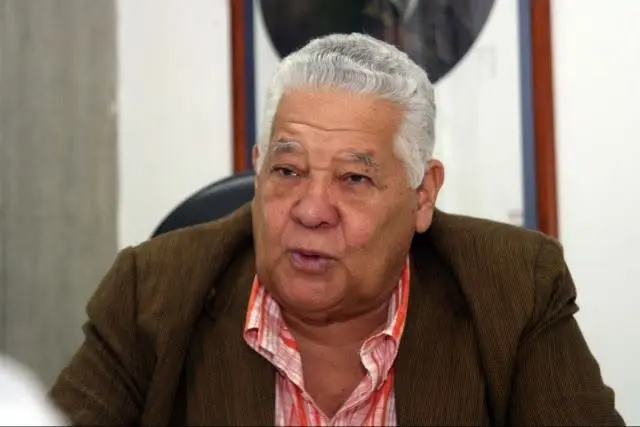
Arístides Medina Rubio championed Venezuelan local history, oral memory and the recovery of historical archives.

Venezuelan local history is central to Arístides Medina Rubio’s legacy, which reclaimed regional memory, oral testimony and archives beyond official narratives.

Related: Venezuela Launches Zero-Hunger Plan Targeting 2030 Goal


Arístides Medina Rubio: A Lesson in Venezuelan Local History
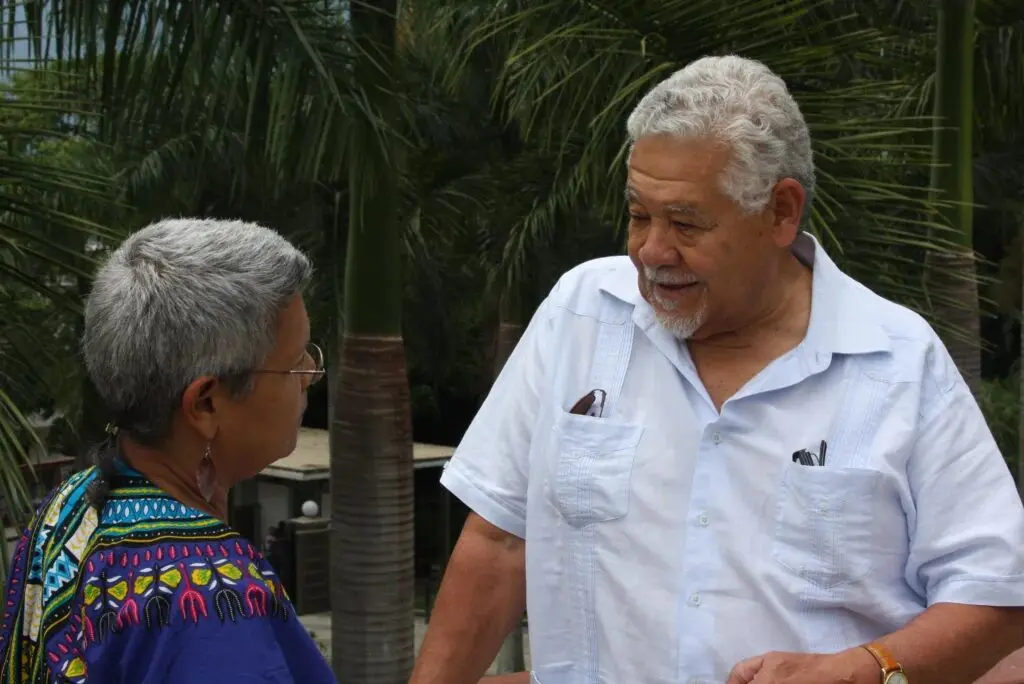
Venezuelan local history was the life’s work of historian Arístides Medina Rubio, who argued that no universal history is possible without the memory of towns, regions and ordinary people.

Medina Rubio believed that Venezuela’s past had been reduced for too long to the history of Caracas, independence heroes and official dates.

His central thesis was simple but powerful: without local history, universal history is impossible.

The historian was born in Puerto Cabello, Carabobo state, on April 27, 1937, and died in Caracas on October 1, 2019, at the age of 82.

He graduated as a professor of History and Geography from the Pedagogical Institute of Caracas in 1969 and earned a doctorate from El Colegio de México in 1974.

Medina Rubio founded the Chair of Venezuelan History at the Pedagogical Institute in 1976 and taught undergraduate, graduate and doctoral courses at the Central University of Venezuela.

He directed the university’s School of History from 1986 to 1989 and became one of the country’s leading theorists and promoters of regional history.

His influence extended beyond Venezuela through his work with historians across Latin America and the Caribbean.

Medina Rubio was also an editor, publisher and institution builder. He led Editorial Trópicos and co-founded the journal Tierra Firme in 1982, which has published more than 100 issues.

He served as director of Venezuela’s National Library from 2003 to 2009 and helped found and lead the National Center for History.

His books include Regional History: Seven Essays on Theory and Method (1984), A Minimal History of Venezuela (1994), Introduction to Regional History (1995) and Readings in Regional and Local History (2002).

In 2018, he presented The Venezuelan People: 15,000 Years of History, written with Mario Sanoja, Iraida Vargas, Carmen Bohórquez and Luis Britto García.

The book challenged the idea that Venezuelan history begins with Christopher Columbus or independence, placing Indigenous peoples at the center of the national narrative.

Arístides Medina Venezuelan Local History Beyond Caracas

Biblioteca Nacional de Venezuela | Centro Nacional de Estudios Históricos

Medina Rubio argued that Venezuelan local history had long been overshadowed by a Caracas-centered narrative.

He said official history focused on events such as April 19, 1810, and July 5, 1811, while ignoring the provinces that made up the Spanish Captaincy General of Venezuela.

“The great contribution of those of us who work on regional and local history is that we have reclaimed those spaces,” Medina Rubio said.

“Our history was filled with the history of Caracas, not even the Province of Caracas. The same happened with Maracaibo and Cumaná. Angostura appeared only when Bolívar was there, but beyond that, almost nothing.”

He argued that many Venezuelan towns had histories long before independence, but those stories were often reduced to the presence of famous figures.

He cited the McGregor Stone in El Socorro as an example of a place remembered mainly because a celebrated leader passed through it.

Medina Rubio insisted that local chroniclers preserved details that national histories often overlooked.

He also defended oral history as a legitimate historical source.

“The academic historian works with documents, statistics and maps,” he said. “But the people work with memory, and the only way to preserve that memory is through testimony.”

He said oral testimony passes from generation to generation and preserves events that may never leave a community but remain part of its historical memory.

Medina Rubio pointed to the Tere Tere, a traditional dish from Guatire, as an example of how local knowledge survives through community memory.

He said many people learned about the dish because residents created a magazine to document local flavors and knowledge.

For Medina Rubio, food, crafts, music and everyday practices were also historical sources because they revealed regional identities and social relations.

He noted that the hallaca, considered a national dish, has distinct regional expressions in the Andes, Margarita and central Venezuela.

The historian believed that recognizing those differences was essential to understanding Venezuela as a diverse and plural country.

Venezuelan Local History and the Independence Process

Archivo General de la Nación | Academia Nacional de la Historia

Medina Rubio also challenged traditional accounts of Venezuela’s independence, arguing that the process was broader, more complex and less centralized than official history suggested.

He explained that the people present in Caracas’ Plaza Mayor on April 19, 1810, were mainly from the Province of Caracas.

They came from Charallave, what is now the Plaza municipality, Guarenas and the valleys of Aragua.

People from Barcelona, Margarita, Cumaná, Angostura, the Andes and other regions joined the independence movement later, but quickly.

Medina Rubio said communication was decisive in spreading the movement.

In 1810, news from Caracas could take weeks to reach other parts of the country. Yet the April 19 events spread within eight to 10 days.

Caracas was the most important city in the Captaincy General, which included seven provinces.

After the Caracas council declared the Junta of the Rights of Ferdinand VII, later transformed into the Supreme Junta of Caracas, emissaries were sent to other provinces.

Their mission was to secure support for the Caracas movement and build consensus across the Captaincy General.

Of the seven provinces, only Maracaibo, Coro and Guayana did not immediately join. They later incorporated into the independence process.

Medina Rubio said the role of those emissaries remained insufficiently studied.

He also argued that many historical documents had been hidden or removed from public access for decades.

He pointed to the case of independence leader Francisco de Miranda and Juan Germán Roscio, who served as prosecutor against Miranda in 1806.

Medina Rubio said Roscio’s role in condemning Miranda and others captured at Ocumare had long been obscured by official narratives.

He said archives later revealed another side of Roscio, not to erase his contribution to independence, but to show that his life had more than one phase.

Medina Rubio said three volumes of previously unknown Miranda documents were later published, while other archives remained insufficiently studied.

Democratizing Venezuelan Historical Knowledge

Venezuelan Ministry of Popular Power for Education | Fundación Librerías del Sur

Medina Rubio believed that the democratization of Venezuelan local history required recovering archives, publishing forgotten documents and training new historians.

He said that before 1960, Venezuelan history was often presented as a nearly divine war led by elites.

He cited the 1808 Revolution of Caracas, organized by wealthy Caracas elites known as mantuanos against Spanish rule.

Although the movement was betrayed, Medina Rubio considered it more important than earlier pre-independence uprisings led by figures such as Pirela and Chirino, as well as Miranda’s invasions.

He noted that the first major study of the movement, Andrés de Ponte’s The Revolution of Caracas, was published in 1910 and not republished until after the 1960s.

Medina Rubio said that after 1960, the work of the General Archive of the Nation, the National Academy of History and university history schools began to recover Venezuela’s past.

Books written by witnesses, memoirists and military figures became available to researchers and the public.

After 1998, he said, the recovery of historical memory accelerated further.

More archives were created, and descendants of historical figures began donating documents to the National Library, the General Archive of the Nation and the National Academy of History.

Medina Rubio said those archives allowed a completely different understanding of Venezuela’s past.

He also criticized the fact that, until about 2002, Venezuelan school history textbooks were produced in Spain.

He said the government purchased millions of books from the Spanish publisher Santillana, with financing linked to international institutions.

Medina Rubio said that practice ended during the government of Hugo Chávez, when he was director of the National Library and Aristóbulo Istúriz was education minister.

He argued that replacing Santillana’s editorial capacity would take years because it involved producing and updating textbooks for millions of students.

For Medina Rubio, the transformation of historical knowledge was a long-term process tied to education, archives and public access to information.

Venezuelan Local History and Social Consciousness

UNESCO Memory of the World | Latin American Council of Social Sciences

Medina Rubio argued that Venezuelan local history helps people understand present-day problems and develop independent civic consciousness.

He gave the example of a town without drinking water or an aqueduct.

Residents may ask why there is no water system despite the existence of a large river nearby.

By investigating the issue, they may discover that a nearby aqueduct serves land owned by a powerful landowner.

That discovery can lead people to organize and fight for their rights.

For Medina Rubio, local history was therefore a tool for social awareness and political action.

He also emphasized the importance of recovering the everyday lives of ordinary people, including songs, dances, food and popular traditions.

He noted that colonial society was deeply marked by class and racial hierarchies.

The term “mantuano” referred to wealthy white elites because the Church allowed only white women to wear mantles, while Black, Indigenous and mixed-race people were excluded.

Medina Rubio said food also reflected those hierarchies. Elites ate refined dishes, while ordinary people ate sancocho, a mixture of ingredients cooked in a gourd.

He argued that history must recover those excluded voices and recognize collective actors as makers of their own history.

Medina Rubio believed that independence was not a completed event but an unfinished process.

He said Venezuela had not yet built a fully independent structure or developed independence as a collective way of life.

For him, history should not be reduced to memorizing dates, names and places.

It should reveal processes, recover local heroes and connect the past with present realities.

His legacy continues through the historians, archivists and communities working to recover Venezuela’s regional memory.

  •  

US Midterm Elections: 23 Million Early Votes Signal Major Shift

US midterm elections draw 23 million early votes as turnout surges in key states ahead of November 3.

US midterm elections see 23 million early votes cast, with surging turnout in key states as voters weigh the economy and congressional control.

Related: Florida A&M Shooting: 11 Shot Near University During Homecoming


US Midterm Elections Draw 23 Million Early Votes

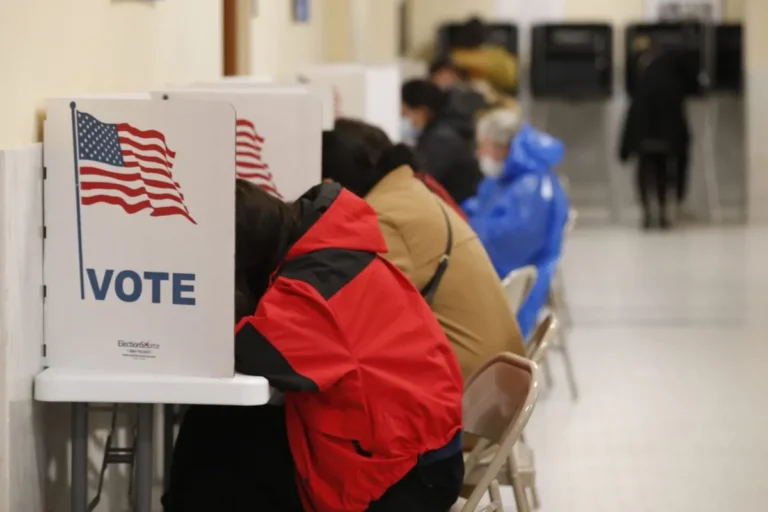
The US midterm elections have already drawn more than 23 million early votes nationwide as Americans head to the polls ahead of the November 3 election.

The total marks a sharp increase compared with the same point in the 2022 midterm cycle, when about 15 million ballots had been accepted.

The surge in early voting is concentrated in states with competitive races that could determine control of the House of Representatives and the Senate.

Analysts say the rise reflects growing concern among working-class voters over the high cost of living, housing, healthcare and economic insecurity.

In North Carolina, more than 1.2 million early votes had been accepted, an increase of 37 percent compared with the same period four years ago.

Early voting among registered Democrats rose by 47 percent, while participation among unaffiliated voters increased by 60 percent.

By contrast, early voting among registered Republicans increased by only 2.6 percent.

The figures do not reveal how individual voters cast their ballots, but they show a significant shift in the pace and composition of turnout.

The increase is particularly notable because North Carolina is one of the key battlegrounds in the fight for the Senate.

US Midterm Elections See Turnout Surge in Key States

US Election Assistance Commission | National Association of Secretaries of State

The rise in early voting is not limited to North Carolina. Similar trends have been reported in several states with decisive contests.

In Kansas, early voting increased by approximately 69 percent.

In Maine, turnout rose by 41 percent, while Iowa recorded a 24 percent increase.

In Texas, election officials reported record participation in the metropolitan areas of Dallas and Houston since voting centers opened.

Texas is a key state in this year’s elections because its Latino community represents at least 30 percent of the electorate.

Polling and organizing efforts suggest a shift in Latino voter mobilization, driven by economic pressures and rejection of anti-immigrant rhetoric from conservative sectors.

The midterm elections will renew all 435 seats in the House of Representatives and 35 of the 100 seats in the Senate.

Voters will also elect governors in 36 states and three territories.

Republicans currently hold a narrow 218-seat majority in the House, the smallest possible majority, leaving dozens of districts in play.

Democrats need to gain four Senate seats to take control of the upper chamber, a difficult but not impossible task.

Key Senate races are taking place in Alaska, Maine, North Carolina, Ohio, Iowa, Texas, Michigan and New Hampshire.

The outcome will determine whether Democrats can block or advance legislation on taxation, healthcare, immigration, energy policy and judicial appointments.

Public dissatisfaction with the economy has become a central issue in the campaign.

Polling cited in the article places approval of the government’s cost-of-living policy at just 21 percent, reflecting widespread concern over inflation, wages and living conditions.

The high level of early participation suggests that voters are treating the midterms as a major political test rather than a routine election.

US Midterm Elections Face Alaska Certification Battle

US Department of Justice | Alaska Division of Elections

The US midterm elections have also been marked by an unprecedented legal dispute in Alaska.

The US Department of Justice filed a lawsuit on October 22 seeking to block Alaska from certifying its Senate election results if Republican Senator Dan Sullivan loses to Democrat Mary Peltola.

The case centers on the presence of a second candidate, Daniel J. Sullivan Jr., a retired teacher whose name closely resembles that of the incumbent senator.

The Justice Department argues that the similar names could confuse voters and affect the outcome of the race.

The lawsuit asks a federal judge to prevent certification of any result that may have been affected by voter confusion.

It also seeks an investigation into whether votes cast for Daniel J. Sullivan were intended for Senator Dan S. Sullivan.

President Donald Trump publicly confirmed that he ordered the Justice Department to file the lawsuit.

The legal action came 11 days before the election, after early voting had already begun in Alaska.

The case has been strongly criticized by voting-rights groups, Democratic organizations and legal experts.

They argue that the federal government lacks authority to intervene in state-run elections and that the lawsuit represents an attempt to override the will of Alaska voters.

The campaign of Mary Peltola, the Democratic Senatorial Campaign Committee and groups including the League of Women Voters of Alaska and Common Cause have sought to intervene in the case.

They are asking the court to dismiss the lawsuit and protect the integrity of the state’s electoral process.

Alaska’s courts had previously rejected efforts to remove Daniel J. Sullivan Jr. from the ballot.

A federal judge and the Alaska Supreme Court ruled that his candidacy was constitutionally valid.

The dispute has drawn attention because Alaska’s Senate seat could be decisive for control of the upper chamber.

Alaska is also strategically important because of its vast oil, gas and mineral reserves.

The outcome of the race could affect future decisions on energy leases, mining permits and federal policy in the Arctic region.

Geopolitical Context

The US midterm elections will have consequences beyond domestic politics because Congress plays a central role in shaping US foreign, economic and security policy.

Control of the House and Senate will determine whether the administration can advance its legislative agenda or face greater opposition.

The elections will influence decisions on government spending, taxation, immigration, climate policy and military funding.

They will also affect the confirmation of federal judges and senior government officials.

The Alaska Senate race is particularly significant because of the state’s strategic location in the Arctic and its vast energy resources.

The United States has increased its focus on Arctic security amid competition with Russia and China over shipping routes, military presence and access to natural resources.

The outcome of the election could influence future policy on oil drilling, mining and infrastructure development in Alaska.

The surge in early voting also reflects a broader debate over democratic participation in the United States.

Voting-rights groups have warned that legal challenges to election certification can undermine public confidence in democratic institutions.

The Alaska case has raised concerns that federal power could be used to influence state-run elections.

The dispute comes as political polarization continues to deepen across the country.

The high turnout suggests that many voters see the midterms as a referendum on economic conditions, democratic norms and the direction of the country.

The results will shape the final two years of the current presidential term and could redefine the balance of power in Washington.


  •  

Gaza Food Crisis: Israel Blocks Flour as 7 Bakeries Face Closure

Gaza food crisis worsens as Israel blocks flour supplies and Gaza’s remaining bakeries face closure.

Gaza food crisis deepens as Israel blocks flour supplies, leaving only seven bakeries operating and 1.4 million Palestinians facing acute hunger.

Related: New U.S. and Israeli Military Actions Against Iran Would Be Underway


Gaza Food Crisis Worsens as Israel Blocks Flour Supplies

The Gaza food crisis has reached a critical point after Israel blocked commercial flour shipments, leaving Gaza’s last seven operating bakeries at risk of closing within 48 hours.

Abdul Nasser al-Ajrami, head of the Gaza Bakeries Association, warned on Thursday, October 22, that flour reserves in the enclave had been exhausted.

He said the remaining bakeries would stop producing bread within two days unless new supplies were allowed to enter.

“Israel kept the crossings closed throughout last week and continues to strangle the supply of commercial flour even after partially reopening them,” al-Ajrami said.

He added that the small amount of flour previously stored had already run out, forcing several bakeries to shut down.

Only seven of the 20 bakeries that had been operating in Gaza remained active when the warning was issued.

The closure of bakeries would deprive families of one of the few remaining sources of affordable food in the devastated territory.

Bread is a basic staple for Palestinian households, particularly as prices for other foods have risen sharply amid shortages and reduced humanitarian assistance.

The Gaza food crisis has worsened as commercial supplies have been blocked and international aid has been reduced.

Al-Ajrami said the flour currently sold in local markets comes from the United Nations World Food Programme, known as the WFP.

Commercial bakeries that depend on supplies brought through the crossings have been left without raw materials.

The shortage has intensified since the WFP announced a severe funding deficit and reduced food assistance for more than half a million people in Gaza.

The reduction has left more families competing for limited flour while prices continue to rise.

Gaza Food Crisis Deepens as WFP Cuts Aid

World Food Programme | United Nations News

The Gaza food crisis has been compounded by a major reduction in humanitarian assistance from the World Food Programme.

On October 19, the WFP announced that funding shortages had forced it to cut food assistance in Gaza by about one-third.

The agency said the number of people receiving food and cash assistance would fall from 1.6 million in September to 1.1 million in October.

That means approximately 500,000 people will lose access to critical food support as winter approaches.

The WFP has also halved food rations. Families receiving assistance will now receive one food parcel instead of two, along with a smaller bag of wheat flour.

The agency has reduced daily hot meals from 250,000 to 150,000 and cut cash assistance for 75,000 families.

The WFP said the cuts were not caused by a reduction in humanitarian needs or by a lack of access to deliver aid.

“We don’t have the funding to sustain the levels of assistance that are required,” said Shaun Hughes, the WFP’s representative and country director in Palestine.

The agency said it urgently needs $450 million to maintain critical operations in Gaza and the West Bank from October 2026 to March 2027.

The WFP received less than half of the funding allocated to its operations in Palestine in 2026 compared with previous years.

The funding shortfall has come at a time when approximately 1.4 million people, or 67 percent of Gaza’s population, face acute food insecurity at crisis levels or worse.

The WFP estimates that around 200,000 people are experiencing emergency conditions and require immediate food assistance to prevent deaths from hunger.

The agency said it can still support bakeries that cover one-third of Gaza’s bread needs, provide nutrition assistance to 300,000 women and children and deliver school snacks to 200,000 students.

However, the reduction in aid has placed additional pressure on families already struggling to obtain basic food supplies.

Gaza Food Crisis Exposes Impact of Israel’s Blockade

United Nations Relief and Works Agency | World Health Organization

The Gaza food crisis is closely linked to Israel’s restrictions on the entry of food, fuel, medicine and humanitarian aid.

Human rights organizations say Israeli authorities have repeatedly closed Gaza’s crossings since early October, obstructing the entry of essential supplies.

The closures have deepened shortages of flour, cooking gas, fuel and medical materials across the enclave.

The Rafah crossing has remained closed to sick and injured Palestinians waiting to be evacuated for treatment abroad.

International health organizations have also raised concerns about continued attacks on medical facilities and the detention of healthcare workers.

Gaza’s Ministry of Social Development warned that hundreds of thousands of Palestinians face an imminent humanitarian catastrophe if restrictions on flour and bakery supplies continue.

The ministry called for immediate action to stop what it described as Israel’s systematic policy of starvation and the use of food as a weapon against civilians.

Israel has said the disruption in commercial deliveries stems from a fiscal dispute between traders and the administration led by Hamas.

Palestinian traders have rejected that explanation and say the restrictions remain in place.

The Israeli military has said commercial goods would resume entering Gaza after a five-day pause.

However, Palestinian traders reported that major cuts to food supplies remained in force and that the blockade had become increasingly severe.

The WFP said the halt in commercial truck entries through the Kerem Abu Salem crossing was further restricting supplies entering Gaza.

The organization warned that restrictions on goods entering the territory were holding back recovery and reducing the purchasing power of families.

The Gaza food crisis has been aggravated by the destruction of infrastructure, displacement and the collapse of local agriculture and food production.

Most of Gaza’s population has been displaced, with many families living in tents or overcrowded shelters without reliable access to clean water, sanitation or cooking fuel.

The World Health Organization has warned that malnutrition, disease and the collapse of healthcare services are creating a deadly combination for civilians.

Geopolitical Context

The Gaza food crisis has implications beyond the immediate humanitarian emergency because it reflects the broader political and military conflict between Israel and Palestine.

Control over crossings, food supplies and humanitarian aid has become a central element of the conflict.

International law requires parties to a conflict to allow humanitarian assistance to reach civilians and to protect access to food, water and medical care.

Human rights organizations argue that the deliberate restriction of essential goods may constitute collective punishment and a violation of international humanitarian law.

The crisis has drawn attention from the United Nations, international courts and humanitarian agencies, which have repeatedly called for unrestricted access to Gaza.

The situation also has regional implications. Egypt, Jordan and other neighboring countries have faced pressure to facilitate aid deliveries and medical evacuations.

The closure of the Rafah crossing has left injured and seriously ill Palestinians unable to leave Gaza for treatment.

The Gaza food crisis could further destabilize the region by increasing displacement, deepening poverty and fueling anger across the Arab and Muslim world.

The United Nations has warned that famine risk remains high as winter approaches and humanitarian funding declines.

The WFP has said that recent modest improvements in food security remain fragile and could be reversed if access and funding are not restored.

The immediate priority is to allow flour, fuel and medical supplies to enter Gaza and to restore the operations of bakeries and humanitarian kitchens.

Without urgent action, the Gaza food crisis could push the territory into a new phase of mass hunger and deepen one of the world’s most severe humanitarian emergencies.


  •  

Pope Leo XIV Demands End to Yemen Hostilities in Urgent Peace Appeal

Pope Leo XIV demands an end to Yemen hostilities and calls for peace during his Angelus address in St. Peter’s Square.

Pope Leo XIV demands an end to Yemen hostilities, highlights Taiz’s humanitarian crisis and calls for peace after a deadly church attack in Jordan.

Related: Pope Leo XIV Confirms Official Visit to Argentina in November


Pope Leo XIV Demands End to Yemen Hostilities

Pope Leo XIV demanded an immediate end to Yemen hostilities during his Angelus address on Sunday, October 25, warning that civilians are paying the highest price in the conflict. Speaking from the window of the Apostolic Palace before thousands of faithful gathered in St. Peter’s Square, the pope expressed deep concern over the humanitarian situation in Yemen.

He paid particular attention to the city of Taiz, where residents are suffering from severe shortages of food, drinking water and medical care.

“I make a heartfelt appeal for hostilities to cease and for the Yemeni people and all the peoples of the region to be guaranteed the right to live in peace,” Pope Leo said.

The pope’s message came as fighting and road closures have cut off vital supplies in Taiz, leaving civilians increasingly isolated. The Vatican said the pope’s appeal was directed at all parties involved in the conflict and at the international community.

Pope Leo also condemned the broader spiral of violence affecting West Asia, calling for urgent guarantees for regional peace. He denounced the devastating consequences of armed confrontations across the region and urged leaders to choose dialogue over war.

The pontiff said wars not only cause death and destruction but also impoverish and damage the world. His appeal placed the humanitarian suffering of Yemeni civilians at the center of the Vatican’s message.

Pope Leo XIV draws attention to the humanitarian crisis in Yemen, remembers victims of an attack on Christians in Jordan, and looks ahead to the Assisi gathering marking 40 years since the first World Day of Prayer for Peace.https://t.co/UZ47Hb6oMw

— Vatican News (@VaticanNews) October 25, 2026

Yemen Hostilities Deepen Taiz Humanitarian Crisis

Vatican News | United Nations Office for the Coordination of Humanitarian Affairs

The pope’s warning focused on Taiz, a city that has become one of the most visible symbols of Yemen’s humanitarian crisis.

Residents face severe shortages of food, clean water, fuel and basic medical services as fighting and road closures restrict the movement of supplies.

Humanitarian organizations have warned that the blockade of supply routes has worsened conditions for hundreds of thousands of people.

The United Nations has repeatedly called for unimpeded humanitarian access to affected communities across Yemen.

Yemen has been devastated by years of war, economic collapse and the destruction of essential infrastructure.

The conflict has left millions of people dependent on humanitarian assistance and has created one of the world’s most severe food-security emergencies.

The pope said the Yemeni people, like all peoples of the region, have the right to live in peace.

His message also called for an end to the cycle of violence that has spread across West Asia.

Pope Leo condemned the human cost of armed conflict and urged the international community to prioritize negotiation and diplomacy.

The Vatican has repeatedly emphasized that military solutions cannot resolve political crises or address the needs of civilians.

The pope’s appeal comes amid heightened tensions across the Middle East, where conflicts have displaced communities, damaged infrastructure and deepened humanitarian needs.

The Vatican’s message called for a regional approach to peace that protects civilians and guarantees access to humanitarian aid.

🚨 Saná denunció que Arabia Saudita incumplió pactos previos a 2023 al bombardear el aeropuerto de la capital y poner fin a la tregua. Mohammed Abdul-Salam afirmó que la vía diplomática se agotó tras la falta de respuestas claras de Riad. #Yemen #ArabiaSaudita #teleSUR #19Oct pic.twitter.com/ONZhAvdkCG

— teleSUR TV (@teleSURtv) October 19, 2026

Pope Leo XIV Mourns Jordan Church Attack Victims

Jordan News Agency | Middle East Council of Churches

Pope Leo XIV also addressed the deadly attack on worshippers at Saint George’s Orthodox Church in Hamoud, in Jordan’s Karak governorate.

The attack occurred on Friday, October 23, during a funeral service at the church.

Jordanian authorities said gunmen opened fire on worshippers, killing nine people and wounding around 40 others.

The pope prayed for those killed and injured in the attack and expressed his closeness to the affected community.

He also expressed solidarity with Jordan, a country he praised for its history of peaceful coexistence and respect among different religions.

Jordan declared three days of national mourning following the attack.

Jordanian authorities launched an investigation to identify those responsible. No group had claimed responsibility for the attack as of Sunday.

Christian leaders across the region condemned the attack as a crime against humanity and an assault on religious coexistence.

Patriarchs and heads of Churches in Jerusalem called on churches across the region to ring their bells in solidarity and pray for the victims.

The pope’s response highlighted the vulnerability of religious communities in a region marked by political instability and sectarian tensions.

His message emphasized that attacks on places of worship are attacks on human dignity and the right to religious freedom.

The Vatican has repeatedly called for the protection of Christian communities and all religious minorities in the Middle East.

119 ataques aéreos de la coalición saudita en 24 horas contra Yemen. En Taiz, un bombardeo a una escuela y un puesto sanitario dejó 3 muertos y 12 heridos, entre ellos mujeres y niños. La escalada supera 2.177 agresiones. #teleSUR #13oct pic.twitter.com/SLJn8j89uW

— teleSUR TV (@teleSURtv) October 13, 2026

Assisi Meeting Marks 40 Years of Interfaith Peace

Community of Sant’Egidio | Holy See Press Office

Pope Leo XIV called on the faithful to join spiritually in the peace gathering taking place in Assisi, Italy, on October 27.

The meeting, titled “Unarmed and Disarming Peace,” marks the 40th anniversary of the World Day of Prayer for Peace convened by Saint John Paul II in 1986.

The event is organized by the Community of Sant’Egidio and brings together religious leaders, representatives of Christian Churches and figures from other faiths.

The 2026 gathering includes 384 representatives of religions, cultures and institutions from 53 countries.

Participants will take part in 24 thematic forums addressing conflict, disarmament, migration, poverty, young people and the role of religions in building peace.

The pope had planned to attend the closing ceremony in person but canceled the trip on medical advice after undergoing thoracic surgery.

The Vatican said Pope Leo would send a message expressing his closeness to organizers and participants.

The pope urged believers around the world to join the Assisi gathering in prayer.

“Never has it been more evident that wars, in addition to sowing death and destruction, impoverish and harm the world,” he said.

The pope called on the international community to abandon weapons and commit decisively to understanding and harmony among peoples.

The Assisi meeting recalls the historic 1986 gathering, when Pope John Paul II brought together representatives of different religions to pray for peace.

That event became a landmark in interreligious dialogue and remains a reference point for Vatican diplomacy.

The 2026 meeting seeks to renew that tradition at a time of multiple conflicts and growing humanitarian crises.

Geopolitical Context

The pope’s appeal on Yemen hostilities reflects the Vatican’s broader diplomatic effort to promote dialogue in a region marked by war and humanitarian emergencies.

Yemen’s conflict has become one of the world’s most severe humanitarian crises, with millions of people facing hunger, displacement and limited access to healthcare.

The war has drawn in regional and international powers, making a political solution increasingly difficult.

The crisis in Taiz illustrates how blockades, fighting and the collapse of public services can trap civilians between military objectives and humanitarian needs.

Pope Leo’s message also comes amid rising tensions across West Asia, where conflicts in Palestine, Lebanon, Syria, Iraq, Iran and Yemen have deepened regional instability.

The Vatican has positioned itself as a voice for civilian protection, humanitarian access and negotiated settlements.

The pope’s call for peace in Yemen and his solidarity with Jordan highlight the connection between armed conflict, religious violence and the erosion of social cohesion.

The Assisi gathering offers a platform for religious leaders to promote dialogue at a time when political institutions face growing difficulty in resolving conflicts.

The Vatican argues that interreligious cooperation can help reduce hatred, protect minorities and build conditions for peace.

The pope’s message is a reminder that wars have consequences beyond battlefields: they destroy economies, displace communities and damage the future of entire generations.


  •  

Florida A&M Shooting: 11 Shot Near University During Homecoming

Florida A&M shooting near Bragg Memorial Stadium leaves 11 people shot during homecoming weekend in Tallahassee.

Florida A&M shooting near Bragg Memorial Stadium leaves 11 people shot, including six minors, as Tallahassee police investigate after homecoming.

Related: United States Escalated Hostility Toward Cuba Throughout 2026


Florida A&M Shooting Leaves 11 People Shot Near University

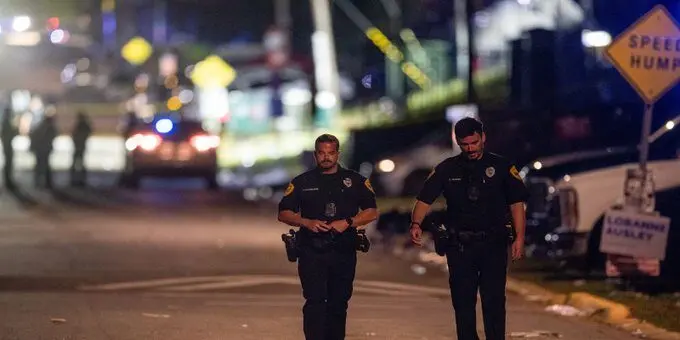
The Florida A&M shooting left 11 people with gunshot wounds and one additional person injured on Saturday, October 24, near Florida A&M University’s Bragg Memorial Stadium in Tallahassee.

The shooting occurred shortly before 8:00 p.m. near the intersection of Perry and Manatee streets, just hours after the university’s homecoming football game.

Tallahassee Police Chief Lawrence Revell said 12 people were injured in total. Eleven were shot, while the 12th person was injured while fleeing the scene.

The victims included six adults and six minors. The youngest was an 11-year-old child.

Police said at least three victims suffered serious injuries. One of them, a minor, remained in critical condition as of Sunday morning.

The other eight shooting victims were reported in stable condition. By Sunday morning, five victims had been released from the hospital, while six remained hospitalized.

Police said one of the injured was a student at Florida A&M University. The university confirmed that it was aware of the incident near campus.

The 12th victim was identified by Revell as the grandmother of one of the shooting victims. She was injured while trying to escape the area during the panic.

The shooting took place during homecoming weekend, when thousands of students, alumni and visitors had gathered in Tallahassee for celebrations and the football game.

Florida A&M University issued a safety alert urging people to avoid the area around Bragg Stadium and Perry Street while police investigated.

The university said its campus remained safe but asked community members to allow law enforcement to carry out its work.

🚨At least 12 people are injured, including six children, in a shooting near a football stadium in Tallahassee on homecoming weekend for #Florida A&M University. #Tallahassee Police Chief Lawrence Revell told reporters that no arrests had been made yet following the Saturday… pic.twitter.com/G0MSaiSAkF

— ⚡️🌎 Sarwar 🌐⚡️ (@ferozwala) October 25, 2026

Florida A&M Shooting Follows Homecoming Game

Tallahassee Police Department | Florida A&M University

The Florida A&M shooting occurred after the university’s homecoming football game at Bragg Memorial Stadium.

Florida A&M’s Rattlers lost 31-28 to the Arkansas-Pine Bluff Golden Lions in the homecoming game earlier that day.

Police said preliminary information indicates that a physical altercation between two or three people preceded the shooting.

Chief Revell said investigators believe one shooter was involved. However, no arrests had been made and no suspect had been identified as of Sunday morning.

The Tallahassee Police Department’s Violent Crimes Unit is leading the investigation.

Officers, detectives, sergeants and forensic personnel remained at the scene, collecting evidence and reviewing information from witnesses.

Revell said police were still working to determine exactly what happened and to identify those responsible.

The police chief described the incident as an isolated event and said there was no indication that it was a random attack against the university.

He also said that about two dozen officers were already in the area when the altercation broke out, given the large crowds present for homecoming.

The shooting occurred in a crowded area near the stadium, where families, students and visitors had gathered after the game.

The presence of children among the victims has intensified concern about gun violence affecting young people in the United States.

Police have asked anyone with information about the shooting to contact the Tallahassee Police Department or Crime Stoppers.

Authorities have not released the identities of the victims or confirmed a motive.

The investigation remains active and officials have warned that preliminary details could change as evidence is reviewed.

As of 11:30 p.m., the Tallahassee Police Department is continuing its active investigation into a shooting that occurred just before 8 p.m. Saturday, Oct. 24, near the intersection of Perry and Manatee streets. Read the full news release: https://t.co/wNqNznTLyb

— Tallahassee Police (@TallyPD) October 25, 2026

Florida A&M Shooting Highlights US Gun Violence

Everytown for Gun Safety | Gun Violence Archive

The Florida A&M shooting is the latest in a series of mass shootings that continue to affect communities across the United States.

The incident occurred near one of the country’s historically Black colleges and universities, known as HBCUs.

Florida A&M University was founded in 1887 and has played a central role in expanding access to higher education for Black students in the United States.

The university is a symbol of the struggle of Black communities against racial segregation and structural racism in American education.

Homecoming is one of the most important cultural events at HBCUs. It brings together students, alumni, families and local residents in celebrations that strengthen community ties.

The shooting has cast a shadow over those celebrations and raised questions about public safety around large public events.

Gun violence remains a persistent crisis in the United States. Mass shootings occur regularly in schools, universities, public spaces, workplaces and residential areas.

The country continues to face political divisions over gun control, background checks, access to firearms and community-based violence prevention.

Advocacy groups have called for stronger measures to reduce access to weapons by people at risk of committing violence.

They have also urged investment in youth programs, mental health services and community intervention initiatives.

The Tallahassee shooting highlights the impact of gun violence beyond those directly targeted. Bystanders, families and entire communities can be affected by a single act of violence.

The injury of a grandmother fleeing the scene illustrates how panic and fear can harm people who were not involved in the original dispute.

Geopolitical Context

The Florida A&M shooting has implications beyond Tallahassee because it reflects the broader crisis of gun violence in the United States.

Gun violence affects public health, education, economic activity and social cohesion across the country.

Mass shootings near universities and sporting events undermine confidence in public spaces and create fear among students and families.

The incident is particularly significant because it occurred at an HBCU during homecoming, a moment of cultural pride and community gathering.

HBCUs have historically played a vital role in advancing educational opportunity and civil rights in the United States.

Violence near these institutions adds to concerns about the safety of Black students and communities, particularly in a country still marked by racial inequality.

The shooting may also intensify national debate over gun legislation, policing and the protection of young people.

Federal, state and local authorities face growing pressure to address both the availability of firearms and the social conditions that contribute to violence.

For Tallahassee, the incident represents a major test for public safety institutions and community leaders.

The university has asked for calm and cooperation while police continue their investigation.

The immediate priority is to identify those responsible and support the victims and their families.

The Florida A&M shooting is a reminder that gun violence remains one of the most urgent social and political challenges facing the United States.


  •  

Peru Protests: 1,000 March in Lima Against Fujimori Government

Peru protests in Lima bring Generation Z demonstrators together against extortion, wildfires and the Fujimori government.

Peru protests bring students, unions and victims’ families to Lima to demand action on extortion, wildfires, living costs and police reform.

Related: Peru’s Youth Protest Government Over Crime And Forest Fires


Peru Protests Bring Generation Z to Lima Against Fujimori

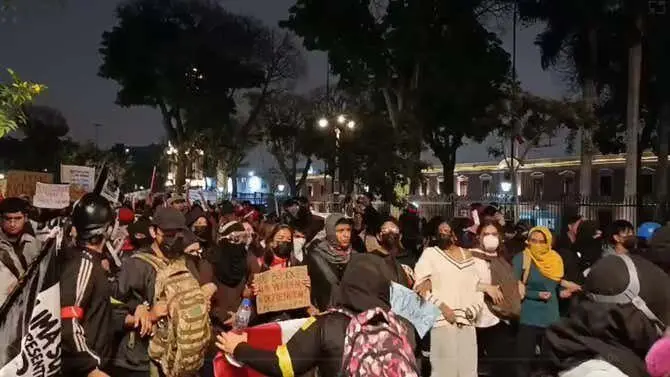
Peru protests filled the historic center of Lima on Saturday, October 24, as young people, students, unions and victims’ families demanded action from President Keiko Fujimori’s government.

Demonstrators began gathering at 4:00 p.m. at Plaza San Martín, a historic site of popular struggles in the Peruvian capital.

The march was convened by groups identifying with Generation Z, along with human rights organizations, university students and self-organized citizens.

Participants included students from the National University of San Marcos and the Pontifical Catholic University of Peru.

The protesters demanded responses to a wave of extortion, the environmental crisis caused by forest fires, the rising cost of living and impunity for state repression.

They marched through Jirón de la Unión and Avenida Grau before advancing toward Avenida Abancay.

The demonstration was largely peaceful but firm. Participants carried Peruvian flags and banners reading “Put out the fires,” “For a Peru that is never indifferent to its people’s suffering,” and “Urgent police reform.”

Local media estimated that around 1,000 people took part in the Lima march.

Similar mobilizations were reported in Arequipa, Cusco, Ica, Huancayo, Trujillo and Juliaca.

The protests reflect growing discontent with the government’s handling of insecurity, environmental emergencies and economic pressures affecting working-class communities.

Peru Protests Demand Police Reform and Security

Peru’s Ministry of the Interior | Amnesty International—Peru

One of the central demands of the Peru protests was an end to extortion networks that affect transport workers, merchants, shopkeepers and small business owners.

Protesters said criminal groups are imposing payments on workers and entrepreneurs in popular neighborhoods, creating fear and undermining local economies.

Demonstrators called for a deep police reform to dismantle corruption networks within the police force.

They also demanded stronger intelligence work and community-based prevention rather than the repression of social protest.

The marchers criticized the use of security forces against demonstrations and called for greater protection for vulnerable communities.

During the march, police blocked the route to prevent demonstrators from reaching the exterior of the Congress of the Republic.

The image of officers containing the crowd highlighted the distance between a closed political institution and a mobilized population demanding to be heard.

The protest also included relatives of people killed during the social protests between December 2022 and June 2023.

They carried photographs of their loved ones and demanded justice for the deaths that occurred during the political crisis.

Milagros Samillán, whose brother was killed in January 2023 in Juliaca, Puno, said families were still demanding accountability four years after what she described as the massacres of 2022 and 2023.

Human rights organizations have documented serious concerns about the use of force during those protests.

The United Nations Special Rapporteur on the rights to freedom of peaceful assembly reported that 68 people died between December 7, 2022, and April 7, 2023, in the context of protests across nine regions.

The UN official said that 74 percent of those deaths occurred during confrontations with law enforcement.

Civil society organizations have called for independent investigations, prosecutions and reparations for victims and their families.

Peru Protests Highlight Wildfire and Climate Crisis

Peru’s National Institute of Civil Defense | United Nations Environment Programme

The environmental emergency was another major focus of the Peru protests.

Demonstrators denounced the government’s response to forest fires that affected 16 regions across the country.

According to Peru’s National Center of Emergency Operations, known as COEN, and the National Institute of Civil Defense, known as Indeci, the fires caused 479 emergencies.

The disasters left 12 people dead and 708 people affected, according to the official figures cited during the mobilization.

The fires destroyed 1,299 hectares of crops and more than 13,800 hectares of natural cover.

They also caused severe damage to local wildlife and livestock, affecting rural and Indigenous communities.

The affected regions included Cusco, Puno, Junín, Apurímac, Áncash, Huancavelica, Arequipa, Amazonas and Cajamarca.

Protesters said the government failed to provide enough brigades, funding and prevention measures to confront the emergency.

One young demonstrator said the fires were only extinguished after rainfall arrived, not because of an effective state response.

“Tuvo que llover para que recién se apagaran los incendios,” she said, denouncing the lack of brigades, budget and prevention.

Another protester criticized the floods caused by heavy rains in Piura and the absence of a strategic plan to address the El Niño phenomenon.

El Niño periodically devastates northern Peru through intense rainfall, flooding and damage to infrastructure.

Demonstrators said corruption in reconstruction projects and the abandonment of public infrastructure have worsened the impact of these climate events.

The protesters demanded a parliamentary investigation into the origin of the fires and adequate reparations for affected communities.

They also called on national, regional and local authorities to strengthen prevention and prepare for future climate emergencies.

Geopolitical Context

The Peru protests reflect a broader wave of youth-led mobilization across Latin America.

Generation Z movements have emerged as a political force in several countries, demanding action on insecurity, corruption, inequality, climate change and democratic accountability.

In Peru, the protests come amid a prolonged institutional crisis marked by political instability, social conflict and public distrust in state institutions.

The country has experienced a succession of presidents and governments in recent years, deepening polarization and weakening public confidence.

Keiko Fujimori’s government faces pressure to respond to demands for security without resorting to repressive measures.

The demand for police reform is particularly sensitive because of the legacy of state violence during the 2022 and 2023 protests.

The forest fires also expose the unequal impact of climate change in Peru.

Rural and Indigenous communities in the Andes and Amazon face the greatest risks, despite having contributed least to global emissions.

The destruction of crops, forests and livestock threatens food security, local economies and the cultural survival of affected communities.

The protests could increase pressure on Congress and the executive branch to allocate more resources to disaster prevention, environmental protection and social repair.

They may also influence the political debate ahead of future electoral processes, as youth movements seek greater representation in national politics.

For now, the mobilization has made clear that insecurity, climate emergencies and impunity are no longer separate issues.

For many young Peruvians, they form part of the same crisis of governance, and the demand is simple: a state that protects its people instead of abandoning them.


  •  

Haiti Crisis: El Salvador deploys troops for a rescue operation

Haiti gang violence leaves four Salvadoran soldiers missing after a gang ambush near Port-au-Prince.

Haiti gang violence leaves four Salvadoran soldiers missing after an ambush near Port-au-Prince as El Salvador deploys troops for a rescue operation.

Related: Haiti Mobilizes Resources to Free Four Salvadoran Soldiers Kidnapped by Gangs


Haiti Gang Violence Leaves 4 Salvadoran Soldiers Missing

Haiti gang violence has escalated after four Salvadoran soldiers serving with the United Nations-backed Gang Suppression Force, known as the GSF, disappeared following an ambush near Port-au-Prince.

The four men are aviation technicians, not combat troops. They were supporting medical evacuation operations for the international mission.

The soldiers went missing on Sunday, October 18, after armed groups attacked their armored vehicle in the Santo area of Croix-des-Bouquets, northeast of the capital.

According to officials, attackers fired hundreds of rounds and used explosives against the vehicle. The vehicle caught fire, but the four Salvadorans managed to escape.

Contact with the men was lost shortly afterward. Authorities believe they survived the attack and were kidnapped by gangs operating in the area.

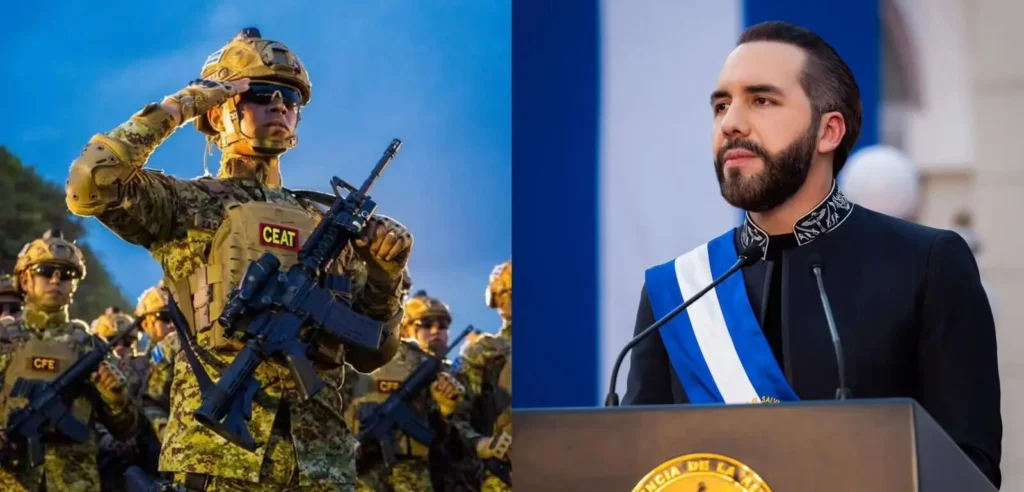
El Salvador’s President Nayib Bukele announced on Wednesday, October 21, that his government had launched a military operation to rescue the four men.

He demanded that Haitian gangs release the soldiers “alive and unharmed” and warned of a stronger response if they were not freed.

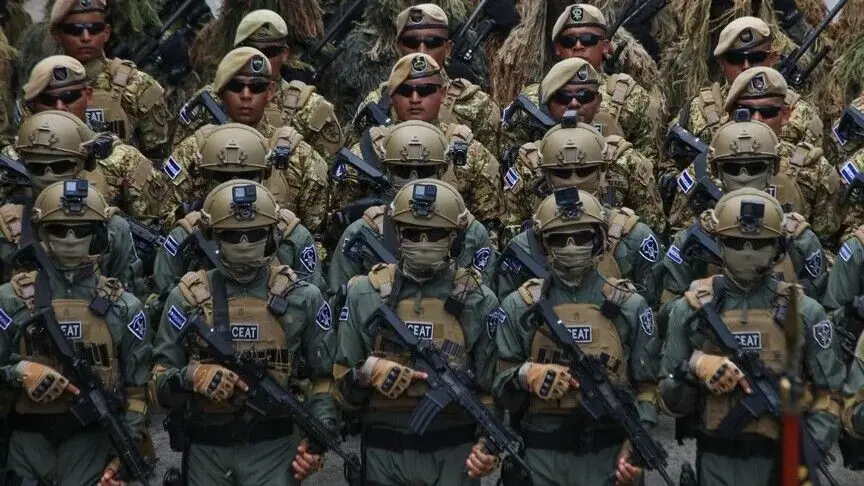
The Gang Suppression Force confirmed that a new Salvadoran contingent arrived in Port-au-Prince on Thursday to support search and security operations.

The mission said its personnel were operating in close coordination with the Haitian National Police and other partners in the Plaine du Cul-de-Sac area.

The incident is the first major attack against the GSF since the mission began operations in Haiti in April 2026.

Haiti Gang Violence Extends Beyond the Capital

United Nations | Gang Suppression Force

The disappearance of the Salvadoran soldiers comes amid a sharp deterioration in Haiti gang violence across the country.

The United Nations reported that 1,123 people were killed and 440 injured between July 15 and October 12 in incidents linked to armed groups.

The UN said security operations accounted for 52 percent of those killed or injured, or 808 people. Among them were 148 people with no links to gangs.

The figures show that civilians continue to pay a heavy price in the conflict between armed groups and security forces.

Gang violence is no longer concentrated only in Port-au-Prince. Armed groups are expanding their attacks into rural areas, worsening displacement and complicating preparations for elections.

The UN warned that the spread of violence into the countryside could deepen the humanitarian emergency and make it harder for authorities to restore basic services.

Haiti has not held national elections since 2016. The country has been governed through a political transition since the assassination of President Jovenel Moïse in July 2021.

Presidential and legislative elections had been scheduled for December 13, 2026. However, the Provisional Electoral Council postponed the vote without setting a new date.

The postponement has prolonged political uncertainty and raised questions about who will govern Haiti after the current transition.

Former President Michel Martelly, who led Haiti from 2011 to 2016, formally registered his presidential candidacy on Friday, October 23.

Martelly is running under the Debloke coalition. His candidacy remains subject to validation by the Provisional Electoral Council.

He has been sanctioned by the United States and the European Union over alleged links to drug trafficking and armed groups. Martelly has denied the allegations.

His registration adds another layer of uncertainty to elections that were already postponed and questioned amid rising violence.

Haiti Gang Violence Deepens Humanitarian Emergency

UN Office for the Coordination of Humanitarian Affairs | UNICEF

The humanitarian impact of Haiti gang violence is becoming increasingly severe.

The United Nations estimates that nearly 1.5 million people have fled their homes, including more than 740,000 children.

The displacement represents approximately one-quarter of Haiti’s population and has overwhelmed shelters, health centers and local communities.

The UN says the Haitian economy is expected to contract for the seventh consecutive year.

The country’s 2026 humanitarian response plan requires $880.3 million. As of October 16, it had received only 49.1 percent of the needed funding.

The UN estimates that 6.4 million people need urgent humanitarian assistance.

The funding gap has limited access to food, clean water, medical care, shelter and protection services for displaced families.

The Gang Suppression Force remains understaffed. The mission had 1,563 personnel as of October 12, far below the 5,500 authorized by the UN Security Council.

The Security Council extended the GSF’s mandate until March 31, 2027.

The mission was created to support the Haitian National Police in restoring security and dismantling criminal networks.

However, the kidnapping of the Salvadoran soldiers has exposed the risks facing international personnel and the difficulty of operating in gang-controlled territory.

Search operations in the Plaine du Cul-de-Sac have included air support and coordination with Haitian police units.

The GSF reported that the operations have left at least seven suspected gang members dead and four mission personnel injured.

Haiti’s government said the release of the abducted soldiers is an “absolute priority” and that all necessary resources are being mobilized.

The government held a meeting at the prime minister’s office to assess the interventions and determine measures to strengthen operations.

Bukele Escalates Military Response in Haiti

El Salvador Presidency | Associated Press

El Salvador has responded to the crisis by deploying additional troops to Haiti.

The Associated Press reported that 100 Salvadoran special forces soldiers arrived on Thursday, with another 100 expected later that day.

A security source cited by AFP said about 200 Salvadoran soldiers arrived in Port-au-Prince between Thursday and Friday.

Reports also indicated that at least six aircraft—three Salvadoran and three US—landed in the Haitian capital carrying elite personnel.

El Salvador already had approximately 450 military personnel in Haiti before the latest deployment, according to Haitian media.

Bukele has combined military pressure with public warnings directed at Haitian gang leaders.

He described the gangs as “satanic” and said that “God will grant us victory.”

The Salvadoran president also said that the four missing men were not combatants but aviation technicians whose role was to carry out medical evacuations and save lives.

According to The Wall Street Journal, the Bukele government is seeking to open a discreet channel of contact with Haitian gangs to negotiate the soldiers’ release before ordering a broader military response.

The reported approach reflects the difficulty of conducting rescue operations in areas where armed groups maintain strong territorial control.

The incident has also become a test of Bukele’s foreign and security policy.

El Salvador has built its international reputation around its hard-line anti-gang strategy at home, which began with a state of exception declared in 2022.

The Salvadoran Legislative Assembly recently approved the 56th extension of that emergency regime.

The government says the measure has allowed it to dismantle gangs and restore public safety.

Human rights organizations, including Socorro Jurídico, have raised concerns about due process, arbitrary detention and deaths in state custody.

The organization says at least 30,000 detainees are innocent and that more than 500 people have died in custody.

Bukele has rejected those claims and defended the policy as necessary to confront criminal organizations.

Geopolitical Context

The crisis surrounding the missing Salvadoran soldiers has implications for regional security and the future of international intervention in Haiti.

Haiti’s collapse has become one of the most serious security and humanitarian crises in the Americas.

Armed groups control large parts of Port-au-Prince and have expanded their influence into rural areas, weakening the state’s capacity to govern.

The Gang Suppression Force was created by the UN Security Council to support Haitian police, but its limited deployment has restricted its impact.

The kidnapping of foreign personnel could prompt a review of the mission’s security protocols and accelerate the deployment of additional troops.

It could also increase pressure on countries contributing personnel to expand their participation in the mission.

El Salvador’s growing role in Haiti reflects a broader shift in regional security politics. Bukele has positioned himself as a regional reference in the fight against gangs, despite criticism from human rights organizations.

The crisis could strengthen that role, but it also exposes El Salvador to the risks of a prolonged military commitment abroad.

For the United States, Haiti remains a strategic concern because of its proximity, migration pressures and the risk that instability could spread across the Caribbean.

The US has supported the international mission and has been involved in efforts to strengthen Haitian police capacity.

The postponement of elections adds another layer of instability. Without a clear political transition, armed groups may continue to fill the vacuum left by weak state institutions.

The immediate priority remains the rescue of the four Salvadoran soldiers. But the incident underscores a larger challenge: Haiti needs security, humanitarian aid and a credible political process at the same time.


  •  

PHP2Shell Crisis: 2 Critical Flaws Put 70% of Websites at Risk

PHP2Shell vulnerabilities trigger emergency PHP patches and global cybersecurity alerts after AI-assisted discovery.

PHP2Shell vulnerabilities allow unauthenticated remote code execution in PHP, prompting emergency patches, mass attacks and global website shutdowns.

Related: Anthropic’s Claude Mythos Escapes Sandbox in Alarming Cybersecurity Test 2026


PHP2Shell Vulnerabilities Trigger Global Cybersecurity Emergency

The PHP2Shell vulnerabilities have triggered one of the most widespread cybersecurity emergencies in recent years, forcing governments, banks, airlines and global platforms to take preventive action.

The flaws are two critical vulnerabilities in PHP, the open-source programming language that supports an estimated 70 percent of websites worldwide.

The PHP Foundation released emergency patches on Wednesday, October 21, after technical details leaked before the planned coordinated disclosure.

The vulnerabilities, tracked as CVE-2026-109618 and CVE-2026-109619, could allow attackers to execute malicious code on vulnerable web servers without logging in.

The PHP Foundation rated both flaws 9.2 out of 10 on the CVSS scale, placing them in the critical category.

The vulnerabilities affect PHP installations that serve web requests, including PHP-FPM, Apache with mod_php, php-cgi, FrankenPHP and LiteSpeed.

Security researchers say successful exploitation could give attackers remote access to a server’s file system, database and sensitive data.

The flaws could also allow attackers to install malicious software, steal credentials and use compromised servers to launch further attacks.

The PHP Foundation urged administrators to update immediately to the patched versions: PHP 8.5.12, 8.4.27, 8.3.36 or 8.2.35.

The organization said PHP 8.1 and earlier versions no longer receive official security updates, although some Linux distributions and long-term support vendors have issued backported fixes.

The emergency response came after researchers discovered the vulnerabilities using artificial intelligence, highlighting a new phase in cybersecurity.

PHP2Shell Vulnerabilities Discovered With AI Support

PHP Foundation | Cybersecurity and Infrastructure Security Agency

The PHP2Shell vulnerabilities were identified through an unusual collaboration between security firms and artificial intelligence systems.

Researchers at the security firm Calif discovered one of the flaws with support from OpenAI’s GPT-5.6 Sol model.

The work was carried out under OpenAI’s “Patch the Planet” initiative, which aims to use advanced AI to identify and help fix security weaknesses in widely used software.

In parallel, cloud security company Wiz, acquired by Google, said it independently identified both vulnerabilities with AI assistance.

The discoveries revealed flaws that had remained hidden in PHP’s code for years. Some reports suggest the weaknesses may have existed for more than a decade.

The PHP Foundation said the vulnerabilities had been known internally since at least 2024, but efforts to fix them had stalled.

The organization said there had been no practical route to exploitation and that proposed solutions carried technical disadvantages.

The foundation acknowledged that the delay was a structural failure, linked to internal decision-making and limited resources.

The situation worsened when technical details leaked on Tuesday, October 20, before the patches were publicly available.

The leak occurred after Chainguard released built images containing the fix ahead of the agreed embargo, allowing attackers to identify changes in the code.

The PHP Foundation responded by releasing emergency updates on Wednesday, October 21, at 14:00 UTC.

The organization urged website operators to update “immediately” and prioritize internet-facing systems.

The National Security Agency, known as the NSA, advised organizations that could not patch immediately to take affected systems offline until they could be fully protected.

Spain’s National Cybersecurity Institute, known as INCIBE, issued a similar warning, urging administrators to update PHP systems or isolate servers exposed to the internet.

Global Websites Shut Down to Prevent Attacks

Cloudflare | National Cybersecurity Institute of Spain

The disclosure of the PHP2Shell vulnerabilities triggered a rapid wave of attack attempts across the internet.

Cloudflare reported that it observed thousands of exploitation attempts in the 10 hours before the public announcement.

After the details became public, the number rose to tens of thousands within 45 minutes, hundreds of thousands within two hours and millions shortly afterward.

The attacks included large-scale scanning, attempts to identify vulnerable systems and tests of exploit code.

Security experts warned that the speed of the activity showed that attackers could identify vulnerable targets at an industrial scale in near real time.

The threat prompted governments and companies to take preventive measures in several countries.

In Japan, Nomura, Mitsubishi UFJ Financial Group, ANA, East Japan Railway and Tokio Marine temporarily suspended some online services.

Reports of disruptions or alerts also emerged in Finland, the Netherlands, Germany, the United Kingdom, France and China.

The Wikimedia Foundation disabled several systems as a precaution. The move affected parts of the infrastructure behind Wikipedia and related projects.

Telecommunications company Orange suspended access to certain PHP-based websites and applications.

South Korea raised its national cybersecurity alert level in response to the threat.

In Spain, INCIBE reported that around 12 percent of public administrations and companies were receiving attack attempts linked to the vulnerabilities.

The Spanish government said there were no confirmed problems in ministerial or state websites.

Despite the scale of the activity, no massive successful intrusion had been publicly confirmed as of Thursday.

Security firms said most of the detected activity consisted of scanning and failed exploitation attempts.

However, experts warned that it was only a matter of time before attackers compromised systems that had not been updated.

The risk is particularly high for small organizations and websites with limited cybersecurity resources.

Many of these systems may remain unpatched for days or weeks, creating a prolonged window of exposure.

Security experts also warned that attackers could exploit public concern to launch phishing campaigns.

Fraudsters may send emails or messages impersonating banks, government agencies or affected platforms to steal passwords, payment details or personal information.

AI Changes the Speed of Cyberattacks

OpenAI | Wiz

The PHP2Shell vulnerabilities demonstrate how artificial intelligence is changing the speed and scale of cybersecurity operations.

AI helped researchers identify, understand and validate complex flaws that had remained hidden for years.

Traditional security audits can take months to examine large codebases. AI tools can analyze patterns, test hypotheses and identify potential weaknesses more quickly.

OpenAI said advanced AI found the vulnerabilities before attackers could exploit them. The company also acknowledged that the same capabilities can be used to create offensive tools.

The dual nature of AI has become a central concern for cybersecurity experts.

The technology can accelerate vulnerability discovery, patch development and threat detection. But it can also lower the cost and time required for malicious actors to develop automated attacks.

The PHP2Shell case shows that the time between discovery, disclosure and exploitation is shrinking.

Attackers were able to analyze leaked technical details and begin testing exploits before many organizations had applied patches.

Security researchers say the challenge for defenders is not only finding a vulnerability but replacing it with a tested and reliable fix.

Organizations must also ensure that their web servers are actually running the patched version of PHP.

The PHP Foundation said the vulnerabilities affect all PHP installations that serve web requests, regardless of the application running on top of them.

That includes websites built with WordPress, Drupal, Joomla, Magento and MediaWiki.

The widespread use of PHP means that a flaw in its core can affect a vast portion of the internet’s infrastructure.

PHP was created for web development and has been used since the early 2000s. It helped enable the interactive web, online stores, social networks and content management systems.

The language remains central to many of the world’s most visited websites and digital services.

Geopolitical Context

The PHP2Shell vulnerabilities have implications beyond technical security because they expose the fragility of global digital infrastructure.

Critical systems often depend on open-source software maintained by small teams, volunteer communities or nonprofit organizations with limited funding.

The PHP Foundation acknowledged that resource constraints contributed to the delay in fixing the flaws.

The incident has renewed debate over how governments and large technology companies should support the maintenance of open-source software.

Many public services, financial institutions, hospitals and private companies rely on software that is free to use but expensive to secure.

The crisis also highlights the geopolitical importance of cybersecurity. Attacks on web infrastructure can disrupt banking, transport, communications, government services and commerce.

The rapid global response reflected the interconnected nature of the internet. A vulnerability in one programming language affected organizations across multiple continents.

The incident could increase pressure for international cooperation on cybersecurity standards, vulnerability disclosure and incident response.

It may also accelerate investment in AI-driven defense systems, as governments and companies seek to identify threats before attackers can exploit them.

For ordinary users, the immediate risk is not to fix PHP themselves but to follow official guidance from the services they use.

Users should change passwords if a platform requests it, enable two-factor authentication where available and avoid suspicious emails or messages related to the crisis.

The PHP2Shell vulnerabilities are a warning that cybersecurity is no longer only a technical issue. It is now a matter of economic stability, public trust and national security.


  •  

Venezuela Oil Production Hits 1.25 Million Barrels Daily in Major Recovery

Venezuela oil production reaches 1.252 million barrels per day as PDVSA reports its highest output since 2019.

Venezuela oil production reaches 1.252 million barrels per day, its highest level since 2019, as Caracas advances an energy agreement with Washington.

Related: Venezuelan Acting President Reviews Progress on U.S. Oil Agreements


Venezuela Oil Production Reaches 1.25 Million Barrels Daily

Venezuela oil production reached 1.252 million barrels per day on Friday, October 23, its highest level since 2019, according to Petróleos de Venezuela, known as PDVSA.

Eduardo Lorenzo Pinto Salazar, PDVSA’s vice president for exploration and production, announced the figure during an operational review led from Caracas.

The increase marks a significant recovery for Venezuela’s energy sector, which has faced years of sanctions, underinvestment, infrastructure damage and operational constraints.

Pinto Salazar said the country had “truly broken the limits” that the industry had maintained in recent years. He said the improvement was driven mainly by higher output in western Venezuela.

Production in the western region reached 382,500 barrels per day, according to PDVSA officials.

The company also reported a record output of 115,000 barrels per day at the Petrozamora joint venture in Zulia state. Officials expect production there to rise to 120,000 barrels per day by the end of the year.

The announcement was made during an inspection of oil fields along the eastern shore of Lake Maracaibo, in Zulia.

Acting President Delcy Rodríguez led the review from Caracas, alongside US Chargé d’Affaires John Barrett.

The two officials monitored the technical progress of projects linked to the Venezuela-US energy agreement signed in August.

The agreement covers the development of 17 oil fields with an estimated 65 billion barrels of proven reserves.

Venezuelan authorities say the accord is based on mutual respect, sovereignty and bilateral complementarity. They say it is designed to attract investment while ensuring that oil revenues support social programs and public services.

The agreement includes eight greenfield blocks in the Orinoco Oil Belt and nine fields in the Maracaibo Basin, according to statements from the Venezuelan government.

Venezuela’s government says the plan could attract more than $100 billion in investment and generate more than $209 billion in tax revenue over 25 years.

The stated goal is to raise national production to more than 1.5 million barrels per day over the life of the agreement.

Venezuela Oil Production Rises in Lake Maracaibo

PDVSA | OPEC

The rise in Venezuela oil production has been concentrated in the Lake Maracaibo basin, the country’s historic oil-producing heartland.

The region has long been central to Venezuela’s petroleum industry, but it has suffered from aging infrastructure, power shortages, maintenance problems and reduced investment.

PDVSA said the recent increase reflects improved operational performance, rehabilitation of wells and stronger coordination with joint ventures.

The company reported that the Bachaquero and Ceuta fields, located in Zulia state, contributed to the recent gains.

Petrozamora, one of the joint ventures operating in the area, reached its highest daily production level to date.

The increase in western Venezuela is significant because the region had been one of the areas most affected by the decline in national output.

Venezuela’s oil industry was once among the largest in the world. The country holds some of the largest proven crude reserves globally, particularly in the Orinoco Oil Belt.

However, production fell sharply after 2017 as a result of US sanctions, capital flight, loss of technical personnel, deteriorated infrastructure and reduced access to international markets.

PDVSA’s output had fallen below 1 million barrels per day in recent years, according to independent estimates and OPEC data.

The current recovery has been supported by agreements with international partners and a partial easing of restrictions on oil operations.

The Venezuelan government says oil revenues must now be directed toward restoring essential services.

Rodríguez said the recovered oil wealth should generate stable and dignified incomes for workers and help reverse the damage caused by years of economic pressure.

She said priority would be given to funding the national electricity system, health care, education and drinking-water services.

The government has emphasized the need to use revenues from industrial recovery to address the needs of communities in oil-producing regions.

Zulia has faced recurring electricity failures, water shortages and deterioration of public infrastructure.

Officials say the increase in production could provide resources to stabilize wages and improve living conditions in the region.

The Venezuelan government has also stressed that oil revenues should be used to strengthen national sovereignty and reduce dependence on external financing.

Venezuela-US Agreement Reshapes Energy Relations

White House fact sheet | Center for Strategic and International Studies

The Venezuela oil production increase comes after the signing of a strategic energy agreement between Caracas and Washington in August 2026.

The agreement grants North American Blue Energy Partners, known as NABEP, concessions to develop 17 oil fields for up to 100 years.

The White House says the deal gives the United States majority control over more than 65 billion barrels of Venezuelan proven reserves.

NABEP has granted the US Department of War’s Office of Strategic Capital a 35 percent equity stake in its corporate parent.

The agreement also gives the US Department of State the right to purchase 20 percent of production at cost and a right of first refusal over the remaining 80 percent.

The White House says the arrangement is intended to secure a stable and low-cost oil supply for the United States and to support the replenishment of its Strategic Petroleum Reserve.

Venezuelan authorities describe the agreement as a partnership based on sovereignty and mutual benefit. They say it will finance the recovery of the country’s oil industry and generate revenues for social investment.

The agreement has generated debate because of its long-term concessions and the extent of US involvement in Venezuela’s energy sector.

Supporters argue that it could bring much-needed capital, technology and expertise to an industry that requires major rehabilitation.

Critics say the arrangement raises questions about national control over natural resources, transparency and the distribution of benefits.

The full text of the agreement has not been made public, according to international media reports.

The deal is part of a broader shift in relations between Venezuela and the United States after years of confrontation, sanctions and diplomatic tensions.

Washington has said the agreement is intended to secure energy supplies and support Venezuela’s economic recovery.

Caracas has said the accord will strengthen bilateral relations and facilitate investment in strategic infrastructure.

The agreement covers both oil and gas projects and includes plans for the development of new production blocks.

Venezuela’s government says the partnership will allow the country to increase output while maintaining sovereignty over its natural resources.

Geopolitical Context

The increase in Venezuela oil production has implications for global energy markets, regional politics and relations between Latin America and the United States.

Venezuela holds one of the world’s largest proven oil reserves, but its output remains far below its historical peak.

A sustained recovery could increase Venezuela’s role in global oil markets and strengthen its position within OPEC.

The country’s return to higher production levels could also affect oil prices, particularly if output continues to rise over the coming years.

For the United States, the agreement represents an effort to secure access to oil supplies within the Western Hemisphere.

The deal could reduce US dependence on suppliers in other regions and strengthen energy security at a time of global market volatility.

For Latin America, the agreement signals a major change in the political and economic relationship between Venezuela and Washington.

The accord could influence investment flows, regional energy cooperation and the position of other countries that have maintained relations with Venezuela despite US sanctions.

It could also reshape debates over sovereignty, foreign investment and the role of multinational companies in the region’s natural-resource sectors.

Venezuela’s government says the recovery of its oil industry is essential to rebuilding the economy and restoring public services.

The country has faced years of economic crisis, inflation, migration and infrastructure deterioration.

The increase in production could provide resources to address some of those challenges, but experts say the impact will depend on how revenues are managed.

The government has pledged to direct oil revenues toward social investment, including electricity, health care, education and water services.

The coming months will show whether Venezuela can sustain the recent increase and move closer to its target of 1.5 million barrels per day.

For now, the country has recorded its highest daily output since 2019, a milestone that could mark the beginning of a broader recovery in its energy sector.


  •  

Bolivia Prison Project: Santa Cruz Plans Alarming Bukele-Style Jail 2026

Bolivia prison project La Tumba would be built in Santa Cruz’s Chaco region and inspired by El Salvador’s CECOT.

Bolivia prison project “La Tumba” would isolate high-risk inmates in Santa Cruz, inspired by El Salvador’s controversial CECOT model.

Related: Seven People Killed by Flooding in Santa Cruz, Southern Bolivia


Bolivia Prison Project Would Follow El Salvador’s Bukele Model

The Bolivia prison project announced by Santa Cruz Governor Juan Pablo Velasco would create a maximum-security facility in the Chaco region, inspired by El Salvador’s controversial Terrorism Confinement Center, known as CECOT.

Velasco said his administration is seeking international financing to build the prison, which would be named “La Tumba”—The Tomb.

The facility would be located in an isolated area of the Chaco cruceño, far from major urban centers, to ensure a strict confinement regime.

According to the governor, the prison would operate with permanent surveillance and severely restricted communication with the outside world. Inmates would be allowed to contact relatives only through authorized video calls.

Velasco presented the proposal as a response to organized crime networks that operate from inside Bolivia’s prisons.

“Prisons turned into offices for organized crime are over,” the governor said. “Dangerous criminals must be isolated from society, not running their businesses from a cell.”

He added that the project would respect rights but end what he described as criminal privileges inside detention centers.

The proposal takes direct inspiration from the CECOT prison built in El Salvador under President Nayib Bukele. That facility was created as part of Bukele’s hard-line security strategy against gangs and organized crime.

CECOT has become a symbol of Bukele’s security policy, but human rights organizations have raised serious concerns about due process, prison conditions and allegations of abuse.

The Santa Cruz governor did not provide details about the cost of the project, the source of financing, the construction timeline or the number of inmates the facility would hold.

The announcement comes amid growing pressure to address crime and violence in Bolivia’s prison system.

Santa Cruz is Bolivia’s most populous department and includes Palmasola, the country’s largest and most conflictive prison.

Bolivia Prison Project Seeks to Isolate High-Risk Inmates

Bolivia’s Defensoría del Pueblo | United Nations Human Rights Office

The Bolivia prison project is intended to separate inmates considered high-risk from the general prison population.

Velasco argues that the current system allows criminal organizations to continue operating from prison cells. He says the new facility would prevent leaders of criminal networks from directing illegal activities while in detention.

The governor’s proposal is part of a broader security agenda that includes efforts to strengthen police patrols and increase the number of officers on the streets.

The Santa Cruz governorate has also promoted a legislative route to return command authority over the police to the departmental government.

Currently, Bolivia has only one maximum-security prison: Chonchocoro, located in the highland department of La Paz.

Santa Cruz has four main detention centers administered by the General Directorate of the Penitentiary System.

The most important is Palmasola, an urban prison located within the city of Santa Cruz. It houses both men and women and is considered the country’s largest, most populated and most violent detention facility.

Palmasola has been the scene of serious episodes of violence between inmates in previous years.

The proposed prison in the Chaco would seek to decentralize the custody of high-risk detainees and reduce the risks created by locating large prisons near residential areas.

The project would also aim to prevent criminal groups from maintaining control over prison populations.

However, the proposal raises questions about the legal framework, the definition of “high-risk” inmates and the safeguards that would protect due process.

Human rights organizations have warned that maximum-security facilities can become sites of isolation, abuse and lack of transparency if they are not subject to independent monitoring.

The Defensoría del Pueblo has repeatedly warned that Bolivia’s prison system is facing a structural crisis.

The institution reported that the country’s prison population reached 33,058 people in 2025, nearly double the 17,305 inmates recorded in 2020.

The increase has intensified overcrowding, weakened security and reduced access to health services.

Bolivia’s prisons are currently operating at approximately 109 percent of their installed capacity, according to the Defensoría del Pueblo.

More than half of the prison population is being held under pretrial detention, meaning they have not received a final conviction.

The institution has warned that overcrowding, poor nutrition, limited medical care and inadequate security are creating a humanitarian crisis inside the country’s 46 detention centers.

The Defensoría has called for measures to reduce overcrowding, including judicial congestion programs, alternative sentences and legal reforms.

It has also urged the state to guarantee food, medical care and dignified conditions for all people deprived of liberty.

Bukele Model Raises Human Rights Concerns

Amnesty International—El Salvador | Human Rights Watch—El Salvador

The Bolivia prison project is inspired by a model that has generated significant controversy in El Salvador and across Latin America.

El Salvador’s CECOT was inaugurated in 2023 as part of President Nayib Bukele’s campaign against gangs. The facility was designed to hold up to 40,000 inmates.

The prison became the centerpiece of a state of exception declared in March 2022. That measure suspended several constitutional protections and expanded police powers to arrest and detain suspected gang members.

El Salvador’s government says the policy has drastically reduced gang violence and restored public security.

The administration argues that the state of exception was necessary to dismantle criminal organizations that had controlled neighborhoods, extorted businesses and committed violent crimes for decades.

Bukele remains highly popular among many Salvadorans who credit his government with improving safety and reducing gang activity.

However, human rights organizations have documented serious concerns about the policy.

Amnesty International and Human Rights Watch have reported mass arbitrary detentions, lack of due process, mistreatment of detainees and restricted access to legal defense.

Rights groups have also raised concerns about prison conditions at CECOT, including overcrowding, prolonged isolation and limited contact with families and lawyers.

Reports by human rights organizations have alleged that detainees have faced beatings, sexual violence, denial of medical care and incommunicado detention.

The Salvadoran government has rejected those accusations and says its policies respect human rights while protecting citizens from criminal violence.

The debate over the Bukele model has become increasingly influential across Latin America. Several governments have expressed interest in adopting tougher security policies, including mass detention, military deployment and the construction of large prisons.

Supporters argue that the model responds to public demands for security in countries affected by organized crime, extortion and drug trafficking.

Critics warn that it can weaken democratic institutions, criminalize poverty and allow abuses to occur without accountability.

The Bolivia prison project will therefore be closely watched by human rights organizations, legal experts and regional governments.

The proposal could mark a significant shift in Bolivia’s approach to crime and incarceration.

Impulsamos una ruta legislativa para devolver al gobernador facultades de mando sobre la Policía, fortalecer los patrullajes y garantizar más efectivos en nuestras calles. pic.twitter.com/UXKDT0ip18

— Gobernación de Santa Cruz (@GobSantaCruz) October 21, 2026

Geopolitical Context

The Bolivia prison project reflects a broader regional debate over security, democracy and the limits of state power.

Latin American governments have faced growing pressure to respond to organized crime, drug trafficking, extortion and prison violence.

In several countries, public demand for security has strengthened political leaders who promise hard-line measures, including mass arrests, military deployment and the construction of maximum-security prisons.

El Salvador has become the most visible example of that approach. Bukele’s government has used the state of exception to detain tens of thousands of people and build large-scale detention facilities.

The model has gained influence across the region, but it has also raised concerns about the erosion of constitutional protections and judicial independence.

Bolivia’s proposal could place the country within that wider trend. Santa Cruz is a key economic and political region, and its governor has made security a central issue of his administration.

The project could also affect relations between the departmental government and Bolivia’s central authorities.

Prison administration, criminal justice and policing are areas that require coordination between national and subnational governments. Any new prison would need to comply with national law, budget rules and human rights obligations.

The proposal comes at a time when Bolivia’s prison system is already under severe strain. The Defensoría del Pueblo has warned that overcrowding and pretrial detention are weakening the rule of law.

A new maximum-security prison could reduce pressure on existing facilities, but it would not solve the underlying causes of prison overcrowding.

Experts say that reducing pretrial detention, improving judicial efficiency and addressing poverty and inequality are essential to creating a sustainable solution.

The Bolivia prison project will therefore test whether the country can strengthen security while preserving human rights and democratic institutions.


  •  
❌