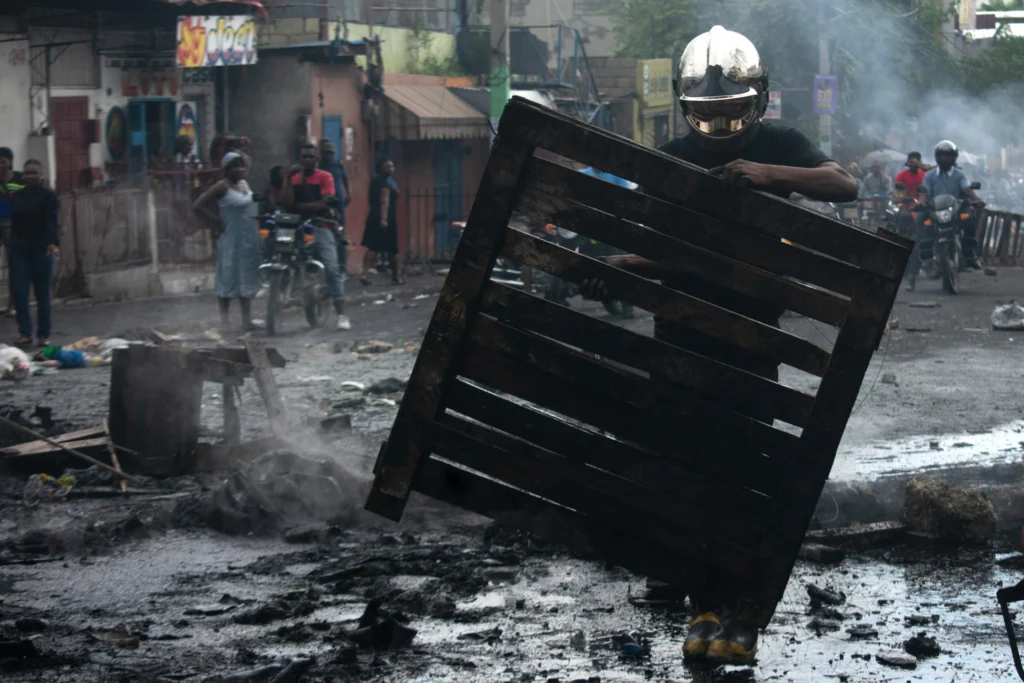
Haiti has postponed its presidential and legislative elections once again, pushing the first round from December 13 to July 18, 2027, as armed gangs and a decade-long institutional vacuum leave the country with no elected official since 2016.
The move had been expected since the start of the month, when the council extended the deadline for candidate registration to October 31 without setting a new voting date.
The first round of the presidential and legislative elections, together with the constitutional referendum, now falls on July 18, 2027.A second round -including presidential and legislative runoffs and local elections- is scheduled for October 4 of that same year. The campaign, originally due to begin on October 5, will open on April 15, 2027, roughly three months before polling day.
Under the updated schedule, candidate registration will remain open through February 9, 2027, while voter registration is extended to May 20. The council’s online platform shows that nearly 890,000 voters are registered on the electoral roll, far short of the 7.7 million people of voting age.
Despite repeated calendar revisions, candidates have continued to register for the elections. According to the Provisional Electoral Council ’s latest updates, over 7,300 candidates have registered for different elected positions. The provisional list includes 19 candidates for President, 369 for the Senate, 1,293 for the Chamber of Deputies and 5,623 for local elections.
Haïti a de nouvelles dates pour les élections présidentielle, législatives et municipales à venir : 18 juillet 2027 pour le premier tour – 4 octobre 2027 pour le deuxième tour, selon une communiqué du Conseil électoral provisoire. pic.twitter.com/A4raK78ifp
Text reads: “Haiti has new dates for the upcoming presidential, legislative and municipal elections: July 18, 2027 for the first round – October 4, 2027 for the second round, according to a communiqué of the Provisional Electoral Council.”
The Provisional Electoral Council (CEP) framed the decision as an effort to keep the process moving. “The updated calendar aims to facilitate the continuation of electoral operations under conditions that allow the stakeholders concerned to fulfill their obligations in accordance with the provisions of the legal framework,” the council explained in a statement accompanying the new plan.
The body also pledged to move forward “with dialogue, professionalism and rigor,” targeting elections that are inclusive, credible and transparent. It promised to respect “the right of each citizen to participate in the democratic life of the country.”
That language contrasts sharply with conditions on the ground. Haiti has not held an election since 2016, when Jovenel Moïse won the presidency. He took office in February 2017 and was assassinated on July 7, 2021, at his residence in Port-au-Prince.
Since that killing, no elected official has occupied any post in the country’s state structure. Successive transitional governments have cycled through without managing to organize a vote. Prime Minister Alix Didier Fils-Aimé, the current leader, has governed on an interim basis since November 10, 2024.
The elections were first set for August 30 of this year. The political and security crisis, driven by armed gang violence and the failure to restore institutional stability, forced a postponement to December 13. That date has now been abandoned for July 18, 2027.
Gangs Hold the Capital
Armed gangs control most of Port-au-Prince. The main force arrayed against them is the Gang Suppression Force (GSF), created in September 2025 under a UN Security Council mandate and renewed for six additional months when it reached its first anniversary.
The latest delay unfolds as hundreds of Salvadoran soldiers search the Haitian capital for four kidnapped colleagues. Those troops belonged to the GSF and vanished on October 18, when armed gangs ambushed them on the outskirts of Port-au-Prince.
The #GSF confirms that it has received, through a third-party humanitarian organization, remains suspected of being those of the four personnel from the Salvadoran contingent currently missing. At this stage, the GSF is not in a position to confirm that the remains are those of… pic.twitter.com/JvfLg1DfCG
— Gang Suppression Force – Haiti (@GSForceHaiti) October 25, 2026
PM Fils-Aimé presides over a country under siege. He holds no elected mandate himself, and the security conditions that have justified every postponement show no sign of easing.
For Haitians, the wait has now stretched past a decade without a chance to cast a ballot. Each interim administration has promised elections and delivered another delay. The violence cited as the obstacle has, in turn, deepened with every year of institutional drift.
Whether July 2027 becomes a genuine election day depends on factors no schedule can secure: safe streets, working electoral machinery and a minimum of political consensus. As things stand, the only firm date in Haiti is a next postponement.
Billions of dollars in crypto assets were reportedly stolen in separate hacks targeting Binance and Polymarket, triggering a market selloff and raising fresh concerns over digital asset security worldwide.
The cryptocurrency industry faced one of its most turbulent days this Thursday as reports of massive security breaches involving Binance and Polymarket triggered sharp market declines, widespread panic among investors, and renewed concerns over the security of digital asset platforms.
While Binance investigated what could become the largest cryptocurrency hack in history, Polymarket temporarily halted operations following a cyberattack linked to a third-party service provider.
The crisis began when reports emerged suggesting that Binance, the world’s largest cryptocurrency exchange by trading volume, had suffered a major security breach. Initial estimates indicated that nearly $600 million in crypto liquidations occurred across exchanges within a single hour as traders rushed to reduce risk amid growing uncertainty.
We are working non-stop to resolve this issue. Binance will cover all losses.
As a precaution, all deposits and withdrawals are temporarily suspended while our team conducts security checks, freezes funds, and works with law enforcement.
As the situation unfolded, blockchain analysts reported that wallets allegedly tied to the attackers had received digital assets worth more than $5.5 billion. Later disclosures suggested that the amount associated with the incident could exceed $5.7 billion across multiple cryptocurrencies, including Bitcoin, Ether, USDT, and USDC.
The market reaction was immediate. Bitcoin fell below the $80,000 threshold, while Binance Coin (BNB), the exchange’s native token, dropped sharply. Other major cryptocurrencies also recorded significant losses as investors sought safety amid fears of a systemic security event affecting one of the sector’s most important institutions.
Changpeng Zhao, widely known as CZ and the founder of Binance, stated that the available information appeared to indicate that the platform had suffered a hack. Although no longer involved in the day-to-day management of the company, Zhao expressed hope that all customer funds would ultimately be protected.
Binance, for its part, sought to reassure users, stating that customer assets remained secure and urging the community to remain vigilant against scams and phishing attempts that often proliferate during high-profile security incidents. The company also temporarily suspended several Binance Alpha services, including CEX Buy Token, Alpha Instant, and predictive trading-related functions linked to spot wallet funds.
As investigators worked to determine the full scope of the breach, Binance announced that approximately $2.54 billion worth of assets had already been frozen through emergency security measures. The exchange emphasized that only verified information would be released as the investigation continued.
We are aware of differing figures circulating publicly regarding the amount frozen, including references to $1.8 billion.
For clarity, the current verified total frozen is $2.54 billion. This figure may continue to increase as our teams work closely with law enforcement,… pic.twitter.com/Kx68qptfXk
The turmoil was compounded by a separate cyberattack targeting Polymarket, one of the world’s most prominent prediction market platforms. The company temporarily suspended trading operations for nearly an hour after identifying a security incident involving an external service provider.
According to reports, attackers may have exploited a vulnerability connected to DebugBear, a third-party performance and analytics tool used by the platform. The breach allegedly resulted in the theft of roughly $2.65 billion to $2.7 billion worth of cryptocurrencies from user wallets, making it one of the largest incidents ever reported in the prediction market sector.
Following the attack, Polymarket notified British authorities, as preliminary information suggested the operation may have originated from the United Kingdom. At the same time, users reported missing funds and emptied wallets across community channels, raising concerns about the broader implications of third-party software vulnerabilities within the crypto ecosystem.
Despite the disruption, Polymarket moved quickly to restore operations and pledged to compensate affected users. In public statements, the company promised to reimburse all verified losses, an effort aimed at restoring confidence and preventing a prolonged loss of trust among traders.
POLYMARKET HALTS TRADING AFTER HACKERS DRAIN USER FUNDS WITHOUT PASSWORDS OR SEED PHRASES
Attackers allegedly exploited users’ active sessions to sell their positions and withdraw funds directly through Polymarket’s own system.
The dual incidents have reignited a longstanding debate over cybersecurity standards in the cryptocurrency industry. For years, exchanges and digital asset platforms have promoted increasingly sophisticated security systems, yet the scale of the reported losses at Binance and Polymarket suggests that even major players remain vulnerable to large-scale attacks.
If confirmed at the estimated levels reported by analysts and security firms, the Binance breach would surpass all previous cryptocurrency thefts on record, marking a pivotal moment for the digital asset industry. Combined with the Polymarket attack, the events of October 29 erased billions of dollars in market value, exposed potential weaknesses in platform security infrastructure, and highlighted the systemic risks that continue to accompany the rapid growth of the global cryptocurrency ecosystem.
The cyberattackhas renewed warnings about cybersecurity protections, investor confidence and risks associated with the use of digital financial platforms.
As investigations continue, regulators, security experts, and investors alike will be watching closely to determine not only how the attacks occurred, but also what they reveal about the resilience of the crypto industry in an era of increasingly sophisticated cyber threats.
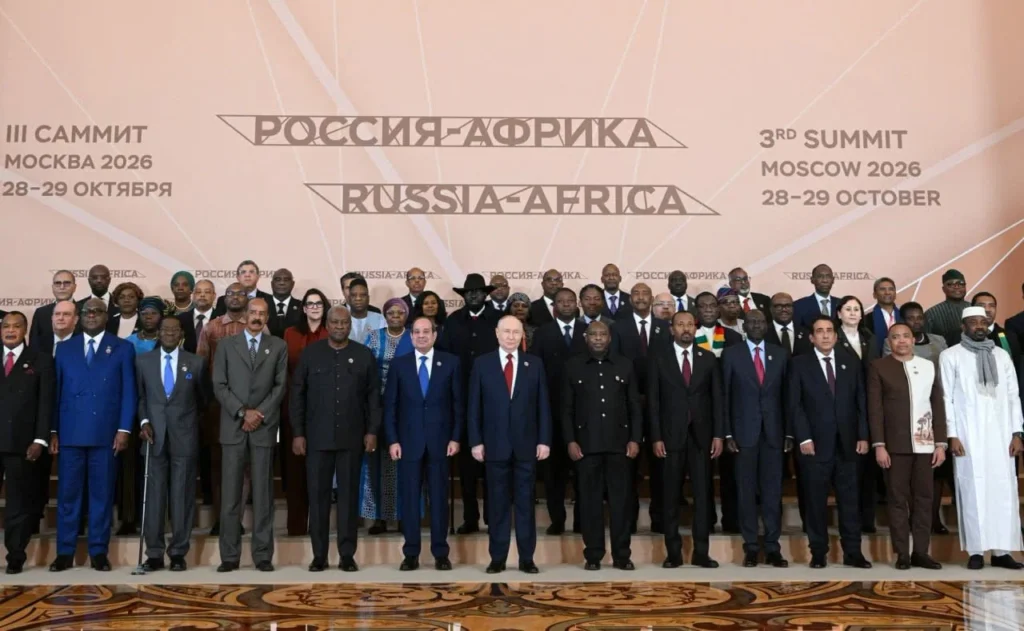
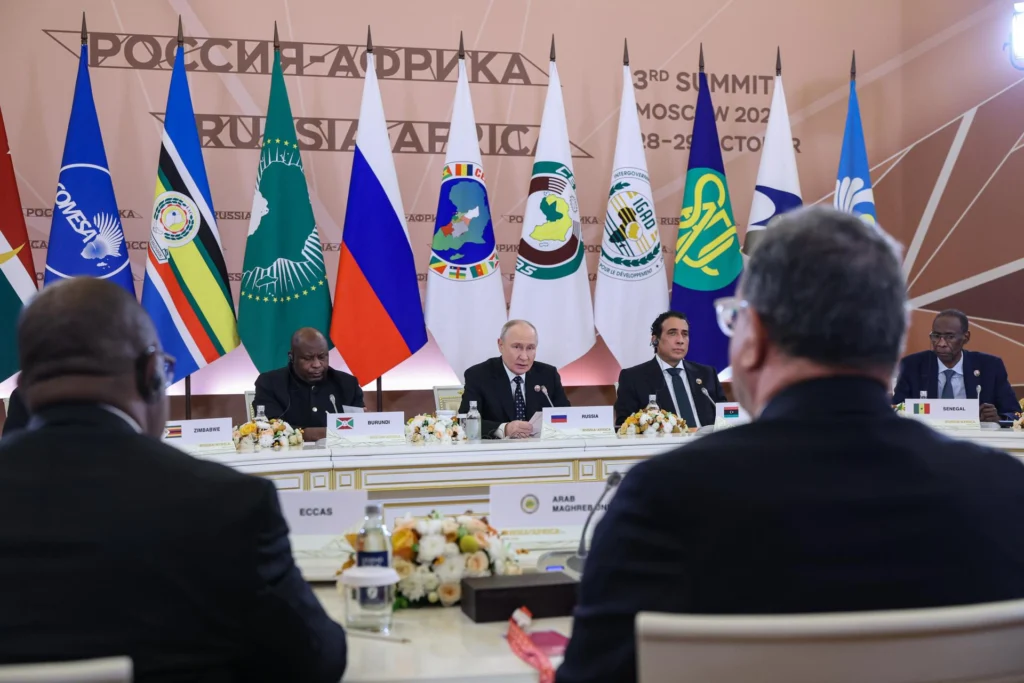
The third Russia-Africa Summit concluded in October 29 in Moscow with a final declaration deepening strategic cooperation and a 2027-2029 action plan, as Vladimir Putin framed the partnership as a pillar of a multipolar world free from neocolonial practices.
The 3rd Russia-Africa Summit concluded on October 29 at the Kremlin, where the plenary session approved the final declaration, a specific agreement on artificial intelligence, and the action plan that will govern the 2027-2029 period, presenting the A7 platform as a sovereign alternative to Western banking.
These documents set out the agreed roadmap for expanding cooperation between Moscow and African states while advancing what both sides describe as a fairer international system. A world order free from hegemonies ultimately summarizes the goal declared by the parties.
The final declaration consolidates what the Kremlin describes as steady progress toward a just international system, while the separate statement on artificial intelligence opens a new technological front in the partnership.
Alongside the summit, the Economic and Humanitarian Forum also took place, serving as a platform to deepen bilateral exchange. According to participants, the forum sought a joint response to financial pressures and coercive measures imposed by Western countries.
Addressing the plenary session, Vladimir Putin stated that bilateral relations rest on a shared history of friendship, which he described as the foundation for a global architecture with multiple centers of power and no double standards. In this sense, the Russian President reaffirmed his country’s commitment to international law, the Charter of the United Nations (UN), and the sovereignty of African nations, which he argued is essential for strengthening their economies and social sectors.
The model currently promoted by Moscow combines technology transfer with sovereign investment. Through this approach, the parties reaffirm their rejection of resource exploitation and their commitment to stronger cooperation across the Global South.
Putin insisted that the Russian business model breaks sharply with the extractivism practiced throughout history by the imperial powers of the collective West. “Their approach is the exact opposite. Far from extracting profits in the manner of the colonial practices once employed by former imperial powers, they reinvest their earnings in the development of their national economies,” the Russian leader said.
This combination of technology transfer and sovereign investment, he argued, underpins the rejection of resource plunder and moves forward the integration of the Global South on more equal terms.
🇷🇺🌍 Putin Pushes for $50B+ Russia–Africa Trade and Alternatives to Western Finance
At the Russia–Africa summit in Moscow, Putin called for doubling bilateral trade, expanding payments in national currencies and sharing Russian technology in energy, AI, agriculture and… pic.twitter.com/JJ8ZaU53v3
Russian President Putin underscored the operational efficiency of the A7 platform, explaining that conversions between currencies, digital ones included, are processed instantly, slashing the costs, delays and financial intermediation that have long made Global South trade more expensive.
“Digital currencies are developing all over the world, both in the United States and here in Russia, but why can’t the African continent connect to this high-tech system?” he asked the international delegates. His answer was unequivocal. “This system is sovereign as well. It is not tied to anyone or anything, and nobody is going to block it,” he stressed.
⚡️Russia showcases payment systems operating beyond Western control
Finance Minister #Siluanov highlighted Russian company A7, which is preparing to offer cross-border payment services in #Africa, with transactions processed "in one click" for a fee of just 0.3% pic.twitter.com/xFlbWGK15b
— Russian Embassy in South Africa 🇷🇺 (@EmbassyofRussia) October 29, 2026
Created in the wake of the Western financial measures introduced in 2022, the A7 platform now processes around 2,000 transactions per day on average. It is being presented to African countries as a mechanism for selling raw materials, purchasing industrial inputs, financing infrastructure projects, and importing food using their own currencies, without relying on Western banking systems or their associated conditions and transaction costs.
The action plan running through 2029 supplies the framework for converting the summit’s pledges into concrete mechanisms over the next three years, consolidating what both parties describe as movement toward a just international system.
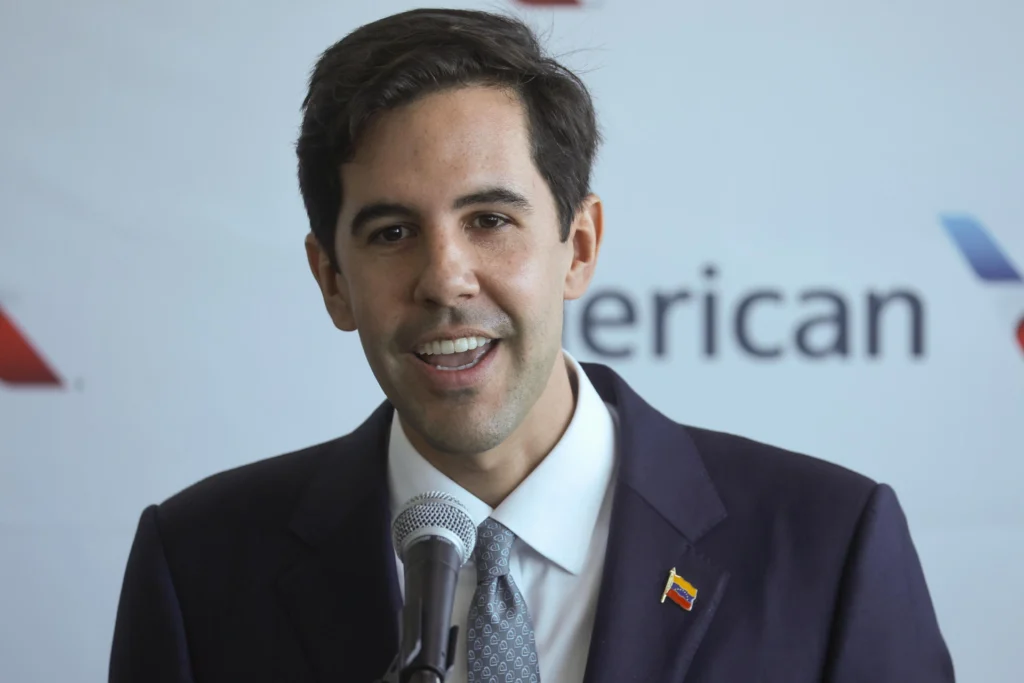
Venezuela’s Acting President Delcy Rodriguez appointed Deputy Minister Oliver Blanco as the country’s new Foreign Minister on Thursday, while outgoing top diplomat Félix Plasencia will lead the mission to recover Venezuelan gold held in the United Kingdom.
Acting President Delcy Rodriguez announced the moves in Caracas during an event focused on the National Electric System, where she also outlined plans for the country’s energy infrastructure.
The reshuffle places a 35-year-old diplomat at the helm of the Foreign Ministry and redirects a veteran official toward a long-running dispute over state assets frozen abroad.
“I have decided to appoint Oliver Blanco as Foreign Minister of the Bolivarian Republic of Venezuela. I hope this strengthened team keeps advancing in the changes and the geopolitical recovery of Venezuela in areas of cooperation and friendship with all countries,” Rodriguez said.
He designado a Oliver Blanco, joven profesional de las relaciones internacionales, como nuevo ministro del Poder Popular de Relaciones y Comercio Exterior. Confío en su preparación, compromiso y capacidad para asumir esta importante responsabilidad al servicio de Venezuela.… pic.twitter.com/A0gaqGOWnv
Text reads: “I have appointed Oliver Blanco, a young professional in international relations, as the new Minister of People’s Power for Foreign Relations and Trade. I trust in his preparation, commitment and ability to take on this important responsibility in the service of Venezuela.I thank Félix Plasencia for his dedication and work at the head of the Chancellery, and who will now assume new international strategic tasks.”
The new Foreign Minister Blanco, holds a degree in International Studies from the Central University of Venezuela and a master’s degree in Political and Government Studies from the Metropolitan University. His previous post covered Europe and North America, a portfolio that included some of the governments most active in the sanctions and asset disputes that have defined Venezuela’s recent foreign relations.
Gold Recovery Mission
Felix Plasencia, who steps down as Foreign Minister, will now serve as director of International Affairs for the Presidency. His immediate priority is clear. “His first task is to settle in the United Kingdom until we recover the gold that belongs to Venezuelans,” the Acting President Rodriguez stated.
The assignment follows a request Rodriguez made on Wednesday. She asked the Foreign Ministry and the Attorney General’s Office to begin formal procedures to recover Venezuelan gold retained at the Bank of England. The precious metal has been at the center of a legal battle involving rival claims over Venezuela’s legitimate government, with London courts weighing which authority controls the reserves.
Recibo con mucha humildad y compromiso la responsabilidad que me ha encomendado la presidenta encargada, @delcyrodriguezv.
Defenderé nuestra soberanía y el interés nacional con firmeza, trabajando siempre por alcanzar beneficios concretos para nuestra gente.
Text reads: “I accept with great humility and commitment the responsibility entrusted to me by the Acting President @delcyrodriguezv. I will defend our sovereignty and national interest firmly, always working to achieve concrete benefits for our people. I am proud to accompany the Acting President in this process of democratic transformation, to which we all have something to contribute to bring it to a successful conclusion.”
Cabinet Reshuffle Expand
The changes extend beyond the two senior positions. Marynna Saatdjian will take over as Vice-minister for Europe and North America, filling the role Blanco leaves behind. Saúl Ameliach, until now a Vice-minister at the Ministry of Economy and Finance, moves to head the Vice-ministry of International Trade.
Acting President Rodriguez framed the appointments as part of a broader effort to strengthen Venezuela’s diplomatic corps. She emphasized that the government will continue pursuing cooperation and friendship with all countries while defending national sovereignty.
The diplomatic shift carries particular weight given the gold dispute. Venezuela has pursued the release of its reserves held in London for years, arguing the assets belong to the Venezuelan people and are needed for social programs and economic recovery. By sending Plasencia directly to the United Kingdom, the government signals it intends to press the matter with renewed intensity.
With Blanco at the Foreign Ministry, Plasencia handling international affairs from the Presidency and new vice ministers in place, the administration has assembled a team positioned around two core objectives: restoring full diplomatic engagement and reclaiming state assets held overseas.
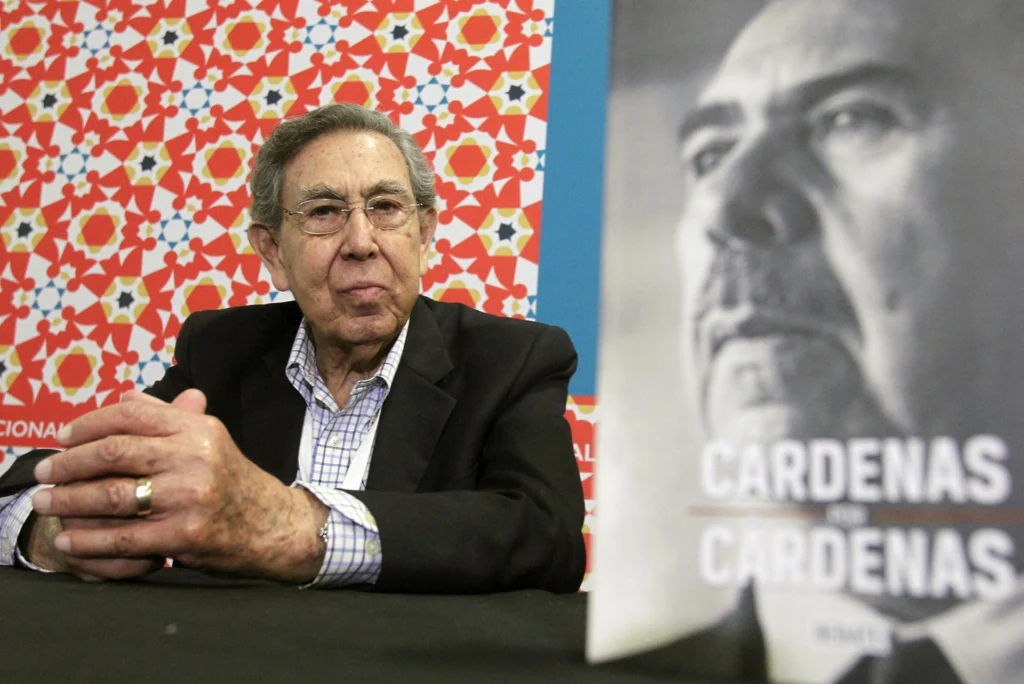
Engineer Cuauhtemoc Cardenas Solorzano died on October 28 in Mexico City at the age of 92. A victim of an oncological illness, he was the first elected head of government of the capital.
Cuauhtemoc Cárdenas inherited that cause and devoted more than six decades to it, along with the defense of the rights of the working classes and the structural transformation of Mexico’s political system.
He became established as a reference point for the country’s progressive, patriotic and transformative struggles.
The engineer was the son of General Lazaro Cardenas del Río, who carried out the 1938 nationalization of Mexico’s oil industry, a decision that placed crude oil under state control and became a milestone of national sovereignty.
His remains are being mourned on October 29 at the French Pantheon in the capital, the mausoleum where his life partner, Celeste Batel, also rests. He is survived by three children: Lázaro, Cuauhtémoc and Camila Cárdenas Batel.
🇬🇧 The Socialist International mourns the passing of Cuauhtémoc Cárdenas, our Honorary President, a tireless champion of democracy and social justice in Mexico and Latin America. Our heartfelt condolences to his family, his comrades and the people of Mexico.
Cardenas began his political activity in 1954 through the National Liberation Movement (MLN, in Spanish) and served as governor of Michoacán from 1980 to 1986. In 1987 he led the deepest break in contemporary Mexican politics. Together with Ifigenia Martínez, Porfirio Muñoz Ledo and César Buenrostro, he founded the Democratic Current within the Institutional Revolutionary Party (PRI, in Spanish) to fight the imposition of the presidential candidate and the shift toward the neoliberal model.
He left the PRI that year and was nominated by the Authentic Party of the Mexican Revolution, later building the National Democratic Front with a range of social forces. The July 6, 1988 presidential election was marked by the scandalous fraud of the so-called “system crash,” which imposed Carlos Salinas de Gortari. That day marked a turning point in the struggle for clean elections. Cardenas led the peaceful protest, together with other candidates, to avoid violence and bloodshed in the country.
After the fraud was carried out, Cuauhtemoc Cardenas drove the founding in 1989 of the Party of the Democratic Revolution (PRD), a platform oriented toward rejecting privatizations and budget austerity, and defending secularism and state control of strategic industries.
After his presidential bids in 1988 and 1994, on July 6, 1997 he became the first elected head of government of what was then the Federal District. His victory dismantled the direct control of the executive branch over the capital and established an administration with a social emphasis, transparency and priority attention to vulnerable sectors.
At 90, at the tribute paid to him by National Autonomous University of Mexico (UNAM), he firmly recalled that winning democracy in Mexico cost the lives of between 600 and 800 activists who fell in various days of struggle. Their killings remained unpunished under the governments of the regime.
🕊️ Un encuentro que quedó para la historia. El 3 de julio de 2018, dos días después de su triunfo electoral, @lopezobrador_ se reunió con Cuauhtémoc Cárdenas, a quien reconoció como precursor del movimiento democrático que daría paso a la 4T.
Text reads: “A meeting that has gone down in history. On July 3, 2018, two days after his electoral victory, @lopezobrador met with Cuauhtemoc Cardenas, whom he recognized as the precursor of the democratic movement that would lead to the 4T (4th transformation).”
Final Years and Honors
In his last years, Cardenas defended strategic resources against transnational capital. On March 18, 2026, at the ceremony for the 88th anniversary of the oil expropriation in Pueblo Viejo, Veracruz, President Claudia Sheinbaum named him head of the Advisory Commission of the state oil company Pemex.
He received an honorary doctorate from the National Polytechnic Institute in January 2026, and in September 2026 the National Autonomous University of Mexico (UNAM) created the Cuauhtémoc Cárdenas Chair in recognition of his contribution to sovereignty and self-determination.
He ran for president a third time in 2000. The defense of strategic resources was his last great cause, which he upheld uncompromisingly in his final years against the appetites of transnational capital.
Mexican President Claudia Sheinbaum opened her morning press conference in the Treasury Hall of the National Palace with the homage, describing the former governor and presidential candidate as one of the central figures of contemporary Mexican politics. She presented his political life not as a single campaign, but as the foundation of a broader national transformation.
“His legacy is of honesty and democracy, but democracy that comes from below, not the democracy of the elites. Democracy as the people in power,” she asserted.
Members of her cabinet joined the tribute, underscoring the peaceful and sovereign character of Cárdenas’s historic campaign.
Interior Secretary Rosa Icela Rodríguez highlighted the leader’s composure in channeling popular outrage through democratic means after the electoral manipulation of 1988. “Leading a popular mobilization requires responding to people’s expectations, but also protecting their lives and preserving the possibilities of continuing the struggle,” she said, honoring militants persecuted by the regime of that era.
For his part, Pablo Gómez, head of the Presidential Commission for Electoral Reform, defined Cárdenas as “the leader of the political rupture with national surrenderism, anti-democracy and corruption.” He called him an indispensable precedent for the electoral gains of the present day.
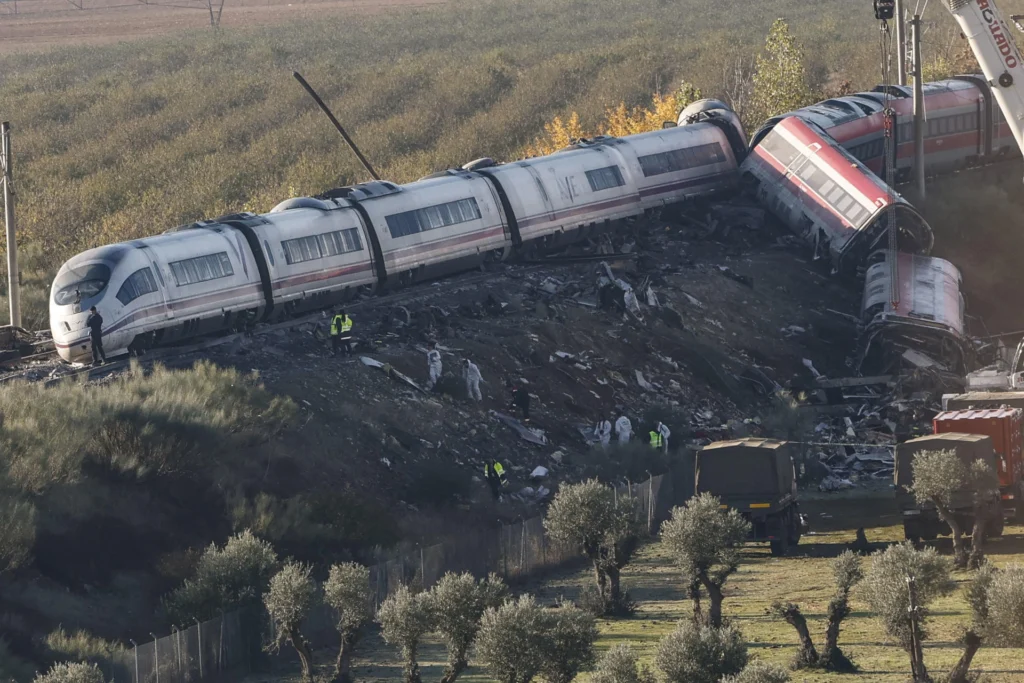
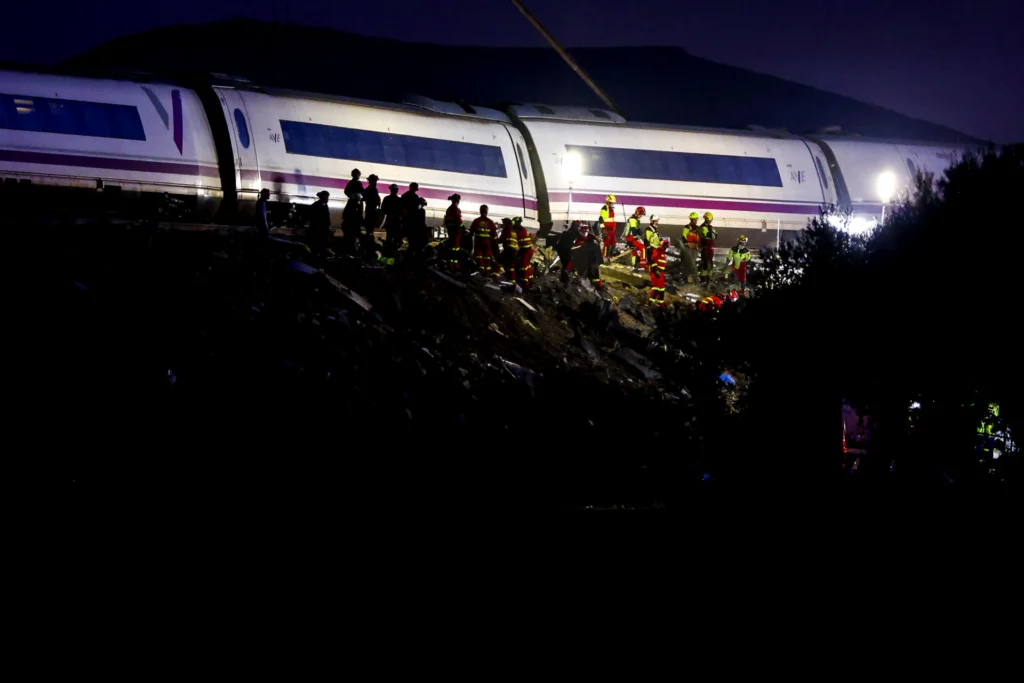
The high-speed train collision in Urda, in the Spain’s province of Toledo, has 69 deaths confirmed on October 29, with 107 injured still hospitalized after a train was cleared to move despite a safety system failure.
The Spanish Commission of Investigation of Railway Accidents (CIAF) rectified this afternoon the last figure of death people of the train accident of Wednesday in Urda, in the Spanish province of Toledo, south of Madrid, mantaining at 69 the number of fatalities. The correction came minutes after the same agency raised the figure to 74 on its website.
Sources from the Ministry of Transport assured that the official data are those provided by the regional government of Castilla-La Mancha and that they do not confirm “any data” of those deaths, despite the figure published earlier on the website of the Commission of Investigation of Railway Accidents (CIAF), which is hosted on the page of the Ministry.
According to the account provided by authorities, the LZB safety system on the Madrid-Seville high-speed line went down at 8:30 A.M. local time, forcing at least six trains to stop. Six minutes later, at 8:36 A.M. local time, the control center authorized the Renfe AVE train to resume its journey. It traveled 25 kilometers before hitting, at 8:53 A.M., an Iryo train that was stopped on the track. The investigation is ongoing and the sequence of events has not been confirmed in court.
Transport Minister Óscar Puente called the order issued from the Adif command center at Atocha station in Madrid “inexplicable.” He confirmed that the system was showing a red warning alerting to the presence of the stopped train.
The authorities reported that the person responsible for authorizing the advance is identified and under investigation, amid harsh questions about the state management of public transport after two serious accidents were recorded in the same year.
The judge in charge of the case barred access to anyone not involved in the work around the crash site, covering a two-kilometer perimeter along the high-speed line in both directions. The order bans the removal of materials and the dissemination of images in order to preserve evidence, traces and evidence for the clarification of criminal responsibilities.
The collision reignited harsh criticism of state management of public transport. Spain has now recorded two serious rail disasters in a single year.
The Spanish Union of Train Drivers and Rail Assistants (SEMAF) held a 24-hour national strike on Renfe services, including at Sants station in Barcelona, to demand better safety conditions on the rail network.
Drivers’ representatives said the lack of state investment in rail infrastructure directly compromises the integrity of workers and passengers. They demanded urgent hiring of more staff to avoid work overload and guarantee required rest, and a concrete protocol for extreme weather. They recalled recent weather events that caused derailments and infrastructure collapses, such as walls falling onto the tracks in Barcelona province.
The union urged the Government of Spain to direct budget funds toward renewing the network and strengthening safety across the public transport system.
The investigation remains open and the crash zone sealed. The union’s three demands, more staff, protected rest periods, and a weather protocol, now form part of a wider reckoning over how Spain runs its railways.
The results of the technical investigation and the judge’s inquiry will determine who bears responsibility. Authorities are expected to release updated figures as rescue and identification work continues.
The U.S. war against Iran has cost U.S. taxpayers $47.1 billion dollars, according to the latest Pentagon figures delivered to Congress, as the economic fallout threatens Republicans just days before the midterm elections.
The conflict, launched unilaterally by Washington and Israel in late February, keeps draining public resources with no end in sight. The number comes from U.S. Central Command (Centcom), and covers expenditures through October 16.
It is the most current estimate of a war whose bill has climbed by $3.5 billion since early September, when it stood near $43.6 billion.
The reports sent to Congress break the spending down line by line. The largest share, roughly $29 billion, went to replacing munitions consumed on the battlefield. Another $12 billion covered additional operational expenses, and $6.1 billion paid for military equipment lost or damaged.
The figures also show $7.6 billion spent on U.S. Air Force logistical support for troops deployed across the region, including air transport, communications and base maintenance. Yet even that official tally leaves something out: the cost of repairing U.S. military bases in West Asia damaged by Iranian missile and drone attacks does not appear in the Pentagon’s estimate.
The Congressional Budget Office has put the monthly burden at between $2 billion and $3 billion. That same agency warns that rebuilding depleted ammunition reserves could take around five years, a delay that would undercut Washington’s ability to respond to other crises.
The US war against Iran had cost $47.1 billion by October 16, with bombs, missiles and other munitions accounting for more than 60 percent of the total, The New York Times reported, citing figures the Pentagon presented to Congress last week.
The rising cost has turned into a central political issue with midterm elections now a week away. Voters will decide which party controls Congress during the final two years of Donald Trump’s presidency, and the war’s economic fallout is hitting close to home.
Instability and higher energy prices have become visible consequences of a campaign that began without congressional authorization. Those same pressures now threaten to punish Republicans at the polls, as the administration’s threats of new attacks add further uncertainty.
The October 16 cutoff means the published number is already stale. Every additional strike, every replacement missile and every surge of troops pushes the figure higher before the next report lands. The Pentagon’s own admission that it cannot yet account for damaged bases suggests the true cost will keep growing well after the ballots are counted.
What began as a unilateral military venture now carries a price tag measured in tens of billions, a depleted arsenal and a five-year rebuild timeline. That arithmetic, delivered to Congress just before voters head to the polls, has placed the war’s defenders on the defensive.
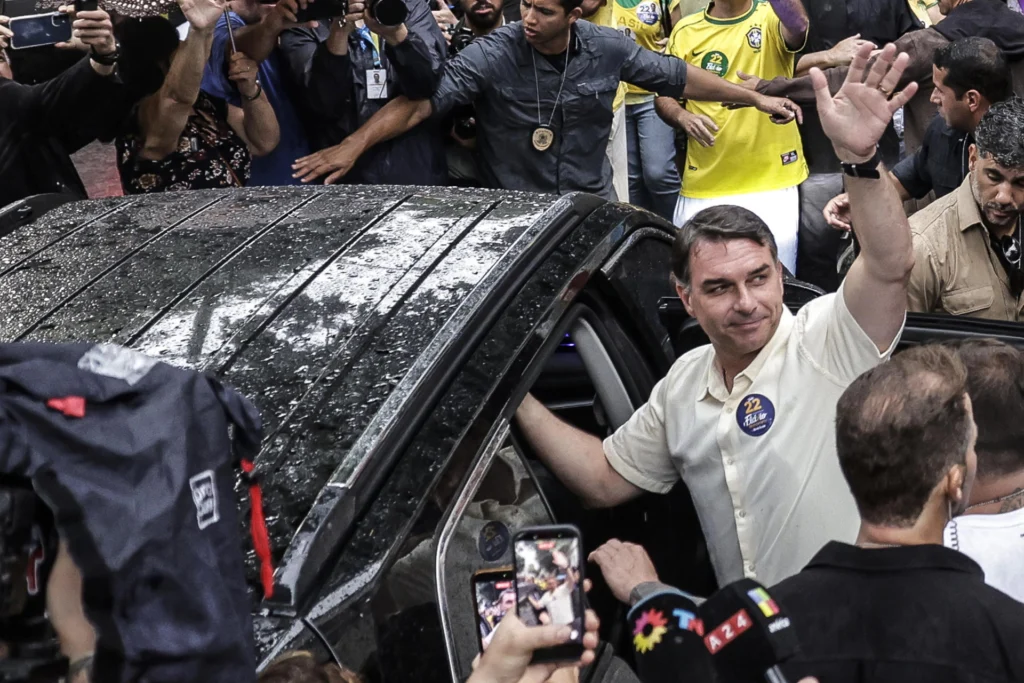
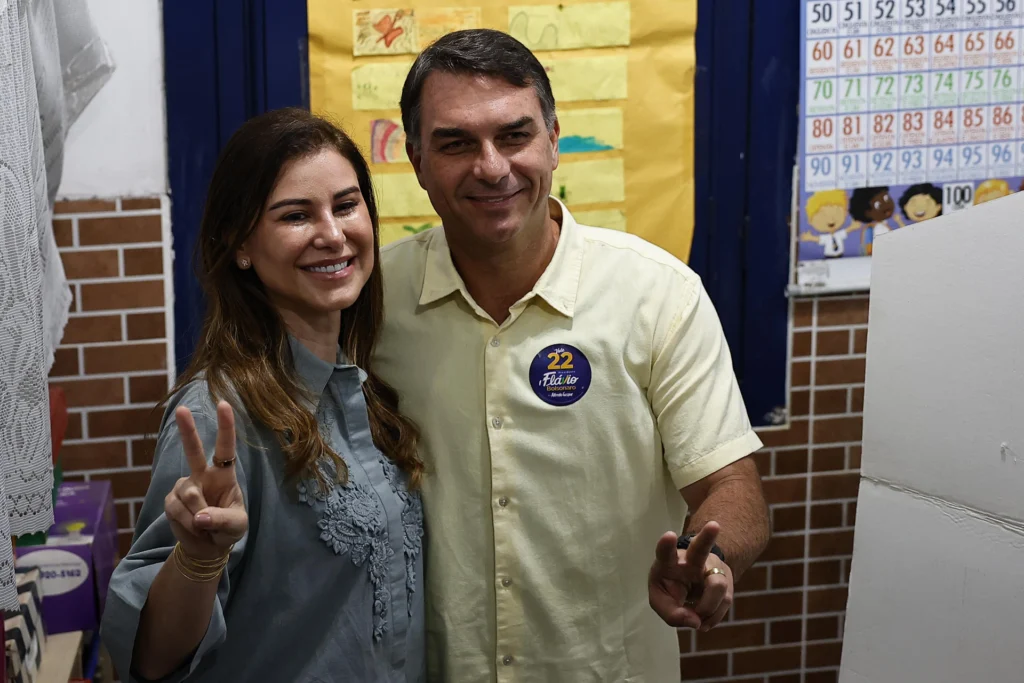
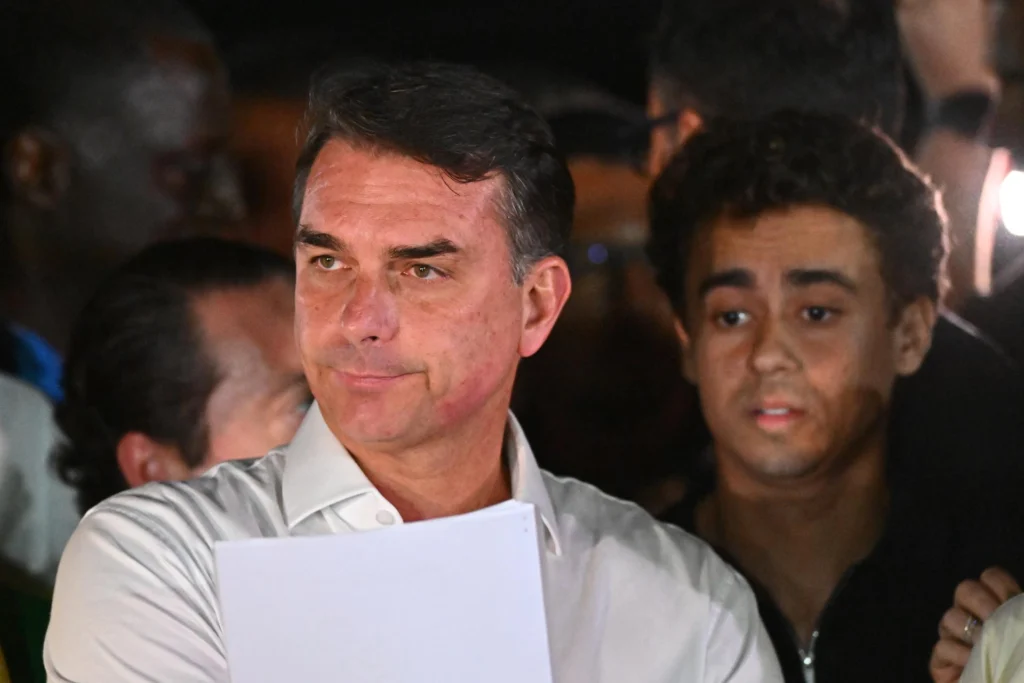
Argentine lawmaker Marcela Pagano filed a criminal complaint against officials of the Milei administration to investigate how Brazilian senator Flavio Bolsonaro crossed into Argentina and departed for United States despite a judicial ban on leaving Brazil.
The complaint was presented before the Federal Court in Puerto Iguazu, in Misiones province. It seeks to establish the circumstances of Bolsonaro’s entry into Argentina and his later departure toward United States.
The far-right senator, son of former President Jair Bolsonaro, lost the presidential run-off to Luiz Inacio Lula da Silva on Sunday. He faces criminal cases in Brazil for corruption and money laundering, and Supreme Federal Court justice Alexandre de Moraes had prohibited him from leaving the country.
Pagano framed the matter in stark terms. “The justice system has to establish who organized Bolsonaro’s passage through our territory toward U.S. and whether Argentine officials facilitated it. A government cannot become the escape route for someone who is barred from leaving his country by court order”, she said.
The reconstruction presented to the court traces the route in detail. The Brazilian Senator crossed the international border between Foz do Iguazu and Puerto Iguazu through the Tancredo Neves crossing at 10.50 P.M. local time on Tuesday.
Forty minutes after entering Argentine soil, Flávvio Bolsonaro and his family boarded a private Gulfstream G400 jet at Iguazu International Airport. The aircraft belongs to the firm Baires Fly and had been positioned there since Monday.
🇧🇷 "I address the Brazilian people and the international community as the true elected president of Brazil."
Senator Flávio Bolsonaro, who lost Sunday's presidential runoff to incumbent Lula da Silva by about 4.4 million votes, is claiming the presidency in a statement released… pic.twitter.com/oTTodsaOcU
The jet traced a path through the airspace of Paraguay, Bolivia, and Peru. It made a technical stop in Guayaquil, Ecuador, before landing Wednesday in Miami, avoiding Brazilian airspace at every stage.
Pagano detailed that Flávio Bolsonaro reached the air terminal under escort from an Airport Security Police patrol car. That force answers to the Security Ministry, which falls under the federal Executive.
The National Directorate of Migration initially denied on Tuesday that the conservative leader was present or had any flight plans. Yet the government of Javier Milei officially acknowledged his passage at 2.00 A.M. Wednesday, when the aircraft was already airborne.
The complaint demands clarification of another element, the presence in Misiones of Santiago Caputo, political strategist and chief advisor to the Argentine presidency. Caputo reportedly arrived in the province earlier in the week aboard the same private plane.
La Dirección Nacional de Migraciones informa que a las 22:50 hs del dia 27/10, ingresaron por el paso fronterizo de Puente internacional Tancredo Neves en la provincia de Misiones, los ciudadanos Flavio Nantes Bolsonaro, Fernanda Antunes Figueira Bolsonaro, Carolina Figueira…
Text reads: “The National Directorate of Migration reports that at 10:50 P.M. on October 27, entered through the border crossing of Tancredo Neves International Bridge in the province of Misiones, citizens Flávio Nantes Bolsonaro, Fernanda Antunes Figueira Bolsonaro, Carolina Figueira Bolsonaro and Luiza Figueira Bolsonaro, who did so with skilled travel documentation without any legal impediment to entry into the country, also the transits were registered by the enforcement authority without incidents. For its part, at 11:30 P.M., the incoming party boarded a private flight dispatched by the company Baires Fly S.A to the city of Guayaquil, Ecuador, as reported in the flight plan.”
The written filing asks the court to investigate alleged crimes of illegal trafficking of persons, facilitation of illegal stay, abuse of authority, violation of public official’s duties, and cover-up. It requests urgent evidence measures including camera footage from the border bridge, aeronautical records, and the Airport Security Police duty logs.
The political fallout reached the legislature quickly. Argentine Congressman and former Defense Minister Agustin Rossi formalized a request to summon the Chief of Cabinet, Diego Santilli, to answer before Parliament.
The sequence raises the question at the heart of the complaint. A senator barred from leaving his country crossed a border, boarded a private jet, and flew to Miami without touching Brazilian airspace, all with a police escort on Argentine soil.
The government first denied any knowledge. It then confirmed the passage hours later, after the plane was gone. That gap between denial and confirmation sits at the center of the criminal filing.
The denunciation now forces the federal justice system to determine whether officials in the Milei administration facilitated a fugitive’s exit. The demand in Congress puts the same question to the Cabinet’s Chief.
U.S. federal judge Alvin K. Hellerstein, who presided over the criminal case against Venezuelan President Nicolas Maduro and his wife Cilia Flores, died Wednesday at the age of 92, and his pending cases will pass to another judge.
Alvin K. Hellerstein died Wednesday at 92 of natural causes after nearly three decades presiding over high-profile matters. He had led the penal process against President Maduro and Cilia Flores since the two were kidnapped on January 3 during a U.S. military incursion into Venezuelan territory.
Ed Friedland, administrative director of the Federal Court for the Southern District of New York, confirmed the death.
Hellerstein held the role for nearly three decades. He was appointed in 1998 by then U.S President Bill Clinton to the Southern District of New York, considered one of the most significant federal tribunals in United States.
BDE: Longtime Manhattan federal Judge Alvin Hellerstein, an Orthodox Jew appointed by President Clinton in 1998, has died at 92, according to a court spokesperson. He was overseeing the prosecution of deposed Venezuelan leader Nicolás Maduro. pic.twitter.com/w0nHyrcwc2
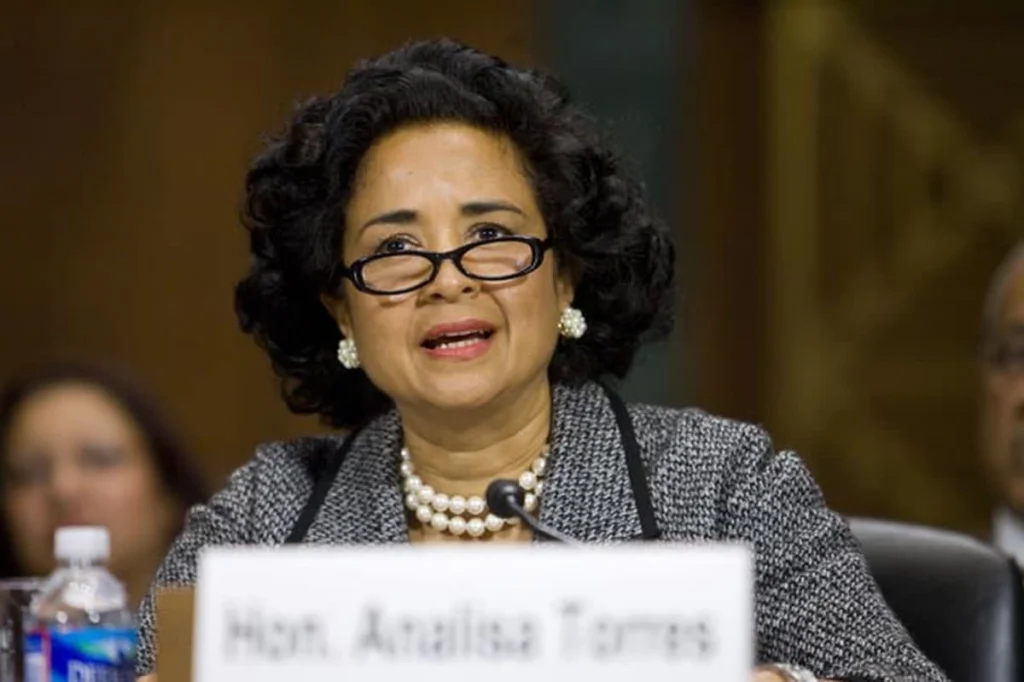
The federal case against Venezuelan President Nicolas Maduro has a new judge. Analisa Torres will preside over the Southern District of New York proceedings after the death of Alvin K. Hellerstein, court records confirmed Wednesday.
The tribunal posted a document covering the reassignment of matters “previously assigned to judges no longer serving due to retirement or death.” The notice names Torres as the magistrate now handling the file.
The court’s standard procedure produced the transition. A docket left by a deceased judge passes to a colleague, assigned without public choice. The reassignment document makes no special provision for the President Maduro file, treating it like every other pending matter.
Analisa Torres was born in New York in 1959. She reached the federal bench in 2013 by appointment of President Barack Obama, and she has since presided over a wide range of civil, criminal, and regulatory matters.
Her path runs deep in the law. Descended from a family of Puerto Rican judges, she graduated with honors from Harvard, earned her doctorate at Columbia Law School, and worked in private firms before entering the courts. Before her federal appointment she sat for almost a decade on the New York State Supreme Court. Earlier she served on the city’s civil and criminal benches.
The trial against the Venezuelan President and his wife remains set for June 14, 2027. The judge’s death did not alter that date, and the schedule already fixed by the court holds.
On October 15, President Maduro and Flores appeared at a judicial hearing in New York after prosecutors tightened the accusations against them. The two listened to the arguments and pleaded “not guilty” to the new charges of alleged conspiracy to commit torture brought by the U.S. Attorney’s office.
That same day Hellerstein accepted a request presented by both the prosecution and the defense to postpone the start of the trial by two weeks. The extra time allows both sides to present pretrial motions.
The next hearing was programmed for December 17. On that date the defense will argue its motions to dismiss the case. The outcome of those arguments could reshape the proceeding before it reaches a jury. President Maduro’s lawyers affirmed that sovereign immunity shields the President from prosecution in a foreign court.
Hellerstein’s career extended far beyond this single file. Over nearly three decades on the federal bench he supervised a wide variety of matters, including the litigation tied to the September 11 attacks.
That new judge will inherit the pretrial motions, the pending defense requests, and the responsibility of presiding over a trial that involves a sitting head of State and his spouse.
Venezuelan authorities have characterized the detention of President Nicolas Maduro and Cilia Flores as a kidnapping carried out during a military incursion into sovereign territory. The December 17 hearing stands as the next concrete step in a process scheduled to stretch into mid 2027.
Acting President Delcy Rodriguez demanded Wednesday that the Bank of England return Venezuela’s gold, calling the metal a Central Bank reserve that belongs to the Venezuelan people and declaring that no excuse remains.
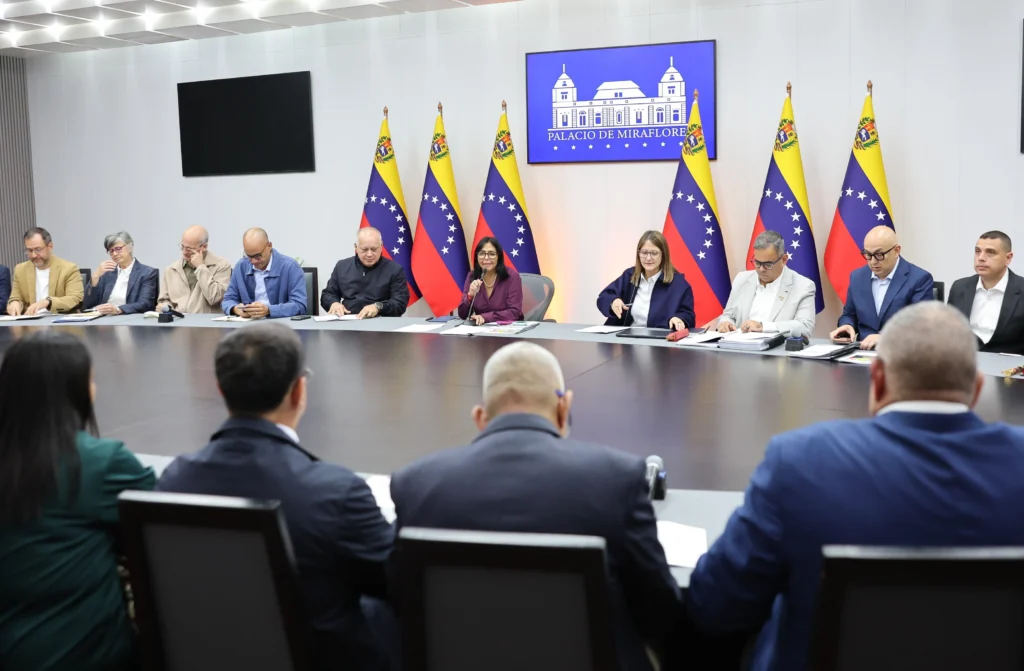
Venezuelan Acting President Delcy Rodriguez delivered the demand during a working meeting with the Council of Ministers and regional authorities held at Miraflores Palace. She insisted the gold constitutes a reserve of the Central Bank and belongs to the nation.
Rodriguez recalled that the National Assembly, including the 2015 legislature, had produced an agreement in which political sectors of Venezuela called for the gold’s return, framing the demand as a settled matter of national will.
The Acting President added that an irrational legal action that opposition figures had attempted was dropped by those same actors. That withdrawal, she argued, removed any remaining justification for the Bank of England to hold the metal.
“There is no excuse. That is the only thing I have to tell the Bank of England. They must return Venezuela’s gold, which belongs to Venezuelan men and women”, she stated.
The language was direct. Rodriguez offered no room for negotiation, framing the gold as a sovereign asset held outside the country against the will of Venezuelan institutions.
#28Oct | La presidenta encargada de Venezuela, Delcy Rodríguez, solicitó a la Cancillería de la República y a la Procuraduría General que inicien las gestiones correspondientes para recuperar el oro venezolano que se encuentra en el Banco de Inglaterra.
Text reads: “The Acting President of Venezuela, Delcy Rodriguez, requested the Ministry of Foreign Affairs and the Office of the Attorney General to initiate the appropriate steps to recover the Venezuelan gold that is at the Bank of England. “I will not stop demanding the Bank of England to return our gold. Enough excuses. There was an agreement”, said Rodriguez, referring to the agreement to recover international reserve assets reached last August during the first cycle of dialogue between the delegations of the elected National Assembly in 2015 and the government (…)”
Mining Push Grows
The same working session included a live link with Mining Minister Hector Silva from the Choco plant in Bolivar state. Silva confirmed the arrival of 41 surface machines, part of a total of 544 pieces of equipment purchased by the state.
Those machines are meant to boost gold and coal production. The government tied the mining drive to strengthening the country’s reserves and generating income for social projects, health care, and worker welfare.
The equipment delivery anchors the government’s broader argument. Venezuela insists it does not need foreign permission to manage its resources, whether gold underground or gold stored abroad.
The Bolivarian government also pledged a productive revival across the country to energize the engines of the economy and support organized local development. The gold demand sits at the center of that agenda. Every program announced, from ham production to health brigades, depends on revenue the government says its reserves should generate.
Venezuela has long argued that the Bank of England’s refusal to release the gold violates its sovereignty. Acting President Rodriguez renewed that claim in the sharpest terms, insisting the metal funds the welfare of a people, not the accounts of a foreign institution.
No response from the Bank of England appears in the official record. The demand now stands public, delivered from the presidential palace and addressed directly to London.
The Spain’s government has declared three days of national mourning, from October 29 to 31, for the 64 people killed in the collision of two passenger trains on October 28 in the province of Toledo.
The Spanish government declared three days of national mourning, to be observed on October 29, 30 and 31, 2026. The order requires flags to fly at half-staff on public buildings and military installations across the country during the three days.
Pedro Sánchez announced the measure in memory of those who died in the rail collision in the province of Toledo, in the autonomous community of Castilla-La Mancha.
The impact occurred at 8:54 A.M. local time near the municipality of Urda. A high-speed AVE train, operated by state-owned Renfe, hit the rear of a train operated by the private company Iryo, which was stopped on the tracks. The collision derailed the last two cars of the Iryo train and sent several units down a ravine.
Following a deadly train crash near Toledo, Spanish PM Pedro Sánchez declares 3 days of national mourning and demands strict safety measures: "It is unacceptable for Spain to suffer two high-speed rail accidents in the same year." pic.twitter.com/IeiKNHndtf
The crash involved two operators that share Spain’s high-speed network. Renfe, which is state-owned, runs the AVE, while Iryo, which is privately owned, operates the train that was struck from behind. Both companies carry passengers on high-speed corridors.
65 people died in the crash, according to the President of Castilla-La Mancha, Emiliano García-Page. There were 544 passengers aboard the two trains at the time of the impact: 397 on the AVE and 147 on the Iryo, including a baby.
The rescue operation involved 100 members of the Military Emergencies Unit. The Civil Guard’s Major Disasters Team also took part. The search for bodies continues, meanwhile the injured remain in hospitals.
Official activity was suspended in the central government and in regional administrations while emergency teams continue their work at the crash site.
Sánchez traveled to Toledo to assess the response at the scene. King Felipe VI set aside his official engagements after speaking with the prime minister about what had happened. Both cleared their public schedules.
For her part, Health Minister Mónica García suspended her scheduled activities and merged state medical resources with the regional administrations of Madrid and Castilla-La Mancha to assist victims of the disaster in Urda. The order pulled national capacity and local response into a single coordinated operation.
Signaling and safety failures on the high-speed network are the focus of the technical investigation. Transport Minister Óscar Puente went to Atocha station in Madrid to review those systems. He also examined the factors surrounding the collision between the two trains.
‼️Accidente tren
🚨 La Guardia Civil ha desplegado en la zona personal de Seguridad Ciudadana de la provincia de Toledo, OMAC (Oficinas Móviles de Atención a la Ciudadanía) así como agentes del SEPRONA y de la Jefatura de Tráfico.
Text reads: “The Civil Guard has deployed personnel from the Citizen Security area of the province of Toledo, OMAC (Mobile Offices for Citizenship) as well as agents from SEPRONA and the Traffic Headquarters.”
The January Precedent
The Urda disaster follows a wreck that Spanish investigators still struggle to explain. In January 2026, on the Madrid-Andalucía route near Adamuz in Córdoba province, an Iryo train departing the capital derailed and struck another unit serving the Huelva-Madrid corridor.
That collision produced no immediate answers and the track had been renovated shortly before. The first train cleared its technical inspection only four days earlier, moving between 200 and 210 kilometers per hour. Minister Óscar Puente described the crash as a highly unusual event.
The consequences spread fast. Rail service toward the south of the country stopped temporarily while experts examined the wreckage. Atocha station, Madrid’s main rail terminal, absorbed massive cancellations as passengers rebooked or abandoned their journeys.
Months later, the cause remains open. Renovated track, a freshly inspected train, and routine high speed, none of it explained the collision. That unresolved record shaped the public mood when the news from Urda arrived.
Two railway disasters within a single year have now tested Spain’s emergency systems twice. January demanded a forensic response, an effort to understand an accident that defied easy explanation. Urda has demanded a medical one.
Spanish authorities have not yet released a complete account of the Urda disaster. Investigators will face the same task that followed Adamuz, determining what failed and why. The January wreck left a toll of 39 dead and more than 100 wounded, and the questions it raised remain unresolved as the country confronts a second emergency on the same network.
The national mourning decreed by the government will last until October 31. Technical teams will determine the causes of the crash and the condition of the signaling systems on that stretch of the network, as well the recovery of the hospitalized injured completes the authorities’ immediate agenda.
The Brazil’s government warned that false social media posts claimed the 6×1 workweek law had been changed and that social programs such as Bolsa Familia faced cuts, and it urged citizens to consult official sources.
The Secretariat of Social Communication (Secom), denied that any change had been made to the constitutional amendment that ends the 6×1 workweek.
The posts, which spread after the presidential run-off, offered incorrect information about labor legislation and social benefits.
Constitutional Amendment 141 guarantees two paid rest days each week without any reduction in salary. The way those free days are organized can be settled through collective bargaining, as long as the constitutional conditions are respected. The Secretariat of Social Communication stressed that the norm remains in force and untouched.
The false claims included an alleged exclusion of certain professional categories from the new rules. No such proposal exists. The Secretariat of Social Communication explained that conversations with different sectors concern only how to implement rules that have already been approved.
The reduction of the workweek will unfold gradually. The initial limit will be 42 hours a week, and later 40 hours, with no salary reduction at any stage.
The government offered a blunt explanation of why the Executive holds no power over the text. Since the measure is a constitutional amendment approved by the National Congress, the Executive cannot modify or veto it.
O Governo do Brasil alerta para informações falsas que circulam nas redes sociais neste período pós-eleitoral sobre um suposto recuo no fim da escala 6×1 e cortes no Bolsa Família e no Gás do Povo. pic.twitter.com/SIR0but5Vl
Text reads: “The Government of Brazil warns about false information circulating on social media in this post-election period about a supposed retreat at the end of the 6×1 scale and cuts to Bolsa Família and Gás do Povo.“
Welfare Programs Intact
Separate rumors suggested that the Bolsa Família program faced suspension or reduced benefits. The Secretariat of Social Communication confirmed that the program keeps operating normally, with payments continuing and no cuts applied.
In October the minimum amount per family rose by 15.04%, from R$600 (about 112 U.S. dollars) to R$691 (around 129 U.S. dollars). That adjustment contradicted the online claims, since a program facing cuts does not raise its floor. Families can verify their information through the Bolsa Familia app, the Caixa Tem platform, or by calling 111, the direct line of the Caixa Economica Federal bank.
The government also rejected rumors about Gas do Povo, the program that provides free refills of 13-kilogram gas cylinders to families that meet the requirements. The Secretariat of Social Communication (Secom) affirmed that the initiative already has budget assigned for 2026 and that resources appear in the 2027 budget proposal sent to Congress.
The pattern was consistent across all the false messages. Each one targeted a program or a right that benefits working families, and each one crumbled against the official record.
The Secretariat of Social Communication (Secom) advised the public to distrust messages that do not identify reliable sources. Citizens should verify whether information has been confirmed by competent authorities before sharing it. The Social Direct Line 121 and official digital channels remain open for questions about benefits.
The warning reflects a government trying to contain a wave of misinformation at a politically charged moment. False posts about labor rights and welfare can spread faster than corrections, especially when they play on fear of losing income or benefits.
The facts, however, tell a different story. The workweek amendment stands. The Bolsa Familia Program pays more than before. Gas do Povo holds its funding for this year and next. None of the alleged changes appears in any official document.
The government’s message closed with a practical instruction. Before passing along a message about labor law or social programs, check the source. The tools to do so, apps and official channels, remain available.
Serguéi Lavrov described Africa as a civilization in its own right and one of the pillars of an order that, in his view, is replacing five centuries of Western hegemony. Russia opens the third summit on Wednesday with 48 delegations and an offer to support the continent’s industrial and technological sovereignty, with the El Dabaa nuclear plant already under construction.
Serguéi Lavrov spent nearly an hour and a half on Tuesday with the heads of Africa’s leading media outlets, gathered in Moscow on the eve of the third Russia-Africa summit, and laid out how Russia sees the continent.
“We regard the African continent as a distinct civilization, one of the most important pillars of the multipolar world that is now, as an objective course of history, actively taking shape on the international stage, replacing the hegemony that Western countries have exercised for more than 500 years,” the Foreign Minister said.
According to Lavrov, Russia wants to help strengthen the sovereignty of African states, the development of their industries and greater self-sufficiency in the economy, finance and technology. The summit agenda, on October 28 and 29, groups those goals into four areas, namely political and economic cooperation, security, science and technology, and cultural and humanitarian ties.
Nearly all the delegations from the 48 confirmed countries are already in Moscow, and 22 of them are led by heads of state. On the table are 33 documents, among them an agreement on cooperation in artificial intelligence, and the 2027-2029 joint action plan, which Vladimir Putin and Burundi’s Évariste Ndayishimiye, the current chair of the African Union, will adopt at Thursday’s plenary session. Putin also has 24 bilateral meetings scheduled, with the leaders of Egypt, Ethiopia, Ghana, Mali and Libya, as well as Iran and Qatar, in a week when the Russian capital is also hosting the Gas Exporting Countries Forum.
Seven years separate this gathering from the first one, held in Sochi in 2019, which closed with 92 agreements worth some $12.5 billion. The second brought together delegations from 48 countries in St. Petersburg in July 2023, and since then the Russian Foreign Ministry has created the Department of Partnership with Africa to follow up on what was signed, while intergovernmental commissions grew from four in 2023 to nine in 2025. In August, Ministry Spokeswoman Maria Zakharova announced that Moscow would bring to this summit a package of contracts on peaceful nuclear energy, independent payment systems, food security, digitalization and artificial intelligence.
Paul Kagame confirmed his attendance after several Western governments suspended part of their financial aid to Rwanda in 2025, and in Moscow he will sign the creation of a cooperation commission with a country he has already invited to build fertilizer plants. Ghana, whose parliament is processing a military-technical cooperation agreement with Russia, has an open tender for its first nuclear power plant, a 1,000-megawatt facility, in which Rosatom is competing with suppliers from China, South Korea, Canada and the United States.
In 2023, oil, refined products, wheat and metals made up 90% of Russian exports to Africa, while Russia bought mainly fruit, cocoa and coffee. The balance leaves Russia with a surplus of more than $10 billion a year.
Settling that trade became harder when Russia’s exclusion from SWIFT in February 2022 cut off the usual channels of Russian banks. Moscow responded with its own payment network, in which the rublealready covers 84% of transactions with Africa, backed by the Russian financial messaging system, China’s CIPS, crypto assets and the A7 payment agent, which operates in Nigeria and Zimbabwe. For African importers the circuit still carries costs, since obtaining rubles requires a double conversion through dollars, exposes them to the volatility of that currency and leaves their banks open to Western secondary sanctions, which is why several banks on the continent refuse to process payments linked to Russia.
Egypt, which accounts for 30% of Russia’s trade with Africa, hosts the Russian Industrial Zone on the Suez Canal, agreed in 2018 for 50 years, which took its first step in July 2026 when Moscow selected the developer. An Egyptian government source estimates investment of up to $5 billion and completion in 2028, and goods made there with more than 30% local content will enter as Egyptian products the markets where Cairo has preferential agreements. Benedict Oramah, President of Afreximbank, the African Export-Import Bank, urged Russian companies to seize an open market in energy, mining, railways and health, and in June the bank signed contracts with four Russian manufacturers.
Uranium for Europe, Blackouts in Niger
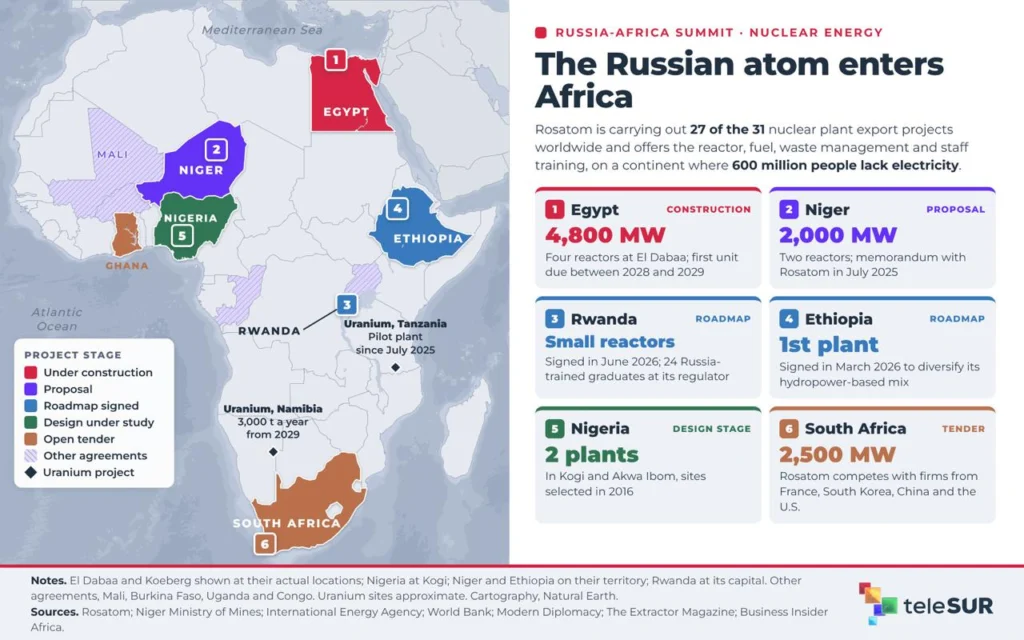
On Egypt’s Mediterranean coast, at El Dabaa, Rosatom is building four 1,200-megawatt reactors that will supply 10% of the country’s electricity. A Russian state loan covers most of a cost set in 2017 at $28.75 billion, which other estimates put at $30 billion, and the first unit is due to come online between 2028 and 2029.
The Russian corporation, which is carrying out 27 of the 31 nuclear plant export projects underway worldwide, offers a complete package covering the reactor, fuel, waste management and staff training over a 40- to 60-year lifespan, to a continent where some 600 million people live without electricity. The International Energy Agency estimates that universal access requires $15 billion a year, six times what was committed in 2023 for sub-Saharan Africa.
Niger, the world’s eighth-largest uranium producer, supplied France’s power plants for more than five decades (France gets about 70% of its electricity from nuclear power) and in 2022 provided almost a quarter of the natural uranium delivered to European plants.Only 20% of its 25 million inhabitants have electricity, and in Arlit and Agadez, where the ore is mined, coverage is close to zero. French company Orano took 86.3% of all the uranium sold from the Somaïr mine since 1971, more than its 63.4% shareholding. General Abdourahamane Tiani’s government nationalized the mine and the power utility Nigelec in June 2025, and although a tribunal of the International Centre for Settlement of Investment Disputes ruled in Orano’s favor in September and barred the sale of the ore, some 1,000 tonnes of concentrate are waiting at Niamey airport. The French press reported a deal to sell them to Rosatom.
Niger’s Mines Minister, Ousmane Abarchi, brought to Moscow a proposal for two reactors totaling 2,000 megawatts. “Electricity must be accessible to everyone on this planet; it should not be a privilege,” he said, and his Russian counterpart for energy, Sergei Tsivilev, replied that Moscow wants to build a complete peaceful nuclear energy system in Niger, beyond mining.
A plant of that size takes ten to fifteen years from contract signing to the first unit in operation, and costs tens of billions of dollars. The Russian model, tested in Egypt and Bangladesh, rests on state loans repaid over decades, and analysts following the case note that in Niger the most visible collateral is the uranium itself.
In Namibia, the world’s third-largest uranium producer, Rosatom plans to invest $500 million in a mine set to start production in 2029. Rwanda signed a roadmap in June for small modular reactors, Ethiopia signed another in March for its first power plant and Nigeria resumed the design of two plants. South Africa, home to Koeberg, the continent’s only commercial nuclear plant, launched a tender for 2,500 megawatts in which Rosatom is competing with French, South Korean, Chinese and U.S. companies.
Rosoboron export has military-technical cooperation agreements with 46 African countries and has signed some 150 contracts worth more than $20 billion since 2023. Between 2020 and 2024, Russia was the continent’s leading supplier of heavy weapons, with 21% of imports, ahead of China and the United States, helped by a Soviet-era arsenal that still needs spare parts and by contracts free of political conditions. Even with the war in Ukraine, which cut its global arms exports by 64% between 2021 and 2025, Africa accounts for 30% of the state company’s order book.
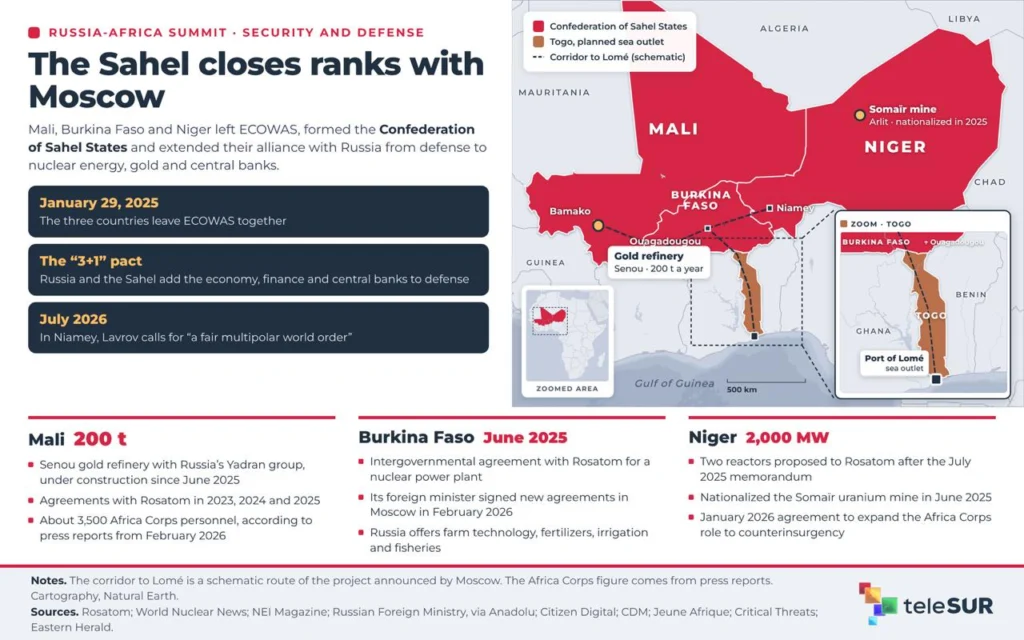
Mali, Burkina Faso and Niger asked French troops to leave, formed the Confederation of Sahel States and opened their barracks to the Africa Corps, the force that replaced the Wagner Group under the direct command of Russia’s Defense Ministry. The “3+1” pact, signed in Niamey, extends cooperation to the economy and the central banks of the three countries, and Moscow plans to use the Togolese port of Lomé as a sea outlet for a landlocked region.
In July, during the second round of consultations with the Sahelian foreign ministers in Niamey, Lavrov spoke of building together “a fair multipolar world order” against “neocolonial practices.” Russia reopened its embassy in Niger this year, and Putin asked his Foreign Minister to invite the three presidents to the summit.
The alliance is fighting the jihadist coalition JNIM, which in September 2025 blockaded fuel supplies to Bamako and in April 2026 forced the Africa Corps out of Kidal. When Human Rights Watch attributed killings of civilians to Russian forces in July, Moscow and Bamako jointly rejected the accusation.
Lavrov announced in August a security memorandum with ECOWAS, the bloc the three Sahelian countries left in January 2025, and offered to mediate between the two; the regional organization has not yet confirmed the scope or the signing date.
Washington Tries the Russian Formula
The break with Niger cost the United States the withdrawal of 1,000 troops and a $110 million drone base in 2024, and Donald Trump brought a transactional approach. Massad Boulos, the presidential adviser for Africa, toured Burkina Faso, Mali and Niger in early 2026 and acknowledged past mistakes in the name of sovereignty, while Erik Prince, owner of a military contracting firm and an informal adviser to Trump, has been meeting with Madagascar’s junta since late 2025.
A U.S. company agreed in late 2025 with Mali’s state mining company to revive a gold deposit valued at $11 billion. In Madagascar, Washington is negotiating the $700 million Toliara project to extract titanium, zirconium and rare earths, along with a proposal for a military presence at the former naval base of Antsiranana. Colonel Michaël Randrianirina, who came to power after the overthrow of Andry Rajoelina, received Russian drones and instructors and U.S. envoys almost at the same time.
The Washington think tanks that call the Russian offer a “survival package”for military governments now note how their own government is adopting a similar scheme, with security in exchange for minerals.
From Classrooms to Fields
The places Russia funds for African students rose from 2,100 in 2021 to about 4,800 in 2026, and some 35,000 young people from the continent are now studying at Russian universities. The Association of African Universities opened an office in October at St. Petersburg Mining University, and Rwanda already has 24 graduates in nuclear fields working at its Atomic Energy Board and the country’s regulator.
Russia’s ambassador to Burkina Faso, Igor Martynov, pledged technology transfers in agronomy, fertilizers, irrigation, fisheries and animal vaccines. In Togo, which signed a military agreement with Russia in 2024 and keeps its security channels with the West open, the first intergovernmental commission closed on October 1 with a protocol, a memorandum on cultural heritage and plans for mechanization and fertilizer production from local phosphate.
Egypt is building its nuclear plant with Rosatom without distancing itself from Washington or the Gulf monarchies, South Africa defends its non-alignment and Ethiopia joined BRICS without breaking with its Western lenders. According to an analysis published within that bloc’s orbit, Russia is welcome in Africa wherever it offers what others do not.
This week’s 33 documents will add to the 92 from Sochi and those from St. Petersburg, and the 2027-2029 plan will have its first milestones at the Suez industrial zone in 2028 and, a year later, at the first unit of El Dabaa and the Namibian mine. With those projects, Moscow seeks to give concrete form to the idea of Africa as a pillar of the multipolar world that Lavrov laid out on Tuesday before the African media.
Eighteen-year-old Argentine boxer Edgardo Nicolás Peralta won the under-19 world title in Budva, Montenegro, on Tuesday, beating Ireland’s Kalib Walshe by unanimous decision to claim his country’s first gold medal at the tournament.
Argentina celebrated a historic first in youth boxing on Tuesday. Edgardo Nicolás Peralta, an 18-year-old from the city of Reconquista in Santa Fe province, was crowned world champion in the under-60-kilogram division at the Under-19 World Boxing Championships in Budva, Montenegro.
The medal is the first gold the country has ever claimed at the event, which is organized by World Boxing, the body that governs international Olympic boxing.
Peralta closed the tournament with a flawless record. In the final he defeated Irish boxer Kalib Walshe by unanimous decision, the fifth straight victory of a campaign that also saw him beat opponents from Belarus, Romania, Spain and Kazakhstan. His versatility in the ring and a rigorous technical preparation allowed him to dominate each bout and place himself among the elite of his discipline.
Edgardo Nicolas Peralta completes a brilliant campaign in Budva 🇦🇷🔥
The Argentine defeats Ireland’s Kalib Walshe in the men’s 60kg final to become a U19 World Champion 🥇
The triumph carries weight beyond the medal itself. Peralta’s run through five opponents underscored a level of consistency rarely seen from a first-time representative at this stage. Judges scored the final decisively in his favor, confirming the dominance he had shown from the opening bell of the tournament.
His path to the top was built in Argentina’s amateur circuit, far from the spotlight that surrounds professional boxing. The young fighter honed his craft in working-class neighborhoods, relying on daily sacrifice from his family and his immediate circle rather than on institutional backing.
That lack of support nearly cost him the final. The delegation traveled to Montenegro with scarce official assistance and faced severe logistical problems. The scheduled return flight coincided exactly with the time of the gold-medal bout, forcing the team to scramble for a change. The national sports agency (ENARD), refused to adjust the air tickets, according to the reports.
🇦🇷 I Justo cuando Argentina -tras 20 años- se quedó sin ningún campeón mundial profesional (ni hombres, ni mujeres, ni interinos) aparece Nicolas Peralta (69-0) y se consagra -con 18 años recién cumplidos- como el mejor boxeador juvenil en toda la historia amateur del país. pic.twitter.com/W4nsDxEzlv
Text reads: “Just when Argentina – after 20 years – was left without any professional world champions (men, women or interim) appears Nicolas Peralta (69-0) and is consecrated – at 18 years old – as the best youth boxer in the entire amateur history of the country.”
No Official Support
The financial barriers and the persistent absence of state backing did not stop Peralta. His family’s everyday effort sustained a career forged far from privilege, and the result on Tuesday vindicated that persistence against what Argentine media have described as official neglect.
The contrast is stark. While the young boxer celebrated on the podium, his delegation had spent the hours before the fight resolving a travel schedule that never accounted for the possibility of an Argentine reaching the final. The episode lays bare the wider conditions facing amateur athletes in Argentina, where talent often outruns the support available to develop it.
Peralta’s gold marks a milestone for Argentine boxing and for the country’s youth sport. It also sends a message about the potential waiting to be unlocked when athletes from popular neighborhoods get a genuine chance to compete on the world stage.
The victory positions Peralta as one of the rising names in international amateur boxing, with the under-19 title serving as a platform toward senior competition. His next steps will likely draw attention from federations and sponsors alike, though the structural problems that almost derailed his final remain unresolved.
Brazil’s Supreme Federal Court ordered an investigation Tuesday into Flávio Bolsonaro’s presidential campaign over suspected illegal foreign financing, algorithmic manipulation on digital platforms and possible deals involving strategic minerals.
The ruling targets the campaign of the far-right senator who lost the 2026 runoff to Luiz Inácio Lula da Silva. Justice Flávio Dino issued the decision under a constitutional action (the Fundamental Precept Non-compliance Argument 1178 (ADPF), after formal requests from Lula’s campaign and from former presidential candidate Renan Santos of the Missão movement.
The Court stressed that Brazil’s Constitution and laws expressly bar parties and candidates from receiving funds from foreign entities or governments.
At the center of the inquiry sits Rockbridge Network, a conservative U.S. organization tied to the political origins of JD Vance, now U.S. Vice-president.
Federal Police will determine whether the group, through the alleged mediation of Brazilian businessmen Tallis Gomes and Pedro Sang, offered financial resources, services or economic advantages to the campaign of the Senator Flávio Bolsonaro, the Liberal Party’s presidential candidate.
Breaking: Supreme Court Minister Dino has ordered a police investigation into foreign interference in the elections. It is already widely known that the US government and US tech companies were meddling to benefit Flávio Bolsonaro’s failed presidential bid. pic.twitter.com/xWSQXqnmfl
Investigators will also examine possible underlying geopolitical and economic interests. The probe will look into whether negotiations linked political financing to the exploitation and control of strategic minerals and rare earth elements on Brazilian soil, resources that have drawn marked interest from the government of Donald Trump.
The Court framed the case as a matter of national sovereignty. Foreign interference in an election, the ruling argued, does not merely distort the vote; it compromises the state’s ability to decide its own direction. That framing elevates the investigation beyond a routine campaign finance dispute.
Ten federal agencies received the order to carry out the work, which includes the Brazilian Intelligence Agency (Abin), the Council for Financial Activities Control (Coaf), the Federal Revenue Service and the Central Bank.
Failed far-right candidate Flávio Bolsonaro has reportedly fled Brazil to the US where he intends to seek political asylum, according to news website Metrópoles, citing people close to the Bolsonaro family. After Flávio missed a Tuesday morning deadline to surrender his… pic.twitter.com/xZQHoj1Cn9
The technological front carries equal weight. The Supreme Court ordered an inquiry into the role of Meta, owner of WhatsApp, Instagram and Facebook, after detecting what the ruling describes as “intentional asymmetries and algorithmic manipulations.”
Case documents reveal internal messages in which employees admitted restrictions on the promotion of Lula’s ads while Flávio Bolsonaro’s profile received irregular positioning. UN experts had previously warned of the risk of an artificial electoral imbalance.
Federal Police will also trace paid content favorable to the far right that was distributed through accounts based abroad without proper identification of the contractors, as well as the use of Polymarket projections to tilt public perception.
The pressure on Meta is not new. On October 15 a judge had already barred the company from interfering in the distribution of electoral content following complaints from progressive sectors. Meta denied any favoritism, attributing the imbalance to an artificial intelligence glitch that benefited the Liberal Party candidate. The current process now escalates to criminal and national security levels.
For Flávio Bolsonaro, the investigation compounds an already difficult legal position. The same Court recently ordered him to surrender his passports, and lawmakers have sought his preventive detention and an Interpol red notice over a reported flight to United States. The new probe broadens the scope from his personal conduct to the machinery that financed and amplified his campaign.
Whether Rockbridge or Meta ultimately face charges depends on the evidence Federal Police gathers. The Court’s message, however, is already clear: foreign money and foreign platforms will not operate in Brazil’s elections without scrutiny.
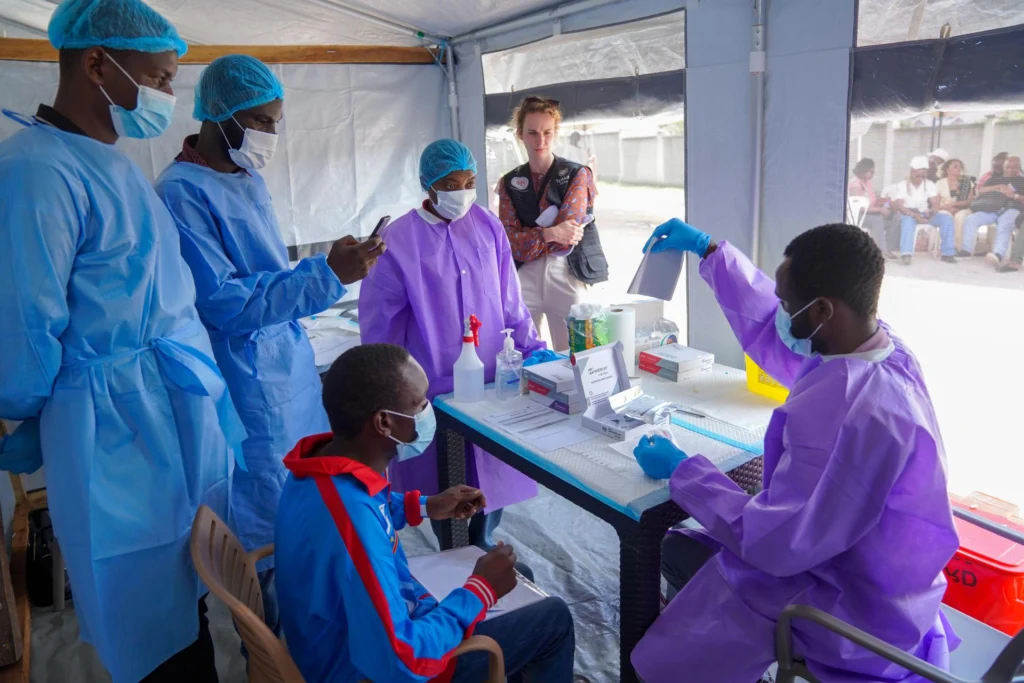
The Ebola outbreak in the Democratic Republic of the Congo (DRC) surpassed 10,000 confirmed cases on Tuesday, with 4,887 deaths recorded since the epidemic was declared in May.
The Ebola outbreak in the Democratic Republic of the Congo crossed a critical line on October 27, when confirmed infections passed the 10,000 mark. The National Institute of Public Health (INSP), announced the milestone with figures current through October 25.
The official tally stands at 10,060 cases and 4,887 deaths since the outbreak was declared on May 15. In just over five months, the virus has spread well beyond its initial clusters.
Nearly half of those infected have not survived. The case fatality rate reached 48.6%, a level that makes this one of the deadliest health emergencies on record. It also confirms a trend the institute had flagged weeks earlier, when the outbreak first crossed the 9,000 infection mark.
❗️EBOLA SURPASSES 10,000 CASES IN DR CONGO — Reuters
The virus killed 4,887 people, with confirmed infections reaching 10,060
Only the West African epidemic of 2014 to 2016 was worse. That crisis left roughly 11,000 dead and 28,000 cases across Guinea, Liberia and Sierra Leone. The current Congolese outbreak now ranks second in global history and has already outpaced the Ebola epidemic that struck the country’s eastern region between 2018 and 2020.
Transmission now spans 66 health zones in eight of the DRC’s 26 provinces, less than a third of the national territory. Ituri and North Kivu carry the heaviest burden. Tshopo, Bas-Uélé, Haut-Uélé, South Kivu, South Ubangi and North Ubangi follow behind. Bafwasende, Beni, Mandima and Bunia face the most critical conditions on the ground, the health agency warned.
“The situation underscores the need to strengthen early detection, contact tracing, dignified and safe burials, and the safety of response teams, especially in Bafwasende, a town in Tshopo province,” National Institute of Public Health’s authorities said.
Recovery figures offer a narrow thread of hope. A total of 2,684 patients have overcome the illness, and contact tracing coverage holds at 81.6%. Even so, the institute described early detection, safe burials and protection for field teams as urgent in the hardest-hit zones.
WHO is working closely with the DRC Government to intensify and sustain the #Ebola response.
During his recent visit to Beni, @ProfJanabi engaged with communities and handed over supplies and equipment, including motorbikes and #IPC materials, to strengthen the response. pic.twitter.com/CtuxNcDstT
The outbreak is driven by the Bundibugyo strain, a lineage with no specific treatments. That gap has pushed scientists toward new solutions. The World Health Organization is advancing two experimental vaccines, and their phase 1 human trials have already produced safe profiles.
The country is also running an immunization campaign with Ervebo, a product developed for the Zaire variant that showed favorable signs in animal tests. But the experimental candidates have only reached the earliest stage of evaluation in people, while Ervebo rests on limited preclinical evidence. Neither option yet offers a conclusive tool to stop transmission.
The cumulative data through October 25 shows the epidemic is far from contained. Health workers confront a virus without a specific therapy across a vast territory where contact tracing is uneven. The National Institute of Public Health has already set the immediate priorities, halting the spread and protecting the teams deployed on the ground.
Lawmakers from Brazil’s ruling Workers’ Party (PT) asked a court on Tuesday to order the preventive detention of former presidential candidate Flávio Bolsonaro and trigger an Interpol red notice, accusing him of fleeing to United States to evade Brazilian justice.
The request landed one day after the far-right senator ignored a Supreme Federal Court order to surrender his passports within 24 hours. He had previously said he would comply with the measure and had no plans to leave Brazil.
Federal deputy Lindbergh Farias filed the motion alongside colleagues Rogério Correia and Ana Elisa Santos. “We have filed a request for preventive detention for Flávio Bolsonaro, who did not surrender his passport and has allegedly fled to United States,” Farias explained. “We have also asked for the Interpol red alert to be activated,” he detailed.
The lawmakers argue that Jair Bolsonaro’s eldest son is trying to dodge criminal proceedings opened against him over alleged corruption, money laundering and illegal currency transfers. Correia went further, assuring the former candidate “was plotting a new coup attempt in case he did not win the elections.”
🚨AGORA: Os deputados federais Lindbergh Farias, Ana Elisa e Rogério Correia pedem prisão de Flávio Bolsonaro e alerta vermelho da Interpol. pic.twitter.com/aRjy0px2S4
Regional media reported from the early hours of Tuesday that the senator had left national territory bound for United States, with a stopover in Argentina, but his exact whereabouts remain unknown. His campaign team has stayed silent, neither confirming nor denying the reports of a flight.
Brazilian Federal Police reinforced inspections at border points and kept inquiries open to determine whether he actually left the country. The order demanding his passports grew out of a recent interview with his brother Eduardo Bolsonaro, who suggested that Flávio should leave Brazil and contest the vote count if he suffered an electoral defeat.
Flávio Bolsonaro now faces a tightening legal perimeter. At the Supreme Federal Court, Justice Alexandre de Moraes oversees investigations into money laundering schemes connected to betting houses and large transfers with lawyer Willer Tomaz. Justice André Mendonça runs separate probes into irregularities in fundraising for the film “Dark Horse.”
The alleged escape raises the stakes of those cases. A defendant who remains inside the country can fight charges through the courts; one who crosses a border becomes the subject of an international pursuit, and the request filed Tuesday is aimed at exactly that outcome.
The episode carries a family precedent. Eduardo Bolsonaro has lived in United States since 2025 to avoid a four-year prison sentence for coercion of justice in the coup attempt trials against their father, former President Jair Bolsonaro. Flávio’s own passport order traces back to Eduardo’s public suggestion that his brother flee and challenge the results.
That connection is now central to the Workers’ Party argument. The lawmakers contend the senator’s failure to hand over his passports was not a bureaucratic lapse but a deliberate move to escape accountability, a claim the defense has not addressed while the campaign team holds its silence.
The court will now weigh the detention request against the evidence that Flávio Bolsonaro left the country. If the Interpol red notice is activated, it would oblige member states to locate and provisionally arrest him, transforming a domestic legal dispute into an international manhunt.
For now, Brazilian authorities are working to confirm the exact circumstances of his departure. The investigation will determine whether the border crossing was legal, and whether any official assisted it. Those questions will shape the next phase of a case that has already drawn the attention of the entire region.
The opposition bloc led by former army chief Gadi Eisenkot edged ahead of Prime Minister Benjamin Netanyahu’s coalition in Israel’s general election, but neither camp came close to the 61 seats needed to govern, exit polls showed Tuesday night.
With a historic turnout of close to 75%, Israelis turned out in the first election held after the start of the genocide in Gaza in October 2023.
The first projections from Israel’s election signal a shift in the balance of power. The opposition bloc led by Gadi Eisenkot prevailed by a narrow margin over PM Netanyahu’s coalition in Israel’s first election since the October 2023 attacks, according to polls circulated after the ballot box was closed.
Data from the Central Election Commission and projections from local TV channels 11, 12, and 13 agree that none of the dominant blocs has the 61 seats required to form a government in the 120-seat parliament.
The three main exit polls, published after voting closed at 10 P.M. local time, placed Eisenkot’s bloc at 52 to 53 of the Knesset’s 120 seats, against 50 for Netanyahu’s right-wing alliance.
The result opens a period of uncertain negotiations over who will form the next government, with neither side having reached the required majority in parliament (Knesset).
BREAKING: Early exit poll results are showing Netanyahu’s coalition and the opposition coalition both falling short of the seats needed for a majority.
Parties opposed to Prime Minister Benjamin Netanyahu won more seats than his coalition in Tuesday’s parliamentary election, though Likud Party remained the most-voted party, and neither bloc reached the 61 seats needed to govern in the 120-seat Knesset.
Neither candidate can yet claim a clear path to 61. Netanyahu can argue that he heads the largest single party, while Eisenkot can point to the larger bloc.
That calculation gives the Arab-led lists unusual weight in the coming negotiations. For years the established Jewish parties have treated these alliances as off-limits partners. The projections may now force a reconsideration, because neither side appears able to reach a majority without them.
BREAKING: Israeli elections have ended and the exit polls are in. All three Israeli channels have Netanyahu's bloc at 50. Eisenkot's bloc is at 52 or 53. The Arab parties are at 17 or 18, the most seats they have ever won.
The two Israeli Arab parties that emerged as potential arbiters of the contest won between 17 and 18 seats according to the polls in the ballot box, a figure higher than expected. Both said that they would support Eisenkot to some extent, having mobilized their voters to help displace Netanyahu, whom they consider an “existential threat” in the event of a new term.
Both Netanyahu and Eisenkot have so far ruled out any formal alliance with Arab parties. However, these could allow Eisenkot to form a minority government by backing him from outside the coalition, or even abstaining in the Knesset vote to install the next government.
Coalition Talks Ahead
As the count continues, the next move belongs to the Israeli President, who must decide whom to invite first to try to assemble a coalition.
Any path to a majority now appears to run through the Arab parties. That reality will test whether the traditional Jewish bloc is willing to negotiate across a line it has long treated as closed.
The final tally will determine whether Eisenkot can turn his central role into a governing coalition, or whether Netanyahu finds another route to remain in power.
If, after all the negotiations, no one manages to form a majority, a new election would be called on March and the process would repeat. During that period, Netanyahu’s government would remain in a caretaker role. Public services would not be affected, but the government would lack the authority to push through major policy changes.
Israel’s most recent national election, held in November 2022, was the fifth in three and a half years, and even a new round might not resolve the country’s political deadlock. That election, returned Likud party to power with a 64-seat coalition.
The most likely scenario now is a prolonged negotiation or even new elections in the coming months. Until a government forms, Netanyahu’s administration would remain in office as a caretaker, unable to advance major policy changes.
The narrow margin leaves the next coalition in doubt. With neither side reaching 61 seats, both leaders will likely push to assemble a governing majority, a process that has repeatedly convulsed Israeli politics in recent years.
The Central Election Committee began counting ballots after polling stations closed and will release partial results overnight. Official tallies often diverge from exit poll projections, leaving the final composition of the Knesset uncertain for days.
Peru’s human rights prosecutors closed the criminal case over the forced sterilizations of thousands of women during Alberto Fujimori’s government, extinguishing charges against 52 former officials despite acknowledging that the mass surgeries amounted to crimes against humanity.
The Fourth Supra-National Criminal Prosecutor’s Office specialized in Human Rights issued Fiscal Provision No. 25 on October 22. The ruling, which runs more than six thousand pages, formally declared the case time-barred and ordered the file closed.
In its decision, the Public Ministry recognized evidence of crimes against humanity and harm suffered by more than 4,000 victims of forced sterilization. Even so, criminal liability was declared extinguished for 52 people, a decision that protects the former officials who designed and implemented the program.
The case was closed under Law 32107, approved in 2024 with the backing of lawmakers allied to former President Alberto Fujimori. The statute imposes strict time limits on the prosecution of crimes against humanity, setting aside the protection those abuses have long held under international treaties.
Under international law, crimes against humanity are not subject to statutes of limitation. Law 32107 introduced a domestic exception to that principle, and its application extinguished the proceedings for all 52 defendants at once.
🚨 La Fiscalía archivó la investigación contra 52 personas por las #EsterilizacionesForzadas durante el gobierno de Alberto Fujimori, entre ellas Alejandro Aguinaga, exministro de Salud y actual senador. Lo más grave: reconoce indicios de crímenes de lesa humanidad, pero declara… pic.twitter.com/dSaeConv1P
Text reads: “The Public Prosecutor’s Office closed the investigation against 52 people for the forced esterilizations during the government of Alberto Fujimori, including Alejandro Aguinaga, former Minister of Health and current senator. Most serious: it recognizes indications of crimes against humanity, but prescribes the crimes by applying a law driven by fujimorismo. Thousands of women are still waiting for justice.”
The law’s application halted the criminal proceedings overnight and favored senior officials who held ministerial posts during the 1990s. Among them is Alejandro Aguinaga Recuenco, who served as Health Minister under Alberto Fujimori’s administration and now holds a Senate seat for the Fuerza Popular party.
The resolution shielding Aguinaga does not conceal the gravity of what occurred. Prosecutors acknowledged that the mass surgical interventions were performed without the free, prior and informed consent of the women affected.
Former Ministers Eduardo Yong Motta and Marino Costa Bauer were also released from the process. According to the document, the operations constituted a widespread and organized practice directed by the State against poor women in rural areas.
The investigation officially covered 4,172 people harmed by serious injuries. Five women lost their lives. Celia Edith Ramos Durand, María Mamérita Mestanza Chávez, Alejandra Aguirre Auccapiña, Reynalda Betalleluz Aguilar and María Genoveva Espínola Otiniano are named in the case file.
Victims Denied Justice
Between 1996 and 2000, more than 272,000 women and 22,000 men were subjected to family planning programs. Pressure, deception and quotas reported by the State to the presidency marked those campaigns, and forced sterilization became official reproductive health policy.
The case ranks among the most emblematic human rights violations of Peru’s 1990s. Its closure shuts down a judicial avenue that had remained open since the first complaints against the state-run birth control program emerged.
In December 2025, the Transitory Criminal Chamber of the Supreme Court declined to apply Law 32107 in parallel proceedings to guarantee that investigations could continue. That ruling prompted disciplinary inquiries by the National Board of Justice against the magistrates involved.
The legal wrangling is not over. Parallel investigations have stayed alive under the high court’s stance, but the main case over the program’s architects and executors has now been closed for good.
Nearly three decades after the first allegations, the criminal path has been extinguished. The closure leaves no one criminally accountable for the officials who designed and executed the forced sterilizations. The file now ends under a norm that Peru’s own judiciary had questioned, while the fight over its reach continues.
Senator Flávio Bolsonaro was ordered on Monday to hand over his passports within 24 hours and not to leave Brazil, a measure signed by Supreme Federal Court (STF) justice Alexandre de Moraes.
Brazil’s Federal Police on Monday notified Senator Flávio Bolsonaro that he must surrender his passports and comply with a ban on leaving the country, measures ordered by Supreme Federal Court (STF) justice Alexandre de Moraes a day after Bolsonaro lost the presidential run-off to President Luiz Inácio Lula da Silva.
Federal Police agents located the senator on Monday morning near his father’s home in Brasília, where former President Jair Bolsonaro is under house arrest. Police told Bolsonaro on Monday morning that he had 24 hours to hand over his documents. The order also bars him from contacting lawyer Willer Tomaz, who is under investigation for alleged money laundering.
The ruling was signed on Sunday night, after the results of that day’s runoff were announced. Flávio Bolsonaro, the far-right candidate, had lost the second round to President Luiz Inácio Lula da Silva.
Flávio Bolsonaro diz que foi intimado pela PF a entregar seus passaportes por decisão de Alexandre de Moraes pic.twitter.com/Ngvh19Pnmk
Text reads: “Flávio Bolsonaro says that he was subpoenaed by the federal police to surrender his passports by decision of Alexandre de Moraes.”
Flávio Bolsonaro alleged that the justice’s decision responds to remarks made last Friday by his brother, former congressman Eduardo Bolsonaro, who said in an interview that the senator should leave Brazil and challenge the vote count in the event of a defeat, according to the senator.
The Liberal Party’s senator denied any intention to flee, called the ruling an attempt at political intimidation and said he will hand over the documents while his lawyers file an appeal. “I never said that,” he wrote on his official channels, referring to leaving the country. “Is that a reason to take away my passport? Is this justice?,” he added.
Legal experts typically note that travel bans and passport seizures are precautionary measures and not findings of guilt.
Two Open Investigations
The order is tied to two cases pending at the Brazilian Supreme Federal Court. The first, led by Moraes and originating in proceedings in Rio Grande do Sul, examines alleged money laundering with Tomaz through betting companies and payment platforms. Last week the court ordered the freezing of up to 6 billion reais in assets linked to Tomaz, the suspension of his business activities and the lifting of his bank, tax and foreign-exchange secrecy.
Federal Police found that the senator appeared with a “master” user profile on an account of the firm Alcazar Holdings, and detected transactions of almost 130 million reais between March and May 2025 in accounts linked to the lawyer, the source says. Tomaz’s defense rejected the accusations and challenged the proportionality of the asset freezes.
The second case, assigned to justice André Mendonça, looks into alleged irregularities in raising private funds for the film “Dark Horse,” which focuses on Jair Bolsonaro’s political career. Investigators are analyzing audio and digital messages that link Flávio Bolsonaro to dealings with Daniel Vorcaro, the former owner of Master Bank, and police have asked for a 90-day extension to finish financial examinations and process international cooperation requests. Bolsonaro has acknowledged seeking funds for the film in earlier reports in this conversation and denies offering favors.
After Lula’s victory, Bolsonaro will be without public office from February 1, 2027, the first time in more than 20 years that he will be outside state service as he did not run for Senate reelection.
The Supreme Federal Court will keep jurisdiction over the cases against him, under a doctrine the court set in March 2025, approved by seven votes to four and complemented in May 2026, under which alleged crimes committed in office stay with the Supreme Court even after officials leave their posts.
From 2027, the senator will be without parliamentary immunity or public office, a condition that increases his exposure in the ongoing proceedings. The defense’s appeal and the pending expert reports mark the immediate path of the case.

 Login