ISLAMABAD: The Directorate of Building Control (City) of the Capital Development Authority (CDA) on Friday issued a warning notice to remove within 15 days a guards’ room and “unauthorised and illegal” construction at the residence of Jamiat Ulema-i-Islam (JUI-F) chief Maulana Fazlur Rehman in the federal capital’s posh G-6 sector.
The notice affixed outside the residence of the JUI-F chief — addressed to the legal owner of the property and dated Oct 30 (Friday) — highlighted three violations under the Islamabad Capital Territory Building Control Regulations 2020 (amended 2023).
It pointed out illegal and unauthorised construction in building setbacks (open spaces), a guard post built on CDA land, and a generator on CDA land.
The notice added that according to records, the owner submitted an affidavit on March 18, 2019, at the time of issuance of a no-objection certificate (NOC), in which he stated that setback violations would be removed within three months and all regulations would be abided by.
“However, it has been noticed that no compliance is made,” the CDA notice said. The authority directed that the mentioned violations be removed within 15 days, starting Friday.
The city manager warned that if the occupants failed to fulfil the legal requirements and remove the violations, the CDA would take action as per the relevant clauses of the CDA Ordinance and Islamabad Capital Territory Building Control Regulations 2020 (amended 2023), which it warned could lead to the sealing or demolishing of violations as well as the initiation of a case for cancellation of the allotment.
Meanwhile, after the notice was issued, Maulana Asjad Mahmood, the son of the JUI-F chief, claimed it was retaliation for pointing out alleged encroachments by a senior military official.
In a statement, Mahmood said that instead of responding to the alleged encroachments, the authorities resorted to what he described as underhanded tactics.
He expressed concern over the “transformation of political differences into personal revenge”. He said such actions were a matter of serious concern and urged the nation and JUI-F workers to remain informed and vigilant about the evolving situation.
Pakistan is “cautiously optimistic” about its mediation between Iran and the United States, the military’s spokesman said on Friday in his first interview since a high-level delegation visited Tehran this week.
Chief of Defence Forces and Chief of Army Staff Field Marshal Asim Munir has been to Tehran twice this month, most recently on Monday alongside Saudi and Turkish officials.
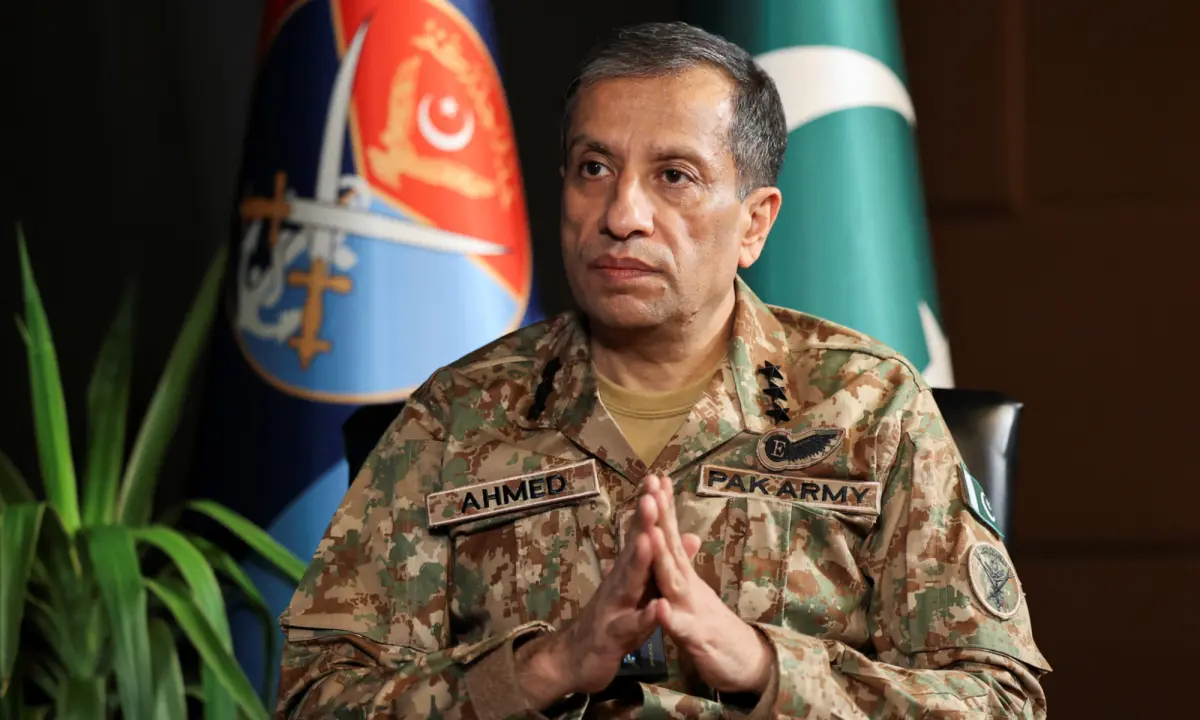
“Why would the Field Marshal be going twice if it is not for some positivity? So yes, of course,” Inter-Services Public Relations (ISPR) Director General Lieutenant General Ahmed Sharif Chaudhry said when asked whether the trips were a positive sign.
“The word that we would use is always cautiously optimistic,” added Lt Gen Chaudhry.
There were still “powerful spoilers and detractors,” who believed conflict serves them, he added without naming them.
Speaking in Rawalpindi, he declined to say what was discussed or whether the US had backed the trip.
Saudi Defence Minister Prince Khalid bin Salman and Turkish intelligence chief Ibrahim Kalin joined CDF Munir in Tehran on Monday.
The talks were the first high-level contact between Iran and all members of the Makkah Defence Alliance since Saudi Arabia was drawn deeper into the conflict. Under the Makkah pact, of which both Saudi Arabia and Turkiye are a part and which was signed on August 7, an armed attack on one member is considered an attack on all.
The pact has taken on added significance as the Iran war has redrawn regional alliances and raised fears of a broader Middle East conflict.
After Monday’s talks, Mohsen Rezaei, secretary of Iran’s Supreme National Security Council, said regional security should be ensured by regional countries without foreign intervention.
The wording of the pact does not bar new members, Lt Gen Chaudhry said on Friday when asked whether Iran could join.
“Anyone who has a shared vision of collective deterrence and regional peace, why not? Everyone is most welcome,” he said, adding that it was for the political leadership of the three principal parties to decide.
Asked whether more Pakistani troops were being sent to Saudi Arabia under the agreement, the DG ISPR said that it would depend on the situation and the decision of both countries’ political leadership.
He said Pakistan was committed to defending Saudi Arabia and the holy sites of Makkah and Madina.
“We are not part of the Yemeni conflict, which is an intra-Yemen conflict,” he added.
Asked if there would now be larger military-led campaigns in the Khyber Pakhtunkhwa following the imposition of emergency and governor’s rules, Lt Gen Chaudhry said that was not how the army conducted counter-terrorism.
“Our counter-terrorism operations are based on what we call IBOs, intelligence-based operations… The tempo of the freedom of action of (those) IBOs will further increase,” he said.
ISLAMABAD: The Oil and Gas Regulatory Authority (Ogra) on Friday notified an increase of up to 15.3 per cent in the price of Regasified Liquefied Natural Gas (RLNG) for sales at the distribution stage by the two Sui gas companies for October, mainly due to higher crude prices.
The increase has come after a 20pc price reduction for September.
This is expected to have a significant impact on fuel cost for power generation in December. The RLNG-based power generation cost in September amounted to Rs40 per unit based on the average RLNG import price of $10.06 per million British thermal unit (mmBtu), compared to $10.75 per mmBtu in October.
The average delivered price ex-ship of LNG for two cargoes in October amounted to $10.75 per mmBtu, compared to $10.06 per mmBtu in September, $12.12 per mmBtu in August and $18.96 per mmBtu in July.
Karachi-based Sui Southern Gas Company Limited (SSGCL) serves consumers in Sindh and Balochistan, and its system losses at the distribution stage stand at 12.55 per cent, compared to about 10.6pc last year.
On the other hand, Lahore-based Sui Northern Gas Pipelines Limited (SNGPL) provides gas to consumers in Punjab and Khyber Pakhtunkhwa, and its system losses at the distribution stage were also reported at almost 9pc against 7.47pc in October last year.
According to the notification, RLNG’s sale price for SNGPL at the transmission stage increased by 13.9pc to $15.94 per mmBtu for October compared to $13.99 per mmBtu in September. The sale price at the distribution stage for SNGPL was, thus, increased by 14pc to $17.33 per mmBtu for October, against $15.196 per mmBtu in September.
Meanwhile, RLNG sale price for SSGCL has been increased at the transmission stage by 15.25pc to $14.53 per mmBtu for October, against $12.611 per mmBtu in September. The sale price at the distribution stage for the company thus also increased by 15.27pc to $16.396 per mmBtu for October compared to $14.22 in September.
Ironically, the inherent cost additions in the supply chain — all of them in the public sector — continue to make the end-RLNG price higher. This can be seen from the fact that the RLNG distribution prices — $16.396 per mmBtu for SSGCL and $17.33 per mmBtu for SNGPL — are almost $6.58 and $5.65 per mmBtu higher than the average $10.75 per mmBtu delivered price ex-ship (DES), respectively.
This is mainly because of the fact that both the LNG importers — Pakistan State Oil and Pakistan LNG Limited — and port authorities also charge profit margins on account of retainage and margins, at the rate of 3.77pc of DES price. This is on top of 8.97pc system losses (SNGPL) and 12.55pc losses (SSGCL).
The basket RLNG price was based on two cargoes each in October — both from Qatar — under two separate long-term contracts of 13.37pc and 10.20pc of Brent.
PSO has a long-term contract for up to 11 cargoes per month, but part of these supplies were usually diverted to the spot market, even before the Middle East crisis, when Qatar declared force majeure after the US attack on Iran, the closing of the Strait of Hormuz and the suspension of gas operations at the field.
A Pakistani automotive manufacturer has opened up a manufacturing plant in the Philippines, it emerged on Friday.
In a post on the social media platform X, the Pakistan embassy in the Southeast Asian country said: “Pakistan-made three-wheelers have entered the Philippine market!”
It said that Philippine President Ferdinand R. Marcos Jr inaugurated the assembly plant of Pakistan’s Sazgar Engineering Works Limited.
It highlighted that, facilitated by the embassy, the manufacturer was introducing its “passenger, commercial three-wheelers and electric vehicles” in the Philippines.
According to the official website of the Philippine president, the plant was inaugurated on Thursday.
It quoted him as saying that the inauguration of the plant marked “an important step in our journey to strengthen our country’s manufacturing sector and advancing the transition to cleaner, more sustainable transportation”.
He said that the plant was designed to assemble approximately 12,000 three-wheeled vehicles annually, covering both electric and internal combustion engines.
“Sazgar has been building vehicles in Pakistan for over three decades. When it chose its first home outside of Pakistan and its hub for all of Southeast Asia, it chose the Philippines. It placed its confidence in our country,” he said.
According to the company’s website, Sazgar is a public limited company headquartered in Lahore. It exports three-wheelers and parts to over 20 countries, including Japan, the United Arab Emirates, Sri Lanka and Nigeria.
KARACHI: Over 30 shops were destroyed when a blaze erupted at a furniture market in Karachi’s Gulistan-i-Jauhar in the early hours of Friday.
No injuries were reported, according to police and rescue services officials and the fire was later brought under control.
Rescue 1122 spokesperson Hassaan Ul Haseeb Khan said the fire erupted in a furniture market near Kamran Chowrangi. It spread rapidly due to the presence of wooden goods, engulfing the whole market, he said, adding that it also spread to nearby residential areas and even engulfed a house.
“The residents had already evacuated to safer areas; therefore, no injuries were reported,” Khan said, adding that when responders reached the scene, they initially extinguished the house fire, which damaged a portion of the residence.
“Six fire tenders managed to control the fire after hectic efforts lasting for three hours,” the spokesperson added. “The fire caused huge financial losses as all stored wooden goods were destroyed.”
He added that the exact cause of the fire could not be immediately ascertained.
Meanwhile, the Karachi Metropolitan Corporation (KMC) said its fire brigade received information about the fire at around 1:35am on Friday. Firemen reached the scene within 10 minutes; however, due to dry weather, wind and the presence of wooden items, the fire grew. It said that around 35 furniture shops were destroyed.
Affected shopkeepers told the media that the fire caused losses of millions of rupees.
KMC Chief Fire Officer Humayun Khan, meanwhile, told the media that fire incidents tend to increase in Karachi’s dry season and that the furniture market was built on an open plot.
“Nearby huts were also established, and it was possible that the flames emanating from huts spread and engulfed the market,” he said, adding that around 10-12 huts were also destroyed in the fire.
Last year, a fire had also erupted in the same market. Rescue sources said there were “unconfirmed” reports that the furniture market was established reportedly on “disputed land”.
In 2015, a fire in the same market destroyed furniture worth hundreds of thousands of rupees. A contingent of eight fire brigades was immediately sent to the site of the incident, which was brought under control.
Fires frequently erupt in buildings across Pakistan due to a mix of poor infrastructure, weak enforcement of safety regulations, and widespread negligence. Many structures lack proper fire exits, alarms, and emergency protocols, while faulty wiring and overloaded power systems increase the risk of electrical short circuits.
The Gul Plaza inferno, which erupted on the night of January 17 at the mall, claimed at least 73 lives. The blaze took nearly two days to be fully extinguished and left over 1,100 shops in ruins.
In early February, a massive fire in a plastic factory at Landhi Export Processing Zone (EPZ) engulfed several nearby factories and took major firefighting efforts to be brought under control after 13 hours.
Days later, a fire erupted in a high-rise building near Karachi’s Baloch Colony, with around 150 people evacuated. On February 17, a fire at a chemical factory in the SITE Industrial Area was brought under control.
The next month, a blaze that broke out in Imtiaz Superstore’s Zamzama branch was brought under control after hours-long efforts by rescue officials.
In June, hundreds of people were evacuated as a fire erupted in the cold storage of a department store situated in a mega shopping mall on Rashid Minhas Road in Federal B Area.
In September, at least three people suffered minor injuries from smoke inhalation after a huge fire erupted in a factory at the Karachi EPZ, near Landhi Industrial Area. The blaze destroyed half of the three-storey unit and badly damaged other factories.
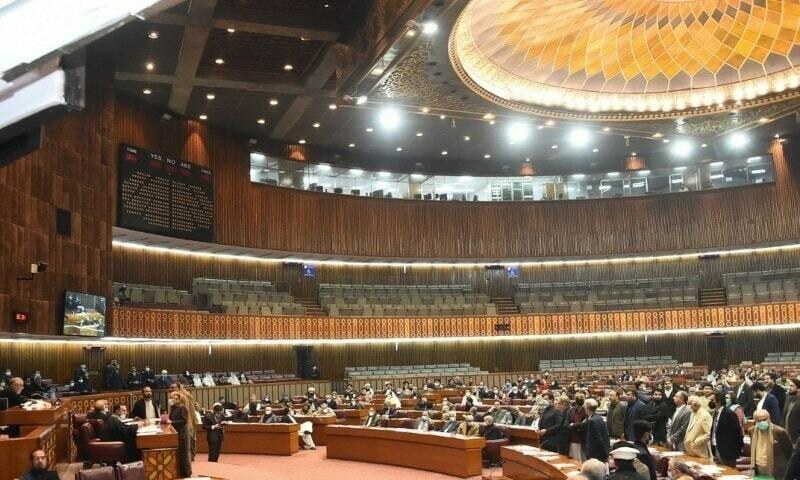
ISLAMABAD: The National Assembly on Friday approved a resolution reaffirming that workplace harassment was not limited to conduct of a sexual nature but may also include intimidation, humiliation and gender-based discrimination.
The resolution was presented by MNA Dr Shahida Rehmani, who is also the secretary of the Women’s Parliamentary Caucus (WPC).
The resolution reaffirmed Parliament’s commitment to protecting the dignity, equality and rights of every individual against all forms of workplace harassment and gender-based discrimination, in accordance with Articles 14 (inviolability of dignity of man, etc.) and 25 (equality of citizens) of the Constitution.
It underscored that workplace harassment was not limited to conduct of a sexual nature, but “may also manifest through gender-based discrimination, intimidation, humiliation, degrading treatment, hostile behaviour and misuse of authority, whether sexual or non-sexual in nature”.
The resolution reaffirmed the legislative intent and protections enshrined in the Protection against Harassment of Women at the Workplace Act, 2010, as amended in 2022, which expressly recognises discrimination based on gender, both sexual and non-sexual, to fall within the statutory framework of harassment.
It further emphasised that the absence of a sexual advance or demand does not diminish the seriousness of gender-based harassment or discrimination.
The resolution said that the dignity of individuals “cannot be subjected to narrow distinctions between different forms of harassment” and all conduct falling within the scope of the law “must be addressed with equal seriousness, fairness and accountability”.
Through the resolution, the NA was called on to urge the federal government and all concerned institutions to ensure the effective implementation of existing legislation in its full scope, ensuring that no individual would be deprived of statutory protection merely because the harassment or gender-based discrimination reported was non-sexual in nature.
The resolution concluded by reaffirming that a workplace free from harassment, humiliation and gender-based discrimination was “not a privilege, but a fundamental requirement of human dignity, equality and justice”.
Although the resolution did not refer to any specific incident, lawyers and journalists have recently raised concerns about a ruling by the Federal Constitutional Court (FCC), in which it set aside an Islamabad High Court judgement in a workplace harassment case filed by a National Bank of Pakistan employee in 2012.
Authored by Justice Ali Baqar Najafi, the FCC order reproduced the definition of harassment stated in the Protection against Harassment of Women at the Workplace Act 2010.
The 2010 Act describes harassment as “any unwelcome sexual advance, request for sexual favours or other verbal or written communication or physical conduct of a sexual nature or sexually demeaning attitudes, causing interference with work performance or creating an intimidating, hostile or offensive work environment, or the attempt to punish the complainant for refusal to comply to such a request or is made a condition for employment”.
Interpreting that definition, the FCC ruling said that an “act, conduct or attitude has to be sexual in nature, if it is to be covered under the definition of harassment for the purpose” of the 2010 Act.
Pakistan batter Salman Ali Agha believes the the side have not yet displayed a complete team performance in the ongoing One-day International tri-nation series, and hopes the final against Sri Lanka in Lahore on Saturday is where it falls into place.
The hosts’ top-order has been notably starved of runs for the series, underscoring Pakistan’s underwhelming campaign with the bat.
“Sometimes all of your players don’t score runs. Our top order isn’t scoring runs at the moment, like they used to,” Salman said during a press conference on the eve of the match, adding that they have been key performing players for the team over the last few years.
“They haven’t performed like that in this series, but tomorrow is the final and we hope that they will.”
He added that Babar Azam and Fakhar Zaman, despite their current lean patch, have been Pakistan’s best players in ODI cricket over the last decade and that the duo were “second to none.”
“They know themselves what they need to do and what they need to work on,” Salman said. He added that Fakhar had almost always come good in knock-outs and high-stakes matches like tomorrow’s final, and was “hoping he will go big.”
Salman added that the team always discusses how to put up totals of more than 3oo, and that they needed to focus on converting innings of 50 or 6o runs to big hundreds to help them post the scores they were looking for.
The fragility of Pakistan’s top order is just one of the factors that have gone into the slightly unconvincing cricket the side has played in this series, even in the matches they have won.
Salman said that head coach Mike Hesson always emphasised playing the “perfect game”, where a team aces all of batting, bowling and fielding.
He admitted that Pakistan are yet to play one of those matches so far, with performances being punctuated with batting collapses, patches of underwhelming bowling, and “lapses” in the field.
He added that the win against England last Sunday, which was brought about on the back of a sensational 10th-wicket partnership between Shadab Khan and Haris Rauf, was one they “should have won much more easily.”
The 32-year-old added that the contributions from the young players Arafat Minhas, Hassan Nawaz and Saad Baig have been key in Pakistan’s wins, calling them “amazing and very talented players” who are the “future of Pakistan.”
When asked about what the team will seek to do to offset Sri Lanka’s incredibly strong record at Gaddafi Stadium, he said: “More than stats, it is how you play on the day that decides who will win.”
“Whichever team plays well will win.”
Pakistan have been under considerable scrutiny for the elements that have been lacking this series.
However, Salman does not believe those are for a lack of trying or seriousness, especially in response to criticism about him being too relaxed.
“I am playing for Pakistan, how is it possible that I will not be serious about it? I am part of the eleven people representing a population of 25 crore.”
“I made my debut at the age of 28 or 29, and I played domestic cricket for 10 years. I know how I have reached to this stage, and to reach this point and not take it seriously is beyond me.
“Yes, you can say that my shot selection in the last three games has not been what it should be, and I admit that and I am working on it.”
When asked about how much rope out-of-form players should be given in the side, he said a “decent amount of games” that would give them a chance to “overcome” periods of failure is crucial.
“To make runs in international cricket and be consistently successful is not an easy thing to do,” he said, adding that settling into it took time and youngsters brought into the side should be given ample opportunity.
ISLAMABAD: In what is set to stir a new controversy, a bill proposing quarterly determination of natural gas prices landed in the upper House of Parliament on Friday.
The bill seeks to insert a new Section 8A in the Ogra Ordinance, 2002.
Under the proposed mechanism, a licensee for natural gas will submit its total revenue requirement on a quarterly basis — only to the extent of wellhead gas prices and the cost of imported gas, including Re-Gasified Liquefied Natural Gas (RLNG) — for review by the authority.
Ogra will then advise the federal government, which must, within 30 days, advise minimum charges and sale prices for each category of retail consumer for gazette notification.
The bill also empowers the federal government to advise Ogra to carry forward the entire or part of a quarterly adjustment to its forthcoming half-yearly determination under Section 8.
In a clause likely to trigger debate, the bill amends Section 9 to state: “Provided that public hearing shall not be held by the Authority for revision of prescribed prices under Section 8A.”
The statement of objects and reasons states that the primary objective is to align tariffs with market realities by adjusting for Rupee-Dollar parity in a timely manner, signal accurate pricing, curb accumulation of circular debt in the gas sector and ensure financial and operational stability of the gas supply chain.
The bill landed in the Senate at a time when consumers are complaining of unpredictable fuel price shocks.
If passed, it shall come into force at once.
‘Will Karachi’s sea be shifted next?’
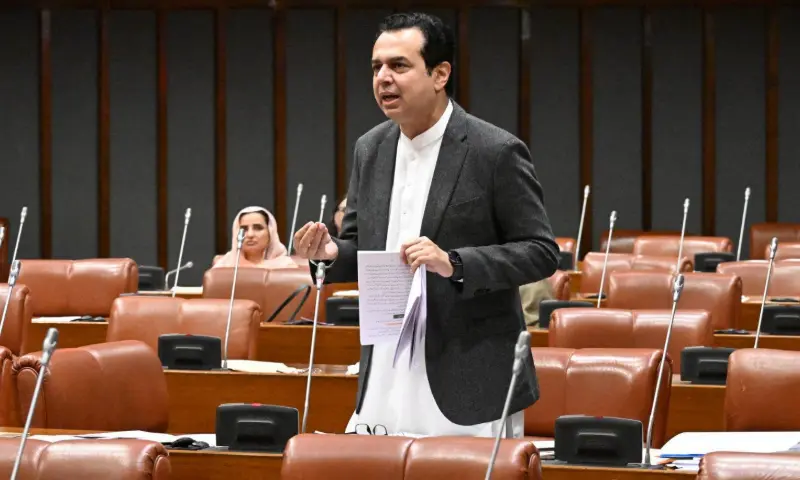
During the Senate session on Friday, PPP Senator Waqar Mehdi raised the proposed shifting of Pakistan Petroleum Limited’s (PPL) head office from Karachi to Islamabad, warning that a pattern was emerging of moving federal headquarters, ministries and corporations away from Karachi.
“The head office has been in Karachi since around 1951. Now attempts are being made to shift it to Islamabad through the board of directors, whose members are not elected representatives of the people,” Mehdi said.
He pointed out that the current office’s rent was around Rs4 million per month, but shifting would cost billions. Around 500 officers and employees from Sindh work in PPL and would face severe economic and family disruption if the head office was moved, he said.
“From the federal government’s conduct, it seems tomorrow they will talk of shifting Karachi’s sea to Islamabad as well,” Mehdi remarked.
He said PPL’s core activities, exploration, imports and related infrastructure were linked to Karachi and the institution had been working successfully from there. He demanded the decision be withdrawn.
PPP Senator Zamir Ghumro said oil and gas came under the domain of the Council of Common Interests (CCI).
“How can you shift it without the will of the CCI?” he asked.
In response, Chaudhry said PPL was a company and its board had repeatedly said vacating the office had become inevitable.
“We take everything towards provincialism, regionalism. PPL’s assets are not only in Sindh but also in Balochistan. No employees are being affected. There is no provincialism in shifting this office from Karachi,” he said.
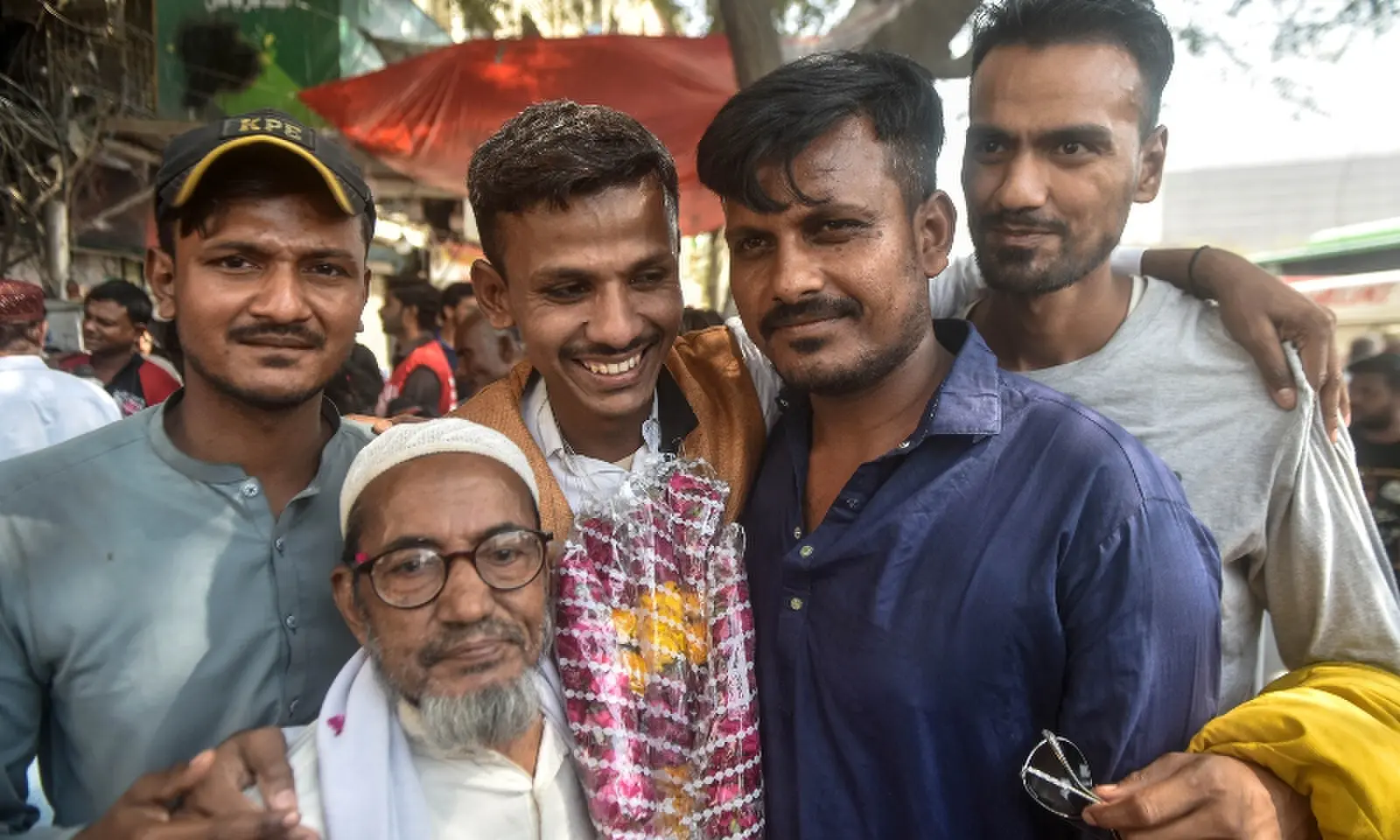
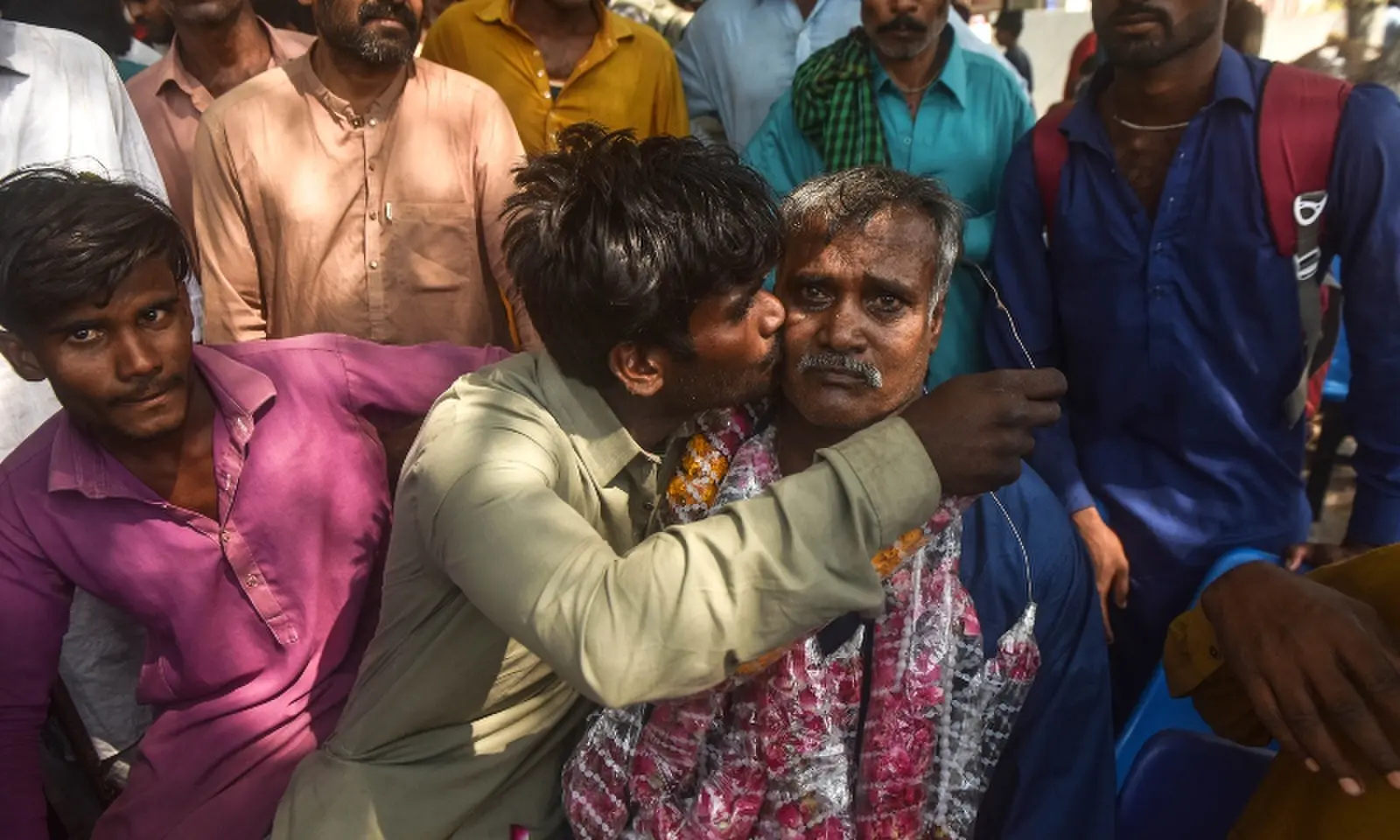
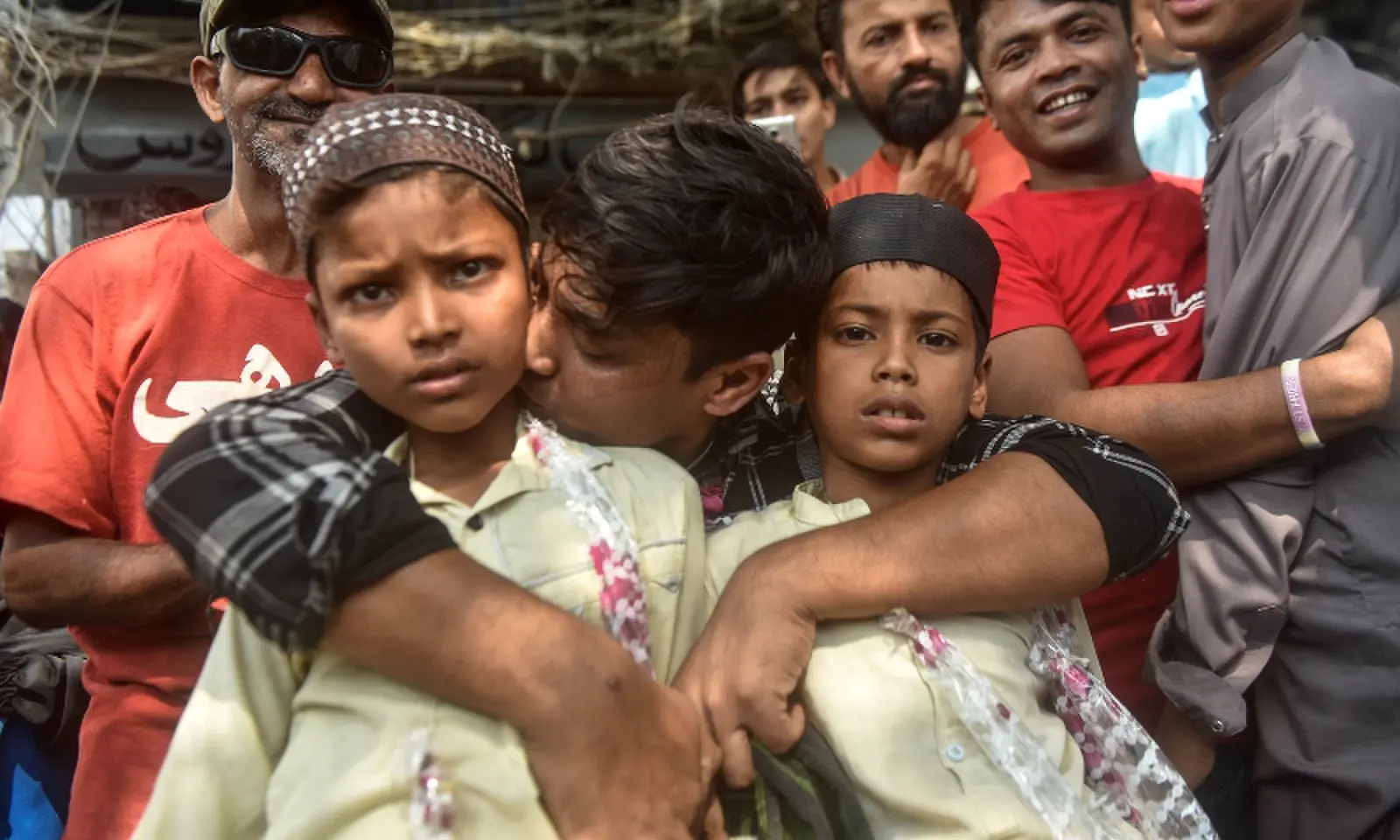
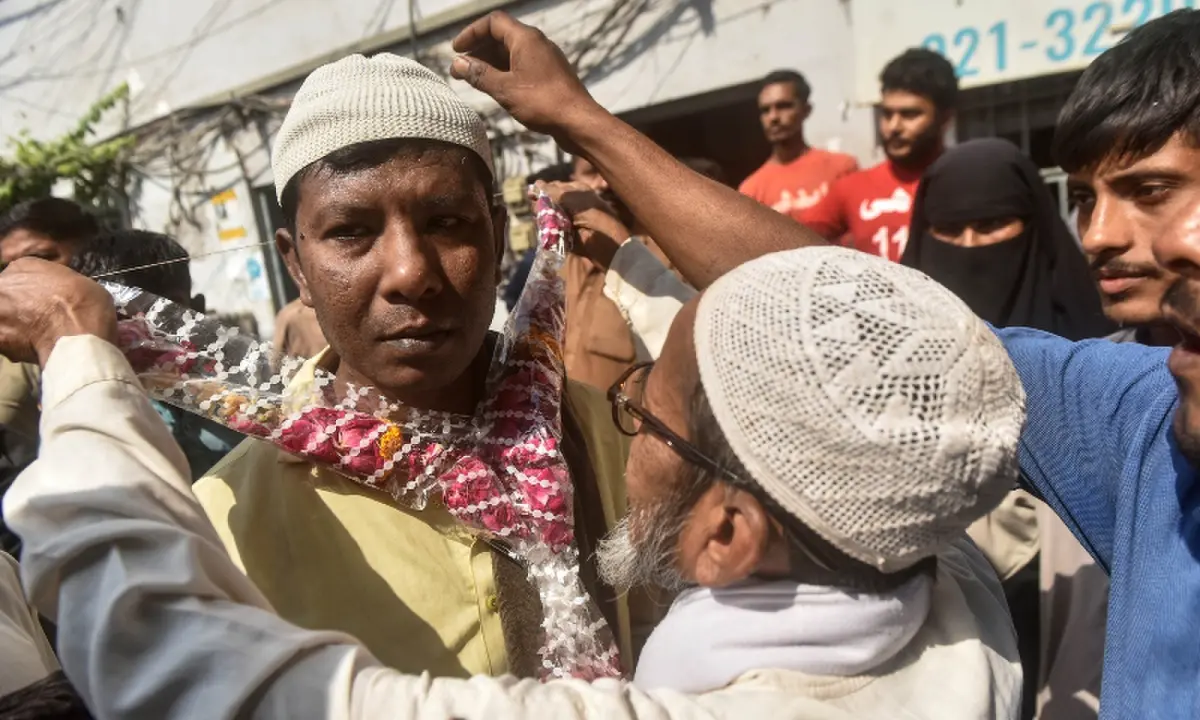
KARACHI: 11 Pakistani fishermen, after spending several years in Indian jails for unknowingly crossing over to Indian waters while fishing, were reunited with their families in Karachi on Friday morning.
The men were handed over through the Wagah Border by Indian authorities some two months ago. On Friday, the Edhi Foundation brought them from Lahore to Karachi by ambulance. They arrived at 11:30am at the Edhi Centre near Merewether Tower, where their families had been waiting since morning.
It was a touching reunion where the fishermen, having been jailed for between four and nine years, finally met their families.
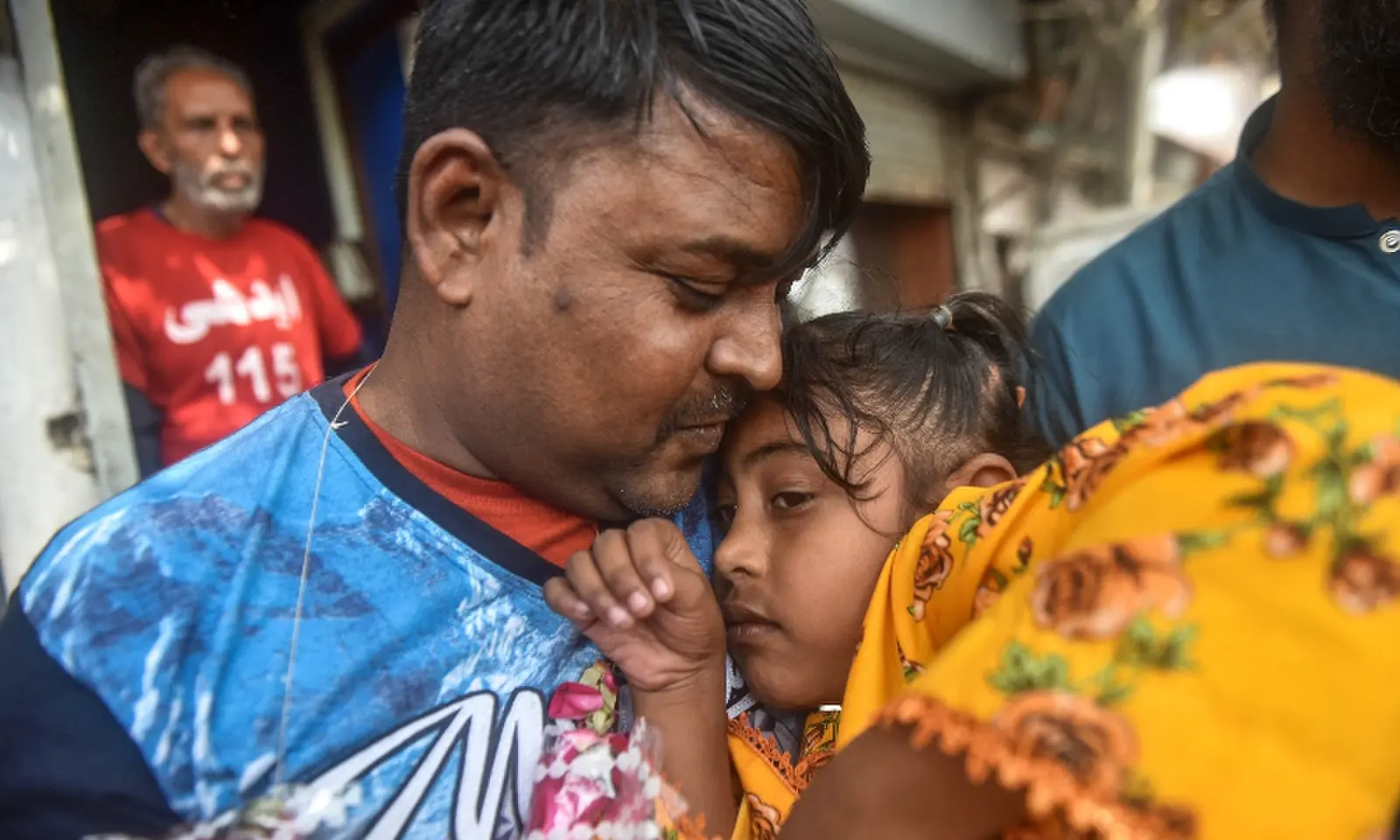
Some, like Kamal Hassan Bengali of Machhar Colony, who was in jail in India for eight years, returned to meet new family members. But his eyes grew moist knowing that his mother would not be there to greet him when he got home.
“The day our boat was captured by the Indian coast guard was the day my mother passed away. I only learned about her passing through a letter which reached me three years later,” Kamal told Dawn, as he held his eight-year-old niece Areeba close.
“I am meeting her (Areeba) for the first time,” he added, smiling through tears.
Pakistani fishermen reunite with families at Edhi Centre on October 30. — White Star/ Fahim Siddiqi
Asked how his boat crossed over to the other side, he said that they experienced an engine failure, following which the boat drifted towards Indian waters.
All of Kamal’s seven brothers and his sister have gotten married in the last eight years. His sister Manzoora told Dawn that with their mother gone, the responsibility of finding a good match for him now fell on her shoulders.
“I will get him married soon now that he is back home,” she said.
Noor Nabi Bengali, also of Machhar Colony, who was also with Kamal on the same boat, recalled their days in Indian captivity with sadness.
“We were given bad food. The lentils and plain rice or the potato and cauliflower curry that we were fed in jail would stink sometimes because it had gone bad,” he said.
Khamiso Siddiq Mallah from Shah Bandar said that he spent almost four years in Indian captivity. Now 60, he said that he has no intention of returning to fishing now that he is back.
“I will become a labourer, but I will never go back to sea,” he said.
Abdul Rehman of Korangi said that he was in jail in India for nine years.
“I don’t remember the name of my boat,” he said when asked its name.
Pakistani fishermen reunite with families at Edhi Centre on October 30. — White Star/ Fahim Siddiqi
“I only remember the horrible jail food and the lonely days I spent behind bars in India,” he shared.
“The attitude of the jail staff toward us Pakistanis never let me forget for a minute that we were in an enemy country. They treated us worse than animals.”
Mehboob Ali Mullah of Badin, who was in jail for three-and-a-half years, said that he could not wait to see his children.
“My journey doesn’t end here. I still have to travel to my village in Badin,” he said. “I have three children back home whom I cannot wait to see.”
Basheer of Machhar Colony said that he only knew how to fish, so he could not stop doing that if he wants to earn a livelihood.
“But what I’ll do is not ever fish in Sindh. I’ll fish in Balochistan, which doesn’t touch the Indian border,” he said.
“Now that I’m back in my country, I will eat good, healthy food to gain back the 70 pounds that I lost while in Indian jail,” he added.
Pakistani fishermen reunite with families at Edhi Centre on October 30. — White Star/ Fahim Siddiqi
Meanwhile, Saleem Sabro from Thatta, who has been looking for his missing fisherman brother for five years, came to give Basheer a good look.
“He looks like my brother Ahmed Ali,” he told Dawn, explaining, “I come here whenever Pakistani fishermen return from India to see if my brother might be among them.
“Among the fishermen released last year, I came across one who had information about my brother. He told me that he was in a jail in Ahmedabad,” he shared.
Sabro added that he had in the meantime contacted the Pakistan Embassy in Delhi, the Ministry of Foreign Affairs and the Ansar Burney Trust, a non-government organisation (NGO), regarding his brother.
Pakistani fishermen reunite with families at Edhi Centre on October 30. — White Star/ Fahim Siddiqi
“He served his sentence two years ago, but still he has not returned home. During this time, I have also gotten his two daughters married and found an apprenticeship with a motor mechanic for his young son,” he said.
Many Pakistani fishermen continue to languish in Indian jails. According to Fatima Majeed Motani, the Chairperson of Fishermen’s Cooperative Society, there are still more than 70 Pakistani fishermen who unknowingly crossed over to India and are currently behind bars in India.
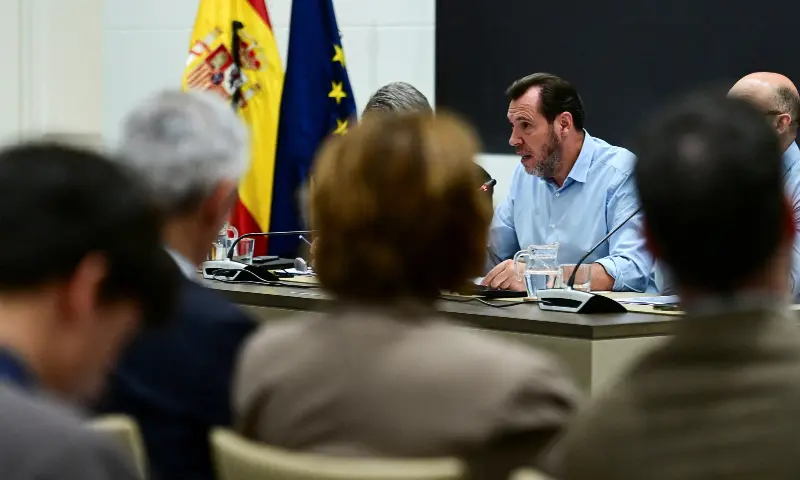
Spain’s transport minister on Friday rejected calls for his resignation over the second train accident on his watch to cause mass casualties this year, as authorities worked to identify the victims from a crash that left at least 69 dead.
Lawmakers from across the political spectrum this week condemned Transport Minister Oscar Puente for attributing Wednesday’s crash to a break in protocol by control centre operators rather than accepting responsibility, with rail workers’ unions calling for his immediate dismissal.
The crash, which happened near the town of Urda in central Spain, followed another accident involving the same rail companies on the same line that left 46 dead in January.
It has reopened a debate about safety and maintenance on Spain’s high-speed rail network, the most extensive in Europe, as the country prepares for an election that left-leaning Prime Minister Pedro Sanchez has called for November 29.
“My duty now is not to focus on discussing whether I will remain in office, but on solving the problem, determining exactly what happened and providing clear explanations,” Puente said at a press conference on Friday.
The train that smashed into a second stationary one was travelling at a speed between 160 and 200 kph when the collision occurred, according to a preliminary report released on Thursday by the Independent Authority for the Technical Investigation of Accidents and Incidents (AITAT).
“The sequence of malfunctions, instructions, and actions eventually led to the collision, in the absence of the necessary mitigating barriers,” AITAT said in the report.
AITAT said it would not be able to confirm the exact speed of the train until it extracted information from the train’s black box.
At the scene of the crash, large cranes were lifting the mangled wreckage as the Civil Guard listed 64 people as missing in what is already Spain’s deadliest train accident since 2013.
Authorities have carried out 49 autopsies so far and formally identified five people — three women and two men — Esther Padilla, spokesperson for the Castilla-La Mancha regional government, said on state television network TVE.
“Testing is proceeding slowly, although families will be contacted throughout the day so that they can come and collect their results,” Padilla said on Friday.
It was unclear if all those missing were accounted for in the death toll.
Authorities can’t rule out more fatalities
No additional bodies were found when rescue teams overturned a train carriage on Thursday, Castilla-La Mancha regional leader Emiliano Garcia-Page said on TVE.
Identifying the bodies was proving difficult because many were in pieces, he said. On Thursday, rescue teams had placed partial remains in 31 bags.
“The truth is that we cannot rule out the possibility that there may be more fatalities,” Garcia-Page said.
As identification of the dead continued, the debate about who was at fault intensified, with unions saying it was unfair to lay the blame on human error.
Prime Minister Pedro Sanchez on Friday vowed to find out what caused the accident.
“It is unacceptable for a country like Spain, with such a strong high-speed rail system, to suffer two accidents of this nature and magnitude in a single year,” he said.
The collision occurred after several trains were automatically stopped due to the failure of a signalling system, after which the central control centre in Madrid took over. A train operated by state-owned Renfe was authorised to proceed, even though there was a stationary Iryo-operated train ahead, according to Puente.
Audio of communications between the control centre and the train drivers obtained by El Pais showed how a controller authorised the Renfe train to continue on its journey at a normal speed, which Puente said disregarded a protocol to travel at no more than 40 kph in such circumstances.
The audio also showed the controller authorised the Renfe train, carrying 379 passengers and seven crew, to resume its journey even though the Iryo train, carrying 147 passengers and five crew, should have proceeded first according to protocol.
Spanish Transport Minister Oscar Puente speaks during a press conference to provide details on the deadly train crash near Toledo, in Madrid, Spain, on October 30, 2026. — Reuters
Controllers say focus should be on failed signal system
Raquel Ayllón, a union leader for state-owned infrastructure operator Adif, said controllers were having to operate under difficult working conditions.
“Human error is being criticised and questioned very quickly, while people are not really focusing on the central issue: the failure of the safety system,” Ayllón said on TVE.
The LZB system which failed, triggering the sequence of events that led to Wednesday’s crash, was behind schedule for an upgrade, public documents show.
In September 2021, Adif awarded a contract to Thales Espana, the Spanish arm of the French equipment maker, to complete the installation of a new, standardised European system called ERTMS by early 2026 for 93.8 million euros ($105m), according to press releases on the tender.
The system has been installed across most of Spanish high-speed rail, according to a factsheet by European rail association UNIFE, which developed the new ERTMS standard. But the Madrid-Seville line, site of two fatal crashes, had fallen behind, according to the tender contract.
The contract was passed to Hitachi Rail in 2024, according to Thales, which declined to provide comment on the delay of the rollout.
Pakistan’s armed forces targeted and destroyed several Afghan Taliban posts and military positions in areas adjacent to South Waziristan and Parachinar, state media reported on Friday, citing security sources.
According to state-run Radio Pakistan, the army “gave a befitting reply to unprovoked firing by the Afghan Taliban along the Pak-Afghan border in the Angoor Adda area” on Tuesday.
“Using heavy weaponry, the Pakistan Army forced Afghan Taliban personnel to abandon their posts and flee,” the report said.
Citing reports, it added that several Afghan Taliban regime personnel were also killed during the operation.
“Security forces remain committed to the defence of the country and the protection of its people and there will be no compromise on national security,” the report said.
On Tuesday, Afghan security forces opened unprovoked fire on Pakistan Army border posts and residential areas in the Angoor Adda border area, which claimed the life of one local and injured a family of five.
According to officials, the firing originated from posts located inside Afghan territory and targeted Pakistani border posts with sniper, small and heavy weapons.
Sources said that Pakistani forces launched an immediate and effective retaliatory action, engaging multiple Afghan Taliban border posts, mortar positions and defensive bunkers with small and heavy arms, including artillery.
Khyber Pakhtunkhwa Governor Faisal Karim Kundi had condemned the firing, asserting that Pakistan would “never tolerate” attacks on its people or violations of its sovereignty.
Meanwhile, Pakistan had also dismissed a statement by Afghanistan’s defence ministry regarding the incident that claimed that Pakistan was the aggressor, terming it a “fabrication of lies”.
The border at Angoor Adda is one of the most important and sensitive crossings along the Pak-Afghan border, serving as a key trade route and one of the main points of public movement between the two countries.
Pak-Afghan tensions
Islamabad has repeatedly urged the Taliban administration in Kabul to dismantle terrorist sanctuaries on Afghan soil, particularly those linked to the banned Tehreek-i-Taliban Pakistan, that are used for attacks in Pakistan. Officials say those appeals have gone unheeded.
September witnessed another bout of conflict between Pakistan and Afghanistan.
On Sept 21, in response to recent major terrorist attacks in Khyber Pakhtunkhwa, Pakistan conducted “calibrated” airstrikes in the border region with Afghanistan against terrorist hideouts, with the government saying more than 28 terrorists were killed.
Information Minister Attaullah Tarar described the action as part of Operation Ghazab lil Haq, which was launched on the night of Feb 26 in response to unprovoked cross-border firing by the Afghan Taliban.
Days later, Pakistan shot down eight drones launched from across the border that had entered Pakistani airspace near the Torkham border and Kohat. It was also reported that the Afghan Taliban engaged in unprovoked firing the night before near Kurram as security forces foiled an attempt by terrorists to cross into Pakistan.
In retaliation for the drone incursion, Pakistan conducted “precision aerial and drone strikes” in 10 locations across Afghanistan.
A demarche was also delivered to the Afghan side on Sept 26 on account of the Sept 23 airspace violation by drones, the Foreign Office said.
On Oct 1, Pakistan again carried out “well-planned and calibrated” airstrikes against terrorist hideouts in Afghanistan, the information ministry said, adding that the strikes resulted in the deaths of “multiple terrorists”.
Around mid-October, the state media reported that security forces had again responded to unprovoked firing by Afghan Taliban forces along the Pakistan-Afghanistan border in KP’s Upper Kurram.
It quoted security sources as saying that several personnel of the Afghan Taliban were “reportedly killed during the Pakistan Army’s retaliatory action along the Ghuzgarhi border”. The sources further said that in the Upper Kurram sector, the army targeted the Afghan Taliban’s Topsar post and Shipola base camp with artillery fire, reportedly completely destroying the latter.
The border skirmishes came a day after the Foreign Office said that talks with Afghanistan could not be unconditional, but also rejected suggestions that Islamabad was unwilling to engage with its neighbour and said it would welcome sincere efforts by friendly countries to help resolve the dispute.
Pakistan Super League (PSL) franchises will be allowed to retain a maximum of seven players, including their direct signing, for the 12th edition of the tournament, but any side exercising the full retention allowance will have to release a player from the highest price tier of the previous auction into the general player pool.
The provision, unanimously approved by all eight franchises at a tournament operations workshop at Gaddafi Stadium on Thursday, is among the key regulations finalised ahead of the PSL 12 player auction scheduled for January 23.
The mandatory release of a top-tier player is aimed at ensuring the availability of elite talent to all franchises during the auction, while allowing teams to preserve a significant portion of their existing squads.
The deadline for player retentions has been set for January 13, ten days before the auction. The timing will allow franchises to assess performances in the National T20 Silver tournament, which will have concluded, and the ongoing National T20 Gold competition before making their final decisions.
The Pakistan Cricket Board (PCB) said the arrangement would provide a “live, data-driven link” between domestic cricket and the PSL, giving players performing in the National T20 competitions an opportunity to attract franchise attention.
A domestic player in form during the National T20 Gold tournament could, according to the PCB, “force his way into franchise thinking in real time”.
The auction, which will be only the second in PSL history, will operate under a salary cap of Rs45 crore for each franchise. The cap will rise to Rs50.5 crore for a franchise that makes a direct signing for PSL 12, retains its direct signing from the previous season, or opts for both.
All franchises will also be required to spend a minimum of Rs36.5 crore on their squads.
The window for direct signings will remain open until November 23, 2026. Each franchise will be permitted to directly sign one marquee player who did not feature in either PSL 10 or PSL 11.
The regulations were finalised during a workshop chaired by PSL chief executive Salman Naseer, with all eight franchises reaching unanimous agreement after reviewing the auction rules clause by clause.
Discussions also covered direct signings, player retentions, trade windows, squad sizes and salary caps.
“What made today remarkable was not just what was agreed, it was how it was agreed,” Naseer said in a statement.
“Every franchise engaged with complete openness, the Auction rules were worked through line by line, and we finished with unanimous buy-in across all eight sides,” he added.
Naseer said the retention deadline had deliberately been aligned with the National T20 competitions to give domestic performers a genuine opportunity to influence franchise squad selections through their performances.
The PCB said more major announcements concerning PSL 12 would be made in the coming weeks.
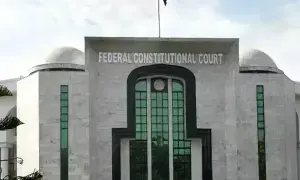
ISLAMABAD: The Federal Constitutional Court (FCC) on Friday regretted the non-implementation of an earlier Supreme Court judgment in the sacked employees case, underlining that disregarding or delaying the implementation of the latter’s verdicts by the government amounts to “challenging the very framework of the legal system”.
The observation came while hearing a set of contempt of court petitions against the Punjab government, as well as the federal government, for not implementing the Dec 17, 2021 SC judgement — a verdict which had converted the review hearings to the jurisdiction of Article 184(3) only to safeguard the fundamental right to livelihood of a number of sacked government employees.
Subsequently, review petitions were instituted against the 2021 judgement that had rendered almost 17,000 government employees jobless by holding as illegal and unconstitutional a PPP-era law, known as the Sacked Employees (Reinstatement) Ordinance Act 2010 (SERA), under which thousands of people were employed or promoted.
On Friday, FCC judge, Justice Ali Baqar Najafi, emphasised that the orders of the SC, as the then-apex court before the 27th Constitutional Amendment, were “not merely recommendations or advisories but they are legal mandate that must be followed”.
Justice Najafi was a member of a three-judge bench, which was headed by FCC Chief Justice Aminuddin Khan, that had taken up a set of contempt of court petitions on the non-implementation of the SC judgement.
In a ten-page order, Justice Najafi observed that the decisions of the SC were the culmination of “vigorous legal scrutiny and deliberation intended to reflect upon the values and laws of the land”.
“It is imperative to underline that in a constitution democracy the rule of law is not just a principle but the foundation upon which the legitimacy of and the good governance in any system of government rests,” Justice Najafi observed.
“The SC, being the apex court of the country, was entrusted with performing the responsibility of interpreting the law, ensuring justice and upholding the Constitution,” the judge observed.
“The orders of the Supreme Court, as the then apex court, are not merely recommendations or advisories but they are legal mandates that must be followed.
“And compliance with the judicial decision is not a matter of courtesy but a constitutional requirement, the non-compliance of which not only disturbs the delicate equilibrium between the prestige of the court and the enforcement of rights but also sets a dangerous precedent that could lead to an executive overreach,” Justice Najafi emphasised.
“Besides, the implementation of these orders is crucial for maintaining public confidence in the judicial system. If their decisions can be easily ignored or set aside by the individuals or entities, public trust in the efficacy of the judiciary and the entire government is seriously undermined,” the judge emphasised.
“Consequently, the erosion of trust in the judicial system may lead to undermining the democratic system,” the judgement held.
Reverting to the case, the FCC noted that the SC judgement required that the beneficiary employees would have to undergo relevant tests applicable to their post to be conducted by the Federal Public Service Commission (FPSC) within three months.
To take aptitude, scholastic, or skill tests was the responsibility of the employer, and if it was not conducted, it would not be considered a fault of the employees, who never refused to appear in the test until today, the judgement said.
Admittedly, the employees were granted employment by one government, terminated by another government, reinstated into service by a government and then the Act of 2010 reinstating such employees was declared unlawful by the SC, and in all these situations, employees had committed no fault, the judge emphasised.
If an offer to take the test is not made, the employees could not be put at any disadvantageous position so as to deny the benefit of the said order now sought to be implemented, Justice Najafi maintained.
“We therefore hold that the conditions so imposed by the SC on the beneficiary employees were waived/diluted by the respondent-department due to the afflux of time and lethargy on their part and not for any fault of the employees.
“Such conduct cannot be awarded with any sentence of appreciation by FCC,” Justice Najafi said.
“The inaction on the part of the employers was marked with caution, persuading us to show our concern to a sorry state of affairs,” he cautioned.
Hackers stole $6.3 billion from Binance in the world’s biggest crypto heist, putting a spotlight on how cryptocurrency exchanges insure their digital assets against theft and cyberattacks.
But insurance protection is far from uniform. Coverage depends on how assets are stored, how hackers gain access and the specific terms of the policy.
Limited regulation and volatile crypto prices have long made insurers wary of the sector, despite growing demand for protection against digital asset theft and claims against company executives.
While both crime and demand for protection have tracked cryptocurrencies’ meteoric rise, underwriting such risks remains a niche business offered largely by specialist insurers in the Lloyd’s market and in Bermuda.
What is digital asset insurance?
Digital asset insurance is a range of policies designed to protect cryptocurrency exchanges, custodians and other companies operating in the sector against financial losses arising from the theft of digital assets, cyberattacks, technology failures and other business risks.
Unlike traditional insurance, these policies are tailored to risks associated with blockchain technology, including the theft or loss of private keys, wallet security breaches, smart contract vulnerabilities and failures in digital asset custody.
The global crypto insurance market was valued at $9.37bn in 2025 and is projected to reach $184.98 billion by 2033, according to Data Bridge Market Research.
The research firm cited growing institutional adoption of cryptocurrencies and rising incidents of cyberattacks and digital asset theft among the factors driving demand.
Coverage can include several types of policies: crime insurance for theft, social engineering and scams; cyber liability for breaches, hacks and regulatory response; errors and omissions insurance for software bugs; smart contract failures; directors and officers insurance for lawsuits targeting executives; and technology liability for infrastructure providers.
How are losses covered?
When a crypto exchange suffers a hack, losses can be covered through a combination of insurance payouts, the company’s own capital and emergency funds set aside to compensate customers.
The extent of insurance coverage depends on the policies held by the exchange, including their limits, deductibles and exclusions. Where losses exceed the insured amount, the company must rely on its own financial resources or other recovery arrangements to meet its obligations.
Some exchanges also maintain reserve funds to reimburse customers following security breaches. Binance established the Secure Asset Fund for Users (SAFU) in July 2018 as an emergency reserve to protect users in extreme cases, such as security breaches or platform-level incidents.
As of 2026, the SAFU fund holds crypto assets worth roughly $1bn, entirely in bitcoin, according to Binance’s website. The company did not immediately respond to Reuters’ request for comment on its insurance coverage.
What can prevent an insurance payout?
Exclusions that let insurers deny certain claims are common in policies covering digital assets and the personal liabilities of directors and officers at cryptocurrency companies. These can limit the scope of protection available to companies and make it harder for them to secure coverage.
Common exclusions in these policies include value fluctuations, fraudulent acts by the policyholder and unsecured or negligent key management.
Do traditional crime and cyber insurance policies cover crypto?
Most standard crime insurance policies do not cover cryptocurrency losses, as they were originally designed to protect physical property such as cash, securities and precious metals.
Traditional cyber liability policies also do not always cover the value of digital assets stolen in a hack. While cyber policies can cover both first-party losses and third-party liabilities, including forensic investigations, customer notifications and legal expenses, they generally exclude the loss or transfer of funds.
As a result, standalone cyber policies typically do not cover the full value of stolen cryptocurrency unless specific digital asset coverage has been added.
How do insurers assess crypto theft claims?
Insurers examine how a breach occurred, which systems were compromised and whether the resulting loss falls within the policy’s coverage.
They may also assess whether the exchange followed required security procedures, including controls over private keys, wallet access and transaction approvals.
The distinction between an external hacker stealing credentials and an employee deliberately transferring assets can determine whether a crime or cyber insurance policy covers the loss.
ISLAMABAD: Pakistan and Saudi Arabia agreed on Friday to strengthen strategic cooperation in oil storage, refinery upgrades, crude oil and liquefied petroleum gas (LPG) procurement, and the minerals sector to promote bilateral economic ties, according to a statement issued by the Petroleum Division.
Saudi Arabia also announced the immediate introduction of same-day visa processing for Pakistani citizens at its embassy in Islamabad.
Pakistan has been planning to boost domestic storage for crude oil and refined products to increase its energy security. With no strategic petroleum reserves, the country has been left exposed to oil supply shocks resulting from the US-Iran war that has choked supplies through the Strait of Hormuz.
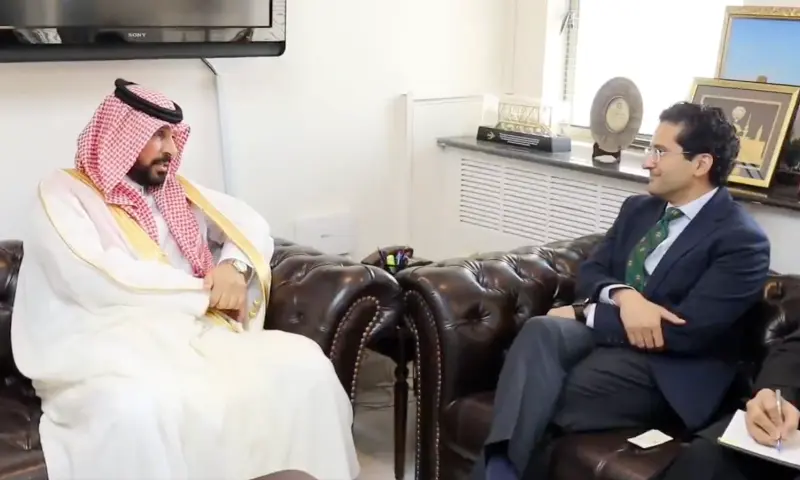
The developments were announced after Petroleum Minister Ali Pervaiz Malik met Saudi Arabia’s new ambassador to Pakistan, Dr Rajeh bin Tami Al-Baqami, to discuss opportunities for enhancing cooperation in the mining, petroleum and energy sectors, including strategic oil storage, refinery upgrades, LPG supplies and commercial engagement.
The minister appreciated the longstanding strategic partnership between the two countries and said Pakistan had approved a tax-neutral bonded policy modelled on international energy hubs such as Fujairah and Singapore, according to the statement.
“Under this framework, Saudi companies can establish commercial oil reserves in Pakistan without local tax liabilities, offering an opportunity to diversify maritime transit risks associated with the Strait of Hormuz and Bab al-Mandab while facilitating access to Asian markets,” the statement said.
“The petroleum minister highlighted that strategic oil storage facilities in Pakistan would provide Saudi Arabia with greater flexibility in managing supply routes and accessing regional markets,” it added.
The statement further quoted the minister as saying that Pakistan planned to develop a major petroleum storage and refining complex at Hub in Balochistan under the guidance of Technip Energies UK.
“The proposed facility, supported by the prime minister and the chief of defence forces, will have the capacity to accommodate Very Large Crude Carriers (VLCCs) and strengthen Pakistan’s potential as a regional energy corridor serving Central Asian and Chinese markets,” the statement quoted Malik as saying.
Malik also briefed the ambassador on investment opportunities under Pakistan’s ongoing refinery upgradation programme, which aims to modernise domestic refining infrastructure, improve operational efficiency and facilitate a transition to Euro-5 fuel standards.
He said the programme offered significant opportunities for Saudi investment and participation in Pakistan’s refining sector.
Appreciating Saudi Arabia’s support during recent global market disruptions, the minister thanked the Saudi authorities at Yanbu port for prioritising crude oil shipments to Pakistan.
He also discussed coordination with Saudi Aramco to increase crude oil procurement and arrange dedicated LPG shipments to meet Pakistan’s energy needs, particularly amid an anticipated rise in domestic gas demand during winter.
Both sides underscored that the strong defence and strategic partnership between Pakistan and Saudi Arabia provides a foundation for broader regional peace, stability and economic cooperation.
The Saudi envoy expressed Riyadh’s deep appreciation for Pakistan’s longstanding support, saying the two countries stood together in all circumstances.
The ambassador emphasised that the two countries’ defence and energy cooperation frameworks aimed to promote peace, stability and economic growth across the region.
The minister also announced that the Saudi embassy in Islamabad had introduced same-day processing of visa applications for Pakistani citizens to facilitate travel and strengthen business, cultural and people-to-people exchanges.
Malik invited Saudi Arabia’s Vice Minister of Mining, Khalid al-Mudafier, to attend the Pakistan Minerals Investment Forum, scheduled to be held in Islamabad on November 12 and 13, highlighting further opportunities for cooperation and investment in Pakistan’s minerals sector.
Both sides expressed their commitment to strengthening their longstanding relationship through enhanced cooperation, investment and mutually beneficial partnerships in the energy and petroleum sectors.
The minister assured the ambassador that Pakistan deeply valued its historic relationship with Saudi Arabia and remained committed to expanding cooperation across strategic sectors.
Earlier in July, Prime Minister Shehbaz Sharif directed authorities to increase the country’s strategic petroleum reserves as a cabinet committee approved amendments to the oil refining policy.
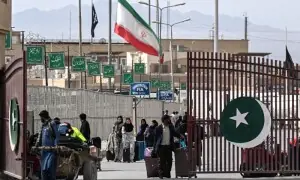
THE petroleum minister’s explanation in the National Assembly that the recent closure of the Iran border has disrupted liquefied petroleum gas supplies and driven up prices identifies a major cause of the current crisis. The subsequent partial border reopening has failed to ease the shortage.
While the closure may have triggered the present shortages and price hike, the problem recurs every winter. Pakistan produces only about a quarter of the LPG it needs. The rest is imported, mainly from Iran. The disruption of cross-border trade has therefore exposed the vulnerability of a market that depends heavily on external supplies. The Iran war has also complicated efforts to bring in more by sea. The minister says efforts are being made to increase seaborne supplies, but consumers have yet to see relief.
The state must explain what additional volumes have been secured, and when they will arrive. Further, why were no contingency measures taken before the Iran border closure, especially when the authorities knew that the onset of winter would push up demand? The decision-makers owe an explanation to people suffering due to sudden shortages and price shock.
That said, the current LPG supply disruption is only part of the wider story. LPG prices have historically surged as winter approaches, even without a major supply shock. This recurring pattern suggests that the crisis is not simply the result of border closure.
Inadequate advance planning, weak market oversight and the failure to build reliable supply arrangements leave consumers exposed whenever demand rises or imports are interrupted. The consequences are particularly harsh for households without access to piped natural gas. Millions of families in northern Pakistan, remote and hilly areas, and parts of Punjab depend on LPG for cooking and, during colder months, heating.
Low gas pressure and restricted supplies in connected areas also push more consumers towards cylinders, adding to demand. With the official price around Rs280 per kg and reported market rates reaching Rs500-800, an essential fuel has become unaffordable for many. Blaming the Iran border closure is but an attempt to cover up the ministry’s failure to do its basic duty: ensure adequate supplies ahead of the closure and enforce the official fuel price.
ISLAMABAD: Short-term inflation rose to 11.32 per cent year-on-year in the week ending October 29, driven largely by perishable food products, according to official data released by the Pakistan Bureau of Statistics (PBS) on Friday.
The index, comprising 51 items whose prices are collected from 50 markets in 17 cities, is calculated weekly to track changes in the prices of essential commodities and services.
Short-term inflation has remained in double digits for several consecutive weeks, largely on the back of persistent increases in petroleum and diesel prices.
The data showed that of the 51 essential items monitored during the week, the prices of 15 commodities increased, while those of 12 items declined. Meanwhile, the prices of 24 items remained unchanged from the previous week.
The Sensitive Price Index (SPI), which tracks short-term inflation, decreased slightly by 0.35pc week-on-week, reflecting price fluctuations in both food and non-food items.
Unwilling to reduce the petroleum levy, the government has continued to raise petrol and diesel prices. The surge in energy costs is not only fuelling inflationary pressures but also indirectly boosting sales tax collections through higher prices of goods and services.
This is an example of cost-push inflation, in which rising energy costs lead to increases in food prices. As a result, households are facing mounting pressure from higher consumer prices.
The items that recorded the highest price increases over the previous week included tomatoes (34.91pc), potatoes (3.27pc), diesel (2.53pc), pulse gram (2.11pc), plain bread (1.29pc), onions (0.62pc), fresh milk (0.48pc), curd (0.46pc), vegetable ghee (0.29pc) and firewood (0.2pc).
The items that recorded week-on-week price declines included electricity charges for Q1 (3.92pc), chicken (2.95pc), eggs (2.81pc), wheat flour (0.83pc), LPG (0.73pc), bananas (0.71pc), rice IRRI-6/9 and masoor pulse (0.43pc each), petrol (0.39pc), sugar (0.35pc) and powdered milk (0.33pc).
On an annual basis, the items that recorded the highest price increases included LPG (106.86pc), electricity charges for Q1 (52.38pc), diesel (45.13pc), petrol (43.61pc), wheat flour (34.87pc), chicken (31.72pc), chilli powder (15.55pc), mutton (14.66pc), plain bread (12.26pc), beef (12.10pc), onions (8.99pc) and prepared tea (8.41pc).
In contrast, potato prices fell by 38.67pc, followed by tomatoes (27.99pc), eggs (26.70pc), sugar (25.21pc), powdered salt (14.86pc), gur (8.51pc), masoor pulse (8.37pc) and moong pulse (6.42pc).
Last week, short-term inflation rose to 11.85pc year-on-year, driven largely by higher wheat flour prices, according to data released by the PBS.
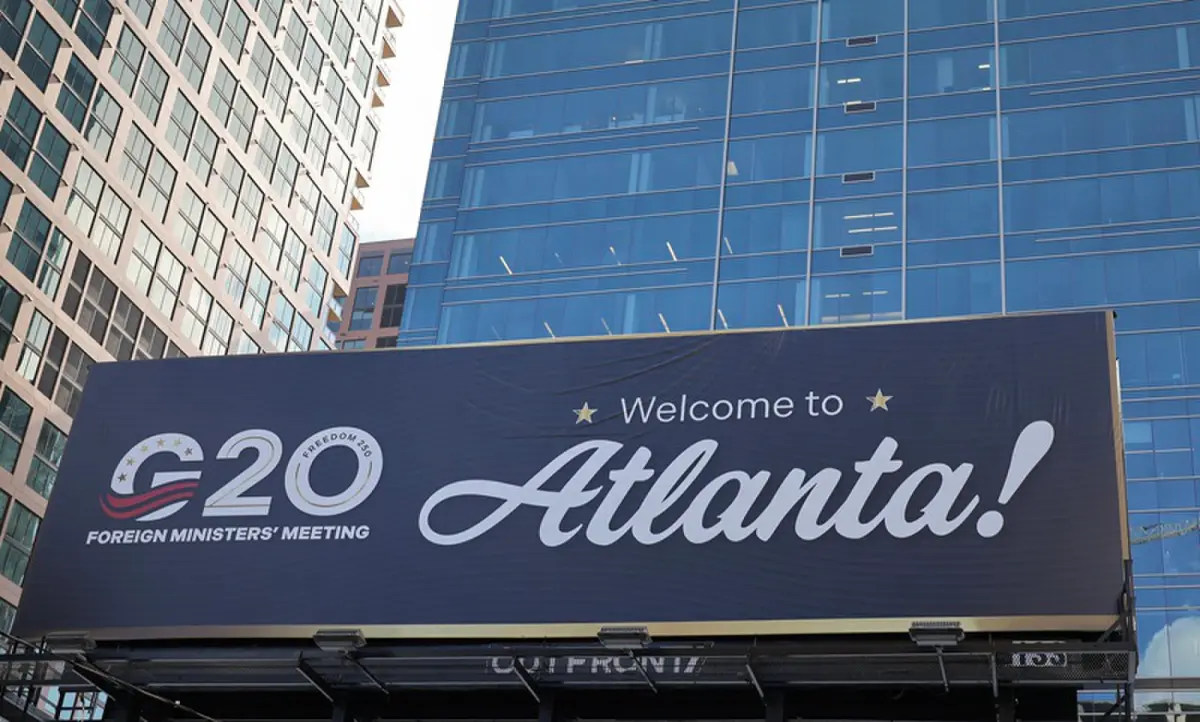
US Secretary of State Marco Rubio will host his G20 counterparts, including Russia’s Sergei Lavrov, for talks on Friday that are expected to be fractious, with wars in Ukraine and Iran and surging energy prices fanning discord.
The foreign ministers’ meeting in Atlanta, Georgia, taking place just days before crucial US midterm elections, will set the stage for a December G20 leaders’ summit in Miami at President Donald Trump’s Doral resort.
Few breakthroughs are expected this week from the Group of 20 economies — which include China, India, Russia, Japan, Germany and France — as officials face divisions over Moscow’s war on Ukraine and fallout from conflict with Iran.
Russia has been shunned by most of the West after its 2022 invasion of Ukraine, and Lavrov himself remains under international sanctions.
Rubio’s encounter with Lavrov — whose presence adds an additional layer of tension — will be closely watched as Washington pursues diplomacy on Ukraine while seeking Moscow’s cooperation on reining in fuel prices, a key campaign issue in the midterms.
“The G20 is no longer really a forum where foreign ministers can reach agreement on a statement,” a diplomatic source said.
The source added that the US G20 presidency intends for Miami’s summit to serve “more as a demonstration of American power — and of US commitments to growth, deregulation, trade and business — rather than as a summit with grand ambitions on substantive issues.”
Instead of a final declaration, the source expects a chair summary drafted by the United States to be published from this week’s meeting.
The Trump administration, which is set to hand the rotating G20 leadership to Britain, sees the platform as having strayed from its core mission.
Washington has pledged to return the grouping to its goal of driving economic growth, arguing that security and economic prosperity are “inextricably linked.”
“Conversations in Atlanta will provide an opportunity to discuss energy and supply chain challenges as well as identify ways to collectively address the impact of geopolitical tensions on economic security,” a US State Department official said.
They stressed the importance of energy access — necessary for tech like artificial intelligence — and flagged a “shared resolve to confront urgent crises and keep critical sea lanes open to commerce without threats or tolls.”
“This is the last test case the G20 has, at least under the US G20 presidency, until Miami,” Alisha Chhangani of the Atlantic Council told AFP. Its outcomes will affect how the December summit shapes up.
She expects Washington will seek to argue that security shocks are also economic shocks.
It will likely push for agreement on what “freedom of navigation” means within and beyond Hormuz, a crucial waterway for oil and gas transit, she said.
But this could face objections from China, which dissented against wording on free navigation in Hormuz and worldwide at an earlier gathering of finance ministers.
China’s top diplomat Wang Yi will not be in Atlanta, and is instead sending his deputy, the US State Department said.
Meanwhile, the possibility of further escalation in the Middle East is mounting, with Israel threatening to strike Iran and Trump signalling he could attack after Tuesday’s midterm elections.
Lavrov attendance
In Atlanta, Rubio is also due to cross paths with Lavrov, who has already reached Atlanta according to Russian state media.
It comes ahead of fresh negotiations between Moscow, Kyiv and Washington in November.
The appearance of Lavrov, who plans to argue against international sanctions at the gathering, will likely frustrate European ministers, Chhangani said.
It is not surprising, however, as Washington has welcomed Russian officials to this year’s G20 events — while excluding member South Africa — and Trump has invited his Russian counterpart Vladimir Putin to Miami in December.
Trump has eased some sanctions on Moscow recently while touting a deal for Russia to sell diesel as prices soared, squeezing Americans.
The diplomatic source stressed that Russia’s G20 presence “in no way legitimizes its actions.”
All eyes will also be on US engagement with Brazil, whose foreign minister will be in attendance, after Washington granted entry to Flavio Bolsonaro following his defeat in Sunday’s presidential election.
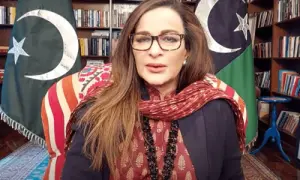
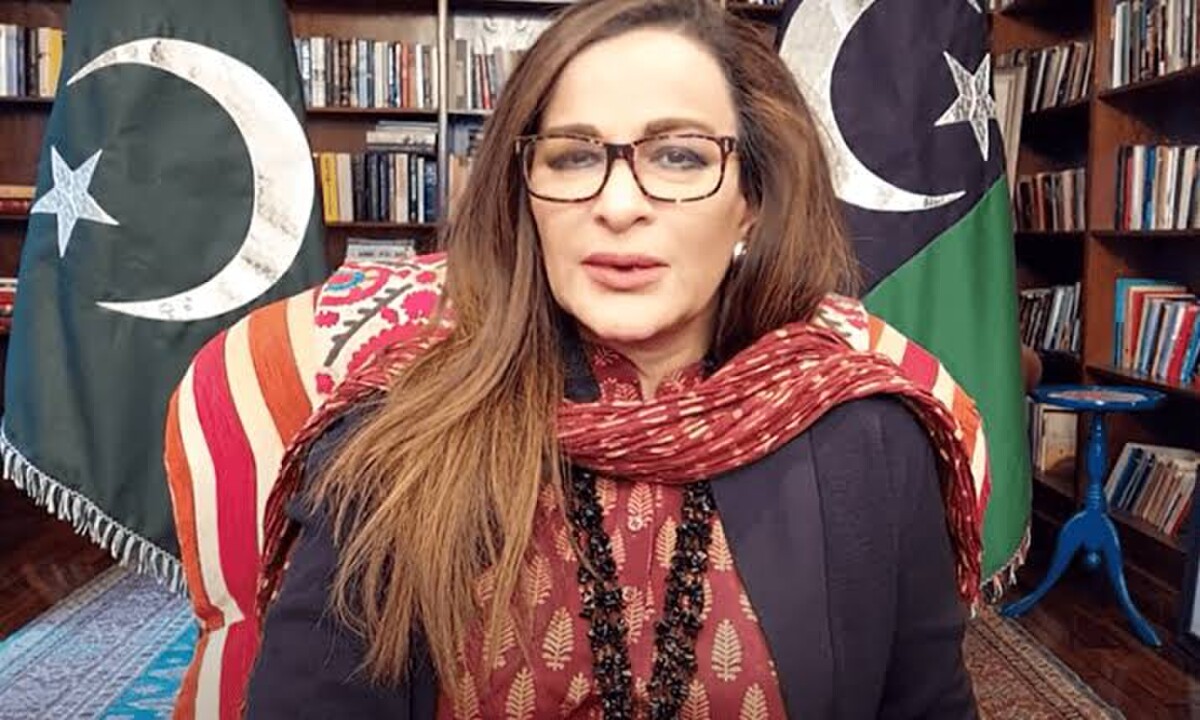
ISLAMABAD: A PPP delegation called on Senate Opposition Leader Allama Raja Nasir Abbas on Friday and urged the opposition to join a proposed parliamentary committee on electoral reforms, Senator Sherry Rehman said.
“He told us that he will respond [to the proposal] after consultation. We are hopeful that their response will be positive,” Rehman said in a video statement after the meeting.
The proposal for the committee’s formation was shared by PPP chairperson Bilawal Bhutto-Zardari during the National Assembly on Thursday.
He had said Parliament had decided to constitute a committee on electoral reforms in response to a PPP request and urged Opposition Leader in the NA Mehmood Khan Achakzai to nominate a representative to the committee since the opposition had described electoral rigging as a “fundamental issue”.
PTI lawmakers had quit the parliamentary standing committees last year on the directives of their party chief.
On Friday, another PPP delegation, comprising the party’s secretary general Nayyar Bokhari, Senator Waqar Mehdi, Nadeem Afzal Chan and Rehman, visited Senate Opposition Leader Allama Raja Nasir Abbas with yet another invitation to join the proposed body.
The opposition delegation included Abbas, Mahmood Khan Achakzai, Noor-ul-Haq Qadri and Senator Ali Zafar.
Bokhari said the opposition leaders told the PPP delegation that they would consult with all opposition parties before coming up with their response to the PPP invitation.
Speaking during the meeting, Senator Rehman said the objective of the committee was to bring the government and opposition together to formulate joint proposals for ensuring free, fair and transparent elections.
“Repeated questions over the credibility of the electoral process undermine the credibility of Parliament itself. Free, fair and transparent elections are essential not only for protecting the rights of voters but also for strengthening democratic institutions,” she added.
Rehman said that the committee would deliberate and present its recommendations before parliament for approval. She stressed that electoral reforms must be a collective parliamentary undertaking to ensure broad-based political consensus and public confidence.
A source privy to the meeting told Dawn that the PPP delegation also urged the opposition leaders to sit down with Prime Minister Shehbaz Sharif regarding the appointment of a new chief election commissioner (CEC), as the incumbent CEC was still sitting in office even after two years of retirement.
Under the 27th Constitutional Amendment, the CEC continues to serve until the appointment of a successor.
Speaking to the media after the meeting, Rehman said: “We have told the opposition that they must join this committee, play an active role and openly express their reservations.”
She added, “If they (opposition members) remain absent, how will their reservations be addressed?”
“Every political party should ensure its participation in the committee. We all know that the PTI has boycotted parliamentary committees. So we asked them to join this committee, play an active role in it, express their reservations and suggest reforms,” Rehman said in the video statement.
These committees, she said, were the “heart of parliamentary work”.
She further stated that the PTI should participate in other parliamentary committees as well and “strengthen Parliament’s role”.
Rehman added that Abbas had welcomed the PPP delegation, expressed gratitude to Bilawal and said they would respond to the proposal after consultation.
“We are hopeful that their response will be positive,” she said.
PTI’s Parliamentary leader in the Senate, Senator Zafar, said while speaking to the media that electoral reforms were essential for strengthening democracy and ensuring public confidence in the electoral process.
However, he emphasised that the fundamental problem in Pakistan was not the absence of laws or the need to make new laws. “The real problem lies in their implementation,” he said.
“The key question is how we will ensure that existing electoral laws are implemented honestly, transparently and without discrimination. Unless this fundamental issue is addressed, merely introducing new laws will not achieve the desired results.”
Zafar thanked the PPP for extending the offer and stated that the PTI would discuss the proposal internally within the party before formulating and communicating its response.
He reiterated that any meaningful discussion on electoral reforms must address both the legal framework and, more importantly, the mechanisms to ensure its effective implementation.
A day earlier, another PPP delegation invited Opposition Leader Mehmood Khan Achakzai to participate in the parliamentary committee to promote consultation and discussion among parliamentary representatives on electoral reforms.
Later, in a press conference, Raja Pervez Ashraf said the PPP delegation had a meeting with Achakzai on Bilawal’s instructions to invite him to join the committee.
“The PPP wants the PTI to participate in parliamentary standing committees as well as the electoral reforms committee,” he added.
Achakzai had sought time to consult before responding to the invitation, he said.
Addressing a rally in Karachi earlier this month, Bilawal had also extended an olive branch to the opposition parties, saying their positive engagement with the federal government could result in the reversal of governor’s rule in Khyber Pakhtunkhwa.
The PPP chairman had invited the opposition to join the Parliamentary electoral reforms process and “engage with the federal government”.

 Login