Residents in the Capote Lake drainage area of Archuleta County are under an evacuation warning, according to the Archuleta County Sheriff's Office.
This warning includes the entire U.S. Highway 151 corridor and roads accessing Highway 151 between U.S. Highway 160 and Arboles. River levels are rising, and the sheriff's office said flooding is possible in low-lying and flood-prone areas.
Officials warned residents to expect localized flooding, submerged riverbanks and dangerous swift-water conditions. They advised people not to walk, play or camp near any riverbanks and warned against driving through flooded roadways. The sheriff's office also urged residents to keep pets away from rising water, secure property in low-lying areas and move equipment or outdoor items to higher ground if necessary.
The warning was issued because officials said there is a high likelihood an evacuation order could become necessary due to rising floodwaters. Residents were advised to arrange transportation, confirm evacuation plans, gather important items and be prepared to leave if conditions worsen.
People with disabilities and those with large animals should leave now, officials said.
The sheriff's office warned drivers to expect increased emergency vehicle traffic in the area.
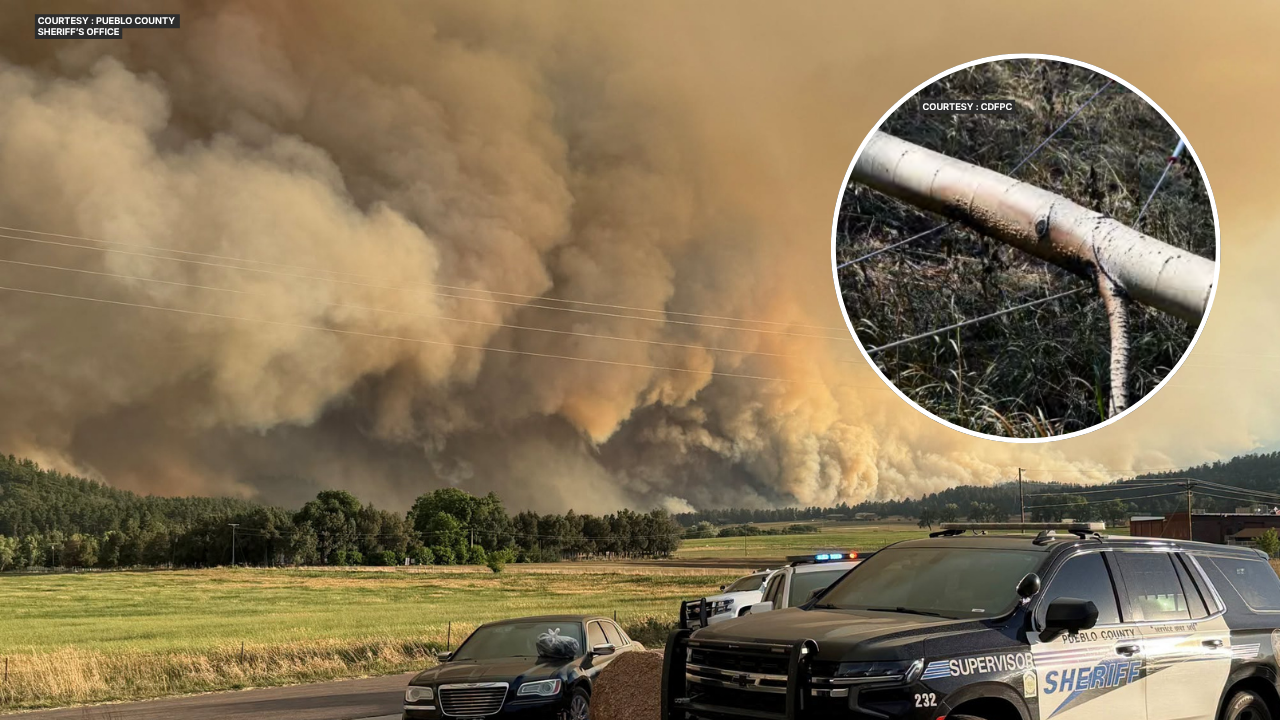
The final update on a wildfire that burned more than 100,000 acres, destroyed hundreds of homes and forced multiple Colorado communities to evacuate this summer was issued Friday by incident command.
Firefighters reported that no remaining heat has been detected by unmanned aircraft scanning the fire footprint.
Containment has reached 94%, though incident command clarified that a cool perimeter does not mean a fully contained fire. A fire must be completely encircled by secured lines that are expected to hold under most conditions to be considered fully contained, incident command said, not just cool and quiet.
Crews still need to remove weakened trees, reinforce control lines, and ensure the perimeter will hold under future dry, windy weather. This careful, methodical work protects communities and firefighters and often takes longer than visible fire activity might suggest, incident command said.
Watch below: Colorado report finds Aspen Acres Fire was sparked by tree falling onto power line
Colorado report finds Aspen Acres Fire was sparked by tree falling onto power line
Steep, difficult terrain filled with dead trees has made containment efforts difficult. The remaining uncontained sections of the fire are located in one of the most hazardous environments in wildland firefighting, incident command said.
Firefighters expect full containment to be reached once measurable snow remains on the ground for an extended period in the uncontained area.
Crews are now focused on removing equipment from fire lines and clearing hazardous trees along containment lines, roads and trails.
Smoke is not expected to have a significant impact.
Falling trees and limbs, loose rocks, unstable ground, trail obstructions, and an increased risk of rockslides or landslides remain hazards within the burned area.
The cause of the fire was determined earlier this month after investigators concluded the blaze stared when a tree fell on a power line.
Colorado report finds Aspen Acres Fire was sparked by tree falling onto power line
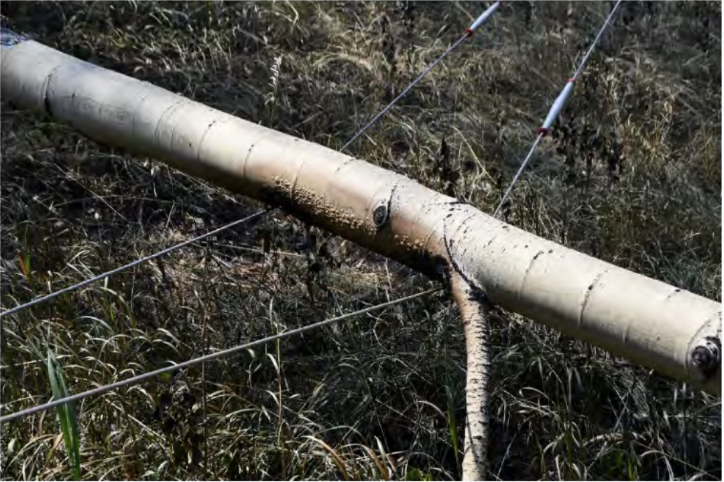
Evidence that the report uses to make its case includes eyewitness accounts, fire effects, fire patterns, and the actual aspen tree resting on a power line with burn marks.
According to a state report, the tree was blown over by high winds and fell onto overhead power lines. Investigators said the impact forced the lines to within about 3 feet of the ground, where heat from the line and melting aluminum ignited nearby vegetation.
Evidence that the report uses to make its case includes eyewitness accounts, fire effects, fire patterns, and the actual aspen tree resting on a power line with burn marks.
The Aspen Acres Fire began on June 29. As of the final update, it had burned 102,007 acres, according to the U.S. Forest Service.
This order affects the San Carlos Ranger District. The purpose of this order is to is to protect public health and safety after the Aspen Acres Fire.
___
____
Watch KOAA News5 on your time, anytime with our free streaming app available for your Roku, FireTV, AppleTV and Android TV. Just search KOAA News5, download and start watching.
The team investigating a police shooting at Colorado State University earlier this week issued an update Friday night.
The Eighth Judicial District Critica Incident Response Team said a CSU police sergeant was sent to a report of a person behaving erratically near Newton Plaza.
Investigators said Brooks Bottenhorn, 22, allegedly fired a round into the west side of the microbiology building before walking toward the sergeant while still carrying a handgun. Police said the sergeant then fired multiple shots, striking Bottenhorn.
Police said the sergeant immediately rendered first aid. Bottenhorn was taken to a local hospital for treatment. He was seriously injured but is expected to survive.
According to police, Bottenhorn is a student at CSU.
The Larimer County District Attorney's Office has charged Bottenhorn with criminal mischief, menacing, illegal discharge of a firearm, unlawfully carrying a weapon, prohibited use of a weapon, and reckless endangerment.
The Colorado Division of Fire Prevention and Control (CDFPC) has published the initial report on one of Colorado's most destructive wildfires since the Marshall Fire in 2021.
On Monday, the Scripps News Group acquired the CDFPC report from attorneys representing victims of the Aspen Acres Fire. According to the report, it began roughly 200 feet west of Colorado Highway 165 at mile marker 17, southwest of the intersection of Colorado Highway 165 and Custer Drive.
The report concludes that the fire was caused by an aspen tree falling onto a power line. The tree was blown over by high winds and fell on overhead power lines, investigators said. The impact of the falling tree forced the power lines down to about three feet above the ground.
Watch the Latest Coverage in the Video Player Below
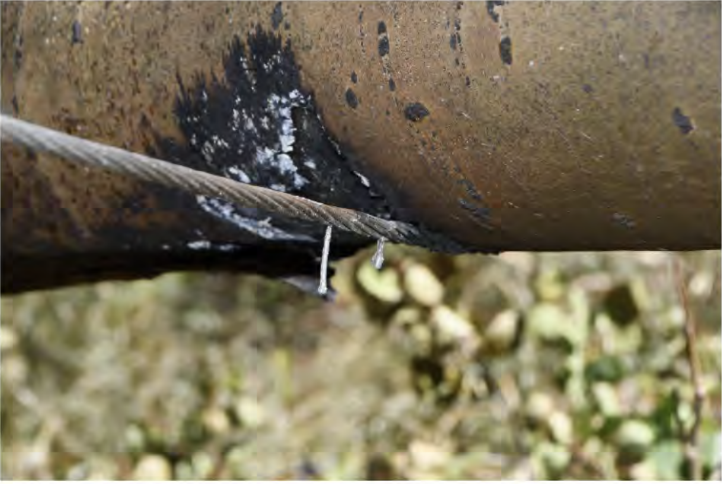
Evidence that the report uses to make its case includes eyewitness accounts, fire effects, fire patterns, and the actual aspen tree resting on a power line with burn marks.
The aspen tree trunk was in contact with both the hot and neutral conductor, according to the report. The tree also had visible heat damage where the tree was in contact with the lines, including charring and burn marks. The lines themselves also had arcing, melting, and charring, according to the report.
The lines heated the tree bark and nearby vegetation to a point where they could ignite. Melted aluminum was also found under the area where the tree rested against the line, which should be considered as a contributor to the fire's ignition, the report said.
The report also provides evidence in the form of fire behavior and indicators, observed in the burn patterns. When burning in a particular direction, fire leaves signs of its direction of movement and its intensity. These patterns in the burned foliage, the report says, indicate that the fire advanced from the general origin area and spread west and south while also burning more intensely away from the origin area.
Other possible ignition sources were explored by investigators, including lightning, discarded smoking material, or an intentionally set fire.
Lightning was discarded as an explanation by investigators because they found that no lightning was recorded, no physical evidence of a strike was found, and no one reported lightning on that day. Not only that, a five-mile-wide report by STRIKEnet of the area found there were zero cloud-to-ground strikes detected by lightning sensors within five miles of the origin area.
Discarded smoking materials were discarded as an explanation because no smoking materials were found in the area by investigators. Additionally, investigators determined that the conditions in the area would make a fire caused by smoking materials "inconsistent and not viable given the data collected during this investigation."
Intentionally set fires do not necessarily mean arson they simply include fires that were set intentionally and not necessarily maliciously. These include open flames like candles, matches, lighters, pilot lights, and oil lamps. However, investigators found that the fire did not originate anywhere near structures with open flames.
The ignition, which the report says took place in the general area of a series of utility poles, was also witnessed by a local resident at 5:45 a.m. on June 29. It immediately began to spread westward up the hill and towards the south, according to the testimony provided in the report.
The Aspen Acres Fire began on June 29 and remains active with 82% containment. It has burned 102,007 acres as of Oct. 2, according to the U.S. Forest Service.
The fire destroyed over 200 homes and evacuated thousands of people across the fire, which burned in Pueblo, Fremont, Huerfano, and Custer Counties.
___
____
Watch KOAA News5 on your time, anytime with our free streaming app available for your Roku, FireTV, AppleTV and Android TV. Just search KOAA News5, download and start watching.

 Login