
❌

Reading view

Trump weighs lifting sanctions on Russian fund once described by U.S. Treasury as Putin’s ‘slush fund,’ NYT reports

President Donald Trump’s administration is considering lifting sanctions on the Russian Direct Investment Fund (RDIF), sources familiar with talks between Russia and the United States told The New York Times.

Russia is pressing for sanctions relief for RDIF so the fund can take part in supplying Russian diesel fuel to the United States, the sources told the Times.

The U.S. Treasury Department is reviewing the fund’s application for sanctions relief under its standard procedures, one source said. RDIF will have to prove that the reasons it was sanctioned no longer apply.

RDIF is headed by Kirill Dmitriev, a key participant in the talks between Russia and the United States. He is leading the Kremlin’s push for possible joint business ventures between the two countries.

RDIF was established in 2011 to attract foreign investment to Russia. The best-known project it helped develop was Russia’s Sputnik V coronavirus vaccine. Dmitriev and his wife, Natalya Popova, are believed to be close to Russian President Vladimir Putin’s younger daughter, Katerina Tikhonova.

President Joe Biden’s administration imposed sanctions on RDIF on February 28, 2022, four days after Russia’s full-scale invasion of Ukraine. “While officially a sovereign wealth fund, RDIF is widely considered a slush fund for President Vladimir Putin and is emblematic of Russia’s broader kleptocracy,” the U.S. Treasury Department said at the time.

Russia–U.S. relations

At Meduza, we are committed to transparency about our use of artificial intelligence in the newsroom. The story you’re reading was written by one of our living, breathing journalists and translated from Russian using an AI model configured to follow our strict editorial standards. This translation process is the result of extensive testing and refinements to ensure our English-language coverage is timely and accurate. A Meduza editor reviews every draft before publication.

If you find any errors in this translation, please contact us at reports@meduza.io.

To read Meduza’s exclusive content in English, please subscribe to our newsletter.
  •  

Russian electronics billionaire Dmitry Alekseyev publicly defends jailed election expert Alexander Kynev, denouncing his detention conditions

Dmitry Alekseyev, president and co-owner of the retail chain DNS, wrote a Facebook post defending political scientist Alexander Kynev, who was arrested on charges of attempting to sell drugs.

”[…] I get it — the elephant in the room, the times we’re living in. But you know what? They’ve just released a series based on ‘Hard to Be a God.’ There’s not much left of the Strugatsky brothers’ work in it, but even there, persecuting scholars is portrayed as an outrageous example of medieval barbarism. Kynev is one of those scholars. A scholar who’s now sitting in an overcrowded cell with a hole in the floor for a toilet. Surely this isn’t what our traditional values are about? Or is humanism a forbidden word now, too?” Alekseyev asked.

The news outlet Agentstvo, which drew attention to Alekseyev’s post, said it was a rare instance of a prominent Russian businessman speaking out in defense of a victim of political repression.

Alexander Kynev is a well-known expert on Russian regional politics. He was arrested in a drug case on September 25. He was beaten when he was detained, and his shinbone was broken in two places. On October 26, it emerged that he had gone on a hunger strike in pretrial detention. His lawyer said Kynev shares a cell with 34 other people and that the toilet is a hole in the floor, which Kynev cannot use because his leg is in a cast.

Dmitry Alekseyev’s DNS is one of Russia’s largest retailers of electronics and home appliances. Forbes estimates Alekseyev’s net worth at $1.6 billion. Alekseyev has criticized the authorities before, including after Alexey Navalny’s death in pretrial detention.

Read more

At Meduza, we are committed to transparency about our use of artificial intelligence in the newsroom. The story you’re reading was written by one of our living, breathing journalists and translated from Russian using an AI model configured to follow our strict editorial standards. This translation process is the result of extensive testing and refinements to ensure our English-language coverage is timely and accurate. A Meduza editor reviews every draft before publication.

If you find any errors in this translation, please contact us at reports@meduza.io.

To read Meduza’s exclusive content in English, please subscribe to our newsletter.
  •  

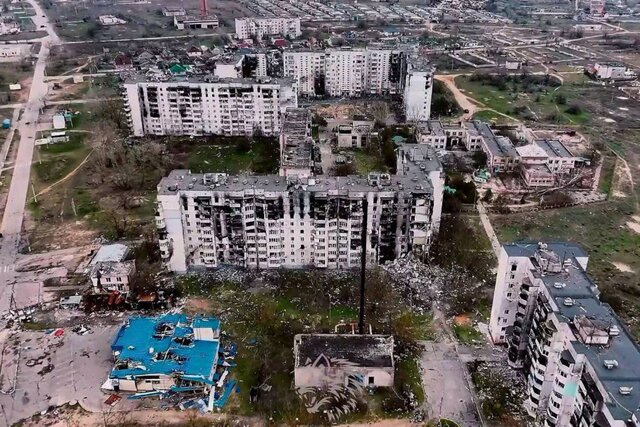
Trapped without food, electricity, or medicine, civilians in occupied Oleshky finally have a chance to escape. But even those wishing to go to Ukraine will reportedly be taken to Russia first.

  • A ceasefire took effect early on October 27 in Oleshky (called Alyoshki in Russian) in Ukraine’s Kherson region. Russia and Ukraine had agreed to halt fighting to evacuate civilians and deliver humanitarian aid to the Russian-occupied city, where a humanitarian catastrophe has unfolded. U.S. first lady Melania Trump helped the two sides reach the agreement.
  • The ceasefire will last until 10:59 p.m. on November 1, said David Arakhamia, who heads the Servant of the People faction in Ukraine’s parliament and is a member of Ukraine’s negotiating team. Russia’s human rights commissioner, Yana Lantratova, confirmed the timing. Arakhamia called the ceasefire in Oleshky “the biggest de-escalation since 2022.”
  • Melania Trump said the ceasefire had begun two days ahead of schedule and had been extended beyond Oleshky to allow humanitarian convoys to pass safely. She said Valery Gerasimov, chief of Russia’s General Staff, had confirmed this.
  • Ukraine and Russia said on the evening of October 27 that both sides were fully observing the ceasefire. The Kremlin also said the humanitarian operation in Oleshky was “going according to plan.”
  • Many details of the humanitarian operation remain unclear: which roads will be cleared of mines, where residents will be taken and how they will be evacuated, whether they will be allowed to go directly to Ukraine or stay in Oleshky, and where families with children will be allowed to go. The Financial Times reported that even those wishing to go to Ukraine will first be taken to Russia. The operation will be carried out in several stages.
  • Petro Andriushchenko, head of Ukraine’s Center for the Study of Occupation, said the evacuation from Oleshky is scheduled for October 30. Information about residents who want to leave is being gathered in a rush, he said, adding that details of how the evacuation will proceed remain confidential for now. Andriushchenko suggested that departures would depend on how the roads are cleared of mines. He said Ukraine expects a route across the Dnipro River to be arranged so Oleshky residents who want to go to Ukraine can travel directly to Ukrainian-controlled territory.
  • Oleshky residents may be evacuated to Russian-annexed Crimea or Rostov-on-Don, said Vladimir Saldo, the Russia-installed “governor” of the Kherson region. He said transportation and temporary accommodation had already been arranged for them. Saldo also said those wishing to go to Ukraine would receive help.

Russian-occupied Oleshky

At Meduza, we are committed to transparency about our use of artificial intelligence in the newsroom. The story you’re reading was written by one of our living, breathing journalists and translated from Russian using an AI model configured to follow our strict editorial standards. This translation process is the result of extensive testing and refinements to ensure our English-language coverage is timely and accurate. A Meduza editor reviews every draft before publication.

If you find any errors in this translation, please contact us at reports@meduza.io.

To read Meduza’s exclusive content in English, please subscribe to our newsletter.
Meduza

  •  

Finnish and Norwegian leaders discuss Ukraine peace with Putin as a source close to the Kremlin warns of escalating hybrid warfare with Europe

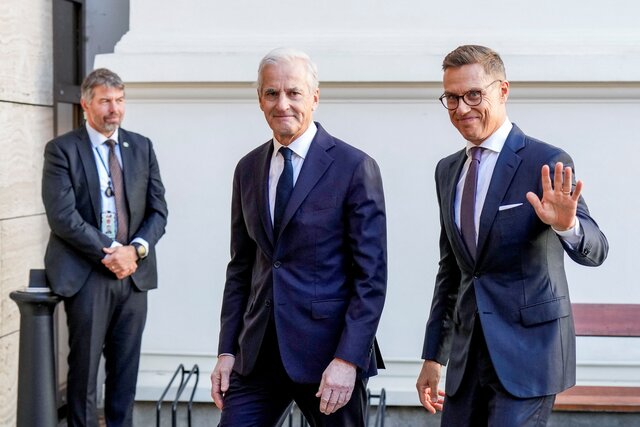
Finnish President Alexander Stubb and Norwegian Prime Minister Jonas Gahr Støre. October 20, 2026

Finnish President Alexander Stubb and Norwegian Prime Minister Jonas Gahr Støre spoke by phone with Vladimir Putin. Western leaders initiated the call to discuss Russia’s war against Ukraine and diplomatic efforts to end it.

The Finnish president’s office said the call was meant “to convey messages directly regarding future negotiations to help to end the war to President Putin” ahead of meetings to be held in Abu Dhabi. It was Putin’s first contact with European leaders supporting Ukraine since July 2025, when he spoke with French President Emmanuel Macron.

The Kremlin confirmed the call, saying Putin “assessed the current situation” in Ukraine and reminded participants of the “root causes of the conflict.” Putin also pointed to the “confrontational policy of EU and NATO countries, which is prolonging the fighting,” the Kremlin’s press service said.

Volodymyr Zelensky said Stubb and Støre briefed him on their call with Putin. “Alex and Jonas made it clear to the Russian leader that real de-escalatory steps are needed regarding our energy and infrastructure,” Zelensky said. He added that the Finnish and Norwegian leaders had discussed preparations for a trilateral meeting between negotiating teams from Ukraine, the United States, and Russia.

Stubb’s office said the call “was a follow-up of the meeting in Oslo on October 20 and held in consultation with Ukraine.” The Norwegian capital hosted talks that day between Donald Trump’s special envoy Steve Witkoff and Zelensky, with Støre and Stubb also taking part. Witkoff then traveled to St. Petersburg to meet with Putin before returning to Oslo and flying home to the United States.

Those trips produced an agreement on a trilateral meeting between the United States, Ukraine, and Russia, to be held in Abu Dhabi. The meeting will take place after November 4, Putin aide Yuri Ushakov said. The day before, on November 3, the United States will hold midterm elections in which Republicans could lose their congressional majority.

Announcing the timing, Ushakov said the peace talks would also have to involve “all of Europe.” Europe has long sought a negotiator to represent the European Union’s interests in talks on ending the war between Russia and Ukraine.

Stubb has repeatedly been named as a candidate for the role, having built a good relationship with Trump, including on the golf course, and emerged as one of Trump’s main points of contact with European leaders. The Telegraph has also named Danish Prime Minister Mette Frederiksen, Italian Prime Minister Giorgia Meloni, and Czech President Petr Pavel among the candidates.

After Stubb and Støre’s call with Putin, Frederiksen criticized the initiative, saying she was “skeptical” and that the talks had not been coordinated with other European leaders. She added that she sees no sign that Russia wants peace with Europe, either in the hybrid war that continues every day or in Ukraine.

The independent Russian political newsletter Faridaily says contacts between European leaders and the Kremlin amount to “a significant shift in position.” European leaders had “mostly preferred not to talk to Putin at all” since the war began.

However, a source close to the Kremlin said that “events are moving toward escalation, including an intensification of hybrid warfare with Europe.” According to the source, Putin is convinced NATO is waging a hybrid war against Russia and blames Ukraine’s European allies for “comprehensive assistance” in attacks on Russia, including helping identify targets and guide strikes.

A source close to the Kremlin told Reuters that Putin told Stubb and Støre that Russia would not abandon its goal of capturing all of the Donbas. The European leaders responded that a “just” peace was necessary, the source added.

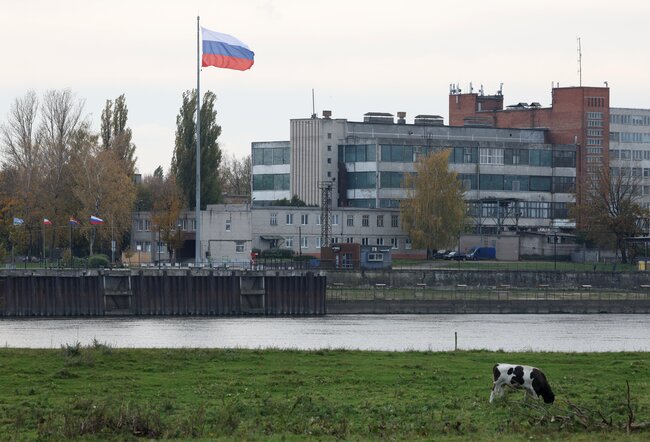
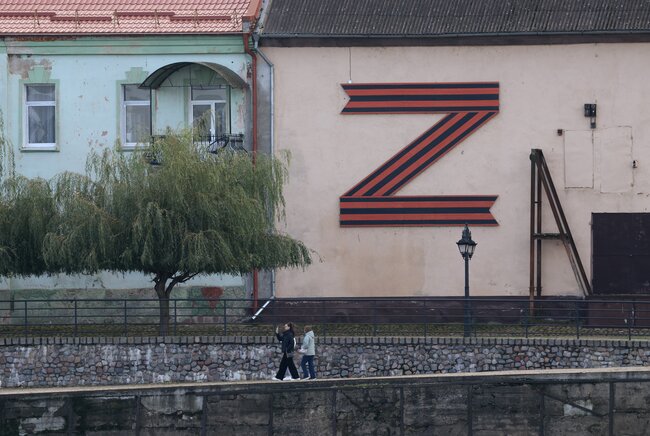
The war in photographs. The Lithuania–Russia border

A Russian flag in Sovetsk, Kaliningrad region, on the border with Lithuania. October 25, 2026
Sovetsk residents in front of the letter Z (photographed from the Lithuanian side, on the opposite bank of the Neman River). October 25, 2026
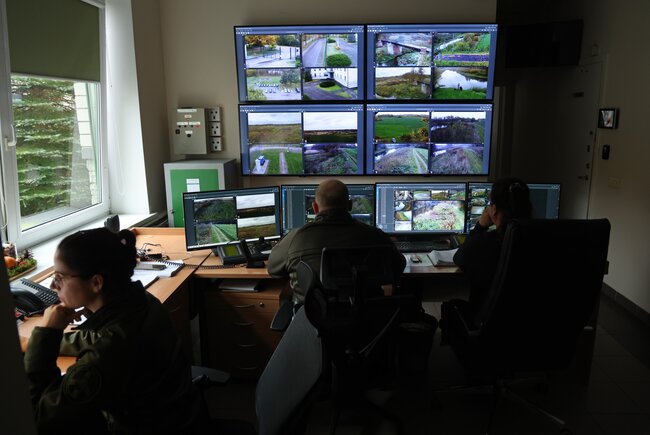
Lithuanian border guards monitor camera feeds. October 26, 2026
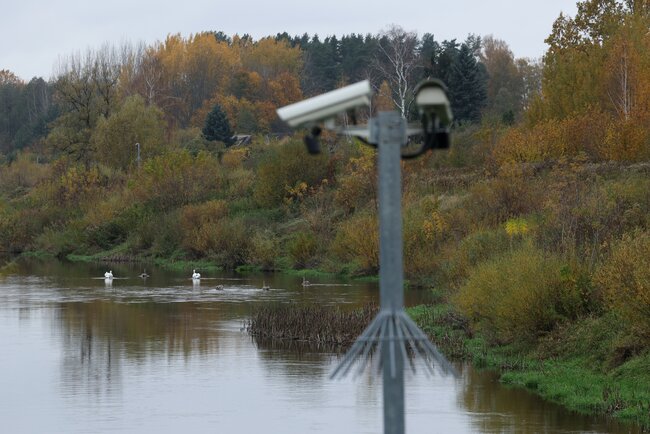
Lithuanian border service surveillance cameras near the Šešupė River on the border with Russia. October 26, 2026
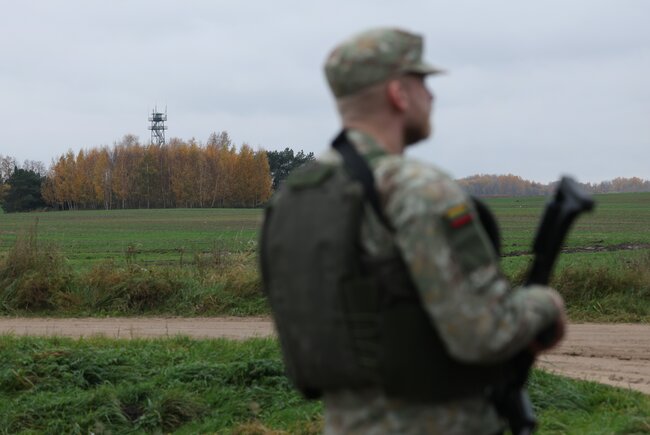
A Lithuanian soldier on the border with the Kaliningrad region. October 26, 2026
Anti-tank “dragon’s teeth” on the Lithuanian side near a closed crossing on the border with Belarus. October 27, 2026

Read more

At Meduza, we are committed to transparency about our use of artificial intelligence in the newsroom. The story you’re reading was written by one of our living, breathing journalists and translated from Russian using an AI model configured to follow our strict editorial standards. This translation process is the result of extensive testing and refinements to ensure our English-language coverage is timely and accurate. A Meduza editor reviews every draft before publication.

If you find any errors in this translation, please contact us at reports@meduza.io.

To read Meduza’s exclusive content in English, please subscribe to our newsletter.
  •  

France and 10 European countries plan to deploy nuclear-capable French jets to deter Russia, WSJ reports

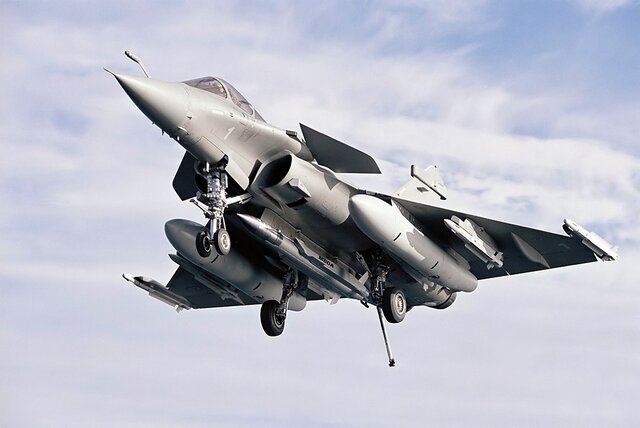
A French Rafale fighter jet with ASMP-A missiles

France is working with 10 other European countries to establish a new nuclear deterrence framework aimed at Russia, The Wall Street Journal reported.

The initiative, which President Emmanuel Macron called “forward deterrence,” was unveiled in March 2026. It calls for deploying nuclear-capable French Rafale fighter jets to other European countries. Participants also intend to create a joint system for early warning and intelligence sharing.

The United Kingdom, Germany, the Netherlands, Belgium, Poland, Greece, Finland, Norway, Sweden, and Denmark have joined France in the initiative. The three Baltic states, which are most vulnerable to Russian aggression, are not part of the project, while Italy declined to participate. Finland said it would like to take part but does not plan to host nuclear weapons on its territory in peacetime.

French officials believe the new deterrent could be more credible because the security of France’s European neighbors matters far more to Paris than to Washington.

European officials also emphasize that the new system should supplement, rather than replace, the American “nuclear umbrella” over the continent and create further strategic uncertainty for Russia.

Experts say the French ASMP-A cruise missiles carried by Rafale fighters are more effective in modern warfare than American B-61 nuclear bombs. The American bombs were developed in the 1960s, and advances in Russian air defenses limit their use.

Macron also said France plans to resume producing nuclear weapons for the first time in decades. The country currently has about 290 nuclear warheads but will no longer disclose information about its arsenal.

In practice, however, France will retain full control over its nuclear forces. “The French will let us participate in their nuclear deterrence as much as the Americans,” said a minister from one of the countries involved in the project.

France is holding bilateral talks with its partners and has set up 10 separate groups for those discussions. Defense officials across Europe have had to hold frequent calls to keep one another informed about the negotiations, military officials said.

From Meduza’s archives

At Meduza, we are committed to transparency about our use of artificial intelligence in the newsroom. The story you’re reading was written by one of our living, breathing journalists and translated from Russian using an AI model configured to follow our strict editorial standards. This translation process is the result of extensive testing and refinements to ensure our English-language coverage is timely and accurate. A Meduza editor reviews every draft before publication.

If you find any errors in this translation, please contact us at reports@meduza.io.

To read Meduza’s exclusive content in English, please subscribe to our newsletter.
  •  

Serbian public broadcaster apologizes for years of one-sided news coverage during Aleksandar Vučić’s rule

Radio Television of Vojvodina (RTV) apologized to viewers live on air for having “turned a blind eye to many things,” Serbian outlets reported.

❗️Dnevnik RT Vojvodine u 17h.
V.d glavnog i odg. urednik RTV je podneo ostavku.
Ali ovo izvinjenje i jedan otkaz nisu dovoljni!
Potrebna je odgovornost, otkaz, i njegova i SVIH onih koji su dosad ćutali na javnom servisu svih građana.
🧹 pic.twitter.com/8dBKmjfsEl

— MoreofSea 🌅📷 (@MoreofSea) October 26, 2026

A news broadcast showed footage of people in Serbia celebrating after the election. Anchor Goran Eror then said the footage showed only some of what RTV had failed to show viewers the previous night.

“For many years, the public broadcaster failed to fulfill its role. Things went unsaid, a blind eye was turned, information was one-sided, reporting was uncritical, and the right questions were not asked — or no questions were asked at all. And for that, we owe our viewers an apology,” the anchor said, reading a statement on air.

He said some employees had fought to allow journalists and editors to work freely but that “we did not win the battle in time.” “But we believe it is important to carry on that fight,” he said.

Following the apology, Nenad Čačić, acting editor-in-chief of RTV’s main channel, RTV 1, resigned.

Serbia held an early parliamentary election on October 25. Former President Aleksandar Vučić, who had resigned a month earlier, ran in the election, hoping to become prime minister if he won. His party lost to the “Student List” movement, which grew out of protests that began in 2024.

A similar episode unfolded in Hungary, where Viktor Orbán stepped down after 16 years in power when the government changed in spring 2026. The new government later announced a reorganization of the public broadcaster MTVA, while the television channel M1 apologized to viewers for lying and for “doing it all these years.”

Serbia’s election

At Meduza, we are committed to transparency about our use of artificial intelligence in the newsroom. The story you’re reading was written by one of our living, breathing journalists and translated from Russian using an AI model configured to follow our strict editorial standards. This translation process is the result of extensive testing and refinements to ensure our English-language coverage is timely and accurate. A Meduza editor reviews every draft before publication.

If you find any errors in this translation, please contact us at reports@meduza.io.

To read Meduza’s exclusive content in English, please subscribe to our newsletter.
  •  

Elon Musk argues that the threat of Russian anti-satellite attacks is a reason to restrict Starlink’s military use in Ukraine

Starlink service for Ukraine’s armed forces was restricted over fears that Russia would shoot down the company’s satellites, a post on X by SpaceX chief Elon Musk suggests. Musk was responding to a post about Russia’s ability to blow up satellites in space.

“This is indeed one of the main reasons that Starlink must remain a civilian operation,” Musk tweeted. “It can be used for infrastructure that is military, but it cannot be used for unequivocally offensive strikes that make it fair game to be struck back. An adversary blowing up Starlink satellites would create a domino effect of destruction that would generate a vast field of debris making space unusable.”

In mid-October, Ukraine’s armed forces encountered restrictions on their Starlink satellite terminals, specifically the military version, Starshield. Connections cut out when drones flew faster than 160 kilometers per hour (about 100 mph).

Western media reported that Musk himself had initiated the restrictions on Starlink service for the Ukrainian military. He later accused Ukraine of using Starlink for “offensive” drone strikes. Ukraine’s armed forces responded that this was “technically impossible,” since Starlink does not work over Russian territory.

More about Starshield

At Meduza, we are committed to transparency about our use of artificial intelligence in the newsroom. The story you’re reading was written by one of our living, breathing journalists and translated from Russian using an AI model configured to follow our strict editorial standards. This translation process is the result of extensive testing and refinements to ensure our English-language coverage is timely and accurate. A Meduza editor reviews every draft before publication.

If you find any errors in this translation, please contact us at reports@meduza.io.

To read Meduza’s exclusive content in English, please subscribe to our newsletter.
  •  

Russian bailiffs move to collect nearly 20 billion rubles from Anatoly Chubais over Rusnano claims

Russian bailiffs have opened 14 enforcement proceedings against former Rusnano head Anatoly Chubais, TASS reported.

They intend to recover 17.74 billion rubles from him to compensate Rusnano for its losses. An additional 2.13 billion rubles will be collected as an enforcement fee.

Chubais’s assets have been frozen under three of the proceedings. The first, involving 5.6 billion rubles, was opened in April 2025. The second was opened in December 2025, when assets worth 11.9 billion rubles were frozen in connection with a Rusnano lawsuit over the Crocus project. Bailiffs imposed the third asset freeze, worth 5.5 billion rubles, in April 2026.

Chubais headed Rusnano from 2008 until his resignation in December 2020. He left Russia in March 2022. Before leaving, Chubais wrote a letter to Vladimir Putin calling for an immediate end to the war with Ukraine. The letter came to light in a report prepared by Mariana Katzarova, the U.N. special rapporteur on human rights in Russia.

According to the report, Chubais was “publicly attacked by the president” after sending the letter. After Chubais left Russia, Putin said that a “huge financial hole” had been discovered “in the nanotechnology organization he headed for many years.”

Rosnano and Anatoly Chubais

At Meduza, we are committed to transparency about our use of artificial intelligence in the newsroom. The story you’re reading was written by one of our living, breathing journalists and translated from Russian using an AI model configured to follow our strict editorial standards. This translation process is the result of extensive testing and refinements to ensure our English-language coverage is timely and accurate. A Meduza editor reviews every draft before publication.

If you find any errors in this translation, please contact us at reports@meduza.io.

To read Meduza’s exclusive content in English, please subscribe to our newsletter.

  •  

Jailed Russian political scientist Alexander Kynev faces new ‘foreign agent’ allegation as broken leg leaves him unable to use cell toilet

Political scientist Alexander Kynev, who was arrested for allegedly attempting to sell drugs, has been cited for violating “foreign agent” regulations.

It is unclear what prompted the citation, which was filed with Moscow’s Perovsky District Court on October 27. No hearing has been scheduled.

Kynev has been in pretrial detention since September 25. He denies the drug allegations.

The Slovo Zashchite project reported that Kynev was beaten so severely during his arrest that his leg was broken. Political scientist Ekaterina Schulmann said the beating was an attempt to force Kynev to confess to treason.

On October 26, reports emerged that Kynev had stopped eating in pretrial detention because his broken leg prevented him from using the toilet in his cell. Kynev himself said the injury left him unable to move around properly.

Alexander Kynev is one of the most respected experts on Russian regional politics and elections. Russian authorities designated him a “foreign agent” in February 2026.

More on Russian politics

At Meduza, we are committed to transparency about our use of artificial intelligence in the newsroom. The story you’re reading was written by one of our living, breathing journalists and translated from Russian using an AI model configured to follow our strict editorial standards. This translation process is the result of extensive testing and refinements to ensure our English-language coverage is timely and accurate. A Meduza editor reviews every draft before publication.

If you find any errors in this translation, please contact us at reports@meduza.io.

To read Meduza’s exclusive content in English, please subscribe to our newsletter.
  •  

Independent Russian news outlet Holod warns it may shut down over funding shortage, despite an audience of 1.5 million

The news outlet Holod has warned that it may have to shut down unless it finds more funding.

“We really do have only enough money left for two months of work. If we don’t find support, we’ll have to stop,” the editorial team wrote in an appeal.

The journalists asked readers for donations, saying recurring subscriptions would help them plan further ahead. They said supporting publications designated as “foreign agents” carries no administrative or criminal penalties.

“Holod currently has around 1.5 million followers across various platforms, and that audience is growing rapidly. Still, given the political situation and the many restrictions on monetization, audience size is no guarantee of financial stability,” Holod founder Taisiya Bekbulatova told Meduza.

She said the outlet would not be able to continue all of its current work. Its main focus will be keeping its Instagram account and YouTube channel running.

Holod has operated since 2019, and its reporting has received multiple nominations for the Redkollegia journalism award. In 2024, Russia’s Justice Ministry added the outlet to its register of “foreign agents.”

At Meduza, we are committed to transparency about our use of artificial intelligence in the newsroom. The story you’re reading was written by one of our living, breathing journalists and translated from Russian using an AI model configured to follow our strict editorial standards. This translation process is the result of extensive testing and refinements to ensure our English-language coverage is timely and accurate. A Meduza editor reviews every draft before publication.

If you find any errors in this translation, please contact us at reports@meduza.io.

To read Meduza’s exclusive content in English, please subscribe to our newsletter.
  •  

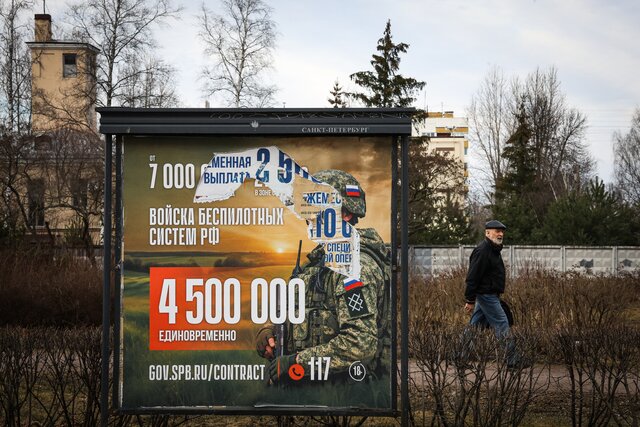
Online reviews of a military recruitment center in Omsk, Siberia, say local residents are being picked up off the streets and sent to war

Reviews posted on the 2GIS page for the “Sirius-55” military recruitment center in Omsk say city residents are being forced to sign contracts with Russia’s Defense Ministry and go to war. The Omsk Civic Association drew attention to the complaints.

The reviews appear to come from relatives and acquaintances of men forcibly sent to war. Some were posted by new accounts, others by accounts whose users have reviewed institutions and businesses in Omsk on 2GIS for years.

Reviews saying Omsk residents were being picked up off the street and taken to the recruitment center began appearing as early as March. “They bring in people who are sick, cross-eyed, people who’ve had strokes, even people who aren’t fully dressed and just stepped out to the store,” one post reads. In August, media outlets (1,2) and human rights advocates also reported several similar cases in Omsk.

A new wave of complaints appeared in September and October. Several women said their relatives and friends had been picked up off the street even though they did not live in Omsk and had come to the city on personal business or for work.

In one review, a woman said her father-in-law had been “grabbed off the street and driven away” to the recruitment center on October 25. She said he was beaten there and needed medical attention afterward.

Reports of mass roundups of men in regions across Russia began appearing in the summer of 2026. Local residents said men were being picked up off the street, forced to sign contracts with Russia’s Defense Ministry, and sent to war. One widely publicized case took place in the Penza region. By October 22, human rights advocates had received reports of similar roundups from 33 regions across the country and annexed Crimea.

Russian military recruitment

At Meduza, we are committed to transparency about our use of artificial intelligence in the newsroom. The story you’re reading was written by one of our living, breathing journalists and translated from Russian using an AI model configured to follow our strict editorial standards. This translation process is the result of extensive testing and refinements to ensure our English-language coverage is timely and accurate. A Meduza editor reviews every draft before publication.

If you find any errors in this translation, please contact us at reports@meduza.io.

To read Meduza’s exclusive content in English, please subscribe to our newsletter.
  •  

A Russian IT worker joined the army to ‘benefit society’ and was promised a job operating drones. Now he’s missing in Ukraine, and his wife believes his commanders stole his money.

An IT specialist from Chelyabinsk signed a contract with Russia’s Defense Ministry that promised him service in the drone forces. Instead, he ended up in what’s known as a “meat grinder regiment.” He was sent on an assault and went missing, his wife told the independent Russian investigative outlet iStories.

Nikolai and Irina (names changed) had been together for 20 years and raised two children. The family didn’t need money: Nikolai developed software for government agencies at a large IT company.

In the summer of 2026, Nikolai decided to go to war to “benefit society.” “When the special military operation started in the country, a lot of our friends left for abroad. We kind of looked down on that. I can’t explain it now. But still, we had a question: who’s going to defend the country then? Defend its interests?” Irina told journalists.

An appendix to the contract specified that Nikolai would serve as a drone operator and undergo training for that role. Instead, he was sent to military unit No. 95378 in the Samara region, home to the 1437th Motorized Rifle Regiment, where he spent several months. He received no training or weapons instruction at all, doing “housekeeping work” and serving as a “company clerk” instead.


Russia’s Defense Ministry has been actively recruiting Russians, including students, into the drone forces since late 2025. Recruiters promise high salaries, one-year contracts, and service far from the front line, but in reality, the contracts are open-ended, and recruiters cannot guarantee any special conditions of service.


In conversations with his wife, Nikolai said that his unit practiced extortion and harshly punished discipline violations: putting offenders in a pit or sending them on assaults.

In September, Nikolai called his wife and said he was being sent on a combat mission:

One day he called from someone else’s phone number and said he was being sent on a combat mission and wanted to say goodbye. At first I didn’t understand anything. I said, how is that possible? Were you even trained for anything? What mission are you being sent on? He said he didn’t know, and to be honest, he started crying. Then the call cut off.

Soon after, his wife received a notice from command that Nikolai had gone missing on September 28 “while performing tasks during the special military operation.” What exactly happened to him on the combat mission remains unknown.

Irina found a notification from the online marketplace Ozon in her husband’s email showing that Nikolai, while at the front, had bought five laptops for 120,000 rubles. She believes someone among his commanders stole about one and a half million rubles from his bank card. On social media, she found complaints about commanders from relatives of other servicemen who served in the same unit.

The 1437th Regiment, where Nikolai served, is part of the 15th Separate Guards Motorized Rifle Brigade. Its unofficial name is the “Black Hussars.” Before Russia’s full-scale war with Ukraine, it was the only “peacekeeping” brigade in the Russian army. Its soldiers carried out missions in Georgia and Nagorno-Karabakh and likely took part in the annexation of Crimea.

In the war against Ukraine, the brigade took part in the occupation of the Kyiv region. Brigade servicemen are suspected of torturing and killing civilians. The unit itself also practices torture and extrajudicial killings, the independent Russian news outlet Verstka reported.

The 1437th Regiment is commanded by Colonel Vladimir Teslo, 31, iStories found. In 2024, Vladimir Putin awarded him the title Hero of Russia “for the totality of heroic acts and personal courage.”

“On the one hand, the regiment commander is a Hero of Russia. On the other, that same commander sees his soldiers as walking wallets. First he empties their bank accounts, then he gets rid of the soldiers themselves. I want people to know about this Teslo. He may be a hero for one thing, but he’s a murderer for another. I don’t know what will come of speaking out. It’s too early to tell. These are deranged men with guns,” Irina told journalists.

At Meduza, we are committed to transparency about our use of artificial intelligence in the newsroom. The story you’re reading was written by one of our living, breathing journalists and translated from Russian using an AI model configured to follow our strict editorial standards. This translation process is the result of extensive testing and refinements to ensure our English-language coverage is timely and accurate. A Meduza editor reviews every draft before publication.

If you find any errors in this translation, please contact us at reports@meduza.io.

To read Meduza’s exclusive content in English, please subscribe to our newsletter.

  •  

Russia’s internet regulator proposes limiting screen time for children under 14 and requiring social media platforms to verify users’ ages

Roskomnadzor, Russia’s federal media regulator, has sent a bill to the information policy committee of the State Duma, the lower house of Russia’s parliament, proposing mandatory identification of children on social networks, the Russian business daily Vedomosti reported, citing a statement by a regulator representative at the committee meeting.

The agency also proposed limiting the amount of time children under 14 are allowed online. A Roskomnadzor representative said the measure is meant to restrict children’s access to banned content.

The Internal Affairs Ministry announced it is concerned about children and teenagers being drawn into offenses and crimes through social networks, messaging apps, forums, and gaming chats.

According to the ministry, the most common crimes children are drawn into are acting as “droppers” and giving third parties access to their own accounts.

The Digital Development Ministry announced as far back as June that it is considering introducing age verification mechanisms for users of online platforms. Its head, Maksut Shadayev, said the ministry is studying how other countries have approached the issue.

Various restrictions on children and teenagers’ access to social media are being discussed worldwide. Since late 2025, a law banning social media for children under 16 has been in effect in Australia. Similar restrictions are being discussed in the UK and EU countries, including France and Spain.

At Meduza, we are committed to transparency about our use of artificial intelligence in the newsroom. The story you’re reading was written by one of our living, breathing journalists and translated from Russian using an AI model configured to follow our strict editorial standards. This translation process is the result of extensive testing and refinements to ensure our English-language coverage is timely and accurate. A Meduza editor reviews every draft before publication.

If you find any errors in this translation, please contact us at reports@meduza.io.

To read Meduza’s exclusive content in English, please subscribe to our newsletter.

  •  

Ukraine says ceasefire in Oleshky will last until November 1

The ceasefire in Russian-occupied Oleshky will last until 10:59 p.m. on November 1, said David Arakhamia, head of the Servant of the People faction and a member of the Ukrainian negotiating group.

“This is the biggest de-escalation since 2022. The ceasefire will last from October 27 until 10:59 p.m. on November 1. Every effort like this brings the long-awaited peace in Ukraine closer,” he wrote on his Telegram channel.

The Russian side has not commented on this information.

Russia and Ukraine agreed to the ceasefire in Oleshky to evacuate civilians and deliver humanitarian aid. The ceasefire began at 4:00 a.m. Moscow time (3:00 a.m. Kyiv time). According to the White House, U.S. first lady Melania Trump initiated the agreement.

Residents of the city of Oleshky in the Kherson region have lived under Russian occupation since 2022. The situation there has verged on humanitarian catastrophe since the fall of 2026, as constant drone attacks have left residents without food, electricity, or adequate medical care.

At Meduza, we are committed to transparency about our use of artificial intelligence in the newsroom. The story you’re reading was written by one of our living, breathing journalists and translated from Russian using an AI model configured to follow our strict editorial standards. This translation process is the result of extensive testing and refinements to ensure our English-language coverage is timely and accurate. A Meduza editor reviews every draft before publication.

If you find any errors in this translation, please contact us at reports@meduza.io.

To read Meduza’s exclusive content in English, please subscribe to our newsletter.

  •  

Donald Trump Jr. went hunting in Mongolia with a Kremlin-linked Russian businessman who helped bankroll his wedding

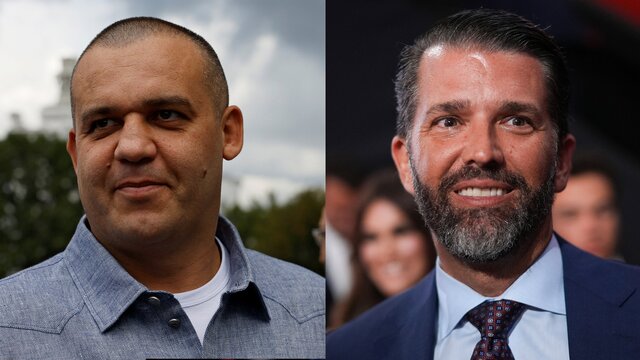
Umar Kremlev, Donald Trump Jr.

Donald Trump Jr., 48, the son of U.S. President Donald Trump, traveled to Mongolia in August 2026 to hunt, spending two days there with Umar Kremlev, head of the International Boxing Association and a businessman close to the Kremlin, the Financial Times found.

Umar Kremlev, whose real surname is Lutfulloyev, has led the International Boxing Association (IBA) as its president since 2020. Under him, the organization has received tens of millions of dollars from Gazprom. In 2023, the International Olympic Committee stripped the IBA of the right to hold Olympic boxing tournaments, citing, among other reasons, a lack of transparency in its finances.

In 2024, Kremlev became the new owner of the car dealership Rolf, which had previously belonged to businessman Sergei Petrov and had been placed under temporary management by a decree from Putin. The Russian investigative outlet Proekt reported that Kremlev acquired Rolf because of his friendship with Alexey Rubezhny, head of the Russian president’s security service. Kremlev also obtained a number of assets in the lottery and bookmaking businesses through that same friendship, Proekt wrote.

Kremlev is also tied to the Trump family. In September 2026, it emerged that he had paid part of the costs of Donald Trump Jr.’s wedding in the Bahamas, and Democrats in the U.S. Congress launched an investigation. Trump Sr. later said that his son had repaid the money to Umar Kremlev.

A charity auction raffled off the trip to Mongolia in the company of the U.S. president’s son. One of the winners did join Trump Jr. to hunt mountain sheep. Kremlev, who did not take part in the auction, also joined the trip, along with longtime Republican Party donor Kevin Small.

Trump Jr. flew into the Mongolian capital, Ulaanbaatar, in late August, after his wedding on a private island in the Caribbean Sea — a wedding Kremlev partly funded. He then traveled several hundred kilometers to a camp in western Mongolia, where he stayed with a small group of hunting guides, drivers, and cooks. Kremlev joined him there, accompanied by Arthur Martirosov, a businessman and partner at the venture fund Voskhod, which is under U.S. sanctions.

On August 30, Kremlev posted two videos to his Telegram channel. In one, he says he is flying to Mongolia with Martirosov, while in another he shows footage from the trip. In the caption, Kremlev asks, “How do you feel about hunting?”

One participant in the trip said Trump Jr. and Kremlev tried not to be photographed together while at the camp. Trump Jr. does not appear in Kremlev’s video either, though two organizers of his hunting trips do.

According to one guide, Trump Jr. killed an Altai argali — an endangered mountain sheep prized by hunters for its large horns — during the trip. After the hunt, he returned to the Mongolian capital. However, his trip did not end there — he held a series of other unofficial meetings, including a dinner with Mongolian President Ukhnaagiin Khürelsükh.

As a member of the president’s family, Trump Jr. traveled with a U.S. Secret Service detail. The U.S. Embassy in Ulaanbaatar paid $18,715 for hotel rooms linked to an unspecified “visit” by Secret Service agents from August 23–September 6.

A representative for Trump Jr. said a mutual friend from hunting circles introduced him to Umar Kremlev. “Don has made clear that he has a personal friendship, not a business relationship, with Umar. Their friendship is largely based on their shared love for hunting, fishing and the outdoors. It shouldn’t be a surprise to anyone that they went hunting together earlier this year,” the representative added.

A still from a video about hunting in Mongolia, shot during Donald Trump Jr.’s 2022 trip

However, intelligence experts polled by the FT believe these relationships create favorable conditions for manipulation.

“It really doesn’t matter if people have the most above board intentions,” said Holden Triplett, former director of counterintelligence at the U.S. National Security Council. “The moment the Russian security and intelligence services figure out someone has a relationship with anyone of high value, they will try to weaponize that.”

At Meduza, we are committed to transparency about our use of artificial intelligence in the newsroom. The story you’re reading was written by one of our living, breathing journalists and translated from Russian using an AI model configured to follow our strict editorial standards. This translation process is the result of extensive testing and refinements to ensure our English-language coverage is timely and accurate. A Meduza editor reviews every draft before publication.

If you find any errors in this translation, please contact us at reports@meduza.io.

To read Meduza’s exclusive content in English, please subscribe to our newsletter.

  •  

Finnish and Norwegian leaders spoke with Putin by phone about ending war in Ukraine

Finnish President Alexander Stubb and Norwegian Prime Minister Jonas Gahr Støre spoke by phone with Vladimir Putin, the Finnish president’s office said.

The statement said the call was ”a follow-up of the meeting in Oslo on 20 October.” That day, the Norwegian capital hosted talks between Donald Trump’s special envoy Steve Witkoff and representatives of Ukraine.

Stubb and Støre initiated the call to discuss Russia’s war of aggression against Ukraine and the diplomatic efforts to end the war and promote peace and stability in Europe.

The statement from the Finnish president’s office said the purpose of the call was to directly convey to President Putin Ukraine’s position on the upcoming peace talks in Abu Dhabi.

On October 20, a meeting was held in Oslo between Trump’s special envoy Steve Witkoff and Ukrainian President Volodymyr Zelensky. Finnish President Alexander Stubb also took part. After this meeting, Witkoff traveled to St. Petersburg, where he met with Putin — then he returned to Oslo and flew to the U.S. from there. Following these talks, the parties agreed to hold a new trilateral meeting between Russia, the U.S., and Ukraine. It will take place after November 4 (that is, after the U.S. midterm elections) in Abu Dhabi.

After this latest stage in the return to peace talks between Ukraine and Russia, European countries began looking for a representative who could take part on the EU’s behalf. Among the candidates for this role, The Telegraph named Stubb and Støre, as well as Italian Prime Minister Giorgia Meloni, Czech President Petr Pavel, and Danish Prime Minister Mette Frederiksen.

At Meduza, we are committed to transparency about our use of artificial intelligence in the newsroom. The story you’re reading was written by one of our living, breathing journalists and translated from Russian using an AI model configured to follow our strict editorial standards. This translation process is the result of extensive testing and refinements to ensure our English-language coverage is timely and accurate. A Meduza editor reviews every draft before publication.

If you find any errors in this translation, please contact us at reports@meduza.io.

To read Meduza’s exclusive content in English, please subscribe to our newsletter.

  •  

Residents of Russia’s Primorsky Krai warned of delays in social benefits as war strains regional budget

Primorsky Krai’s regional Labor Ministry said social payments in the krai could be temporarily delayed.

The ministry said the regional budget is currently “operating under increased strain, including due to the need to address nationwide tasks connected to the special military operation.”

“Under these conditions, funding for certain social support measures is being disbursed in stages, so the transfer of some payments may be temporarily delayed,” the ministry said, adding that it “understands” how important timely social support is for residents of the krai, and the “concern of those who are now waiting for the funds to be transferred.”

Authorities in the Nizhneilimsky district, in the Irkutsk region, plan to cut about 37% of the staff at the district administration and public-sector institutions, said Pavel Berezovsky, head of the district. The first to be let go, he said, will be night watchmen at schools, kindergartens, and community centers, along with employees of the municipal enterprises “Service Center” and “Clean City.”

As the news outlet “7×7” notes, the staff cuts come amid problems with the region’s budget. The Irkutsk region legislature increased the budget deficit to 38.7 billion rubles in October, about 15% of the region’s own revenues. Irkutsk Governor Igor Kobzev attributed the increase to the need to fund socially significant spending.

In late July, Rostov region authorities declined to raise public-sector workers’ pay by 4% and gave no explanation. In Sakhalin, authorities froze pay indexation for medical workers, explaining that their salaries had outpaced inflation in previous years. In the Sakha Republic, authorities postponed pay indexation for public-sector employees by two months.

At Meduza, we are committed to transparency about our use of artificial intelligence in the newsroom. The story you’re reading was written by one of our living, breathing journalists and translated from Russian using an AI model configured to follow our strict editorial standards. This translation process is the result of extensive testing and refinements to ensure our English-language coverage is timely and accurate. A Meduza editor reviews every draft before publication.

If you find any errors in this translation, please contact us at reports@meduza.io.

To read Meduza’s exclusive content in English, please subscribe to our newsletter.

  •  

European countries with the largest defense budgets name Russia their main security threat and pledge continued support for Ukraine

Defense ministers from the United Kingdom, Germany, Italy, Poland, and France met in Paris on October 26 as members of the E5 group — the countries with the largest defense budgets — to discuss support for Ukraine ahead of winter.

After the meeting, the ministers named Russia the main long-term threat to European security and pledged to keep supporting Ukraine despite Washington’s warming relations with Moscow.

“Our countries share the assessment that Russia represents the most acute and long-term threat to Euro-Atlantic security and stability,” the final statement reads. Russia’s war against Ukraine and intensifying hybrid attacks in Europe “do not undermine our unity, solidarity and cohesion. On the contrary, they strengthen our determination to pursue the efforts already undertaken to safeguard the integrity and security of Allied territory,” the ministers said.

The ministers pledged to continue backing Ukraine but announced no new military or financial aid packages, Bloomberg said. During the meeting, they limited themselves to reaffirming earlier commitments.

German Defense Minister Boris Pistorius stressed that the allies would work to preserve U.S. support for Ukraine: “We will do everything we can to ensure that the U.S. also supports Ukraine with supplies, as well as with intelligence and satellite data.”

The latest deterioration in relations between Ukraine and the United States is forcing Europe to consider how to help Ukraine without American support, Bloomberg said. Pistorius said the E5 countries are also working with Ukraine on their own air defense system meant to supplement the U.S. Patriot systems.

Relations between Kyiv and Washington have deteriorated sharply amid a fuel crisis. Donald Trump first demanded that Ukraine stop striking Russian fuel infrastructure, and when a cease-fire could not be reached, he eased sanctions against Russia, allowing diesel fuel to be sold on the world market.

In response, Volodymyr Zelensky accused Trump of trying to force Ukraine into capitulation, saying the United States is delaying shipments of missiles for Patriot air defense systems and restricting the operation of Starlink and Starshield in Ukraine.

At Meduza, we are committed to transparency about our use of artificial intelligence in the newsroom. The story you’re reading was written by one of our living, breathing journalists and translated from Russian using an AI model configured to follow our strict editorial standards. This translation process is the result of extensive testing and refinements to ensure our English-language coverage is timely and accurate. A Meduza editor reviews every draft before publication.

If you find any errors in this translation, please contact us at reports@meduza.io.

To read Meduza’s exclusive content in English, please subscribe to our newsletter.

  •  

Putin orders search engines to steer women seeking abortion information toward ‘social support’ programs instead

Russian President Vladimir Putin has ordered the government to draft proposals for changing search engine results on abortion-related queries, according to a list of presidential instructions.

Under the instructions, search engines would have to display sites offering “social support to women facing a reproductive choice” before other results when users search for information about abortion.

Valentina Matviyenko, speaker of the Federation Council, the upper house of Russia’s parliament, made a similar proposal in May 2026, calling for search engines to change their algorithms so that links to family support centers would appear before abortion-related results.

“So that when people type in the search bar for information about clinics where an abortion can be performed, information about family support centers would appear first, and only then the websites of those clinics, including information about the risks of abortion and its health consequences,” she said.

Russia has waged a broad campaign to restrict abortion access in recent years. Among other measures, private clinics in 19 regions of the country have stopped performing the procedure altogether.

At Meduza, we are committed to transparency about our use of artificial intelligence in the newsroom. The story you’re reading was written by one of our living, breathing journalists and translated from Russian using an AI model configured to follow our strict editorial standards. This translation process is the result of extensive testing and refinements to ensure our English-language coverage is timely and accurate. A Meduza editor reviews every draft before publication.

If you find any errors in this translation, please contact us at reports@meduza.io.

To read Meduza’s exclusive content in English, please subscribe to our newsletter.

  •  

Ceasefire takes effect in Russian-occupied Oleshky amid humanitarian catastrophe

The truce that Russia and Ukraine agreed to for the evacuation of civilians and delivery of humanitarian aid has begun in Oleshky, in the Kherson region.

Both sides confirmed the truce had taken effect.

The General Staff of the Armed Forces of Ukraine said Ukraine introduced the truce in Oleshky at 3:00 a.m. Kyiv time (4:00 a.m. Moscow time) to carry out a humanitarian operation. “The truce is being established […] to deliver aid to residents currently in the city and to prepare for the free movement of civilians out of Oleshky,” the statement said.

The Russian Defense Ministry said Russian forces ceased fire in the Kherson direction at 4:00 a.m. Moscow time.

Residents of Oleshky, in the Kherson region, have lived under Russian occupation since 2022. The situation there has approached a humanitarian catastrophe since the fall of 2026. Constant drone attacks have left residents without food, electricity, or adequate medical care. They cannot safely leave the city and sometimes cannot even bury their dead relatives.

The White House announced October 23 that Russia and Ukraine would temporarily halt hostilities in Oleshky to allow residents to leave the city. U.S. First Lady Melania Trump reportedly helped broker the ceasefire agreement.

At Meduza, we are committed to transparency about our use of artificial intelligence in the newsroom. The story you’re reading was written by one of our living, breathing journalists and translated from Russian using an AI model configured to follow our strict editorial standards. This translation process is the result of extensive testing and refinements to ensure our English-language coverage is timely and accurate. A Meduza editor reviews every draft before publication.

If you find any errors in this translation, please contact us at reports@meduza.io.

To read Meduza’s exclusive content in English, please subscribe to our newsletter.

  •  
❌