Russian Foreign Minister Sergey Lavrov will attend a meeting of G20 foreign ministers in the United States, Russian Foreign Ministry spokeswoman Maria Zakharova said.
Zakharova said Russia intends to use Lavrov’s visit to advance proposals to strengthen “the foundations of a multipolar world.”
The meeting will take place in Atlanta on October 30–31.
Lavrov has been under U.S. sanctions since the start of Russia’s full-scale invasion of Ukraine. He has nevertheless visited the United States several times since then to attend U.N. General Assembly sessions.
A summit of G20 heads of state will take place in Miami in mid-December. Russian President Vladimir Putin has been invited. Sources told The Atlantic that U.S. President Donald Trump wants Putin and Ukrainian President Volodymyr Zelensky to sign a peace agreement at the summit. The Kremlin has yet to confirm Putin’s attendance but has said it is “grateful” for the invitation.
At Meduza, we are committed to transparency about our use of artificial intelligence in the newsroom. The story you’re reading was written by one of our living, breathing journalists and translated from Russian using an AI model configured to follow our strict editorial standards. This translation process is the result of extensive testing and refinements to ensure our English-language coverage is timely and accurate. A Meduza editor reviews every draft before publication.
If you find any errors in this translation, please contact us at reports@meduza.io.
Talks between the United States, Russia, and Ukraine on ending the war in Ukraine will take place in Abu Dhabi after November 4, Russian presidential aide Yuri Ushakov said.
Ushakov did not give an exact date, saying it would depend “in part on battlefield conditions and the broader situation.”
He also said Russia had yet to finalize its delegation for the talks, but “the core is in place.”
In an interview with The Sun published on the morning of October 28, Ukrainian President Volodymyr Zelensky said the talks could take place on November 10. “We very much hope that the escalation in the Middle East that everyone is talking so much about right now won’t get in the way,” he said.
The United States will hold midterm elections on November 3, in which the Republican Party could lose its majority in both houses of Congress. According to media reports, Donald Trump could resume heavy strikes on Iran after the elections.
At Meduza, we are committed to transparency about our use of artificial intelligence in the newsroom. The story you’re reading was written by one of our living, breathing journalists and translated from Russian using an AI model configured to follow our strict editorial standards. This translation process is the result of extensive testing and refinements to ensure our English-language coverage is timely and accurate. A Meduza editor reviews every draft before publication.
If you find any errors in this translation, please contact us at reports@meduza.io.
A proposed fee on airline tickets to help fund a large-scale aircraft production program could reach 1,000 rubles per ticket, Interfax reported, citing the State Duma Budget and Tax Committee’s assessment of the draft federal budget.
The fee would be 1,000 rubles for international flights and 500 rubles for domestic flights. It could take effect as early as 2027.
Kommersant first reported the possible new fee in late September, citing sources. The newspaper reported that some of the money would go to leasing companies to cover the difference between aircraft production costs and the subsidized prices airlines pay for the planes. The rest would go to airlines to offset the aircraft’s high operating costs.
Russia adopted a large-scale aviation industry development program in 2023 that called for a severalfold increase in domestic aircraft production. The program envisioned annual increases in output, with 80 aircraft to be produced in 2025 and 120 in 2026. But airlines have not received a single aircraft under the program since its adoption. The new MC-21, SSJ-100, and Il-114 airliners are now expected to begin flying no earlier than 2027.
Since September 2025, airline passengers have been paying a fee of 150 rubles per person to fund airfield reconstruction. That fee is to be adjusted annually for inflation.
At Meduza, we are committed to transparency about our use of artificial intelligence in the newsroom. The story you’re reading was written by one of our living, breathing journalists and translated from Russian using an AI model configured to follow our strict editorial standards. This translation process is the result of extensive testing and refinements to ensure our English-language coverage is timely and accurate. A Meduza editor reviews every draft before publication.
If you find any errors in this translation, please contact us at reports@meduza.io.
Dmitry Kamenshchik, the former owner of Domodedovo Airport, has left Russia and moved to Israel, Forbes reported.
A representative for the businessman told Forbes that Kamenshchik left Russia in 2025, immediately after authorities carried out a court order to seize his airport. He later obtained Israeli citizenship under the Law of Return.
Kamenshchik now lives in Tel Aviv and remains active in business.
His representative stressed that Kamenshchik “had neither a residence permit nor citizenship in any other country” either when he gained control of the airport or when prosecutors filed the lawsuit to nationalize it.
Domodedovo Airport was nationalized in June 2025 following a lawsuit by the Prosecutor General’s Office. Formally, the office’s case rested specifically on allegations that the airport had come under “foreign influence”: Prosecutors alleged that Kamenshchik held residence permits in Turkey and the United Arab Emirates in 2022–2023, while supervisory board chairman Valery Kogan held Israeli citizenship.
After its expropriation, Domodedovo sold for only about half its market value — 66 billion rubles. Entities controlled by Arkady Rotenberg became its new owners.
At Meduza, we are committed to transparency about our use of artificial intelligence in the newsroom. The story you’re reading was written by one of our living, breathing journalists and translated from Russian using an AI model configured to follow our strict editorial standards. This translation process is the result of extensive testing and refinements to ensure our English-language coverage is timely and accurate. A Meduza editor reviews every draft before publication.
If you find any errors in this translation, please contact us at reports@meduza.io.
A former Roskomnadzor employee responsible for blocking websites in Russia is now the lead developer of AIVPN, a service that helps users get around such blocks, according to reporting by The Bell’s Maria Kolomychenko.
Ads for AIVPN appeared online in the spring of 2026. The service is marketed as a tool that can disguise VPN traffic, making it virtually indistinguishable from ordinary traffic and undetectable by deep packet inspection (DPI) systems.
Oleg Kirichenko, an IT entrepreneur from Rostov-on-Don, identifies himself as AIVPN’s creator. He now lives in Turkey and works on artificial intelligence projects. Kirichenko told The Bell he created AIVPN to help users in countries with restricted access to information.
But AIVPN’s commit history — a record of changes on GitHub — indicates that most of its code was written not by Kirichenko but by a user with the handle vminakov. The user joined the project in June 2026 and has since made several hundred changes affecting hundreds of thousands of lines of code.
Using the AI model Claude, The Bell calculated that vminakov wrote nearly 90% of the source code in AIVPN’s latest release. He also developed most of the project’s key components.
The user vminakov is Vladislav Minakov, a former employee of the Main Radio Frequency Center, a Roskomnadzor agency whose responsibilities include blocking websites in Russia. At the center, Minakov worked on the “Revizor” system, which checks whether Russian internet service providers are blocking websites on Roskomnadzor’s banned lists.
Minakov rose to the post of technical adviser to the center’s director before leaving for another job in 2023. His LinkedIn profile now says he heads software development at GlavNIVTs, an organization overseen by the Russian Presidential Property Management Directorate. GlavNIVTs develops and deploys information systems for government agencies.
Kirichenko told The Bell he met Minakov through GitHub when Minakov submitted a pull request to the project:
I confirmed that he’d worked at Roskomnadzor, emailed him, and asked, “Are you seriously trying to barge in here and mess things up?” But he wrote back that he didn’t work there anymore. I checked everything very carefully, then we started working together, and he made some pretty useful changes. I just don’t have time to do much work on this project right now.
Minakov also confirmed that he is helping develop AIVPN. He said he became interested in the project because of problems transmitting data reliably: “Lately, there have been problems with legitimate traffic: Even connecting two data centers can be a challenge sometimes. The AIVPN protocol makes all of that possible.”
Minakov said AIVPN is unrelated to his main job and has no political or commercial dimension. Bypassing blocks is “just one possible use,” he said, and anyone can inspect the code.
At The Bell’s request, specialists at RKS Global examined AIVPN. Sarkis Darbinyan, the organization’s co-founder and a legal adviser to the VPN Guild, said a quick review had found nothing suspicious in the code, but Minakov’s professional background still raised concerns about the project.
Mikhail Klimarev, who runs the Telegram channel ZaTelekom, agreed: “In any project, especially an open-source one, it matters who’s behind it. In this case, we see that the person behind the VPN project spent years essentially implementing censorship in Russia. We don’t know why he’s developing a VPN. Figuring out what’s inside it takes time and investigation. But under no circumstances would I install software like that on my devices.”
Filipp Kulin, an IT expert, told The Bell he has known Minakov since Minakov worked at the Main Radio Frequency Center. Kulin called Minakov “a genuine Z patriot” — a supporter of Russia’s war in Ukraine — who nonetheless kept in touch with the telecom industry “and really did try to help with some things.” Kulin considers the concept behind AIVPN “out of touch with reality.”
“The idea might even be interesting, but it achieves nothing. The question isn’t how cleverly you can disguise the protocol, but where to find hosting providers you can actually access to bypass the blocks. If Roskomnadzor throttles half the hosting providers you could use for that, nothing works,” he said.
At Meduza, we are committed to transparency about our use of artificial intelligence in the newsroom. The story you’re reading was written by one of our living, breathing journalists and translated from Russian using an AI model configured to follow our strict editorial standards. This translation process is the result of extensive testing and refinements to ensure our English-language coverage is timely and accurate. A Meduza editor reviews every draft before publication.
If you find any errors in this translation, please contact us at reports@meduza.io.
An Albert Heijn supermarket in the Netherlands after a cyberattack in early October 2026
After Russia launched its full-scale invasion of Ukraine, Moscow-linked hacker groups began targeting not only the websites of government and private organizations in the West but also critical infrastructure and businesses, Bloomberg reported in a lengthy feature. Targets have included water facilities, factories, and food companies. The attacks have caused pipes to burst, food to spoil, and fires to break out. Meduza summarizes the report’s key findings.
What the attacks targeted
Spain
Crematorium ovens at a funeral home in Alicante province stopped working.
Equipment used to manufacture transformers for renewable energy systems malfunctioned at a factory in Catalonia, where a fire broke out.
Two Spanish wineries halted operations after their heating and ventilation systems were disrupted, sending temperatures soaring in production and storage areas.
The incidents in Spain took place from late 2024 to the summer of 2026.
Denmark
In mid-December 2024, 450 homes in the Danish village of Tureby lost their water supply. The pressure setting in the electronic control system had been turned to zero. Local workers restarted the water pumps.
The next day, the pressure suddenly surged, causing underground pipes to burst and leak. Jan Hansen, who chaired the committee managing the local water supply, discovered that he could no longer access the control panel. When he arrived at the pumping station, he found the pump running out of control.
Technicians from Evotect ApS, the Danish company that manufactured the pump controller, determined that the system had been hacked. Hansen later admitted that they had chosen a cheap system to control the water supply and that its password was 1234.
United States
In 2024, hackers shut off refrigeration at a meatpacking plant near Los Angeles. More than 2,000 pounds (about 900 kilograms) of meat spoiled, and an ammonia leak forced workers to evacuate.
That same year, hackers attacked a public water system in Texas. They changed the control settings, causing an unknown volume of drinking water to spill from storage tanks.
In October of that year, hackers broke into a waste treatment facility’s control system in Pennsylvania and tampered with equipment used to kill bacteria.
Who is carrying out the attacks
Cyber Army of Russia Reborn (CARR)
A hacker group linked to Russia’s military intelligence agency, the Main Directorate of the General Staff, formerly known as the GRU
Has repeatedly claimed responsibility for attacks in Europe and the United States, including on water systems in the United States and Poland and a power plant in France
A hacker group formed in September 2024 by members of CARR and NoName057(16)
According to the U.S. Cybersecurity and Infrastructure Security Agency (CISA), some CARR members were unhappy with the level of support from the GRU and decided to break away, forming their own group focused on industrial sabotage
Under European Union sanctions: The EU holds the group responsible for attacks on critical infrastructure, particularly in the energy and water sectors. The group has also publicly claimed involvement in such attacks
Victoria Dubranova
Bloomberg gives a detailed account of Victoria Dubranova, a Ukrainian citizen whom the U.S. Justice Department accused in late 2025 of participating in cyberattacks on Russia’s behalf.
Dubranova has been charged with working for Cyber Army of Russia Reborn and Z-Pentest. She is in custody and denies the charges. According to the Justice Department, she had been working with the hackers since at least the fall of 2022. She was recruited through a chat group for people seeking remote work.
She allegedly created and edited videos for the hackers, helped identify targets, and gave them a database containing personal information about people in Ukraine, Romania, and Moldova. Z-Pentest said Dubranova had not engaged in hacking.
Chris Barlati
In March, Italian citizen Chris Barlati was arrested in Spain. Spanish police said Barlati acted as an intermediary for the hackers and helped select targets, among other things. U.S. investigators also allege that he tried to help Dubranova flee Ukraine for Russia via Europe. He has pleaded not guilty and is not currently in police custody.
What experts say about the attacks
In the attacks described above, hackers most often exploited vulnerabilities in poorly secured systems. They can cause serious damage through either malice or incompetence. “I am genuinely surprised that we haven’t yet seen a catastrophe,” said Cian Heasley, a principal consultant at the British cybersecurity company Acumen Cyber.
In September 2025, the U.S. company Forescout Technologies created a dummy industrial control system designed to look as though it served a Dutch water facility. The company said a hacker group called TwoNet, similar to Z-Pentest, broke into the system and then claimed to have successfully attacked the fictitious facility. Such amateurishness does not make the hackers any less dangerous, said Simon Berner, lead cyber threat intelligence analyst at Estonia’s National Cyber Security Center:
Even if the level of sophistication is not too big, the problem is that the more they poke around, the more it is probable they can find something critical that wasn’t protected well.
The desire simply to sow chaos gives groups such as Z-Pentest the freedom to choose whichever targets are poorly defended. “Rather than focusing on strategically significant targets, they are opportunistic and breach whatever is available to them,” CISA said in its report. The agency also warned that these groups exaggerate their capabilities and the impact of their actions, portraying minor incursions as significant breaches.
At Meduza, we are committed to transparency about our use of artificial intelligence in the newsroom. The story you’re reading was written by one of our living, breathing journalists and translated from Russian using an AI model configured to follow our strict editorial standards. This translation process is the result of extensive testing and refinements to ensure our English-language coverage is timely and accurate. A Meduza editor reviews every draft before publication.
If you find any errors in this translation, please contact us at reports@meduza.io.
A teenager armed with two knives attacked a gendarmerie officer guarding a facility in front of the Israeli Embassy in Belgrade, shouting “God is greatest.”
The officer fought back and killed the attacker. Authorities raised the terrorism alert level to red, which means increased policing nationwide.
Interior Minister Ivica Dacic confirmed the attack, which took place at 12:15 a.m. on October 28. The officer suffered minor injuries.
Dacic said security services had been monitoring the attacker, who was believed to be a supporter of the Islamic State group.
The attack came a day after Israel held parliamentary elections on October 27. Votes are still being counted. Exit polls show the opposition bloc led by former military chief of staff Gadi Eisenkot narrowly ahead of incumbent Prime Minister Benjamin Netanyahu’s bloc.
At Meduza, we are committed to transparency about our use of artificial intelligence in the newsroom. The story you’re reading was written by one of our living, breathing journalists and translated from Russian using an AI model configured to follow our strict editorial standards. This translation process is the result of extensive testing and refinements to ensure our English-language coverage is timely and accurate. A Meduza editor reviews every draft before publication.
If you find any errors in this translation, please contact us at reports@meduza.io.
The viral AI-generated song “Ty moya…” (“You’re my…”) by musician DJ NARODNII has been blocked on Russian streaming services, the news outlet Ostorozhno, Novosti reported.
Attempts to play the track on services such as Yandex Music bring up a notice saying it is unavailable at the request of Roskomnadzor, Russia’s communications regulator.
In late September, Russia’s Federal Agency for Youth Affairs demanded that access to the song be restricted.
DJ NARODNII said he received no warning that the track would be removed and found out when he checked the music platforms. He said Yandex Music had removed five remixes along with the original song.
The musician believes the track was blocked because of complaints from “certain individuals who took it personally.” He disagrees with the decision:
Then they should block every song with any swearing in it. If you watch the video, follow the story, and understand the context, it all makes sense — why the song is the way it is and why it uses those particular words. […] Some people just can’t understand or appreciate real art. It’s like a niche perfume with complex notes.
DJ NARODNII’s AI track, whose chorus goes “You’re my scumbag, you’re my pig…” has become popular on TikTok and Instagram in recent months. Its creator originally posted the song to mock AI-generated music, but it became a hit.
At Meduza, we are committed to transparency about our use of artificial intelligence in the newsroom. The story you’re reading was written by one of our living, breathing journalists and translated from Russian using an AI model configured to follow our strict editorial standards. This translation process is the result of extensive testing and refinements to ensure our English-language coverage is timely and accurate. A Meduza editor reviews every draft before publication.
If you find any errors in this translation, please contact us at reports@meduza.io.
Residents of Oleshky in Ukraine’s Kherson region who want to evacuate to Ukraine will be flown to Belarus aboard a Russian Defense Ministry aircraft, according to documents shown in photographs published by Fox News.
The documents say a Ukrainian delegation led by the country’s ombudsman, Dmytro Lubinets, will accompany the residents. The plane will first take them to Anapa. From there, they will fly to Gomel, Belarus, on October 31.
The published excerpt does not specify how the residents will travel from Gomel to Ukraine.
The document also mentions further “repatriation operations” from cities in the Kherson region. These will take place “at least once a month, with assistance and coordination from U.S. first lady Melania Trump.”
Over the past several months, Russian-controlled Oleshky has been on the verge of a humanitarian catastrophe: The city has been under constant shelling, and leaving has been virtually impossible because most roads are mined.
In late October, Russia and Ukraine agreed to a localized ceasefire mediated by Melania Trump to allow residents to leave the city. The ceasefire took effect on October 27 and is expected to last until November 1.
At Meduza, we are committed to transparency about our use of artificial intelligence in the newsroom. The story you’re reading was written by one of our living, breathing journalists and translated from Russian using an AI model configured to follow our strict editorial standards. This translation process is the result of extensive testing and refinements to ensure our English-language coverage is timely and accurate. A Meduza editor reviews every draft before publication.
If you find any errors in this translation, please contact us at reports@meduza.io.
Trump hopes a trilateral meeting with Putin and Volodymyr Zelensky will happen soon. The U.S. president told reporters such a meeting could take place “very soon” and said he expects the summit to achieve “a lot of progress.” He did not say where or when the talks might occur.
Plans for a trilateral meeting of U.S., Ukrainian, and Russian delegations have become clearer. Ukrainian President Zelensky said that after a call between Finnish President Alexander Stubb and Norwegian Prime Minister Jonas Gahr Støre with Vladimir Putin, “there is a sense that the Russians are serious about meeting in Abu Dhabi.”
Zelensky said the talks in Abu Dhabi are expected to address “de-escalation steps in the energy sector and at sea, as well as the exchange and return home of prisoners.” He added that there is also hope “to discuss the format in which a trilateral meeting at the leaders’ level could take place.”
During the call, Putin lectured the Finnish president and the Norwegian prime minister on the history of the Slavs. As a result, the call stretched to nearly an hour and a half instead of the planned half hour, Financial Times sources said. The Kremlin’s press service, commenting on the call, said “Putin assessed the current situation in the conflict zone in Ukraine, recalling its root causes.” The FT reported that an immediate ceasefire was not discussed during the call.
Danish Prime Minister Mette Frederiksen criticized Stubb and Støre for the call with Putin. She said the initiative had not been coordinated with the rest of the EU countries. The Finnish president responded by saying that he and Støre “held the conversation in our capacity as leaders of our respective countries, not as representatives of Europe.” The European Union is trying to choose who will represent it in talks with Russia. Stubb has been named as one of the most likely candidates, with his good relationship with Donald Trump cited as one of the factors.
EU representatives also plan to take part in the talks in Abu Dhabi.According to Euronews, the delegation will be led by Björn Seibert, head of the Cabinet of European Commission President Ursula von der Leyen. A meeting in this format — with representatives from the U.S., Ukraine, Russia, and the European Union — would be the first since the start of the full-scale war, the broadcaster said.
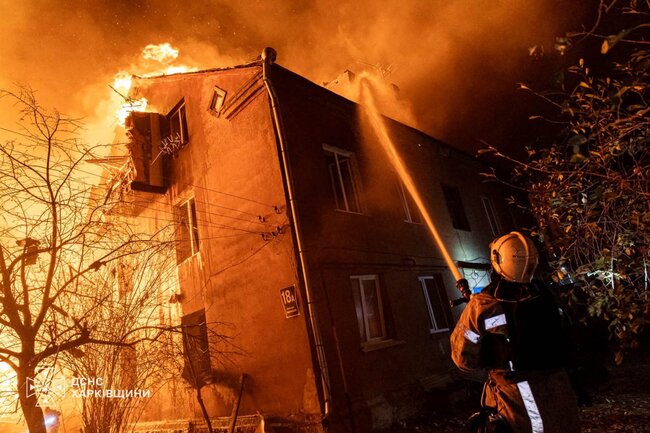
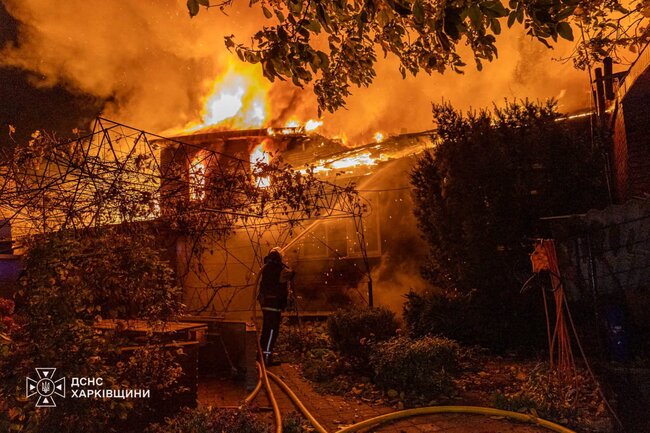
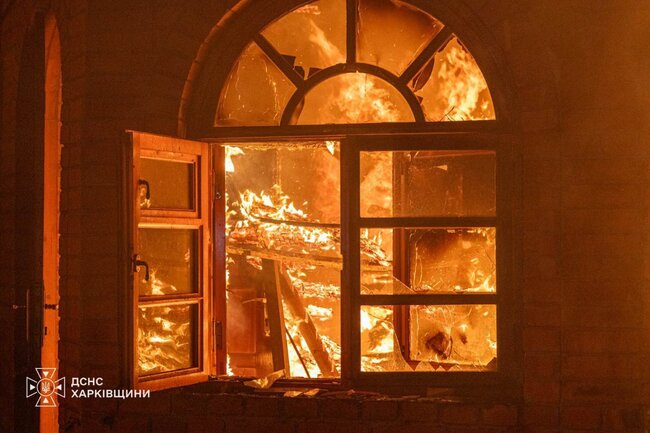
The war in photographs
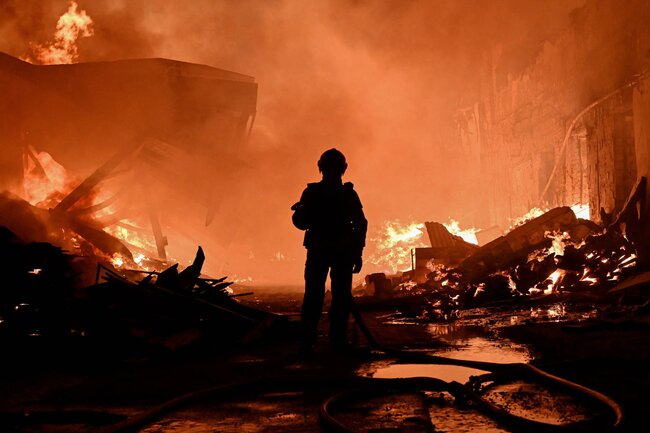
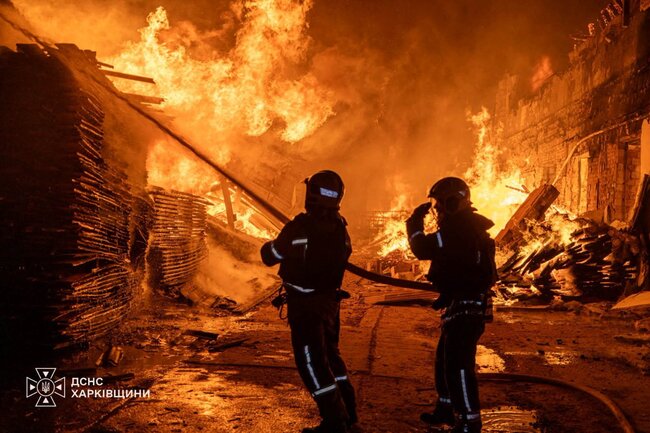
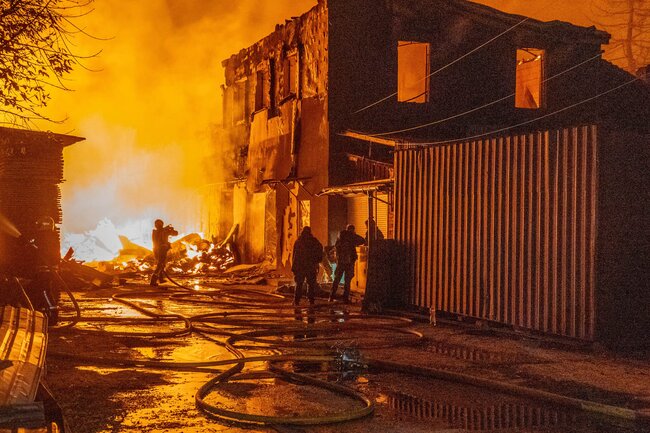
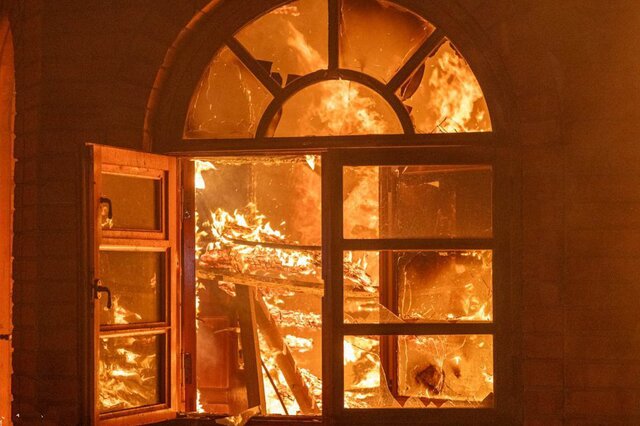
Russian forces struck Kharkiv overnight on October 28, and a drone attack set an apartment building on fire in the city’s Osnovianskyi district. The attack killed a 60-year-old man and injured four people, said Oleh Syniehubov, head of the regional military administration. It also set fire to a private home, an industrial building, and several outbuildings.
At Meduza, we are committed to transparency about our use of artificial intelligence in the newsroom. The story you’re reading was written by one of our living, breathing journalists and translated from Russian using an AI model configured to follow our strict editorial standards. This translation process is the result of extensive testing and refinements to ensure our English-language coverage is timely and accurate. A Meduza editor reviews every draft before publication.
If you find any errors in this translation, please contact us at reports@meduza.io.
Germany supplied Russia with prosthetic arms and legs, as well as artificial joints, worth 79 million euros in the first half of 2026, almost a third more than a year earlier, according to Eurostat data reviewed by Forbes Russia.
Prosthetic arms and legs and related components accounted for 41.2 million euros of that total, while endoprostheses — artificial hip, knee, and other joint replacements — accounted for 37.8 million euros.
Supplies of prosthetic arms and legs grew 5.4 times compared with 2021, while shipments of endoprostheses grew 6.1 times.
Russia received prostheses and endoprostheses worth a total of 144.9 million euros from European Union countries in the first half of 2026, compared with 66.5 million euros during the same period in 2021.
Russia’s prosthetics market is growing, but domestic production capacity is not keeping pace with demand, Forbes writes. People with disabilities received 152,661 prosthetic arms and legs from the state in 2024, more than in any of the previous 10 years, according to the Labor Ministry.
Market participants say prosthetics are now being issued significantly faster and recipients have become significantly younger. Young people accounted for about 8% of those needing prosthetics before 2022, but their share had grown to 15–20% by 2025, according to Rostec, the Russian state defense conglomerate. Most are people who fought in the war with Ukraine and were wounded there.
Younger patients need more complex, technologically advanced devices, but production of these prostheses in Russia has “historically developed somewhat more slowly,” experts say. As a result, Russian-made products account for about 80% of the prosthetics market by unit but only 30% by value, and imports account for up to 70% of the market for expensive, high-tech components.
At Meduza, we are committed to transparency about our use of artificial intelligence in the newsroom. The story you’re reading was written by one of our living, breathing journalists and translated from Russian using an AI model configured to follow our strict editorial standards. This translation process is the result of extensive testing and refinements to ensure our English-language coverage is timely and accurate. A Meduza editor reviews every draft before publication.
If you find any errors in this translation, please contact us at reports@meduza.io.
Russia’s largest bookstore chain, Chitai-Gorod–Bukvoed, has spent about 100 million rubles in recent years pulling books that violate Russian law from sale and destroying them, the chain’s head, Alexander Brychkin, said in an interview with the Russian business news outlet RBC.
“Mostly it’s the inability to return the goods to the supplier, so we have to write them off as a loss. We can’t just throw these books in the trash. They’re toxic waste. So they have to be disposed of, and that’s also at our expense. On top of that, no one compensates us for the costs of pulling them from the shelf, sending them back to the warehouse, having it all transported somehow, and then processed at the warehouse. All of this adds up to an enormous amount of work and fairly large expenses,” Brychkin said.
Brychkin described how the disposal process works: “The disposal process looks like this: a service provider destroys the books on camera using an industrial shredder.”
Brychkin said a book is pulled from sale after the chain receives notice from the Russian Book Union that “there are suspicions regarding a particular book.” The chain then stops selling it “until clarity is reached.”
“Of course, there can be no complete clarity in this situation. Because even if the Russian Book Union doesn’t find anything in the book, there’s no guarantee that some parallel expert assessment isn’t happening at the same time somewhere within another organization,” Brychkin added.
Brychkin said Russian readers have shown no noticeable interest in books by Lyudmila Ulitskaya and Boris Akunin pulled from sale.
“Some of Boris Akunin’s books are still sitting in the warehouse, and we haven’t disposed of them yet. It’s not possible to return them to the supplier. In a sense, you could think of it as a special restricted storage,” Brychkin said.
In recent years, Russia has regularly pulled books from sale at the demand of authorities or pro-government organizations. For example, in October 2026, Russia’s media regulator, Roskomnadzor, banned the novels Dvesti tretiy den zimy “The 203rd Day of Winter” and Vesna vody “The Spring of Water” by writer Olga Ptitseva. According to media reports, the ban may have stemmed from signs of “promotion of non-traditional sexual relations.”
At Meduza, we are committed to transparency about our use of artificial intelligence in the newsroom. The story you’re reading was written by one of our living, breathing journalists and translated from Russian using an AI model configured to follow our strict editorial standards. This translation process is the result of extensive testing and refinements to ensure our English-language coverage is timely and accurate. A Meduza editor reviews every draft before publication.
If you find any errors in this translation, please contact us at reports@meduza.io.
Russian President Vladimir Putin spent much of an October 27 phone call with Finnish President Alexander Stubb and Norwegian Prime Minister Jonas Gahr Støre recounting the “medieval Slavic history,” the Financial Times reported, citing sources familiar with the conversation.
The call was initially expected to last 30 minutes but instead ran for an hour and a half.
Putin spent most of the call describing what the Kremlin considers the “initial reasons for the conflict” rather than discussing ways to end the Russia–Ukraine war, according to the Financial Times. The prospect of an immediate ceasefire came up only briefly, the outlet’s sources said.
One of the sources said Stubb and Støre chose not to interrupt Putin, wanting to gauge how serious he was about pursuing dialogue with Europe.
The conversation between Stubb, Støre, and Putin took place at the initiative of Western leaders. The Kremlin reported the day before that the Russian president had “assessed the current situation” in Ukraine, recalling the “root causes of the conflict,” and had also drawn attention to the “confrontational policy of EU and NATO countries, which is prolonging the fighting.” A source close to the Kremlin told Reuters that Putin told Stubb and Støre that Russia would not abandon its goal of seizing the entire territory of Donbas. The European leaders responded that a “just” peace was necessary.
During conversations with Western politicians and journalists, Putin has repeatedly spent a long time recounting his version of the history of Russia and Ukraine. He did so, for example, in an interview with American journalist Tucker Carlson in 2024, and during a meeting with U.S. President Donald Trump in Alaska.
At the end of October 2026, Putin, in an interview with Pavel Zarubin, a correspondent for the Russian state broadcasting company VGTRK, commenting on his meeting with Trump’s negotiators, said that Russia does not want to fight Ukraine. According to him, “the latest genetic research shows that this is one people — Russians and Ukrainians.” It is unclear what research he was referring to.
At Meduza, we are committed to transparency about our use of artificial intelligence in the newsroom. The story you’re reading was written by one of our living, breathing journalists and translated from Russian using an AI model configured to follow our strict editorial standards. This translation process is the result of extensive testing and refinements to ensure our English-language coverage is timely and accurate. A Meduza editor reviews every draft before publication.
If you find any errors in this translation, please contact us at reports@meduza.io.
U.S. President Donald Trump said he expects to hold a trilateral meeting soon with Russian President Vladimir Putin and Ukrainian President Volodymyr Zelensky.
.@POTUS: "We're making a lot of progress with Russia-Ukraine. There'll be a meeting set up very soon." pic.twitter.com/N0vU2zoIsJ
“We’re making a lot of progress with Russia [and] Ukraine. There’ll be a meeting set up very soon,” Trump told reporters. Asked who exactly the meeting would involve, he said it would include Putin and Zelensky. Trump added that he expects “a lot of progress” at the meeting.
Trilateral talks among the United States, Ukraine, and Russia are expected to take place in Abu Dhabi in mid-November, though no exact date has been set. The talks are expected to follow the U.S. midterm congressional elections, scheduled for November 3.
There have been repeated reports of a possible trilateral meeting among Trump, Zelensky, and Putin, but the parties have not announced any concrete agreement on the meeting.
At Meduza, we are committed to transparency about our use of artificial intelligence in the newsroom. The story you’re reading was written by one of our living, breathing journalists and translated from Russian using an AI model configured to follow our strict editorial standards. This translation process is the result of extensive testing and refinements to ensure our English-language coverage is timely and accurate. A Meduza editor reviews every draft before publication.
If you find any errors in this translation, please contact us at reports@meduza.io.
The absence of a military ID for a man of draft age could become grounds for refusing to accept documents for a foreign passport application, according to materials from Russia’s Interior Ministry reviewed by the Russian state news agency TASS.
The materials list several grounds for refusing to accept foreign passport applications, including the absence of a military ID for an applicant of draft age.
The TASS report, widely cited by other media outlets, gives no further details, and it remains unclear whether it describes a change to the current procedure for issuing foreign passports. The report also cites provisions governing domestic Russian passports that are already in effect.
Human rights activists have repeatedly said that applicants, including those of draft age, need to present a military ID when applying for a foreign passport only if they already have one. The same applies to a certificate from the local draft office, they said.
At Meduza, we are committed to transparency about our use of artificial intelligence in the newsroom. The story you’re reading was written by one of our living, breathing journalists and translated from Russian using an AI model configured to follow our strict editorial standards. This translation process is the result of extensive testing and refinements to ensure our English-language coverage is timely and accurate. A Meduza editor reviews every draft before publication.
If you find any errors in this translation, please contact us at reports@meduza.io.
Russia’s Digital Development Ministry is discussing a plan to route all traffic from foreign domains through the country’s internet traffic filtering system (TSPU) and limit its volume, Forbes Russia reported. Several sources — including officials at the ministry and people in the IT industry — told the outlet that the measures could be included in a bill overhauling the telecommunications sector.
The ministry is expected to gain the authority to restrict foreign traffic for Russian users once it exceeds a limit that has yet to be set. From an operator’s standpoint, VPN use looks like foreign traffic.
Industry representatives polled by Forbes Russia said determining which traffic is foreign will be difficult. “A Russian website hosted abroad would be classified as foreign, while a server rented in Russia would be classified as domestic,” said a technical expert at RKS Global.
The Digital Development Ministry announced that “these issues are currently being worked out, but it would be premature to say which of them, and in what form, will be included in the final version of the amendments.”
There have been repeated reports that the Digital Development Ministry wants to charge higher fees for foreign traffic.
Demand for VPNs in Russia has surged as authorities block popular social networks, services, and messaging apps. In response, Russian authorities have intensified their fight against means of circumventing the blocks. The budget for the next three years allocates a record 60 billion rubles for traffic filtering.
At Meduza, we are committed to transparency about our use of artificial intelligence in the newsroom. The story you’re reading was written by one of our living, breathing journalists and translated from Russian using an AI model configured to follow our strict editorial standards. This translation process is the result of extensive testing and refinements to ensure our English-language coverage is timely and accurate. A Meduza editor reviews every draft before publication.
If you find any errors in this translation, please contact us at reports@meduza.io.
Ozon estimated that drone attacks on 11 of its logistics centers cost it 30.1 billion rubles, according to the company’s financial report for the third quarter of 2026.
The loss figure includes the cost of goods destroyed in the warehouses, damaged equipment, and what the report describes as “other losses and expenses.”
The report says some of the company’s own risks were insured, and Ozon is continuing negotiations with insurance companies over possible compensation.
Despite the losses from the strikes, Ozon’s net profit grew 25% in the third quarter, reaching 3.7 billion rubles. Revenue increased 1.6-fold to 421.2 billion rubles, and Ozon delivered 1.2 billion orders to customers over the same period, 76% more than a year earlier.
Ukraine expanded its target list for strikes on Russian infrastructure in the summer of 2026, moving beyond oil refineries and defense plants to marketplace warehouses. Ukrainian drones attacked a warehouse belonging to Wildberries for the first time on July 18, and 36 of the company’s warehouse facilities came under attack over the next three months. Attacks on Ozon’s warehouses began on August 22.
Ukraine’s armed forces shifted to digital infrastructure in October. From October 8–11, Ukraine carried out a series of strikes on three data centers belonging to Yandex. Ukrainian drones attacked a data processing center belonging to Sberbank on October 14, and a data center belonging to the Federal Tax Service on October 23. The strikes caused widespread disruptions to services at Yandex, Mail.ru, Ozon, MegaFon, VKontakte, and other companies.
At Meduza, we are committed to transparency about our use of artificial intelligence in the newsroom. The story you’re reading was written by one of our living, breathing journalists and translated from Russian using an AI model configured to follow our strict editorial standards. This translation process is the result of extensive testing and refinements to ensure our English-language coverage is timely and accurate. A Meduza editor reviews every draft before publication.
If you find any errors in this translation, please contact us at reports@meduza.io.
Ukrainian drones struck the Tula region overnight on October 28.
Governor Dmitry Milyaev said that “debris falling” in the city of Novomoskovsk damaged apartment buildings and private homes, as well as “infrastructure in the surrounding industrial zone.”
Laboratories from the Tula region’s Ministry of Natural Resources and Rospotrebnadzor were sent to the city, though the governor did not say why.
Ukrainian monitoring Telegram channels Exilenova+ and Supernova+ said the Azot chemical plant was hit in the attack. Ukraine has previously targeted the plant.
Residents of Lipetsk reported hearing explosions overnight on October 28. Ukrainian Telegram channels said a fire broke out near the Novolipetsk Metallurgical Combine. Authorities did not comment on the reports.
At Meduza, we are committed to transparency about our use of artificial intelligence in the newsroom. The story you’re reading was written by one of our living, breathing journalists and translated from Russian using an AI model configured to follow our strict editorial standards. This translation process is the result of extensive testing and refinements to ensure our English-language coverage is timely and accurate. A Meduza editor reviews every draft before publication.
If you find any errors in this translation, please contact us at reports@meduza.io.

 Login