❌

Reading view

California's Wealth Tax Could Cost the State $39 Billion

This week, editors Peter Suderman, Nick Gillespie, and Matt Welch are joined by Associate Editor Liz Wolfe to discuss California's proposed 5 percent wealth tax on billionaires, which a Hoover Institution study suggests could ultimately cost the state $39 billion in lost revenue. With wealthy residents already leaving California, the panel examines whether the measure will survive next week's vote, why Gov. Gavin Newsom opposes it, and how public sector unions have helped fuel the state's spending problems.

The panelists then look to France, where mounting unrest and economic stagnation raise questions about the long-term consequences of high taxes, expansive welfare programs, and pension obligations that increasingly burden younger generations. Next, they discuss Venezuelan opposition leader María Corina Machado returning home after 10 months in exile. Then, with the midterm elections next week, the editors examine whether Trump's tariffs, war with Iran, and mounting allegations of corruption will deliver Democrats control of Congress. Finally, a listener asks whether today's democratic socialist movement will ultimately be remembered like the libertarian and Tea Party movements of the early 2010s.


0:00—California's wealth tax proposal

13:02—Will France protests influence America?

22:50—Corina Machado returns to Venezuela.

31:19—Listener question on the DSA

44:40—2026 Midterm elections preview

58:34—Weekly cultural recommendations


Upcoming Reason Events

Reason Versus - Authoritarianism Is a Right-Wing Problem, November 10


Mentioned in the Podcast:

"Will the Wealth Tax Fail?" by Liz Wolfe"France Is a Warning to California's Tax-the-Rich Crowd," by Veronique de Rugy"California's 'Wealth Tax' Could Cost the State $39 Billion," by Eric Boehm"Report: California's Proposed 'Billionaire Tax' Is Based on Bad Research," by J.D. Tuccille"A Wealth Tax Built on Billionaires Who Aren't Really Billionaires," by Veronique de Rugy
"New Book Says Jared Kushner Funneled Money to Middle East Mercenaries. Kushner Denies It." by Matthew Petti"Trump's Tariffs Are Politically Toxic," by Eric Boehm
"The Democrats' Socialist Moment," by Matt Welch
"Family Separation Drama Fjord Is a Haunting Depiction of Unchecked State Power," by Peter Suderman

The post California's Wealth Tax Could Cost the State $39 Billion appeared first on Reason Magazine.

💾

© Illustration: Fatima Ruiz

Matt Welch appears on the left. Liz Wolfe appears on the right. Behind them, an image of Governor Gavin Newsom appears looking concerned in the center. Bold text across the top of the screen reads "TAX THE RICH?"
  •  

Family Separation Drama Fjord Is a Haunting Depiction of Unchecked State Power

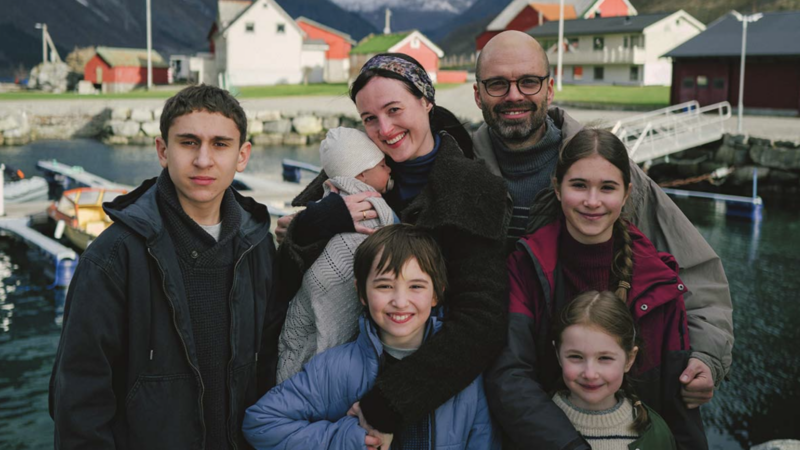
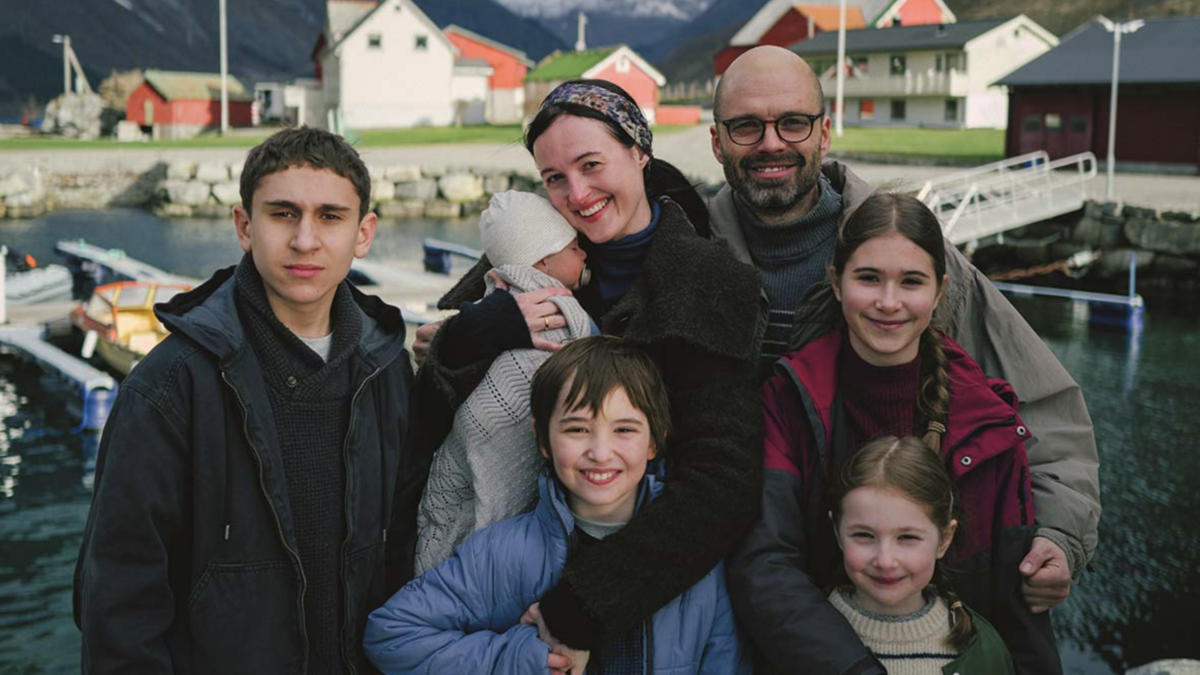
A scene from "Fjord" | Forum Film România

Fjord is a movie about having your children taken by the state. The tone is calm, clinical, measured, and by the books. No violence is depicted on screen. People rarely even raise their voices. Everything unfolds in the distant and impersonal style of bureaucratic procedure. 

But the movie, which won the Palme d'Or at this year's Cannes Film Festival, is utterly enraging, a fierce, ferocious, gut-punch of a film. It's a haunting portrait of the consequences of unchecked state power, especially the kind that purports to be for one's own good.

Much of the film's power comes from the fact that it simply depicts what happens when a person, or a family, comes under suspicion by the state. There's no commentary, no lecturing, no big speech at the end. Instead, writer-director Cristian Mungiu, a Romanian filmmaker whose sympathies are clearly with the family, simply shows us, unblinking, what it's like to lose one's rights and freedoms at the hands of a bureaucracy that respects no power and no authority but its own. 

When the film begins, the Gheorghiu family—a mother (Renate Reinsve), father (Sebastian Stan), and their five children—moves from Romania to a small town in Norway. Soon, school authorities notice the children have bruises. We in the audience know the bruises weren't caused by the parents, but the children, who don't speak Norwegian, give conflicting statements. After being brought in for questioning by the police, the father admits to sometimes spanking or lightly slapping his children on the behind, for correction. In order to go free, he's required to sign a statement that contorts his words, making his admission of spanking sound like something more sinister and violent. 

He's also a conservative Christian, which has caused some social tension: He's played Christian music, without singing the lyrics, on a piano at school, a no-no in a state that strictly curbs proselytizing. School officials are concerned that he requires his children to pray and study the Bible; the children aren't allowed to play video games or watch YouTube. One of his children spoke out against homosexuality in school during a session on gender. There's suspicion among the teachers and administrators that he might be indoctrinating his kids.

So the school authorities alert Child Protection, Norway's powerful family bureaucracy. They remove the kids, including a breastfeeding baby, from their parents' custody and place them in three separate foster homes. At first the parents are allowed no visitation, and they are not told where the children are located.

Then they go to court, initially for a civil trial, but with a criminal trial for child abuse looming in the background. As the legal process proceeds, they are told repeatedly that essentially anything they do to fight for their children will make the outcome worse. The state wants compliance and admission that they wrongly abused their kids. But if they admit to abusing their kids, doesn't that give the state evidence they are unfit to parent? Doesn't that make the criminal trial more likely to go against them? As their own, mostly sympathetic lawyer, informs the two parents, "Frankly unless you convince them that you understand and regret it, the risk of you going to prison is considerable." 

Later, at the trial, a representative from Child Protection calmly says there's no reason to believe children might be better off with their biological parents, noting the family's restrictions on video games, internet, and YouTube. In their view, the state knows what's best for the kids; the culturally backward, religious conservative parents do not. It's not for nothing that one character, a conservative political figure from Romania who has come to help publicize the situation, analogizes the power of Child Protection to the power of the Soviet state. 

Part of what makes Fjord so effective is its lack of sermonizing. You don't have to be a trad, a conservative, a family values evangelical, to see that what's happening to the Gheorghiu family is simply wrong. They are railroaded by an imperious bureaucratic state that distorts reality to turn them into villains, with the goal of separating children from their parents and each other. Who are the real child abusers here? 

The story is fictionalized, but not hypothetical. Fjord is based on the true story of the Bodnariu family, conservative Romanian immigrants whose five children were taken from them by the Norwegian state in the 2010s on similarly flimsy justifications. The family eventually left Norway. After watching Fjord, it isn't hard to see why. 

The post Family Separation Drama <i>Fjord</i> Is a Haunting Depiction of Unchecked State Power appeared first on Reason Magazine.

  •  

France's Welfare State Is Finally Imploding

This week, editors Peter Suderman, Katherine Mangu-Ward, Nick Gillespie, and Matt Welch discuss the riots engulfing France and whether the country's increasingly unsustainable welfare state has made it ungovernable. They examine competing claims that immigration and austerity are fueling the unrest, the political gains being made by the French right, and why even modest pension reforms provoke fierce resistance.

The conversation turns to the United States, where President Donald Trump's tariffs are losing support among blue-collar voters and Republicans are struggling in traditionally conservative areas like Ohio. The panelists then discuss the abrupt departure of White House press secretary Katie Zacharia after just five days on the job. Later, they examine Sen. Elizabeth Warren's (D–Mass.) opposition to a proposed $45 billion merger involving McCormick and Unilever. Finally, a listener asks why libertarians don't follow the Democratic Socialists of America's example by trying to reshape the Republican Party from within.

0:00—France's riots and the imploding welfare state
21:29—Trump's tariffs lose support among blue-collar voters.
29:41—Zacharia's tenure as White House press secretary
35:45—Listener question on libertarian influence strategy
45:52—Warren's corporate merger opposition
57:07—Weekly cultural recommendations


Upcoming Reason Events

Reason Versus - Authoritarianism Is a Right-Wing Problem, November 10


Mentioned in the Podcast:

"France Burns," by Liz Wolfe
"Protesters in France and Spain Are Angry at Government Failure—and Demanding More Government," by Reem Ibrahim
"French Tantrum," by Liz Wolfe
"Yes, Heavy Regulation Hurts the Economy. Just Look at France." by Veronique de Rugy
"Even Blue-Collar Workers Have Turned Against Trump's Unpopular Tariffs," by Eric Boehm
"Ohio's Democrat Momentum," by Liz Wolfe
"Trump Fired Kimberly Guilfoyle for Influence Peddling That Pales Next to His Presidential Profiteering," by Jacob Sullum
"Why populism leads to decline," by Nick Gillespie
"How Third Parties Die," by Jesse Walker
"How GOP Fiscal Sanity Died, in 7 Easy Steps," by Matt Welch
"Be Prepared for Elizabeth Warren's Reign of Economic Error," by Nick Gillespie
"Elizabeth Warren Wants the Government To Investigate America's 'Sandwich Shop Monopoly,'" by Christian Britschgi
"The Elizabeth Holmes Documentary You Can See Everything Is an Act of Radical Empathy," by Peter Suderman
"Thank Dutch Merchants, Not a Strong State, for Capitalism," by Edward Stringham


Today's sponsor:

Cato Innovation Project: Design your own full-time, paid role at Cato. If we fund your idea, you spend two years executing it. Apply here: cato.org/reason

The post France's Welfare State Is Finally Imploding appeared first on Reason Magazine.

💾

© Illustration: Fatima Ruiz

Katherine Mangu-Ward appears on the left. Nick Gillespie appears on the right. An image of a car that's been set on fire by protesters appears in the center. Bold text across the top of the screen reads "FRANCE RIOTS."
  •  
❌