❌

Reading view

Ireland Is Banning Vape Flavors. This Shop Owner Warns It Could Cost Lives.
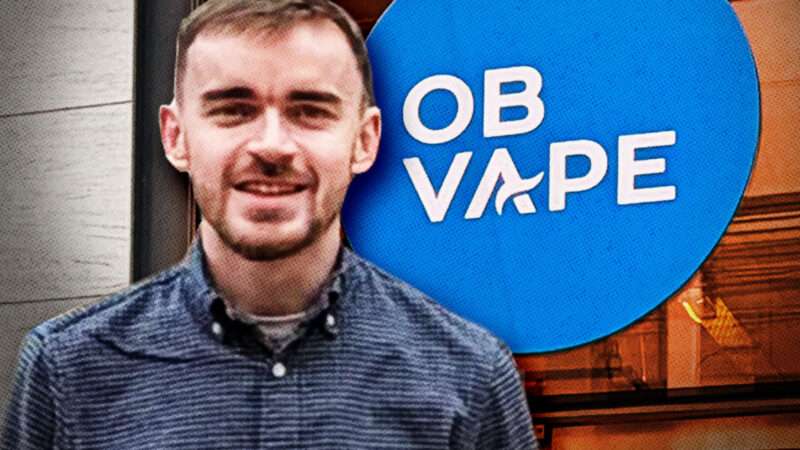
Eoin O'Boyle | Eoin O’Boyle

"Am I living in a fucking parallel universe here or something?" asks Eoin O'Boyle, a 28-year-old Irish vape shop owner facing the prospect of losing his business. "If there's a piece of policy that makes sense, the government will do the opposite for some reason."

Last Wednesday, the Irish Seanad passed the final stages of a sprawling public health bill, which prohibits the sale of vaping products with flavor names other than "tobacco" or "unflavored." The bill also restricts the colors and imagery permitted on vaping devices and packaging, bans advertising in shops and online, and requires most retailers to keep vaping products out of public view.

In a cliché as old as time, Irish politicians are asking the public to think of the children. "We are dealing with an increasingly aggressive industry marketing attractively packaged addictive products that appeal to children," Ireland's public health minister Jennifer Murnane O'Connor said in a statement. "We are responding strongly with measures that will protect our young people against current and future threats."

Ireland's Taoiseach (head of government), Micheál Martin, has described vaping as "nearly worse than cigarettes," calling them the "revenge of Big Tobacco." Of course, as studies by Public Health England, Cancer Research UK, the Royal College of Physicians, and countless other organizations show, vaping is vastly safer than smoking and is an extremely effective cessation tool.

"The government [is] insane to do this," O'Boyle, the owner of OB Vape in Drogheda, Ireland, tells Reason. "It's going to cause excess deaths. It's infuriating."

O'Boyle began smoking at the age of 12, before quitting when he was 18 by using vapes. "I loved smoking. I absolutely loved it," he recalls. His mother and brothers also quit cigarettes by vaping. While studying enterprise computing at Dublin City University, O'Boyle worked part-time at a vape shop, where he spotted an opportunity to build a business of his own. In 2019, he took out a small loan and opened OB Vape, hoping to create something akin to the Apple Store of vaping. He says he repaid the loan within six months and has since helped around 22,000 customers quit smoking.

Now, O'Boyle fears the business he's spent nearly eight years building could disappear. "I never thought I'd be in a position where I would have to close down my business through no fault of my own," he says.

Last week's health bill is not the first of Ireland's vape restrictions. In 2023, the country made it illegal to sell to minors, followed by advertising restrictions the following year, and an e-liquid tax in 2025.

These measures were designed to stop vaping among minors, and while Ireland's rate of teenage vaping has declined since 2019 and is below the European average, teens in the country have still been able to access these devices. As the government's own data show, 32 percent of Irish 15- and 16-year-olds have tried vaping, 16 percent said they had vaped in the previous month, and 7 percent vaped daily. By comparison, just 2 percent smoked cigarettes daily, and a 2024 report found the proportion of teens who had ever smoked once fell from 73 percent in 1995 to just 24 percent in 2024 (the lowest number on record).

Regardless of this decline among the youth, smoking remains widespread across the country. According to the government's 2025 Healthy Ireland Survey, 17 percent of the population smokes, with 13 percent smoking daily and 4 percent occasionally.

For those smokers, vaping is among the most effective tools for quitting cigarettes. An August review from Cochrane that examined 80 randomized controlled trials involving nearly 30,000 participants found that nicotine e-cigarettes are more effective at helping people quit smoking than conventional nicotine replacement therapies, such as patches and gum. The review found that vapes resulted in about four more quitters per 100 people, concluding that vaping is a "proven and viable option." Indeed, half of current vapers in Ireland are former smokers, according to government data.

Ireland's vape flavor ban could hurt adults trying to quit smoking. Vape flavors, O'Boyle argues, are crucial in helping smokers move on from tobacco flavors and successfully quit cigarettes. "People don't want to be reminded of tobacco," he says, estimating that around 96 percent of his customers use nontobacco flavors, including menthol and fruit flavors like pineapple.

Research suggests O'Boyle's experience is widespread. A 2020 study published in JAMA Network Open found that adults who started vaping nontobacco flavors had more than twice the odds of subsequently quitting smoking compared with those using tobacco flavors. A 2025 study of 886 smokers published in Nicotine & Tobacco Research found that "non-tobacco flavors were preferred and may be also more effective" at helping smokers quit.

"Without flavors, my business would be gone, and the smoking rates in the country would be up," says O'Boyle.

While the government ban will prohibit the legal sale of flavors, illegal sales are likely to be bolstered. After the Netherlands banned nontobacco vape flavors in 2024, a survey found that 47 percent of existing vapers continued using illegal flavors. Among those users, more than a third purchased them from shops abroad, while others got them from acquaintances, websites, or social media. In Australia, where vaping products can only be purchased legally at pharmacies, a 2025 government study found that 93 percent of vapers obtained their products from illicit sources. Businesses like O'Boyle's will be forced to shut down, but the missing demand will undoubtedly be met by the illicit black market.

"The restrictions that the government [is] planning to put on, and have already put on, are going to jeopardize not just my business," O'Boyle warns, "but the lives of Irish people."

The post Ireland Is Banning Vape Flavors. This Shop Owner Warns It Could Cost Lives. appeared first on Reason Magazine.

  •  

RFK Jr. Wants To Cut Red Tape in Kidney Care. He Should Go Further.

Health and Human Services Secretary Robert F. Kennedy Jr. and a graphic of a kidney | Illustration: BONNIE CASH/UPI/Newscom/Peakstock/Envato

Like most of American healthcare, kidney care has for decades been plagued by red tape. The Trump administration says it wants to change that. On Tuesday, Department of Health and Human Services (HHS) Secretary Robert F. Kennedy Jr. announced his department's Kidney Care National Plan, which promises to introduce more competition, reduce regulatory barriers, expand patient choice, and overhaul America's kidney transplant system.

Much of the plan focuses on barriers to entry in dialysis care, which treats nearly 558,000 Americans. While dialysis can be performed at home, most patients receive treatment at specialized facilities, which must comply with federal certification requirements governing equipment, staffing, water quality, and patient safety in order to participate in Medicare.

Kennedy argues that regulatory barriers have discouraged competition and innovation, leaving patients with fewer dialysis treatment options. "Dialysis technology is an extraordinary technology," said Kennedy at the press conference, but "because of monopolies in the system and the barriers to new entrants, we have not seen any real improvements in that technology."

Of course, the existence of large or even monopolistic companies is not in itself evidence of a problem, but government regulation can often entrench those companies' positions in the market. "I like the fact that they're recognizing that a lot of regulatory…barriers are contributing to the problem, and that's refreshing to hear," says Jeffrey Singer, a practicing general surgeon and senior fellow at Reason Foundation, the nonprofit that publishes Reason. Singer says that removing barriers that prevent new companies from competing with established providers could not only increase choice but also drive down prices.

HHS says that two companies, DaVita and Fresenius Medical Care, control approximately 74 percent of the American dialysis market. As of 2019, roughly a third of Americans lived in areas where the only available dialysis provider was one of those two companies, according to the agency. The administration argues that government regulation has helped entrench this dominance by making it difficult for new providers to enter the market.

To address this, the Kidney Care National Plan suggests a number of reforms, including simplifying certification requirements. HHS also plans to investigate whether dominant dialysis providers have used payment arrangements and legal strategies to secure higher reimbursements without delivering better care.

The 17-page report calls for a review of existing requirements, but it does not specify which regulations will be repealed, nor does it establish a timeline for doing so. It also does not propose any significant reduction in the government's role in financing the distorted market. Instead, the plan largely seeks to make existing government-financed systems such as Medicare more competitive and efficient.

Kennedy has also correctly identified the need for reform regarding kidney donations. Nearly 90,000 people are waiting for a kidney transplant at any given time in America, and 11 people die every day waiting for a kidney. The transplant process is currently managed by Organ Procurement Organizations (OPOs), which are federally certified nonprofits responsible for recovering organs from donors and coordinating their transfer. There are currently just 55 federally designated OPOs operating in the United States, and HHS argues that they behave as "regional monopolies." Since no new OPOs have been approved in the last year, the Kidney Care National Plan suggests fast-tracking certification.

The plan also seeks to make living kidney donation easier by reducing financial barriers. Following the passage of the Honor Our Living Donors Act in February, HHS revised federal reimbursement rules so that a donor's eligibility for financial assistance is no longer determined by the transplant recipient's income. Eligible donors can receive up to $6,000 to cover expenses, including travel, lost wages, and childcare.

However, the reforms proposed stop short of allowing kidney donors to receive direct compensation for the organs themselves, which remains prohibited under federal law. "I can sell my blood. Why can't I sell my kidney?" Singer asks.

Peter Jaworski, director of the Georgetown Blood and Plasma Research Group, feels similarly, arguing that financial incentives are available to nearly everyone involved in kidney transplantation except the donors themselves. "According to this plan, it's OK to use incentives to encourage them to be more productive, to actually do a better job," Jaworski tells Reason, referring to transplant surgeons, hospitals, and organ procurement organizations. "The only exception, once again, is the donor who is offering a kidney."

Better solutions exist, according to Jaworski, who points to the proposed End Kidney Deaths Act. The bill, which was introduced by Rep. Nicole Malliotakis (R–N.Y.) last year, would offer living kidney donors a $50,000 refundable tax credit, distributed over five years. "We have those systems in order to make sure that we can treat patients. That's the point of blood donation. That's the point of plasma donation. That's the point of kidney donation too."

America's plasma market is an excellent example of financial incentives encouraging donation. Unlike many other countries, the U.S. allows plasma donors to be compensated, and despite accounting for just over 4 percent of the world's population, it supplies approximately 68 percent of the plasma collected globally for manufacturing medicines.

"Why do you think America does it? Is it because in America there's way more altruism than in France or Italy or Belgium? No, it's because in the United States you can be paid to donate plasma," argues Jaworski.

The Trump administration appears to recognize that government overreach has stifled competition and restricted patient choice. It also recognizes that living adults donating kidneys will be part of the solution to the long, deadly waiting lists. But its plan leaves the government's outsize role in kidney care largely untouched. For patients facing years on dialysis or waiting for a lifesaving transplant, recognizing the problem is not enough.

The post RFK Jr. Wants To Cut Red Tape in Kidney Care. He Should Go Further. appeared first on Reason Magazine.

  •  

Britain Wants To Punish Microsoft for Being Too Successful

Microsoft | Ken Wolter/Dreamstime.

Successful tech companies are being punished—for being successful.

Last week, Britain's Competition and Markets Authority (CMA) proposed designating Microsoft as having strategic market status, which would give the government regulator enormous powers to regulate Microsoft and impose specific conduct requirements on product design. A consultation process has begun, with a decision on whether Microsoft will be given strategic market status expected in February 2027.

If the CMA decides to designate Microsoft as having strategic market status, it could intervene in product bundling (how Microsoft packages Teams, Word, Excel, and Copilot together), interoperability (whether Microsoft should make it easier for competing software and AI developers to integrate with its products), cloud licensing (whether Microsoft's licensing arrangements disadvantage rival cloud providers), and customer switching (whether businesses face unreasonable barriers to leaving Microsoft's ecosystem) in the United Kingdom.

Bizarrely, the CMA's fundamental gripe with Microsoft is that it has made its software so interconnected, convenient, and commercially attractive to buy together that competitors struggle to persuade businesses to use anything else. For example, the CMA says that Microsoft offers customers "technology that is useful, secure, easy to deploy and manage, and available at an attractive overall price." According to its own customer research, Microsoft is seen as "relatively good value for money," and its bundles are "seen as more cost-effective than buying and managing separate licences." Because commercial bundling "makes customers less likely to adopt products from alternative providers," the CMA thinks it must intervene.

Microsoft is not the first tech giant to feel the CMA's wrath for creating products people like. In 2025, the CMA decided Google had strategic market status in general search and search advertising, giving the regulator the power to impose legally binding requirements on how the company operates. Since then, the CMA has ordered Google to use government-mandated standards for ranking organic search results, provide competitors with tools to access users' search data, and give publishers greater control over how their content is used in AI-powered search. (These requirements were imposed without finding that Google had violated competition law.)

"Products working well together at an attractive price used to be called a selling point," but is now "attracting intervention pushed by an overzealous regulator," Matthew Lesh, public policy fellow at the Institute of Economic Affairs, a London-based free market think tank, tells Reason. Lesh is the co-author of Digital Overload, a 2023 report that warns against giving the CMA "extensive, discretionary powers" amounting to the regulator "telling some of the most successful and popular platforms on the planet how to run their businesses."

Lesh argues that including Copilot, Microsoft's AI chatbot, in the designation is "particularly outrageous." Last year, when Google was designated as having strategic market status, the CMA excluded Gemini because the "AI assistant sector is relatively small, nascent, and highly dynamic." Lesh argues that, with Google, the CMA acknowledged "uncertainty about the market's development," but now "proposes sweeping Microsoft's workplace AI into a designation requiring an assessment looking at least five years ahead."

"Five years ago, ChatGPT didn't exist. Anyone confident about who will lead workplace AI in 2031 should be running a hedge fund, not a regulator," he tells Reason.

While European countries have taken a far more interventionist approach to technology, the United States has, at least comparatively, celebrated competition and innovation. But American lawmakers are increasingly flirting with importing similar restrictions on Big Tech.

In June, Sens. Chuck Grassley (R–Iowa) and Amy Klobuchar (D–Minn.) reintroduced the American Innovation and Choice Online Act, which would allow federal and state antitrust enforcers to challenge certain practices by dominant online platforms, including favoring their own products and disadvantaging competitors. Jack Nicastro described the bill in Reason as an "atrocious importation of European-style competition policy," arguing that it would undermine innovation and choice. The following month, Sen. Mark Warner (D–Va.) introduced the AI AGENT Act, which would impose new requirements on major online platforms to accommodate competing AI agents.

These proposals are intended to address similar concerns to those of the CMA in Britain. The idea is that established companies outperforming their competitors is somehow evidence of "market failure," undermining the very innovations that made them successful.

Technological progress has always been driven by entrepreneurs and the companies they've built competing to win over consumers. Britain seems to have forgotten this. If the United States wants to remain a world leader in tech, it should avoid the British approach like the plague.

The post Britain Wants To Punish Microsoft for Being Too Successful appeared first on Reason Magazine.

  •  

Meta Is Gifting AI Glasses to Blind Veterans: 'I Got My Independence Back'

Two men sitting on a bench with one of them wearing Meta glasses | Photo: Meta

Two hundred years ago, the invention of Braille allowed blind people to read and write. By the 1930s, recorded sound made "talking books" possible. Developments in text-to-speech technology in the 1980s made reading more accessible and widespread. Then came personal computers, screen readers, smartphones, cameras, GPS, voice assistants, and myriad other technological advancements that gave blind people more independence.

Now a pair of sunglasses can read your mail, describe the person in front of you, tell you what is on a restaurant menu, and help you find your way home. Meta, the parent company of Facebook, is using artificial intelligence to turn glasses into a hands-free companion. For any person, this technology is impressive. For the approximately 700,000 Americans who are blind, it is potentially life-changing.

In June, Meta announced that every single blind veteran in the United States could receive its AI glasses free of charge. According to the Department of Veterans Affairs (V.A.), approximately 130,000 American veterans are legally blind, and over 1 million veterans have vision impairment that makes performing daily activities difficult. Don Overton, a blind veteran and former executive director of the Blinded Veterans Association, told Meta that he had "lost [his] independence" after losing his eyesight in a bunker explosion. "The moment I put on my Ray-Ban Meta glasses," he said, "I got my independence back."

The V.A. has a history of failing to fully support blind veterans. In 2022, the V.A.'s Office of Inspector General found that claims processors were instructed to contact visually impaired veterans by telephone, but 87 percent of claims showed no evidence of these calls ever happening. A 2022 investigation by the Senate's Special Committee on Aging found that "roughly 90 percent" of V.A. websites were not compliant with federal accessibility requirements. "We feel we've been abandoned by the agency that is tasked with providing our care and services for us," Overton told The Washington Post in 2022.

Meta's AI glasses have come under fire due to their privacy risks. The company was sued in March after Swedish publications Svenska Dagbladet and Göteborgs-Posten reportedly found that Meta's contractors in Kenya were accessing videos by users of their AI glasses. "We see everything, from living rooms to naked bodies," one worker noted.

Users should be aware of those risks. Still, for blind veterans, companies such as Meta have stepped up to fill a gap that the government has failed to address.

The post Meta Is Gifting AI Glasses to Blind Veterans: 'I Got My Independence Back' appeared first on Reason Magazine.

  •  
❌