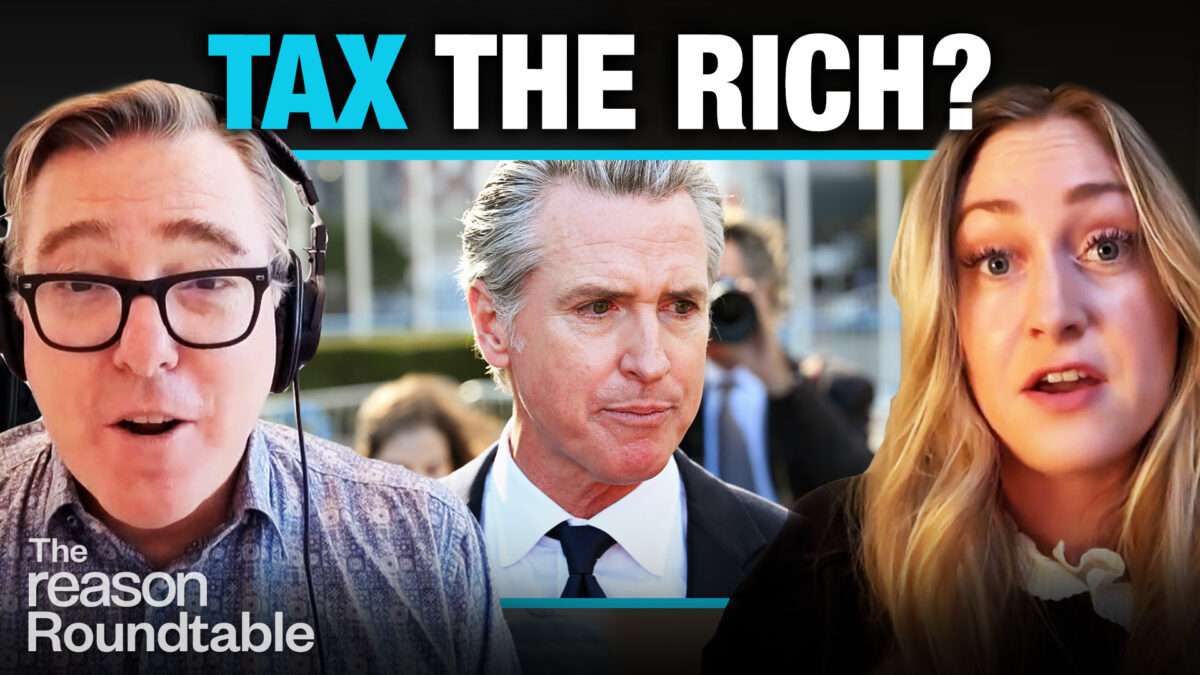
This week, editors Peter Suderman, Nick Gillespie, and Matt Welch are joined by Associate Editor Liz Wolfe to discuss California's proposed 5 percent wealth tax on billionaires, which a Hoover Institution study suggests could ultimately cost the state $39 billion in lost revenue. With wealthy residents already leaving California, the panel examines whether the measure will survive next week's vote, why Gov. Gavin Newsom opposes it, and how public sector unions have helped fuel the state's spending problems.
The panelists then look to France, where mounting unrest and economic stagnation raise questions about the long-term consequences of high taxes, expansive welfare programs, and pension obligations that increasingly burden younger generations. Next, they discuss Venezuelan opposition leader María Corina Machado returning home after 10 months in exile. Then, with the midterm elections next week, the editors examine whether Trump's tariffs, war with Iran, and mounting allegations of corruption will deliver Democrats control of Congress. Finally, a listener asks whether today's democratic socialist movement will ultimately be remembered like the libertarian and Tea Party movements of the early 2010s.
Matt Welch appears on the left. Liz Wolfe appears on the right. Behind them, an image of Governor Gavin Newsom appears looking concerned in the center. Bold text across the top of the screen reads "TAX THE RICH?"
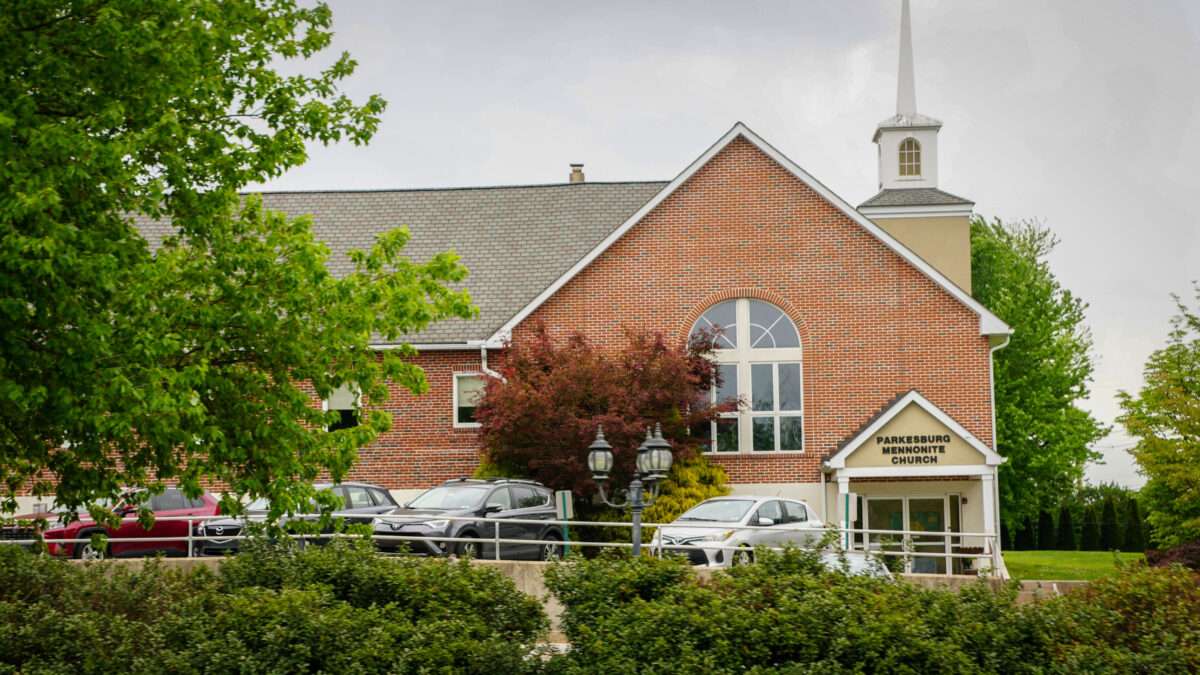
From deportations without due process to random and discriminatory detentions and searches, the Trump administration's immigration crackdown raised many constitutional concerns. Now, in a lawsuit advancing in federal court, 27 religious organizations say the administration's immigration policies violate another constitutionally protected activity: Americans' right to the free exercise of religion.
Last week, the D.C. Circuit Court of Appeals ruled that the religious groups' lawsuit, docketed as Mennonite Church USA v. Department of Homeland Security (DHS), could continue. The lawsuit was brought against the federal government in February 2025, after the Trump administration overturned a longstanding policy that heavily restricted immigration raids around "sensitive sites," including churches, schools, hospitals, daycares, playgrounds, rehab facilities, funerals, and weddings. This policy was most recently outlined in a 2021 memo—dubbed the "Mayorkas Memo" for Alejandro Mayorkas, the DHS secretary at the time—but U.S. immigration enforcement first established the standard in 1993.
After repealing the Mayorkas Memo, the DHS issued a one-page document instructing officers to use "a healthy dose of common sense" when deciding whether to operate at previously protected sites.
Unsurprisingly, religious leaders are concerned about the sudden allowance of federal police into their sacred spaces. In their complaint, each of the 27 faith organizations suing the DHS describes how the risk of immigration enforcement impedes their religious exercise. The Church of the Brethren says a DHS enforcement action would "destroy all sense of peace and safety in what is supposed to be a place of sanctuary for congregants."
The Central Conference of American Rabbis writes that immigration enforcement against a synagogue would induce fears of "the persecution of Jews by government agents before and during the Holocaust."
"We have congregations which have reported members no longer feel comfortable attending services, members who are concerned for their safety, congregations which have had to add costly security measures," Carey McDonald, executive vice president of the Unitarian Universalist Association—one of the 27 plaintiffs—tells Reason.
The fear of police action driving down attendance isn't just a financial problem, McDonald says; it is fundamentally an attack on Unitarian Universalists' (U.U.) beliefs. "A core part of our theology and our practice is to welcome the stranger. To force us to choose between our long-held theological commitment[s] vs. trying to keep our people physically safe…this is a violation of our constitutionally protected rights."
The DHS repealing the Mayorkas Memo isn't the only way immigration police have infringed U.U. religious expression. In August, it was revealed that federal agents had been spying on churches in Minneapolis—even before January's protests against "Operation Metro Surge."
McDonald tells Reason that First Universalist Church of Minneapolis, which had hosted an anti-ICE event led by the Sunrise Movement in December 2025, was one of the targeted churches. "This is direct evidence from the government itself that it is seeking to interfere with our rights to practice our faith. We must assume that this is not an isolated incident."
Indeed, it isn't; the DHS has conducted arrests and surveillance on plenty of other churches across the country. In January 2025, a man in Georgia was arrested by Immigration and Customs Enforcement (ICE) during a church service. By August 2025, Religion News Servicerecorded "at least 10 instances of apparent immigration enforcement activity conducted by ICE or other federal agents on or immediately near church grounds since [President Donald] Trump's inauguration." In February of this year, CBS News reported that two men in New Jersey were taken away while they were "just about to head inside" a Pentecostal church for their Sunday worship.
Because of these tangible harms, the D.C. Circuit ruled that the 27 plaintiffs have standing, writing, "[the plaintiffs] are directly injured by the government's already-implemented policy of enforcing immigration laws at houses of worship, they likely have met the standard for showing 'imminent' harm," as outlined by the Supreme Court.
The case is now being sent back to the D.C. District Court, which will have to decide on all three of the plaintiffs' legal claims. Two of those claims are about religious freedom: One appeals to the Religious Freedom Restoration Act (RFRA), which plaintiffs say must protect the congregations from DHS activity that "substantially burdens" their exercise of religion. The second argument says DHS enforcement violates the First Amendment's Free Exercise Clause, which protects religious expression and association. While judicial precedent clarifies that certain compelling state interests can override the clause, the plaintiffs argue there are less intrusive ways to achieve the state's interest in immigration enforcement. The third claim is more procedural, arguing that the department's sudden rescission of the Mayorkas Memo violated the Administrative Procedure Act by not sufficiently considering the impact on religious organizations.
The plaintiffs are first seeking an immediate injunction against all DHS activity around their houses of worship, but the proposed order submitted in 2025 would also re-implement the Mayorkas Memo while litigation is ongoing, overturning the Trump administration's rescission.
Mennonite Church v. DHS is one of four lawsuits challenging the rescission of the Mayorkas Memo by DHS. Two of those lawsuits have resulted in preliminary injunctions, while the third is still pending.
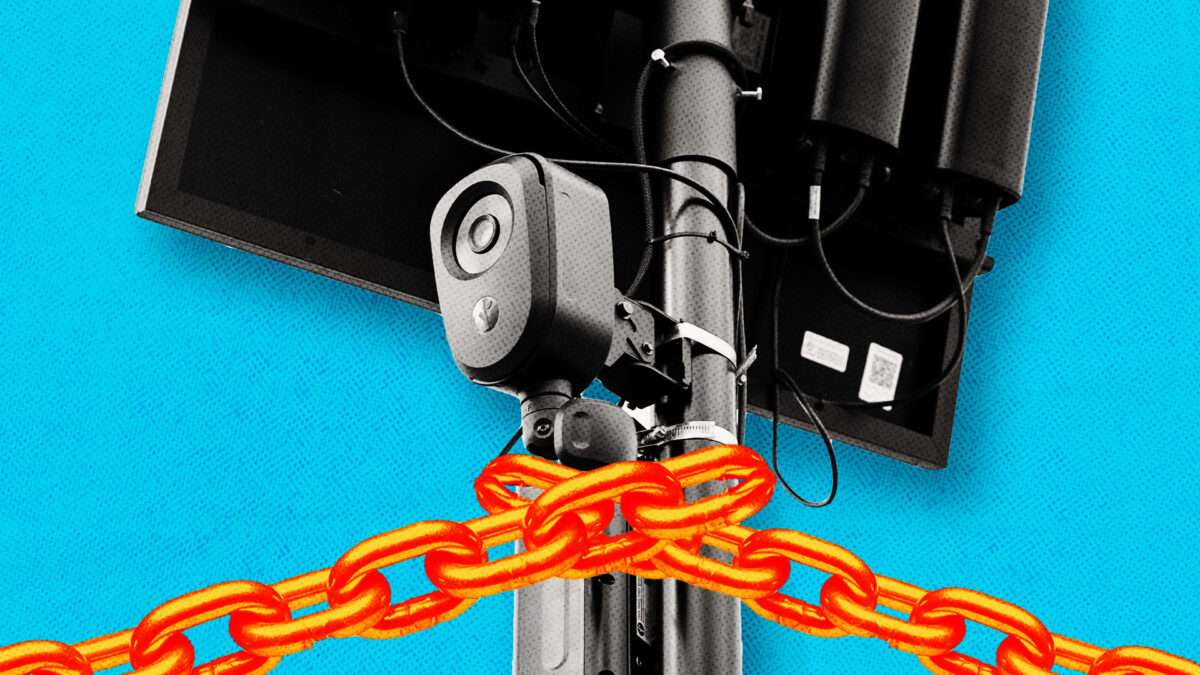
A Connecticut law that took effect at the beginning of October imposes new restrictions on police use of automated license plate readers (ALPRs), which enable what a federal judge recently described as "a type of indiscriminate mass surveillance." The law reflects the bipartisan backlash against AI-assisted cameras that record images of passing cars billions of times a week, building databases that police can use to track drivers, identify other vehicles in their vicinity, predict itineraries, and conduct searches based on a wide range of vehicle characteristics.
Connecticut previously imposed no statutory limits on ALPRs, a fact that underlines how readily police can access license plate data, which they can search without any sort of judicial review and often without meaningful internal supervision. But the law's provisions, while promising in some ways, fall short of the reforms recommended by critics who warn that unconstrained use of ALPRs threatens the privacy of innocent motorists across the country.
As of today, DeFlock's mapping project has identified nearly 145,000 ALPR cameras in the United States, most of which were installed by Flock Safety, the leading vendor. That network includes more than 1,500 cameras deployed by Connecticut law enforcement agencies, three-quarters of which use the technology.
The concerns underlying the new law, which Gov. Ned Lamont signed last May, echo objections raised in other states. Last February, for example, CT Insiderreported that out-of-state agencies had searched ALPR data from Connecticut thousands of times for immigration enforcement purposes. When police in Johnson City, Texas, searched Connecticut data for a missing woman, the log noted that she "had an abortion," which reinforced concerns that ALPR information might be used to enforce abortion bans.
As elsewhere, ALPR critics in Connecticut also have complained about a lack of transparency. In April 2025, for instance, South Windsor began using Flock cameras without any public notice. The resulting consternation prompted the city council to cancel the program early this month. CT Mirrorreports that South Windsor is "at least the sixth Connecticut community to end or suspend the use of ALPRs this year, following Windsor, Killingworth, Ledyard, Milford and Newtown."
Compared to those moves, the new state restrictions are pretty weak tea. But they include some potentially meaningful changes, and they highlight how lax oversight of ALPRs has been.
The new law restricts the sharing of ALPR data, which henceforth will be limited to Connecticut, Massachusetts, New York, and Rhode Island unless an agency in another state obtains a judicial warrant. The law says the data may not be used for immigration enforcement, to target conduct protected by the First Amendment, or for investigations related to "reproductive" or "gender-affirming" health care services. It also bars the placement of ALPRs near facilities that provide such services or organizations that primarily serve immigrants.
The original bill specified that ALPR data could be retained for no more than seven days unless it is tied to an ongoing criminal investigation, subject to a warrant, or used for toll enforcement. The final version of the bill extended that limit to 21 days. Flock's original default was 30 days. But last August, in response to widespread criticism of ALPR surveillance, the company began recommending a seven-day limit. Connecticut's Police Officer Standards and Training Council, which last month sent Lamont a report that included suggested reforms, thinks the state should adopt the seven-day standard.
Under the new law, police may search ALPR data to "assist in the recovery of a stolen motor vehicle," "assist in locating a missing or endangered individual," or "assist in the apprehension of an individual with an outstanding warrant." They also may query the database for information "relevant and material to a specific active investigation of a criminal offense in which there is reasonable suspicion that the offense has been or is being committed." When they do that, their agency must record "the reason for the access and any associated case number for the complaint or incident that is being investigated and is the basis for the access."
It is remarkable that Connecticut lacked such basic safeguards until now, and it is not clear how effective the new rules will be. Since July 1, 2025, Virginia has required that cops state a "specific purpose" for ALPR searches, including "the offense type." Yet last April, WHRO reported that Norfolk police often give "incomplete and imprecise reasons" for ALPR queries, including "suspect," "suspicious," and "investigation" or "inv."
Connecticut's "reasonable suspicion" requirement is more lenient than the standard that the Institute for Justice favors. The organization's model statute would generally require a warrant based on probable cause for ALPR queries. The proposed law makes exceptions for "exigent circumstances," stolen vehicles, and toll, parking, or traffic enforcement.
Connecticut's law also addresses the sort of blatant abuses that have fueled opposition to license plate cameras, including cases in which cops have been caught using ALPR data to stalk personal nemeses, ex-girlfriends, possibly unfaithful spouses, and objects of romantic interest. The law says an officer "who is found to have knowingly accessed, used or disseminated automated license plate reader data with malicious intent for purposes outside of the provisions of this section shall be subject to disciplinary action including, but not limited to, suspension, cancellation or revocation of certification" for police work.
The law establishes two additional remedies that could deter ALPR abuses. It authorizes the attorney general to sue ALPR contractors for damages and injunctive relief when they violate the new restrictions. It also allows "any aggrieved individual" to sue "a public agency" that flouts the rules.
"The law, for a first bite at the apple, is not bad," Ken Barone, manager of the University of Connecticut's Racial Profiling Prohibition Project, toldCT Insider. Given that "there was a benchmark of nothing," he said, the attempt to constrain and track ALPR use is "a big step forward."
Is Nathan Fielder interested in making something innovative and great, or does he only really care about making money?
That's technically the question You Can See Everything, the new A24 documentary co-directed by Fielder and Lance Oppenheim,asks about its subject, Elizabeth Holmes, the Theranos founder and convicted fraudster currently in federal prison.
As the documentary progresses, however, it's a question one increasingly asks about Fielder himself.
You Can See Everything was billed as an intimate look at the day-to-day life of Holmes, her romantic partner Billy Evans, and their two children, in the days before she reports for her 11-year prison sentence.
In truth, that only describes the first half of the three-hour-long film, in which Fielder and his camera crews are embedded in Holmes and Evans' cramped San Diego beach house in the month preceding her incarceration.
In part one, we truly do see everything, from Holmes making breakfast for the kids and talking to lawyers about last-minute appeals to Evans showering naked.
All the while, Fielder obsessively explores in his own meta-comedy style a question many have asked about Holmes: Were the lies she told about Theranos' diagnostic machines merely a scam to rip off investors? Or had she actually convinced herself that these falsehoods were at most white lies in the service of a great and revolutionary technology on the cusp of becoming a reality?
Then, after 90 minutes of this exploration, Holmes checks in to prison, and Fielder's primary subject disappears from the film. The focus then shifts to Evans and whether or not he's solely responsible for a new unethical scheme Holmes has found herself enmeshed in.
In a Fielderesque reenactment, it's revealed to the audience that Evans conditioned the documentary's access to him and Holmes on the couple being paid a percentage of the film's profits.
Any ethical documentarian would have to say no to this ask.
Subjects being economically disinterested in the films they're appearing in is what separates real documentaries, which are supposed to accurately portray real life, from fictional films and public relations puff pieces.
Incredibly, however, Fielder, Oppenheim, and A24 eventually agree to Evans' demand for a cut of the film's profits.
Once this crooked bargain is made, You Can See Everything then shifts to exploring whether Holmes was aware that she'd be profiting from the film or whether this was a deal the domineering Evans secured without her knowledge.
Fielder tells us that he believes the answer will shed light on whether Holmes actually sees herself as a world-changing inventor or whether she really is just out for the money.
Fielder eventually makes this point directly to Evans during an on-camera confrontation and in a reenactment of his unfilmed meeting with Holmes in prison. By accepting payment for the documentary, the two are undercutting their case that Holmes is more than a wealth-obsessed fraudster, he tells them.
And by forfeiting their rights to back-end profits, they can make the audience more sympathetic to their case that Holmes did have motivations beyond a paycheck.
As a humble viewer, I confess I found this investigation somewhat boring. For starters, it seemed obvious to me that Holmes was in on the scheme to get paid for the documentary from the beginning.
Moreover, it's all kind of beside the point. Once the deal to pay Evans was inked, the documentary has been irrevocably changed into an elaborate rip-off. The only question remaining is whether the subjects or the audience will be the ultimate sucker.
When Fielder pointedly pushes Evans and Holmes to surrender profits they're contractually entitled to, he's no longer a disinterested filmmaker exploring the couple's psyches. He's an economically interested party pressuring business partners to back out of money they've been contractually promised or else risk extreme embarrassment in the film he's making.
If Fielder fails to convince the couple to surrender their rights, moviegoers are left with the knowledge that a portion of their ticket revenue is benefiting a convicted fraudster.
If the director does succeed in his pressure campaign, it means that there's more profit to go around for the makers of the film.
A documentary about conmen itself becoming a con would not be an uncharacteristic Fielder bit.
His projects frequently feature a deliberate, escalating blurring of the lines between art and reality. See, for instance, the second season of his show The Rehearsal, in which an investigation into airline pilots' mental well-being culminates in Fielder becoming a licensed 737 pilot while waiting on an autism diagnosis.
Something similar can be said for the connection between the themes in the documentary and co-director Oppenheim's recent feature film Primetime about the making of the reality show To Catch a Predator. That movie was also about how TV producers can script reality and invent crimes all for the benefit of a show that's allegedly meant to merely document them.
You Can See Everything pulls off something similar. Its investigation into Holmes' motives leaves one seriously questioning the filmmaker's probity. Perhaps that makes it a genius bit of meta commentary on the unreality of documentaries.
Ultimately, it doesn't really matter. There's no getting around the fact that Fielder made a crooked bargain to get his documentary made and then used his power as a director who did, in fact, see everything to screw people out of money they had been promised.
One can imagine that the victims of Holmes' Theranos scam will find You Can See Everything a frustrating film to watch. At the end of the day, this woman defrauded them of hundreds of millions of dollars. Her precise motives for doing so probably aren't all that interesting to them.
I certainly feel a similar way as a paying viewer of the unethical travesty that is You Can See Everything.
Bob Woodward is publishing a new book, titled "Secrets," that reveals many of the reporter's sources. The Washington Post has published an in-depth profile.
Of special interest are the sources Woodward relied on with Scott Armstrong for The Brethren (1979).
In the memoir, Woodward clears up another decades-long mystery: Which Supreme Court justices talked to him for the 1979 bestseller "The Brethren"? The exposé of the inner workings of the nation's highest court under Chief Justice Warren Burger electrified Washington.
When the book was published, Woodward and his co-author, Scott Armstrong, disclosed that they had interviewed five of the nine justices on the court, as well as 170 former law clerks, but on the condition that they not be named. Given the court's reputation for maintaining a Sphinxlike silence, "The Brethren" ignited a guessing game in Washington and in legal circles around the country, as well as criticism over the book's heavy reliance on anonymous sources.
"Our use of unnamed sources was a huge point of controversy for the book, but in my 55 years of reporting experience, people rarely shared secrets on the record, particularly at the time something is going on," Woodward writes in his memoir.
Nearly a half-century later, Woodward finally names the five justices who granted interviews: Potter Stewart, Lewis Powell, Byron White, Harry Blackmun and William Rehnquist (all are now deceased). Woodward's memoir explains how he and Armstrong painstakingly cultivated the justices and their former clerks as sources. The authors kept long memos about the interviews, which Woodward draws on to quote the justices at length in his new book.
It is curious that Woodward's sources were all the conservatives on the Court. (During the late 1970s, even after Roe v. Wade, Blackmun was still considered a conservative.) Woodward apparently did not talk with Justices Brennan, Marshall, or Stevens. Indeed, throughout the entire WaPo piece, nearly every one of Woodward's sources were conservatives. (I'll go through more of them below). I wonder what Chief Justice Burger would think if he knew that the other three Nixon appointees were the sources of the leaks.
Yet, even if Brennan did not talk directly to Woodward, one of Brennan's clerks leaked the critical document about the Watergate Tape Case. Steven Goldberg clerked for Brennan during the 1974-75 Term. Goldberg's co-clerk was Judge Marsha Berzon.
Woodward also tells the story of how got his hands on an internal Supreme Court document that was a cornerstone of "The Brethren": a confidential 75-page case history chronicling the justices' tense deliberations in U.S. v. Nixon. In an 8-0 decision, the court ruled in the 1974 landmark case that Nixon had to turn over his secret tape recordings in response to a federal subpoena and that, most importantly, the president is not above the law.
In "Secrets," Woodward writes that he learned about the existence of the case history from Steven P. Goldberg, a former Supreme Court law clerk who died in 2010. But Goldberg was adamant: He couldn't possibly give Woodward a copy.
Woodward wheedled and coaxed and pleaded. Despite Goldberg's repeated protestations, Woodward talked the clerk into letting him pay a visit to his home late that night.
Goldberg still refused to cough up the document, however, so Woodward suggested a compromise: How about you read it aloud while I take notes?
"My plan was to wear him out until I either had enough of it down or he eventually gave it to me," Woodward recalls.
With a sigh, Goldberg started reading from a comfortable living room chair. Woodward smiled and took notes — but he did so very, very slowly and kept asking Goldberg to pause.
After a while, Goldberg fell deeply asleep. Woodward contemplated grabbing the case history from his lap and bolting out the front door, but "that seemed a little too far, even for me," he recalls.
Instead, he walked over to Goldberg, gave him a slight nudge and informed him that he would take the document and bring it back first thing in the morning.
Goldberg stirred with a look of "absolute exhaustion" on his face, according to the memoir. But the former clerk mumbled okay — and that was good enough for Woodward.
"Not wanting to disturb him more, I gently took it. I did not want to run out the door but I moved swiftly," he writes. "If I was on a security camera, I wanted to be behaving properly, with whatever might be left of my dignity."
Woodward scampered home to read the whole thing. The case history proved invaluable, a "raw and unforgiving" and "Holy Grail" account of the court's inner workings.
Before returning it to Goldberg the next day, he stopped at The Post's newsroom to make a photocopy.
One wonders if Justice Brennan tacitly or expressly authorized this leak, so long as the document was not provided. While the Chief Justice would often warn that leakers would have their careers ruined, Goldberg did not suffer at all. He would become a law professor at Georgetown, advocating for a strict separation of church and state. Goldberg died in 2010.
I doubt Josh Gerstein had to take notes while someone read him the Dobbs opinion aloud.
There's more. Boyden Gray, a prominent conservative lawyer, was a regular source for Woodward:
One such leaker was C. Boyden Gray, who served as White House counsel to George H.W. Bush during Bush's presidency and vice presidency. Woodward describes Gray, who died in 2023, as "one of my lifelong secret sources." He also lived just a block and a half away from Woodward in Georgetown, which made passing sensitive documents much easier.
One Friday in February 1987, as the Iran-contra scandal was unfolding, Gray walked over to Woodward's house bearing a gift: a three-page memo labeled "top secret" regarding an Israeli official involved in the sale of U.S. arms to Iran. According to Woodward, the document contradicted the Reagan administration's public assertions about the scope of its contacts with Iran, and even he wondered at first why Gray had given it to him. He said Gray later explained that "he knew the memo would get out" eventually and "he wanted to get ahead of it."
Woodward also reveals that President Nixon's lawyers leaked information about their client.
As Nixon's defense counsel, Buzhardt listened to hundreds of hours of conversations that the president had secretly taped in the White House but resisted turning over to prosecutors until he was finally ordered to do so by the Supreme Court. In public, Buzhardt vigorously defended Nixon and was seen as "the operational man in charge of the Watergate cover-up," according to Woodward. In private, however, his assessment of Nixon was caustic.
"He flat out lies," Buzhardt told Woodward during one of 17 interviews that took place in 1974 and 1975. "He still to this day thinks that he was not involved in the cover-up."
During the height of Watergate, Garment regularly met Woodward for interviews at a Chinese restaurant in downtown Washington and once brought along a briefcase filled with what the lawyer called "the really incriminating tapes." In the memoir Woodward doesn't say whether he was able to listen to them, but he writes that Garment called the recordings "infantile" and "sick." Through them, he added, Nixon was "letting America into the toilet of his mind."
Of all the leaks, these bother me especially. Lawyers have a duty of confidentiality. If they no longer could ethically represent a client, their recourse was to withdraw. It is unconscionable for lawyers to defend their client in court while undermining their client in the press. You wonder why Trump relies on lawyers he can trust. Because those he cannot trust are likely to attack him in the media. Not much has changed.
I've pre-ordered the book, which will be released in November. I am curious about details concerning his SCOTUS chats.
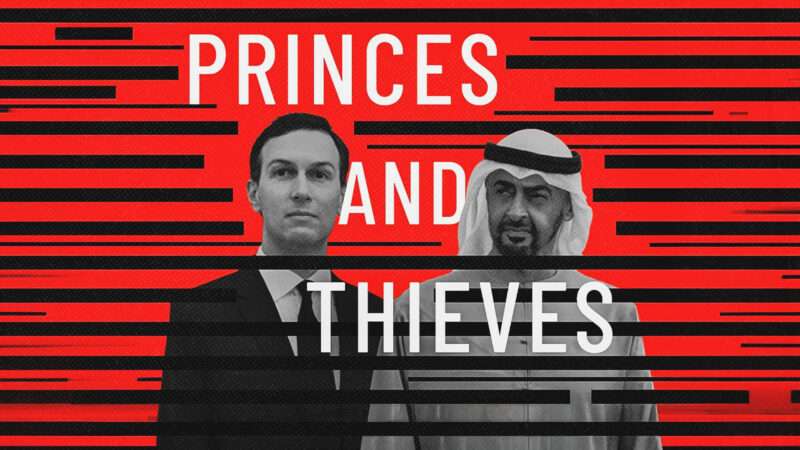
Princes and Thieves, a new book by investigative journalist Matthew Cole, may open a rabbit hole into financial connections between Middle Eastern dictators and President Donald Trump's family. Cole accuses Emirati monarch Mohamed bin Zayed (MBZ) of sending billions of dollars to various mercenaries and political operators, including Jared Kushner, son-in-law to President Donald Trump. Cole's reporting combines well-documented connections with secondhand accounts from anonymous sources.
On Thursday, Vanity Fairpublished an excerpt from the book, reporting that Dutch military intelligence hacked into Kushner's phone in 2018 and discovered hundreds of millions of dollars in bank transfers connected to MBZ. Also on Thursday, Kushner published a letter from his lawyers to Cole categorically denying the "incredible and false" allegations in the book. "Mr. Kushner never accessed foreign accounts and always followed all rules and regulations and only pursued goals that were in the best interest of the United States as directed by the President of the United States," they wrote.
Cole had originally written on his blog that the book was scheduled for release on October 27, but the publication date was pushed forward over the weekend.
The book purports to tie Kushner to a vast web of Emirati influence operations around the world. In Cole's telling, which matches other journalists' accounts, MBZ wants to reshape the Middle East and eastern Africa into an alliance of U.S.-backed dictatorships, where "tolerance" is enforced through high-tech surveillance and "democracy" is a synonym for terrorism. MBZ's use of mercenaries in pursuit of these goals is well-documented. So is Kushner's personal affinity with the Emirati monarch and his business ties with the Arab monarchies.
Soon after Trump won the 2016 election, MBZ held a widely reported meeting with Kushner. According to the book—and according to much of that earlier reporting—the monarch complained about the Obama administration's failure to back Arab regimes against popular revolutions, its decision to end the Iraq War, and its diplomacy with Iran.
Going much further than past reporting, Cole now claims Kushner was personally involved in MBZ's mercenary operations. MBZ and Saudi Crown Prince Mohammad bin Salman put a collective $2 billion into Emirati and Israeli bank accounts which were managed (but not technically owned) by Kushner, according to Cole's sources. Those same sources claim that parts of this secret "slush fund" went to Libyan warlord Khalifa Haftar, American military contractor Erik Prince, and Cuban hitman Felipe Vidal.
Haftar, a former CIA asset, became a general in Libya's 2011 revolution and then attempted to overthrow the new government with Emirati backing in 2014. Despite a 2020 ceasefire, his forces continue to control much of Libya. Prince, founder of the military contractor formerly known as Blackwater, moved to the UAE and helped build a secret army of Colombian mercenaries. He sued Cole for defamation after Cole reported on Prince's role in helping Haftar, but a judge threw out the case. Cole's sources claimed that Vidal, a self-described "hit man," helped the United Arab Emirates (UAE) fake an Iranian attack on oil tankers in May 2019, meant to provoke Trump into war.
Kushner's lawyers have denied any relationship with any of those three men, apart from a single meeting with Prince after the 2016 election. (According to Cole, both Vidal and Prince refused to comment for the book.) The position of the U.S. government is that the May 2019 incident was a genuine Iranian attack, not an Emirati false flag.
After the Vanity Fair article was published last week, Israeli negotiator Gershon Baskin pointed out in The Jerusalem Post that the Central Bank of Israel "does not offer private banking services to individuals," which would make it impossible for Kushner's money to be deposited in the Central Bank of Israel, as Cole claimed. The book addresses that argument, claiming that the money was deposited "in what would appear to be a government account," with Kushner and Israeli Prime Minister Benjamin Netanyahu jointly authorizing transactions.
The Abraham Accords, which include an alliance between Israel and the UAE, have often been touted as a way for the U.S. to "spend less time and less resources in the Middle East," in the words of Vice President J.D. Vance. But Cole argues that the UAE actually used its alliance to entangle American interests in a future conflict. The book states that Kushner set up "a rainy-day defense fund" for war with Iran, using Emirati money deposited in a separate Central Bank of Israel account.
Cole also claims to have evidence that Kushner was on the take from the UAE's regional frenemy Qatar. In 2017, the UAE and Saudi Arabia issued an ultimatum for Qatar to rein in its foreign policy and blockaded the small nation. The Intercept later reported that Kushner's father had sought a Qatari bailout for the family real estate business just before the crisis, and the Qatari-linked company Brookfield ended up providing the needed investment in August 2018, leading to a congressional investigation into the deal.
Democrats are still digging for information on Kushner's business ties to Qatar, but three sources told Cole that the Qatari royal family authorized and paid for the Brookfield deal. The Qatari government "asked the White House how to resolve the blockade. And the Kushners kept saying, 'We have this great property that needs investment.' Eventually, the Qataris realized the only way to settle the blockade was to buy the building," a former U.S. intelligence officer said.
Kushner's lawyers write that they have "no evidence that Qatar impacted the investment decision. Any suggestion of his involvement in the transaction or any allegation of quid pro quo with the Qatari government is false and defamatory."
Other parts of the book are better-documented. Cole obtained a draft of Prince's autobiography, text messages from one of Prince's colleagues, and emails from Emirati government adviser George Nader, who was convicted of fraudulently funneling money into Hillary Clinton's 2016 presidential campaign. If nothing else, the book is a comprehensive account of the UAE's unofficial empire and its American ties. But the most explosive claims about Kushner's involvement in those activities rest on anonymous sources, making it a matter of Cole's word against Kushner's.
"I considered the responses from Kushner's attorneys carefully and consulted multiple sources about them. During the five years I have spent working on this book, I have tried to keep an open mind, and I am confident that my reporting is accurate. Kushner's lawyers' responses did not change that conclusion," Cole writes in the book's epilogue.
When the White House rolled back tariffs on coffee, fruit, beef, and farm equipment, it was effectively an admission that the tariffs were raising prices—and that Americans, not foreigners, had been paying for them.
Now, in the closing stages of the midterm campaign, the White House is once again rolling back some of those import taxes—and once again making an awkward implicit admission.
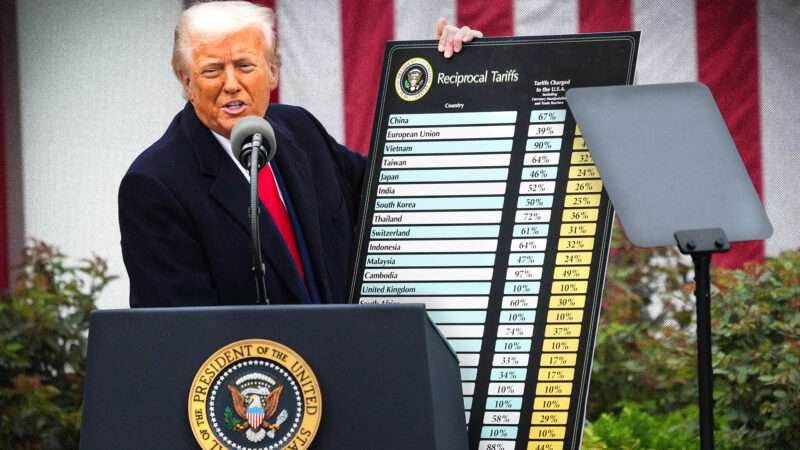
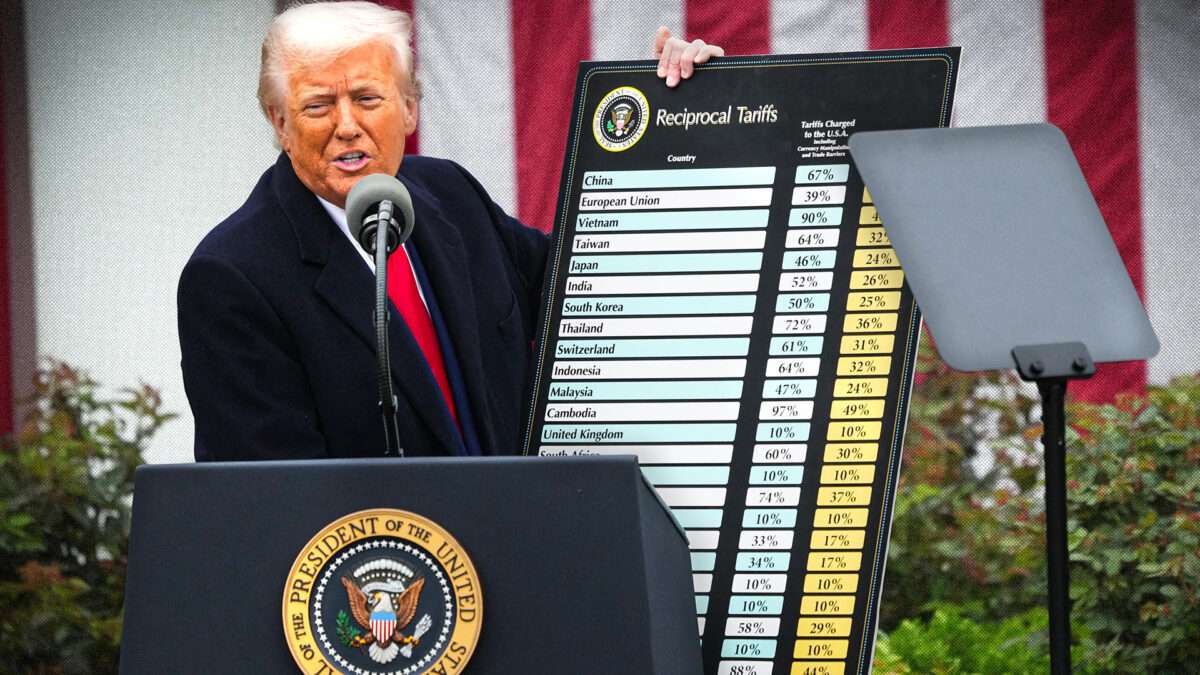
President Donald Trump's tariffs have become politically toxic.
The administration announced late last week that it would lift the 50 percent tariffs on some Canadian imports, apparently in an attempt to help Sen. Susan Collins (R–Maine) survive a tough reelection campaign in which the tariffs have played a significant role.
If this is indeed an attempt to sway voters in Maine, it is not a very convincing one. The Trump administration is removing tariffs on some agricultural and mechanical goods, as well as packaging and plywood, The Wall Street Journalreports. But Trump is also imposing new 50 percent tariffs on "other Canadian goods, including carpet, certain valves, and waste products."
Collins issued a statement thanking the White House for the changes. This is what members of the U.S. Senate have been reduced to—begging the president to cast his capricious, tariff-happy eyes toward products that will hurt people in other states more than in your own. (In fairness to Collons, she has voted repeatedly to roll back Trump's tariffs, but not enough of her fellow Republicans went along with it.)
Still, it's worth asking: What exactly is the pitch to voters here? Here's a tariff cut, now vote for Republicans so the president can continue to arbitrarily tax imports whenever the mood strikes?
It's easy to see why Trump's tariffs have become so unpopular. They are a huge and broad tax increase—the Tax Foundation estimates that 54 percent of imports are subject to Trump's tariffs, which are costing the average household about $1,000 annually—that was imposed without congressional authorization or popular support. They create more losers than winners, as downstream businesses and consumers pay the price for the protectionism offered to American manufacturers. Even the supposed "winners" of the tariff policy tend also to be "losers," since so much manufacturing depends on importing raw materials and intermediate goods.
Perhaps more surprising is how unwilling Republicans are to defend the president's signature economic policy. Or to even talk about it.
The Wall Street Journal's Greg Ip crunched the numbers and found that House GOP candidates have not run a single ad talking about the tariffs during this election cycle.
That silence speaks volumes. Trump says "tariff" is "the most beautiful word in the dictionary." But it is now "one of the most hated words in politics," writes Ip.
The only Republicans to mention trade or tariffs in a campaign ad, as far as I've seen, is former Rep. Mike Rogers, who is now running for the Senate seat in Michigan (and thus was not included in Ip's analysis). And he's calling for an end to the "tariff war."
There is a lesson here that hopefully will linger beyond the next week: If you support a policy that deliberately and unlawfully raises taxes and prices, voters will not reward you for it.
It's a lesson that the Republican Party learned long ago, but apparently forgot.
Against economists' advice, a Republican-led government in 1930 implemented a huge tariff hike intended to protect American farms and factories at the start of the Great Depression. Instead, those tariffs worsened economic conditions and triggered foreign retaliation.
When voters went to the polls in 1930, the first midterm after the Smoot-Hawley tariffs were passed, they registered their displeasure. The GOP lost 52 seats in the House that year. Two years later, an even larger landslide would sweep Democrats into power in Congress and the White House, ushering in the New Deal era that reshaped the federal government forever. The two lawmakers who lent their names to the legislation were among those who lost their seats, fittingly.
The most notable difference this time around is that Congress didn't actually pass a tariff bill. The trade barriers were instead imposed directly by the executive. Voters don't seem to care. Republicans were too cowardly to stand up to Trump's unilateral power grab, and now they seem too ashamed to try to defend that policy (and their largely complicit response) on the campaign trail.
As they say, those who don't learn from history are doomed to repeat it. And "doomed" may be a fitting way to describe the Republican majority in Congress right now, thanks in no small part to Trump's tariffs.
Alaska's U.S. Senate race features four candidates. Two are named Dan Sullivan: the Republican incumbent, and a political neophyte.
Republicans say the presence of two Dan Sullivans on the ballot is an illegal act of election interference. The federal government is now suing to keep Alaska from certifying the election results, but only if their guy loses.
"One of the biggest election scandals in history has been the Democrats' installation of a fake Dan Sullivan (not the US Senator) to deceive voters in Alaska," White House advisor Stephen Miller wrote on X. President Donald Trump called it "a disgrace."
"Democrats pulled a dirty trick by enlisting a decoy, Daniel J. Sullivan, to run against Republican Alaska Sen. Dan S. Sullivan," TheWall Street Journaleditorialized. "Please spare us the lectures about election interference."
Last week, the Department of Justice (DOJ) sued the state of Alaska and its election authorities.
"Should Alaska certify any electoral results tainted by the inclusion on the ballot of Daniel J. Sullivan," the filing warns, "the State and its officers will fail in its obligation to protect the integrity of its election. The United States accordingly brings this lawsuit to protect the integrity of the 2026 Senate election in Alaska."
Alaska uses a ranked choice ballot, in which voters are given four candidates and rank each one in order of preference. Along with the Sullivans, the candidates are Mary Peltola, a Democrat who is polling narrowly ahead, and Gerald Heikes.
The Justice Department lawsuit says Republican voters would be too confused by the presence of two Dan Sullivans to properly fill out their ballot: "Some supporters of Senator Sullivan likely will inadvertently vote for Daniel J. Sullivan. Other supporters of Senator Sullivan likely will be confused as to how to rank the three Republican candidates as to defeat Peltola."
Given this, "there is a substantial likelihood that a certification of the election will reflect an electoral process that lacked integrity," the lawsuit proclaims. "To guard against this danger, it is vital that [Alaska] not certify any election result" in which "(1) Senator Sullivan does not win the election; and (2) had all votes cast for Daniel J. Sullivan been cast instead for Senator Sullivan and Alaska's rank-choice process played out accordingly, Senator Sullivan would have won the election."
In other words, the state of Alaska should only certify the election if Sullivan wins; if Peltola wins, but it's close, then that could suggest it "lacked integrity," and the state must instead conduct "an investigation to determine whether votes cast for Daniel J. Sullivan were meant to be cast for Senator Sullivan."
The lawsuit has a number of problems. First and foremost, it's completely inappropriate to treat an election as fair only if your candidate wins, even if it is what Trump believes.
It's also too late to bring an action of this kind: The state elections division decided in June to bar Daniel J. Sullivan from the ballot, but a state superior court reversed and the Alaska Supreme Court upheld the reversal before the end of that month.
And yet the feds waited until less than two weeks before Election Day—when ballots have been printed and tens of thousands of Alaskans have already voted—to bring this suit.
If the Justice Department was truly concerned about voter confusion, it should have brought a lawsuit months ago. But even then, it's not clear what it could have done: "DOJ has no power to decide which candidates can appear on the ballot," writes UCLA School of Law professor Richard L. Hasen.
Besides, it's not illegal to mislead or even outright lie to voters. "If 'voter confusion' were a legitimate reason to overturn election results, that would imperil a great many election winners, as voter ignorance—and exploitation thereof by candidates—is a widespread and longstanding problem," writes George Mason University law professor Ilya Somin.
It does seem more likely than not that Daniel J. Sullivan is indeed running just to pull votes from the senator with the same name.
But as I pointed out earlier this month, the ranked-choice ballot itself can take care of this problem: Republican voters who wish to reelect Sullivan can simply rank both Dan Sullivans first and second; if and when Daniel J. Sullivan fails to capture more than 50 percent of all votes, he will be eliminated, and his votes will transfer to all their second choices.
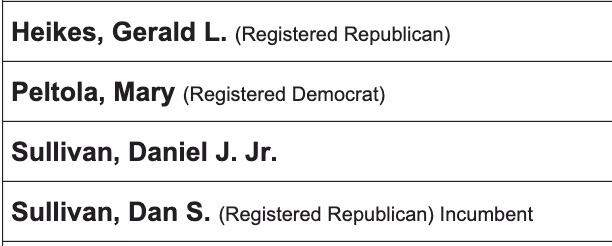
The ballot itself makes it clear which Sullivan is which: The sitting senator is labeled as both Registered Republican and incumbent.
Alaska Division of Elections
Despite Miller's claim that letting two Dan Sullivans on the ballot "reveals pure contempt for voters," it's the objecting Republicans who appear to lack faith in their voters.
"People are totally confused," Trump told reporters. "A lot of people don't know what 'incumbent' means."
When CNN's Dana Bash asked Attorney General Todd Blanche what crime is being alleged, he replied that "it depends." He elaborated: "There could be a crime, but the real wrong here is that Alaskans are going to be confused and will not have their vote heard."
This isn't even Alaska's most complicated election in recent memory. In 2010, after Sen. Lisa Murkowski lost the Republican primary to Joe Miller, she announced that she would still run as a write-in candidate—requiring voters to not just know about her ahead of time but to add her name by hand.
Improbably, Murkowski prevailed, defeating Miller by more than 10,000 votes.
If Trump, Blanche, Miller, and others are truly concerned that the ballot will be too confusing for Alaska Republicans, they could expend some energy showing them how to use the ranked choice ballot.
In fact, Sullivan has done just that, posting a video on X explaining how to rank all candidates except Peltola.
What they can't do is force a state to reject the results if their guy loses.
"Alaskans don't need any help voting for their preferred candidates, and the State of Alaska has already handled this by clearly distinguishing the candidates on this year's ballot," Murkowski wrote on X. "The Department of Justice should never have filed this lawsuit."
"I believe that this lawsuit is abusive in its intentions and borders on frivolous in its arguments, and that it is destined for defeat in the courts should it reach the merits," Cato Institute senior fellow Walter Olson noted in a statement. "This lawsuit is an assault on the constitutional design by which states, not the federal government, run elections. The issue in question is one for the Alaska Supreme Court to decide under Alaska law, and the Alaska court did just that."
California's experiment: Will California's proposed wealth tax, Prop 40, pass next week? And if it gets passed, will it end up actually costing the state money instead of generating revenue?
The basics: The proposal features a one-time 5 percent tax on people with net worths over $1 billion who lived in the state on January 1, 2026 (with the net worth amount calculated as of December 31, 2026). The idea for the snapshot date is presumably to prevent capital flight once the tax passes. The tax's supporters say the tax's revenues will amount to $100 billion and will fund California's health care system, which need to make up for federal Medicaid cuts.
Seven billionaires, representing 30 percent of the total billionaire wealth in the state, left California before January 1, 2026, when news of the possible tax broke. Peter Thiel, Larry Page, and Sergey Brin are among the deserters. The French economist Gabriel Zucman—an intense defender of the wealth tax—seems committed to the idea that this flight won't matter too much. He argues that while removing those seven brings down revenue estimates to $89 billion, adding in less-prominent small-time billionaires raises revenue to $115 billion.
This is silly. As The Washington Post's Megan McArdle points out, there's no reason to believe those less-famous billionaires would stay put. We have a hard time estimating what the total preemptive flight looks like, and how many billionaires have successfully taken up residency elsewhere.
"Either the tax is annual—and in that case it generates revenue annually, and some billionaires leave," claims Zucman. "Or the tax is one-time—in that case it generates revenue in just one year, and there is no incentive to leave. It can't be both at the same time." Zucman doesn't seem to consider that billionaires have already left, as soon as the idea was seriously floated, thus taking early steps to shield their wealth from the state.
Will it pass? "Likely voters are essentially where they were a month ago," reportsPolitico, based on recent polling data, "with 46% in favor of Proposition 40 and 43% opposed—despite a recent push by backers of the measure, including Sen. Bernie Sanders, to rally support." Interestingly, "a strikingly high share of registered voters (84%) said they'd been exposed to advertisements or messages about the tax, but a 45% plurality said the communications had not swayed them, and those whose views had shifted were just as likely to be more opposed as more supportive."
There's another complication: On that very same ballot, voters will decide on Propositions 41 and 42, competing measures that could keep Prop 40 from taking effect. Prop 40 will be nullified if either one gets more votes; but Prop 40 will nullify both of them if it gets more votes. Prop 42 would bar new taxes on personal property such as businesses, investments, retirement accounts, trusts, and art collections—things Prop 40 targets. It also bans retroactive taxes, thus making Prop 40 impossible to pull off.
Back in January, Pirate Wires' Mike Solana spoke with a bunch of billionaires who were worried about the tax and making plans to flee, partially out of distrust that the tax would be one-and-done. "Three men I spoke with in the largest billionaire Signal chat said they ran an informal poll, and seventy percent of the chat (around sixty people, not all of whom were billionaires) indicated they would leave the state if the ballot proposition passes," reports Solana. "According to that same poll, around 15% have already left the state."
"There is now real danger in appearing successful in the state of California," writes Solana, "as the far left, imbued with a great deal of power, and benefiting now from several years of wealth scapegoating throughout the mainstream press, attempts to liquidate its perceived enemies in business."
Scenes from New York: I'm fully aboard this train these days, though open to being convinced why I'm wrong:
If you truly *love* American cities, you MUST support strict enforcement of laws against anti-social behavior. Paying bus fares, red light cameras, camping on sidewalks, smoking on trains, off-leash dogs, etc etc
"Brazilian markets are heading for a major rout when local trading begins after President Luiz Inácio Lula da Silva pulled off a stunning comeback to defeat Flávio Bolsonaro, the right-wing candidate that many investors preferred," reportsBloomberg. This will be da Silva's fourth term.
Is dynamic pricing on the rise? Customers say yes, but most companies say they're wrong. My thought: Even if it's not currently happening to the degree angry customers claim, it certainly will be big in the future, as online shopping takes over and AI makes implementation easier. Consider the upside, though, noted in this Wall Street Journal piece: "Much current angst is focused on electronic shelf labels, which have replaced the printed labels that dotted shelves at groceries and other stores. Research on digital shelf labels in the U.S. and Europe, where grocers have widely used the technology for more than a decade, found the labels don't lead to surge pricing, in part because price changes are obvious to anyone walking by. Rather, research found, grocers have used the labels to discount goods that are about to expire, reducing food waste."
Great Washington Post headline: "Europe is running out of other people's money."
President Donald Trump claims the ships passing past Cuba on their way home from Iran will just, uh, handle the situation there. Sure.
Interesting:
Striking detail in the big NYT piece on Taiwanese families adjusting to working at the huge new TSMC chip plant in Arizona: their surprise at the lack of rigor in US schools. pic.twitter.com/YkSPzbHCuE
From E.B. v. J.R., decided Aug. 20 by Massachusetts Appeals Court Justices Sabita Singh, Rachel Hershfang, and Chauncey Wood:
The defendant appeals from harassment prevention orders issued pursuant to G. L. c. 258E (258E orders), by a judge of the District Court, requiring the defendant, among other things, to stay away from a city zoo where she had regularly protested the treatment of animals in its care. The plaintiff, a veterinarian who worked at the zoo, sought and obtained an ex parte 258E order against the defendant, which was later extended following a hearing after notice….
When reviewing whether the evidence was sufficient to support the issuance [or extension] of a 258E order, we consider [consistently with the statutory requirements] whether, "by a preponderance of the evidence, together with all permissible inferences," the judge could have found "that the defendant had committed '[three] or more acts of willful and malicious conduct aimed at a specific person committed with the intent to cause fear, intimidation, abuse or damage to property and that [did] in fact cause fear, intimidation, abuse or damage to property.'" …
Where the harassing acts consist of speech, each act must be the type of speech that is not protected by the First Amendment to the United States Constitution, i.e., generally either "true threats" or "fighting words." True threats include "direct threats of imminent physical harm" and "words or actions that—taking into account the context in which they arise—cause the victim to fear such [imminent physical] harm now or in the future and evince intent on the part of the speaker or actor to cause such fear." Fighting words are limited to personal insults that are inherently likely to incite a violent reaction….
The plaintiff's affidavit described the following four alleged incidents of harassment.
First, in July 2024, while the plaintiff was working at the zoo, the defendant began "yelling and screaming" at the plaintiff that she "should lose [her] job and right to be a veterinarian[,] … that [she] was abusing [her] power[,] and that [she was] abusing and killing the animals."
Second, in September 2024, while the plaintiff was working at the zoo, the defendant began "telling other [zoo] visitors falsehoods about the elephants being beaten." The plaintiff told the visitors that the allegations were not true, but the defendant "immediately yelled at [her] over [her] explanation to the visitors and got within inches of [her] face to continue yelling" at her. About forty-five minutes later, the defendant reapproached the plaintiff and got "in [her] face yelling at [her] about how [she was] a bad veterinarian and [her] cruelty towards animals." The plaintiff alleged that she "felt like [the defendant] was trying to intimidate [her] to quit [her] job." The defendant was "in [her] face videotaping" the plaintiff, so the plaintiff called 911. While the plaintiff was on the phone, the defendant "chased after [the plaintiff]."
Third, also in September 2024, the defendant "formally fil[ed] a written complaint to the [veterinary licensing] Board" that "was all lies and falsehoods."
Fourth, in November 2024, a television news crew was at the zoo reporting on the elephants when the defendant disrupted an interview and began to "yell and scream at [the plaintiff] that [she was] not a licensed veterinarian and that she [did] not have a license to practice in [Massachusetts], and that [she was] abusing and murdering elephants." The defendant also "threaten[ed] [the plaintiff's] career."
Of the four incidents alleged, only the second arguably constituted harassing conduct—getting within inches of the plaintiff's face while yelling and chasing after the plaintiff. The remaining alleged conduct constituted protected speech, not rising to the level of fighting words or true threats…. [T]hreats containing ideas or advocacy causing fear of economic loss or unfavorable publicity are not "true threats" …. As a result, the judge erred in finding that the incidents described by the plaintiff amounted to three requisite acts of harassment pursuant to G. L. c. 258E….
The court also concluded the court violated plaintiff's due process rights:
[At the motion hearing, t]he plaintiff's attorney recited the procedural background and the judge began to review the plaintiff's affidavit. The plaintiff's lawyer then started to relate that the defendant had been charged with violating the ex parte order, when the defendant stated, "I object to that, Your Honor." The judge admonished the defendant, "No, no. First of all, … you're going to understand what the rules are; okay? … The rules are, you're not to interrupt at any time." The judge then explained, "You don't, in a civil case, have the opportunity to say you object…. It doesn't work that way…. That's in a criminal case."
The judge then turned to the plaintiff and asked her about the Federal trial in which the plaintiff had testified the previous year. [This appears to me to be Rowley v. City of New Bedford(D. Mass. 2024). -EV] The plaintiff explained that the defendant had filed a lawsuit against the city for violation of the Endangered Species Act and that the suit was resolved in favor of the city. The plaintiff's counsel offered to provide the judge with a copy of the decision.
When the judge asked whether the defendant had a copy, the defendant replied, "Yes, ma'am, I do. Yes, Your Honor," and added, "I object to it being relevant." The judge responded, "What did I say about objections?" and "I decide whether something is relevant[,] right?" The defendant then stated that she disagreed that the Federal court decision was relevant to the plaintiff's request for a 258E order. The judge replied, "You can disagree all you want, but—and you can voice that, I don't want you [to] think you can't voice it…. But you can't say you object."
The judge then said that she had reviewed the defendant's motion to vacate and asked why she should not extend the 258E order. Just as the defendant began to explain that the plaintiff's claims did not meet the legal standard, the judge cut off the defendant and asked a series of questions, pointedly asking why the plaintiff would accuse the defendant if the allegations were not true. When the defendant attempted to explain the context and her theory that it was in retaliation for the Federal lawsuit, the judge again cut off the defendant, telling her to "[s]top talking," and that she (the judge) did not need to know about the elephants at the zoo or the plaintiff's background as a veterinarian.
The judge then invited the plaintiff's counsel to cross-examine the defendant. The cross-examination centered around the Federal lawsuit (concerning the elephants) and the plaintiff's status and licensure as a veterinarian. The plaintiff's counsel then presented the testimony of the plaintiff, who affirmed the truth of her affidavit. The plaintiff expressed how the "entire situation [was] causing [her] immense stress."
At the conclusion of counsel's direct examination, the judge asked the plaintiff, "[Y]ou are concerned for your safety because of the actions of [the defendant] physically, verbally, and on social media; is that right? … And there have been several instances where she has intimidated you; is that right?" After the plaintiff answered in the affirmative, the judge stated, "I have no doubts that you're a competent veterinarian or [the zoo] wouldn't have hired you," and "don't you for one minute second guess your training. Nobody in this room is a veterinarian and knows anything about what you do, okay? … You got your degree. You worked hard for it. Move on with that." …
[T]he judge appeared to shift the burdens by accepting the plaintiff's affidavit and then challenging the defendant to disprove the allegations contained within it. The defendant had no burden to testify or present evidence. Furthermore, due process required that she be heard on her legal argument that the plaintiff's claims did not meet the elements for a 258E order.
Instead, the defendant was repeatedly shut down when attempting to make her valid legal points, incorrectly told that she had no right to make objections, and subjected to questioning pointedly challenging her veracity while assuming the veracity of the plaintiff. Then, the plaintiff's counsel was invited to cross-examine the defendant. The plaintiff, who had the burden, testified after the defendant and was not cross-examined at all. The record reflects that the defendant did not have a meaningful opportunity to be heard. Collectively, these irregularities raise troubling due process concerns….
For more on such unconstitutional speech-based injunctions in harassment cases, see this article.
From Judge Virginia Kendall (N.D. Ill.) in U.S. v. Holmes:
After the Government filed a Criminal Complaint against Holmes on March 13, 2026 , a grand jury returned an Indictment charging Holmes with violating 18 U.S.C. § 875(c) on April 7, 2026. The Indictment alleges that Holmes operated the X account "@MapleStCapital" that displayed an American flag emoji with the statement "END The Fed." The Indictment alleges that Holmes posted on that account several statements against the Jewish community and Israel, including: "The jew will be destroyed and discarded," "From the river to the sea every Jew will die," "You inbred people will all die," and "Die Jew."
On or about March 3, the State of Israel posted a video [on the account "@Israel"] that showed a billboard with the face of Ali Khamenei along with the statement: "The world is a better place without Khamenei." In that post, the State of Israel wrote: "It's a first step towards a better world." Holmes responded to this post from the State of Israel with the following message: "I'm going to shoot up a synagogue." It is that statement that the Government alleges violated 18 U.S.C. § 875(c)….
The Indictment alleges that:
TIMOTHY HOLMES, defendant herein, knowingly transmitted in interstate commerce a communication containing a threat to injure the person of another, namely, a post on X in which he wrote, in response to a post from "@Israel", "I'm going to shoot up a synagogue", and defendant transmitted the communication for the purpose of making a threat, knowing that the communication would be viewed as a threat, and recklessly disregarding a substantial risk that others would regard the communication as a threat….
Holmes asserts that his statement "I'm going to shoot up a synagogue" is not a true threat because it lacks sufficient specificity. Holmes maintains that his post was but a "generalized, albeit offensive, statement directed at an institution or building" that fails to rise to the level of a true threat because "[i]t does not identify a particular individual or group of individuals" and it also does not "specify a location, a time, or any target beyond the generic category of 'a synagogue.'"
This position is not "an argument about the validity of the indictment in light of the First Amendment, but is instead a dispute over the meaning and inferences that can be drawn from the facts." This Court has rejected these types of arguments for over a decade because these issues are improper to decide on a motion to dismiss. Because Holmes' arguments go to the substantive merits of the Government's case—and not to whether the Indictment is sufficient—the Court rejects them.
Holmes' contention that his post is protected political hyperbole fails for the same reasons. Invoking Watts v. United States (1969), Holmes claims that his posts "were responsive to foreign policy events and government statements." The Court understands Holmes' position to be that the First Amendment protects his post as political speech, and thus the Court must dismiss the Indictment because the post does not violate 18 U.S.C. § 875(c). For starters, this position, like many others Holmes raises, tangles and conflates multiple procedural and substantive issues into one incomprehensible ball.
To the extent Holmes' position is that, as facially alleged, the Indictment, even if accepted as true, cannot, as a matter of law, satisfy § 875(c), this argument fails. The Court cannot accept such a premise.
This is not a scenario where the Court could comfortably accept the Government's allegations as true and find that it failed to satisfy Rule 7(c)(1). Holmes is not alleged to have posted some mundane political position such as "Taxes are too high!" Nor did he post an offensive, but generally understandably non-threatening statement such as, "Slow drivers should go to hell!"
He posted: "I'm going to shoot up a synagogue" in response to a post from the State of Israel after posting statements such as: "Die Jew," "You inbred people will all die," "The jew will be destroyed and discarded," and "From the river to the sea every Jew will die." Holmes is free to explain to a jury that his post was mere political commentary; but at this stage of the proceedings, the Court finds that the Government has sufficiently alleged that this statement is a "serious expression[ ] conveying that a speaker means to commit an act of unlawful violence." …
Holmes changes direction by raising three arguments that challenge the Government's position from a statutory standpoint. He first claims that the Indictment must fail because his post "I'm going to shoot up a synagogue" does not satisfy 18 U.S.C. § 875(c) because it "refers to a building or institution, not to 'the person of another,'" "does not identify any individual or individuals," and "does not threaten bodily harm to any specific person." In substance, these arguments challenge whether Holmes' statement is a true threat and are again rejected for the reasons above. Holmes' next position—that the Government failed to allege sufficient mens rea—is duplicative and rejected for the reasons above….
In his fourth and final argument, Holmes presents two constitutional challenges. Holmes begins by claiming that the Government's prosecution of him is an impermissible content-based restriction on political speech. The exact direction of Holmes' argument is ill-defined, but the general thrust is that the Government violated 34 U.S.C. § 30506 and the Constitution. To be sure § 30506(4) states that "[n]othing in this division shall be construed to allow prosecution based solely upon an individual's expression of racial, religious, political, or other beliefs[.]" This language, however, must be read with its purpose: to establish interpretive safeguards for the Matthew Shepard and James Byrd, Jr. Hate Crimes Prevention Act and its amendments.
Holmes offers no authority that the Government's prosecution of someone under 18 U.S.C. § 875(c) for threatening to shoot up a synagogue runs afoul of 18 U.S.C. § 249 or 34 U.S.C. § 30506. Indeed, § 30506 expressly confines its applicability to "this division" of the code which referred to Division E of the National Defense Authorization Act for Fiscal Year 2010, which is where the Matthew Shepard and James Byrd Jr. Hate Crimes Prevention Act of 2009, 18 U.S.C. § 249, was enacted. Simply put, 18 U.S.C. § 875(c) is not part of the equation.
At any rate, the face of the Indictment lends no support for Holmes' position: the Government charged Holmes under § 875(c) for making a threat in interstate commerce; no reasonable inference can be drawn that the Indictment seeks to suppress political speech. Holmes is again free to present his legal theories to the jury, including his position that posts concerning killing jews is protected political speech.
Holmes' final argument is that the Indictment violates the Due Process Clause because "[a]pplying § 875(c) to prosecute the posting of publicly available information and ambiguous statements about travel—where the defendant's actual conduct was entirely lawful and disclosed to law enforcement—creates intolerable ambiguity." This position fundamentally misunderstands the Indictment and again disregards what the grand jury has charged Holmes with. Holmes is not charged with violating § 875(c) for posting things about travel or going to Florida. The grand jury charged him with violating § 875(c) because he replied to a post from the State of Isreal by stating: "I'm going to shoot up a synagogue." The Court already explained that Holmes is free to challenge any evidence concerning traveling to Florida should the Government seek to rely on it.
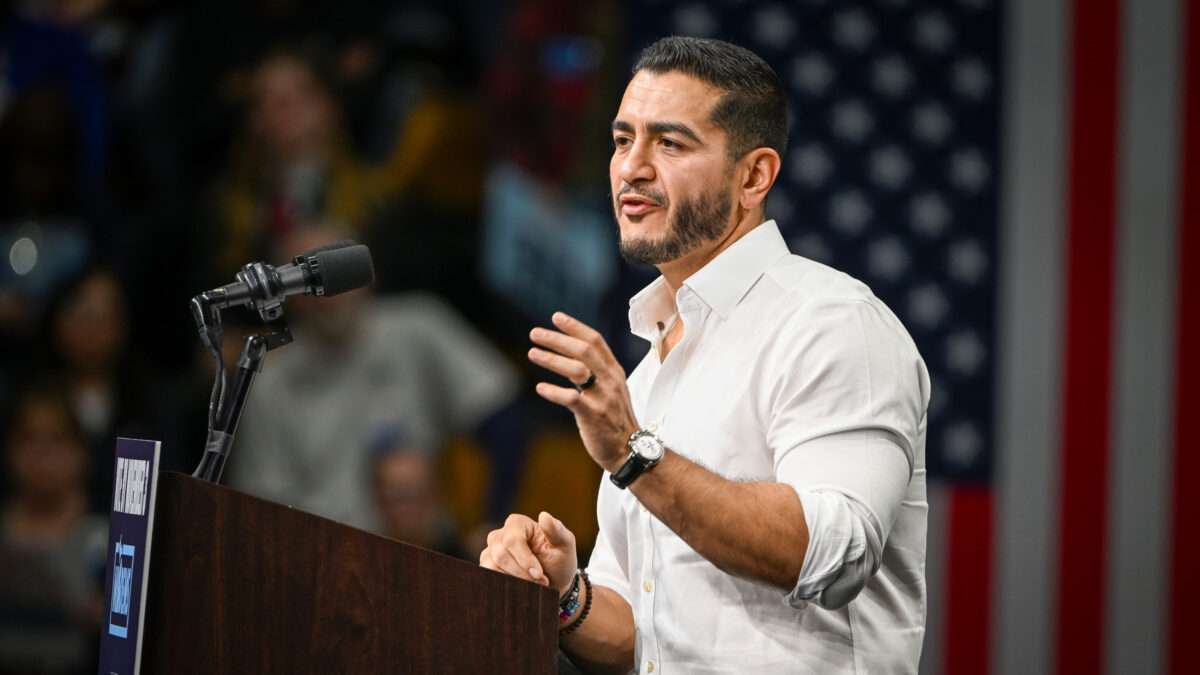
Abdul El-Sayed, Michigan's Democratic U.S. Senate candidate, is the latest politician to suggest that the Second Amendment might shield the right to bear arms, but only those that existed at the time that it was adopted: namely, flintlock muskets. It's a not-so-clever way of trimming back the Constitution's protections. The argument's flaws should be clear: the U.S. Supreme Court has already dismissed that line of reasoning, and a world in which the Bill of Rights applies only to 18th century technology would be one where freedom exists only in museum exhibits.
"Everyone Should Have Equal Rights to a Musket"
"I'm gonna swear an oath to the Constitution. The Constitution has a Second Amendment in it, but the Second Amendment, just so we all are clear, even the most conservative folks, they hew to this idea called originalism, and originalism is the idea that you should interpret the Constitution in the context in which the Constitution was written," El-Sayed insisted at a campaign rally. "When they promised the right to bear arms, they had muskets. So, yeah, everyone should have equal rights to a musket."
So clever. The Bill of Rights passed in the 1780s, so it must only apply to 1780s things. Except that the courts have thoroughly dismissed that ridiculous line of reasoning.
"Some have made the argument, bordering on the frivolous, that only those arms in existence in the 18th century are protected by the Second Amendment," Justice Antonin Scalia wrote for the majority in District of Columbia v. Heller (2008). "We do not interpret constitutional rights that way. Just as the First Amendment protects modern forms of communications…and the Fourth Amendment applies to modern forms of search…the Second Amendment extends, prima facie, to all instruments that constitute bearable arms, even those that were not in existence at the time of the founding."
The Founders Lived in a Time of Rapid Innovation
The reason for this should be obvious. The founders were not unaware of progress. Many of them were scholars and innovators. They were certainly aware of (and enthusiastic about) continuing advancements in technology. During the then-recent revolution, American troops had faced off against a small unit of redcoats armed with Ferguson breech-loading rifles. A decade before the Bill of Rights was adopted, the 22-shot Girandoni repeating air rifle was introduced, one of which was later sent along on the Lewis and Clark expedition. And Kalthoff and Lorenzoni repeating flintlock firearms had existed for well over a century.
Not to mention, the founders made extensive use of printing presses to distribute pamphlets and official government documents, including the new Constitution, rather than having them hand-copied as they would have been a few centuries earlier. Technology marches on.
That last point illustrates the foolishness of the only-1780s-tech argument, as Scalia pointed out. What use is a First Amendment that applies only to hand-cranked printing presses and unamplified voices? That would leave the internet, television, radio, telephones, and all post-revolutionary means of communications unprotected from government censorship.
By the same token, a Fourth Amendment stuck in the 18th century might shield us from government agents kicking in the door and rifling through our papers. But it would have nothing to say about wiretaps, computer searches, surveillance cameras, thermal imaging, and the like.
The Founders Sought To Limit Government, Not Create Small Carve-Outs for People
Founders who were well aware of innovation and often contributed to it themselves (think Benjamin Franklin and Thomas Jefferson) knew that science and technology constantly advance—because they helped it do exactly that—as would the government's intrusive capabilities. And they believed they were creating protections for broad natural rights against limited government, not small carve-outs from the authority of an all-powerful state.
"Rightful liberty is unobstructed action according to our will, within the limits drawn around us by the equal rights of others," Jefferson wrote in 1819. "I do not add 'within the limits of the law'; because law is often but the tyrant's will, and always so when it violates the right of an individual."
The Bill of Rights isn't an ancient artifact to be applied only to a snapshot of life as it existed around 1789. Its amendments are intended to protect timeless individual rights, however those rights might be expressed in an always-evolving world.
El Sayed: "To Protect People From Government Tyranny"
El-Sayed went on, in his increasingly incoherent monologue, to acknowledge that the Bill of Rights was intended "to protect people from government tyranny," and "the idea was that you had the right to bear arms against your government should they become tyrannous." He floated the idea, for some reason, that "the Coast Guard, and state militias" are how this idea was implemented. I don't want to delve too deeply into whatever argument is being presented here, because I've sacrificed enough brain cells by listening to him speak.
But kudos to El Sayed for admitting the Bill of Rights is intended to protect us from government. The only way that can possibly work is if, as government's capabilities become increasingly sophisticated, the protections of the Constitution's first 10 amendments extend to safeguarding our rights from ever more advanced potential intrusions.
The Second Amendment and the rest of the Bill of Rights don't preserve a snapshot of life in the 1780s. They were written to protect eternal principles of individual liberty. And they're certainly not limited to muskets.
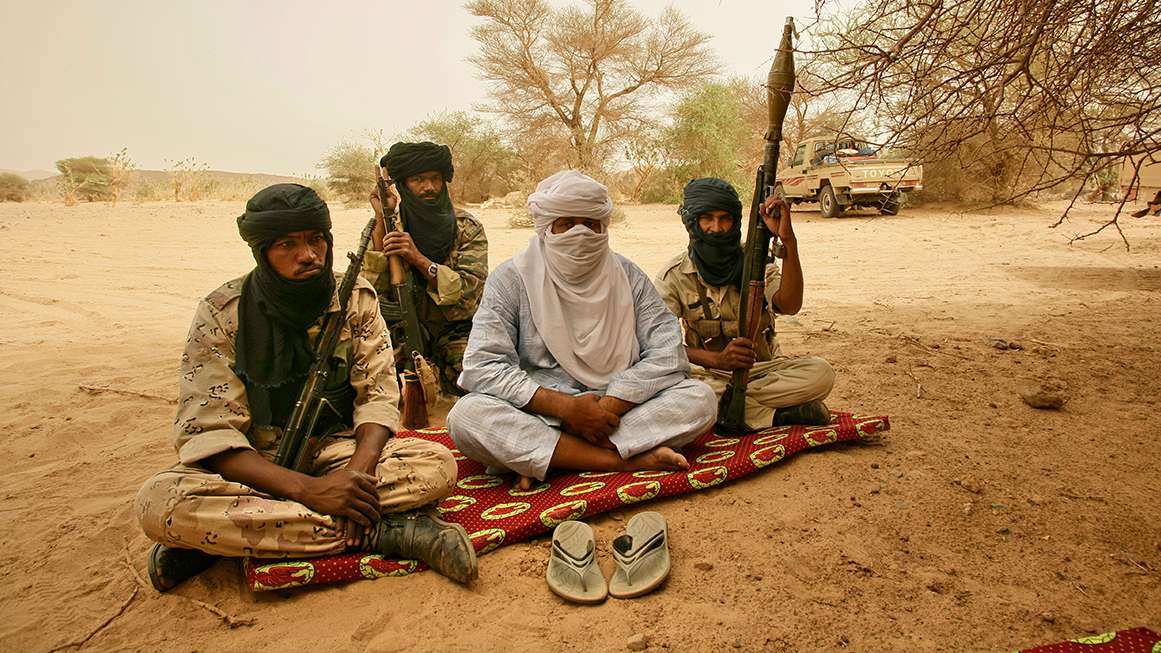
The first state to be ruled by Al Qaeda might not be in Afghanistan or the Arab world—and its ruler might be a former whiskey-drinking rock star. In April, the Group for the Support of Islam and Muslims ("JNIM" in Arabic) led an uprising in the African nation of Mali, killing Defense Minister Sadio Camara, breaking open a prison holding thousands of inmates, and besieging Bamako, the capital. The fighting was still underway as of August.
Mali is not the only place threatened by a JNIM takeover. The West African branch of Al Qaeda is active in a belt of countries known as the Sahel. Its leader, Iyad Ag Ghali, was the former percussionist for the rock band Tinariwen. He now leads a campaign to stamp out the "music of Satan." Perhaps the one saving grace for Sahelian metalheads is that puritans can't get along with each other: The JNIM is locked in a war with the rival Islamic State Sahel Province.
The Sahelian civil wars are a testament to the failure of the global war on terror. Despite spending $355 billion on African counterterrorism from 2001 to 2021, the U.S. government has been unable to stop Al Qaeda or related Islamist groups from taking root across the continent. A study by the Pentagon's Africa Center for Strategic Studies found a 101,300 percent increase in terrorism fatalities from 2002 to 2022, mostly concentrated in the Sahel and Somalia.
These wars demonstrate that the solution to terrorism isn't maximum violence. President Donald Trump launched four times as many airstrikes against Somalia in his first 18 months of his second term as the U.S. did over the past four years combined. U.S. military aid has flowed to repressive governments across Africa with little respect for their citizens' rights. Since 2020, there have been coups d'etat across the Sahel by military men promising that they can do the dirty work that civilian leaders are afraid of. Many of them were trained by the U.S. government. The new regimes have imported Russian mercenaries with a reputation for brutality and no real restraints on their activities.
"People need to forget about the question of democracy," Ibrahim Traoré, leader of Burkina Faso, declared in April.
Instead of restoring order, these heavy-handed tactics have caused more chaos. The military juntas in the Sahel are plainly losing to the JNIM. While the Russian fighters have no difficulties massacring civilians or mutilating prisoners, they have found it much harder to face people who can actually shoot back, facing repeated battlefield humiliations. Meanwhile, the U.S.-led campaign against al-Shabab, the Somali branch of Al Qaeda, has stalled out despite the heavier use of airpower.
The African war on terror began shortly after the U.S. campaigns in Afghanistan and Iraq. To some extent, the U.S. created the very threats that it is trying to fight in Africa. Somalia had been at civil war since the fall of socialism, and in the early 2000s, the CIA began funding Somali warlords to stop the rise of Islamist revolutionaries. The (relatively moderate) Islamic Courts Union took over anyway in 2006—uniting Somalia for the first time in more than a decade—and the U.S. encouraged neighboring Ethiopia to invade. When al-Shabab emerged to fight the Ethiopian invaders, the U.S. tapped a former leader of the Islamic Courts Union to lead a new Somali government.
Soon after the Ethiopian-Somali war, President George W. Bush created the Pentagon's Africa Command, and Congress budgeted $500 million in aid to militaries in the Sahara Desert and the Sahel. At the time, the main Islamist threat to that region was a mostly defeated insurgency in Algeria.
But the Libyan civil war in 2011 created terrible new monsters. Soon after President Barack Obama intervened in support of the Libyan revolution, weapons and hardened fighters from Libya flooded the ethnic Tuareg region of Mali, which declared independence a few months later. Soon after, Al Qaeda and its affiliates took over the Tuareg rebellion. With the Malian government coming close to collapse, France intervened in January 2013 and made many of the same mistakes that the U.S. did in its own war on terror.
Ag Ghali, the current leader of the JNIM, got his start as a Tuareg nationalist. A leaked U.S. embassy cable from 2008 called him a "proverbial bad penny" who enjoyed "playing both sides" and had ties to Islamist and secular nationalist rebels. By the time of the French intervention, he was fully committed to Islamic theocracy. In 2017, he united Islamist rebels across the Sahel under the banner of Al Qaeda. That same year, four U.S. Special Forces troops were killed in Niger by the Islamic State group, which was busy uniting Ag Ghali's rivals.
Despite the failures of the Sahelian governments to stop Ag Ghali—and their willingness to ally with Russia—the Trump administration is eager to double down on supporting them. The U.S. government increased intelligence sharing with Mali in 2025, and as of July it was considering a direct military intervention against the JNIM, according to The Washington Post. But every American escalation on the continent has produced the enemy that the next one had to fight.
San Diego County, California, has sued Polymaker, a company that manufactures filament for 3D printers. The lawsuit accuses the company of illegally marketing its products to people who make unregistered firearms, often called "ghost guns." The county admits that the filament itself is legal but objects to how the company markets it. The lawsuit alleges that Polymaker worked with a firearm-printing influencer, promoted products for making guns, and provided technical advice to online communities interested in 3D-printed firearms. The county argues that this marketing violates California consumer protection laws. It is seeking the return of revenue linked to the allegedly illegal marketing, a court order stopping the company from continuing the challenged practices, and civil penalties of up to $2,500 per violation—with each day counting as a separate violation.

 Login