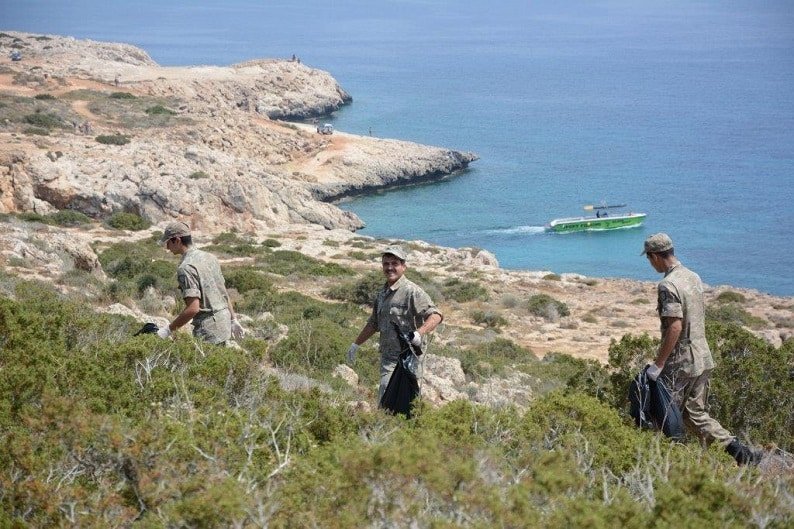
The Cyprus-wide clean-up campaign “Let’s Do It!” 2026 will conclude with a celebration at the Athalassa forest park in Nicosia on Sunday.
The public event will start at 9.30am and will include an organised cleaning campaign around the park with the participation of volunteers, families, students, representatives of public bodies, as well as businesses and sponsors.
According to the announcement, the campaign is Cyprus’ largest environmental and volunteer clean-up campaign and has mobilised more than 350,000 participants since 2012.
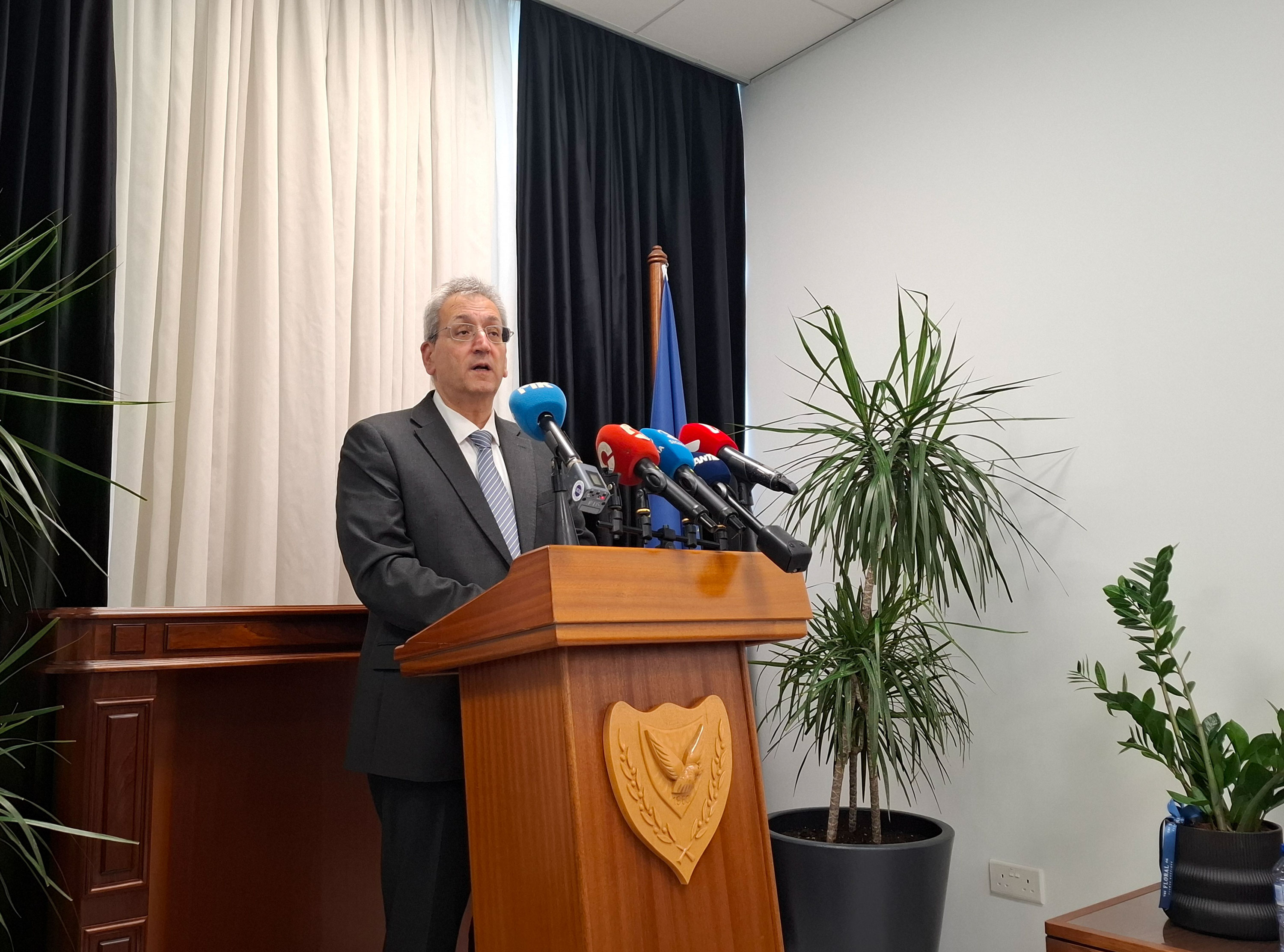
Environment commissioner Elias Myrianthous said that the campaign brings together people of all ages every year.
“Their contribution is essential, both in cleaning the areas and in raising awareness in society. The Commissioner’s Office has been firmly at the side of the organisers and volunteers since 2012, supporting the campaign and placing it under its auspices,” he said.
Myrianthous said that uncontrolled dumping and inadequate waste management burden the environment, affect our quality of life and have an economic cost for the country.
“To address this, we also need to look at our consumption habits, what we buy, how much we need and how easily we replace it. We need to limit unnecessary consumption and waste, repair and reuse what can still serve us,” he said.
Meanwhile, forestry department director Savvas Ezekiel said that his department, as the competent body for the protection, management and sustainable development of the forest ecosystems of Cyprus, has consistently supported the campaign, actively contributing to the effort for a cleaner and healthier natural environment.
“Environmental protection is not limited to an individual campaign, but is a collective responsibility and ongoing effort, in which the active participation of citizens is crucial,” he said.
National coordinator of the campaign, Ileana Nicholson, said that “Let’s Do It!” Cyprus was more than a clean-up campaign.
“It is a movement of people choosing to take action, to work together and to protect their place. Behind every clean-up are volunteers, students, teachers, organizations and partners who selflessly offer their time and energy. Without them, none of this would be possible,” she said.
She said that the biggest challenge was not to collect more waste, but to reach a time where volunteers would find less garbage dumped in nature.
“And this can only be achieved through education, consistency and cooperation between the state, businesses and civil society. Change is not the business of a few. It is in the hands of all of us,” she said.
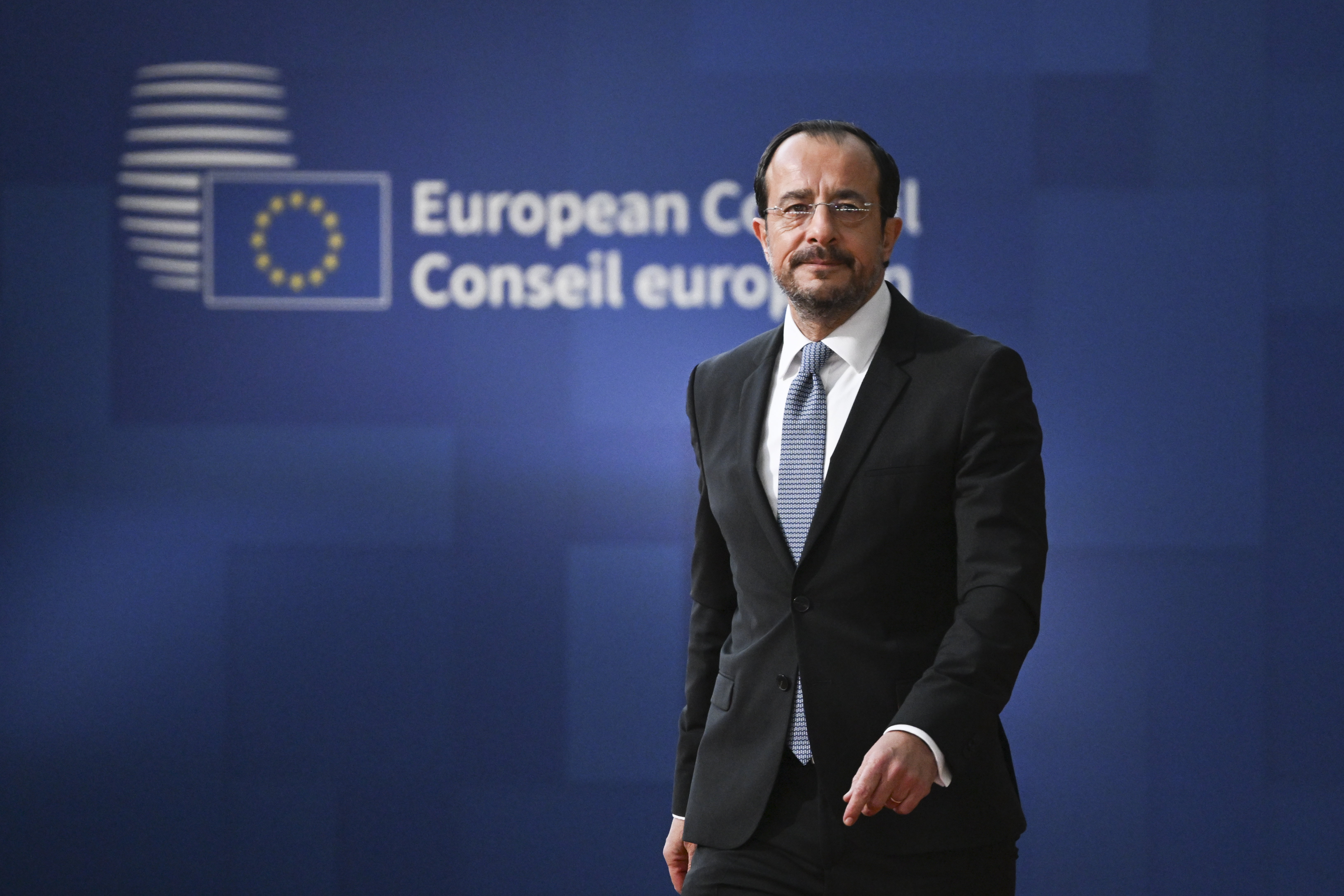
Less than a fifth of students in secondary education attend vocational education and training programmes, said President Nikos Christodoulides, in an address to the opening ceremony of the ninth national competition SkillsCyprus 2026. In Cyprus, only 17.9 per cent of students are in vocational education, drastically lower than the EU average of 52.4 per cent.
The European Commission’s recommendations for each member-state noted the steady and positive course of the Cyprus economy, but also recorded the challenges faced in the fields of productivity, innovation and skills, he said. The Commission saw a need in increasing the attractiveness of vocational education and training, something that successive Cyprus governments have failed to do despite persistent labour shortages.
Cyprus has faced a big shortage of electricians, plumbers, car mechanics, construction workers, decorators and equipment technicians for years. Although these are well-paid jobs, only a small percentage of young people are interested in them; there is now also a shortage of nurses. Is it because these are considered low-status jobs and everyone wants to be a white-collar worker, even if there is less money? Or perhaps the young are no longer interested in physical work.
University education always had great value in Cyprus. In the days when there were no universities in Cyprus, parents would make many sacrifices to send their children to universities abroad, because a degree was considered a surefire way of improving themselves, materially and socially. University education was never about broadening a youth’s horizons and sharpening their intellect, but about having the means to earn more money and acquiring social status.
Now that university degrees are widely available and many of them are of dubious value, most graduates are guaranteed neither high earning power nor the social status enjoyed in the past. But still, youngsters have no interest in plumbing or electrical work. Perhaps it is because the ambition of many is to get the dream job in the public service which does not have many openings for individuals with technical skills.
In his speech, Christodoulides mentioned the operation of the Technical Gymnasium, which he described as “an innovation that is a landmark in the Cypriot educational environment.” The institution had already expanded, a fact that illustrated the gap of not having such a special school which catered for the preferences of wishes of the students. He may have read too much significance into the existence of the Technical Gymnasium, because if the institution was such a success, it would have been expanded, and we would not have lowest participation in vocational learning in the EU.
At least the government, despite the president’s positive spin, recognises there is a problem that needs to be tackled. There are no ready solutions, and it will be difficult to change the way society views manual jobs. This is why the government needs to study the issue and develop a plan to attract more youths to vocational training.
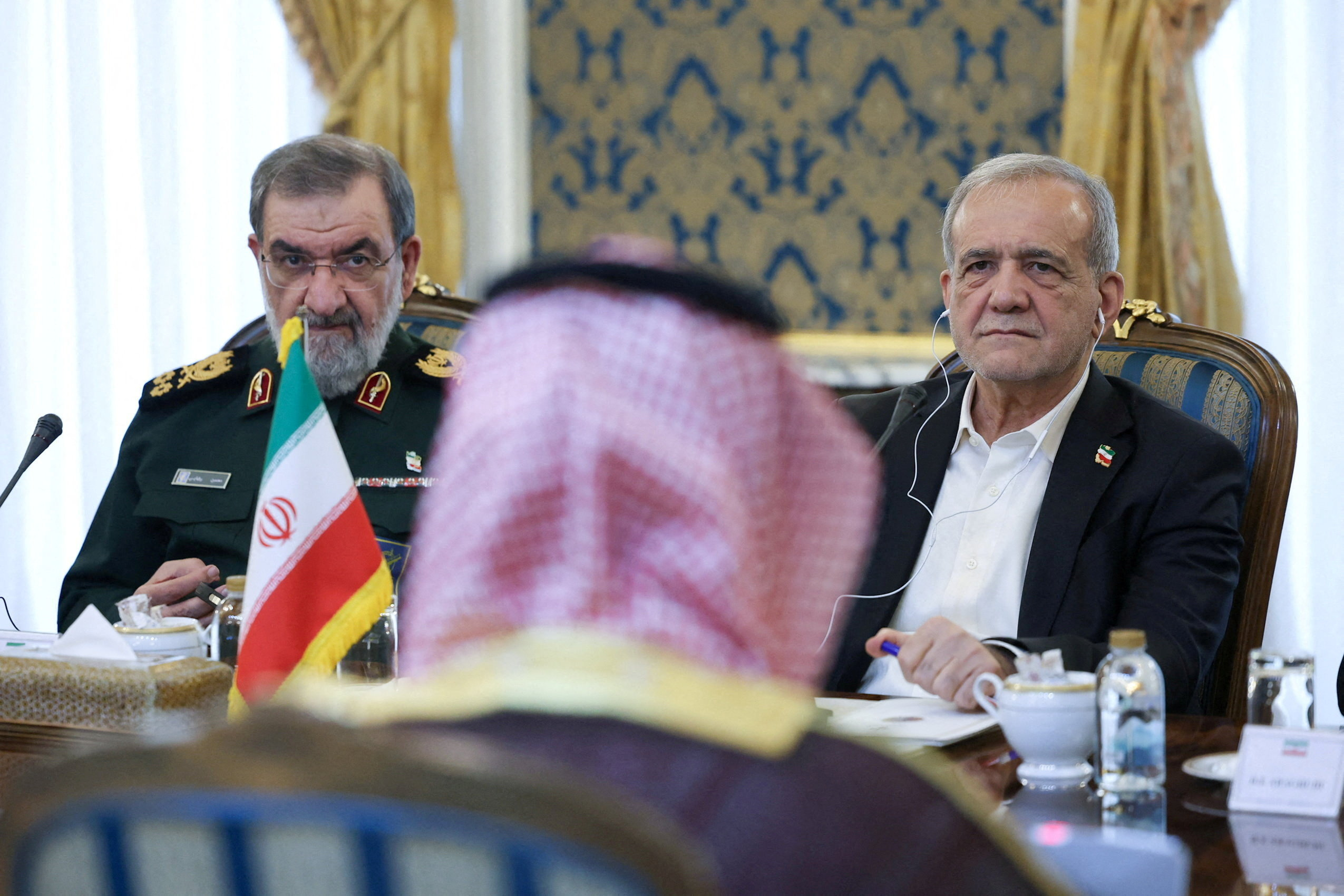
US President Donald Trump said that Vice President JD Vance’s outreach to Iran was about helping the country get medical supplies, after US media reported Vance had written to Tehran’s top security official to revive peace talks.
Iran has received a letter from Vance but it has not responded to it yet, the country’s semi-official Tasnim news agency reported on Thursday, while adding that Tehran wants the US to meet its conditions and “any position that contradicts this framework is unacceptable.”
Also on Thursday, the US military’s senior officer overseeing the Middle East, Admiral Brad Cooper, met Trump at the White House to outline military options in Iran, the Wall Street Journal reported, citing US officials and other people with direct knowledge of the meeting.
Reuters could not immediately independently verify this report.
Vance sent the letter to Iranian Security Council chief Mohsen Rezaei in a bid to revive peace negotiations, the Wall Street Journal and the New York Times reported on Wednesday, citing US officials and people familiar with the matter. Reuters could not immediately verify the reports.
The Wall Street Journal reported that Vance sent the letter at Trump’s direction. When asked by reporters later on Wednesday if he directed Vance to reach out to Iran to restart peace negotiations, Trump said: “No.”
“What that is is they need help with medical supplies and various things. He (Vance) asked me what I thought. I said, if you want to do that, that’s okay. Basically, it’s getting supplies in to help people that are not well,” Trump told reporters.
Iran’s mission to the United Nations in New York did not immediately respond to a request for comment on the letter and Trump’s remark. Vance’s office did not immediately respond to a request for comment.
TEHRAN’S CONDITIONS
Iran’s parliament speaker said on Thursday that Tehran’s conditions had been repeatedly and clearly communicated to mediators and that progress can only be achieved if Iran’s seven conditions are met.
The “carrot-and-stick approach has no effect on Iran,” Mohammad Baqer Qalibaf added.
Conditions Iran says must be met before it will reopen the strategic Strait of Hormuz shipping route include, among other demands, lifting the US blockade on Iranian ports, lifting US sanctions on Iranian oil exports and ending hostilities on all regional fronts.
The United States and Israel launched a war against Iran at the end of February. The US has also since imposed a naval blockade on Iran to starve it of oil export revenue and escalated efforts to economically isolate Iran.
Iran has long blamed US sanctions for hindering civilian access to medical supplies.
In an August letter to the UN Security Council, Iran accused the US of intentionally depriving civilians “of access to food, medicines, medical equipment, energy and other necessities, with grave consequences for their rights to life, health, food and a decent standard of living.”
Qatari mediators presented Iran with a new draft deal on Sunday to end the war, but a senior Iranian official said Doha had only put forward unacceptable ideas that did not amount to an offer.
The war’s impact on global energy costs has also weighed on support for Republican candidates and hurt Trump’s approval ratings ahead of the US midterm elections that decide control of Congress. Trump’s Republican Party holds a narrow majority in both chambers of Congress.
Patrick Stewart, who rose from poverty in England to become an accomplished Shakespearean stage actor and then achieved global stardom as the erudite Captain Jean-Luc Picard in TV’s “Star Trek: The Next Generation” and the telepathic Professor Charles Xavier in the “X-Men” movies, has died at the age of 86.
Stewart, knighted in 2010 by Queen Elizabeth II for his contributions to drama, died at his home in Los Angeles, according to a statement on his X account.
“We announce with great sorrow the passing of Sir Patrick Stewart yesterday at his home in Los Angeles, in the loving care of his beloved wife Sunny following a brief and poignant journey with Alzheimer’s Disease and Lewy Body Dementia,” it said.
Stewart became an actor at age 18 and gained acclaim on the stage as a member of the Royal Shakespeare Company beginning in the 1960s. But it was not until after he was hired at age 47 for “Star Trek: The Next Generation” – a TV series that ran from 1987 to 1994 as a sequel to the original 1960s “Star Trek” – that he gained mainstream fame, acting into his 80s.
“Make it so,” his character Picard often said, instructing a subordinate to carry out a command, or sometimes deploying the similar catch phrase, “Engage.”
It was a role he had debated even taking after his longtime friend and fellow Shakespearen Ian McKellen advised him to spurn “Star Trek” and remain in theater. Stewart did take the role and became both a fan favorite and an indispensable part of a lucrative sci-fi franchise, playing Picard not only in 176 episodes over seven seasons of that series but also in several “Star Trek” films and in the later streaming series “Star Trek: Picard” that began airing in 2020 when he was 79.
“As the seven seasons of TNG (“The Next Generation”) went by, the distinction between Jean-Luc Picard and Patrick Stewart became thinner and thinner, until it was impossible for me to know where he left off and I began. So much of what I believed and felt went into that show,” Stewart told the Guardian newspaper in 2022.
Stewart also initially balked at being cast as the wheelchair-using mutant Professor X in the “X-Men” movies, based on the popular Marvel comic book character.
“I said, ‘Look, I know this isn’t science fiction, but it’s fantasy, and I’ve done that.’ But they persuaded me that it wouldn’t be like ‘Star Trek,’ so I did it. And yet again I was proved wrong,” Stewart told the Guardian.
He became a critical part of another big-money franchise starting with the first entry “X-Men” in 2000 and followed by several more.
ACTING WAS SAFE SPACE
Stewart was born on July 13, 1940, in the English town of Mirfield in Yorkshire. He was raised in poverty, with a father who he said returned from World War Two an alcoholic who suffered from post-traumatic stress syndrome and physically abused Stewart’s mother. Stewart recalled putting his body between his father and mother to try to protect her.
As a child, Stewart said, acting became a “safe space” after a schoolteacher introduced him to Shakespeare – specifically “The Merchant of Venice” – during a class when he was 12. He started losing his hair at age 17 and was bald by 19. He was embarrassed at the time, but eventually embraced it.
“Star Trek,” created by Gene Roddenberry, presented a hopeful vision of the future, with humankind venturing into the cosmos in spaceships exceeding the speed of light and encountering alien races. The enduring popularity of the original series and the success of spinoff films prompted Roddenberry to create “The Next Generation” sequel series.
The Picard character was the opposite of the swashbuckling and sometimes unintentionally buffoonish Captain James T. Kirk, played by William Shatner, of the original series – envisioned as more cerebral and disciplined, though sometimes coming across as stuffy, humorless, or self-important.
Stewart recalled being a little bit too serious toward his cast mates early on.
“I tell the story of calling a meeting of my principal fellow cast members and telling them that I thought we were not disciplined enough, that we should not be fooling about on the set as much as we were but taking everything seriously,” Stewart told the New Yorker in 2023.
“And one of the cast members said, ‘Oh, come on, Patrick, we’ve got to have some fun.’ And I thumped the chair and said, ‘We are not here to have fun’ – which they have never let me forget. They taught me so much about loosening up and being freer,” Stewart added.
Stewart also felt the series improved as it went along, faulting his own portrayal of Picard in the first two seasons.
“I found it lacking intimacy. It was very authoritative, but there were few other qualities in him,” Stewart said, adding that his work got better in subsequent seasons.
In fact, the finest work for the entire cast may have been the two-part, time-bending series finale.
He became Sir Patrick Stewart when he was knighted by the queen at Buckingham Palace in 2010. He told reporters that his heroes were British actors Laurence Olivier, John Gielgud and Alec Guinness, who also had been knighted, adding that being “in that company is the grandest thing that has professionally happened to me.”
Stewart was married three times and had two children. His third marriage, in 2013, was to American musician Sunny Ozell.
At least four people were reported killed when an Italian military helicopter with the EU peacekeeping mission in Bosnia and Herzegovina crashed on Thursday, ANSA news agency reported.
Another 12 people were injured when the helicopter came down in the village of Gorice in Brcko district, the mayor of Brcko was quoted as saying by the agency.
Images carried by local media showed a military transport helicopter overturned on the ground and shattered into pieces.
Italian Prime Minister Giorgia Meloni expressed her condolences, writing on X: “My thoughts are with the victims, their families, and all those who, as part of the mission to promote peace and stability in the region.”
An official from the EUFOR mission confirmed the crash, but did not give details on the number of casualties.
The aircraft had been deployed as part of Operation Althea, run by EUFOR, which oversees the implementation of the Dayton Peace Agreement.
A meteorite found in 2022 in the Sahara in Mali formed in the Martian crust at least 4.1 billion years ago, according to scientists, making the reddish igneous rock perhaps the oldest of the 435 meteorites from Mars known on Earth.
The researchers said the composition of the meteorite, called Teghaza 001, is providing insight into the environment early in the history of Earth’s planetary neighbor, with fresh evidence of liquid water on the surface that bolsters the notion that primordial Mars may have been conducive to microbial life.
Planetary scientist Yang Liu of NASA’s Jet Propulsion Laboratory in California, which is managed by Caltech, called the meteorite “a witness to a time when Mars was likely warmer and wetter than it has been for most of its history.”
The chemistry of the meteorite, a type of coarse-grained rock called gabbro, shows that it experienced interactions with water when it was slowly cooling and crystallizing in the Martian subsurface. It was part of the Martian crust, the planet’s outermost layer, but formed from magma originating at greater depths in the planet’s mantle.
Mars is now cold, dry and desolate, but extensive evidence indicates it had water flowing on its surface in the form of rivers, lakes and an ocean in the northern hemisphere billions of years ago.
Teghaza 001 was discovered in eight pieces, with the largest chunk about the size of a fist, in the desert roughly 21 miles (34 km) from the Malian village of Bir Chali. Its main minerals are feldspar and pyroxene, and it contains zircon crystals bearing the element uranium. The researchers ascertained its age using a technique based on the decay of uranium into lead over time.
“Martian meteorites are our only samples from Mars, forming our basis for understanding the formation and differentiation of early Mars and allowing us to evaluate in laboratories whether ancient Mars could have supported habitable conditions,” said Liu, lead author of a study on the meteorite published in the journal Science.
“The detailed information we can extract from these meteorite samples complements and validates our exploration of Mars using satellites, landers and rovers,” Liu said.
This information provides clues about how the evolution of Mars diverged from Earth’s when they were in their infancy and life was beginning to take hold on our planet, Liu said. Earth, Mars and the solar system’s other planets formed roughly 4.5 billion years ago.
Only three Martian meteorites, including Teghaza 001, date to the planet’s early history. One of them, discovered in Antarctica in 1984, was initially assessed as being about 4.5 billion years old but more recently was determined to have a similar age to Teghaza 001. Teghaza 001 likely is the older of the two, according to the new study.
WATER WAS PERCOLATING
Isotopes, or forms, of the elements oxygen and hydrogen present in the meteorite show that water was percolating down into the planet’s deeper crust, as occurs on Earth, and mixing with molten rock from the mantle.
“Multiple lines of evidence in Teghaza 001 suggest Mars’ surface had water at more than 4.1 billion years ago. This is reflected by hydrogen isotopes in phosphate and oxygen isotopes in minerals and bulk samples,” Liu said.
Water is considered a key ingredient for life.
“The findings lend support to the idea that early Mars had the necessary ingredients and conditions to harbor life, but do not directly answer the question of whether there was life on Mars,” said planetary scientist and study co-author Lee Saper of NASA’s Ames Research Center and the BAER Institute in California.
“The rock is a snapshot in time that shows how a wetter early Mars with a thick atmosphere could have supported habitable conditions but that these conditions were waning rapidly over the first billion years or so of Mars’ existence, trending towards its currently dry and inhospitable environment,” Saper said.
Teghaza 001’s chemistry shows it is distinct from the other known Martian meteorites. It may have originated in the southern highlands, possibly from near Hellas Basin, one of the largest Martian impact craters, Liu said.
The meteorite has a dramatic backstory.
“It was blasted by an impact from the surface of Mars and was flying through space until its path crossed that of Earth. It then entered the atmosphere as a meteor and survived as a meteorite by landing in the Sahara,” Liu said. “We do not know when the sample landed on Earth.”
The European Commission urged member states on Thursday to apply for loans from a €21.3 billion ($23.74 billion) pot available through the European Union’s SAFE defence funding programme to boost their own forces and support Ukraine.
The Commission encouraged member states to launch joint procurement programmes with Ukraine, using funds from SAFE’s second round.
Member states should prioritise the urgent needs of Ukrainian and their own armed forces in air and missile defence systems, drones and counter-drone systems, ammunition and missiles, the Commission said.
The Security Action for Europe instrument is a joint borrowing scheme backed by the EU budget aimed at boosting the bloc’s defence capabilities and helping member states meet new, more ambitious NATO spending targets.
The supreme court on Thursday ruled against an application for a re-trial filed by convicted lifer Theodoros (Doros) Theofanous.
Theofanous, alias ‘the hairdresser’, filed a motion for a re-trial, arguing that material new evidence had come up following his conviction.
According to a statement by the attorney-general’s office, this was the first instance heard by the supreme court since the coming into force of a new law permitting the re-trying of cases when new evidence comes to light.
In October 2012 Theofanous was found guilty of the 2011 premeditated murder of his pregnant partner Yulia Oporok, and the manslaughter of Oporok’s three-year old daughter.
The supreme court had upheld the conviction in April 2015.
Theofanous later sought recourse with the supreme court, seeking a re-trial, claiming that new facts had emerged that questioned the initial conviction.
He cited the fact that one of the prosecution witnesses during the initial criminal trial had in June 2020 recanted a previous sworn statement. According to Theofanous, this person now stated that his testimony before the court had been false and that he was not at the scene of the crime.
Theofanous also cited statements by third parties claiming that another prosecution witness – Antonis Prokopiou Kitas, a convicted rapist and murderer – apparently ‘admitted’ that Theofanous was not the perpetrator of the crime.
All this, his lawyers argued, was sufficient to overturn the evidentiary basis of the conviction. Theofanous therefore asked for a re-trial of his case or, due to the length of time he has already served, an outright acquittal.
The supreme court rejected his motion.
In delivering its judgment, the court said Theofanous had presented no new material facts that would warrant a re-trial. Witnesses recanting or changing their testimony did not count as such.
What may have constituted new material evidence, said the court, would be facts that existed during the initial trial but did not emerge at the time, or material facts emerging after the trial.
Such examples would include evidence pointing to a different perpetrator, the emergence of a material eyewitness, or the discovery of genetic material pertaining to the case.
Theofanous presented no such material, the court said.
As such, he will serve out his sentence at the central prisons.
In September 2024, Theofanous escaped police custody while visiting his father’s home in Choletria, Paphos.
Following the fiasco, President Nikos Christodoulides fired the chief of police, the deputy chief of police and acting director of the central prisons.
French Interior Minister Laurent Nunez said that this Saturday was looking like “a very high risk” day for public order and that he would again deploy 70,000 security forces to try to safeguard the country.
Nunez told reporters on Thursday that several radical groups had called on social media for violent gatherings that day, which is also Halloween, and that the response of security forces would be “extremely firm.”
He highlighted the risk of disorder on Saturday evening in particular once more mainstream demonstrations had ended.
“We are seeing many calls for rallies coming from the labor movement, the radicalized far left, and certain radicalized ‘Yellow Vests’ websites, urging people to attend rallies on public streets starting at 8:00 p.m. (on October 31) in many cities across France, accompanied by various messages which are, let’s just, say quite radical,” he said.
“October 31 is a day that poses a very high risk to public order,” he added.
The Interior Ministry has said 410,000 people took part in marches last Saturday when authorities deployed 70,000 police, helping to avert a repeat of the looting and vandalism that swept many cities on October 17.
Labour leaders and students have urged further protests on October 31 and a nationwide strike on November 5, saying frustration over wages, living costs and public services was spreading far beyond the student movement that first mobilised last month.
A gulf separates employers’ organisations and trade unions on the issue of provident funds and how they should fit into pension reform as a whole, Labour Minister Marinos Mousiouttas said on Thursday.
He was speaking to media after the latest meeting of the labour advisory aboard, which discussed provident funds for the first time.
The minister confirmed that trade unions want provident funds to be prescribed by law so that all private companies offer one, whereas employers insist they should remain voluntary.
In Cyprus, provident funds are based on collective or private agreements between employers and workers. No legislation exists mandating that companies provide a provident fund.
Having heard the two sides’ views on the matter, Mousiouttas said, the government would try to find the ‘sweet spot’.
The next meeting of the labour advisory board is scheduled for Friday, November 9.
The government’s general position, said the minister, is that provident funds “are a necessary institution, which supplements workers’ pensions.
“What we’ll try to do is see how this institution can be expanded.”
Stakeholders also discussed some of the details, such as how provident funds would be cashed out on retirement – whether as a lump sum or in instalments. Another issue is whether it would be possible to borrow from a provident fund, under certain conditions, as is the case today.
However, the minister clarified that sorting out the provident funds question “is not something that will happen today or tomorrow or even next year”.
In order for a provident fund to ‘mature’ and to yield, it takes at least a decade, he added.
Nevertheless, the talks would continue, and once the government brokers an agreement between trade unions and employers, the relevant bill would begin being drafted.
“For sure we will follow European standards,” Mousiouttas said of the future bill.
A provident fund is essentially a private group pension plan that some employers provide for their employees in Cyprus.
Provident fund members invest monthly a fixed percentage of their salary into a common investment pool for their retirement in much the same way as they would with social insurance.
A provident fund is managed by a licensed pension provider. The pension providers are typically either insurance companies or asset management companies.
The operation of a provident fund involves contributions from both the employee and the employer, similar to social insurance contributions. The amounts contributed by each party can either be identical or differ.
The employer usually sets the contribution amount and provides these details in an employment contract.
Employees are generally restricted from accessing their pension funds, before reaching their retirement age or unless their employment is terminated. However, it is permissible for the employee to borrow a portion of their funds.
Meanwhile the main thrust of pension reform – which includes pillars zero and one – is still being worked on by the government.
The draft legislation needs to be vetted by the attorney-general’s office.
Once that is done, said Mousiouttas, he would present the bill to the cabinet. Once the cabinet gives the nod, the bill would be tabled to parliament.
Pillar zero, as it is called, concerns pensions for low-income earners.
Pillar one involves a reworking of the mechanics of the Social Insurance Fund, along with state pensions.
Provident funds and occupational pension schemes fall within pillar two.
The government aims to roll out pillars zero and one of pension reform at the beginning of 2027.
European Commission President Ursula von der Leyen said on Thursday the EU and Canada continue to explore Canada becoming the union’s first “associate member,” a term so divisive among member countries that it does not appear in a joint declaration.
The European Union and Canada aim to deepen cooperation on AI, climate, energy and security, von der Leyen said in a speech at a Canada-EU summit in Montreal.
The associate member term, which Germany and several other EU countries oppose, has no legal meaning.
“Our idea is simple: it is an association without accession,” von der Leyen said. “We can build a partnership that comes closer to membership than anything we have done before.”
“We can work on everything, from AI and climate to energy or security,” she said.
Canadian and EU leaders, however, dropped the idea of associate EU membership from their joint declaration, seen by Reuters, agreeing instead to an “ever closer association.”
The declaration, which officials plan to make public on Friday, said work to define the Canada-EU relationship would continue until another summit next year.
CANADA SEEKING TO REDUCE US DEPENDENCE
Deeper ties to Europe are part of Prime Minister Mark Carney’s strategy to reduce Canada’s economic and security reliance on the US since President Donald Trump imposed tariffs on a range of Canadian goods. Still, Canada’s efforts to draw closer to the EU risk angering Trump as trade talks between Canada and the US continue.
Von der Leyen first floated associate membership for Canada six weeks ago, prompting a rebuke from countries that argued they could not agree to a concept that had no legal status and had not been fleshed out, diplomats said.
Three EU diplomats, speaking on condition of anonymity, said they were surprised von der Leyen continued to use the “associate member” term, since the declaration deliberately excluded it.
Speaking later at the summit, European Council President Antonio Costa said the idea of associate membership for Canada was “audacious,” but that he shared von der Leyen’s ambition.
A previous draft statement had included at least two references to Canada as an associate member, including an acknowledgment that defining the term would take another year.
Carney said the term for Canada’s new relationship with the EU is insignificant.
“This new alliance is not a marketing exercise. The name doesn’t matter,” he told reporters.
“What matters is that the complementarities of our two jurisdictions strengthen our sovereignty, strengthens Europe’s sovereignty, various strategic autonomies, critical minerals, energy, other aspects, AI,” Carney said.
Canada and the EU were both trying to find an effective response to the geopolitical threats Trump has posed, said Mark Manger, a professor at the Munk School of Global Affairs at the University of Toronto.
“Canada and the EU both are now in this position where the most important ally they relied upon is suddenly not behaving like an ally anymore,” he said. Manger said Canada and the EU have an enormous opportunity to expand their relationship, but that it would take time to address regulatory inconsistencies, build new undersea cables linking Canada to Europe and secure common supply chains, some of the objectives mentioned in the joint declaration.
The declaration also proposes conducting a joint feasibility study on Canadian liquefied natural gas exports to Europe and enabling young Canadians and Europeans to work across the Atlantic.
Von der Leyen called for deeper cooperation between the EU and Canada on Arctic security.
“When we see Russia rebuilding its Arctic military footprint, pursuing hybrid strategies against its neighbors and reshaping the security of the Arctic, it impacts the European Union and Canada,” she said. “We have to act and change our strategic posture and, together with like-minded partners like Canada, stand up for these values.”
Later on Thursday, Carney will meet with European business leaders before hosting a dinner with EU leaders.
Nicosia municipality and restaurant operator PHC are expected to sign an agreement on Friday for the commercial development of the old GSP square, with a Caffe Nero billed as the largest in Cyprus among the planned outlets.
According to Politis, the deal, once final pending issues are settled, will give the redeveloped site a stable commercial base.
PHC won the concession for five premises after an open tender, the municipality announced in August.
Mayor Charalambos Prountzos told the Cyprus Mail then that the company would have “up to 12 months” to activate the agreement and that he hoped the project would make the former stadium “a destination in Nicosia”.
The concession will initially run for 10 years, with extensions possible up to a maximum of 25.
PHC is the largest restaurant and cafe operator in Cyprus, and its brands include Pizza Hut, KFC, Burger King, Wagamama, Caffè Nero and PAUL.
Politis reports that the Caffe Nero would go beyond a standard coffee shop, with plans including sofas, areas for business meetings, space for small events or seminars and a large outdoor garden.
PHC also plans a wine bar on an elevated part of the square overlooking the public space, while one of the smaller ground floor units is earmarked for a perfume shop.
PAUL, Wagamama and Verde Caferesto are under consideration, and the choice depends mainly on what the building can accommodate and on licensing requirements.
Politis also reports that the municipality aims to reopen a citizen service centre next year, after the closure of the one on Makariou Avenue.
The Cyprus Mail reported in August that the redevelopment would include such a centre, and that it was due to open by next year.
Residents of the walled city have also asked for a pharmacy, as none operates there at present.
The GSP stadium closed in 1999 and was demolished in 2017 to make way for what was originally intended to be a green space in the capital.
Lawmakers on Thursday got pushback from the government on a proposal to de-criminalise the publishing or reproduction of political content on the eve and on the day of elections.
As it stands, the law prohibits political messaging on the eve of, and the day of, elections – on penalty of a prison sentence of up to one year, or a fine up to €5,000, or both.
The aim is to prevent the circulation of content that might influence the outcome of elections.
The matter came to the fore after a number of people – including candidates for MP – were questioned by police over social media posts they made just prior to the parliamentary elections held in May this year.
Akel and Alma have drafted two separate bills aiming to relax the prohibitions and downgrade infractions from a criminal offence – as they are now – to an administrative fine.
Akel proposes that infractions be punishable by a fine of €2,000.
But the attorney-general’s office said this amount was too low, and also posed the issue of the ability to collect on such fines.
Under Akel’s proposal, only paid advertisements and sponsored content would be banned during the so-called ‘silence period’.
Regular people, making comments on social media, would be exempt.
However, the exemption would not apply to individuals designated as Politically Exposed Persons (PEPs).
In Cyprus, a PEP is an individual who holds or has held a prominent public function, along with their family members and close associates. This includes heads of state or government, senior politicians, high-ranking government, judicial, or military officials, senior executives of state-owned enterprises, and important political party officials.
Meanwhile the interior ministry raised other objections. Officials argued it would be extremely difficult to distinguish between spontaneous personal opinions posted online and organised political campaigning, especially when it comes to accounts operating under pseudonyms.
Moreover, criminalising content by PEPs but not by others might pose issues of discriminatory practices.
For this reason, the ministry counter-proposes that the infractions remain a criminal offence on the books, but in practice they would be converted into a fine of at least €5,000 – imposed by the Chief Returning Officer.
In case of repeat infractions, the monetary penalty would be increased.
The House interior affairs committee will continue discussing the issue at a later date.
You read that right! The very first Halloween parade for four-legged guests is on its way! Organised by Glow and Beyond Events, Papaflessa Street in Agioi Omologites in Nicosia will fill with doggos and beyond as pet owners bring their beloved buddies to this unique experience.
The event will take place from 4pm to 6pm on Sunday, November 1, bringing together the animal lovers’ community to celebrate the Halloween spirit of the season.
Pets and their guardians are encouraged to arrive dressed up in their best Halloween costume and get ready for an afternoon of spooky surprises, treats and wholesome gatherings.
“All pets and their humans are welcome,” say the organisers. “Get ready to show off your pet’s Halloween look in Cyprus’ first pet Halloween parade.”
With free entrance and homemade dog treats, this one-of-a-kind event will certainly be a charming afternoon out in the city.
Those curious to explore it and connect with fellow pet lovers are advised to register their pet via the online form.
Halloween Pet Parade
First Halloween parade in Cyprus for pets and their owners. Costumes, treats and spooky surprises. November 1. Papaflessa Street, Agioi Omologites, Nicosia. 4pm-6pm. Free admission. Registrations needed. @gl0wco
The House on Thursday gave the nod to the 2027 budget of the Solidarity Fund, set up to reimburse people whose savings were wiped out in the 2013 financial meltdown.
The budget provides for revenues of €50 million – a direct grant from the government – and anticipated expenditures of €28.7 million.
The fund’s cash reserves, as of January 1 this year, came to €189 million.
Out of the €28.7 million in projected expenditures, €10 million will concern payouts to people who applied for reimbursement as part of the 2025 scheme, but who for one reason or another did not receive the funds.
In addition, the government reiterated its intention to reactivate the online platform for reimbursement applications. This would be done by the end of autumn, giving the opportunity to people who did not apply while the 2025 reimbursement scheme was in effect.
The new applications on the platform will concern a new scheme to be promulgated for fiscal year 2027.
Officials had earlier briefed parliament that during the initial scheme – for fiscal year 2025 – some 9,700 individuals applied. Payments were made to 7,160 people.
The payouts amounted to €71.3 million.
By comparison, total losses incurred by depositors and bondholders during the 2013 bank bail-in come to an estimated €2 billion.
The Solidarity Fund was established in 2018.
The government calls it a ‘partial replenishment scheme’ – avoiding the term ‘compensation’.
Under the 2013 bailout deal between Cyprus and international lenders, uninsured depositors were forced to pay for the recapitalisation of the Bank of Cyprus, heavily exposed to debt-crippled Greece.
As for Laiki Bank, all uninsured deposits there were wiped out, and the lender was wound down and its operations folded into the Bank of Cyprus.
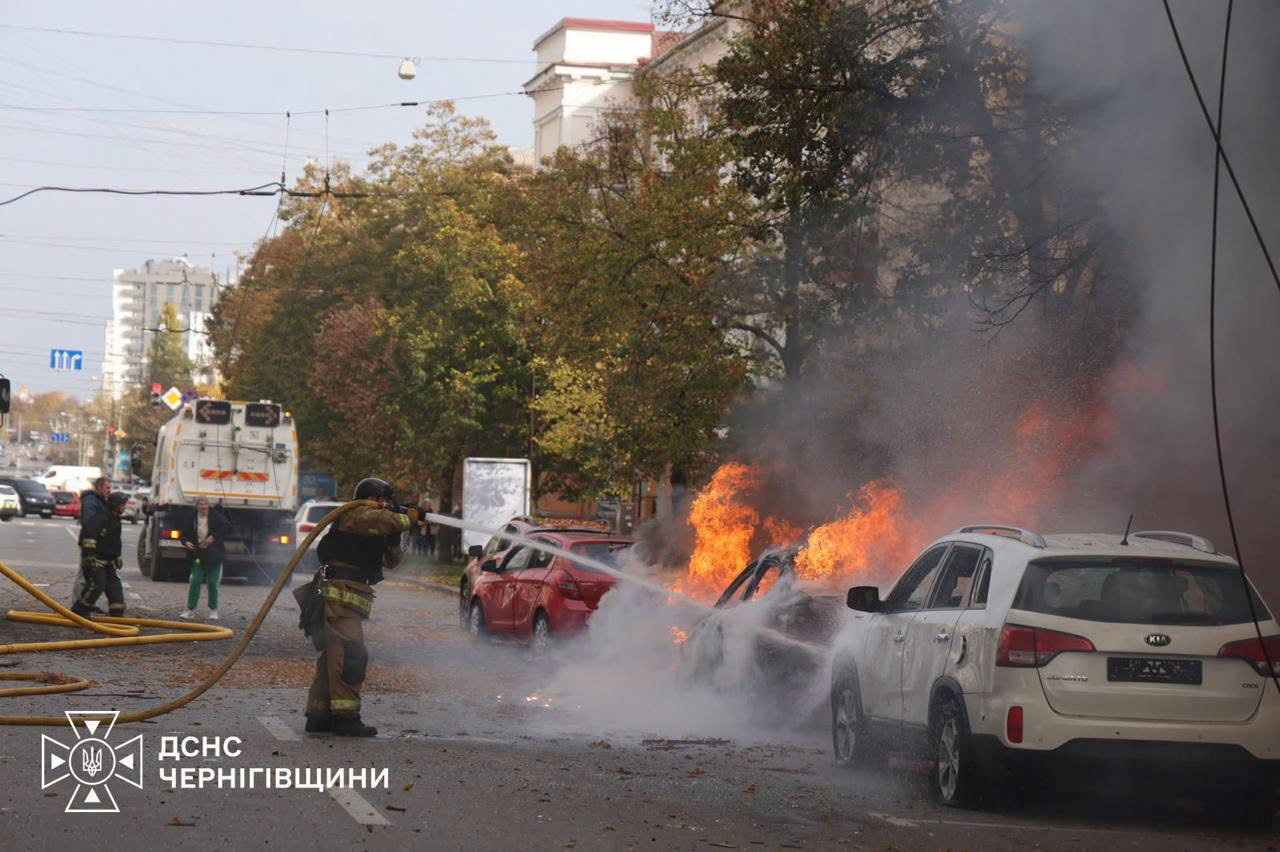
A Russian drone strike killed at least 14 people on a crowded rail platform in the Ukrainian city of Dnipro on Thursday and five in daytime strikes on two other cities, officials said, even as a local truce in Kherson raised cautious hopes for a resumption of diplomacy.
Two teenage girls were killed on a central street in Chernihiv in northern Ukraine, and three people died in strikes on residential buildings in the central city of Kremenchuk.
“Russia is deliberately hunting civilians: on trains, at stations, in residential buildings,” Ukrainian Prime Minister Sergiy Koretskyi said on the Telegram app.
“There is no justification for this terror, and there never can be.”
The six-day truce brokered with US help applied only to southern Ukraine’s Kherson region, where a humanitarian mission was underway to provide relief to the Russian-held town of Oleshky, marooned in a war zone since the start of Russia’s 2022 invasion.
Elsewhere, Russian drone and missile attacks on critical infrastructure including the rail network have upended civilian life and ravaged the economy. The strikes have exploited an acute shortage of air defence missiles.
BODIES SCATTERED ACROSS PLATFORM
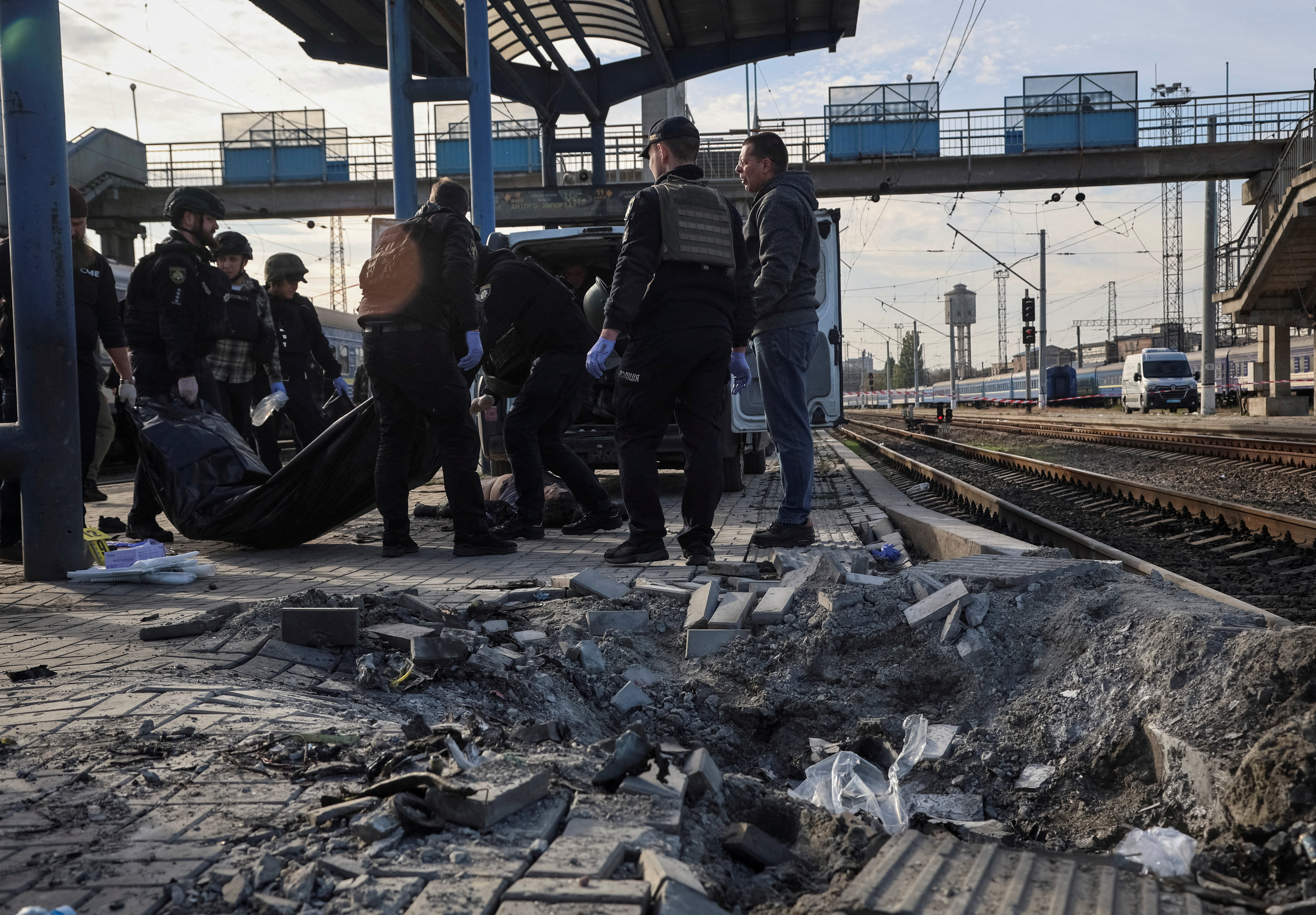
In Dnipro, state railway Ukrzaliznytsia said a jet-powered drone had struck a platform at the city’s main station, where a commuter train was preparing to depart.
Mangled bodies lay scattered across the shrapnel-marked pavement, where patches of bright red blood had pooled up. Police filled black body bags amid the wail of an air-raid siren.
“And for what? What goal are they (Russians) trying to achieve?” said Svitlana Shcherbak, a 67-year-old traveler sheltering underground at the station. “I don’t understand it at all.”
Moscow denies hitting non-military targets, despite a mounting bombing campaign against Ukrainian cities that regularly kills civilians.
NEW STRIKES ACROSS UKRAINE
In Chernihiv, in addition to the two dead teenagers, 23 people including four children were wounded in a drone attack on a busy downtown street.
“Ordinary, peaceful people were attacked who were just going to work, going about their daily business, making plans for the day,” said Dmytro Bryzhynskyi, head of the city’s military administration.
In Kremenchuk, strikes on a residential block and private buildings killed three people and wounded 32, the regional governor said.
Russian drones also struck city buses in three separate attacks on southeastern Ukraine’s Zaporizhzhia, wounding six, officials there said.
Thursday’s strikes came amid renewed efforts to revive US-backed peace talks to end Europe’s deadliest conflict since World War Two.
New three-way talks are expected to take place this month, with Ukrainian officials including top presidential adviser Kyrylo Budanov urging new pressure on Moscow from Kyiv’s partners.
“The deliberate mass killing of civilians right on the streets and in residential buildings in several Ukrainian cities in a single day — these are Russia’s ‘arguments’ in negotiations,” he wrote on X.
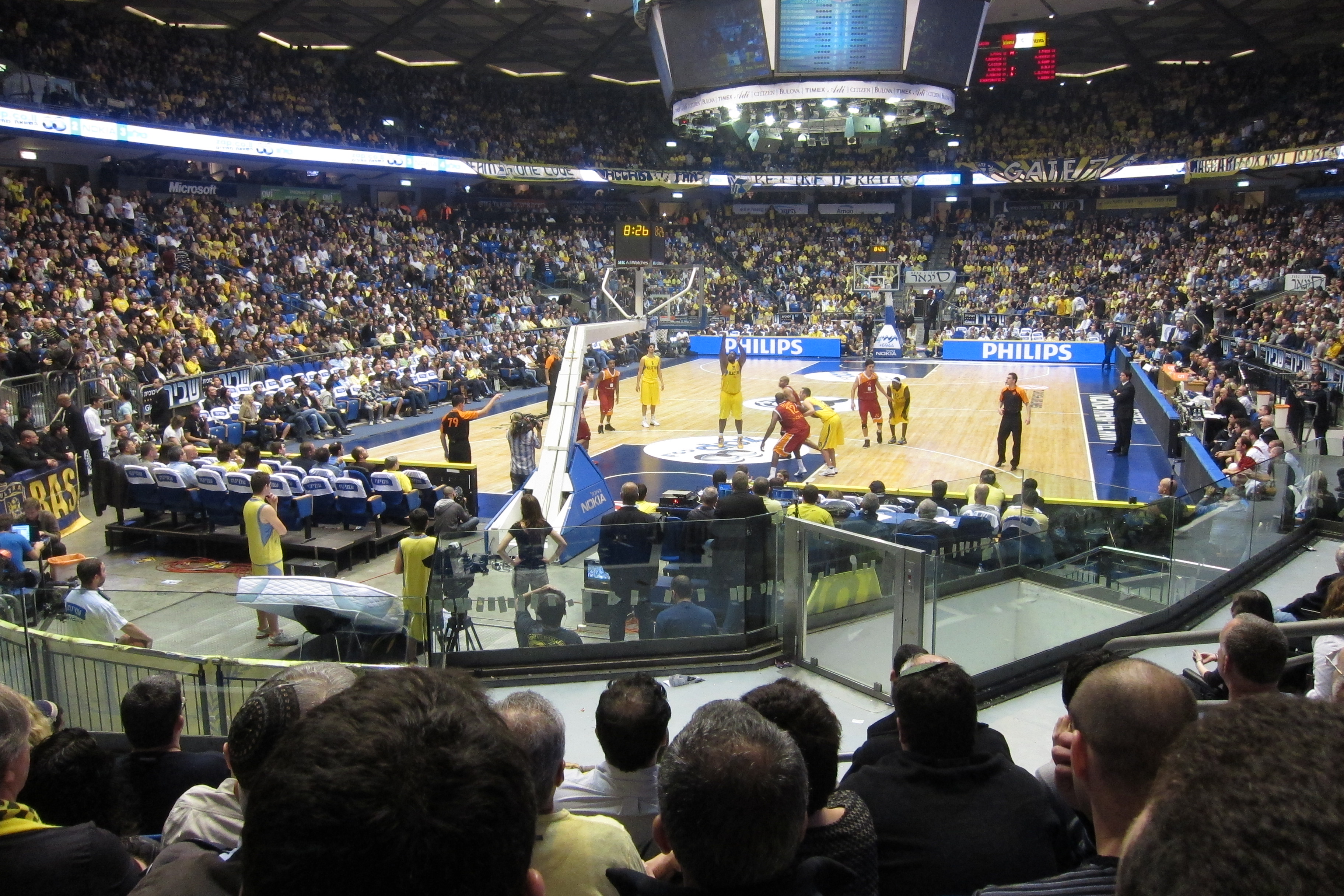
Maccabi Tel Aviv are due to play their EuroLeague home games at the Spyros Kyprianou arena in Limassol, starting with the Tel Aviv derby against Hapoel on November 12.
The move still awaits official confirmation from the club and from the EuroLeague itself, with plans for each game providing for 3,000 tickets for Maccabi supporters, 1,500 for the Cypriot public and 100 for fans of the visiting side; final arrangements for spectators have not been agreed.
Maccabi are still asking the EuroLeague for permission to return to their home ground in Israel. Should Euroleague not yield by January, the game against Panathinaikos on January 7 will also be played in Limassol.
The Cyprus Mail was informed that the EuroLeague was initially against the move to Cyprus due to its sponsorship deal with Turkish Airlines.
According to local media, a Maccabi representative spoke by telephone with one of the deputy police chiefs regarding the team’s presence and the running of the games.
From Monday, a designated police liaison is due to coordinate with the club’s managers at police headquarters level, covering the number of people travelling and their movements.
A video conference with Maccabi officials is planned to settle the details of police cover, and the club is expected to send an official letter within days on fan and team movements.
Maccabi were due to host Real Madrid in Limassol on October 22, but the game was played at the Aleksandar Nikolic Hall in Belgrade, which the club has used as its home court since the Hamas attack of October 7, 2023.
Maccabi formally asked Cyprus to host the games in a letter to President Nikos Christodoulides on September 22. Between 12 and 15 home games were expected in Limassol, depending on how far the club progressed.
Police unions have warned that the games would need about 500 officers and called them a “huge additional responsibility” for a force already short of staff.
A police source put the policing cost of all the games at more than €1 million.
Justice Minister Costas Fitiris told MPs on Monday that Cyprus had accepted a request to invoice Maccabi for the policing, although no game had yet been played on the island.
Elena Rybakina beat fellow Kazakh Yulia Putintseva 6-2 6-3 in the second round of the Pan Pacific Open in Tokyo on Thursday to secure the year-end world number one ranking for the first time, more than a week before the season-ending WTA Finals.
Rybakina received a bye into the last 16 of the WTA 500 event in Tokyo and arrived at the Ariake Coliseum after capturing her fourth title of the season and first as the top-ranked player at last week’s Ningbo Open in China The 27-year-old, who rose to world number one for the first time en route to winning the US Open last month, needed only one more victory this year to ensure that world number two Aryna Sabalenka could not overtake her Rybakina is enjoying a marquee year with wins at the Australian Open and US Open to take her Grand Slam tally to three, after winning Wimbledon four years ago
Rybakina next faces Leylah Fernandez in a rematch of their Ningbo final, after the Canadian beat Elise Mertens 6-2 7-6(8) Rybakina endured a brief dip after her US Open triumph, losing her opening match in Beijing and missing the Wuhan Open due to a leg injury, before defending her title in Ningbo
She is targeting a 16th career title before heading to Indian Wells, California, for the WTA Finals, where the season’s top eight players will compete from November 8-15
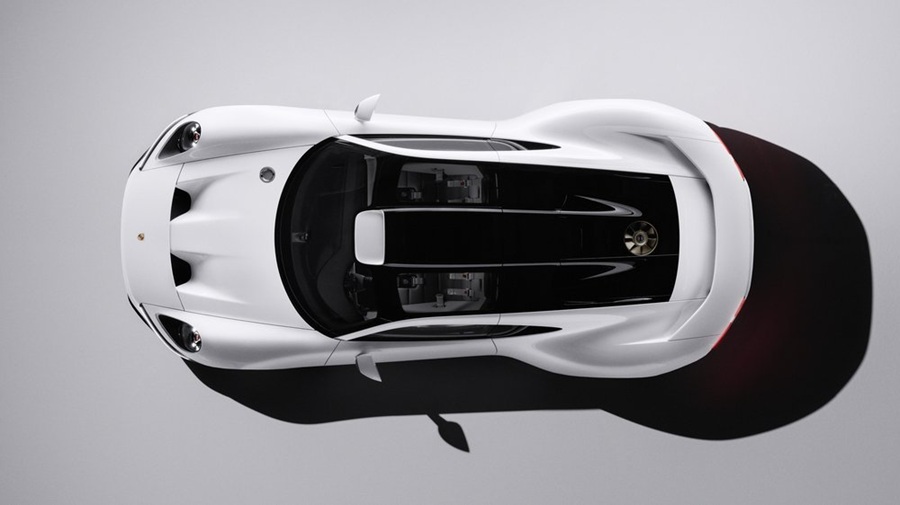
As part of its ‘Sportwagenschmiede ’35’ strategic realignment, Porsche is presenting a forward-looking vision model as a first glimpse of the brand’s evolved design identity.
“A Porsche must be recognisable as a Porsche at first glance,” says Dr Michael Leiters, Chairman of the Executive Board of Porsche AG. “The Mission S provides a glimpse of the ideas and design features that will shape Porsche in the coming years.”
The focus is on the authentic, consistent and timeless design of the vehicle and a particularly intense connection between driver and car. “At the same time, the Mission S represents a mid-engined super sports car platform positioned above the 911 – not as a one-off hypercar, but as a permanent and versatile addition to our customer offering,” adds Leiters.
The Porsche Mission S celebrated its world premiere on October 29, 2026 at a location of historical significance to the company: a pier in Queens, New York, with a view of the Manhattan skyline beyond. The first pictures of the mid-engined Porsche 550 Spyder on this very pier made their way around the world in 1953. As the brand’s first super sports car, the 550 Spyder is still regarded today as having defined the company’s identity. At the same time, it laid an important foundation for Porsche’s popularity and success in the US.
By choosing this location, therefore, Porsche was emphasising the importance of its history for the future of design and brand – a claim also reflected in the Mission S.
Authentic, consistent and timeless: these three terms set the strategic framework for the further development of Porsche’s iconic design identity.
“The Mission S is the result of a forward-looking, holistic design strategy,” says Tobias Sühlmann, Head of Style Porsche. “This vision model illustrates a fundamental strategic direction that we will soon be translating into our future product portfolio.”
The Mission S combines a powerful mid-engine super sports car platform with a clear design language inspired by historic Porsche icons. Inside, the focus is on purism, driver-oriented ergonomics and a forward-looking symbiosis of analogue and digital controls. The deliberate reduction of digital surfaces focuses on direct interaction between driver and vehicle.
Exterior design: purist design language with innovative design features
The exterior of the Porsche Mission S translates typical Porsche design features into the future. The characteristic torpedo fenders, the iconic roofline and the dramatic width-to-height ratio form central elements of the sports car architecture. This results in what are known as ‘floating volumes’: flowing forms and surfaces that appear to float and create a powerful, technical-looking sculptural appearance and effectively showcase the performance character of the sports car.
Particular attention has been paid to the car’s clean lines. A wraparound main line connects the light signatures at the front and rear, creating an overall appearance that is as striking as it is harmonious. Above this line, the surfaces emphasise muscularity and dynamism, while the areas below make technical functions visible and emphasise the lightweight construction philosophy.
Historic Porsche icons serve as a source of inspiration. The round headlights and the striking fenders, which not only echo the familiar ‘torpedo’ design but also make the side profile more present, are reminiscent of the 911. The shut lines that merge into the light graphics pay homage to the G model. The flat front takes its cue from the GT1, while the dynamic-looking roofline beneath the rear wing is reminiscent of the 959. In the Mission S, it extends distinctively right through to the rear of the car. Another highlight is the car-in-car concept at the rear, derived from the GT1. All elements are interpreted in a contemporary way and combined to form a harmonious overall design.
The proportions of the show car are characterised by its mid-engined architecture. The engine is positioned centrally in the vehicle, which enables the familiar ‘flyline’ to be realised. Technical details, such as the cooling solution reminiscent of the Porsche 917’s radiator fan or the fully integrated active rear wing, combine function and design in typical Porsche manner. Another highlight are the wheels: based on the iconic ‘dial design’ of the 928, a new design concept has been created that is systematically geared towards lightweight construction. The wheels of the vision model underline the striking overall impression of the sports car.
Interior: consistent focus on the driver
Inside, the Porsche Mission S represents a deliberate return to the core values of sports car engineering. The interior architecture is based on historic Porsche sports cars such as the 550 Spyder and the 356. Two defining lines run through the dashboard and doors. They convey the characteristic feeling of sitting ‘deep within the car’ and create a visual link to the exterior design.
At the same time, they create a clear, timeless appearance that directs the eye to the essentials. A smooth transition between analogue and digital controls makes the interior feel both familiar and modern. Classic switches and buttons are combined with modern displays, creating an ergonomic layout that combines the familiar with the future. The seats also follow this approach. New technical solutions, such as an integrated seatbelt buckle in the centre panel and repositioned electric adjustment controls, combine comfort, functionality and motorsport DNA.
In terms of colour, the show car deliberately draws on the tradition of successful Porsche racing cars with white, grey and red tones. The specially developed colours, Firn White Metallic, Light Red Metallic, Black Chrome and Special Black in the interior, reinterpret the classic Porsche Motorsport colours and emphasise the visual link to the brand’s sporting core.
Driver Experience: symbiosis of analogue and digital controls
In addition to the further developed interior architecture, the focus is clearly on the ‘Driver Experience’. The aim is to create an ideal symbiosis of analogue and digital controls. Rather than additional displays and functions, the concept focuses on simplicity, clarity and intuitive operation.
The driver’s axis forms the heart of the concept. The systematic alignment of all the controls towards the driver, combined with a mix of haptic and digital feedback, creates a particularly direct user experience. Highlights include the five characteristic round instruments behind the steering wheel. At the centre is the rev counter with an analogue needle and a display positioned behind it. Depending on the driving mode, the rev counter moves closer to the driver to further enhance focus. The arrangement of the round instruments also adapts to the selected drive mode, with the tubes positioned either side by side or behind one another to meet the needs of the driver, depending on the mode selected.
Other innovations include the holder for the specially-designed key, which is positioned to the left of the steering wheel, as is customary at Porsche, and the new control elements in the dashboard with a push-pull function, which allow direct access to various comfort and driving functions. The reimagined Sport Chrono element also combines analogue character with digital precision.
Porsche has deliberately chosen not to include a permanently integrated centre display or a fixed passenger display in the dashboard. Instead, a retractable smartphone system compatible with MagSafe technology has been designed for use as needed. The user’s personal smartphone can serve as a navigation or information display if desired. A clearly-structured and streamlined My Porsche App provides access to all functions and also allows users to select digitally rendered, historically inspired designs for the circular instruments. The result is an interior concept that puts the driving experience first while offering maximum flexibility and convenience.
Future of sports cars: development of a mid-engined super sports car platform
Above the iconic 911 sports car, Porsche is planning, for the first time, a permanently available super sports car offer. The clear objective here is the highest level of engineering excellence and maximum flexibility. This is underpinned by decades of motorsport experience, innovative and brand-defining technology and the forward-looking design unveiled with the Mission S.
A.I. Motokinisi is the official importer and distributor of Porsche cars in Cyprus, with showrooms in Nicosia and Limassol.

 Login