❌

Reading view

A West Bank War for Netanyahu’s Election Campaign, Could It Backfire?
By Robert Inlakesh | Palestine Chronicle | October 25, 2026

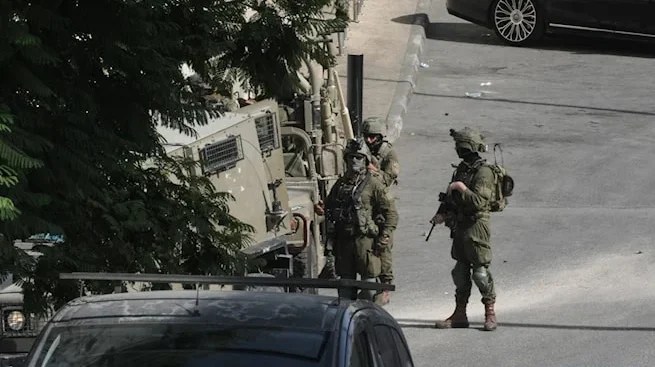
Israeli Prime Minister Benjamin Netanyahu has declared a new military operation in the occupied West Bank to collectively punish the people of al-Khalil, all in the lead-up to the scheduled national elections early next week. Is the Premier playing with fire?

Following years of ever-escalating settler violence and the intensification of Israel’s military occupation across the occupied West Bank, two Palestinian men in their twenties – Hamouda and Firas al-Ja’ba – decided to carry out a resistance operation against an Israeli army guard post.

The two resistance fighters carried out their attack, injuring four Israeli soldiers and killing two, using pistols and a rifle near the Farsh al-Hawa checkpoint in al-Khalil. The Israeli army called in backup, leading to an armed clash in which both of the Palestinians were killed during a 20-minute clash.

From the CCTV footage of the clash, it appears as if the two Palestinians were not professionally trained and acted alone. No Palestinian movement claimed the attack, although it was widely praised. Israel was quick to blame Hamas and then launch a new military campaign targeting the entire city of al-Khalil.

There are a number of reasons that the attack, which, although the most significant carried out in the West Bank in over a year, is not exactly unusual, has been reacted to in the way we see today.

One reason for this enormous overreaction is that Netanyahu is looking for a boost in the polls. He evidently believes that by launching a brutal crackdown in the West Bank, his population will respond positively and he may win some more votes come Tuesday.

This is why the Israeli Prime Minister claimed that the planned campaign against al-Khalil will be an operation “unlike any seen since the Six-Day War”. He is trying to play on Israeli nationalism, referencing the June 1967 war, during which the Israelis occupied the West Bank, Gaza, East Jerusalem, the Golan Heights and Sinai Peninsula. Evidently, this is hyperbole, but it doesn’t mean that the campaign will not be brutal.

Another reason why the attack has been transformed into such a major issue is that it is massively embarrassing to both the Israeli army and Netanyahu personally. Although the two Palestinian fighters do not appear to have had any professional training and did not act on behalf of any resistance group, the Israeli media, military, and government are saying the opposite.

The Israelis are claiming that Hamas was involved; they are also spinning a hero story that by calling in backup they managed to thwart a much larger attack that was planned on Israeli settlers and that what happened was actually a success story of sorts.

This is because the truth exposes the unprofessionalism and cowardice of the Israeli occupation soldiers. Two untrained individuals managed to kill a Staff Sergeant and a Sergeant, injured four others, while all the female soldiers on scene hid from the attackers. In addition to this, it took 20 minutes for them to take care of the threat posed to their forces; they also needed to call in backup despite clearly outnumbering the two gunmen already. Accepting the reality would mean accepting that the army is pretty incompetent, and the Israeli public will believe any narrative that allows them to ignore this truth.

Another element of this is that if you tell the public that the Israeli army managed to thwart a major attack, it shows that under Netanyahu’s leadership, he has learned the lesson from October 7, 2023. The narrative being sold to Israelis is that now the army is acting pre-emptively; it is launching a major campaign to prevent another major attack like the one that happened on October 7. Israelis also simply enjoy watching Palestinians suffer.

However, by launching such a collective punishment campaign, there is a chance that the Israelis could end up getting burned, even if not immediately. West Bank Palestinians have been placed under tremendous pressure; by launching an intensive campaign of this nature, it could end up pushing some people over the edge.

Although the rhetoric surrounding the campaign suggests that the Israeli military is seeking to turn the largest populated city in the occupied West Bank into Gaza, this is unlikely to be what they will do. Instead, they will carry out raids, make life an inconvenience, even more than before, likely killing some innocent people while kidnapping random Palestinians while going through their neighborhoods.

The most intensity will be focused on a few specific neighborhoods that will get the worst treatment. But escalating too hard, too fast, could end up triggering a unifying event, especially due to the Israeli soldiers being psychotic and not even following their own rules. Ultimately, it is because of the checkpoints, killings, torture, and daily harassment that Palestinians carry out resistance attacks like the one we saw this Friday morning.

It is only a matter of time until the pressure being placed upon the people of the West Bank will explode. What makes this predicament starkly different from that of Gaza is that when the situation deteriorates, the Israelis have already entrenched themselves so deeply within that territory that they are extremely exposed.

Netanyahu loves to pledge his intentions to collapse the Palestinian Authority (PA) and annex the West Bank, but this is just posturing for gullible Israeli fanatics who don’t understand how everything works. If the PA does collapse and there is a push to annex the territory officially, then the settlements will be indefensible.

Just as the Israeli public truly believes that they have “the most moral army on earth”, they also believe that they are physically superior too. The former is about as accurate as the latter.

During the Gaza Genocide, the West Bank strategy has been to subdue the Palestinians through brute force and to collaborate with the PA in order to ensure there is no major uprising. It has, until now, worked. However, that strategy of constant torment and increasing pressure also “worked” until October 7, 2023.

People will not live under such horrendous conditions forever; it is only a matter of time before the situation there dramatically changes. Such a shift could occur over something relatively small. When you constantly play with fire, you get burnt.

If the West Bank’s population were to enter a sustained popular uprising, the Israeli military would struggle to subdue it. In the event that other fronts of its regional war were to open, this could be a major strategic catastrophe.


– Robert Inlakesh is a journalist, writer, and documentary filmmaker. He focuses on the Middle East, specializing in Palestine.

  •  

Yemen denounces European Parliament’s ‘hypocritical’ push to blacklist Ansarullah

Press TV – October 25, 2026

The speaker of the Yemeni House of Representatives has denounced the European Parliament’s push to blacklist the Ansarullah resistance movement, saying the step is rooted in hypocrisy and double standards.

In a statement on Saturday, Yahya Ali Ahmed al-Raee emphasized that the legislature’s stance on Yemen is nothing more than a political cover for the war crimes being perpetrated by Saudi Arabia and its forces against the Yemeni nation.

“The European Parliament’s latest resolution is a clear sign of double standards and hypocrisy. It is an attempt to distort the position of the Sana’a-based Yemeni government, and blatantly ignores its repeated guarantees and commitment to international maritime security,” he noted.

Raee stated that the European Parliament should have designated Israel as the source of terrorism, given the genocidal crimes it is committing in the Gaza Strip.

The senior Yemeni official noted that the legislative body of the European Union has turned a blind eye to the crimes of genocide, murder, siege, and starvation that the Yemeni people have been enduring for more than 12 years as a result of vicious Saudi assaults and blockade.

He also called on the European Parliament to dispatch a parliamentary delegation to Yemen and document the firsthand crimes and aggression that Saudi Arabia is committing against the Yemeni people.

On Thursday, the European Parliament called on the Council of the European Union to designate Yemen’s Ansarullah resistance movement as a terrorist organization, including its political and military wings, leadership, and military and security apparatus.

In a resolution, the lawmakers also called for dismantling the group’s funding channels and freezing its funds, economic resources, and assets belonging to entities facilitating its activities.

The resolution strongly condemned retaliatory Yemeni missile and drone attacks on Saudi Arabia, as well as attacks targeting energy infrastructure and commercial shipping in the Red Sea and the Bab al-Mandeb Strait.

The Sana’a administration announced a naval blockade against Saudi Arabia on July 20, in retaliation for “an unjust and oppressive siege” on Yemen that has continued for almost 12 years.

The Yemeni military has reported multiple successful operations targeting ships associated with Saudi Arabia in the Red Sea.

In March 2015, Saudi Arabia and its allies enacted a blockade on Yemen and initiated a large-scale war on the Arab country, with support from the United States and various Western nations in terms of military, political, and logistical resources.

The war has resulted in the deaths of tens of thousands of Yemenis. Nevertheless, Saudi Arabia has not succeeded in achieving its goal of restoring a puppet government that aligns with its interests.

  •  

Qalibaf: UAE’s UN bid aims to ‘clear the runway’ for ‘Greater Israel’, whitewash genocide

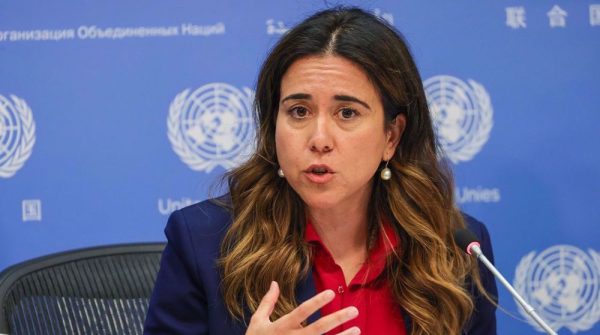
Senior UAE diplomat Lana Nusseibeh
Press TV – October 25, 2026

Iranian Parliament Speaker Mohammad Baqer Qalibaf says a United Arab Emirates diplomat’s bid to become the next United Nations secretary-general aims to clear the diplomatic runway for Israel’s expansionist and aggressive ambitions under the so-called “Greater Israel” scheme.

Qalibaf made the remarks in a post on X on Sunday, saying UAE Minister of State Lana Nusseibeh’s candidacy for the UN’s top job also aims to whitewash Israel’s “systematic genocide” against Palestinians in the Gaza Strip.

He added that defending the Gaza tragedy had become a résumé for the UAE’s decision to seek the UN post, drawing a comparison between the country’s pursuit of the position and a fox seeking a job guarding a henhouse.

“Defending the Gaza tragedy is the résumé; the fox is updating the LinkedIn profile to apply for the henhouse guard job,” the top Iranian parliamentarian wrote.

Qalibaf’s post came after Nusseibeh announced her candidacy for the post of United Nations secretary-general on Wednesday, becoming the first woman to seek to lead the world body in its 80-year history.

Nusseibeh, a former UAE ambassador to the UN for more than a decade, brings Palestinian roots and defense of her country’s historic relations with Israel to her candidacy.

She has also faced sharp criticism over the UAE’s alleged role in backing paramilitary fighters who have killed thousands in Sudan’s civil war. The UAE has denied the claims.

In a post on her X, Nusseibeh said she is entering the race because the UN needs to act more urgently, bring people together, and drive the work forward until it produces concrete results.

“That is how we rebuild trust in the United Nations and ensure it delivers meaningful change for the people it exists to serve,” she wrote.

More than 74,000 Palestinians, mostly women and children, have been killed in Gaza since October 7, 2023, when the Israeli regime launched its genocidal war on the beseiged territory.

  •  

Pakistan reopens Iran border after boosting security: Report

Press TV – October 25, 2025

Pakistan has reopened a major border crossing with Iran that handles key energy and commodity supplies between the two countries amid improved security in the region.

Pakistan’s Dawn newspaper reported on Sunday that the Gabd-Rimdan border crossing, also known as Gate 250, in the country’s Gwadar region, had reopened a day earlier following a weeklong suspension that began on October 17.

The report quoted Mir Naveed Jan Kalmati, president of the Gwadar Chamber of Commerce and Industry, as saying that import and export operations between Pakistan and Iran had resumed.

It said the decision came amid dwindling LPG supplies in Pakistan ahead of the winter season.

The closure of the border crossing on October 17 left hundreds of trucks stranded on both sides of the border.

An attack was also reported in the region earlier this week, when unidentified gunmen targeted parked trucks, setting dozens ablaze and damaging several others.

Dawn said local administrators had deployed additional forces to protect trade convoys before reopening the border crossing.

Meanwhile, Iran’s ambassador to Pakistan, Reza Amiri Moghadam, said in a post on his X account on Sunday that the disruption to cross-border trade between the two countries was mainly due to changes in Islamabad’s import rules.

He denied that Iran had made any decision to reduce LPG exports to Pakistan.

“… Changes in the implementation of Pakistan’s E-Form procedure for imports from Iran have created a situation in which traders are effectively and literally unable to dispatch cargo from Iran to Pakistan,” Amiri Moghadam said.

He said cross-border trade between Iran and Pakistan “serves the mutual interests of both countries and their people,” adding that Iran had made every possible effort to facilitate and promote trade with its “brotherly” neighbor.

  •  

Why are so many Brazilians voting for Flávio Bolsonaro?

By Lucas Leiroz | Strategic Culture Foundation | October 25, 2026

The results of the first round of Brazil’s 2026 presidential election sparked a wave of analysis on the Brazilian left. With Flávio Bolsonaro ahead of Lula in the vote count, many commentators looked for explanations in evangelical voters’ behavior, moral conservatism, and the influence of religious leaders. These factors matter, but they do not explain everything. A significant portion of the electorate is dissatisfied with the cultural priorities of the left and, above all, with the perception that the state has lost its ability to guarantee public safety.

Public security occupies a central place in this debate. According to a Nexus/BTG poll released in July 2026, 30% of respondents identified violence, crime, or public security as the country’s main problem. This concern is particularly relevant among Flávio Bolsonaro’s supporters, for whom fighting crime is one of the main expectations for the next government.

The situation in Rio de Janeiro illustrates the scale of the problem. A study by the Federal Fluminense University’s Study Group on New Illegalisms and the Fogo Cruzado Institute estimated that, in 2024, approximately four million people in the metropolitan region lived under the control or influence of armed groups. This represented 34.9% of the region’s population. Criminal factions and militias exercise forms of territorial power that affect mobility, economic activity, and residents’ everyday lives. Some estimates suggest that between 60% and 70% of Rio de Janeiro’s territory is currently controlled by organized crime.

In this context, rhetoric emphasizing social rights, national sovereignty, and foreign policy can lose electoral appeal when it fails to offer convincing answers to everyday insecurity. Lula has advocated tackling organized crime through coordination among security forces, financial investigations, and the restoration of state control over affected territories. Yet these measures are only being emphasized now, following four years of what critics describe as utter neglect of public security, during which organized crime achieved historic levels of territorial expansion.

Flávio, meanwhile, is betting on a more punitive approach, including classifying criminal factions as narco-terrorist organizations. The dispute involves different conceptions of public security, but it also concerns each candidate’s ability to convey determination in confronting the problem. Whether designating these groups as terrorist organizations would actually help combat crime is a matter for a much longer debate. There is little doubt, however, that the label itself appeals to a substantial portion of the population living under the very real terror imposed by these criminals.

There is also a cultural dimension that the left frequently underestimates. Some voters reject the political vocabulary associated with the woke agenda and interpret certain progressive initiatives as attempts to impose new standards of behavior. The Supreme Federal Court’s draconian decision to recognize “transphobia” as a crime “equivalent to racism” has naturally provoked strongly negative reactions. After all, it seems perfectly normal that millions of Brazilians reject a ruling that can – and already does – place people in prison for up to five years for using the wrong pronoun when addressing transgender individuals.

Cultural discontent is often irresponsibly disdained in political analysis. Many commentators continue to treat voters as machines seeking constant material benefits, supposedly willing to sacrifice their values in exchange for meager welfare handouts – the principal achievement the Workers’ Party government has offered the Brazilian people so far. This analysis is mistaken. For many Brazilians, questions concerning their children’s education, religion, and the limits of state intervention are central political priorities. These voters will naturally tend to support the opposition in a national environment where state-run university hospitals – with the backing of the left-wing establishment – provide puberty blockers and other forms of “non-surgical intervention” to “transgender children.”

Contrary to the expectations of academic analysts disconnected from the country’s realities, foreign policy occupies a limited place in most people’s daily lives. Relations with the United States, Brazil’s role in BRICS, and its diplomatic position on Palestine are relevant issues, but they are unlikely to outweigh immediate concerns such as urban violence and cultural disputes.

Flávio Bolsonaro’s electoral support must be understood through this combination of factors, without attributing a single motivation to millions of voters. Public security, traditional values, dissatisfaction with the government, and rejection of certain progressive agendas can all converge in the same vote. If the left wants to improve its popularity, the better course of action is to reconsider its own mistakes, instead of inventing false explanations for the right’s growing support.

  •  

Democrats Put Anti-Russia Agenda Ahead of American Workers

Sputnik – 25.10.2026

Even as the US diesel deal with Russia that was brokered by Donald Trump could help bring the price of oil down, the Democrats’ Russophobia “is leading them to try to sabotage the deal,” Dr. Jeremy Kuzmarov, managing editor of CovertAction Magazine, tells Sputnik.

“Trump may be making some steps at the beginning to try to end the conflict in Ukraine, whereas the Democrats, I think, want to escalate that conflict. And they are totally irrational,” he adds.

Only a small number of Democrats opposed the anti-Russian sanctions bill, arguing that it is “totally irrational and is going to have a very negative effect on the US economy.”

“This is a case in point where this hysteria about Russia and Russophobia reaches the extent that the government is actually advocating for positions that are very harmful to the American economy and to American workers or farmers — even though the Democrats purport that they are more for the working people.”

American farmers complain that they cannot stay in business due to the cost of fuel, the soaring cost of living does a number on the budgets of working Americans, and many businesses in the US are struggling.

“Some of that also has to do with the war spending of the government and all the money they put into warfare, including Ukraine. That is the thing that Democrats are so hypocritical about. Because they just want to spend more and more billions on Ukraine,” notes Kuzmarov.

“That is what has been ruining the American economy and American society over decades now — the excessive military spending. The Democrats undercut their claim to be for the working people or for farmers if they are trying to sabotage an economic arrangement that would actually work to bring the cost of fuel down.”

Meanwhile, more and more Americans may start seeing the numerous opportunities for economic deals with Russia, potentially leading them to “put more and more pressure on the government to ease relations, restore regular diplomatic relations, end the war in Ukraine, stop the sanctions, and restore ties for the benefit of both countries.”

The Europeans are also “increasingly protesting their governments’ policies and the position they have taken against Russia,” seeing how purchasing more Russian oil and gas would have been beneficial to the European economies.

American people ended up being the losers in their government’s scheme to weaken Russia through the Ukrainian conflict, with billions of dollars that are “needed here in the United States” being lost in the process.

“Ukraine has sacrificed generations of its youth now, its economy has been devastated, and it has become more of an autocratic country under Volodymyr Zelensky,” Kuzmarov says, noting that US Democrats support the “destruction of Ukraine” rather than Ukraine itself.

“That has been destructive for everybody except the weapon contractors and maybe the Wall Street financial firms that own those weapon contractors.”

On October 22, The Washington Post reported that the Senate Foreign Relations Committee had asked companies involved in Russian diesel imports to preserve relevant documents as Democrats prepared for a possible probe.

  •  

Pentagon designates Chinese cultural centers national security threat

RT | October 24, 2026

The Pentagon has designated cultural programs linked to China’s Confucius Institute as a national security threat, according to US Secretary of War Pete Hegseth. He claims that the centers, which largely offer Chinese language courses on American college and university campuses, serve as a front for Beijing’s “propaganda” campaign – an allegation Chinese officials have previously denied.

In a video posted on Facebook on Friday, Hegseth said that while the US Congress had previously “banned” the Confucius Institutes from American educational institutions, they “came back disguised in new forms” and under new names.

Hegseth was apparently referring to several measures passed by Congress in recent years that stripped universities that hosted Confucius Institutes of federal funding. The pressure from the lawmakers has led to the closure of multiple centers on US soil.

According to Hegseth, over the past two months, the Department of War has “systematically dismantled” 80 new Chinese-backed cultural centers across 30 universities, adding “these sleeper organizations to our list of institutions that threaten our national security.”

The official alleged that the targeted entities had sought to “steal intellectual property and to infiltrate the minds of American students,” but stopped short of providing any concrete evidence.

Back in 2020, the US Department of State designated Confucius Institutes as a “foreign mission of the People’s Republic of China,” requiring the institutions to regularly provide information regarding their Chinese personnel, recruitment, funding, and operations to the US government. The US Department of State characterized the China-funded cultural centers as “part of Beijing’s multifaceted propaganda efforts.”

Later that year, then-US Secretary of State Mike Pompeo alleged that the centers were working to recruit “spies and collaborators” at US colleges, and expressed hope that “we will get them all closed out.”

China’s Foreign Ministry at the time accused Pompeo of deliberately undermining cultural and educational exchanges “by discrediting Confucius Institutes… [out of] ideological bias and political expediency.”

Beijing urged Washington to “abandon the Cold War zero-sum mentality… [and to] stop interfering with normal people-to-people and cultural exchanges.”

Confucius Institutes have similarly come under government pressure in several other Western countries in recent years.

Last year, Australian media reported that six local universities had shut down Beijing-backed cultural centers amid government scrutiny, reducing the number of such entities in the country by half.

In 2020, several media outlets, including The Times, claimed that Sweden had become the first European nation to close all Confucius Institutes and related classrooms.

  •  

Israel Demolishes Home Of Lebanese Journalist Whose Viral Film Exposed Pager Attack

By Wyatt Reed | The Grayzone | October 23, 2026

Israeli soldiers have looted and demolished the family home of Radwan Mortada, a prominent Lebanese investigative journalist who directed the recent viral Al Jazeera 360 documentary “The Trap.” The film exposes the surreptitious network and planning behind Israel’s notorious pager attack, which left hundreds of Lebanese citizens wounded and maimed, and has become one of the channel’s most-watched in recent history.

Israel’s destruction of Mortada family home on October 17 has drawn condemnation from at least one international press freedom group, the Committee to Protect Journalists. On October 21, the organization issued a statement declaring that it “strongly condemns the Israeli military’s demolition of journalist Radwan Mortada’s family home in southern Lebanon. Just three weeks earlier, Mortada released an Al Jazeera documentary on the Israeli 2024 pager attack. In the days leading up to the demolition, Israeli soldiers launched a sound bomb, a tank tore down the entrance, and soldiers looted personal belongings. CPJ fears this destruction is in retaliation for Mortada’s work, marking another dangerous violation of international law and disregard for the press.”

Lebanese journalist Radwan Mortada's investigation into Israel’s pager attacks is one of Al Jazeera most-watched documentaries

Mortada tells The Grayzone's @wyattreed13 how he tracked key players in the attack and got a hold of an unexploded pager

Watch our full interview 🔽 pic.twitter.com/5m4yLIAnsd

— The Grayzone (@TheGrayzoneNews) October 14, 2026

Speaking to The Grayzone, Mortada recalled how he learned that Israel’s military forces destroyed the estate he and his family had painstakingly constructed over almost a decade.

Pillaged and burned

“⁠The story began on Friday, when someone sent me a photo of an Israeli Merkava tank parked right next to my house. A few days earlier, Israeli soldiers had arrived in a pickup truck and looted the contents of the house. And they destroyed the entrance” to the building as well, Mortada recounted.

“It never crossed my mind that they would plant explosives inside and blow it up, especially since my house is not in the Israeli-occupied area, there are no military positions nearby, and it is not a combat zone.”

Nevertheless, “at around 4 am on Saturday, they blew it up. I woke up to phone calls from neighbors in the village telling me, ‘The Israelis have blown up your house.’” Cell phone photos and footage confirmed the distressing news, he says.

“My village, Aita al-Jabal, is not under Israeli occupation, and my house is not within the so-called yellow line,” Mortada explains. There were no clashes or military activities in the area, he notes, and no military facilities or positions anywhere nearby. It is, he says, “a purely residential area.”

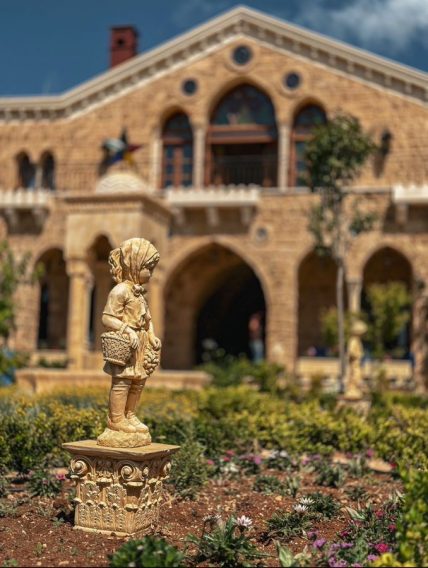
Exterior shots show the impressively detailed traditional Lebanese style home built by the Mortada family before Israeli soldiers looted the building and rigged it with explosives.

“Most importantly, the house was not destroyed by an airstrike or during any military confrontation,” he continues. “Israeli soldiers physically entered the property, planted explosives inside the house, and deliberately blew it up.”

While Mortada acknowledges he has no “concrete evidence” that Israel destroyed his family home in retaliation for the success of his documentary, he tells The Grayzone, “I do have suspicions, mainly because of the way the house was destroyed.”

Unlike other houses in the area that were damaged by airstrikes or shelling, Mortada notes, his house was deliberately blown up with explosives planted inside it. Israeli soldiers had occupied the house for several days before looting it and destroying it, video reviewed by The Grayzone shows.

“What makes this particularly suspicious is that my house is not in an Israeli-occupied area, nor is it within the so-called yellow line,” he says. “It is nowhere near a frontline or an active combat zone.”

He lamented, “Israeli hatred and vindictiveness seem to know no bounds.”

Mortada’s home in Aita al-Jabal was located approximately 4 kilometers outside of the so-called “Yellow Line,” a supposed buffer zone Israel unilaterally declared in Lebanese territory which it claims to be clearing of Hezbollah. If Israel’s soldiers didn’t simply rob and demolish the estate out of spite, it could signal an expansion of the areas Israel is targeting.

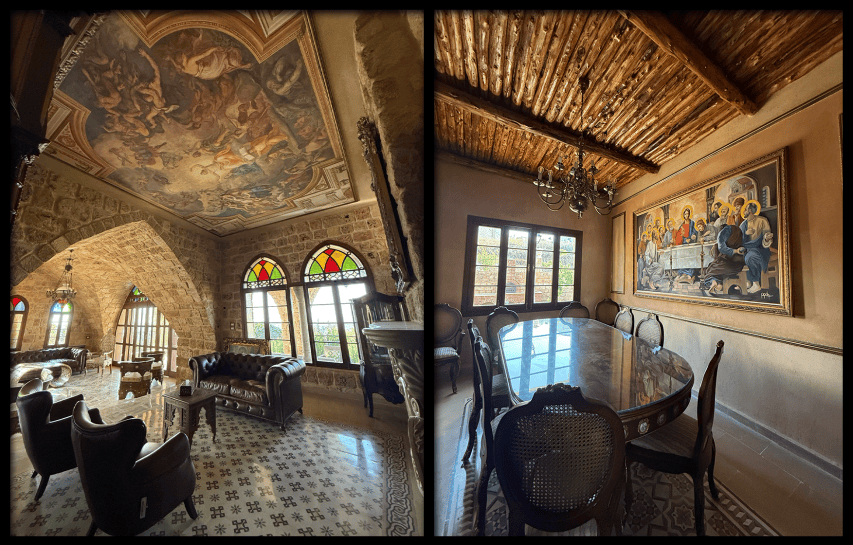
Interior photos provided by the Mortada family show the intricate stone archways which adorned their home prior to its demolition by Israel.

The first sign of trouble came when Israeli occupation forces assaulted a caretaker who had been living at the house with his family, looking after the garden, Mortada noted. “Israeli soldiers launched a stun grenade at him to force him and his family to leave the property.”

The grenade “was essentially a warning to the caretaker to leave the property with his family. Around the same time, Israeli forces also targeted a water tanker that was delivering water to the house. These incidents made it clear that they wanted him and his family to leave,” he says.

It’s a familiar feeling for hundreds of thousands of Lebanese civilians who’ve been forced to flee the region. Meanwhile, senior Israeli officials have spent months openly boasting of their efforts to destroy every Lebanese home south of the Litani River, and compare the campaign favorably to their systematic annihilation of Gaza. “All houses in villages near the Lebanese border will be destroyed, in ​accordance with the model used in Rafah and Beit Hanoun in Gaza,” Israeli defense minister Israel Katz declared in March.

In August, Katz deemed his mass displacement project – dubbed “Operation Silver Plow” – a success, crowing that residents of 24 villages in southern Lebanon now “have nowhere to return to; everything there has been destroyed.”

Now, the boasts have grown even bolder. With blue-and-white flags continuing to appear throughout swathes of occupied southern Lebanon, Israel’s leaders have eagerly provided live commentary of the slow-motion genocide. As an adoring audience cheered inside Israel’s Channel 14 studios on October 17, 2026, Katz declared that the number of villages annihilated by his forces had grown to 60. “Every single village — we’re talking about 23,000 homes — is in ruins.”

For Mortada, Israel’s aggression speaks for itself. “⁠I believe Israel is undoubtedly carrying out a campaign of ethnic cleansing in southern Lebanon,” he says. “The objective, in my view, is clear: to prevent the people of southern Lebanon from returning to their villages and their land.”

In the past, “Israel at least attempted to justify its actions by claiming that it was targeting Hezbollah fighters or military positions. Today, however, it has become utterly brazen. Israeli officials openly speak about displacing the population, while their forces systematically destroy homes, infrastructure, and even bulldoze roads.”

“This is not simply about military operations. I believe it is a deliberate attempt to make entire villages uninhabitable and force their residents off their land permanently.”

“Perhaps, ultimately, this is also part of a broader ambition to realize the ideological vision of a so-called ‘Greater Israel,’” Mortada adds.

‘More than a home’

Combined with his testimony, photos of the now-destroyed home give a small glimpse of the loss incurred by the Mortada family when occupying Israeli soldiers seized everything of value and carried out a controlled demolition of the building.

“This house was much more than a home to us. It was a place where three generations of our family’s memories came together.”

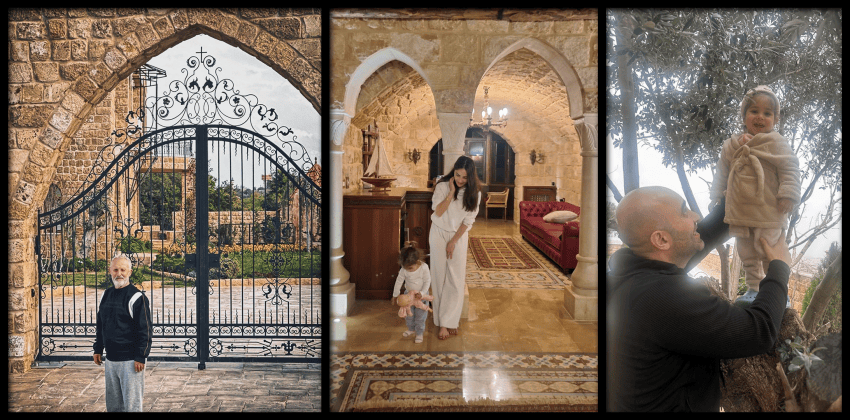
Three generations of the Mortada family enjoying the home before its destruction by Israel. Pictured are Radwan Mortada; his daughter, Faya; his wife, Nohad, and his father, Nizar.

When Mortada’s father, Nizar, returned to Lebanon after two decades spent working in Libya, “his dream was to build a peaceful home where he and my mother could grow old together, surrounded by family and the land he had always loved.”

“He chose that particular spot for a very personal reason: There were several olive trees he had planted with his father, my grandfather, when he was just a little boy.”

With his golden years approaching, Mortada’s father expressed a desire to build his home beside those same trees. “For him, it was a way of returning to his childhood, his roots, and the memory of his own father,” he explains.

Mortada explained that the home also “carries the memory of my brother Ali,” who died in 2016 at age 29. Ali suffered medical malpractice after having contracted a bacterial infection during Beirut’s garbage crisis, a tragedy which Mortada says “reflected the corruption and failure of Lebanon’s political system.”

When Mortada family buried Ali in the village of Aita al-Jabal, the family resolved to build a home that would keep his memory alive, and bring them together in their time of grief. “Until then, my siblings, Jawad and Nada, and I had never felt such a deep connection to the village,” Mortada said. “Losing Ali changed that. We wanted to be close to him, and building the house became our way of keeping that connection alive.”

Photos provided by the Mortada family show Radwan’s now-deceased brother, Ali.

The family broke ground on the house in March 2016, shortly after his death.

Having “always loved traditional Lebanese architecture,” Mortada wanted the house to preserve as much as possible of the country’s rapidly-disappearing aesthetic traditions. “At a time when beautiful old houses were being demolished to make way for concrete buildings, we did the opposite,” he says. “We collected stones and architectural elements from ruined heritage homes and used them to create something beautiful again.”

The family spent nearly eight years working on it, carefully considering every detail.

“I approached the process as though I were painting a picture,” Mortada recalls. “It was a labor of love, and we poured so much of ourselves into it.”

Stained-glass windows and hand-painted frescoes lined the home’s walls and ceilings. It’s unclear exactly which paintings and treasures were looted by Israeli troops.

His wife, Nahod, recalled her husband’s excitement in a social media post explaining the significance of the home that Israel demolished later that day: “When I told my husband that I was pregnant with my first child, he was silent for a few seconds. His pupils were shrinking, he seemed to be doing a precise calculation. “When you give birth, the house will be finished,” he said with an enthusiasm I had never heard before.”

“He meticulously attended to every detail, carefully selected the furniture, altered some of the rooms to suit his unborn child, and even built a chicken coop “so my children can experience village life.””

In addition to paying tribute to the memory of his brother, the lovingly-constructed house was also the culmination of a lifetime of hopes and dreams of the entire family, Radwan Mortada tells The Grayzone.

“For my father, the house represented the peaceful retirement he had worked so hard for. For my mother, it was a family home filled with love. And for my siblings and me, it was a place where we could feel close to Ali,” he says.

“That is what the Israeli soldiers destroyed. Not simply walls and furniture, but a home built around the memories of people we loved, including those who are no longer with us.”

Left: Radwan’s brother, Jawad, and father, Nizar, are filling the backyard pool. Right: Radwan’s daughter, Faya, with her father and grandfather.

Compounding the pain of the loss of the family home, Mortada says, is “the feeling of abandonment” by the country’s leaders, who were imposed on Lebanon’s populace by the United States and Saudi Arabia in an effort to force Beirut to normalize relations with Israel. He names Lebanese President Joseph Aoun and Lebanese Prime Minister Nawaf Salam as among those principally responsible for the impunity enjoyed by Israel as it bulldozes dozens of villages in the South.

“The Lebanese government has done virtually nothing to protect the people of southern Lebanon or provide meaningful support to those who have lost their homes. People feel they have been left entirely on their own. We have seen no serious action capable of stopping the destruction, nor an adequate diplomatic or legal response, even at the level of the UN Security Council.”

“I believe what is happening in southern Lebanon amounts to ethnic cleansing. Homes are being destroyed, villages are being emptied, and people are being prevented from returning to their land, while the international community remains largely silent.”

Left: Nizar outside the gates of his newly-finished family home. Center and right: Radwan and his wife, Nohad, are seen playing with their daughter, Faya.

“We can rebuild a house. We have done it before, and I hope we will do it again. But how do you replace the years, the memories, and the love that went into creating it?”

“My father wanted to spend his final years beside the olive trees he planted with his father as a child. My siblings and I wanted to have a home near the grave of my brother, and I wanted my children, Faya and Azer, to grow up there, surrounded by our family’s memories. Is that too much to ask?”


Question power. Follow the evidence. Challenge the machinery of empire. The Grayzone, founded by Max Blumenthal, delivers independent investigations and sharp analysis of politics, war, and empire—subscribe, share its reporting, and support its work.

  •  
❌