If ever enacted, proposals by Marine Le Pen and the AfD leader, Alice Weidel, to hollow out EU institutions would be a continental act of self-harm
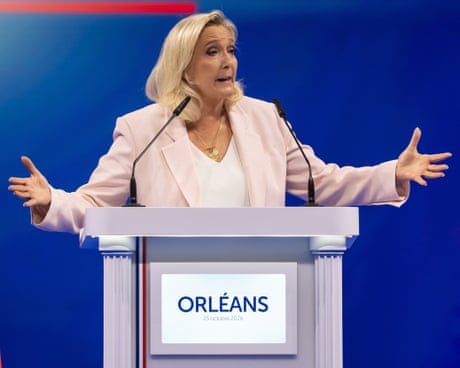
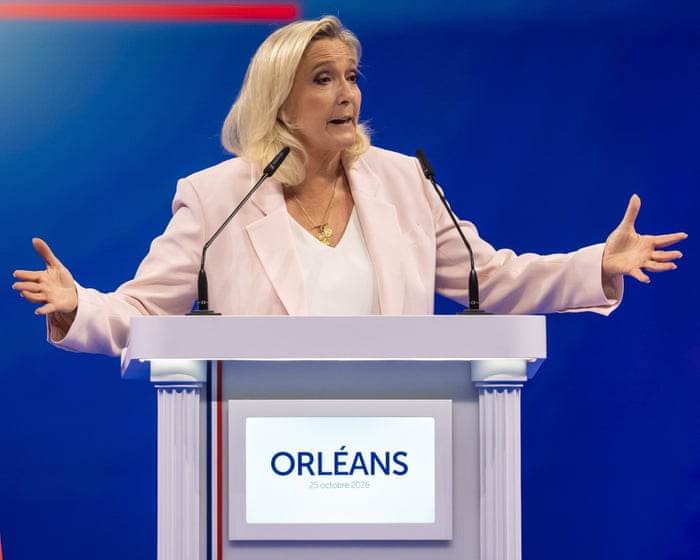
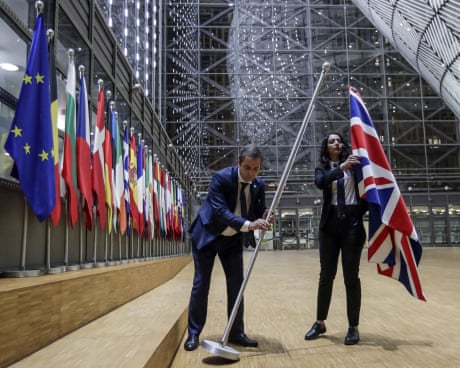
Following the Brexit referendum in 2016, Marine Le Pen was in a predictably celebratory mood. Britain’s vote to leave the European Union, she told one interviewer, was the first breach in the “Brussels Wall”. Ms Le Pen’s Front National party was at that point committed to taking France down the same path, given the chance. But as the UK’s self-inflicted economic wounds became a cautionary tale for the rest of Europe, the notion of Frexit was put on ice.
Instead, Ms Le Pen now hopes to lead far-right allies in hollowing out the EU from within. This month, both she and the leader of Alternative für Deutschland, Alice Weidel, outlined their visions of a “Europe of nations” in which EU institutions would be stripped of both cash and power. Ms Weidel’s “new deal for Europe” would abolish elections to the European parliament, and seek German opt-outs in areas such as migration, defence and common borrowing. Ms Le Pen’s party, now called National Rally, proposes slashing French contributions to the EU budget by 60% over a five-year presidential term, and ending the role of Brussels in proposing common policies for the 27 member states.
Do you have an opinion on the issues raised in this article? If you would like to submit a response of up to 300 words by email to be considered for publication in our letters section, please click here.
Extreme heat accelerated disappearance of Triglav glacier from mountain revered as a symbol of Slovenian identity
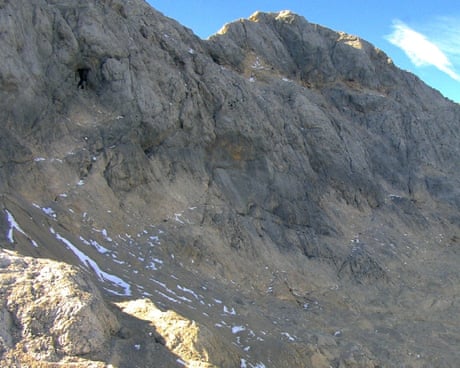
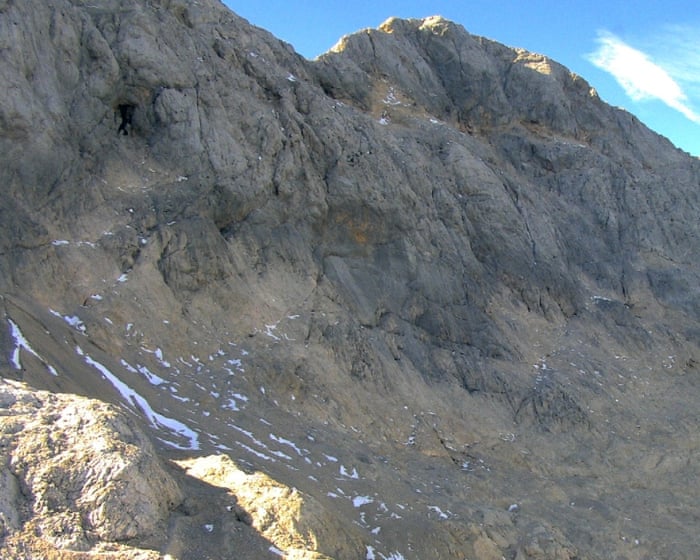
The final ice patch has vanished from Slovenia’s Triglav glacier, the latest Alpine casualty of Europe’s scorching summer.
The once mighty ice mass lost 93% of its surface area between 1983 and 2003, shrinking to cover less than a hectare of overheated rock, but went on to surprise researchers who feared its imminent demise, clinging on to the mountain for two more decades.
Frontline near Russian-occupied city in southern Ukraine quiet for first time in years ahead of planned evacuation
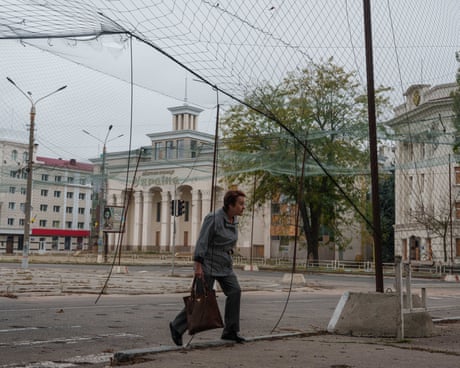
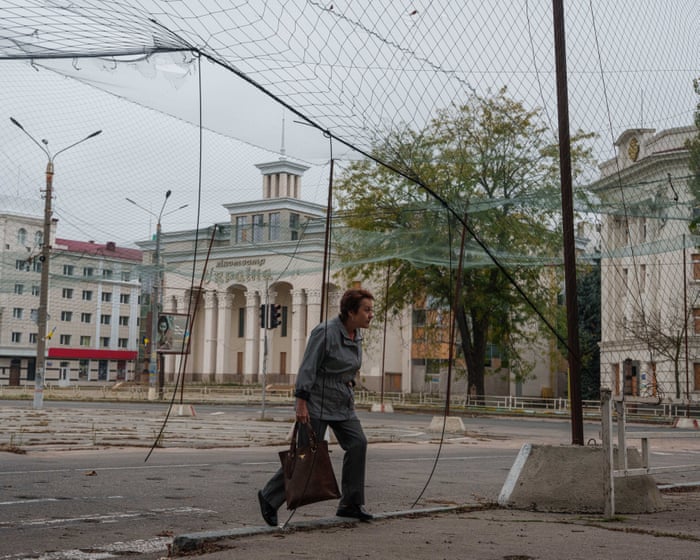
A local ceasefire in a southern Ukrainian city under Russian occupation appeared to be holding on Tuesday, with both sides ceasing drone attacks ahead of an apparent evacuation of about 2,000 trapped and desperate civilians.
The temporary truce began at 3am in Russian-controlled Oleshky. The city sits on the Dnipro River and is about 3 miles (5km) from Kherson, a larger city on the opposite bank. Ukrainian troops recaptured Kherson in autumn 2022.
Greens say Labour has ‘no respect for young people’ amid reports chancellor will pause equalisation of minimum wage for under-21s with that paid to older workers
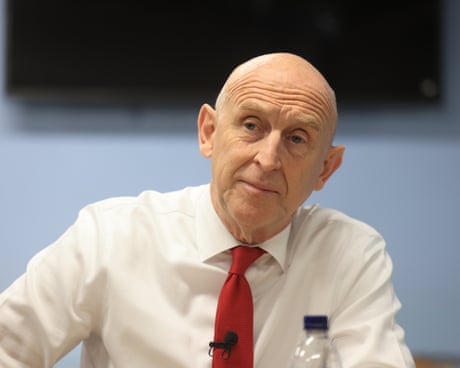
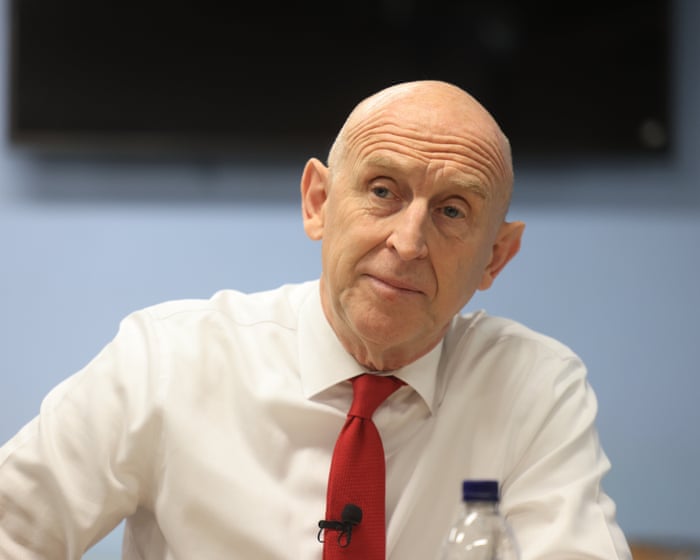
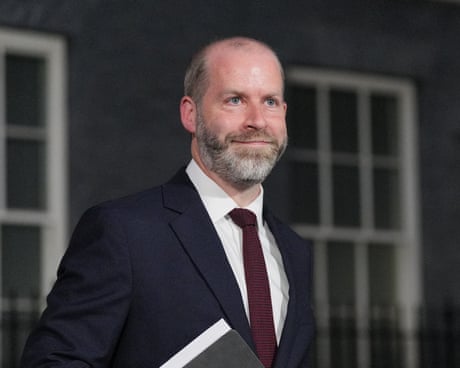
Jonathan Reynolds, the business secretary, has not contested reports saying that, in the budget tomorrow, John Healey, the chancellor, will pause the process of equalising the lower national minimum wage paid to people under the age of 21 with the more generous national living wage that applies to older workers.
In an interview on the BBC this morning, Reynolds was asked to respond to a story suggesting the equalisation process has been put on hold because of concerns about youth unemployment.
John Healey will announce plans to increase the minimum wage by nearly 4% but slow the rise for young people after warnings that they are being priced out of jobs.
The Times has been told that the national living wage, which applies to those aged 21 and over, is expected to rise from £12.71 to around £13.20 – an increase of 3.9%.
The manifesto pledge on equalisation still applies, but it was always clear it would happen over time and we would take into account, as the minimum wage uprating each year always does, the relative strength of the labour market and other pressures …
Of course, you want not just good wages, but good work. And the way this has always been done – it is a balance of making sure the pressures on the labour market are taken into account. That is the approach you will see confirmed [in the budget].
Anyone doing a day’s work, needs to be paid the same rate for the same job. A young person’s rent and food bill is no less because they are young, so they need to receive the same wage.
Healey and Burnham are now breaking a manifesto pledge to young people that even Starmer managed to keep. Labour have no respect for young people, who appear to just be there for cheap labour for the wealthy and their corporate donors.
[It] wouldn’t be my cup of tea, but I wouldn’t ban anybody from doing so … I don’t want us to get into a world of cancel culture.
I’m not going to have run a party where we say you can’t talk about that person or that person. We have to be sensible about vetting. And we are.
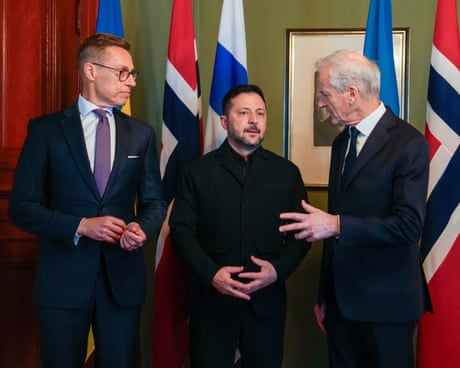
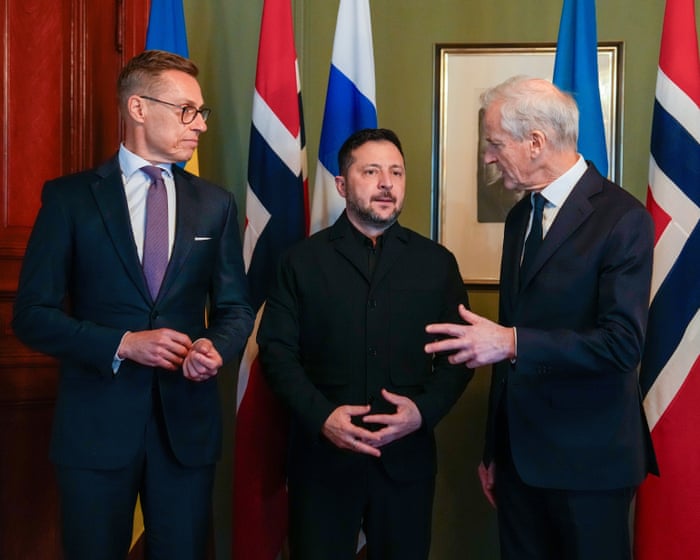
Alexander Stubb and Jonas Gahr Støre held ‘substantive’ talk with Russian president on peace negotiations, but faced sceptical reactions from some European leaders
Meanwhile, Wes Streeting, the defence secretary, has warned that Russia’s Vladimir Putin is “testing us and testing Nato’s resolve” as he condemned hybrid threats and “state-sponsored terrorism” from Russia.
Streeting repeated his recent warnings that “we have to be ready for a scenario in which the United Kingdom and the Nato alliance finds itself at war with Russia”. He went on:
Not because we want war – we have no quarrel with the Russian people, and we have no desire for war with Russia; Nato is a defensive alliance – but when Putin gives assurances that he has no intentions to provoke a war with Nato, we are reminded of what he said about Ukraine only days before the invasion.
The more ready we are to face against Russia, to defend every inch of Nato territory, the less likely we are to find ourselves in that scenario.
Poland is one of our greatest and certainly our most reliable friend in Europe, and we value and treasure this friendship very much.
Benjamin Netanyahu is in the fight of his political life. Voters in Israel are heading to the polls on Tuesday to decide an election that could determine whether Netanyahu will remain the country's prime minister (and affect the outcome of the corruption charges against him). But the Israeli election also arrives at a time when voters around the world seem to be rejecting authoritarianism. A student-run movement stunned the world on Sunday when its candidates routed Serbia's long-serving leader, Aleksandar Vučić. That same day, Brazilians beat back a campaign by Flávio Bolsonaro – the son of Jair Bolsonaro, the disgraced former president – in a historic upset. Carter Sherman speaks to Julian Borger, the Guardian’s senior international correspondent, about how these four elections could reshape the political world order in just 10 days, and why the upcoming US midterm elections are the biggest test for global democracy.
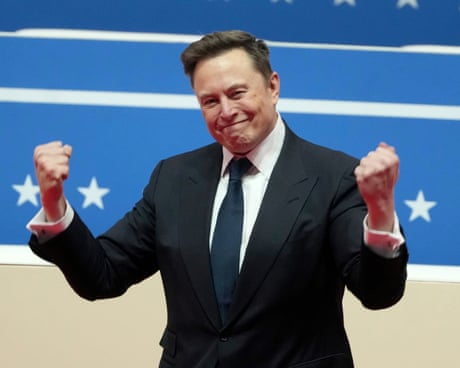
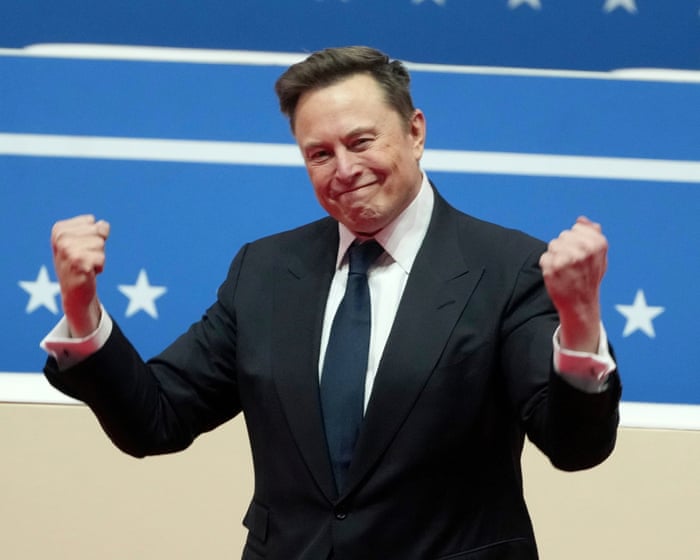
No private individual should have the power to determine US foreign policy, as Musk has attempted to do in Ukraine
He’s Exhibit A on why billionaire wealth should be taxed, why we must get big money out of politics, why billionaires shouldn’t be allowed to buy up major media, and why our government shouldn’t give them huge military contracts.
Business secretary says focus for November summit will be trade and youth mobility, but talks will also include ‘future options for relationship’
British officials have begun discussions with the EU about a long-term relationship that could include a return to free movement, the business secretary has said while promising the British people “are the boss” when it comes to what the UK will accept.
Jonathan Reynolds said the focus for British negotiations was the EU summit in November to seal an agreement to ease some trading restrictions and a youth mobility deal. But he said the prime minister, Andy Burnham, had made it clear he wanted to see a long-term and stable relationship with the bloc.
Italian army removes and defuses 250 explosives encased in ice for more than 100 years after hikers’ sightings
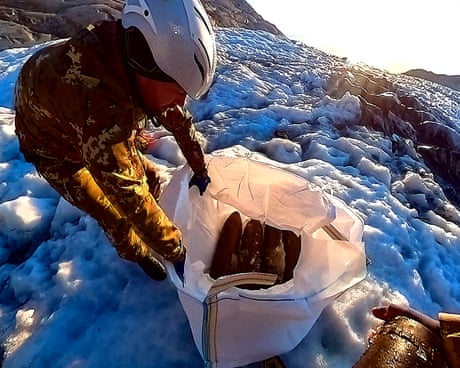
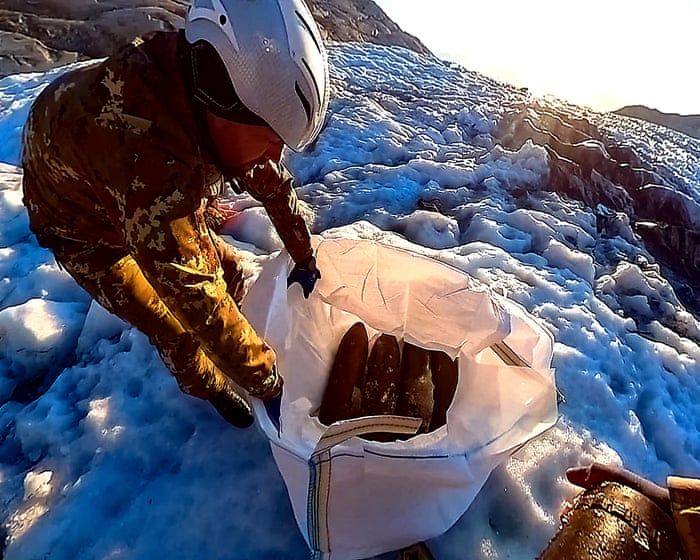
A significant cache of unexploded bombs from the first world war emerged this summer from rapidly retreating glaciers in the Dolomites, the Italian army has said.
The devices, which included Italian artillery shells and French mortar bombs, were removed and defused by the army’s Julia Alpine brigade, according to a statement.
Binbag-wielding volunteers clear encampment used by thugs to intimidate opponents of deposed government
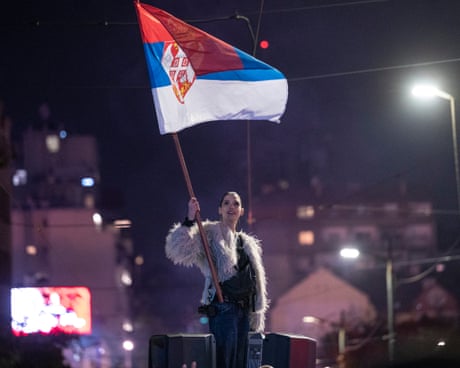
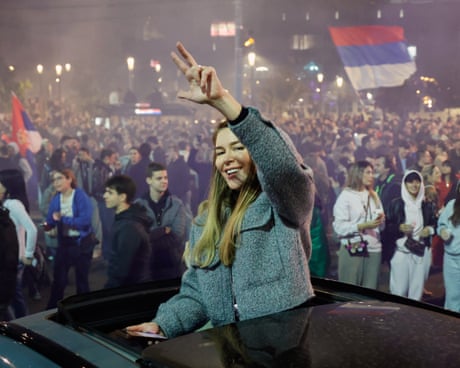
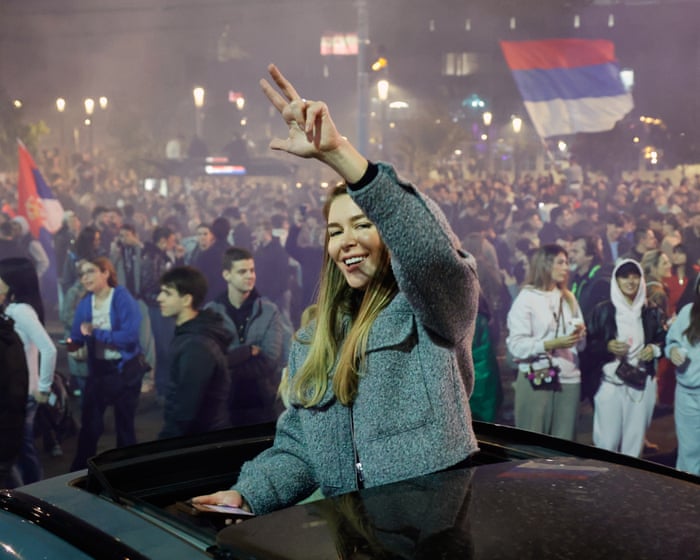
Student List cleaned up at Serbia’s parliamentary elections. So it was only fitting that the morning after a night of raucous celebrations, the movement’s supporters were gathering, bin bags in hand, at Pioneers Park, opposite the national assembly building in Belgrade.
For the previous 18 months, this small patch of greenery – with its established trees and playground – had been a no-go zone. A pro-government camp known as Ćaciland had taken over the space with convicted criminals living there in white tents, happy to attack journalists, or anyone else who came too close. Police stood by but did nothing to prevent the violence.
I saw a remarkable experiment take shape in Belgrade. Its lessons should be studied by other European countries struggling with unrest
More than a decade ago, the WikiLeaks founder Julian Assange told an interviewer in Belgrade that Serbia was “a country where the future happens first”. The phrase circulated widely on Serbian social media in the weeks before Sunday’s election, but in a way that could not have seemed possible 10 years ago. Who would then have imagined that Serbia today could be at the forefront of global democratic change?
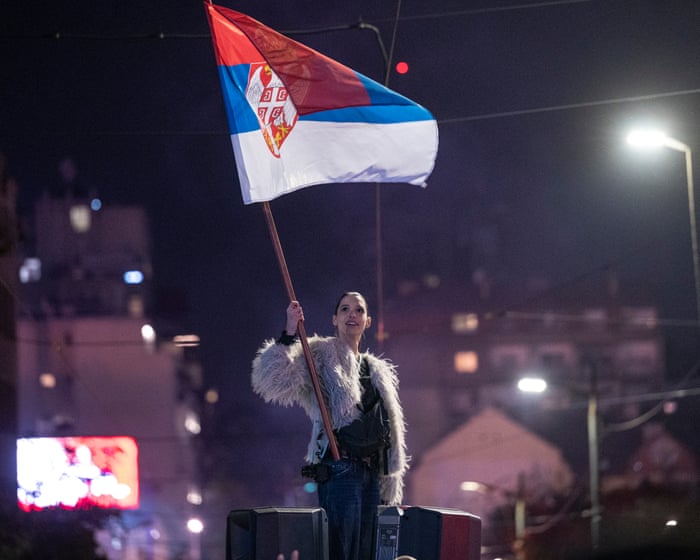
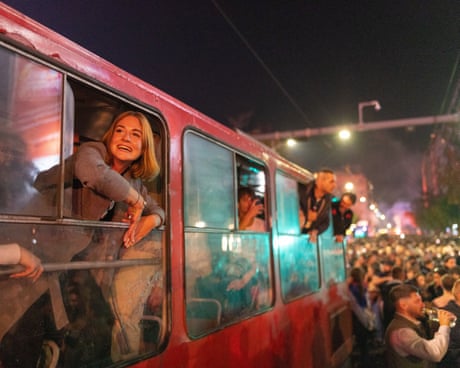
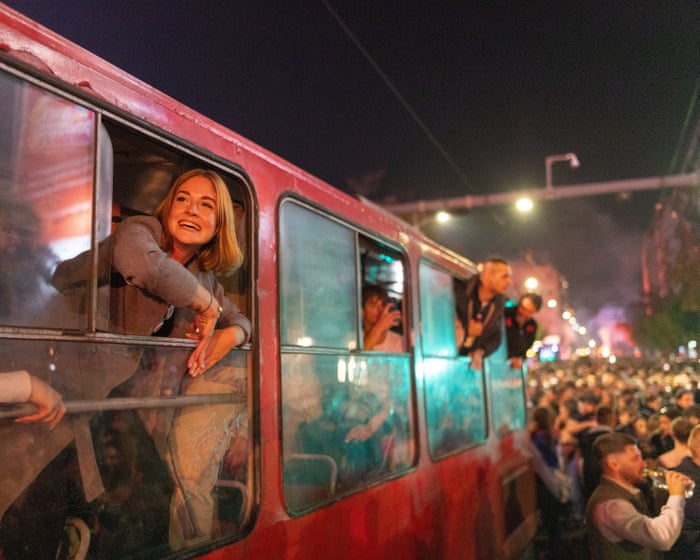
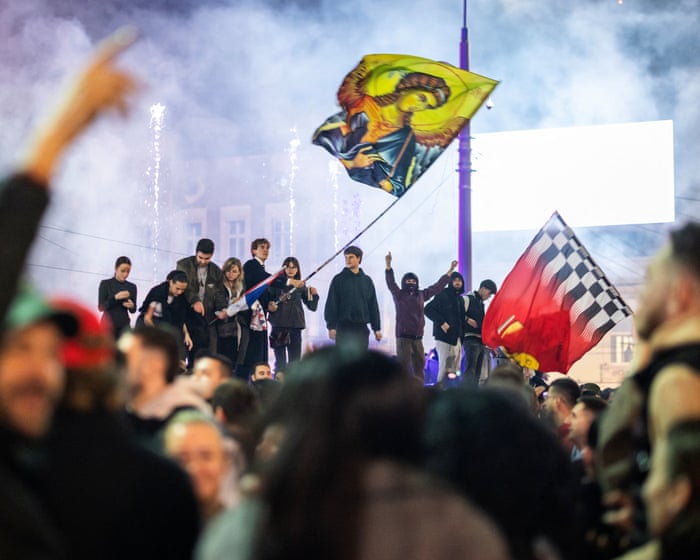
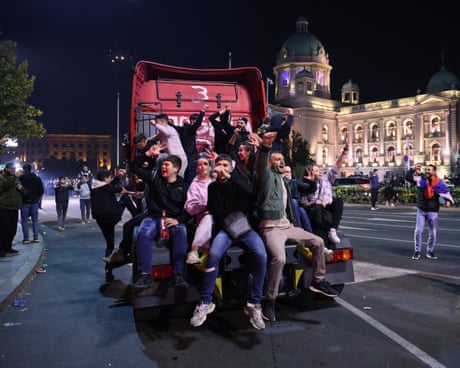
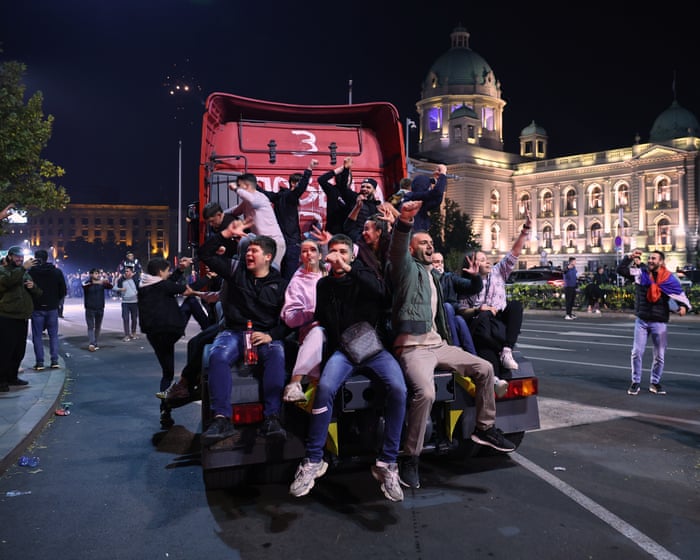
The images from Belgrade on Sunday night – people dancing and crying in the streets, while in Novi Sad, the city that sparked the student movement, a flag bearing the image of the convicted war criminal Vojislav Šešelj, which had hung from a building since the 1990s, was torn down – reinforced the feeling that the future had truly arrived.
Aleksandar Matković is a postdoctoral researcher at the Institute of Environmental Science and Technology in Barcelona and a fellow at the Transnational Institute in Amsterdam. He works on environmental history, political economy and the history of Yugoslavia
Zelenskyy says ballistic missiles hit crowded areas with no military facilities nearby; truce comes amid reports of growing humanitarian crisis. What we know on day 1,707
Russian strikes on Kyiv killed one person and wounded eight, with mayor Vitali Klitschko saying medical facilities and an intensive care unit had been damaged in the late Monday attack. President Volodymyr Zelenskyy said a ballistic missile attack had struck the grounds of a university campus in the Ukrainian capital. “The missiles hit very crowded areas, and there is not a single military facility nearby. This was a strike directly on the city, on its infrastructure,” he said on social media.
The strikes on Kyiv came hours before a truce in the ravaged Russian-occupied city of Oleshky was due to start, after months of reports that residents faced dire food, water and medicine shortages. The truce, aimed at allowing humanitarian aid into Oleshky, was to begin at 3am local time (0100 GMT). No end date for the truce has been provided. The city in Ukraine’s southern Kherson region has been caught in the crosshairs of fighting between the two sides since 2022, when it was seized by Russian forces. Neither Russia, Ukraine nor the US has said who would monitor the truce, or given details about the humanitarian operation set to accompany it. The Russian defence ministry said on Friday it would halt fire in the “Kherson sector” for the duration of the ceasefire. Ukraine has accused Russia of blocking residents from leaving, a charge Moscow has denied.
Before the latest strikes on Kyiv,Zelenskyy highlighted Ukraine was still waiting for US defence secretary Pete Hegseth to sign off on critical missile supplies. “We have been waiting for nearly a month for Mr Hegseth to sign off on missiles for Patriots and NASAMS. I instructed our team to raise this with the American side once again,” he said on X.
Romania said on Monday that a network “coordinated” from Russia was involved in starting a fire near an arms factory. The fire broke out on 14 September near an arms factory in the central city of Brasov and two Belarusians and a Ukrainian – residents in EU countries – were involved, authorities said. Two of them were “tracked down and remanded in custody in Germany while they were preparing to commit similar offences”, the office for organised crime said. The third is at large in Poland, it added. Russia’s embassy in Bucharest could not immediately be reached for comment but Moscow has repeatedly denied such accusations.
The attack in Brasov is the latest in a string of similar incidents in Europe, with Nato and the EU grappling with what they say is a “hybrid” campaign of sabotage and interference by the Kremlin aimed at undercutting Western support for Kyiv. On Tuesday, Russia’s defence ministry said its forces had struck a vessel in the Black Sea that was transporting cargo for the Ukrainian military, according to Russian media reports. Before Tuesday’s attack, at least eight cargo ships have been hit off the coast of Nato members Romania and Bulgaria over the past three weeks. Some 34 sailors are reported dead or missing.
A Russian strike has damaged a major bridge spanning the Dnipro River in Kyiv, Klitschko said on Tuesday, following reports of multiple ballistic missiles launched towards the Ukrainian capital. “A strike hit the Southern Bridge. Metro infrastructure on the bridge was also damaged,” the city’s mayor wrote on Telegram. City officials said train services across the bridge had been suspended.
Ukraine’s military has begun using specialised aerial rescue drones to evacuate wounded soldiers from the battlefield, carrying two stranded troops to safety near the Russian border in the first such operations. The newly developed StarGate drone, a six-rotor aircraft fitted with an enclosed evacuation capsule, was used in two separate missions over the past week, the 475th Separate Assault Regiment, an elite unit, said on Monday. Developed by Ukrainian technology company SkyFall, the drone is intended to reduce rescue times from hours to minutes, reaching hard-to-access combat zones currently served by unmanned ground vehicles.
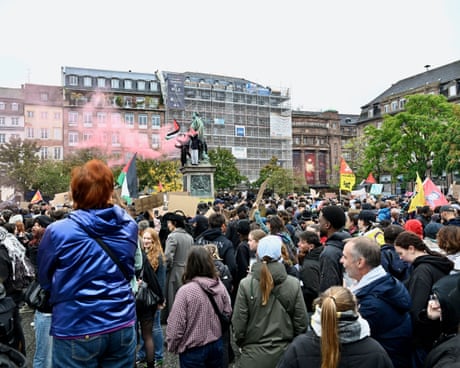
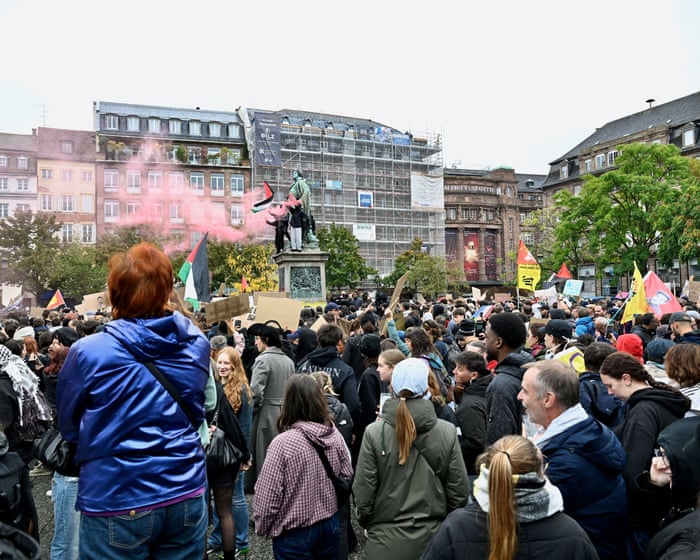
Activists say struggle must go on until their ‘maximum’ demands are met over teacher shortages and building repairs
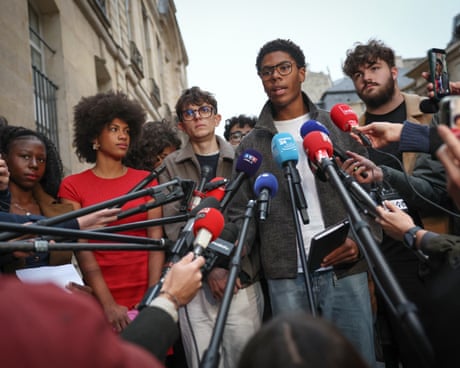
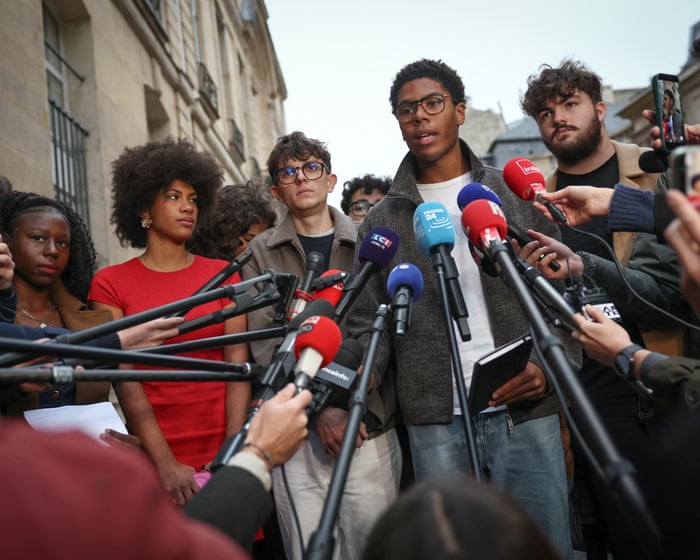
French children should continue to barricade their schools and take part in street protests, a student union said on Monday after the government announced a package of education measures to try to stem the crisis.
“Today we’re at the negotiating table, we’re able to negotiate with the government,” Pierre Sourzat of Les Lycéens told France Info television. “We’re in a power struggle and we still need to call for continued mobilisation to meet a maximum of our demands.”
After freedom, we want to give our people something radical: a normal, functioning state
Two years ago, I harboured no political ambition whatsoever. I was a student at the faculty of technical sciences in Novi Sad, my home town, pursuing a PhD in human resources and simply living my life. That was until the canopy collapse at the newly renovated train station in Novi Sad in November 2024, which killed 16 people. I took part in street protests and rallies in response to this shocking event, and like many others, realised that it needed to be a turning point.
This was not an unavoidable tragedy. Systemic corruption and a culture of entrenched impunity were obvious factors in the collapse. But instead of ordering a full and impartial investigation and coming clean on official failings, the authorities began pushing back against us for demanding justice. We were vilified and attacked in the streets but law enforcement did nothing. So we took refuge in our lecture halls and schools, barricading ourselves inside faculty buildings, ready for a long haul.
Novak Simin is a member of Serbia’s Student List movement
Do you have an opinion on the issues raised in this article? If you would like to submit a response of up to 300 words by email to be considered for publication in our letters section, please click here.
Two years after the Novi Sad tragedy gave birth to a youthful political movement, Sunday’s remarkable election has taken the country into a new era
This weekend it will be two years since the collapse of a shoddily constructed train station canopy in Serbia’s second city, Novi Sad. The tragedy, killing 16 people, was swiftly attributed to state corruption and failures of regulation, sparking student-led protests across the country.
Some of those demonstrators dared to imagine that they could become the catalyst for a democratic revolution.
Clarification comes after PM fuelled speculation about EU-UK relationship in series of interviews at weekend
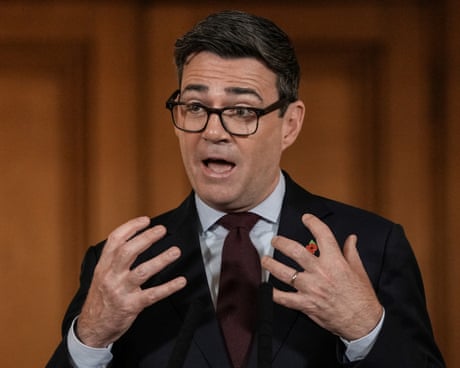
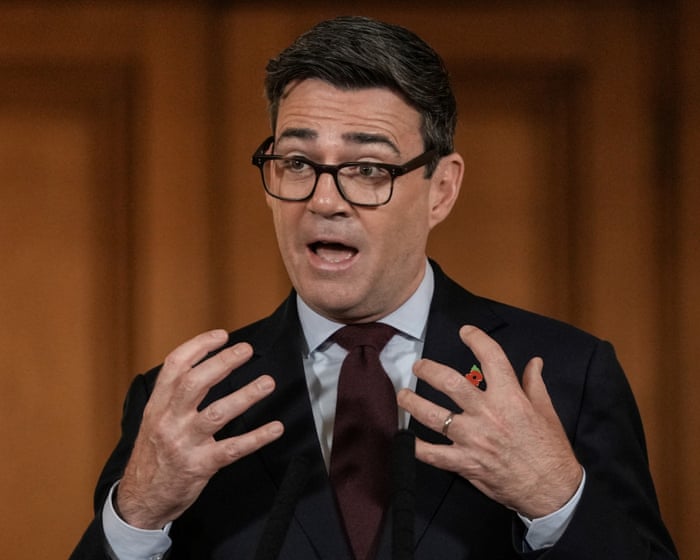
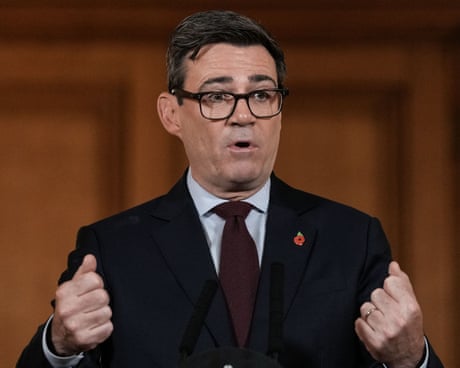
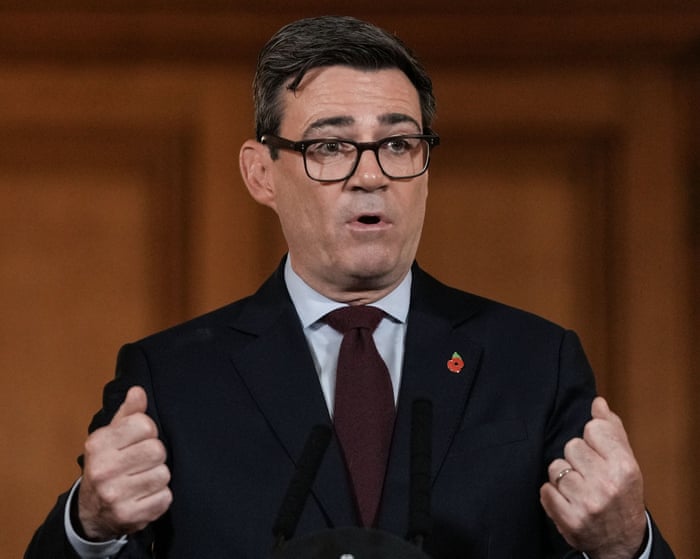
Downing Street has been forced to clarify Andy Burnham’s stance on whether the UK would return to having freedom of movement with the EU after the prime minister said an “honest discussion” was needed on the issue.
Burnham fuelled speculation about a return to freedom of movement in an interview at the weekend, prompting questions about how close the UK could become to Brussels.
Andy Burnham claims revising Brexit would ‘bring people together’. The PM wants to look again at issues like free movement, but rules out joining the euro or Schengen. Would rejoining the EU bring up old wounds and risk further division?
Plus, as chancellor John Healey gears up for a tricky budget, what should you be looking out for?
Readers respond to Polly Toynbee’s article on the possibility of rejoining the EU
With all due respect to Polly Toynbee, why do we assume that we would need another referendum to return to Europe (Shall we have another EU referendum? Maybe – but not yet, 19 October)? The last one didn’t work out too well. Asking the electorate to vote a simple yes or no on such a complex and multifaceted deal was never going to be the right approach; nor will it be to go back in.
Call it what you will – Brejoin, Bre-entry, Brehabilitation – it shouldn’t be an all-or-nothing deal. The one thing that Brexit has given us is the opportunity to cherrypick the elements of a relationship that are of mutual benefit to both parties. How about approaching it on a piecemeal basis, processing it through normal parliamentary procedure? No buses required.
Gary Jones Wimbledon, London
Amid widespread protests, Muriel E Cockcroft has sympathy for French youth but fears how much steam will be let out at the next convulsion
I’m writing in response to your editorial (The Guardian view on France’s protests: a polarised country is in a perilous political moment, 19 October). While the focus is on Emmanuel Macron, let us not forget the hierarchical structure of French administration, from mayors to MPs to senators to prefects and heads of region. All are part of the government, but few stood up to bring leaky school roofs and missing teachers to national consciousness. I deplore the senseless destruction of shops and state buildings. But I also deplore the fact that students had to protest to be heard. In the many administrative tiers of this highly hierarchical country, no one acted and inertia prevailed.
Centrally, the government is financially challenged but refuses to acknowledge that having a huge deficit, an ageing population and a low retirement age are perhaps connected. Modest attempts to increase the retirement age also provoked violent protests. Financial tools for individual retirement remain complex and restricted. Thus, this sclerotic system presses on until the next crisis.
Non-hierarchical movement is seeking to ‘rebuild society’ in Balkan country after years of authoritarian rule
Serbia’s triumphant but untested Student List movement is preparing to start talks on forming a government capable of reversing 14 years of increasingly authoritarian nationalist rule, after a seismic weekend election win.
Supporters of the movement, which has no experience of government, took to the streets in the west Balkan country on Monday after the strongman former president, Aleksandar Vučić, was defeated in a historic landslide.

 Login