Vučić’s 12-year reign looks to have been ended by record turnout of voters in election provoked by student-led protests
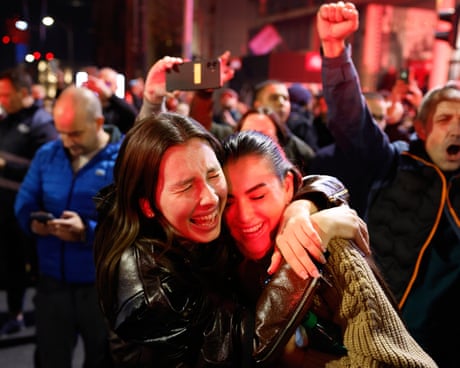
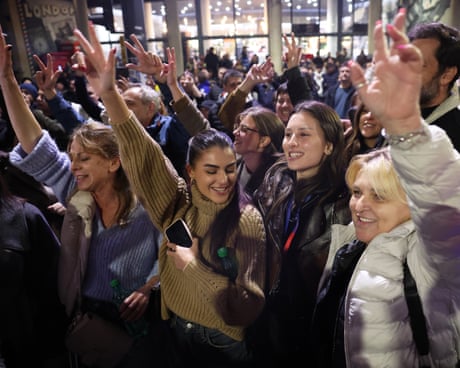
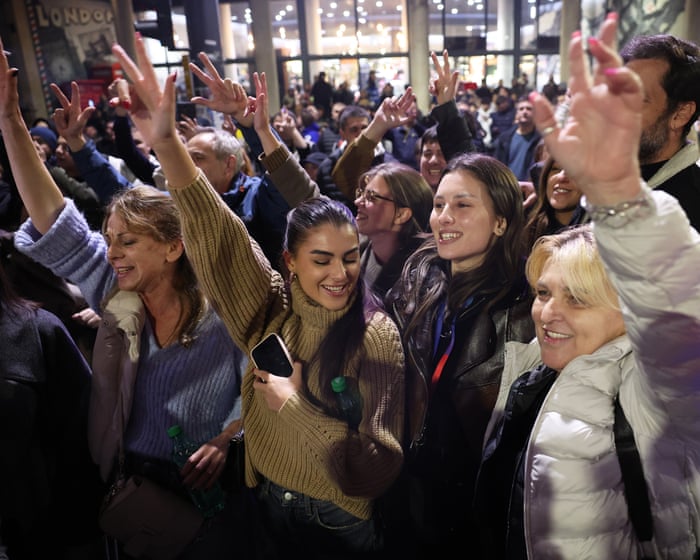
The long-serving leader of Serbia, Aleksandar Vučić, has conceded defeat, ushering in a seismic political shift after a historic election that saw the increasingly authoritarian leader pitted against a student-led movement that had spent two years protesting against his government.
Vučić pointed to preliminary results that suggested voters had overwhelmingly backed the students, potentially giving them a majority in the country’s 250-seat parliament.
Making innocent protesters liable for damage would be bad for rule of law and play into far-right hands, say opponents
Emmanuel Macron has been accused by trade unions of trying to curb the fundamental French right to protest as the government fast-tracks a bill to make protesters pay for damage caused by vandalism at street demonstrations even if they did not directly cause it themselves.
The French president, who leaves office next spring, has faced more than a month of protests in which high-school students have blockaded schools demanding a response to teacher absences, repairs to decrepit buildings and changes to the university applications platform.
The latest turnout projection by Ipsos/Cesid suggests a turnout of 60.8% by 5pm local time (4pm UK), with three hours still to go until the polling stations close.
That’s more than 13 percentage points higher than in 2023, and would be the highest turnout since mid-2000s.
“What hasn’t motivated me? There isn’t a single reason I could give that would keep me from showing upat my polling station at 6:20 in the morning.”
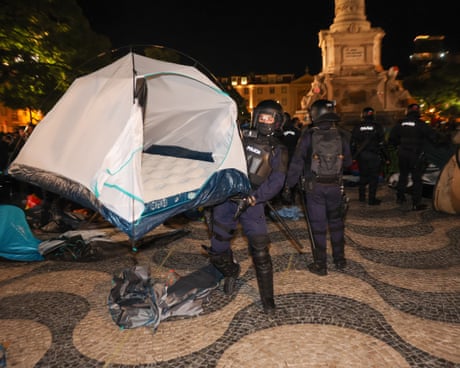
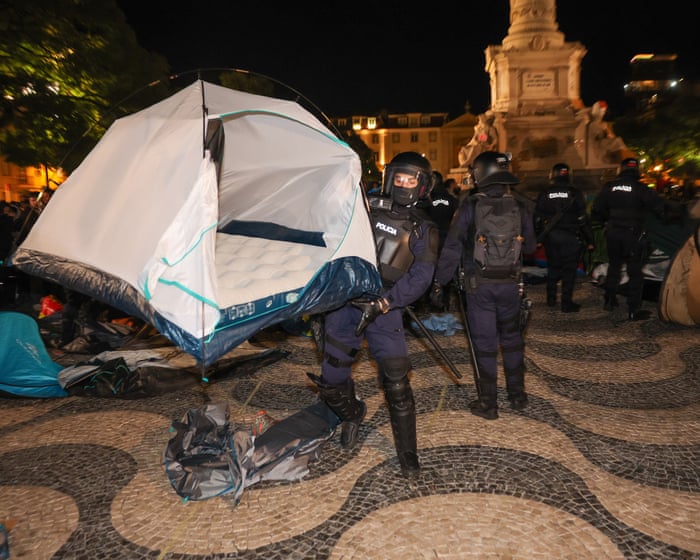
More than 30 people arrested as officers clear at least 100 tents in central Lisbon and about 50 in Porto
Police in Portugal have dismantled housing protest camps in Lisbon and Porto, baton-charging campaigners in the early hours of Sunday and arresting more than 30 people.
The raids were the latest incident in days of clashes between police and campaigners who – inspired by similar camps in Spain – had sought to pitch tents in central squares to protest against the country’s deepening housing crisis.
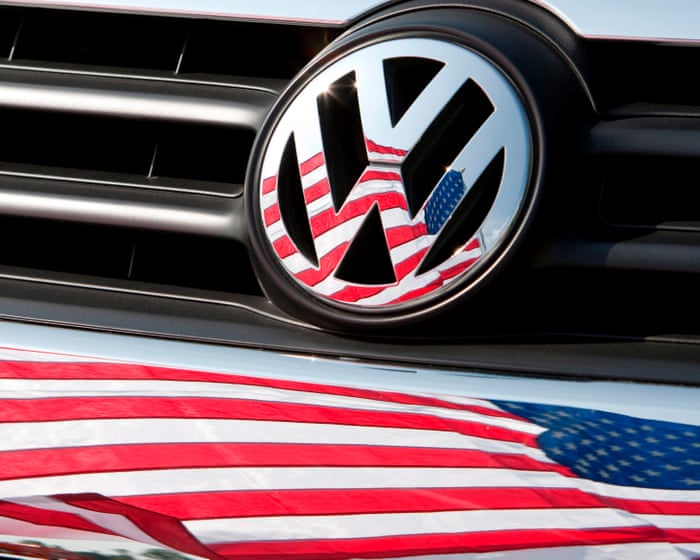
VW investment, creating 4,500 jobs in Georgia, comes amid Trump’s damaging tariffs, intense Chinese competition and costly shift towards EVs
Audi has said it will spend $4bn (£3bn) to build its first factory in the US, as its parent company, Volkswagen, struggles with the impact of steep tariffs imposed by Donald Trump.
The German brand’s chief executive, Gernot Döllner, joined Trump on stage at a campaign rally on Saturday night to announce the factory in Macon, Georgia, in an unusual move by a big European brand just days before the US midterm elections.
PM’s plea supported by Angela Rayner, Ed Miliband and business leaders, while some ‘red wall’ MPs voice concern
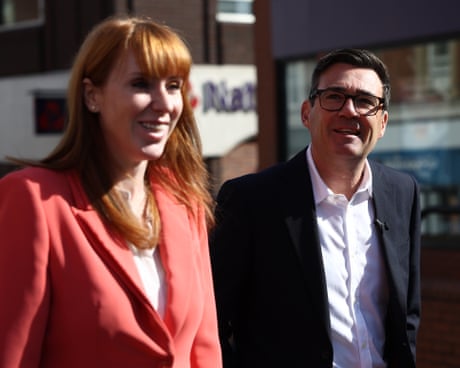
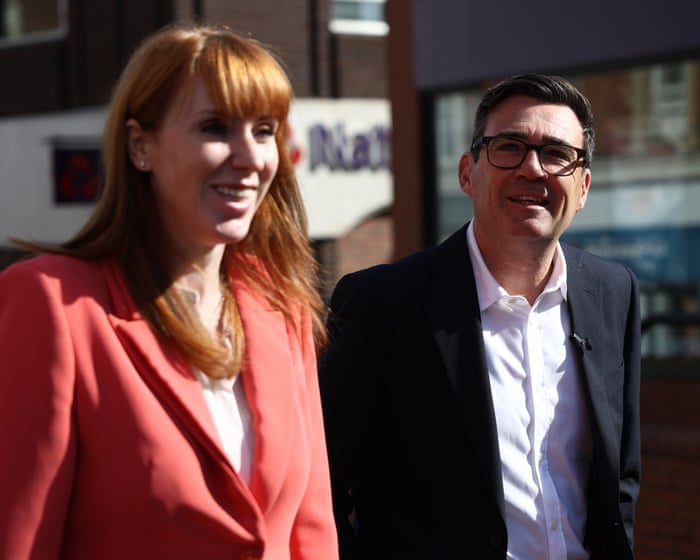
Andy Burnham’s call for the UK to consider a return to free movement with Europe has been backed by senior cabinet ministers but risked a rift with “red wall” Labour MPs, who say it could jeopardise Brexit-voting seats.
The prime minister made his plea for an “honest discussion” about freedom of movement in an interview with the Sunday Times, making clear that staying out of it would no longer be a red line in talks with the EU.
Despite job offers, Jaishree Malik has had visa renewal and extension requests delayed and denied, and she is not alone
Jaishree Malik bounds on to the Cheeky Monkey comedy club stage and brandishes an envelope – it is a letter from the Irish government. Would the audience like to hear what’s in the letter?
“Yeah,” the first rows reply. She repeats the question, prompting a louder response. “Yeah!”
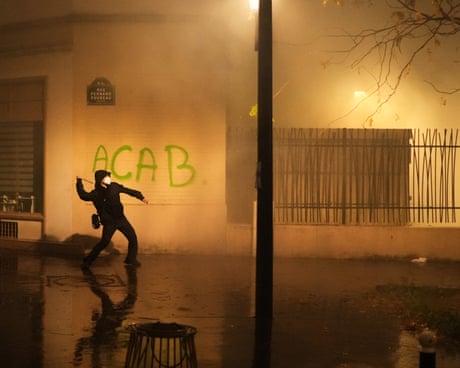
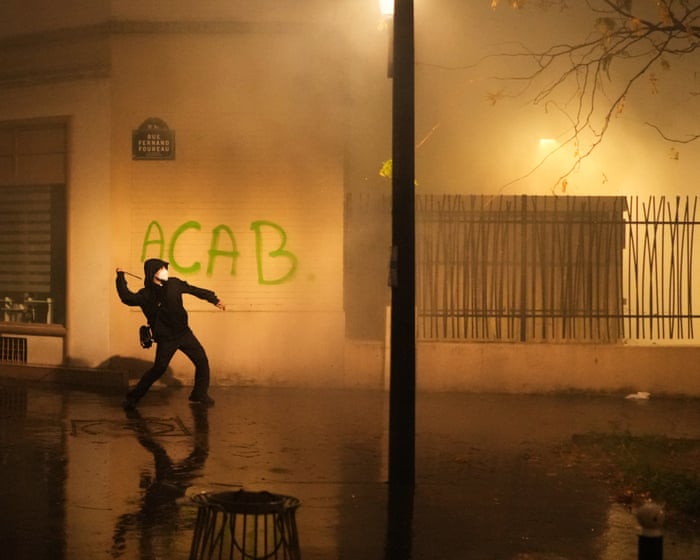
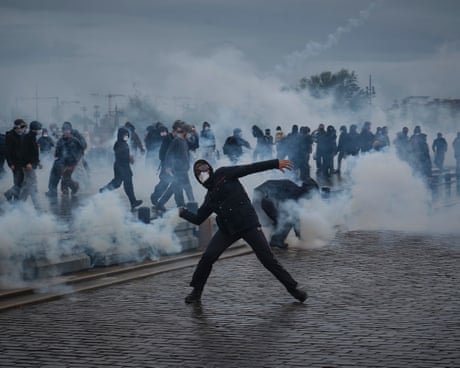
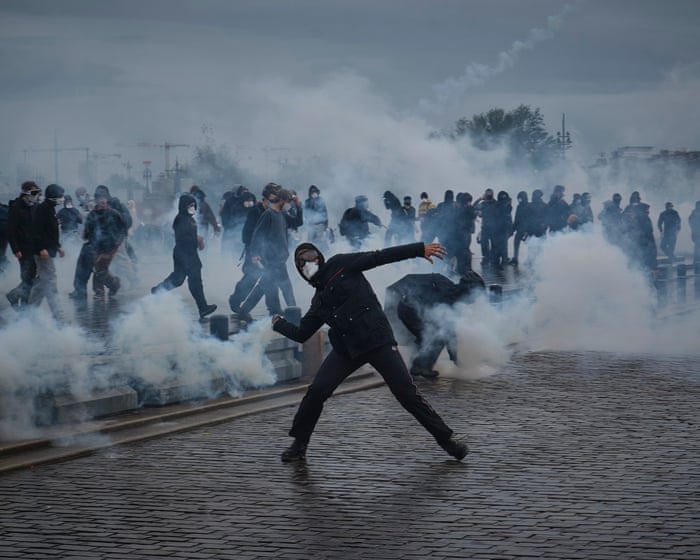
Hundreds of thousands marched in cities across France on Saturday amid fresh demonstrations over school funding and the cost of living. A peaceful protest during the day in Paris – with at least 110,000 people marching along the eastern edge of the city – descended into violent clashes with police by the time night fell. Police fired teargas to prevent protesters in Lyon, Lille, Montpellier, Nantes and Toulouse from reaching city centres. In Marseille, some bin fires were lit. At least two people were seriously injured, one in Clermont-Ferrand and the other in Toulouse. The interior ministry said there had been almost 1,000 arrests
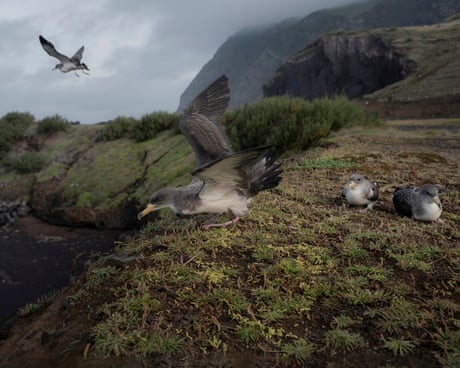
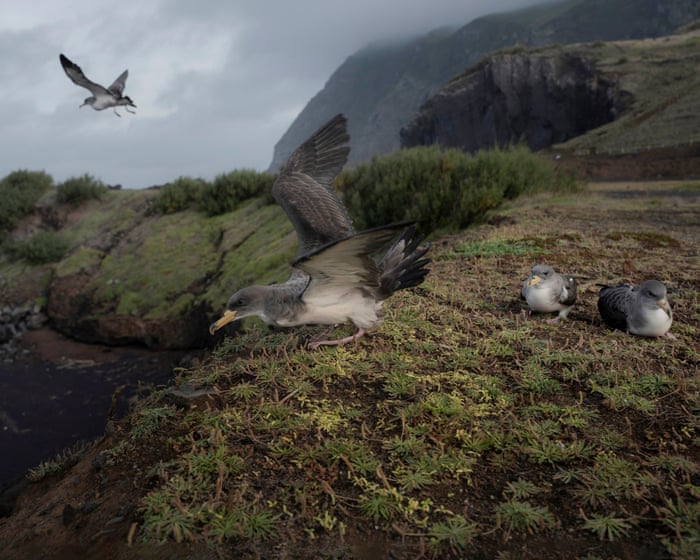
Every autumn, Corvo Island in the Azores turns off its public lighting for a few key days to help fledgling Cory’s shearwaters as they attempt to fly to the ocean guided by the stars
Once a year, Corvo, the smallest and most northerly island of Portugal’s Azores archipelago, goes dark. Since 2019, the island’s 450 or so inhabitants have chosen to switch off the lights every autumn for five nights to tackle the disastrous effects of artificial light on Cory’s shearwaters, a seabird endemic to the Atlantic Ocean.
It began in 1991 when the community noticed huge numbers of deaths among young shearwaters.
James ‘Fergie’ Chambers, in prison in Spain, has applied for asylum as US seeks extradition over alleged Hamas support
US authorities seized wealthy activist James “Fergie” Chambers’s cellphone at some point after Spanish police arrested him in July without notifying him or his attorneys, the Guardian has learned.
Chambers, a US citizen and wealthy donor to leftwing and humanitarian projects, is imprisoned in Madrid. His case is the first known instance of the US seeking to extradite a citizen over alleged support for Hamas, an accusation tied to money Chambers has donated to support Palestinians, including the Sameer Project, in Gaza.
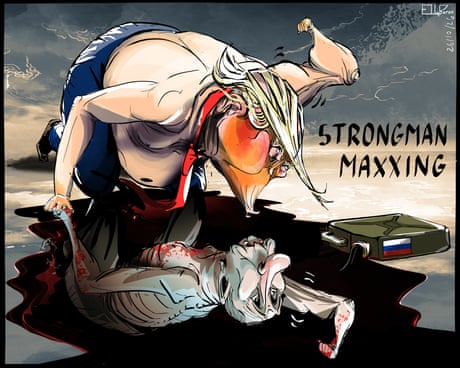
Brazil, Israel, Serbia and the US are holding elections within the space of 10 days. Will the authoritarian right cement its global gains, or can pro-democracy forces make a comeback?
Four elections on four continents within 10 days could profoundly reshape global politics, propelling the world further along its current authoritarian trajectory or marking a limited comeback for democratic norms.
In all four contests, basic democratic norms are at stake at a time when autocracy is advancing worldwide at an alarming rate. According to the Sweden-based V-Dem Institute, which uses multivariable assessment tools, the democratic freedoms enjoyed by the average global citizen are down to levels last seen in 1978 – long before the fall of the Berlin Wall and the collapse of communism in Europe.
Crimea strikes cause water and power cuts; war game designed to show how Nato countries could be defended amid fears of Russian aggression. What we know on day 1,705
A Ukrainian attack led to water and power cuts in occupied Crimea on Saturday, as a barrage of drones in several regions inside Russia left several dead, according to Russian authorities. Sergei Aksyonov, the Moscow-installed head of the Crimean peninsula, wrote on Telegram that due to the drone attack on local power grids “restrictions on the supply of electricity and water have been put in place”. He did not specify how many households had been affected in Crimea, which is home to more than 2.5 million people. The peninsula, which was seized from Ukraine by Russia in 2014, is a regular target for Ukrainian attacks.
A separate Ukrainian strike in part of the north-eastern Kharkiv region held by Russia killed at least three people and gravely wounded another on Saturday, the Moscow-backed authorities said.
Drones also rained down inside Russia. The country’s defence ministry said 616 of them had been shot down overnight across more than 20 regions of the country. During the day, drones hit Russia’s south-western Bryansk border region, killing at least three people, regional acting governor Yegor Kovalchuc said on Telegram.
In Ukraine, authorities said that at least five people died in several Russian drone and missile strikes in the country’s east. Dnipropetrovsk regional governor Oleksandr Ganzha on Saturday evening said three people were killed and at least 12 wounded when a Russian drone strike hit the town of Synelnykove, setting the fourth floor of a high-rise building on fire. Authorities in Sumy meanwhile said a Russian drone hit a farm, killing a 31-year-old woman and injuring four others.
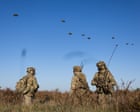
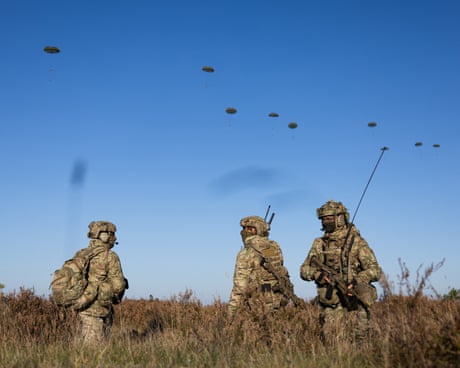
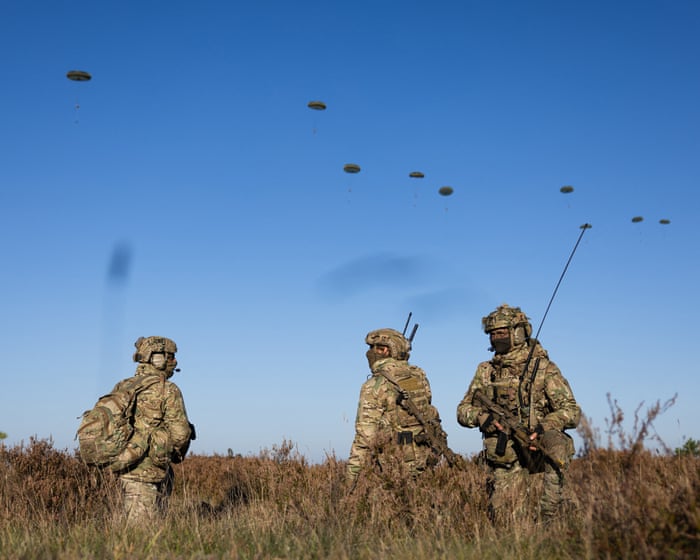
Thousands of British and French troops have taken part in a military training exercise that included one of Britain’s largest airborne operations in two decades, the UK government said on Sunday. The war game is designed to show how Nato countries could be defended against a modern-day attack and comes during fears about Russian aggression in Europe amid Moscow’s war against Ukraine.
About 2,500 troops were involved in the seven-week exercise, in which 600 British and French paratroopers dropped from four RAF A400M Atlas transport aircraft over Germany. The exercise called Rhino Titan, held at the Sennelager military training centre in Germany, has been testing British troops’ ability against an enemy equipped with drones and electronic warfare. “The threats we face in the 21st century require an updated, modern approach to warfare – and our adaptable armed forces are preparing accordingly,” British defence minister Wes Streeting said in a statement.
Ukraine’s military has a “stable connection to Starlink”, the Ukrainian government said, 10 days after its ability to use the satellite communications system was suddenly restricted. But hours after the announcement, SpaceX CEO Elon Musk, whose company owns Starlink, accused the Ukrainian military of violating the company’s terms. Neither Musk nor the US government, which operates Starshield using Starlink technology, took responsibility for imposing the curbs.
Bulgarians will vote in presidential elections on Sunday as Russia’s war in Ukraine spreads to the waters off Bulgaria’s Black Sea coast. Polls place acting president Iliana Iotova and ex-caretaker prime minister Andrey Gyurov as leaders in a race of 27 candidates. While the presidency is largely ceremonial, Sunday’s vote has taken on added significance after a series of drone attacks on merchant ships off Bulgaria’s Black Sea coast that likely killed about two-dozen international seafarers.
Prime minister is considering different options for new relationship with Brussels ahead of summit in November
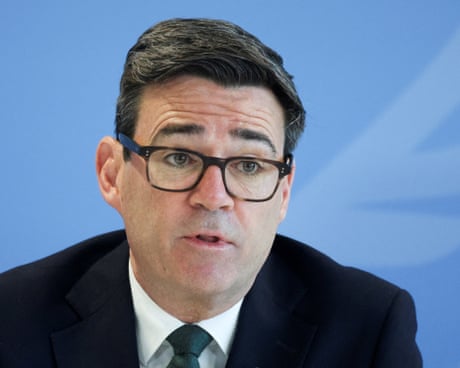
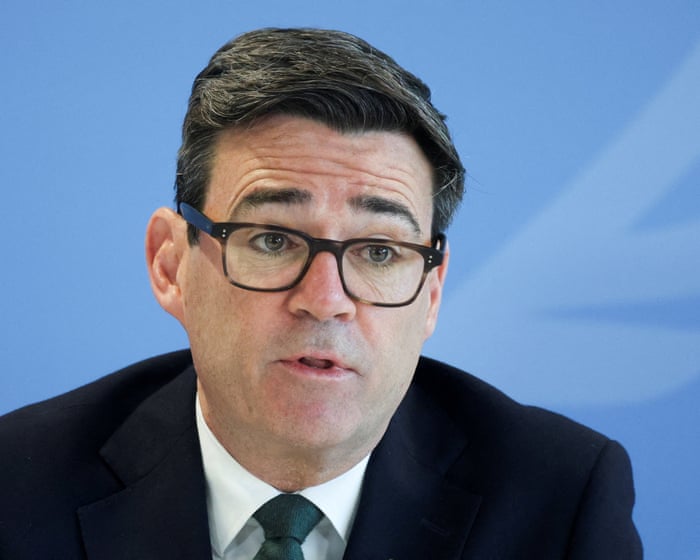
Andy Burnham says he wants an “honest discussion” with the British public about the possibility of a return to free movement between the UK and the EU as part of his plans for a new relationship with the bloc.
The prime minister has been open about his desire to revisit the relationship between Britain and Brussels. He has said a new deal could mean the UK goes “all the way” and rejoins the EU.

 Login