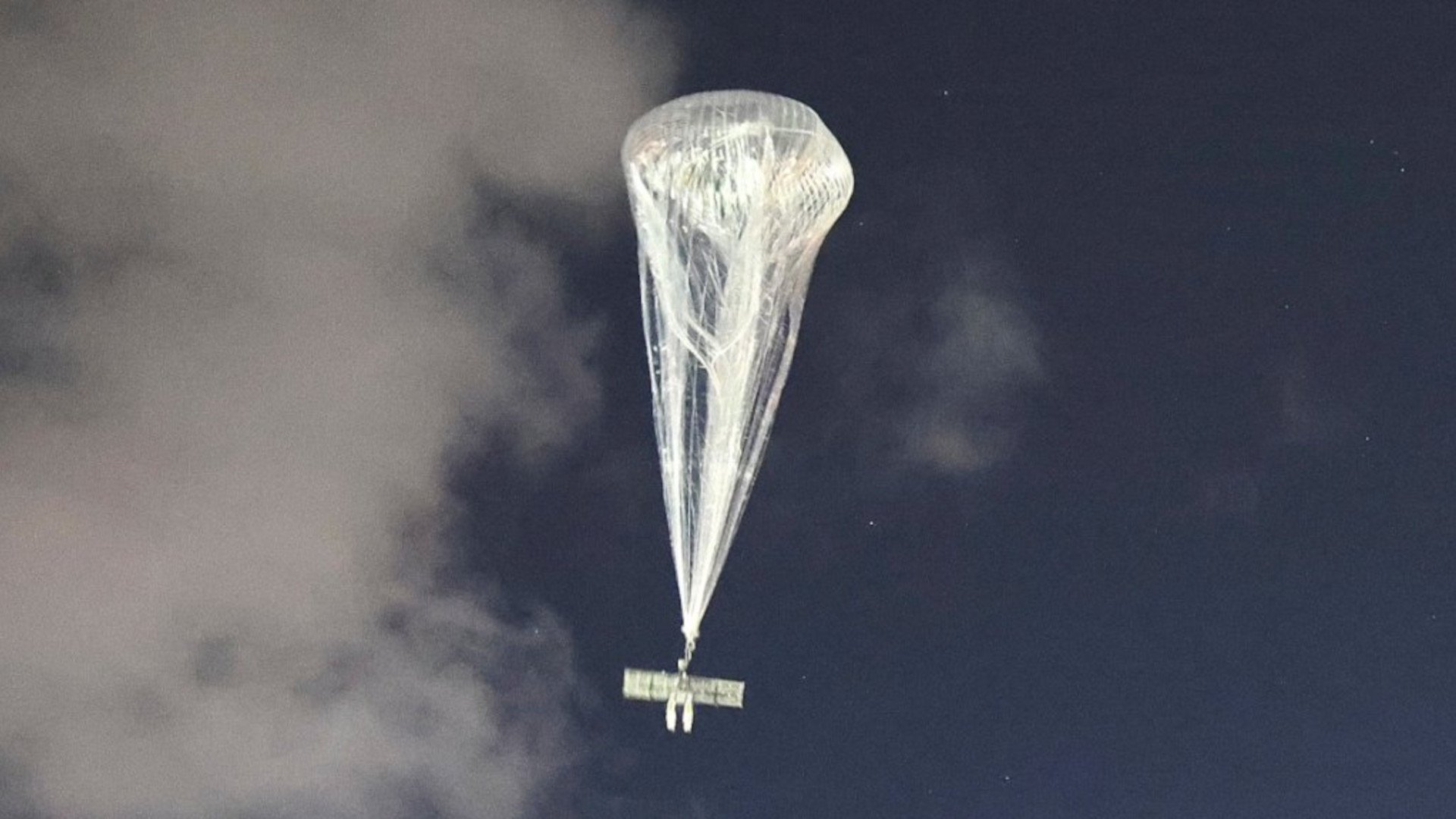
❌

Reading view

Four KJ-3000 Radar Jets At Chinese Factory Point To Serial Production

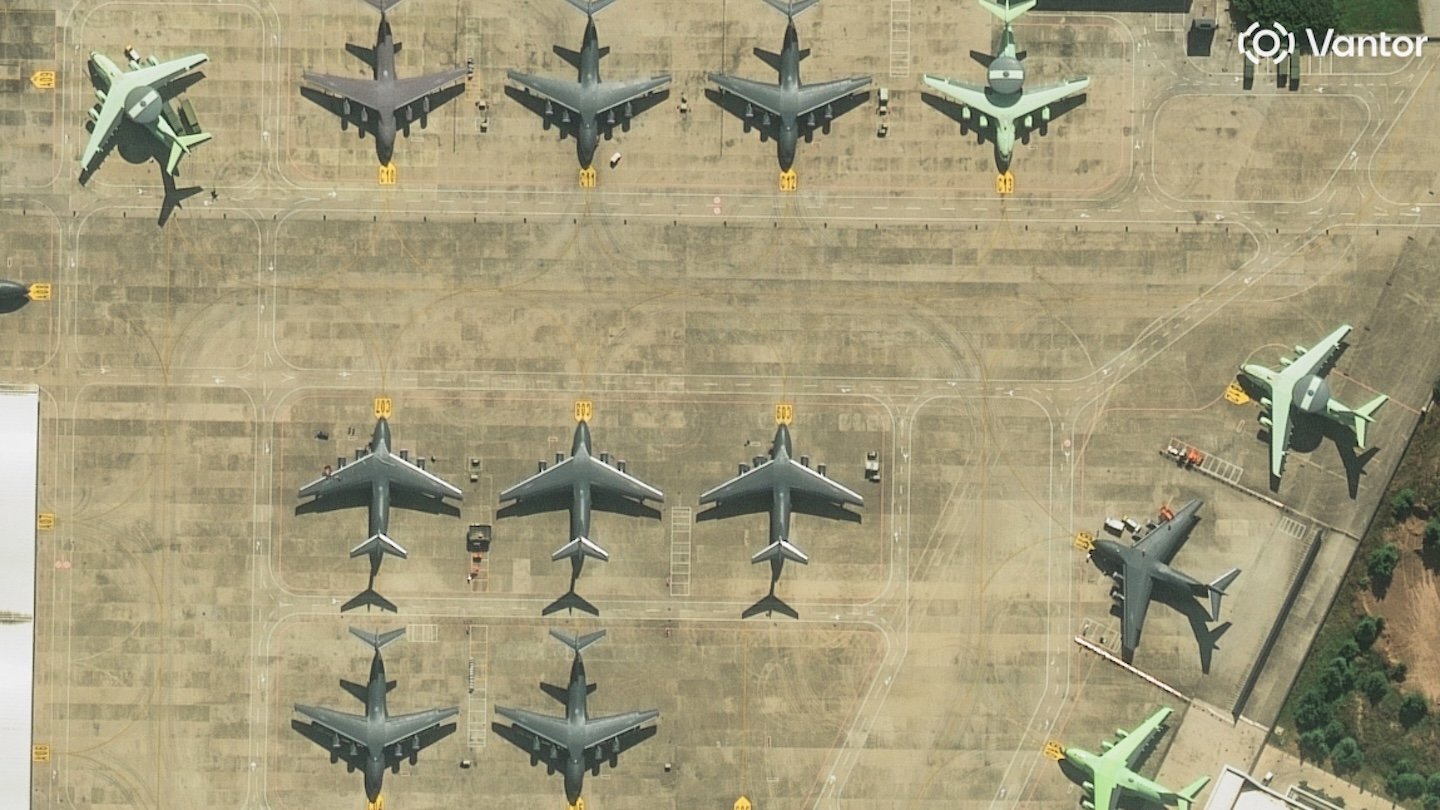
New satellite imagery shows four of China’s new KJ-3000 airborne early warning and control (AEW&C) aircraft at the Xi’an Aircraft Company (XAC) facility at Xi’an-Yanliang, raising the possibility that the large radar planes are moving toward or have entered serial production.

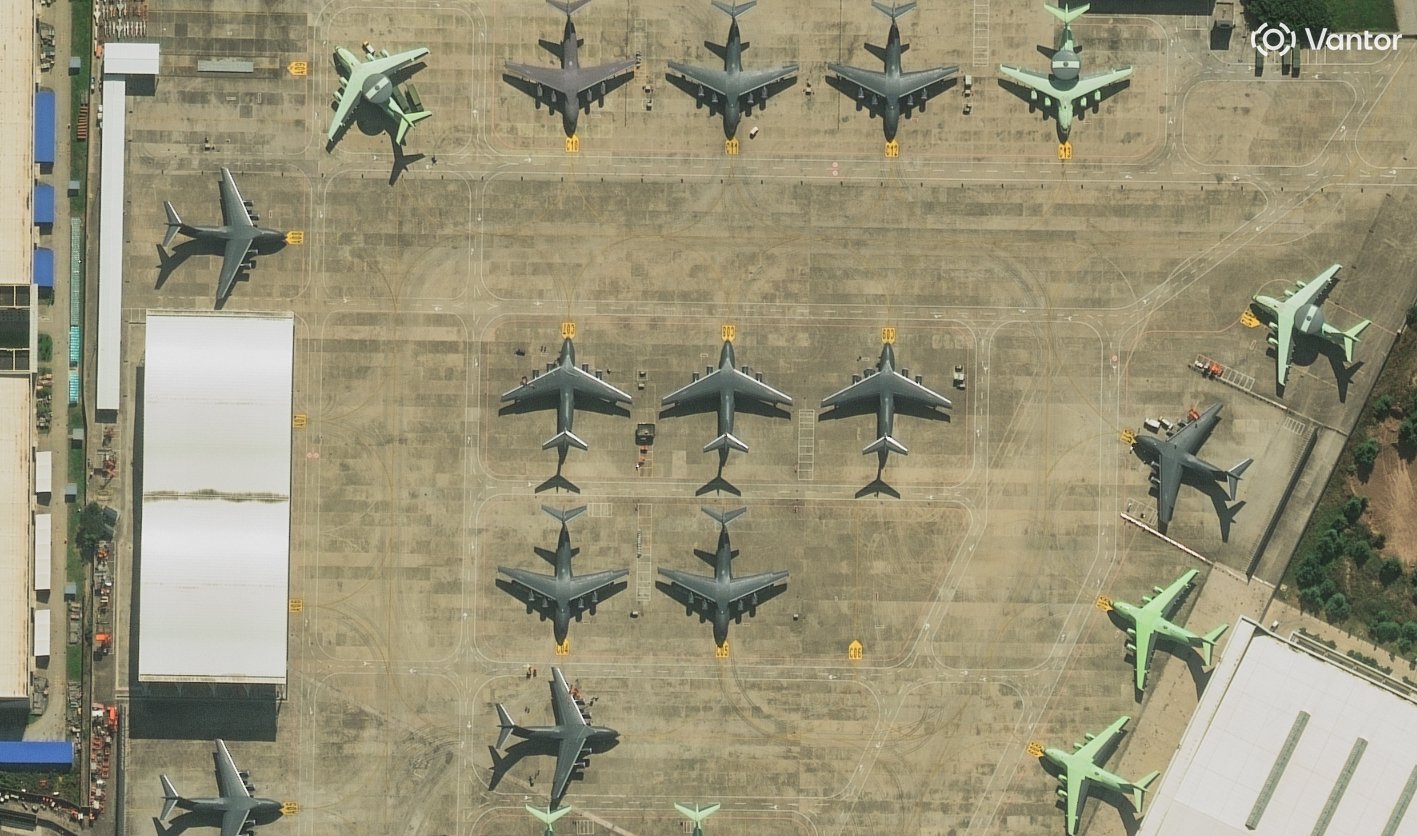
Satellite imagery captured on October 5 and provided by Vantor shows three KJ-3000s near the XAC factory in the western part of the facility, with a fourth at the nearby China Flight Test Establishment (CFTE). J. Michael Dahm, a senior fellow at the Mitchell Institute for Aerospace Studies, assesses that the presence of four aircraft points to the type having entered serial production.
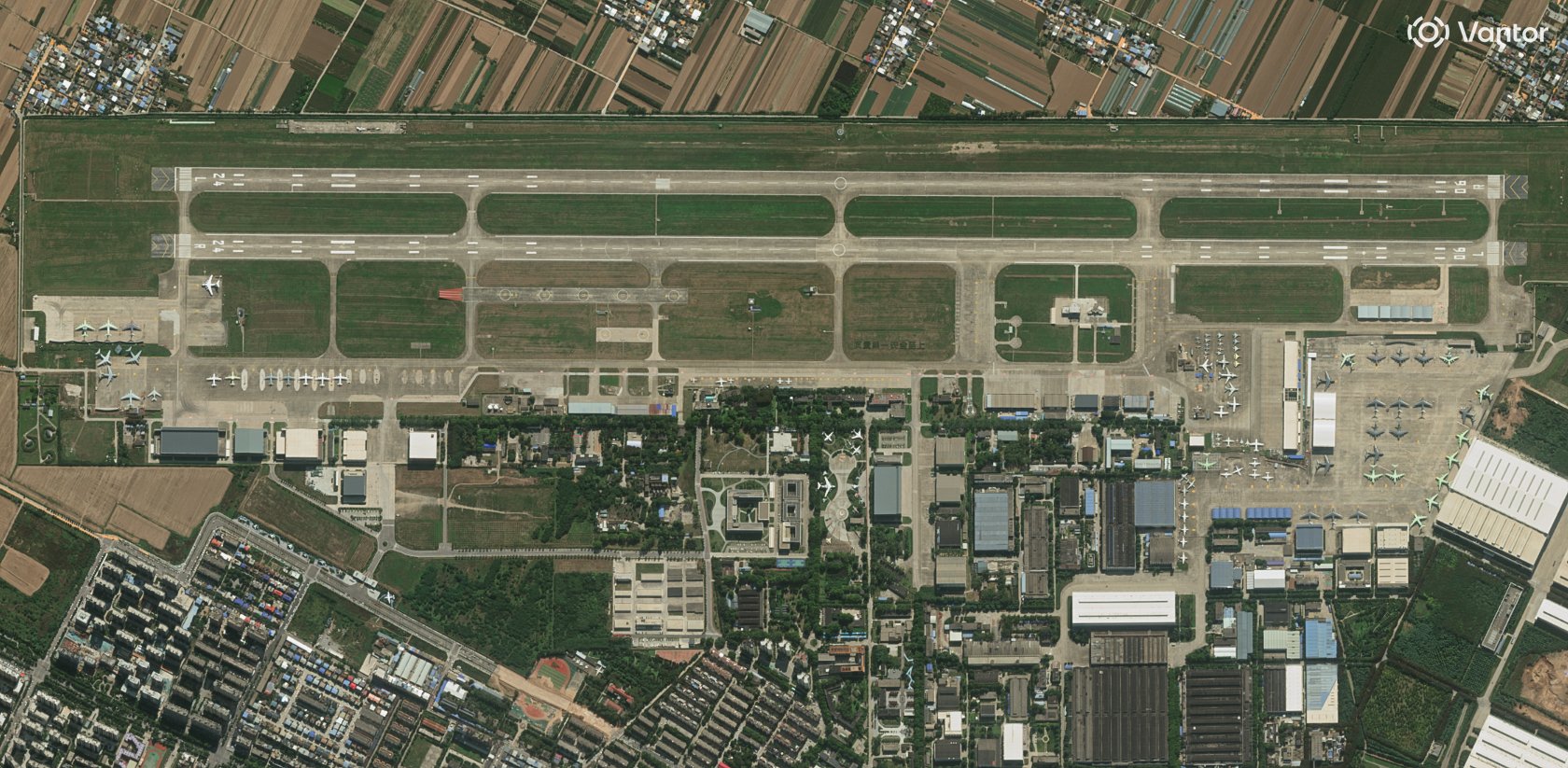
An overview of the Xi’an Aircraft Company (XAC) facility on October 5. A total of four KJ-3000s are visible. Satellite image ©2026 Vantor
Three KJ-3000s along with other Y-20s at the XAC factory in the western part of the facility. Satellite image ©2026 Vantor

Andreas Rupprecht, an analyst of Chinese military aviation and TWZ contributor, offered a more cautious assessment, noting that the imagery could indicate that series production or low-rate initial production (LRIP) has begun. However, he also pointed out that all four previously identified prototypes could simply have been at the facility at the same time. Specifically, he identified the aircraft seen at the CFTE portion of the airfield as being a prototype.
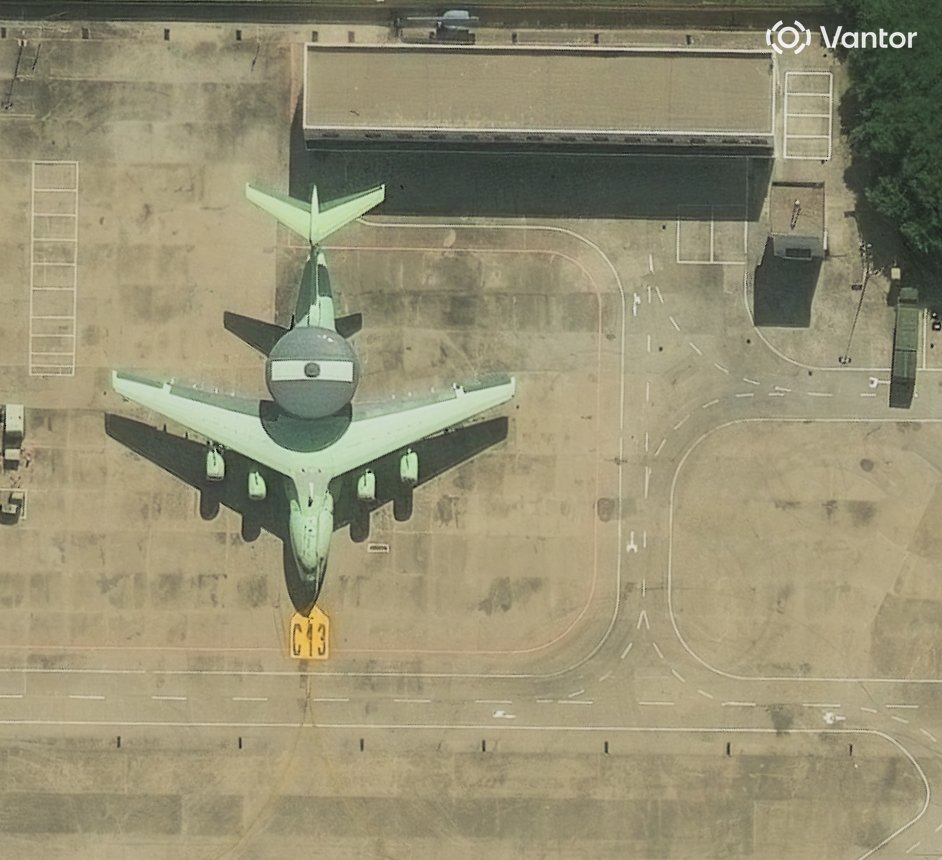
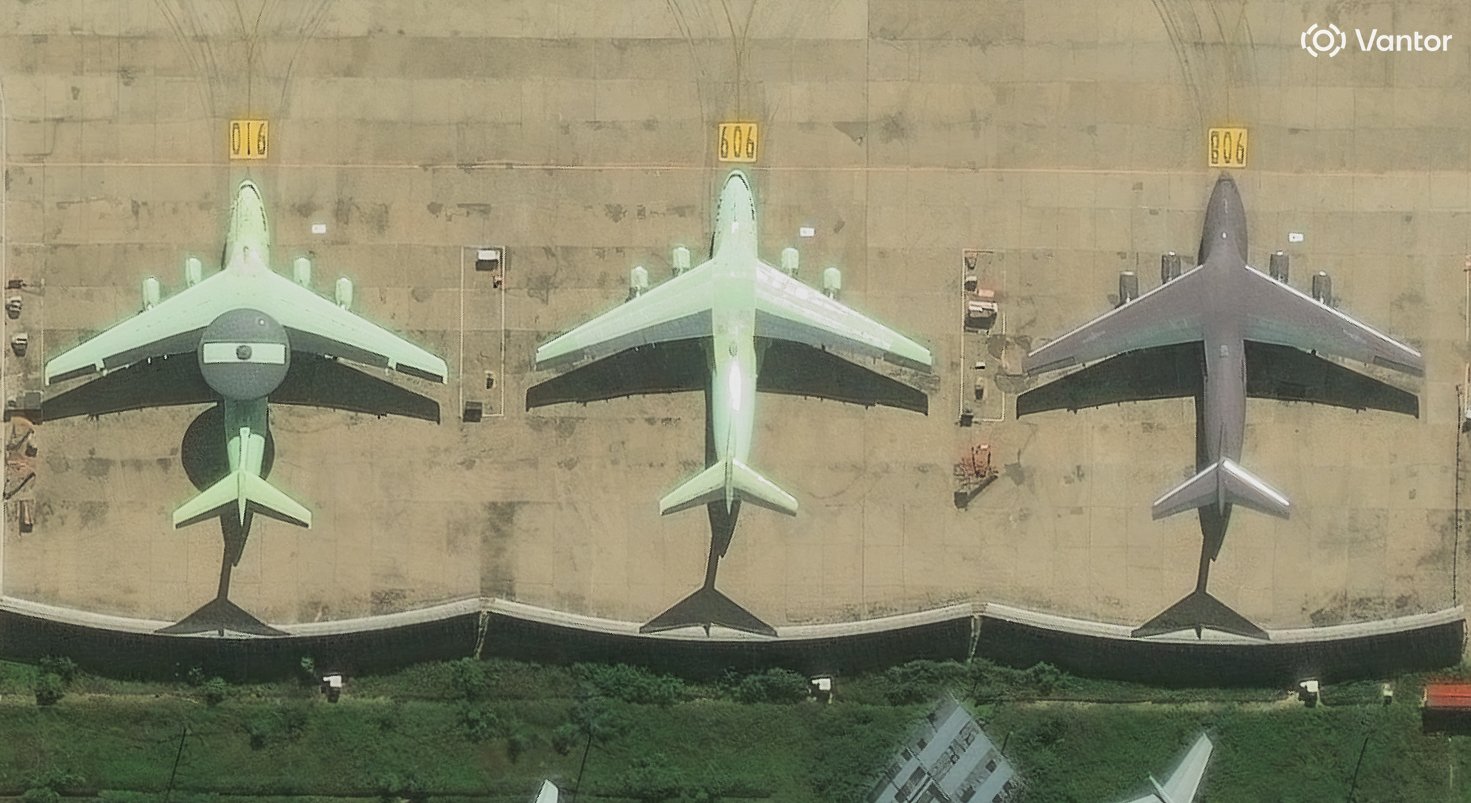
A closer view of one of the KJ-3000s at the XAC factory. Satellite image ©2026 Vantor
An additional KJ-3000 seen alongside a pair of Y-20Bs. Satellite image ©2026 Vantor

Whatever the explanation, the imagery offers a fresh look at a program set to significantly expand China’s already substantial airborne surveillance and battle-management capabilities.

The KJ-3000, also referred to as the KJ-20, is based on the four-engine Y-20 transport aircraft, specifically the improved Y-20B variant powered by Chinese-made engines. The aircraft features a large circular radome mounted above the rear fuselage, along with a prominent series of antennas on the forward fuselage. An aerial refueling probe is mounted above the cockpit, while a conspicuous intake at the base of the tailfin is likely intended to provide cooling air for its extensive onboard electronics.
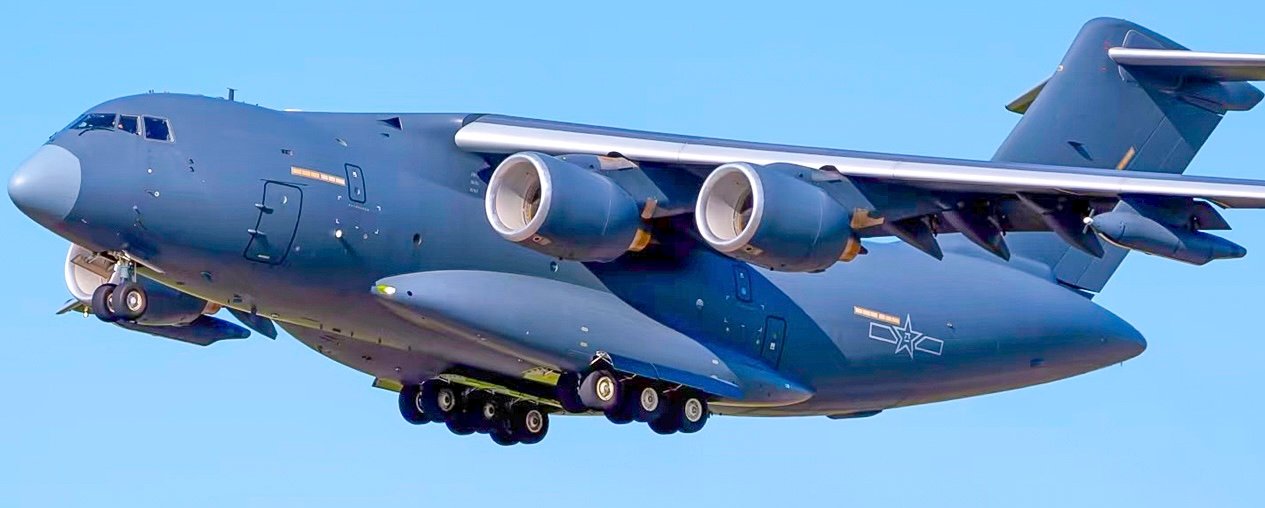
A stock Y-20B transport with its distinctive locally produced WS-20 turbofan engines. via Chinese internet

The first low-quality photographs of the aircraft began circulating in December 2024. More detailed imagery emerged in May 2025, showing an example at an undisclosed Chinese airfield. That aircraft, bearing the serial number 7821 and assessed to be the first example, was still wearing primer, in contrast to the examples now seen at the XAC factory.
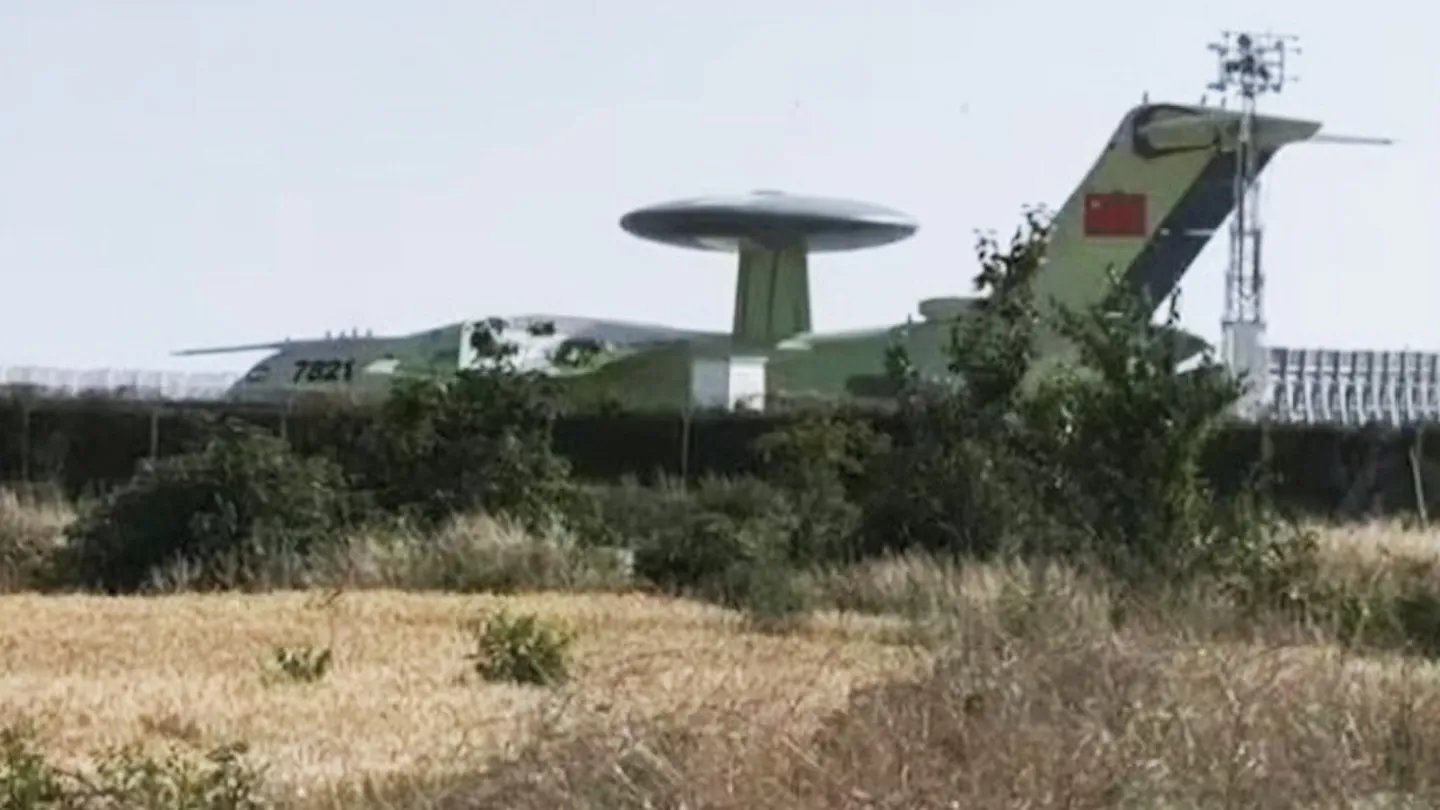
This photo emerged in May 2025 and shows the presumed first KJ-3000 on the ground at an undisclosed airfield in China. The aircraft still wears a coat of primer, and the serial number 7821 is clearly visible on the forward fuselage. via Chinese internet

The KJ-3000 is expected to address longstanding limitations in China’s existing large jet-powered AEW&C fleet. To date, only four KJ-2000 Mainring aircraft have been completed. Based on the Russian-built Ilyushin Il-76MD transport, the KJ-2000 program was constrained by the limited availability of suitable airframes, and now faces the twin issues of reliance on Russian supply chains and aging aircraft.
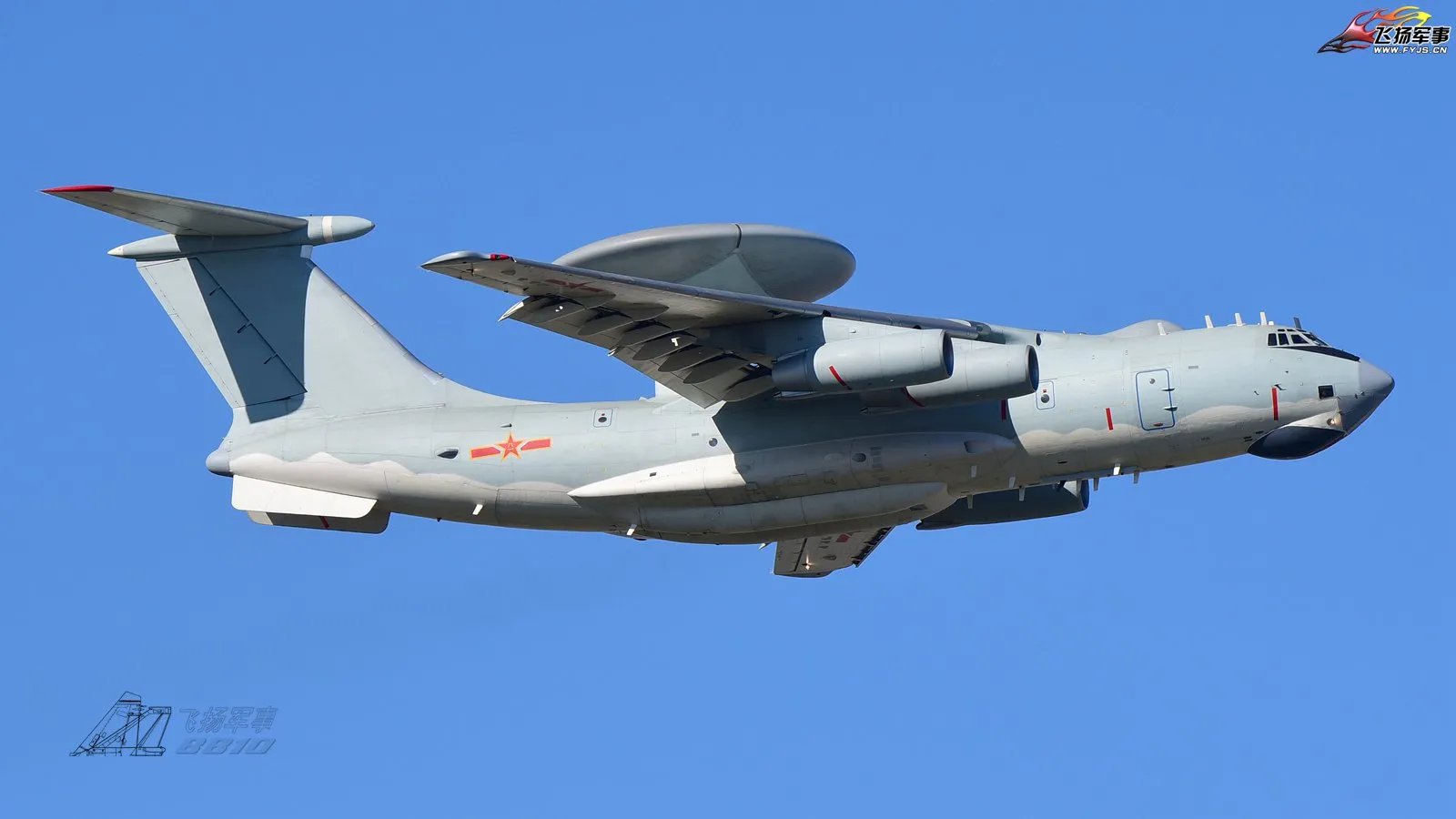
A side view of a standard PLAAF KJ-2000, albeit with the serial number censored from the photo. FYJS/via Chinese internet

A domestically produced Y-20-based platform provides a more sustainable basis for a much larger AEW&C fleet, with greater scope for upgrades and potentially export opportunities.

The larger airframe should also provide advantages over China’s numerous turboprop-powered AEW&C aircraft, including greater speed, range, and endurance. Its higher operating altitude would give its radar a better vantage point for detecting and tracking targets, particularly low-flying aircraft and missiles that may be masked from ground-based sensors by terrain or the radar horizon.

The aerial refueling probe could further extend the aircraft’s range and time on station, although the precise operational capabilities of the KJ-3000 remain unclear.

The exact configuration of the KJ-3000’s primary radar has yet to be established. China’s existing KJ-2000 and smaller KJ-500 use fixed radomes containing three active electronically scanned array (AESA) antennas to provide 360-degree coverage, rather than the rotating radomes found on aircraft such as the U.S. E-3 Sentry and Russia’s A-50 Mainstay. Whether the new aircraft follows the same approach remains to be seen.
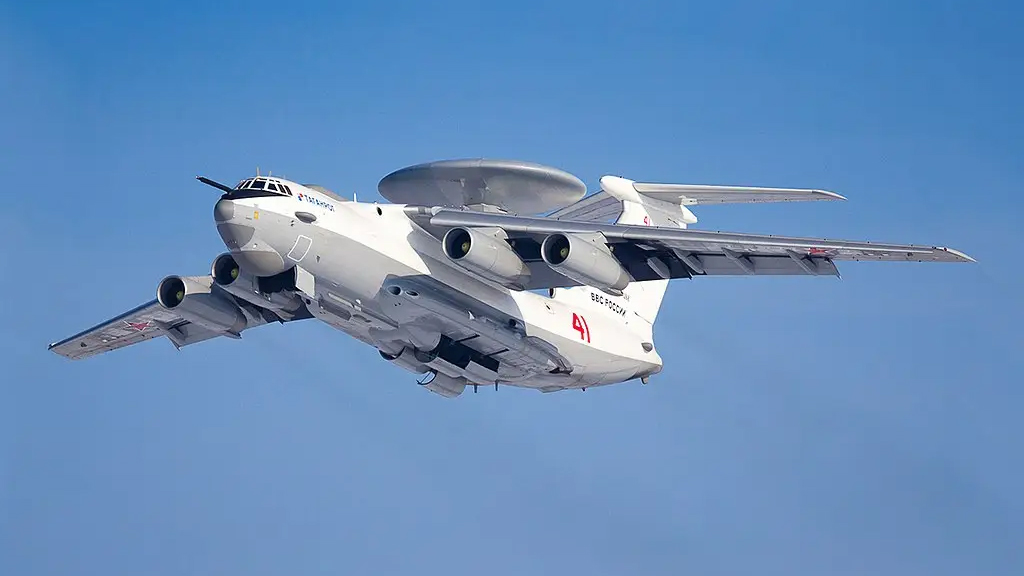
A Russian Aerospace Forces A-50U Mainstay. Russian Ministry of Defense Russian Air Force A-50U Mainstay. (Russian MoD)

As well as its large AESA radar, the new aircraft is likely to carry additional intelligence, surveillance, and reconnaissance (ISR) systems, while its communications equipment could make it an important networking node for Chinese forces operating across the vast distances of the Indo-Pacific. Such capabilities would be particularly valuable for coordinating combat aircraft, including uncrewed ones, sharing targeting information, and extending the reach of China’s integrated air defense and broader military networks.

The KJ-3000 is also part of a broader expansion and diversification of China’s AEW&C fleet. Alongside the new jet-powered aircraft, the People’s Liberation Army continues to field and develop smaller platforms based on the four-turboprop Y-9 transport family.

These include the KJ-500, which has been produced and delivered at a rapid pace, as well as the newer KJ-700, believed to combine radar with electro-optical and infrared sensors for a broader range of surveillance missions. The precise capabilities of the KJ-700 remain uncertain, but you can read about the platform in more detail here.
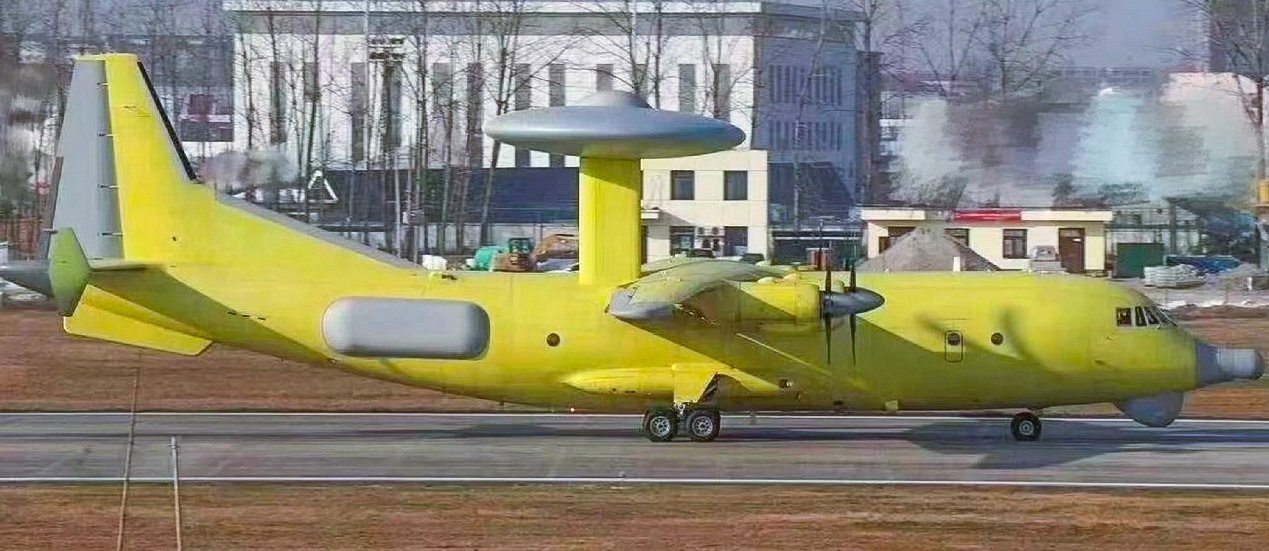
A prototype KJ-700. via Chinese internet

The smaller turboprop aircraft offer advantages of their own. They are better suited to operating from dispersed and relatively austere airfields, and they regularly appear at Chinese island outposts and in the strategically important Taiwan Strait. Together, the different types give Chinese forces a range of options for surveillance and command and control, from persistent coverage close to home to operations farther afield.

The U.S. Department of Defense has repeatedly highlighted the growing importance of China’s AEW&C fleet.

In its latest annual report on Chinese military developments, the Pentagon specifically pointed to the KJ-3000:

“The PLA conducted an initial flight with the KJ-3000 Airborne Early Warning and Control (AEW&C) aircraft, which will serve as a surveillance aircraft to monitor aircraft, ships, and other vehicles. The KJ-3000 will probably be the world’s first model to use digital radar and will be capable of anti-jamming, passive detection, and target identification.”

Airborne radar and command-and-control aircraft are also important force multipliers for increasingly capable Chinese combat jets, including the stealthy J-20 and aircraft armed with long-range air-to-air missiles. Radar planes like these can serve as critical networking nodes for data sharing and, in some cases, allow Chinese fighters to prosecute targets without turning on their own radar.

In 2022, then-Pacific Air Forces commander Gen. Kenneth Wilsbach praised the command and control associated with J-20 operations, noting that some of China’s long-range air-to-air missiles benefit from support provided by the KJ-500.
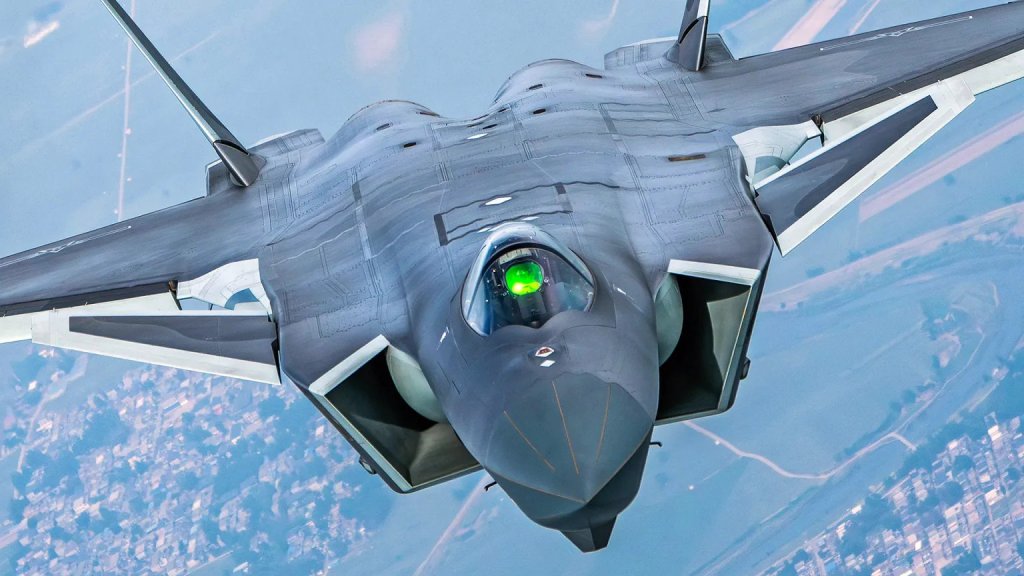
A stock photo of a J-20 stealth fighter. PLAAF

For China, a larger and more capable AEW&C fleet would support both the defense of its airspace and efforts to project military power across the Indo-Pacific. These aircraft could help coordinate operations around Taiwan and the South China Sea, improve situational awareness over maritime approaches, and support combat operations at greater distances from the mainland.

The same Pentagon report from 2025 further noted:

“China’s integration of support aircraft, such as the KJ-500 airborne early warning aircraft, provides the PLAAF with improved ISR capability to support PLA operations, as demonstrated during surge operations near Taiwan.”
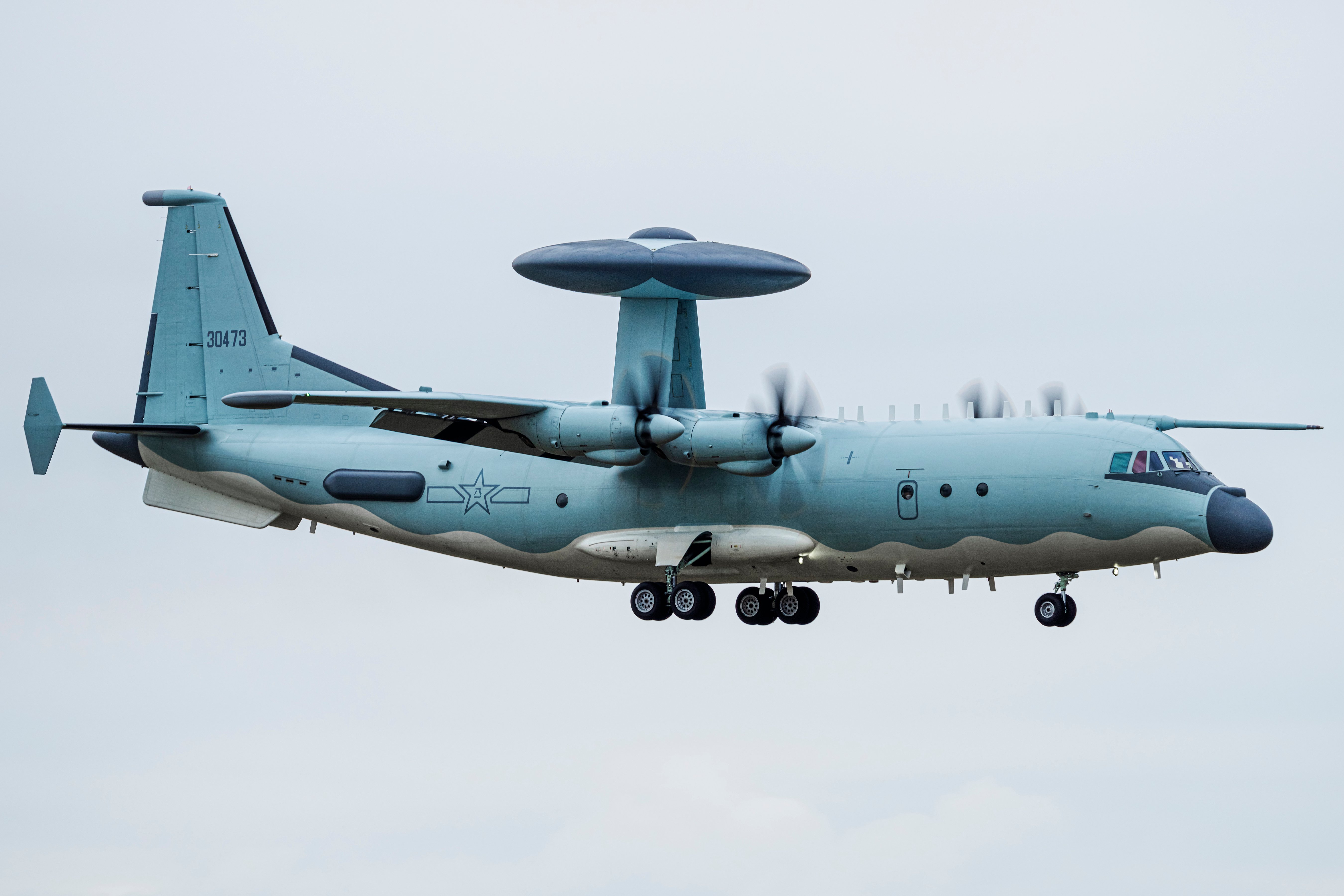
ZHUHAI, CHINA - NOVEMBER 03: A KJ-500A warning and control aircraft arrives at Zhuhai Air Show Center on November 3, 2022 in Zhuhai, Guangdong Province of China. The 14th Airshow China will be held from Nov. 8 to 13. (Photo by VCG/VCG via Getty Images)
A KJ-500 arrives at the Zhuhai Air Show Center in November 2022 in Zhuhai, Guangdong Province of China. This is specifically the probe-equipped KJ-500A version. Photo by VCG/VCG via Getty Images VCG

A domestically developed, jet-powered platform such as the KJ-3000 would be a logical centerpiece of that effort, particularly since it can be produced in substantially greater numbers than the KJ-2000.

The prospect of China expanding its fleet of large, jet-powered AEW&C aircraft stands in contrast to the U.S. Air Force’s troubled effort to replace its aging E-3 Sentry. The U.S. E-7 Wedgetail program has encountered major hurdles, raising concerns about a potential gap in airborne battle management as China continues to field new capabilities.

The October 5 imagery does not confirm that serial production has begun. Further imagery showing additional airframes, activity around production facilities, or aircraft in new operational markings may provide a clearer indication of the program’s progress.

Regardless, the KJ-3000 appears poised to become an important addition to China’s expanding airborne surveillance and command-and-control architecture.

Contact the author: thomas@thewarzone.com

The post Four KJ-3000 Radar Jets At Chinese Factory Point To Serial Production appeared first on TWZ.
  •  

Army’s Plan To Launch Hundreds Of Balloons Into Enemy Territory If A Future Conflict Breaks Out

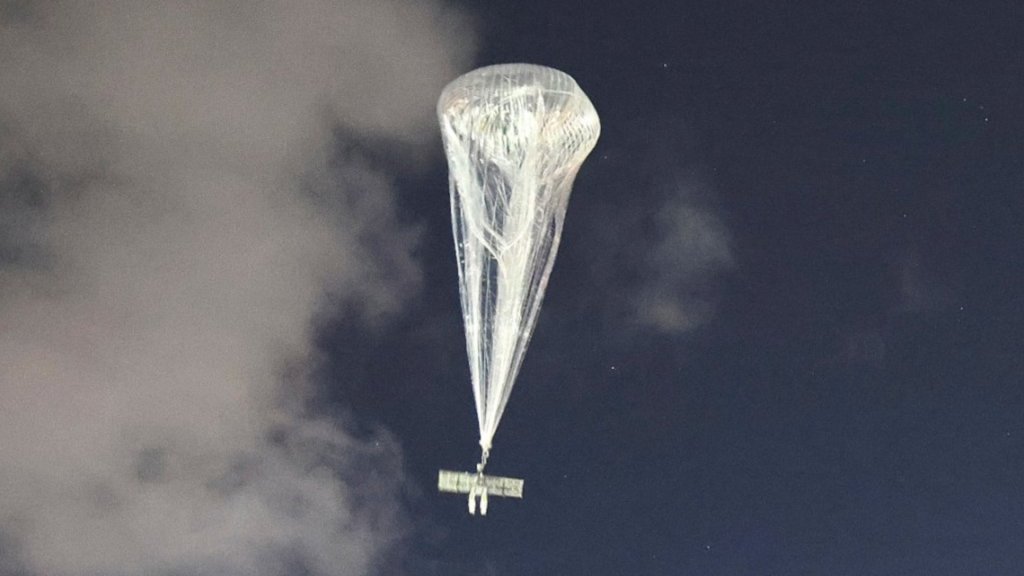
As he prepares for a potential future conflict on the continent, the commanding general of Multi-Domain Command Europe told TWZ that he envisions dispersing hundreds of high-altitude balloons at a time. The balloons, Brig. Gen. Steven Carpenter explained, would be used for a wide range of purposes, from serving as communications platforms to launching weapons. For years now, TWZ has been closely tracking the expanding use of high-altitude balloons and other lighter-than-air systems globally for intelligence gathering, networking, as platforms for launching drones, and in support of other missions.

Basically, in the European scenario, hundreds or possibly thousands of balloons would be sent east. They would provide attritable real-time reconnaissance, strike, and decoy capabilities, while also acting as a force multiplier for other assets by providing a resilient active network over the battlefield — one that could help fill in the gaps if the space-based layer gets degraded.

“We would like to proliferate the stratosphere with high-altitude balloons, but I mean 200, 300 at a time,” Carpenter told us during last week’s Association of the U.S. Army (AUSA) conference in Washington, D.C., which TWZ attended. The Army would utilize high-altitude balloons “not only as decoys, a lot of decoys, but also communications retrans[mission platforms], electronic sensing, as well as electronic attack, and then obviously air-launched effects to be able to drop them down and use kinetic means as well.”

The head of the U.S. Army Space and Missile Defense Command (SMDC) was initially skeptical about the utility of high-altitude balloons, but now sees them as a "game-changing" capability.
A sensor-laden high-altitude balloon from Aerostar seen lifting off from Won Pat International Airport on Guam during an exercise in 2024. US Army

Air-launched effects (ALEs) is a collective term the U.S. military now commonly uses to discuss air-launched drones configured for a wide array of missions. The ALE umbrella encompasses designs that can be used for surveillance and reconnaissance, electronic warfare tasks, or signal relay, and can act as decoys. It also includes loitering munitions often referred to as kamikaze drones, capable of carrying kinetic attacks.

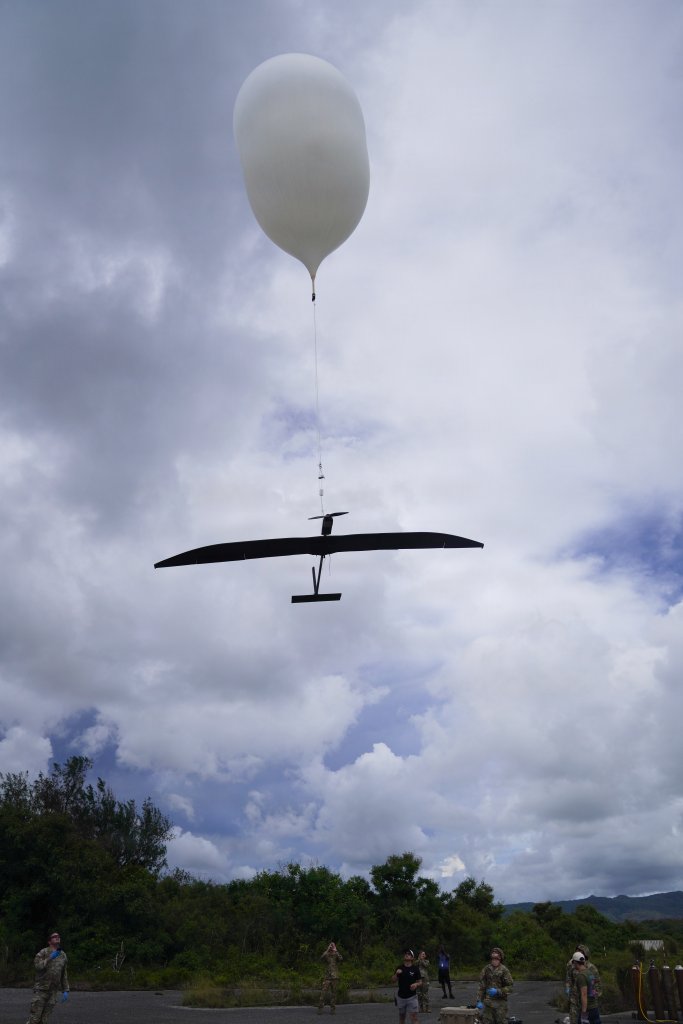
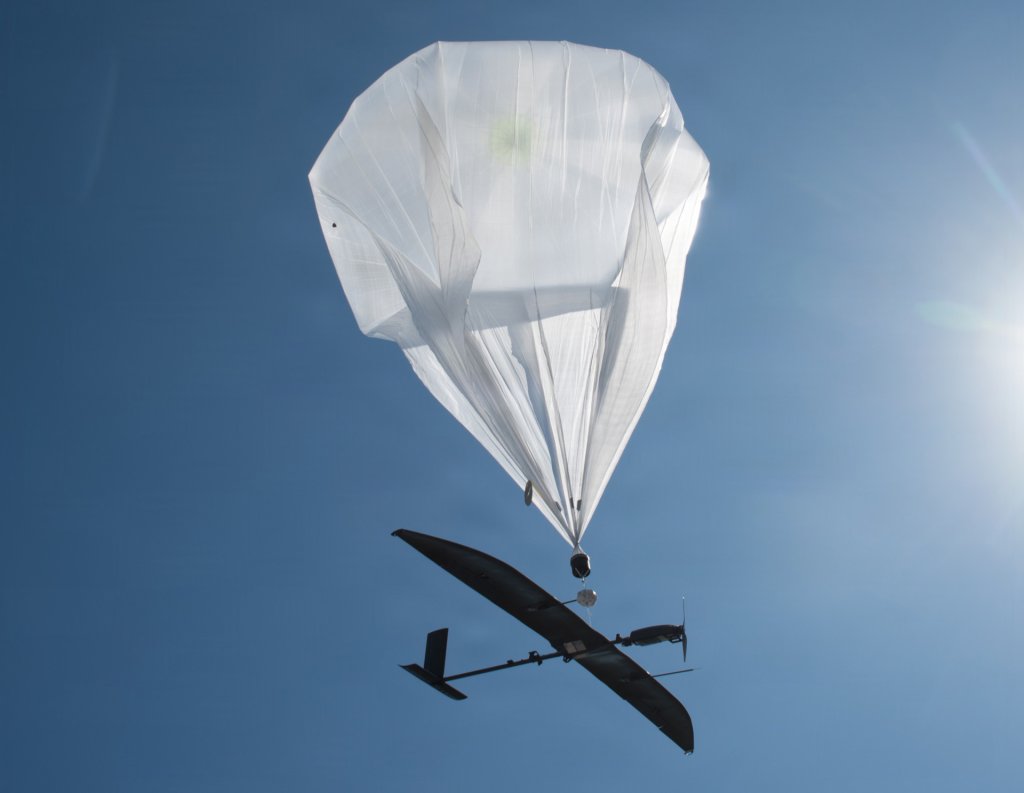
U.S. Army Soldiers assigned to the Extended Range Sensing and Effects Company, 3d Multi-Domain Effects Battalion, 3d Multi-Domain Task Force, and industry partners attach an Icarus Apollo R stratospheric fixed wing aircraft to an Urban Sky high-altitude balloon during a multi-day Special User Demonstration at Orote Airfield on Naval Station Guam, June 24, 2026, for Valiant Shield 26. The joint team conducted the pre-launch configuration to test stratospheric sensor capabilities and joint extended communication networks, directly advancing our capacity to develop and validate Combined Joint All-Domain Command and Control concepts forward in the theater. This staging operation was conducted in support of Valiant Shield 2026. Exercises like Valiant Shield allow Pacific Command Joint Forces the opportunity to integrate forces from all branches of service and with our allies to conduct precise, lethal, and overwhelming multi-axis, multi-domain effects that demonstrate the strength and versatility of the joint force and our commitment to a free and open Indo-Pacific. (U.S. Army photo by Sgt. 1st Class Ondirae Hamil Abdullah-Robinson)
U.S. Army soldiers assigned to the Extended Range Sensing and Effects Company, 3d Multi-Domain Effects Battalion, 3d Multi-Domain Task Force, and industry partners attach an Icarus Apollo R stratospheric fixed wing aircraft to an Urban Sky high-altitude balloon during a multi-day Special User Demonstration at Orote Airfield on Naval Station Guam, June 24, 2026, for Valiant Shield 26. (U.S. Army photo by Sgt. 1st Class Ondirae Hamil Abdullah-Robinson) Sgt. 1st Class Ondirae Abdullah-Robinson

In general, modern high-altitude balloons offer persistent deployment that can last for days, weeks or even months at a time. After navigating to an assigned operating area, some modern balloon systems can hold their position, in spite of prevailing winds, by modulating their altitudes to keep on station.

In addition, high-altitude balloons operate at heights providing excellent fields of view for radars, cameras, and other sensors in all directions and across very broad areas. From a perch of 60,000 feet or more, they also offer a way to peer into certain denied areas while still soaring in international airspace and keeping farther away from potential threats. During a conflict, the balloons could be deployed deep into enemy airspace as they are attritable.

Though some balloon systems can hold their general positions in many circumstances, Carpenter told us that seasonal weather changes will still play a role in deployment.

“The flight paths are different. We study that,” he noted. “We understand during what seasons where the best places are to launch those high-altitude systems, and then again to hold enemy cities and capabilities at risk at any time, so that we can defeat them at the time and place of our choosing.”

We asked Carpenter for more details about how he sees balloons being used by troops in Europe.

“I think everybody knows there’ll be a point where satellite communications are going to be degraded, if not eliminated,” he stated. “One of the things that we’re focusing on is in the stratosphere, so above 60,000 feet up to 80,000 feet, which is next to impossible to target unless you’re using one of your exquisite systems, fifth-gen fighters, SA-21 Bravo [S-400 Triumf surface-to-air missile system], etc. to shoot that stuff down.”

Many of the balloons would be equipped with Link 16, a NATO-standard tactical datalink communication system central to U.S. and allied military operations, the general said. Link 16 allows coalition forces to seamlessly transmit and exchange real-time situational awareness data. You can read more about how Link 16 works, and its increasing dependence of space, in our story here.

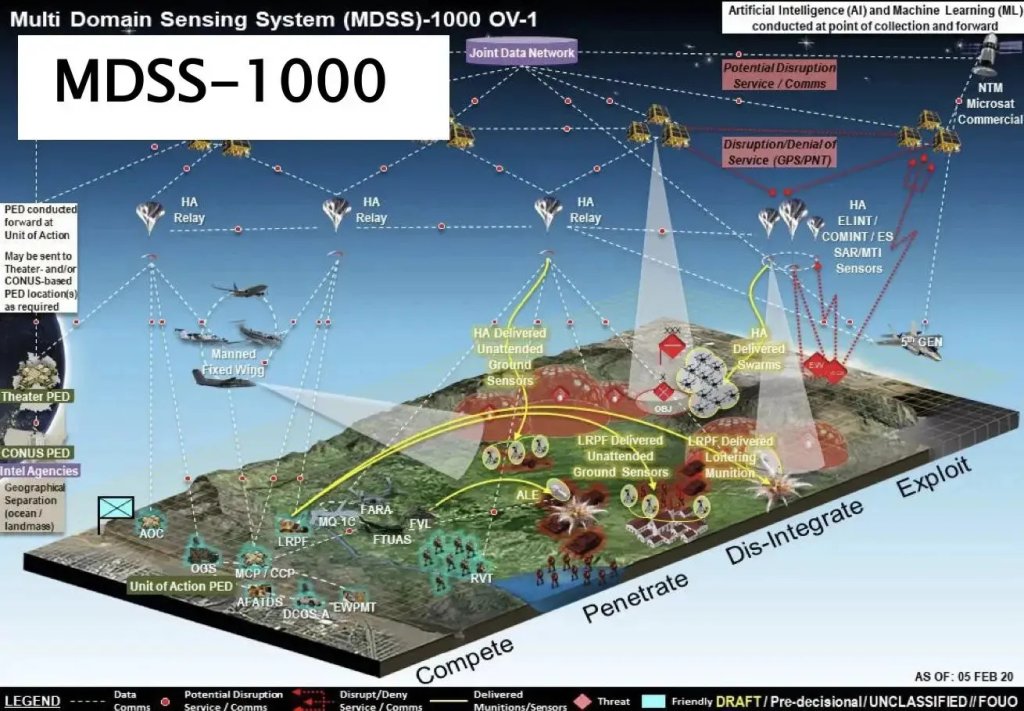
A graphic the Army previously released showing a notional “operational view” for how its planned the Multi-Domain Sensing System (MDSS) system of systems, including crewed ISR aircraft, might be employed in conjunction with other assets. (U.S. Army)

As for using balloons as ALE delivery platforms, Carpenter told us there are “different technologies, different altitudes that we’d have to deliver those from” at “different ranges, different levels of yield or lethality. But for us, it’s really just a single arrow in a quiver full of arrows, utilizing space capabilities, cyber capabilities, or surface-to-surface capabilities. In this case, you’re talking just another air-to-surface capability with your air-launched effects off balloons.”

Carpenter said that when it comes to balloon-launched ALEs, he is looking at “everything from shorter range, lower yield, maybe targeting an adversary ballistic missile radar, to longer range, higher yield capabilities that you might use to maybe take out a ballistic missile system.”

In such cases, the balloons would carry drones deep into enemy territory, where they would be launched opportunistically to strike the targets Carpenter suggested. The size of the target, and how well it is protected, would determine what kinds of drones the balloons would launch, as well as their proximity to the target.

Russian air defense systems like these S-400 launchers could be targeted by balloon-launched weapons, an Army general told us. (Sergei Malgavko / TASS)

Should a fight break out in Europe tonight, Carpenter said he is confident he can rely on the technology.

“Our operating concept is proven,” he stated, noting that “we’ve already tested those capabilities against most modern adversary systems that exist. We’ve already validated our operating concept in terms of getting to mass and scale that we would need in large-scale conflict.”

As we have previously reported, while high-altitude balloons have been used for decades, the modern concept of these systems was recently employed operationally by the U.S. in a combat theater.

The Army had planned to demonstrate the ability of balloons to operate in swarms with a high degree of autonomy in the Pacific region last year before those assets were redirected to the Middle East. When exactly that deployment occurred and how long it lasted are unclear.

“We were asked to pivot and do some experimentation in combination with operations, and we pivoted and supported operations in CENTCOM [U.S. Central Command],” Andrew Evans, Director of Strategy and Transformation with the Office of the Deputy Chief of Staff of the Army, or G-2, told Breaking Defense, according to a story the outlet published last week. “They were effective for the mission that they were assigned,” he added. However, Evans was not able to disclose the exact location and operational scenarios in which they were used.

Other countries, including U.S. allies and partners, are increasingly fielding balloon-based and other lighter-than-air systems, too. Ukrainian forces notably have been using balloons to conduct kinetic attacks and launch drones against Russian assets. On the other side of that conflict, the Russians have used balloons as decoys to confuse and misdirect air defenses.

The following video shows Ukrainian forces using balloons to launch kamikaze drones.

American-made Hornet middle-range strike UAV being tested with balloon-assisted launch system.

Such resolution allows to drastically increase its original range (approx. 100km).

Hornet OWA-UAVs are actively employed by Ukrainian forces for strikes on Russian logistics and other… pic.twitter.com/S1bHqLNhPY

— Status-6 (@Archer83Able) May 20, 2026

To achieve the effects he laid out, Carpenter told us that he will still need to surge capacity to Europe.

“The Army will make decisions on which vendors they’re going to go with,” he pointed out. “But the ability to field that at scale is just simply based on the resources provided. I’m talking about money to go ahead and bring them into theater.”

Pushed to provide details of how quickly he could have the desired number of balloons, Carpenter told us that “if the United States or NATO and its allies were on a wartime footing, it would be extremely rapid, but we would need to get them into theater before crisis turned to conflict. So we’d have to keep a close eye from an IC [intelligence community] perspective on indicators and warnings to make sure we have the right systems on the ground at point of need.”

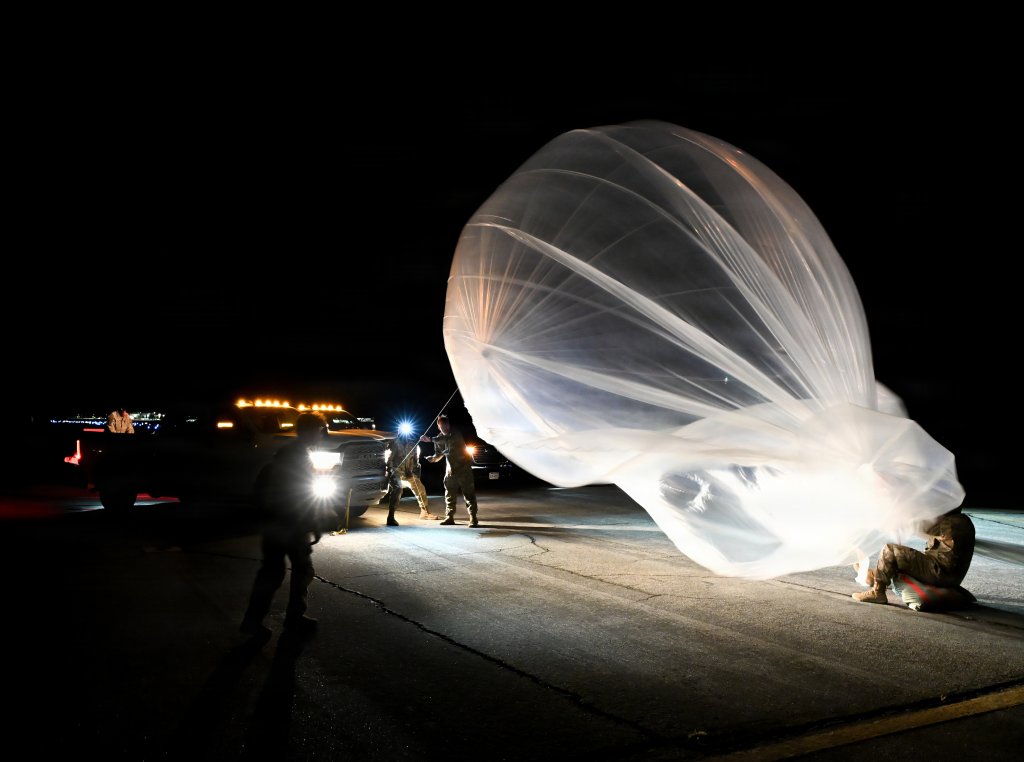
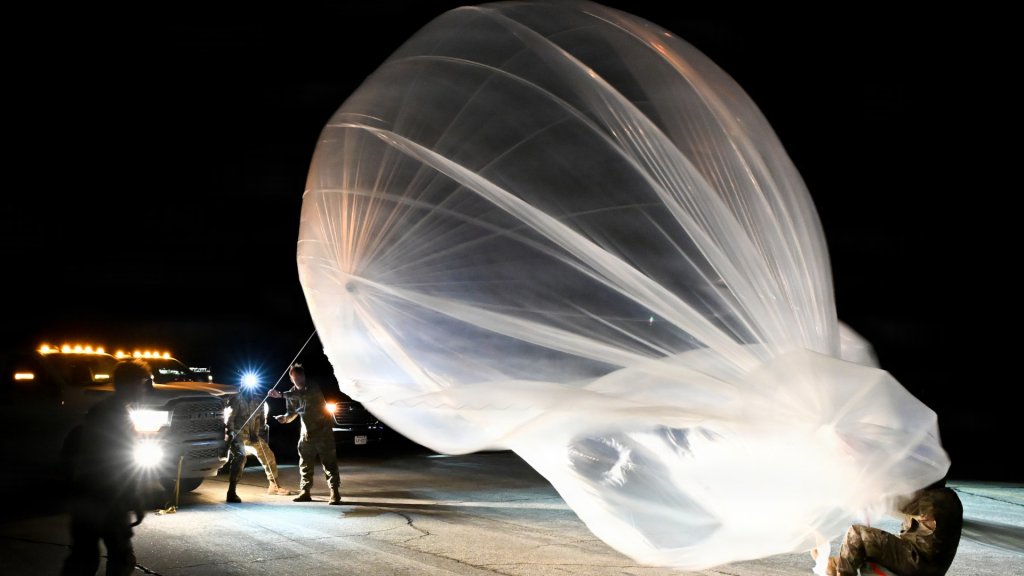
U.S. Army Soldiers from Multi-Domain Command–Europe deploy High Altitude Balloons at Tahachapi Airfield, April 22, 2026. The High Altitude Balloon is used to gather intelligence, surveil and perform reconnaissance. (U.S. Army photo by Staff Sgt. Rajheem Dixon, Multi-Domain Command–Europe)
U.S. Army soldiers from Multi-Domain Command–Europe deploy high-altitude balloons at Tehachapi Airfield, April 22, 2026. (U.S. Army photo by Staff Sgt. Rajheem Dixon, Multi-Domain Command–Europe) Staff Sgt. Rajheem Dixon

The Army’s overall vision for balloons is not new; the service has been openly discussing it for at least six years now. However, the use of high-altitude balloons in this context is now being operationalized. Meanwhile, China has very actively shown off its ability to gather intelligence and conduct other missions using balloons and other lighter-than-air craft on a broad operational level across the Pacific. TWZ had been reporting on this reality for years before it was thrust fully into the public consciousness after a Chinese spy balloon passed over parts of the United States and Canada back in 2023.

The concept Carpenter laid out for how balloons will be used in a future European conflict is another example of the renaissance in lighter-than-air military technology and how the Pentagon is increasingly seeking to weaponize it on a grand scale.

Contact the author: howard@twz.com

The post Army’s Plan To Launch Hundreds Of Balloons Into Enemy Territory If A Future Conflict Breaks Out appeared first on TWZ.

  •  

High Altitude Balloons Are A “Game-Changing” Capability: Army Space Command Boss

The head of the U.S. Army Space and Missile Defense Command (SMDC) was initially skeptical about the utility of high-altitude balloons, but now sees them as a “game-changing” capability. Lt. Gen. John Rafferty’s comments follow a separate disclosure that the Army axed plans for a balloon swarm test in the Pacific last year and instead sent those systems to support real operations in the Middle East. TWZ has been closely tracking the expanding use of high-altitude balloons and other lighter-than-air systems globally for intelligence gathering, as platforms for launching drones, and in support of other missions, for years now.

Lt. Gen. Rafferty was asked about high-altitude balloons during a media roundtable today, at which TWZ was in attendance, on the sidelines of the Association of the U.S. Army’s (AUSA) main annual convention. Army Col. Joseph Mroszczyk, head of SMDC’s Transformation Integration Directorate for Space Superiority (TID-Space Superiority), also discussed the service’s use of balloons during the roundtable. Breaking Defense first reported on the shift of balloon-based capabilities from the Pacific to the Middle East on Monday.

“I’ll just give a little personal history on high-altitude balloons. I started in the Army Futures Command in the Long Range Fires-Cross Functional Team. There was this talk of high-altitude balloons. I think it was the ISR [intelligence, surveillance, and reconnaissance] task force was talking about it,” Rafferty said. “It just sounded crazy to me that we were considering this.”

US Army personnel prepare to launch a high-altitude balloon during an exercise. US Army

“Then, a few years later, when the Sergeant Major [SMDC Command Sgt. Maj. Rickey Jackson] and I were together in the multi-domain community in Europe, I went with the 2nd MDTF [Multi-Domain Task Force] to Morocco for training and experimentation,” he continued. “[I] saw the high-altitude balloons in action, and I was immediately convinced after I understood better how they worked and how their ability to station-keep, and their ability to sense and even deliver effects from high altitude. It was game-changing for me.”

Broadly speaking, the main benefit that modern high-altitude balloons offer is their ability to be deployed persistently for days, weeks, or even months at a time. Designs available on the market today can hold their position, in spite of prevailing winds, and moderate their altitudes to keep on station, after precisely navigating to an assigned operating area.

On top of their persistence, the altitudes at which these balloons operate provide excellent fields of view for radars, cameras, and other sensors in all directions and across very broad areas. From a perch of 60,000 feet or more, they also offer a way to peer into certain denied areas while still soaring in international airspace and keeping further away from potential threats.

The video below from high-altitude balloon maker Aerostar offers a good general overview of the kind of capabilities on the market today.

As Lt. Gen. Rafferty noted today, ISR is not the only use case for high-altitude balloons, either. They can serve as communications relay nodes, as well as launch platforms for swarms of drones and other expendable payloads. These are all capabilities the Army has explicitly talked about as part of broader plans for balloons in the past. Other countries, especially China, are already actively employing high-altitude balloons for ISR and other missions, as we will come back to later on.

“In my former role as an MDTF commander, we experimented a lot in the Pacific with those [balloon-based] capabilities. We have leveraged different size platforms,” Col. Mroszczyk added today. “In this [TID-Space Superiority] role, as a proponent, what I’m pushing for is a family of stratospheric systems that really covers smaller size all the way up to larger size types of platforms in terms of balloons.”

“What that enables us to provide is space-like capabilities, really exploiting a transition point between what is normally considered the aerial layer and the space domain,” he continued. “Really, where you go from about 60,000 feet to 100,000 feet is what we focus on in the stratosphere. That operational space allows some persistence and broad coverage in an area where you can deliver space-like capabilities in terms of payloads, but then also take advantage of the deep access that you get from a stratospheric balloon.”

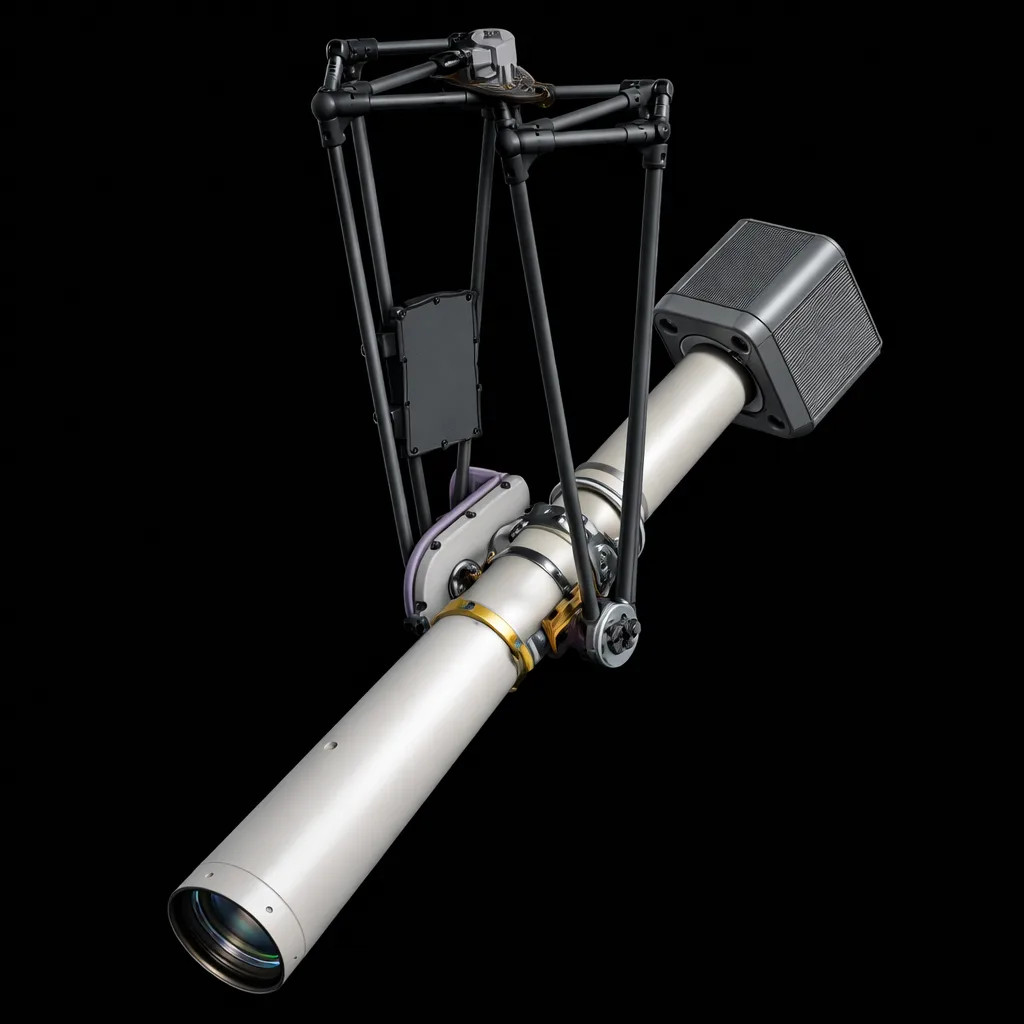
An element of a sensor payload called Wallabee designed to be carried aloft by high-altitude balloons. Urban Sky

“So, being able to go, take advantage of winds that are pushing you where you want to go already to be able to get either launched effects or other types of payloads for sensing and communications and extension of your launched effects portfolio,” he added. “That is a way that we can help exploit the stratosphere, and we’re looking to do that throughout multiple experiments over the course of the coming year.”

“Launched effects,” is a catch-all term the U.S. military now routinely uses to talk collectively about uncrewed aerial systems designed to be launched from other platforms in the air, on the ground, and/or at sea. This encompasses drones configured for a wide variety of missions, including surveillance and reconnaissance, electronic warfare, signal relay, and even kinetic attack.

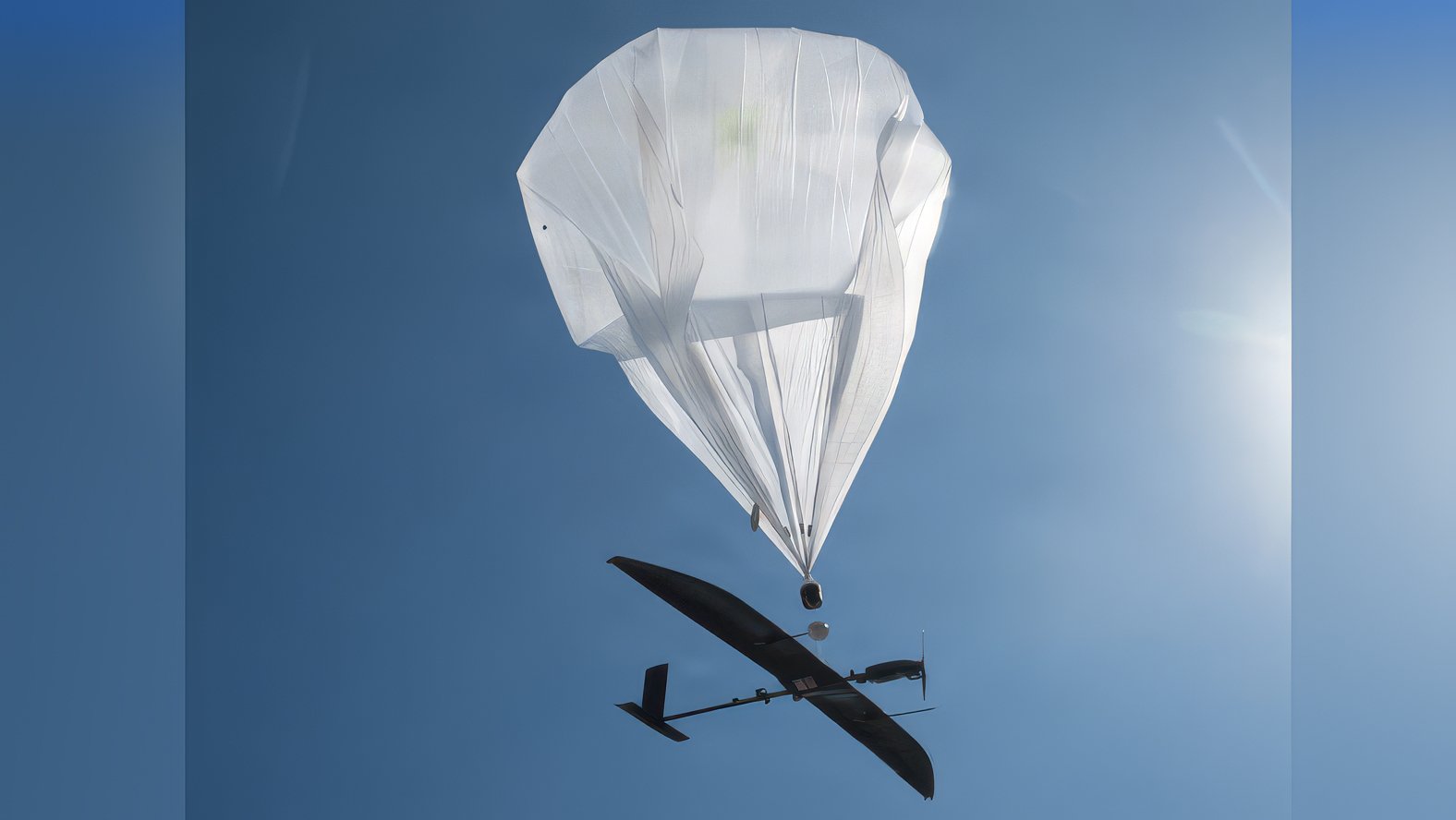
A high-altitude balloon with an Apollo-R drone suspended underneath, seen demonstrated here during the U.S.-led Exercise Orient Shield 26 in Japan earlier this year. US Army

Col. Mroszczyk talked about plans to further demonstrate how high-altitude balloons will be commanded and controlled, as well as networked together with other Army capabilities, when asked to elaborate on what the forthcoming experimentation would entail.

As mentioned, the Army had also planned to demonstrate the ability of balloons to operate in swarms with a high degree of autonomy in the Pacific region last year before those assets were redirected to the Middle East. When exactly that deployment occurred and how long it lasted are unclear.

“We were asked to pivot and do some experimentation in combination with operations, and we pivoted and supported operations in CENTCOM [U.S. Central Command],” Andrew Evans, Director of Strategy and Transformation with the Office of the Deputy Chief of Staff of the Army, or G-2, told Breaking Defense, per the story that outlet published on Monday.

“They were effective for the mission that they were assigned,” he also said, but declined to elaborate further, according to Breaking Defense. “Balloons can be a little finicky in terms of temperature, and you have to contend with environmental characteristics.”

“We had a lot of help from vendors in this space, but as you think about employing your systems and going from something like a Pacific [theater] to something like a CENTCOM [theater], you learn where those friction points might exist between what the military might need to inherently own, and … what a vendor could help provide in terms of the service,” Evans added. Furthermore, “balloons can be a little finicky in terms of temperature, and you have to contend with environmental characteristics.”

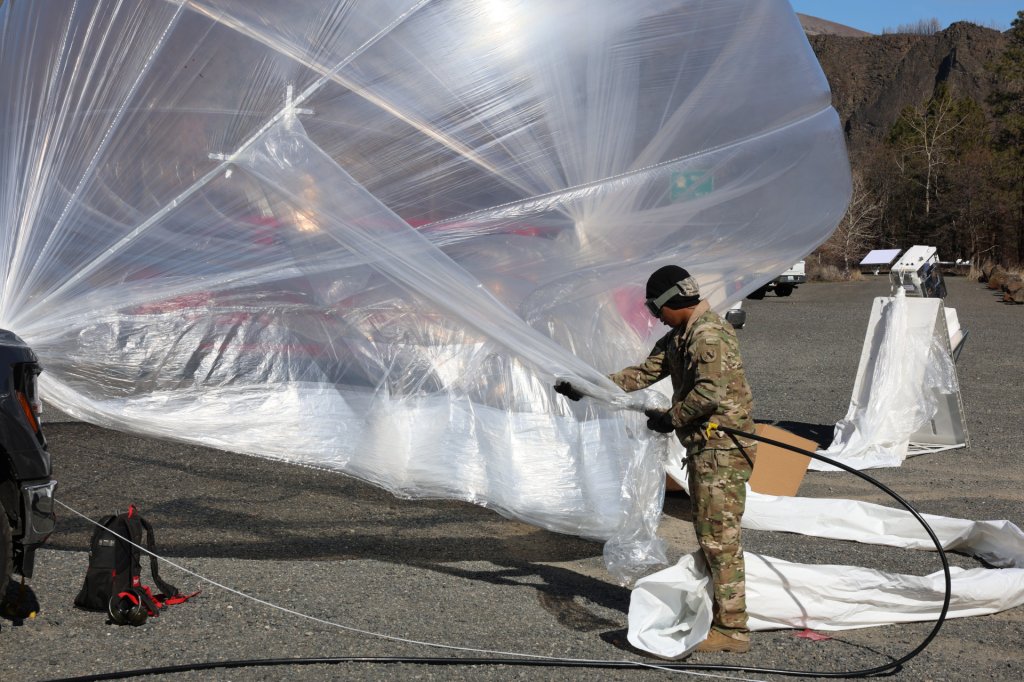
Another stock picture of a US Army soldier inflating a high-altitude balloon during training. US Army/Staff Sgt. Brandon Rickert

The remarks today from Lt. Gen. Rafferty and Col. Mroszczyk underscore the Army’s commitment to fielding new high-altitude balloon-based capabilities and the immense benefits the service sees in them. However, the continued emphasis on testing and experimentation highlights a discrepancy with the state of the service’s current efforts, and even more so in light of global trends.

The Army has been openly talking about balloons as part of its vision for a new multi-layered persistent sensor architecture, and how they could also be used to launch drones and other ‘effects,’ for at least six years now. In that same time, China has very actively shown off its ability to gather intelligence and conduct other missions using balloons and other lighter-than-air craft on a broad operational level across the Pacific. TWZ had been reporting on this reality for years before it was thrust fully into the public consciousness after a Chinese spy balloon passed over parts of the United States and Canada back in 2023.

A graphic the Army released in 2020 showing a notional “operational view” for how a “Multi Domain Sensing System” made of various capabilities, including high-altitude balloons, might be employed. US Army

Other countries, including U.S. allies and partners, are increasingly fielding balloon-based and other lighter-than-air systems, too. Forces in Ukraine have notably been using balloons to conduct kinetic attacks and launch drones in the course of the ongoing conflict with Russia. On the other side of that conflict, Russian forces have used balloons as decoys to confuse and misdirect air defenses.

American-made Hornet middle-range strike UAV being tested with balloon-assisted launch system.

Such resolution allows to drastically increase its original range (approx. 100km).

Hornet OWA-UAVs are actively employed by Ukrainian forces for strikes on Russian logistics and other… pic.twitter.com/S1bHqLNhPY

— Status-6 (@Archer83Able) May 20, 2026

The Middle East deployment does show new efforts on the Army’s part to operationalize high-altitude balloons on a more widespread basis, but also that it is still relying on largely experimental capabilities to do so. Earlier this year, the service called attention to the establishment of a new schoolhouse for high-altitude balloon training to help further lay this groundwork, further underscoring how all of this is still very much in its infancy.

The remarks today from Lt. Gen. John Rafferty, especially, show there is substantial support within the Army for pushing ahead with high-altitude balloon programs. At the same time, there is clearly much work to be done if they are to have a truly game-changing impact, while the gap with China and others only continues to grow.

Contact the author: joe@twz.com

The post High Altitude Balloons Are A “Game-Changing” Capability: Army Space Command Boss appeared first on TWZ.

  •  
❌