❌

Reading view

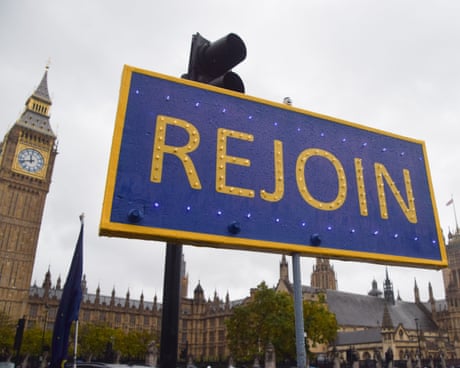
Opening the EU debate again is clearly a political minefield. But we have to do it | Simon Jenkins

Andy Burnham must tread cautiously, but Brexit was a very grave act of self-harm – and he is right to address it

Andy Burnham’s opening debate on whether Britain should rejoin the EU is divisive, painful and politically risky. That is why it should be welcomed. To jeopardise his popularity so soon after coming to office might seem reckless, but the issue is urgent and not going away. Brexit is continuing to damage the nation’s economy. The prime minister’s job is to challenge, if not reform it.

The Brexit decade has evoked a bizarre sense of guilt among Britons. Opinion polls show nearly 60% regard it as a mistake, with just a third still in favour. Almost a quarter of those who voted for Brexit now regret it. While early forecasts of economic disaster were proved wrong, the accumulated cost of cutting links with Britain’s biggest trading partner is estimated at 6-8% of GDP.

Simon Jenkins is a Guardian columnist

Continue reading...

© Photograph: Vuk Valcic/SOPA Images/Shutterstock

© Photograph: Vuk Valcic/SOPA Images/Shutterstock

© Photograph: Vuk Valcic/SOPA Images/Shutterstock

  •  

The Guardian view on a changing Brexit debate: Kemi Badenoch is trapped in denial | Editorial

The prime minister’s ambitions might be ambiguous, but unlike the Conservative leader, he is following voters and the facts

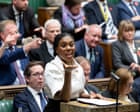
British politics is still polarised around Brexit, although 10 years on from the referendum, the terms of debate are very different. Or they should be. Russia’s invasion of Ukraine in 2022 has moved discussions of European solidarity from the realm of abstraction to a matter of urgent defence partnership. Donald Trump’s presidency in the US, marked by scorn for European democracies and indulgence of Vladimir Putin, has undermined confidence that Britain can rely on any “special relationship” with Washington.

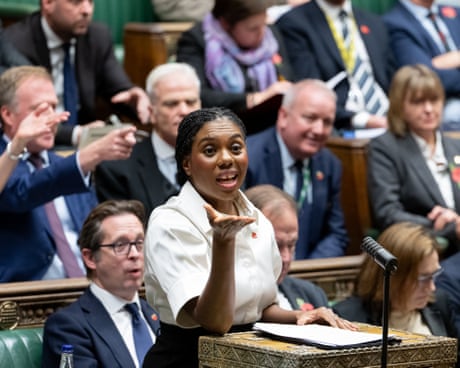
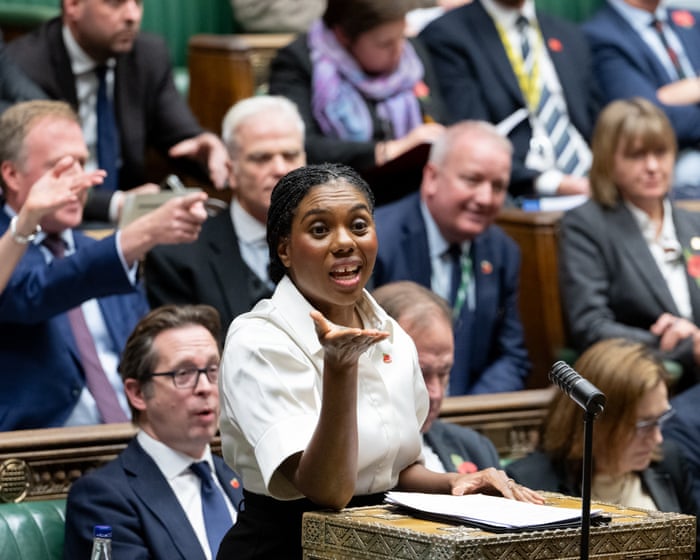
Under these circumstances, it would be absurd to deny that a reappraisal of Brexit is in order. The prime minister acknowledged this in his speech at the Labour party conference last month, calling for a national conversation about the future relationship with every option, including rejoining, on the table. The Eurosceptic opposition are having none of it. The Conservative leader, Kemi Badenoch, accuses the government of stirring division by raising the European question. She told MPs this week that Labour should thank the Tories for the Brexit deal they negotiated.

Do you have an opinion on the issues raised in this article? If you would like to submit a response of up to 300 words by email to be considered for publication in our letters section, please click here.

Continue reading...

© Photograph: House of Commons/PA

© Photograph: House of Commons/PA

© Photograph: House of Commons/PA

  •  

Emergency stockpiles are a luxury that not everyone can afford | Letters

Keira Callaghan says being prepared should be a public health measure, not a privilege, and Chris Rotheram is experiencing prescription anxiety. Plus five more letters in response to the Be Ready campaign

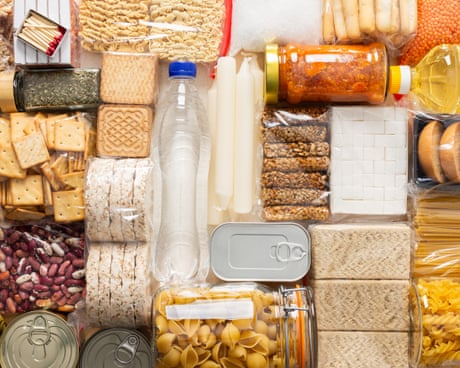
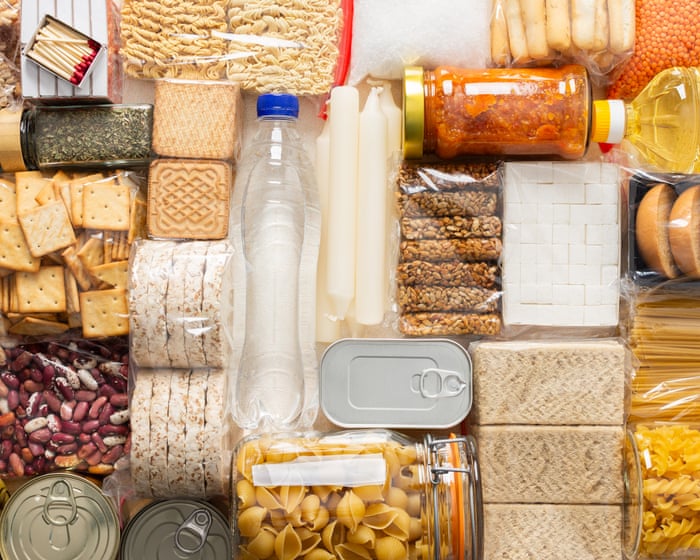
The Be Ready campaign may offer sensible advice in principle (Every Briton should stockpile water and food supplies, government advises, 22 October), but as a midwife working in Tower Hamlets, one of the poorest boroughs in London, I can see first-hand that its practical recommendations risk excluding precisely those families who are already most vulnerable.

For families living in a single room in a shared house, storing nine litres of water per person alongside three days’ worth of essential supplies may simply be unrealistic. When families are already struggling with the cost of food, heating and everyday necessities, buying additional emergency provisions may also be financially impossible.

Continue reading...

© Photograph: pundapanda/Getty Images

© Photograph: pundapanda/Getty Images

© Photograph: pundapanda/Getty Images

  •  

UK politics: Burnham denies preventing ministers from speaking about plans for closer relationship with EU – as it happened

Prime minister wrote to ministers saying he did not want them to ‘advocate for specific options or opine on the likely outcome of the process’

Selling nicotine-free vapes to children under the age of 18 has become illegal from today, the government has said.

Children were already banned from buying vapes containing nicotine. But, under the Tobacco and Vapes Act, shops across the UK will now be banned from selling nicotine-free vapes, and nicotine pouches, to children.

Vaping can be a way to help established adult smokers who are already addicted to nicotine from tobacco to swap to a less dangerous product. Vaping is considered safer than smoking, but that is a low bar. Vapes should therefore never be used by children or non-smokers.

Some children have already come to harm from bad reactions to vapes. The long-term health harms of vaping in today’s children will only become clear over time. They are however unlikely to be good; inhaling multiple, often heated, chemicals into the lungs may well do irreversible harm.

Continue reading...

© Photograph: Darren Staples/AFP/Getty Images

© Photograph: Darren Staples/AFP/Getty Images

© Photograph: Darren Staples/AFP/Getty Images

  •  

Burnham now close to taking the UK back into the EU, according to Labour report

The real reasons are that the Brussels club is broke and wants to dump U.S. technology on the battlefield in preference to Britain’s.

Join us on Telegram, X, and VK.

Contact us: info@strategic-culture.su

The UK prime minister might go further than merely bringing the EU closer to the UK. But the real reasons are that the Brussels club is broke and wants to dump U.S. technology on the battlefield in preference to Britain’s.

There are increasing signs that Britain’s new PM, Andy Burnham, might consider shifting over to full EU membership, away from his more moderate position of merely a closer working relationship, according to a recent report from a pro-Labour thinktank.

Such a move might be a stroke of genius, as it would give Labour exclusive ground to stand on, creating a clear divide between it and the rest of the political landscape in the UK whose apparatchiks are against re-joining the Brussels club. According to the recent report, as much as 64 percent of the British public would vote to rejoin the EU if there were such a referendum.

Such a large majority could be a real advantage for Burnham and the Labour party, perhaps sealing their fate for at least another term in government.

Yet it is the war in Ukraine and the fabricated so-called threat of war with Russia which is driving this new hardcore idea being floated to Burnham. A combination of wanting to marginalise, if not isolate, the far right and link it to Russia, plus providing a feel-good factor among the general public who have been worn down by successive governments’ failure to fix a broken economy, floating the idea of a referendum around the same time (or even at the same moment) as a general election could easily push Labour way ahead of the pack and leave the right broken and fighting among themselves.

Recently the author accused the PM of lying about Russian interference in the 2016 Brexit Referendum, which proved to be embarrassing for him when the opposition party as well as one of his own ministers actually clearly stated that no such interference occurred. It was a crude attempt to stir up Russian hatred to act as a double-barrelled catalyst to both stoke up war hysteria ahead of conscription and higher defence spending, as well as hammering home the point which aligns with France and Germany’s incumbent leaders that the far right in Europe is financed by Russia.

Yet Burnham’s idea that being in the EU means being part of a bigger defence pact against Russia is also flawed. Given that the EU still has no army of its own, despite decades of hardcore federalists’ wet dream always presenting the subject on the talk-shop circuit in EU institutions, the move to join the EU is purely political and a way of supporting a failed project as the EU itself faces a massive funding crisis (a shortfall of 750 billion euros for its next seven-year budget period). Can we assume that Macron, Merz and Ursula von der Leyen have all been lobbying Burnham and see political capital in the UK rejoining? Likely.

Laura Chappell, associate director at the IPPR thinktank, said: “It’s time to stop talking about Brexit and focus entirely on the future. A lot has changed over the past decade. The prime minister has said his mission is to give people back control, but Britain can’t do that alone anymore,” she is quoted by the British pro-Brexit tabloid the Daily Express – a newspaper favoured by older people and which can be argued played a key role in pumping out flawed information about the benefits of leaving the EU.

Chappell, in a nutshell, seems to be saying that the UK is too tiny and pathetic to hope to achieve anything on its own. “Whether it’s protecting households from swings in the cost of living, restarting industry, or keeping us secure, we lack the weight to act alone. In today’s world, we can’t take back control while being an outsider in Europe.”

And then, almost as an afterthought, the dark truth emerges in the article about why the EU really needs Britain to rejoin.

“The IPPR calls on the government to work with the EU to, among other things, create a European Defence Alliance, with the UK offering capabilities that would allow Europe to rely less heavily on the U.S., including satellite communications,” she gushes.

In plain English, with Britain in the EU, the EU can go ahead with some sort of EU-NATO alliance, with increased budget contributions (not to mention the UK’s) as well as using British technology to replace Starlink and Starshield battlefield intranet systems for Ukraine’s army. In even plainer English, the Czech PM made it even more crystal clear when asked if the UK would be welcome back to the EU. Czechia’s Prime Minister Andrej Babiš: “Yes, of course, we need more money.”

  •  

UK politics: Burnham denies preventing ministers from speaking about plans for closer relationship with EU – as it happened

Prime minister wrote to ministers saying he did not want them to ‘advocate for specific options or opine on the likely outcome of the process’

Selling nicotine-free vapes to children under the age of 18 has become illegal from today, the government has said.

Children were already banned from buying vapes containing nicotine. But, under the Tobacco and Vapes Act, shops across the UK will now be banned from selling nicotine-free vapes, and nicotine pouches, to children.

Vaping can be a way to help established adult smokers who are already addicted to nicotine from tobacco to swap to a less dangerous product. Vaping is considered safer than smoking, but that is a low bar. Vapes should therefore never be used by children or non-smokers.

Some children have already come to harm from bad reactions to vapes. The long-term health harms of vaping in today’s children will only become clear over time. They are however unlikely to be good; inhaling multiple, often heated, chemicals into the lungs may well do irreversible harm.

Continue reading...

© Photograph: Darren Staples/AFP/Getty Images

© Photograph: Darren Staples/AFP/Getty Images

© Photograph: Darren Staples/AFP/Getty Images

  •  

Angry Labour MPs urge leadership not to overrule energy secretary on Rosebank

Exclusive: Backbenchers voice alarm over ‘intolerable position’ faced by Miatta Fahnbulleh over oilfield decision

Furious Labour MPs have been lobbying the prime minister and chancellor not to overrule the energy secretary should she decide to block the Rosebank oilfield.

MPs say they are alarmed at the cabinet splits that have emerged over the issue after sources told the Guardian that Miatta Fahnbulleh was minded to refuse environmental permission for the field.

Continue reading...

© Photograph: Kirsty O’Connor/Treasury

© Photograph: Kirsty O’Connor/Treasury

© Photograph: Kirsty O’Connor/Treasury

  •  

Britain’s New Budget Exposes the Economic Cost of War and the Limits of Fiscal Flexibility

Chancellor John Healey has unveiled emergency household support, higher taxes on banks and new defence commitments as the Middle East conflict puts renewed pressure on Britain’s economy. Behind the immediate relief measures lies a difficult calculation over growth, public spending and national security.

Britain’s government has attempted to reconcile rising energy prices, constrained public finances and growing defence obligations in a Budget that illustrates how international conflicts are reshaping domestic economic policy.

Presenting his first Budget on 28 October, Chancellor of the Exchequer John Healey announced a £100 energy payment for millions of households, an extension of electricity VAT relief and additional measures intended to support businesses facing rising operating costs.

The package comes as Prime Minister Andy Burnham’s administration confronts the economic consequences of the conflict in the Middle East, alongside continuing financial commitments arising from Russia’s war against Ukraine.

The central difficulty is that Britain must simultaneously protect household purchasing power, support economic growth and finance a more expensive security environment, without allowing government borrowing to expand beyond its fiscal targets.

Energy prices dictate economic policy

The most immediate measures concern energy.

Under the Treasury’s Budget proposals, up to 20 million households in England occupying properties in Council Tax bands A to D will receive a £100 payment from January 2027.

The government has allocated £2.6 billion for the programme, including corresponding funding arrangements for the devolved administrations.

The temporary reduction in VAT on domestic electricity will also remain in place until July 2027, a measure expected to reduce the annual Ofgem price cap by approximately £50 in April.

Meanwhile, the Chancellor announced plans to remove standing charges from domestic gas bills, transferring fixed costs into consumption-based charges.

Although the government estimates that the change could benefit a majority of households, its distributional effects will depend on individual consumption. Lower gas users may benefit differently from households with substantial heating requirements.

The measures demonstrate how energy prices have become a direct constraint on fiscal policymaking.

Britain’s exposure to internationally traded gas means that disruptions originating outside Europe can quickly influence domestic prices, regardless of the source of individual energy supplies.

Banks and businesses face different treatment

Rather than introduce broad increases in personal taxation, the government has chosen targeted revenue measures.

The Bank Corporation Tax Surcharge will temporarily increase from 3 to 6 per cent between January 2027 and March 2028, helping finance household energy support.

The government has also announced changes to gambling taxation intended to fund assistance for smaller businesses in retail, hospitality and leisure.

Fuel duty will remain frozen until July 2027, extending a policy intended to limit motoring and transport costs.

These decisions reflect competing pressures.

Households and smaller businesses require relief from higher costs, while the Treasury must demonstrate that its spending commitments remain consistent with fiscal discipline.

The distribution of the tax burden is therefore becoming an important political question, particularly when the government is simultaneously seeking private investment to stimulate growth.

Growth forecasts reveal limited room for manoeuvre

The latest forecasts from the Office for Budget Responsibility offer little prospect of rapid economic expansion.

According to figures published alongside the Budget, British GDP is expected to grow by 1.2 per cent in 2026 and just 1 per cent in 2027.

Inflation is forecast to peak at 3.8 per cent in the first quarter of 2027 before gradually returning towards the Bank of England’s 2 per cent target.

The Chancellor’s fiscal headroom — the margin available before the government’s borrowing rules would be breached — has narrowed to approximately £15 billion in 2029–30.

This creates an unusually difficult environment for policymaking.

Further economic disruption could reduce tax receipts or increase spending demands, leaving the Treasury with limited capacity to respond without revising its plans.

Defence spending enters the fiscal equation

The Budget also places national security increasingly within the government’s wider industrial strategy.

Britain remains committed to reaching defence spending equivalent to 3.5 per cent of GDP by 2035, with an interim target of 3 per cent in 2030.

The government has announced plans for the National Wealth Fund and British Business Bank to deploy up to £5 billion over four years into defence, dual-use technologies and other sectors supporting national security.

It has also committed an additional £500 million to support Ukrainian air defences during the coming winter.

These measures extend beyond immediate military procurement.

They seek to strengthen domestic industrial capacity, encourage private investment and establish supply chains capable of sustaining higher defence expenditure.

However, the precise financing arrangements for Britain’s longer-term NATO commitments are to be determined at the next spending review.

A European problem without a common fiscal solution

Britain’s predicament closely resembles that confronting European Union governments.

Across Europe, policymakers are attempting to finance defence modernisation and energy security while maintaining social expenditure and industrial competitiveness.

The difference lies partly in the institutional frameworks within which those decisions are made.

EU governments operate under European fiscal rules, while Britain sets its own borrowing and debt targets. Nevertheless, all face the same underlying pressures from energy markets, interest rates and international security commitments.

For British businesses trading with the European Union, the effects of energy costs and industrial investment policies on either side of the Channel will remain particularly significant.

The October Budget consequently represents more than an exercise in temporary household assistance.

It exposes the difficulty of sustaining public services, improving competitiveness and responding to geopolitical instability when economic growth is modest and available fiscal resources are limited.

Whether the measures provide lasting relief will depend less on the immediate payments announced by the Chancellor than on the course of energy prices, inflation and economic growth over the coming year.

  •  

Tory Brexit was ‘harder’ than promised in EU referendum, says Andy Burnham

Prime minister warns cabinet not to express opinions about future relationship with Brussels before review of options

Andy Burnham has warned ministers not to express their opinions about how the government should approach Brexit, as he argued that the Conservatives’ deal with Brussels had been more extreme than that promised in the 2016 referendum.

In another series of announcements connected to his plan to seek closer links with the EU, Burnham told ministers at a cabinet meeting on Wednesday that the current deal was a bad one, before writing to frontbenchers setting out his hopes to address this.

Continue reading...

© Photograph: House of Commons/Reuters

© Photograph: House of Commons/Reuters

© Photograph: House of Commons/Reuters

  •  

UK Announces Tax Hikes on Savings and Property Income as Welfare Spending Rises

The left-wing Labour Party government will raise fresh taxes on savings and property income as spending on welfare and foreign subsidies will continue to grow, recently installed Chancellor John Healey told the House of Commons on Wednesday.

The post UK Announces Tax Hikes on Savings and Property Income as Welfare Spending Rises appeared first on Breitbart.

  •  

Zelensky elogia apoio adicional de 10 bilhões de libras do Reino Unido

O presidente Volodymyr Zelensky afirmou que discutiu, nesta quarta-feira (28), com o primeiro-ministro britânico Andy Burnham um pacote de apoio adicional para a Ucrânia, bem como a política de sanções.

“Um passo verdadeiramente forte e muito oportuno — que chega justamente no momento em que a Rússia precisa ver e sentir que a Ucrânia não será deixada sozinha para lidar com os problemas que a Rússia está tão empenhada em intensificar”, disse Zelensky na rede social X, ao comentar um apoio adicional de 10 bilhões de libras (cerca de 71,4 bilhões de reais) anunciado mais cedo, nesta quarta-feira.

Zelensky vai ao Reino Unido para reunião com Burnham sobre apoio na guerra

O presidente ucraniano, Volodymyr Zelensky, chegou ao Reino Unido na quarta-feira (14) para se reunir com o primeiro-ministro britânico, Andy Burnham, em Londres, num momento em que o Reino Unido busca reafirmar seu apoio à Ucrânia, inclusive com a promessa de um novo pacote de mísseis terra-ar.

A reunião ocorre em um momento difícil para Zelenskiy.

O presidente dos Estados Unidos, Donald Trump, disse no fim de semana que ele deveria ser substituído na liderança da Ucrânia, dias depois de fechar um acordo com Moscou para suspender as sanções sobre as exportações russas de diesel.

O Reino Unido afirmou não apoiar o acordo EUA-Rússia sobre o diesel e pediu aos aliados que mantenham a pressão econômica sobre Moscou.

Burnham declarou que o apoio à Ucrânia é vital para garantir a segurança da população britânica e prometeu mais apoio militar.

Entenda como protestos levaram Zelensky a trocar comando militar da Ucrânia


  •  

Budget 2026: £100 energy payment for millions and rise in bank tax as watchdog warns on stalling living standards – as it happened

OBR says that living standards are forecast to rise by just 1% over the whole post-Covid decade

Martin Lewis said that, when he met John Healey this morning, the chancellor said that, having removed standing charges from gas bills, he would also like to get rid of them from electricity bills. Lewis said:

The chancellor said he will be talking to Ofgem about how they get rid of the charge on electricity as well, but that is ‘trickier’ apparently and will take longer.

Continue reading...

© Photograph: House of Commons/UK Parliament/PA

© Photograph: House of Commons/UK Parliament/PA

© Photograph: House of Commons/UK Parliament/PA

  •  

Britain’s Post-Brexit Trade Dilemma Deepens as Brussels Advances ‘Made in Europe’ Rules

With a crucial EU–UK summit approaching, London is seeking assurances that British manufacturers will not be disadvantaged by Europe’s new industrial policies. The dispute exposes a wider problem: how closely Britain must align with Brussels to preserve access to European supply chains.

Britain and the European Union are attempting to resolve an increasingly consequential dispute over European industrial policy, as proposed rules favouring domestically manufactured goods threaten to complicate the economic relationship that London has spent much of the past year trying to rebuild.

Business Secretary Jonathan Reynolds said on 27 October that the two sides were making progress towards addressing concerns surrounding the proposed Made in Europe requirements.

Speaking to Sky News, Reynolds said the governments were “finding a way through” the disagreement, although the precise terms of any compromise remain uncertain.

The negotiations come ahead of the EU–UK summit scheduled for 20 November, when Prime Minister Andy Burnham is due to meet European Commission President Ursula von der Leyen and European Council President António Costa.

For British manufacturers, the immediate issue is whether political promises of closer cooperation can prevent new economic barriers from emerging.

When industrial policy becomes trade policy

The dispute centres on the European Commission’s Industrial Accelerator Act, proposed in March.

The legislation would introduce European-origin and low-carbon requirements into public procurement and certain government support schemes covering strategic industries.
Among the sectors affected are steel, cement, aluminium, automotive manufacturing and technologies associated with the energy transition.

Brussels argues that such measures are necessary to strengthen European manufacturing and reduce dependence on overseas suppliers, particularly in industries exposed to competition from China.

The economic difficulty is that European industrial production does not stop at the EU’s external borders.

British manufacturers supply components, materials and specialist engineering services to European factories, while many UK production facilities rely on parts and technologies imported from the continent.

Automotive manufacturing illustrates the problem.

Vehicles assembled in Britain frequently contain components produced in several EU countries. Equally, European automotive manufacturers incorporate British-made parts into their own production.

If eligibility for subsidies or public contracts depends increasingly on where products and components originate, companies could face incentives to reorganise supply chains.

The question is therefore not merely whether British products can enter the European market, but whether they will qualify for the same industrial support arrangements as competing European products.

France and Germany disagree

The dispute has exposed differences among EU governments.

As EU Today reported earlier this month, France has argued for a restrictive interpretation of European origin requirements, while Germany has favoured a broader approach allowing certain trusted trading partners to participate.

Berlin’s position reflects the interests of industries whose production networks extend beyond the EU, including manufacturers operating in Britain.

According to reporting on the negotiations, France and Germany have discussed a potential compromise under which Britain might receive preferential treatment if it aligns with European tariffs on Chinese goods.

Such an arrangement would have implications extending beyond manufacturing.

It would involve coordination over trade policy towards China, an area in which Britain currently retains independent decision-making authority.

No agreement has been finalised, and any legislative compromise would require approval through the EU’s institutional procedures.

Burnham’s broader European calculation

For Burnham’s government, the industrial disagreement coincides with a wider attempt to redefine relations with Brussels.

The forthcoming summit is expected to concentrate on practical agreements covering agricultural and food trade, emissions trading and temporary mobility arrangements for young people.

A sanitary and phytosanitary agreement could reduce inspections and documentation requirements for certain food products moving between Britain and the EU.

Closer coordination between emissions trading systems could also reduce complications created by different carbon-pricing regimes.

However, these initiatives do not resolve the wider question of Britain’s relationship with the European single market.

Burnham has indicated that he intends to open a broader discussion about future options, while maintaining Labour’s existing commitments against rejoining the single market, customs union or restoring general free movement during the current parliamentary term.

Reynolds has acknowledged that repeated changes in EU policy create uncertainty for British companies operating across the Channel.

The price of industrial cooperation

The underlying difficulty is structural.

Britain seeks the benefits of close industrial integration while maintaining the independence acquired through Brexit. The EU, meanwhile, is increasingly using common industrial rules, subsidies and procurement preferences to pursue economic-security objectives.

These priorities are not necessarily incompatible, but reconciling them may require new arrangements governing regulatory alignment, product origin and relations with third countries.

As EU Today previously examined, London’s request to be treated as a trusted industrial partner has already become part of the broader political negotiations.

The November summit may establish a framework for resolving some immediate concerns.

It will not, however, eliminate the fundamental problem facing British manufacturers: future decisions taken in Brussels can materially affect their competitiveness, even though Britain no longer participates directly in making those decisions.

  •  

John Healey to end standing charges on gas bills for 23m homes

On budget day chancellor says he will ask Ofgem to remove ‘unfair and outdated’ fixed daily fee in 2027 or soon after

John Healey is abolishing standing charges on gas bills for 23m homes in a move he says will end an “unfair and outdated” practice and save two-thirds of households an average of £45 a year.

Ahead of his first budget statement in the Commons later on Wednesday, the chancellor said he would ask Ofgem, the energy regulator for Great Britain, to remove these charges – which are £108 a year for the typical household – next year or as soon as possible after.

Continue reading...

© Photograph: Joe Giddens/PA

© Photograph: Joe Giddens/PA

© Photograph: Joe Giddens/PA

  •  

British Columbia Shows the Risks of a Snap Election

Improving polls for Labour are bound to lead to feverish speculation about a snap election. But if Burnham is tempted, what just happened in British Columbia might change his mind, says Mark Littlewood.

The post British Columbia Shows the Risks of a Snap Election appeared first on The Daily Sceptic.

  •  

Labour faces accusations of breaking manifesto pledge over minimum wage for young people – as it happened

Greens say Labour has ‘no respect for young people’ amid reports chancellor will pause equalisation of minimum wage for under-21s with that paid to older workers

Jonathan Reynolds, the business secretary, has not contested reports saying that, in the budget tomorrow, John Healey, the chancellor, will pause the process of equalising the lower national minimum wage paid to people under the age of 21 with the more generous national living wage that applies to older workers.

In an interview on the BBC this morning, Reynolds was asked to respond to a story suggesting the equalisation process has been put on hold because of concerns about youth unemployment.

John Healey will announce plans to increase the minimum wage by nearly 4% but slow the rise for young people after warnings that they are being priced out of jobs.

The Times has been told that the national living wage, which applies to those aged 21 and over, is expected to rise from £12.71 to around £13.20 – an increase of 3.9%.

The manifesto pledge on equalisation still applies, but it was always clear it would happen over time and we would take into account, as the minimum wage uprating each year always does, the relative strength of the labour market and other pressures …

Of course, you want not just good wages, but good work. And the way this has always been done – it is a balance of making sure the pressures on the labour market are taken into account. That is the approach you will see confirmed [in the budget].

Anyone doing a day’s work, needs to be paid the same rate for the same job. A young person’s rent and food bill is no less because they are young, so they need to receive the same wage.

Healey and Burnham are now breaking a manifesto pledge to young people that even Starmer managed to keep. Labour have no respect for young people, who appear to just be there for cheap labour for the wealthy and their corporate donors.

[It] wouldn’t be my cup of tea, but I wouldn’t ban anybody from doing so … I don’t want us to get into a world of cancel culture.

I’m not going to have run a party where we say you can’t talk about that person or that person. We have to be sensible about vetting. And we are.

Continue reading...

© Photograph: WPA/Getty Images

© Photograph: WPA/Getty Images

© Photograph: WPA/Getty Images

  •  

UK officials discussing options including free movement with EU ahead of summit

Business secretary says focus for November summit will be trade and youth mobility, but talks will also include ‘future options for relationship’

British officials have begun discussions with the EU about a long-term relationship that could include a return to free movement, the business secretary has said while promising the British people “are the boss” when it comes to what the UK will accept.

Jonathan Reynolds said the focus for British negotiations was the EU summit in November to seal an agreement to ease some trading restrictions and a youth mobility deal. But he said the prime minister, Andy Burnham, had made it clear he wanted to see a long-term and stable relationship with the bloc.

Continue reading...

© Photograph: Yui Mok/PA

© Photograph: Yui Mok/PA

© Photograph: Yui Mok/PA

  •  

No 10 clarifies Andy Burnham’s stance on freedom of movement

Clarification comes after PM fuelled speculation about EU-UK relationship in series of interviews at weekend

Downing Street has been forced to clarify Andy Burnham’s stance on whether the UK would return to having freedom of movement with the EU after the prime minister said an “honest discussion” was needed on the issue.

Burnham fuelled speculation about a return to freedom of movement in an interview at the weekend, prompting questions about how close the UK could become to Brussels.

Continue reading...

© Photograph: Carlos Jasso/Pool AFP/AP

© Photograph: Carlos Jasso/Pool AFP/AP

© Photograph: Carlos Jasso/Pool AFP/AP

  •  
❌