Canadian operator Rogers broadened the reach of a direct-to-device (D2D) satellite service by striking roaming deals covering key nations in and around the Pacific Ocean.
Rogers Satellite users are gaining access when in Australia, New Zealand and Japan in a move which brings the total number of non-domestic nations accessible to four.
The company lit a roaming deal with T-Mobile US earlier this year.
Rogers Satellite offers messaging and access to apps including Facebook Messenger, X and WhatsApp. There are also mapping services from Google and AllTrails, with AccuWeather providing meteorological information.
“Canadians want to stay connected wherever their travels take them,” Rogers CTO Mark Kennedy said.
Customers on Rogers’ Ultimate plans along with some Roam Like Home and Travel Passes options can access its D2D service.
The operator’s roaming arrangement in Japan looks likely to be through KDDI, which tapped Rogers to provide roaming access for its D2D users earlier this year.
Forums for discussion of feminist and LGBTQ+ views face growing intolerance from Chinese state, say experts
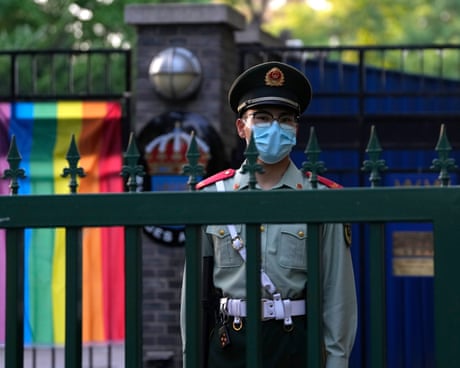
Beijing’s annual independent queer film festival has been cancelled after what is understood to have been a campaign of sustained harassment from authorities.
Beijing Queer film festival, which was due to begin on Friday in China’s capital, is one of the country’s oldest independent film festivals.
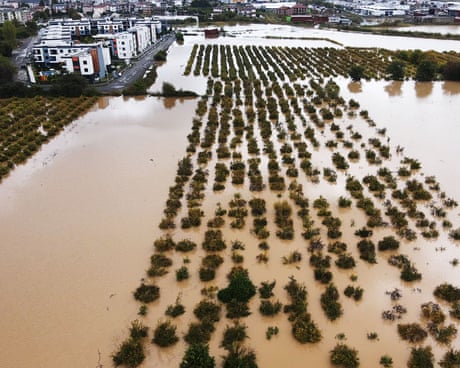
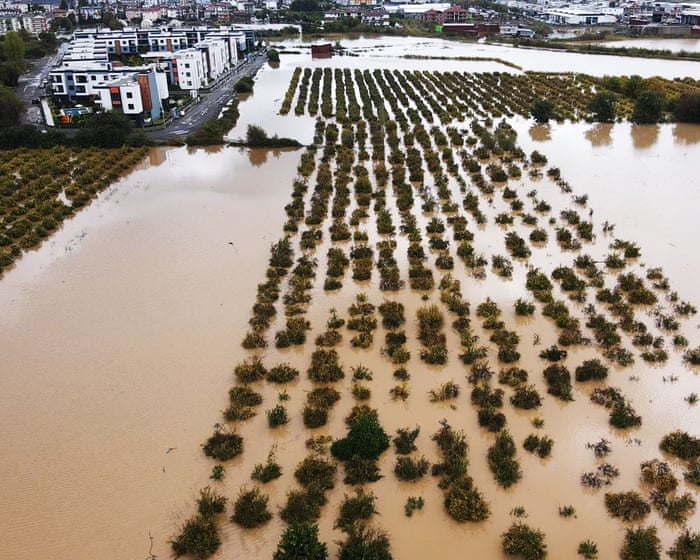
Turkey has been hit by powerful thunderstorms and a fatal tornado this week with more heavy rain expected
Heavy rain and strong winds will continue to affect parts of south-eastern Europe and Turkey over the next few days, as an area of low pressure in the region has allowed for the formation of powerful thunderstorms. During a particularly intense thunderstorm in Antalya, a coastal city in the south-west of Turkey, the formation of a tornado resulted in the deaths of four construction workers on Tuesday. Authorities in Greece and Turkey have released severe rainfall and flooding warnings, as a further 100-150mm (nearly 4-6in) of rain is expected this week in central Greece and western parts of Turkey, with locally higher totals possible.
Travelling eastwards towards south Asia, strong winds and heavy rainfall have swept across the Indian regions of Odisha and Andhra Pradesh as Cyclone Arnab made landfall. With wind gusts in excess of 85mph (140km/h) and rainfall totals in some regions exceeding 200mm, the severe storm has prompted mass evacuations of more than 180,000 people, as well as widespread disruption to energy and transport infrastructure. The cyclone will weaken as it continues to traverse northwards over the coming days, though will continue to deliver heavy rain to parts of northern and central India as it does so.
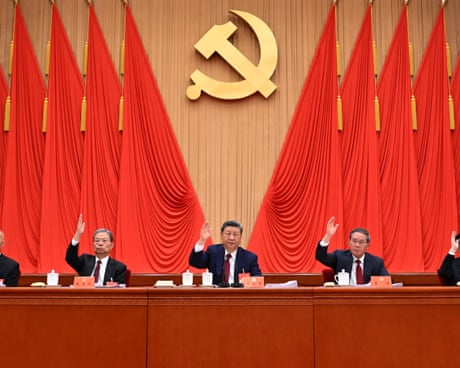
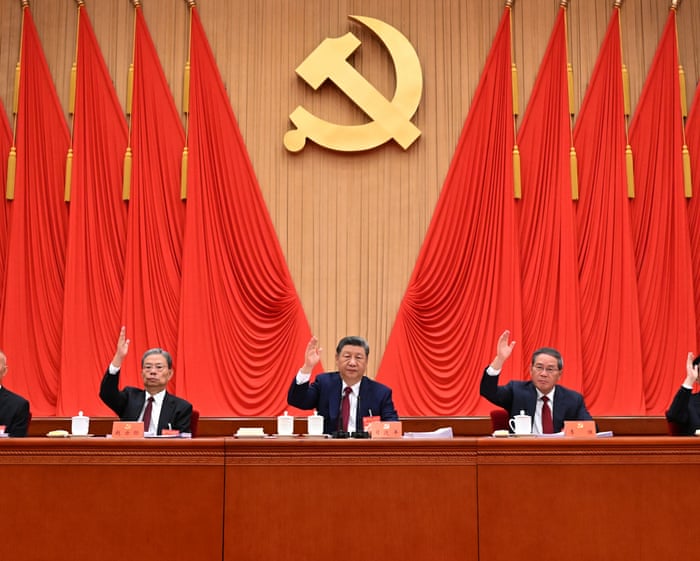
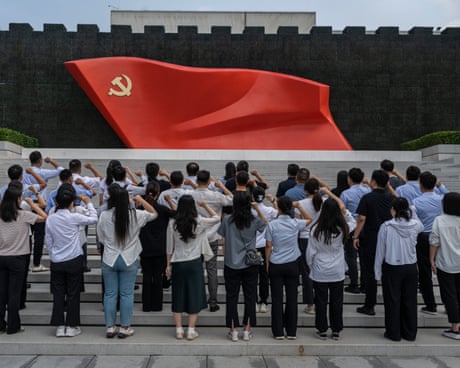
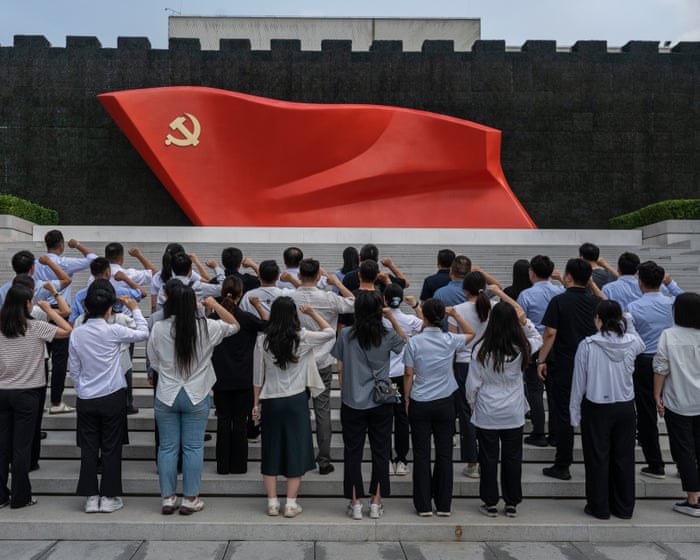
The unprecedented number of empty seats at the fifth plenum – a symbol of expulsions – serve as a symbol for the scale of the purges under Xi Jinping
China expelled a record number of officials from the Chinese Communist party (CCP) as it concluded a major political gathering, which saw an unprecedented number of empty seats indicating the scale of the purges under Xi Jinping.
A record 33 members were expelled at this week’s fifth plenum, a gathering of top officials that takes place roughly once a year.
As many as 8 million people have been affected by food shortages, electricity blackouts and health clinic closures
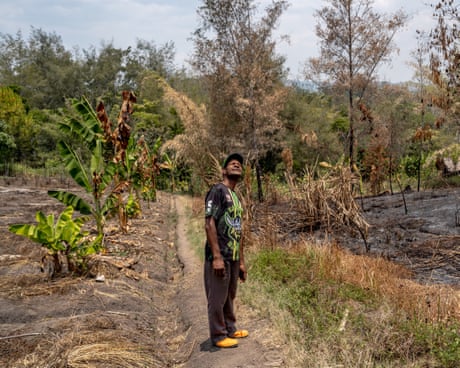
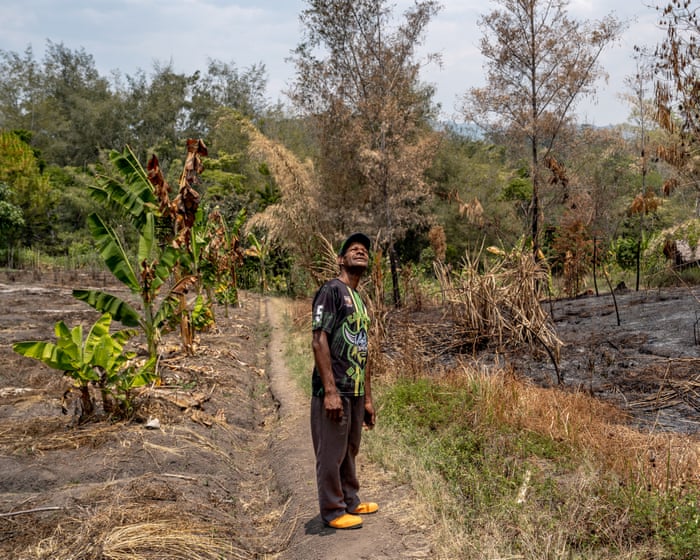
Extreme drought driven by an historic El Niño is affecting as many as 8 million people in Papua New Guinea, causing a cascade of issues from shortages of food and water, to electricity scarcity and schooling disruption.
An influential coalition that includes churches, trade unions and business groups has said the Pacific nation is in the midst of a “national crisis”, but there appears to be “no coordinated plan to protect vulnerable communities from the worsening impacts of El Niño.”
Blaze was world’s deadliest residential fire since 1980, but some survivors and bereaved families say justice has yet to be served
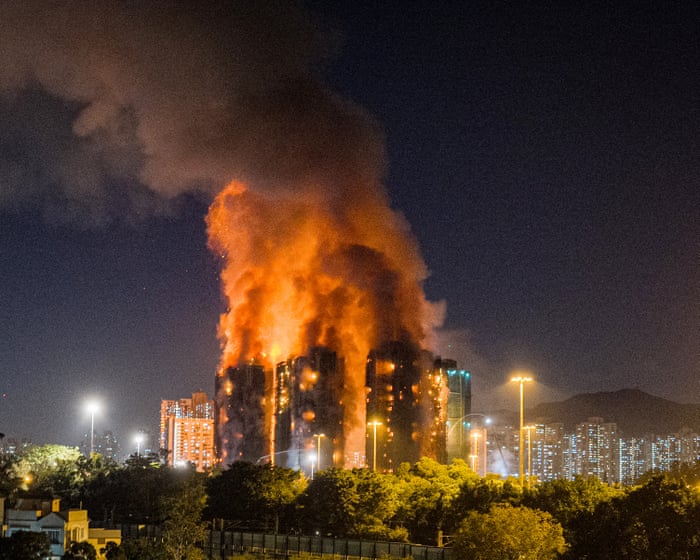
Hong Kong’s leader has apologised for government shortcomings that contributed to a fire that killed 168 people in the city last year, a rare sign of public contrition that nevertheless failed to impress some victims’ families.
The chief executive, John Lee, and seven other officials bowed in apology at the release of a report that pointed to “decades of failure” by government bodies.
Jensen Huang reported to have had close relationship with tech company executive suspected of passing intel to China
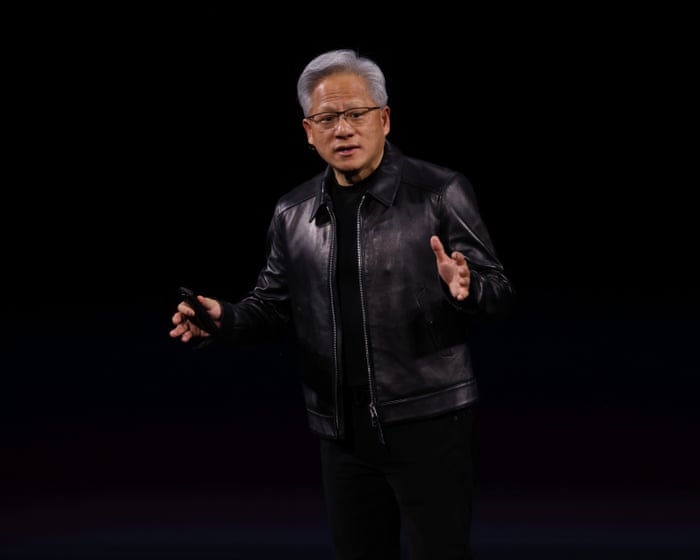
US intelligence agencies believe the Nvidia chief executive, Jensen Huang, has been targeted by an alleged Chinese spy who had done business with him, according to a new report by the New York Times.
Alice Huang or Huang Le, of no relation to the Nvidia CEO, is an executive at a Singapore-based datacenter company called Megaspeed. She had previously been suspected of smuggling Nvidia chips to China, prompting American officials to surveil and monitor her. Those officials have determined that she was acting as a Chinese intelligence asset, passing commercial information to Beijing, the New York Times reported, citing unnamed sources.
Sanrio ends association with TV drama Vivant after China says portrayal of ruthless Chinese agents is ‘deliberate smear’
The company behind the successful Hello Kitty franchise has apologised and ended its commercial tie-up with a Japanese TV drama after Chinese state media and netizens condemned the show’s “deliberate smears” against China.
Sanrio, a Japanese firm whose characters are popular around the world, said in a post on the Chinese social media site Weibo that it had decided to end its association with the TV drama Vivant after concluding that it “contained elements inconsistent with Sanrio’s core values”.
Survivors tell rights group that serving officers who worked as guards administered electric shocks and beatings
Cambodian police and military officers worked as private security guards in scam compounds where thousands were forced to work in the online fraud industry, according to a report by Amnesty International.
The global rights group alleged they worked for security companies as part of a system that enabled slavery and rape in the compounds, with some guards using electric batons to keep people trapped.
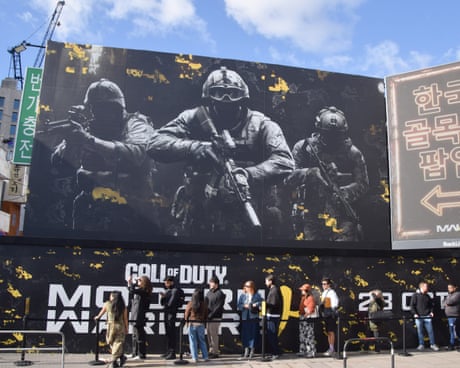
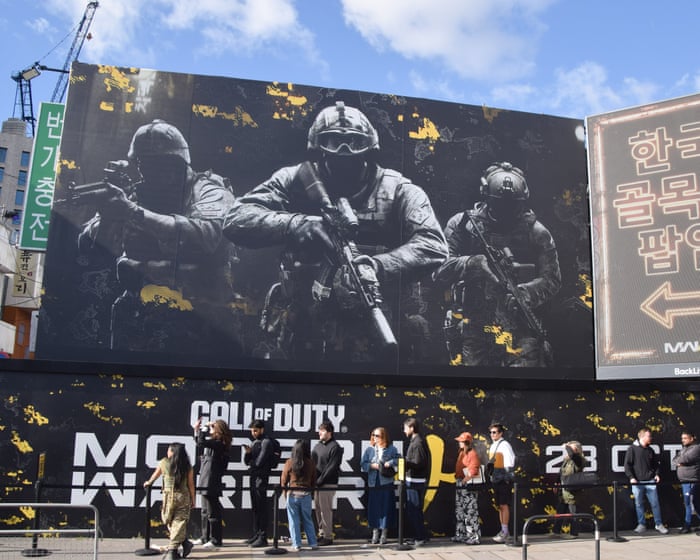
Bereaved families have urged the publisher of Call of Duty: Modern Warfare 4 to remove a clip from the game that shows a figure performing CPR and bodies lying in the street
Bereaved families in South Korea have demanded that the makers of Call of Duty remove harrowing footage of the deadly 2022 Seoul crowd crush from the latest instalment of the video game.
The clips, which are seconds-long, appear in the opening moments of Call of Duty: Modern Warfare 4, and are used to represent a scenario of civilian casualties during a fictional North Korean invasion.
Apple and Google were hit with a combined KRW63.7 billion ($47.6 million) in fines for banned activities related to their respective app marketplaces and told to revise their business practices by South Korea’s communications regulator.
The Korea Media and Communications Commission (KMCC) issued a penalty of KRW42.9 billion to Google and KRW20.8 billion to Apple, and informed the companies they must revise external payment policies and resolve other issues.
It stated the companies “engaged in prohibited acts” under rules in its Telecommunications Business Act.
The regulator has been undertaking investigations into various elements of the pair’s app distribution procedures since 2022.
It looked into whether specific payment methods were being imposed, claims of unfair delay on app reviews and, in Apple’s case, “impairing users’ interests”, which is about commission charges.
The KMCC accused both companies of imposing “unreasonable conditions” on developers seeking to use third-party payment methods, which it asserted effectively forced the use of the brands’ in-app systems.
It also argued the companies “unfairly delayed app reviews” despite “predictable review timelines” being “critical” to developer’s businesses.
The KMCC stated app companies were not given “specific reasons when reviews were delayed” and the companies did not clearly respond to individual inquiries for explanations or requests for expected timelines.
It also accused Apple of imposing “discriminatory commissions” on app developers between 2015 and 2023.
The regulator ordered Google and Apple to amend their business procedures by removing restrictions on alternative payment options or app review procedures “and to prevent the recurrence of discrimination between domestic and overseas app developers”.
KMCC chair Kim Jong-cheol said he hopes the “sanctions will serve as a turning point toward substantive changes in market structure that app developers and end users can feel”.
Lack of profits and the threat posed by western countries are raising concern about the sustainability of Beijing’s AI boom
Trillions of dollars have been wiped from China’s stock markets in recent months amid increasing anxiety about the future of artificial intelligence, as Beijing races against the United States for dominance in the sector.
The STAR 50 Index, which tracks technology and innovation companies on the Shanghai stock exchange, has plunged 40% since June. Other indexes of major companies dropped by about 20% over the same time period.
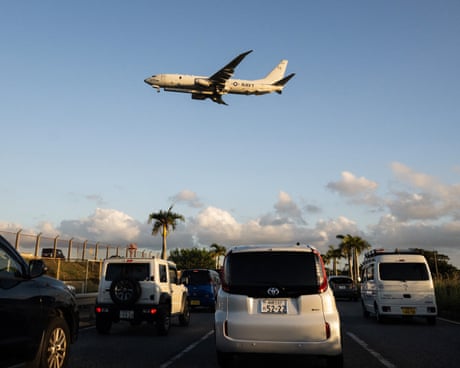
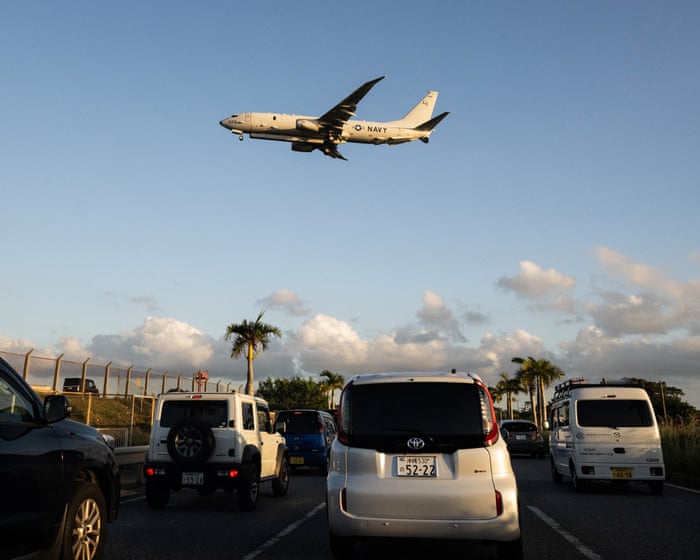
US military says the restrictions on the electric vehicles at Kadena airbase also apply to delivery drivers and taxis
One of America’s biggest overseas military bases has banned vehicles made by the Chinese electric vehicle maker BYD over security concerns, the US military in Japan said on Tuesday.
The ban, which went into effect this week at Kadena airbase on the southern Japanese island of Okinawa, has fueled speculation that similar measures could be taken at other US military facilities as part of Washington’s crackdown on Chinese technology it suspects of being used to collect sensitive information.
Devin Jacob Ballard, 20, denies charges that he fatally strangled Anna Yagi, 39, in a hotel on the island of Okinawa
Prosecutors in Japan have filed formal charges against a US marine suspected of murdering and robbing a woman while stationed on the country’s island of Okinawa, according to Japanese media.
Devin Jacob Ballard, a 20-year-old lance corporal assigned to Marine Corps Air Station Futenma in Okinawa, is charged with fatally strangling Anna Yagi, 39, at a hotel in the city and stealing from her a backpack containing a wallet, the public broadcaster NHK reported.
Indian engineering services company L&T Technology Services (LTTS) agreed a five-year contract to back Nokia’s local engineering and R&D work into areas including 5G, AI-based operations and next-generation computing infrastructure.
LTTS plans to establish a dedicated offshore development centre to support the Finnish vendor’s R&D programmes spanning product engineering and development, embedded systems, and software and system integration.
Financial terms were not disclosed.
LTTS added it would also assemble a dedicated engineering team to work with Nokia R&D teams globally.
It stated the development centre would focus on engineering for telecoms and data centre infrastructure, along with employing AI in network automations and developing intelligent automation.
Vivek Jaiswal, SVP of engineering at Nokia, said India is an “important innovation hub” for the vendor and backed LTTS to help “expand our R&D footprint and accelerate innovation”.
He argued is it essential Nokia continues investing in R&D to deliver the “advanced connectivity technologies” AI requires.
For LTTS, the contract aligns with a focus on next-generation computing and AI infrastructure.
LTTS provides AI, digital and engineering R&D services across more than 25 countries.
The agreement comes as Nokia positions AI infrastructure and advanced connectivity as key growth areas during a period CEO Justin Hotard previously called a “super cycle” involving the technology.
Faced with a stagnant jobs market, many are spurning children or pets in favour of ‘raising bricks’
Young adults in China looking for a cheaper, low-maintenance alternative to having children or pets have found an answer: raising bricks.
Bricks may not be as cuddly as cats or as life-affirming as human offspring, but they also cost next to nothing. “No cats, no dating, I started raising a brick,” wrote one brick parent on social media.
The fifth plenum comes against a backdrop of years of purges that have had some analysts wondering if the issue is corruption or a lack of loyalty
When Xi Jinping came to power in 2012, he pledged to stamp out corruption all through the ranks of the Communist party. More than a decade later, the pace of investigations has not slowed. Last year, China’s disciplinary authorities opened investigations into more than 1 million people, including more than 100 officials at or above ministerial or provincial level.
As Chinese Communist party (CCP) officials kick off an important meeting this week, discipline – and party loyalty – is high on the agenda. For those who try to read the tea leaves of elite Chinese politics, concern about the apparent lack of discipline is dominating CCP discussions.
Four of China’s new KJ-3000 airborne early warning aircraft have been spotted at the Xi’an Aircraft Company complex, suggesting the type may have entered low-rate or serial production just 22 months after its first flight.
Satellite images captured around October 4, 2026, by Vantor and posted to social media show four KJ-3000 early warning aircraft at the Xi’an Aircraft Company (XAC) complex in Yanliang. Three were spotted near the Y-20 production facilities, and the fourth was seen at the adjacent China Flight Test Establishment (CFTE).
Senior Fellow J. Michael Dahm of the Mitchell Institute for Aerospace Studies analyzed all available images in depth and assessed that the presence of four aircraft at Xi’an’s Y-20 production facility indicates the KJ-3000 has entered serial production.
However, Chinese military aviation specialist Andreas Rupprecht seemed to agree with Dahm’s assessment, though he noted that the images could instead signal that the aircraft have entered low-rate production.
“Consequently, this could indeed be a sign that production or LRIP has begun; however, it could also be that all 4 previously known prototypes are in place. What we therefore need are clear photographs of the aircraft, their serial numbers, and, at best, showing them in PLAAF grey,” he argued, adding just the amount of caution required vis-à-vis Chinese platforms.
The KJ-3000, expected to be China’s most advanced early warning aircraft, first broke cover in December 2024, right after the sixth-generation prototypes, the J-36 and the J-50, were seen flying for the first time.
A pixelated image of the KJ-3000 in flight was posted to social media, as the EurAsian Times had reported at the time. Another highly pixelated image of a primer-painted aircraft bearing serial number 7821 surfaced in May 2025.
Three KJ-3000s seen at XAC facility alongside Y-20s (Image from Vantor, sourced from Mizar Vision on X)
Notably, AEW&C aircraft serve as “eyes in the sky,” providing real-time surveillance and command and control over large areas. They are crucial force multipliers that coordinate air operations, guide fighters, and integrate data from multiple sources, including satellites, other aircraft, and ground-based sensors, serving as airborne command centers. Thus, playing a vital role in complex, dynamic battlefields where rapid decision-making is key.
Although details about the KJ-3000 are scarce, it is based on the Y-20B transport aircraft and powered by a WS-20 high-bypass turbofan engine.
The aircraft has a noticeable set of antennae on the forward fuselage and a large circular radome positioned over the rear fuselage. It also features a prominent intake at the base of the tailfin, likely to supply cooling air for its numerous onboard electronics. Additionally, it has an aerial refueling probe above the cockpit.
The aircraft is expected to have a detection range of 360 to 500 kilometers, although some estimates put it at 600 to 1,000 kilometers. These conjectures couldn’t be verified.
KJ-3000 AEW&C aircraft on its maiden flight (Via X)
The massive early warning radar aircraft is likely intended to replace the KJ-2000, China’s only large jet-powered AEW&C platform to date. The People’s Liberation Army Air Force (PLAAF) had a limited fleet of about four KJ-2000 aircraft, converted from Russian Ilyushin Il-76MD transports in the early 2000s, as the program stalled due to limited access to suitable Il-76 airframes and reliance on Russian engines and spares.
The KJ-3000 is believed to be a massive improvement over the KJ-2000. It can reportedly carry up to 66 tons of payload (16 tons more than the KJ-2000), and the WS-20 engines provide more thrust (about 31,000 pounds) and fuel efficiency, enabling longer flights.
The KJ-3000 would serve as a high-end airborne command, control, and surveillance node, significantly enhancing China’s ability to detect, track, and coordinate forces across the vast distances of the Indo-Pacific in a potential conflict with the United States.
Its large AESA radar—mounted on a high-flying, long-endurance Y-20B platform—provides a much greater radar horizon than ground-based radars or existing smaller Chinese AEW&C aircraft.
Operating at higher altitudes and with aerial refueling will allow the KJ-3000 to provide persistent coverage over key maritime approaches, the Taiwan Strait, the Philippine Sea, or the South China Sea.
The aircraft could detect aircraft, ships, and potentially low-observable or low-flying threats (such as drones and bombers) farther away, giving Chinese forces earlier warning and more time to decide on a fast-moving battlefield.
The KJ-3000 is designed as a “sky command center.” It can track multiple targets at once and direct Chinese fighters, such as the J-20 stealth aircraft, as well as long-range air-to-air missiles, surface-to-air missiles, anti-ship missiles, and drones.
Furthermore, the KJ-3000 detects and tracks carrier strike groups, airborne tankers, AWACS, and strike packages at longer ranges, feeding targeting data to ballistic and cruise missiles and aircraft, and helping Beijing’s painstakingly built Anti-Access/Area-Denial structure.
A Mismatch Between Chinese & US Capability
Interestingly, China’s expanding early warning capabilities contrast sharply with those of the United States Air Force, which continues to grapple with the transition of its own heavy advanced early warning from the E-3 to the more advanced E-7 Wedgetail.
The E-3 Sentry fleet is aging, and its airframe and radar limitations are becoming more acute with every passing day. The planned replacement, the Boeing 737-based E-7 Wedgetail, already in service with allies such as Australia, South Korea, Turkey, and soon the United Kingdom, was originally planned for the USAF at 26 aircraft. However, budget uncertainty and shifting priorities have repeatedly delayed procurement.
Last year, for instance, the previous US Air Force plan to acquire 26 Boeing E-7 Wedgetail aircraft remained under review during the fiscal 2026 budget process under the current Trump administration, as the EurAsian Times reported at the time.
However, Congress pushed back against potential cuts and cancellation of the program.
Boeing E-7 Wedgetail – Wikipedia
In March 2026, the USAF changed strategy and awarded contract modifications to continue development and procure additional engineering-and-manufacturing-development (EMD) aircraft, bringing the contracted total to about seven. Later, in May 2026, the Secretary of War Pete Hegseth stated the department’s “mindset” had changed and that the E-7 “has a future” and a place on the battlefield.
Finally, reports in June 2026 noted that the Pentagon was seeking diversion of money from the US Navy’s E-2D Hawkeye and classified Air Force accounts to fund a $1.55 billion spending plan for its revived E-7 Wedgetail program in fiscal 2027. However, it has not yet committed to the large production run of the originally planned 26 aircraft.
The continued delay has raised concerns about a potential gap in airborne battle management amid rising security threats, especially since the E-3 is becoming outdated and the US has only about 15 of these aircraft (after one loss in the Iran war).
By contrast, China is not only improving its early warning capabilities but also expanding its AEW&CS fleet—something that could trouble the US and its allies in an Indo-Pacific conflict.
China is Amassing Early Warning Aircraft
Early warning platforms are among an air force’s most strategic assets, especially since a single high-end platform can cover hundreds of thousands of square kilometers and track multiple targets during combat.However, no air force can rely on a handful of expensive, slow-moving, vulnerable early-warning aircraft alone.
So, China appears to have created somewhat of a layered AEW&C force structure.
Under this strategy, instead of fielding one type of aircraft, Beijing is working on deploying complementary tiers of platforms optimized for different roles, ranges, basing options, and threat environments. This is intended to create persistent, resilient, multi-domain surveillance that adversaries find harder to suppress.
China has developed newer early-warning aircraft based on existing designs, including the KJ-500, which forms the backbone of the PLAAF’s early-warning capability and is based on the Shaanxi Y-9 turboprop, and the KJ-200, a legacy aircraft based on the older Y-8.
The KJ-200 and KJ-500 are smaller than the high-end KJ-3000. They are considered ideal for regional operations, including in volatile areas like the Taiwan Strait and the South China Sea, and would play a major role in a potential contingency in these flashpoint areas.
The KJ-200s, for one, provide supplementary coverage and experience while the PLAAF expands and simultaneously upgrades its KJ-500 fleet.
Shaanxi KJ-500 – Wikipedia
China has also developed the KJ-700, a next-generation Y-9-derived design intended as a more capable complement to the KJ-500. It features improved sensors and enhanced networking and is designed to handle denser, more complex threat environments, including low-observable aircraft and large numbers of drones. It is likely designed for missions anticipated in a future conflict with the United States.
China has also developed the KJ-600 for carrier-based operations, giving the PLA Navy massive reach and the ability to detect incoming threats from farther away, allowing it to project power far from its coast. With a twin-turboprop design, folding wings, and a large AESA rotodome, the KJ-600 entered operational service on the CATOBAR carrier Fujian in 2025 and has been observed on the ski-jump carrier Shandong.
The KJ-200 could be classified as a low-tier legacy aircraft, while the KJ-500 and KJ-700 could be clubbed as medium-tier and advanced medium-tier aircraft, respectively.
Meanwhile, the KJ-600 is a specialized carrier aircraft. The larger, more capable KJ-3000 falls into the high-tier category, and its serial production would let China field multiple aircraft for continuous coverage, attrition resilience, or simultaneous operations.
Contact the author at sakshi.tiwari13 (at) outlook.com
When both Subic Bay Naval Base and Clark Air Base were closed as active American military facilities in the early 1990s, the Philippines was said to be the sick man of US alliances. The same Philippines now seems to have emerged as America’s pivot in the Indo-Pacific.
General Ronald Clark, Commander of US Army Pacific, made it clear in an October 18 interview with the Financial Times that the Philippines, alongside Japan and South Korea, is central to US deterrence against hostile forces (implying China) in the Indo-Pacific.
The commander of US Army Pacific, a component of Indo-Pacific Command, said he wanted to demonstrate more “exquisite” military capabilities to help “show the adversary some things that they should be concerned about.”
As part of that push, US Army Pacific has expanded its role, including by temporarily deploying weapons in the Philippines, Japan, and other parts of the region that would play a critical role in a war with China, including over Taiwan, according to General Clark.
He revealed how Typhon, a mobile missile launch system that fires SM-6 missiles at ships, and Tomahawks that could strike parts of coastal China from the Philippines, have been used in recent joint exercises with the Philippines.
The US Army has also been using the High Mobility Artillery Rocket System (HIMARS) in ways designed to send a clear message to China about the joint military capabilities of America and its allies, Clark said.
Mentioning an exercise earlier this year in which the army moved long-range precision weapons from the US to the Philippines and brought ammunition from South Korea for a live-fire mission, Gen. Clark stressed that it was important for deterrence.
“It causes them to go: ‘Hey, this is something that we have to think about,’” he said, adding, “You can see it operate and we can do it at scale at a time and place of our choosing. So, you reveal capability in order to give your adversary pause.”
Incidentally, in an earlier conversation with the Wall Street Journal, Gen. Clark, who commands 107,000 soldiers, talked about the “tyranny of distance” that made it impossible to fight China with just air and naval power.
He argued that China’s vast geographic expanse and its anti-access/area-denial (A2/AD) capabilities make it impossible or too risky to rely solely on air and naval power.
Here, Gen. Clark argues that the Philippines’ geography is a major advantage. The country’s 7,641 islands sit near vital maritime routes, the South China Sea, and the Luzon Strait/Taiwan Strait, making it an irreplaceable staging ground for US surveillance, logistics, and coastal defense.
From Batanes in northern Luzon—100 miles from Taiwan—to Palawan facing the Spratlys in the south, the archipelago locks the two hottest flashpoints: the north controls the Taiwan Strait, and the south controls the South China Sea.
For the US military, it is the only territory that can monitor both the Taiwan Strait and the West Philippine Sea simultaneously. The archipelago can thus complicate the movement of Chinese naval forces from their coastal waters into the wider Pacific.
File Image
Incidentally, America is rebuilding its military presence in the Philippines after its 1992 withdrawal.
The return to Subic Bay and the expansion of US military cooperation across the Philippines mark a major strategic reversal. Washington is once again developing access to facilities that can support its operations in the western Pacific.
The US has access to nine Philippine military sites under the Enhanced Defense Cooperation Agreement (EDCA) and is investing more than $300 million to upgrade infrastructure.
However, all 9 (nine) bases are owned by the Armed Forces of the Philippines (AFP), but the US has been granted rotational access. The first 5 (five) were agreed in 2014, with 4 (four being added later in 2023 by President Marcos Jr. to deal with threats from the South China Sea.
The nine sites are being turned into A2/AD nodes that complicate any Chinese movement through the First Island Chain.
Notably, rather than building massive permanent bases, the US and the Philippines are building a flexible, distributed network that complicates targeting by China and raises the costs of a potential conflict (“deterrence by denial”).
Viewed thus, it is understandable why the US has introduced, as seen in Gen. Clark’s FT interview, advanced mobile-strike and missile systems such as the Typhon mid-range missile system into the Philippines, capable of reaching targets in the South China Sea and southern China.
One could further argue that Gen. Clark’s interview was not about the Philippines alone. It was about a new American way of fighting a war in the Indo-Pacific that is distributed, land-based, visible, and anchored on three democracies of Japan, South Korea, and the Philippines. That is why he put the Philippines in the same sentence as Japan and Korea.
One can thus surmise that, in a future contingency arising from Chinese actions, Japan will provide airfields, South Korea ammunition, and the Philippines firing positions.
This aligns with the US 2026 National Defense Strategy that EurAsian Times explained earlier. The idea is to build “a strong denial defense” along the First Island Chain.
In this scheme of things, Japan is the northern anchor — with long-range missiles, US-Japan command integration, and bases. South Korea is the arsenal and logistics hub — Clark himself cited a live-fire exercise in the Philippines using ammunition brought from South Korea, showing how Korean stockpiles now sustain Philippine operations.
The Philippines is the southern anchor and now a vital Indo-Pacific center for the US. The 12th Philippines-United States Bilateral Strategic Dialogue, held in Manila on February 16, 2026, officially reaffirmed both allies’ commitment to maintaining a vigilant posture, strengthening deterrence across the First Island Chain, and keeping critical sea lanes open.
Apparently, Washington is not only institutionalizing this triangle, the US, Japan, and the Philippines, but also widening its scope by involving Australia and forming the “Squad.”
The Squad’s core focus is to counter maritime pressure and escalation in the South China Sea and East China Sea and reinforce freedom of navigation.
Accordingly, defense officials and defense chiefs from the four nations have increasingly aligned through mini-lateral dialogues, joint exercises (such as Balikatan), and security assistance packages (including transfers of Japanese warships and patrol aircraft to the Philippine Navy).
Philippine Navy holds a Flag Raising Ceremony atop the Mavulis Island peak in Batanes-Facebook.
The developments above make it clear that the Philippines has become the centerpiece of Washington’s strategy to deter China in the Indo-Pacific. As Elbridge Colby, US Under Secretary of Defense for Policy, said this year, Manila is Washington’s “model ally”.
In his words, “When our partners are strong, deterrence is strong. And that is exactly what we have here in Manila, under the leadership of President Marcos, Secretary of National Defense Teodoro, and other key leaders. We see and respect a resolute and proud nation that is determined to strengthen its own capabilities to better defend itself and its interests. A model ally.”
The Philippines now strengthens America’s network of strategic positions running from Japan through Taiwan to the Philippines. Both are developing capabilities intended to make Chinese military operations more difficult, costly, and uncertain.
But as explained above, that is in a manner that affords more operational flexibility for America through access to ports, airfields, and other facilities that can help US forces disperse, sustain operations, and respond more quickly during a crisis, without depending on a small number of major bases.
In other words, thirty-four years after losing its sovereign bases in the Philippines in 1992, the US military has returned with comparable power, but by shifting its status from a base owner to a rotational guest.
Author and veteran journalist Prakash Nanda is Chairman of the Editorial Board of the EurAsian Times and has been commenting on politics, foreign policy, and strategic affairs for nearly three decades. He is a former National Fellow of the Indian Council for Historical Research and a recipient of the Seoul Peace Prize Scholarship.
The author can be reached at prakash.nanda (at) hotmail.com
Australia and East Timor (Timor-Leste), ASEAN’s eleventh member state, have signed a defense framework to boost cyber and maritime security as Canberra attempts to keep China away from its island neighbors.
Richard Marles, Australian Deputy Prime Minister and Defense Minister, said: “Australia and Timor-Leste are close neighbors, trusted partners and longstanding friends. Signing the Defense Cooperation Framework with Timor-Leste marks an important milestone in our defense relationship and provides a modern foundation for deeper cooperation in the years ahead.
Australia is proud to be Timor-Leste’s largest defense and security partner, and we remain committed to supporting Timor-Leste’s defense capability.
Together, we are strengthening our ability to work together to respond to shared security challenges, support humanitarian and disaster relief efforts, and promote a peaceful, stable and resilient region.”
He added: “Australia and Timor-Leste share a history of deep security cooperation, underpinned by decades of security cooperation and strong people-to-people ties. This package reflects the trust and friendship between our countries. As Timor-Leste takes on a greater role in our region as ASEAN’s newest member, Australia is proud to stand alongside our close neighbor and work together in support of a peaceful, stable and prosperous region.”
Foreign Minister Penny Wong said: “The Partnership Joint Declaration is driving a new era of cooperation between Australia and Timor-Leste, and these initiatives are a demonstration of our close partnership and friendship. As close neighbors and partners, Australia and Timor-Leste are working together to address shared challenges and ensure the peace, stability and prosperity of our region.”
East Timor is around 700 kilometers northwest of Australia and gained independence from Indonesia in 2002. It joined ASEAN in October 2025.
Earlier in August, China said its Defense Minister, Dong Jun, met with East Timor’s leaders in Dili and offered to “take military-to-military relations to a new level”. The visit was the first by a Chinese defense minister and coincided with commemorations for the FALINTIL-Defence Forces.
Dong met President Jose Ramos-Horta and Prime Minister Gusmao.
Marles and Gusmao signed the pact under which Australia will provide $62 million (US$43.56 million) over five years for cyber security, maritime security, infrastructure, disaster relief, and training.
More than $19 million of that is earmarked for a cyber-security uplift, including specialist advisers and protection of critical systems. Australia will also give East Timor new police vessels for maritime patrols, search and rescue, and countering transnational crime.
PM Gusmao told reporters the agreement will help East Timor fight organized crime and illegal fishing. The package expands the long-running Timor-Leste Police Development Program and supports the country’s role as ASEAN’s newest member.
East Timor’s upgraded ties with Beijing have caused regional security concerns.
Earlier in September 2023, President Jose Ramos-Horta had assured Australia and Indonesia that the country had not forged any military base arrangements with Beijing.
“We don’t have a Chinese military base of any sort. We never discuss that with China, even. The Chinese never approach us on that,” Ramos-Horta had said. He highlighted that Timor-Leste maintains normal relations with all partners while prioritizing expanded defense and maritime security cooperation with Australia.
“Indonesia and Australia…we can include Singapore and Malaysia…they are the countries closest to us…can always sleep at peace. Timor Leste will not be a nuisance, a concern in terms of security,” Ramos-Horta has confirmed to Reuters.
Western critics frequently caution against Beijing’s attempts to establish military outposts by taking over infrastructure from nations that default on loan repayments, a practice often labeled “debt trap diplomacy.”
In Sri Lanka, China took over Hambantota port after the country defaulted on loan repayments.
Canberra has grown concerned about China’s efforts to forge security ties with nearby developing nations.
In 2022, China signed a security agreement with the Solomon Islands, raising concerns that it could eventually lead to a Chinese naval presence.
Although it assured it will not host a base, Canberra remains apprehensive.
Since then, Australia has pursued agreements across the Pacific, including with Vanuatu, to reinforce its role as the primary security partner and constrain third-party arrangements with an eye on China.
Damien Kingsbury, Emeritus Professor, Deakin University, believes that “Small countries such as East Timor risk having large investors and donors such as China swamp their local economy and thus lose the capacity to make independent economic decisions.
China could end up having an outsized influence in policymaking.”
“When China looks at investing in another developing country, they do so with one eye, certainly on a viable business, but with the other eye, very much on a longer-term strategic interest.”
Kingsbury has also noted Timor-Leste’s economic pressures, including the expected depletion of its petroleum fund, as a driver of closer ties, while highlighting past caution by Dili (e.g., rejecting a Chinese radar proposal whose range exceeded Timorese waters).
Australia’s Prime Minister Anthony Albanese (R) reacts in an open-top car owned and driven by East Timor’s President Jose Ramos-Horta (L) upon his arrival in Dili, East Timor on January 28, 2026. (Photo by Valentino Dariell de Sousa / AFP)
Australia’s Key Role in East Timor
Australia played a prominent role in restoring order in East Timor after violence erupted following its 1999 independence vote. It led the International Force East Timor (INTERFET), a multinational mission that paved the way for the territory’s formal independence in 2002.
Indonesia ruled East Timor from 1975 to 1999. In August 1999, the United Nations organized a referendum. More than three-quarters of voters chose independence.
The result triggered widespread violence by pro-Indonesian militias. Homes were burned, people were killed or forced from their homes, and hundreds of thousands were displaced. Pro-Indonesian militias destroyed much of the territory’s infrastructure.
In response, the UN Security Council authorized INTERFET on 15 September 1999. Australia agreed to lead the force. Troops began arriving in Dili on 20 September under Major General Peter Cosgrove’s command.
Australia provided the largest contingent, about 5,500 personnel from the army, navy, air force and police. This was Australia’s largest military deployment since the Vietnam War. 22 countries took part, including New Zealand, Thailand, the Philippines, Singapore, the United Kingdom, the United States, among others. At its peak, the force numbered around 11,000.
INTERFET was tasked with restoring peace and security, protecting UN staff, and helping deliver humanitarian aid. The force quickly brought the situation under control. Indonesian troops withdrew, militia activity largely stopped, and by early 2000, the immediate crisis had eased.
In February 2000, INTERFET handed over to the United Nations Transitional Administration in East Timor (UNTAET), which governed the territory while it prepared for independence.
On 20 May 2002, East Timor became fully independent—the first new country of the 21st century. Australia continued to support the new nation through the follow-on UN mission (UNMISET) and by helping to train and equip the fledgling East Timorese defense force. Australian personnel remained involved in security and capacity-building for several more years.
On 13 September 2024, Prime Minister Xanana Gusmão, marking the 25th anniversary of INTERFET’s arrival, in Dili had said: “The arrival of INTERFET was a beacon of hope. The relief and joy our people felt when INTERFET arrived was immeasurable. INTERFET’s contribution to helping put an end to the violence in Timor-Leste is remembered with deep gratitude by all Timorese.”
“Our regional neighbors, including Australia, New Zealand, Thailand, and the Philippines, played leading roles in this mission, which marked a turning point in our fight for freedom.”

 Login