Vega said she still doesn’t know why she was fired from the show, which has experienced a slump in ratings.
Cecilia Vega, the 60 Minutes correspondent fired as part of a dramatic overhaul of the CBS News show this spring, said it “hurts” to see what has happened to the storied newsmagazine and other segments of the network, and repeated allegations that she was told to insert “factually untrue” information into her work.
“It pains me. It hurts to watch, from afar. It hurts to talk to my colleagues who are still there. It hurts to see the ratings slump that is happening right now,” Vega said during a Thursday evening talk for students at American University in Washington DC.
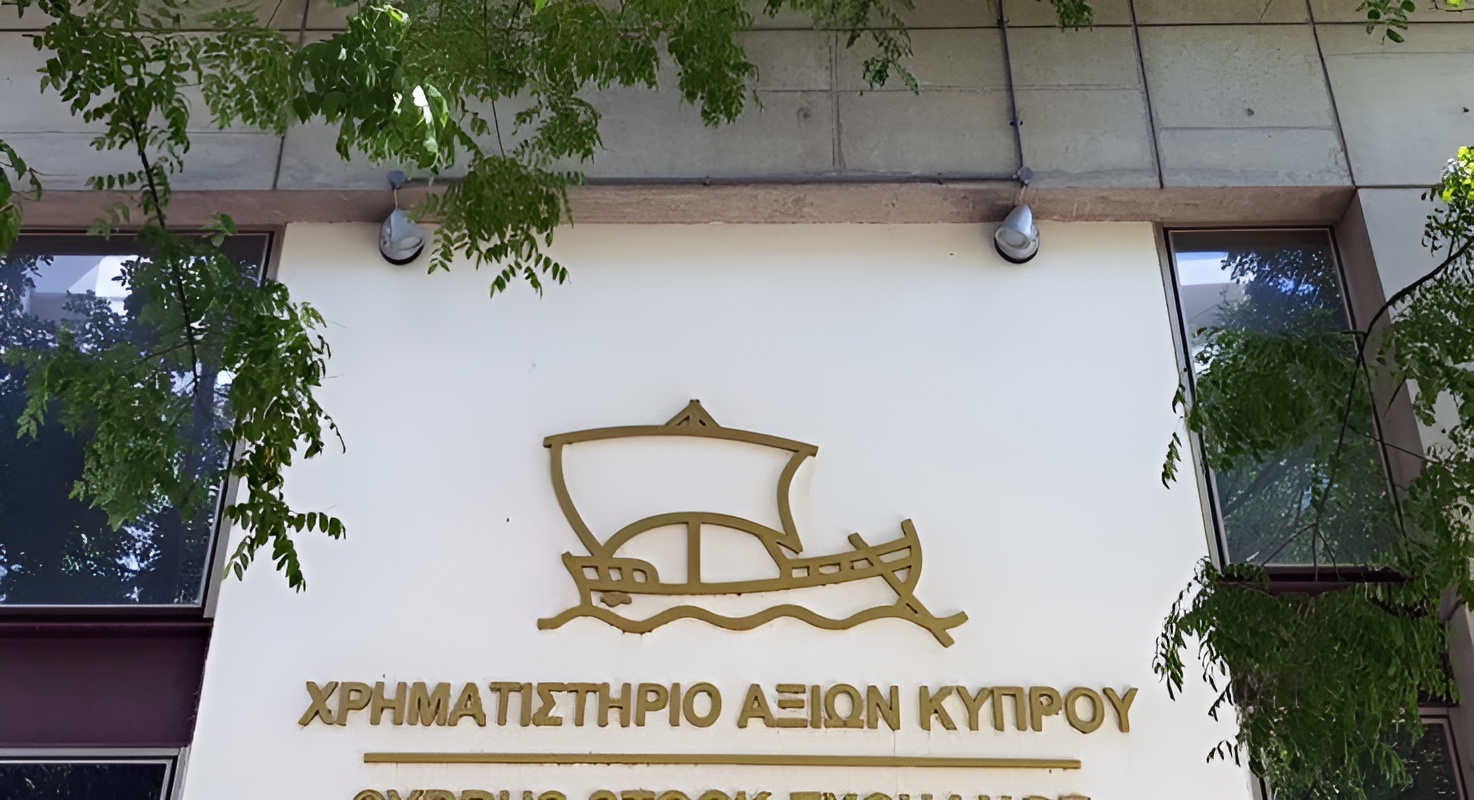
The Cyprus Stock Exchange (CSE) has ratified the continued suspension of trading in the shares of the Reputation Exchange Plc, keeping the company off the Emerging Companies Market until December 21, 2026, unless it resolves its outstanding obligations earlier.
The decision was confirmed at a recent meeting of the CSE Council under Article 184 of the Cyprus Stock Exchange Law, following the initial announcement on October 15, 2026.
The suspension will remain in place for a further two months, unless the company addresses the issues that led to the trading halt.
These include its failure to maintain the services of a Nominated Adviser, as well as the non-submission and non-publication of its annual financial report for the year ended December 31, 2025 and its half-yearly financial report for the six months ended June 30, 2026.
The exchange said trading could resume before the deadline if the company fulfils these outstanding ongoing obligations.
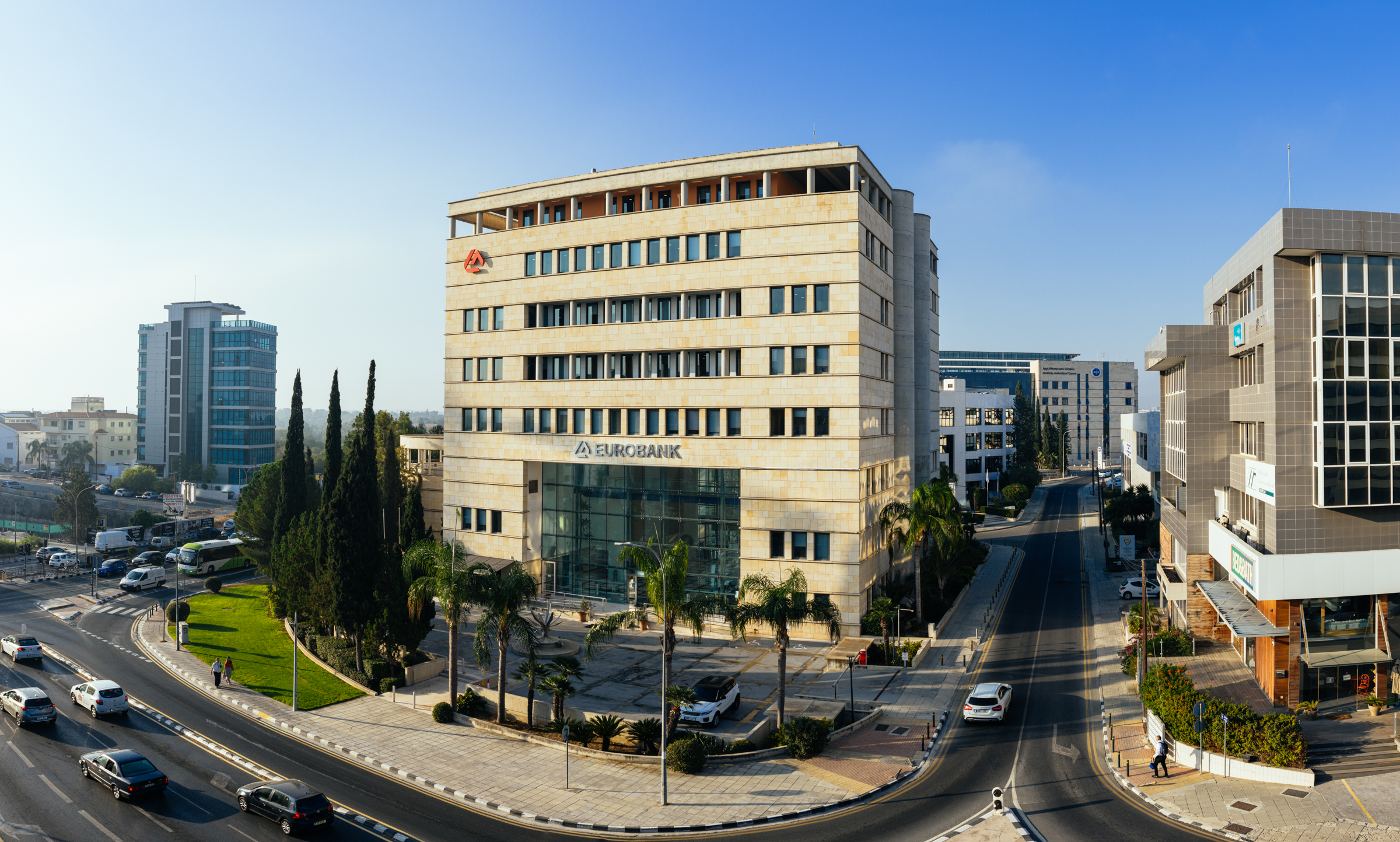
Eurobank reported adjusted net profits of €1.21 billion in the first nine months of 2026, up 14.3 per cent year-on-year, with its operations outside Greece contributing almost half of the group’s earnings, despite a decline in profits from Cyprus.
The Greek banking group’s reported net profit rose by 12.4 per cent to €1.16bn, while earnings per share reached €0.31 and its return on tangible book value stood at 16.9 per cent.
Its non-Greek operations generated adjusted net profits of €555 million, accounting for 45.9 per cent of the group’s total, with Cyprus contributing €356 million and Bulgaria €182 million.
However, adjusted net profit in Cyprus fell by 3.9 per cent year-on-year, while the Bulgarian operation recorded an increase of 9.2 per cent.
Eurobank chief executive officer Fokion Karavias said the results had been achieved against an international backdrop of energy and inflationary pressures, alongside growing concerns over government deficits and debt.
“As Europe faces a severe energy and inflationary crisis with far-reaching political and social consequences, markets have brought concerns over fiscal deficits and rising public debt into focus,” he stated.
“Greece and Cyprus stand out in this environment, with strong primary balances of 3.3 per cent and 4.0 per cent of GDP, respectively, and rapidly declining debt levels,” Karavias added.
The bank’s loan portfolio expanded organically by €3.80bn, or 10.5 per cent, during the first nine months of the year, while customer deposits increased by €4.70bn, or 10.6 per cent, reaching €87.20bn at the end of September.
Managed funds also grew by 22.3 per cent year-on-year to €11.40bn, while private banking client assets and liabilities increased by 13.2 per cent to €15.90bn.
“Greece’s debt-to-GDP ratio is falling faster than any EU country, while Cyprus’s debt-to-GDP is down to 50 per cent. Bulgaria also benefits from a low public debt-to-GDP ratio of 33 per cent, while the euro adoption and the return of political stability further strengthen the country’s macroeconomic outlook,” Karavias said.
He said the group had continued to deliver organic growth, with its loan book expanding by 10.5 per cent annually and deposits increasing by 10.6 per cent year-on-year.
“As a result of the strong performance, the return on Tangible Book Value reached 17 per cent, with a pronounced contribution from our regional activities of nearly half of profit,” he added.
Karavias said the nine-month performance demonstrated the group’s ability to sustain organic growth and gave it confidence in meeting or exceeding its full-year targets.
“The 9M26 performance demonstrates our consistent ability to deliver organic growth and gives us confidence in meeting or exceeding our full-year targets,” he mentioned.
“The acquisition completion of Eurolife provides an additional growth engine, particularly in insurance and asset management,” he added.
The completion of the Eurolife FFH acquisition is expected to strengthen Eurobank’s insurance presence and diversification, while providing further opportunities in insurance and asset management.
The bank will distribute an interim dividend of €0.0599 per share on November 26, 2026, which Karavias said reflected its strong performance and prudent capital management.
Eurobank’s net interest income increased by 8.7 per cent to €2.07bn during the first nine months, while income from fees and commissions rose by 13 per cent to €630m.
The increase in fee income was mainly driven by higher revenues from lending, wealth management and insurance operations, and represented 76 basis points of total assets.
In the third quarter alone, net interest income rose by 5 per cent compared with the previous quarter, reaching €719m.
The bank attributed this to an increase in interest-earning assets and higher European Central Bank interest rates, with the average deposit facility rate standing at 2.29 per cent in the third quarter, compared with 2.04 per cent in the second quarter.
Core income grew by 9.7 per cent to €2.70bn, while total operating income increased by 10.8 per cent to €2.78bn.
Operating expenses rose by 6.9 per cent to €995m, but the cost-to-income ratio improved to 35.8 per cent from 37.1 per cent in the corresponding period of 2025.
Core pre-provision income increased by 11.4 per cent to €1.70bn, while overall pre-provision income rose by 13.1 per cent to €1.78bn.
Loan loss provisions declined by 5.5 per cent year-on-year to €224m, equivalent to 53 basis points of average net loans, while core operating profit before tax increased by 14.4 per cent to €1.48bn.
At the end of September, the group’s non-performing exposure ratio stood at 2.4 per cent, while provisions covered 81.9 per cent of non-performing exposures.
Total capital adequacy and Common Equity Tier 1 ratios stood at 20.4 per cent and 15.5 per cent, respectively, while tangible book value per share reached €2.65, representing an annual increase of 7.7 per cent.
The group’s total assets amounted to €114.20bn at the end of September, including €66.90bn in Greece, €29.40bn in Cyprus and €14.80bn in Bulgaria.
Gross loans totalled €59.10bn, comprising €38.60bn in Greece, €9.30bn in Cyprus and €10.10bn in Bulgaria.
Across the group, business loans amounted to €37.10bn, mortgages to €13.10bn and consumer loans to €5.30bn.
Deposits were distributed across Greece, Cyprus and Bulgaria at €48.50bn, €24.30bn and €11.70bn, respectively.
The loans-to-deposits ratio stood at 66.4 per cent, while the liquidity coverage ratio reached 174.4 per cent.
Despite the strong results, credit rating agency Morningstar DBRS has highlighted a potential deterioration in asset quality in the final quarter of the year.
The agency warned that loans affected by legislation concerning the conversion of Swiss franc-denominated loans could be reclassified as unlikely to pay during the fourth quarter.
Such a development could add around 40 basis points to Eurobank’s non-performing loan ratio and reduce its coverage ratio by 10 percentage points.
The Cyprus Stock Exchange (CSE) has extended the suspension of trading in the shares of Rianeson Investments Plc and G.A.P. Vassilopoulos Public Ltd for a further two months, until December 28, 2026, because both companies have outstanding financial reporting obligations.
The exchange announced on Friday that the suspensions would remain in force under Article 185 of the Securities and Cyprus Stock Exchange Law, as the reasons behind the original decisions had not been resolved.
Rianeson Investments has failed to submit and publish four outstanding financial reports, covering both annual and half-yearly periods.
These include its annual financial report for the year ended December 31, 2024, its half-yearly report for the six months to June 30, 2025, its annual report for the year ended December 31, 2025, and its half-yearly report for the six months to June 30, 2026.
G.A.P. Vassilopoulos, meanwhile, remains suspended because it has not submitted and published its half-yearly financial report for the period ended June 30, 2026.
The CSE said the suspensions could be lifted before the extended deadline if either company fulfils its outstanding obligations during the suspension period.
What began in 2019 as an initiative to bring traditional games into the digital age has evolved into a Cyprus-based gaming company with ambitions extending well beyond the island.
Founded by businessmen Harris Orfanides and Marios Demetriades, Spectrum.Games International Ltd has built its identity around a simple idea: gaming is not merely entertainment, but a means of connecting people across generations, cultures and geographical boundaries.
Today, led by CEO and principal shareholder Marios Demetriades, the company is expanding its presence while developing gaming concepts that combine technology, competition and cultural identity.
“For us, gaming has always been about more than entertainment. It is about bringing people together, preserving traditions and creating connections that go beyond generations and geographical boundaries,” Demetriades said.
From traditional favourites to digital communities
Established in late 2019 and launching online operations at the end of 2020, Spectrum Games recognised an opportunity to modernise familiar games without losing their social appeal.
Rather than focusing exclusively on new concepts, the company transformed traditional favourites into accessible multiplayer experiences.
Its portfolio includes Mpirimpa, Backgammon Premium and Tichu, each with established communities and distinct cultural traditions.
Its flagship game, Mpirimpa, has attracted almost 5,000 daily active users, predominantly from Cyprus and Greece, demonstrating the enduring popularity of traditional games when combined with modern digital platforms.
More than entertainment
What distinguishes Spectrum Games is its emphasis on social interaction.
While the global gaming industry continues evolving through sophisticated graphics and immersive technologies, the company has concentrated on making familiar games accessible, enjoyable and socially engaging.
Its platforms allow friends and family to play together regardless of location, while offering opportunities to meet new people and develop friendships.
Whether playing from home, during a break or while travelling, users can enjoy shared experiences that transcend physical distance.
The objective is not simply gameplay, but preserving the social traditions associated with games that have brought people together for generations.
Innovation with a Cypriot identity
Beyond its traditional portfolio, Spectrum Games is developing original concepts, including Stack Champs, a skill-based game combining accessible gameplay with competitive challenges, leaderboards and tournaments.
Another development is Stack Cyprus, a specially adapted version celebrating the island’s cultural identity and natural beauty.
Through gameplay, players will encounter locations and landmarks across Cyprus, introducing international audiences to the island while offering local players something culturally familiar.
“We want to demonstrate that a company based in Cyprus can develop innovative gaming experiences with international appeal, while celebrating the culture and traditions that make our island unique,” Demetriades said.
The initiative reflects the potential for Cyprus-based developers to create internationally appealing products inspired by their local environment, combining digital entertainment with cultural promotion.
Looking beyond Cyprus
Having established a growing player base in Cyprus and Greece, Spectrum Games is targeting additional markets where its existing games have cultural recognition.
Italy has been identified as the first potential expansion market for Mpirimpa, while the company continues promoting Tichu and Backgammon Premium in its established markets.
International growth, however, requires more than making games available in new territories.
Multilingual functionality, cross-platform accessibility, online tournaments and continuous product improvements are central to its expansion strategy.
The company is also exploring artificial intelligence and emerging technologies to strengthen customer support, improve player engagement and enhance the gaming experience.
These developments aim to support an increasingly scalable operation serving diverse international communities.
The challenge of competing globally
Access to funding remains one of Spectrum Games’ most significant challenges.
Although digital platforms allow smaller companies to reach global audiences, competing against established international gaming businesses requires substantial investment in development, marketing, technology and customer acquisition.
“Our ambition is to compete internationally, but access to funding remains one of our greatest challenges. With the right support and targeted government initiatives, Cyprus-based gaming companies could have a much stronger presence in the global market,” Demetriades said.
The company believes specially designed government funding programmes, similar to initiatives operating abroad, could help smaller developers compete more effectively.
Such measures could strengthen not only individual businesses but also Cyprus’ wider digital gaming and creative technology sectors.
For the island’s startup ecosystem, the challenge is ensuring promising locally developed products can secure the financial backing needed to scale internationally.
Building a global gaming community
Looking ahead, Spectrum Games aims to become an internationally recognised gaming company, combining traditional favourites with modern technology.
Its strategy centres on strengthening existing communities, developing original products and entering carefully selected international markets.
At the heart of that vision is the belief that successful gaming experiences are defined not solely by technology or competition, but by the connections they create.
From traditional card games played between friends to digital experiences showcasing Cyprus internationally, Spectrum Games is demonstrating how innovation can give familiar experiences new life.
For Demetriades and his team, the next chapter is about translating that philosophy into sustainable international growth while remaining rooted in the social and cultural values that inspired the company.
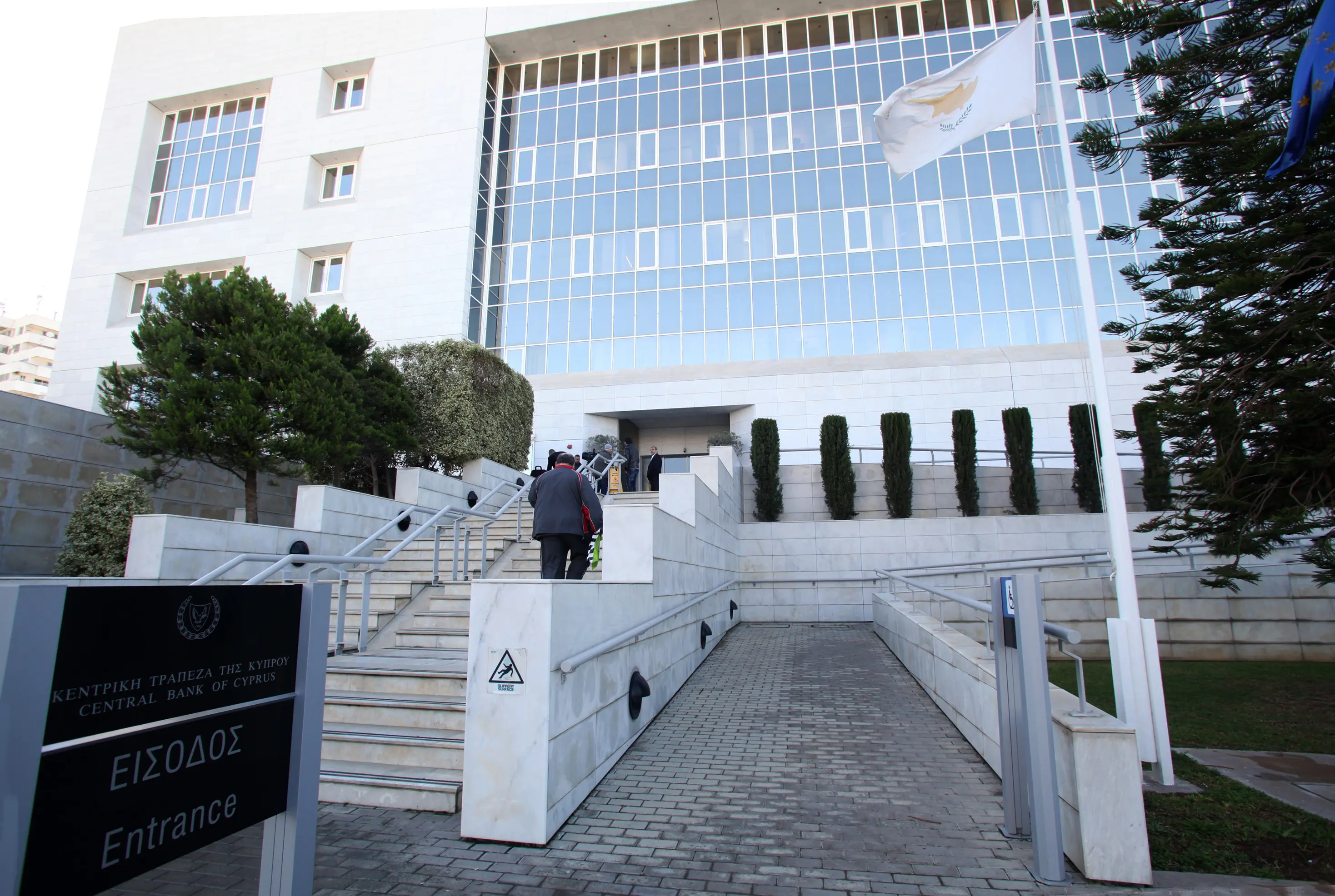
The Central Bank of Cyprus (CBC) set the reference interest rate at 11.60 per cent on Friday, under provisions of the Criminal Code aimed at preventing excessive charges on loans.
The rate is determined under Article 314A of the Cyprus Criminal Code, Cap. 154, which makes it a criminal offence for lenders to demand or receive financial or other benefits exceeding the prescribed reference rate.
The provision applies when a loan is granted, its repayment period is extended, or an existing loan is renewed or discounted.
It covers benefits received, collected, charged, stipulated or obtained either for the lender’s own benefit or on behalf of a third party.
Anyone convicted of breaching the provision faces up to five years in prison, a fine of up to €30,000, or both penalties.
The CBC determines the reference rate in accordance with its powers under the legislation, with the latest announcement setting it at 11.60 per cent.
Cyprus showcased 28 local food and drink businesses at the international SIAL Paris exhibition in France from October 17 to 21, 2026, using two national pavilions covering a combined area of approximately 356 square metres to promote domestic products and explore new export opportunities.
The event, held at the Paris Nord Villepinte exhibition centre, is considered one of the leading international trade fairs for the food and beverage industry and is organised every two years by Comexposium.
According to an announcement by the Ministry of Energy, Commerce and Industry, this year’s exhibition brought together 8,000 exhibitors from 130 countries and approximately 295,000 professional visitors, offering opportunities to explore emerging industry trends, discover innovations and develop commercial partnerships.
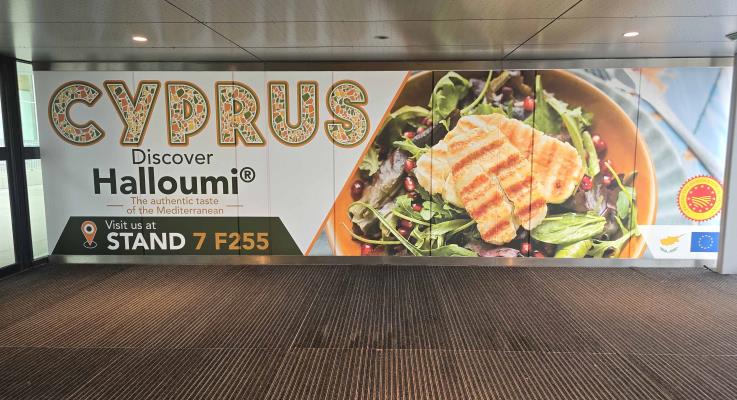
A major focus of Cyprus’ presence was halloumi, with 13 companies taking part in the dairy products pavilion in Hall 7.
The cheese received dedicated promotion through special signage featuring the Halloumi® name and Protected Designation of Origin (PDO) mark, while an entire side of the Hall 7 entrance was devoted to the Cypriot product.
Visitors were also able to use an interactive touchscreen entitled “Discover halloumi”, which provided information about the cheese and Cyprus’ dairies, highlighting its connection with domestic production.
The second national pavilion, located in Hall 2, hosted the remaining 15 participating businesses, which presented a wide variety of products from the island’s food industry.
These included olive oil, olives, honey, bulgur wheat, fruit juices, nuts, dried fruit, herbal beverages and coffee, alongside frozen foods and vegan products.
An interactive display at the pavilion provided information about the participating companies and their products, while also featuring a quiz designed to give visitors a more engaging and direct introduction to Cyprus’ food production.
“The country’s participation this year highlighted the potential and diversity of the domestic food industry, promoting both products with a strong identity and recognition, such as halloumi, and a wide range of other Cypriot products,” the ministry said.
“It also confirmed the importance of an organised presence at leading international exhibitions as a means of strengthening international outreach, promoting Cypriot production and exploring new business opportunities in international markets,” it added.
The Ministry of Energy, Commerce and Industry said it would continue supporting the promotion of Cypriot products abroad, helping strengthen the international presence of domestic businesses and create opportunities for further export growth.
Cyprus tourism revenue fell by 3.4 per cent year-on-year in August to €562 million, as fewer tourists and shorter stays weighed on earnings despite an increase in average daily spending, according to figures released by the statistical service (Cystat) on Friday.
Revenue stood at €581.8m in August 2025, meaning the sector earned €19.8m less than a year earlier, as tourist arrivals declined from 602,026 to 581,880.
The latest figures also show that tourism revenue for the first eight months of 2026 reached €2.32 billion, down 6.2 per cent from €2.47bn during the corresponding period of 2025.
The August decline follows a stronger performance in July, when tourism revenue increased by 4.6 per cent to €536.5m, supported by higher visitor spending despite slightly lower arrivals.
In August, however, average expenditure per tourist remained almost unchanged at €965.81, compared with €966.41 a year earlier.
Although the average length of stay declined from 9.2 days to 8.9 days, tourists spent more each day, with average daily expenditure increasing from €105.04 to €108.52.
The United Kingdom remained Cyprus’ largest tourist market, accounting for 30.5 per cent of total arrivals, followed by Israel with 23.3 per cent and Poland with 6.3 per cent.
British arrivals fell from 193,091 in August 2025 to 177,603 this year, while the average length of stay shortened from 10.6 days to 10.2 days.
Spending by British visitors also declined, with average expenditure per person falling from €1,195.02 to €1,062.12, while daily spending decreased from €112.74 to €104.13.
Israel, meanwhile, recorded a substantial increase in arrivals, rising from 105,597 to 135,628, strengthening its position as Cyprus’ second-largest source of tourists.
Israeli visitors stayed for an average of five days, compared with 5.2 days a year earlier, but their expenditure increased considerably.
Average spending per person rose from €792.69 to €892.20, while daily expenditure climbed from €152.44 to €178.44, considerably higher than the average for the tourism market as a whole.
Poland remained the third-largest market, although arrivals declined from 41,844 to 36,622.
Polish tourists stayed slightly longer, with the average visit increasing from 7.7 days to 7.9 days, but spending per person fell from €740.38 to €729.93. Daily expenditure also declined from €96.15 to €92.40.
German arrivals decreased from 27,665 to 25,823, while the average stay shortened from 10.5 days to 10.2 days.
Despite this, German visitors spent more, with average expenditure per person increasing from €987.97 to €1,084.18 and daily spending rising from €94.09 to €106.29.
Sweden followed a similar pattern, with arrivals declining from 18,636 to 17,441, although the average stay increased from 8.4 days to 8.8 days.
Average spending among Swedish tourists rose from €876.21 to €1,024.42 per person, while daily expenditure increased from €104.31 to €116.41.
Danish arrivals also fell slightly, from 9,984 to 9,733, while visitors shortened their stays from 8.8 days to 7.7 days.
Their average expenditure per person declined from €836.78 to €780.74, although daily spending increased from €95.09 to €101.39.
Norwegian arrivals moved in the opposite direction, increasing marginally from 7,896 to 8,006. However, Cystat did not publish reliable expenditure or length-of-stay figures for this market.
Arrivals from Greece declined from 15,294 to 13,810, with the average stay falling from 10.5 days to 10.2 days.
Greek visitors also spent less, with average expenditure per person decreasing from €484.94 to €466.29, while daily spending slipped from €46.18 to €45.71.
Visitors from the USrecorded one of the most striking increases in spending, with average expenditure per person almost doubling from €849.70 to €1,691.60.
American arrivals increased from 8,597 to 9,665, while the average length of stay rose sharply from 12.2 days to 16.7 days.
Daily expenditure also increased substantially, from €69.65 to €101.29, with the longer stays contributing to the considerable increase in spending per visitor.
Austrian arrivals fell from 11,935 to 10,389, although visitors stayed considerably longer, with the average duration increasing from 7.4 days to 9.1 days.
Average expenditure among Austrian tourists rose from €899.80 to €1,116.79 per person, while daily spending increased slightly from €121.59 to €122.72.
Swiss arrivals also declined, from 7,277 to 6,739, but the average length of stay increased from 8.9 days to 9.2 days.
Swiss visitors remained among the highest-spending tourists, with average expenditure per person rising from €1,254.87 to €1,423.77, while daily spending increased from €141 to €154.76.
Arrivals from the Netherlands fell from 7,672 to 6,331, although Dutch visitors extended their average stay from 9.7 days to 10.9 days.
Despite spending more time in Cyprus, their average expenditure per person declined from €1,103.80 to €1,062.19, while daily spending fell from €113.79 to €97.45.
France recorded one of the sharpest declines among Cyprus’ main European tourism markets, with arrivals falling from 15,663 to 8,453.
French tourists nevertheless stayed longer, with the average visit increasing from 9.4 days to 11.2 days.
Their average expenditure per person rose from €979.40 to €1,034.62, although daily spending declined from €104.19 to €92.38.
Belgian arrivals, meanwhile, increased from 3,342 to 4,475, accompanied by a substantial rise in the average length of stay from 10.2 days to 13.3 days.
Average expenditure by Belgian tourists increased from €918.56 to €1,064.54 per person, although daily spending fell from €90.05 to €80.04.
Finnish arrivals declined from 4,018 to 3,431, with tourists spending an average of €1,105.20 per person and €120.13 per day, based on an average stay of 9.2 days.
Italian arrivals also fell sharply, dropping from 11,173 to 6,282, while the average stay shortened from 8.5 days to 8.1 days.
However, Italian tourists increased their average expenditure from €773.38 to €928.95 per person, with daily spending rising from €90.99 to €114.69.
Finally, arrivals from Lebanon declined from 5,745 to 5,085.
The cumulative figures show that the sector has yet to recover the revenue lost during the earlier months of 2026, with tourism earnings for January to August remaining €153.1m below the corresponding period last year.

 Login