❌

Reading view

President Díaz-Canel Supports Cuba’s Response to U.S. Provocations at the UN
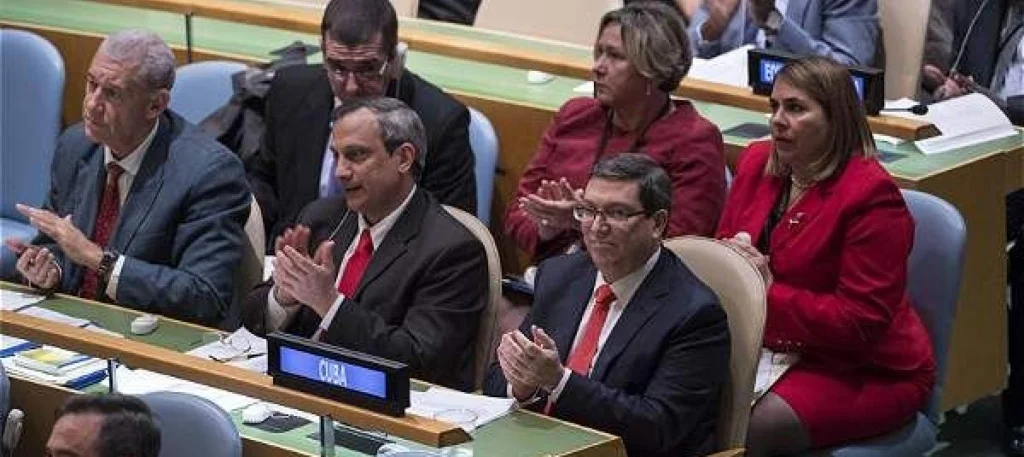
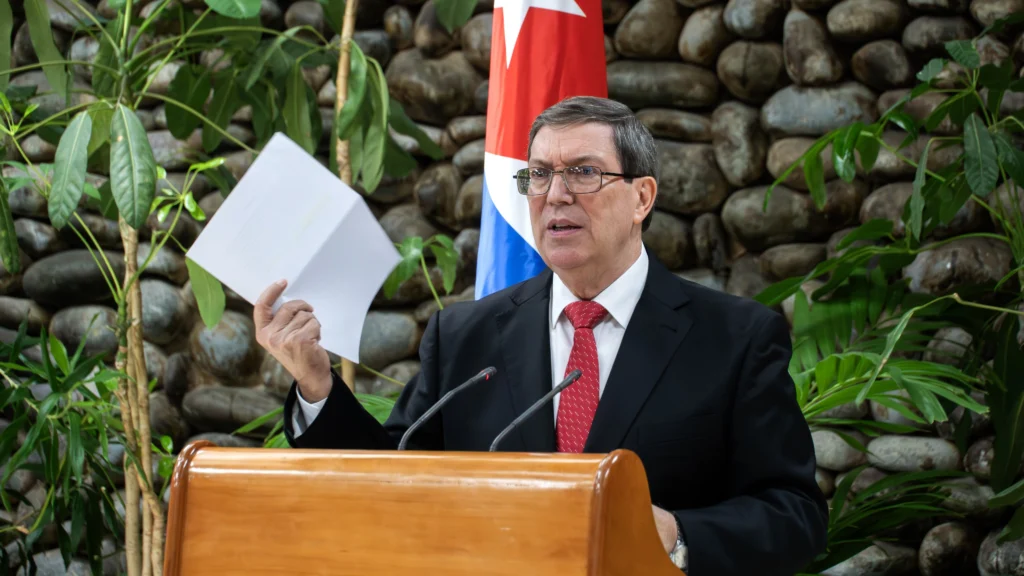
On Wednesday, President Miguel Díaz-Canel praised the actions of the Cuban delegation at the United Nations during the annual debate on the resolution calling for an end to the economic, commercial, and financial blockade imposed by the United States against Cuba. The president affirmed that the island will not back down in the face of Yankee pressure and dictates.

RELATED:

UN General Assembly Approves Cuba’s Resolution Against U.S. Blockade

In messages posted on the social media platform X, the Cuban leader acknowledged the work of Foreign Minister Bruno Rodríguez, Ambassador Ernesto Soberón, and the rest of the Cuban delegation, following an incident that took place during a session of the UN General Assembly.

“Today at the UN, the international community’s overwhelming support for Cuba was on display, as they condemned the blockade and the U.S. government’s policy of maximum suffocation. Most of the speakers were clear in their denunciation,” the Cuban president wrote.

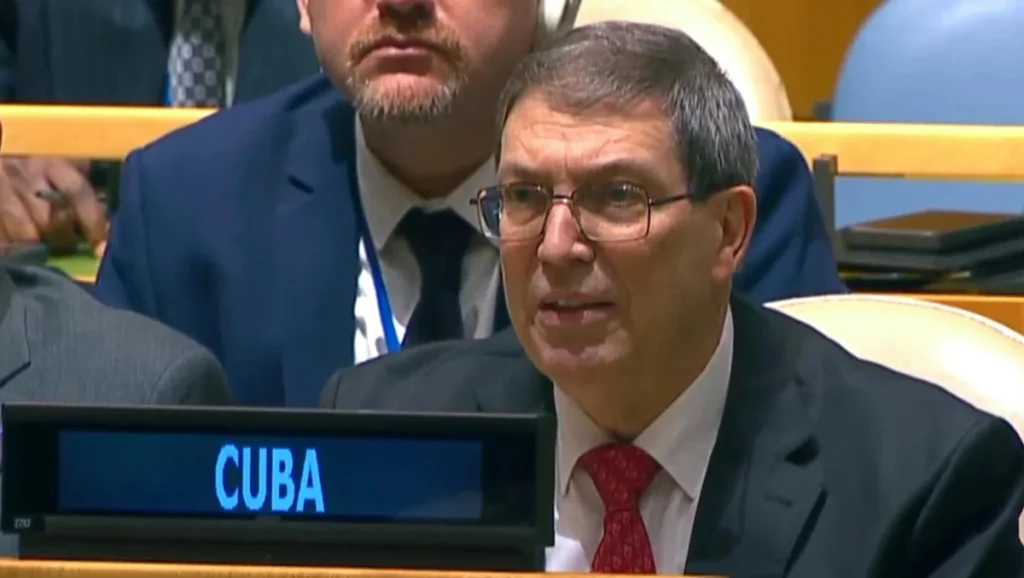
These remarks followed an intervention by Bruno Rodríguez, who interrupted U.S. representative Mike Waltz as he was blatantly presenting a series of slanders, distortions, and lies against Cuba.

“You are lying,” Rodríguez stated, while requesting that the president of the General Assembly call the U.S. representative to order.

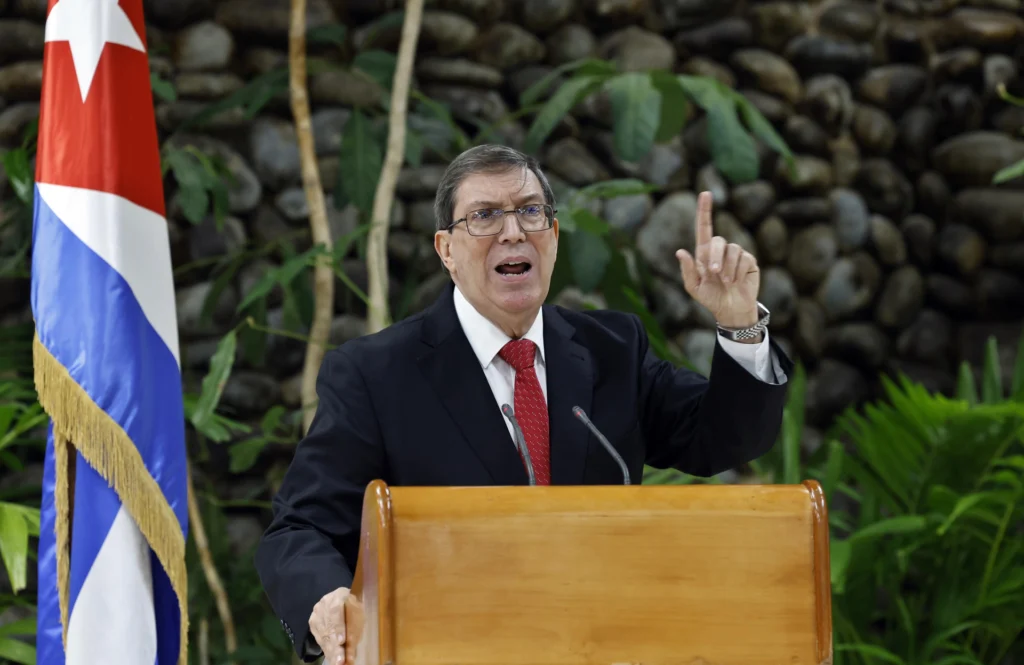
The Cuban Foreign Minister also denounced pressure exerted by Washington on UN member states and rejected what he described as insults to the dignity of the Cuban people and the international organization itself.

El pretexto más empleado y manipulado por el gobierno de Estados Unidos para tratar de justificar su actuación es presentar a Cuba como una supuesta amenaza para la superpotencia nuclear o, incluso, para el hemisferio. Se sabe que ningún gobierno aquí representado admite o acepta… pic.twitter.com/9ADzwpPsXS

— Bruno Rodríguez P (@BrunoRguezP) October 28, 2026

The text reads, “The most commonly used and manipulated pretext by the United States government to try to justify its actions is to present Cuba as an alleged threat to the nuclear superpower or even to the hemisphere. It is known that no government represented here admits or accepts such a crude fallacy. They lack arguments.”

Díaz-Canel maintained that this international body serves as a space for sovereign equality among states, and he asserted that Cuba will defend the rights granted to it by the United Nations Charter and its regulations, as well as the dignity of its people and its heroes. “Cuba will not back down, and certainly not in the face of Yankee pressures and orders,” emphasized the head of state, who described the U.S. stance as one of imperial arrogance and overbearing conduct.

The Cuban delegation’s protest was voiced at the start of the debate on the resolution titled “Necessity of ending the economic, commercial and financial embargo imposed by the United States of America against Cuba”—an initiative that has garnered broad support in the General Assembly for over three decades.

Cuba denounced a vile campaign of diplomatic pressure aimed at influencing the delegations present, with the goal of eroding support for the Cuban resolution. Nevertheless, the world once again spoke out—by an overwhelming majority—against the embargo, even in the face of pressure and blackmail from the United States intended to alter the outcome.

Díaz-Canel further noted that the U.S. representative—visibly isolated—offered no explanation for the energy blockade imposed on Cuba, nor for the intensified extraterritorial reach of the embargo.

In their remarks, Cuban authorities presented verifiable data demonstrating that the tightening of the embargo—particularly since 2025—has caused severe economic and social hardship on the island. This confirms that the U.S. policy amounts to collective punishment of the population; the authorities warned that the international community must not become complicit in such measures.

“Because we believe in the truth and in global solidarity, we know that the U.S. embargo against Cuba and the energy blockade will be condemned once again in the General Assembly,” Díaz-Canel stated on X.
  •  

Cuban 'Diplomats' Form Mob Scene at U.N. as Ambassador Mike Waltz Exposes Castro Family Riches

"Diplomats" representing the brutal Cuban communist regime, among them Foreign Minister Bruno Rodríguez, organized a mob to shout down U.S. Ambassador to the United Nations Mike Waltz on Tuesday as the American presented an exposé on the corruption of the ruling Castro family.

The post Cuban ‘Diplomats’ Form Mob Scene at U.N. as Ambassador Mike Waltz Exposes Castro Family Riches appeared first on Breitbart.

  •  

Cuba Refutes Accusations by the U.S. Ambassador to the UN

Previously, U.S. Ambassador Waltz urged member states to reject Havana’s annual resolution against the blockade.

On Oct. 27 and 28, the United Nations General Assembly (UNGA) holds, for the 34th time, a debate and vote on a resolution presented by Cuba titled “Necessity of Ending the Economic, Commercial and Financial Blockade Imposed by the United States of America Against Cuba.”

RELATED:

UN General Assembly Debates Cuban Resolution Against U.S. Blockade for 34th Time

On Tuesday, Cuban Foreign Minister Bruno Rodriguez accused the U.S. government of lying “in a crude and permanent manner” to the countries represented at the UNGA.

“With its crude lies at the UNGA, the U.S. government has launched a new desperate attempt to justify its economic aggression against Cuba and its criminal energy blockade,” he said, lashing out at U.S. Ambassador Mike Waltz and criticizing his “arrogance and haughtiness.”

“He forgets that he is at the United Nations. He is not at the U.S. National Security Council, in a Green Beret unit, or in a Signal group, where he has repeatedly demonstrated his incompetence and inability,” Rodriguez stated.

The Cuban diplomat said Waltz’s remarks before the General Assembly “are part of a media circus, threats and an election campaign” to which Washington “devotes substantial financial and human resources.”

“There is no justification for maintaining the act of collective punishment to which the Cuban people are subjected,” Rodriguez stressed.

#Cuba | Foreign Minister Bruno Rodríguez confronts U.S. representatives at the UN General Assembly, invoking Rule 71 to reject accusations against Cuba during discussions on Washington's economic blockade.#UNGA #BrunoRodriguez #USBlockade #teleSUREnglish pic.twitter.com/BK8ZNXgKWT

— teleSUR English (@telesurenglish) October 27, 2026

Waltz Seeks to Put a Positive Spin on the U.S. Blockade

During his address, Waltz called on countries to vote against the text presented by Cuba, arguing that doing otherwise would contribute “to the mistreatment of the Cuban people.”

He also accused Cuban authorities of using the annual UN resolutions against the blockade as though they were international endorsements of the revolutionary government.

On Wednesday, more than 30 countries are expected to deliver speeches before the vote on the 34th resolution concerning the blockade against Cuba.

Since 1992, Cuba has presented this nonbinding resolution annually. In 2025, it received 165 votes in favor, seven against and 12 abstentions.

teleSUR/ JF

Source: EFE

  •  

Cuba Rejects Trump’s New Threats of Military Intervention

In a recent press conference, the Cuban Foreign Minister denounced "brutal pressure and threats from United States" against UN member states to force them to change their vote on the resolution against the blockade. Photo: EFE.

Cuban Foreign Minister Bruno Rodríguez Parrilla on Friday rejected a new threat from U.S. President Donald Trump, who said U.S. ships would make a “small stop” off the island on their return from Iran.


President Donald Trump has issued a new threat against Cuba as U.S. officials reportedly press ahead with military planning for the Caribbean country, an escalation that coincides with an intensified oil blockade and UN vote scheduled for October 28.

At a campaign rally in Fort Myers, the Republican President laid out his plan in vivid terms. “What we are going to do with Cuba is we are going to come back from Iran. Those beautiful ships, we will pass by Cuba, we will have one of them stop about 50 yards (45 meters) from the coast. They will raise their hands and then we will send Marco Rubio to close the deal,” he said.

RELATED: Cuba Denounces U.S. Pressure Ahead of the UN Assembly Vote On Economic Blockade

The U.S. President closed the scene with a concrete promise: “We will take care of Cuba on our return from Iran. We will make a small stop.”

Cuba answered on X. “We reject all threats related to the ambitions of United States toward Cuba,“ wrote the Caribbean nation’s FM Bruno Rodriguez Parrilla.

He added a description of the coastline that carried an unmistakable warning. “Our coastline is full of beautiful beaches, but there ara also razor-sharp limestone spikes,” he said, referring to the karst rock formations along the shore. “Inhospitable to those who arrive with hostile intentions and dreams of domination,” he warned. The jagged coastal limestone, sharp and cutting, gave the response its edge.

We reject every threat related to US ambitions toward Cuba.

Our coastline is full of beautiful beaches, but there are also razor-sharp limestone spikes, an inhospitable environment for those who make it to our shores with hostile purposes and lust for domination.… pic.twitter.com/jrrBc1jR8S

— Bruno Rodríguez P (@BrunoRguezP) October 23, 2026

Meanwhile, U.S. Secretary of State Marco Rubio used the same platform to urge those pushing for “change” on the island to engage in “discreet collaboration with the CIA.” In August, The New York Times reported that the intelligence agency had secretly set up a task force focused on Cuba.

The threat came amid a heated campaign in a state that is home to the largest Cuban community in United States. Its lawmakers and an influential segment of that community shape Washington’s decisions on Cuba.

Rodriguez Parrilla’s post also echoes another phrase from the current U.S. President. In March, speaking at the White House, Trump said he would have “the honor of taking Cuba” and that he “could do whatever he wanted with it.” He described Cuba then as a beautiful place, with “good land, landscapes, wonderful weather and great potential for tourism centers.”

On that occasion his unfamiliarity with the territory was on display. He argued that taking control would be good because the country is “not in the path of hurricanes.” “They won’t ask us for money for hurricanes every week,” he said in that time.

Passing by the island after Iran is not a new idea. In early May, while signing the Executive Order that launched an unprecedented wave of unilateral and illegal penalties against Cuba, Trump had already spoken of “taking control” once his military objectives in Iran were met. Following that, he has promised the war will end “immediately” after the November 3 elections, without explaining how.

The new threat coincides with the campaign Rubio himself is leading to sway the votes of UN member states on the resolution against the blockade against Cuba. In a recent press conference, Rodriguez Parrilla denounced the pressures and threats against governments to make them change their position.

In recent weeks the U.S. administration has seized fuel shipments bound for Cuba as part of an oil blockade. The campaign against Cuba’s international medical cooperation has intensified in parallel.

Elections Add Pressure

The escalation arrives at a difficult political moment for the U.S. President. Midterm elections take place on November 3, and the Republican Party could lose control of Congress. Trump’s approval has sagged, and a majority of voters now reject his management of the country’s main fronts, a rejection that cuts across every issue.

The domestic scenario is complicated further by the conflict with Iran. Tehran retains control of the Strait of Hormuz and has inflicted significant destruction on U.S. military bases in West Asia.

Fuel prices keep climbing in the meantime. The increase strikes U.S. households directly, and every rise deepens the damage to the President’s public standing at a moment when he can least afford it.

The pattern toward Cuba has hardened even as those pressures mount at home. The fuel seizures, the diplomatic campaign and the military planning all point in the same direction, toward an increasingly explicit posture of confrontation against the island.

With the United Nations vote set for October 28 and the U.S. midterm elections following days later on November 3, the coming weeks will reveal whether the planning described in U.S. media translates into further concrete action against Cuba, or whether it remains a lever of pressure in a campaign that already weighs heavily on the island.

  •  

Cuba Denounces U.S. Pressure Ahead of the UN Assembly Vote On Economic Blockade

The accumulated losses from more than six decades of the blockade exceed US$150 billion.

On Wednesday, Cuban Foreign Minister Bruno Rodriguez denounced the United States for exerting diplomatic pressure on numerous countries to change their stance ahead of the upcoming United Nations General Assembly vote on the economic blockade imposed on the island.

RELATED:

United States Escalated Hostility Toward Cuba Throughout 2026

According to the Cuban minister, Washington’s actions are intensifying in the lead-up to the debate scheduled for October 27 and 28, when UN member states will again vote on the draft resolution calling for an end to these sanctions.

Rodriguez stated that the current discussion is taking place against a backdrop of a tightening blockade and noted that, for the first time, the General Assembly will also address the effects of the energy blockade imposed on Cuba.

The foreign minister maintained that the U.S. measures are affecting Cuban foreign trade and are part of a strategy designed to create economic and social hardship in order to generate instability in the country.

During a public appearance, the Cuban foreign minister asserted that he possesses documents evidencing efforts to influence foreign governments to change their vote on the resolution presented by Cuba.

As the cruelty of collective punishment continues, Cubans are standing together against the shortages caused by the U.S. blockade.

Watch how hundreds of community groups are helping Cubans get the medicine they need 👇 pic.twitter.com/0NdgM0mM29

— Cuban Americans For Cuba (@Cubans4Cuba) October 21, 2026

According to Rodriguez, these documents include messages that deem the blockade legitimate. The minister also denounced threats of sanctions against sovereign countries, including trade measures, restrictions against officials, and other forms of political and economic pressure.

He also rejected claims that, he said, attempt to link Cuba to the conflict in Ukraine, calling these accusations “false” and part of a “smear campaign” against the Caribbean nation.

Rodriguez asserted that these actions reflect the international isolation of U.S. policy toward Cuba and recalled that, according to calculations presented by Havana to the United Nations, the accumulated losses from more than six decades of the blockade exceed US$150 billion.

#FromTheSouth News Bits | In Cuba, over a million students return to school, marking an achievement for the nation's education system amid ongoing United States aggression. pic.twitter.com/oMCCt8jRPD

— teleSUR English (@telesurenglish) September 4, 2026

teleSUR: JP

Source: teleSUR

  •  
❌